The Life of Man—To Know and Love God (CCC 1–3)
On This Page
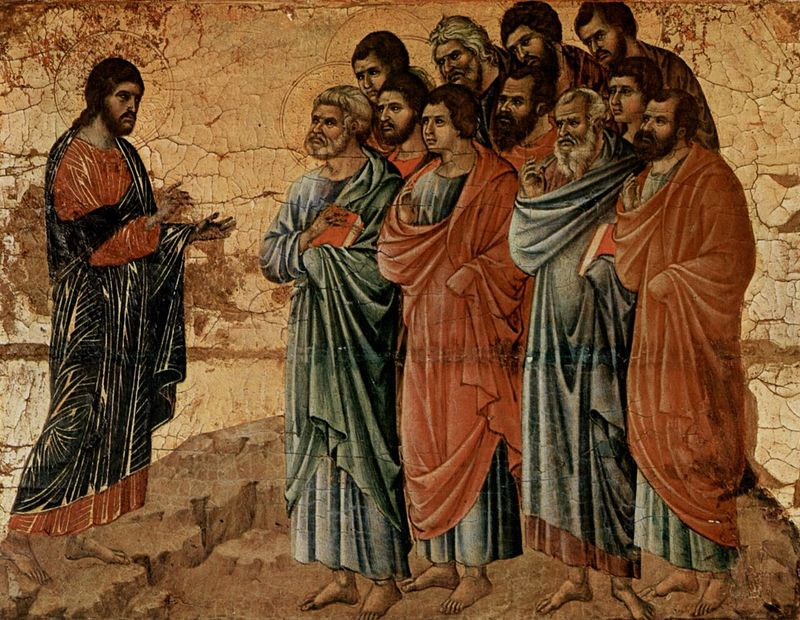
Part of a series working through the Catechism of the Catholic Church one section at a time. Previous: The Prologue: “This Is Eternal Life”. Next: Catechesis and the Preservation of the Faith (CCC 4–10)
The Catechism of the Catholic Church opens with three verses of Scripture and then, before any doctrine of the Church, the sacraments, or the moral law, with three short paragraphs under a single heading: “The life of man—to know and love God.” Those paragraphs answer the question underneath every other question in the book. Why are we here at all?
The answer comes in three movements. God made us, freely and out of sheer goodness, to share his own life (CCC 1). Christ sent the apostles so that the invitation would reach the whole world (CCC 2). And the Church has guarded that invitation ever since, and every believer is charged with handing it on (CCC 3). Creation, mission, transmission—the rest of the Catechism unfolds from these three steps.
I first wrote about these paragraphs in 2020, in a post titled “Evangelical Catholic Thought.” This commentary takes them up again at greater length and replaces it.
The Text
The whole section is short enough to read in a minute:
1 God, infinitely perfect and blessed in himself, in a plan of sheer goodness freely created man to make him share in his own blessed life. For this reason, at every time and in every place, God draws close to man. He calls man to seek him, to know him, to love him with all his strength. He calls together all men, scattered and divided by sin, into the unity of his family, the Church. To accomplish this, when the fullness of time had come, God sent his Son as Redeemer and Saviour. In his Son and through him, he invites men to become, in the Holy Spirit, his adopted children and thus heirs of his blessed life.
2 So that this call should resound throughout the world, Christ sent forth the apostles he had chosen, commissioning them to proclaim the gospel: “Go therefore and make disciples of all nations, baptizing them in the name of the Father and of the Son and of the Holy Spirit, teaching them to observe all that I have commanded you; and lo, I am with you always, to the close of the age.” Strengthened by this mission, the apostles “went forth and preached everywhere, while the Lord worked with them and confirmed the message by the signs that attended it.”
3 Those who with God’s help have welcomed Christ’s call and freely responded to it are urged on by love of Christ to proclaim the Good News everywhere in the world. This treasure, received from the apostles, has been faithfully guarded by their successors. All Christ’s faithful are called to hand it on from generation to generation, by professing the faith, by living it in fraternal sharing, and by celebrating it in liturgy and prayer.1
Created Out of Sheer Goodness (CCC 1)
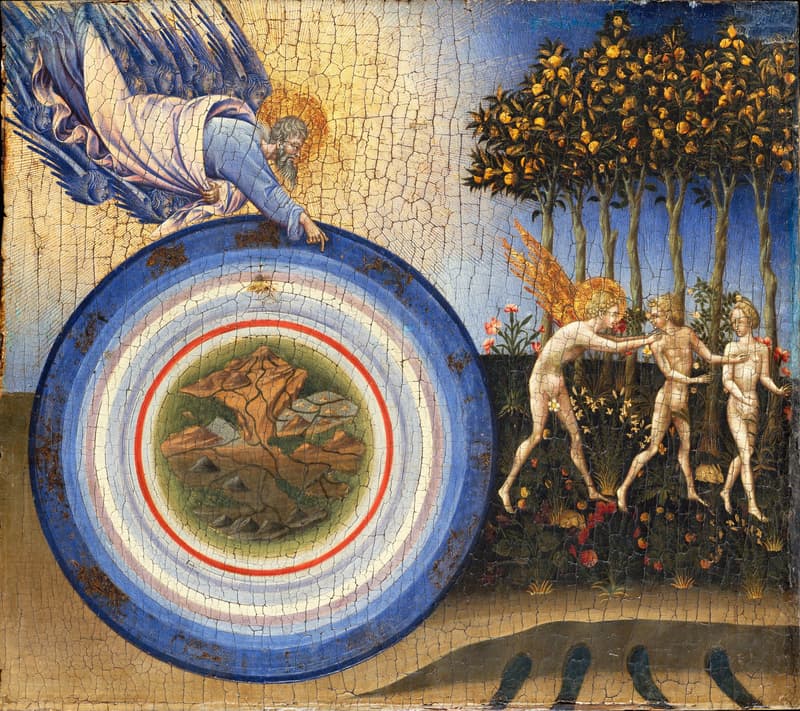
God did not need creation. The first sentence of the Catechism says so directly, and I think it is worth dwelling on, because it cuts against a way of speaking about God that many Christians, Catholic and Protestant alike, have absorbed without examining.
You sometimes hear it said that God created the world in order to get glory for himself, as though creation supplied something he lacked: that he made man so as to be glorified, and that his aim in all things is to receive glorification. God is, of course, worthy of all glory. But does Almighty God need us in order to be glorified? What could we possibly add? A God who created in order to receive something would be a God who lacked something, and the God of the Catechism’s first sentence is “infinitely perfect and blessed in himself.”
Glory given, not gained
The Catechism does not deny that creation serves God’s glory. Nearly three hundred paragraphs later it affirms, with the First Vatican Council, that “the world was made for the glory of God.”2 It then defines that glory with great care. St. Bonaventure, it says, explains that God created all things “not to increase his glory, but to show it forth and to communicate it,” and the Catechism adds that “God has no other reason for creating than his love and goodness.”3 The First Vatican Council is more precise still: God created “not for increasing his own beatitude, nor for attaining his perfection, but in order to manifest this perfection through the benefits which he bestows on creatures.”4 Between those two quotations the Catechism borrows a memorable line from St. Thomas Aquinas: “Creatures came into existence when the key of love opened his hand.”5
God’s glory, on this account, is not something he extracts from us. It is his goodness being given away. “The glory of God,” the Catechism continues, “consists in the realization of this manifestation and communication of his goodness,” and it quotes St. Irenaeus: “the glory of God is man fully alive; moreover man’s life is the vision of God.” The purpose of creation, it concludes in the words of the Second Vatican Council, is to assure “simultaneously” God’s “own glory and our beatitude.”6 God’s glory and our happiness are not rivals. They are one purpose, achieved together.
God’s glory and our happiness are not rivals. They are one purpose, achieved together.
The chief end of man
Here the Reformed tradition and the Catholic one are much closer than the rhetoric of either sometimes suggests. The Westminster Shorter Catechism famously answers its own first question—“What is the chief end of man?”—with “Man’s chief end is to glorify God, and to enjoy him forever.”7 Enjoy is doing real work in that sentence. The Westminster Confession goes further still, saying that God is “not standing in need of any creatures which he hath made, nor deriving any glory from them, but only manifesting his own glory in, by, unto, and upon them”—which is very nearly what the First Vatican Council says.8
The trouble comes when the second half drops away and God’s glory is spoken of as though it were a private transaction between God and himself, with creatures as mere instruments. The Catechism will not allow that. Its first sentence puts the emphasis squarely on the gift: God made man “to make him share in his own blessed life.”
God draws close
God did more than create us and leave us to ourselves. “For this reason,” the Catechism continues—because the whole point of creation was sharing—“at every time and in every place, God draws close to man.” He stoops down to us and meets us where we are. That is his constant way of acting in salvation history, and his constant self-revelation. The same God who, in St. Paul’s words, “desires all men to be saved and to come to the knowledge of the truth”9 does not wait at a distance for us to find our way to him. (I have written about that verse, and about why the Church insists that God predestines no one to hell, in the previous post in this series.)
The knowledge God offers is more than information. The Catechism’s verbs escalate: God calls man “to seek him, to know him, to love him with all his strength.” Generations of American Catholics learned the same verbs from the Baltimore Catechism: “God made me to know Him, to love Him, and to serve Him in this world, and to be happy with Him forever in the next.”10 And the call is not only individual. God calls together “all men, scattered and divided by sin, into the unity of his family, the Church.” Sin scatters; God gathers.
Adopted children and heirs
The paragraph ends with the means. “When the fullness of time had come, God sent his Son as Redeemer and Saviour,” and in the Son he “invites men to become, in the Holy Spirit, his adopted children and thus heirs of his blessed life.” The whole Trinity is at work in that one sentence—the Father who sends, the Son in whom we are adopted, the Spirit in whom adoption takes place—and the sentence closes where the paragraph began, with God’s “blessed life.” God made us to share his life, and in his Son he makes the sharing possible.
This has practical consequences. If the purpose of human life is to know and love God, then a Christian cannot stop at telling people about God and the means he has provided for knowing him. He must also live in a way that shows he loves God and that God’s love is at work in him. And he does this relying on grace. The hope is not that I will be able to draw others to God, but that God will be able to do so through me.
The Great Commission and the Shape of Discipleship (CCC 2)
Christ taught, died, and rose again, conquering sin and death for our sake. Then he sent his apostles to carry the good news beyond Israel to the nations, making the means of salvation available to all. The Catechism anchors this second paragraph in the Great Commission, quoting its charge in full:
Go therefore and make disciples of all nations, baptizing them in the name of the Father and of the Son and of the Holy Spirit, teaching them to observe all that I have commanded you; and lo, I am with you always, to the close of the age.11
I think this passage carries within it the whole nature of the faith, and it is often, in my experience, exactly where conversations between Catholics and Protestants turn.
Baptizing and teaching
What does it mean to make a disciple? What does it mean to bring someone to faith in Jesus Christ? In Jesus’ own words, it means two things: baptizing them, and teaching them to observe everything he commanded. The grammar of the Greek makes the point sharper than the English. There is only one finite command in the sentence—“make disciples.” “Go” is a participle that borrows the command’s force, and “baptizing” and “teaching” are participles that most naturally describe how the command is carried out. Discipleship, as Jesus defines it here, is not a single moment of assent. It is a baptized life of learned obedience.
That matters because belief alone is not enough. “You believe that God is one; you do well,” St. James writes. “Even the demons believe—and shudder.”12 The Catechism makes a related point from the same letter. Faith remains a gift even in a Christian who sins, so long as he has not sinned against faith itself, but “faith apart from works is dead,” and when faith “is deprived of hope and love,” it “does not fully unite the believer to Christ and does not make him a living member of his Body.”13
To be fair to my Protestant friends, few of them would say that the demons’ kind of belief saves anyone. The Reformers insisted that saving faith includes trust, not mere assent, and that a living faith will always bear fruit. The real disagreement lies elsewhere. Catholics and Protestants agree that nothing we do before justification earns it. What they dispute is whether the grace-given renewal of our lives, the charity from which obedience flows, belongs to justification itself, or is inseparable from it but distinct: the fruit and evidence of a righteousness that is Christ’s alone, credited to the believer.
The Great Commission does not settle every question in that debate, but it does settle this much. Jesus did not send the apostles to produce people who agreed with him. He sent them to produce people who were baptized and who kept his commands.
Jesus did not send the apostles to produce people who agreed with him. He sent them to produce people who were baptized and who kept his commands.
Obedience springs from love
This is hard to grasp in one way and easy in another. Obedience is the mark of a disciple of Christ because obedience cannot be separated from love. “If you love me,” Jesus says, “you will keep my commandments.” And again: “He who has my commandments and keeps them, he it is who loves me.”14
The Catechism calls the human response to God “the obedience of faith,” a phrase it takes from St. Paul, who says he received his apostleship “to bring about the obedience of faith… among all the nations.” It glosses the word itself: obey comes from the Latin ob-audire, “to ‘hear or listen to,’” and to obey in faith is “to submit freely to the word that has been heard.”15 Notice that Paul’s “all the nations” is the Great Commission’s “all nations.” The mission and the obedience go together.
If the purpose of human life is to know God and love him, then what is needed is the kind of love from which obedience springs—a love from which it is impossible for obedience not to spring. That is not a burden laid on top of faith. It is what faith looks like when it is alive.
The witness of the apostles
The Catechism then shows the apostles’ response. Strengthened by the commission, they “went forth and preached everywhere, while the Lord worked with them and confirmed the message by the signs that attended it.”16
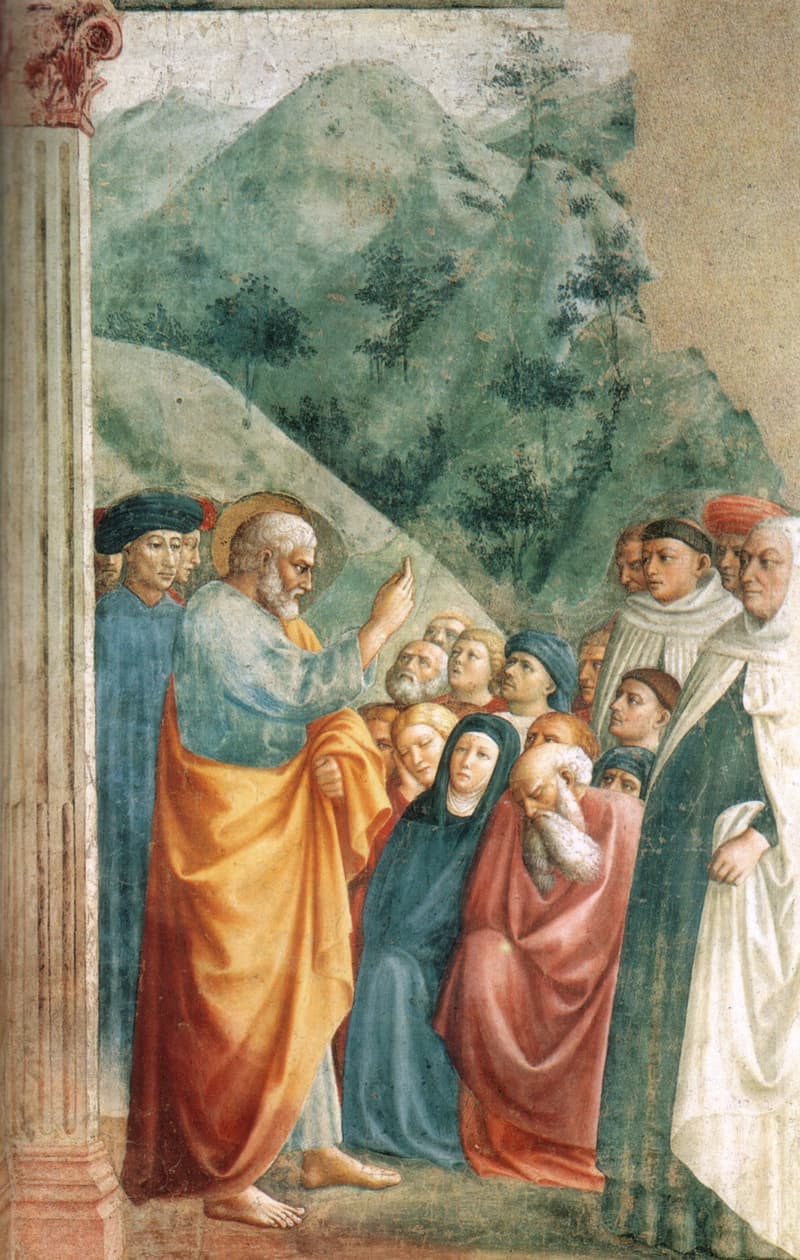
What they did next is itself a kind of argument. The apostles faced hardship and persecution for their testimony. Scripture narrates the martyrdom of only one of them, James the brother of John, whom Herod “killed… with the sword.”17 For most of the others we depend on later traditions, which vary a great deal in reliability from apostle to apostle—a question this blog’s series on the Twelve takes up one apostle at a time. But the traditions consistently remember the apostles spending their lives preaching Christ risen, the New Testament shows them suffering for it, and later tradition holds that most of them died for it.
I find it very hard to believe that they would have lived and died this way had they not truly believed that Jesus Christ had risen from the dead. People will die for a lie they believe is true, but people do not willingly suffer and die for what they know is a lie. Nor does it seem credible that some shared delusion convinced at least eleven men that Christ had risen when he had not—especially when St. Paul, writing within about twenty-five years of the event, could point to more than five hundred witnesses, “most of whom are still alive.”18 That simply asks too much.
The signs worked through the apostles fulfilled Christ’s promise to be with them “always, to the close of the age.” That promise was not only for them. The age has not closed. It reaches to us, and anyone who sincerely tries to follow Christ, and grows in that obedience day by day, may hope for the same presence.
A Treasure Handed On (CCC 3)
This treasure, received from the apostles, has been faithfully guarded by their successors. All Christ’s faithful are called to hand it on from generation to generation, by professing the faith, by living it in fraternal sharing, and by celebrating it in liturgy and prayer.
This third paragraph is where the difference between Catholic and Protestant understandings of the faith comes most clearly into view, and I think it teaches something very important.
The gospel was given to the apostles. They handed it on to the Church and to their successors, who were to guard it after the apostles were gone. The Catechism develops the point later, quoting the Second Vatican Council: “In order that the full and living Gospel might always be preserved in the Church the apostles left bishops as their successors.”19 Most Protestants, too, confess the ancient creeds and read Scripture within a tradition. The difference is that for Catholics the faith is a treasure received from the apostles and guarded by their successors with an authority the Reformation denied. (I have written about apostolic succession and about how to talk with Protestants about Tradition elsewhere.)
But the paragraph does not leave the handing-on to the bishops. It gives the task to “all Christ’s faithful,” and it names three ways of doing it:
- by professing the faith openly;
- by living it in fraternal sharing, working the gospel out in daily life and in love for others;
- by celebrating it in liturgy and prayer, in communion with Christ’s Church.
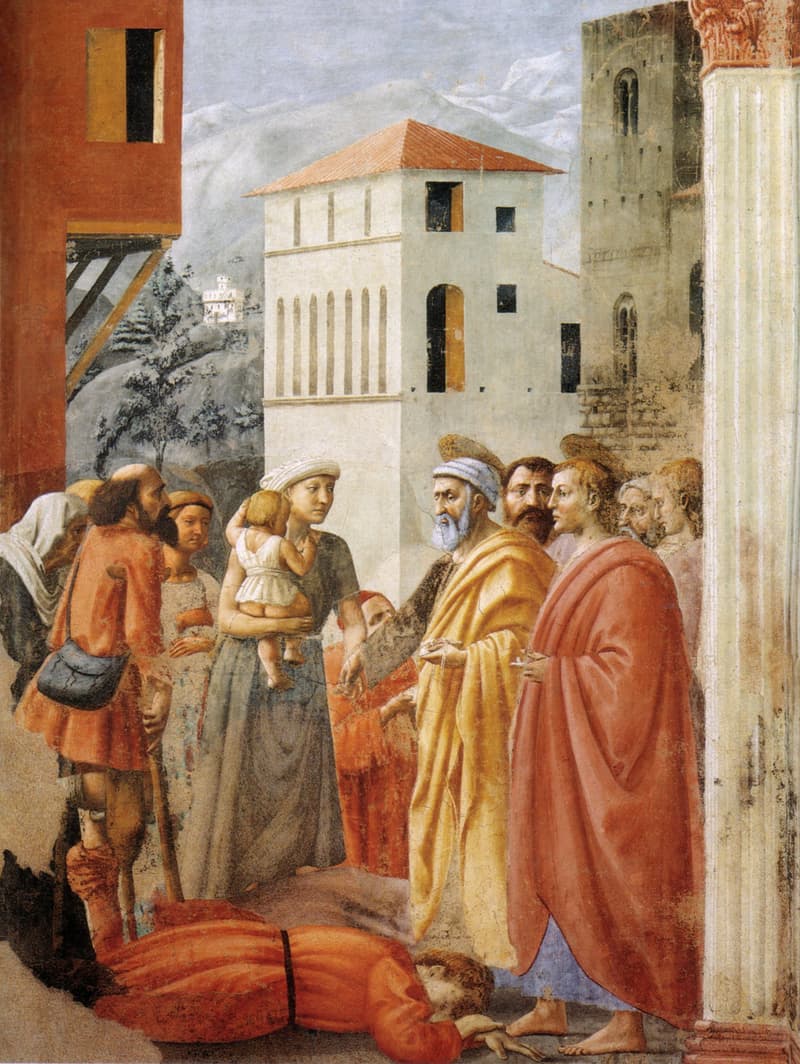
The footnote to this sentence is a single verse, and it repays a close look. It points to Acts 2:42, the description of the first Christian community after Pentecost: “And they devoted themselves to the apostles’ teaching and fellowship, to the breaking of bread and the prayers.”20
Set the two side by side and the Catechism’s three ways map onto the four things the first Christians devoted themselves to. Professing the faith corresponds to “the apostles’ teaching.” Living it in fraternal sharing corresponds to the “fellowship”—the Greek word is koinōnia, and two verses later Luke describes the believers holding “all things in common.” Celebrating it in liturgy and prayer corresponds to “the breaking of bread and the prayers.” The Church hands on the faith today in the same pattern in which the Jerusalem church first received it.
The Catechism returns to the individual believer’s part later, and in terms that echo this paragraph: “The disciple of Christ must not only keep the faith and live on it, but also profess it, confidently bear witness to it, and spread it.”21
One Movement in Three Steps
Read together, these three paragraphs make a single argument. God made us out of love, to share his life. He sent his Son to open the way, and the Son sent the apostles to carry that invitation to the nations, describing the making of disciples as baptizing them and teaching them to keep his commands. The Church has guarded that invitation ever since and handed it down. Our part is to receive it, to let it change us into the image of Christ, and to pass it on.
The three paragraphs also define the Catholic faith as an evangelistic faith. There is an idea among Protestant evangelicals—some of it deserved—that Catholics do not share their faith and do not seek out converts. Where that is true, it reflects a failure of Catholics to live up to the Church’s mission, not a flaw in the mission itself. The Catechism gives every believer the responsibility of passing on the teachings of Christ to the next generation while announcing the good news to this one. The evangelical Catholic, in other words, is simply the faithful Catholic.
The Catechism’s next section, “Handing on the Faith: Catechesis” (CCC 4–10), picks up exactly where this one ends: with the Church’s long effort to make disciples by teaching them.
Frequently Asked Questions
Why did God create us, according to CCC 1?
CCC 1 says that God, “infinitely perfect and blessed in himself,” created man freely, “in a plan of sheer goodness,” in order “to make him share in his own blessed life.” God did not create out of any need; he created in order to share what he already has.
Did God create the world for his own glory?
Yes, but the Catechism defines that glory carefully. It affirms that “the world was made for the glory of God” (CCC 293), and then explains, with St. Bonaventure, that God created “not to increase his glory, but to show it forth and to communicate it.” The First Vatican Council adds that God did not create to increase his own happiness or to attain his perfection. God’s glory consists in communicating his goodness, and “the glory of God is man fully alive” (CCC 294, quoting St. Irenaeus).
Which Bible verses does CCC 2 quote?
It quotes the Great Commission, Matthew 28:19–20 (“Go therefore and make disciples of all nations…”), and Mark 16:20 (“they went forth and preached everywhere, while the Lord worked with them…”). Mark 16:20 comes from the longer ending of Mark, which the Catholic Church receives as canonical Scripture.
What does it mean to make disciples, according to the Great Commission?
In Matthew 28:19–20, making disciples is carried out by “baptizing them” and “teaching them to observe all that I have commanded you.” A disciple, in Jesus’ terms, is not only someone who believes, but someone who is baptized and taught to keep Christ’s commands.
What are the three ways the faithful hand on the faith in CCC 3?
By professing the faith, by living it in fraternal sharing, and by celebrating it in liturgy and prayer. The Catechism’s footnote points to Acts 2:42, where the first Christians devoted themselves to “the apostles’ teaching and fellowship, to the breaking of bread and the prayers.”
Footnotes
1. Catechism of the Catholic Church, 2nd ed. (Libreria Editrice Vaticana, 2000), CCC 1–3, citing Matt 28:19–20; Mark 16:20; and, with a “cf.,” Acts 2:42. Hereafter CCC. Unless noted, all quotations from CCC 1–3 in this post come from this page.
2. CCC 293, quoting the First Vatican Council, Dei Filius, canon 5 on God the creator of all things (DS 3025).
3. CCC 293, quoting Bonaventure, In II Sent. I, 2, 2, 1. The clause “for God has no other reason for creating than his love and goodness” is the Catechism’s own gloss, not part of the quotation from Bonaventure.
4. CCC 293, quoting Dei Filius 1 (DS 3002), with a “cf.” to the Fourth Lateran Council (1215), DS 800.
6. CCC 294, quoting Eph 1:5–6; Irenaeus, Adversus haereses 4.20.7 (PG 7/1:1037); and the Second Vatican Council, Ad Gentes 2, with a “cf.” to 1 Cor 15:28.
7. Westminster Shorter Catechism (1647), Q. 1, as published by the Orthodox Presbyterian Church.
8. Westminster Confession of Faith (1646), 2.2, as published by the Orthodox Presbyterian Church. Compare Dei Filius 1 (DS 3002), quoted above.
9. 1 Tim 2:4, RSV-CE. The verse is the second of the three texts at the head of the Catechism’s Prologue.
10. A Catechism of Christian Doctrine, Prepared and Enjoined by Order of the Third Plenary Council of Baltimore, No. 1 (1885), Q. 6 (in this printing, questions are “numbered to agree with” the Explanation of the Baltimore Catechism), via Project Gutenberg. This is the text commonly known as the Baltimore Catechism.
11. Matt 28:19–20, RSV-CE, as quoted in CCC 2. In the Greek, μαθητεύσατε (“make disciples”) is the sentence’s only finite imperative (the ἰδού, “lo,” of v. 20 functions as a particle); πορευθέντες (“go”), βαπτίζοντες (“baptizing”), and διδάσκοντες (“teaching”) are participles. Because an aorist participle followed by an aorist imperative in narrative ordinarily shares the imperative’s force, πορευθέντες is usually read as a command in its own right (“go and make disciples”), a construction known as attendant circumstance; see Daniel B. Wallace, “The Great Commission or the Great Suggestion?,” Daniel B. Wallace (blog), February 17, 2014.
12. Jas 2:19, RSV-CE.
14. John 14:15, 21, RSV-CE.
15. CCC 143, citing, with a “cf.,” Rom 1:5 and 16:26; CCC 144. Rom 1:5 is quoted from the RSV-CE.
16. Mark 16:20, RSV-CE, as quoted in CCC 2. The verse belongs to the “longer ending” of Mark (16:9–20), which the two oldest complete manuscripts of the Gospel, Codex Sinaiticus and Codex Vaticanus, do not contain, but which the Catholic Church receives as canonical Scripture. See The Gospel of Mark.
17. Acts 12:2, RSV-CE. See also Saint James the Greater.
18. 1 Cor 15:6, RSV-CE. First Corinthians is usually dated to the mid-50s.
19. CCC 77, quoting the Second Vatican Council, Dei Verbum 7.
20. Acts 2:42, RSV-CE; see Acts 2:44 for “all things in common.” The Greek word in 2:42 is κοινωνία; the believers of 2:44 held all things κοινά, “in common.”

Garrett Ham
Garrett Ham is an attorney, military veteran, and holds a Master of Divinity from Yale Divinity School. He writes from Northwest Arkansas on theology, law, and service.
Related Posts
Prologue to the Catechism of the Catholic Church
The Catechism opens with three verses on eternal life, God’s will to save all, and the name of Jesus. What they mean—and why no one is predestined to hell.
Apostolic Succession: The Unbroken Chain from Christ’s Twelve
Apostolic succession traced from AD 96 to the 1992 Catechism: the patristic evidence, Tertullian’s legal logic, the Protestant critique, and why three in four Christians still require it.

The Gospel of Mark — Peter's Witness and Its Journey to Canon
The shortest Gospel was tied to Peter from the earliest testimony, yet read least in antiquity. A Catholic examines Mark's authorship, abrupt ending, and path to the canon.
Stay Informed
Get new writing on faith, law, and service delivered to your inbox.
No spam. Unsubscribe anytime.