Prologue to the Catechism of the Catholic Church
On This Page
Part of a series working through the Catechism of the Catholic Church one section at a time. This post takes the three verses that stand above the Prologue; the Prologue’s numbered sections follow in posts of their own. Next: The Life of Man—To Know and Love God (CCC 1–3)
The Catechism of the Catholic Church does not open with a definition, a creed, or a list of rules. It opens with a prayer. Before a single numbered paragraph of doctrine, the reader meets three short passages of Scripture:
“FATHER,… this is eternal life, that they may know you, the only true God, and Jesus Christ whom you have sent.”
“God our Saviour desires all men to be saved and to come to the knowledge of the truth.”
“There is no other name under heaven given among men by which we must be saved”—than the name of JESUS.1
I first wrote about these lines in 2020, as a recent convert who had resolved to work through the Catechism passage by passage. I have come back to them because I did not, at the time, say nearly enough. Taken together, these three verses sum up the whole Catechism, and much of Scripture along with it. Between them they answer the three questions that matter most, and the rest of the book is an unfolding of those answers—and of what they ask of the person who believes them.
What the Prologue Puts First
The Church’s opening statement, as it prepares to lay out all its essential teaching, focuses not on popes or bishops, the Eucharist, confession, or anything else a Protestant might expect a Catholic book to put first. It begins instead with God’s desire that all men be saved and with Jesus Christ as the means of that salvation.
That is the essence of the Catholic faith: God loves us and, in his love, sent his Son to open the way of salvation to all humanity. The three verses say so without a word about human achievement: eternal life is knowing God and the one he has sent; God desires all men to be saved; and there is no other name by which we must be saved. The first numbered paragraph says the same of creation itself: God, “infinitely perfect and blessed in himself, in a plan of sheer goodness freely created man to make him share in his own blessed life”—a paragraph I take up in the next post in this series.2 Nothing in any of it is earned.
A Church whose catechism begins with John 17, First Timothy, and Acts 4 is announcing, before it announces anything else, that it is about Jesus.
This matters because of a charge familiar to anyone raised, as I was, a devout Protestant: that Catholicism is a religion of works, in which a person climbs toward God on the strength of his own effort. The Catechism says the opposite, and says it on its first page. Later it states the point in terms a Protestant reader may find surprising: “Our justification comes from the grace of God.” Even the merit of good works “is to be attributed in the first place to the grace of God,” because “man’s merit… itself is due to God.”3 A reader who opens the Catechism expecting self-help will find, before anything else, a prayer and a gift. Claims to the contrary are either disingenuous or ignorant—and, judging from my own upbringing, I suspect it is far more often the latter than the former.
The Prologue sets the tone for the rest of the Church’s teaching, and it should dispel a good deal of Protestant skepticism about Catholicism—especially among fundamentalists who consider it a non-Christian religion. A Church whose catechism begins with John 17, First Timothy, and Acts 4 is announcing, before it announces anything else, that it is about Jesus.
“This Is Eternal Life”
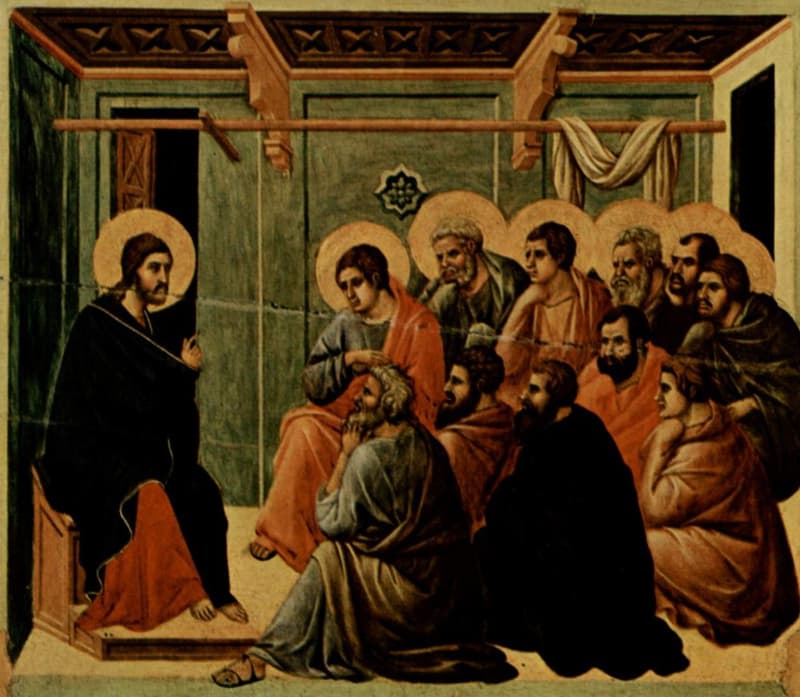
The first verse is itself a prayer—Jesus’ own, spoken to the Father at the Last Supper on the night before he dies. It begins by naming the source of eternal life: the Father, and Jesus Christ whom he has sent. From its first line, then, the Catechism points us toward God, toward his Son, and toward the eternal life offered to all. That offer is freely given, and receiving it depends on our knowing him.
Yet the verse says more than that. It does not say, “Father, may they know you, so that they may have eternal life.” It says, “This is eternal life, that they may know you.” What does the difference tell us about what eternal life is?
Is it knowing God that brings us eternal life, or loving him? Does the eternal life God gives open the way for us to know him? Is our knowledge and love of God itself eternal life, or does that knowing spring from eternal life—from the eternity we will spend in his presence?
What John’s Greek Says
The Greek sharpens the question rather than dissolving it. John writes αὕτη δέ ἐστιν ἡ αἰώνιος ζωὴ ἵνα γινώσκωσι σὲ τὸν μόνον ἀληθινὸν θεόν.4 The ἵνα clause does not state a purpose (“in order that they might know”); it defines the pronoun “this.” Eternal life is the knowing. And the verb is a present subjunctive, whose imperfective aspect suits ongoing action: not a single act of recognition but, I think, a continuing, living acquaintance. That fits John’s characteristic sense of “know”—not information about God, but the kind of knowing that belongs to friendship.
If that is right, eternal life does not wait until death. It starts here, in knowing God during this life, and it continues into the next. John’s Gospel says as much elsewhere, and in the present tense: whoever hears Jesus’ word and believes the one who sent him “has eternal life; he does not come into judgment, but has passed from death to life.”5
Faith, the Beginning of Eternal Life
The Catechism draws the same conclusion. Faith, it says, “makes us taste in advance the light of the beatific vision,” and so “faith is already the beginning of eternal life.”6 Its footnote sends the reader to St. Basil and to St. Thomas Aquinas, who, when he recast Hebrews 11:1 as a formal definition, wrote that faith is “a habit of the mind, whereby eternal life is begun in us.”7 Faith is not a ticket that will be exchanged for eternal life later. It is the first, dim form of the thing itself—knowledge of God received on his word, which will one day become knowledge of God by sight.
From Faith to Sight
That later knowledge is what the Church calls heaven. Those who die in God’s grace and are perfectly purified “see him as he is,” face to face; this “perfect life with the Most Holy Trinity” is “the ultimate end and fulfillment of the deepest human longings.” This contemplation of God has a name of its own: “the beatific vision.”8 St. Irenaeus, quoted in the Catechism, put the whole of it in one line: “the glory of God is man fully alive; moreover man’s life is the vision of God.”9 Life, in its fullest Christian sense, is seeing God.
Faith is not a ticket that will be exchanged for eternal life later. It is the first, dim form of the thing itself.
So which is it—does knowing God bring eternal life, or is it eternal life? The Prologue’s answer, I think, is that the question offers a false choice. Knowing God is both the beginning of eternal life and its substance. It starts in faith, grows through prayer and the sacraments, and is completed in vision. What changes at death is not the thing we have but the mode in which we have it: “For now we see in a mirror dimly, but then face to face.”10
This also corrects a picture of eternal life that I suspect most of us carry around. Pope Benedict XVI observed that the phrase itself misleads us. “Eternal” suggests something interminable, which frightens us; “life” suggests the life we already know, which is often more toil than satisfaction. Eternity, he wrote, is “not an unending succession of days in the calendar, but something more like the supreme moment of satisfaction, in which totality embraces us and we embrace totality.”11 John 17:3 gives that moment a name. It is knowing God.
Why Open the Catechism This Way?
Perhaps that is why the Church opens the Catechism with this prayer. The first section of the Prologue states the theme in its title, “The life of man—to know and love God,” and later the Catechism compresses the purpose of human existence into a single line: “God put us in the world to know, to love, and to serve him, and so to come to paradise.”12
The Prologue closes the same way it opens. Its final paragraph borrows a principle from the Roman Catechism of the sixteenth century: “The whole concern of doctrine and its teaching must be directed to the love that never ends.”13
That is a remarkable instruction to place at the front of a book of nearly three thousand paragraphs. It means that every teaching of the Church—on the sacraments, on the moral life, on prayer—exists to lead us to one truth: that in God alone, through his Son, do we have life. A doctrine that does not lead there has been misunderstood.
“God Our Saviour Desires All Men to Be Saved”
The second verse, from First Timothy, tells us that God “desires all men to be saved and to come to the knowledge of the truth”—the very truth expressed in the verse before it. The Catechism reads the phrase that way itself: the truth in question is “Christ Jesus.”14
God is not stingy with salvation, and he is not selective in offering it either. He wants everyone to be saved, and the verse means what it says. The Catechism repeats it more than once. When it comes to the Lord’s Prayer, it returns to the same text—“Our Father ‘desires all men to be saved and to come to the knowledge of the truth’”—and joins it to Second Peter: he is “forbearing toward you, not wishing that any should perish.”15 On the Cross the point is made concrete. The Church, “following the apostles, teaches that Christ died for all men without exception,” quoting a ninth-century council: “There is not, never has been, and never will be a single human being for whom Christ did not suffer.”16
Predestination, but Not to Hell
Here, of course, is where the hard questions begin. If God wills all to be saved, and not all are saved, how do his will and our freedom fit together? What about predestination? That question takes us away from the three verses for a stretch, and into the most technical part of this post. The detour is worth taking: the Church has answered carefully, and what follows is how far it goes and where it stops. The third verse waits on the other side.
Catholics do believe in predestination. The word is biblical, and the Catechism uses it. God’s “plan of his loving kindness” was “conceived by the Father before the foundation of the world”: “He destined us in love to be his sons.”17 The question is not whether God has an eternal plan, but what kind of plan it is.
What the Catechism Teaches
The Catechism answers in two steps. First, God’s plan is not a script written in advance and then imposed on us. “To God, all moments of time are present in their immediacy. When therefore he establishes his eternal plan of ‘predestination’, he includes in it each person’s free response to his grace.”18 The example it gives is the Passion itself. Herod, Pilate, the Gentiles, and the peoples of Israel did what God’s plan “had predestined to take place.” Yet they acted in their own blindness, and God permitted the acts that flowed from it for the sake of accomplishing his plan of salvation. God’s eternity does not compete with human freedom; it contains it.
Second, predestination runs in only one direction. The Catechism could hardly be plainer: “God predestines no one to go to hell; for this, a willful turning away from God (a mortal sin) is necessary, and persistence in it until the end.”19
Its footnote points to two councils. The Second Council of Orange (529), even as it insisted on the absolute priority of grace, anathematized anyone who holds that some are foreordained to evil by the power of God. A thousand years later the Council of Trent (1547) renewed the condemnation against the Reformers, anathematizing the view that “the grace of Justification is only attained to by those who are predestined unto life; but that all others who are called, are called indeed, but receive not grace, as being, by the divine power, predestined unto evil.”20 Whatever else Catholic teaching on predestination is, it is not double predestination in Calvin’s sense: no one is predestined to damnation.
Hell, on this account, is not a place God assigns in advance; it is a condition we choose. “We cannot be united with God unless we freely choose to love him,” the Catechism says, and to die in mortal sin without repenting and accepting God’s merciful love “means remaining separated from him for ever by our own free choice. This state of definitive self-exclusion from communion with God and the blessed is called ‘hell.’”21 The same free will that makes love possible makes refusal possible. God’s grace moves the will without coercing it, and refusal is ours alone.
Aquinas on God’s Two Wills
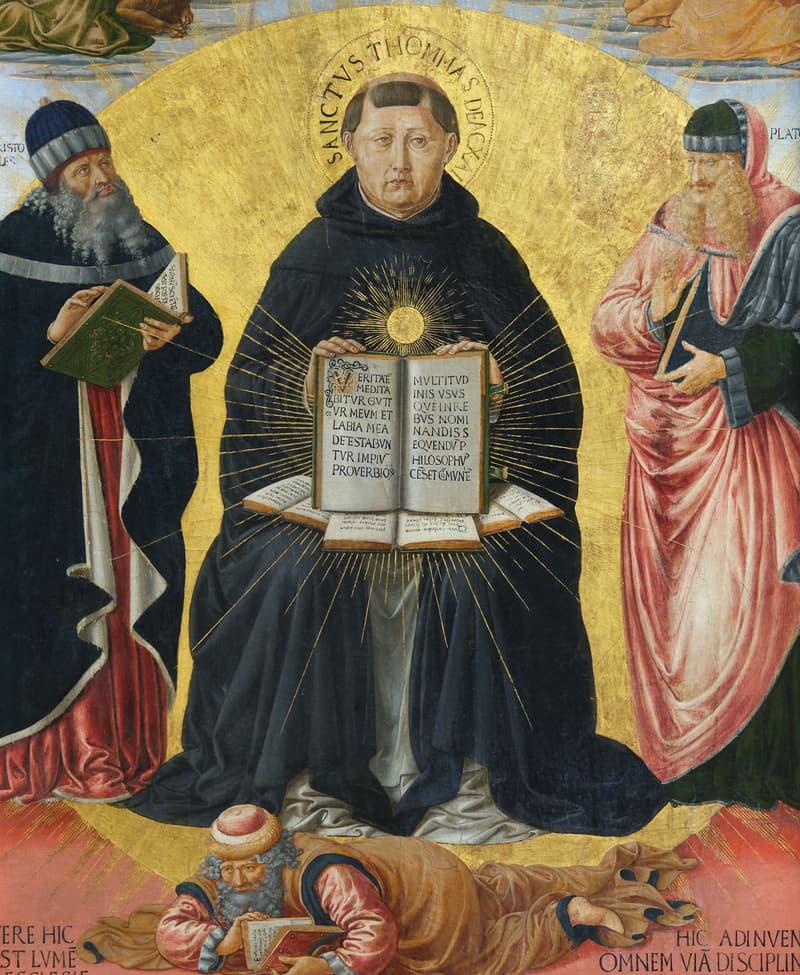
St. Thomas offers a distinction that helps hold these truths together without pretending to explain them away. When he takes up 1 Timothy 2:4 in the Summa, he proposes three readings of the verse. The first two, from St. Augustine, narrow the “all”—to all who are in fact saved, or to every kind of person; the last, taken from St. John Damascene, distinguishes God’s antecedent will from his consequent will—a distinction, he is careful to add, not in God himself but in the things God wills. A just judge wills, absolutely considered, that every man should live; considering the particular case, he wills that the murderer be punished. “In the same way God antecedently wills all men to be saved, but consequently wills some to be damned, as His justice exacts.”22
On this reading the universal will is real, not a figure of speech, though Thomas calls it “a willingness rather than an absolute will.” The Catechism, for its part, locates the cause of anyone’s loss in his own persistence in turning away.
A Question the Church Leaves Open
How exactly God’s grace moves a free will without destroying its freedom is a question the Church has deliberately left open. At the end of the sixteenth century the Dominicans, following a strict reading of Thomas, and the Jesuits, following Luis de Molina, argued the point so fiercely that the pope convened a special commission—the Congregatio de Auxiliis—to settle it. After some twenty years of controversy, Paul V ended the dispute in 1607 without deciding it: each side was permitted to defend its own view and forbidden to censure the other.23
Any account of predestination that makes 1 Timothy 2:4 mean less than it says has gone wrong somewhere upstream.
Thomists and Molinists are still arguing, and both remain Catholic. I have written about that debate elsewhere, and about how the Catholic view differs from Calvin’s. What matters here is how the Church handles the question: it fixes the boundaries—grace is first, freedom is real, no one is predestined to damnation—and leaves the mechanism to theologians.
That seems to me the right posture. There is a mystery here, in free will and predestination and in how the two relate. Whatever the full truth is, God grasps it in his essence, and we cannot. But God has revealed himself to us as one who calls all to salvation and desires all to be saved, and I believe that is true however it plays out at the metaphysical level. Perhaps the rest is not for us to know.
As we speculate, and as we systematize what has been revealed to us, we must hold on to this statement from First Timothy as our controlling text. Any account of predestination that makes 1 Timothy 2:4 mean less than it says has gone wrong somewhere upstream. Everything else should flow from it. The Church has said as much: in 853 the Council of Quiercy taught that “omnipotent God wishes all men without exception to be saved,” although not all will be.24
God excludes no one on purpose; he does not will, in advance, that anyone be lost. If some are, they have excluded themselves, by their own free choice and not by any decree of his that comes first.
The Church Prays That No One Be Lost
The Church’s own practice confirms this. It does not merely tolerate the hope that all might be saved; it prays for it. “The Church prays that no one should be lost,” the Catechism says, and it grounds that prayer in the same verse: “If it is true that no one can save himself, it is also true that God ‘desires all men to be saved’ (1 Tim 2:4), and that for him ‘all things are possible.’”25 A Church that believed God had predestined some to hell could not pray that way. (This is not a claim that hell is empty. The Catechism affirms that hell exists and that its punishment is eternal; it refuses to attribute anyone’s presence there to God’s will.) For a longer treatment of the verse and its place in the Catechism, see my earlier post, God Desires All Men To Be Saved.
“No Other Name”: The How
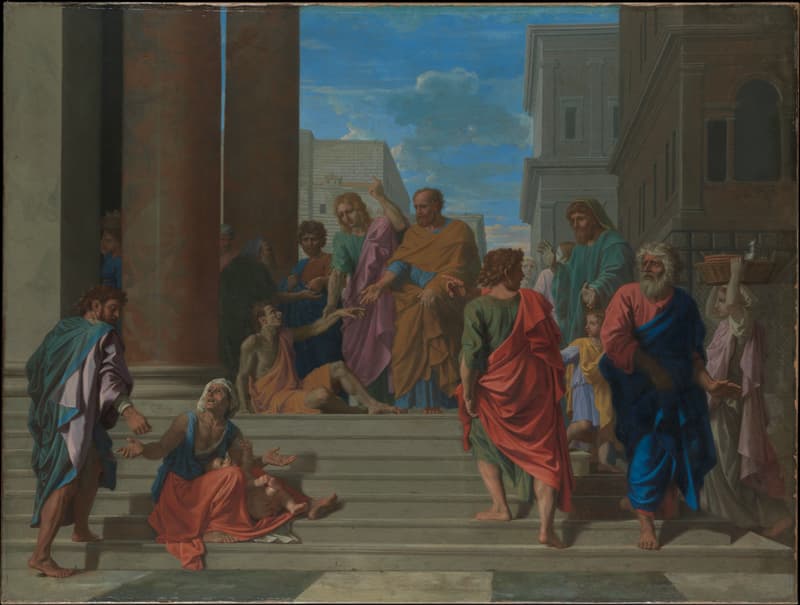
The third verse supplies the means. Peter spoke these words to the rulers and elders in Jerusalem after the healing of a lame man in Jesus’ name: “there is no other name under heaven given among men by which we must be saved.” The Catechism adds its own gloss—“than the name of JESUS”—and elsewhere explains why the name carries such weight. “Jesus” means “God saves”; the name “signifies that the very name of God is present in the person of his Son,” and it is “the divine name that alone brings salvation.” Because Jesus “united himself to all men through his Incarnation,” all can now invoke his name.26
So salvation has come into the world only through Jesus Christ. It is offered to everyone and received by those who come to know and love him. There is one way, one means, to the Father. We can approach God now and pray to him freely because of what his Son has done for us and for the world. Notice how the third verse keeps the second honest: God’s universal will to save is not a vague benevolence that bypasses Christ. It is universal precisely because Christ united himself to every human being.
Three Building Blocks
This is the foundation of the faith. The first line gives the what, the second the who, and the third the how.
The what: eternal life, which consists in knowing God—not as an abstract, distant being but as a personal God, known in faith now and seen face to face hereafter.
The who: everyone. Salvation is not available only to some; God desires all people to come to the knowledge of the truth, and so to eternal life.
The how: through Jesus Christ our Lord, in whose name alone we are saved.
These three are the building blocks of the Catechism. Every article that follows, from the Creed to the Our Father, can be read as an elaboration of one of them.
Living in Light of Eternity
If this is the foundation of the faith, it ought to be the center of the Christian life. Each of the three verses asks something of the person who believes it: the first that we come to know God, the second that we want the same for everyone else, and the third that we become saints. The three sections that close this post take them in that order. Our goal in all things should be to know God more, to pray more, to encounter his Son in the Eucharist more, and to live in light of the eternal life he has promised.
That requires a wider perspective. If eternal life begins in knowing God, our vision cannot stop at the edge of this life. These years are not simply a chance to fulfill ourselves or to pursue our own pleasures. The “you only live once” mindset does not fit. We are to look past our own death, prepare for it, and look further still, into eternal life. We are called to live not for this life but for the next—or, more truly, not for the earthly life but for heaven, because our life in God, our eternal life, has already begun.
Keeping that perspective, we have to cling to the faith and persevere in it, seeking to serve and please God in everything we do, and using every day to show our love for him more.
Not for Ourselves Alone
Yet the Prologue does not let us think about eternal life only as it concerns us. This is where the second verse matters. If God desires all people to be saved and to come to the knowledge of the truth, then those who already know him should be helping others come to that knowledge.
The Catechism draws the connection itself, and immediately. Its first three paragraphs move from God’s plan to the apostles he sent and then to every believer: those who have welcomed Christ’s call “are urged on by love of Christ to proclaim the Good News everywhere in the world,” and “all Christ’s faithful are called to hand it on from generation to generation”—the subject of the next post in this series.27 Evangelization is not a specialty reserved for missionaries. It follows directly from what God wants, and we should be doing everything we can to advance it—sharing the gospel, sharing our faith, and bearing witness.
More Than Saved
The final verse reminds us that only through the name of Jesus can we reach the Father and be saved. But being saved is not the end of the story. The Catechism is clear that “all Christians in any state or walk of life are called to the fullness of Christian life and to the perfection of charity.”28 The Christian is called not only to be saved but to serve God fully, to be a saint, and to live every day in a way that pleases him.
I think of the Lord’s question about Job: “Have you considered my servant Job, that there is none like him on the earth, a blameless and upright man, who fears God and turns away from evil?”29 Job’s uprightness was not a moral résumé; it was the shape a life takes when God is at its center. The Prologue invites each of us toward that kind of life—one so oriented toward knowing God that he could say the same of us.
That is where the Catechism begins, and it is where the Christian life begins too: this is eternal life, that they may know you.
The Prologue at a Glance (CCC 1–25)
The three verses stand above the Prologue like an epigraph. Beneath them the Prologue itself runs twenty-five numbered paragraphs in six sections, followed by a closing paragraph under a heading of its own. This series gives each section its own post; the links below fill in as they are published:
- The life of man—to know and love God (CCC 1–3). God’s plan of “sheer goodness,” the sending of the apostles, and the call to every believer to hand the faith on.
- Handing on the faith: catechesis (CCC 4–10). What catechesis is—“an education in the faith of children, young people and adults,” in John Paul II’s words—and how the Fathers, the Council of Trent, and the Second Vatican Council each renewed it, down to the 1985 Synod of Bishops’ request for this very book.
- The aim and intended readership of the Catechism (CCC 11–12). An “organic synthesis of the essential and fundamental contents of Catholic doctrine,” written first for bishops and, through them, for the authors of catechisms, priests, and catechists, though it is also meant as “useful reading for all other Christian faithful.”
- Structure of this Catechism (CCC 13–17). Four “pillars”: the Creed, the sacraments, the life of faith (the Commandments), and prayer (the Lord’s Prayer). These become the book’s four parts.
- Practical directions for using this Catechism (CCC 18–22). How to read the cross-references, the passages in small print, and the “In Brief” summaries.
- Necessary adaptations (CCC 23–24). The Catechism leaves the adaptation of its teaching to local catechisms and to those who instruct the faithful.
Above all—charity (CCC 25). The Prologue closes under this heading with the principle that all teaching must be “directed to the love that never ends.”
Seen whole, the Prologue does at length what the epigraph does in three lines. It begins with God’s plan to share his own life, and it ends with love.
Frequently Asked Questions
What are the three Bible verses at the start of the Catechism of the Catholic Church?
The Prologue opens with John 17:3 (“this is eternal life, that they may know you, the only true God, and Jesus Christ whom you have sent”), 1 Timothy 2:3–4 (“God our Saviour desires all men to be saved and to come to the knowledge of the truth”), and Acts 4:12 (“there is no other name under heaven given among men by which we must be saved”), to which the Catechism adds, “than the name of JESUS.”
What does John 17:3 mean by “eternal life”?
It defines eternal life as knowing God and Jesus Christ. The verse does not say that knowledge earns eternal life; it says that knowing God is eternal life. That is why the Catechism can say that faith is “already the beginning of eternal life”: the knowledge of God that begins in faith is completed in the beatific vision, when we see God face to face.
Does John 17:3 mean that Jesus is not God?
No. The verse calls the Father “the only true God,” but it sets Jesus Christ beside him as the one we must also know if we are to have eternal life. St. Augustine read the line this way: “The proper order of the words is, That they may know You and Jesus Christ, whom You have sent, as the only true God.” The Holy Spirit, he added, is understood as well, since he is “the Spirit of the Father and Son” (Tractates on the Gospel of John 105.3, NPNF¹ 7). The same Gospel opens by saying that the Word “was God” (John 1:1).
Does the Catholic Church teach predestination?
Yes, but not double predestination in the Calvinist sense. The Catechism teaches that God has an eternal plan that includes each person’s free response to his grace (CCC 600), and it states flatly that “God predestines no one to go to hell” (CCC 1037). The Council of Trent condemned the view that God predestines some people to evil. How grace and free will fit together in detail is a question the Church has left open to theological debate.
If God wants everyone to be saved, why isn’t everyone saved?
Because salvation is a communion of love, and love cannot be forced. According to the Catechism, a person is separated from God only by a willful turning away—mortal sin—and persistence in it until the end. Hell is described as “definitive self-exclusion,” the result of a person’s own free choice rather than a prior divine decree.
Footnotes
1. Catechism of the Catholic Church, 2nd ed. (Libreria Editrice Vaticana, 2000), Prologue, citing John 17:3; 1 Tim 2:3–4; and Acts 4:12. The capitals are the Catechism’s own. Hereafter CCC.
4. John 17:3, SBLGNT. The present subjunctive γινώσκωσι stands in a ἵνα clause that is epexegetical of αὕτη (“this is eternal life, namely, that they know”), not final. English translations divide over whether to render it “that they may know” (as the Catechism does) or “that they know” (RSV-CE).
5. John 5:24, RSV-CE; compare John 3:36: “He who believes in the Son has eternal life.”
6. CCC 163. The Catechism’s note (48) cites St. Basil, De Spiritu Sancto 15.36 (PG 32:132), and adds a “cf.” to Aquinas, ST II-II, q. 4, a. 1.
7. Thomas Aquinas, Summa Theologiae II-II, q. 4, a. 1, trans. Fathers of the English Dominican Province (1920), New Advent. The full definition reads: “faith is a habit of the mind, whereby eternal life is begun in us, making the intellect assent to what is non-apparent.”
9. CCC 294, quoting St. Irenaeus, Adversus haereses 4.20.7 (PG 7/1:1037).
10. 1 Cor 13:12, RSV-CE, one of the two Scripture texts the Catechism cites at CCC 163.
13. CCC 25, quoting the Roman Catechism, Preface 10; cf. 1 Cor 13:8.
15. CCC 2822, citing 1 Tim 2:3–4 and 2 Pet 3:9; cf. Matt 18:14.
18. CCC 600, quoting Acts 4:27–28—the prayer of the Jerusalem church later in the same chapter as Acts 4:12.
19. CCC 1037, with a “cf.” to the Second Council of Orange (529), DS 397, and the Council of Trent (1547), DS 1567.
20. Council of Trent, Session 6, Canons on Justification, canon 17 (DS 1567), in The Canons and Decrees of the Sacred and Oecumenical Council of Trent, trans. J. Waterworth (London: Dolman, 1848), Hanover Historical Texts Project. For Orange, see the conclusion appended to its canons (DS 397).
22. Aquinas, ST I, q. 19, a. 6, ad 1, New Advent, citing John Damascene, De fide orthodoxa 2.29.
23. Antonio Astrain, “Congregatio de Auxiliis,” in The Catholic Encyclopedia, vol. 4 (Robert Appleton, 1908), which reports that the papal decree “allowed each party to defend its own doctrine, enjoined each from censoring or condemning the opposite opinion, and commanded them to await… the final decision of the Apostolic See”—a decision that has never come.
24. Council of Quiercy (853), ch. 3 (DS 623), in Henry Denzinger, The Sources of Catholic Dogma, trans. Roy J. Deferrari (Herder, 1957), no. 318. Innocent X’s constitution Cum occasione (1653) likewise condemned as heretical the Jansenist proposition that “it is Semipelagian to say that Christ died or shed His blood for all men without exception,” understood to mean that he died only for the predestined (DS 2005; Deferrari no. 1096).
25. CCC 1058, quoting 1 Tim 2:4 and Matt 19:26. On the existence and eternity of hell, see CCC 1035.
26. Acts 4:12, RSV-CE, as quoted in the Prologue; see Acts 3:1–10 and 4:7–12 for the setting. CCC 430, 432.
28. CCC 2013, quoting Lumen Gentium 40 §2 in the Catechism’s own translation.
29. Job 1:8, RSV-CE.

Garrett Ham
Garrett Ham is an attorney, military veteran, and holds a Master of Divinity from Yale Divinity School. He writes from Northwest Arkansas on theology, law, and service.
Related Posts
The Life of Man—To Know and Love God (CCC 1–3)
The Catechism’s first three paragraphs explain why God made us, why Christ sent the apostles, and how the faith is handed on. A commentary on CCC 1–3.
God Desires All Men To Be Saved
What does 1 Timothy 2:4 mean for Catholic theology? A reflection on Catechism §74, predestination, free will, and God's universal desire for salvation.
Catholic vs. Calvinist Predestination: What Divides Us and What We Share
How do Catholic and Calvinist views of predestination differ? A comparison of Thomism, Molinism, and Reformed theology on election, grace, and free will.
Stay Informed
Get new writing on faith, law, and service delivered to your inbox.
No spam. Unsubscribe anytime.