Catechesis and the Preservation of the Faith (CCC 4–10)
On This Page
Part of a series working through the Catechism of the Catholic Church one section at a time. Previous: The Life of Man—To Know and Love God (CCC 1–3). Next: The Aim and Readership of the Catechism (CCC 11–12)
The second section of the Catechism’s prologue looks, at first glance, like a preface to a preface. Seven short paragraphs explain what catechesis is, name a few saints who were good at it, and trace the Church’s interest in it from the Fathers through the Council of Trent to the Second Vatican Council. It is easy to read in a minute and forget.
I think that would be a mistake. Underneath the history sits a claim about the nature of the faith itself. The Church does not hand on a password. It hands on a life, and a life has to be learned. That is why the Catholic Church asks so much more of new believers than the New Testament seems to ask of the jailer at Philippi, and it is why the question “What must I believe to be saved?” turns out to be inseparable from the question “What does it mean to believe?”
I first wrote about this section in 2020, as a recent convert working through the Catechism passage by passage. This commentary takes it up again at greater length and replaces that post.
The Text
Here is the section in full:1
4 Quite early on, the name catechesis was given to the totality of the Church’s efforts to make disciples, to help men believe that Jesus is the Son of God so that believing they might have life in his name, and to educate and instruct them in this life, thus building up the body of Christ.
5 “Catechesis is an education in the faith of children, young people and adults which includes especially the teaching of Christian doctrine imparted, generally speaking, in an organic and systematic way, with a view to initiating the hearers into the fullness of Christian life.”
6 While not being formally identified with them, catechesis is built on a certain number of elements of the Church’s pastoral mission which have a catechetical aspect, that prepare for catechesis, or spring from it. They are: the initial proclamation of the Gospel or missionary preaching to arouse faith; examination of the reasons for belief; experience of Christian living; celebration of the sacraments; integration into the ecclesial community; and apostolic and missionary witness.
7 “Catechesis is intimately bound up with the whole of the Church’s life. Not only her geographical extension and numerical increase, but even more her inner growth and correspondence with God’s plan depend essentially on catechesis.”
8 Periods of renewal in the Church are also intense moments of catechesis. In the great era of the Fathers of the Church, saintly bishops devoted an important part of their ministry to catechesis. St. Cyril of Jerusalem and St. John Chrysostom, St. Ambrose and St. Augustine, and many other Fathers wrote catechetical works that remain models for us.
9 “The ministry of catechesis draws ever fresh energy from the councils. The Council of Trent is a noteworthy example of this. It gave catechesis priority in its constitutions and decrees. It lies at the origin of the Roman Catechism, which is also known by the name of that council and which is a work of the first rank as a summary of Christian teaching…” The Council of Trent initiated a remarkable organization of the Church’s catechesis. Thanks to the work of holy bishops and theologians such as St. Peter Canisius, St. Charles Borromeo, St. Turibius of Mongrovejo or St. Robert Bellarmine, it occasioned the publication of numerous catechisms.
10 It is therefore no surprise that catechesis in the Church has again attracted attention in the wake of the Second Vatican Council, which Pope Paul VI considered the great catechism of modern times. The General Catechetical Directory (1971), the sessions of the Synod of Bishops devoted to evangelization (1974) and catechesis (1977), the apostolic exhortations Evangelii nuntiandi (1975) and Catechesi tradendae (1979), attest to this. The Extraordinary Synod of Bishops in 1985 asked “that a catechism or compendium of all Catholic doctrine regarding both faith and morals be composed.” The Holy Father, Pope John Paul II, made the Synod’s wish his own, acknowledging that “this desire wholly corresponds to a real need of the universal Church and of the particular Churches.” He set in motion everything needed to carry out the Synod Fathers’ wish.
Catechesis Belongs to Everyone
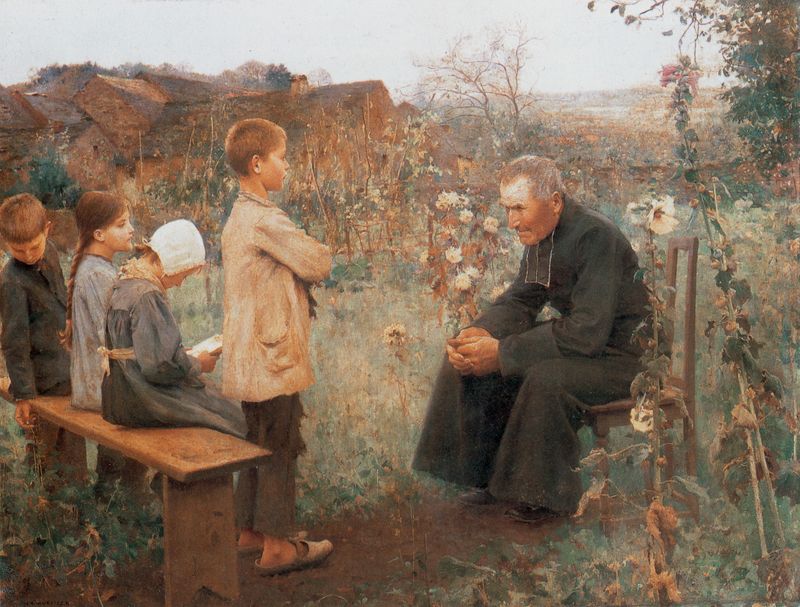
Before the details, notice what this section assumes. Catechesis is “an education in the faith of children, young people and adults.” It is not reserved for scholars, seminarians, or clergy. The Church’s teaching is meant to be held by every believer.
That matters, because the old Protestant picture casts Catholicism as a religion for the clergy, who drop crumbs to the laity from time to time. The picture does not square with Catholic teaching. Admittedly, the Church has sometimes done much to earn it.
I love the Latin Mass, and I have written about why: its reverence toward Christ’s presence in the Eucharist, its sense of awe, and the way it joins worshipers across the globe and across the centuries in one liturgy. Yet for someone who has not been formed in the faith, the same Mass can look like a performance by a priest in a language most of the congregation does not understand, watched by an audience that is not invited in. The remedy is not less reverence. It is catechesis. The more a believer has been taught, the less of the liturgy remains a closed door.
Why Not Baptize on the Spot? (CCC 4–5)
CCC 4 echoes the purpose statement at the end of John’s Gospel: “these are written that you may believe that Jesus is the Christ, the Son of God, and that believing you may have life in his name.”2 Catechesis exists so that people will believe in Christ and, believing, have life. That is beautifully simple. It is also, for a convert from evangelicalism, a little puzzling.
The New Testament records people believing and being baptized almost immediately. At Pentecost, “those who received his word were baptized, and there were added that day about three thousand souls.”3 The Ethiopian eunuch heard Philip preach on a desert road, saw water, and asked, “What is to prevent my being baptized?” He was baptized before the chariot moved on.4 The jailer at Philippi asked Paul and Silas what he must do to be saved, and “he was baptized at once, with all his family,” the same hour of the night.5
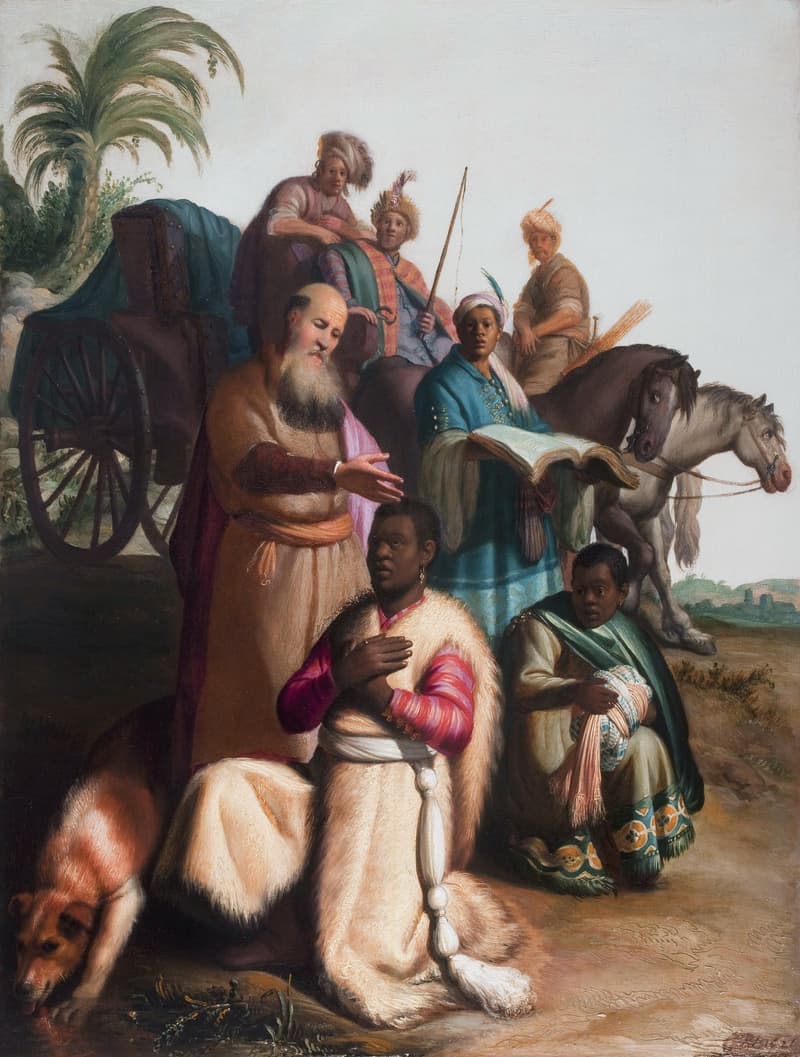
Many Protestant churches follow that pattern today. In much of the evangelical world, one can walk forward at an altar call and be baptized the next Sunday, sometimes the same day. I do not mean that as a criticism. It has clear apostolic precedent.
So why does the Catholic Church ask more? Why months of preparation before an adult is received? What, exactly, is the minimum a person has to know before he can be said to have come “to the knowledge of the truth”?
What the Catechism actually requires
The first surprise is that the Catechism does not disagree with the Book of Acts. It says that “from the time of the apostles,” becoming a Christian has been “accomplished by a journey and initiation in several stages,” and then: “This journey can be covered rapidly or slowly, but certain essential elements will always have to be present: proclamation of the Word, acceptance of the Gospel entailing conversion, profession of faith, Baptism itself, the outpouring of the Holy Spirit, and admission to Eucharistic communion.”6 The jailer covered it rapidly, and the essentials Luke records are all there: the word preached, faith, and baptism. Luke even notes the step that a quick reading misses: before the baptism, Paul and Silas “spoke the word of the Lord to him and to all that were in his house.”7
Nor does the Church demand a finished theology before baptism. “The faith required for Baptism is not a perfect and mature faith,” the Catechism says, “but a beginning that is called to develop.”8 That is about as direct an answer to my question as one could ask for. The minimum is not a finished theology but a beginning: enough of the faith to profess it, and a real turning to Christ, which baptism does not complete but starts.
The Church’s law says the same thing in its own idiom. Ordinarily it asks that an adult be “instructed sufficiently about the truths of the faith and Christian obligations” and tested in the Christian life through the catechumenate. But an adult in danger of death may be baptized with only “some knowledge of the principal truths of the faith,” an intention to be baptized, and a promise to keep the commandments.9
Who was being baptized
The second thing to notice is who those first converts were. The crowd at Pentecost were “Jews, devout men from every nation under heaven,”10 people who already knew the God of Israel, the Law, and the Prophets. The Ethiopian had “come to Jerusalem to worship” and was reading Isaiah when Philip found him.11 Philip did not have to explain who God is. He had to explain who the servant of Isaiah 53 is. The jailer is the harder case: very likely a pagan, baptized the same night. But even he was not baptized on a bare request. Paul and Silas first spoke the word of the Lord to his whole household, and he had an apostle in the house to keep teaching him.
The Catholic Encyclopedia made the same observation more than a century ago. Instruction in the apostolic age, it says, “would vary according as these were Jews or pagans, and was naturally simple in character and short in duration.”12 A pagan from a household of idols had further to travel than a God-fearer who already prayed to the God of Abraham. The longer road was not an extra requirement laid on top of the gospel. It was the distance a convert had to cover.
The longer road was not an extra requirement laid on top of the gospel. It was the distance a convert had to cover.
Teaching after baptism
The third thing is that the apostles did not stop teaching once the water was poured. Immediately after the three thousand were baptized, Luke writes, “they devoted themselves to the apostles’ teaching.”13 (The previous post in this series took up that verse at length, because the Catechism uses it to describe how the faith is handed on.) For the first converts, much of the catechesis came after the sacrament. That is still true of every Catholic baptized as an infant, and it is the reason CCC 5 speaks of children and young people as well as adults.
Why the road grew longer
Before long, the Church was asking for preparation before baptism, not only after. The Didache, a church manual whose earliest material goes back to the first century, gives its moral teaching on “the Two Ways” and then directs: “Having first said all these things, baptize into the name of the Father, and of the Son, and of the Holy Spirit.”14 Around 155, Justin Martyr describes the converts of his day to the emperor:
As many as are persuaded and believe that what we teach and say is true, and undertake to be able to live accordingly, are instructed to pray and to entreat God with fasting, for the remission of their sins that are past, we praying and fasting with them. Then they are brought by us where there is water, and are regenerated in the same manner in which we were ourselves regenerated.15
Notice the order: persuaded, believing, undertaking to live accordingly, praying and fasting with the community, and only then the water. (I have written about what Justin says the water does elsewhere.)
What lengthened the road? The Catholic Encyclopedia’s answer is persecution: “It was rather the danger of apostasy, or even betrayal in time of persecution which gave rise to special precautions as to admission into the Church.” Converts needed an intellectual preparation “to guard against the arguments of the pagan philosophers” and a moral one “to give strength against the torments of the persecutors.”16 A Church whose members could be arrested had good reason to know whom it was admitting and to make sure they knew what they were confessing.
So I do not think the catechumenate was “just a good idea.” It grew out of the same thing the apostles were doing in Acts, adapted to converts who had further to come and a world that made their coming costly. The essentials never changed. The pace did.
What Does It Mean to Believe? (CCC 4)
The clause at the center of CCC 4 can be read two ways. Catechesis helps people believe “that Jesus is the Son of God so that believing they might have life in his name.” On one reading, believing is the means and life is the result. On the other, catechesis produces a belief that then gives rise to everything else needed to have life.
The Greek of John 20:31, which the Catechism is echoing, points to something in between. The phrase “that believing you may have life” uses a present participle, πιστεύοντες, which suggests, I think, an ongoing believing: by continuing to believe, you have life.17 The life is not a payment issued once for a single act of belief. It is had in the believing, and the believing goes on.
That only sharpens the question. What is this believing?
Faith is more than assent
I get into these arguments with Protestants on X, and I have come to think that most of them turn on a word both sides use without defining it. Everyone agrees that we are saved by grace through faith. Paul says so: “by grace you have been saved through faith; and this is not your own doing, it is the gift of God—not because of works, lest any man should boast.” James seems to say the opposite: “You see that a man is justified by works and not by faith alone.”18
The way the two apostles fit together depends almost entirely on what faith is. If faith is the kind of belief that even the demons have—the point the previous post made from James 2:19—then James is right to call it dead, and Paul could not have meant that. If faith is something larger, the contradiction dissolves. Paul himself supplies the bridge in the very next verse of Ephesians: “we are his workmanship, created in Christ Jesus for good works.” And in Galatians he names the faith that counts: “faith working through love.”19
What the Catechism means by faith
The Catechism’s own definition of faith says the same thing in its own terms:
Faith is the theological virtue by which we believe in God and believe all that he has said and revealed to us, and that Holy Church proposes for our belief, because he is truth itself. By faith “man freely commits his entire self to God.” For this reason the believer seeks to know and do God’s will. “The righteous shall live by faith.” Living faith “work(s) through charity.”20
Faith, on this account, is not only believing that something is true. It is committing one’s entire self to the one who said it. To believe Christ, beyond the bare affirmation that he exists, is to believe that the words he spoke are true, and to act on them, trusting that in doing so we will receive what he promised. Anything short of that is not the living faith the Catechism has in mind. Faith can survive in a believer who sins, the Catechism grants, but without hope and love it “does not fully unite the believer to Christ.”21
That is why catechesis is needed. A person who has committed his entire self to God has to learn what God has said, because he now intends to do it. Catechesis is how that commitment comes to know what it has committed to.
Faith that loves will obey
I think this is where Catholic and Protestant conversations most often talk past each other. When a Catholic says that obedience matters for salvation, a Protestant often hears a transaction: do enough good deeds and you earn your way to heaven. When a Protestant says that we are saved by faith alone, a Catholic often hears a different transaction: say the prayer, believe the right thing, and receive salvation in exchange, without regard to how one lives.
Salvation cannot be a transaction of either kind. It cannot be reduced to a tally of good deeds, as though heaven had a passing score that no one is told in advance, and coming up one short meant hell. That is a false economy, and it misses the point entirely.
Nor can it be reduced to a one-time legal event that leaves the rest of a life untouched. No confessional Protestant thinks that either; the Reformers insisted that renewal always follows justification. The dispute is whether that renewal is part of justification itself. The Catechism describes justification in terms of a change: conversion, by which “man turns toward God and away from sin,” and, quoting Trent, “not only the remission of sins, but also the sanctification and renewal of the interior man.”22
The faith that saves is faith joined to love, and love obeys. Love is not passive. It is active and costly, and it cannot ignore its object. No one can refuse every responsibility in a relationship and expect to receive everything while giving nothing. So when Catholics talk about obedience, the point is not that our works are good enough. What could possibly be good enough for the God of heaven? The point is that we obey God because we love him, and that in obeying him—through the sacraments, through prayer, through Scripture, through sharing the faith—we draw closer to him, or rather he draws us closer to himself.
What heaven is
That raises a question I think settles more of the argument than it first appears to. What is heaven?
The Catechism calls it “this perfect life with the Most Holy Trinity—this communion of life and love with the Trinity, with the Virgin Mary, the angels and all the blessed.”23 Heaven is not a reward attached to God from the outside, like a prize for a contest. It is God himself, known and loved without obstruction. John says that “when he appears we shall be like him, for we shall see him as he is.”24
If that is what heaven is, would anyone want it who did not love God? Could anyone bear his presence who did not? The Catechism’s answer is blunt: “We cannot be united with God unless we freely choose to love him.”25 Much of the debate over faith and works, I suspect, rests on a picture of heaven common in popular preaching on both sides, a quietly hedonistic one: heaven as a very good place we would all like to go, with the only question being how to get in. But heaven is union with God, and union with God can be pursued now. Salvation is not merely being rescued from hell. It is becoming like Christ, drawn nearer and nearer to the Father, and obedience by grace is how a sinner gets close.
Salvation is not merely being rescued from hell. It is becoming like Christ, drawn nearer and nearer to the Father, and obedience by grace is how a sinner gets close.
Two Ways to Refuse Grace
The Catechism names this error, and its mirror image, in two sentences. In its treatment of the First Commandment, it describes presumption, a sin against hope:
There are two kinds of presumption. Either man presumes upon his own capacities, (hoping to be able to save himself without help from on high), or he presumes upon God’s almighty power or his mercy (hoping to obtain his forgiveness without conversion and glory without merit).26
That is a coin with two sides. On one side is self-reliance: the person who trusts his own goodness and will not receive grace as a gift. On the other is license: the person who believes that faith is enough in a sense that makes it no longer matter what he does. They look like opposites, and in the arguments between Catholics and Protestants each side tends to accuse the other of one of them. But they are the same failure. Both refuse to cooperate with the grace God actually offers, on the terms on which he offers it.
The way between them was there from the beginning, in the first words of Jesus’ preaching: “repent, and believe in the gospel.”27 Repent and believe. Turning from sin to follow Christ is an action, and it is a response to an offer God made first. The Catechism puts the order plainly: “we are only collaborating with God who works, for his mercy has gone before us.”28
This changes what spiritual disciplines are for. The Liturgy of the Hours, the Rosary, regular reading of Scripture, frequent Mass: none of these is a stack of chips to set before God and demand favor. They are means, ways of drawing near and of letting God conquer the parts of us that are weak and ugly, so that nothing stands between us and him. There is a beauty in that. Good works stop being anxious attempts to please God and become things one wants to make time for, because through them one is drawn closer and, slowly, made more like his Son. The driving force is not pride. It is love.
Where Catholics and Protestants Agree, and Where We Part
On much of the above, I think a careful Protestant would agree. The Westminster Confession, the classic Reformed statement of faith, says that justifying faith “is no dead faith, but worketh by love.”29 As the previous post noted, few Protestants think the demons’ kind of faith saves anyone.
Where the disagreement sharpens, for me, is over what God makes of the works themselves. Some of the arguments I hear seem to me to say that we cannot please God at all: that there is nothing we can do to make him proud of us, nothing he could count in our favor. Isaiah 64:6 is often quoted to that effect, in the King James wording: “all our righteousnesses are as filthy rags.”30
I think that view fails to appreciate what the cross accomplished. A brief illustration has helped me. When my children were small, they brought me artwork they had made. From any higher-level perspective it was nothing special. It was never going to hang in a gallery. Yet my children made it for me, and they showed their love by making it, and because I love them, I treasured it. My children are older now and long ago stopped bringing me such things. I have kept them anyway.
Because of the cross, the relationship between God and the believer is that of a father and his children. Our good works are small and imperfect, and unworthy of his glory. But he loves them, and treasures them, and looks on them with approval, because he is our Father and we are his children. To refuse to believe that is not humility. It is a kind of pride: a refusal to let God’s view of us, and the relationship he wants with us, be the deciding fact.
The confession agrees more than its popular echo
Here, though, fairness requires something important. The Westminster Confession itself says almost exactly what my illustration says:
Notwithstanding, the persons of believers being accepted through Christ, their good works also are accepted in him; not as though they were in this life wholly unblamable and unreprovable in God’s sight; but that he, looking upon them in his Son, is pleased to accept and reward that which is sincere, although accompanied with many weaknesses and imperfections.31
That is the father and the child’s drawing, in seventeenth-century English. My quarrel, then, is not with Reformed theology at its best. The Confession holds two things together: that even believers’ best works, considered as ours, are “defiled,” and that God, looking on them in his Son, “is pleased to accept and reward” them. Its proof texts for the first point even include the verse from Isaiah.32 The popular echo keeps the first and forgets the second.
Where the paths fork
The difference that remains is real, and merit is where it surfaces. As I argued in my post on Trent, the root question is whether the righteousness by which a believer stands before God is Christ’s, credited to him, or Christ’s grace really at work in him.
On the starting point, Catholics agree with Protestants more than either side often expects. Catholics do not hold total depravity; the Catechism teaches that human nature “has not been totally corrupted.”33 But Catholics do hold that “no one can merit the initial grace of forgiveness and justification.” The Westminster Confession denies that our best works can “merit pardon of sin, or eternal life at the hand of God.”34 The Catechism agrees about pardon. Where it parts company is the rest: it teaches that God, as a Father, freely chooses to make the works of his children meritorious, even “for the attainment of eternal life.”35 It explains why:
The merit of man before God in the Christian life arises from the fact that God has freely chosen to associate man with the work of his grace. The fatherly action of God is first on his own initiative, and then follows man’s free acting through his collaboration, so that the merit of good works is to be attributed in the first place to the grace of God, then to the faithful.
It continues: “Filial adoption, in making us partakers by grace in the divine nature, can bestow true merit on us as a result of God’s gratuitous justice.”36 Paul calls the adopted children “heirs of God and fellow heirs with Christ,”37 and Hebrews says that “God is not so unjust as to overlook your work and the love which you showed for his sake.”38
Notice the words: fatherly, filial, adoption, gratuitous. Catholic merit is not wages paid to an employee. It is what a father gives his children because he has chosen to count their gifts. And lest anyone think Catholic merit means boasting, the Catechism closes its section on merit with St. Thérèse of Lisieux: “In the evening of this life, I shall appear before you with empty hands, for I do not ask you, Lord, to count my works.”39 Both things are true at once. God counts what we do, and we do not ask him to.
Catholic merit is not wages paid to an employee. It is what a father gives his children because he has chosen to count their gifts.
One Christian Life, Not Six Activities (CCC 6)
CCC 6 lists six elements of the Church’s mission that prepare for catechesis or spring from it: the first proclamation of the gospel, the examination of the reasons for belief, the experience of Christian living, the celebration of the sacraments, integration into the community of the Church, and apostolic and missionary witness.
It would be easy to read that as a checklist. I do not think it is one. These are not separate parts of the Christian life. Taken together, they are the Christian life. To have faith, to understand the reasons for it, to live it, to celebrate it in the sacraments, to belong to the Body of Christ, and to bear witness to others are aspects of one objective: to love and follow God.
The list also shows what the Church does after the first proclamation. Evangelical churches are often superb at that first element: preaching the gospel and calling for a decision. Many, including the Southern Baptist churches I grew up in, also invest heavily in Sunday school and discipleship. The danger, wherever conversion is treated as the decisive event, is that everything after it comes to look optional.
CCC 6 does not let the Church stop there. After coming to faith comes the examination of the reasons for belief. The faith is more than blind acceptance. By using the gifts of reason and logic that God has given us, we can ground it in something more objective than our feelings on a given day. Without that, I suspect, many people eventually fall away.
The rest of the list makes a point that should be obvious and often is not: the faith was designed to be lived in common. The sacraments are celebrated together. One is integrated into a community, not merely enrolled in a class. It is entirely possible to receive the sacraments faithfully and still live the faith as a private matter, and CCC 6 quietly rules that out. Personal piety without charity, and without the outward life of a community, is not what the Church means by Christian living.
Never Finished Learning (CCC 7)
CCC 7 says that the Church’s “inner growth and correspondence with God’s plan depend essentially on catechesis.” Numerical growth matters. The Church exists to bring people to the knowledge of Christ, and it should want more of them. But the Catechism puts inner growth ahead of it: “even more.”
I think this paragraph says something important about the Catholic attitude toward the Christian life. It is a life of continual learning, through the Church and its teachings and through the Holy Spirit working in those who submit to them. How can anyone know God’s will without knowing God? How can anyone know God without understanding what he has done: the Incarnation, the work of the Holy Spirit, sin as an oppressive force, and death as an enemy Christ conquered?
The Catechism says it plainly elsewhere: “For all the baptized, children or adults, faith must grow after Baptism.”40 In that sense every Christian remains a learner for life. A degree in theology, however valuable, is not a graduation from catechesis. It is one tool in a process that does not end, and the danger of a theological education is the complacency of thinking one has already learned enough.
A degree in theology, however valuable, is not a graduation from catechesis.
That is also why the same texts have to be read again and again. I cannot read the Bible once and be done with it, as with any other book. I have to read it over and over, learning a little more each time and bringing it into prayer. Prayer is what keeps catechesis from becoming an academic exercise. Learning joined to prayer becomes living, and its application becomes far more powerful.
The Fathers and the Simplicity of the Faith (CCC 8)
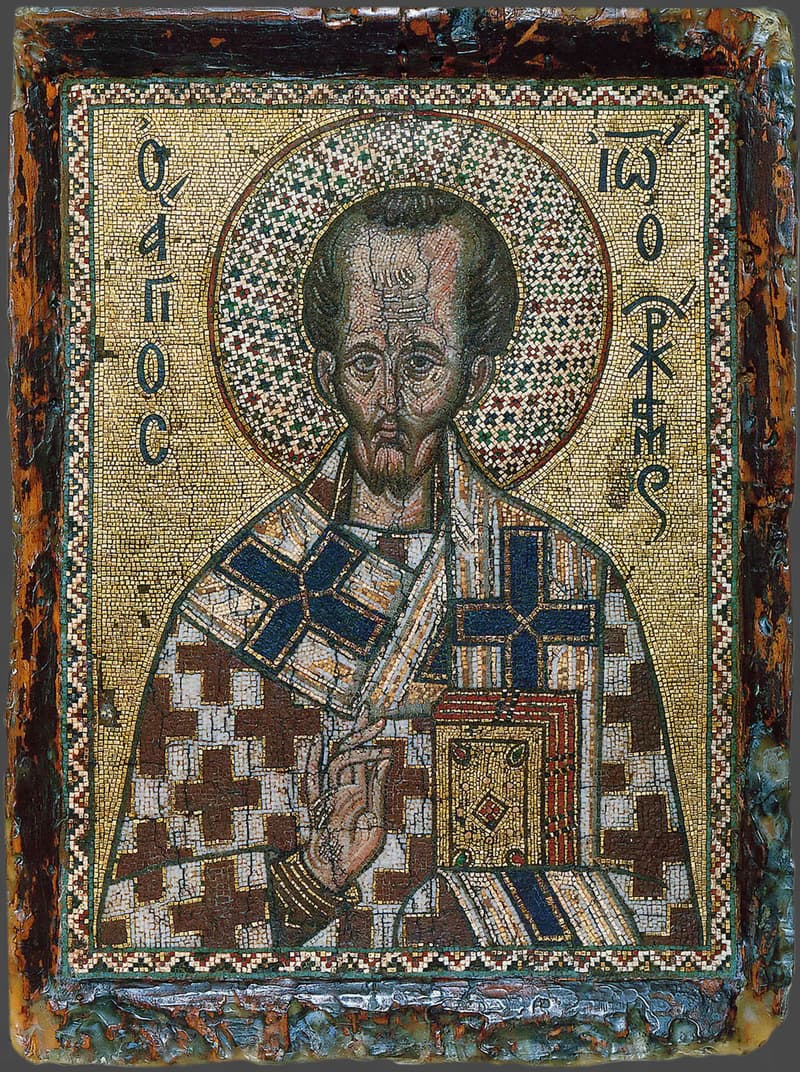
CCC 8 names four Fathers as models of catechesis: Cyril of Jerusalem, John Chrysostom, Ambrose, and Augustine. Cyril’s Catechetical Lectures, delivered at Jerusalem in the fourth century, open with a lecture addressed “to those who had come forward for Baptism.” Ambrose’s On the Mysteries explains the sacraments to the newly baptized, after the water rather than before it.41
Augustine wrote a short book, On the Catechising of the Uninstructed, at the request of a deacon in Carthage named Deogratias, who was good at teaching beginners but kept running into the same problem. He did not know “the point at which our statement of the same ought to commence, and the limit to which it should be allowed to proceed.”42 That is my own question about the minimum. Augustine’s answer is worth quoting in full, because it states the goal of all catechesis in one sentence:
Take this love, therefore, as the end that is set before you, to which you are to refer all that you say, and, whatever you narrate, narrate it in such a manner that he to whom you are discoursing on hearing may believe, on believing may hope, on hoping may love.43
Hearing, believing, hoping, loving. That is the same movement this whole post has been tracing. The goal of catechesis is not reached when someone believes. It is reached when he loves.
Teachers who were saints
I find this one of the most striking features of the Catholic Church. The Church does not look primarily to recent seminary graduates, a Catholic version of Lifeway, or some other contemporary source of authority for its model of teaching. It points to saints and Doctors of the Church. When we reflect on the faith, we reflect on the same teachings that Augustine, Athanasius, and Thomas Aquinas reflected on. Catechesis connects the believer to the Church both as it exists now and as it has been lived by its greatest thinkers and holiest members.
The Fathers also show both sides of the faith at once. Its center is simple: the grace God offers and the redemption he provides through his Son. Its depth is endless, as we try to grasp, as far as we are able, a divine nature that lies beyond the limits of our understanding. Not everyone is called to teach the way Cyril or Augustine did. But someone must, and everyone must in one way or another, even if only in his own family.
Renewal and catechesis
CCC 8 also says that “periods of renewal in the Church are also intense moments of catechesis.” At first that puzzled me. If the Church already possesses the truth of the faith, why would renewal require more catechesis rather than simply a call to return to what it already teaches?
I think the answer is that renewal is when the Church meets new questions. In those moments it must apply what it has always taught to situations it has not faced before. Through that work it frames its teaching for a new day without changing it. And renewal, in the Church as in a single life, often follows failure.
Trent and the Catechism Born of Crisis (CCC 9)
Every October, when many Protestants mark Reformation Day, I find myself thinking about the Counter-Reformation instead. CCC 9 names Trent as the great example of a council that renewed catechesis, and it is hard to read that without asking what prompted it.
What prompted the Roman Catechism
The Catholic Encyclopedia, hardly a Protestant source, is candid. The Roman Catechism was needed, it says, because of “a lack of systematic knowledge among pre-Reformation clergy and the concomitant neglect of religious instruction among the faithful,” and the Reformers “had not been slow in taking advantage of the situation; their popular tracts and catechisms were flooding every country.” According to the same article, the council resolved to produce a catechism in 1562 at the suggestion of St. Charles Borromeo, one of the saints CCC 9 names, and the finished work appeared in Rome in 1566.44 St. Peter Canisius, another of the four, had already published his own Summa of Christian doctrine in Vienna in 1555, and in his lifetime his catechisms went through more than two hundred editions.45
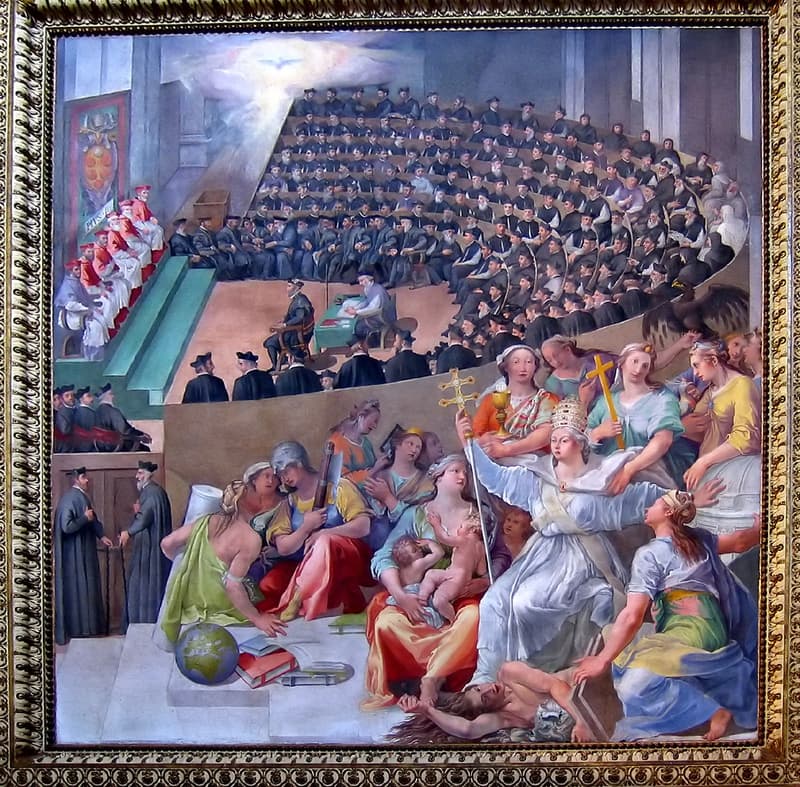
Did God, then, use the Protestant Reformation to reform his Church? I find it hard to call the Reformation a necessary evil. The Catechism itself warns that even when God brings good from an evil, “evil never becomes a good.”46 But it is not hard to see how God used it. The renewal of catechesis came after a real failure, and the Church’s own historians admit as much. (I have written more about the Counter-Reformation and about what Trent actually taught on justification.)
Why not earlier?
That raises another question. Why did it take a crisis in the sixteenth century to make catechesis a priority on the scale Trent gave it? Why was it not foundational all along?
In one sense it was. The early Church, as we have seen, required preparation of its converts, and the Catholic Encyclopedia notes that the Council of Elvira alludes to a custom of making it last two years.47 But I suspect that the very success of the Church eroded the urgency. Once nearly everyone was born into the Church and baptized as an infant, there were few catechumens left, and the institution built to form them faded. The Catholic Encyclopedia tells the story the same way: when Christianity “finally triumphed over paganism, the reasons for retaining the catechumenate became less urgent. The majority were born of Christian families,” and “the catechumenate gradually fell into disuse.”48
The Catechism draws the obvious lesson: “By its very nature infant Baptism requires a post-baptismal catechumenate.”49 Where that catechesis after baptism was neglected, I suspect, the ground was prepared for the crisis that followed.
There is a lesson here that reaches beyond Church history. When faith faces no real resistance, it is easy to become complacent, to rest on what one already knows, as if knowing it once meant applying it forever. The Church had to relearn that in the sixteenth century. Every Christian has to learn it for himself.
The Great Catechism of Modern Times (CCC 10)
CCC 10 brings the story to the present. The Catechism says that Pope Paul VI considered the Second Vatican Council “the great catechism of modern times,” and it lists the documents that followed it, ending with the 1985 Synod’s request for “a catechism or compendium of all Catholic doctrine.” The book I am working through is the answer to that request.
It is a striking claim to make about a council surrounded by so much controversy. The years after the Council brought real abuses, and also real graces. I do not pretend to understand how God moves in the history of his Church when those movements are measured in centuries. But one fruit of the Council belongs squarely in this post. Among its reforms, the Council restored for the Latin Church “the catechumenate for adults, comprising several distinct steps,” whose rites, the Catechism notes, are found in the Rite of Christian Initiation of Adults.50 The institution that faded when the Church grew comfortable is back. In the United States it also has a new name: a revised English translation, the Order of Christian Initiation of Adults, has been mandatory since Ash Wednesday 2025, which is why many parishes now speak of OCIA rather than RCIA.51
A Convert’s Note
Because I came into the Catholic Church as an adult, catechesis for me first meant RCIA. I grew up Southern Baptist, a story I tell in my Evangelical to Catholic series, and for most of my life I saw Scripture as the primary focus of everything. To grow close to God was to understand the Bible better. I still have a great love for Scripture, and I still think that learning it, meditating on it, and understanding it are critical to growing closer to God.
But it is part of the picture, not the whole of it. The Catechism gave me the initial intellectual hook: teaching I could think through and meditate on, set out in an organic and systematic way. It does not stop there. The Catechism itself insists that catechesis aims at “the fullness of Christian life,” and that fullness includes the sacraments, the community of the Church, and prayer. Catechesis does not exist to make us know more for its own sake. It exists to make us love more.
That is the point of this whole section, and I think it answers the question I started with. The Church asks more of converts than the jailer at Philippi was asked, not because it requires more for salvation, but because it knows what the jailer would need next. Believing is the beginning. Catechesis is how a beginner is taught to love.
Frequently Asked Questions
What is catechesis, according to the Catechism?
CCC 4 defines catechesis as “the totality of the Church’s efforts to make disciples,” to help people believe that Jesus is the Son of God and to “educate and instruct them in this life.” CCC 5, quoting Pope John Paul II, calls it “an education in the faith of children, young people and adults” that teaches Christian doctrine “in an organic and systematic way, with a view to initiating the hearers into the fullness of Christian life.”
If the New Testament baptized converts immediately, why does the Catholic Church require preparation?
The Catechism does not deny the New Testament pattern. It says that the path to baptism “can be covered rapidly or slowly, but certain essential elements will always have to be present,” including the proclamation of the Word and a conversion that accepts the gospel (CCC 1229), and that the faith baptism requires is “not a perfect and mature faith, but a beginning that is called to develop” (CCC 1253). The longer catechumenate developed in the early Church, partly because pagan converts had further to come than the Jews and God-fearers of Acts, and, as the Catholic Encyclopedia explains it, because persecution made it essential that converts understood what they were confessing.
Can an adult be baptized without going through RCIA?
Ordinarily, no. Canon law asks that an adult be “instructed sufficiently about the truths of the faith and Christian obligations” and “tested in the Christian life through the catechumenate” before baptism (can. 865 §1). The law itself makes an exception for danger of death: an adult may then be baptized with “some knowledge of the principal truths of the faith,” an intention to receive baptism, and a promise to observe the commandments (can. 865 §2). In the United States, RCIA is now called OCIA, the Order of Christian Initiation of Adults.
What are the six elements of catechesis in CCC 6?
The initial proclamation of the gospel, the examination of the reasons for belief, the experience of Christian living, the celebration of the sacraments, integration into the ecclesial community, and apostolic and missionary witness. The Catechism says catechesis is built on these elements without being identical to them.
Which Church Fathers does the Catechism name as models of catechesis?
CCC 8 names St. Cyril of Jerusalem, St. John Chrysostom, St. Ambrose, and St. Augustine. Cyril’s Catechetical Lectures and Augustine’s On the Catechising of the Uninstructed (De catechizandis rudibus) are two of the best-known catechetical works of the early Church.
What is the Roman Catechism?
The Roman Catechism, also called the Catechism of the Council of Trent, is the catechism the council ordered to be written for parish priests. It was published in Rome in 1566. CCC 9 calls it “a work of the first rank as a summary of Christian teaching.”
Footnotes
1. Catechism of the Catholic Church, 2nd ed. (Libreria Editrice Vaticana, 2000), CCC 4–10. The Catechism’s notes trace CCC 4–9 to John Paul II’s apostolic exhortation Catechesi tradendae (1979), and CCC 10 to the Final Report of the 1985 Extraordinary Synod of Bishops and John Paul II’s address closing it. The Vatican’s online text prints several sentence-opening words in lower case and gives the pope’s name as “Paul Vl”; I have corrected those typographical slips and supplied a comma and a period missing from CCC 10. Hereafter CCC.
2. John 20:31, RSV-CE. Scripture quotations in this post follow the Revised Standard Version, Catholic Edition, unless otherwise noted.
3. Acts 2:41.
4. Acts 8:36, 38. The RSV-CE prints verse 37, in which the eunuch confesses, “I believe that Jesus Christ is the Son of God,” only in a note that begins, “Other ancient authorities add all or most of verse 37.”
5. Acts 16:30, 33.
7. Acts 16:32.
9. Code of Canon Law (1983), can. 865 §§1–2, vatican.va.
10. Acts 2:5.
11. Acts 8:27–28, 32–35. The passage the eunuch was reading, quoted in Acts 8:32–33, is Isa 53:7–8.
12. Thomas Scannell, “Catechumen,” in The Catholic Encyclopedia, vol. 3 (New York: Robert Appleton Company, 1908), newadvent.org.
13. Acts 2:42.
14. Didache 7, trans. M. B. Riddle, in Ante-Nicene Fathers, vol. 7, ed. Alexander Roberts, James Donaldson, and A. Cleveland Coxe (Buffalo: Christian Literature Publishing Co., 1886), newadvent.org. On the dating of the Didache, see my post on the Didache.
16. Scannell, “Catechumen.”
17. John 20:31: ἵνα πιστεύοντες ζωὴν ἔχητε ἐν τῷ ὀνόματι αὐτοῦ. The verb in the preceding clause is itself textually uncertain: the SBL Greek New Testament reads the present subjunctive πιστεύητε, following Westcott and Hort, while Tregelles, the Greek text behind the NIV, and Robinson–Pierpont read the aorist πιστεύσητε. The participle πιστεύοντες is not in doubt.
18. Eph 2:8–9; Jas 2:24. I take up James’s argument at length in my post on the Epistle of James.
19. Eph 2:10; Gal 5:6.
20. CCC 1814, quoting Vatican II, Dei Verbum 5; Rom 1:17; and Gal 5:6. The parenthesis in “work(s)” is the Catechism’s.
21. CCC 1815. The previous post in this series discusses the paragraph more fully.
24. 1 John 3:2.
27. Mark 1:15. The Catechism quotes the same verse when it describes Jesus’ call to conversion; see CCC 1427.
28. CCC 2001, quoting St. Augustine, De natura et gratia 31.
30. Isa 64:6, KJV. The RSV-CE reads, “all our righteous deeds are like a polluted garment.” In context the verse belongs to a communal confession by an Israel that had sinned (“we sinned; in our sins we have been a long time,” v. 5), a people who nonetheless call God “our Father” (v. 8).
32. Westminster Confession of Faith 16.5–16.6, opc.org. The Confession’s proof texts for 16.5 include Ps 130:3; 143:2; Isa 64:6; Rom 7:15, 18; and Gal 5:17; see the annotated text at apuritansmind.com.
33. CCC 405. Compare Westminster Confession of Faith 9.3: fallen man “hath wholly lost all ability of will to any spiritual good accompanying salvation,” so that he “is not able, by his own strength, to convert himself, or to prepare himself thereunto.”
34. Westminster Confession of Faith 16.5.
37. Rom 8:17.
38. Heb 6:10.
39. CCC 2011, quoting St. Thérèse of Lisieux, “Act of Offering.”
41. Cyril of Jerusalem, Catechetical Lectures, heading of the introductory lecture (Procatechesis), trans. Edwin Hamilton Gifford, NPNF² 7, newadvent.org; Ambrose, On the Mysteries 1.1–2, trans. H. de Romestin, E. de Romestin, and H. T. F. Duckworth, NPNF² 10, newadvent.org. Ambrose says he had not explained the sacraments before baptism to those not yet initiated.
42. Augustine, De catechizandis rudibus 1.1, trans. S. D. F. Salmond, NPNF¹ 3, newadvent.org.
43. Augustine, De catechizandis rudibus 4.8.
44. Joseph Wilhelm, “Roman Catechism,” in The Catholic Encyclopedia, vol. 13 (New York: Robert Appleton Company, 1912), newadvent.org. See also my posts on the Counter-Reformation and the Council of Trent.
45. Otto Braunsberger, “Blessed Peter Canisius,” in The Catholic Encyclopedia, vol. 11 (New York: Robert Appleton Company, 1911), newadvent.org.
47. Scannell, “Catechumen,” which also notes that Justinian’s civil law fixed the period at two years.
48. Scannell, “Catechumen.”
50. CCC 1232, quoting Vatican II, Sacrosanctum Concilium 64.
51. USCCB Committee on Divine Worship, Newsletter 60 (June 2024), usccb.org: the revised book “may first be used as of the First Sunday of Advent, December 1, with mandatory use beginning on Ash Wednesday, March 5, 2025.”

Garrett Ham
Garrett Ham is an attorney, military veteran, and holds a Master of Divinity from Yale Divinity School. He writes from Northwest Arkansas on theology, law, and service.
Related Posts
The Aim and Readership of the Catechism (CCC 11–12)
The Catechism names its sources and its readers: bishops first, then everyone. What CCC 11–12 teach about faith and morals, the Fathers, and the liturgy.
The Life of Man—To Know and Love God (CCC 1–3)
The Catechism’s first three paragraphs explain why God made us, why Christ sent the apostles, and how the faith is handed on. A commentary on CCC 1–3.
Prologue to the Catechism of the Catholic Church
The Catechism opens with three verses on eternal life, God’s will to save all, and the name of Jesus. What they mean—and why no one is predestined to hell.
Stay Informed
Get new writing on faith, law, and service delivered to your inbox.
No spam. Unsubscribe anytime.