The Aim and Readership of the Catechism (CCC 11–12)
On This Page
Part of a series working through the Catechism of the Catholic Church one section at a time. Previous: Catechesis and the Preservation of the Faith (CCC 4–10). Next: Catholic-Protestant Relations and the Catechism (CCC 13–17)
Two short paragraphs near the front of the Catechism of the Catholic Church say what the book is for and whom it is for. The first answer is easy to accept. The second is a little surprising: a book that seems as if it ought to belong to everyone is addressed first of all to bishops.
It seems to me that it should be a book for everyone, and in one sense it is. But the Catechism is candid about how it will actually be used. It was written to be a reference, a standard against which other teaching is measured, and it reaches most of the faithful through the people whose job is to teach them.
The same two paragraphs do something less obvious as well. In naming four sources (Scripture, the Fathers, the liturgy, and the Magisterium), they sketch in a single sentence the Catholic answer to the question of where the faith is found. And in naming their readers, from the bishops down to “all other Christian faithful,” they show how the Church expects that faith to travel.
The Text
Here is the section in full:1
11 This catechism aims at presenting an organic synthesis of the essential and fundamental contents of Catholic doctrine, as regards both faith and morals, in the light of the Second Vatican Council and the whole of the Church’s Tradition. Its principal sources are the Sacred Scriptures, the Fathers of the Church, the liturgy, and the Church’s Magisterium. It is intended to serve “as a point of reference for the catechisms or compendia that are composed in the various countries.”
12 This work is intended primarily for those responsible for catechesis: first of all the bishops, as teachers of the faith and pastors of the Church. It is offered to them as an instrument in fulfilling their responsibility of teaching the People of God. Through the bishops, it is addressed to redactors of catechisms, to priests, and to catechists. It will also be useful reading for all other Christian faithful.
A Book for Everyone, Used as a Reference
The Catechism is long. It runs to 2,865 numbered paragraphs,2 and it is comprehensive to the extent that Catholic teaching can be covered in a single book. The reality is that most lay Catholics will never sit down and read it from the first page to the last. It serves best the way a dictionary or an encyclopedia serves: as the place one goes to find out what the Church teaches on a given question, and why.
That seems reasonable enough, and the Catechism itself expects it. CCC 11 calls the book a “point of reference.” When John Paul II promulgated it in 1992, he described it as “a sure and authentic reference text for teaching Catholic doctrine and particularly for preparing local catechisms.”3 Cardinal Joseph Ratzinger, who chaired the commission that prepared it, put the point another way ten years later: “The Catechism is not a theology book, but a book of the faith, for the teaching of the faith.”4
A reference work can still be read as a whole, and it should be. CCC 11 calls the book “an organic synthesis.” The word organic matters. The Catechism does not present Catholic teaching as a list of separable propositions, any one of which might be pulled out and argued over in isolation. It presents the faith as a living body whose parts depend on one another. (I take up the danger of reading it any other way in my post on CCC 18–22.) The aim is a systematic presentation of Catholic doctrine that is accessible without being unreasonably simplified.
Faith and Morals
CCC 11 limits the book’s scope to “the essential and fundamental contents of Catholic doctrine, as regards both faith and morals.” The phrase comes from the bishops who asked for the Catechism in the first place. The 1985 Extraordinary Synod requested, as CCC 10 records, “a catechism or compendium of all Catholic doctrine regarding both faith and morals.”5
That limitation matters. Without addressing the issue head-on, it keeps the Catechism out of a set of controversies that have divided Christians for a long time: controversies over the age of the earth and how literally to read the opening chapters of Genesis. For many Protestants, and for many Christians before them, faithfulness to the Bible has meant holding to a literal six-day creation and a world roughly six to ten thousand years old.
The Catechism does not fight that battle. When it reaches the creation account, it says that “Scripture presents the work of the Creator symbolically as a succession of six days of divine ‘work.’”6 It speaks warmly of the scientific studies that have “splendidly enriched our knowledge of the age and dimensions of the cosmos, the development of life-forms and the appearance of man.”7 The Church has never bound Catholics to a young earth, a point I have traced in more detail elsewhere.
None of this means that the Church limits Scripture’s truthfulness to faith and morals. Leo XIII rejected the view that inspiration “regards the things of faith and morals, and nothing beyond,” and Pius XII condemned the opinion that “immunity from error extends only to those parts of the Bible that treat of God or of moral and religious matters.”8 Where history bears on the faith, the Catechism speaks plainly. The account of the fall in Genesis 3 “uses figurative language, but affirms a primeval event,” and the Church “unhesitatingly affirms” the historicity of the four Gospels.9 Quoting the Second Vatican Council, the Catechism teaches that the books of Scripture “firmly, faithfully, and without error teach that truth which God, for the sake of our salvation, wished to see confided to the Sacred Scriptures.”10 How far that last phrase reaches is a live debate among Catholic theologians, one I have written about separately. The point here is narrower. The limit is on the Catechism’s scope, not on Scripture’s truthfulness. The book’s own work is faith and morals, and it does not set out to be a textbook of anything else.
The domain of the Church’s teaching authority
Faith and morals is also the domain in which the Church claims to teach with its highest authority. The First Vatican Council defined that the pope teaches infallibly when “he defines a doctrine concerning faith or morals to be held by the whole church.”11 The Catechism adds that this infallibility “extends as far as does the deposit of divine Revelation; it also extends to all those elements of doctrine, including morals, without which the saving truths of the faith cannot be preserved, explained, or observed.”12
Yet the Catechism does not claim infallibility for itself. It presents infallible teachings, but the book as a book is something else. The U.S. bishops explain the distinction this way:
Because the Catechism presents Catholic doctrine in a complete yet summary way, it naturally contains the infallible doctrinal definitions of the popes and ecumenical councils in the history of the Church. It also presents teaching which has not been communicated and defined in these most solemn forms. This does not mean that such teaching can be disregarded or ignored.13
John Paul II declared the Catechism “a valid and legitimate instrument for ecclesial communion and a sure norm for teaching the faith.”14 A sure norm is a great deal. It is not a new definition of doctrine. The text has, in fact, been revised. A Latin typical edition approved in 1997 became “the definitive text,” incorporating amendments made after the first edition, and paragraph 2267, on the death penalty, has been rewritten twice, in 1997 and again in 2018.15 The Catechism does not define new doctrine. What it offers is the whole, gathered in one place, set out in order, and promulgated by the pope as a sure norm.
Four Sources
CCC 11 names the Catechism’s “principal sources”: “the Sacred Scriptures, the Fathers of the Church, the liturgy, and the Church’s Magisterium.” It is telling that the Sacred Scriptures come first, followed by the Fathers of the Church. Whatever else the Catechism is, it is not a substitute for the Bible. Its pages are thick with biblical citations, and the reader is told to go to the texts themselves (CCC 19).
The Fathers of the Church
The Fathers are the early Christian writers whom the Church recognizes for their orthodoxy, holiness, and antiquity, an age usually taken to run as late as Gregory the Great in the West and John of Damascus in the East.16 The Catechism does not rank them by date. Still, I think the earliest carry a particular weight, especially those who lived near the end of the apostolic age. They were close in time to the apostles, when the apostles’ teaching, and the traditions of that teaching, were fresh, or at least far fresher than they are today. They were fresher, too, than they would be once the Church’s center of gravity had moved into very different cultures. Irenaeus of Lyons, writing around 180, could say of Polycarp, bishop of Smyrna, that he “was not only instructed by apostles, and conversed with many who had seen Christ, but was also, by apostles in Asia, appointed bishop of the Church in Smyrna, whom I also saw in my early youth.”17 That is the kind of proximity the Fathers offer.
Many of them bled and died, or suffered greatly, for the faith they recorded. They give us a window into the apostolic teaching and into the proper interpretation of Scripture, particularly the apostolic writings.
They are not infallible, and they were able to disagree with one another. In the third century, St. Cyprian of Carthage held that baptism given outside the Church was no baptism at all, so that converts from heretical sects had to be baptized, and he clashed over it with Pope Stephen, whose practice the Church kept. A century and a half later, St. Augustine, who revered Cyprian as a martyr, wrote at length to show that Cyprian had been wrong. The letters of bishops, Augustine insisted, unlike the canon of Scripture, “are liable to be refuted if there be anything contained in them which strays from the truth.”18 (The episode mattered a great deal in the Donatist controversy.) The Catholic Encyclopedia, quoting the Jesuit theologian Johann Baptist Franzelin, states the general rule: the authority of a single Father “is not infallible or peremptory.”19 The weight lies in their agreement. The Council of Trent forbade interpreting Scripture “contrary to the unanimous consent of the Fathers,” and St. Vincent of Lérins, in the fifth century, told Catholics to hold “that faith which has been believed everywhere, always, by all.”20
What the Fathers did with the apostles’ teaching is what makes them indispensable. They took and preserved it, both in writing and orally, and they worked it out to apply to the situations they faced, many of which the apostles never had to face. Their world was much like the apostles’ world, and in some respects exactly the same. But new situations arose: new heresies, new false teachings, new blasphemies. The Fathers applied the apostolic teaching, including the Scriptures, to those new situations, and in doing so they give us a fuller understanding of what the Scriptures teach than would be easy to reach without them.
Irenaeus shows what that looked like. Against the Gnostics, who claimed a secret tradition of their own, he appealed to the public teaching handed down in the churches the apostles had founded, and he asked a question worth sitting with:
For how should it be if the apostles themselves had not left us writings? Would it not be necessary, [in that case,] to follow the course of the tradition which they handed down to those to whom they did commit the Churches?21
He pointed to “many nations of those barbarians who believe in Christ” who held the faith “having salvation written in their hearts by the Spirit, without paper or ink.”22 The Second Vatican Council made the same point in its own terms: “The words of the holy fathers witness to the presence of this living tradition, whose wealth is poured into the practice and life of the believing and praying Church.”23
The Fathers provide something of tremendous value, and to fail to value them is a mistake. The Reformers themselves argued from the Fathers, Calvin from Augustine above all; the dispute is over how much authority they carry. John Henry Newman, who wrote The Arians of the Fourth Century while still an Anglican, put the matter bluntly: “To be deep in history is to cease to be a Protestant.”24 The Fathers are what led me to the Catholic Church.
What the apostles did not write down
There is a further reason the Fathers belong on this list, and it is easy to miss. CCC 11 does not name its sources as Scripture and the apostles’ oral teaching. It names them as Scripture and the Fathers of the Church. That is essential, because in the Fathers we have a witness to, and a reflection upon, not only the Sacred Scriptures but also the teaching the apostles left behind orally. Paul told the Thessalonians to “hold to the traditions which you were taught by us, either by word of mouth or by letter.”25 The Fathers wrestled with both.
Some of them also presented that teaching to the outside world in a way the New Testament mostly does not. The New Testament was, for the most part, written for believers, people who had already come to faith through the preaching and work of the apostles. Even Luke writes to Theophilus “that you may know the truth concerning the things of which you have been informed.” The verb behind “informed” is the one from which the word catechesis comes.26
The apologists among the Fathers wrote to explain Christianity to outsiders: what it was, what it taught, and what the apostles had taught them. Around 155, Justin Martyr addressed his First Apology to the emperor Antoninus Pius and his sons, and in it he described exactly what Christians did when they gathered. He wrote that “on the day called Sunday, all who live in cities or in the country gather together to one place, and the memoirs of the apostles or the writings of the prophets are read, as long as time permits.” He went on to describe the homily, the prayers, the bread and wine, the Amen, and the deacons carrying the Eucharist to the absent, and he closed by saying that the risen Christ had taught the apostles “these things, which we have submitted to you also for your consideration.”27 (I have written elsewhere about what Justin says the Eucharist is.)
A writer addressing a pagan emperor could not assume that his reader had any background in the faith. He had to fill in the gaps, and that meant drawing on what the apostles had taught, particularly what new believers were taught as they came to the faith. Much of that was the basic instruction every convert received, or practice no one yet disputed: things the apostles had little reason to put in a letter. (The Didache is one of the rare early documents that set some of it down.) It is worth remembering, too, that there were more apostles than Paul, and that even Paul, with all his writings, could not possibly have written down everything he taught over decades of missionary work. John says as much of Jesus himself: “there are also many other things which Jesus did; were every one of them to be written, I suppose that the world itself could not contain the books that would be written.”28
So the Fathers are not merely holy men whose writings deserve weight because of who they were and when they wrote. They are also witnesses, as the Council put it, to “the presence of this living tradition,” which reaches back to what the apostles taught and did not write down. That witness carries its weight where the Fathers agree. A single Father’s report of an unwritten tradition can be wrong.
The liturgy
The liturgy is another source, and an important one. In the liturgy we have the remnants and the development of the religious practices of the early Church. Catholic doctrine is found not merely in systematic books but in worship, because in the liturgy we meet Christ, and through it we see God’s fingerprints as he has worked and moved through his Church, and as the way to himself that he opened is actually practiced.
Connecting with God, loving him, and becoming more like him is the essence of the faith. And the way to him is something that he alone can open. The Letter to the Hebrews speaks of “the new and living way which he opened for us through the curtain, that is, through his flesh.”29 If Christians throughout history have been able to draw near to God through the liturgy, then the liturgy forms an important part of that new way, opened through Christ and his sacrifice. It must therefore be considered as we contemplate who God is and what his character is. In contemplating his character, we learn more about him, and as a result we learn more about truth. How could the liturgy not be part of the makeup of the faith and its teaching?
The Catechism itself says as much. “The law of prayer is the law of faith,” it teaches: “the Church believes as she prays. Liturgy is a constitutive element of the holy and living Tradition.”30 Quoting the Second Vatican Council’s description of the liturgy as the summit of the Church’s activity and the font of its power, it concludes: “It is therefore the privileged place for catechizing the People of God.”31
There is a guardrail here, and Pius XII set it in place in 1947. He warned that the liturgy “does not decide or determine independently and of itself what is of Catholic faith.”32 That fits CCC 11’s listing of the liturgy as one source among four rather than the only one. The liturgy, Pius XII added, “must as a consequence conform to the decrees respecting Catholic faith issued by the supreme teaching authority of the Church.”33
The Magisterium
The list ends with “the Church’s Magisterium,” the teaching office through which the Church, the Body of Christ, has preserved divine revelation under the guidance of the Holy Spirit and presented it faithfully to believers. The Catechism defines its role carefully:
“The task of giving an authentic interpretation of the Word of God, whether in its written form or in the form of Tradition, has been entrusted to the living teaching office of the Church alone. Its authority in this matter is exercised in the name of Jesus Christ.” This means that the task of interpretation has been entrusted to the bishops in communion with the successor of Peter, the Bishop of Rome.
And in the next paragraph it adds the qualification that keeps that claim honest: “this Magisterium is not superior to the Word of God, but is its servant.”34 This echoes the appeal Irenaeus made against the Gnostics, to “the tradition of the apostles manifested throughout the whole world” through the bishops the apostles appointed.35 (On the line of succession itself, see my post on apostolic succession.) The four sources are not rivals. Scripture and Tradition, the Catechism teaches, “make up a single sacred deposit of the Word of God.”36 The Fathers and the liturgy are witnesses to that Tradition, and the Magisterium is the servant that guards and interprets it.
Why “in the Light of the Second Vatican Council”?
CCC 11 says the Catechism presents Catholic doctrine “in the light of the Second Vatican Council and the whole of the Church’s Tradition.” It is fair to ask why. If the doctrine of the Church has not changed, why should a catechism need to be written in light of one particular council?
Part of the answer is obvious. The teachings of an ecumenical council carry great weight, and any comprehensive presentation of Catholic doctrine has to incorporate them. A catechism written after Vatican II that ignored it would not be comprehensive.
The rest of the answer lies in what the Council set out to do. In the apostolic constitution promulgating the Catechism, John Paul II wrote that “the principal task entrusted to the Council by Pope John XXIII was to guard and present better the precious deposit of Christian doctrine in order to make it more accessible to the Christian faithful and to all people of good will.”37 John XXIII had drawn the distinction himself in his speech opening the Council. In the official Latin text:
For the deposit of faith, the truths contained in our venerable doctrine, are one thing; the fashion in which they are expressed, but with the same meaning and the same judgement, is another thing.38
Same meaning, same judgement, better presented. That is what the Catechism tries to be.
The Council also opened itself to the laity in a new way, and it pushed them to become more knowledgeable in the faith. “Easy access to Sacred Scripture should be provided for all the Christian faithful,” it declared, and it urged all the faithful to frequent reading of the Scriptures, quoting St. Jerome: “For ignorance of the Scriptures is ignorance of Christ.”39 It taught that “all the faithful of Christ of whatever rank or status, are called to the fullness of the Christian life and to the perfection of charity.”40 A Church that asks that much of every believer needs a book every believer can consult.
A Point of Reference, Open to Anyone
The phrase “point of reference” comes straight from the 1985 Synod, which asked for a catechism that might be “a point of reference for the catechisms or compendiums that are prepared in the various regions.”41 The Catechism was never meant to replace those local works. John Paul II said so directly: it “is not intended to replace the local catechisms duly approved by the ecclesiastical authorities.” It was meant “to encourage and assist in the writing of new local catechisms, which must take into account various situations and cultures, while carefully preserving the unity of faith and fidelity to Catholic doctrine.”42
That is how it has worked. In the United States, for instance, the bishops approved the United States Catholic Catechism for Adults in November 2004, and the book describes itself as “an adaptation of the Catechism of the Catholic Church.”43 The Vatican’s guide for catechesis calls the Catechism a “point of reference” for this kind of work, one meant “to guarantee the unity of the faith.”44
But the Catechism is not locked away in a chancery. Anyone can read it online, free, on the Vatican’s website. Any member of the laity can read it, and so can someone who is not Catholic at all. This is important. It means something. The Church, in its wisdom and by God’s guidance, has provided an accessible work of reference in which anyone can find and understand the significant doctrines of the Catholic faith. It has provided explanation: not only the Scriptures, but an account of what they mean that carries the authority of the Church’s teaching office. When Philip asked the Ethiopian official whether he understood the prophet he was reading, the man answered, “How can I, unless some one guides me?”45 The Church’s pastors serve the role God gave them, as shepherds of his people, helping them understand the revelation he has made available to those who love him.
(Many Protestant traditions have catechisms of their own, and some, like the Heidelberg Catechism and the Westminster Shorter Catechism, are still taught today. The difference lies elsewhere: in the claim to teach with the authority of the apostles’ successors, which is where CCC 12 begins.)
Bishops First (CCC 12)
CCC 12 lists the Catechism’s readers in order, and the order shows a real accommodation to the laity. The Church meets people where they are, without dumbing the faith down, without compromising it, and without leaving them to fall into error through no fault of their own. It does that by working through the people charged with teaching them.
The primary audience is the bishops, the successors of the apostles. That is fitting, because the Catechism seeks to capture the apostolic teaching as the apostles taught it, and as their successors received it and applied it to a myriad of circumstances over two millennia. Addressing the book to the bishops first shows the role a bishop plays. He carries apostolic authority, and with it the obligation to know and understand the apostolic teaching and its application as formulated by his predecessors, the men who shepherded the flock before him.
The Catechism describes the bishop’s duty in the same terms: “Bishops, with priests as co-workers, have as their first task ‘to preach the Gospel of God to all men.’” The Second Vatican Council calls them “authentic teachers, that is, teachers endowed with the authority of Christ.”46 When the Council described how bishops should see to the catechesis of their people, it said that instruction should be “based on Sacred Scripture, tradition, the liturgy, magisterium, and life of the Church.”47 That is nearly the same list of sources CCC 11 gives.
The order of readers was deliberate. The Catechism’s Editorial Commission, in the dossier it issued with the text in 1992, set out the intended readers in the same sequence: “in the first place the Bishops, who have the first responsibility in catechesis; then the redactors of catechisms; finally, the other members of the People of God.”48 The bishops had also helped to write it. When a draft was sent to the world’s bishops for comment, the commission received 938 responses containing more than 24,000 proposed amendments.49 Five years after the first edition, when John Paul II promulgated the definitive Latin text, he again urged “my Venerable Brothers in the Episcopate, for whom the Catechism is primarily intended,” to spread it among their people.50
Ratzinger explained why the bishops had to stand between the book and the faithful. Because the Catechism is addressed to people at every level of preparation and on every continent, “this book cannot constitute the point of arrival in a process of mediations, but must undergo further mediations closer to the different situations.”51 The bishops, and those who work under them, supply those mediations.
Through the Bishops: Redactors, Priests, and Catechists
The Catechism is not a resource limited to bishops. Through them, through those to whom God has entrusted the responsibility of teaching his people, it reaches three more groups.
The first is “redactors of catechisms.” I take these to be the people who put together the Church’s teaching for those in particular circumstances: for converts, for children preparing for First Communion, for young people preparing for Confirmation, for parents preparing to have their children baptized, and for those preparing for marriage or holy orders. Canon law gives the diocesan bishop the duty to make catechetical tools available, “even by preparing a catechism if it seems opportune,” and allows a conference of bishops to issue catechisms for its territory “with the previous confirmation of the Apostolic See.”52
The second is priests. A priest shares, by his ordination, in the bishop’s office of teaching, and he exercises it in dependence on his bishop, and so on the Church, and ultimately on Christ through the apostles. Canon law calls presbyters “co-workers of the bishops” in proclaiming the gospel, and the Council asks every bishop to “regard his priests as his co-workers and as sons and friends.”53
The third is catechists, the men and women who teach the laity. Through them, those who are learning about the faith and seeking it, whether they are already Catholic or are considering becoming Catholic, have easy access to comprehensive teaching and to a resource that offers ready reference and help. The Church asks local ordinaries to make sure catechists “understand the doctrine of the Church appropriately,” and it reminds everyone that “solicitude for catechesis belongs to all members of the Church according to each one’s role.”54
“All Other Christian Faithful”
CCC 12 ends by saying that the Catechism “will also be useful reading for all other Christian faithful.” It is interesting to me that the Catechism speaks of the Christian faithful rather than the Catholic faithful. Perhaps we see in that wording an intent, or at least a hope, that other Christians would read the Catechism, consider it, understand what the Catholic Church actually teaches, and, in so doing, come home to Christ’s Church.
The wording needs to be read carefully. The Latin is omnibus aliis christifidelibus.55 Christifideles is the Church’s ordinary term for its members, and the word aliis (“other”) signals that the bishops, priests, and catechists just named are themselves among the faithful. The Catechism defines the term by baptism: “The Christian faithful are those who, inasmuch as they have been incorporated in Christ through Baptism, have been constituted as the people of God.”56 In the Church’s documents the word ordinarily means Catholics, and I cannot claim that the drafters chose it in order to reach Protestants. Yet the definition rests on baptism, not on full communion, and the Catechism says of baptized Christians outside the Catholic Church that they “with good reason are accepted as brothers in the Lord by the children of the Catholic Church.”57
The hope, at any rate, is not mine alone. In the document that promulgated the Catechism, John Paul II wrote that it “is meant to support ecumenical efforts that are moved by the holy desire for the unity of all Christians,” and that it “is offered to every individual who asks us to give an account of the hope that is in us (cf. 1 Pt 3:15) and who wants to know what the Catholic Church believes.”58 The introduction Ratzinger and Schönborn wrote to the Catechism counts “agnostics, seekers and inquirers” among its intended readership.59
That is a remarkable thing for a Church to say about its own teaching. For centuries, many Christians outside the Catholic Church have learned what Catholics believe from those who oppose it. The Catechism lets the Church speak for itself, in its own words, with its sources open on the table. A reader who disagrees with it can at least disagree with what the Church actually teaches.
The Catechism was written first for bishops. It was published for everyone.
Frequently Asked Questions
What is the purpose of the Catechism of the Catholic Church?
CCC 11 says the Catechism “aims at presenting an organic synthesis of the essential and fundamental contents of Catholic doctrine, as regards both faith and morals, in the light of the Second Vatican Council and the whole of the Church’s Tradition.” It is meant to serve as “a point of reference for the catechisms or compendia that are composed in the various countries.” John Paul II called it “a sure norm for teaching the faith.”
Who is the Catechism of the Catholic Church written for?
According to CCC 12, it is written “primarily for those responsible for catechesis: first of all the bishops.” Through the bishops it is addressed to those who write catechisms, to priests, and to catechists, and it “will also be useful reading for all other Christian faithful.” John Paul II also offered it to anyone “who wants to know what the Catholic Church believes.”
What are the sources of the Catechism?
CCC 11 names four principal sources: “the Sacred Scriptures, the Fathers of the Church, the liturgy, and the Church’s Magisterium.” The Catechism teaches that the Magisterium “is not superior to the Word of God, but is its servant.”
Is the Catechism infallible?
Not as a book. It contains teachings the Church holds infallibly, whether solemnly defined by a pope or council or taught definitively by the bishops in communion with the pope, and it also presents authoritative teaching that has not been proposed infallibly. The U.S. bishops note that such teaching still cannot “be disregarded or ignored.” John Paul II declared the Catechism “a sure norm for teaching the faith,” but the text has been revised since its first edition, most visibly paragraph 2267 on the death penalty.
Can non-Catholics read the Catechism?
Yes. The full text is freely available on the Vatican’s website, and John Paul II said it “is offered to every individual who asks us to give an account of the hope that is in us … and who wants to know what the Catholic Church believes.”
What does it mean that the Catechism is a “point of reference”?
It means that the Catechism is the standard against which national and diocesan catechisms are written and measured. It does not replace them. The United States Catholic Catechism for Adults, for example, describes itself as “an adaptation of the Catechism of the Catholic Church.”
Footnotes
1. Catechism of the Catholic Church, 2nd ed. (Libreria Editrice Vaticana, 2000), CCC 11–12. The section is headed “The Aim and Intended Readership of the Catechism.” The Catechism’s note on the quotation in CCC 11 cites the Extraordinary Synod of Bishops of 1985, Final Report II B a, 4. The Vatican’s online text places the period after the closing quotation mark; I have moved it inside. Hereafter CCC.
2. The last numbered paragraph is CCC 2865, on the final “Amen” of the Lord’s Prayer.
3. John Paul II, Apostolic Constitution Fidei Depositum (11 October 1992), IV. The constitution’s sections carry Roman numerals rather than paragraph numbers. Hereafter FD.
4. Joseph Ratzinger, “Current Doctrinal Relevance of the Catechism of the Catholic Church,” address of 9 October 2002.
8. Leo XIII, Encyclical Providentissimus Deus (18 November 1893), 20; Pius XII, Encyclical Humani Generis (12 August 1950), 22.
11. First Vatican Council, Pastor Aeternus (18 July 1870), ch. 4, English translation at papalencyclicals.net. The Latin reads doctrinam de fide vel moribus, “faith or morals”; CCC 11 has de fide et moribus, “both faith and morals.”
13. United States Conference of Catholic Bishops, “Frequently Asked Questions about the Catechism of the Catholic Church,” question 17.
14. FD IV.
15. John Paul II, Apostolic Letter Laetamur Magnopere (15 August 1997). On the 2018 text of CCC 2267, see the Congregation for the Doctrine of the Faith, Rescriptum “ex Audientia SS.mi” (1 August 2018), which records the pope’s approval of the new paragraph at an audience on 11 May 2018. The Congregation’s accompanying Letter to the Bishops of the same date, no. 3, notes that the teaching of Evangelium Vitae “was then included in the editio typica” of 1997.
16. John Chapman, “Fathers of the Church,” in The Catholic Encyclopedia, vol. 6 (New York: Robert Appleton Company, 1909). Chapman quotes Fessler’s definition of a Father, “orthodox doctrine and learning; holiness of life; (at the present day) a certain antiquity,” and says the Fathers “must undoubtedly include, in the West, St. Gregory the Great (d. 604), and in the East, St. John Damascene (d. about 754).”
17. Irenaeus, Against Heresies 3.3.4, trans. Alexander Roberts and William Rambaut, in Ante-Nicene Fathers, vol. 1, ed. Alexander Roberts, James Donaldson, and A. Cleveland Coxe (Buffalo: Christian Literature Publishing Co., 1885), ccel.org. Hereafter ANF.
18. Augustine, On Baptism, Against the Donatists 2.3.4, trans. J. R. King, rev. Chester D. Hartranft, in Nicene and Post-Nicene Fathers, 1st series, vol. 4, ed. Philip Schaff (Buffalo: Christian Literature Publishing Co., 1887), as revised for newadvent.org. On the dispute itself, see John Chapman, “St. Cyprian of Carthage,” in The Catholic Encyclopedia, vol. 4 (New York: Robert Appleton Company, 1908).
19. Chapman, “Fathers of the Church,” quoting Franzelin, De traditione, thesis 15. The same article adds that “not the greatest is immune from ignorance or accidental error or obscurity.”
20. Council of Trent, Session 4 (8 April 1546), second decree, “Concerning the edition, and the use, of the sacred books,” trans. J. Waterworth (London: Dolman, 1848), papalencyclicals.net; Vincent of Lérins, Commonitorium 2.6, trans. C. A. Heurtley, in Nicene and Post-Nicene Fathers, 2nd series, vol. 11, ed. Philip Schaff and Henry Wace (Buffalo: Christian Literature Publishing Co., 1894), ccel.org. The First Vatican Council renewed Trent’s rule in Dei Filius, ch. 2.
21. Irenaeus, Against Heresies 3.4.1 (ANF 1:417), ccel.org. The brackets are the translators’.
22. Irenaeus, Against Heresies 3.4.2 (ANF 1:417).
23. Vatican II, Dogmatic Constitution on Divine Revelation, Dei Verbum (18 November 1965), 8. Hereafter DV.
24. John Henry Newman, An Essay on the Development of Christian Doctrine, rev. ed. (1878), Introduction, §5, p. 8, newmanreader.org.
25. 2 Thess 2:15, RSV-CE. Scripture quotations in this post follow the Revised Standard Version, Catholic Edition. DV 8 echoes the verse: the apostles “warn the faithful to hold fast to the traditions which they have learned either by word of mouth or by letter.”
26. Luke 1:4. The Greek verb is κατηχήθης, from κατηχέω, a verb meaning to teach or inform by word of mouth. Paul uses the same verb for the one who is taught and the one who teaches in Gal 6:6. In Luke 1:4 it need not carry the later technical sense of formal catechesis; English translations render it variously as “informed,” “instructed,” or “taught.”
27. Justin Martyr, First Apology 67 (ANF 1:185–186), trans. Marcus Dods and George Reith, ccel.org. Chapter 1 addresses the emperor, his sons, “the sacred Senate, with the whole People of the Romans,” and chapter 65 describes the deacons taking a portion of the Eucharist to those who are absent.
28. John 21:25.
29. Heb 10:19–20.
30. CCC 1124. The Latin maxim the Catechism quotes, legem credendi lex statuat supplicandi, comes from a fifth-century collection on grace, the Indiculus, ch. 8 (DS 246), attributed to Prosper of Aquitaine. The English edition’s footnote reads only “Ep. 8”; the Latin typical edition gives the fuller reference.
31. CCC 1074, quoting Vatican II, Sacrosanctum Concilium 10.
32. Pius XII, Encyclical Mediator Dei (20 November 1947), 48.
33. Mediator Dei 45.
34. CCC 85–86. The quotation marks within CCC 85 are the Catechism’s own; it is quoting DV 10, as it does again in CCC 86.
35. Irenaeus, Against Heresies 3.3.1 (ANF 1:415).
37. FD I.
38. John XXIII, Address at the Opening of the Second Vatican Council, Gaudet Mater Ecclesia (11 October 1962), trans. Joseph A. Komonchak, from the official Latin text in Acta Apostolicae Sedis 54 (1962), jakomonchak.files.wordpress.com. The Latin reads: Est enim aliud ipsum depositum Fidei, seu veritates, quae veneranda doctrina nostra continentur, aliud modus, quo eaedem enuntiantur, eodem tamen sensu eademque sententia (vatican.va). The familiar English rendering, which speaks of “the substance of the ancient doctrine,” translates the pope’s original Italian text, which lacks the closing qualifier “with the same meaning and the same judgement”; the Italian version now on vatican.va includes it. Komonchak notes the variants.
39. DV 22, 25. DV 25 quotes St. Jerome’s commentary on Isaiah.
40. Vatican II, Dogmatic Constitution on the Church, Lumen Gentium (21 November 1964), 40. Hereafter LG.
41. Extraordinary Synod of Bishops (1985), Final Report, II B a, 4, ewtn.com. The full sentence reads: “Very many have expressed the desire that a catechism or compendium of all Catholic doctrine regarding both faith and morals be composed, that it might be, as it were, a point of reference for the catechisms or compendiums that are prepared in the various regions.”
42. FD IV.
43. United States Conference of Catholic Bishops, United States Catholic Catechism for Adults (Washington, DC: USCCB, 2006), copyright page and introduction. The Holy See granted its recognitio on 22 November 2005.
44. Congregation for the Clergy, General Directory for Catechesis (1997), 134.
45. Acts 8:31.
46. CCC 888, quoting Vatican II, Presbyterorum Ordinis 4, and LG 25. The second quotation follows the Vatican’s English text of LG 25.
47. Vatican II, Decree on the Pastoral Office of Bishops, Christus Dominus (28 October 1965), 14.
48. Editorial Commission of the Catechism of the Catholic Church, Dossier on the Catechism (Vatican City: Libreria Editrice Vaticana, 1992), section “Addressees,” as reproduced by the USCCB.
49. Dossier on the Catechism. The revised draft went to the bishops in late 1989; the 938 responses had arrived by 15 October 1990. According to FD II, the commission oversaw “nine subsequent drafts” in all.
50. Laetamur Magnopere.
51. Ratzinger, “Current Doctrinal Relevance of the Catechism.”
52. Code of Canon Law (1983), can. 775 §§1–2, vatican.va. Pope Francis changed “approval” to “confirmation” in can. 775 §2 in the motu proprio Competentias quasdam decernere (11 February 2022), art. 8.
53. Code of Canon Law, can. 757, vatican.va; LG 28.
54. Code of Canon Law, cann. 780 and 774 §1, vatican.va.
55. Catechismus Catholicae Ecclesiae, 12: “Eius autem lectio omnibus aliis christifidelibus utilis etiam erit.”
58. FD IV.
59. Joseph Ratzinger and Christoph Schönborn, Introduction to the Catechism of the Catholic Church (San Francisco: Ignatius Press, 1994), 19.
Garrett Ham
Garrett Ham is an attorney, military veteran, and holds a Master of Divinity from Yale Divinity School. He writes from Northwest Arkansas on theology, law, and service.
Related Posts
Catechesis and the Preservation of the Faith (CCC 4–10)
The New Testament baptized converts on the spot. Why does the Catholic Church ask for more? A convert’s commentary on catechesis and RCIA in CCC 4–10.
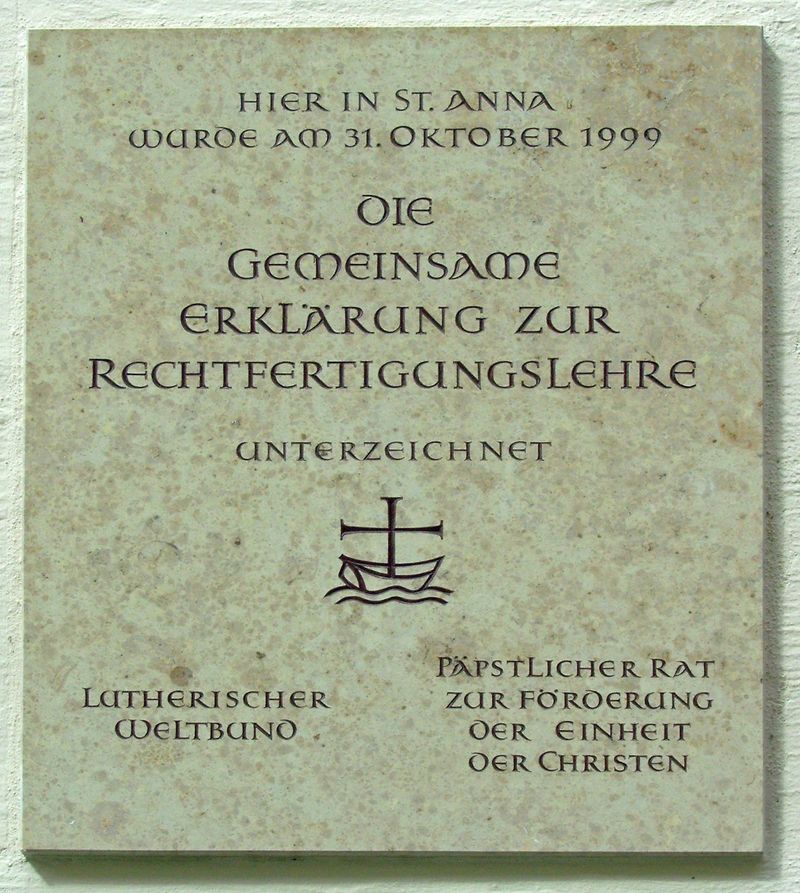
Catholic-Protestant Relations and the Catechism
In this post, I take a look at Catholic-Protestant relations in light of the Catholic Church’s organization of her own Catechism.
Proof-Texting and The Catechism
In this post, I discuss proof-texting and the importance of considering each of the teachings of the faith as part of a unified whole.
Stay Informed
Get new writing on faith, law, and service delivered to your inbox.
No spam. Unsubscribe anytime.