Pope Saint Stephen I: The Twenty-Third Pope, the Rebaptism War, and the First Appeal to the Chair of Peter

On This Page
The twenty-third in a series on the popes.
The most conservative sentence in the history of the early papacy is also, read a certain way, the most audacious. “Let nothing be innovated which has not been handed down.” Six Latin words at its core—nihil innovetur nisi quod traditum est—and they are almost the only words of Pope Stephen I that survive, quoted not by a friend but by a bishop who thought them catastrophically wrong. On their face they are a plea for tradition against novelty, the motto of a man who wanted only to keep things as they were. But Stephen deployed them to overrule the unanimous judgment of the whole African and much of the Asian episcopate, to threaten excommunication against churches from Carthage to Cappadocia, and—for the first time in a surviving document—to rest that stupendous claim of authority on a single foundation: that he sat in the chair of Peter. The pope who forbade innovation made the boldest innovation of the third century, which was to say out loud that Rome could bind the rest. The Church would spend the next seventeen centuries deciding he had been right.
This is the twenty-third pope in my series on the popes, which has lately been filling itself in, entry by entry—Callixtus the sixteenth, Urban I the seventeenth, Anterus the nineteenth, Lucius I the twenty-second. Stephen belongs here because his three years hold the sharpest doctrinal collision, and the boldest assertion of Roman authority, that the ante-Nicene papacy produced. Everything about the man is thin. Everything about the office, in his hands, is suddenly vivid.
A Pope With No Biography
Strip away the legends and Stephen I is a name, two or three dates, and a decree about laundry. He was, the Liber Pontificalis says, a Roman, the son of a man named Iobius; he ruled from 12 May 254 to 2 August 257; and he ordered that priests and deacons should not wear their consecrated vestments for daily use, but only in church.1 That is very nearly the whole of the personal record, and even the little of it is late and shaky. The Liber Pontificalis—the Roman church’s own book of popes—was compiled in the sixth century from earlier lists, and its notices for the third-century bishops are a tissue of round numbers and borrowed miracles; its two manuscript traditions cannot even agree on how long Stephen reigned, one giving four years and the other six, where the truth is closer to three.2
The reliable frame comes from Eusebius, writing within living memory of the events. In his account the sequence is crisp and unadorned: Cornelius was succeeded by Lucius, who “died in less than eight months, and transmitted his office to Stephen”; Stephen in turn, “having filled his office two years, was succeeded by Xystus”—Sixtus II.3 Two years, or a little more; the calendars fix the death at 2 August. That is the skeleton. What gives the reign its flesh is not anything Stephen did in Rome but a series of collisions with bishops far from it, preserved because those bishops, or their allies, wrote the collisions down.
Rome as the Court of the West
Before the great controversy there were two smaller ones, and they matter because they show what Stephen thought his office was for. In both, bishops at the edges of the Latin world treated the bishop of Rome as a court of appeal—and in both, Stephen acted like one.
The first came from Spain. Two Spanish bishops, Basilides of León-Astorga and Martial of Mérida, had lapsed during the Decian persecution—they had taken the certificates of pagan sacrifice, the libelli, which spared a Christian’s life at the price of his confession—and their congregations had deposed them and elected replacements. Basilides did not accept the verdict. He crossed the Mediterranean to Rome and laid his case before Stephen, who, knowing only what the deposed bishop told him, took his part and pressed for his restoration. The Spanish churches appealed in turn to Cyprian of Carthage, and an African council under Cyprian upheld the depositions, ruling that the pope had been deceived. Cyprian’s language is careful and revealing: Basilides, he wrote, “went to Rome and deceived Stephen our colleague, placed at a distance, and ignorant of what had been done.”4 The council overruled Rome on the facts—but no one doubted that Rome was where a deposed Spanish bishop would go to be heard.
The second came from Gaul, and this time Cyprian was on Stephen’s side of the table. Marcian, bishop of Arles, had gone over to the rigorist schism of Novatian and was refusing reconciliation to penitent Christians even on their deathbeds. Faustinus of Lyons reported him repeatedly, to Carthage and to Rome alike, and Cyprian wrote to Stephen urging him to act: let the pope, he said, direct letters to the bishops of Gaul so that Marcian, “being excommunicated, another may be substituted in his place.”5 The premise of the whole letter is that Stephen has the standing to command the Gallic episcopate. Cyprian even grounds the appeal in the dignity of Stephen’s predecessors, the martyr-popes Cornelius and Lucius, whose honor Stephen was bound to guard “since you have become their vicar and successor.”6 It is worth marking the irony in advance: the same Cyprian who here invokes Stephen’s Roman authority to discipline a French bishop would, within months, deny that authority absolutely when Stephen used it against Africa.
The Question That Split the Church
The question was old and it was practical, and by the 250s it could no longer be deferred. Persecution and schism had scattered Christians into rival communions—the followers of Novatian, the various heretical sects—and a steady trickle of them wanted to come home to the Catholic Church. What was to be done with a convert who had already been “baptized” in one of those bodies? Was that baptism real? If it was, he needed only penance and the laying on of hands. If it was not, he needed baptism—for the first time, his new bishops would insist, since a rite performed outside the Church was no baptism at all.
Rome and much of the Church had long followed the milder custom. Eusebius describes it exactly: for those who turned from heresy “the ancient custom prevailed in regard to such, that they should receive only the laying on of hands with prayers.”7 But in North Africa, and across a wide swath of the East, a stricter theology had taken hold, and its most formidable exponent was Cyprian of Carthage—bishop, martyr-to-be, and the most powerful Latin churchman of his generation. For Cyprian the logic was airtight. There is one Church; the Holy Spirit is given only within her; baptism is the Spirit’s own washing; therefore there is no baptism outside the Church, and a convert from heresy is not being re-baptized when the Church washes him, because “they do not receive anything there, where there is nothing.”8 He said it in a phrase that would outlast the whole dispute: outside the Church there is no salvation.9
Cyprian did not hold the view alone or quietly. He convened it into law. A series of African councils—one of about thirty-one bishops in 255, another of some seventy-one in the spring of 256—ruled for rebaptism, and on 1 September 256 a full council of eighty-seven bishops assembled at Carthage, each casting his written opinion, to confirm it.10 Cyprian presided, and opened the proceedings with a sentence that everyone in the room understood to be aimed north across the sea:
For neither does any of us set himself up as a bishop of bishops, nor by tyrannical terror does any compel his colleague to the necessity of obedience; since every bishop, according to the allowance of his liberty and power, has his own proper right of judgment, and can no more be judged by another than he himself can judge another.11
The “bishop of bishops” who compelled obedience by terror was not named. He did not need to be.
Nihil Innovetur
Stephen’s answer to the eighty-seven bishops survives in a single sentence, and only because Cyprian quoted it in order to demolish it. It was a rescript—a formal reply—and it laid down the Roman rule without argument or apology:
If any one, therefore, come to you from any heresy whatever, let nothing be innovated which has not been handed down, to wit, that hands be imposed on him for repentance.12
No rebaptism; only the laying on of hands, the ancient sign of reconciliation. And the ground of the ruling is stated in six words that would have a long life ahead of them: nihil innovetur nisi quod traditum est—let nothing be innovated except what has been handed down. Stephen did not meet Cyprian’s theology with a rival theology. He met it with tradition, flatly asserted, and with the authority to impose it.
Cyprian was incandescent. To him the appeal to custom was no argument at all but a refusal to think—“custom without truth,” he wrote, “is the antiquity of error”—and the Roman position inverted the proper order of things, setting a merely human practice above what Cyprian took to be a divine requirement. “What obstinacy is that,” he demanded, “or what presumption, to prefer human tradition to divine ordinance.”13 The bishop of Carthage had spent his career defending the unity of the Church under its bishops; he now found the chief bishop of the West using that unity as a whip, and he would not have it. Two great convictions—Cyprian’s, that no baptism exists outside the one Church; Stephen’s, that no bishop may overturn what the Church has always done—were now locked against each other, and neither man could hear the other as anything but an enemy of the faith.
The Chair of Peter
Here the controversy passes from the history of baptism into the history of the papacy, because of how Stephen claimed the right to decide it. The evidence is a letter—furious, sarcastic, and priceless—written to Cyprian by Firmilian, the venerable bishop of Caesarea in Cappadocia, who stood with the Africans and against Rome. Firmilian’s Greek is lost; what survives is a contemporary Latin translation, preserved among Cyprian’s own correspondence, and in it Firmilian throws Stephen’s argument back at him in order to ridicule it:
I am justly indignant at this so open and manifest folly of Stephen, that he who so boasts of the place of his episcopate, and contends that he holds the succession from Peter, on whom the foundations of the Church were laid, should introduce many other rocks and establish new buildings of many churches.14
Read past the scorn and the claim is unmistakable. Stephen had justified his authority to overrule the African and Eastern bishops by appeal to the succession of Peter—to the rock of Matthew 16, on which the Church was built. This is, so far as the surviving record goes, the first time a bishop of Rome is reported to have argued from the Petrine texts in a live jurisdictional dispute, and the standard scholarly judgment treats it as a landmark: Stephen was the first pope, with the possible exception of Callixtus, to invoke Matthew 16:18 explicitly to justify Rome’s power to impose its practice on other churches.15
Two cautions keep the claim honest, and both point the same way. First, we do not have Stephen’s own words for it. His surviving rescript appeals to tradition, not to Peter; the Petrine framing reaches us only through the hostile paraphrase of a man out to make it look absurd. What Stephen actually said, and how he said it, is gone. Second, the invocation was a sharpening of Roman assertiveness, not its virgin birth: Victor I had threatened to excommunicate the churches of Asia over the date of Easter two generations earlier, and Callixtus, on Tertullian’s mocking testimony, had already claimed the power of the keys. What is new in Stephen is the explicit argument from succession—the move from Rome acts to Rome may act, because Peter. That the move survives only in the mouth of an enemy who found it outrageous is the surest sign of how new it was. Firmilian had, by his own evidence, never heard anything like it, and he answered it not by conceding Rome’s premise but by turning Stephen’s own rock against him: it is Stephen, he says, who by recognizing the baptisms of heretics is “introducing many other rocks” and betraying the very foundation he invokes.16
The Rupture and the Peace
Stephen did not merely assert; he acted, and he acted hard. Firmilian reports—again with venom, but the substance is corroborated—that Stephen broke off communion with the churches that rebaptized, refused even to grant the African envoys an ordinary hearing, and commanded the Roman faithful to deny them lodging when they came: no peace, no communion, not even “a shelter and entertainment.”17 To the Cappadocian this was not zeal but self-destruction, and he coined for it a line that the later defenders of Rome would find distinctly uncomfortable: “while you think that all may be excommunicated by you, you have excommunicated yourself alone from all.”18 Stephen, Firmilian charged, had even stooped to call Cyprian himself “a false Christ and a false apostle, and a deceitful worker.”19
The corroboration comes from a calmer and friendlier source. Dionysius of Alexandria—learned, moderate, and desperate to keep the peace—wrote a stream of letters into the crisis, and Eusebius preserves their gist. Dionysius confirms that Stephen had declared he would break communion with the whole Eastern bloc, “Helenus and Firmilianus, and all those in Cilicia and Cappadocia and Galatia and the neighboring nations,” over rebaptism; and he wrote “entreating” both Stephen and then Stephen’s successor to hold back, reporting to Rome that the churches of the East, lately torn by the Novatian schism, had at last been reconciled, and that the bishops everywhere “rejoice greatly in the peace which has come beyond expectation”—the peace a fresh rupture now threatened.20 How far Stephen’s threat became a completed act, the sources do not let us measure. What is clear is that he brought the Church to the edge of a schism between Rome and much of the rest, over a question on which he turned out to be right, using an authority the other bishops did not yet grant him.
And then it simply lapsed. Stephen died on 2 August 257, the dispute unresolved. His successor Sixtus II, whom Cyprian’s own circle remembered as “a good and peaceable priest,” let the tension cool rather than press it. Cyprian himself never bent on the theology—but he was never actually cut off, and he died in the communion of the Catholic Church, beheaded outside Carthage on 14 September 258 in the persecution of Valerian, a canonized saint and one of the most honored martyrs of the Latin Church.21 Two men who had called each other’s positions ruinous were both, in the end, kept by the Church that could not do without either.
Stephen’s principle, though, was already acquiring an afterlife. Nearly two centuries later, when Vincent of Lérins wanted a specimen of authentic tradition standing firm against dangerous novelty, he reached for exactly this episode—naming Stephen, framing the African rebaptism doctrine as the innovation and the Roman refusal as the guardian of what had been received. Agrippinus of Carthage, Vincent wrote, “was the first who held” that baptism ought to be repeated, “contrary to the divine canon, contrary to the rule of the universal Church”; and against the novelty “Pope Stephen of blessed memory, Prelate of the Apostolic See, in conjunction indeed with his colleagues but yet himself the foremost, withstood it,” laying down the rule: “Let there be no innovation—nothing but what has been handed down.”22 The phrase Cyprian had quoted in order to bury it had become, for Vincent, the very motto of orthodoxy.
Was Stephen a Martyr?
For most of Christian history Stephen was venerated as a martyr, and the manner of his death was told in vivid detail: seized by the emperor’s soldiers while he sat on his episcopal throne celebrating Mass in the catacomb of Callixtus, and beheaded on the spot, on 2 August 257. The very chair, stained with his blood, was displayed as a relic as late as the eighteenth century.23 It is a memorable scene, and almost none of it will survive contact with the sources.
The earliest evidence knows nothing of it. The Depositio Episcoporum, the Roman burial list drawn up in 354, records Stephen among the bishops, not among the martyrs. The Liber Pontificalis does eventually call him a martyr, but the paragraph that does so is a seventh-century interpolation found in a single manuscript, and its editor Duchesne long ago observed that “the early lists mention Stephen simply as bishop, not as martyr.”24 The dramatic throne-and-Mass beheading comes from what lies behind that notice—a legendary passio usually dated to the sixth century, retold centuries later in the Golden Legend—and it did not even originate with Stephen: it borrows its furniture from the genuine seizure of Pope Sixtus II, who really was arrested while seated among his clergy in a cemetery and killed, a year after Stephen. Even the interpolated Liber Pontificalis notice betrays the theft, transferring to Stephen the detail of a pope entrusting the church’s vessels to his archdeacon Xystus—which is to say, to the very Sixtus whose death the story has been lifted from.25
The chronology is the decisive witness, and it is quietly devastating. Stephen died on 2 August 257. Valerian’s first anti-Christian edict, issued that same year, was not a bloody one: it ordered the clergy to sacrifice and barred Christian assemblies, and its penalty for refusal was exile, not death—which is why Cyprian, tried under that edict on 30 August 257, was merely banished to Curubis rather than executed. The killing began only with Valerian’s second edict, in 258, under which Sixtus II was cut down on 6 August and Cyprian beheaded that September.26 Stephen died in the summer before the executions started. A beheading in August 257 is an anachronism, and the Catholic Encyclopedia states the sober verdict plainly: the Liber Pontificalis “adds that he finished his pontificate by martyrdom, but the evidence for this is generally regarded as doubtful.”27 The likelihood is that Stephen died in his bed, or at any rate in peace, and that a later age, unwilling to leave a third-century pope uncrowned, supplied the crown.
The Church, in the end, agreed. When the Roman calendar was reformed in 1969, Stephen I was removed from the General Calendar altogether, precisely because his martyrdom could not be established; and while the Martyrologium Romanum still commemorates him on 2 August, it now honors him not for the manner of his death but for the substance of his teaching—for insisting, against the rebaptizers, that a convert’s one baptismal union with Christ not be obscured by being done twice.28 What is not in doubt is where his body lay. Stephen was buried in the Crypt of the Popes in the catacomb of Callixtus on the Appian Way—the same chamber, lined with the graves of the third-century bishops, that de Rossi rediscovered in 1854 and that gave up the broken Greek tombstone of Anterus earlier in this series. A fifth-century plaque set up in that crypt lists Stephen among the popes who rest there.29
Who Was Right
The question the eighty-seven bishops fought over was not left open. Within two generations the Church answered it, and it answered for Stephen.
The Council of Arles in 314 ruled that a convert from heresy who had been baptized “into the Father and the Son and the Holy Spirit” was to be received not by rebaptism but by the laying on of hands—Stephen’s rule, made conciliar law.30 The Council of Nicaea in 325 confirmed it with a precision that vindicated the principle without flattening the truth in Cyprian’s concern. Its eighth canon received the Novatianist clergy in their orders, presupposing that their baptisms were valid; but its nineteenth canon ordered that the followers of Paul of Samosata, whose baptism had not been given in the true Trinitarian faith, “must by all means be rebaptized.”31 The line the Church drew was not Stephen’s bare custom nor Cyprian’s absolute rule but a distinction beneath both: what makes a baptism real is the right form and faith, not the holiness of the minister or the boundaries of his communion. Baptism given in the name of the Trinity is Christ’s own act and cannot be repeated; baptism that corrupts the form is no baptism at all. Stephen was right about the heretics whose form was sound; Cyprian’s instinct survived in the narrow case where it was not.
Augustine had already given the verdict its classic shape a generation before Vincent wrote, in the thick of the Donatist controversy—another fight over whether the sacraments of schismatics were valid, in which the Donatists claimed Cyprian for their side. Augustine met the claim by conceding, and then transcending, the point. Cyprian, he wrote, had indeed erred; but he erred at a time “before the consent of the whole Church had declared authoritatively, by the decree of a plenary Council, what practice should be followed,” and his error “was compensated by his remaining in Catholic unity, and by the abundance of his charity; and finally it was cleared away by the pruning-hook of martyrdom.”32 It is one of the most generous sentences a Father ever wrote about a predecessor he had to correct, and it is exactly right about this dispute: a saint was wrong; the Church he loved was right; and his greatness was not diminished by the correction but perfected by his death within her communion.
And the settled teaching is Stephen’s. The Catechism holds that in case of necessity any person, “even someone not baptized, can baptize” validly if he intends what the Church intends and uses the Trinitarian formula; that the baptism of other Christians establishes a real, if imperfect, communion with the Catholic Church; and that, “given once for all, Baptism cannot be repeated.”33 Every one of those propositions is Stephen’s rescript, unfolded. The pope who left almost no trace of himself left, in six words quoted by an enemy, the shape of the Church’s doctrine of baptism.
What We Can Actually Say
Strip Stephen to the load-bearing evidence and a surprising amount stands—not about the man, but about the office in his hands. A Roman, son of Iobius, bishop of Rome from 254 to 257. A prelate to whom a deposed Spanish bishop sailed for justice and whom a Carthaginian bishop asked to discipline a French one—Rome, in both cases, treated as the court of the Latin West. The author, above all, of the Roman rule on rebaptism: that converts validly baptized are received by the laying on of hands, not baptized again, because “let nothing be innovated which has not been handed down.” The first pope on record to rest his authority on the succession of Peter—though we have it only from the enemy who mocked it. A bishop who pressed that authority to the very brink of schism with Africa and the East, refusing communion and even hospitality to those who defied him, and was pulled back from the edge by his own death and by the patience of the peacemakers around him.
What the evidence does not support is the crown he wore for fifteen centuries. The throne, the Mass, the sword, the bloodstained chair—these are the furniture of a later legend, borrowed in part from a pope who really was killed; the earliest Roman lists call Stephen a bishop and not a martyr, and he died in the summer before Valerian’s executioners went to work.
Twenty-three entries into this series, Stephen is where the two long arguments finally fuse. The office: with Stephen the claim to Roman primacy stops being a matter of Rome merely acting with unusual weight and becomes an explicit argument from Peter’s chair—resisted, ridiculed, but stated, and never afterward unstated. And the holder: a pope of whom we know almost nothing personally, who nonetheless made the most consequential doctrinal decision of his century, and made it on the very ground the whole later papacy would stand on. He forbade innovation and thereby innovated; he was called a schismatic by a saint and vindicated by a council; he was venerated for a martyrdom he probably did not suffer and forgotten for a teaching that turned out to be the Church’s own. Peter, who was told that on his confession the Church would be built, and who denied his Lord and kept the keys anyway, would have recognized the paradox in his twenty-third successor without difficulty.
Next in the series: Pope Saint Sixtus II, the twenty-fourth pope, who let the quarrel Stephen had pressed to the brink cool instead—and whose martyrdom, unlike Stephen’s, the Roman records actually attest.
How Stephen Became a Saint
Nihil innovetur nisi quod traditum est—let nothing be innovated beyond what has been handed down. Stephen’s six famous words describe, better than any canonist could, the way he himself became a saint. His sanctity was never decided; it was handed down. The Roman church entered his burial anniversary—2 August, in the cemetery of Callixtus—in the register of its bishops, kept the day at his grave, and passed the veneration forward through the martyrologies for as long as such books existed.34 No tribunal ever examined the tradition, because none existed: the first solemn papal canonization came only in 993, and when Urban VIII’s legislation of the 1630s finally required approval for new public cults, it confirmed the inherited ones wholesale—precisely on the ground that what had been handed down for a century or more needed no innovation to stand.35 Stephen is a pre-congregational saint, in the framework described in how the Catholic Church makes saints, and his own maxim is very nearly that framework’s motto.
The irony his file preserves is that the one genuinely new thing in it was the martyrdom. The throne, the Mass, the sword—furniture borrowed, as the section above showed, from the true death of his successor—entered the tradition centuries after the calendar had filed Stephen among the bishops who died in peace. And when the modern Church finally applied Stephen’s rule to Stephen’s memory, the innovation is exactly what fell: the 1969 reform removed his feast from the universal calendar because the martyrdom could not be established, and the current Martyrology keeps his 2 August commemoration re-founded on the thing genuinely handed down—his defense of the unrepeatability of baptism.36 Nothing in that correction touched his standing. Removal from a calendar is not decanonization; the tradition of his sanctity is older than the legend that was trimmed away from it.
So Catholics may pray to Stephen exactly as the Church’s books provide for a Martyrology saint: his public veneration remains lawful on local calendars and in votive Masses, and private prayer for his intercession is open to everyone. There is even a special aptness in seeking it. The doctrine every convert received into the Church without rebaptism stands on is his; a Catholic who was baptized once, and will never need to be baptized again, already lives inside the thing Stephen handed down.
Further Reading
For the early papacy generally, the indispensable reference is J. N. D. Kelly and Michael J. Walsh, A Dictionary of Popes, 2nd ed. (Oxford University Press, 2010), with Eamon Duffy, Saints and Sinners: A History of the Popes, 4th ed. (Yale University Press, 2014), for the narrative. On the rebaptism controversy and Cyprian’s ecclesiology, J. Patout Burns, Cyprian the Bishop (Routledge, 2002), is fundamental, and Geoffrey Dunn has written extensively on Cyprian’s dealings with Rome, including Cyprian and the Bishops of Rome (Strathfield: St Pauls, 2007). On the development of the Roman primacy across exactly this period, Robert B. Eno, The Rise of the Papacy (Wilmington: Michael Glazier, 1990), and Klaus Schatz, Papal Primacy: From Its Origins to the Present, trans. John A. Otto and Linda M. Maloney (Collegeville: Liturgical Press, 1996), take deliberately different measures of what Stephen’s claim amounted to and are best read together. The primary sources are all in the public-domain translations: Cyprian’s letters and Firmilian’s are in the Ante-Nicene Fathers, vol. 5; Eusebius’s Church History, Vincent’s Commonitorium, and the canons of Nicaea are in the Nicene and Post-Nicene Fathers, second series, vols. 1, 11, and 14; Augustine’s On Baptism, Against the Donatists is in the first series, vol. 4; and the Liber Pontificalis is in Louise Ropes Loomis, The Book of the Popes, vol. 1 (Columbia University Press, 1916).
This post is part of an ongoing series on the popes. You can read about Saint Peter, the first pope, Saint Linus, the second pope, Saint Anacletus, the third pope, Saint Clement, the fourth pope, Saint Evaristus, the fifth pope, Saint Alexander I, the sixth pope, Saint Sixtus I, the seventh pope, Saint Telesphorus, the eighth pope, Saint Hyginus, the ninth pope, Saint Pius I, the tenth pope, Saint Anicetus, the eleventh pope, Saint Soter, the twelfth pope, Saint Eleutherius, the thirteenth pope, Saint Victor I, the fourteenth pope, Saint Zephyrinus, the fifteenth pope, Saint Callixtus I, the sixteenth pope, Saint Urban I, the seventeenth pope, Saint Pontian, the eighteenth pope, Saint Anterus, the nineteenth pope, Saint Fabian, the twentieth pope, Saint Cornelius, the twenty-first pope, and Saint Lucius I, the twenty-second pope.
Frequently Asked Questions
Who was Pope Saint Stephen I?
Stephen I was the twenty-third Bishop of Rome counting Peter as first, reigning from 12 May 254 to 2 August 257. Almost nothing survives of his life; he is remembered chiefly for the rebaptism controversy, in which he clashed with Cyprian of Carthage over whether converts baptized by heretics must be baptized again. Stephen said they must not—only the laying on of hands was needed—and grounded his authority to settle the question in his succession from Peter, the first pope on record to do so explicitly. The Church later vindicated his position at the councils of Arles and Nicaea and in its settled teaching that valid baptism cannot be repeated.
What was the rebaptism controversy?
It was a dispute in the 250s over converts who came to the Catholic Church after being baptized in a heretical or schismatic body. A council of eighty-seven African bishops under Cyprian of Carthage, meeting in 256, held that baptism outside the one Church is no baptism at all, so such converts had to be baptized—which the bishops did not regard as re-baptism, since the first rite was void. Pope Stephen held the older Roman custom: a convert baptized in the name of the Trinity was to be received by the laying on of hands for repentance, not baptized again. His rule—“let nothing be innovated which has not been handed down”—prevailed in the long run, though the two men never resolved the quarrel between themselves.
Did Pope Stephen really excommunicate Cyprian?
No—at least not in any lasting or formal way. Stephen threatened to break communion with the churches that practiced rebaptism, refused to receive the African envoys, and, according to Firmilian of Caesarea, forbade the Roman faithful even to lodge them. But there is no record of a completed, permanent excommunication of Cyprian, who continued as bishop of Carthage and died in the communion of the Catholic Church, beheaded as a martyr under Valerian in 258. Dionysius of Alexandria intervened repeatedly to keep the peace, and Stephen’s successor, Sixtus II, let the tension lapse. Cyprian and Stephen are both venerated as saints.
Why is Pope Stephen I important for the papacy?
Because he is the first bishop of Rome on record to justify his authority explicitly by appeal to the succession of Peter and the “rock” of Matthew 16:18. We know it, ironically, from his enemy Firmilian, who ridiculed Stephen for boasting “that he holds the succession from Peter, on whom the foundations of the Church were laid.” Earlier popes had acted with great authority—Victor I threatened the churches of Asia over Easter—but Stephen is the first we can see arguing from the Petrine texts themselves in a jurisdictional dispute. Whether this represents a developed doctrine of papal primacy or an early, contested assertion of it is debated by historians, but its significance as a first is not.
Was Pope Stephen I a martyr?
Probably not. He was long venerated as one, and a dramatic legend describes him beheaded on his throne while celebrating Mass in the catacombs; but that scene is a late invention that borrows details from the genuine martyrdom of Pope Sixtus II, and the earliest Roman records—the burial list of 354 and the oldest papal catalogues—call Stephen a bishop, not a martyr. Decisively, he died on 2 August 257, during the first, non-lethal phase of Valerian’s persecution, a full year before the edict that actually executed bishops. The 1969 calendar reform removed him from the General Roman Calendar for lack of evidence of martyrdom, and the current Martyrology commemorates him for his teaching on baptism rather than for a martyr’s death.
Can Catholics pray to Pope Saint Stephen I?
Yes. Stephen is a canonized saint by immemorial cult—his sanctity handed down from the ancient Roman church rather than decided by any process, since none existed until centuries later. His entry in the current Roman Martyrology (2 August) keeps his public veneration lawful on local calendars and in votive Masses, and private prayer for his intercession is open to every Catholic. The Church now invokes him for what he actually gave her: the settled teaching that baptism, once validly given, can never be repeated.
Footnotes
1. Liber Pontificalis, "Stephen I," in Louise Ropes Loomis, The Book of the Popes (Liber Pontificalis), vol. 1 (New York: Columbia University Press, 1916), 29–30: "Stephen, by nationality a Roman, son of Iobius," who "forbade priests and deacons to use their consecrated garments for daily wear save in church." Loomis's text is available at the Internet Archive.
2. The two recensions of the Liber Pontificalis give Stephen's reign as "4 years, 2 months and 15 days" and "6 years, 5 months and 2 days" respectively (Loomis, The Book of the Popes, 29), neither of which matches the roughly three years the reliable chronology yields. On the composition and unreliability of the third-century notices, see Louis Duchesne, ed., Le Liber Pontificalis, vol. 1 (Paris: Thorin, 1886), and the discussion in J. N. D. Kelly and Michael J. Walsh, A Dictionary of Popes, 2nd ed. (Oxford: Oxford University Press, 2010), s.v. "Stephen I."
3. Eusebius, Historia Ecclesiastica VII.2 and VII.5.3, trans. A. C. McGiffert, Nicene and Post-Nicene Fathers, 2nd series, vol. 1 (1890): Lucius "died in less than eight months, and transmitted his office to Stephen"; Stephen, "having filled his office two years, was succeeded by Xystus." Available at NewAdvent.org. The standard dates (consecrated 12 May 254, died 2 August 257) are those of Kelly and Walsh, A Dictionary of Popes, s.v. "Stephen I."
4. Cyprian, Epistle 67 (so numbered in both the ANF/Wallis and the Hartel/CSEL editions), "To the Clergy and People Abiding in Spain, Concerning Basilides and Martial," §5, trans. Robert Ernest Wallis, Ante-Nicene Fathers, vol. 5 (1886): Basilides "went to Rome and deceived Stephen our colleague, placed at a distance, and ignorant of what had been done, and of the truth." Available at NewAdvent.org.
5. Cyprian, Epistle 66 in the ANF/Wallis numbering (= Ep. 68 in Hartel/CSEL), "To Stephen, Concerning Marcianus of Arles, Who Had Joined Himself to Novatian," §3, trans. Wallis, ANF vol. 5: let letters be sent "into the province and to the people abiding at Arles, by which, Marcian being excommunicated, another may be substituted in his place." Available at NewAdvent.org. Cyprian's letters carry two incompatible numberings—ANF/Wallis (on which NewAdvent is based) and Hartel/CSEL (followed by G. W. Clarke's translation)—that diverge letter by letter; both are given here throughout.
6. Cyprian, Ep. 66 (ANF/Wallis) = 68 (Hartel), §5, trans. Wallis, ANF vol. 5, on maintaining "the glorious honour of our predecessors, the blessed martyrs Cornelius and Lucius," which Stephen ought "to honour and cherish… since you have become their vicar and successor."
7. Eusebius, Historia Ecclesiastica VII.2, trans. McGiffert, NPNF 2nd series, vol. 1: "the ancient custom prevailed in regard to such, that they should receive only the laying on of hands with prayers."
8. Cyprian, Epistle 70 (ANF/Wallis) = 71 (Hartel), "To Quintus, Concerning the Baptism of Heretics," §1, trans. Wallis, ANF vol. 5: "those who come thence are not re-baptized among us, but are baptized. For indeed they do not receive anything there, where there is nothing." Available at NewAdvent.org.
9. The formula salus extra ecclesiam non est ("there is no salvation outside the Church") is from Cyprian, Epistle 72 (ANF/Wallis) = 73 (Hartel), "To Jubaianus, Concerning the Baptism of Heretics," §21, trans. Wallis, ANF vol. 5. On its meaning in Cyprian's ecclesiology, see J. Patout Burns, Cyprian the Bishop (London: Routledge, 2002).
10. The three African councils on rebaptism (c. 255, spring 256, and the plenary council of 1 September 256) are documented in Cyprian's letters and in the record of the last of them, the Sententiae episcoporum numero LXXXVII de haereticis baptizandis ("The Judgment of Eighty-Seven Bishops on the Baptism of Heretics"), trans. Wallis, ANF vol. 5, at NewAdvent.org. Note that the ANF text's heading erroneously dates the council "a.d. 258"; the correct date is 1 September 256 (Stephen was still alive, dying in August 257).
11. Sententiae episcoporum, preface (Cyprian's opening address), trans. Wallis, ANF vol. 5. The disclaimer of any "bishop of bishops" is universally read as a rebuke of Stephen's conduct; the ANF editor notes it "implies a rebuke to the assumption of Stephen," though that gloss is itself a nineteenth-century Protestant editor's, and the target, while unmistakable, is not named in the text.
12. Stephen's rescript, as quoted by Cyprian, Epistle 73 (ANF/Wallis) = 74 (Hartel), "To Pompey, Against the Epistle of Stephen," §1, trans. Wallis, ANF vol. 5: "If any one, therefore, come to you from any heresy whatever, let nothing be innovated (or done) which has not been handed down, to wit, that hands be imposed on him for repentance." Latin: Si qui ergo a quacumque haeresi venient ad vos, nihil innovetur nisi quod traditum est, ut manus illis imponatur in paenitentiam (Hartel, CSEL 3.2). Available at NewAdvent.org.
13. Cyprian, Ep. 73 (ANF/Wallis) = 74 (Hartel), §§3, 9, trans. Wallis, ANF vol. 5: "what obstinacy is that, or what presumption, to prefer human tradition to divine ordinance"; and "custom without truth is the antiquity of error."
14. Firmilian of Caesarea to Cyprian, preserved as Cyprian, Epistle 74 (ANF/Wallis) = 75 (Hartel), §17, trans. Wallis, ANF vol. 5. Available at NewAdvent.org. Firmilian's Greek original is lost; the letter survives only in a contemporary Latin translation transmitted within the Cyprianic correspondence. (Note that NewAdvent's "Epistle 75" is a different letter, Cyprian to Magnus; the Firmilian letter is NewAdvent's Epistle 74.)
15. The judgment is Kelly's: he holds Stephen to be the first pope—with the possible exception of Callixtus I—to appeal explicitly to Matthew 16:18 as the basis of the Roman bishop's authority to impose his practice on other sees (Kelly and Walsh, A Dictionary of Popes, s.v. "Stephen I," citing Firmilian's letter, Ep. 75:17 in the Hartel numbering). On the earlier claim to the power of the keys that Tertullian mocks in De pudicitia 21—traditionally referred to Callixtus, though the attribution is contested—see the Callixtus entry of this series.
16. Firmilian, in Cyprian, Ep. 74 (ANF/Wallis) = 75 (Hartel), §17, trans. Wallis, ANF vol. 5, turning Stephen's own metaphor against him: by recognizing heretical baptisms Stephen "should introduce many other rocks and establish new buildings of many churches." For the reading of the episode as evidence that Rome's primacy was not yet a settled juridical claim, see Klaus Schatz, Papal Primacy: From Its Origins to the Present, trans. John A. Otto and Linda M. Maloney (Collegeville: Liturgical Press, 1996); for the case that Firmilian's failure to deny the premise is itself telling, see Robert B. Eno, The Rise of the Papacy (Wilmington: Michael Glazier, 1990).
17. Firmilian, in Cyprian, Ep. 74 (ANF/Wallis) = 75 (Hartel), §25, trans. Wallis, ANF vol. 5: Stephen received the African bishops "not… even to the speech of an ordinary conference; and even more… command[ed] the entire fraternity, that no one should receive them into his house, so that not only peace and communion, but also a shelter and entertainment, were denied to them when they came."
18. Firmilian, in Cyprian, Ep. 74 (ANF/Wallis) = 75 (Hartel), §24, trans. Wallis, ANF vol. 5.
19. Firmilian, in Cyprian, Ep. 74 (ANF/Wallis) = 75 (Hartel), §26, trans. Wallis, ANF vol. 5, reporting that Stephen did not shrink from calling Cyprian "a false Christ and a false apostle, and a deceitful worker."
20. Eusebius, Historia Ecclesiastica VII.5.1–5, trans. McGiffert, NPNF 2nd series, vol. 1, reporting Dionysius of Alexandria's letters on baptism. On Stephen (VII.5.4): he "had written previously concerning Helenus and Firmilianus, and all those in Cilicia and Cappadocia and Galatia and the neighboring nations, saying that he would not commune with them for this same cause; namely, that they re-baptized heretics." On the peace (VII.5.1): "all the churches throughout the East and beyond, which formerly were divided, have become united. And all the bishops everywhere are of one mind, and rejoice greatly in the peace which has come beyond expectation."
21. On Sixtus II as "a good and peaceable priest" (from Pontius's life of Cyprian) and the lapse of the controversy, see Kelly and Walsh, A Dictionary of Popes, s.v. "Sixtus II." Cyprian was beheaded at Carthage on 14 September 258 under the second edict of Valerian; his feast is kept, with Cornelius, on 16 September. On the whole affair see Geoffrey D. Dunn, Cyprian and the Bishops of Rome (Strathfield: St Pauls, 2007).
22. Vincent of Lérins, Commonitorium 6, trans. C. A. Heurtley, Nicene and Post-Nicene Fathers, 2nd series, vol. 11 (1894), naming "Agrippinus, bishop of Carthage" as "the first who held" the rebaptism doctrine "contrary to the divine canon, contrary to the rule of the universal Church," and "Pope Stephen of blessed memory, Prelate of the Apostolic See," as the one who "withstood it," laying down the rule "Let there be no innovation—nothing but what has been handed down." Available at NewAdvent.org.
23. The beheaded-on-the-throne legend is retold in Jacobus de Voragine's thirteenth-century Golden Legend; the tradition of the bloodstained cathedra, said to have been preserved into the eighteenth century, is noted in Alban Butler, Lives of the Saints, at 2 August.
24. Loomis, The Book of the Popes, 29–30 n., quoting Duchesne: the martyrdom paragraph "is contained in only one manuscript of the composite seventh-century text and is evidently an interpolation of that period. The early lists mention Stephen simply as bishop, not as martyr" (cf. Duchesne, Liber Pontificalis, vol. 1, p. 154 n. 1). The Depositio Episcoporum of the Chronograph of 354 lists Stephen among the bishops, not among the martyrs.
25. The interpolated Liber Pontificalis notice (Loomis, 29–30) has Stephen tried by "Maximian"—an anachronism for the reign of Valerian—imprisoned, holding a synod at which "all the vessels of the church he entrusted to the authority of his archdeacon, Xystus," and then beheaded: the vessels-and-archdeacon-Xystus detail is transferred from the genuine tradition of Pope Sixtus II (Xystus II) and his deacon Lawrence, betraying the source of the legend. On the confusion of Stephen's death with Sixtus II's, see the New Catholic Encyclopedia, s.v. "Stephen I, Pope, St."
26. Valerian's first edict (257) required the clergy to sacrifice and forbade Christian assemblies and use of the cemeteries, on pain of exile; under it Cyprian was tried by the proconsul Aspasius Paternus and banished to Curubis on 30 August 257. The second, capital edict (258) ordered the execution of bishops, priests, and deacons; under it Pope Sixtus II was killed on 6 August 258 and Cyprian beheaded on 14 September 258. The fixed points are the Acta proconsularia Sancti Cypriani (the record of Cyprian's two trials, 30 August 257 and 13–14 September 258); on the sequence and character of the two edicts, see W. H. C. Frend, Martyrdom and Persecution in the Early Church (Oxford: Blackwell, 1965).
27. Horace K. Mann, "Pope St. Stephen I," in The Catholic Encyclopedia, vol. 14 (New York: Robert Appleton Company, 1912): the Liber Pontificalis "adds that he finished his pontificate by martyrdom, but the evidence for this is generally regarded as doubtful." Available at NewAdvent.org.
28. Stephen I was removed from the General Roman Calendar in the 1969 revision (Calendarium Romanum, Vatican City: Typis Polyglottis Vaticanis, 1969, 133), which notes the doubt over his martyrdom; the Martyrologium Romanum, editio typica altera (2004), retains his commemoration on 2 August, praising him for teaching that those seeking full communion with the Church, having been validly baptized, were not to be baptized again. In the pre-1969 calendar his 2 August feast had been reduced to a commemoration within the Mass of St. Alphonsus Liguori, assigned to that day in 1839.
29. On the Crypt of the Popes in the catacomb of Callixtus, rediscovered by Giovanni Battista de Rossi in 1854, and the list of popes buried there recorded on a plaque of the time of Sixtus III (c. 440)—which includes Stephen—see the Anterus entry of this series and the official guide of the Catacombs of St. Callixtus. Stephen's relics were later translated, according to the Catholic Encyclopedia, by Pope Paul I (757–767) to a monastery he founded, though the subsequent history of the relics is tangled with those of other saints named Stephen.
30. Council of Arles (314), canon 9 (traditionally numbered 8): a convert from heresy is to be questioned on the creed, and "if they consider him to have been baptized into the Father and the Son and the Holy Spirit, let him only receive the laying on of hands so that he receive the Holy Spirit; but if when questioned he does not solemnly confess this Trinity, let him be baptized" (trans. from the Munier edition).
31. Council of Nicaea (325), canons 8 and 19, trans. Henry Percival, Nicene and Post-Nicene Fathers, 2nd series, vol. 14 (1900). Canon 8 receives the Novatianist ("Cathari") clergy in their existing orders; canon 19 rules that the followers of Paul of Samosata "must by all means be rebaptized," their earlier baptism being defective in form and faith. Available at NewAdvent.org.
32. Augustine, On Baptism, Against the Donatists I.7.9 and I.18.28, trans. J. R. King, Nicene and Post-Nicene Fathers, 1st series, vol. 4 (1887): the matter was settled only "by a plenary Council of the whole world," and Cyprian's error, held "before the consent of the whole Church had declared authoritatively," "was compensated by his remaining in Catholic unity, and by the abundance of his charity; and finally it was cleared away by the pruning-hook of martyrdom." Available at NewAdvent.org.
33. Catechism of the Catholic Church §§1256 ("In case of necessity, any person, even someone not baptized, can baptize, if he has the required intention"), 1271 (baptism as "the sacramental bond of unity existing among all who through it are reborn," including Christians "not yet in full communion with the Catholic Church"), and 1272 ("Given once for all, Baptism cannot be repeated"). Available at vatican.va (§1256) and vatican.va (§§1271–1272).
34. Depositio Episcoporum, in the Chronograph of 354: “IIII non. Aug., Stephani, in Callisti” (2 August). Text in Theodor Mommsen, ed., Chronica Minora, vol. 1, MGH Auctores Antiquissimi 9 (Berlin, 1892), 70; transcription at Tertullian.org.
35. On the first solemn papal canonization (Ulrich of Augsburg, by John XV in 993) and the exemption of immemorial cults—those with at least a hundred years’ public veneration—under Urban VIII’s decrees of 1625 and apostolic constitution Caelestis Hierusalem cives (5 July 1634), see Camillo Beccari, “Beatification and Canonization,” The Catholic Encyclopedia, vol. 2 (New York: Robert Appleton Company, 1907), available at NewAdvent.org.
36. Calendarium Romanum (Vatican City: Typis Polyglottis Vaticanis, 1969); Martyrologium Romanum, editio typica altera (Vatican City: Typis Vaticanis, 2004), 2 August (see n. 28 above); on the levels of lawful veneration, Praenotanda, nn. 15, 26–33.
Garrett Ham
Garrett Ham is an attorney, military veteran, and holds a Master of Divinity from Yale Divinity School. He writes from Northwest Arkansas on theology, law, and service.
Related Posts

Pope Saint Sixtus II: The Twenty-Fourth Pope, the Peacemaker, and the Martyrdom Rome Wrote Down
Sixtus II, the twenty-fourth pope (257–258): the peacemaker who healed the rebaptism schism, then died under Valerian's sword—a martyrdom Rome wrote down.

Pope Saint Callixtus I: The Sixteenth Pope, the Slave Who Wore the Keys, and the Scandal of Mercy
Callixtus I is the sixteenth pope (c. 217–222): a former slave, convict, and cemetery administrator whose policy of readmitting grave sinners after penance scandalized the rigorists—and won.
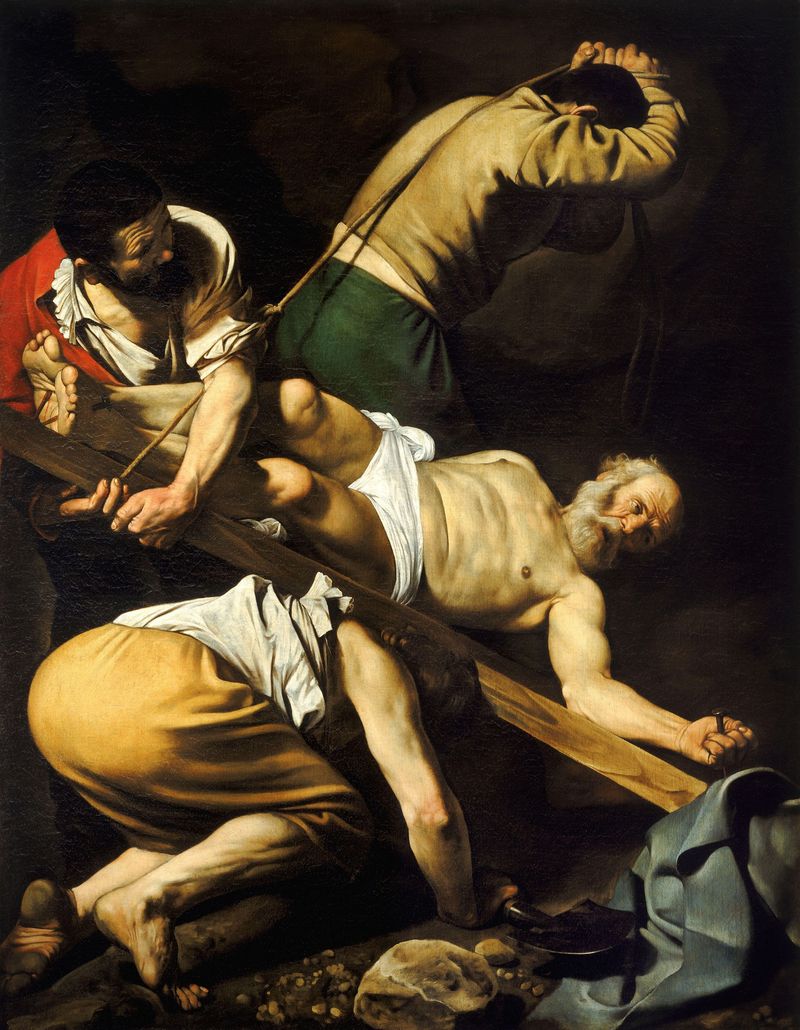
Simon Peter: The Fisherman Who Became the Rock
The life of Simon Peter—first among the apostles and first pope—traced through Scripture, the Church Fathers, and modern archaeology at Capernaum and Rome.
Stay Informed
Get new writing on faith, law, and service delivered to your inbox.
No spam. Unsubscribe anytime.