1 Samuel 5:1–5: The Ark in the Temple of Dagon
On This Page
וּפְלִשְׁתִּים לָקְחוּ אֵת אֲרוֹן הָאֱלֹהִים וַיְבִאֻהוּ מֵאֶבֶן הָעֵזֶר אַשְׁדּוֹדָה׃ וַיִּקְחוּ פְלִשְׁתִּים אֶת־אֲרוֹן הָאֱלֹהִים וַיָּבִיאוּ אֹתוֹ בֵּית דָּגוֹן וַיַּצִּיגוּ אֹתוֹ אֵצֶל דָּגוֹן׃
“The Philistines, having captured the ark of God, brought it from Ebenezer to Ashdod. The Philistines took the ark of God and brought it into the temple of Dagon, placing it beside Dagon.”—1 Samuel 5:1–2 NABRE
1 Samuel 5:1–5 (NABRE)
“The Philistines, having captured the ark of God, brought it from Ebenezer to Ashdod. The Philistines took the ark of God and brought it into the temple of Dagon, placing it beside Dagon. When the people of Ashdod rose early the next morning, Dagon was lying face down on the ground before the ark of the Lord. So they picked Dagon up and replaced him. Early the next morning, Dagon was again lying face down on the ground before the ark of the Lord. This time, Dagon’s head and the palms of both his hands were cut off, lying on the threshold; only the trunk of Dagon remained. That is why, even today, the priests of Dagon and none of those who enter Dagon’s temple tread on the threshold of Dagon in Ashdod.”
A God Lies Face Down Before His Rival
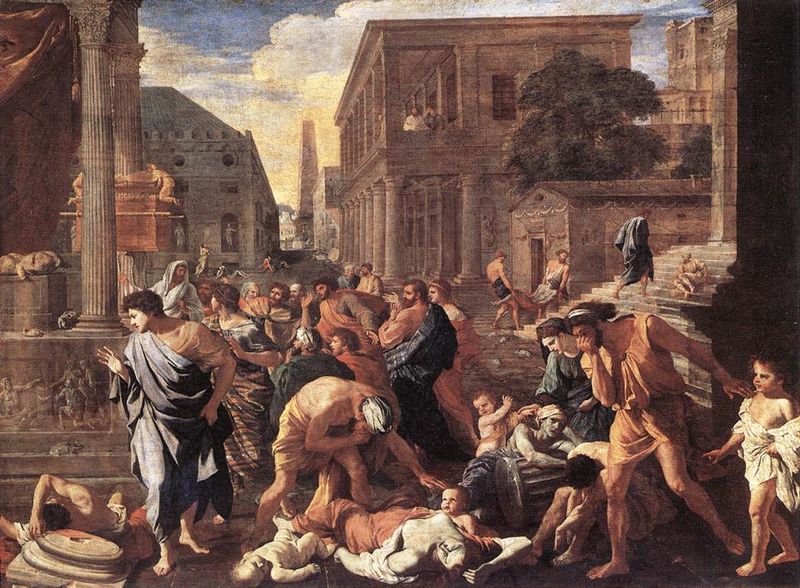
There is a kind of biblical comedy that only works if the reader takes it seriously. The Philistines have just won a two-day war against Israel. They have killed tens of thousands in the hill country, captured the ark of the covenant, and carried it home in triumph as a trophy. The priestly line of Eli is destroyed; the glory has departed from Israel (1 Sam 4:21). And then, the next morning, a statue falls over.
There is a kind of biblical comedy that only works if the reader takes it seriously.
The Philistines set the ark beside Dagon in his own temple at Ashdod, presumably to advertise their god’s victory over Israel’s god. When they come back in the morning, Dagon is lying face-down on the floor before the ark. They pick him up and put him back. The next morning he is face-down again—and this time his head and his hands are cut off on the threshold. The text says, with a dry precision that has not aged: רַק דָּגוֹן נִשְׁאַר עָלָיו—“only Dagon was left upon him.” Or in the Septuagint’s franker reading: only the trunk.
The five verses of 1 Samuel 5:1–5 are the hinge of the ark narrative (1 Sam 4:1b–7:1).1 Chapter 4 looked like the story of Yahweh’s defeat. Chapter 5 reveals that it was never that. The ark that was carried away in chapter 4 walks alone into the enemy’s sanctuary in chapter 5 and dismantles the rival god without an Israelite soldier in sight. It then proceeds to inflict tumors and panic on the Philistine cities of the pentapolis until the Philistines themselves pack it up with gold reparations and send it home. The story is about divine sovereignty in its most unaccommodating form—sovereignty that does not need Israel’s instrumentality to vindicate itself.
It is also, for Catholic readers, about typology. The ark that dethrones Dagon at Ashdod is the same ark that Luke places behind Mary’s visitation to Elizabeth, the same ark that John places in heaven at Revelation 11:19 just before the woman clothed with the sun appears in chapter 12. The patristic and medieval tradition reads the sequence figurally: the ark of wood that held the law prefigures the womb that held the Word, and the woman whom the Litany of Loreto invokes as Foederis Arca is the one before whom every idol must fall.
This paper reads 1 Samuel 5:1–5 as text and as tradition. It examines the Hebrew against its textual witnesses (Masoretic Text, 4QSama, the Septuagint, the Vulgate), argues for a grain-god Dagon against the tenacious fish-god folk etymology, reads the passage verse by verse with attention to the threshold motif, sorts out the notorious LXX expansion at 5:4, traces its reception from the Greek and Latin fathers through Bede and Aquinas to modern Catholic commentary, and recovers the Marian-ecclesial reading that the Lectionary’s silence has left underdeveloped. The passage is small; it rewards close attention.
I. The Hebrew Text and Its Witnesses
The Masoretic Text of 1 Samuel 5:1–5, as preserved in the Leningrad Codex (L) and printed in Biblia Hebraica Stuttgartensia, reads as follows:2
1 וּפְלִשְׁתִּים לָקְחוּ אֵת אֲרוֹן הָאֱלֹהִים וַיְבִאֻהוּ מֵאֶבֶן הָעֵזֶר אַשְׁדּוֹדָה׃
2 וַיִּקְחוּ פְלִשְׁתִּים אֶת־אֲרוֹן הָאֱלֹהִים וַיָּבִיאוּ אֹתוֹ בֵּית דָּגוֹן וַיַּצִּיגוּ אֹתוֹ אֵצֶל דָּגוֹן׃
3 וַיַּשְׁכִּמוּ אַשְׁדּוֹדִים מִמָּחֳרָת וְהִנֵּה דָגוֹן נֹפֵל לְפָנָיו אַרְצָה לִפְנֵי אֲרוֹן יְהוָה וַיִּקְחוּ אֶת־דָּגוֹן וַיָּשִׁבוּ אֹתוֹ לִמְקוֹמוֹ׃
4 וַיַּשְׁכִּמוּ בַבֹּקֶר מִמָּחֳרָת וְהִנֵּה דָגוֹן נֹפֵל לְפָנָיו אַרְצָה לִפְנֵי אֲרוֹן יְהוָה וְרֹאשׁ דָּגוֹן וּשְׁתֵּי כַּפּוֹת יָדָיו כְּרֻתוֹת אֶל־הַמִּפְתָּן רַק דָּגוֹן נִשְׁאַר עָלָיו׃
5 עַל־כֵּן לֹא־יִדְרְכוּ כֹהֲנֵי דָגוֹן וְכָל־הַבָּאִים בֵּית־דָּגוֹן עַל־מִפְתַּן דָּגוֹן בְּאַשְׁדּוֹד עַד הַיּוֹם הַזֶּה׃
The textual situation in Samuel
First and Second Samuel are notorious among the books of the Hebrew Bible for the extent and character of their textual divergence among Hebrew and Greek witnesses. Emanuel Tov’s standard treatment notes that the Samuel Septuagint frequently reflects a Hebrew Vorlage that differed from the proto-Masoretic text, a conclusion dramatically confirmed by the Qumran Samuel manuscripts.3 Three Samuel scrolls were found in Cave 4—4QSama (4Q51), 4QSamb (4Q52), and 4QSamc (4Q53)—and 4QSama, in particular, often agrees with the Septuagint against the Masoretic Text, sometimes preserving readings that the MT appears to have lost by scribal haplography or by deliberate shortening.4
For 1 Samuel 5:1–5 specifically, the Qumran manuscripts are fragmentary at this passage; no substantial variant reading for these verses is preserved in the extant DSS material for chapter 5. The relevant comparison is therefore primarily between MT, the Septuagint (in its Vaticanus [B] and Alexandrinus [A] manuscripts, critically edited by Rahlfs-Hanhart, with the new Göttingen Samuel volume still pending as of this writing), and the Vulgate.5
Major variants
Verse 1. MT: “The Philistines had taken the ark of God and brought it from Ebenezer to Ashdod.” LXX-B adds in some manuscripts a geographical clarification and, more significantly, the Lucianic recension begins the verse with καὶ ἐγένετο (“and it happened”)—a stylistic feature rather than a substantive divergence.
Verse 3. MT lacks an explicit narrative note that the Ashdodites reported the incident to “all their brothers” before restoring Dagon; LXX contains the plus. McCarter and Klein treat the LXX plus as probably original, lost by MT haplography.6
Verse 4. This is the most contested verse in the pericope. MT: רַק דָּגוֹן נִשְׁאַר עָלָיו, “only Dagon was left upon him.” LXX-B: πλὴν ἡ ῥάχις Δαγων ὑπελείφθη, “only the róachis of Dagon was left.” The word ῥάχις means “backbone, spine,” and is used in classical Greek for the body’s axial skeleton and, by metaphorical extension, for the ridge of a hill or mountain.7 The Vulgate follows the Greek: porro Dagon truncus solus remanserat in loco suo, “moreover, only the trunk of Dagon was left in its place.”8 The Peshitta follows MT.
The LXX preserves a further element missing in MT: after ἀφῃρημένα ἐπὶ τὰ ἐμπρόσθια (“cut off at the front”) it inserts the transliterated Hebrew word αμαφεθ and the phrase “each” (ἕκαστον), apparently rendering a Hebrew expression that the translator did not know how to translate. In verse 5 the LXX translates what is very possibly the same word with βαθμός (“threshold, step”).
Emanuel Tov and Anneli Aejmelaeus both read the pair amapheth / bathmos as a double translation—a transliteration (amapheth = Hebrew הַמִּפְתָּן with Greek transliteration loss) followed in the next verse by a real rendering.9 On this reading the LXX translator had before him a Hebrew text very close to MT but struggled with the rare word מִפְתָּן (“threshold”).
Verse 5. MT: “the priests of Dagon and all who enter the temple of Dagon do not tread on the threshold of Dagon in Ashdod to this day.” LXX-B preserves an additional etiological phrase, ἀλλ᾽ ὑπερβαίνοντες ὑπερβαίνουσιν (“but they leap over”), that is missing in MT. The cognate accusative construction marks the practice as a culturally embedded verb—hopping, springing—and may well be a genuine reading lost by MT haplography rather than an LXX expansion.10
The Vulgate and Latin patristic tradition
Jerome translated the Old Testament from Hebrew (iuxta Hebraeos) in the 390s, and his Vulgate for Samuel is a fresh translation rather than a revision of the Vetus Latina. For 1 Samuel 5:4 he follows the sense of the Greek ῥάχις in choosing truncus—the trunk of a body or a tree—rather than attempting a literal rendering of MT’s רַק דָּגוֹן. The Weber-Gryson critical edition of the Stuttgart Vulgate prints: porro Dagon truncus solus remanserat in loco suo.11
Notice the convergence: the Greek ῥάχις, the Latin truncus, the Syriac Peshitta’s gezʿā (“trunk, stump”), and the Aramaic Targum all preserve some version of a “trunk” or “stump” reading against the laconic MT רַק דָּגוֹן נִשְׁאַר עָלָיו (“only Dagon was left upon him”). Four independent ancient translation traditions agree against MT here. That is precisely the kind of external corroboration text criticism most prizes, and it is the strongest available warrant for treating the LXX/4QSamᵃ as preserving an earlier Hebrew text-form and the MT as having suffered scribal loss in transmission—McCarter’s haplography proposal, examined more closely in §VI below.
Jerome’s choice is significant for later Latin reception: when Augustine, Gregory the Great, Bede, and Aquinas read “Dagon” in 1 Samuel 5:4, they read truncus Dagon—and the “trunk” imagery, with its overtones of a felled tree, drives the patristic allegorical readings in a direction the MT would not have.
II. The Plot in Five Verses
Verse 1 establishes the geography: the Philistines carry the ark from Ebenezer (the place of Israel’s defeat in 1 Sam 4) to Ashdod, one of the five cities of the Philistine pentapolis (along with Gaza, Ashkelon, Gath, and Ekron; see Josh 13:3). Ashdod sits on the Mediterranean coastal plain, roughly forty kilometers south of modern Tel Aviv, and has been excavated in multiple seasons since 1962, most significantly by Moshe Dothan.12
Verse 2 sets the scene: the ark is brought into the בֵּית דָּגוֹן, the temple of Dagon, and placed אֵצֶל—“beside”—Dagon. The preposition is significant. The Philistines are not worshiping the ark; they are displaying it as a defeated rival, the way a victorious army might hang the enemy’s standards in its own temple.
Verse 3 narrates the first morning’s surprise. The Ashdodites find Dagon נֹפֵל לְפָנָיו אַרְצָה לִפְנֵי אֲרוֹן יְהוָה—“fallen on his face to the ground before the ark of Yahweh.” They pick him up and put him back.
Verse 4 is the narrative’s climax. The second morning the Ashdodites find Dagon fallen again, but this time וְרֹאשׁ דָּגוֹן וּשְׁתֵּי כַּפּוֹת יָדָיו כְּרֻתוֹת אֶל־הַמִּפְתָּן—“the head of Dagon and the two palms of his hands were cut off on the threshold.” Only “Dagon” (or, per LXX, his trunk) was left. The specificity of the dismemberment—head and both palms—is not gratuitous. It evokes the treatment of enemy combatants in ancient Near Eastern warfare, where a defeated combatant’s head and hands were commonly severed as war trophies (see 1 Sam 31:9–10, the treatment of Saul’s body by the Philistines themselves; and the Assyrian reliefs in J. B. Pritchard’s ANEP 368, 373).13
Verse 5 closes with a liturgical etiology: “that is why, to this day, the priests of Dagon and all who enter Dagon’s temple do not tread on the threshold of Dagon in Ashdod.” The narrator is addressing a readership that knows Ashdod’s cult personally and can verify the practice. The claim dates the narrative’s final form to a period when Dagon’s cult was still active at Ashdod—which, given archaeological evidence for its persistence into the Hellenistic period, does not narrow the window substantially.
III. The Ark Narrative in Context (1 Sam 4–6)
Leonhard Rost in 1926 argued that an originally independent “Ark Narrative”—1 Sam 4:1b–7:1, to which he joined 2 Sam 6—was taken up into the Deuteronomistic History as a pre-Deuteronomistic source.14 Rost’s source-critical hypothesis has been refined but not overturned.
Patrick D. Miller and J. J. M. Roberts’ 1977 monograph The Hand of the Lord: A Reassessment of the “Ark Narrative” of 1 Samuel is the single most important study of the unit. They argue that the ark narrative as we have it is an integrated literary whole with a theological argument directed against the understanding of a captured deity as a defeated deity—a common motif in ancient Near Eastern polemic (e.g., the Marduk Prophecy, Cyrus Cylinder, Dagon in the Amarna letters).15
Miller and Roberts show that the narrative proceeds through a tightly structured sequence: Israel’s defeat and the ark’s capture (chapter 4), Yahweh’s self-vindication in Dagon’s temple (5:1–5), the plagues on the Philistine cities (5:6–12), the return of the ark (6:1–18), and its reception at Beth-Shemesh and transfer to Kiriath-Jearim (6:19–7:1). The chapter 5:1–5 material is the ideological fulcrum: the enemy god is humiliated in his own sanctuary, so the reader knows that what looked like Yahweh’s defeat in chapter 4 was nothing of the kind.
The broader literary argument is reinforced by a structural observation the commentaries have made repeatedly: the verb יָד (“hand”) runs as a motif through the narrative. The ark is “in the hand of” the Philistines (5:7, 11); Dagon’s “hands” are severed (5:4); the “hand of the Lord” is heavy upon Ashdod (5:6, 7, 9, 11). The hand-motif binds Dagon’s mutilation to Yahweh’s vindication: as the Philistine god loses his hands, the Philistine cities feel the hand of the true God.16
As the Philistine god loses his hands, the Philistine cities feel the hand of the true God.
IV. Dagon: Grain, Not Fish
For centuries—from Philo of Byblos (first–second century AD) through the medieval Jewish commentators to John Milton’s Paradise Lost and the typical Sunday-school lesson—Dagon was a fish god.17 Milton made the image canonical:
Next came one
Who mourn’d in earnest, when the Captive Ark
Maim’d his brute Image, head and hands lopt off
In his own Temple, on the grunsel edge,
Where he fell flat, and sham’d his Worshipers:
Dagon his Name, Sea Monster, upward Man
And downward Fish…—Paradise Lost I.457–463
Etymology and the grain-god consensus
The fish-god reading is wrong. It rests on a homophonic coincidence between Hebrew דָּגוֹן and Hebrew דָּג (“fish”), a folk etymology already rejected by the medieval Quaestiones on the Books of Samuel transmitted under Jerome’s name (now ascribed to Pseudo-Jerome), where the author notes that the Hebrew word dagon is not from dag but from dagan, “grain.”18
Hartmut Schmökel first cast serious Assyriological doubt on the fish etymology in 1928; Martin Mulder in TDOT, John Healey in the Dictionary of Deities and Demons in the Bible, and Lluis Feliu in his comprehensive 2003 monograph The God Dagan in Bronze Age Syria all converge on the grain (or, on Feliu’s account, a pre-Semitic Syrian substratum) etymology. (Keil and Delitzsch’s earlier 1866 commentary, by contrast, defended a fish-related fertility reading and stands outside the modern consensus.)19
The evidence from the second- and third-millennium West Semitic world is overwhelming. Dagan is attested as a major deity from the mid-third millennium onward at Ebla (where he is one of the three most invoked deities in the tablets), at Mari (where a large temple is dedicated to him at Terqa on the Middle Euphrates), at Emar, and at Ugarit (where he is the father of Baal and receives a major temple on the acropolis, second in size only to Baal’s).20
The Ugaritic mythological texts repeatedly style Baal as bn Dgn (“son of Dagan”); the Mari archive documents Dagan as a grain and storm god to whom oracles were addressed; the Ebla tablets place him in the god-lists with the epithet ba’al dāgān or, in the Akkadian syllabic texts, as ilum dāgān. The etymology is secure: dāgān is the Semitic word for grain (Arabic dajan, Aramaic dagan, Phoenician dgn), and Dagan is the agricultural deity par excellence of the West Semitic Bronze Age.
The Philistines adopted the cult of Dagan upon their arrival in Canaan. The Philistines themselves were, as is now archaeologically established, part of the Late Bronze Age “Sea Peoples” migration, with cultural and ceramic links to Mycenaean Greece and Cyprus; their material culture shifted after settlement to conform to the West Semitic environment in which they found themselves.21 Itamar Singer, in his pioneering studies of Philistine religion, showed that the Philistines layered their Aegean religious heritage onto a substrate of West Semitic deities already honored in Canaan—Dagan among them.22 Jeffrey Emanuel has recently synthesized the question in the Oxford Handbook of the Bronze Age Aegean.23
How then did the fish-god myth arise? The most likely explanation is a late folk etymology in the Hellenistic period, when Greek-speaking Jews and Gentile neighbors of the Philistines knew the deity’s name but had forgotten its West Semitic meaning. Philo of Byblos, preserved in Eusebius’ Praeparatio Evangelica, derived Δαγών from σῖτος (“grain,” confusingly close to the truth) but also from ἰχθύς (“fish”), and the latter association stuck.24
The Babylonian Talmud, some Midrashim, and the medieval Jewish commentators (notably Rashi and Radak on 1 Sam 5, though the attribution to both requires caution) knew the fish-god reading. David Kimhi (Radak) on 1 Samuel 5:4 explicitly writes that Dagon had the form of a fish below and a man above—the image Milton would later canonize.25
The exegetical payoff matters. If Dagon was a grain god, then the severing of his head and hands is more than divine slapstick. Dagon’s cult was the ritual guarantor of Philistine agricultural fertility, which in turn underwrote Philistine economic and political power. When Yahweh breaks off Dagon’s head and hands, he is not merely embarrassing a rival; he is decapitating the symbolic organ of Philistine prosperity. The chapter 6 plagues on the crops and the panic of the Philistine lords in chapter 6:1–12 are thematically connected to the chapter 5 decapitation: the grain-god has been silenced, and the grain itself is in trouble.
When Yahweh breaks off Dagon’s head and hands, he is not merely embarrassing a rival; he is decapitating the symbolic organ of Philistine prosperity.
Archaeological footprint
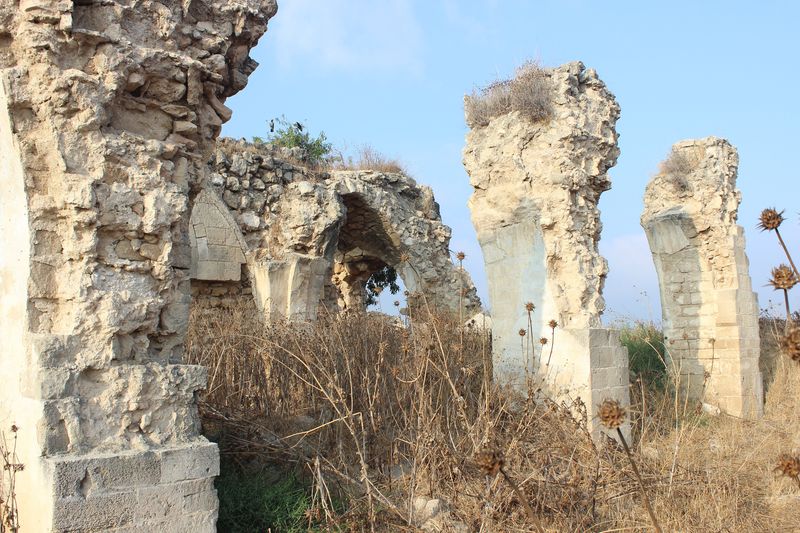
Four pieces of archaeological and epigraphic evidence bear on Dagon at Ashdod specifically:
- A Philistine temple with a two-column cultic plan has been excavated at Tel Qasile (strata X–XI, eleventh-century BC), by Amihai Mazar. The temple plan shares features with Aegean temple architecture but conforms to Canaanite ritual conventions. It is not a Dagon temple specifically, but it is our best preserved example of Philistine temple architecture from the period of 1 Samuel.26
- Tel Ashdod itself has yielded Iron Age I and II strata showing a Philistine cult center, including a large public building with an altar in Area H (Stratum XII, late eleventh–tenth century). Moshe Dothan’s excavations have published the finds, though no single building has been conclusively identified as the temple of Dagon mentioned in 1 Samuel 5. (For the broader Iron IIA Philistine archaeological context—Tell es-Safi/Gath at c. 50 hectares as the materially decisive constraint on Davidic-Solomonic westward reach—see the historical David.)
- The Amarna correspondence (mid-fourteenth century BC) includes letters whose senders carry theophoric names invoking Dagan—notably EA 317, written by a Canaanite scribe named Dagan-takala (“Dagan supports”)—confirming the deity’s cult in pre-Philistine Canaan and its persistence into the Iron Age.27
- The Marneion at Gaza, the last Philistine Dagan-type temple in continuous operation, was destroyed by imperial fiat in AD 402 under Bishop Porphyry of Gaza, as narrated in Mark the Deacon’s Life of Porphyry. The Marneion housed the cult of Marna (a Semitic storm/grain deity often identified with Dagon in late sources); its destruction marks the final liturgical silencing of the West Semitic grain god whose image fell at Ashdod a millennium and a half earlier.28
The arc from 1 Samuel 5 to Porphyry of Gaza is a long one, but it is continuous. What begins with a statue falling face-down in Ashdod ends with a temple burning at Gaza.
What begins with a statue falling face-down in Ashdod ends with a temple burning at Gaza.
V. Verse by Verse
Verse 1: From Ebenezer to Ashdod
וּפְלִשְׁתִּים לָקְחוּ אֵת אֲרוֹן הָאֱלֹהִים וַיְבִאֻהוּ מֵאֶבֶן הָעֵזֶר אַשְׁדּוֹדָה׃
“The Philistines, having captured the ark of God, brought it from Ebenezer to Ashdod.”—NABRE
The verse opens with a disjunctive clause (subject-first: וּפְלִשְׁתִּים, “and the Philistines”) that signals a shift in narrative focus from Israel’s catastrophe in chapter 4 to the Philistines’ custody of the ark. The phrase אֲרוֹן הָאֱלֹהִים (“ark of God”) rather than אֲרוֹן יְהוָה (YHWH, “ark of Yahweh”) is notable.
The chapter alternates between the two: אֲרוֹן הָאֱלֹהִים is the expression used in the Philistine-perspective narration, while אֲרוֹן יְהוָה is used when the narrator steps back into Israelite-perspective reporting. The distinction is not absolute, but the pattern is striking and Miller-Roberts have argued it is deliberate: the Philistines see “the god” (any god), while the narrator knows the ark belongs to Yahweh specifically.29
“Ebenezer” (אֶבֶן הָעֵזֶר, literally “stone of help”) is the location of the Israelite defeat in 1 Sam 4:1. The verse’s directional suffix on Ashdod (אַשְׁדּוֹדָה—with the he directive) marks the ark’s destination. Ashdod is named here for the first time in the book; its introduction begins the seven-month tour of the Philistine cities (5:8 Gath, 5:10 Ekron) that culminates in the ark’s return.
Verse 2: The ark beside Dagon
וַיִּקְחוּ פְלִשְׁתִּים אֶת־אֲרוֹן הָאֱלֹהִים וַיָּבִיאוּ אֹתוֹ בֵּית דָּגוֹן וַיַּצִּיגוּ אֹתוֹ אֵצֶל דָּגוֹן׃
“The Philistines took the ark of God and brought it into the temple of Dagon, placing it beside Dagon.”—NABRE
Three verbs in rapid sequence: וַיִּקְחוּ (“they took”), וַיָּבִיאוּ (“they brought”), וַיַּצִּיגוּ (“they stationed”). The Hiphil of יצג means to set down or station deliberately; it is the word used for placing something in a formal position (cf. Gen 33:15; Exod 10:24). The Philistines are enacting a formal ritual of subjugation, placing Israel’s cult object in a position of liturgical inferiority to their own.
The preposition אֵצֶל (“beside, next to”) is spatially precise. The ark is not set before Dagon (as if presented to him), nor below Dagon (as if subordinated to him), but beside him—as a rival trophy, displayed for public inspection. The image is of two enthroned presences in the same sanctuary, like captured standards displayed next to the victor’s own.
Verse 3: The first fall
וַיַּשְׁכִּמוּ אַשְׁדּוֹדִים מִמָּחֳרָת וְהִנֵּה דָגוֹן נֹפֵל לְפָנָיו אַרְצָה לִפְנֵי אֲרוֹן יְהוָה וַיִּקְחוּ אֶת־דָּגוֹן וַיָּשִׁבוּ אֹתוֹ לִמְקוֹמוֹ׃
“When the people of Ashdod rose early the next morning, Dagon was lying face down on the ground before the ark of the Lord. So they picked Dagon up and replaced him.”—NABRE
The verb וַיַּשְׁכִּמוּ (“they rose early”) frames the Ashdodites’ action as a deliberate, ritual-morning sequence—a temple guard presumably coming to open the sanctuary at dawn. The participle נֹפֵל (“falling,” not simply נָפַל, “fell”) is durative: they find Dagon in the posture of falling, face-down on the ground. לְפָנָיו אַרְצָה לִפְנֵי אֲרוֹן יְהוָה: “on his face to the ground before the ark of Yahweh.” The Hebrew piles up prepositions to make the posture unmistakable—full prostration, the posture of a worshiper before a superior deity.
The double compound לְפָנָיו (“on his face”) and לִפְנֵי (“before”) is a deliberate echo: Dagon’s face is before the ark. The pun works in Hebrew as it cannot quite in English translation.
The Ashdodites pick Dagon up and return him לִמְקוֹמוֹ, “to his place.” The word מָקוֹם is the standard cultic-architectural term for a god’s position on his pedestal; it is also the word used in Deuteronomy 12 for the “place” Yahweh chooses for his name to dwell. The narrator is playing a quiet game: Dagon’s “place” is not his for long.
Verse 4: The decapitation
וַיַּשְׁכִּמוּ בַבֹּקֶר מִמָּחֳרָת וְהִנֵּה דָגוֹן נֹפֵל לְפָנָיו אַרְצָה לִפְנֵי אֲרוֹן יְהוָה וְרֹאשׁ דָּגוֹן וּשְׁתֵּי כַּפּוֹת יָדָיו כְּרֻתוֹת אֶל־הַמִּפְתָּן רַק דָּגוֹן נִשְׁאַר עָלָיו׃
“Early the next morning, Dagon was again lying face down on the ground before the ark of the Lord. This time, Dagon’s head and the palms of both his hands were cut off, lying on the threshold; only the trunk of Dagon remained.”—NABRE
The repetition of “they rose early in the morning” and “Dagon fallen on his face to the ground before the ark of Yahweh” is pointedly verbatim. Biblical Hebrew narrative style uses repetition-with-variation: the identical opening signals that something is about to be different. The difference is this morning’s new detail, introduced with וְ- (“and”): וְרֹאשׁ דָּגוֹן וּשְׁתֵּי כַּפּוֹת יָדָיו כְּרֻתוֹת—“and the head of Dagon and the two palms of his hands [were] cut off.”
כְּרֻתוֹת is the passive participle of כרת, the verb used for making a covenant (כָּרַת בְּרִית, “to cut a covenant,” Gen 15:18 and elsewhere), but also for cutting off in the sense of severance or excommunication (the karet penalty, “let that soul be cut off from his people”). The verb choice is not accidental. Dagon is not merely broken; he is cut off, as one “cuts off” an excommunicated person from the covenant people.
The palms (כַּפּוֹת יָדָיו, “palms of his hands”) are the organs of cultic blessing, as 1 Kings 8:22–23 makes clear with Solomon. To cut off a god’s palms is to disable his liturgical capacity; he can no longer receive worship or dispense blessing. With his hands severed on the threshold, Dagon is functionally a non-god.
With his hands severed on the threshold, Dagon is functionally a non-god.
אֶל־הַמִּפְתָּן (“to the threshold”) is the chapter’s spatial center. The מִפְתָּן is the threshold stone of a temple; it is an architectural element with its own cultic significance in the ancient Near East, where thresholds were regarded as liminal spaces under the protection of apotropaic deities or demons.30 The severed head and hands do not merely fall anywhere; they fall precisely on the cultic boundary between sacred and profane. The threshold, in the next verse, will become an exclusion zone.
The final clause, רַק דָּגוֹן נִשְׁאַר עָלָיו, is one of the most difficult in the verse. The most natural MT reading is “only Dagon was left upon him”—but the pronominal “upon him” has no antecedent in MT as it stands. P. Kyle McCarter proposes that the Hebrew has suffered haplography and that the original read something close to what LXX preserves: “only the trunk/stump (רֹאשׁ or a cognate) of Dagon was left in its place.”31 Either way, the theological point is unambiguous: a mutilated remnant of Dagon lies on the floor before the ark. The god of grain is reduced to his agricultural raw material—a stump, a trunk, something you might feed to pigs.
Verse 5: The etiology
עַל־כֵּן לֹא־יִדְרְכוּ כֹהֲנֵי דָגוֹן וְכָל־הַבָּאִים בֵּית־דָּגוֹן עַל־מִפְתַּן דָּגוֹן בְּאַשְׁדּוֹד עַד הַיּוֹם הַזֶּה׃
“That is why, even today, the priests of Dagon and none of those who enter Dagon’s temple tread on the threshold of Dagon in Ashdod.”—NABRE
עַל־כֵּן (“therefore”) is the standard biblical Hebrew etiological marker, the formula by which the narrator connects a past event to a continuing custom (“therefore the children of Israel do not eat the sinew of the thigh, unto this day,” Gen 32:33; “therefore the name of that place is called Beer-Sheba, unto this day,” Gen 26:33). The practice being explained is Dagon’s priests’ avoidance of the threshold. The Hebrew verb is יִדְרְכוּ (“they tread”), in the negative imperfect: they do not tread. The LXX’s cognate-accusative expansion (“they leap over, leaping”) captures the positive form of the avoidance—the priests hop.
‘ad hayyôm hazzeh (“to this day”) is the standard etiological close. It tells us nothing about when the narrative reached its final form beyond this: at the time of composition, Dagon’s cult was still operating at Ashdod, and the threshold-hopping was a recognizable cultic peculiarity. Given that Dagon’s cult persisted until at least the Hellenistic period (and, at Gaza, until AD 402), the etiology could have been written at almost any point from the tenth century BC through the Hellenistic era.
VI. The LXX Puzzle at 5:4 and the Amapheth / Bathmos Problem
The Septuagint translation of 1 Samuel (i.e., 1 Reigns or 1 Kingdoms) represents—in both its Vaticanus (B) text and its Lucianic recension—what scholars since Dominique Barthélemy have called the Old Greek of Samuel, one of the earliest Greek translations in the LXX corpus.32 At 5:4 it reads:
καὶ ἐγένετο ὅτε ὤρθρισαν τὸ πρωί, καὶ ἰδοὺ Δαγων πεπτωκὼς ἐπὶ πρόσωπον αὐτοῦ ἐνώπιον κιβωτοῦ διαθήκης κυρίου· καὶ ἡ κεφαλὴ Δαγων καὶ ἀμφότερα τὰ ἴχνη χειρῶν αὐτοῦ ἀφῃρημένα ἐπὶ τὰ ἐμπρόσθια αμαφεθ ἕκαστον, καὶ ἀμφότεροι οἱ καρποὶ τῶν χειρῶν αὐτοῦ πεπτωκότες ἐπὶ τὸ πρόθυρον· πλὴν ἡ ῥάχις Δαγων ὑπελείφθη.
“And it happened, when they rose early in the morning, behold, Dagon had fallen upon his face before the ark of the covenant of the Lord; and the head of Dagon and both palms of his hands had been struck off onto the front-pieces—amapheth, each one—and both wrists of his hands had fallen on the threshold; only the trunk of Dagon was left.”
Three features of the Greek text
Three features of this text are notable against MT:
(1) The double reference to Dagon’s dismemberment—“the head of Dagon and both traces of his hands… and both palms of his hands”—is distinctive. MT has only one reference. The LXX doubling suggests either a fuller Hebrew Vorlage or a conflated translation that has preserved two variant readings side by side.
(2) The transliterated Hebrew word αμαφεθ (amapheth) appears as a kind of untranslated gloss. Comparison with verse 5 (where the LXX translates the same consonantal root with βαθμός, “threshold”) shows that amapheth is simply the Greek transliteration of Hebrew הַמִּפְתָּן (“the threshold”), with the expected consonantal transformation (mem-pe-tav-nun → mu-alpha-phi-epsilon-theta, with loss of final nun). The translator apparently did not recognize the word, transliterated it in verse 4, and translated it correctly in verse 5. Emanuel Tov classes this as a canonical example of a Septuagint “double translation”: one preserves the unfamiliar Hebrew term, the other translates it properly.33
(3) The climactic clause is πλὴν ἡ ῥάχις Δαγων ὑπελείφθη—“only the róachis of Dagon was left.” The Greek ῥάχις is a relatively rare word. In Homer it denotes the spine or back of an animal (Odyssey 9.433 of the ram); in Hippocrates and Galen it is a standard anatomical term for the vertebral column; in classical prose it can extend, by metaphorical analogy, to the trunk of a tree or the ridge of a mountain (LSJ s.v.).34 The word thus combines bodily anatomy with architectural trunk—exactly the ambiguity the translator seems to want: what remains of Dagon is a stump, a trunk, an axis without extremities. Jerome’s Latin truncus picks up the word’s architectural overtone.
Which is original?
The question of whether MT’s רַק דָּגוֹן נִשְׁאַר עָלָיו or LXX’s πλὴν ἡ ῥάχις ὑπελείφθη is earlier has been debated since Julius Wellhausen’s 1871 Der Text der Bücher Samuelis.35 Three main positions:
Position 1 (LXX as earlier). Wellhausen, Stanley Driver, McCarter, Klein. The LXX’s ῥάχις corresponds to a Hebrew Vorlage with a word like גֵּו (“body, trunk”) or גְּוִיָּה (“corpse, body,” used of Saul’s body at 1 Chron 10:12). The MT’s רַק דָּגוֹן נִשְׁאַר עָלָיו is corrupt, with the pronoun עָלָיו having lost an antecedent.
Position 2 (MT as earlier). Traditional Jewish commentators and some recent conservative scholars. MT is intelligible if awkward: “only Dagon was left” means the Dagon-trunk (the rest having been cut off) was what remained, with עָלָיו understood as adverbial (“he was left as him” = “he alone was left”).
Position 3 (Double reading). Hans Wilhelm Hertzberg, Jürgen Kegler, and more recently Anneli Aejmelaeus: both readings are ancient, the LXX preserving a fuller and possibly more original text, the MT a shortened and perhaps textually damaged version.
My own reading of the evidence favors a modified Position 1: the LXX preserves an earlier and more intelligible reading (“only his trunk was left”), which makes better sense of the preceding dismemberment narrative (head and palms are cut off; what remains, therefore, is everything else—the trunk). The MT reads as a damaged truncation of this fuller original. But the difference is not doctrinally material; both readings say the same thing: everything that gave Dagon his identity as a figure is gone, and what remains is undignified.
VII. Zephaniah 1:9 and the Threshold Motif
A familiar homiletic move connects 1 Samuel 5:5 to Zephaniah 1:9: “On that day I will punish all who leap over the threshold.” The connection is appealing. Did Zephaniah have the threshold-hopping priests of Dagon in mind?
The philological bridge between the two passages runs through the Septuagint. MT of 1 Samuel 5:5 lacks an explicit note that Dagon’s priests leap; it says only that they do not tread on the threshold. LXX-B 5:5, however, adds a cognate-accusative clause, ἀλλ᾽ ὑπερβαίνοντες ὑπερβαίνουσιν (“but leaping, they leap over”), which supplies precisely the verb Zephaniah uses (הַדּוֹלֵג עַל־הַמִּפְתָּן). McCarter and others treat the LXX plus as likely original, lost in MT by haplography.36 If the Greek plus is original, the lexical linkage between 1 Samuel 5:5 and Zephaniah 1:9 is appreciably stronger than MT alone suggests, and the Dagon reading for Zephaniah becomes philologically live.
The interpretive tradition is correspondingly divided. Rashi on Zephaniah 1:9 connects the verse to the Philistine Dagon priests.37 Jerome in his Commentarius in Sophoniam rejects the Dagon connection, arguing instead that the leapers are the servants of Judean officials who burst violently into subject homes to plunder, with the following phrase “filling their masters’ house with violence and deceit” as the controlling image.38 Calvin and Keil-Delitzsch followed Jerome in rejecting a direct Dagon allusion.
Modern commentary is split across at least four positions:
- Dagon-cult syncretism (Rashi; Matthew Poole; Keil-Delitzsch; David P. Wright in some formulations). Zephaniah condemns Judeans who have imported the Philistine threshold-avoidance practice as a mark of syncretistic devotion.
- Violent-plunder reading (Jerome; Adele Berlin in the Anchor Bible Zephaniah; David P. Wright in his 2001 JBL article). The “leapers” are servants of the royal or noble house who leap violently over thresholds to loot on behalf of their masters; the next clause (“filling their master’s house with violence and deceit”) is the controlling context.39
- Generic foreign-dress idolatry (parsed in parallel with v. 8’s “foreign apparel”: the leapers are practitioners of miscellaneous pagan imitation, not specifically Dagon-cultic). This is the reading favored in a number of contemporary Protestant and Catholic commentators who find the Dagon connection too geographically remote to be Zephaniah’s primary referent.
- General ANE threshold avoidance (where Zephaniah’s target is superstitious threshold-cult practices attested broadly across the ancient Near East—from Assyrian threshold foundation deposits to general apotropaic threshold piety—without a specifically Philistine-Dagon referent). The JPS Tanakh and the Da’at Miqra Zephaniah lean in this direction, and Targum Jonathan reads the parallel Hebrew phrase in 1 Sam 5:4 in a way that dissolves the fish-god inference entirely.
Evaluating the four: the LXX plus at 1 Sam 5:5 is a real constraint that weighs in favor of reading Zephaniah against 1 Samuel’s Dagon etiology—i.e., positions 1 and 4 rise; positions 2 and 3 fall somewhat. But none of the four is textually decisive, and competent modern commentators continue to defend each. Catholic preaching that simply asserts a Dagon-Zephaniah connection without naming the alternatives misrepresents the state of the question; preaching that flatly denies it in the name of “modern scholarship” overstates a contested result. The homiletic move can be made, if it is made with proper qualification, and the Greek reading supplies a real exegetical bridge.
VIII. Intertextual Echoes
1 Samuel 5:1–5 echoes and is echoed by several other biblical passages worth naming.
Inner-biblical
- Exod 12:22–23—the Passover threshold. In the Exodus narrative, the threshold is the spatial boundary across which the destroying angel does not pass, and the blood applied to the doorposts and lintel marks the Israelite home as protected. The threshold motif in 1 Sam 5:4–5 is the inverse: Dagon’s threshold marks a space of exclusion against Dagon’s priests, not protection for them.
- Judg 16:23–30—Samson and Dagon. The Dagon temple at Gaza where Samson is paraded as a trophy and which he pulls down upon his head is the direct Philistine antecedent to the Ashdod scene. Samson personally dismembers a Dagon temple; the ark does so impersonally.
- 1 Sam 31:9–10 / 1 Chron 10:9–10—the Philistines cut off Saul’s head and display his body on the walls of Beth-Shan. The parallel is striking: the Philistines do to Saul’s body what Yahweh does to Dagon’s image. And the theological trajectory of Saul’s fall begins precisely with his [rejection at Gilgal in 1 Samuel 13:8–14](/1-samuel-13-saul-rejection/), when Samuel tells him that YHWH has sought “a man after his own heart” to replace his dynasty—the first step toward the death at Mount Gilboa that delivers Saul’s body into Philistine hands. The Chronicler reads the chapter-31 narrative as a Dagon-connected scene, adding that Saul’s skull was placed in the house of “Dagon” (1 Chr 10:10 MT: בֵּית דָּגוֹן; contrast 1 Sam 31:10 MT: בֵּית עַשְׁתָּרוֹת, “house of Ashtaroth”). The two texts appear to preserve variant traditions about which Philistine deity received the trophy.40
- Isa 46:1–2—Bel bows down, Nebo stoops. Isaiah’s oracle against Babylon deploys a posture identical to Dagon’s: the Babylonian gods cannot stand on their own feet before Yahweh. The Dagon narrative is the narrative form of what Isaiah 46 asserts as an oracle.
Second Temple Jewish echoes
Josephus rewrites the Dagon episode at Antiquities 6.1.1–4, with considerable narrative elaboration. He retells the prostration of Dagon before the ark and names the plague that follows as “a fearful dysentery” (δυσεντερία)—the dysentery being his distinctive contribution, since the severed head and hands of 1 Sam 5:4 (in both MT and LXX) drop out of his retelling. Josephus’ rewriting is a valuable witness to the first-century reception of the passage; it confirms the importance of the episode for Hellenistic Jewish readers who still lived, so to speak, within the shadow of Philistine Gaza.41
New Testament echoes
The Dagon narrative does not appear in the New Testament by direct citation. But the theological image of principalities and powers disarmed and displayed in public shame (Col 2:15, θριαμβεύσας αὐτοὺς ἐν αὐτῷ) is, as patristic exegetes would read it, the New Testament enactment of the Dagon pattern: the enemy powers are not negotiated with; they are broken. Revelation 11:19 (“and the ark of his covenant appeared in his temple”) imports the ark into the heavenly liturgy, and the subsequent chapter 12 vision of the woman and the dragon echoes the pattern of the ark’s victorious presence against rival powers.
IX. Patristic and Medieval Reception
The patristic engagement with 1 Samuel 5 is real but scattered. There is no patristic commentary on 1 Samuel comparable to Origen’s on Genesis or Augustine’s on the Psalms. What we have is occasional comment: a phrase here, a paragraph there, usually in the service of a larger theological argument.
The Greek fathers
Origen (third century) treats the Dagon episode in his Homilies on Samuel (preserved in Latin fragments via Rufinus) and in the Contra Celsum, where he invokes the narrative as evidence that the God of Israel is not a merely tribal deity—he defeats foreign gods on their own territory.42
Theodoret of Cyrus (fifth century) in his Quaestiones in libros Regnorum treats 1 Samuel 5 with a fairly sober allegorical reading: Dagon’s fall before the ark prefigures the Gentile nations’ eventual submission to Christ, and the severing of Dagon’s head and hands symbolizes the dismantling of pagan philosophical authority (head) and pagan liturgical capacity (hands).43
John Chrysostom does not give a sustained treatment of 1 Samuel 5 in any extant text, though he alludes to the Dagon episode in passing in several homilies, typically to illustrate the powerlessness of idols.
The Latin fathers
Augustine, surprisingly, does not treat 1 Samuel 5 in any sustained way. His De civitate Dei Book 17 takes up the Samuel material, but focuses on Hannah’s prayer in chapter 2 as a prophetic oracle of the Church’s succession of the synagogue. The Dagon episode receives no direct attention—a striking silence given Augustine’s appetite for narrative allegory.44 Catholic preachers who imagine a developed Augustinian Dagon typology should be aware that the sources do not support it.
Gregory the Great (d. 604) has historically been cited as a major Western reader of the Dagon episode on the strength of the Expositiones in librum primum Regum (PL 79:17–468), which opens with a sustained allegorical treatment of 1 Samuel 5. That attribution has collapsed under Adalbert de Vogüé’s 1996 demonstration that the text is in fact the work of Peter of Cava, a twelfth-century monastic author drawing on Gregorian materials. The allegorical Dagon-reading that preaching handbooks still cite as “Gregory” should accordingly be cited as Peter of Cava.
Gregory’s authentic corpus—the Moralia in Iob and the Homiliae in Hiezechielem—does contain a few brief allusive treatments of Dagon as a type of the proud heretic who falls before the truth of Christ, but nothing like the sustained commentary the pseudo-Gregorian work supplies.45
Isidore of Seville (d. 636) in his Etymologiae 8.11 explains “Dagon” with the fish-etymology inherited from Philo of Byblos and Jerome’s (partially) Hebrew-grounded derivation, and in his Quaestiones in Vetus Testamentum allegorizes the threshold-hopping priests as figures for those who refuse to accept full conversion to Christ.46
The Venerable Bede (d. 735) devotes a full chapter of his In primam partem Samuhelis (Book I, on 1 Sam 5) to 1 Samuel 5. Bede is systematic: Dagon is the enemy of the elect; the first fall signifies the initial disturbance of the devil at Christ’s advent; the second fall—with head and hands severed—signifies the complete defeat of Satan by the paschal mystery; the threshold-hopping priests represent those Gentiles who come partway into the Church but still venerate the place where their idols fell.47
Medieval: Aquinas
Thomas Aquinas treats 1 Samuel 5 occasionally in the Summa theologiae and more extensively in his Catena Aurea entries on the New Testament passages where the ark theme appears (principally at Luke 1:39–56 on the Visitation, where he compiles the Fathers’ readings of Mary as the true ark).48 Thomas is not a running-commentator on Samuel, but his occasional treatments show a consistent pattern: Dagon is the devil; the ark is Christ (or Mary, or the Church, by legitimate Marian-ecclesial extension); the threshold is the boundary between the old dispensation and the new.
X. A Catholic Theological Reading
The most fully developed Catholic theological reading of the Dagon episode emerges not from a systematic monograph but from the cumulative weight of liturgical, magisterial, and devotional tradition: the ark that dethrones Dagon at Ashdod is, in the Church’s reading, the same ark that Luke 1 presents as Mary, the same ark that Revelation 11–12 presents as the heavenly original of which Moses’ tabernacle was the earthly copy (Heb 8:5), and the same ark before which every principality and power must fall (Col 2:15).
This typological reading depends on a specific theological grammar that 1 Samuel 5 itself establishes. The ark does not work magically. Yahweh humiliates Dagon through the ark, not because the ark is a talisman whose intrinsic power discharges automatically against rival deities, but because the ark is the appointed locus of his presence and his sovereign action proceeds through it. Miller and Roberts’ reading of chapter 5 made this point decisively against the Raiders-of-the-Lost-Ark misreading: it is the Lord who humiliates Dagon, and the ark is the chosen instrument of that humiliation. The instrumentality logic matters because it is what makes the Marian-ark typology coherent rather than magical. Mary, like the ark, is not a self-acting power-vessel; she is the chosen instrument through whom God’s saving action becomes present. Where Dagon falls, the powers fall—but the agent is the Lord, not the ark; the agent is Christ, not Mary.
Mary as Ark
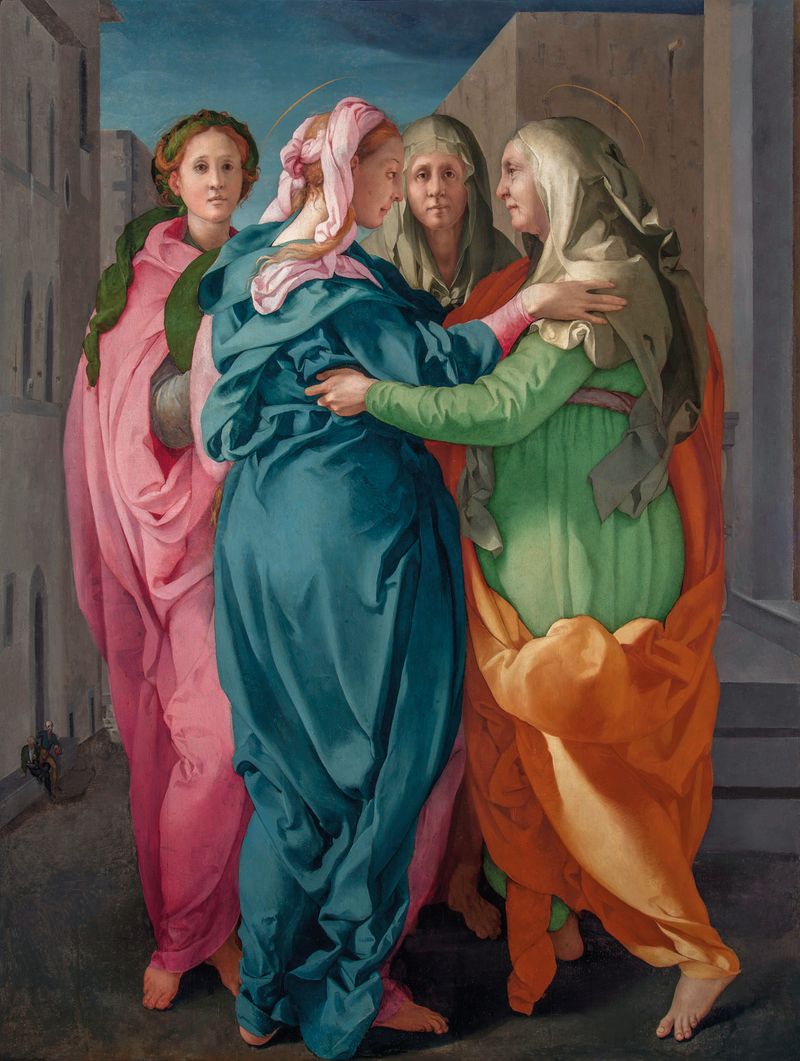
The Marian-ark identification is classically rooted in a set of Lukan intertextual echoes between 2 Samuel 6 (David dances before the ark as it ascends to Jerusalem) and Luke 1:39–56 (Mary travels from the Galilean hill country to the hill country of Judah to visit Elizabeth, and the infant John “leaps” in Elizabeth’s womb).
The verbal parallels (“leap,” σκιρτάω; “the ark of the Lord came to”/“the mother of my Lord has come to me,” 2 Sam 6:9 LXX / Luke 1:43; “three months,” 2 Sam 6:11 / Luke 1:56) form a typological matrix that multiple Fathers exploit and that René Laurentin, Ignace de la Potterie, and Benedict XVI in his Jesus of Nazareth: The Infancy Narratives have examined with philological care.49
On this reading, 1 Samuel 5 takes its place as the typological preface: the ark that dismantles Dagon is the Old Testament figure of the woman whom the Litany of Loreto invokes as Foederis Arca, the Ark of the Covenant. The litany itself, dating in its Marian form to the sixteenth century but drawing on a patristic prehistory, names Mary under the title the ark bore when it dethroned Dagon at Ashdod.50
[… excerpt from the Litany of Loreto, Marian-typological cluster]
Mirror of justice, pray for us.
Seat of wisdom, pray for us.
Cause of our joy, pray for us.
Spiritual vessel, pray for us.
Vessel of honor, pray for us.
Singular vessel of devotion, pray for us.
Mystical rose, pray for us.
Tower of David, pray for us.
Tower of ivory, pray for us.
House of gold, pray for us.
Ark of the covenant (Foederis Arca), pray for us.
Gate of heaven, pray for us.
Morning star, pray for us.[… litany continues]
The Church as Ark
Paralleling the Marian typology, the ecclesial typology reads the ark as the Church, the sacramentum salutis that carries God’s presence into the world and before which every idol must fall. This reading is already present in Augustine (in the City of God 17’s treatment of the ark as carried before David, though not specifically at 1 Sam 5), developed more fully by Peter of Cava in the twelfth-century Expositiones transmitted under Gregory the Great’s name, and codified in Bede’s genuinely Gregorian-influenced Samuel commentary.
Vatican II’s Lumen Gentium 9 names the Church as “the new Israel,” advancing through history toward a future and abiding city; the Dagon episode of 1 Samuel 5 fits naturally within the typological framework that conciliar text articulates, even though the council itself does not invoke this particular Old Testament pericope.51
Christ as the one whom the ark carries
The deepest Catholic reading makes the ark itself a christological figure: what is in the ark—the tablets of the Law, the manna, Aaron’s rod (Heb 9:4)—prefigures Christ. The ark’s victory at Ashdod is the Old Testament narrative form of the victory that Colossians 2:15 asserts: Christ “disarmed the principalities and powers and made a public example of them, triumphing over them” (θριαμβεύσας αὐτοὺς ἐν αὐτῷ). The patristic exegetical tradition runs this line explicitly. Where Dagon falls face-down before the ark, the powers of the age fall face-down before Christ.
Where Dagon falls face-down before the ark, the powers of the age fall face-down before Christ.
Dei Verbum 12 and the spiritual senses
The Second Vatican Council’s Dei Verbum §12 carefully balances the historical-critical and the spiritual senses of Scripture: “the interpreter of Sacred Scripture, if he is to ascertain what God has wished to communicate to us, should carefully search out the meaning which the sacred writers really had in mind, that meaning which God had thought well to manifest through the medium of their words.” The Catechism of the Catholic Church (§§115–119) takes Dei Verbum 12 as its warrant for the classic four senses of Scripture—literal, allegorical, moral, and anagogical.52
The grammatical-historical sense of 1 Samuel 5 is the Deuteronomistic narrative of Yahweh’s self-vindication in Philistine territory; the spiritual sense, as discerned by the Fathers and confirmed by the Church’s liturgical tradition, is the ark’s Marian-ecclesial-christological import. The two senses do not compete; they are hierarchically related, the spiritual presupposing and fulfilling the literal.
XI. Lectionary and Contemporary Application
1 Samuel 5 is almost absent from the Roman Lectionary. The chapter does not appear in the Sunday Lectionary at all (the Sunday readings from 1 Samuel draw primarily from the Hannah narrative, the Samuel call narrative, the anointing of David, and selected narrative crises—but not the ark narrative).
In the weekday Lectionary for Ordinary Time it appears in Year I at Week 1, Saturday (where the reading covers 1 Samuel 9:1–4, 17–19 / 10:1, and only indirectly touches the ark theme). In the Office of Readings, the ark narrative of 1 Samuel 4–6 appears in the weekday cycle for Ordinary Time during some iterations of the two-year reading plan, though even there the coverage is compressed.
The practical result is that most Catholics have no settled liturgical memory of the Dagon episode. It is not part of the weekly homiletic diet. It surfaces, if at all, in personal reading, in the Liturgy of the Hours for those who pray it, or in catechetical contexts where the ark is introduced as the Marian figure of Foederis Arca.
This is a loss. The Dagon episode is one of the clearest Old Testament images of the sovereignty of God over rival powers, and it is precisely the image a contemporary audience living amid dispersed sacralities—political, economic, technological—needs. A church that sings the Litany of Loreto but cannot preach the ark’s victory at Ashdod is asking its people to venerate the figure without knowing the narrative.
A church that sings the Litany of Loreto but cannot preach the ark’s victory at Ashdod is asking its people to venerate the figure without knowing the narrative.
Pastoral uses
The passage’s most direct pastoral use is iconic: the image of the ark entering an enemy temple and the statue falling face-down. For homiletic purposes, the image serves the sermon against idolatry in its contemporary forms—not only literal idolatry, but the displacement of God by other ultimate concerns. The statue-falling image is also unusually resistant to pious abstraction; it is concrete, comic, and violent, and thus sticks in the memory of hearers who will forget an abstract proposition.
The Marian use of the passage—Mary as the true ark before whom every idol must fall—is one of the richest resources the passage offers. The Litany of Loreto’s title Foederis Arca is not a pious flourish; it is a compressed theological claim, and preaching that unpacks it recovers a dimension of Marian doctrine that ordinary Catholics often know only as a phrase in a litany.
Common misreadings to correct
Three common misreadings deserve correction:
(1) Dagon as fish god. The fish-god reading is, as argued above, a late folk etymology without support in the primary ANE evidence. Preaching that repeats the fish-god claim perpetuates an error that ordinary Catholic study resources can and should move past.
(2) The Zephaniah 1:9 link. Homiletic connections between Zephaniah 1:9’s “those who leap over the threshold” and the Dagon priests are textually defensible but contested. The Septuagint plus at 1 Samuel 5:5 (“but leaping, they leap over”) supplies the cognate verb Zephaniah uses, which is the strongest philological warrant for the link. But several competing readings (royal-servant plunder, foreign-dress idolatry, general ANE threshold superstition) remain live in the commentary literature, and preaching should acknowledge the range rather than assert one answer as settled.
(3) The ark as a magic box. The chapter 5 narrative is sometimes read as if it were a Raiders-of-the-Lost-Ark-type scene in which the ark’s intrinsic power simply zaps whatever it encounters. Miller and Roberts’ study has decisively shown that the Hebrew narrative carefully avoids this reading: it is not the ark that humiliates Dagon; it is Yahweh (whose presence is figuratively, not mechanically, associated with the ark) who humiliates Dagon through the ark. The distinction is not trivial; it is the difference between biblical revelation and talismanic magic.
Conclusion: A Small Pericope with a Long Reach
The five verses of 1 Samuel 5:1–5 do a lot of theological work. They pivot the ark narrative from apparent defeat to overwhelming victory. They dismantle a major West Semitic deity in his own sanctuary. They generate a cultic etiology that the narrator still expects his readers to recognize. They offer the Hebrew Bible’s most vivid comic-catastrophic image of the futility of idols. And through the long Christian tradition of figural reading, they form one of the typological preludes to the Marian ark of the Visitation and the ecclesial ark of the Church.
It is a small pericope with a long reach. The priests of Dagon at Ashdod stopped walking on their own temple’s threshold—and, eventually, Porphyry of Gaza burned the Marneion, and the last West Semitic grain-god temple was silenced. The liturgical trajectory from Ashdod 1050 BC to Gaza AD 402 is the slow vindication of the narrative claim in 1 Samuel 5: every idol must fall face-down before the ark.
For Catholic readers, the pericope is also an invitation to recover a typology the Lectionary has largely set aside. The Marian title Foederis Arca deserves preaching, not only chanting; the Dagon scene deserves a place in the catechetical formation of adult Catholics. To know the narrative is to understand the litany. And to understand the litany is to stand, with the tradition, in the long line of those who have watched a statue fall face-down before the God whom a wooden chest carried.
To know the narrative is to understand the litany.
Frequently Asked Questions
What is 1 Samuel 5:1–5 about?
The Philistines, having captured the ark of Israel’s God, bring it to Ashdod and place it in the temple of their own god, Dagon, as a trophy. Overnight Dagon’s statue falls face-down before the ark. The next night Dagon’s head and both hands are severed and lying on the threshold, with only the torso/trunk left. The text closes with a cultic etiology: this is why, “to this day,” the priests of Dagon do not step on the threshold of Dagon’s temple in Ashdod.
Was Dagon a fish god?
No. The fish-god reading rests on a surface homophony between Hebrew דָּגוֹן and דָּג (“fish”), and was popularized by Philo of Byblos and, later, Milton. The actual West Semitic deity Dagan is extensively attested from the mid-third millennium BC onward at Ebla, Mari, Emar, and Ugarit as a major grain god—related etymologically to Hebrew דָּגָן, “grain.” Jerome already rejected the fish etymology in the fourth century, and modern scholarship (Feliu, Healey, Mulder) unanimously affirms the grain-god identification.
Why do Dagon’s priests hop over the threshold?
Because, per the narrative’s etiology (5:5), Dagon’s head and hands fell on the threshold (הַמִּפְתָּן), rendering that spatial boundary cultically charged. The priests avoid treading on it ever after. The LXX preserves an additional phrase, “but they leap over, leaping”—a cognate-accusative construction that gives the positive form of the avoidance and supplies the same root Zephaniah 1:9 uses. The Dagon-Zephaniah connection is therefore textually live, though competing readings (royal-servant plunder, foreign-dress idolatry, general ANE threshold superstition) remain defensible and are widely held in modern commentary.
What does “only Dagon was left” mean in verse 4?
The MT reads רַק דָּגוֹן נִשְׁאַר עָלָיו, “only Dagon was left upon him,” which is grammatically awkward (no clear antecedent for עָלָיו). The LXX reads “only the ῥάχις of Dagon was left”—“only the trunk/stump”—and Jerome’s Vulgate follows the Greek with truncus solus. The LXX reading is likely closer to the original, with the MT having suffered some loss. Either way, the meaning is clear: everything that gave Dagon his identity (head, hands) has been cut off, and what remains is a stump.
Does the passage appear in the Roman Lectionary?
Only sparsely. The ark narrative (1 Sam 4–6) appears in the weekday Office of Readings in some years of the two-year cycle, but 1 Samuel 5 does not appear in the Sunday Lectionary at all. Most Catholic preaching does not engage the Dagon episode, which is one reason why the Marian title Foederis Arca—Ark of the Covenant—is often chanted without reference to the narratives (like the Dagon scene) that would give it its full biblical weight.
What is the Catholic typological reading?
Catholic tradition reads the ark as an Old Testament figure of (1) Mary, the Theotokos, whom the Litany of Loreto invokes as Foederis Arca; (2) the Church, the dwelling of God’s presence among nations; and (3) Christ, to whom the ark’s contents (law, manna, Aaron’s rod) point. On this reading, 1 Samuel 5 is a typological preface: the ark that dethrones Dagon prefigures Mary and the Church, before whom every idol—every rival ultimacy—must fall face-down.
The reading is developed chiefly by Origen, Theodoret, and Bede; by Peter of Cava in the twelfth-century Expositiones long misattributed to Gregory the Great; and by Aquinas in passing. It takes its contemporary form in Benedict XVI’s Jesus of Nazareth: The Infancy Narratives on Luke 1.
What happened to Dagon’s temple at Ashdod?
Archaeology confirms a Philistine cult center at Tel Ashdod from the eleventh through the eighth centuries BC, with continuing religious activity into the Persian and Hellenistic periods, but no single building has been definitively identified as the “house of Dagon” of 1 Samuel 5. More broadly, the West Semitic Dagan cult persisted under various local forms until the Christian Roman Empire. The Marneion at Gaza, the last functioning Dagan/Marna-type temple, was destroyed in AD 402 by imperial order under Bishop Porphyry of Gaza, as recorded in Mark the Deacon’s Life of Porphyry.
Why does the narrative matter?
Because it is one of the clearest Old Testament images of divine sovereignty over rival powers. The Philistines thought they had captured Israel’s god; in fact, Israel’s God had captured their sanctuary. Chapter 5 is the theological fulcrum on which the apparent defeat of chapter 4 turns into the overwhelming vindication of chapter 6. For a contemporary church tempted to negotiate with dispersed sacralities—political, economic, technological—the Dagon scene is a compact icon of what real sovereignty looks like: not negotiation, but fall.
Footnotes
1. The classic demarcation of 1 Samuel 4:1b–7:1 as an independent “Ark Narrative” (Ladeerzählung) is Leonhard Rost, Die Überlieferung von der Thronnachfolge Davids, BWANT 3/6 (Stuttgart: Kohlhammer, 1926), 4–47; English translation: The Succession to the Throne of David, trans. Michael D. Rutter and David M. Gunn (Sheffield: Almond, 1982). Refined and extended in Patrick D. Miller Jr. and J. J. M. Roberts, The Hand of the Lord: A Reassessment of the “Ark Narrative” of 1 Samuel (Baltimore: Johns Hopkins University Press, 1977).
2. Biblia Hebraica Stuttgartensia, ed. Karl Elliger and Wilhelm Rudolph, 5th corrected ed. (Stuttgart: Deutsche Bibelgesellschaft, 1997), ad loc. (based on the Leningrad Codex, MS B 19A, St. Petersburg). The Biblia Hebraica Quinta Samuel volume has not yet been published as of this writing; when published it will be the critical edition of reference. The unpointed consonantal text presented here omits metegs and certain cantillation marks for display clarity but reproduces the pointing as preserved in L.
3. Emanuel Tov, Textual Criticism of the Hebrew Bible, 3rd rev. ed. (Minneapolis: Fortress, 2012), esp. ch. 7 on textual and literary criticism (including the parallel editions of 1 Sam 16–18). The standard treatment of the problem.
4. Frank Moore Cross et al., Qumran Cave 4.XII: 1–2 Samuel, Discoveries in the Judaean Desert XVII (Oxford: Clarendon, 2005). For a helpful summary of the phenomenon of 4QSama/LXX agreement against MT, see Eugene Ulrich, The Qumran Text of Samuel and Josephus, HSM 19 (Missoula, MT: Scholars Press, 1978).
5. The standard working edition of the Septuagint is Alfred Rahlfs and Robert Hanhart, eds., Septuaginta, editio altera (Stuttgart: Deutsche Bibelgesellschaft, 2006). The Göttingen critical edition of 1–4 Reigns is forthcoming in the Septuaginta Vetus Testamentum Graecum series under the editorship of Anneli Aejmelaeus; pending its publication, the Rahlfs-Hanhart text is standard. For the Vulgate, see Robert Weber and Roger Gryson, eds., Biblia Sacra iuxta Vulgatam Versionem, 5th ed. (Stuttgart: Deutsche Bibelgesellschaft, 2007).
6. P. Kyle McCarter Jr., I Samuel: A New Translation with Introduction, Notes, and Commentary, Anchor Bible 8 (Garden City, NY: Doubleday, 1980), 120–123; Ralph W. Klein, 1 Samuel, Word Biblical Commentary 10 (Waco, TX: Word Books, 1983), 47–52. A lightly revised second edition appeared from Zondervan in 2014, but Klein noted that the revisions were chiefly bibliographic; the substantive text-critical treatment of 1 Sam 5 is unchanged from 1983.
7. Henry George Liddell and Robert Scott, A Greek-English Lexicon, rev. Henry Stuart Jones, 9th ed. with revised supplement (Oxford: Oxford University Press, 1996), s.v. ῥάχις (“chine, lower back; spine, backbone; ridge of a hill or mountain”).
8. Weber-Gryson, Biblia Sacra iuxta Vulgatam Versionem, ad loc. (1 Sam 5:4). The critical text reads porro Dagon truncus solus remanserat in loco suo.
9. Tov, Textual Criticism, 131–133; Anneli Aejmelaeus, On the Trail of the Septuagint Translators: Collected Essays, rev. and expanded ed., CBET 50 (Leuven: Peeters, 2007), chs. 5–6. On the philological problem of amapheth, see also Tuukka Kauhanen, The Proto-Lucianic Problem in 1 Samuel, De Septuaginta Investigationes 3 (Göttingen: Vandenhoeck & Ruprecht, 2012), especially his chapter on 1 Samuel 5.
10. McCarter, I Samuel, 122.
11. Weber-Gryson, Biblia Sacra, ad loc.
12. Moshe Dothan, Ashdod II–III: The Second and Third Seasons of Excavations, 1963, 1965, ‘Atiqot 9–10 (Jerusalem: Department of Antiquities and Museums, Ministry of Education and Culture, in cooperation with the Israel Exploration Society, 1971); Moshe Dothan and David Noel Freedman, Ashdod I: The First Season of Excavations, 1962, ‘Atiqot 7 (Jerusalem: Department of Antiquities and Museums, 1967); Moshe Dothan and Yehoshua Porath, Ashdod IV: Excavation of Area M, ‘Atiqot 15 (Jerusalem: Department of Antiquities and Museums, 1982). (The Israel Antiquities Authority was not established until 1990; these volumes pre-date it.)
13. James B. Pritchard, The Ancient Near East in Pictures Relating to the Old Testament, 2nd ed. with supplement (Princeton: Princeton University Press, 1969), figs. 368, 373 (Assyrian reliefs depicting the severing of heads and hands of defeated combatants).
14. Rost, Überlieferung; ET 1982.
15. Miller and Roberts, The Hand of the Lord, especially the introduction and the first chapter on the ANE parallels to the “captured god” motif (Marduk Prophecy, Cyrus Cylinder, Tukulti-Ninurta Epic). Their argument that the Ark Narrative is a sustained theological argument against the ANE pattern is the single most important insight of modern Samuel scholarship on this material.
16. Miller and Roberts, Hand of the Lord, 40–47, develop the “hand” motif with care; see also Walter Brueggemann, First and Second Samuel, Interpretation (Louisville: John Knox, 1990), 38–44.
17. John Milton, Paradise Lost, I.457–463, ed. David Scott Kastan (Indianapolis: Hackett, 2005). Milton’s source is almost certainly the medieval Jewish commentators via the Latin tradition.
18. Pseudo-Jerome, Quaestiones on the Book of Samuel, ad 1 Sam 5:2; ed. A. Saltman, Pseudo-Jerome: Quaestiones on the Book of Samuel, Studia Post-Biblica 26 (Leiden: Brill, 1975). The work was transmitted under Jerome’s name in the Latin tradition; Saltman’s critical edition demonstrated its medieval (likely Carolingian) provenance and its dependence on rabbinic sources. The author distinguishes Hebrew dagan (“grain”) from dag (“fish”) and assigns Dagon to the former.
19. Hartmut Schmökel, Der Gott Dagan: Ursprung, Verbreitung und Wesen seines Kultes (Borna-Leipzig: Universitätsverlag von Robert Noske, 1928); Martin J. Mulder, “Dagon,” in Theological Dictionary of the Old Testament, ed. G. Johannes Botterweck and Helmer Ringgren, trans. David E. Green, vol. 3 (Grand Rapids: Eerdmans, 1978), 139–153; John F. Healey, “Dagon,” in Dictionary of Deities and Demons in the Bible, ed. Karel van der Toorn, Bob Becking, and Pieter W. van der Horst, 2nd ed. (Leiden: Brill; Grand Rapids: Eerdmans, 1999), 216–219; Lluis Feliu, The God Dagan in Bronze Age Syria, trans. Wilfred G. E. Watson, CHANE 19 (Leiden: Brill, 2003). Feliu argues for a pre-Semitic Syrian substratum origin for the name rather than a direct Semitic dagan = “grain” derivation, but concurs that the fish etymology is without foundation.
20. Feliu, The God Dagan, 7–64 (Ebla), 65–102 (Mari), 215–271 (Emar), 273–290 (Ugarit). For the Ugaritic texts see also Dennis Pardee, Ritual and Cult at Ugarit, SBL Writings from the Ancient World 10 (Atlanta: Society of Biblical Literature, 2002).
21. Trude Dothan, The Philistines and Their Material Culture (New Haven: Yale University Press, 1982); Lawrence E. Stager, “The Impact of the Sea Peoples in Canaan (1185–1050 BC),” in The Archaeology of Society in the Holy Land, ed. Thomas E. Levy (London: Leicester University Press, 1995), 332–348; Ann E. Killebrew and Gunnar Lehmann, eds., The Philistines and Other “Sea Peoples” in Text and Archaeology, Archaeology and Biblical Studies 15 (Atlanta: Society of Biblical Literature, 2013).
22. Itamar Singer, “Towards the Image of Dagon, the God of the Philistines,” Syria 69 (1992): 431–450.
23. Jeffrey P. Emanuel, “‘Dagon Our God’: Iron I Philistine Cult in Text and Archaeology,” Journal of Ancient Near Eastern Religions 16, no. 1 (2016): 22–66.
24. Philo of Byblos, Phoenician History, preserved in Eusebius, Praeparatio Evangelica 1.10 (ed. Jean Sirinelli and Édouard des Places, SC 206; trans. E. H. Gifford, Eusebii Pamphili Evangelicae Praeparationis Libri XV, 4 vols. [Oxford: Oxford University Press, 1903]). See the critical discussion in Harold W. Attridge and Robert A. Oden Jr., Philo of Byblos: The Phoenician History. Introduction, Critical Text, Translation, Notes, CBQMS 9 (Washington, DC: Catholic Biblical Association, 1981).
25. David Kimhi (Radak) on 1 Samuel 5:4, in standard editions of Miqra’ot Gedolot. The attribution of the fish-upward-man-below form to Rashi is widely repeated in secondary literature but deserves caution; Rashi’s comments on 1 Samuel 5 do not unambiguously teach this form, whereas Radak’s do. See the discussion in Ginzberg, Legends of the Jews, vol. 4 (Philadelphia: Jewish Publication Society, 1913), 62–65, with rabbinic sources.
26. Amihai Mazar, Excavations at Tell Qasile, Part One: The Philistine Sanctuary: Architecture and Cult Objects, Qedem 12 (Jerusalem: Hebrew University, 1980); Excavations at Tell Qasile, Part Two: The Philistine Sanctuary: Various Finds, the Pottery, Conclusions, Appendixes, Qedem 20 (Jerusalem: Hebrew University, 1985).
27. William L. Moran, The Amarna Letters (Baltimore: Johns Hopkins University Press, 1992), EA 317. The letter is from a scribe named Dagan-takala (“Dagan supports”) to Pharaoh; the personal name itself is evidence for active Dagan veneration in the regional onomastic stratum. For the corpus of Yidya of Ashkelon’s correspondence (which is a separate cluster), see EA 320–326. On Dagan-takala specifically, see Pinhas Artzi, “Some Unrecognized Syrian Amarna Letters (EA 260, 317, 318),” Journal of Near Eastern Studies 27 (1968): 163–171; Artzi reassigns these letters to eastern Syria rather than Canaan/Philistia, so EA 317 attests Dagan veneration in Syria.
28. Mark the Deacon, Life of Porphyry of Gaza, ch. 66–76, ed. Henri Grégoire and Marc-Antoine Kugener, Marc le Diacre: Vie de Porphyre, évêque de Gaza (Paris: Les Belles Lettres, 1930). English translation in G. F. Hill, trans., The Life of Porphyry, Bishop of Gaza, by Mark the Deacon (Oxford: Clarendon, 1913). On the historical problems of the Life, see Timothy D. Barnes, Early Christian Hagiography and Roman History (Tübingen: Mohr Siebeck, 2010), ch. 6, esp. 260–283.
29. Miller and Roberts, Hand of the Lord, 30–35, on the deliberate alternation between “ark of God” and “ark of Yahweh.”
30. On thresholds and cultic boundaries more broadly, see Saul M. Olyan, Rites and Rank: Hierarchy in Biblical Representations of Cult (Princeton: Princeton University Press, 2000), chap. 2 (“Admission or Exclusion: The Binary Pairing Unclean/Clean”), 38–61.
31. McCarter, I Samuel, 120–123.
32. Dominique Barthélemy, Les Devanciers d’Aquila: Première publication intégrale du texte des fragments du Dodécapropheton, VTSup 10 (Leiden: Brill, 1963); Natalio Fernández Marcos, The Septuagint in Context: Introduction to the Greek Version of the Bible, trans. Wilfred G. E. Watson (Leiden: Brill, 2000).
33. Tov, Textual Criticism, 131–133; idem, The Text-Critical Use of the Septuagint in Biblical Research, 3rd rev. ed. (Winona Lake, IN: Eisenbrauns, 2015), 54–58.
34. LSJ s.v. ῥάχις. Homeric citation: Odyssey 9.433 (Odysseus clinging to the ram’s spine to escape the Cyclops). Hippocratic-Galenic usage: see the entry in the Thesaurus Linguae Graecae for prose citations in the medical corpus.
35. Julius Wellhausen, Der Text der Bücher Samuelis (Göttingen: Vandenhoeck & Ruprecht, 1871), ad 1 Sam 5:4; S. R. Driver, Notes on the Hebrew Text and the Topography of the Books of Samuel, 2nd ed. (Oxford: Clarendon, 1913), 50–51.
36. On the LXX-B plus at 1 Sam 5:5 (ἀλλ᾽ ὑπερβαίνοντες ὑπερβαίνουσιν) as the likely original lost by MT haplography, see McCarter, I Samuel, 120–122, and Klein, 1 Samuel, 47–48. McCarter explicitly ties the reading to Zephaniah 1:9’s הַדּוֹלֵג. The Vulgate, following the Greek, renders the sense if not the exact construction.
37. Rashi on Zephaniah 1:9, in Miqra’ot Gedolot, ad loc.
38. Jerome, Commentarius in Sophoniam, ad 1:9; ed. M. Adriaen, S. Hieronymi Presbyteri Opera 1.6, CCSL 76A (Turnhout: Brepols, 1970).
39. Adele Berlin, Zephaniah: A New Translation with Introduction and Commentary, Anchor Bible 25A (New York: Doubleday, 1994), 82–85; David P. Wright, “Those Who Leap over the Threshold (Zephaniah 1:9): Perpetrators of Violence or Ritual Offenders?” Journal of Biblical Literature 120 (2001): 719–731. Wright argues the phrase refers to officials of the royal house who forcibly enter subjects’ homes; the Dagon connection is, on his analysis, a derivative reading without textual support.
40. The variant between 1 Sam 31:10 (“house of Ashtaroth”) and 1 Chr 10:10 (“house of Dagon”) is one of the most discussed Chronicles-Samuel divergences and is treated at length in Sara Japhet, I & II Chronicles: A Commentary, OTL (Louisville: Westminster John Knox, 1993), 225–228, and Ralph W. Klein, 1 Chronicles: A Commentary, Hermeneia (Minneapolis: Fortress, 2006), 290–291.
41. Flavius Josephus, Jewish Antiquities 6.1.1–4 (§§1–18), ed. and trans. H. St. J. Thackeray and Ralph Marcus, Loeb Classical Library 281 (Cambridge, MA: Harvard University Press, 1934), 170–179.
42. Origen, Homiliae in I Regum, ed. P. Nautin and M.-T. Nautin, SC 328 (Paris: Cerf, 1986). Of the surviving homilies, the one on the Canticle of Hannah is preserved in Rufinus’ Latin translation; the homily on the witch of Endor (Hom. V) survives in Greek. Contra Celsum 5.46 alludes to the Dagon narrative in support of the broader argument regarding the non-tribal character of the God of Israel.
43. Theodoret of Cyrus, Quaestiones in libros Regnorum et Paralipomenon, q. 8 on 1 Reigns 5; ed. N. Fernández Marcos and J. R. Busto Saiz, Theodoreti Cyrensis Quaestiones in Reges et Paralipomena, Textos y Estudios “Cardenal Cisneros” 32 (Madrid: CSIC, 1984). The companion Quaestiones in Octateuchum (Madrid: CSIC, 1979) was edited by Fernández Marcos and A. Sáenz-Badillos. ET (Octateuch only, not Kings): Theodoret of Cyrus, The Questions on the Octateuch, 2 vols., trans. Robert C. Hill, ed. John F. Petruccione, Library of Early Christianity 1–2 (Washington, DC: Catholic University of America Press, 2007); no English translation of the Quaestiones in Reges is yet in print.
44. Augustine, De civitate Dei 17.4–5, treating Hannah’s prayer as prophetic of the Church; no sustained treatment of the Dagon episode in chapter 5. Text in Corpus Christianorum Series Latina 48 (Turnhout: Brepols, 1955). The silence is worth naming: a contemporary homiletician who cites “Augustine on Dagon” is almost certainly citing a secondary source that has misidentified its origin.
45. Gregory the Great, Moralia in Iob, ed. M. Adriaen, CCSL 143, 143A, 143B (Turnhout: Brepols, 1979–1985); Homiliae in Hiezechielem Prophetam, ed. M. Adriaen, CCSL 142 (Turnhout: Brepols, 1971). On the pseudo-Gregorian Expositiones in librum primum Regum, see Adalbert de Vogüé, “L’auteur du Commentaire des Rois attribué à saint Grégoire: un moine de Cava?” Revue Bénédictine 106 (1996): 319–331, with earlier groundwork in Paul Meyvaert, “The Date of Gregory the Great’s Commentaries on the Canticle of Canticles and on I Kings,” Sacris Erudiri 23 (1978–1979): 191–216; and the critical edition by Adalbert de Vogüé (with Christophe Vuillaume as co-editor of SC 391), Grégoire le Grand: Commentaire sur le Premier Livre des Rois, SC 351, 391, 432, 449, 469, 482 (Paris: Cerf, 1989–2004), which after de Vogüé’s 1996 demonstration is now generally understood to transmit Peter of Cava’s twelfth-century work rather than an authentic Gregorian composition. Catholic preaching that attributes a developed 1 Samuel 5 allegory to Gregory the Great is, with rare exceptions, drawing on this pseudepigraphon.
46. Isidore of Seville, Etymologiae 8.11, in Isidori Hispalensis Episcopi Etymologiarum sive Originum Libri XX, ed. W. M. Lindsay, 2 vols. (Oxford: Clarendon, 1911); ET: Stephen A. Barney, W. J. Lewis, J. A. Beach, and Oliver Berghof, trans., The Etymologies of Isidore of Seville (Cambridge: Cambridge University Press, 2006). Quaestiones in Vetus Testamentum, PL 83:391–393, on 1 Samuel 5.
47. Bede, In primam partem Samuhelis libri IV, ed. D. Hurst, CCSL 119 (Turnhout: Brepols, 1962), Book I, ad 1 Sam 5; ET: Bede: On First Samuel, trans. Scott DeGregorio and Rosalind Love, TTH 70 (Liverpool: Liverpool University Press, 2019).
48. Thomas Aquinas, Summa theologiae I-II.102.4 ad 6 (on the ark as a figure of Christ); Catena Aurea in Lucam, ed. Angelico Guarienti, 2 vols. (Turin: Marietti, 1953), on Luke 1:39–56 (the Visitation as fulfillment of 2 Sam 6 ark-typology). On the Marian-ark typology in Aquinas, see Charles Morerod, Ecumenism and Philosophy: Philosophical Questions for a Renewal of Dialogue (Ann Arbor, MI: Sapientia Press, 2006), ch. 6.
49. René Laurentin, Structure et théologie de Luc I–II (Paris: Gabalda, 1957); Ignace de la Potterie, Mary in the Mystery of the Covenant, trans. Bertrand Buby (New York: Alba House, 1992); Joseph Ratzinger / Pope Benedict XVI, Jesus of Nazareth: The Infancy Narratives, trans. Philip J. Whitmore (New York: Image, 2012), chap. 2 on the Visitation.
50. The Litany of Loreto, in the Enchiridion Indulgentiarum, 4th ed. (Vatican City: Libreria Editrice Vaticana, 2004). On the litany’s historical development from patristic and medieval Marian titles, see Anne Winston-Allen, Stories of the Rose: The Making of the Rosary in the Middle Ages (University Park, PA: Pennsylvania State University Press, 1997), chap. 5; and for the specific title Foederis Arca, Luigi Gambero, Mary and the Fathers of the Church: The Blessed Virgin Mary in Patristic Thought, trans. Thomas Buffer (San Francisco: Ignatius, 1999), 361–362.
51. Lumen Gentium 9, in Acta Apostolicae Sedis 57 (1965): 5–71 (LG 9 at 12–14); ET in Austin Flannery, ed., Vatican Council II: Constitutions, Decrees, Declarations, new rev. ed. (Northport, NY: Costello Publishing, 1996). Cited by section number rather than page.
52. Dei Verbum 12, in Acta Apostolicae Sedis 58 (1966): 817–836; ET in Flannery, Vatican Council II, cited by section number. The Catechism of the Catholic Church §§115–119 takes Dei Verbum 12 as its warrant for the classic four senses of Scripture (literal, allegorical, moral, anagogical). For the patristic and medieval background to that synthesis, see Henri de Lubac, Medieval Exegesis: The Four Senses of Scripture, 3 vols., trans. Mark Sebanc and E. M. Macierowski (Grand Rapids: Eerdmans; Edinburgh: T&T Clark, 1998–2009).

Garrett Ham
Garrett Ham is an attorney, military veteran, and holds a Master of Divinity from Yale Divinity School. He writes from Northwest Arkansas on theology, law, and service.
Related Posts

Who Actually Killed Goliath? David, Elhanan, and the Textual Transmission of 1–2 Samuel
2 Samuel 21:19 in Hebrew credits Elhanan, not David, with killing Goliath. The Catholic tradition has long-standing tools for the textual problem.
1 Samuel 2:25 Meaning: “The Lord Wanted Them Dead”
An exegetical study of 1 Samuel 2:25—the Hebrew ḥāpēṣ, the hardening tradition, and the Catholic response from Aquinas to Trent to De Auxiliis.
“Speak, for Your Servant Is Listening”: Samuel’s Omission of the Divine Name
Why did Samuel drop the divine name from Eli's instruction in 1 Samuel 3:10? An exegetical study of the gradual Israelite silence around the Tetragrammaton.
Stay Informed
Get new writing on faith, law, and service delivered to your inbox.
No spam. Unsubscribe anytime.