Stages of Revelation

On This Page
The stories of biblical heroes embody and consequently represent larger narratives about the various stages of revelation.
What the Catechism Says (CCC 54–64)
In the Beginning God Makes Himself Known
54. “God, who creates and conserves all things by his Word, provides men with constant evidence of himself in created realities. And furthermore, wishing to open up the way to heavenly salvation, he manifested himself to our first parents from the very beginning.” He invited them to intimate communion with himself and clothed them with resplendent grace and justice.
55. This revelation was not broken off by our first parents’ sin. “After the fall, [God] buoyed them up with the hope of salvation, by promising redemption; and he has never ceased to show his solicitude for the human race. For he wishes to give eternal life to all those who seek salvation by patience in well-doing.”
Even when he disobeyed you and lost your friendship you did not abandon him to the power of death… Again and again you offered a covenant to man.
The Covenant with Noah
56. After the unity of the human race was shattered by sin God at once sought to save humanity part by part. The covenant with Noah after the flood gives expression to the principle of the divine economy toward the “nations,” in other words, towards men grouped “in their lands, each with [its] own language, by their families, in their nations” (Gen 10:5).
57. This state of division into many nations, each entrusted by divine providence to the guardianship of angels, is at once cosmic, social and religious. It is intended to limit the pride of fallen humanity united only in its perverse ambition to forge its own unity as at Babel. But, because of sin, both polytheism and the idolatry of the nation and of its rulers constantly threaten this provisional economy with the perversion of paganism.
58. The covenant with Noah remains in force during the times of the Gentiles, until the universal proclamation of the Gospel. The Bible venerates several great figures among the Gentiles: Abel the just, the king-priest Melchisedek—a figure of Christ—and the upright “Noah, Daniel, and Job.” Scripture thus expresses the heights of sanctity that can be reached by those who live according to the covenant of Noah, waiting for Christ to “gather into one the children of God who are scattered abroad” (Jn 11:52).
God Chooses Abraham
59. In order to gather together scattered humanity God calls Abram from his country, his kindred and his father’s house (Gen 12:1), and makes him Abraham, that is, “the father of a multitude of nations.” “In you all the nations of the earth shall be blessed” (Gen 17:5; 12:3).
60. The people descended from Abraham would be the trustee of the promise made to the patriarchs, the chosen people, called to prepare for that day when God would gather all his children into the unity of the Church. They would be the root on to which the Gentiles would be grafted, once they came to believe.
61. The patriarchs, prophets and certain other Old Testament figures have been and always will be honoured as saints in all the Church’s liturgical traditions.
God Forms His People Israel
62. After the patriarchs, God formed Israel as his people by freeing them from slavery in Egypt. He established with them the covenant of Mount Sinai and, through Moses, gave them his law so that they would recognize him and serve him as the one living and true God, the provident Father and just judge, and so that they would look for the promised Saviour.
63. Israel is the priestly people of God, “called by the name of the LORD,” and “the first to hear the word of God” (Dt 28:10), the people of “elder brethren” in the faith of Abraham.
64. Through the prophets, God forms his people in the hope of salvation, in the expectation of a new and everlasting Covenant intended for all, to be written on their hearts. The prophets proclaim a radical redemption of the People of God, purification from all their infidelities, a salvation which will include all the nations. Above all, the poor and humble of the Lord will bear this hope. Such holy women as Sarah, Rebecca, Rachel, Miriam, Deborah, Hannah, Judith and Esther kept alive the hope of Israel’s salvation. The purest figure among them is Mary.
Salvation History as a Unified Arc
There is a lot to unpack in this relatively long section.
The most striking thing about this passage is how deeply it interweaves God’s revelation of himself to humanity with salvation history—the different stages of revelation—working from the patriarchs through Israel, down to Christ. The Catechism, summarizing Dei Verbum § 2, calls this a single “economy of Revelation” realized “by deeds and words which are intrinsically bound up with each other” (CCC § 53), unfolding gradually until it culminates in Christ, who is “at the same time the mediator and the fullness of all revelation” (Dei Verbum § 2).
The Catechism traces the progress of God’s work of salvation, acknowledging the exceptionalism of Israel while simultaneously recognizing the availability of salvation to all.
Importance of Historicity
From a superficial modernist view, the first question that may come to mind is the accuracy of all of these historical claims. That is, what if Adam and Eve or Noah (or even Abraham) were not historical figures? What if the biblical stories the Catechism here mentions are not historically accurate in the way modern Westerners understand the concept? What then?
For many decades, the Catholic Church has been open to the theory of evolution and to historical-critical methods of studying Scripture. (Indeed, a Catholic priest first proposed the Big Bang.)
The Church has therefore created an environment where believers may affirm the fundamentals of the faith as found in the Nicene Creed while simultaneously denying the historical veracity of vast swaths of Scripture.
So, what is the implication of such a view on the Catechism?
We should approach the historicity of these figures with humility and the Catechism’s use of them generously. CCC § 107, quoting Dei Verbum § 11, affirms that Scripture teaches “solidly, faithfully and without error that truth which God, for the sake of our salvation, wished to see confided to the Sacred Scriptures”—a careful formulation that ties inerrancy to the truth God intends to convey for salvation rather than to every incidental historiographical claim.
Some of the people mentioned in these chapters may not be historical figures in the modern sense, yet their stories embody and represent larger narratives about the various stages of revelation.
A Fallen Humanity
Humanity is clearly fallen. One does not have to be religiously observant to recognize that much is not right in the world. The Catholic Church acknowledges sin as the source of our fallenness.
Whether there was a historical fall, as those holding to a literal historical interpretation of Genesis 3 would affirm, or whether sin entered into the world through a manner of which we are not aware, is of little consequence.
The point is that from the beginning, God has been working to redeem humanity from its fallen state. From the beginning, God has been laboring to establish intimacy between himself and humanity, even if such efforts were frustratingly slow.
The Church also acknowledges the greatness of God’s mercy. From the moment of man’s fall, God continued working to establish a relationship with him. Even in earlier times when God’s revelation project was just beginning, and thus his nature only dimly known, God still desired that all humanity would come to salvation, not merely as whole people groups but as individuals.
Stages of Revelation to the Gentiles
This is where the Noahic covenant takes on such great importance. Whether Noah was a historical figure or not, or whether there was an actual worldwide flood, is also of no consequence. What matters here is a recognition that God created a means by which all people—even those to whom he has not yet fully revealed himself—could come to know him and find in him eternal life.
Yet God chose Abraham for a very particular purpose. He is the starting point for his great revelatory project, a project that would culminate in its final stage of revelation in the opening up of this divine work to the whole world.
Having revealed himself generally to the rest of humanity and working still within them to move them toward intimacy with him through the best possible means, he chose Abraham as the focal point for a fuller revelation, holding, in his mercy, the Gentiles to a different standard of knowledge.
Stages of Revelation to the Jews
Again, whether Abraham was a historical figure matters little. The point is that God chose Israel from all the nations of the world to focus his self-revelation. Whether that meant God chose an individual (Abraham) or a whole nation (Israel, for which Abraham is a mythic representation), I don’t know.
Current archaeological evidence suggests that Israel emerged from among the Canaanite people rather than as a foreign invader of the land. (Though it seems almost certain that there is some historical basis in the Exodus. Who would make up such a history for themselves?)
There is a genuine question about how, exactly, divine accommodation worked in the Israelites’ religious development—whether God’s self-revelation as YHWH built upon the vocabulary and religious forms the patriarchs already had, or whether he reshaped those forms from the ground up. The orthodox claim, however, is clear: there is one true God, and that God is the one who revealed himself definitively to Abraham and Moses (cf. Exodus 3:13–15; CCC §§ 204–213). Whatever continuity may have existed between pre-Abrahamic religion and Israelite faith, the God who speaks to Abraham is the eternal God who creates all things, not a repackaging of a Canaanite deity.
What’s worth underscoring here is that the Catholic Church, albeit subtly, rejects supersessionism. The Church did not merely replace Israel. Instead, Israel retains spiritual priority, and Gentiles are saved by being grafted onto the root of Israel through Christ (cf. Romans 11:17–24; Nostra Aetate § 4; CCC §§ 839–840).
The theology surrounding these questions is vast, and there is much more to unpack as the Catechism continues.
Conclusion
The Catechism’s treatment of revelation in stages (§§ 54–64) refuses two extremes. It refuses a purely natural religion in which Christ is one option among many, and it refuses a narrow Israel-only view in which God’s mercy never extends to the nations. Between these two, the Church sees a God who meets humanity where it is—through the covenant with Noah, through Abraham, through Israel, and finally through Jesus Christ—drawing all people into one family. Reading these chapters charitably and with attention to Dei Verbum lets us hold both the historical concreteness of Israel’s story and its theological weight as salvation history without forcing one to collapse into the other.
Frequently Asked Questions
What are the stages of revelation in the Catechism?
The Catechism traces revelation in stages: God’s self-disclosure to our first parents (§§ 54–55), the covenant with Noah covering all nations (§§ 56–58), the call of Abraham (§§ 59–61), the formation of Israel through the Sinai covenant (§§ 62–63), and the prophetic expectation that culminates in Christ (§ 64).
Is the Noahic covenant still in force?
Yes. CCC § 58 states that “the covenant with Noah remains in force during the times of the Gentiles, until the universal proclamation of the Gospel.” This is part of why the Church has always recognized that holiness is possible outside Israel.
Does the Catholic Church teach supersessionism?
No. CCC §§ 839–840 and Nostra Aetate § 4 affirm that the Church does not replace Israel; rather, the Gentiles are grafted onto the living root of Israel through Christ. Israel retains spiritual priority as “the people of ‘elder brethren’ in the faith of Abraham” (CCC § 63).
Does the truth of these stages depend on the historicity of Adam, Noah, and Abraham?
The theological truth of salvation history does not depend on every narrative detail being historically verifiable in the modern sense. As CCC § 107 teaches (quoting Dei Verbum § 11), Scripture communicates “without error that truth which God, for the sake of our salvation, wished to see confided to the Sacred Scriptures.” Catholics are free to read Genesis with attention to its literary genre while still holding to the real events underlying salvation history.

Garrett Ham
Garrett Ham is an attorney, military veteran, and holds a Master of Divinity from Yale Divinity School. He writes from Northwest Arkansas on theology, law, and service.
Related Posts
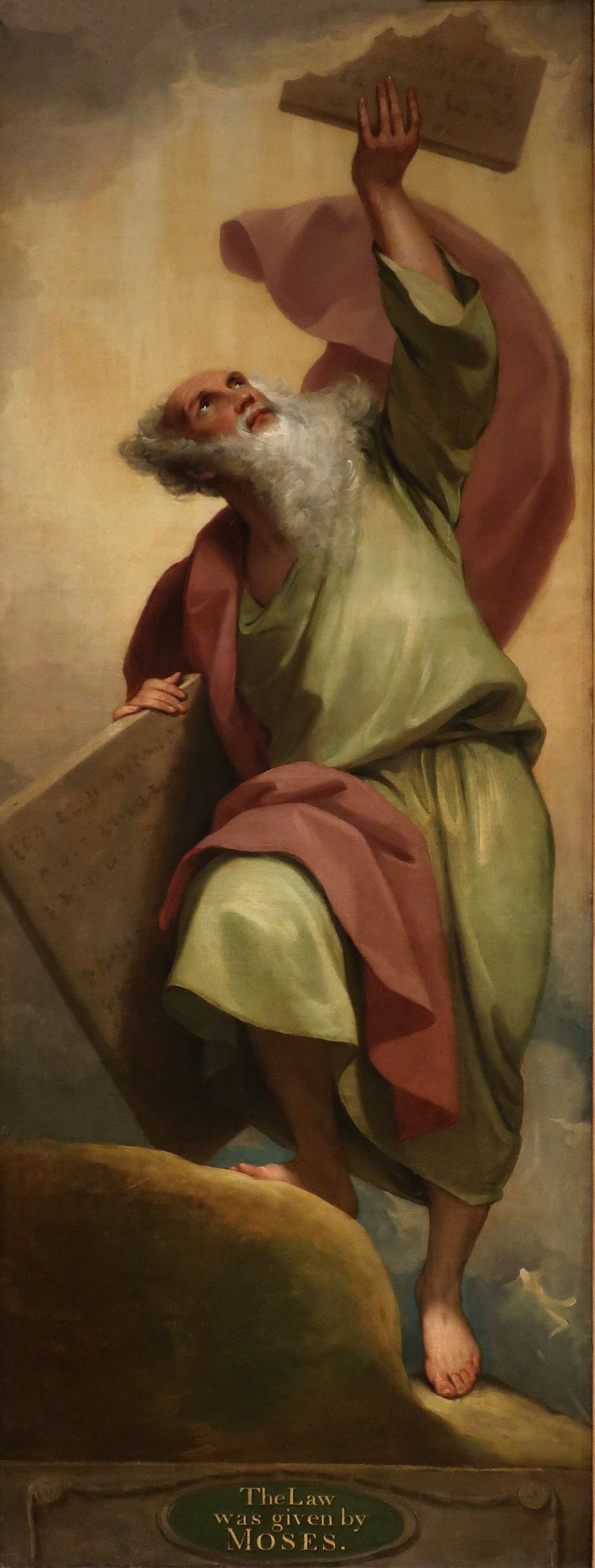
How to Talk to Protestants about Divine Revelation
Both Catholic and Protestant traditions affirm divine revelation through Christ. This post explores their common ground and the fundamental difference in how each tradition discerns revelation's meaning.
The Full Revelation of God
Jesus Christ is the full revelation of God. CCC 65-67 on why no public revelation will supplement or surpass Christ, the Father's definitive Word.

God’s Gradual Revelation of Himself
Why did God reveal himself gradually? A Catholic reflection on Catechism §§ 51–53 and the divine pedagogy that prepared humanity to receive Christ.
Stay Informed
Get new writing on faith, law, and service delivered to your inbox.
No spam. Unsubscribe anytime.