“Speak, for Your Servant Is Listening”: Samuel’s Omission of the Divine Name
On This Page
וַיָּבֹא יְהוָה וַיִּתְיַצַּב וַיִּקְרָא כְפַעַם־בְּפַעַם שְׁמוּאֵל שְׁמוּאֵל וַיֹּאמֶר שְׁמוּאֵל דַּבֵּר כִּי שֹׁמֵעַ עַבְדֶּךָ׃
“And Yahweh came and stood there. And he called out as he had before, ‘Samuel! Samuel!’ Then Samuel said, ‘Speak, for your servant is listening.’”—1 Samuel 3:10 (author’s translation)
1 Samuel 3:8–10 in Three Translations
NABRE: “The Lord called Samuel again, for the third time. Getting up and going to Eli, he said, ‘Here I am. You called me.’ Then Eli understood that the Lord was calling the youth. So he said to Samuel, ‘Go to sleep, and if you are called, reply, Speak, Lord, for your servant is listening.’ When Samuel went to sleep in his place, the Lord came and stood there, calling out as before: Samuel, Samuel! Samuel answered, ‘Speak, for your servant is listening.’”
ESV: “And the Lord called Samuel again the third time. And he arose and went to Eli and said, ‘Here I am, for you called me.’ Then Eli perceived that the Lord was calling the young man. Therefore Eli said to Samuel, ‘Go, lie down, and if he calls you, you shall say, Speak, Lord, for your servant hears.’ So Samuel went and lay down in his place. And the Lord came and stood, calling as at other times, ‘Samuel! Samuel!’ And Samuel said, ‘Speak, for your servant hears.’”
KJV: “And the Lord called Samuel again the third time. And he arose and went to Eli, and said, Here am I; for thou didst call me. And Eli perceived that the Lord had called the child. Therefore Eli said unto Samuel, Go, lie down: and it shall be, if he call thee, that thou shalt say, Speak, Lord; for thy servant heareth. So Samuel went and lay down in his place. And the Lord came, and stood, and called as at other times, Samuel, Samuel. Then Samuel answered, Speak; for thy servant heareth.”
A Small Silence in the Sanctuary at Shiloh
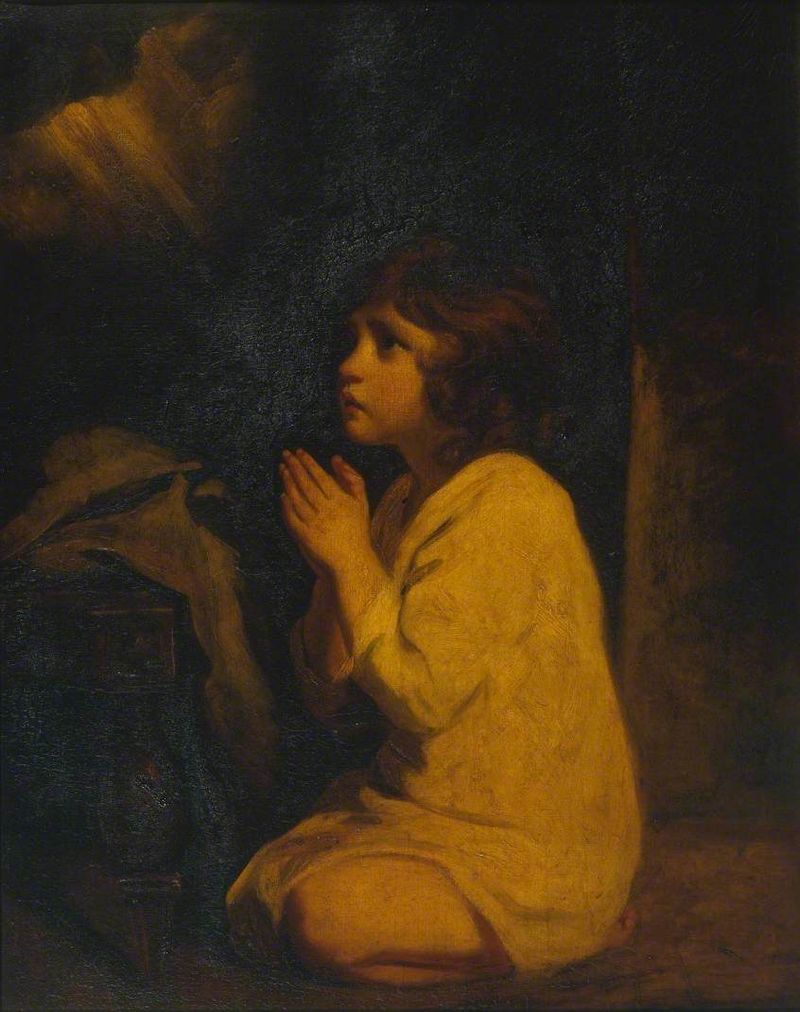
Eli told Samuel exactly what to say. When the voice came again in the dark of the Shiloh sanctuary, the boy was to respond: “Speak, Yahweh, for your servant is listening” (1 Sam 3:9). But when the moment came—when Yahweh came and stood there, calling out “Samuel! Samuel!”—the boy answered differently. He said: “Speak, for your servant is listening” (3:10).
He dropped the name.
This small omission, preserved identically in both the Masoretic Text and the Septuagint, opens a window onto one of the most consequential developments in the history of Israelite religion: the gradual, centuries-long movement from freely speaking the divine name to treating it as too sacred to pronounce. The passage sits at a remarkable intersection of prophetic call narrative, literary artistry, and the theology of divine naming. To read it carefully is to ask: What did it mean to speak God’s name? When did Israel stop? And why does Scripture preserve characters doing what later readers would never dare?
I. The Text
וַיֹּסֶף יְהוָה קְרֹא־שְׁמוּאֵל בַּשְּׁלִשִׁית וַיָּקָם וַיֵּלֶךְ אֶל־עֵלִי וַיֹּאמֶר הִנְנִי כִּי קָרָאתָ לִי וַיָּבֶן עֵלִי כִּי יְהוָה קֹרֵא לַנָּעַר׃ וַיֹּאמֶר עֵלִי לִשְׁמוּאֵל לֵךְ שְׁכָב וְהָיָה אִם־יִקְרָא אֵלֶיךָ וְאָמַרְתָּ דַּבֵּר יְהוָה כִּי שֹׁמֵעַ עַבְדֶּךָ וַיֵּלֶךְ שְׁמוּאֵל וַיִּשְׁכַּב בִּמְקוֹמוֹ׃ וַיָּבֹא יְהוָה וַיִּתְיַצַּב וַיִּקְרָא כְפַעַם־בְּפַעַם שְׁמוּאֵל שְׁמוּאֵל וַיֹּאמֶר שְׁמוּאֵל דַּבֵּר כִּי שֹׁמֵעַ עַבְדֶּךָ׃
The Hebrew of verses 9–10 makes the omission unmistakable:
Eli’s instruction (v. 9): דַּבֵּר יְהוָה כִּי שֹׁמֵעַ עַבְדֶּךָ
Samuel’s response (v. 10): דַּבֵּר כִּי שֹׁמֵעַ עַבְדֶּךָ
The Tetragrammaton disappears between instruction and execution.
II. A Call Narrative Unlike the Others
A Call Without a Template
The foundational work on prophetic call narratives remains Norman Habel’s 1965 study in the Zeitschrift für die alttestamentliche Wissenschaft, which identified six formal elements shared across such accounts: divine confrontation, introductory word, commission, objection, reassurance, and sign.1 Habel traced this pattern through Moses’ call at the burning bush (Exod 3–4), Gideon’s commission (Judg 6), Isaiah’s throne-room vision (Isa 6), Jeremiah’s appointment from the womb (Jer 1), and Ezekiel’s chariot theophany (Ezek 1–3). Remarkably, he omitted 1 Samuel 3 from his analysis entirely—a gap noted by R. W. L. Moberly.2
The omission was not arbitrary. First Samuel 3 resists easy classification. It lacks a formal commission—God gives Samuel an oracle of judgment against Eli’s house, but no “Go and say” mandate. It provides no confirming sign. Robert Karl Gnuse argued it is better understood as a dream theophany, a genre with robust ancient Near Eastern parallels, rather than a call narrative proper.3 Walther Zimmerli’s alternative typology—developed in his Ezekiel commentary as form-critical background for Ezekiel 1–3 rather than as a sustained treatment of 1 Samuel 3—is more accommodating than Habel’s, distinguishing a “narrative” type featuring divine-human dialogue (Moses, Gideon, Jeremiah) from a “throne theophany” type with a heavenly court vision (Isaiah 6, Ezekiel 1–3). Samuel’s call fits the first category comfortably enough to be read as a borderline or expanded instance of it.4 Uriel Simon defended reading the passage as a genuine call despite its departures from the standard form.5
The Priest Who Teaches the Prophet
What makes 1 Samuel 3 truly unique among all the call narratives is the presence of a human mediator. Abraham, Moses, Isaiah, Jeremiah, Ezekiel—each encounters God directly. Samuel needs Eli. The failing priest, already under divine judgment in the oracle of 1 Samuel 2:27–36 and the hardening clause of 1 Samuel 2:25, becomes the indispensable guide who teaches the boy how to respond to God. Walter Brueggemann captures the irony: Samuel “is nurtured in faith by Eli, the very one whom he displaces.”6
The threefold repetition of the call before recognition heightens the drama. God calls (v. 4), Samuel runs to Eli, Eli sends him back. Again (v. 6). Again (v. 8). Only then does Eli understand. Moberly offers the most sustained treatment of this pattern, arguing that God’s voice initially sounded like Eli’s, making Samuel’s confusion entirely logical—this was not stupidity but the genuine difficulty of spiritual discernment in a time when “the word of the Lord was rare” (3:1).7 The doubled naming in verse 10—“Samuel! Samuel!”—parallels “Abraham! Abraham!” (Gen 22:11), “Jacob! Jacob!” (Gen 46:2), and “Moses! Moses!” (Exod 3:4), a convention that signals critical divine address.8
III. “Here I Am”—Pointed the Wrong Direction
Samuel’s repeated response—הִנְנִי (“Here I am”)—is one of the most theologically loaded words in the Hebrew Bible. It appears at the Aqedah (the binding of Isaac) when Abraham responds to God (Gen 22:1), at the burning bush when Moses responds to the voice from the flames (Exod 3:4), and in Isaiah’s climactic self-offering: “Here I am! Send me!” (Isa 6:8). The word signals not merely physical presence but complete disposition of the self—readiness, availability, willingness to obey.
But Samuel says הִנְנִי four times (vv. 4, 5, 6, 8), and every time he directs it toward Eli. Moberly’s insight here is penetrating: Samuel’s disposition of readiness was already present, but it was oriented toward the wrong addressee.9 The transition from הִנְנִי (readiness to serve a human master) to דַּבֵּר כִּי שֹׁמֵעַ עַבְדֶּךָ (“Speak, for your servant is listening”) represents a fundamental reorientation—from servile obedience to a human figure to prophetic receptivity to the divine word. The verb שָׁמַע (“to hear, to listen”) carries connotations of both auditory perception and covenantal obedience, and the narrative exploits both registers. Samuel has been hearing all along. Now, for the first time, he is listening. (The related verb שָׁמַר, “to keep, to guard,” will become the pivot of Saul’s rejection at Gilgal: “you have not kept the commandment of YHWH your God,” 1 Sam 13:13—the fatal failure of the obedience Samuel here learns to practice.)
IV. Eli’s Instruction: Speak the Name
What Eli tells Samuel to say deserves closer attention than it usually receives. The priest instructs the boy to address God using the Tetragrammaton as a vocative—a noun of direct address: דַּבֵּר יְהוָה (“Speak, O Lord”). Hebrew lacks a formal vocative case; proper nouns serve as vocatives without morphological change.10 The construction is straightforward: imperative verb, followed by the divine name in direct address, followed by a causal clause explaining the speaker’s posture of readiness.
Vocative use of the divine name is common enough in the Psalms, prophetic prayers, and prose prayers throughout the Hebrew Bible.11 What makes Eli’s instruction distinctive is the context. This is not prayer or psalmody. It is a priest coaching a boy on protocol for receiving divine revelation—a rubric for first contact. And the instruction comes freighted with the narrator’s own comment in verse 7: “Samuel did not yet know the Lord” (וּשְׁמוּאֵל טֶרֶם יָדַע אֶת־יְהוָה). The verb יָדַע (“to know”) here denotes experiential, relational knowledge, not mere intellectual awareness. Samuel had presumably heard the name before—he served in the Lord’s sanctuary. But he did not yet know YHWH. Eli’s instruction to speak the name is part of the process of coming to know.
V. The Omission
The Textual Evidence
And then Samuel drops it.
The textual evidence is unambiguous. The Masoretic Text and the Septuagint agree: verse 9 has the divine name; verse 10 does not. The LXX renders verse 9 with κύριε (“O Lord,” the vocative of κύριος) but verse 10 reads simply λάλει, ὅτι ἀκούει ὁ δοῦλός σου (“Speak, for your servant is listening”)—no κύριε. As P. Kyle McCarter has documented, the MT and LXX diverge frequently throughout Samuel; their agreement here argues strongly that the omission is original and intentional.12 This is not a scribal error.
Ancient and Modern Readings
Ancient Jewish commentators noticed. Rabbi David Kimchi (Radak, 1160–1235) suggested Samuel omitted the divine name because he was still too awestruck to invoke it in prophetic vision—an explanation rooted in reverence. Rashi (1040–1105) proposed a different motive: Samuel left out the name lest it turn out to be the voice of another, not God at all—an explanation rooted in caution about misattribution.13
Modern scholars have offered several interpretations, none mutually exclusive.
Before turning to them, one must reckon with the null hypothesis. The UBS Handbook on Samuel—a translator’s reference work, not an interpretive commentary—treats the shorter reading primarily as ordinary narrative compression, the kind of abbreviation that occurs routinely when biblical narrators report obeyed instructions. On this view, no interpretive weight should be placed on the omission at all.
The position deserves a fair hearing, but three converging features of the text tell against it. First, the narrator has already editorialized about Samuel’s incomplete knowledge of YHWH in verse 7—an unusual intervention that primes the reader to notice exactly what verse 10 enacts. Second, the MT and LXX, which diverge so frequently elsewhere in Samuel that McCarter built a reconstructed text around their disagreements, agree precisely here. Third, the medieval commentators who were closest to the Hebrew idiom (Rashi, Radak) did not treat the shorter reading as unremarkable abbreviation; they paused over it and offered motivated explanations. Routine compression does not ordinarily attract this much scribal, text-critical, and interpretive attention at the same point.
The dominant reading ties the omission to the narrator’s statement in verse 7. Moberly argues that it reflects Samuel’s nascent, still-incomplete experience of God. Samuel can hear the voice as divine—Eli’s instruction has reoriented him—but he cannot yet name the caller with the certainty that the vocative would imply.14 He is at the threshold of knowing YHWH but has not yet crossed it. The omission enacts what verse 7 stated propositionally.
Robert Polzin reads it differently, relating the omission to broader Deuteronomistic themes about the mediation of divine speech: direct dialogue with an explicitly named Lord is not part of the Deuteronomistic picture at this stage.15 Moberly has criticized this reading as missing the logic of the omission within its immediate narrative context.16 Others have proposed simple reverence—the UBS Handbook on Samuel notes that some scholars believe Samuel could not bring himself to pronounce the divine name.17
A Literary Reading
The literary reading is perhaps the most satisfying. Meir Sternberg’s work on repetition with variation as a central biblical narrative technique provides the theoretical framework: when a biblical narrator repeats a formula but alters it, the alteration carries meaning.18 Eli said דַּבֵּר יְהוָה (“Speak, O Lord”). Samuel said דַּבֵּר (“Speak”). The gap between instruction and execution—the name that falls silent—is the narrative’s way of showing us what it cannot tell us. Samuel stood at the edge of something he could feel but not yet fully grasp.
VI. When Did Israel Stop Speaking the Name?
This question matters for 1 Samuel 3 because the answer determines how different audiences across the centuries would have heard Samuel’s omission. And the answer is: the prohibition developed gradually over several centuries, beginning well after the core material of 1 Samuel was composed.
The Pre-Exilic Period: The Name Freely Spoken
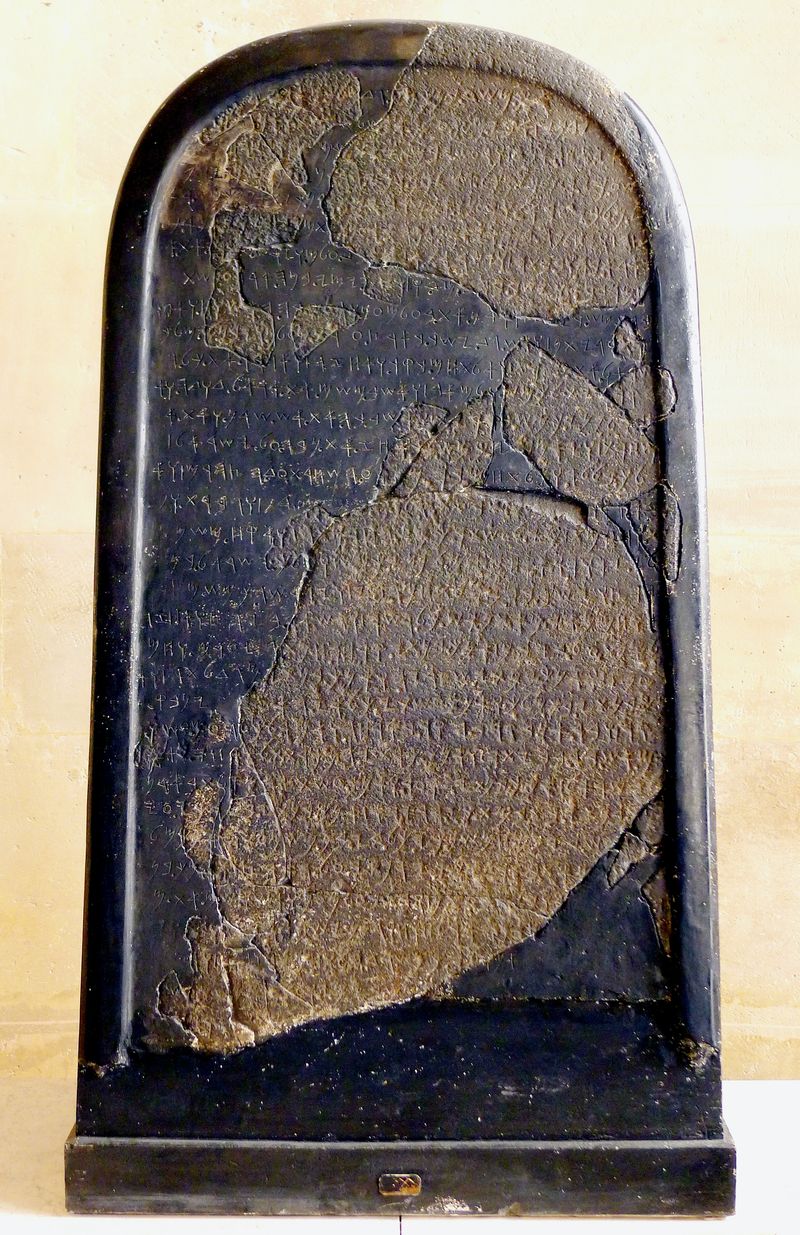
Before the Babylonian exile of 586 BCE, the divine name was used openly. External evidence is abundant. The Moabite Mesha Inscription (mid-ninth century BCE) references “vessels of YHWH.” The Lachish Letters and Arad ostraca from the late First Temple period invoke the name in routine military correspondence. Within the biblical text itself, characters from every social stratum speak the name without hesitation—patriarchs, priests, prophets, kings, soldiers, and ordinary people. Boaz greets his field workers with “The Lord be with you” (Ruth 2:4), a passage the Mishnah itself will later cite as precedent.19
The Exile and Early Post-Exilic Period: The Turn Begins
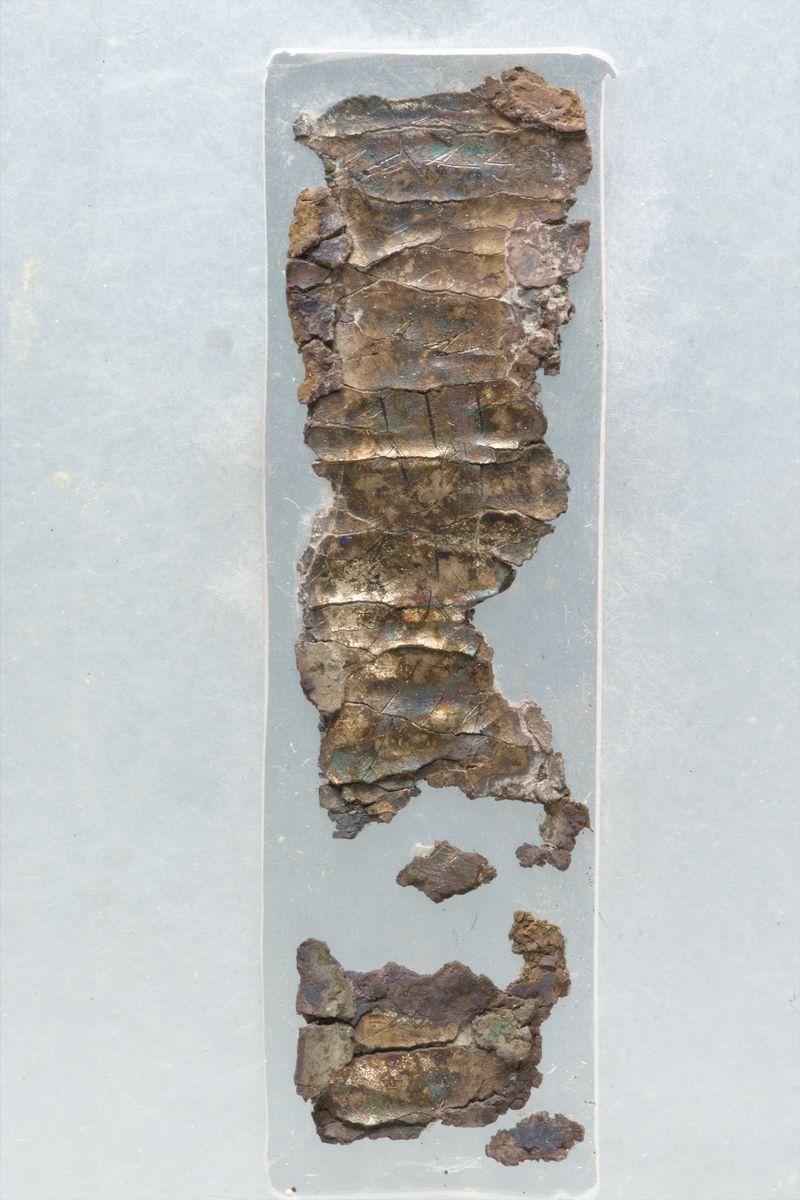
Benno Jacob dated the initial disuse of YHWH and the substitution of Adonai to the later decades of the Babylonian exile.20 The Elephantine papyri (fifth century BCE) still write the name freely—though in the shortened three-letter form יהו (YHW) characteristic of that Aramaic-speaking community rather than the full Tetragrammaton—suggesting the emerging restriction on pronunciation had not yet reached the Jewish community in Egypt. But by the third century BCE, something was shifting. The Septuagint rendering of Leviticus 24:16 is telling: the Hebrew prohibits blaspheming (נקב) the name, but the Greek shifts this to pronouncing (ὀνομάζων) it—a significant expansion of the prohibition’s scope.21
The Dead Sea Scrolls: A Spectrum of Reverence
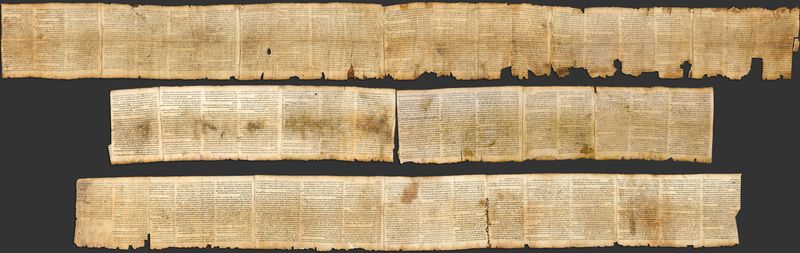
The scrolls from Qumran (mid-second century BCE to first century CE) reveal a community in transition. In numerous manuscripts written in square Aramaic script, the Tetragrammaton appears in paleo-Hebrew characters, visually set apart from the surrounding text—as in the Great Isaiah Scroll (1QIsaᵃ) and the Pesher on Habakkuk (1QpHab). Other manuscripts use tetrapuncta—four dots replacing the divine name entirely. Patrick Skehan identified three stages in this development: names written in normal script, substitution with paleo-Hebrew, and the spread of the substitution process.22
The Community Rule delivers the most striking evidence. It mandates that anyone who “speaks aloud the Most Holy Name of God” faces permanent expulsion from the community (1QS 6:27–7:2)—the harshest penalty in the sect’s penal code, more severe than the punishment for blasphemy against the community itself.23 Anthony Meyer helpfully distinguishes between oral and written avoidance, and between avoidance at the compositional level versus avoidance in literary transmission—categories that illuminate the complexity of the evidence.24
The First Century and Beyond: The Name Retreats to the Temple
By the first century, the restriction was well established. Josephus, writing as a priest, states regarding the divine name: “It is not lawful for me to say any more” (Antiquities 2.12.4). Frank Shaw argues that the evidence suggests the name was still pronounced by some Jews non-mystically in the first century BCE, but “within two centuries it seems to have largely, but not completely, petered out.”25
The Mishnah, compiled around 200 CE but preserving traditions about pre-70 CE Temple practice, codifies the distinction sharply. In the Temple, priests pronounced the name as written; in the provinces, a substitute word was used (m. Sotah 7:6). On Yom Kippur, when the High Priest spoke the Expressed Name, the assembled priests and people fell on their faces (m. Yoma 6:2). And Abba Saul declared that anyone who “pronounces the divine name as it is written” has no share in the world to come (m. Sanhedrin 10:1).26
The Babylonian Talmud (Yoma 39b) pushes the boundary even further back, associating the cessation of pronunciation with the death of Simeon the Just (variously dated to the third or second century BCE), after which priests “no longer deemed themselves worthy.”
The Timeline and 1 Samuel
The chronology matters because 1 Samuel’s earliest sources were composed during the pre-exilic period—roughly the tenth to eighth centuries BCE—when the name was freely spoken. Even the Deuteronomistic redaction(s) of the late seventh to sixth centuries BCE predate the prohibition’s firm establishment. The text preserves a pre-prohibition world. Characters speak the name because people spoke the name.
VII. The Tension: A Name Preserved but Never Pronounced
Here is the question that presses hardest on the theological imagination: if the scribes and editors who compiled the final form of the Hebrew Bible understood the divine name as too sacred to pronounce, why did they preserve it? Why leave it standing—6,518 times, by the count of the standard lexicon—in the mouths of patriarchs, prophets, priests, and kings?27
The answer lies in the scribes’ understanding of their own role. They were custodians, not editors, of a divine text. The Masoretes treated the consonantal text as inviolable. Even when they believed errors existed, they used marginal notes rather than altering the text itself.28 To remove YHWH from narratives where characters freely speak the name would have been to alter sacred Scripture—to impose a later practice onto a text that faithfully recorded an earlier reality.
Their solution was elegant. They developed the Qere perpetuum—a “perpetual reading” in which the consonants of the Tetragrammaton (יהוה, the Ketiv, “what is written”) were pointed with the vowels of Adonai (אֲדֹנָי, the Qere, “what is read”). Unlike ordinary Qere/Ketiv notations, no marginal note was necessary; the substitution was universally understood.29 When the text already contained Adonai adjacent to the Tetragrammaton, the vowels of Elohim were substituted instead, producing the hybrid form יֱהֹוִה. Medieval Christian scholars unfamiliar with the convention read this hybrid form at face value, producing “Jehovah”—a word that never existed in Hebrew.
The Qere perpetuum embodies a dual-register theology of the text. The Ketiv preserves divine revelation—God’s self-disclosure of his name to Moses: “This is my name forever” (Exod 3:15). The Qere protects divine holiness from profanation—honoring the expansive interpretation of the command not to “take the name of the Lord your God in vain” (Exod 20:7). Skehan argued that the divine name was always written but Adonai and κύριος were always pronounced.30 The written name preserves revelation. The spoken silence preserves reverence. Both are acts of fidelity.
VIII. The Septuagint Complication
The question of the divine name in the earliest Greek translations remains one of the most debated issues in Septuagint scholarship, and it bears on how we understand the prohibition’s development.
Three positions have emerged. Albert Pietersma argued that the original Septuagint Pentateuch used κύριος (“Lord”) from the beginning, and that Hebrew characters found in some manuscripts represent a secondary, archaizing intrusion.31 Martin Rösel concurred.32 Against this view, Skehan and George Howard argued that the Tetragrammaton—in Hebrew or paleo-Hebrew characters, or as the Greek transliteration ΙΑΩ—was present in the earliest Greek manuscripts and that κύριος replaced it only in later Christian copies.33 Frank Shaw proposed a mediating position: there was no single original form, and different translators had different practices shaped by different theological convictions.34
The manuscript evidence supports complexity over simplicity. Papyrus Fouad 266b (first century BCE) preserves YHWH in square Hebrew characters within Greek Deuteronomy. A Qumran fragment of Greek Leviticus (4Q120, first century BCE) uses ΙΑΩ. The Greek Minor Prophets Scroll from Naḥal Ḥever (late first century BCE to mid-first century CE) preserves the Tetragrammaton in paleo-Hebrew script amid Greek text. Whatever the original practice was, the diversity of the surviving evidence suggests that Jewish communities were still negotiating how to handle the divine name in translation well into the first century—further confirmation that the prohibition developed gradually rather than arriving fully formed.
IX. The Ancient Near Eastern Contrast
Israel’s approach to the divine name stands in sharp contrast to its neighbors’, and the contrast illuminates what is theologically distinctive about the biblical tradition. For the broader arc of how YHWH discloses himself to Israel across the canon, see my post on the stages of revelation.
In Egyptian theology, the paradigmatic text is the myth of Isis and Ra, in which Ra possesses a secret name that is the source of his divine power. Isis fashions a serpent to bite him and offers healing only if he reveals his true name—a name “that all men know” is insufficient. Only when his secret name passes from his breast to hers is Ra healed. The operative logic is magical and coercive: knowing the true name confers power over the deity.35 Jan Assmann has argued that this principle pervades Egyptian religion: every divine name is, in his account, finally a name for the hidden one, and concealment functions as a marker of divine transcendence rather than as a mere ritual scruple.36
In Mesopotamian tradition, the Enuma Elish culminates with the bestowal of fifty names upon Marduk, each representing a different aspect of his power and sovereignty. Knowledge of divine names was essential for effective incantation, and the god list An = Anum catalogued over two thousand divine names, reflecting the conviction that names constitute divine identity.37 The operative logic here is aggregative: divine power is expressed through multiplied names and epithets.
The Israelite approach is fundamentally different. YHWH reveals his own name voluntarily within a covenantal relationship (Exod 3:14–15; 6:2–3). The name is not extracted by cunning or accumulated through liturgical catalogues. It is given.
And the progressive restriction on pronouncing it does not arise from fear that humans might gain magical power over God—an absurd proposition within Israelite theology—but from reverence for divine holiness. As Tryggve Mettinger has argued, the Deuteronomistic “Name theology” treats God’s name as a form of divine presence, not a tool for human manipulation.38 The prohibition is covenantal: misuse violates the relationship (Exod 20:7; Lev 24:16).
X. Back to Shiloh: What Samuel’s Silence Means
A Boy at the Threshold of Knowing
With all of this in view, we can return to the dark sanctuary at Shiloh and hear Samuel’s omission with fresh ears.
Eli told the boy to say “Speak, YHWH.” Samuel said “Speak.” The name that Eli placed on Samuel’s lips fell away in the moment of encounter. Why?
The narrator has already told us: “Samuel did not yet know the Lord” (3:7). The omission enacts this statement. Samuel is at the threshold of covenantal relationship with YHWH—he can hear the voice, he can orient himself toward it, he can declare his readiness to listen—but he cannot yet name the one who speaks. The vocative requires a knowledge he does not yet possess. To say “Speak, YHWH” would be to claim a familiarity with God that the narrative insists he has not yet achieved. The gap between Eli’s instruction and Samuel’s execution is the gap between being told about God and knowing God.
How Different Eras Hear the Silence
But the passage invites a deeper reflection, one that only becomes visible when we consider how the text was received across the centuries. A pre-exilic reader, hearing the passage when the name was freely spoken, would hear Samuel’s omission as a mark of his nascent prophetic experience—a boy who doesn’t yet know God well enough to call him by name. A Second Temple reader, for whom the name was increasingly restricted, might hear in Samuel’s reticence an anticipation of their own practice—a reverence so instinctive it preceded the prohibition itself.
These two readings pull in opposite directions—ignorance on the one hand, reverence on the other—and it is worth being explicit about how they coexist. They are not rivals competing for the same interpretive ground; they belong to different registers of time. The first describes what happens inside the story’s narrated world, where Samuel is a boy who has not yet crossed the threshold into knowing YHWH. The second describes what happens in the world of the text’s composition and reception, where successive communities of readers heard Samuel’s silence through the medium of their own developing practice.
The pre-exilic and the post-exilic hearings do not cancel each other out. They layer. The Masoretes, pointing the text centuries later, would apply the Qere perpetuum to every instance of the Tetragrammaton in the passage, ensuring that no reader would pronounce aloud what Eli instructed and God revealed—while preserving the consonantal text that records both the instruction and the revelation.
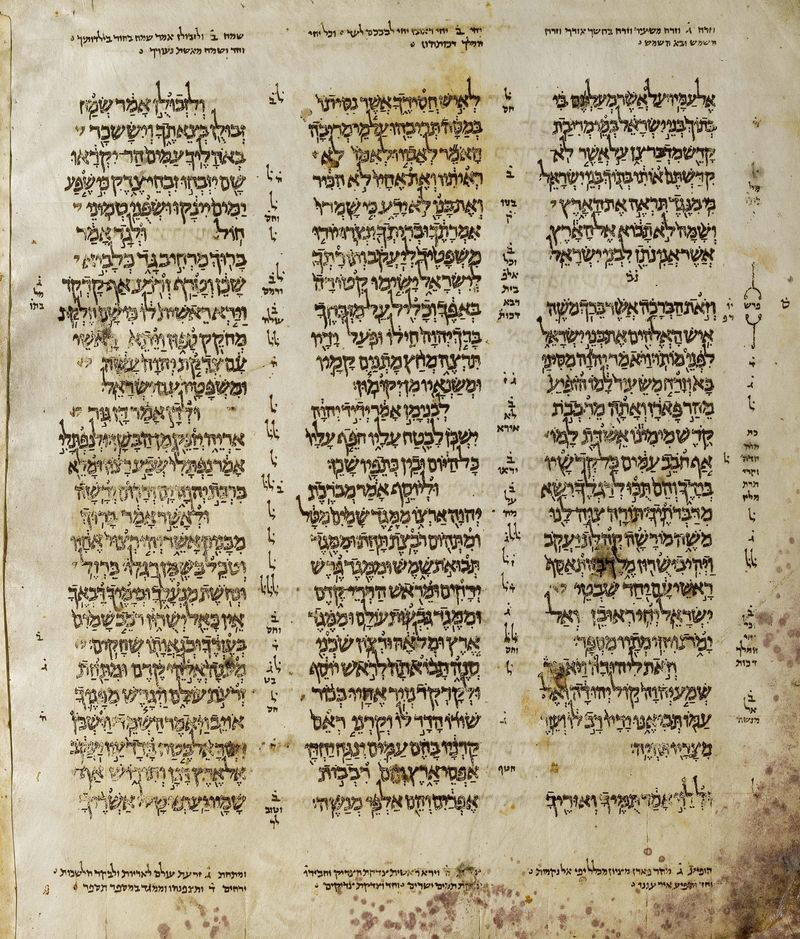
The Qere perpetuum, in a sense, extends Samuel’s omission across the entire Hebrew Bible. What Samuel did once, in the darkness of Shiloh, the scribal tradition does everywhere: it hears the divine name, preserves the divine name, and does not speak the divine name. The written text carries the revelation. The spoken reading carries the reverence. And between the two—in the silence where YHWH should sound but doesn’t—lies a theology of the holy.
The Name That Is Known but Not Spoken
Gershom Scholem argued that in Kabbalistic thought, the divine name is the metaphysical foundation of all language and reality—not merely a designation but containing infinite meaning beyond mere communication.39 Moshe Halbertal provided the theoretical framework for understanding how concealment enhances sanctity: restricted knowledge creates hierarchy and protects dangerous power.40 But one need not venture into Kabbalah to feel the force of this theology. It is present already in 1 Samuel 3:10, in the space between דַּבֵּר יְהוָה and דַּבֵּר. In the word that falls away. In the name that is known but not spoken. In the servant who listens.
Frequently Asked Questions
Did Samuel really drop the divine name, or is this a textual corruption?
Both the Masoretic Text and the Septuagint preserve the omission. The MT of verse 9 has יְהוָה and verse 10 does not; the LXX of verse 9 has κύριε as a vocative and verse 10 does not. Because the MT and LXX of Samuel diverge frequently, their agreement on a specific reading carries considerable weight. Textual critics including P. Kyle McCarter treat the omission as original rather than as scribal error.
Why is it significant that Eli used the Tetragrammaton in his instruction but Samuel didn’t?
Because the narrator has already told us in verse 7 that “Samuel did not yet know the Lord.” The verb יָדַע (“to know”) denotes relational, experiential knowledge—not merely the ability to pronounce a name. Eli’s instruction placed the name on Samuel’s lips, but Samuel was not yet in the kind of covenantal relationship with YHWH that would make the vocative “O Lord” a claim he could honestly make. The omission enacts the very incompleteness that verse 7 describes.
When did Jews stop pronouncing YHWH?
The practice developed gradually over several centuries. Before the Babylonian exile, the name was spoken freely—the biblical text, epigraphic evidence (Lachish, Arad, Mesha), and the Elephantine papyri all confirm this. The turn toward avoidance appears to have begun in the late exile or early post-exilic period, intensified at Qumran (the Community Rule prescribes permanent expulsion for pronouncing the name), and was codified by the rabbis for post-70 CE practice. By the first century, Josephus could state that it was not lawful for him to pronounce the name.
What is the Qere perpetuum?
A “perpetual reading”: a Masoretic convention whereby the consonants of the Tetragrammaton (יהוה) are written but pointed with the vowels of Adonai, signaling to the reader that Adonai should be pronounced aloud rather than the written name. Unlike ordinary Qere/Ketiv notations, no marginal note is required because the substitution was universally understood. When Adonai already appears adjacent to the Tetragrammaton, the vowels of Elohim are substituted instead. Medieval Christian readers who were unfamiliar with this convention misread the hybrid form as “Jehovah.”
How many times does the Tetragrammaton appear in the Hebrew Bible?
By the count of BDB (Brown-Driver-Briggs), 6,518 instances of יְהוָֹה (pointed as the Qere Adonai) plus 305 instances of יֱהֹוִה (pointed as the Qere Elohim), for a total of 6,823.
Is 1 Samuel 3 really a prophetic call narrative?
Scholars disagree. Norman Habel, whose 1965 study established the form-critical template for prophetic call narratives, omitted 1 Samuel 3 from his analysis—the passage lacks a formal commission and a confirming sign. Robert Karl Gnuse treats it as a dream theophany instead. Walther Zimmerli’s more flexible typology accepts it as a “narrative”-type call. Uriel Simon defends it as a genuine call despite the formal departures. The consensus is that it is closely related to the call-narrative genre but unique in several respects—most notably, in its reliance on a human mediator (Eli).
Why does Eli matter to this story?
Because 1 Samuel 3 is the only prophetic call narrative in the Hebrew Bible in which a human figure teaches the prophet how to respond to God. Abraham, Moses, Isaiah, Jeremiah, and Ezekiel each encounter God directly. Samuel needs Eli to recognize what is happening. The narrative irony is acute: Eli is already under divine judgment (see 1 Samuel 2:25 and the oracle of the man of God), yet he is the one who ushers Samuel into the knowledge of YHWH—and Samuel’s first prophetic oracle will be the confirmation of Eli’s doom.
Footnotes
1. Norman C. Habel, “The Form and Significance of the Call Narratives,” Zeitschrift für die alttestamentliche Wissenschaft 77 (1965): 297–323. Habel’s six-element schema has become the standard form-critical template for prophetic call narratives.
2. R. W. L. Moberly, “To Hear the Master’s Voice: Revelation and Spiritual Discernment in the Call of Samuel,” Scottish Journal of Theology 48 (1995): 443 n. 7. Moberly’s essay is the single most important scholarly treatment of 1 Samuel 3 as a call narrative and of the divine-name omission in verse 10.
3. Robert Karl Gnuse, “A Reconsideration of the Form-Critical Structure in 1 Samuel 3: An Ancient Near Eastern Dream Theophany,” ZAW 94 (1982): 379–390; expanded in The Dream Theophany of Samuel: Its Structure in Relation to Ancient Near Eastern Dreams and Its Theological Significance (Lanham, MD: University Press of America, 1984), 11–177.
4. Walther Zimmerli, Ezekiel 1: A Commentary on the Book of the Prophet Ezekiel, Chapters 1–24, trans. Ronald E. Clements, Hermeneia (Philadelphia: Fortress, 1979), 97–100.
5. Uriel Simon, “Samuel’s Call to Prophecy: Form Criticism with Close Reading,” Prooftexts 1 (1981): 119–132; see also Simon, Reading Prophetic Narratives, trans. Lenn J. Schramm, Indiana Studies in Biblical Literature (Bloomington: Indiana University Press, 1997), chap. 2.
6. Walter Brueggemann, First and Second Samuel, Interpretation (Louisville: John Knox, 1990), 22.
7. Moberly, “To Hear the Master’s Voice,” 443–468. Moberly’s central argument is that Samuel’s inability to recognize the divine voice is not a narrative failure but a theological datum: God’s word comes through human voices that must be discerned.
8. Meir Sternberg, The Poetics of Biblical Narrative: Ideological Literature and the Drama of Reading (Bloomington: Indiana University Press, 1985), 365–440. Sternberg’s treatment of repetition with variation is the theoretical touchstone for literary readings of biblical narrative.
9. Moberly, “To Hear the Master’s Voice,” 451–456.
10. See GKC §126e–f; Bruce K. Waltke and M. O’Connor, An Introduction to Biblical Hebrew Syntax (Winona Lake, IN: Eisenbrauns, 1990), §§4.7d, 8.3d (on the vocative); Paul Joüon and Takamitsu Muraoka, A Grammar of Biblical Hebrew, 2nd ed., Subsidia Biblica 27 (Rome: Pontifical Biblical Institute, 2006), §137g.
11. E.g., Ps 3:2; 6:2; 13:2; 22:2; Gen 15:2, 8; Exod 4:10; Judg 6:22; 1 Kgs 3:7; Jonah 1:14; 4:2.
12. P. Kyle McCarter Jr., I Samuel: A New Translation with Introduction, Notes, and Commentary, Anchor Bible 8 (Garden City, NY: Doubleday, 1980), 5, on MT-LXX divergence in Samuel. The agreement of both textual traditions on the omission argues strongly for its originality. See also Emanuel Tov, The Text-Critical Use of the Septuagint in Biblical Research, 3rd ed. (Winona Lake, IN: Eisenbrauns, 2015).
13. On the medieval Jewish interpretive tradition at 1 Samuel 3, see the standard editions of Miqraʾot Gedolot with the commentaries of Rashi, Radak, and Ralbag; for the Targum Jonathan’s rendering and Aramaic interpretive traditions, see Eveline van Staalduine-Sulman, The Targum of Samuel, Studies in the Aramaic Interpretation of Scripture 1 (Leiden: Brill, 2002).
14. Moberly, “To Hear the Master’s Voice,” 443–468, especially 461–465 on the literary function of the omission.
15. Robert Polzin, Samuel and the Deuteronomist: A Literary Study of the Deuteronomic History, Part Two: 1 Samuel (San Francisco: Harper & Row, 1989; repr., Bloomington: Indiana University Press, 1993), 52.
16. Moberly, “To Hear the Master’s Voice,” 443 n. 45.
17. Roger L. Omanson and John E. Ellington, A Handbook on the First and Second Books of Samuel (New York: United Bible Societies, 2001), ad loc. The UBS Handbook series is designed for Bible translators and often preserves a useful conspectus of exegetical options.
18. Sternberg, Poetics of Biblical Narrative, 365–440. See also J. P. Fokkelman, Narrative Art and Poetry in the Books of Samuel, vol. 4: Vow and Desire (1 Sam. 1–12) (Assen: Van Gorcum, 1993).
19. Mishnah Berakhot 9:5, which cites Boaz’s greeting in Ruth 2:4 and Judges 6:12 as precedents for using the divine name in ordinary greetings—a striking rabbinic acknowledgment that the earlier practice was different from the practice the rabbis themselves maintained.
20. Benno Jacob, Im Namen Gottes: Eine sprachliche und religionsgeschichtliche Untersuchung zum Alten und Neuen Testament (Berlin: Calvary, 1903), 167.
21. The Hebrew נקב in Lev 24:16 means “to blaspheme” or “to pierce,” but the LXX renders it with ὀνομάζων, “pronouncing”—effectively transforming a prohibition against blaspheming the name into a prohibition against speaking it at all. The shift is one of the clearest pieces of internal biblical evidence for the gradual development of the restriction.
22. Patrick W. Skehan, “The Divine Name at Qumran, in the Masada Scroll, and in the Septuagint,” Bulletin of the International Organization for Septuagint and Cognate Studies 13 (1980): 14–44.
23. Joseph Baumgarten, “A New Qumran Substitute for the Divine Name and Mishnah Sukkah 4.5,” Jewish Quarterly Review 83 (1992): 1–5. On Qumran scribal practices more broadly, see Emanuel Tov, Scribal Practices and Approaches Reflected in the Texts Found in the Judean Desert, Studies on the Texts of the Desert of Judah 54 (Leiden: Brill, 2004).
24. Anthony R. Meyer, Naming God in Early Judaism: Aramaic, Hebrew, and Greek, Studies in Cultural Contexts of the Bible 2 (Leiden: Brill, 2022). Meyer’s distinctions between oral and written avoidance, and between compositional and transmissional avoidance, are essential tools for interpreting the fragmented evidence.
25. Frank Edward Shaw, The Earliest Non-Mystical Jewish Use of Ιαω, Contributions to Biblical Exegesis and Theology 70 (Leuven: Peeters, 2014), 93.
26. m. Sotah 7:6; m. Yoma 6:2; m. Sanhedrin 10:1. On the Mishnah’s dating and compilation, see Herbert Danby, The Mishnah (London: Oxford University Press, 1933), xiv–xv. Abba Saul’s declaration in m. Sanhedrin 10:1 is the most severe rabbinic statement on the prohibition.
27. The count of 6,518 occurrences of יְהוָֹה (Qere: Adonai) plus 305 occurrences of יֱהֹוִה (Qere: Elohim) is from A Hebrew and English Lexicon of the Old Testament (BDB). See also Ernst Würthwein, The Text of the Old Testament: An Introduction to the Biblia Hebraica, trans. Erroll F. Rhodes, 2nd English ed. (Grand Rapids: Eerdmans, 1995), chaps. I–II.
28. Emanuel Tov, Textual Criticism of the Hebrew Bible, 3rd rev. ed. (Minneapolis: Fortress, 2012), §2.3, §3.4. Tov’s discussion of Masoretic scribal conservatism is the standard account.
29. On the Qere perpetuum, see Israel Yeivin, Introduction to the Tiberian Masorah, trans. E. J. Revell (Missoula: Scholars Press, 1980), §93; Aaron Dotan, “Masorah,” in Encyclopedia Judaica, 16 vols. (Jerusalem: Keter, 1972), 16:1419.
30. Skehan, “The Divine Name at Qumran,” 14–44.
31. Albert Pietersma, “Kyrios or Tetragram: A Renewed Quest for the Original LXX,” in De Septuaginta: Studies in Honour of John William Wevers on His Sixty-Fifth Birthday, ed. Albert Pietersma and Claude Cox (Mississauga: Benben Publications, 1984), 85–101.
32. Martin Rösel, “The Reading and Translation of the Divine Name in the Masoretic Tradition and the Greek Pentateuch,” Journal for the Study of the Old Testament 31 (2007): 411–428.
33. George Howard, “The Tetragram and the New Testament,” Journal of Biblical Literature 96 (1977): 63–83; Skehan, “The Divine Name at Qumran,” 14–44.
34. Shaw, Earliest Non-Mystical Jewish Use of Ιαω, 158, 271.
35. See Geraldine Pinch, Egyptian Myth: A Very Short Introduction (Oxford: Oxford University Press, 2004); Erik Hornung, Conceptions of God in Ancient Egypt: The One and the Many, trans. John Baines (Ithaca, NY: Cornell University Press, 1982), 86–91.
36. Jan Assmann, The Search for God in Ancient Egypt, trans. David Lorton (Ithaca, NY: Cornell University Press, 2001). See also Assmann, Of God and Gods: Egypt, Israel, and the Rise of Monotheism (Madison: University of Wisconsin Press, 2008).
37. See W. G. Lambert, Babylonian Creation Myths, Mesopotamian Civilizations 16 (Winona Lake, IN: Eisenbrauns, 2013); Thorkild Jacobsen, The Treasures of Darkness: A History of Mesopotamian Religion (New Haven: Yale University Press, 1976).
38. Tryggve N. D. Mettinger, The Dethronement of Sabaoth: Studies in the Shem and Kabod Theologies, Coniectanea Biblica: Old Testament Series 18 (Lund: CWK Gleerup, 1982). See also Geoffrey H. Parke-Taylor, Yahweh: The Divine Name in the Bible (Waterloo, ON: Wilfrid Laurier University Press, 1975).
39. Gershom Scholem, “The Name of God and the Linguistic Theory of the Kabbala,” Diogenes 79 (1972): 59–80 (Part I) and Diogenes 80 (1972): 164–194 (Part II).
40. Moshe Halbertal, Concealment and Revelation: Esotericism in Jewish Thought and Its Philosophical Implications (Princeton: Princeton University Press, 2007).

Garrett Ham
Garrett Ham is an attorney, military veteran, and holds a Master of Divinity from Yale Divinity School. He writes from Northwest Arkansas on theology, law, and service.
Related Posts

Who Actually Killed Goliath? David, Elhanan, and the Textual Transmission of 1–2 Samuel
2 Samuel 21:19 in Hebrew credits Elhanan, not David, with killing Goliath. The Catholic tradition has long-standing tools for the textual problem.
1 Samuel 2:25 Meaning: “The Lord Wanted Them Dead”
An exegetical study of 1 Samuel 2:25—the Hebrew ḥāpēṣ, the hardening tradition, and the Catholic response from Aquinas to Trent to De Auxiliis.
1 Samuel 5:1–5: The Ark in the Temple of Dagon
1 Samuel 5:1–5 explained: the Philistine grain god Dagon falls face-down before the ark at Ashdod, head and hands severed on the threshold. Catholic typology.
Stay Informed
Get new writing on faith, law, and service delivered to your inbox.
No spam. Unsubscribe anytime.