1 Samuel 13:8–14: Why Saul Lost the Kingdom by Half an Hour

On This Page
וַיֹּ֣אמֶר שְׁמוּאֵ֔ל אֶל־שָׁא֖וּל נִסְכָּ֑לְתָּ לֹ֣א שָׁמַ֗רְתָּ אֶת־מִצְוַ֞ת יְהוָ֤ה אֱלֹהֶ֙יךָ֙ אֲשֶׁ֣ר צִוָּ֔ךְ׃
“Samuel replied to Saul: ‘You have acted foolishly! Had you kept the command the Lord your God gave you, the Lord would now establish your kingship in Israel forever; but now your kingship shall not endure.’”—1 Samuel 13:13–14 NABRE
It is one of the cruelest sentences in the Hebrew Bible, and one of the most disproportionate-sounding.1 Saul has waited the seven days Samuel told him to wait. His militia is melting into the hills. A Philistine army of frightening size is mustering across the pass at Michmash, and he has not yet offered the pre-battle sacrifice that would license him to fight. Samuel does not come. So Saul, the king, finally orders the burnt offering brought to him, and he watches it ascend. At that exact moment—כְּכַלֹּתוֹ, “just as he was finishing”—Samuel walks into camp. The conversation that follows takes perhaps three minutes. By the end of it Saul’s dynasty is finished.
The harshness of the verdict offends modern readers, as it has offended readers for almost three thousand years. Saul’s defense sounds reasonable: I waited the time you said; the men were leaving; you did not come; I had to do something. Samuel’s response sounds out of proportion to the offense. נִסְכָּלְתָּ—“you have acted foolishly”—and לֹא־תָקוּם מַמְלַכְתְּךָ: your kingdom-line shall not stand. The text gives us no editorial cushion. There is no parenthetical note that Saul was rejected primarily for something else, no second offense disclosed below the first.
So what is going on? Why did Samuel react this way? Why were the men actually scattering? What is the author or redactor of 1 Samuel trying to argue through this scene? And how does it relate to the second rejection, in chapter 15, after Saul spares Agag and the best of the Amalekite herds? These are the four questions this paper will try to answer, after first doing the textual, philological, and literary work that any responsible answer requires.
The text of the pericope
The Masoretic Text of 1 Samuel 13:8–14, with cantillation marks and pointing as preserved in the Leningrad Codex (the diplomatic text underlying BHS):2
8 וַיּ֣וֹחֶל ׀ שִׁבְעַ֣ת יָמִ֗ים לַמּוֹעֵד֙ אֲשֶׁ֣ר שְׁמוּאֵ֔ל וְלֹא־בָ֥א שְׁמוּאֵ֖ל הַגִּלְגָּ֑ל וַיָּ֥פֶץ הָעָ֖ם מֵעָלָֽיו׃
9 וַיֹּ֣אמֶר שָׁא֔וּל הַגִּ֣שׁוּ אֵלַ֔י הָעֹלָ֖ה וְהַשְּׁלָמִ֑ים וַיַּ֖עַל הָעֹלָֽה׃
10 וַיְהִ֗י כְּכַלֹּתוֹ֙ לְהַעֲל֣וֹת הָעֹלָ֔ה וְהִנֵּ֥ה שְׁמוּאֵ֖ל בָּ֑א וַיֵּצֵ֥א שָׁא֛וּל לִקְרָאת֖וֹ לְבָרֲכֽוֹ׃
11 וַיֹּ֥אמֶר שְׁמוּאֵ֖ל מֶ֣ה עָשִׂ֑יתָ וַיֹּ֣אמֶר שָׁא֡וּל כִּֽי־רָאִיתִי֩ כִֽי־נָפַ֨ץ הָעָ֜ם מֵעָלַ֗י וְאַתָּה֙ לֹא־בָ֙אתָ֙ לְמוֹעֵ֣ד הַיָּמִ֔ים וּפְלִשְׁתִּ֖ים נֶאֱסָפִ֥ים מִכְמָֽשׂ׃
12 וָאֹמַ֗ר עַ֠תָּה יֵרְד֨וּ פְלִשְׁתִּ֤ים אֵלַי֙ הַגִּלְגָּ֔ל וּפְנֵ֥י יְהוָ֖ה לֹ֣א חִלִּ֑יתִי וָֽאֶתְאַפַּ֔ק וָאַעֲלֶ֖ה הָעֹלָֽה׃
13 וַיֹּ֧אמֶר שְׁמוּאֵ֛ל אֶל־שָׁא֖וּל נִסְכָּ֑לְתָּ לֹ֣א שָׁמַ֗רְתָּ אֶת־מִצְוַ֞ת יְהוָ֤ה אֱלֹהֶ֙יךָ֙ אֲשֶׁ֣ר צִוָּ֔ךְ כִּ֣י עַתָּ֗ה הֵכִ֨ין יְהוָ֧ה אֶת־מַֽמְלַכְתְּךָ֛ אֶל־יִשְׂרָאֵ֖ל עַד־עוֹלָֽם׃
14 וְעַתָּ֖ה מַמְלַכְתְּךָ֣ לֹא־תָק֑וּם בִּקֵּשׁ֩ יְהוָ֨ה ל֜וֹ אִ֣ישׁ כִּלְבָב֗וֹ וַיְצַוֵּ֨הוּ יְהוָ֤ה לְנָגִיד֙ עַל־עַמּ֔וֹ כִּ֚י לֹ֣א שָׁמַ֔רְתָּ אֵ֥ת אֲשֶֽׁר־צִוְּךָ֖ יְהוָֽה׃ פ
The closing פ at the end of v. 14 marks a פָּרָשָׁה פְּתוּחָה (an “open paragraph”), a major break. The pericope is formally closed in the Masoretic tradition at the moment of the verdict.
NABRE translation
8 He waited seven days, until the appointed time Samuel had set, but Samuel did not come, and the army deserted Saul. 9 He then said, “Bring me the burnt offering and communion offerings!” Then he sacrificed the burnt offering.
10 As he finished sacrificing the burnt offering, there came Samuel! So Saul went out toward him in order to greet him. 11 Samuel asked him, “What have you done?” Saul explained: “When I saw that the army was deserting me and you did not come on the appointed day, and that the Philistines were assembling at Michmash, 12 I said to myself, ‘Now the Philistines will come down against me at Gilgal, and I have not yet sought the LORD’s blessing.’ So I thought I should sacrifice the burnt offering.” 13 Samuel replied to Saul: “You have acted foolishly! Had you kept the command the LORD your God gave you, the LORD would now establish your kingship in Israel forever; 14 but now your kingship shall not endure. The LORD has sought out a man after his own heart to appoint as ruler over his people because you did not observe what the LORD commanded you.”3
One feature of the NABRE worth flagging before we begin. The NABRE translates the Hebrew מַמְלַכְתְּךָ (“your kingdom”) in both v. 13 and v. 14 as “your kingship,” flattening a distinction the Hebrew preserves between מַמְלָכָה (here, the dynastic line) and מַמְלֶכוּת (used in 1 Sam 15:28 for the present office). The English smoothing is defensible, but it conceals a feature that turns out to matter for the comparison with chapter 15. We will come back to it.
Textual criticism
The MT of vv. 8–14 is in unusually good shape relative to the surrounding chapters. The notorious lacuna of 1 Sam 13:1, in which the Hebrew reads literally “Saul was a son of a year when he became king, and two years he reigned over Israel,” is universally recognized as defective: Codex Vaticanus omits the verse entirely, the Peshitta reads “21 years,” Acts 13:21 reports a forty-year reign, and Josephus gives Saul forty years (eighteen with Samuel, twenty-two alone).4 But that lacuna lies above our pericope; in vv. 8–14 itself there are only minor variants, and the Qumran scrolls do not preserve the relevant columns of 4QSama.5
The most important variants and translational choices in the pericope itself are these:
v. 8 — וייחל (the verb “waited”). The Tiberian vocalization reads וַיּ֣וֹחֶל (“he waited”), Hiphil wayyiqtol of √יחל, “to wait, hope” (the root has no Qal; BDB and HALOT list Niphal, Piel, and Hiphil).6 A reading from √חלל (“he began”) is morphologically possible, but the Old Greek καὶ διέλιπεν (“and he held off”), the Vulgate et expectavit, the Targum, and the Peshitta all render the verb as “waited.” The root √יחל is the verb of patient expectation elsewhere (Noah waiting for the dove in Gen 8:12; the psalmist in Ps 130:5). The choice of this verb tells us how the narrator wants us to hear Saul’s waiting: as the patient anticipation of the prophetic word.
v. 12 — וָאֶתְאַפַּק. The LXX renders the rare Hithpael of √אפק as ἐνεκρατευσάμην (“I exercised self-restraint”), a Greek philosophical virtue-word; the Vulgate has necessitate compulsus (“compelled by necessity”). Both translations soften the Hebrew, which carries the connotation of anxious, reluctant self-coercion. The patristic reception, working from the Greek text, accordingly treats Saul as a man who “controlled himself” under pressure; the Hebrew narrative treats him as a man overriding a check he himself recognized as binding. We will return to this verb—it is the philological key to the entire pericope.
v. 13 — נִסְכָּלְתָּ. Niphal of √סכל, “you have acted foolishly.” The Niphal of this root is rare. The LXX paraphrases as μεματαίωταί σοι (“it has been made vain for you”), which shifts the foolishness from Saul’s person to its consequences. The Vulgate has stulte egisti, “you have acted foolishly.” The MT reading is more direct and is almost certainly original.
v. 14 — וַיְצַוֵּהוּ יְהוָה לְנָגִיד. The MT reads in the perfect/wayyiqtol past: “and YHWH has commanded him as נָגִיד (“ruler”)”—past tense, as of the moment Samuel speaks. The LXX softens to the future: καὶ ἐντελεῖται Κύριος αὐτῷ εἰς ἄρχοντα (“and the Lord will command him as ruler”). The Vulgate follows MT. The MT is the lectio difficilior and the more theologically loaded reading: at the very moment Samuel pronounces judgment on Saul, the replacement has already been designated, even though the narrative will not disclose him by name until chapter 16.7
The seven-day command (1 Samuel 10:8): Chekhov’s gun
You cannot read 1 Sam 13:8–14 honestly without 1 Sam 10:8. After Samuel anoints Saul privately at Ramah, he instructs him:
“Now go down ahead of me to Gilgal, for I shall come down to you, to offer burnt offerings and to sacrifice communion offerings. Wait seven days until I come to you; I shall then tell you what you must do.”8
The Hebrew verb at 10:8 is תּוֹחֵל (“you shall wait,” Hiphil imperfect 2ms of √יחל)—the same root the narrator uses at 13:8 for Saul’s waiting. The seven-day period is the same. The location is the same: Gilgal. The two passages are stitched together by every available stylistic marker. The NABRE’s cross-reference apparatus at 1 Sam 13:8 helpfully points the reader directly back to 10:8.9
What this means for our reading of the pericope is decisive. Saul is not punished for impatience-in-general, nor for offering sacrifice as a layman, nor for offering sacrifice without a priest. He is punished for failing a specific test that Samuel had laid on him at the outset of his kingship: to wait seven days at Gilgal until Samuel arrived to give him instructions. Source-critical readers have long debated whether 10:8 is original to the same narrative stratum as 13:8–14 or is a later redactional insertion designed precisely to set up the rejection.10 P. Kyle McCarter argues for a redactional insertion by a “Prophetic History” stratum.11 V. Philips Long argues forcefully for original literary unity.12 But on either view, the canonical text invites—indeed demands—that 13:8–14 be read with 10:8 in hand. To miss the seven-day command is to misread the pericope.
Why was the army scattering?
The first question the text forces on us—why were the men deserting because of the delay?—is best answered by reading verses 5–7 alongside verse 8. The wider scene at 13:5 reports the Philistine muster: “The Philistines also assembled for battle against Israel, with thirty thousand chariots, six thousand horsemen, and foot soldiers as numerous as the sand on the seashore.”13 Numbers and military hyperbole aside, the substance of the report is that Saul’s tribal levy faces a professional Iron Age army with chariotry, and the next verse (13:6) reports Israelite flight to “caves, thickets, rocks, caverns, and cisterns.” The host is disintegrating before the battle even begins.
But the disintegration is not just military panic. It has a religious-anthropological dimension our modern political imagination tends to skip. Early-monarchic Israel did not field a standing army; it fielded a tribal levy assembled for a specific campaign, mobilized under the conviction that YHWH was the Divine Warrior who fought for his people.14 Pre-battle sacrifice and oracular consultation were ancient Near Eastern norms. The Mari archives (eighteenth-century BCE West Semitic texts from the reign of Zimri-Lim) preserve dozens of prophetic oracles—delivered by muḫḫûm (ecstatic) and āpilum (answerer) figures—to kings before military operations; the chronologically closer Neo-Assyrian bārû-divination texts record extispicy queries to Šamaš about the outcome of campaigns; Egyptian royal annals report oracular consultation before the king departs.15 The convention is so widespread that it functioned as a precondition of legitimate war: a king who marched without the gods’ confirmation was a king who had pre-emptively surrendered the divine sanction his soldiers’ courage depended on.
Read against that background, the men’s scattering is not cowardice in a vacuum. It is the predictable response of a religiously-anchored levy that has waited seven days for the prophetic word authorizing the campaign and has not received it. The verb the narrator uses—√פוץ, “to scatter”—is the standard verb of military rout across its conjugations: Qal in the Ark formula at Numbers 10:35 (“Rise, O Lord, that your enemies may be scattered”), Hiphil (causative, “he scattered them”) in David’s victory hymn at 2 Sam 22:15 / Ps 18:15, and here at v. 8 in the Qal (וַיָּפֶץ, “the people scattered”).16 The narrator’s point is that Saul’s host is routing itself, before contact, because the cultic preparation has not happened. The prophet has not come. The communion offering has not been made. There is no proof YHWH has authorized this fight.
The seven-day delay is therefore not arbitrary cruelty on Samuel’s part. It is a structured test of whether Saul will hold a levy together by faith in the prophetic word against the manifest pressure to act on the king’s own initiative. Saul fails the test at the moment we meet him in v. 8, and the rest of the pericope is the unfolding of that failure.

Why was Samuel’s response so harsh?
The second question—and the one most likely to bother a modern Catholic reader—is why the verdict was so disproportionate to a sacrifice offered half an hour early. Several explanations have been put forward over the centuries; I want to walk through them in order, because the reading I think the text actually supports is partly a synthesis and partly a rejection.
The cultic-prerogative reading
The oldest popular reading, common in catechetical literature, is that Saul violated a priestly prerogative: a layman is not permitted to offer the burnt offering; that is a function reserved to the Aaronide priesthood. Saul, as a Benjaminite layman, was usurping a function that belonged only to the priests, and the dynasty was forfeited because of that liturgical transgression. The standard Old Testament parallel adduced is Uzziah in 2 Chr 26:16–21, who entered the Temple to burn incense, was opposed by Azariah and eighty priests, and was struck with leprosy.17
The cultic-prerogative reading has genuine pastoral appeal—it offers a clean explanation that confirms an intuition about the dignity of the ministerial priesthood—but it does not survive close engagement with the text of 1 Samuel itself. Three difficulties are decisive:
- Samuel himself, no Aaronide priest, offers burnt offerings in 1 Samuel. At 1 Sam 7:9 he “took an unweaned lamb and offered it whole as a burnt offering to the Lord.” Samuel is a Levite by descent (1 Chronicles 6:18–23 places him in the Kohathite line) and a prophet-judge by office; he is not an Aaronide priest. The text feels no need to apologize for his sacrificing.18
- Saul himself has been present at communal sacrifice in Samuel’s company without rebuke. At 1 Sam 11:15, after Saul’s rescue of Jabesh-Gilead, “all the people went to Gilgal, and there they made Saul king before the Lord at Gilgal. There they sacrificed communion offerings before the Lord.” Saul is the central figure of this assembly. Whatever the exact division of labor between him and the priests, the narrator records no objection to his cultic participation.
- Samuel’s indictment in v. 13 does not mention the priesthood. What he says is לֹא שָׁמַרְתָּ אֶת־מִצְוַת יְהוָה אֱלֹהֶיךָ אֲשֶׁר צִוָּךְ: “you have not kept the commandment of YHWH your God which he commanded you.” The complaint is about the breach of a specific command, not about a generic violation of priestly prerogative. By contrast, when 2 Chronicles 26 narrates Uzziah’s offense, the priest Azariah states the prerogative explicitly: “It is not for you, Uzziah, to burn incense to YHWH, but for the priests, the sons of Aaron, who have been consecrated to burn incense” (2 Chr 26:18). 1 Sam 13 conspicuously does not say this.
If the narrator wanted us to read Saul’s sin as cultic encroachment in the Uzziah mold, he had the vocabulary and the precedent to say so. He did not.
The obedience-test reading
The reading that does survive the text’s own evidence is what we may call the obedience-test reading: Saul is rejected because he failed the specific seven-day commandment of 1 Sam 10:8, which the narrator has carefully planted in the earlier chapter precisely so that the discharge of it in chapter 13 will be intelligible. Samuel’s rebuke is direct: “you have not kept the commandment.” The seven-day delay was the test. The test had a content: at its end, Samuel would arrive and tell Saul what to do (10:8). Saul’s job was to wait until then. He waited, and then he stopped waiting.
This reading does not preclude the kind of pastoral application a more cultically-coloured reading wants to make. Saul was in fact substituting his own pious initiative for the prophetic word, and the sin of substituting religious activity for religious obedience is the structural sin the pericope condemns. But the categorical question—was Saul rejected for a priestly-prerogative violation?—has to be answered no, because Samuel says so by saying something else.
The redactional-layering reading
A third reading, common among critical scholars, holds that the harshness of Samuel’s response reflects not a record of what was said on the ground at Gilgal in the eleventh century BCE, but a theological judgment imposed by the Deuteronomistic Historian (or a pre-Dtr “Prophetic History” stratum) writing centuries later, whose job was to discredit Saul’s house in favor of David’s.19 On this reading, the disproportion is a feature, not a bug: the redactor wants the reader to feel that Saul’s offense was small and the punishment large, because that is how he conveys the theological claim that the kingship is a gift of YHWH which can be withdrawn at his pleasure.
The redactional-layering reading and the obedience-test reading are not incompatible. The Deuteronomistic theology of kingship—the king is under the Torah; the king who fails the prophetic word loses the kingship—is built into the obedience-test framing of the pericope. Deuteronomy 17:14–20 specifies that the king “shall write for himself a copy of this law,” shall “read in it all the days of his life,” and “shall not turn aside from the commandment, either to the right hand or to the left.”20 The Deuteronomistic Historian has shaped 1 Sam 13 as a textbook case of the law-of-the-king violated. Saul לֹא שָׁמַרְתָּ אֶת־מִצְוַת יְהוָה—he did not keep the commandment of YHWH—and Deuteronomy 17 wrote the script for what happens next.
The Hithpael of self-deception: וָאֶתְאַפַּק
What makes this pericope’s harshness psychologically intelligible, however—what makes it land as something other than arbitrary divine pique—is a single Hebrew verb at v. 12. In Saul’s defense to Samuel he says: “So I forced myself, and I offered the burnt offering”—וָאֶתְאַפַּק וָאַעֲלֶה הָעֹלָה. The verb וָאֶתְאַפַּק (“I forced myself”) is the Hithpael wayyiqtol 1cs of √אפק, “to be strong, restrain oneself, force oneself.” The Hithpael is reflexive-intensive: “I compelled myself, I forced myself.”21
The verb is rare. The root ʾpq occurs exactly seven times in the Hebrew Bible, all in the Hithpael, and the company it keeps is illuminating: Joseph in Genesis 43:31 forcing himself not to weep before his brothers, Joseph again in Genesis 45:1 finally failing to restrain himself; Haman in Esther 5:10 restraining his rage as he leaves the palace; YHWH in Isaiah 42:14 saying “I have long held my peace, I have kept still and restrained myself” before the eschatological war-cry; the same speaker in Isaiah 63:15 asking whether his “bowels of mercy” have been restrained.22
The pattern is uniform: the verb describes the suppression of strong feeling against a competing impulse. Joseph wants to weep but holds it back. Haman wants to lash out but masters himself. YHWH has long restrained an anger he is now finally releasing. The verb does not describe principled action; it describes the override of an internal check.
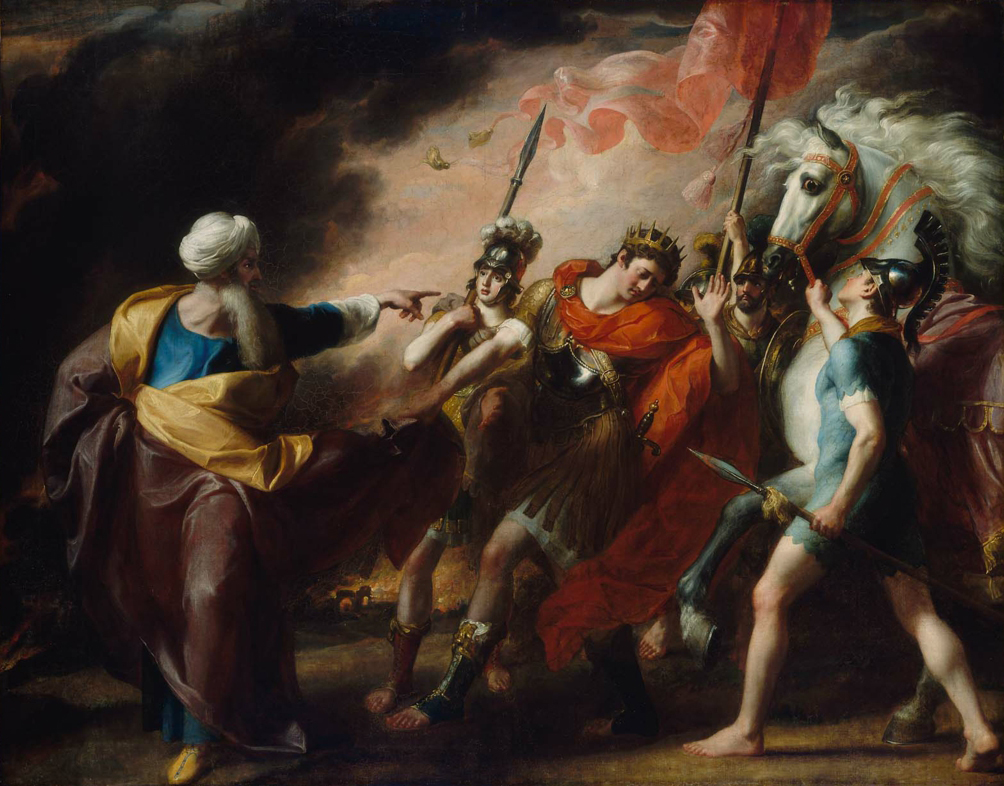
Saul’s use of this verb is therefore psychologically self-revealing in a way the LXX’s ἐνεκρατευσάμην (“I exercised self-restraint”), which makes the verb sound like Stoic virtue, entirely conceals. Saul is not saying “I composed myself and acted prudently.” He is saying “I overrode an internal restraint and did the thing.” In the very act of defending himself to Samuel, Saul lets slip that the act he is defending was performed against his own better judgment. The text’s harshness toward Saul is calibrated to this confession. Samuel is not condemning a man who did the wrong thing in good faith. He is condemning a man who did the wrong thing knowing, in some interior chamber, that it was wrong, and forcing the action through anyway.
This is why Samuel’s response, which sounds disproportionate to the externals, is proportionate to the interior. נִסְכָּלְתָּ—you have acted foolishly—is not a comment on a tactical military error. It is a verdict on the spiritual posture exposed by וָאֶתְאַפַּק. Saul has acted against the prophetic word and against his own conscience in the same motion.
It is worth pausing on נִסְכָּלְתָּ (“you have acted foolishly”) itself. The Niphal of √סכל is also rare; in the Masoretic Text it occurs in only four verses: 1 Sam 13:13 (Saul, here), 2 Sam 24:10 (David, after the census: נִסְכַּלְתִּי, “I have acted very foolishly”), 1 Chronicles 21:8 (David again, in the Chronicler’s parallel of the census), and 2 Chronicles 16:9 (Asa, rebuked by the seer Hanani for relying on Aram rather than on the LORD).23 The verbal trace links three kings at the moments each is openly named “foolish” by a prophetic voice. The contrast between Saul and David is the sharpest: David, named foolish, repents—“I have sinned greatly in what I have done”—and is restored. Saul, named foolish, deflects and rationalizes, and is not.
Two rejections, two stages, two different objects (1 Samuel 13 and 15)
The next question—how does this rejection relate to the second one in chapter 15, after Saul spares Agag and the best Amalekite livestock?—is also where Hebrew vocabulary does the heaviest interpretive lifting, and where the NABRE’s English smoothing most obscures the underlying logic of the Deuteronomistic narrative.
The structural parallels between the two scenes are dense enough that source critics have long suspected the rejections of being doublets—two tellings of one event spliced together from different traditions. Martin Noth treated the two as independent traditions; Timo Veijola argued that 13:7b–15a and 15:1–35 derive from different layers; Diana Edelman is skeptical of the historicity of either as a free-standing event.24 The literary parallels are real and worth tabulating:
| Feature | 1 Sam 13:8–14 | 1 Sam 15 |
|---|---|---|
| Setting | Gilgal | Amalekite war, then Gilgal (15:12, 21) |
| Offense | Sacrifice without waiting for Samuel | Sparing Agag and the best livestock under ḥērem |
| Samuel’s question | מֶה עָשִׂיתָ “What have you done?” (v. 11) | The sound of sheep (15:14) |
| Saul’s defense | Blames army, Philistines, Samuel’s absence | Blames the people for sparing the best |
| Self-defense verb | וָאֶתְאַפַּק “I forced myself” | “The people took… to sacrifice” |
| Object of rejection | מַמְלַכְתְּךָ “your kingdom-line” | מַמְלֶכוּת יִשְׂרָאֵל “the kingship of Israel” |
| Verb of judgment | לֹא־תָקוּם “will not stand” | קָרַע… מֵעָלֶיךָ “has torn it from you” |
| Replacement | “a man after his own heart” (unnamed) | “a neighbor of yours, better than you” (unnamed) |
| Robe-tearing | None | Yes (15:27)—Saul tears Samuel’s robe |
But the case for two-stage architecture, rather than doublet, is stronger than the source-critical convergence usually allows. V. Philips Long argues persuasively for the unity of the literary design.25 The decisive evidence is the lexical contrast between the two judgments.
At 1 Sam 13:13–14 Samuel says מַמְלַכְתְּךָ לֹא־תָקוּם—“your מַמְלָכָה will not stand.” The noun מַמְלָכָה with a possessive suffix here carries dynastic force: “your kingdom-line, your house, the dynastic continuation of your reign in your descendants.” The verb קוּם (“stand, arise”) is the verb of dynastic durability; it is the same verb 2 Sam 7:12 uses for the positive Davidic promise (וַהֲקִימֹתִי, “I will raise up”).26 Saul is told here, at chapter 13, that his line will not endure. He is not told that he himself is removed from the throne. And in fact he is not removed: Saul reigns until his death on Mount Gilboa in 1 Sam 31. What is rejected at chapter 13 is the future of his house.
At 1 Sam 15:28 Samuel says קָרַע יְהוָה אֶת־מַמְלֶכוּת יִשְׂרָאֵל מֵעָלֶיךָ הַיּוֹם—“YHWH has torn the kingship of Israel from you today.”27 The noun is different: מַמְלֶכוּת, an abstract noun for “kingship” or “royal office,” as distinct from the dynastic-line מַמְלָכָה. The verb is different: קָרַע (“he has torn”), a violent and decisive verb appropriate to a judgment already executed rather than announced. And the temporal marker is different: הַיּוֹם (“today”) signals enactment.
The architecture, in other words, is two-stage: the announcement of dynastic forfeit in chapter 13, the execution of personal forfeit in chapter 15. They address different objects and they happen at different moments. Saul keeps his throne after chapter 13 because the throne is not what he loses there; he loses it after chapter 15, but he physically retains it until his death because the loss is announced as a divine ratification, not a constitutional impeachment. This is what V. Philips Long calls the “literary and theological coherence” of the rejection sequence. The doublet hypothesis treats the two scenes as redundant; on closer inspection they are sequential and they are non-redundant. The Deuteronomist (or the source he is using) knew what he was doing.
The cumulative weight of the two rejections also accounts for the development of the Endor episode in 1 Sam 28, where Saul, abandoned by God, consults a necromancer at En-dor on the eve of Gilboa. The Chronicler in 1 Chronicles 10:13–14 reads the entire Saul-narrative through these two rejections and the Endor consultation: “Thus Saul died because of his treason against the Lord in disobeying his word, and also because he had sought counsel from a ghost, rather than from the Lord. Therefore the Lord took his life, and turned his kingdom over to David, the son of Jesse.”28
What the author/redactor is arguing
The remaining question—what is the author or redactor of 1 Samuel trying to argue through this scene?—is now in reach. Within the Deuteronomistic History as conventionally analyzed since Martin Noth—and with the modifications introduced by Frank Cross’s double-redaction hypothesis and P. Kyle McCarter’s identification of a pre-Dtr “Prophetic History” layer—the pericope serves at least three argumentative purposes.29
First, it argues that the king is under the prophetic word, not over it. This is the central Deuteronomic claim about kingship in Deut 17:14–20: the king reads the Torah every day, does not turn from the commandment, and does not exalt his heart over his kinsmen. The argument is that legitimate kingship in Israel is covenanted kingship—a king who acts under the word of YHWH mediated by the prophet—not charismatic autonomy. Saul, by acting at Gilgal on his own assessment of military necessity, violates the basic structure. The narrative wants the reader to see that the failure was not strategic but structural.
Second, it argues that the house of Saul cannot be the dynastic vehicle of the promise. The literary architecture of 1 Samuel reads as a long meditation on the contrast between the rejected line of Saul and the chosen line of David. 1 Sam 13:14 is the first explicit signal of that contrast: at the moment Samuel speaks, YHWH has already “sought out a man after his own heart.” 1 Sam 16:1, 7 will supply the name—David—and the principle: “the LORD looks at the heart.” 2 Sam 7 will supply the covenant: “your house and your kingdom shall be made sure forever before me; your throne shall be established forever.”30 The same verbs that 1 Sam 13:13–14 denied to Saul—הֵכִין (“establish”) and קוּם (“stand”)—will be granted to David in 2 Sam 7. The pro-Davidic shape of the rejection is unmistakable. It does not exhaust the meaning of the pericope, but it is not a smuggled motive; it is the explicit argument.
Third, it argues that the king who substitutes pragmatic religious activity for prophetic obedience is no king. Saul’s defense at v. 12 is essentially a pragmatic theodicy: the Philistines were coming, the men were leaving, the prophet was late, therefore I had to act. The narrative wants us to understand that the kind of king Israel needs is one who would not act under those conditions—who would, under the same external pressures, continue to wait. The same theme is reprised more explicitly at 1 Sam 15:22–23, where Samuel pronounces the famous principle: “Does the Lord delight in burnt offerings and sacrifices as much as in obedience to the voice of the Lord? To obey is better than sacrifice.” That principle is on display at chapter 13 even though it is not yet articulated.
The LXX of 1 Reigns 13:8–14
A brief excursus on the Septuagint, because the patristic reading we will engage in the next section worked from the Greek text rather than the Hebrew, and the Greek slightly softens the picture.31
The Old Greek (1 Reigns 13:8–14 in the Septuagint’s ordering) renders the pericope competently but with three significant tonal shifts. First, at v. 8, the Greek translates מוֹעֵד (“appointed time”) as τῷ μαρτυρίῳ (“the testimony”), reading the Hebrew as if it were עֵדוּת—a small but theologically consequential shift, since the “testimony” vocabulary frames Saul’s waiting as a witness-bearing act, not just a temporal interval. Second, at v. 12, ἐνεκρατευσάμην renders וָאֶתְאַפַּק with a Greek philosophical virtue-word, ἐγκράτεια—a translation choice that conceals the Hebrew’s anxious self-coercion behind the appearance of Stoic moderation. Third, at v. 14, the Greek shifts the perfect בִּקֵּשׁ (“he has sought”) and וַיְצַוֵּהוּ (“he has appointed him”) into the future (ζητήσει, ἐντελεῖται)—reading David’s election as predictive rather than already-accomplished.
The cumulative effect is to make Saul look slightly more sympathetic and the rejection sound slightly more provisional than the Hebrew warrants. This is worth flagging because most Christian reception of the passage, from Origen forward, depends on the Greek.
The patristic and medieval reception
The Christian theological tradition’s reading of 1 Sam 13 is shaped almost entirely by Augustine in the Latin West and by the obedience-as-virtue tradition that runs from Gregory the Great through Thomas Aquinas.
Augustine: Saul as figure of the eternal kingdom
Augustine treats 1 Sam 13:13–14 directly in De Civitate Dei XVII.6, in the course of his argument that the temporal Israelite kingdom was always intended to be a figure of the eternal kingdom of Christ. He quotes the LXX version of Samuel’s verdict at length and then writes:
“Whence also that which Samuel says to Saul, ‘Since you have not kept my commandment which the Lord commanded you, whereas now the Lord would have prepared your kingdom over Israel for ever, yet now your kingdom shall not continue for you; and the Lord will seek Him a man after His own heart, and the Lord will command him to be prince over His people, because you have not kept that which the Lord commanded you,’ is not to be taken as if God had settled that Saul himself should reign for ever, and afterwards, on his sinning, would not keep this promise; nor was He ignorant that he would sin, but He had established his kingdom that it might be a figure of the eternal kingdom.”32

This is, for Augustine, the heart of the matter. The temporal kingdom of Saul was not God’s ultimate intention frustrated by Saul’s sin. It was, from the beginning, a figure intended to prefigure the eternal kingdom of Christ, which was always going to be the real thing. Saul’s failure does not embarrass God’s providence; it is the means by which the figural meaning of his kingship comes through. The kingdom that does not endure points beyond itself to the kingdom that endures. This is among the strongest typological readings of any single OT passage in the patristic corpus, and it has been determinative for Catholic interpretation ever since.
Augustine extends the typological reading at De Civitate Dei XVII.7 to cover the second rejection in 1 Sam 15. There the tearing of Samuel’s mantle by Saul (15:27) becomes the bodily enactment of the rending of the kingdom from Israel, which Augustine takes as a figure of the future loss of the carnal kingdom by carnal Israel and the giving of the spiritual kingdom to Christ:
“Therefore this man figuratively represented the people of Israel, which was to lose the kingdom, Christ Jesus our Lord being about to reign, not carnally, but spiritually. And when it is said of Him, ‘And will give it to your neighbor,’ that is to be referred to the fleshly kinship, for Christ, according to the flesh, was of Israel, whence also Saul sprang.”33
The image is layered. Saul, who lost the kingdom, prefigures the people who lose the kingdom. David, who receives the kingdom, prefigures the Christ who receives the kingdom “according to the flesh,” since Christ is in fact a son of David. And Christ’s reign is “not carnally but spiritually”—the eternal kingdom that the temporal Israelite monarchy could never have been.
Gregory the Great and Aquinas: obedience over sacrifice
The other great patristic-medieval reading of the rejection moves not through typology but through moral theology. Gregory the Great, in Moralia in Job Book 35, develops the principle that obedience is preferred to sacrifice because in sacrifice the flesh of another is slain, but in obedience our own will is slain.34 The biblical anchor is 1 Sam 15:22, which Gregory takes (correctly) as the explicit statement of a principle implicit already at 1 Sam 13.
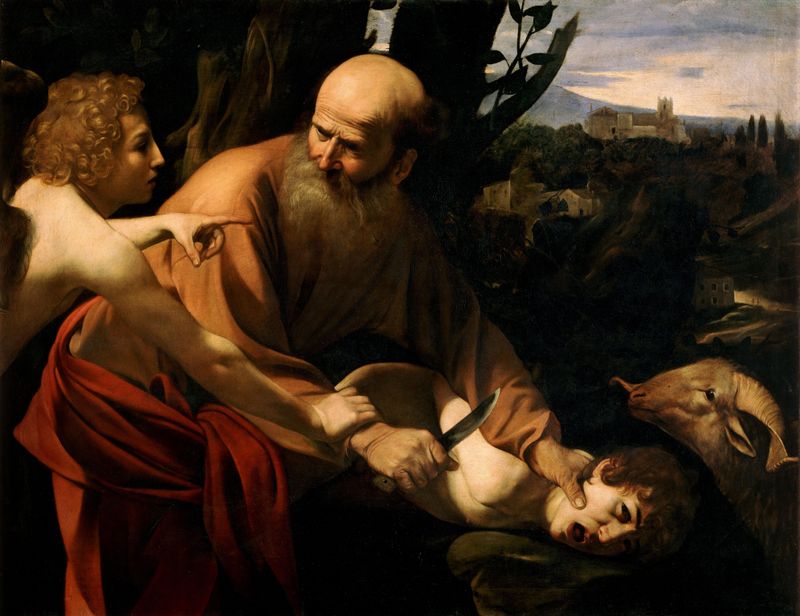
Thomas Aquinas takes up Gregory’s formulation in the Summa Theologiae at II-II q. 104 a. 3, where he argues that obedience is the greatest of the moral virtues because by it “we contemn our own will for God’s sake.” In the body of the article he writes:
“Hence Gregory says (Moral. xxxv) that ‘obedience is rightly preferred to sacrifices, because by sacrifices another’s body is slain whereas by obedience we slay our own will.’”35
And in the reply to the first objection, he applies the principle directly to the Saul case, citing 1 Sam 15:22 as the prooftext that obedience is greater than the offering of sacrifice:
“As to the special case in which Samuel spoke, it would have been better for Saul to obey God than to offer in sacrifice the fat animals of the Amalekites against the commandment of God.”36
Aquinas’s treatment ranks obedience under the cardinal virtue of justice, since it pays a debt to the lawful superior whose authority is “according to the divinely established order of things.”37 The Saul case becomes, in the medieval tradition, the standard exemplum of the failure of this debt: a man who substitutes his own pious calculation for the commanded act, and forfeits everything because of it.
Catholic dogmatic implications
What does the pericope mean for the Catholic reader today, beyond historical reconstruction? Four implications follow from the exegesis above, none of them small.
The relation between civil and cultic authority. 1 Sam 13 illustrates a principle that Catholic political theology has never abandoned: the civil authority does not authorize the liturgy. The king cannot make a sacrifice acceptable simply by being king. The lex orandi is not at the disposal of the prince. The principle has obvious bearing on every historical question about caesaropapism, every modern question about whether a Christian magistrate may dictate liturgical norms, and every contemporary question about whether liturgy can be made “relevant” by political accommodation.
Obedience as the foundational religious virtue. The Catechism teaches that “to obey (from the Latin ob-audire, to ‘hear or listen to’) in faith is to submit freely to the word that has been heard, because its truth is guaranteed by God, who is Truth itself” (CCC 144).38 Abraham’s obedience is the patriarchal model; Mary’s fiat at the Annunciation is its perfection. Saul’s וָאֶתְאַפַּק (“I forced myself”) is the inversion: the king who “forces himself” against the prophetic word is the anti-type of the Virgin who consents without coercion. Both responses happen at a moment of crisis. Both are decisive for the kingdom. Only one is fruitful.
Presumption: the sin of acting beyond authorization. The Catechism distinguishes two kinds of presumption: “Either man presumes upon his own capacities (hoping to be able to save himself without help from on high), or he presumes upon God’s almighty power or his mercy (hoping to obtain his forgiveness without conversion and glory without merit)” (CCC 2092).39 Saul commits both. He presumes on his own capacity to make the sacrifice efficacious without the prophetic word; he presumes on God’s mercy to receive a sacrifice offered in disobedience. The pericope is the textbook case in the OT canon.
The two kingships and the typology of Christ. Augustine’s reading is not an arbitrary spiritualization of an historical narrative. The Hebrew text’s own architecture—two stages of rejection, dynastic and personal, with the seed of David already “sought out” at the very moment of Saul’s first forfeit—reads as a sustained argument that the only kingship that can endure is the kingship YHWH himself grants and confirms. The Davidic covenant is the proximate fulfillment; Christ the eternal Davidic king is the ultimate. The Catechism makes the Christological-Davidic link explicitly at CCC 559 (Christ as the Son of David entering Jerusalem as king) and CCC 439 (the Davidic messianic expectation), which the patristic tradition—especially Augustine—connects back to Saul’s rejection as the moment the dynastic pivot begins.40 Saul’s rejection is in this sense not the failure of God’s plan but its provisional opening.
Contemporary application: the missing Lectionary text
A pastoral observation in closing. The current Roman Lectionary, in its 1981 Lectionarium and 1998 USA edition, omits 1 Sam 13:8–14 from the weekday cycle entirely. The Year II Ordinary Time reading of 1 Samuel runs through the rise of Samuel in Week 1 (1 Sam 1:1–8, then 1:9–20, then 3:1–10, 19–20, then 4:1–11, then 8:4–7, 10–22a, then 9:1–4, 17–19; 10:1), and jumps directly to Saul’s second rejection in 1 Sam 15:16–23 in Week 2 Monday. Chapters 11, 12, 13, and 14 are skipped.41
The omission is striking and pastorally significant. The Catholic lay hearer who follows the weekday lectionary faithfully every day for years never encounters 1 Sam 13. She never hears the seven-day commandment, never hears Saul’s וָאֶתְאַפַּק, never hears לֹא־תָקוּם מַמְלַכְתְּךָ. She is given the second rejection without the first—the execution without the announcement, the chapter 15 verdict without the chapter 13 setup that makes the chapter 15 verdict intelligible.
There are defensible reasons for the omission. The Lectionary’s editors had to compress an enormous corpus into a workable reading cycle, and the inner mechanics of Saul’s rejection sequence are difficult to convey in a brief Mass reading without commentary. But the pastoral consequence is that the most theologically loaded narrative of failed kingship in the Old Testament has fallen out of the weekly diet of Catholic devotional life. The catechist, the homilist, and the Catholic adult educator may have to do what the Lectionary does not, and put 1 Sam 13 back on the table.
What 1 Sam 13:8–14 says, finally, is what the rest of the Old Testament confirms and the New Testament makes definitive: that the kingdom which lasts is the kingdom which obeys. The kingdom which acts on its own initiative—however reasonable the initiative looks at the moment, however close the prophet is to arriving—does not last. Saul lost the kingdom by perhaps half an hour. He lost it because at the end of seven days he could not wait a few minutes longer for the word that would have authorized everything. The example is meant to be read at full strength, by men and women in positions of authority above all, but also by every Christian in the small daily moments where the temptation is to substitute religious activity for religious obedience, and to do the thing that looks pious because waiting is hard.
Frequently asked questions
Why was Saul rejected as king in 1 Samuel 13?
Saul was rejected because he failed a specific commandment Samuel had given him at 1 Sam 10:8: to wait seven days at Gilgal until Samuel arrived. The seven days expired and Samuel had not arrived; Saul’s army was scattering and a Philistine force was mustering across the pass at Michmash. Saul ordered the burnt offering brought to him and offered it himself—and at that exact moment Samuel arrived. The text’s stated reason for the rejection is direct: “you have not kept the commandment of the Lord your God which he commanded you” (1 Sam 13:13). The breach was the violation of the specific seven-day command, not a generic violation of priestly prerogative.
Did Saul violate the priesthood by offering the sacrifice?
This is a popular reading but it does not survive the text’s own evidence. Samuel himself, no Aaronide priest, offers burnt offerings (1 Sam 7:9). Saul has participated in communion offerings at Gilgal in Samuel’s presence before (1 Sam 11:15). Samuel’s rebuke in 13:13 does not mention the priesthood; it names the failure to keep a specific commandment. The cleaner OT parallel for a lay-priestly violation is Uzziah in 2 Chr 26, and the Chronicler is careful to invoke the Aaronide priesthood explicitly there—something 1 Sam 13 conspicuously does not do.
How is the rejection in 1 Samuel 13 different from the rejection in 1 Samuel 15?
The two rejections are best read as a two-stage architecture, not as redundant doublets. The Hebrew vocabulary distinguishes their objects: at 13:14 the noun is מַמְלָכָה (with possessive suffix: מַמְלַכְתְּךָ), the dynastic line, and the verb is לֹא־תָקוּם (“will not stand”). At 15:28 the noun is מַמְלֶכוּת, the abstract office of kingship, and the verb is קָרַע (“he has torn”), with the temporal marker הַיּוֹם (“today”) signaling a present and decisive action. Chapter 13 announces the forfeit of the dynastic future; chapter 15 executes the forfeit of the present office. Saul keeps his throne until his death on Gilboa, but his house never sits on it.
What is a “man after God’s own heart” (1 Samuel 13:14)?
The Hebrew phrase אִישׁ כִּלְבָבוֹ means “a man according to his (God’s) heart.” Hebrew לֵבָב (“heart”) in this idiom is not the seat of emotion but of will and choice. The NABRE study note on 13:14 puts it correctly: “of his choosing, for his purpose.”42 The phrase identifies David not as a man of God-like feeling but as the man God has chosen, the man whose will is aligned with God’s purpose. The recurrence of לֵבָב at 1 Sam 16:7 (“the LORD looks at the heart”) and the citation of the phrase at Acts 13:22 confirm this reading.
Why was the Israelite army deserting Saul before the battle?
The verb נָפֹצוּ (“they scattered,” Niphal of √פוץ) is the standard Hebrew verb of military rout—the verb of what enemies do to a defeated army. The men were not just experiencing pre-battle nerves; they were dispersing under the conviction that the campaign had not been properly authorized. Pre-battle sacrifice and oracular consultation were standard ancient Near Eastern conventions: a tribal levy without the prophetic word confirming YHWH’s sanction for the battle was a levy preparing to die without divine permission. Saul’s seven-day delay was a structured test of whether he would hold the host together by faith in the prophet’s word. The men scattering is the failure-state the test was designed to reveal.
Is 1 Samuel 13:8–14 read at Mass in the Catholic Church?
No. The current Roman Lectionary’s weekday cycle (Year II Ordinary Time) reads through 1 Samuel 1–10 in Week 1, then jumps directly to 1 Sam 15:16–23 in Week 2 Monday. Chapters 11, 12, 13, and 14 are skipped entirely. Catholics who follow the daily Lectionary never hear Saul’s first rejection proclaimed at Mass.
Footnotes
1. All English citations of Scripture are from the New American Bible, Revised Edition (NABRE) unless otherwise specified; cf. New American Bible (Revised Edition) (Washington, DC: Confraternity of Christian Doctrine, 2010). The text and study notes are accessible at usccb.org/bible/1samuel/13 and reproduced (with cross-reference apparatus) at Bible Gateway.
2. Karl Elliger and Wilhelm Rudolph, eds., Biblia Hebraica Stuttgartensia, 5th rev. ed. (Stuttgart: Deutsche Bibelgesellschaft, 1997) (BHS), based on the Leningrad Codex (B19A); reproduced in the Westminster Leningrad Codex as available at Sefaria. The Tiberian pointing and cantillation are reproduced exactly; I have not autonomously reconstructed any vowel or accent.
3. NABRE, 1 Sam 13:8–14. The official NABRE study note on v. 14 (“After his own heart”) reads: “i.e., of his choosing, for his purpose. While the verse undoubtedly refers to David, it concerns the Lord’s decision to continue the kingship, even though he has rejected Saul, by selecting the heir to Saul’s throne.”
4. On the 1 Sam 13:1 lacuna and its handling in critical editions and English translations, see P. Kyle McCarter, Jr., I Samuel: A New Translation with Introduction, Notes and Commentary, AB 8 (Garden City, NY: Doubleday, 1980), ad loc.; Ralph W. Klein, 1 Samuel, WBC 10, 2nd ed. (Nashville: Nelson, 2008), 122–26; David Toshio Tsumura, The First Book of Samuel, NICOT (Grand Rapids: Eerdmans, 2007), 333–34. Josephus, A.J. 6.378; Acts 13:21.
5. Frank Moore Cross, Donald W. Parry, Richard J. Saley, and Eugene Ulrich, Qumran Cave 4.XII: 1–2 Samuel, DJD XVII (Oxford: Clarendon, 2005). 4QSama preserves substantial but not complete columns of 1 Samuel; the columns covering 1 Sam 13:8–14 are not among the surviving fragments, so the pericope cannot be tested against the Qumran Hebrew witness.
6. On √יחל (“to wait, hope”), see Ludwig Koehler and Walter Baumgartner, The Hebrew and Aramaic Lexicon of the Old Testament, rev. Walter Baumgartner and Johann Jakob Stamm, trans. M. E. J. Richardson, 5 vols. (Leiden: Brill, 1994–2000) (HALOT), 2:407, s.v. יחל; Francis Brown, S. R. Driver, and Charles A. Briggs, eds., A Hebrew and English Lexicon of the Old Testament (Oxford: Clarendon, 1906; repr. Peabody, MA: Hendrickson, 1996) (BDB), 403–04. The cross-references to Gen 8:12 (Noah waiting another seven days for the dove) and Ps 130:5 (the psalmist waiting on YHWH) are exegetically pointed.
7. The Old Greek of 1 Reigns 13:8–14 is in Alfred Rahlfs and Robert Hanhart, eds., Septuaginta, 2nd rev. ed. (Stuttgart: Deutsche Bibelgesellschaft, 2006); no Göttingen critical edition for the four books of Reigns has yet appeared. For an accessible bilingual edition online see the Elpenor LXX (ellopos.net) and the NETS translation by Bernard A. Taylor at NETS 1 Reigns.
8. 1 Sam 10:8 (NABRE), emphasis added. The Hebrew verb is תּוֹחֵל (“you shall wait”), Hiphil imperfect 2ms of √יחל—the same root as וַיּ֣וֹחֶל (“he waited”) at 13:8.
9. The NABRE cross-reference apparatus at 1 Sam 13:8 directly points to 1 Sam 10:8; the cross-reference at 13:14 points to 1 Sam 15:28; 25:30; 2 Sam 7:15–16; Ps 78:70; Acts 13:22—encoding the intertextual chain we develop below.
10. For the source-critical debate over 10:8’s relation to 13:7b–15a, see McCarter, I Samuel, ad loc.; V. Philips Long, The Reign and Rejection of King Saul: A Case for Literary and Theological Coherence, SBLDS 118 (Atlanta: Scholars Press, 1989), chs. 3–5; Diana Edelman, King Saul in the Historiography of Judah, JSOTSup 121 (Sheffield: JSOT Press, 1991); A. Graeme Auld, I & II Samuel, OTL (Louisville: Westminster John Knox, 2011), ad loc.
11. McCarter, I Samuel, in the introduction and at the commentary on 1 Sam 10:8, identifies a pre-Deuteronomistic “Prophetic History” stratum responsible for the harshness against Saul, of which 10:8 functions as a redactional connector to the rejection narrative of ch. 13. The Anchor Bible volume should be consulted directly for the precise pagination.
12. Long, Reign and Rejection, esp. chs. 3–5. Long argues that 10:8 is original to the literary unit and provides the necessary literary anchor for both 11:14–15 (the first Gilgal sacrifice) and 13:7b–14 (the rejection scene).
13. 1 Sam 13:5 (NABRE). The MT reads “thirty thousand chariots”; the Peshitta and Lucianic Greek witnesses read “three thousand,” which many commentators prefer as the more plausible figure. See McCarter and Klein ad loc.
14. The classic treatment is Patrick D. Miller, Jr., The Divine Warrior in Early Israel, HSM 5 (Cambridge, MA: Harvard University Press, 1973); also Frank Moore Cross, Canaanite Myth and Hebrew Epic: Essays in the History of the Religion of Israel (Cambridge, MA: Harvard University Press, 1973), 91–111.
15. The Mari texts on prophecy and divination are conveniently collected in Martti Nissinen, Prophets and Prophecy in the Ancient Near East, SBLWAW 12 (Atlanta: SBL Press, 2003); see also Abraham Malamat, Mari and the Early Israelite Experience (London: Oxford University Press, 1989). The Mari archives (from Tell Hariri) are of the Middle Bronze Age, c. 18th century BCE; they are West Semitic comparanda valuable for divinatory practice though chronologically distant from Iron Age I Israel. For closer Iron Age parallels see the Neo-Assyrian bārû-divination archives (queries to Šamaš and Adad before military campaigns) and the Egyptian royal annals.
16. HALOT 3:916–18, s.v. פוץ; BDB, 806–07. The Ark formula at Num 10:35 (“Arise, O Lord, that your enemies may be scattered”) and the Davidic victory hymn at 2 Sam 22:15 / Ps 18:15 are the two most prominent military-rout uses.
17. 2 Chr 26:16–21 (NABRE). The Chronicler’s explicit invocation of the Aaronide priesthood at 26:18 (“It is not for you, Uzziah, to burn incense to the Lord, but for the priests, the sons of Aaron, who have been consecrated”) is exactly the kind of vocabulary 1 Sam 13 conspicuously avoids.
18. 1 Sam 7:9 (NABRE): “Samuel therefore took an unweaned lamb and offered it whole as a burnt offering to the LORD.” The narrator’s lack of apologetic discomfort is the exegetically significant detail. On Samuel’s Levitical (rather than Aaronide) descent see 1 Chr 6:18–33.
19. For the Deuteronomistic History hypothesis in its classical form see Martin Noth, Überlieferungsgeschichtliche Studien (Tübingen: Niemeyer, 1943), English translation: The Deuteronomistic History, JSOTSup 15 (Sheffield: JSOT Press, 1981). For the double-redaction (Dtr1/Dtr2) modification see Cross, Canaanite Myth and Hebrew Epic, 274–89.
20. Deut 17:18–20 (NABRE).
21. HALOT 1:80, s.v. אפק. On the Hithpael stem and its reflexive-intensive force see Paul Joüon and Takamitsu Muraoka, A Grammar of Biblical Hebrew, 2nd ed. (Rome: Pontifical Biblical Institute, 2006), §53.
22. The seven Hithpael attestations of √ʾpq are: Gen 43:31 (Joseph restraining tears); Gen 45:1 (Joseph no longer restraining); 1 Sam 13:12 (Saul, here); Esth 5:10 (Haman restraining rage); Isa 42:14 (YHWH: “I have long held my peace, I have kept still and restrained myself”); Isa 63:15 (the prophet asks whether YHWH’s “bowels of mercy” are restrained); Isa 64:11 [Hebrew 64:11, English 64:12 in some editions] (YHWH’s further restraint). Verified via the Westminster Leningrad Codex concordance.
23. HALOT 2:753–54, s.v. סכל; BDB, 698. The four Niphal attestations of √סכל are 1 Sam 13:13 (Saul); 2 Sam 24:10 (David, post-census); 1 Chr 21:8 (David in the Chronicler’s parallel); 2 Chr 16:9 (Asa, rebuked by the seer Hanani). In each case the Niphal names a king “foolish” through a prophetic voice. The Saul-David contrast is the sharpest: David repents, Saul rationalizes.
24. Noth, Deuteronomistic History; Timo Veijola, Die ewige Dynastie: David und die Entstehung seiner Dynastie nach der deuteronomistischen Darstellung, AASF B 193 (Helsinki: Suomalainen Tiedeakatemia, 1975); Edelman, King Saul.
25. Long, Reign and Rejection, chs. 3–5; the entire monograph is the major synchronic case for reading the two rejections as a coherent two-stage architecture rather than as parallel traditions awkwardly juxtaposed.
26. 2 Sam 7:12 (NABRE): “I will raise up your offspring after you, sprung from your loins, and I will establish his kingdom.” The Hebrew has וַהֲקִימֹתִי (Hiphil of √קום, “I will raise up”) and וַהֲכִינֹתִי (Hiphil of √כון, “I will establish”)—the very verbs denied to Saul in 1 Sam 13:13–14.
27. 1 Sam 15:28 (NABRE): “The LORD has torn the kingdom of Israel from you this day, and has given it to a neighbor of yours, who is better than you.” Note that the NABRE renders Hebrew מַמְלֶכוּת as “kingdom” here, just as it renders מַמְלָכָה as “kingship” at 13:14—flattening a distinction the Hebrew preserves.
28. 1 Chr 10:13–14 (NABRE). The Chronicler reads the entirety of Saul’s failure through the lens of disobedience to the prophetic word (the rejection narratives) and unlawful oracular consultation (the Endor episode of 1 Sam 28).
29. Noth, Deuteronomistic History; Cross, Canaanite Myth and Hebrew Epic, 274–89 (Dtr1/Dtr2); McCarter, I Samuel, introduction (the “Prophetic History” layer).
30. 2 Sam 7:16 (NABRE): “Your house and your kingdom are firm forever before me; your throne shall be firmly established forever.”
31. LXX 1 Reigns 13:8–14 in Rahlfs-Hanhart, Septuaginta (2006); see n. 7 above for accessible online editions. On patristic dependence on the LXX rather than the Hebrew, see Mogens Müller, The First Bible of the Church: A Plea for the Septuagint, JSOTSup 206 (Sheffield: Sheffield Academic Press, 1996).
32. Augustine, De Civitate Dei XVII.6, trans. Marcus Dods, in St. Augustin’s City of God and Christian Doctrine, ed. Philip Schaff, NPNF1 2 (Buffalo, NY: Christian Literature Publishing, 1887), at newadvent.org/fathers/120117.htm. Latin text in CCSL 48 (Turnhout: Brepols, 1955).
33. Augustine, De Civitate Dei XVII.7 (Dods, NPNF1 2), at the same New Advent URL.
34. Gregory the Great, Moralia in Job Book 35 (specifically the section developing the obedience-vs.-sacrifice principle); Latin text in CCSL 143B (Turnhout: Brepols, 1985); English in Morals on the Book of Job, trans. James Bliss, Library of the Fathers (Oxford: John Henry Parker, 1844–50), accessible at Lectionary Central. The principle is summarized by Aquinas at ST II-II q. 104 a. 3 (see n. 35).
35. Thomas Aquinas, Summa Theologiae II-II q. 104 a. 3 corpus, trans. Fathers of the English Dominican Province (London: Burns Oates & Washbourne, 1920), at newadvent.org/summa/3104.htm.
36. Aquinas, ST II-II q. 104 a. 3 ad 1 (same edition and URL). Aquinas cites the 1 Sam 15 case (the Amalekite spoils) rather than 1 Sam 13 directly, but the principle obedience-greater-than-sacrifice applies to both rejections in the medieval tradition, since 1 Sam 15:22 makes the principle explicit and 1 Sam 13 enacts it in advance.
37. Aquinas, ST II-II q. 104 a. 1 corpus and a. 2 corpus, on obedience as a part of the cardinal virtue of justice.
38. Catechism of the Catholic Church, 2nd ed. (Vatican City: Libreria Editrice Vaticana, 1997), §144, available at vatican.va. The etymological gloss (Latin ob-audire, “to hear or listen to”) is the Catechism’s own.
39. CCC §2092.
40. CCC §559 treats Christ’s entry into Jerusalem as the Son of David coming to his city; §439 treats the Davidic messianic expectation. Neither paragraph names Saul explicitly; the connection from Saul’s rejection through David to Christ is the patristic synthesis (Augustine, Civ. XVII.6–7) that the Catechism’s Christological-Davidic framing presupposes.
41. Verified directly against the Felix Just, S.J., index of OT readings in the current Roman Lectionary (1981 Lectionarium / 1998 USA Lectionary for Mass) at catholic-resources.org/Lectionary/Index-Weekdays.htm. The weekday cycle reads 1 Sam 1:1–8 (Week 1 Monday), 1:9–20 (Tuesday), 3:1–10, 19–20 (Wednesday), 4:1–11 (Thursday), 8:4–7, 10–22a (Friday), 9:1–4, 17–19; 10:1 (Saturday), then jumps to 1 Sam 15:16–23 in Week 2 Monday. Chapters 11, 12, 13, and 14 are absent.
42. NABRE study note on 1 Sam 13:14 (“After his own heart”): “i.e., of his choosing, for his purpose. While the verse undoubtedly refers to David, it concerns the Lord’s decision to continue the kingship, even though he has rejected Saul, by selecting the heir to Saul’s throne.” The phrase recurs verbatim at Jer 3:15 (plural “shepherds after my heart”) and is cited in Acts 13:22; both contexts support the “chosen-for-purpose” rather than “emotionally aligned” reading.

Garrett Ham
Garrett Ham is an attorney, military veteran, and holds a Master of Divinity from Yale Divinity School. He writes from Northwest Arkansas on theology, law, and service.
Related Posts

Who Actually Killed Goliath? David, Elhanan, and the Textual Transmission of 1–2 Samuel
2 Samuel 21:19 in Hebrew credits Elhanan, not David, with killing Goliath. The Catholic tradition has long-standing tools for the textual problem.
1 Samuel 2:25 Meaning: “The Lord Wanted Them Dead”
An exegetical study of 1 Samuel 2:25—the Hebrew ḥāpēṣ, the hardening tradition, and the Catholic response from Aquinas to Trent to De Auxiliis.
“Speak, for Your Servant Is Listening”: Samuel’s Omission of the Divine Name
Why did Samuel drop the divine name from Eli's instruction in 1 Samuel 3:10? An exegetical study of the gradual Israelite silence around the Tetragrammaton.
Stay Informed
Get new writing on faith, law, and service delivered to your inbox.
No spam. Unsubscribe anytime.