Who Actually Killed Goliath? David, Elhanan, and the Textual Transmission of 1–2 Samuel

On This Page
וַתְּהִי־ע֧וֹד הַמִּלְחָמָ֛ה בְּג֖וֹב עִם־פְּלִשְׁתִּ֑ים וַיַּ֡ךְ אֶלְחָנָן֩ בֶּן־יַעְרֵ֨י אֹרְגִ֜ים בֵּ֣ית הַלַּחְמִ֗י אֵ֚ת גָּלְיָ֣ת הַגִּתִּ֔י וְעֵ֣ץ חֲנִית֔וֹ כִּמְנ֖וֹר אֹרְגִֽים׃
“And there was again war at Gob with the Philistines, and Elhanan son of Jaare-oregim the Bethlehemite struck down Goliath the Gittite, and the wood of his spear was like a weaver’s beam.”—2 Samuel 21:19, Masoretic Text and literal English
The Bible says David killed Goliath. It says so in 1 Samuel 17, in one of the most famous narratives in the Old Testament, and it says so again in passing references throughout the books of Samuel: Goliath’s sword is kept at the sanctuary at Nob and given to David when he flees Saul (1 Sam 21:9); the priest Ahimelech recalls that David struck down Goliath in the Valley of Elah (1 Sam 21:10 LXX); David himself remembers it before Saul on the eve of the duel itself (1 Sam 17:34–37). The story is rehearsed in the Psalms, alluded to in the prophets, and stamped into the cultural memory of every Jewish and Christian tradition that has ever read these texts.
The Bible also says someone else killed Goliath. The same Goliath, identified by the same patronymic place of origin (Gath) and the same outsize-armament idiom (“spear like a weaver’s beam”). That report appears at 2 Samuel 21:19 in the Masoretic Text, the standard Hebrew of the Bible. The slayer is named: Elhanan, son of Jaare-oregim, the Bethlehemite. The setting is named: the second of three battles with the Philistines at Gob.1 The Septuagint preserves the same datum. The medieval Massoretes copied it forward without alteration. The English Wycliffe Bible (1382) renders it literally. So does the Matthew Bible (1537), preserving Tyndale’s posthumous Old Testament work, so does the Geneva Bible (1599), so does Luther’s German (1545). The Hebrew of the verse has never been in serious doubt at the level of its substance, with localized exceptions—the patronymic of Elhanan, whose middle word looks textually disturbed, is the one we will examine below.
What is in doubt is what to do with the Hebrew. The Chronicler, working a few hundred years after the books of Samuel were composed, found the datum in 2 Samuel 21:19 disquieting enough that he rewrote it. His version of the same incident at 1 Chronicles 20:5 reads, “Elhanan son of Jair struck down Lahmi the brother of Goliath the Gittite.”2 The KJV translators of 1611, reading both verses, told the reader what they thought had happened: at 2 Samuel 21:19 they supplied “the brother of” from 1 Chronicles, and they printed those three words in distinguishing typography to flag them as not present in the Hebrew. Modern KJV reprints set the supplied words in italics. The honest typographical signal is preserved.3
So the question is real. Did David and Elhanan each kill a Philistine champion named Goliath in two separate battles? Did Elhanan kill Goliath’s lesser-known brother (named Lahmi), as the Chronicler insists? Did the historical Goliath actually fall to Elhanan, with David’s name later substituted by tradition? Or did the texts of 2 Samuel 21:19 and 1 Chronicles 20:5 both descend from an earlier version that has been corrupted, with each book preserving a different garbled state of the original wording?
These are the four families of explanation that the scholarly tradition has worked out. None is a fringe position. All four have been defended by serious commentators—Catholic, Protestant, Jewish, and secular—working from full access to the manuscripts and the same canon. The differences among them are about textual mechanics and historical reconstruction, not about whether Scripture is true. What this post wants to do is lay out the data honestly, walk through the scholarly options, and show how the patristic, medieval, and magisterial Catholic tradition has handled exactly this kind of question for the better part of two millennia. The doctrine of biblical inspiration was articulated in a tradition that knew about textual variants, did not panic, and built its hermeneutic to handle them.
The Hebrew of 2 Samuel 21:19
The Masoretic Text of 2 Samuel 21:19, with cantillation marks and pointing as preserved in the Westminster Leningrad Codex (the diplomatic text underlying the standard scholarly edition Biblia Hebraica Stuttgartensia):4
וַתְּהִי־ע֧וֹד הַמִּלְחָמָ֛ה בְּג֖וֹב עִם־פְּלִשְׁתִּ֑ים וַיַּ֡ךְ אֶלְחָנָן֩ בֶּן־יַעְרֵ֨י אֹרְגִ֜ים בֵּ֣ית הַלַּחְמִ֗י אֵ֚ת גָּלְיָ֣ת הַגִּתִּ֔י וְעֵ֣ץ חֲנִית֔וֹ כִּמְנ֖וֹר אֹרְגִֽים׃ ס
A literal English rendering, attentive to the Hebrew word order:
And there was again the war at Gob with the Philistines, and Elhanan son of Jaare-oregim the Bethlehemite struck down [‘et] Goliath the Gittite; and the wood of his spear was like a weaver’s beam.
Three features of this verse govern the entire debate.
First, the verb is וַיַּךְ (wayyak), the Hiphil wayyiqtol 3ms of √נכה, “to strike, smite, kill.” This is the standard biblical verb for killing an enemy combatant. The same verb (Hiphil wayyak) is used of David’s killing of Goliath at 1 Samuel 17:50 (וַיַּךְ אֶת־הַפְּלִשְׁתִּי וַיְמִתֵהוּ, “he struck the Philistine and killed him”), with the very same Hiphil wayyak + direct-object אֵת construction we will examine again at 2 Samuel 21:19.5
Second, the syntactical object of wayyak is introduced by the direct-object marker אֵת (‘et). What follows ‘et is the direct object of the verb: אֵת גָּלְיָת הַגִּתִּי—“Goliath the Gittite.” There is no Hebrew word for “brother” in this verse. None. The KJV’s “the brother of” is a supplied addition, drawn from 1 Chronicles 20:5, and the KJV translators are honest enough to flag it as such.
Third, the spear is described with the simile כִּמְנוֹר אֹרְגִים (kimnor ‘orgim), “like a weaver’s beam.” This is the identical formula used at 1 Samuel 17:7 of the spear of the Goliath whom David fights.6 The phrase is sufficiently distinctive that it functions as a literary fingerprint. The verse identifies its Goliath with the Goliath of 1 Samuel 17.
There is a further oddity that has occupied textual critics from the nineteenth century forward. The patronymic of Elhanan in MT 2 Samuel 21:19 is given as בֶּן־יַעְרֵי אֹרְגִים, “son of Jaare-oregim.” The word אֹרְגִים (‘orgim) is the Hebrew word for “weavers”—and it appears twice in the verse, once apparently as part of a proper name and once at the end as part of the weaver’s-beam simile. As early as 1871 the German textual critic Julius Wellhausen noticed this doubling and proposed a mechanical explanation: the ‘orgim at the end of the verse had migrated upward in the course of manuscript copying and contaminated the patronymic, displacing whatever the original second word of the patronymic had been. Wellhausen wrote, in his Der Text der Bücher Samuelis (1871):
The spelling יערי [Jaare] instead of יעיר [Jair, in Chronicles] was probably occasioned by the following אֹרְגִים [oregim, “weavers”], whose accidental intrusion from the line below is easy to recognize.7
It is worth pausing here because what Wellhausen wrote on this verse is sometimes overstated in popular literature. Wellhausen is identifying a scribal mechanism, not arguing that the historical Goliath was killed by Elhanan rather than David. His 1871 note is a narrow textual remark. The historical thesis—that an Elhanan tradition was transferred to the more famous David—belongs to later scholars, especially the American P. Kyle McCarter, Jr. (1984) and the Israeli-American Baruch Halpern (2001), who pressed Wellhausen’s textual observation into a larger reconstruction.8 Wellhausen’s note explains the textual oddity. It does not by itself settle the historical question.
What Wellhausen did establish is that the Hebrew text of 2 Samuel 21:19 cannot be read as a pristine artifact of original composition. The patronymic shows signs of scribal disturbance, the placement of ‘orgim is visibly anomalous, and any honest reading of the verse has to reckon with that scribal history. The 1 Chronicles parallel, to which we turn next, makes the matter sharper still.
The Hebrew of 1 Chronicles 20:5
The Masoretic Text of 1 Chronicles 20:5:9
וַתְּהִי־ע֥וֹד מִלְחָמָ֖ה אֶת־פְּלִשְׁתִּ֑ים וַיַּ֞ךְ אֶלְחָנָ֣ן בֶּן־[יָעוּר כ] (יָעִ֗יר ק) אֶת־לַחְמִי֙ אֲחִי֙ גָּלְיָ֣ת הַגִּתִּ֔י וְעֵ֣ץ חֲנִית֔וֹ כִּמְנ֖וֹר אֹרְגִֽים׃
A literal English rendering:
And there was again war with the Philistines, and Elhanan son of Jair struck down Lahmi the brother of Goliath the Gittite; and the wood of his spear was like a weaver’s beam.
Compare the two verses element by element.
| Element | 2 Sam 21:19 MT | 1 Chr 20:5 MT |
|---|---|---|
| Setting | “at Gob” (בְּגוֹב) | place name dropped |
| Slayer | Elhanan son of Jaare-oregim the Bethlehemite | Elhanan son of Jair |
| Direct-object marker | אֵת | אֶת־ |
| Victim | Goliath the Gittite | Lahmi the brother of Goliath the Gittite |
| Spear-shaft simile | “like a weaver’s beam” | “like a weaver’s beam” |
The Chronicler’s version differs at three points, all of which work in the same direction. The setting (Gob) is dropped—the difficulty of the placename is removed. The patronymic is shortened from “Jaare-oregim” to “Jair,” which (a) eliminates the doubled ‘orgim Wellhausen noticed and (b) yields a normal Hebrew name (Jair is attested elsewhere in the OT, e.g., Numbers 32:41). The victim is no longer Goliath but “Lahmi the brother of Goliath,” introduced by the word אֲחִי, “the brother of.” The Chronicler also has a ketiv-qere note in the patronymic itself: the written consonantal text (ketiv) reads יָעוּר (Ya’ur), and the Masoretic marginal reading (qere) gives יָעִיר (Yair)—the manuscript tradition itself is uncertain about the proper name.
The three changes all soften the same problem the 2 Samuel verse poses. The Chronicler’s alteration of the patronymic, his dropping of the placename, his insertion of “the brother of,” and his renaming of the victim collectively transform 2 Samuel 21:19 into a verse that no longer competes with 1 Samuel 17. On the surface this looks like a harmonization. Three centuries of scholarship—Henry Preserved Smith in 1899, McCarter in 1984, Hugh Williamson in 1982, and most recently Kaspars Ozoliņš in 2022—have all agreed that 1 Chronicles 20:5 represents an attempt to resolve the difficulty that 2 Samuel 21:19 presents, not an independent witness to a different historical event.10
Whether the Chronicler did this from his own initiative or whether his Vorlage of 2 Samuel was already corrupt at this point—Williamson, working in the Cambridge tradition, argues that the Chronicler had a Samuel text closer to the Septuagint and the Qumran scrolls than to the Masoretic line11—is a different question. What is not in serious doubt is that the Chronicler’s version is secondary to the 2 Samuel report, not the other way around. The harmonistic intention of 1 Chronicles 20:5, in Henry Preserved Smith’s phrase, “is evident.”12
The Septuagint witness
The Septuagint is the Greek translation of the Hebrew Bible produced in Alexandria over the third and second centuries BCE. For the books of Samuel-Kings the Septuagint is preserved in the great fourth- and fifth-century uncial codices (Vaticanus and Alexandrinus—Codex Sinaiticus has lost the historical books from Genesis through 1 Chronicles 9:27 and preserves no text of 1–2 Samuel) and in the Lucianic/Antiochene recension. The Septuagint of 2 Samuel is called in Greek ΒΑΣΙΛΕΙΩΝ Β′, “Second Kingdoms,” because in the Greek tradition Samuel and Kings together form four books titled “Kingdoms.”
The Septuagint of 2 Samuel 21:19, in Sir Lancelot Brenton’s widely-used English translation (1844, reprinted continually since), reads:
And there was a battle in Rom with the Philistines; and Eleanan son of Ariorgim the Bethleemite slew Goliath the Gittite; and the staff of his spear was as a weaver’s beam.13
Notice what is and is not different from the Hebrew. The placename “Gob” in the MT has become “Rom” in the LXX—a textual variant in the place name itself, suggesting both manuscripts descend from an earlier text in which the placename may already have been unstable. The personal names are transliterated through Greek phonology (Eleanan for Elhanan, Ariorgim for Jaare-oregim, Bethleemite for Bethlehemite, Goliath for Goliath, Gittite for Gittite). But the substance of the verse—the identification of the slayer as Elhanan, the identification of the victim as Goliath the Gittite, the spear simile—is preserved exactly. The LXX does not supply “the brother of.” The LXX does not match 1 Chronicles 20:5. The LXX of 2 Samuel 21:19 stands with the Masoretic Hebrew against the Chronicler’s harmonization.
This is a load-bearing datum. The textual tradition of 2 Samuel 21:19 in both Hebrew and Greek manuscripts independently preserves Elhanan as the slayer of Goliath himself. Only the Chronicler departs. The agreement of MT-Samuel and LXX-Samuel against MT-Chronicles is exactly what we would expect if the original reading was “Elhanan struck down Goliath” and the Chronicler subsequently harmonized.
The Septuagint of 1 Samuel 17 is a separate problem of its own, and a much larger one. We turn to it now.
The shorter Septuagint of 1 Samuel 17–18
The Septuagint of 1 Samuel 17 in Codex Vaticanus (one of the two great fourth-century uncials, generally regarded as preserving an old form of the LXX) lacks substantial portions of the Hebrew text. The minuses are not random or trivial. They are blocks of consecutive verses, and they remove almost everything in the chapter that creates internal tension.
In 1 Samuel 17, the Vaticanus LXX omits verses 12–31 (the introduction of David as a young shepherd ignorant of court life, his journey to the camp bearing food for his brothers, and his initial inquiries about the duel), verse 41 (Goliath’s approach with his shield-bearer ahead of him), verse 48b (a redactional half-verse), verse 50 (the summary statement that David prevailed without a sword), and verses 55–58 (Saul’s puzzled question after the duel, “Whose son is this youth?”—a passage that conflicts with the 1 Samuel 16 narrative in which Saul has already taken David into his household). That is thirty-nine verses absent in the LXX, all of which are present in the MT.14
In 1 Samuel 18 the LXX similarly omits verses 1–6a (Jonathan’s covenant with David and David’s exaltation), 10–11 (Saul’s first murder attempt with a spear), 12b (a redactional gloss about Saul fearing David), 17–19 (Saul’s offer of his older daughter Merab to David), 21b (a redactional gloss), and 29b–30 (the report of Philistine raids and David’s continuing success).15
Counted together, the missing material amounts to roughly 44 percent of the Masoretic text of 1 Samuel 17–18. This is not a marginal datum.
The standard scholarly question about the shorter LXX of 1 Samuel 17–18 has been: is the LXX an abridgment of an originally long Hebrew text, or does the LXX preserve an older, shorter Hebrew Vorlage, with the MT pluses representing later additions from a parallel David tradition? In 1986 a quartet of scholars—the Dominican textual critic Dominique Barthélemy of Fribourg, the British classicist David W. Gooding of Belfast, the Belgian Catholic Old Testament scholar Johan Lust of Leuven, and the Israeli textual critic Emanuel Tov of the Hebrew University—published a joint volume, The Story of David and Goliath: Textual and Literary Criticism, in which each author wrote an initial contribution defending one of the two views and then exchanged responses.16 Barthélemy and Gooding defended the priority of MT and read the LXX as an abridgment. Lust and Tov defended the priority of the LXX’s shorter Vorlage and read the MT pluses as later additions.
Tov’s argument turns on translation technique. The Septuagint of Samuel can be shown by literary analysis to be a faithful, even pedantic, translator of his Hebrew source. He does not paraphrase, does not condense, does not omit for stylistic reasons. If such a translator omitted 44 percent of his Hebrew source text, he must have approached that text freely—and this free approach should be visible in other details. It is not. The literalism of the Samuel LXX is documented across the rest of the book. The natural conclusion, Tov argues, is that the translator was working from a shorter Hebrew text than the MT we now have, and the MT pluses in 1 Samuel 17–18 are secondary additions to that shorter original.17
Tov’s conclusion, in his own words:
From the point of view of literary history, we consider version 1 [the LXX shorter text] primary, and version 2 [the MT pluses] secondary, since the latter has been added to version 1 (or, rather, inserted in it). However this does not imply that the content of version 1 is more authentic than that of version 2. It is hard to know whether ‘David the harper and the armor bearer’ (version 1) is more original in the history of the tradition than ‘David the shepherd’ (version 2). … From the above discussion it is clear that the Masoretic version of 1 Samuel 16–18 was created by the juxtaposition of the two separate accounts of the events, the complete version 1 and the partial (or partially preserved) version 2.18
Barthélemy and Gooding take the opposite view. For Barthélemy, the LXX’s shorter text is a midrashic, exegetical abridgment—an attempt by an ancient editor to remove from the David-Goliath narrative the internal tensions that the MT had simply tolerated. The MT, on this view, is the older form; the LXX represents a later interpretive reduction.19
The disagreement is genuine and is unresolved in the scholarly literature. What is not in doubt is the underlying datum: the Septuagint of 1 Samuel 17–18 is dramatically shorter than the Masoretic text, the divergence is not random but structural, and any honest reading of the David-Goliath narrative has to engage that divergence rather than pretend it does not exist.
The earliest external attestation of the shorter LXX text is in the Greek-speaking Christian writer Hippolytus of Rome, who in the early third century CE (his literary activity is c. 200–235) composed treatises on David and Goliath that already presuppose the shorter Septuagint form, including its omission of 1 Samuel 17:55–58.20 The shorter text is therefore well-attested by the early third century, and the standard scholarly chronology places its underlying Hebrew Vorlage (on Tov’s reconstruction) in the early Second Temple period.
The Dead Sea Scrolls
The discovery of the Dead Sea Scrolls in 1947 transformed Hebrew Bible textual criticism. For 1–2 Samuel, the Cave 4 cache yielded three scrolls of the book: 4QSama (the largest, c. 50–25 BCE), 4QSamb (older, c. 250 BCE), and 4QSamc (smaller, c. 100 BCE). The official edition appeared in 2005 as volume 17 of Discoveries in the Judaean Desert, edited by Frank Moore Cross, Donald W. Parry, Richard J. Saley, and Eugene Ulrich.21
The Samuel scrolls have a striking textual character. In hundreds of variants, 4QSama regularly agrees with the Septuagint against the Masoretic Text. Frank Moore Cross, the great Harvard paleographer and one of the editors of DJD 17, summarized the relationship in a sentence that has become canonical in the field: “We could scarcely hope to find closer agreement between the Old Greek [Septuagintal] tradition and 4QSama than actually is found in our fragments.”22 Emanuel Tov, writing the foreword to DJD 17, judged that “it is no exaggeration to say that the critical study and exegesis of the book of Samuel is no longer possible without consulting these three scrolls in conjunction with the Masoretic Text and the Septuagint.”23
The most famous demonstration of 4QSama’s textual value is a passage at the beginning of 1 Samuel 11, an entire paragraph about the Ammonite king Nahash that 4QSama preserves but that has dropped out of MT and LXX alike, almost certainly by scribal accident (the editors of DJD 17 identify the mechanism as parablepsis arising from homoioteleuton or homoiarkton—the copyist’s eye skipping from one similar-sounding ending or beginning to a later one and omitting the intervening material). Frank Moore Cross published this passage already in 1983, and it gives the modern reader a paragraph of the Hebrew Bible that the Western tradition had not known for two thousand years.24 The recovery of this passage is the strongest available external warrant for taking 4QSama seriously where it diverges from the Masoretic text.
For 1 Samuel 17 specifically, 4QSama preserves fragments of verses 3–8 and 40–41—not enough to settle the long-versus-short debate by itself. The general pattern of 4QSama’s agreement with the LXX has been taken by the Cross-Ulrich school as supporting the LXX-priority view of 1 Samuel 17. But not every scholar agrees that the surviving 4QSama fragments in 1 Samuel 17 actually support the LXX’s shorter version. The Anglican scholar Benjamin J. M. Johnson, in a careful 2012 study of the specific 4QSama variants in 1 Samuel 17–18, argued that the extant Qumran fragments are in fact consistent with the long (MT) version and against the short (LXX) reading.25 Johnson’s argument shows that even where 4QSama survives, its testimony on the David-Goliath problem is contested.
The Samuel scrolls confirm the underlying textual instability and align broadly with the Septuagintal stream against the Masoretic stream. They do not by themselves settle which version of 1 Samuel 17 is older. They do, however, place the textual problem squarely within the historical evidence of the late Second Temple period—centuries before any Christian community received the canon—and remove any possibility that the variants are a modern critical invention.
The four theories
Out of the data we have just rehearsed—MT 2 Samuel 21:19, MT 1 Chronicles 20:5, the LXX of 2 Samuel, the shorter LXX of 1 Samuel 17, and the Qumran Samuel scrolls—the scholarly tradition has worked out four families of explanation for the David-or-Elhanan question. Each has serious commentators behind it. Each has tradeoffs. The Catholic reader, who has no doctrinal commitment to settle in advance, can entertain all four.
Theory 1: Two Goliaths. On this reading, there were historically two Philistine champions named Goliath, both from Gath, both wielding outsize spears, both killed by Israelite heroes. David killed one (1 Samuel 17), and Elhanan killed the other (2 Samuel 21:19) in a later campaign at Gob. The Chronicler at 1 Chronicles 20:5, knowing both traditions, harmonized by making the second Goliath into Goliath’s brother Lahmi—an interpretive simplification, but not a historical falsehood.26
This is the position of conservative Christian apologetic literature dating to the patristic period and beyond. It is also the position implicit in the KJV translators’ practice: they supply “the brother of” in 2 Samuel 21:19 from 1 Chronicles 20:5, but they flag the supplied words typographically, indicating that they understood the harmonization to be derived from the Chronicler rather than present in their Hebrew text. The two-Goliaths reading is exegetically possible. The 1 Chronicles harmonization fits it cleanly. The only difficulty is that the spear-shaft simile in 2 Samuel 21:19 (“like a weaver’s beam”) is identical to 1 Samuel 17:7—an identification distinctive enough to make “two different Philistine champions both named Goliath, both from Gath, both with weaver’s-beam spears” sound, to modern ears, like a strained though not impossible coincidence. The biblical narrator does not anywhere acknowledge that there were two Goliaths.
Theory 2: Scribal corruption of MT 2 Samuel 21:19; Chronicles preserves the older reading. On this reading, the original text said something close to what 1 Chronicles 20:5 still says—Elhanan killed Lahmi, the brother of Goliath. The Hebrew of 2 Samuel was at some point corrupted (or fell out of the manuscript line) and now reads as though Elhanan killed Goliath himself. This is the simplest harmonization-by-corruption account, and it is the implicit position of much of the pre-modern Catholic tradition.
The chief difficulty with this reading is that the corruption it requires is implausibly invasive. The Chronicler’s “Lahmi the brother of” would have had to drop out of the 2 Samuel manuscript line cleanly, leaving the syntactically functional ‘et in place; the patronymic “Jair” would have had to be replaced by “Jaare-oregim,” with the doubling of ‘orgim introduced by error; the placename “Gob” would have had to be inserted. None of these is a single-letter slip. They are multiple, independent, and all in the same direction. The Septuagint of 2 Samuel 21:19 preserves the harder reading, not the harmonization, so the corruption would have to have happened before the LXX Vorlage diverged from the proto-MT. That is conceptually possible but historically demanding.
Theory 3: Both MT 2 Samuel 21:19 and 1 Chronicles 20:5 are corruptions of an earlier original. On this reading—defended most thoroughly by the Latvian-American scholar Kaspars Ozoliņš in a 2022 article in the journal Vetus Testamentum—the earliest recoverable text of the verse read something like, “And Elhanan, son of Yaur, the Bethlehemite, struck down the brother of Goliath the Gittite.” (Ozoliņš proposes a waw in the middle radical of the patronymic, giving יָעוּר rather than the qere’s יָעִיר.) The MT direct-object marker אֵת in 2 Samuel 21:19 is, on Ozoliņš’s consonantal reconstruction, a corruption of an original אֲחִי (“the brother of”); the loss of the initial ה of הַלַּחְמִי (“the Bethlehemite”) in the Chronicler’s line produced “Lahmi” as a proper name. Both lines, on this reading, descend from an original in which Elhanan killed an unnamed brother of Goliath; both then suffered different corruptions that produced the divergent forms we now have.27
This reading has the advantage of explaining both verses from a single hypothesized original. It has the disadvantage of being a hypothesis with no manuscript support—the original text Ozoliņš reconstructs is not preserved in any extant witness. But the reconstruction respects the consonantal mechanics, fits the scribal mechanisms attested elsewhere in the books of Samuel, and is consistent with the doctrine of inerrancy as the Catholic tradition has articulated it (we will return to this shortly).
Theory 4: Elhanan was the historical slayer of Goliath; David’s name was substituted by tradition. This theory comes in two distinct forms that the Catholic reader should not collapse. Theory 4a (the moderate form): the canonical narrative in 1 Samuel 17 remains historical—David did kill a Philistine champion at the Valley of Elah—but variant traditions about other Israelite warriors’ victories were absorbed into the David tradition in the course of compilation, with 2 Samuel 21:19 preserving a fossil of that earlier process. Theory 4b (the strong form): the historical slayer of Goliath was Elhanan; the entire 1 Samuel 17 attribution to David is a later literary transfer. The strong form is the position of P. Kyle McCarter, Jr., in the Anchor Bible commentary on 2 Samuel (1984), and developed at length by Baruch Halpern in David’s Secret Demons (2001) and Steven L. McKenzie in King David: A Biography (2000). Theory 4a is compatible with both Catholic inerrancy schools; Theory 4b is more constrained—it makes the canonical 1 Samuel 17 narrative non-historical in its central claim, and brushes against Dei Verbum §11 on the Harrison-Most reading.28 On this reading, the original tradition recorded that an obscure Israelite warrior named Elhanan killed the Philistine champion Goliath at the second battle at Gob. As David’s reputation grew, the heroic deed migrated to him, becoming the centerpiece of the 1 Samuel 17 narrative. The 2 Samuel 21:19 verse preserves a fossil of the older tradition that survived the redactional process.
This is the most controversial of the four theories and the one that most directly challenges the historical character of 1 Samuel 17. It is also the reading most commonly cited in popular skeptical literature. What can be said in its favor is that it provides a clean unified explanation of the MT, LXX, and 4QSama data (all of which preserve the Elhanan reading) and accounts for the secondary character of 1 Chronicles 20:5. What can be said against it is that it requires an enormous amount of redactional work in the David tradition—a transfer not just of the bare datum “killed Goliath” but of an entire narrative complex including the duel, the giant’s armor, the sword laid up at Nob, and the cultural memory—and that it presupposes a historical reconstruction the texts themselves nowhere acknowledge.
The most plausible synthesis, in my judgment as one possible reading, combines theories 1 and 3. The biblical narrative in 1 Samuel 17 is historical; David did kill a Philistine champion named Goliath at the Valley of Elah, with the sword that he later retrieved from Nob. The verse at 2 Samuel 21:19, as we now have it in MT and LXX, has been corrupted from an earlier form that very plausibly read closer to what 1 Chronicles 20:5 still preserves—Elhanan killed another, lesser-known Philistine champion in a separate engagement, possibly the “brother of Goliath” named Lahmi. The Chronicler, working from a Samuel Vorlage closer to the original, preserves the older reading; the MT and LXX of 2 Samuel 21:19 both descend from a corrupted line. Notice that this synthesis cuts against the earlier framing of “the LXX stands with MT against the Chronicler.” If Theories 1+3 are right, the LXX of 2 Samuel 21:19 is also corrupt, and the Chronicler’s 1 Chronicles 20:5 is actually closer to the original than either Hebrew or Greek of 2 Samuel. The MT-LXX agreement remains the load-bearing data point against an ad hoc harmonization of MT-Samuel alone, but it cannot, on this synthesis, settle the deeper question of which reading is original. This synthesis is therefore offered as one defensible reading, not as the only reading a Catholic can hold; the texts themselves leave the historical question more open than any of the four theories acknowledges, and the doctrinal tradition does not require any particular reconstruction.
The pre-modern tradition
The Christian tradition before the rise of nineteenth-century textual criticism was not unaware of textual variants in the Hebrew Bible. The fathers and the medieval doctors handled apparent contradictions and textual divergences with a hermeneutical sophistication that the modern Catholic reader, who has often been served a flattened version of the inerrancy doctrine by twentieth-century controversy, can find startling.
Origen: the LXX as the church’s Bible
In the early third century, Origen of Alexandria—the most learned biblical scholar of the pre-Nicene church and the first major Christian textual critic—wrote a long letter to his correspondent Sextus Julius Africanus on the question of textual variants between the Septuagint and the Hebrew. Africanus had questioned the canonical authority of the Susanna addition to Daniel on the grounds that it was not in the Hebrew text. Origen replied with a remarkable defense of the church’s use of the Septuagint even when (and especially when) it differs from the Hebrew:
In Daniel itself I found the word “bound” followed in our versions by very many verses which are not in the Hebrew at all… And in many other of the sacred books I found sometimes more in our copies than in the Hebrew, sometimes less. … In all these cases consider whether it would not be well to remember the words, “You shall not remove the ancient landmarks which your fathers have set.” … And, forsooth, when we notice such things, we are immediately to reject as spurious the copies in use in our Churches, and enjoin the brotherhood to put away the sacred books current among them, and to coax the Jews, and persuade them to give us copies which shall be untampered with, and free from forgery! Are we to suppose that that Providence which in the sacred Scriptures has ministered to the edification of all the Churches of Christ, had no thought for those bought with a price, for whom Christ died?29
Origen’s position established the patristic norm: the church’s working text was the Septuagint, the Septuagint and the Hebrew were known to differ, and the providential authority of the Septuagint as the Bible of the apostolic church survived the divergence rather than being undermined by it. This is precisely the framework within which the Christian tradition received the David-Goliath problem. The textual divergence between MT and LXX of 1 Samuel 17 was known to the fathers. The 2 Samuel 21:19 / 1 Chronicles 20:5 problem was visible to anyone who read both books. The fathers did not panic.
Augustine: the three rules of Letter 82
In A.D. 405, Augustine of Hippo, writing to Jerome on a different question (the interpretation of Paul’s rebuke of Peter at Galatians 2), articulated what would become the classical Catholic rule for handling apparent contradictions in Scripture:
For I confess to your Charity that I have learned to yield this respect and honour only to the canonical books of Scripture: of these alone do I most firmly believe that the authors were completely free from error. And if in these writings I am perplexed by anything which appears to me opposed to truth, I do not hesitate to suppose that either the manuscript is faulty, or the translator has not caught the meaning of what was said, or I myself have failed to understand it.30
Augustine gives three options. When Scripture appears contradictory or appears opposed to truth, the canonical inspiration of the original is not in question; the source of the difficulty is to be sought either in (a) the textual transmission (the manuscript before me is faulty), or in (b) the translation (the translator has made a mistake), or in (c) my own understanding (I have not yet grasped what the text means). All three options preserve the authority of the inspired original. None of them treats the apparent contradiction as a problem for inspiration.
Augustine’s three rules apply to 2 Samuel 21:19 with embarrassing precision. The Hebrew of 2 Samuel 21:19 says Elhanan killed Goliath. The Hebrew of 1 Chronicles 20:5 says Elhanan killed Lahmi, the brother of Goliath. One of two things must be true: either (option a) the manuscript line of 2 Samuel 21:19 has suffered corruption, and the Chronicler’s harmonization preserves a closer-to-original reading; or (option c) the reader has misunderstood the verse, and there is some way to read 2 Samuel 21:19 that is harmonious with 1 Samuel 17. Both options preserve the doctrine of inspiration. Both options have substantial commentators behind them. The post-Wellhausen consensus has favored option (a), and that is also the consensus of the Catholic mainstream from Pius XII onward (we come to him in a moment).
Notice as well that in the very same letter (chapter 2, paragraph 5, in the Cunningham/NPNF chapter division), Augustine takes 2 Samuel itself as his test case for handling Old Testament historical difficulties—the David and Bathsheba episode at 2 Samuel 11. The rules of Letter 82 were drafted by Augustine with the books of Samuel in mind. Their application to the David-or-Elhanan problem is not anachronistic; it is congruent with the use to which Augustine himself put them.
Jerome: the Hebrew text and the Vulgate
The Vulgate, the Latin translation that would become the official Catholic Bible of the western church for over a thousand years, was produced by Jerome between A.D. 382 and 405. For most of the Old Testament, Jerome elected to translate not from the Septuagint (the established Greek text of the church) but from the Hebrew—a polemical choice that Augustine criticized but that Jerome defended in a series of prefaces. In his “Helmeted Prologue” (Prologus Galeatus) to the books of Samuel and Kings, Jerome wrote:
Therefore, first read my Samuel and Kings; mine, I say, mine. For whatever we have learned and know by often translating and carefully correcting is ours. … Certainly, if you are incredulous, read the Greek and Latin books and compare (them) with these little works, and wherever you will see among them to differ, ask any one of the Hebrews, in whom you might place better faith, and if he confirms us, I think that you will not consider him a diviner, as he has similarly divined in the very same place with me.31
Jerome’s wager was that the Hebrew text—the Hebraica veritas, the “Hebrew truth”—was the authoritative original, and that the Latin Bible should be produced by collation against it. Jerome therefore translated 2 Samuel 21:19 from the Hebrew: tertium quoque fuit bellum in Gob contra Philisthaeos, in quo percussit Adeodatus, filius Saltus, polymitarius Bethlehemites, Goliath Gettheum, cuius hastile hastae erat quasi liciatorium texentium—“there was another battle in Gob against the Philistines, in which Adeodatus son of Saltus the polymitarius the Bethlehemite struck down Goliath the Gittite, the shaft of whose spear was like a weaver’s beam.”32 Jerome’s Latin preserves the difficulty: the Vulgate, the official Bible of the Catholic Church for most of its history, has the Hebrew Bible’s reading at 2 Samuel 21:19. Catholic readers have been reading the Elhanan-killed-Goliath verse in their authoritative Latin for sixteen hundred years.
This is worth dwelling on. The pre-modern Catholic Church did not handle the textual difficulty of 2 Samuel 21:19 by editing the Vulgate to match 1 Chronicles. It did not declare 2 Samuel 21:19 corrupt and refuse to read it at Mass. It preserved the verse, translated by the church’s greatest textual scholar from the Hebrew, in the official Latin. The verse has appeared in every authoritative Catholic Bible from the Vulgate through the Douay-Rheims (1609–1610), the Knox Bible (1949–50), the Jerusalem Bible (1966), the New American Bible (1970), and the New American Bible Revised Edition (2011). The Catholic tradition’s comfort with the verse is older than the Reformation, older than the Council of Trent, older than the Carolingian renaissance. It is patristic.
Augustine on the LXX’s providential authority
There is one further patristic datum worth retrieving before we move forward. In De Doctrina Christiana 2.15, Augustine offers a remarkable defense of the providential authority of the Septuagint even when the Hebrew apparently differs:
Now among translations themselves the Italian (Itala) is to be preferred to the others … And to correct the Latin we must use the Greek versions, among which the authority of the Septuagint is pre-eminent as far as the Old Testament is concerned; for it is reported through all the more learned churches that the seventy translators enjoyed so much of the presence and power of the Holy Spirit in their work of translation, that among that number of men there was but one voice. … Wherefore, even if anything is found in the original Hebrew in a different form from that in which these men have expressed it, I think we must give way to the dispensation of Providence which used these men to bring it about, that books which the Jewish race were unwilling, either from religious scruple or from jealousy, to make known to other nations, were, with the assistance of the power of King Ptolemy, made known so long beforehand to the nations which in the future were to believe in the Lord.33
Augustine’s position is essentially the opposite of Jerome’s. Where Jerome wagered on the Hebraica veritas as the textual norm, Augustine wagered on the providential inspiration of the Septuagint translators. The two positions stand in genuine tension within the patristic tradition—a tension that the Catholic Church has never resolved by formal magisterial definition, but that it has maintained through the centuries as a productive disagreement about translation theory and textual authority.
For our purposes the upshot is this: the patristic and medieval Catholic Church handled multiple textual traditions of the Hebrew Bible with hermeneutical resources that were already sophisticated. Origen handled MT-LXX divergence by appeal to providential authority. Augustine handled apparent contradictions by appeal to manuscript, translation, or reader-understanding. Jerome handled translation by collation against the Hebrew. None of these approaches was threatened by the discovery of textual variants. None of them treated the David-or-Elhanan problem at 2 Samuel 21:19 as a doctrinal crisis. The crisis arose, if it arose at all, only in the nineteenth century, when historical-critical scholarship pressed textual variants into a polemical attack on biblical inspiration. The patristic and medieval tradition handled the same data and produced the doctrine of inspiration that the Catholic Church now teaches.
The modern Catholic magisterium
The modern magisterial tradition—from Leo XIII in 1893 through Pius XII in 1943 to the Second Vatican Council in 1965—has articulated the Catholic doctrine of biblical inspiration and inerrancy in three documents that bear directly on the David-or-Elhanan problem. Reading them in chronological order shows the line of development.
Providentissimus Deus (1893): Augustine’s three rules, magisterially endorsed
Pope Leo XIII published his encyclical Providentissimus Deus on the study of Sacred Scripture on November 18, 1893. The encyclical was occasioned by the rising tide of nineteenth-century historical criticism, much of which was being deployed against the doctrine of inspiration in ways that demanded a magisterial response. Leo XIII responded not by retreating into a wooden fundamentalism but by drawing on the patristic and medieval tradition, especially Augustine.
The encyclical’s key paragraph on apparent error explicitly distinguishes copyist mistakes from authorial error:
It is true, no doubt, that copyists have made mistakes in the text of the Bible; this question, when it arises, should be carefully considered on its merits, and the fact not too easily admitted, but only in those passages where the proof is clear. It may also happen that the sense of a passage remains ambiguous, and in this case good hermeneutical methods will greatly assist in clearing up the obscurity. But it is absolutely wrong and forbidden, either to narrow inspiration to certain parts only of Holy Scripture, or to admit that the sacred writer has erred.34
The distinction is decisive. Leo XIII insists that the inspired writer did not err in the inspired original—but he just as explicitly acknowledges that copyists have made mistakes, and that in passages where the proof of such mistakes is clear, the textual difficulty does not impeach the doctrine of inspiration. This is precisely the framework needed for 2 Samuel 21:19. The Catholic position, articulated by the Pope, is that the inspired text was inerrant; the manuscript line that has come down to us has suffered transmission errors; the modern textual critic’s task is to recover, as far as possible, the inspired original; and the doctrine of inspiration is not threatened by the recognition of scribal corruption.
Leo XIII goes further. In the same encyclical, he quotes Augustine’s Letter 82—the very passage we examined above—as the patristic rule the modern Catholic should adopt:
The words of St. Augustine to St. Jerome may sum up what they taught: “On my part I confess to your charity that it is only to those Books of Scripture which are now called canonical that I have learned to pay such honour and reverence as to believe most firmly that none of their writers has fallen into any error. And if in these Books I meet anything which seems contrary to truth, I shall not hesitate to conclude either that the text is faulty, or that the translator has not expressed the meaning of the passage, or that I myself do not understand.”35
Augustine’s three rules—the manuscript, the translator, or the reader—are formally elevated by Leo XIII to the official Catholic response to apparent biblical error. The encyclical, in other words, gives us in 1893 the rule the patristic tradition had been using since 405. The David-or-Elhanan problem at 2 Samuel 21:19 is to be handled by exactly this framework: if a difficulty arises, look first to the manuscript, then to the translation, then to the reader’s understanding—but do not abandon the inspiration of the original.
Divino Afflante Spiritu (1943): textual criticism explicitly endorsed
Fifty years after Leo XIII, Pope Pius XII addressed biblical scholarship in his encyclical Divino Afflante Spiritu, issued on September 30, 1943 (the fiftieth anniversary of Providentissimus Deus). The encyclical liberalized the Catholic engagement with critical biblical scholarship and is widely regarded as the magna carta of modern Catholic biblical studies.
The relevant paragraphs for our subject are paragraphs 17 and 18, in which Pius XII explicitly endorses textual criticism:
The great importance which should be attached to this kind of criticism was aptly pointed out by Augustine, when, among the precepts to be recommended to the student of the Sacred Books, he put in the first place the care to possess a corrected text. “The correction of the codices”—so says this most distinguished Doctor of the Church—“should first of all engage the attention of those who wish to know the Divine Scripture so that the uncorrected may give place to the corrected.” In the present day indeed this art, which is called textual criticism and which is used with great and praiseworthy results in the editions of profane writings, is also quite rightly employed in the case of the Sacred Books, because of that very reverence which is due to the Divine Oracles. For its very purpose is to insure that the sacred text be restored, as perfectly as possible, be purified from the corruptions due to the carelessness of the copyists and be freed, as far as may be done, from glosses and omissions, from the interchange and repetition of words and from all other kinds of mistakes, which are wont to make their way gradually into writings handed down through many centuries.36
This is the explicit magisterial authorization of the very enterprise the post is engaged in. Textual criticism is “quite rightly employed” in the case of the sacred books; its purpose is to restore the sacred text by purifying it “from the corruptions due to the carelessness of the copyists.” A Catholic textual critic identifying a scribal corruption in 2 Samuel 21:19 is not engaging in suspicious modernism; he is doing what Pope Pius XII told the Catholic biblical scholars of 1943 to do.
Pius XII also addresses literary forms, including the ancient Near Eastern modes of narration in which the Hebrew Bible was composed:
Not infrequently—to mention only one instance—when some persons reproachfully charge the Sacred Writers with some historical error or inaccuracy in the recording of facts, on closer examination it turns out to be nothing else than those customary modes of expression and narration peculiar to the ancients, which used to be employed in the mutual dealings of social life and which in fact were sanctioned by common usage. When then such modes of expression are met within the sacred text, which, being meant for men, is couched in human language, justice demands that they be no more taxed with error than when they occur in the ordinary intercourse of daily life.37
The ancient Israelite practice of attributing iconic victories to the founder-king of the dynasty, of harmonizing parallel traditions in later historiography (which is exactly what the Chronicler does at 1 Chronicles 20:5 vis-à-vis 2 Samuel 21:19), of preserving doublets and minor inconsistencies that a later editor might have smoothed out—these are the “customary modes of expression and narration peculiar to the ancients,” and Pius XII tells the Catholic exegete in 1943 not to read them as errors.
Dei Verbum (1965): inerrancy “for the sake of salvation”
The Second Vatican Council’s Dogmatic Constitution on Divine Revelation, Dei Verbum, was promulgated by Pope Paul VI on November 18, 1965 (the seventy-second anniversary of Providentissimus Deus, an unmistakable signal of magisterial continuity). The Constitution’s articulation of inerrancy in chapter 3, paragraph 11, is the locus classicus of modern Catholic doctrine on biblical inspiration:
Therefore, since everything asserted by the inspired authors or sacred writers must be held to be asserted by the Holy Spirit, it follows that the books of Scripture must be acknowledged as teaching solidly, faithfully and without error that truth which God wanted put into sacred writings for the sake of salvation.38
The clause “for the sake of salvation” (in the Latin original, nostrae salutis causa) has been the subject of one of the most prolonged interpretive debates in modern Catholic biblical theology. One school of interpretation, associated especially with Raymond E. Brown and Joseph A. Fitzmyer, reads the clause as restricting the scope of inerrancy to salvific truth—i.e., Scripture is inerrant in what it teaches for the sake of salvation, not necessarily in every historical or scientific detail. A counter-school, associated with Brian Harrison and the late William Most, reads the clause as stating the purpose of inerrancy rather than restricting its scope—i.e., Scripture is inerrant in everything it asserts, and that inerrancy is given for the sake of our salvation. Both readings are tolerated within the Catholic mainstream, but the record is asymmetrical, not balanced. The conciliar drafting history of Dei Verbum §11—Schemas I–IV, the proposed insertion and ultimate removal of salutarem, Pope Paul VI’s October 1965 intervention via Cardinal Cicognani requesting removal of salutarem, which the Theological Commission ultimately resolved by adopting the adverbial nostrae salutis causa as a compromise formula—runs against the restrictive Brown-Fitzmyer reading; the 2014 PBC document The Inspiration and Truth of Sacred Scripture (foreword by Cardinal Müller) reads the clause restrictively; Benedict XVI in Verbum Domini §19 explicitly left the question open. The debate is therefore genuine and the question is not formally settled, but the formally magisterial weight (the conciliar text, Paul VI’s drafting interventions, and Verbum Domini §19) tilts toward the Harrison-Most reading, even as the post-conciliar Catholic exegetical mainstream—including the 2014 PBC document—continues to read the clause in the Brown-Fitzmyer direction.39
What is striking is that both schools converge on essentially the same practical response to 2 Samuel 21:19. The Brown-Fitzmyer school can say: the inspired truth that 1–2 Samuel and 1 Chronicles teach is the truth of God’s election of David and the unfolding of the messianic promise; the precise question of whether David or Elhanan killed Goliath in a particular engagement is not within the scope of inerrancy as the “salvific truth” clause defines it. The Harrison school can say: the inspired original was inerrant, the manuscript line has suffered scribal corruption (as Pius XII and Leo XIII explicitly allowed), and the doctrine of inerrancy is unaffected by the recovery of the original through textual criticism. Both schools handle 2 Samuel 21:19 (and Theory 4a) without doctrinal alarm. Theory 4b is a different case, requiring further interpretive work on either school to remain compatible with the doctrine of inspiration.
The Catechism of the Catholic Church, in paragraph 107, formally locks in the Dei Verbum wording:
The inspired books teach the truth. “Since therefore all that the inspired authors or sacred writers affirm should be regarded as affirmed by the Holy Spirit, we must acknowledge that the books of Scripture firmly, faithfully, and without error teach that truth which God, for the sake of our salvation, wished to see confided to the Sacred Scriptures.”40
And in paragraph 110, attention to literary forms:
In order to discover the sacred authors’ intention, the reader must take into account the conditions of their time and culture, the literary genres in use at that time, and the modes of feeling, speaking and narrating then current.41
The current Catechism, in other words, restates the framework already articulated by Augustine, Leo XIII, Pius XII, and Vatican II. A Catholic asking how to handle 2 Samuel 21:19 has nearly two thousand years of magisterial development to draw on, and the development consistently authorizes the textual-critical and literary-genre approach this post has been taking.
David as the type of Christ: what the textual question doesn’t touch
The textual question we have been examining—who, historically, killed which Philistine champion at which battle—has occupied the bulk of this post. It is worth stepping back to notice what the textual question does not touch.
The Christian tradition has always read David’s combat with Goliath typologically. David is the type of Christ; Goliath is the figure of the devil; the duel in the Valley of Elah prefigures the cosmic combat in which Christ, the true David, struck down the true Goliath at Calvary. This reading is patristic, medieval, and liturgical, and conciliar at the level of principle (Dei Verbum §16, on the Old Testament’s preparation for and prefiguration of Christ). It is preached every year in the Lenten cycle. It is embedded in the Davidic christology of the gospel infancy narratives (the Davidic genealogies of Matthew 1 and Luke 3, the angel’s announcement to Mary at Luke 1:32, the Hosanna to the Son of David at Matthew 21:9). It is the theological substance of the David-Goliath narrative.
Augustine articulates the typology with explicit reference to the duel in his Enarrationes in Psalmos (Exposition 1 on Psalm 33):
David represented Christ, as Goliath represented the devil, and when David laid Goliath low he prefigured Christ, who crushed the devil. But what is Christ, who cut down the devil? He is humility, the humility that slew pride. So when I say, “Christ,” my brothers and sisters, I am drawing attention most especially to his humility. … By holding fast to Christ’s humility we can strike down Goliath and conquer our pride.42
Caesarius of Arles, the great Latin homilist of the early sixth century, expands the typology to encompass every detail of the narrative. The ten loaves Jesse sends with David are the Decalogue; the ephah of roasted grain is the Trinity; Eliab the older brother is the Jewish people; the lion and the bear that David defeats are the devil. “All that we read prefigured in David at that time, dearly beloved,” Caesarius preaches, “we know was accomplished in our Lord Jesus Christ; for he strangled the lion and the bear when he descended into hell to free all the saints from their jaws.”43
Maximus of Turin, preaching at the turn of the fifth century (bishop of Turin from c. 398, d. after 465), drives the typology into a single arresting image. Goliath is killed at his forehead because his forehead is the place his armor does not cover. Why is the forehead the unprotected spot? Because it is the place where the baptized Christian receives the cross of chrism. The Philistine is killed where he lacks the sign of Christ:
When Goliath is struck by a stone, he is struck down by the power of Christ … For although Goliath was protected by weapons on all sides, still his forehead was exposed to death because it did not carry the Savior’s seal, and therefore he is slain in the spot where he is found to be bare of God’s grace.44
This is the theological substance of the David-Goliath narrative for the Catholic tradition. None of it depends on settling whether Elhanan or David historically killed the Philistine champion in the second battle at Gob. The typological reading lives at the level of the canonical narrative as we have it. David is the type of Christ in 1 Samuel 17 because the canonical narrative places him in that role—not because the textual transmission of 2 Samuel 21:19 is uncorrupted. The Christian who reads the canonical narrative receives the typology; the textual critic who reconstructs the prehistory of the verses can do so without disturbing the typology.
What the textual question does, in fact, is sharpen the typological reading. Christ’s victory over the devil is not threatened by the textual uncertainty about who, historically, killed which Philistine. The kingdom of Christ does not depend on the resolution of a copyist’s slip at 2 Samuel 21:19. The Catholic tradition has always known how to hold the spiritual sense intact while the literal sense is being investigated. The post-Wellhausen reader, two thousand years downstream of Augustine, is not the first Catholic to face the question. He is the latest in a long line.
So who actually killed Goliath?
The honest answer, given the evidence, is that the question is more open than the popular telling of the story acknowledges and more closed than the modern skeptical reading wants to admit.
What the data show with confidence: the Hebrew of 2 Samuel 21:19 says Elhanan struck down Goliath, and that reading is not a textual fluke—it is preserved in the Septuagint as well, against the Chronicler’s harmonization. The Hebrew of 1 Samuel 17 says David struck down Goliath, and that narrative is the canonical centerpiece of the David tradition. The Hebrew of 1 Chronicles 20:5 harmonizes the difficulty by making the Goliath of 2 Samuel 21:19 into Goliath’s brother Lahmi. The Dead Sea Scrolls confirm the underlying textual instability of the book of Samuel. The shorter LXX of 1 Samuel 17 attests to a second, parallel literary edition of the David-Goliath narrative circulating in the Second Temple period.
What the data do not settle: the historical question of which Israelite warrior killed which Philistine champion. Four families of explanation are scholarly possibilities. The two-Goliaths reading (David and Elhanan each killed a different Philistine champion, both named Goliath, in different campaigns) is the conservative harmonization implicit in the KJV practice and in most pre-modern Catholic readings. The Chronicler-preserves-the-original reading (the MT of 2 Samuel 21:19 has been corrupted from an earlier text that named the victim as Goliath’s brother Lahmi) is consistent with the consonantal mechanics and with the magisterial framework that explicitly allows scribal corruption. The dual-corruption reading (both MT 2 Samuel 21:19 and 1 Chronicles 20:5 descend from a single earlier original that has been differently corrupted in each line) is the Ozoliņš reconstruction, defensible but unsupported by extant manuscripts. The Elhanan-was-historical reading (Elhanan really killed Goliath, the deed was transferred to David in the literary tradition) is the McCarter-Halpern position, which has the merit of providing a unified explanation of the manuscript evidence but the cost of requiring an extensive redactional reconstruction the texts themselves nowhere acknowledge.
What the Catholic tradition tells us is which framework to use to handle the question. Augustine’s three rules apply: when Scripture appears to contradict itself, suspect (a) the manuscript, (b) the translation, or (c) one’s own understanding. Leo XIII confirms the rule and explicitly allows that copyists have made mistakes. Pius XII authorizes textual criticism as the very enterprise by which such mistakes are identified and corrected. Dei Verbum §11 and the Catechism §107 frame inerrancy in terms of “the truth which God wanted put into sacred writings for the sake of salvation,” with §110’s instruction to attend to literary genres. The doctrinal tradition has equipped the Catholic reader to handle this question without doctrinal alarm and without the false security of a flat fundamentalism that the magisterial tradition has never taught.
What the spiritual tradition tells us is what is not in question. David is the type of Christ, the king through whom God delivered Israel, the singer of psalms that the Church still prays at every hour of the day. The combat in the Valley of Elah—a real historical event affirmed throughout the canon (1 Sam 17; 21:9; 2 Sam 21:19; 1 Chr 20:5; cf. Sirach 47:4–5) and presupposed by the New Testament’s Davidic-messianic framework—prefigures the cosmic combat in which Christ struck down the prince of this world at Calvary. The textual question of who, historically, killed which Philistine champion in a later engagement at Gob does not touch this. The typological reading that Augustine, Caesarius of Arles, Maximus of Turin, and the entire Catholic spiritual tradition have made of David’s victory survives the most demanding textual criticism intact.
The Christian who reads 2 Samuel 21:19 in the Vulgate or the NABRE will see the verse exactly as it has stood in the official Catholic text for sixteen hundred years: Elhanan struck down Goliath the Gittite. The Christian who reads 1 Chronicles 20:5 will see the Chronicler’s harmonization: Elhanan struck down Lahmi, the brother of Goliath. The Christian who reads 1 Samuel 17 will see David, the shepherd of Bethlehem, with five smooth stones and a sling, striking down the Philistine champion at the Valley of Elah, and cutting off his head with the giant’s own sword. All three pictures are in the canon. All three are part of what the church reads. And the textual transmission history that produced these three pictures, far from undermining the doctrine of inspiration, is exactly the kind of history that Augustine, Leo XIII, Pius XII, and Vatican II told us to expect.
Frequently asked questions
Who actually killed Goliath in the Bible?
The Bible gives two different answers in two different places. In 1 Samuel 17, David, the young shepherd from Bethlehem, kills the Philistine champion Goliath of Gath with a sling-stone in the Valley of Elah. In 2 Samuel 21:19 (in both the Hebrew Masoretic Text and the Greek Septuagint), Elhanan son of Jaare-oregim the Bethlehemite kills Goliath the Gittite at the battle of Gob. The same name (Goliath), the same city of origin (Gath), and the same weapon idiom (spear-shaft “like a weaver’s beam”) appear in both reports. The parallel passage at 1 Chronicles 20:5, by contrast, says that Elhanan killed “Lahmi the brother of Goliath the Gittite.” The KJV (1611) flags the difficulty by supplying the words “the brother of” in distinguishing typography at 2 Samuel 21:19. Modern Catholic translations (NABRE, RSV-2CE, Jerusalem Bible) follow the Hebrew literally at 2 Samuel 21:19 and let the difficulty stand.
Why does 1 Chronicles 20:5 say Elhanan killed “Lahmi the brother of Goliath”?
The standard scholarly judgment is that the Chronicler, writing some centuries after the books of Samuel, recognized the difficulty that 2 Samuel 21:19 created and harmonized his account by introducing “Lahmi the brother of” into the verse. Whether the Chronicler did this on his own initiative or whether his Hebrew source already contained the harmonization is debated, but the consensus is that 1 Chronicles 20:5 is secondary to 2 Samuel 21:19, not the other way around. The mechanism is straightforward: the Hebrew of 2 Samuel 21:19 reads בֵּית הַלַּחְמִי (Bethlehemite); the loss of the initial ה (in the Chronicler’s line) and the addition of אֲחִי (“the brother of”) produces “Lahmi the brother of” as a proper name plus appositional phrase, effectively turning the slain Goliath of Samuel into the previously-unnamed brother Lahmi.
Why does the KJV say “the brother of Goliath” in 2 Samuel 21:19?
The KJV translators in 1611, finding the Hebrew of 2 Samuel 21:19 to read literally “Elhanan son of Jaare-oregim the Bethlehemite slew Goliath the Gittite” and the Hebrew of 1 Chronicles 20:5 to read “Elhanan son of Jair slew Lahmi the brother of Goliath the Gittite,” supplied “the brother of” in 2 Samuel 21:19 from 1 Chronicles 20:5. They printed those three words in distinguishing typography (smaller roman type in the 1611 first printings, italic type in later printings and modern reprints) to flag them as not present in their Hebrew source. The italics convention in modern KJV reprints, which sets all words supplied by the translator in italics, preserves this honest typographical signal at thousands of points throughout the Old and New Testaments.
Why is the Septuagint version of 1 Samuel 17 shorter than the Hebrew?
The Septuagint of 1 Samuel 17 (in the great fourth-century Greek codex Vaticanus) omits roughly 39 verses found in the Masoretic Hebrew text: verses 12–31 (the introduction of David as a young shepherd), 41 (Goliath’s shield-bearer), 48b (a redactional half-verse), 50 (the summary statement that David prevailed without a sword), and 55–58 (Saul’s puzzled question “Whose son is this youth?”). Combined with similar minuses in chapter 18, the Septuagint of 1 Samuel 17–18 is roughly 44 percent shorter than the Masoretic Hebrew. Scholars are divided on whether this represents a Greek editorial abridgment of an originally long Hebrew text (Dominique Barthélemy, David Gooding, Stephen Pisano) or whether the Septuagint preserves an older, shorter Hebrew Vorlage with the MT pluses representing later additions from a parallel David tradition (Emanuel Tov, Johan Lust, P. Kyle McCarter, Ralph Klein). The shorter text is independently attested in the early-third-century Christian writer Hippolytus of Rome.
What do the Dead Sea Scrolls say about David and Goliath?
The Cave 4 Samuel scrolls—4QSama, 4QSamb, and 4QSamc, dating from the third century BCE through the mid-first century BCE—regularly agree with the Septuagint against the Masoretic Text in 1–2 Samuel. The official edition is volume 17 of Discoveries in the Judaean Desert, edited by Frank Moore Cross, Donald Parry, Richard Saley, and Eugene Ulrich (Oxford, 2005). For 1 Samuel 17 specifically, 4QSama preserves fragments of verses 3–8 and 40–41—not enough to settle the long-versus-short debate. The general pattern of 4QSama’s agreement with the LXX has been taken by the Cross-Ulrich school as supporting the LXX-priority view; the Anglican scholar Benjamin J. M. Johnson has argued that the surviving 4QSama fragments in 1 Samuel 17 in fact support the long MT version.
Does the David-Elhanan textual problem mean the Bible has an error?
No. The Catholic doctrine of biblical inspiration, articulated by Pope Leo XIII in Providentissimus Deus (1893), Pope Pius XII in Divino Afflante Spiritu (1943), and the Second Vatican Council in Dei Verbum (1965), explicitly distinguishes between the inspired original (which is inerrant) and the manuscript transmission (which can suffer scribal corruption). Leo XIII writes that “copyists have made mistakes in the text of the Bible.” Pius XII endorses textual criticism as the discipline that recovers the inspired original from the corruptions of transmission. The textual difficulty at 2 Samuel 21:19, whatever its precise resolution, is not a threat to the doctrine of inspiration; it is exactly the kind of difficulty the magisterial tradition has equipped the Catholic reader to handle. Augustine’s three rules from Letter 82 (A.D. 405) apply directly: when faced with an apparent contradiction in Scripture, suspect first the manuscript, then the translation, then one’s own understanding—but do not abandon the inspiration of the original.
What does the Catholic Church teach about apparent contradictions in the Hebrew Bible?
The Catholic Church teaches that Scripture is inspired by the Holy Spirit and is inerrant in “that truth which God wanted put into sacred writings for the sake of salvation” (Dei Verbum §11, restated at Catechism §107). It also teaches that copyists have made mistakes in transmission (Providentissimus Deus §20), that textual criticism is a legitimate scholarly discipline for recovering the inspired original (Divino Afflante Spiritu §17), and that biblical interpretation must attend to “literary genres” and “modes of feeling, speaking and narrating” current at the time of the sacred writer (Dei Verbum §12; Catechism §110). Apparent contradictions in the Hebrew Bible—like the David-Elhanan question, the chronology problems in Kings, the variant accounts of Saul’s death in 1 Samuel 31 and 2 Samuel 1—are handled by the framework Augustine articulated and Leo XIII formally endorsed: investigate the textual transmission, investigate the translation history, investigate the reader’s assumptions about what the text is asserting. The inspiration of the original is preserved; the recovery of the original is the legitimate object of scholarly inquiry.
What is the typological reading of David and Goliath in the Catholic tradition?
The Catholic tradition, beginning with the church fathers and continuing through the medieval doctors and the liturgical use of the David-Goliath narrative, has read the combat in the Valley of Elah as a figure of Christ’s combat with the devil. David, the type of Christ; Goliath, the figure of Satan; the duel in 1 Samuel 17, the figure of Christ’s victory over the prince of this world at Calvary. Augustine articulates the typology explicitly in his Enarrationes in Psalmos: “David represented Christ, as Goliath represented the devil, and when David laid Goliath low he prefigured Christ, who crushed the devil.” Caesarius of Arles expands the typology to encompass every detail of the narrative; Maximus of Turin reads Goliath’s exposed forehead as the figure of those who lack the cross of chrism. The textual question of who, historically, killed which Philistine champion does not touch this typological reading. The Catholic spiritual tradition has always known how to hold the spiritual sense intact while the literal sense is investigated.
Footnotes
1. The placename “Gob” (בְּגוֹב) appears only twice in the Hebrew Bible (2 Sam 21:18 and 21:19), both times in this small pericope. The Septuagint of 2 Sam 21:19 has the placename as “Rom” (suggesting textual instability in the proper noun itself), and the Chronicler at 1 Chr 20:5 drops the placename altogether. Most modern critical commentators identify Gob with the unidentified Iron Age site somewhere on the Philistine border, possibly the same as Gezer (cf. McCarter, II Samuel, ad loc.); the precise location is unrecoverable. The literary point of the placename in the canonical text is that the three battles in 2 Sam 21:15–22 form an indictment-list of four Philistine champions slain by David and his men, with Goliath of 21:19 as the second.
2. 1 Chr 20:5 in NABRE. The Hebrew, with the qere reading of the patronymic (Jair rather than Ya'ur), is reproduced and analyzed at length below in the section “The Hebrew of 1 Chr 20:5.” The standard scholarly treatment is Hugh G. M. Williamson, 1 and 2 Chronicles, New Century Bible Commentary (Grand Rapids: Eerdmans, 1982), pp. 144–45.
3. The 1611 KJV at 2 Sam 21:19 prints “the brother of” in smaller roman type to flag the supplied words; modern KJV reprints (Cambridge edition; Oxford edition) substitute italic type per the standardized post-1769 convention. The typographic convention is documented in David Norton, A Textual History of the King James Bible (Cambridge: Cambridge University Press, 2005), §3.5 on supplied words.
4. Westminster Leningrad Codex, 2 Sam 21:19, accessed via Bible Hub’s Hebrew interlinear; cross-checked against Karl Elliger and Wilhelm Rudolph, eds., Biblia Hebraica Stuttgartensia, 5th rev. ed. (Stuttgart: Deutsche Bibelgesellschaft, 1997). The Tiberian pointing and cantillation are reproduced exactly from the Leningrad Codex (B19A); I have not autonomously reconstructed any vowel or accent.
5. On √נכה (Hiphil wayyak), see Ludwig Koehler and Walter Baumgartner, The Hebrew and Aramaic Lexicon of the Old Testament, rev. Walter Baumgartner and Johann Jakob Stamm, trans. M. E. J. Richardson, 5 vols. (Leiden: Brill, 1994–2000), 2:697–98; Francis Brown, S. R. Driver, and Charles A. Briggs, eds., A Hebrew and English Lexicon of the Old Testament (Oxford: Clarendon, 1906; repr. Peabody, MA: Hendrickson, 1996), 645–47, s.v. נכה.
6. 1 Sam 17:7, MT, with the spear-shaft simile כִּמְנוֹר אֹרְגִים. The phrase is sufficiently distinctive that it appears nowhere else in the Hebrew Bible except in our two passages (1 Sam 17:7 and 2 Sam 21:19) and in their Chronicler-derivative at 1 Chr 20:5. The technical word מָנוֹר (“weaver’s beam”) appears only four times in the OT (Judges 16:14 of Samson’s loom; and the three Goliath passages).
7. Julius Wellhausen, Der Text der Bücher Samuelis untersucht (Göttingen: Vandenhoeck & Ruprecht, 1871), p. 210, on 2 Sam 21:19, ad loc.; full text available at Internet Archive. The German original (in Fraktur): “Die Schreibung יערי statt יעיר Chr. wurde wohl durch das folgende אֹרְגִים veranlasst, dessen zufälliges Eindringen aus der darunter stehenden Zeile leicht zu erkennen ist.” English translation mine.
8. P. Kyle McCarter, Jr., II Samuel: A New Translation with Introduction, Notes and Commentary, Anchor Bible 9 (Garden City, NY: Doubleday, 1984), pp. 449–51 ad 21:19; Baruch Halpern, David’s Secret Demons: Messiah, Murderer, Traitor, King (Grand Rapids: Eerdmans, 2001), pp. 7–8. Halpern argues, building on Wellhausen, that the historical slayer of Goliath was Elhanan ben-Dodo of Bethlehem (one of David’s mighty men listed at 2 Sam 23:24), with the deed later transferred to the more famous David in the literary tradition. The reconstruction is plausible but, in my reading, overcommitted to the historicity of the redactional reconstruction it requires.
9. Westminster Leningrad Codex, 1 Chr 20:5, accessed via Bible Hub’s Hebrew interlinear; cross-checked against BHS (5th rev. ed.). The bracketed reading [יָעוּר כ] is the ketiv (the consonantal text as written); the (יָעִיר ק) is the qere (the Masoretic marginal reading directing the consonants to be read as “Jair”). The ketiv-qere variation indicates that the Masoretic tradition itself was uncertain about the proper form of the name.
10. Henry Preserved Smith, A Critical and Exegetical Commentary on the Books of Samuel, International Critical Commentary (Edinburgh: T&T Clark, 1899), p. 386, ad 21:19; McCarter, II Samuel, pp. 449–51; Williamson, 1 and 2 Chronicles, pp. 144–45; Kaspars Ozoliņš, “Killing Goliath? Elhanan the Bethlehemite and the Text of 2 Sam 21:19,” Vetus Testamentum 72, no. 4–5 (2022): 716–33.
11. H. G. M. Williamson, Israel in the Books of Chronicles (Cambridge: Cambridge University Press, 1977), ch. 2; Williamson, 1 and 2 Chronicles, pp. 144–45 ad 20:5. The thesis that the Chronicler’s Vorlage of Samuel-Kings was closer to the LXX and Qumran tradition than to the MT is now widely accepted, though it remains contested in detail.
12. Smith, The Books of Samuel, ICC, p. 386, ad 21:19, full text available at Internet Archive: “The fact that Goliath was slain by Elhanan 2 S. 21:19 would weigh somewhat against the present form of this narrative. … In another campaign Elhanan ben Jair the Bethlehemite slew Goliath the Gittite; the harmonistic purpose of the Chronicler in making the victim the brother of Goliath is evident.”
13. Sir Lancelot C. L. Brenton, trans., The Septuagint Version of the Old Testament, with an English Translation (London: Bagster, 1844; reprinted Hendrickson, 1986), at 2 Kings (= 2 Samuel) 21:19; full text accessible at eBible.org. Brenton renders the LXX placename as “Rom” (a Greek transliteration of an underlying form unclear to the translator); the Greek manuscript tradition itself shows variation in the placename, consistent with general textual disturbance in this small pericope. The personal names are Greek transliterations of Hebrew (Eleanan for Elhanan; Ariorgim for Jaare-oregim; Bethleemite for Bethlehemite).
14. The precise enumeration of LXX minuses in 1 Sam 17 is given by Emanuel Tov, “The Composition of 1 Sam 16–18 in the Light of the Septuagint Version,” in The Greek and Hebrew Bible: Collected Essays on the Septuagint, VTSup 72 (Leiden: Brill, 1999), ch. 23, p. 334 n. 2, full text at emanueltov.info: “The following verses are lacking in the OG: 17:12–31, 41, 48b, 50, 55–58; 18:1–6a, 10–11, 12b, 17–19, 21b, 29b–30. These amount to 44 percent of the verses of MT of these chapters.”
15. Tov, “The Composition of 1 Sam 16–18,” pp. 333–62, esp. p. 334 n. 2 (verse list) and pp. 353–54 (his “version 1 / version 2” analysis of the MT as a juxtaposition of two parallel narratives).
16. Dominique Barthélemy, David W. Gooding, Johan Lust, and Emanuel Tov, The Story of David and Goliath: Textual and Literary Criticism. Papers of a Joint Venture, Orbis Biblicus et Orientalis 73 (Fribourg: Éditions Universitaires; Göttingen: Vandenhoeck & Ruprecht, 1986). The volume includes Tov, “The Nature of the Differences between MT and the LXX in 1 Sam. 17–18,” pp. 19–46, and Gooding, “An Approach to the Literary and Textual Problems in the David-Goliath Story: 1 Sam 16–18,” pp. 55–86.
17. Tov, “The Composition of 1 Sam 16–18,” p. 335: “If the translator omitted 44 percent of the text, he must have approached that text freely, and this free approach should also be visible in other details. If, on the other hand, there are indications that the translation is literal, that the translator approached the source text with care and introduced but little exegesis of his own, it is not likely that he would have omitted large sections because of exegetical (e.g., harmonistic) motives; in that case, the short text of the LXX would more likely reflect a short Hebrew text.”
18. Tov, “The Composition of 1 Sam 16–18,” pp. 353–55.
19. Dominique Barthélemy, “La qualité du Texte Massorétique de Samuel,” in The Hebrew and Greek Texts of Samuel, ed. E. Tov (Jerusalem: 1980), pp. 1–44, esp. 17–20; Barthélemy, et al., The Story of David and Goliath, pp. 47–54 and 87–101. The MT-priority position is also defended in detail by Stephen Pisano, Additions or Omissions in the Books of Samuel: The Significant Pluses and Minuses in the Massoretic, LXX and Qumran Texts, OBO 57 (Freiburg: Universitätsverlag; Göttingen: Vandenhoeck & Ruprecht, 1984), full text at ZORA/UZH archive.
20. Tov, “The Composition of 1 Sam 16–18,” p. 333 n. 1: “The oldest attestation of the short text of the LXX is in Hippolytus’ Sermo (2d century CE) in its omission of 1 Sam 17:55–58. See the edition of G. Garitte, Traités d’Hippolyte sur David et Goliath etc. (CSCO 263–264, Scriptores Iberici, t. 15–16; Louvain 1965). The earliest witness of the long form of MT is 1Q7, published by D. Barthélemy in DJD I.”
21. Frank Moore Cross, Donald W. Parry, Richard J. Saley, and Eugene Ulrich, eds., Qumran Cave 4. XII: 1–2 Samuel, Discoveries in the Judaean Desert XVII (Oxford: Clarendon Press, 2005). The volume contains transcriptions, photographs, and editorial discussion of all three Cave 4 Samuel scrolls.
22. Frank Moore Cross, as quoted in Hershel Shanks’s review of DJD 17, “Important Samuel Scrolls Finally Published,” Biblical Archaeology Review; full text at biblicalarchaeology.org.
23. Emanuel Tov, foreword to Qumran Cave 4. XII: 1–2 Samuel, as quoted in Shanks’s BAR review.
24. Frank Moore Cross, “The Ammonite Oppression of the Tribes of Gad and Reuben: Missing Verses from 1 Sam 11 Found in 4QSamuela,” in History, Historiography and Interpretation: Studies in Biblical and Cuneiform Literatures, ed. Hayim Tadmor and Moshe Weinfeld (Jerusalem: Magnes Press, 1983), pp. 148–58. The passage is now included in some critical translations of 1 Samuel (e.g., the NRSV at 1 Sam 10:27b).
25. Benjamin J. M. Johnson, “Reconsidering 4QSama and the Textual Support for the Long and Short Versions of the David and Goliath Story,” Vetus Testamentum 62 (2012): 534–49; accessible draft at academia.edu/1515123.
26. The two-Goliaths reading is the implicit position of much pre-modern Christian apologetic literature, including the marginal notes of the Geneva Bible (1599) and the implicit logic of the KJV translators’ supply at 2 Sam 21:19. A modern conservative defense is found in Walter C. Kaiser, Jr., Peter H. Davids, F. F. Bruce, and Manfred T. Brauch, Hard Sayings of the Bible (Downers Grove, IL: InterVarsity, 1996), p. 212.
27. Ozoliņš, “Killing Goliath?,” Vetus Testamentum 72 (2022): 716–33. Ozoliņš works from the consonantal mechanics of the two verses and proposes the original wording as: וַיַּךְ אֶלְחָנָן בֶּן־יָעוּר בֵּית הַלַּחְמִי אֵת אֲחִי גָּלְיָת הַגִּתִּי, “and Elhanan son of Yaur, the Bethlehemite, struck down the brother of Goliath the Gittite.”
28. McCarter, II Samuel, pp. 449–51; Halpern, David’s Secret Demons, pp. 7–8; Steven L. McKenzie, King David: A Biography (Oxford: Oxford University Press, 2000), pp. 71–72.
29. Origen, Epistle to Africanus, trans. Frederick Crombie, in Ante-Nicene Fathers, vol. 4, ed. Alexander Roberts, James Donaldson, and A. Cleveland Coxe (Buffalo, NY: Christian Literature Publishing, 1885); revised for New Advent, full text at newadvent.org/fathers/0414.htm. Greek text in PG 11:48–85. Excerpts in the body are drawn from §§3, 5, and 4 of the letter, re-sequenced for flow rather than presented in source order.
30. Augustine, Letter 82 to Jerome, ch. 1, §3, trans. J. G. Cunningham, in Nicene and Post-Nicene Fathers, First Series, vol. 1, ed. Philip Schaff (Buffalo, NY: Christian Literature Publishing, 1887); revised for New Advent, full text at newadvent.org/fathers/1102082.htm. Latin text in CSEL 34.2, p. 354 (PL 33, 277). The same passage is cited verbatim by Leo XIII at Providentissimus Deus §21 (see n. 35 below).
31. Jerome, Prologus Galeatus (Helmeted Prologue to the Vulgate Samuel and Kings); trans. Kevin P. Edgecomb (2006, public domain), full text at tertullian.org. Latin in PL 28 / Weber-Gryson critical edition of the Vulgate.
32. Vulgate, 2 Reges 21:19, in Biblia Sacra iuxta Vulgatam Versionem, ed. Robert Weber and Roger Gryson, 5th ed. (Stuttgart: Deutsche Bibelgesellschaft, 2007). Note that Jerome renders “Elhanan” as Adeodatus (literally “given by God”) by translating the Hebrew name etymologically (אֶלְחָנָן = “God has been gracious”), and translates “Jaare-oregim” as filius Saltus polymitarius by rendering each Hebrew element individually (“son of the forest, the weaver-of-many-colors”). The translation choices preserve the Hebrew difficulties.
33. Augustine, De Doctrina Christiana II.15.22, trans. J. F. Shaw, in NPNF First Series, vol. 2, full text at newadvent.org/fathers/12022.htm.
34. Pope Leo XIII, Providentissimus Deus §20, in Acta Sanctae Sedis 26 (1893–94): 269–92; English text at vatican.va.
35. Providentissimus Deus §21, citing Augustine, Letter 82, ch. 1, §3.
36. Pope Pius XII, Divino Afflante Spiritu §17, in Acta Apostolicae Sedis 35 (1943): 297–325; English text at vatican.va. The internal Augustine citation is from De Doctrina Christiana II.14.21 (preceding the LXX-providential paragraph quoted above as n. 33).
37. Divino Afflante Spiritu §§38–39.
38. Second Vatican Council, Dei Verbum §11 (final clause), promulgated by Pope Paul VI, November 18, 1965; English text at vatican.va. Latin original: Cum ergo omne id, quod auctores inspirati seu hagiographi asserunt, retineri debeat assertum a Spiritu Sancto, inde Scripturae libri veritatem, quam Deus nostrae salutis causa Litteris Sacris consignari voluit, firmiter, fideliter et sine errore docere profitendi sunt.
39. The Brown-Fitzmyer broad-inerrancy interpretation is developed in Raymond E. Brown, The Critical Meaning of the Bible (Mahwah, NJ: Paulist Press, 1981), pp. 1–44; Joseph A. Fitzmyer, The Interpretation of Scripture: In Defense of the Historical-Critical Method (Mahwah, NJ: Paulist Press, 2008). The Harrison-Most narrow-inerrancy interpretation is defended in Brian W. Harrison, “Paul VI on the Truth and Inerrancy of Sacred Scripture, Part A and Part B,” Living Tradition 165 (July 2013) and 166 (September 2013), available at rtforum.org; and William Most, Free from All Error (Libertyville, IL: Prow Books, 1985).
40. Catechism of the Catholic Church, 2nd ed. (Vatican City: Libreria Editrice Vaticana, 1997), §107, citing Dei Verbum §11.
41. CCC §110, citing Dei Verbum §12 §2.
42. Augustine, Enarrationes in Psalmos, Exposition 1 (sermo 1) on Psalm 33, §§3–4 (CCSL 38; PL 36:300ff.), trans. Maria Boulding, OSB, in The Works of Saint Augustine: A Translation for the 21st Century III/16, Expositions of the Psalms 33–50 (Hyde Park, NY: New City Press, 2000), pp. 16, 21 (the quotation in the body is a splice of §4 and §10 of Exposition 1). Note that this is the first of Augustine’s three expositions on Psalm 33; the NPNF1 vol. 8 translation by J. E. Tweed (online at NewAdvent) reproduces a different exposition that does not contain the Goliath typology and should not be cited for the David-as-Christ passage.
43. Caesarius of Arles, Sermo 121.1–5, trans. Mary Magdaleine Mueller, OSF, in Saint Caesarius of Arles: Sermons, vol. 2 (Sermons 81–186), Fathers of the Church 47 (Washington, DC: Catholic University of America Press, 1964), pp. 199–200 (Latin in CCSL 104); cited as quoted in Abraham Kuruvilla, “David v. Goliath (1 Sam 17): What Is the Author Doing with What He Is Saying?” Journal of the Evangelical Theological Society 58, no. 3 (Sept. 2015): 487–506, at p. 489 n. 8, full text at etsjets.org.
44. Maximus of Turin, Sermo 85.3 (CCSL 23, ed. A. Mutzenbecher, 1962), trans. Boniface Ramsey, OP, in The Sermons of St. Maximus of Turin, Ancient Christian Writers 50 (Mahwah, NJ: Paulist Press, 1989), p. 205; cited as quoted in Kuruvilla, “David v. Goliath,” JETS 58/3 (2015): 489 n. 9.

Garrett Ham
Garrett Ham is an attorney, military veteran, and holds a Master of Divinity from Yale Divinity School. He writes from Northwest Arkansas on theology, law, and service.
Related Posts

The Historical David: Archaeology, the Hebrew Bible, and Catholic Doctrine in 2026
What archaeology, the Hebrew Bible, the Septuagint, the Dead Sea Scrolls, and Catholic doctrine say about whether King David was a real historical figure.

1 Samuel 13:8–14: Why Saul Lost the Kingdom by Half an Hour
1 Samuel 13:8–14 explained: why Saul was rejected, what ‘a man after God’s own heart’ means, why the army was scattering, and how this relates to 1 Samuel 15.
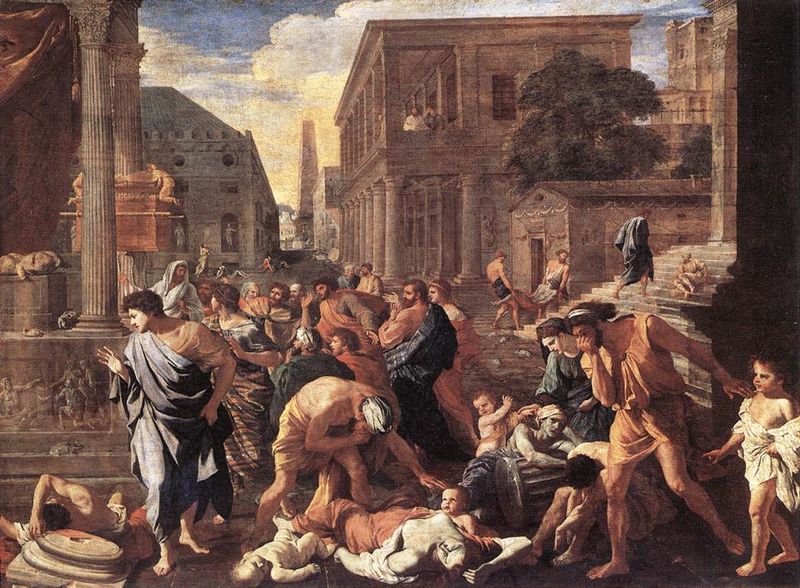
1 Samuel 5:1–5: The Ark in the Temple of Dagon
1 Samuel 5:1–5 explained: the Philistine grain god Dagon falls face-down before the ark at Ashdod, head and hands severed on the threshold. Catholic typology.
Stay Informed
Get new writing on faith, law, and service delivered to your inbox.
No spam. Unsubscribe anytime.