Pope Saint Clement I: The Voice of the First Apostleless Generation
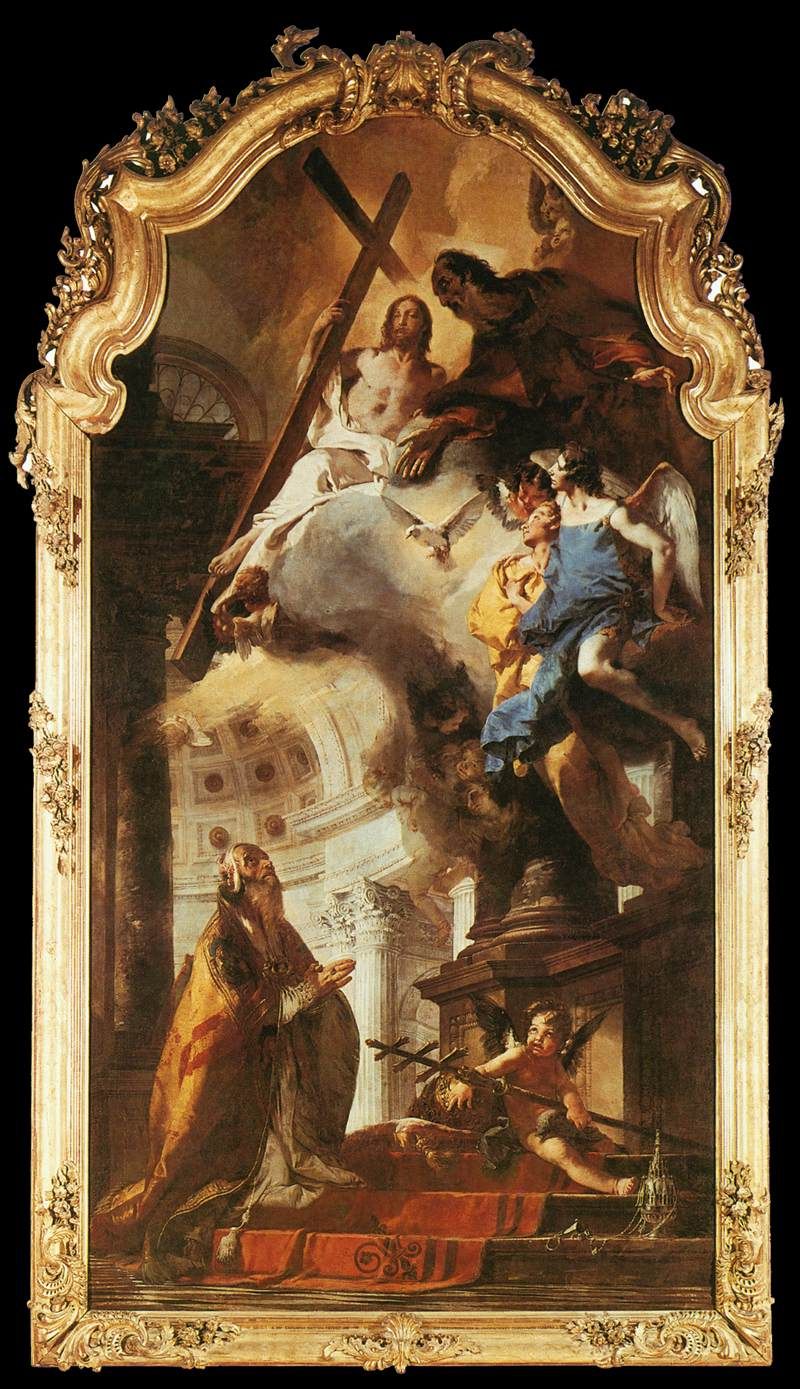
On This Page
The fourth in a series on the popes.
Clement of Rome is the earliest post-apostolic figure whose authentic voice survives in a complete text—and that text, the First Epistle to the Corinthians, is arguably the most important Christian document outside the New Testament for understanding how the apostolic Church transmitted its authority to the next generation.
This is the fourth entry in my series on the popes, following my posts on Saint Peter, Saint Linus, and Saint Anacletus. Those earlier entries develop the historical and theological background—particularly the question of whether the monarchical episcopate existed in first-century Rome—that this post takes for granted and builds upon.
A Man Known Almost Entirely through a Single Letter
Nearly everything we know with confidence about Clement of Rome comes from a single document: his letter to the church in Corinth, written around AD 96. Beyond this letter, his identity is wrapped in layers of tradition, legend, and scholarly conjecture that require careful sorting.
The Philippians 4:3 Identification
Three major patristic authorities identify Clement of Rome with the “Clement” Paul names as a fellow worker in Philippians 4:3. Origen appears to be the earliest to make this connection, in his Commentary on John.1 Eusebius treats it as established fact, writing that “Clement also, who was appointed third bishop of the church at Rome, was, as Paul testifies, his co-laborer and fellow soldier.”2 Jerome repeats the identification without qualification.3 Epiphanius concurs, drawing on the lost Memoirs of Hegesippus.4
Modern scholarship, however, regards this identification as possible but unverifiable, with many scholars leaning toward improbable. The name Clemens was extremely common in the Roman world. The Clement of Philippians appears active in Philippi—a Macedonian city, not Rome. And the chronological stretch is considerable: if Clement was already a mature co-worker of Paul around AD 60–62, he would have been quite elderly by AD 96. Not impossible, but the identification rests on nothing firmer than a shared name. J.N.D. Kelly qualifies the patristic consensus with a careful “perhaps correctly.”5 The Catholic Encyclopedia concedes that the Philippian Clement “was probably a Philippian.”6
The Flavian Family Connection
A more dramatic tradition connects Clement to the Roman consul Titus Flavius Clemens, a cousin of Emperor Domitian executed in AD 95 on charges of “atheism”—a term Cassius Dio links to “drifting into Jewish ways.”7 The consul’s wife, Flavia Domitilla, was banished. This identification was popular in nineteenth-century scholarship but is now decisively rejected. No ancient source makes this connection. Eusebius and Jerome both record Clement dying a natural death around AD 100, which is incompatible with the consul’s execution in 95. As the Catholic Encyclopedia pointedly asks: how could the Roman congregation forget, in the course of only one century and a half, that one of its first bishops had been a consul?8
J.B. Lightfoot proposed an influential alternative: Clement may have been a freedman or dependent of the Flavian household who took the nomen Clemens from his patron family.9 Kirsopp Lake endorsed this as “an attractive and not improbable hypothesis.”10 It remains speculative but plausible. Paul’s letter to the Philippians mentions “those of Caesar’s household” (Phil 4:22), confirming that Christians moved in these circles. The letter-bearers of 1 Clement—Claudius Ephebus and Valerius Bito—bear names characteristic of imperial freedmen.
Jewish or Gentile? What the Letter Reveals
The internal evidence of 1 Clement points most naturally to a Hellenistic Jewish background. Clement’s command of the Septuagint is extraordinary. He quotes it extensively, fluently, and at enormous length, deploying Old Testament narratives with the ease of someone steeped in these texts from childhood. Lightfoot, Funk, and Nestle all concluded from this sustained engagement with the Hebrew Scriptures that Clement was of Jewish origin.11
At the same time, the letter displays sophisticated Greek rhetorical training. Bart Ehrman and Barbara Bowe have identified it as functioning as a homonoia speech—a classical rhetorical form for urging civic concord.12 Clement also employs Stoic philosophical vocabulary, particularly the concept of cosmic harmony (1 Clem. 20), and the Phoenix myth (ch. 25) demonstrates easy familiarity with Greco-Roman natural philosophy. The most economical conclusion is that Clement was a Diaspora Jew thoroughly educated in both the Septuagint and Greek rhetoric—a profile consistent with the world of Philo of Alexandria, though at a less rarefied intellectual level.
Who Came after Peter? The Succession Lists Disagree
As I discussed in my entries on Linus and Anacletus, the ancient sources cannot agree on where Clement falls in the Roman succession—a confusion that tells us something important about the nature of first-century church governance.
Irenaeus provides the earliest and most influential list: Peter and Paul founded the Roman church and committed the office of bishop to Linus, who was followed by Anacletus, and then Clement “in the third place from the apostles.”13 This is the sequence Eusebius follows, and it dominates the Eastern tradition.
Tertullian flatly contradicts Irenaeus. He writes that the Roman church “makes Clement to have been ordained in like manner by Peter”—directly, with no intervening bishops.14
The Apostolic Constitutions split the difference. Linus, consecrated by Paul, was the first bishop; Clement, ordained by Peter, was the second. Anacletus disappears entirely.15 Augustine and Optatus reverse the Irenaean order, placing Clement before Anacletus.16 And Epiphanius preserves the most intriguing tradition of all, drawn from Hegesippus: that Clement may have been ordained by Peter himself but “declined the office,” voluntarily stepping aside until after the deaths of Linus and Cletus.17
The Liber Pontificalis Reconciliation
The sixth-century Liber Pontificalis attempted an ingenious harmonization. Peter ordained two bishops, Linus and Cletus, for the priestly service of the community—effectively auxiliary bishops handling sacramental duties—while Peter himself was free to pray and preach. Simultaneously, Peter “consecrated St. Clement as bishop and entrusted the cathedra and the whole management of the Church to him.”18 This explains how Linus and Cletus precede Clement chronologically while Clement remains Peter’s direct appointee for governance. The solution is creative, but it is transparently anachronistic, reading later institutional categories back into the apostolic period.
What Modern Scholars Actually Think
The deeper issue—one that is critical for this entire series—is whether a strict linear succession of monarchical bishops even existed in first-century Rome. The scholarly consensus, shared by Catholic, Orthodox, and Protestant historians alike, is that it almost certainly did not. Kelly writes that Clement’s own letter “suggests that the monarchical episcopate had not yet emerged there, and it is therefore impossible to form any precise conception of his constitutional role.”19 Eamon Duffy states bluntly that “all the indications are that there was no single bishop” at Rome in the first century.20 Francis Sullivan, himself a Jesuit, agrees that “the available evidence indicates the church of Rome was led by a college of presbyters, rather than a single bishop, for at least several decades of the second century.”21 Peter Lampe, Roberto Eno, and Allen Brent concur.22
The conflicting succession lists likely reflect different memories of prominent leaders within a collegial body, not successive monarchs. Clement was probably the most prominent member—perhaps the external spokesman or correspondent—of Rome’s presbytery, which is precisely what 1 Clement itself suggests: the letter speaks in the corporate “we” of the Roman church, never naming its author.
The Annuario Pontificio lists Clement as the fourth bishop of Rome (counting Peter as first), with his pontificate beginning in AD 92, endorsing the Irenaean order and Eusebian chronology.23 The commonly accepted dates are c. 92–99 or c. 92–101.
I want to be transparent with my readers about how I approach this question. I am Catholic. I believe in the Petrine office and its development under the guidance of the Holy Spirit. But intellectual honesty demands acknowledging that the office as we know it today developed over time.
The office as we know it today developed over time.
That development does not invalidate the papacy—but pretending the development never happened does a disservice to the truth and to the faith. The evidence points to a gradual crystallization of the monarchical episcopate, not a system that arrived fully formed with Peter. That the Spirit guided this process is a theological conviction; that the process was a process is a historical observation.
The Letter to Corinth: Clement’s Masterwork
Crisis, Date, and Occasion
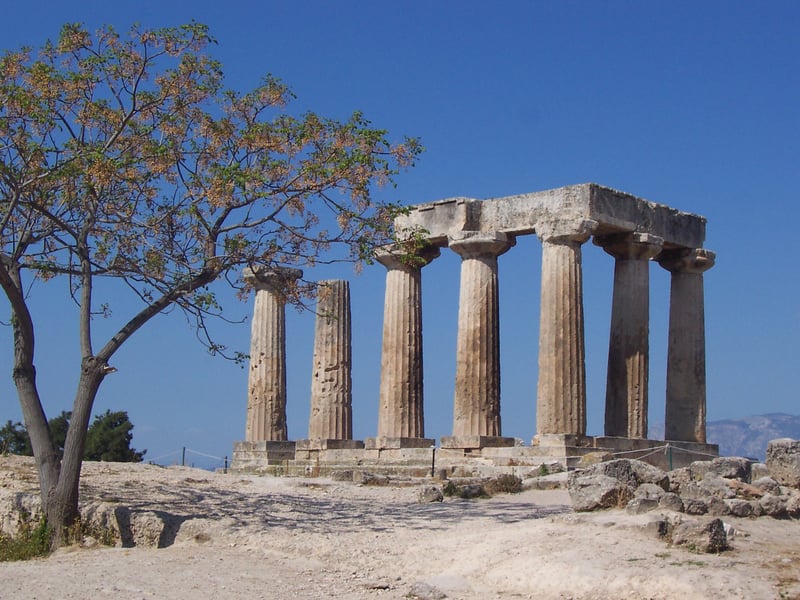
Around AD 96—most likely in the final months of Domitian’s reign or the early months under Nerva—the Roman church dispatched a lengthy letter to Corinth. The opening acknowledges delay caused by “the sudden and repeated calamities and misfortunes which have befallen us” (1 Clem. 1.1), generally interpreted as a reference to disruption under Domitian.
A minority position, advanced by T.J. Herron, argues for a date in the late 60s, noting that Clement describes the Temple cult in the present tense (chs. 40–41) and calls Peter and Paul examples “of our generation” (5.1).24 However, the majority of scholars—Lightfoot, Harnack, Ehrman, Andrew Gregory—retain the conventional date of c. 96, pointing to indicators that a second or third ecclesiastical generation has passed (44.2–3; 47.6; 63.3).25
The crisis was ecclesial insurrection. Younger or upstart members of the Corinthian church had deposed legitimately appointed presbyters from their offices—not for moral failings but out of factional jealousy. Clement calls it “disgraceful…that the most steadfast and ancient church of the Corinthians should, on account of one or two persons, engage in sedition against its presbyters” (47.6). As Clement puts it, “the mean rose up against the honourable…the young against the elder” (3.3).
The letter is sent from “the Church of God which sojourns in Rome” to “the Church of God which sojourns in Corinth.” Clement never names himself. Every ancient witness—Dionysius of Corinth (c. 170), Irenaeus, Clement of Alexandria, Eusebius—identifies him as the author, but the letter itself speaks only in the corporate first-person plural.
Structure and Argumentation
The letter runs to sixty-five chapters and is carefully constructed. After praising Corinth’s former virtues (chs. 1–2) and diagnosing jealousy as the root sin (ch. 3), Clement marshals a massive series of Old Testament examples: Cain and Abel, Jacob and Esau, Joseph, Moses, David—all victims of envy (chs. 4–6). He pivots to the supreme recent examples: Peter, “who through unrighteous envy endured not one or two but numerous labours, and when he had at length suffered martyrdom, departed to the place of glory due to him” (5.4), and Paul, who “taught righteousness to the whole world” and “suffered martyrdom under the prefects” (5.5–7).
The theological core emerges in chapters 40–44. Here Clement constructs what scholars recognize as the first explicit argument for apostolic succession. God sent Christ; Christ sent the apostles; the apostles “appointed the first-fruits of their labors…to be bishops and deacons” (42.4); and they made provision that “if they should fall asleep, other approved men should succeed to their ministry” (44.2). Therefore deposing these presbyters is “no small sin” (44.4). The argument is reinforced by an extended meditation on cosmic order (ch. 20)—the harmony of the heavens, the obedience of the seasons, the regularity of the tides—all functioning as a homonoia argument that the church, like creation, must maintain its divinely appointed order. This chain of appointment would become the foundational grammar of Catholic and Orthodox ecclesiology, and it is stated here for the first time in Christian literature.
This chain of appointment would become the foundational grammar of Catholic and Orthodox ecclesiology.
Bishop and Presbyter: Still One Office
One of the letter’s most historically significant features is its interchangeable use of episkopos (bishop/overseer) and presbyteros (elder/presbyter). In chapter 42, the apostles appoint “bishops and deacons.” In chapter 44, these same officers are called “presbyters.” The deposed officials are removed “from the episcopate” (44.4) but are also “presbyters” against whom the Corinthians “engage in sedition” (47.6). This two-tier system—presbyter-bishops plus deacons—matches the pattern in Acts 20:17–28, Titus 1:5–7, and 1 Peter 5:1–2.
This stands in stark contrast to the letters of Ignatius of Antioch, written perhaps fifteen to twenty years later, which insist on a three-tier structure: one bishop, a council of presbyters, and deacons.26 Yet critically, Ignatius’s letter to Rome makes no mention of a single bishop there—a silence that Francis Sullivan, Peter Lampe, and others take as evidence that Rome was among the last major churches to adopt the monarchical episcopate.27 The Shepherd of Hermas, written around the 140s, similarly presents Rome with collegial leadership.
The Primacy Question: Two Readings of the Same Letter
Catholic scholars and apologists cite 1 Clement as the earliest exercise of Roman primacy after the apostolic age. The case rests on several features. Rome intervenes in the internal affairs of Corinth—a church Paul founded, not Peter—without explicit invitation. The letter’s tone is commanding: “Accept our counsel and you will have nothing to regret” (58.2); “If certain persons should be disobedient unto the words spoken by [God] through us, let them understand that they will entangle themselves in no slight transgression and danger” (59.1); the Corinthians must be “obedient to the things written by us through the Holy Spirit” (63.2). Pope Benedict XVI described this as “a first exercise of the Roman primacy after St. Peter’s death.”28
Perhaps most strikingly, this intervention occurred while—according to Irenaeus and the Johannine tradition—the Apostle John was still alive in Ephesus, geographically far closer to Corinth than Rome. If the Corinthians wanted apostolic guidance, they could have looked to John. Instead, Rome wrote. Or Corinth asked Rome to write. Either way, Rome’s voice carried authority.
Protestant and Orthodox scholars read the same evidence differently. The letter speaks in the name of the entire Roman community, not in Clement’s personal authority—suggesting fraternal concern, not papal jurisdiction. Corinth may well have appealed to Rome for help (1.1 can be read this way). Clement directs the rebels to “submit yourselves to the presbyters” (57.1)—Corinth’s own presbyters, not Rome’s. Klaus Schatz, himself a Catholic historian, warns that “it would be going too far to deduce from this that the Roman church had formal authority or precedence over other churches, as was too hastily done by Roman Catholics in the past.”29 John Meyendorff interprets it as reflecting Rome’s “priority”—a matter of prestige—rather than jurisdictional “primacy.”30
The balanced assessment is that 1 Clement demonstrates Rome exercised significant moral and spiritual authority in the late first-century Church, and that other churches respected its voice. Whether this constitutes primacy in the later Catholic sense or reflects Rome’s prestige as the apostolic capital remains one of the central disputed questions in historical ecclesiology. The letter is genuinely compatible with both readings—which is precisely why it has been debated for centuries and will continue to be. I find myself persuaded that something more than mere fraternal concern is at work in 1 Clement—the tone is too authoritative, the claims too bold—but I also recognize that Clement’s letter contains an early, seminal form of what Vatican I would later define more precisely, and tracing that development requires theology, not just history.
“Among Us”: The Witness to Peter and Paul
Chapters 5–6 provide what scholars regard as among the earliest extra-biblical attestations of Peter’s and Paul’s martyrdoms in connection with Rome. After rehearsing the sufferings of both apostles, Clement writes: “To these men of holy lives there was gathered a great multitude of the elect, who, having suffered through envy many indignities and tortures, became a most excellent example among us” (6.1).
Rome is never explicitly named. The inference comes from context: the letter is written from Rome, and “among us” (ἐν ἡμῖν) most naturally means “in our community.” Oscar Cullmann, the major twentieth-century Protestant scholar of Peter, accepted this as signaling both the place (Rome) and the event (Nero’s persecution of AD 64).31 The “great multitude of the elect” is generally identified with the victims Tacitus describes in Annals 15.44. Writing approximately thirty years after the events, from Rome itself, to a community that could verify the claims, Clement’s testimony carries substantial historical weight—though it remains indirect rather than explicit.
Theological Riches: Faith, the Phoenix, and the Earliest Liturgical Prayer
The letter’s theological content is richer than its reputation for institutional concerns might suggest.
On justification, Clement presents what appears to be a synthesis of Paul and James. Abraham “wrought righteousness and truth through faith” (31.2), yet “we are not justified by ourselves…but by that faith through which, from the beginning, Almighty God has justified all men” (32.4). He immediately adds: “What shall we do, then? Shall we become slothful in well-doing? God forbid!” (33.1). Most scholars see Clement harmonizing the two apostolic perspectives without the sharp distinctions of later Reformation debate—a harmonization that, to my mind, reflects the natural reading of the apostolic witness before the sixteenth century fractured it into competing proof-texts.
Trinitarian formulations appear in nascent form. “Do we not have one God, and one Christ, and one Spirit of grace poured out upon us?” (46.6). “As God lives, and as the Lord Jesus Christ lives, and the Holy Spirit” (58.2)—an oath invoking all three divine persons. His Christology is functional rather than speculative but notably high: Christ is “the Sceptre of the majesty of God” (16.2), the “High Priest” (36.1; 61.3; 64.1), and “the radiance of [God’s] majesty” (36.1–2), echoing Hebrews 1:3.
The Phoenix passage (ch. 25) is one of the most fascinating in early Christian literature. Clement presents the mythical bird’s death and regeneration as a factual natural phenomenon and “an emblem of our resurrection.” He almost certainly believed it was real—as did Herodotus, Pliny, and Tacitus. The passage reveals a writer comfortable weaving pagan natural philosophy into Christian argument without apology. It reminds me that the early Christians were not working within the neat epistemological boundaries we take for granted. The line between fact and myth was drawn differently then, and Clement’s willingness to find God’s handiwork in a pagan legend is both charming and theologically instructive.
The liturgical prayer of chapters 59–61 is one of the earliest Christian prayers outside the New Testament. It shows strong parallels to Jewish synagogue liturgy (especially the Amidah), uses extensive Septuagintal language, and includes a remarkable prayer for political rulers—asking God to “give them health, peace, concord, stability, that they may exercise the authority given to them without offense” (60.4–61.2). This is one of the earliest known Christian prayers for the state, and it demonstrates a community that, even under the shadow of Domitian, affirmed the legitimacy of civil authority in principle while reserving ultimate allegiance for God.
Manuscript Tradition and Near-Canonical Status
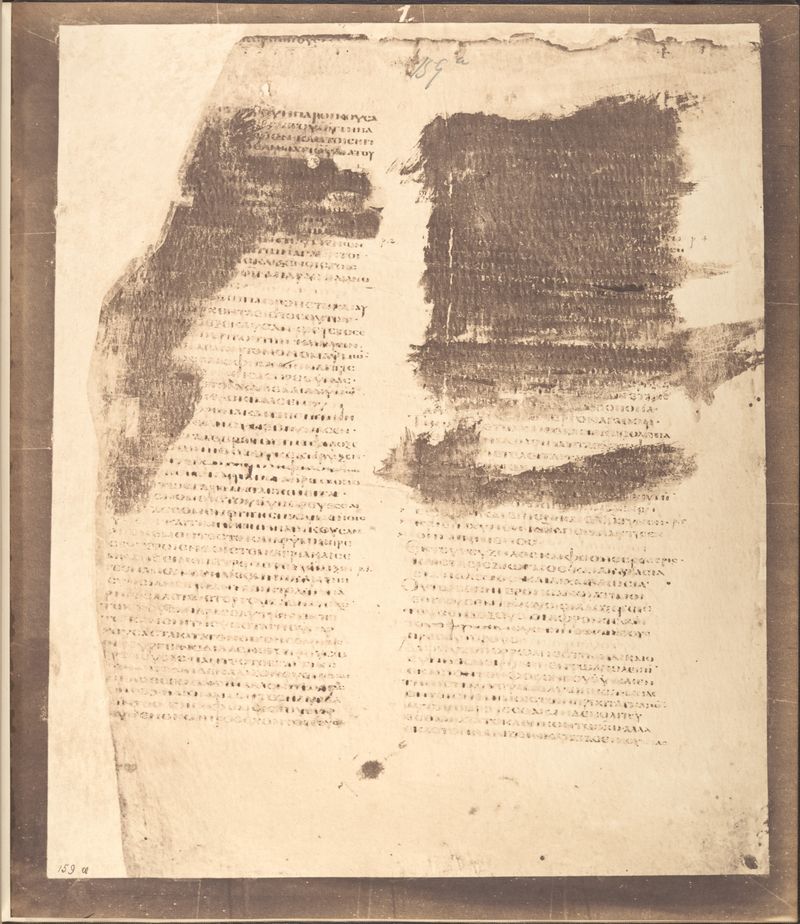
The letter’s remarkable reception history confirms its authority. Codex Alexandrinus, one of the great fifth-century biblical manuscripts, includes 1 Clement (and 2 Clement) bound after the New Testament—testimony to its near-canonical status.32 The earliest complete Greek text comes from Codex Hierosolymitanus, a minuscule written by Leo the Notary in 1056 and discovered by Philotheos Bryennios in Constantinople in 1873, who published its two Clementine epistles in 1875. An extremely ancient Latin translation, probably from the late second or early third century, is preserved in a single eleventh-century manuscript from Florennes, published by Germain Morin in 1894. Syriac and Coptic versions also exist, the latter titling the work “The Epistle of the Romans to the Corinthians.”
Dionysius of Corinth, writing around 170, confirms that 1 Clement was still being read publicly in worship at Corinth nearly eighty years after it was sent.33 Eusebius reports that the letter “has been publicly used in a great many churches both in former times and in our own.”34 Clement of Alexandria apparently treated it as Scripture, calling its author “the apostle Clement.”35 Canon 85 of the Canons of the Apostles lists it as canonical.
Despite this extraordinary reception, the letter was ultimately excluded from the twenty-seven-book New Testament canon, likely because of Clement’s sub-apostolic rather than apostolic status. This is one of those details worth pausing on: the early Church recognized that there was a difference between an apostle and a man who had merely known the apostles, even if his writings were profoundly authoritative.
The So-Called “Second Epistle”
2 Clement is an anonymous mid-second-century homily—likely the oldest surviving complete Christian sermon—that has nothing to do with Clement of Rome beyond its accidental proximity in manuscript transmission. Eusebius already noted the problem: “there is said to be a second epistle of Clement. But we do not know that this is recognized like the former, for we do not find that the ancients have made any use of it.”36
The scholarly consensus dates it to approximately c. 140–160.37 Adolf von Harnack and Edgar Goodspeed argued that 2 Clement may be the letter from Pope Soter that Dionysius of Corinth mentions being read alongside 1 Clement. Karl Donfried rejected this letter-hypothesis altogether, proposing instead that 2 Clement is a catechetical and hortatory address to those preparing for baptism.38 The homily’s theology is notable for its strikingly high Christology (“we must think about Jesus Christ as about God,” 2 Clem. 1.1), its urgent calls to repentance, and its use of what appears to be an apocryphal gospel. Its association with Clement arose because it was transmitted alongside 1 Clement in both Codex Alexandrinus and Codex Hierosolymitanus, and because the Liber Pontificalis states that Clement “wrote two epistles called catholic.”
Theological Romances and Medieval Forgeries
The Pseudo-Clementine Literature
The Clementine Homilies (twenty books in Greek) and the Clementine Recognitions (ten books, preserved in Rufinus’s Latin translation of c. 406) are theological romances from the third to fourth centuries that use Clement as a literary device.39 In these works, a young Roman philosopher named Clement encounters Barnabas, travels east to meet the Apostle Peter, and becomes Peter’s companion as Peter pursues and debates Simon Magus from city to city. The Recognitions title derives from a subplot in which Clement’s family members are dramatically recognized and reunited.
Both works are understood as independent recensions of a lost earlier source—the so-called Periodoi Petrou (“Circuits of Peter”)—a consensus established by Hort, Harnack, and Hans Waitz and now almost universally accepted.40 Their theological tendencies are distinctively Jewish-Christian: adherence to the Mosaic Law, a “True Prophet” Christology, and—most provocatively—what Ferdinand Christian Baur identified as a veiled polemic against Paul.41 In Peter’s debates with Simon Magus, some of Simon’s claims (e.g., having seen the Lord only in a vision) are transparently Pauline claims. The majority of scholars accept Baur’s identification, though the authors never attack Paul by name, suggesting his authority was too established for direct assault.
These works tell us virtually nothing reliable about the historical Clement. They are Tendenz-Romane—novels with a theological purpose—not historical documents.
The Pseudo-Isidorian Decretals
The ninth-century False Decretals (compiled c. 847–852, probably in the province of Reims) include sixty apocryphal letters attributed to early popes from Clement I through Miltiades, of which fifty-eight are forgeries.42 Spurious letters attributed to Clement were placed at the very beginning of the collection, lending the apparatus an air of apostolic antiquity. The forgeries were progressively exposed by Nicholas of Cusa, Lorenzo Valla (whose 1440 demolition of the Donation of Constantine was a landmark in philological criticism), and David Blondel, who published the decisive proof in 1628.
A Pontificate in the Shadow of Domitian
The Liber Pontificalis Attributions
The Liber Pontificalis credits Clement with dividing Rome into seven regions, each assigned a notary to record the acts of martyrs, and with ordaining ten priests, two deacons, and fifteen bishops. These attributions are highly unreliable. The Liber Pontificalis was compiled centuries after the events and routinely projects later institutional structures back onto early popes. The seven-region division is more credibly attributed to Pope Fabian (236–250). The ordination statistics are formulaic entries that appear for nearly every early pope and carry no historical weight.43
The Political World of the Roman Church
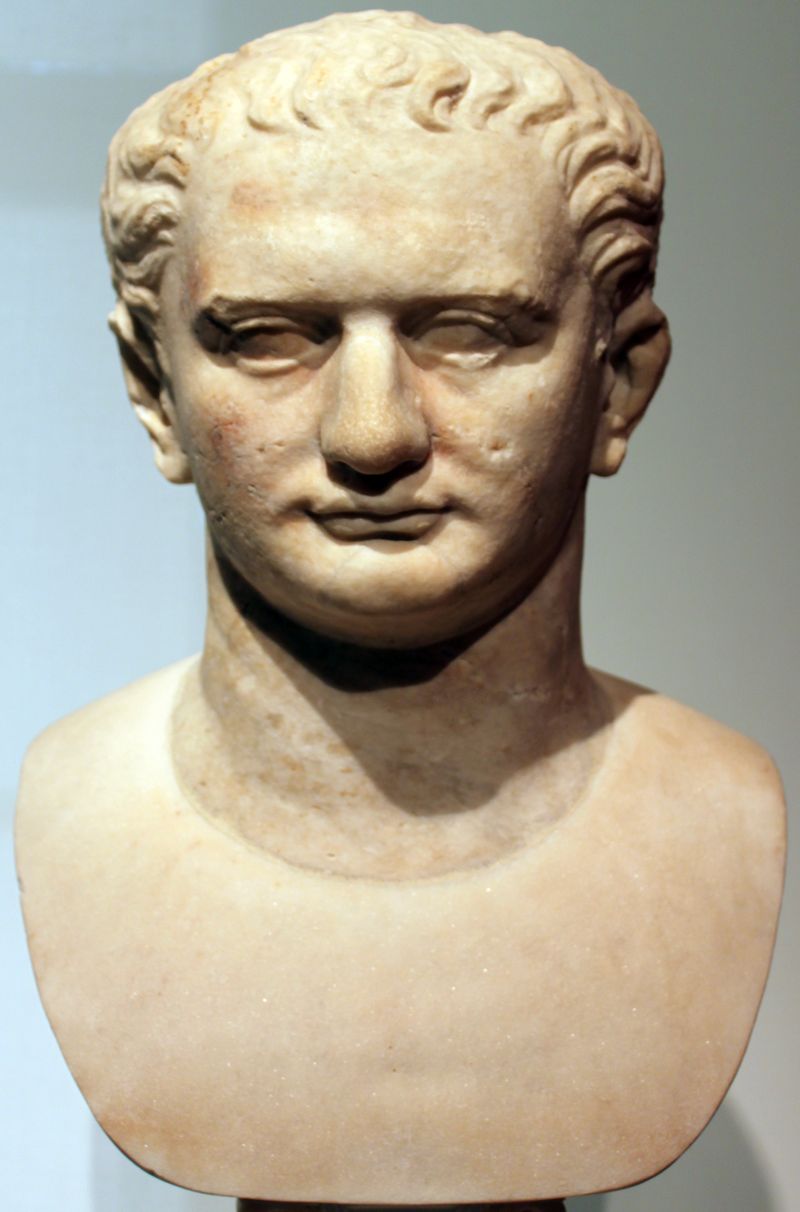
Clement’s letter was composed during a fraught political moment. Emperor Domitian (81–96) has traditionally been portrayed as a great persecutor of Christians, but modern scholarship is far more skeptical. Brian Jones concluded that “no convincing evidence exists for a Domitianic persecution of the Christians,” arguing that Domitian’s negative reputation was largely constructed by hostile senatorial writers after his assassination.44
The most tantalizing data point is the execution of the consul Titus Flavius Clemens and the banishment of Flavia Domitilla in AD 95 for “atheism” linked to “Jewish ways.”45 Whether “atheism” here means Christianity, Judaism, or sympathizing with Jewish practices remains debated. L.W. Barnard argued that atheism was a charge “more commonly levelled against Christians than against Jewish sympathizers.”46 E. Mary Smallwood countered that the couple were more likely God-fearers on the fringe of Judaism. The question remains unresolved.
The opening of 1 Clement—the “sudden and repeated misfortunes” that delayed the letter—is most commonly read as an allusion to disruptions in the Roman community near the end of Domitian’s reign. After Domitian’s assassination in September 96, Nerva relaxed enforcement of the fiscus Judaicus and reversed some of his predecessor’s policies, likely providing relief to the Christian community.
By Clement’s time, the Roman church was substantial enough to write authoritatively to Corinth, possessed deep familiarity with multiple Pauline epistles (Romans, 1 Corinthians, Hebrews), and was organized around a plurality of presbyter-bishops and deacons. Estimates of the Roman Christian population in the late first century range from a few hundred to a few thousand in a city of roughly one million—necessarily speculative, but consistent with the evidence of multiple house churches scattered across the city.47
The Anchor in the Black Sea: Martyrdom as Legend
According to later tradition, Clement was exiled by Emperor Trajan to the Crimea (ancient Chersonesus), sentenced to hard labor in quarries, and martyred by being tied to an anchor and thrown into the Black Sea. The narrative includes miraculous elements: a spring produced by prayer, mass conversions among the prisoners, and an annual recession of the sea revealing a divinely built shrine.
The principal source is the Passio Sancti Clementis, composed no earlier than the fourth century, more probably the fifth.48 The critical point is that the earliest and most reliable patristic witnesses are silent. Irenaeus (c. 180), Eusebius (c. 325), and Jerome (c. 392) all discuss Clement without mentioning martyrdom. Irenaeus names Telesphorus, not Clement, as the first martyr-bishop of Rome.49 The oldest preserved reference to Clement as a martyr appears in a letter of Pope Zosimus (417–418). Pope Damasus I (366–384), who composed epitaphs for approximately sixty Roman martyrs, composed none for Clement.
Kelly states plainly that “early sources indicate that he died a natural death, but later tradition holds that he was martyred.”50 The martyrdom almost certainly arose from later confusion with the executed consul Titus Flavius Clemens, combined with the hagiographic impulse of the post-Constantinian era to retroactively honor early Church leaders as martyrs.
The revised Roman Martyrology (2004) preserves the tradition that Clement was “martyred about the year 100,” but this reflects liturgical conservatism rather than historical judgment. The most probable conclusion is that Clement died a natural death, possibly in exile, sometime around AD 99–101.
I say this not to diminish Clement’s sanctity but because the truth matters more than hagiographic embellishment. The Church does not need to manufacture martyrdoms for a man whose authentic letter is itself an enduring monument to faith. His sanctity is established by his witness, not by a fifth-century legend.
His sanctity is established by his witness, not by a fifth-century legend.
Cyril, Methodius, and the Relics
In 860–861, Saints Constantine-Cyril and Methodius, during their mission to the Khazars, reportedly discovered relics believed to be Clement’s in Chersonesus. The brothers carried the relics through their subsequent travels—to Constantinople, then Moravia, and finally to Rome, where they were solemnly deposited in the Basilica of San Clemente in 868 during the pontificate of Adrian II.51 The gift was diplomatically significant, smoothing relations as Rome and Constantinople competed for jurisdiction over the Slavic territories. Since the underlying martyrdom tradition is itself legendary, the identification of these relics is correspondingly uncertain. Cyril himself died in Rome on February 14, 869, and was buried at San Clemente.
The Basilica of San Clemente: An Archaeological Palimpsest
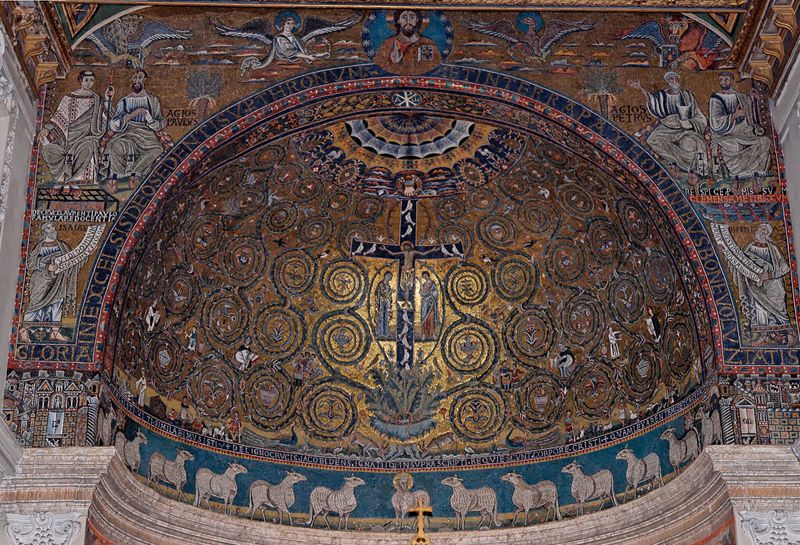
The present Basilica of San Clemente in Rome, near the Colosseum, is one of the most remarkable archaeological sites in the Christian world. The current basilica (built c. 1100–1130 under Paschal II) sits atop a fourth-century basilica (attested by Jerome in 392), which in turn was built over first-century Roman structures including a large building and a Flavian-era insula (apartment block). Around AD 200, a mithraeum was installed in the courtyard of the insula—and continued to function alongside the Christian basilica above until Theodosius I’s anti-pagan decrees of 391–392 outlawed public and private pagan worship.52
The titulus Clementis is first attested from the pontificate of Siricius (384–399). Whether “Clementis” refers to Pope Clement I himself or to a later benefactor named Clemens is uncertain; modern archaeologists caution against the earlier assumption that the site was necessarily the pope’s own residence. The lower levels were excavated beginning in 1857 by Father Joseph Mullooly, O.P., with further work by the Dominicans, who received the property in 1667; the Irish Dominicans assumed administration in 1677 and have managed the basilica ever since.
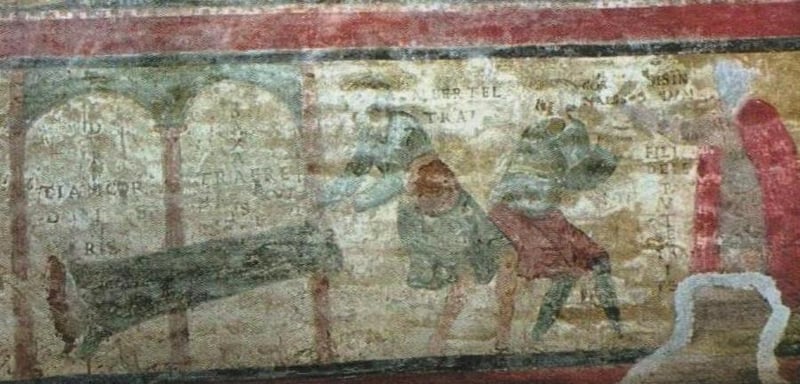
Clement’s feast day is November 23 in the Roman calendar. His iconographic attribute is the anchor, derived from his martyrdom legend. He is patron of mariners, stonecutters, and marble workers. His name appears in the Roman Canon (Eucharistic Prayer I) of the Mass, in the list of martyrs: “Linus, Cletus, Clement, Sixtus, Cornelius, Cyprian…”
Between the Apostles and the Age of Bishops
An Apostolic Father Bridging Two Worlds
Clement belongs to the generation scholars call the Apostolic Fathers—a term first used by William Wake in 1693, building on Cotelier’s 1672 collection, to designate early Christian writers who had personal contact with the apostles or were one generation removed.53 Alongside Ignatius of Antioch, Polycarp of Smyrna, Hermas, and the anonymous authors of the Didache, the Epistle of Barnabas, and the Letter to Diognetus, Clement represents the bridge generation between the apostolic Church and the developed Christianity of the mid-second century. Irenaeus wrote that Clement “had seen the blessed Apostles, and had been conversant with them, might be said to have the preaching of the apostles still echoing in his ears and their traditions before his eyes.”54
Three Witnesses, Three Models of Governance
Comparing Clement with his near-contemporaries reveals the diversity of early Church governance. Clement (c. 96) uses episkopos and presbyteros interchangeably, revealing a collegial model. Ignatius (c. 107–115) insists on the sharp threefold distinction of bishop, presbyter, and deacon—yet makes no mention of a bishop in Rome. Polycarp (c. 110–155), writing to the Philippians, mentions only “presbyters and deacons” and identifies himself simply as “Polycarp and those who are with him as presbyters.”55
The pattern is clear: the monarchical episcopate was not yet universal in the early second century. Ignatius represents the most developed ecclesiology, but his model was apparently not standard even in his own time. By the mid-second century, as attested by Irenaeus, the monarchical episcopate had become widespread—but its development was gradual and driven by pastoral imperatives: combating heresy, maintaining unity during persecution, and preserving apostolic teaching in an increasingly complex Church.
The Ecumenical Clement
Both Catholic and Orthodox churches venerate Clement as a saint, and 1 Clement stands at the center of their ongoing dialogue about primacy and synodality. Orthodox theologians generally interpret the letter as evidence of fraternal concern from a prestigious sister church, not jurisdictional authority. John Meyendorff argued for Rome’s “honorary primacy” based on numerical importance, geographical centrality, and the orthodoxy of its bishops—a primus inter pares, not a supreme jurisdiction.56 The 2007 Ravenna Document of the Joint International Commission acknowledged Rome’s role as the Church that “presides in love” (echoing Ignatius’s letter to Rome) while leaving the nature of that presiding carefully undefined.57
What Clement Tells Us about a Church in Transition
Clement of Rome matters not because of what we know about his life—which is remarkably little—but because of what his surviving letter reveals about a Church in the act of becoming. In the decades immediately following the deaths of the apostles, the Christian communities faced a question they had never before confronted: how do you maintain apostolic authority when the apostles are gone?
Clement’s answer—a chain of appointment from God through Christ through the apostles to their legitimately ordained successors—became the foundational grammar of Catholic and Orthodox ecclesiology. Yet the very letter that articulates this doctrine also reveals that the institutional structures it would later support—the monarchical episcopate, the papacy as later understood—had not yet crystallized. The presbyter-bishops of Clement’s Rome governed collectively; the sharp Ignatian distinction between bishop and presbyter lay perhaps a generation in the future.
This paradox—a letter that both grounds and complicates the Catholic claim—is what makes Clement so fascinating. He is not a proto-pope issuing decrees, but neither is he merely a fraternal correspondent offering suggestions.
He is not a proto-pope issuing decrees, but neither is he merely a fraternal correspondent offering suggestions.
He commands and he cajoles; he speaks in the name of his community and claims the authority of the Holy Spirit. The historical Clement inhabits the genuinely ambiguous space between the apostolic age and the age of bishops, and his letter, read honestly, preserves that ambiguity rather than resolving it.
For readers willing to sit with that tension rather than flatten it in either direction, 1 Clement remains one of the most rewarding documents in the entire Christian tradition. I hope you will read it for yourself. It is available in multiple English translations. And it will bring you as close as you can come to hearing the voice of a man who had heard the apostles speak.
Next in the series: Pope Saint Evaristus (coming soon).
How Clement Became a Saint
Of the thirty-one popes who follow Peter across this series, only six kept a place on the Church’s universal calendar when the great liturgical pruning of 1969 arrived. Clement is the first of them, and the reason he survived says as much about how the Church makes saints as any decree could.
Like every bishop of Rome in the first millennium, Clement was never canonized. No process existed that could have canonized him: the first solemn papal canonization in history came only in 993, and for the nine centuries before it, saints were made by cultus—the sustained public veneration of a community at a tomb, a shrine, an anniversary. Clement’s cult had an address. The basilica of San Clemente rose over the ancient titulus Clementis that carried his name, his feast stood in the Roman books from antiquity, and the Canon of the Mass fixed him permanently in the sequence Lini, Cleti, Clementis. When Urban VIII finally imposed juridical order on saint-making in the 1630s, forbidding any public cult without papal approval, his legislation exempted every veneration already a century old—and Clement’s was by then older than a millennium. He is, in the technical language, a pre-congregational saint; the fuller story of that system is told in how the Catholic Church makes saints.58
The real test came in living memory. The Second Vatican Council ordered that the accounts of the saints “accord with the facts of history” and that saints of merely local importance be left to local calendars, and the resulting 1969 reform of the General Roman Calendar removed the feasts of most of the early popes—including, as later entries in this series will show, nearly all of Clement’s successors for two centuries. Clement presented the commission with exactly the mixed file this essay has described: a martyrdom that is late legend attached to a man whose historical reality, ancient cult, and enduring significance are beyond dispute—the author of the earliest datable Christian document outside the New Testament. The reform resolved the tension in his favor. His feast remained on the universal calendar as an optional memorial on November 23, a day he now shares with the abbot Saint Columban.59 The current Martyrologium Romanum likewise keeps him under November 23 and, with the liturgical conservatism noted earlier, still records the tradition that he was “martyred about the year 100.”60
So Clement stands today on the highest of the Church’s three levels of veneration: not merely a saint whom Catholics may invoke, but one the universal Church liturgically does invoke—in any church of the Roman Rite, anywhere on earth, each November 23, and at every altar where the Roman Canon is prayed.61 Private prayer to him, as to any canonized saint, needs no calendar at all. The man who wrote to Corinth that the whole Church forms one ordered body has been held inside that body’s public prayer for nineteen centuries without interruption.
Further Reading
For readers who want to explore further:
- J.B. Lightfoot, The Apostolic Fathers, Part I: S. Clement of Rome, 2 vols. (London: Macmillan, 1889–90)—still the foundational critical edition and commentary
- J.N.D. Kelly, The Oxford Dictionary of Popes (Oxford University Press, 1986)—the single most reliable quick reference for early papal history
- Eamon Duffy, Saints and Sinners: A History of the Popes, 4th ed. (Yale University Press, 2014)—the most readable honest survey
- Klaus Schatz, S.J., Papal Primacy: From Its Origins to the Present (Liturgical Press, 1996)—the best Catholic treatment of how the papacy developed
- Francis A. Sullivan, S.J., From Apostles to Bishops (Newman Press, 2001)—the most rigorous Catholic engagement with the development of the episcopate
- Barbara E. Bowe, A Church in Crisis: Ecclesiology and Paraenesis in Clement of Rome (Fortress Press, 1988)—the best focused monograph on 1 Clement
- Bart D. Ehrman, The Apostolic Fathers, 2 vols., Loeb Classical Library (Harvard University Press, 2003)—the most accessible Greek-English edition
- Michael W. Holmes, The Apostolic Fathers, 3rd ed. (Baker Academic, 2007)—the most up-to-date English translation with facing Greek text
- Peter Lampe, From Paul to Valentinus: Christians at Rome in the First Two Centuries (Fortress Press, 2003)—the definitive scholarly portrait of early Roman Christianity
- Oscar Cullmann, Peter: Disciple, Apostle, Martyr, rev. ed. (Westminster Press, 1962)—the classic Protestant assessment of Peter’s Roman martyrdom
- John Meyendorff et al., The Primacy of Peter (SVS Press, 1973)—the standard Orthodox reading
This post is part of an ongoing series on the popes. You can read about Saint Peter, the first pope, Saint Linus, the second pope, and Saint Anacletus, the third pope in the series.
Frequently Asked Questions
Who was Pope Saint Clement I?
Clement of Rome was the fourth Bishop of Rome (counting Peter as first), serving roughly c. AD 92–99. He is best known as the author of the First Epistle to the Corinthians (1 Clement), written around AD 96—the earliest Christian document outside the New Testament whose author can be identified. Nearly everything we know about him with confidence comes from that single letter; the rest is tradition, legend, and scholarly conjecture.
What is 1 Clement and why does it matter?
1 Clement is a letter written from the Roman church to the Corinthian church around AD 96, responding to a factional crisis in which younger members had deposed legitimately appointed presbyters. It is important for three reasons: it contains the first explicit argument for apostolic succession in Christian literature; it is the earliest instance of the Roman church addressing another community with recognizable authority; and it shows that in the late first century, the Roman church still used “bishop” and “presbyter” interchangeably, indicating that the monarchical episcopate had not yet emerged there.
Was Clement really the fourth pope?
The ancient sources disagree. Irenaeus places him third after Linus and Anacletus; Tertullian has him ordained directly by Peter; the Apostolic Constitutions make him second; Epiphanius preserves a tradition that he declined the office and stepped aside. The Annuario Pontificio currently follows the Irenaean sequence, listing Clement as the fourth pope. Most modern scholars believe the monarchical episcopate did not exist in first-century Rome at all, which means Clement was almost certainly one of several presbyter-bishops—likely the most prominent—rather than a pope in the later sense.
Does 1 Clement prove the Roman papacy existed in the first century?
It depends on what you mean by “prove.” The letter demonstrates that Rome exercised significant moral and spiritual authority by the late first century, and that its voice was respected in other churches. Its commanding tone and claim to speak “through the Holy Spirit” suggest something more than fraternal concern. But the letter speaks in the corporate “we” of the Roman church rather than in Clement’s personal authority, and it never names its author. Catholic, Orthodox, and Protestant scholars read the same evidence differently. The letter is genuinely compatible with multiple interpretations, which is why the debate has lasted for centuries.
Was Clement martyred?
Almost certainly not, despite the popular tradition. The earliest and most reliable sources (Irenaeus, Eusebius, Jerome) all record Clement dying a natural death. The famous story of his being tied to an anchor and thrown into the Black Sea comes from the Passio Sancti Clementis, composed in the fourth or fifth century—centuries after the events. Kelly’s Oxford Dictionary of Popes states plainly that “early sources indicate that he died a natural death, but later tradition holds that he was martyred.” The martyrdom legend likely arose from confusion with the executed consul Titus Flavius Clemens and from the hagiographic impulse of the post-Constantinian era.
When is the feast day of Saint Clement I?
November 23 in the Roman calendar. His iconographic attribute is the anchor, derived from the martyrdom legend. He is venerated as patron of mariners, stonecutters, and marble workers. His name also appears in the Roman Canon (Eucharistic Prayer I) of the Mass, in the sequence Lini, Cleti, Clementis—a form of liturgical memory more permanent than any feast day.
Can Catholics pray to Pope Saint Clement I?
Yes—and the Church does so publicly. Clement is a canonized saint by immemorial cult, never formally processed because no canonization procedure existed in his era, and he is one of only seven popes of the Church’s first three centuries still on the General Roman Calendar, with an optional memorial each November 23. His intercession is also asked at every Mass offered with the Roman Canon, where his name follows Linus and Cletus. Private prayer to him is open to all the faithful.
Footnotes
1. Origen, Commentary on John 6.36 (c. 230s).
2. Eusebius, Church History III.4.9–10 (c. 325). Translation from Nicene and Post-Nicene Fathers, 2nd series.
3. Jerome, De Viris Illustribus 15 (c. 392).
4. Epiphanius, Panarion XXVII.6 (c. 375).
5. J.N.D. Kelly, The Oxford Dictionary of Popes (Oxford: Oxford University Press, 1986), s.v. “Clement I.”
6. John Chapman, “Pope St. Clement I,” in The Catholic Encyclopedia, vol. 4 (New York: Robert Appleton Company, 1908). Available at NewAdvent.org.
7. Cassius Dio, Roman History 67.14.
8. Chapman, “Pope St. Clement I.”
9. J.B. Lightfoot, The Apostolic Fathers, Part I: S. Clement of Rome, 2 vols. (London: Macmillan, 1889–90), 1:61–62.
10. Kirsopp Lake, introduction to The Apostolic Fathers, Loeb Classical Library (Cambridge, MA: Harvard University Press, 1912), 1:4.
11. Lightfoot, Apostolic Fathers I.1:59.
12. Barbara E. Bowe, A Church in Crisis: Ecclesiology and Paraenesis in Clement of Rome (Minneapolis: Fortress Press, 1988), 17–30; Bart D. Ehrman, The Apostolic Fathers, Loeb Classical Library (Cambridge, MA: Harvard University Press, 2003), 1:24–25.
13. Irenaeus, Against Heresies III.3.3 (c. 180).
14. Tertullian, De Praescriptione Haereticorum 32 (c. 200).
15. Apostolic Constitutions VII.46 (c. 375–380).
16. Augustine, Epistula 53 ad Generosum (c. 400); Optatus, De Schismate Donatistarum II.2 (c. 370s).
17. Epiphanius, Panarion XXVII.6; on Hegesippus, see Eusebius, Hist. eccl. IV.22.
18. Liber Pontificalis, ed. Louis Duchesne, Le Liber Pontificalis, 2 vols. (Paris, 1886–92), 1:123.
19. Kelly, Oxford Dictionary of Popes, s.v. “Clement I.”
20. Eamon Duffy, Saints and Sinners: A History of the Popes, 4th ed. (New Haven: Yale University Press, 2014), 2.
21. Francis A. Sullivan, S.J., From Apostles to Bishops: The Development of the Episcopacy in the Early Church (New York: Newman Press, 2001), 221.
22. Peter Lampe, From Paul to Valentinus: Christians at Rome in the First Two Centuries (Minneapolis: Fortress Press, 2003), 397–408.
23. Annuario Pontificio (Vatican City: Libreria Editrice Vaticana, 2008), 7.
24. T.J. Herron, Clement and the Early Church of Rome: On the Dating of Clement’s First Epistle to the Corinthians (Steubenville, OH: Emmaus Road, 2010), 108–201.
25. Adolf von Harnack, Einführung in die alte Kirchengeschichte: Das Schreiben der römischen Kirche an die korinthische aus der Zeit Domitians (Leipzig: Hinrichs, 1929); Lightfoot, Apostolic Fathers I.1:346–58.
26. Ignatius, To the Smyrnaeans 8.2 (c. 107–115).
27. Sullivan, From Apostles to Bishops, 135–52; Lampe, From Paul to Valentinus, 397–408; Allen Brent, Hippolytus and the Roman Church in the Third Century (Leiden: Brill, 1995), 398–457.
28. Pope Benedict XVI, General Audience, March 7, 2007.
29. Klaus Schatz, S.J., Papal Primacy: From Its Origins to the Present (Collegeville, MN: Liturgical Press, 1996), 3.
30. John Meyendorff, “St. Peter in Byzantine Theology,” in The Primacy of Peter, ed. John Meyendorff (Crestwood, NY: SVS Press, 1973), 67–90.
31. Oscar Cullmann, Peter: Disciple, Apostle, Martyr, rev. ed. (Philadelphia: Westminster Press, 1962), 91–110.
32. Codex Alexandrinus (London, British Library, Royal MS 1.D.V–VIII), 5th century.
33. Dionysius of Corinth, letter to Pope Soter, preserved in Eusebius, Hist. eccl. IV.23.11.
34. Eusebius, Hist. eccl. III.16.
35. Clement of Alexandria, Stromata IV.17, cited in Eusebius, Hist. eccl. VI.13.6.
36. Eusebius, Hist. eccl. III.38.
37. Robert M. Grant, “Second Clement,” in Anchor Bible Dictionary, vol. 1 (New York: Doubleday, 1992), 1060–62; Clayton Jefford dates it c. 120–140.
38. Adolf von Harnack, “Zum Ursprung des sog. 2. Clemensbriefes,” Zeitschrift für die neutestamentliche Wissenschaft 6 (1905): 67–71; Edgar J. Goodspeed, A History of Early Christian Literature (Chicago: University of Chicago Press, 1942), 64–67. For the counter-argument, Karl P. Donfried, The Setting of Second Clement in Early Christianity (Leiden: Brill, 1974), 1–48.
39. For critical editions, see Ante-Nicene Fathers, vol. 8; GCS editions by Bernhard Rehm and Georg Strecker.
40. F.J.A. Hort, Notes Introductory to the Study of the Clementine Recognitions (London: Macmillan, 1901); Adolf von Harnack, Geschichte der altchristlichen Literatur (Leipzig, 1897); Hans Waitz, Die Pseudoklementinen (Leipzig, 1904).
41. Ferdinand Christian Baur, Paul the Apostle of Jesus Christ, 2nd ed. (London: Williams & Norgate, 1876), 1:85–90.
42. On the False Decretals, see Horst Fuhrmann, Einfluss und Verbreitung der pseudoisidorischen Fälschungen, 3 vols. (Stuttgart: Hiersemann, 1972–74).
43. On the reliability of the Liber Pontificalis for early popes, see Raymond Davis, introduction to The Book of Pontiffs (Liber Pontificalis), 2nd ed. (Liverpool: Liverpool University Press, 2000), x–xxxii.
44. Brian W. Jones, The Emperor Domitian (London: Routledge, 1992), 114–19.
45. Cassius Dio, Roman History 67.14.
46. L.W. Barnard, “Clement of Rome and the Persecution of Domitian,” New Testament Studies 10 (1963–64): 251–60.
47. Lampe, From Paul to Valentinus, 359–89.
48. Passio Sancti Clementis, critical edition by Janet Buckingham (Turnhout: Brepols, 2018); earlier text in Migne, Patrologia Graeca 2.
49. Irenaeus, Against Heresies III.3.3.
50. Kelly, Oxford Dictionary of Popes, s.v. “Clement I.”
51. Life of Constantine-Cyril (Vita Constantini), ch. 8; see also Francis Dvornik, Byzantine Missions among the Slavs: SS. Constantine-Cyril and Methodius (New Brunswick, NJ: Rutgers University Press, 1970), 89–114.
52. For the archaeology, see Federico Guidobaldi, San Clemente: Gli scavi più recenti (Rome, 1992); Leonard Boyle, O.P., A Short Guide to St. Clement’s, Rome (Rome, 1989).
53. William Wake, The Genuine Epistles of the Apostolical Fathers (London, 1693); Jean-Baptiste Cotelier, Patres Aevi Apostolici (Paris, 1672).
54. Irenaeus, Against Heresies III.3.3.
55. Polycarp, To the Philippians, praescr.; see Michael W. Holmes, The Apostolic Fathers, 3rd ed. (Grand Rapids: Baker Academic, 2007), 272–73.
56. Meyendorff, “St. Peter in Byzantine Theology,” 67–90.
57. Joint International Commission for Theological Dialogue between the Roman Catholic Church and the Orthodox Church, “Ecclesiological and Canonical Consequences of the Sacramental Nature of the Church: Ecclesial Communion, Conciliarity, and Authority” (Ravenna Document, 2007).
58. On the first solemn papal canonization (Ulrich of Augsburg, by John XV in 993) and the exemption of immemorial cults—public veneration of at least a hundred years’ standing—under Urban VIII’s decrees of 1625 and apostolic constitution Caelestis Hierusalem cives (5 July 1634), see Camillo Beccari, “Beatification and Canonization,” The Catholic Encyclopedia, vol. 2 (New York: Robert Appleton Company, 1907), available at NewAdvent.org. On the titulus Clementis and the basilica, see Chapman, “Pope St. Clement I,” Catholic Encyclopedia, vol. 4 (1908).
59. Sacrosanctum Concilium (4 December 1963), §§92c, 111, available at vatican.va; Calendarium Romanum (Vatican City: Typis Polyglottis Vaticanis, 1969), November 23, promulgated by Paul VI’s motu proprio Mysterii Paschalis (14 February 1969), available at vatican.va.
60. Martyrologium Romanum, editio typica altera (Vatican City: Typis Vaticanis, 2004), November 23.
61. On the levels of lawful veneration—General Roman Calendar, Martyrology, and private devotion—see Martyrologium Romanum (2004), Praenotanda, nn. 15, 26–33.

Garrett Ham
Garrett Ham is an attorney, military veteran, and holds a Master of Divinity from Yale Divinity School. He writes from Northwest Arkansas on theology, law, and service.
Related Posts

1 Clement — The Letter from Rome That Almost Entered the New Testament
1 Clement was read as Scripture at Corinth and bound into Codex Alexandrinus. How the letter came so close to the New Testament, and why the Church left it out.

Pope Saint Pius I: The Tenth Pope, the Brother of Hermas, and the Roman Church That Fought Marcion
Pius I was the tenth pope (c. 140–154), brother to Hermas of The Shepherd and the bishop under whom Rome expelled Marcion. No early source calls him a martyr.

Pope Saint Hyginus: The Ninth Pope, the Gnostic Crisis, and a Martyrdom the Sources Do Not Record
Hyginus, the ninth pope (c. 138–142), reigned as Valentinus and Cerdo brought Gnosticism to Rome. The martyr title attached to his name has no early source.
Stay Informed
Get new writing on faith, law, and service delivered to your inbox.
No spam. Unsubscribe anytime.