Pope Saint Dionysius: The Twenty-Fifth Pope, the Two Dionysii, and the Trinity Before Nicaea

On This Page
The twenty-fifth in a series on the popes.
Two of the most important theological documents of the third century were letters that two men named Dionysius wrote to each other. One was bishop of Alexandria, the most learned see in Christendom and the school of Origen; the other was bishop of Rome. Between about 260 and 262 they exchanged a correspondence on the doctrine of the Trinity—an accusation, a defense, and a formal reply—and in the course of it the bishop of Rome set down, in his own words, a condemnation of the propositions for which the priest Arius would be expelled from the Church some sixty-five years later. Arius was a child in Libya at the time, and the heresy that bears his name did not yet exist. Nicaea was two generations away. And a pope whose life is otherwise a near-blank in the record left, almost in passing, one of the surest pre-Nicene witnesses to the faith the great council would define.
That pope is the twenty-fifth, Dionysius, and he is a departure in this series in more ways than one. His predecessors have been, one after another, either martyrs or men the tradition insisted on calling martyrs. Dionysius died in his bed. The persecution that had killed the pope before him was over; the peace he inherited would last four decades; and the Roman church, for the first time in a century, had the leisure to be governed rather than merely to survive. What Dionysius did with that leisure—rebuild an administration, ransom captives across the sea, and settle the terms of the Trinity before there was a council to settle them—makes him the pope in whom the early papacy’s story turns from the arena to the study.
This is the twenty-fifth entry in my series on the popes, following in order Peter, Linus, Anacletus, Clement, Evaristus, Alexander I, Sixtus I, Telesphorus, Hyginus, Pius I, Anicetus, Soter, Eleutherius, Victor I, Zephyrinus, Callixtus I, Urban I, Pontian, Anterus, Fabian, Cornelius, Lucius I, Stephen I, and Sixtus II. Those last eight—Urban I through Sixtus II—are the martyr-popes of the mid-century persecutions, and their story ends where Dionysius’s begins: with Sixtus II cut down at his chair in the catacomb in 258, and the long vacancy his martyrdom forced on the Roman church. Dionysius is where the martyr-roll pauses and a different kind of pontificate begins.
The Pope of the Peace
To understand Dionysius one must first understand the silence that preceded him. In the summer of 258 the emperor Valerian issued the harshest of his edicts against the Church, ordering the execution of bishops, priests, and deacons. On 6 August the officers came for the pope. Sixtus II was seized while seated in his chair addressing the faithful in the cemetery of Praetextatus, and beheaded on the spot with four of his deacons; the deacon Lawrence followed him a few days later. The Roman see then stood empty. For nearly a year no successor could be chosen, because the violence of the persecution made an election impossible—the Catholic Encyclopedia puts the vacancy at “nearly a year,” and 6 August 258 to 22 July 259 is close to eleven months.1
Dionysius was elected while Valerian’s edict still stood. What lifted it, a year into his pontificate, was not endurance but a reversal of fortune at the top of the empire. In 260 Valerian marched east against the Persians, was defeated, and was captured by Shapur I—the first Roman emperor ever taken alive by a foreign enemy, and reduced, the Christian writers noted with grim satisfaction, to slavery. His son Gallienus, now sole ruler, reversed the policy at a stroke. He issued a rescript restoring to the Christians their places of worship, and a second decree returning their cemeteries. Eusebius preserves the text of the first, and it is worth noticing exactly whom it names: “The Emperor Caesar Publius Licinius Gallienus… to Dionysius, Pinnas, Demetrius, and the other bishops.” The Dionysius addressed there is not the pope but Dionysius of Alexandria—a coincidence of names that will shortly become the whole story—yet the reprieve was general, and Rome shared in it.2
The peace Gallienus granted held for forty years, until Diocletian’s persecution at the century’s end—the long interval the historians call the Little Peace of the Church. Dionysius reigned entirely within it. He is the first pope in three generations who did not have to reckon, day by day, with the possibility of arrest; and that single fact reshapes what a pontificate could be. His predecessors had led a hunted community. Dionysius led a recovering one.
The Man Nobody Can Place
Of the man himself we know almost nothing certain, and the little the sources supply must be handled with care. The Liber Pontificalis, the sixth-century book of papal biographies, says he was “previously a monk, whose family we have not been able to ascertain”—an admission of ignorance dressed as a fact, and anachronistic besides, for organized monasticism did not exist in the Rome of the 250s and the word is a later projection.3 A persistent tradition, reflected in the very engraving that heads this essay—whose plaque labels him Graecus—held that he was of Greek origin; a later local claim makes him a Calabrian; neither can be verified, and the honest verdict is that his birthplace and family are unknown.
He does surface, once, before his election, and the glimpse is telling. Under Pope Stephen I, in the 250s, a Roman presbyter named Dionysius took part in the great controversy over whether heretics returning to the Church must be rebaptized. On that question he corresponded with none other than Dionysius of Alexandria, who addressed to him a letter on baptism and later another “concerning Lucian,” and whose remarks about him were enough for Eusebius to conclude that the Roman presbyter “was a learned and admirable man.”4 The two Dionysii, in other words, were correspondents and something like colleagues long before one of them accused the other of heresy. When the doctrinal storm broke, it broke between men who already knew each other well.
Rebuilding the House
The first work of the new pontificate was administrative, and it was made necessary by the persecution it followed. Valerian’s edicts had not only killed the clergy; they had confiscated the buildings and the cemeteries, scattered the congregations, and broken the ordinary machinery of a church that by the 250s numbered, on one contemporary estimate, forty-six presbyters, seven deacons, and more than fifteen hundred widows and poor on its rolls. Gallienus handed the property back. Someone had to put it in order.
The Liber Pontificalis credits Dionysius with doing exactly that, in a sentence that has occupied historians ever since: “He assigned churches and cemeteries to the priests and appointed parishes in the diocese.”5 The great editor of the Liber Pontificalis, Louis Duchesne, read this to mean that Dionysius carried out the parish organization of the city—assigning particular suburban cemeteries to particular urban churches, so that each church had its own burial ground, and fixing the boundaries of the episcopal dioceses within the Roman province. That would make him, in effect, the organizer of the Roman parish system. The caution the historian owes here is real: the Liber Pontificalis habitually reads the developed structures of its own later age back onto the popes of antiquity, and the tidy vocabulary of “parishes and dioceses” almost certainly reflects a fourth- or fifth-century order projected backward. What survives the skepticism is the underlying likelihood—that a church emerging from a decade of proscription, with its property suddenly restored, needed reorganizing, and that this pope did the reorganizing. The detail may be schematic; the task was not invented.
The Two Dionysii
The event that lifts Dionysius out of the administrative middle distance and into the history of doctrine began, as such things often do, at the far edge of the Christian world. In the Pentapolis of Libya, west of Egypt, the modalist heresy associated with Sabellius was spreading—the teaching that Father, Son, and Holy Spirit are not three distinct realities but three names, three masks, for a single divine person, so that it was the Father himself who was born and suffered on the cross. Against this Dionysius of Alexandria, the metropolitan of Egypt and the most formidable theologian of his generation, took up his pen, in a series of letters meant to pull the Libyan churches back from confusing the Son with the Father.6
He pulled too hard. In his zeal to separate the Son from the Father—to insist they were genuinely distinct, and not one masked person—Dionysius of Alexandria reached for language that separated them altogether. He is reported to have called the Son a “creature” and a “thing made,” to have said there was a time when the Son was not, and to have denied that the Son was of one substance with the Father, illustrating the point with unfortunate analogies: the Son is to the Father as a plant is to the gardener who grows it, or as a boat to the shipwright who builds it—things genuinely other than, and lesser than, their makers. Some of his own flock in Alexandria, orthodox in instinct and alarmed by what they were hearing, did not argue with their bishop. They went over his head. As Athanasius tells it, “some of the brethren belonging to the Church, of right opinions… went up to Rome; and they spoke against him in the presence of his namesake Dionysius the Bishop of Rome.”7
The bishop of Alexandria—the second see of Christendom, answerable in principle to no one on earth—had been reported to Rome by his own congregation. What the bishop of Rome did next is the reason we remember Dionysius at all.
The Letter That Anticipated Nicaea
Pope Dionysius did not let the matter rest with a private rebuke. He composed a doctrinal letter—later tradition and the Catholic Encyclopedia speak of a Roman synod convened about the year 260, though the surviving fragments describe only the letter itself, and “synod” is the historians’ reasonable reconstruction rather than a word in the text.8 The letter was a masterpiece of balance. It condemned two errors at once—the Sabellian error that collapsed the three into one, and the opposite error, the error creeping in from Alexandria, that split the one into three separated gods and demoted the Son to a creature. We have a substantial portion of it because Athanasius, a century later, quoted it at length to prove that the Nicene faith was no innovation. He introduces it precisely so: here, he says, “you may see in the words of Dionysius, Bishop of Rome, who, while writing against the Sabellians, thus inveighs against those who dared to say” that the Son was a work. The pope wrote:
Next, I may reasonably turn to those who divide and cut to pieces and destroy that most sacred doctrine of the Church of God, the Divine Monarchy, making it as it were three powers and partitive subsistences and god-heads three… they in some sort preach three Gods, as dividing the sacred Monad into three subsistences foreign to each other and utterly separate… For it is the doctrine of the presumptuous Marcion, to sever and divide the Divine Monarchy into three origins—a devil’s teaching… Equally must one censure those who hold the Son to be a work, and consider that the Lord has come into being, as one of things which really came to be… A blasphemy then is it, not ordinary, but even the highest, to say that the Lord is in any sort a handiwork. For if He came to be Son, once He was not; but He was always… Neither then may we divide into three Godheads the wonderful and divine Monad; nor disparage with the name of “work” the dignity and exceeding majesty of the Lord.9
Read that with Nicaea in mind and the achievement is startling. “For if He came to be Son, once He was not; but He was always” is, almost word for word, the position the Council of Nicaea would define against Arius in 325—that there was no “when” in which the Son did not exist, that he is not a creature but eternally begotten of the Father. Athanasius saw the point and pressed it. He set the pope’s letter among his “authorities in support of the Council,” introducing it with the confession that the Son is “not a work or creature, but an offspring proper to the Father’s essence… as the great Council wrote”—adducing a Roman bishop of the 260s to prove that Nicaea in 325 had confessed nothing new. The old Catholic Encyclopedia states the traditional reading more boldly still—that in this letter the Apostolic See “gave a formal condemnation of Arianism long before that heresy emerged.”10 That is Chapman’s framing, and Athanasius was an interested advocate for Nicaea; a cautious reader will grant that Dionysius could not have been condemning a heresy that did not yet exist, only the raw materials of it. But the raw materials are unmistakably there, condemned, in a Roman document two generations early.
The letter had a long afterlife in the Church’s memory of its own doctrine. Denzinger, the standard handbook of magisterial texts, prints the doctrinal core of it among the earliest witnesses to the faith of the Trinity, in four numbered sections—the condemnation of tritheism, the condemnation of calling the Son a “work,” the distinction between “creating” and “begetting,” and the positive confession that the Monad must be neither divided into three godheads nor the Son disparaged as a handiwork.11 It is one of the very few second- or third-century Roman documents the Church still cites as a doctrinal authority.
The Alexandrian’s Reply
Pope Dionysius did more than issue a general condemnation. He wrote separately to the bishop of Alexandria, informed him of the specific charges his own people had brought, and asked him to answer them. And the bishop of Alexandria answered—at length, and, in the end, satisfactorily. His reply ran to four books. Eusebius mentions them without giving a title; Athanasius, who actually read them, records that their author “inscribed… ‘a Refutation and a Defence.’”12
In the Refutation and Defence Dionysius of Alexandria walked back the appearance of heresy without pretending he had said nothing worth walking back. The analogies of the plant and the boat, he explained, had been offered “cursorily, as being less adequate”—illustrations of one point, not a considered account of the Son’s nature. On the decisive question he gave ground gracefully. He had, he admitted, hesitated over the word homoousios—“of one substance”—because he could not find it anywhere in Scripture; but he insisted that his meaning had never been at odds with it, and that “collecting from the actual Scriptures their general sense, I knew that, being Son and Word, He could not be outside the Essence of the Father.”13 He affirmed the Son’s eternity in words as strong as any the century produced—“never was there a time when God was not a Father”—and he confessed the unity he had seemed to deny: “we extend the Monad indivisibly into the Triad, and conversely gather together the Triad without diminution into the Monad.”
How to judge the whole affair has divided readers ever since, and the division is instructive. Athanasius, writing his treatise On the Opinion of Dionysius to reclaim the great Alexandrian for orthodoxy against the Arians who later quoted him, is generous: Dionysius had written the offending passages “in a qualified sense” and “for a special purpose,” aiming everything at Sabellius and reaching for whatever contrast would break the modalist’s grip, and his considered faith, set out in the Defence, was sound.14 Basil of Caesarea, a century later, was harsher and more revealing. Asked his opinion of Dionysius of Alexandria’s writings, Basil replied that he did not admire everything in them; indeed, he said, of the Anomoean impiety—the extreme Arianism that made the Son utterly unlike the Father—“it is he, as far as I know, who first gave men the seeds.” He softened the charge with a famous image:
I often compare him to a woodman trying to straighten some ill-grown sapling, pulling so immoderately in the opposite direction as to exceed the mean, and so dragging the plant awry on the other side. This is very much what we find to be the case with Dionysius. While vehemently opposing the impiety of the Libyan, he is carried away unawares by his zeal into the opposite error.15
Basil’s verdict is the fairest single account of what happened: a good man, over-correcting a real heresy, bent the doctrine too far the other way and had to be bent back. And a great deal of the bending was a matter of words. The Greek term hypostasis, which the Alexandrian used to mean “distinct person,” the Roman heard as “distinct substance,” so that “three hypostases” sounded in Rome like “three beings” when the speaker meant only “three persons.” Part of what looks, at a distance, like Rome correcting Alexandria’s theology was in fact two sees separated by a vocabulary that the fourth century would still be laboring to fix.16 John Henry Newman, who studied the episode closely, made it the centerpiece of his argument that the ante-Nicene fathers often spoke in loose and “economical” terms that the later Arians would exploit—and he read the outcome as a correction accepted in good faith: “Not only Dionysius willingly accepts the challenge of his namesake of Rome, who reminded him of the value of the symbol,” the word homoousios that Nicaea would enshrine.17
What, then, does the episode say about the authority of Rome? Here the reader should hold two readings at once. On the maximal reading, dear to Catholic apologetics, the meaning is plain: the bishop of the second see of Christendom was accused before the bishop of Rome, who summoned a synod, laid down the faith, and required the accused to justify himself—which he did. The Catholic Encyclopedia calls the whole thing “a marvellous testimony… to the unfailing faith of Rome.” On the minimal reading, favored by many historians and by the Christian East, the exchange is better described as fraternal: two bishops of the first rank working out, and partly talking past each other over, a genuinely difficult and half-formed vocabulary, in a dispute that ended not with a condemnation but with a clarification both could accept.18 The sources will bear the caution more comfortably than the triumph. But they will not bear the denial: it was to Rome that the Alexandrians appealed, and it was the bishop of Rome who called the bishop of Alexandria to account. Whatever one makes of the jurisdiction, the instinct—that Rome was the place to take such a question—is already there, in the year 260, unremarked and apparently uncontested.
The Ransom of the Captives
The other act for which Dionysius is remembered turned outward, and it belongs to a tradition older than the papacy’s doctrinal authority: the tradition of Roman charity to the churches of the world. In these same years the mid-third-century barbarian incursions were ravaging Asia Minor; raiding bands—Goths and their allies, sweeping down through Cappadocia and Pontus—carried off Christians into slavery. Word reached Rome, and Dionysius acted. He wrote to the devastated church of Caesarea in Cappadocia to console and encourage it, and he sent money to buy the captives back.
We know this from an unexpected and unimpeachable witness: Basil the Great, bishop of Caesarea, writing to Rome more than a hundred years later, about 371, and reaching back into his own church’s archives for a precedent. In the letter usually taken to be addressed to Pope Damasus, Basil recalls:
I well remember learning from the answers made by our fathers when asked, and from documents still preserved among us, that the illustrious and blessed bishop Dionysius, conspicuous in your see as well for soundness of faith as for all other virtues, visited by letter my Church of Cæsarea, and by letter exhorted our fathers, and sent men to ransom our brethren from captivity.19
The detail carries weight precisely because it is incidental. Basil is not writing a life of Dionysius; he is asking the Rome of his own day for help, and he cites the Rome of a century past as the model of what a great see does for a suffering one. That the memory survived in the Caesarean records for a hundred years, and that Basil could summon it as a matter of course, tells us the ransom was real and that it made an impression. The barbarians go unnamed in Basil’s letter; the identification as Goths, and the specification of “a large sum of money,” come from the later reference works reading the episode in light of the known raids of the age. What Basil himself attests is enough: letters of consolation, and men sent with the means to free the enslaved. It is the same office the Roman church had performed for Corinth in the days of Soter and Clement—the wealthy mother church spending itself on the poorer daughters—and it would be performed again and again across the centuries.
The Death of a Pope in His Bed
Dionysius reigned about nine years—Eusebius says nine—and died on 26 December 268. The date is not perfectly firm; the oldest Roman calendar, the Depositio Episcoporum, records his burial on 27 December, and the Liber Pontificalis tangles its own chronology badly enough to place the death a year later, but the traditional 26 December 268 is where the reckoning settles.20 What is not in doubt is the manner of it. He died in peace. There was no persecution to kill him; there is no tradition, however legendary, that anyone did. And that quiet death is, in the long story this series has been telling, a genuine turning point.
For Dionysius is the first pope the Church does not venerate as a martyr. Every one of his twenty-four predecessors, from Peter to Sixtus II, was honored by the tradition as one who died for the faith—some genuinely, some (as this series has had to conclude, entry after entry) by the pious backward extension of a martyr’s crown onto a bishop who in fact died in his bed.21 With Dionysius even the tradition stops claiming it. He is entered not in the Depositio Martyrum, the calendar of the martyrs, but in the Depositio Episcoporum, the calendar of the bishops who died in peace. The traditional Roman Martyrology, commemorating him on 26 December, is careful in its wording: it records the depositio—the burial—of “Saint Dionysius the Pope, who, by his many labors expended for the Church, shone bright in the witness of his faith.” Labors, not sufferings; a confessor of works, not of blood.22
He was buried where the popes of the peace would lie, in the papal crypt of the catacomb of Callixtus on the Appian Way—the Crypt of the Popes that Giovanni Battista de Rossi rediscovered in 1854, with its row of Greek episcopal epitaphs. No personal epitaph of Dionysius survives among them; his presence there rests on the calendar and on a later inventory rather than on a stone we can still read.23 His feast never entered the general calendar of the Western Church—26 December belongs, and has always belonged, to Saint Stephen the first martyr—so that Dionysius, the pope who was not a martyr, keeps his memory on the martyr’s day, in the Martyrology alone. It is a fitting obscurity for a pope whose greatest work was done in ink and administration rather than in the arena.
What We Can Actually Say
Strip Dionysius to the load-bearing evidence and the portrait is thin in biography and unexpectedly rich in consequence. Of the man—his origin, his family, his face—we know essentially nothing; the “monk” and the “Greek” are tradition, and the engravings are guesswork. Of the pope we know four things that matter. He was elected in 259 after the see had stood empty for want of anyone willing or able to take Sixtus II’s fatal chair, and he governed in the peace that Gallienus’s reversal had suddenly made possible. He reorganized the Roman church’s shattered administration, so far as the Liber Pontificalis can be trusted on the shape of it. He answered an appeal from Alexandria with a doctrinal letter that condemned both the confusion of the divine persons and their separation, insisted that the Son “was always,” and stands in the record as one of the surest pre-Nicene statements of the faith Nicaea would define—summoning, in the doing, the bishop of the second see to explain himself to Rome. And he spent the Roman church’s money to ransom Christian slaves in Cappadocia, in an act remembered for a hundred years.
What the evidence does not support is the tidy hagiography that would make him a systematic legislator of the parish system or a pope consciously exercising a developed jurisdiction over Alexandria. The parish organization is likely his in substance and schematic in the telling; the authority over Alexandria is real as an instinct and contestable as a claim. And what the evidence positively denies is the martyr’s crown that the tradition reflexively awarded his predecessors. Dionysius earned no crown of blood, and the Church, to its credit, has never pretended he did.
Twenty-five entries into this series, Dionysius marks the moment the papacy’s story changes register. The office his predecessors held under threat of death he held in the calm after the storm, and he used the calm to do the two things a great see does when it is free to: to guard the faith and to feed the poor. He defined the Trinity before there was a council to define it, and he bought the freedom of strangers he would never meet. Peter’s twenty-fifth successor died in his bed, and the Church remembered him not for how he died but for what, in the quiet, he had built and confessed. It is not the least of the ways to be a pope.
Next in the series: Pope Saint Felix I, the twenty-sixth pope.
How Dionysius Became a Saint
With Dionysius, the Roman church learned to venerate a pope for his life instead of his death—and that shift, small as it looks, is one of the quiet hinges in the history of sainthood itself. In the earliest generations public cult belonged to the martyrs; a bishop who died in peace received commemoration more slowly and more soberly, honored at his anniversary as a shepherd rather than acclaimed as a victor. Dionysius, first of the popes whom not even legend crowned, is among the earliest clear cases of Rome extending its veneration on exactly those terms: his burial entered the Depositio Episcoporum, his anniversary was kept at the papal crypt, and the wording that eventually settled around his memory—labors expended for the Church, brightness in the witness of faith—is the vocabulary the Church still uses when it canonizes a confessor for heroic virtue.24 In a real sense the modern sanctity-of-life cause, examined at length in how the Catholic Church makes saints, begins its papal pedigree here.
Not that Dionysius passed through anything resembling a process. No pope of his era did; the first solemn papal canonization came in 993, and his standing, like his predecessors’, rests on unbroken veneration generically confirmed when Urban VIII’s decrees of the 1630s exempted all cults of a century’s standing from the new juridical rules.25 Nor did the modern calendar reforms ever have anything of his to prune. His feast never stood on the universal calendar at all—26 December has always belonged to Stephen the first martyr—so while the 1969 reform was stripping invented crowns from his predecessors, Dionysius’s file needed no correction. The tradition had told the truth about him from the start.
His veneration today rests where it always has, in the Martyrology, whose 26 December entry keeps his public cult lawful—a local church may observe his day, and a votive Mass may be offered in his honor—while private prayer for his intercession is open to every Catholic.26 There is something worth wanting in that intercession. Most Catholics will never be offered a martyrdom; nearly all are offered what Dionysius sanctified—administration, correspondence, the ransoming of other people’s burdens, fidelity in the long calm. The first pope the Church honored for dying in his bed is the natural patron of everyone who hopes to become a saint without leaving one.
Further Reading
The indispensable primary sources are all public domain and freely available. Pope Dionysius’s doctrinal letter survives in Athanasius, De decretis Nicaenae synodi (Defence of the Nicene Definition), in the Nicene and Post-Nicene Fathers, Second Series, volume 4 (translated by John Henry Newman, revised by Archibald Robertson); the same volume contains Athanasius’s De sententia Dionysii (On the Opinion of Dionysius), which preserves the Alexandrian’s Refutation and Defence. Eusebius’s notices are in the Church History, Book VII (Nicene and Post-Nicene Fathers, Second Series, volume 1, translated by Arthur Cushman McGiffert). Basil of Caesarea’s recollection of the ransom is Letter 70, and his sharper assessment of Dionysius of Alexandria is Letter 9, both in the Nicene and Post-Nicene Fathers, Second Series, volume 8 (translated by Blomfield Jackson). The Alexandrian’s remains are gathered in Charles Lett Feltoe, The Letters and Other Remains of Dionysius of Alexandria, Cambridge Patristic Texts (Cambridge University Press, 1904). For reference, the Catholic Encyclopedia articles “Pope St. Dionysius” (Johann Peter Kirsch) and “Dionysius of Alexandria” (John Chapman), New York, 1909, are both online and quotable.
For the modern scholarship: J. N. D. Kelly and Michael J. Walsh, A Dictionary of Popes, 2nd edition (Oxford University Press, 2010), for the concise critical entry; Eamon Duffy, Saints and Sinners: A History of the Popes, 4th edition (Yale University Press, 2014), for the early papacy read with a historian’s caution; J. N. D. Kelly, Early Christian Doctrines, 5th edition (A. & C. Black, 1977), for the Trinitarian background; R. P. C. Hanson, The Search for the Christian Doctrine of God: The Arian Controversy, 318–381 (T&T Clark, 1988), for the vocabulary of hypostasis and ousia that made the two Dionysii talk past each other; and John Henry Newman, The Arians of the Fourth Century, 3rd edition (Longmans, Green, 1871), for the reading of ante-Nicene language that frames the whole episode.
This post is part of an ongoing series on the popes. You can read about Saint Peter, the first pope, Saint Linus, the second pope, Saint Anacletus, the third pope, Saint Clement, the fourth pope, Saint Evaristus, the fifth pope, Saint Alexander I, the sixth pope, Saint Sixtus I, the seventh pope, Saint Telesphorus, the eighth pope, Saint Hyginus, the ninth pope, Saint Pius I, the tenth pope, Saint Anicetus, the eleventh pope, Saint Soter, the twelfth pope, Saint Eleutherius, the thirteenth pope, Saint Victor I, the fourteenth pope, Saint Zephyrinus, the fifteenth pope, Saint Callixtus I, the sixteenth pope, Saint Urban I, the seventeenth pope, Saint Pontian, the eighteenth pope, Saint Anterus, the nineteenth pope, Saint Fabian, the twentieth pope, Saint Cornelius, the twenty-first pope, Saint Lucius I, the twenty-second pope, Saint Stephen I, the twenty-third pope, and Saint Sixtus II, the twenty-fourth pope.
Frequently Asked Questions
Who was Pope Saint Dionysius?
Dionysius was the twenty-fifth Bishop of Rome, reigning from 22 July 259 to 26 December 268. He was elected after the Roman see had been vacant for nearly a year following the martyrdom of Pope Sixtus II in Valerian’s persecution, and he governed during the “Little Peace of the Church” that the emperor Gallienus’s toleration had just begun. He is remembered for three things: reorganizing the administrative life of the Roman church after the persecution; writing a landmark doctrinal letter on the Trinity, decades before the Council of Nicaea; and ransoming Christians enslaved by barbarian raiders in Cappadocia. He is, by the traditional reckoning, the first pope not venerated as a martyr—he died in peace.
Is Pope Dionysius the same as Dionysius of Alexandria?
No—and keeping them distinct is essential to the story. Dionysius of Rome was the pope. Dionysius of Alexandria was the bishop of Alexandria, a pupil of Origen and the leading theologian of his day, sometimes called “Dionysius the Great.” The two were contemporaries, correspondents, and, briefly, adversaries: when the Alexandrian’s anti-Sabellian language seemed to make the Son a creature, his own people appealed to the Roman Dionysius, who wrote against the error and required his namesake to explain himself. The confusing overlap of names is not incidental to the episode; it is the reason it is called “the controversy of the two Dionysii.”
What did Pope Dionysius teach about the Trinity?
In a letter preserved by Athanasius, Pope Dionysius condemned two opposite errors at once. Against the Sabellians (or modalists), who taught that Father, Son, and Spirit are one person under three names, he affirmed the real distinction of the three. Against those who “sever and divide the Divine Monarchy into three origins”—the over-separating tendency coming out of Alexandria—he insisted on the unity of God and denied that the Son is a “creature” or a “work,” declaring that “if He came to be Son, once He was not; but He was always.” That last phrase closely anticipates what the Council of Nicaea would define against Arius in 325, which is why the letter is prized as one of the clearest statements of Trinitarian orthodoxy before Nicaea.
Did Pope Dionysius condemn Arianism before Arius?
In a sense, yes—though the claim needs care. Arius, born around 250, was still a child when Dionysius wrote (about 260), and the heresy that bears his name lay more than half a century off, so the pope could not have been condemning Arianism by name. What he condemned were the specific propositions—that the Son is a creature, that there was a time when he did not exist—that Arius would later make the heart of his heresy and that Nicaea would anathematize. Athanasius, quoting the letter a century later, adduced it as proof that the Nicene faith was ancient rather than an innovation, and the Catholic Encyclopedia calls the letter a condemnation of Arianism “long before that heresy emerged.” That framing comes from Nicaea’s defenders and should be read as such, but the substance is genuinely there: the Roman church rejected the raw materials of Arianism two generations early.
Was Pope Dionysius a martyr?
No, and that is part of what makes him significant. The persecution under Valerian had ended before his election, and the peace granted by Gallienus lasted throughout his reign and long after. He died naturally in 268 and is listed in the Depositio Episcoporum—the calendar of bishops who died in peace—rather than among the martyrs. By the traditional count he is the first pope not venerated as a martyr; every one of his twenty-four predecessors had been. The Roman Martyrology commemorates him on 26 December for his “labors,” not a passion.
Where is Pope Dionysius buried, and when is his feast?
He was buried in the papal crypt of the catacomb of Callixtus on the Via Appia in Rome—the Crypt of the Popes that the archaeologist Giovanni Battista de Rossi rediscovered in 1854—though no personal epitaph of his survives among those found there. His feast is 26 December. Because that day belongs to Saint Stephen the Protomartyr in the general calendar of the Church, Dionysius has never had a place on the universal calendar; his commemoration is kept in the Roman Martyrology alone.
Can Catholics pray to Pope Saint Dionysius?
Yes. Dionysius is a canonized saint by immemorial cult—the first pope venerated from the start as a confessor rather than a martyr, centuries before any formal canonization process existed. His entry in the current Roman Martyrology (26 December) keeps his public veneration lawful on local calendars and in votive Masses, and private prayer for his intercession is open to every Catholic. He makes a fitting intercessor for sanctity of the unspectacular kind: administration, doctrine, and charity, faithfully sustained.
Footnotes
1. On the martyrdom of Sixtus II (6 August 258) in the cemetery of Praetextatus and the deacons who died with him, see Cyprian, Epistle 81 to Successus (Epistle 80 in the Hartel/CSEL numbering), trans. Robert Ernest Wallis, Ante-Nicene Fathers, vol. 5 (Buffalo: Christian Literature Publishing Co., 1886), NewAdvent.org: "Xistus was martyred in the cemetery on the eighth day of the Ides of August, and with him four deacons." On the vacancy and the election of Dionysius (22 July 259), see Johann Peter Kirsch, "Pope St. Dionysius," in The Catholic Encyclopedia, vol. 5 (New York: Robert Appleton Company, 1909), NewAdvent.org: "After the martyrdom of Sixtus II (6 August, 258) the Roman See remained vacant for nearly a year." Modern reference works (J. N. D. Kelly and Michael J. Walsh, A Dictionary of Popes, 2nd ed. [Oxford: Oxford University Press, 2010]) prefer 22 July 260 for the accession; the traditional 259 is followed here with the modern alternative noted.
2. Eusebius, Historia Ecclesiastica VII.13, trans. Arthur Cushman McGiffert, Nicene and Post-Nicene Fathers, 2nd series, vol. 1 (1890), NewAdvent.org. The rescript is addressed "to Dionysius, Pinnas, Demetrius, and the other bishops"—Eastern bishops, the Dionysius named being Dionysius of Alexandria, not the Roman pope. On Valerian's capture by Shapur I (260), see the standard narratives of the third-century crisis; Lactantius, De mortibus persecutorum 5, gloats over the emperor's servitude.
3. Liber Pontificalis, "Dionysius," in Louise Ropes Loomis, The Book of the Popes (Liber Pontificalis) (New York: Columbia University Press, 1916), 32: "Dionysius, previously a monk, whose family we have not been able to ascertain, occupied the see." On the anachronism of "monk" for mid-third-century Rome, see the editorial apparatus of Louis Duchesne, ed., Le Liber Pontificalis, vol. 1 (Paris: Ernest Thorin, 1886). The "Greek" tradition is reflected in the plaque of the Cavalieri engraving (Dionysius I PP Graecus); it and the later Calabrian birthplace claim are unverifiable.
4. Eusebius, Historia Ecclesiastica VII.5–9, trans. McGiffert, NPNF 2nd series, vol. 1, for Dionysius of Alexandria's letters on baptism addressed to the Roman presbyter Dionysius during the rebaptism controversy under Pope Stephen; VII.7.6 describes the correspondence. On Dionysius's pre-papal role, see Kirsch, "Pope St. Dionysius," Catholic Encyclopedia, vol. 5 (1909).
5. Liber Pontificalis, "Dionysius" (Loomis, The Book of the Popes, 32): "He assigned churches and cemeteries to the priests and appointed parishes in the diocese." Loomis's note, following Duchesne, glosses this as the assignment of suburban cemeteries to urban churches and the fixing of diocesan boundaries within the metropolitan province of Rome, cautioning that "parochia" at this period could mean either a rural parish or the whole territory of a bishop. The forty-six presbyters, seven deacons, and more than fifteen hundred widows and poor are Pope Cornelius's figures for the Roman clergy c. 251, in Eusebius, Historia Ecclesiastica VI.43.11.
6. Athanasius, De sententia Dionysii (On the Opinion of Dionysius) 5–13, trans. Archibald Robertson, Nicene and Post-Nicene Fathers, 2nd series, vol. 4 (1892), NewAdvent.org, on the letters to Euphranor and Ammonius against Sabellianism in the Pentapolis. On the Sabellian (modalist) heresy generally, see the Zephyrinus entry of this series.
7. Athanasius, De sententia Dionysii 13, trans. Robertson, NPNF 2nd series, vol. 4: "some of the brethren belonging to the Church, of right opinions, but without asking him… went up to Rome; and they spoke against him in the presence of his namesake Dionysius the Bishop of Rome." The charged phrases attributed to Dionysius of Alexandria (Son as "creature" and "thing made"; a "when" the Son was not; the plant/husbandman and boat/shipwright analogies) are reported and rebutted through De sententia Dionysii 4, 14, 16, 18.
8. Kirsch, "Pope St. Dionysius," Catholic Encyclopedia, vol. 5 (1909), speaks of a Roman synod convened about 260; the surviving fragments (in Athanasius, De decretis 26) describe the doctrinal letter itself, and the word "synod" does not appear in them. The synod is a reasonable historical reconstruction of the letter's setting rather than a datum of the text.
9. Pope Dionysius of Rome, doctrinal letter against the Sabellians and the Tritheists, quoted in Athanasius, De decretis Nicaenae synodi (Defence of the Nicene Definition) 26, trans. John Henry Newman, rev. Archibald Robertson, Nicene and Post-Nicene Fathers, 2nd series, vol. 4 (1892), NewAdvent.org. Athanasius's framing sentence: "here you may see in the words of Dionysius, Bishop of Rome, who, while writing against the Sabellians, thus inveighs against those who dared to say so." Ellipses mark the omitted Proverbs 8:22 / Deuteronomy 32:6 exegesis, which is present in full on the page.
10. Athanasius adduces Dionysius's letter among his "authorities in support of the Council" (the heading of De decretis, ch. 6), introducing it with the words "the Word of God is not a work or creature, but an offspring proper to the Father's essence and indivisible, as the great Council wrote" (Athanasius, De decretis 26, trans. Newman/Robertson, NewAdvent.org)—his argument being that the Nicene confession was ancient, not an innovation. The stronger claim—that the letter "gave a formal condemnation of Arianism long before that heresy emerged"—is John Chapman, "Dionysius of Alexandria," in The Catholic Encyclopedia, vol. 5 (New York: Robert Appleton Company, 1909), NewAdvent.org. Both framings come from advocates of the Nicene cause and should be weighed accordingly.
11. Heinrich Denzinger, Enchiridion Symbolorum, nn. 48–51 in the older numbering (Denzinger-Schönmetzer / Denzinger-Hünermann 112–115), printing the doctrinal core of Dionysius's letter under the heading "The Trinity and the Incarnation." The four sections correspond to the block quoted above: the condemnation of the Tritheists, the condemnation of calling the Son a "work," the distinction of "creating" from "begetting," and the positive confession of the undivided Monad.
12. Athanasius, De sententia Dionysii 13, trans. Robertson, NPNF 2nd series, vol. 4: Pope Dionysius "wrote also to Dionysius to inform him of what they had said about him. And the latter straightway wrote back, and inscribed his books 'a Refutation and a Defence.'" Eusebius, Historia Ecclesiastica VII.26.1, trans. McGiffert, mentions the same work without a title: "He wrote also four other books on the same subject, which he addressed to his namesake Dionysius, in Rome." The Greek title Elenchos kai Apologia is thus supplied by Athanasius, not by Eusebius.
13. Dionysius of Alexandria, Refutation and Defence, fragments in Athanasius, De sententia Dionysii 18 and 20, trans. Robertson, NPNF 2nd series, vol. 4: the analogies given "cursorily, as being less adequate"; "even if I argue that I have not found this word (ὁμοούσιον) nor read it anywhere in the Holy Scriptures, yet my subsequent reasonings… do not discord with its meaning"; and (§20) "collecting from the actual Scriptures their general sense, I knew that, being Son and Word, He could not be outside the Essence of the Father." The eternity and Monad/Triad fragments are at §§15 and 17.
14. Athanasius, De sententia Dionysii 6, 14, 24, 26–27, trans. Robertson, NPNF 2nd series, vol. 4, defending Dionysius of Alexandria as fundamentally orthodox and reading the offending letters as written "in a qualified sense" (§6) and "for a special purpose" (§§24, 26), with everything aimed at subverting Sabellius. The label "economical" for such ante-Nicene reserve is Newman's, not Athanasius's; see n. 17 below. On the general phenomenon, see J. N. D. Kelly, Early Christian Doctrines, 5th ed. (London: A. & C. Black, 1977), ch. 5.
15. Basil of Caesarea, Letter 9.2 ("To Maximus the Philosopher"), trans. Blomfield Jackson, Nicene and Post-Nicene Fathers, 2nd series, vol. 8 (1895), NewAdvent.org. Basil adds that Dionysius is "at one time to be found disloyal to the homoousion… and at another admitting it in his Apology to his namesake"—that is, to Pope Dionysius. (Basil's more favorable citation of the same Dionysius is in De Spiritu Sancto 29.72, where he lists him among the witnesses to the Church's tradition; the "seeds of the Anomoean" verdict belongs to Letter 9, not to De Spiritu Sancto.)
16. On the divergence between the Roman use of hypostasis (heard as "substance/being") and the Alexandrian use (meaning "person"), and the terminological confusion it produced across the third and fourth centuries, see R. P. C. Hanson, The Search for the Christian Doctrine of God: The Arian Controversy, 318–381 (Edinburgh: T&T Clark, 1988), esp. the discussion of ousia and hypostasis vocabulary.
17. John Henry Newman, The Arians of the Fourth Century, 3rd ed. (London: Longmans, Green, 1871), ch. 2, sec. 4, newmanreader.org: "Not only Dionysius willingly accepts the challenge of his namesake of Rome, who reminded him of the value of the symbol." Newman's larger argument is that several ante-Nicene fathers used incautious, "economical" formulae later exploited by the Arians, and that the Roman correction set the Alexandrian's language right.
18. The maximal reading is Chapman, "Dionysius of Alexandria," Catholic Encyclopedia, vol. 5 (1909): the affair is "a marvellous testimony… to the unfailing faith of Rome." For the more measured framing, which stresses the fraternal and terminological character of the exchange and its resolution without formal condemnation, see Eamon Duffy, Saints and Sinners: A History of the Popes, 4th ed. (New Haven: Yale University Press, 2014), ch. 1, and the discussion in Hanson, Search. Chapman himself concedes that the Alexandrian "had been incorrect in thought as well as in words."
19. Basil of Caesarea, Letter 70, trans. Blomfield Jackson, Nicene and Post-Nicene Fathers, 2nd series, vol. 8 (1895), NewAdvent.org. The letter carries no addressee in the manuscripts (New Advent heads it "Without address") but is universally identified with the Roman see under Pope Damasus, c. 371. The naming of the raiders as Goths and the specification of "a large sum of money" are the additions of Kirsch, "Pope St. Dionysius," Catholic Encyclopedia, vol. 5 (1909), reading Basil (ed. Garnier) in light of the known mid-century incursions; Basil's own words are "sent men to ransom our brethren from captivity."
20. Eusebius, Historia Ecclesiastica VII.30.23, trans. McGiffert: "Dionysius, bishop of Rome, after holding office for nine years, died, and was succeeded by Felix." The Depositio Episcoporum (Chronograph of 354) records "VI kal. Ianuarias — Dionisi, in Callisti," which decodes to 27 December; the Liber Pontificalis, dating by the consuls of 269, tangles the year. The commonly cited death date is 26 December 268. (Eusebius's parallel notice at VII.27.1 assigning Sixtus II an "eleven-year" episcopate is an evident textual error, Sixtus having reigned barely a year, and is not relied on here.)
21. On the retrospective extension of the martyr's title to popes who died in peace, see the discussion in the Victor entry and elsewhere in this series; the Depositio Martyrum in fact names only one pope between Peter and the mid-century persecutions (Callixtus), a point developed in the Callixtus entry.
22. Vetus Martyrologium Romanum, 26 December: "Ibidem, via Appia, depositio sancti Dionysii Papae, qui, multis pro Ecclesia impensis laboribus, fidei documentis clarus effulsit"—"At the same place, on the Appian Way, the burial of Saint Dionysius the Pope, who, by his many labors expended for the Church, shone bright in the witness of his faith." The word is depositio (burial), and the honor is of "labors," not martyrdom. The current Martyrologium Romanum (editio typica altera, 2004) retains the commemoration on 26 December.
23. On the Crypt of the Popes in the catacomb of Callixtus, rediscovered by Giovanni Battista de Rossi in 1854, and the five surviving papal epitaphs found there—all of them in Greek, for Pontian, Anterus, Fabian, Lucius, and Eutychian, with Damasus's later Latin verse for Sixtus II—see the standard topographies and the official guide of the Catacombs of St. Callixtus (catacombesancallisto.it). Cornelius's Latin slab belongs to the adjoining Crypt of Lucina, and Gaius's Greek epitaph to his own crypt in a lower region of the same cemetery; neither is in the papal crypt. No personal epitaph of Dionysius is among the finds; his burial in the crypt rests on the Depositio Episcoporum and later inventory. Britannica's "6 December" and the New Catholic Encyclopedia's "30 December" for the feast are both outliers against the Martyrology's 26 December.
24. On the later and more gradual admission of confessors (as distinct from martyrs) to public cult in the early Church, see Camillo Beccari, “Beatification and Canonization,” The Catholic Encyclopedia, vol. 2 (New York: Robert Appleton Company, 1907), available at NewAdvent.org; for the Depositio Episcoporum entry, see n. 20 above.
25. The first solemn papal canonization was that of Ulrich of Augsburg by John XV in 993; Urban VIII’s decrees of 1625 and apostolic constitution Caelestis Hierusalem cives (5 July 1634) exempted cults with at least a hundred years’ public veneration (the casus excepti) from the new juridical requirements. See Beccari, “Beatification and Canonization.”
26. Martyrologium Romanum, editio typica altera (Vatican City: Typis Vaticanis, 2004), 26 December; on the levels of lawful veneration—universal calendar, Martyrology enrollment with celebration according to the liturgical norms, and private devotion—see the Praenotanda, nn. 15, 26–33.
Garrett Ham
Garrett Ham is an attorney, military veteran, and holds a Master of Divinity from Yale Divinity School. He writes from Northwest Arkansas on theology, law, and service.
Related Posts

Pope Saint Sixtus II: The Twenty-Fourth Pope, the Peacemaker, and the Martyrdom Rome Wrote Down
Sixtus II, the twenty-fourth pope (257–258): the peacemaker who healed the rebaptism schism, then died under Valerian's sword—a martyrdom Rome wrote down.

Pope Saint Felix I: The Twenty-Sixth Pope, the Martyrdom He Never Suffered, and the Letter He Never Wrote
Felix I is the twenty-sixth pope (269–274): a martyr's crown he never earned and a famous letter on Christ he never wrote—both forgeries over one solid fact.
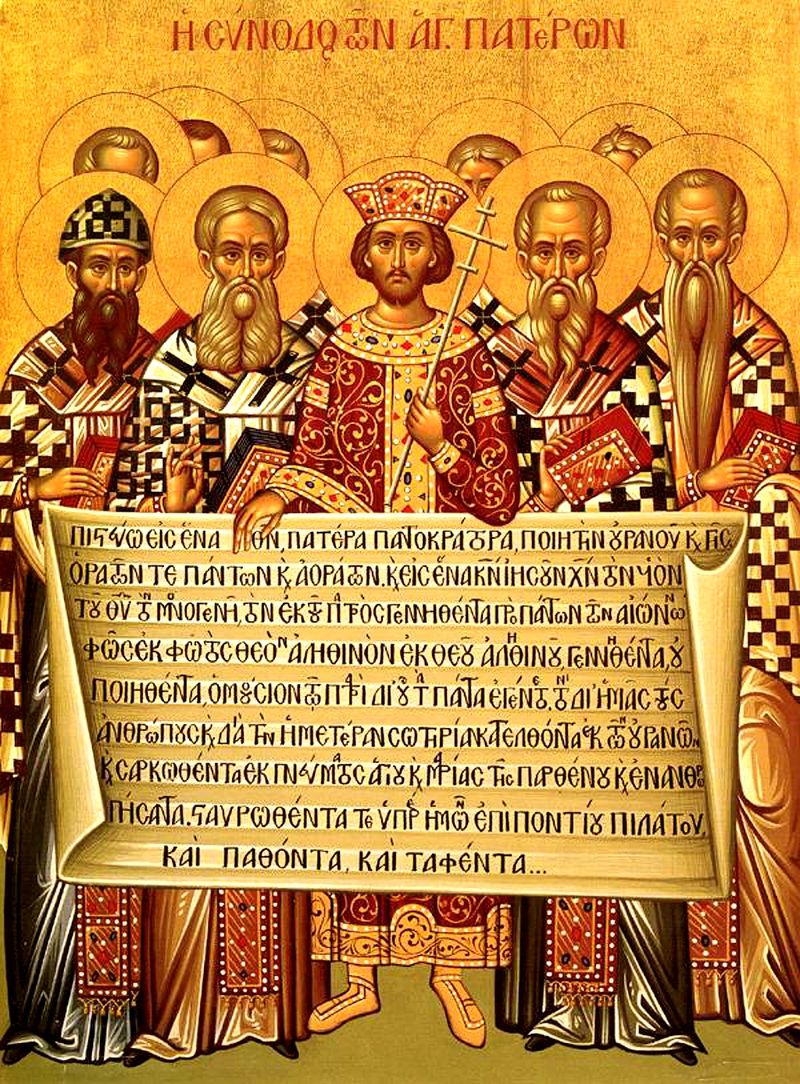
The First Council of Nicaea: What It Decided and Why It Matters
What happened at the First Council of Nicaea in 325 AD? A Catholic examination of the Arian crisis, the meaning of homoousios, and why the Nicene Creed still defines Christian orthodoxy.
Stay Informed
Get new writing on faith, law, and service delivered to your inbox.
No spam. Unsubscribe anytime.