The Shepherd of Hermas: The Book That Almost Made It Into the Bible
On This Page
Part of the series: The New Testament Canon—How 27 Books Survived the Ancient Gauntlet
What is the Shepherd of Hermas?
Sometime around the turn of the second century, a Christian freedman in Rome named Hermas began receiving visions. What he recorded—and expanded over the course of several decades—became the most widely circulated non-canonical Christian text of the ancient world. More manuscript copies of the Shepherd survive from the first three centuries than of most individual books of the New Testament.1 Irenaeus of Lyons cited it as Scripture. Clement of Alexandria quoted it as divine. Origen called it inspired. And when the scribes who produced Codex Sinaiticus—one of the oldest near-complete Bibles in existence—finished copying Revelation, they kept writing. They added the Epistle of Barnabas, and then the Shepherd of Hermas.
And yet, when the Church finally settled on the twenty-seven books that would constitute the New Testament, the Shepherd was not among them.
This is the story of the book that came closest to making it in—and why, from a Catholic perspective, the Church was right to leave it out.
Authorship and date
What the text says about itself
The Shepherd opens with an autobiographical frame. Hermas identifies himself as a freed slave who had been sold to a woman named Rhoda in Rome. One day he sees Rhoda bathing in the Tiber and helps her out of the water:
After many years, I met her again, and began to love her as a sister. After a certain time I saw her bathing in the river Tiber; and I gave her my hand, and led her out of the river. So, seeing her beauty, I reasoned in my heart, saying, “Happy were I, if I had such an one to wife both in beauty and in character.” I merely reflected on this and nothing more.2
This fleeting, unchaste thought—not even an action, merely a desire—triggers the entire narrative. Hermas’s first vision opens with an elderly woman, later revealed as the Church personified, who rebukes him for this interior sin and calls him to repentance. The theological point is sharp: sin begins in the heart.
Later, in Vision 2.4.3, Hermas is told to copy his revelations into two books: one for Clement, who “shall send to the foreign cities, for this is his duty,” and one for Grapte, who “shall instruct the widows and the orphans.”3 If this Clement is Clement of Rome—the same Clement who wrote the letter known as 1 Clement (c. 96 CE)—the passage suggests a date in the 90s for at least the earliest layer of the text. Notably, Clement is not called “bishop.” His role is described as a subordinate clerical function: corresponding with foreign churches. The governance structure described—“the elders who preside over the Church”—is collegiate and presbyteral, with no hint of a monarchical bishop.4
Who was Hermas? Two competing identifications
Two ancient traditions identify Hermas differently, and the identification you accept determines when you date the text.
Origen’s identification. In his Commentary on Romans (10.31), Origen identified the Hermas of the Shepherd with the Hermas whom Paul greets in Romans 16:14: “Greet Asyncritus, Phlegon, Hermas, Patrobas, Hermes, and the brothers who are with them.”5 If correct, this would push the Shepherd back to the apostolic age, since Paul wrote Romans around 57 CE. Eusebius and Jerome both followed Origen in this identification.6 However, most modern scholars reject it. The name Hermas was extremely common among slaves and freedmen in Rome. The theology and church structures described in the text reflect a later period. And a contemporary witness—the Muratorian Fragment—contradicts it directly.
The Muratorian Fragment’s identification. The Fragment, a late-2nd-century canon list of Roman provenance, identifies Hermas as the brother of Pius I, bishop of Rome (c. 140–154 CE):
But Hermas wrote the Shepherd very recently, in our times [nuperrime temporibus nostris], in the city of Rome, while bishop Pius, his brother, was occupying the chair of the church of the city of Rome. And therefore it ought indeed to be read; but it cannot be read publicly to the people in church either among the Prophets, whose number is complete, or among the Apostles, for it is after [their] time.7
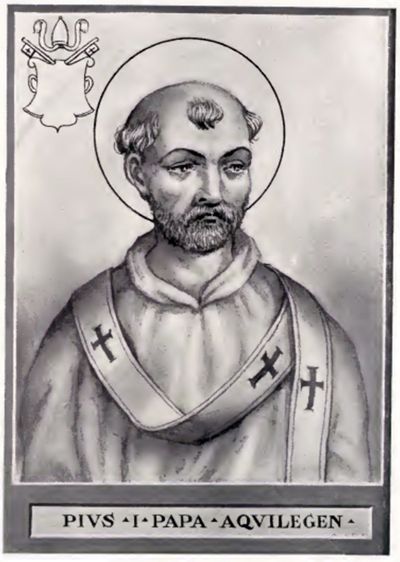
The Fragment’s argument is decisive—and worth pausing over, because it establishes a canonical principle. The objection is not doctrinal. The Fragment does not say the Shepherd teaches error. Its objection is chronological: the Prophets’ number is “complete,” and the text is “after the time” of the Apostles. Post-apostolic origin disqualifies a text from canonical status, no matter how edifying it may be.
Post-apostolic origin disqualifies a text from canonical status—no matter how edifying it may be.
The scholarly consensus: a composite text
Most scholars today see the Shepherd as a composite text written in stages over several decades—roughly 90–150 CE—rather than a single composition. Carolyn Osiek, whose Hermeneia commentary (1999) remains the standard treatment, concludes the text spans “an expanded duration of time beginning perhaps from the very last years of the first century, but stretching through most of the first half of the second century.”8 Norbert Brox and Martin Leutzsch reach similar conclusions.9
The dominant model identifies three compositional layers. The Visions (especially 1–4) represent the earliest stratum, composed perhaps around 90–100 CE, when the reference to Clement would have been contemporary and when the threatened persecution may reflect conditions under Trajan. The Mandates and earlier Similitudes form a middle stratum (c. 100–120 CE), introduced by the Shepherd figure who gives the work its name. The later Similitudes—especially the elaborate Similitude 9, which reworks the Tower allegory from Vision 3—represent the latest material, composed perhaps around 120–140 CE to unify the entire work.10
This means the Muratorian Fragment and Origen may both be partly right: the earliest layers of the text may overlap with the apostolic era, while the final form belongs to the mid-second century.
Genre, structure, and content
An apocalypse without an apocalypse
The Shepherd is classified as an apocalypse: it features revelatory visions, angelic mediators, symbolic imagery requiring interpretation, and heavenly books.11 But unlike Revelation—the only apocalypse in the New Testament—the Shepherd is not eschatological in focus. It does not narrate the end of the world. Its concern is moral and penitential: how should Christians live now, and what happens when they fail?
The text divides into three major sections.
The Five Visions (Visiones). Hermas receives a series of revelations from an elderly woman—later identified as the Church—and then from the Angel of Repentance. The Visions introduce the Tower allegory: the Church is a tower under construction, built from living stones, with different types of stones representing different classes of Christians. Square white stones are the apostles, bishops, teachers, and deacons who served faithfully. Rough or cracked stones are sinners who still have time to repent. Stones thrown far from the tower are the irredeemably wicked. White round stones are the wealthy, who must have their excess “shorn away” before they can fit into the structure.12 Seven women surround the tower—Faith, Self-Restraint, Simplicity, Knowledge, Innocence, Reverence, and Love—constituting one of the earliest Christian virtue catalogues.13
The Twelve Mandates (Mandata). These are ethical instructions delivered by the Angel of Repentance in the guise of a shepherd—the figure from whom the entire work takes its name. The Mandates cover faith in one God, truthfulness, chastity, patience, discernment of spirits, and spiritual combat. The word metanoia (repentance/conversion) and its cognates appear 156 times throughout the work.14 The pivotal teaching comes in Mandate 4.3, which directly addresses the question at the heart of the entire text: can a baptized Christian who sins be forgiven?
The Ten Similitudes (Similitudines). These are parables and allegories, the longest of which—Similitude 9—revisits and elaborates the Tower allegory in extraordinary detail. The tower is now built on a rock with a gate, both representing the Son of God. Twelve mountains supply stones from twelve nations. Construction is paused to allow more time for repentance.15 Similitude 5 contains the text’s most controversial passage: an apparent identification of the Holy Spirit with the pre-existent Son of God, which has generated centuries of Christological debate.
The theological center: can a Christian be forgiven after baptism?
The Shepherd’s central question would strike most modern Christians as absurd: Can a baptized person who commits serious sin ever be forgiven? But in the early Church, this was an urgent and genuinely open question. Several New Testament texts seemed to suggest the answer was no. Hebrews 6:4–6 warns that “it is impossible for those who have once been enlightened … if they fall away, to be restored again to repentance.” Hebrews 10:26 states bluntly: “If we deliberately keep on sinning after we have received the knowledge of the truth, no sacrifice for sins is left.” Some early Christians took these passages at face value: baptism washes away sin once, and there is no second chance.
The Shepherd addresses this head-on. In Mandate 4.3.1–7, Hermas tells the Angel of Repentance: “I have heard from some teachers that there is no other repentance beyond that one, when we went down into the water and received forgiveness of our previous sins.” The Angel replies carefully: “You have heard correctly … For it is necessary for the one who has received forgiveness of sins to sin no more.” But then the crucial qualifier: “After the calling, that great and honorable one, if someone, being tempted by the devil, might sin, he has one repentance. But if he should sin and repent repeatedly it is harmful.”16
This was theologically revolutionary. It directly challenged rigorism while avoiding laxity. It acknowledged the pastoral reality that baptized Christians do, in fact, sin. And it framed repentance with eschatological urgency—the Tower is nearing completion; there is not much time left.
Whether the “one repentance” should be read as a strict juridical limit or as rhetorical urgency has been debated. Osiek argues the limitation is hortatory, not systematic—a motivational device meant to prevent complacency, not a theological decree.17 Karl Rahner took it more literally, reading the passage as genuine evidence of developing penitential discipline—a formal “second repentance” offered once to underscore the gravity of post-baptismal sin.18 The scholarly consensus has moved toward Osiek’s reading, though the seriousness of the teaching reflects a genuine early Christian struggle.
What is beyond dispute is the trajectory. From the Shepherd’s “second repentance,” a direct line runs through Tertullian’s exomologesis—formal public penance, which he called “the second and only remaining repentance” and “a second plank of salvation after shipwreck”—through the canonical penitential system of the third through sixth centuries, through the Irish monastic innovation of private, repeatable confession, through the Fourth Lateran Council’s mandate of annual confession (1215), through the Council of Trent’s dogmatic definition of penance as a true sacrament (1551), to the modern Catholic Sacrament of Reconciliation.19 The Catechism of the Catholic Church explicitly invokes this history: “During the first centuries the reconciliation of Christians who had committed particularly grave sins after their Baptism … was tied to a very rigorous discipline.”20 And it cites the Patristic phrase that echoes the Shepherd’s insight: penance is “a laborious kind of baptism.”21
The Shepherd of Hermas did not invent the Sacrament of Reconciliation. But it articulated, for the first time in Christian literature, the theological principle on which the sacrament rests: that the mercy of God extends even to baptized Christians who have fallen—and that this mercy, while real, demands genuine conversion.
The Shepherd did not invent the Sacrament of Reconciliation. But it articulated, for the first time in Christian literature, the theological principle on which the sacrament rests.
The Christological problem
If the Shepherd’s penitential theology ultimately pointed toward what the Church would affirm, its Christology pointed somewhere far less clear. Similitude 5 contains a parable about a vineyard, a master, a servant, and a son—and what Hermas does with these figures has puzzled scholars for centuries.
The key passage is Similitude 5.6.5–7:
The pre-existent Holy Spirit which created all things did God make to dwell in a body of flesh chosen by himself. This flesh, in which dwelt the Holy Spirit, served the Spirit well in all purity and sanctity … God admitted it to share with the Holy Spirit.22
And Similitude 9.1.1 confirms: “That Spirit is the Son of God.”23
The difficulty is plain. The text appears to identify the Holy Spirit with the pre-existent Son of God—a conflation that the later Trinitarian councils would carefully distinguish. The human Jesus appears to be a separate figure: “flesh” that served as a dwelling place for the Spirit and was subsequently rewarded with divine status. This looks, at first glance, like adoptionist Christology—the view that Jesus was a man elevated to divine sonship because of his obedience, rather than eternally divine.
Scholars have interpreted this in several ways. Osiek argues the passage reflects a primitive, pre-Nicene “Spirit Christology” in which the Son and the Spirit had not yet been clearly distinguished—a theological imprecision, not a formal heresy.24 She observes, pointedly, that “if the Christology is what most interpreters say it is … it is strange that this immensely popular document of the early church was never condemned for Christological heresy.”25 Graydon Snyder reads the text as genuinely adoptionistic, reflecting a trajectory the Church later rejected.26 J.N.D. Kelly called it “an amalgam of binitarianism and adoptionism.”27 Norbert Brox simply notes that “how Hermas could publish such statements in Rome … remains a mystery.”28 More recently, Michael F. Bird has argued against the adoptionist reading on several grounds, including that pre-existence is attributed to Christ elsewhere in Hermas and that the parable’s primary purpose is ethical, not Christological.29
The names “Jesus” and “Christ” never appear anywhere in the Shepherd of Hermas.
The most striking fact may be the simplest one: the names “Jesus” and “Christ” never appear anywhere in the Shepherd of Hermas.30 This made the text useless for the Christological controversies that consumed the fourth century. It also meant that partisans on both sides could claim it—and indeed, Athanasius’s Arian opponents appealed to the Shepherd to support their subordinationist Christology, which made the text politically problematic for the orthodox camp quite apart from its theological content.31
From a Catholic perspective, the Shepherd’s Christology is best understood as pre-dogmatic theological reflection—the kind of imprecise formulation that was common before Nicaea (325) clarified the relationship between Father, Son, and Spirit. Theophilus of Antioch and Tatian offer comparably imprecise Trinitarian formulations from the same era. The Shepherd represents a moment when the Church’s Trinitarian vocabulary was still developing. It contains seeds that would require centuries of conciliar clarification—not errors to condemn, but growing pains to outgrow.
The Church as a pre-existent Tower
If the Shepherd’s Christology created problems, its ecclesiology anticipated solutions. The Tower allegory—introduced in Vision 3 and elaborately reworked in Similitude 9—presents an understanding of the Church that resonates remarkably with later Catholic teaching.
In Vision 3, the Tower is built on water—that is, on baptism—by six angels. Different types of stones represent different classes of believers. Sinners are not automatically expelled from the structure; they are set aside, tested, and given time to repent. Some stones are reshaped and reinserted. Others are cast far away. The Tower is simultaneously holy—it is divinely constructed, built by angels—and composed of imperfect materials that require purification. This is precisely the tension that the Second Vatican Council captured in Lumen Gentium §8: the Church is “at the same time holy and always in need of being purified” (sancta simul et semper purificanda).32
Even more striking is the identity of the elderly woman who delivers the Visions. In Vision 2.4.1, Hermas asks who she is:
It is the Church … She was created first of all. On this account is she old. And for her sake was the world made.33
The Church is pre-existent—created before all things, the purpose for which the world itself was made. This idea, shocking as it may sound, has deep roots. It parallels 2 Clement 14:1–2: “The Books and the Apostles plainly declare that the Church existeth not now for the first time, but hath been from the beginning: for she was spiritual, as our Jesus also was spiritual, but was manifested in the last days.” And it anticipates Lumen Gentium §2, which teaches that the Church was “prefigured from the beginning of the world” (ab origine mundi praefigurata).34
Most significantly, the Catechism of the Catholic Church directly cites this passage. CCC §760 reads: “Christians of the first centuries said, ‘The world was created for the sake of the Church.’ ” The footnote (no. 153) explicitly references: “Pastor Hermae, Vision 2, 4, 1.”35 This is the Shepherd’s most direct surviving influence on Catholic magisterial teaching—a non-canonical text cited by the Catechism itself as a witness to authentic Tradition.
A non-canonical text cited by the Catechism itself as a witness to authentic Tradition.
The canonical journey: the rise
No non-canonical Christian text had stronger early support for inclusion in the Bible than the Shepherd of Hermas. The evidence is worth surveying in detail, because it reveals how close the Shepherd came to canonical status—and therefore how deliberate and discerning the Church’s eventual exclusion was.
Irenaeus of Lyons
Irenaeus (c. 180 CE) cites the Shepherd with the formula ἡ γραφή—“the Scripture declared”—in Against Heresies 4.20.2, quoting Mandate 1 alongside passages from Malachi, Ephesians, and Matthew.36 Matthew Steenberg conducted an exhaustive analysis of every use of γραφή in Against Heresies and concluded that when Irenaeus uses the term without further qualification, it “always and without exception” indicates scriptural authority—a reading many scholars find persuasive, though it is not uncontested.37 The Shepherd is grouped with undisputed Scripture. This is, for all practical purposes, a bishop of the universal Church treating the Shepherd as a canonical text in the late second century.
Clement of Alexandria
Clement (c. 190–210 CE) quotes the Shepherd frequently across his Stromata and Paedagogus, always explicitly identifying the words as spoken by the divine revealers to Hermas. He refers to the text as speaking “divinely” (θείως) and does not formally distinguish it from canonical works.38
Origen
Origen (c. 220–250 CE) cited the Shepherd frequently across his works—in De Principiis, the commentaries on Matthew and Romans, the Homilies on Numbers and Psalms, and elsewhere. He considered it divinely inspired, identifying its author with the Hermas of Romans 16:14. But he also acknowledged, honestly, that “it is despised by some.”39 And when Origen produced his own list of New Testament books—in his Homilies on Joshua—he did not include it.40 Origen’s position was nuanced: personally inspired by the text, but aware that the Church as a whole had not reached consensus.
Tertullian
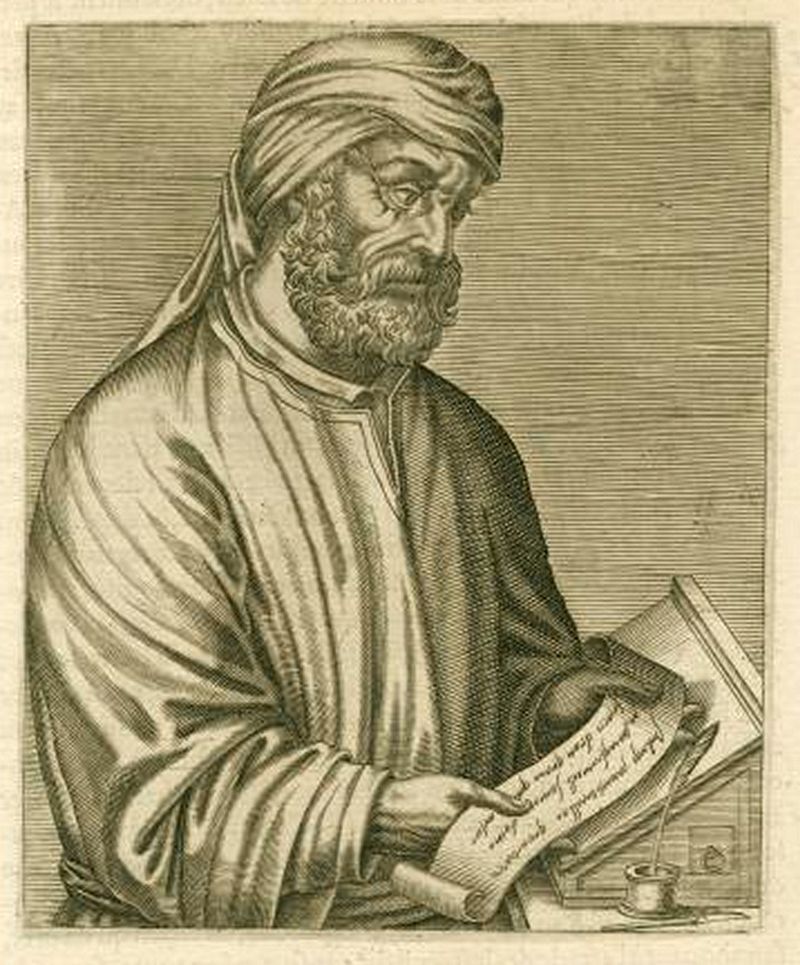
Tertullian (c. 200–220 CE) provides the most dramatic testimony. Early in his career, he cited the Shepherd respectfully. But after joining the Montanists—a rigorist movement that denied the possibility of post-baptismal forgiveness—Tertullian turned on it savagely. In De Pudicitia 10, he sneered:41
I would yield to you, if the scripture of “the Shepherd,” which alone loves adulterers, had deserved to find a place in the Divine canon.
— Tertullian, De Pudicitia 10 (c. 220 CE)
In De Pudicitia 20, he coined the phrase that would follow the text through history: he called it “that apocryphal Shepherd of adulterers” (illo apocrypho Pastore moechorum).42
Tertullian’s rage is theologically revealing. His attack tells us two things: first, that Catholic bishops—probably Pope Callistus I (r. 217–222)—were still quoting the Shepherd as authoritative in the early third century; and second, that its penitential theology was precisely why rigorists hated it. The Shepherd taught what the Montanists denied: that post-baptismal sin could be forgiven.
Codex Sinaiticus

Codex Sinaiticus (c. 330–360 CE)—one of the oldest near-complete Bibles—includes the Shepherd as an appendix, following Revelation and the Epistle of Barnabas.43 Only the first quarter of the text survives in this codex (it breaks off at Mandate 4.3.6), but its physical inclusion alongside the canonical books is significant. When the scribes of Sinaiticus finished the New Testament, they did not stop writing.
Codex Claromontanus
Codex Claromontanus (6th century) contains a stichometric catalogue—a list of books with their line counts—that most scholars date to the fourth century (c. 300–350 CE). It lists the Shepherd alongside Barnabas, the Acts of Paul, and the Apocalypse of Peter under the heading “Lines of the Holy Scriptures.” Kelsie G. Rodenbiker has argued that the obeli (dashes) appearing next to these four texts were inserted by a later hand than the one that transcribed the list, meaning the original catalogue may have treated all four as fully scriptural.44
The manuscript footprint
The manuscript evidence reinforces the literary testimony. Larry W. Hurtado’s survey of early Christian artifacts found approximately nine copies of the Shepherd among pre-fourth-century manuscripts—a manuscript footprint larger than most individual canonical books.45 Whatever the Shepherd’s formal status, early Christians were copying it, reading it, and treating it as indispensable.
The canonical journey: the exclusion
If the evidence for the Shepherd’s rise is impressive, the case for its exclusion is equally instructive—because the Church did not reject it carelessly or for trivial reasons.
The Muratorian Fragment: too late to be apostolic
The earliest and most important argument against the Shepherd’s canonicity comes from the Muratorian Fragment (c. 170–200 CE), which states plainly that Hermas wrote “very recently, in our times,” during the episcopate of Pius I.46 The Fragment’s reasoning deserves emphasis: it does not accuse the Shepherd of teaching error. Its objection is temporal. The Prophets’ number is “complete.” The Apostles’ time has passed. A text written in the mid-second century—however edifying, however widely read—cannot be counted among the Scriptures. It “ought indeed to be read,” but not publicly in the liturgical assembly.
This argument from recency established a canonical principle that would prove decisive: apostolic origin, or at least apostolic-era composition, is a necessary condition for canonical status. The Shepherd failed this test.
A note of scholarly caution: Albert Sundberg and Geoffrey Hahneman have argued that the Muratorian Fragment itself dates not to the late second century but to the fourth, which would reduce its evidential weight.47 However, this redating has been rejected by the majority of scholars, including Bruce Metzger, Joseph Verheyden, C.E. Hill, Michael Kruger, and Eckhard Schnabel.48 The traditional dating (c. 170–200 CE) remains the consensus.
Eusebius: classified among the rejected
Eusebius of Caesarea (c. 265–340 CE), the father of church history, classified the Shepherd among the notha—the spurious or rejected writings—in Ecclesiastical History 3.25.4.49 But even Eusebius acknowledged the text’s ambiguous status. In 3.3.6, he noted that the Shepherd “has been disputed by some, and on their account cannot be placed among the acknowledged books; while by others it is considered quite indispensable, especially to those who need instruction in the elements of the faith. Hence … it has been publicly read in churches.”50 Eusebius’s classification is significant because it represents the emerging scholarly consensus of the early fourth century: the Shepherd is useful for instruction but does not belong in the canon.
Athanasius: a middle category
In his famous 39th Festal Letter of 367 CE—the first document to list exactly the twenty-seven books of our New Testament—Athanasius created an intermediate category. After listing the canonical books, he identified texts “not indeed included in the canon, but appointed by the Fathers to be read by those who newly join us, and who wish for instruction in the word of godliness.” The Shepherd appears in this list alongside the Didache and the Wisdom of Solomon.51
This anaginoskomena category is neither canon nor apocrypha. It is a pastoral judgment: the text is orthodox enough to be used in catechesis, but it lacks the authority to ground doctrine. Johan Leemans has shown that Athanasius in practice cites Wisdom of Solomon as γραφή three times despite formally classifying it as non-canonical—suggesting that the formal distinction was sharper in theory than in practice.52 Robert Heaton has argued that Athanasius’s exclusion was partly motivated by the fact that Arian opponents had appealed to the Shepherd, making its formal canonization politically awkward for the pro-Nicene camp.53
Jerome: almost unknown among the Latins
Jerome (c. 392–393 CE) recorded in De Viris Illustribus 10 that the Shepherd is “read publicly in some churches of Greece” but is “almost unknown among the Latins” (apud Latinos paene ignotum).54 This is somewhat misleading—Tertullian’s extensive engagement demonstrates that the Latin West was well aware of the Shepherd in the early third century. But Jerome’s claim reflects a genuine geographic shift: after Tertullian’s attack and Cyprian’s silence, the Shepherd largely disappeared from Western Latin usage.
The Decretum Gelasianum
The final blow came from the Decretum Gelasianum (5th–6th century), which lists the Shepherd among works “to be rejected.”55 The Decree’s authority is debatable—its attribution to Pope Gelasius I (r. 492–496) is almost certainly pseudepigraphical, and its rejection list sweeps in respected authors like Tertullian and Clement of Alexandria (while Section IV actually defends Eusebius’s Chronicle and Ecclesiastical History as useful reading, with qualifications about his Arian sympathies). But its verdict on the Shepherd represents the final Western consensus: the text has no place among the Scriptures.
Why the Church was right
From a Catholic perspective, the Church’s discernment was correct—but understanding why it was correct requires thinking carefully about what canonical Scripture is and what it is not.
Apostolicity
The canon required a connection to the apostolic generation that the Shepherd could not establish. Even the most generous identification—Origen’s claim that Hermas was the figure mentioned in Romans 16:14—made him a minor acquaintance of Paul, not an apostle. The more widely accepted identification (brother of Pius I, bishop of Rome c. 140–154) placed the work a full century after the apostolic era. Compare this with the canonical books whose apostolic authorship was also debated: Hebrews was accepted partly through Clement of Alexandria’s theory of Pauline authorship; 2 Peter on the strength of its Petrine claim; Jude as written by “Jude, brother of James.” Each had at least a plausible apostolic peg. The Shepherd had none.
Doctrinal precision
While the Shepherd’s penitential theology ultimately points toward what the Church would develop into the Sacrament of Reconciliation, and while its ecclesiology resonates with later Catholic teaching, its Christology and pneumatology are too imprecise to function as a norm of faith. The apparent conflation of Son and Spirit in Similitude 5, the absence of the names “Jesus” and “Christ,” and the ambiguity of the adoptionistic parable mean the text cannot ground doctrine with the clarity that Scripture requires. Scripture must be capable of norming belief, not merely illustrating pastoral practice.
The development of doctrine
The Shepherd fits beautifully within John Henry Newman’s framework for the development of doctrine.56 The text contains authentic seeds of Catholic insight—post-baptismal repentance, the pre-existent Church, the Church as holy yet always in need of purification—but these seeds required centuries of conciliar and magisterial development to reach their mature form. The Shepherd’s “one repentance” became Tertullian’s exomologesis, became the Order of Penitents, became the Irish tariff penance system, became the Lateran IV mandate, became the Tridentine definition, became the modern Sacrament. The principle endured; the articulation matured. The Shepherd was a milestone on the road, not the destination.
Newman’s seven “notes” of authentic doctrinal development all apply. The principle is preserved: the Church is both divine and composed of sinners. The logical sequence holds: from Hermas to Trent to the modern CCC. The development exhibits chronic vigor: the basic theological intuitions endure from the second century to CCC §760. The Shepherd is a witness to doctrinal seeds. Scripture is the soil in which they are normatively planted.
Athanasius’s category as a model
Athanasius’s placement of the Shepherd among books “to be read” for instruction—neither canonical nor rejected—may represent the most theologically balanced assessment. It corresponds precisely to the Catholic understanding that Tradition is broader than Scripture. The Shepherd belongs to the living Tradition of the Church. It shaped the Church’s practice, informed its theology, and contributed to its self-understanding. It simply does not bear the charism of inspiration that canonical Scripture requires. This distinction—between a text that witnesses to the faith and a text that norms the faith—is fundamental to Catholic theology, and the Shepherd illustrates it better than almost any other early Christian writing.
Lasting value and Catholic legacy
The Shepherd’s exclusion from the canon did not end its influence. Its theological contributions have shaped Catholicism in ways that persist to the present day.
The Sacrament of Reconciliation
The Shepherd’s insistence on a “second repentance” was the earliest clear articulation of what became the Church’s sacramental practice. Every Catholic who walks into a confessional is, in a sense, the beneficiary of a theological breakthrough first articulated by a freedman in Rome nearly two thousand years ago.
Ecclesiology
The Tower allegory anticipated the Catholic conviction that the Church is both a divine institution and a human community—simultaneously the bride of Christ and a hospital for sinners. CCC §760’s direct citation of Vision 2.4.1 demonstrates that the Shepherd’s ecclesiology has been formally received into Catholic teaching, even though the text itself was not received into the canon.35
Moral theology
The Mandates constitute one of the earliest Christian virtue catalogues. The Two-Ways tradition (Mandate 6: two angels, one of righteousness and one of iniquity) and the theme of spiritual combat influenced centuries of moral and ascetical theology.
Patristic catechesis
Athanasius’s commendation of the Shepherd for catechetical instruction continued in the Greek-speaking East for centuries. The text served precisely the function Athanasius intended: instructing new Christians in the basics of the faith without bearing the full weight of canonical authority.
Text, manuscripts, and modern editions
The Shepherd survives in an unusually rich manuscript tradition for a non-canonical text. Codex Sinaiticus (4th century) preserves the first quarter of the Greek text. Papyrus Michigan 129 (c. 250 CE) preserves approximately the third quarter and is among the oldest substantial witnesses. At least ten Oxyrhynchus papyri fragments survive, with P.Oxy. 3528 (late 2nd/early 3rd century) among the earliest.57 The only near-complete Greek text is the Codex Athous (14th–15th century), discovered at the Monastery of St. Gregory on Mount Athos by Constantine Simonides in 1855.58 Where the Greek manuscripts are fragmentary or break off entirely, the Latin Vulgate translation (late 2nd century, nearly contemporary with the Greek original) and the Ethiopic version preserve the complete text.59
The standard critical edition of the Greek text is Molly Whittaker’s GCS edition (1956; revised 1967). The definitive scholarly commentary in English is Carolyn Osiek’s Hermeneia volume (1999), which stood as the only full-length English commentary on the Shepherd for more than two decades; Michael J. Svigel and Caroline P. Buie’s The Shepherd of Hermas: A New Translation and Commentary (Cascade, 2022) now joins it.60 The best accessible English translations are Bart Ehrman’s Loeb Classical Library edition (Apostolic Fathers, vol. 2, 2003) and Michael Holmes’s The Apostolic Fathers (3rd edition, Baker Academic, 2007).61
Frequently asked questions
Was the Shepherd of Hermas ever in the Bible?
Not in the final canon. But it was treated as Scripture by some of the most important Church Fathers—Irenaeus, Clement of Alexandria, and Origen—and was physically included in Codex Sinaiticus, one of the oldest near-complete Bibles. It was ultimately excluded because it was written too late to qualify as apostolic.
Why was the Shepherd of Hermas rejected?
Primarily on chronological grounds. The Muratorian Fragment (c. 170–200 CE) argued that Hermas wrote “very recently, in our times”—during the episcopate of Pius I (c. 140–154 CE). Because the text was post-apostolic, it could not be counted among the Scriptures, even though it “ought to be read.” Its ambiguous Christology and the political complications of the Arian controversy may have been secondary factors.
Does the Shepherd of Hermas contradict Catholic teaching?
Its penitential theology actually anticipates Catholic teaching on the Sacrament of Reconciliation, and its ecclesiology is cited in the Catechism (CCC §760). Its Christology—which appears to conflate the Son and the Holy Spirit—is imprecise by later standards but reflects a pre-Nicene theological vocabulary that had not yet benefited from conciliar clarification. It was never formally condemned for heresy.
Is the Shepherd of Hermas Gnostic?
No. The Shepherd is thoroughly orthodox in its core convictions: one God who created all things, the goodness of creation, the reality of sin, the necessity of repentance, and the centrality of the Church. Its theology is parenetic (morally exhortatory) and pastoral, not speculative or mythological in the Gnostic sense.
Does the Catholic Church still use the Shepherd of Hermas?
The Catechism of the Catholic Church cites it directly (CCC §760, footnote 153), and its theological legacy—particularly its influence on the development of the Sacrament of Reconciliation—remains deeply embedded in Catholic practice. It is not read in the liturgy.
Study and reflection questions
- The Muratorian Fragment excludes the Shepherd on chronological grounds—it was written too late to be apostolic—not on doctrinal grounds. What does this tell you about the criteria the early Church used to determine canonicity? Is apostolic origin more important than doctrinal content? Should it be?
- The Shepherd’s central question—can a baptized Christian who sins be forgiven?—seems obvious to us today. Why was it genuinely controversial in the early Church? What New Testament passages (Hebrews 6:4–6; 10:26) seemed to argue against post-baptismal forgiveness, and how did the Church eventually resolve the tension?
- Athanasius placed the Shepherd in a middle category: not canonical Scripture, but “appointed by the Fathers to be read” for catechetical instruction. Does this category still make sense today? Are there modern texts that function similarly—deeply influential in the life of the Church, widely read, yet not Scripture?
- CCC §760 cites Vision 2.4.1—the pre-existence of the Church—as an authentic expression of early Christian faith. What does it mean for a non-canonical text to be cited by the Catechism? Does this demonstrate the Catholic principle that Tradition is broader than Scripture?
- Tertullian called the Shepherd “the Shepherd of adulterers” because it taught the possibility of post-baptismal forgiveness. Yet the Church eventually affirmed exactly what Tertullian rejected. What does this episode reveal about how the Church discerns truth over time—and about the danger of theological rigorism?
- The Shepherd’s Christology apparently conflates the Son and the Holy Spirit. Does this represent genuine heresy, or pre-dogmatic theological reflection that simply lacked the vocabulary later supplied by Nicaea and Constantinople? How should Catholics evaluate early texts whose theology was later surpassed by conciliar precision?
For further study
Primary sources
- Athanasius of Alexandria. 39th Festal Letter (367 CE).
- Ehrman, Bart D., ed. and trans. The Apostolic Fathers. Loeb Classical Library 25. Vol. 2. Cambridge, MA: Harvard University Press, 2003. [Greek text with facing English translation; the most accessible scholarly edition.]
- Eusebius of Caesarea. Ecclesiastical History 3.3.6; 3.25.4; 5.8.7.
- Hermas. The Shepherd of Hermas. English translation available at Early Christian Writings.
- Holmes, Michael W., ed. The Apostolic Fathers: Greek Texts and English Translations. 3rd ed. Grand Rapids: Baker Academic, 2007.
- Irenaeus of Lyons. Against Heresies 4.20.2.
- Tertullian. De Pudicitia 10, 20.
Secondary scholarship
- Brox, Norbert. Der Hirt des Hermas. Kommentar zu den Apostolischen Vätern 7. Göttingen: Vandenhoeck & Ruprecht, 1991.
- Gamble, Harry Y. The New Testament Canon: Its Making and Meaning. Philadelphia: Fortress Press, 1985.
- Heaton, Robert D. The Shepherd of Hermas as Scriptura Non Grata. Lanham, MD: Lexington, 2023. [A recent study arguing the Shepherd was actively excluded, not passively forgotten.]
- Lookadoo, Jonathon. The Shepherd of Hermas: A Literary, Historical, and Theological Handbook. London: T&T Clark, 2021.
- Metzger, Bruce M. The Canon of the New Testament: Its Origin, Development, and Significance. Oxford: Clarendon, 1987.
- Osiek, Carolyn. Shepherd of Hermas: A Commentary. Hermeneia. Minneapolis: Fortress Press, 1999. [The definitive modern commentary—the only full-length treatment in English.]
1. Larry W. Hurtado, The Earliest Christian Artifacts: Manuscripts and Christian Origins (Grand Rapids: Eerdmans, 2006), 19–28. Approximately nine copies of the Shepherd survive among pre-fourth-century Christian manuscripts—a footprint larger than most individual canonical books.
2. Shepherd of Hermas, Vision 1.1.1–2 (Lightfoot trans.).
3. Shepherd of Hermas, Vision 2.4.3 (Lightfoot trans.).
4. On the pre-monarchical episcopal structure reflected in the Shepherd, see Carolyn Osiek, Shepherd of Hermas: A Commentary, Hermeneia (Minneapolis: Fortress, 1999), 24–25, 60–62. The collegial-presbyteral polity reflected in Hermas is a striking datum for a Roman text from as late as c. 140 CE.
5. Origen, Commentary on Romans 10.31 (surviving in Rufinus’s Latin translation, c. 406 CE).
6. Eusebius, Ecclesiastical History 3.3.6; Jerome, De Viris Illustribus 10.
7. Muratorian Fragment, lines 73–80. Translation from Bruce M. Metzger, The Canon of the New Testament: Its Origin, Development, and Significance (Oxford: Clarendon, 1987), 305–7.
8. Osiek, Shepherd of Hermas, 18–20.
9. Norbert Brox, Der Hirt des Hermas, KAV 7 (Göttingen: Vandenhoeck & Ruprecht, 1991), 22–25; Martin Leutzsch, in Ulrich H.J. Körtner and Martin Leutzsch, Papiasfragmente; Hirt des Hermas, Schriften des Urchristentums 3 (Darmstadt: Wissenschaftliche Buchgesellschaft, 1998).
10. This layered model was pioneered by Hilgenfeld in the 19th century, refined by Martin Dibelius in the early 20th, and modified by Giet (1963, who argued for three distinct authors—a theory refuted by Joly). The modern consensus (Osiek, Brox, Leutzsch) favors single authorship with extended composition.
11. David Hellholm, Das Visionenbuch des Hermas als Apokalypse (Lund: Gleerup, 1980). See also Jonathon Lookadoo, The Shepherd of Hermas: A Literary, Historical, and Theological Handbook (London: T&T Clark, 2021), 58.
12. Shepherd of Hermas, Vision 3.2.4–3.7.6.
13. Shepherd of Hermas, Vision 3.8.1–8.
14. Osiek, Shepherd of Hermas, 27.
15. Shepherd of Hermas, Similitude 9.
16. Shepherd of Hermas, Mandate 4.3.1–7.
17. Osiek, Shepherd of Hermas, 110–12.
18. Karl Rahner, “The Penitential Teaching of the Shepherd of Hermas,” in Theological Investigations, vol. 15 (New York: Crossroad, 1982), 57–113; originally “Die Bußlehre im Hirten des Hermas,” Zeitschrift für katholische Theologie 77 (1955): 385–431.
19. On the trajectory from the Shepherd to the modern Sacrament, see Bernhard Poschmann, Paenitentia Secunda (Bonn: Hanstein, 1940); and CCC §§1422–1498.
20. CCC §1447.
21. CCC §980, citing Gregory of Nazianzus, Oratio 39.17, and the Council of Trent (DS 1672). See also CCC §1446: “The Fathers of the Church present this sacrament as ‘the second plank [of salvation] after the shipwreck which is the loss of grace’”—an image first articulated by Tertullian (De Paenitentia 4) in language that echoes the Shepherd.
22. Shepherd of Hermas, Similitude 5.6.5–7.
23. Shepherd of Hermas, Similitude 9.1.1.
24. Osiek, Shepherd of Hermas, 180.
25. Osiek, Shepherd of Hermas, 180.
26. Graydon F. Snyder, The Shepherd of Hermas, Apostolic Fathers 6 (Camden, NJ: Thomas Nelson, 1968).
27. J.N.D. Kelly, Early Christian Doctrines, 5th ed. (London: A&C Black, 1977), 94.
28. Brox, Der Hirt des Hermas, 328.
29. Michael F. Bird, Jesus the Eternal Son: Answering Adoptionist Christology (Grand Rapids: Eerdmans, 2017), argues against the adoptionist reading of Similitude 5 on several grounds: pre-existence is attributed to Christ elsewhere in Hermas, the parable’s main purpose is ethical rather than Christological, and the servant is not technically “adopted.” See also Larry W. Hurtado, Lord Jesus Christ: Devotion to Jesus in Earliest Christianity (Grand Rapids: Eerdmans, 2003), 602–5.
30. Robert D. Heaton, The Shepherd of Hermas as Scriptura Non Grata (Lanham, MD: Lexington, 2023).
31. Heaton, Scriptura Non Grata. Athanasius’s Arian opponents appealed to the Shepherd to support subordinationist Christology.
32. Second Vatican Council, Lumen Gentium §8 (November 21, 1964). See also CCC §§770–776.
33. Shepherd of Hermas, Vision 2.4.1.
34. Second Vatican Council, Lumen Gentium §2. Cf. 2 Clement 14:1–2.
35. CCC §760, footnote 153: “Pastor Hermae, Vision 2, 4, 1: PG 2, 899; cf. Aristides, Apol. 16, 6; St. Justin, Apol. 2, 7: PG 6, 456; Tertullian, Apol. 31, 3; 32, 1: PL 1, 508–509.”
36. Irenaeus, Against Heresies 4.20.2.
37. Matthew C. Steenberg, “Irenaeus on Scripture, Graphe, and the Status of Hermas,” SVTQ 53, no. 1 (2009): 29–66.
38. Jannes Reiling, Hermas and Christian Prophecy: A Study of the Eleventh Mandate, NovTSup 37 (Leiden: Brill, 1973). See Clement of Alexandria, Stromata 1.17; 1.29; 2.1; 2.9; 2.12; 4.9; 6.15.
39. Origen, De Principiis 4.1.1 (sometimes cited as 4.11 in older numbering): quod videtur a quibusdam contemni. See also De Principiis 1.3.3 and 4.2.4; and cf. Commentary on Matthew 14.21, which describes the Shepherd as “a Scripture which is in circulation in the church, but not acknowledged by all to be divine.”
40. Origen, Homilies on Joshua 7.1.
41. Tertullian, De Pudicitia 10.12.
42. Tertullian, De Pudicitia 20.
43. On the Shepherd in Codex Sinaiticus, see Dan Batovici, “Textual Revisions of the Shepherd of Hermas in Codex Sinaiticus,” ZAC 18, no. 3 (2014): 443–70.
44. Kelsie G. Rodenbiker, “The Claromontanus Stichometry and Its Canonical Implications,” JSNT 44, no. 2 (2021): 240–53. Rodenbiker argues that the obeli (dashes) marking six titles—including the Shepherd, Barnabas, the Acts of Paul, and the Apocalypse of Peter—were inserted by a later hand than the one that transcribed the list, meaning the original catalogue may have treated all four as fully scriptural. See also Metzger, Canon, 310.
45. Hurtado, Earliest Christian Artifacts, 19–28, esp. 19–21, 23. For a concurring reading of the same data, see Robert D. Heaton’s treatment of Hurtado in Scriptura Non Grata.
46. Muratorian Fragment, lines 73–80.
47. Albert C. Sundberg Jr., “Canon Muratori: A Fourth-Century List,” HTR 66, no. 1 (1973): 1–41; Geoffrey Mark Hahneman, The Muratorian Fragment and the Development of the Canon, Oxford Theological Monographs (Oxford: Clarendon, 1992).
48. Metzger, Canon, 191–201; Joseph Verheyden, “The Canon Muratori: A Matter of Dispute,” in The Biblical Canons, ed. J.-M. Auwers and H.J. de Jonge, BETL 163 (Leuven: Leuven University Press, 2003), 487–556; Charles E. Hill, “The Debate Over the Muratorian Fragment and the Development of the Canon,” WTJ 57, no. 2 (1995): 437–52; Michael J. Kruger, The Question of Canon: Challenging the Status Quo in the New Testament Debate (Downers Grove: IVP Academic, 2013), 163–64; Eckhard J. Schnabel, “The Muratorian Fragment: The State of Research,” JETS 57, no. 2 (2014): 231–64.
49. Eusebius, Ecclesiastical History 3.25.4.
50. Eusebius, Ecclesiastical History 3.3.6.
51. Athanasius, 39th Festal Letter (367 CE).
52. Johan Leemans, “Athanasius and the Book of Wisdom,” ETL 73, no. 4 (1997): 349–68. Leemans demonstrates that Athanasius cites the Wisdom of Solomon as γραφή three times despite formally classifying it as non-canonical—evidence that the formal canon/non-canon distinction was sharper in theory than in practice.
53. Heaton, Scriptura Non Grata.
54. Jerome, De Viris Illustribus 10.
55. Decretum Gelasianum de libris recipiendis et non recipiendis. Critical edition: Ernst von Dobschütz, Das Decretum Gelasianum de libris recipiendis et non recipiendis, TU 38.4 (Leipzig: Hinrichs, 1912). The attribution to Pope Gelasius I (r. 492–496) is almost certainly pseudepigraphical; the text is 6th-century, probably Italian or South Gallic in origin, though the question of provenance remains debated.
56. John Henry Newman, An Essay on the Development of Christian Doctrine (London: James Toovey, 1845; rev. ed. 1878).
57. For the Oxyrhynchus papyri, see especially P.Oxy. 3528 (late 2nd/early 3rd century) and P.Oxy. 4706 (2nd/3rd century), which notably contains both Visions and Commandments on the same roll, disproving the theory that these sections always circulated independently.
58. The Codex Athous contains about 95% of the Greek text (Vis. 1 through Sim. 9.30.3). Its facsimile was published in 1907. It is considered textually unreliable due to its mixed character across Byzantine, Alexandrian, and Western text-types.
59. The Latin Vulgate translation (late 2nd century) preserves the complete text including the final portion (Sim. 9.30.3–10.4.5) where no Greek manuscripts survive. The Ethiopic version, possibly from the 4th century, is described as “rather paraphrastic” but valuable for preserving the complete text.
60. Molly Whittaker, Der Hirt des Hermas, GCS (Berlin: Akademie-Verlag, 1956; rev. 1967); Osiek, Shepherd of Hermas (1999).
61. Bart D. Ehrman, ed. and trans., The Apostolic Fathers, Loeb Classical Library 25, vol. 2 (Cambridge, MA: Harvard University Press, 2003)—updates Kirsopp Lake’s 1913 Loeb edition; Michael W. Holmes, ed., The Apostolic Fathers: Greek Texts and English Translations, 3rd ed. (Grand Rapids: Baker Academic, 2007). See also the recent Michael J. Svigel and Caroline P. Buie, The Shepherd of Hermas: A New Translation and Commentary (Eugene, OR: Cascade, 2022).

Garrett Ham
Garrett Ham is an attorney, military veteran, and holds a Master of Divinity from Yale Divinity School. He writes from Northwest Arkansas on theology, law, and service.
Related Posts
The Apologist Who Believed Too Much
A sophomore apologetics assignment on Justin Martyr's First Apology cost me the church I was raised in. What chapter 66 says about the Eucharist.

The Didache — Old Enough for the Canon, and Still Left Out
The Didache may be older than the last books of the New Testament, yet no Bible ever carried it. What the earliest church order says, and why it was left out.

The Epistle of Barnabas — The Near-Miss That Bore an Apostle's Name
Quoted as Scripture in Alexandria and bound into Codex Sinaiticus, the Epistle of Barnabas bore an apostle's name—yet the New Testament closed without it. Why.
Stay Informed
Get new writing on faith, law, and service delivered to your inbox.
No spam. Unsubscribe anytime.