Romans 9–11: Election, Israel, and the Mystery of Salvation
On This Page
Romans 9–11 is among the most contested passages in all of Christian theology. Catholics, Calvinists, Arminians, and open theists have all claimed these three chapters as vindication for their understanding of election, predestination, and Israel’s place in salvation history. This Catholic interpretation argues that Paul’s argument is fundamentally about peoples—about the corporate destiny of Israel and the ingathering of the Gentiles within God’s covenantal plan—and explores the intra-Catholic debate between Thomism and Molinism on how divine sovereignty and human freedom relate.2
The letters of Paul document an apostle’s struggle to ascertain the proper place of the Gentiles among the followers of a Jewish messiah. Yet that struggle soon reversed itself: the question of where the Gentiles fit within a Jewish messianic movement became a question of where the Jews fit within a predominantly Gentile church. Throughout his ministry, Paul found himself unable to escape the tension created by a people of God brought together across historical and ethnic divisions. In Romans 9–11, he confronts that tension head-on, producing what is arguably the most theologically dense and pastorally urgent passage in the entire Pauline corpus.
These three chapters have been conscripted into nearly every major theological controversy in the history of Christianity—from the nature of the atonement to the mechanics of predestination. Calvinists read them as a proof text for unconditional election. Arminians read them as a vindication of corporate election and human freedom. Open theists find in them a God who risks and responds. Dispensationalists see a clear division between Israel and the Church. Replacement theologians see the Church superseding Israel entirely. And Catholic theologians—standing within the tradition of Augustine, Aquinas, and the Magisterium—find in these chapters a mystery that resists simple systematization but yields profound insight into the nature of divine providence, human freedom, and the economy of salvation.
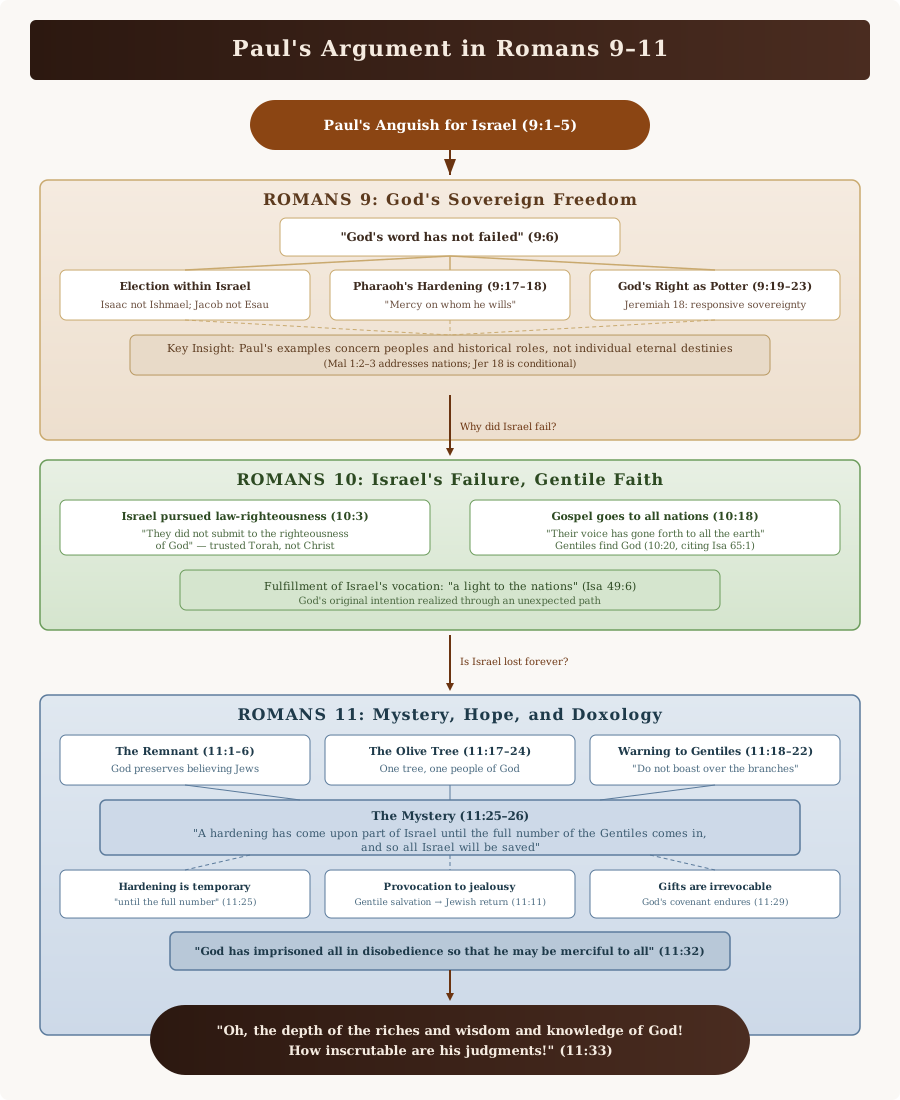
In what follows, I want to offer a Catholic reading of Romans 9–11 that takes seriously both the text and the theological tradition that has received it. I will engage with Protestant interpretations—Calvinist, Arminian, and open theist—not as strawmen but as genuine intellectual positions held by serious thinkers. I will also explore the intra-Catholic debate between Thomism and Molinism, both of which offer distinct accounts of how God’s sovereign election relates to human freedom. But at the center of this essay is Paul’s argument itself, and Paul’s argument is about something very specific: the faithfulness of God to his promises to Israel, and what that faithfulness means for the Gentiles who have been grafted into Israel’s story.
The Purpose of Israel’s Election
Israel’s Vocation: A Light to the Nations
Israel understood herself to be a special nation, chosen by God as the instrument by which he would restore the fallen world. She based this confidence on the divine covenant rooted in God’s promises to the patriarchs (cf. Gen 12; 15; 17; 22), which elevated her to a place of honor among the other nations (Deut 26:15, 17–19). Since Israel understood Abraham and his descendants to be God’s way of dealing with Adam’s sin, she saw herself as the true Adamic community, the means by which, according to the Old Testament prophets, God would relate to the rest of the world.3
Isaiah’s message most explicitly addresses God’s purpose in Israel’s election: “It is too small a thing for you to be my servant to restore the tribes of Jacob and bring back those of Israel I have kept. I will also make you a light to the Gentiles, that you may bring my salvation to the ends of the earth” (Isa 49:6). God’s ultimate purpose in Israel’s election was to reconcile all nations to himself. God chose Israel from “all the families of the earth” (Amos 3:2) so that all the nations would be blessed through her (Gen 12:3). The election of Israel was a means, not the end, of God’s purpose in the world. Israel became the vehicle by which God’s whole creation was to be reconciled to its Creator.4
Corporate Election in Catholic Teaching
The Catholic tradition has always understood election in these covenantal and corporate terms. The Second Vatican Council, in Lumen Gentium (“Light of the Nations”) §9, teaches that “God, however, does not make men holy and save them merely as individuals, without bond or link between one another. Rather has it pleased Him to bring men together as one people, a people which acknowledges Him in truth and serves Him in holiness.” Election, in the Catholic understanding, is first and foremost about the formation of a people—not the selection of isolated individuals for salvation or damnation.
This corporate understanding is essential for reading Romans 9–11 correctly. Paul is not writing a treatise on individual predestination. He is wrestling with the most pressing pastoral and theological crisis of his ministry: if God chose Israel as his covenant people, and if God’s promises are irrevocable, then why have the majority of Jews rejected their own Messiah?
Israel’s Misunderstanding and Failure
Nationalistic Pride and the Psalms of Solomon
Israel, however, particularly after suffering at the hands of foreign oppressors, was prone to forget the purpose of her election. Contrary to God’s revealed objective, the Jews often saw themselves as the means by which God would deliver wrath, not mercy, to the nations. Consider the writings of the Psalms of Solomon:
See, Lord, and raise up for them their king, the Son of David, to rule over your servant Israel…Undergird him with the strength to destroy the unrighteous rulers, to purge Jerusalem from gentiles who trample her to destruction; in wisdom and in righteousness to drive out the sinners from the inheritance; to smash the arrogance of sinners like a potter’s jar…5
God elected Israel for a specific purpose, but as her history progressed, Israel delighted more in her election as a mark of status than as a vocation of service. The Jews elevated themselves above the Gentiles, failing to realize that the election of Israel did not mean a lack of divine interest in the other nations. They placed their trust in the Torah as the sign of their covenant privilege and were therefore unable to accept Jesus Christ as God’s outworking of salvation apart from the Torah.
Paul’s Pre-Conversion Zeal
The life of the pre-Christian Paul vividly demonstrates this inwardly focused nationalistic pride. The terms Paul uses to describe his attacks on the Church in Galatians 1:13 reflect his previous zeal for the law: διώκω (“persecute”) and πορθέω (“destroy”) parallel the language describing the violent measures employed by the Jews against apostates, whose behavior aligned them with the nations (e.g., Num 25:1–5, 6–15; 1 Macc 2:23–28, 42–48; 2 Macc 6:13; 1QS 9:22; 1QM 7:5; 10:2–5; 1QH 14:13–15; Pss. Sol. 17:21–46; Bar 4:25). The pre-Christian Paul agreed with the traditional telling of the story of Israel: if Jews would embrace the Torah wholeheartedly, God would restore her to the covenantal blessings (cf. Gal 1:13–14; Phil 3:4–6). The gospel message of Jesus, with its criticisms of the Torah and the Temple, was therefore unacceptable.
As the apostle to the Gentiles, however, Paul was forced to reevaluate his ethnocentric understanding of election. In Romans, he argues that the majority of the Jews had misunderstood God’s intention in their election and had therefore missed God’s overarching plan of salvation. Just as the Jews often failed to acknowledge God’s working in their midst in the Old Testament (cf. Amos 3:6–7), they now refused to recognize the outworking of God’s plan through Jesus Christ and the consequential ingathering of the Gentiles into the people of God apart from Torah observance.
The “Golden Chain” of Romans 8:28–30
Before entering the disputed territory of Romans 9, it is essential to recognize the theological ground Paul has already laid in the concluding verses of Romans 8. The passage known as the “golden chain”—“For those he foreknew he also predestined to be conformed to the image of his Son, so that he might be the firstborn among many brothers. And those he predestined he also called; and those he called he also justified; and those he justified he also glorified” (8:29–30, NAB)—has been read by Calvinists as a sequence describing individual election from eternity, in which each link applies to the same elect individuals without exception.
The Catholic tradition reads the golden chain differently. The foreknowledge Paul invokes is not bare prescience of future faith, nor is it an unconditional decree disconnected from creaturely response. In Catholic theology, God’s foreknowledge and predestination are intimately related—Thomists locating predestination in God’s eternal decree actuated through efficacious grace, Molinists locating it in God’s middle knowledge of what free creatures would do in every possible circumstance. Both schools agree, however, that the golden chain describes the pattern of God’s saving action (foreknowledge, predestination, calling, justification, glorification) without resolving the metaphysical question of how divine sovereignty and human freedom interact within that pattern. The chain tells us that God’s purposes are certain; it does not tell us whether that certainty operates through causal premotion or through providential arrangement of free creaturely choices. Romans 9–11, which follows immediately, is Paul’s extended meditation on how this pattern of divine faithfulness plays out in the concrete history of Israel and the Gentiles.
Romans 9: God’s Sovereign Freedom
Paul’s Anguish and the Children of Promise
Paul opens Romans 9 with anguish. His grief for his kinsmen is so deep that he could wish himself “accursed and cut off from Christ” for their sake (9:3). This is not the dispassionate language of a theologian constructing a system. It is the cry of a man watching his own people miss their Messiah.
Yet Paul does not conclude that God’s word has failed (9:6). Instead, he argues that “not all who are descended from Israel belong to Israel” (9:6b). God’s election has always operated within Israel, not along merely biological lines. Isaac, not Ishmael, was the child of promise. Jacob, not Esau, was chosen—“before the twins had been born or had done anything good or bad, in order that God’s purpose according to his election might stand” (9:11, NAB).6
Here is where the theological traditions diverge, and here is where we must read carefully.
The Calvinist Reading of Romans 9: Unconditional Election
For Reformed theology, Romans 9 is the decisive text on unconditional individual election—the passage to which Calvinists return again and again when challenged on the doctrines of grace. God’s choice of Jacob over Esau before birth demonstrates that salvation depends entirely on God’s sovereign will, not on human works, faith, or foreseen merit. The text is explicit: the choice was made “in order that God’s purpose according to his election might stand, not from works but from his call” (9:11–12, NAB). For the Calvinist, this settles the matter. Election is unconditional. It is individual. It is eternal.
John Piper’s The Justification of God—perhaps the most rigorous Calvinist exegetical treatment of Romans 9:1–23—argues that Paul’s reference to God’s hardening of Pharaoh (9:17–18) and the potter-and-clay metaphor (9:19–23) establishes unconditional individual election with asymmetric double predestination—God actively elects some to salvation while passing over others, though Piper is careful to distinguish this from a symmetrical decree of reprobation.7 Piper reads the passage as a sustained argument for God’s right to dispose of individuals as he sees fit, extending mercy to some and hardening others, with no reference to prior human action or faith. Thomas Schreiner, in his Baker Exegetical Commentary, reaches a similar conclusion: Romans 9 teaches individual election to salvation, and the attempt to read it as merely corporate or historical “does not do justice to the flow of Paul’s argument.”8
The Calvinist reading has the virtue of taking the sovereignty language at face value. When Paul writes, “He has mercy on whom he wills, and he hardens whom he wills” (9:18), the Reformed interpreter reads this as a statement about individual eternal destinies. When Paul anticipates the objection—“Why does he still find fault? For who can oppose his will?” (9:19)—the Calvinist argues that this is precisely the objection one would expect if Paul were teaching unconditional individual election. If Paul were merely describing corporate, historical roles, why would anyone object that God is being unfair? The very forcefulness of the anticipated objection, Calvinists argue, demonstrates that Paul’s audience understood him to be making claims about individual destinies.
The five points of Calvinism—Total Depravity, Unconditional Election, Limited Atonement, Irresistible Grace, and Perseverance of the Saints—crystallized at the Synod of Dort (1618–1619) in response to the Remonstrants (followers of Arminius), but they find their exegetical warrant primarily in Romans 9 and its immediate context.9 The logic is internally coherent: if human nature is so thoroughly corrupted by sin that no one can desire God without grace (Total Depravity), and if grace is given only to those whom God has sovereignly chosen (Unconditional Election), then that grace must be irresistible (Irresistible Grace)—for if it could be resisted, it would depend on human cooperation, and we would be back to works. The system holds together; the question is whether it is the system Paul is constructing.
The Arminian Reading
Arminian interpreters, following Jacob Arminius (1560–1609) and his intellectual descendants in the Wesleyan and Methodist traditions, argue that the Calvinist reading imports an alien framework into the passage. The fundamental Arminian insight is a distinction between election to a role in salvation history and election to individual salvation. When Paul speaks of Jacob and Esau, he is speaking of nations, not individuals—of the respective roles that Israel and Edom would play in God’s unfolding plan, not of the eternal destinies of two men. The Malachi quotation Paul cites—“Jacob I loved, but Esau I hated” (Rom 9:13, citing Mal 1:2–3)—is itself addressed to nations, not individuals. In its original context, God is speaking to Israel about Edom, not pronouncing an eternal decree over two unborn babies.
Brian Abasciano, in his Paul’s Use of the Old Testament in Romans 9:10–18, has argued persuasively that Paul’s Old Testament citations function within a corporate framework: God’s election of Jacob is an election of the people who would descend from him for a historical vocation, not an unconditional selection of individuals for eternal salvation or damnation.10 Abasciano demonstrates that the Genesis and Malachi passages Paul quotes all concern peoples and their historical destinies—a point that becomes clearer when one reads the full Old Testament passages rather than just the excerpts Paul selects.11
The Arminian reading also emphasizes prevenient grace—the belief, rooted in John Wesley’s theology, that God gives all fallen human beings, through Christ’s atoning work, a measure of grace sufficient to enable genuine free response to the gospel. Prevenient grace restores to fallen humanity the capacity (though not the certainty) of faith. This is not Pelagianism—the Arminian does not claim that human beings can come to God by their own unaided effort—but it does mean that the human response to grace is genuinely free, not predetermined.
In this framework, election is corporate: God elects a people (those who are “in Christ”) for salvation, and individuals enter or exit that elect body through faith or unbelief. God’s unconditional language applies to the group—God unconditionally determined that those “in Christ” would be saved—while conditional language applies to individuals within the group, who must exercise faith to enter and remain in the elect body.12 Ben Witherington captures this elegantly: “Paul is not discussing the predestination of individuals to salvation or damnation. He is talking about God’s freedom to choose a people, and the terms on which he chooses them.”
The Arminian also has a ready answer to the Calvinist’s argument about the anticipated objection in 9:19. If Paul’s audience were predominantly Gentile believers wrestling with questions about Israel’s corporate destiny—which the letter’s context strongly suggests—then the objection “Why does he still find fault?” makes perfect sense as a question about nations: if God has the right to harden Israel corporately, how can he blame Israel for her corporate unbelief? The objection need not presuppose individual predestination to make rhetorical sense.
The Open Theist Reading
Open theism, associated with Gregory Boyd, John Sanders, and Clark Pinnock, pushes further still. Open theists argue that God’s relationship to the future is not one of exhaustive definite foreknowledge but of genuine openness. The future, insofar as it involves free creaturely decisions, is partly indeterminate—consisting of possibilities rather than certainties—and God knows it as such. God knows all possibilities exhaustively, but he does not know with certainty which possibilities free creatures will actualize, because those possibilities are not yet determined.13
In this framework, God’s “hardening” of Israel is not a predetermined decree but a responsive action: God responds to Israel’s prior unbelief by confirming them in the path they have freely chosen. Sanders, in The God Who Risks, argues that God’s providence operates not through meticulous control of every event but through a dynamic, interactive relationship with creation, in which God responds to creaturely choices in real time, adjusting his strategies while remaining faithful to his overarching purposes.
Boyd’s reading of Romans 9 is particularly compelling at the exegetical level. He emphasizes that the potter-and-clay metaphor, drawn from Jeremiah 18, is not about irresistible molding but about God’s sovereign right to respond to human choices. In Jeremiah 18:1–10, the potter reshapes the clay precisely because the vessel was marred—the clay’s condition prompts the potter’s action. Moreover, God explicitly says in the Jeremiah passage that if a nation he has pronounced judgment upon repents, he will relent from the disaster he had planned (Jer 18:7–8). The metaphor is conditional, not deterministic. God is not manufacturing sinners for destruction; he is responding to human rebellion with both judgment and mercy. Boyd argues that Paul’s audience, steeped in the Old Testament, would have heard the Jeremiah allusion and understood the potter’s sovereignty as responsive, not arbitrary.14
Open theism also offers a distinctive reading of God’s “risk” in electing Israel. If God did not exhaustively foreknow that Israel would reject her Messiah—if that rejection was a genuine possibility but not a certainty—then God’s grief in Romans 9:1–5 takes on a different quality. It is not the grief of a God who predetermined Israel’s failure and now laments what he himself ordained. It is the grief of a God who gave Israel genuine freedom, who hoped for a different outcome, and who now must work redemptively with the consequences of Israel’s free choice. This reading has a certain existential power—it takes the emotional register of the text at face value.
The Catholic reader must note, however, that open theism has been firmly rejected by the Catholic Church. The denial of exhaustive divine foreknowledge is incompatible with Catholic teaching on divine omniscience. The First Vatican Council teaches that God, “by His providence, protects and governs all things which He has made, ‘reaching from end to end mightily, and ordering all things sweetly’” (Dei Filius, ch. 1). The Catechism of the Catholic Church affirms that “to God, all moments of time are present in their immediacy” (CCC §600). God does not learn from events as they unfold; all things—past, present, and future—are eternally present to his gaze.
The Fourth Lateran Council (1215) defined God as “eternal, immeasurable, unchangeable, incomprehensible, omnipotent, and ineffable,” and the theological tradition—refined through the great ecumenical councils—has consistently understood divine omniscience—affirmed across the broader conciliar and scholastic tradition—to include knowledge of all future contingents. The Molinist framework, as we shall see, offers a way to affirm both genuine creaturely freedom and exhaustive divine foreknowledge—achieving much of what open theism seeks without sacrificing divine omniscience. Whatever insights open theism offers at the exegetical level—and Boyd’s attention to the Old Testament background of Paul’s metaphors is genuinely valuable—the theological framework it presupposes is not available to the Catholic interpreter. The God who weeps over Israel in Romans 9 is not a God surprised by her failure, but a God who, from eternity, incorporated that failure into a providential plan whose depth Paul can only marvel at (11:33).
The Catholic Interpretation of Romans 9
Where does Catholic theology come down? Not neatly on any one side—and this is a feature, not a bug.
Corporate Election and the Pontifical Biblical Commission
The Church Fathers recognized Paul’s corporate framework long before the modern debate. As Irenaeus wrote in the second century:
On the exegetical question of what Romans 9–11 is primarily about, the Catholic tradition agrees with the Arminian emphasis on corporate election—though not, as we shall see, on the underlying metaphysics of grace, where the Thomistic Catholic position differs sharply from Arminianism. Paul’s argument is fundamentally about peoples—about the role of Israel and the Gentiles within God’s plan of salvation—not a systematic exposition on individual predestination. The Pontifical Biblical Commission, in its 2001 document The Jewish People and Their Sacred Scriptures in the Christian Bible, reads Romans 9–11 as Paul’s meditation on the mystery of Israel’s place in salvation history and explicitly warns against reducing these chapters to a doctrine of individual election.15
Orange, Grace, and the Refusal of Irresistibility
Yet the Catholic tradition also agrees with Calvinism that God’s sovereignty is genuine and that election is not ultimately grounded in foreseen human merit. The Second Council of Orange (529) definitively condemned the Semi-Pelagian view that the initium fidei—the first movement toward faith—originates in human initiative rather than divine grace. Canon 5 of Orange teaches: “If anyone says that not only the increase of faith but also its beginning and the very desire for faith…belongs to us by nature and not by a gift of grace…he is opposed to the teaching of the Apostles.”16 God’s grace precedes and enables every free human response to the gospel. On this, Catholic and Reformed theology stand on the same Augustinian ground.
But the Catholic tradition refuses the Calvinist conclusion that this sovereign grace must be irresistible or that God has positively decreed the damnation of any soul. The same Council of Orange that condemned Semi-Pelagianism also, in its Conclusion, condemned predestination to evil with “utter abhorrence.” The Catechism of the Catholic Church states flatly: “God predestines no one to go to hell” (CCC §1037). God desires all men to be saved (1 Tim 2:4), and this universal salvific will is not a mere velleity—a wish without efficacy—but a genuine divine intention that extends grace sufficient for salvation to every human being.
The Distinctively Catholic Synthesis
This is the distinctively Catholic synthesis: grace is sovereign, prior, and necessary; human freedom is genuine and can resist grace; God’s salvific will is universal; and election is mysterious—operating within the interplay of divine initiative and human response, irreducible to either alone.
| Calvinist | Arminian | Open Theist | Catholic | |
|---|---|---|---|---|
| What is election? | Unconditional selection of individuals for salvation | God’s corporate choice of a people (“in Christ”); individuals enter by faith | God’s invitation issued in genuine openness, without exhaustive foreknowledge of the response | Corporate and covenantal first; the precise relationship of grace and individual freedom is an open question (Thomism vs. Molinism) |
| Is grace resistible? | No—efficacious grace irresistibly produces faith | Yes—prevenient grace enables but does not compel | Yes—God respects genuine creaturely freedom | Grace can be resisted (against Calvinism), but the initiative always belongs to God, not to the creature (against Semi-Pelagianism) |
| What is God’s relationship to Israel’s hardening? | Sovereign decree: God withholds grace according to his unconditional will | Responsive confirmation: God confirms the path Israel freely chose | Dynamic response: God adapts his plan in real time to Israel’s free rejection | Providential permission: God permits hardening for a merciful purpose—the salvation of the Gentiles and, ultimately, of Israel herself |
| What is Israel’s future? | Varies—some affirm a future Jewish ingathering, others spiritualize “all Israel” | Corporate restoration of ethnic Israel when she turns to Christ in faith | Genuine hope, though the outcome is not foreknown with certainty | God’s gifts and calling are irrevocable (Rom 11:29); Israel retains an inalienable place in salvation history; the “full inclusion” of Israel through Christ remains an eschatological hope (CCC §674) |
Thomism vs. Molinism: The Intra-Catholic Debate on Predestination
Within this Catholic synthesis, however, significant room for disagreement remains—particularly on the question of how God’s sovereign grace and human freedom interact at the metaphysical level. Two great schools of Catholic thought have wrestled with this question for centuries: Thomism and Molinism. (For a direct comparison, see my essay on whether Molinism is compatible with Thomism.)
The Thomistic-Augustinian Position

The Thomistic tradition, developed most rigorously by Domingo Báñez (1528–1604) and the Dominican school, holds that God’s election is unconditional—ante praevisa merita (prior to foreseen merits). God does not predestine souls to glory because he foresees that they will cooperate with grace; rather, he decrees their salvation and then provides the grace that will infallibly—though not coercively—bring about their cooperation.
This operates through what the Thomists call praemotio physica—physical premotion. God, as the First Cause, causally moves every secondary cause (including the human will) to its act. When God gives efficacious grace, it infallibly produces its intended effect: the free consent of the will. The will remains genuinely free, the Thomists insist, because it acts voluntarily—without coercion—even though it could not, under that specific divine motion, have acted otherwise.
Applied to Romans 9, the Thomistic reading takes God’s sovereignty language with full seriousness. When Paul writes that God “has mercy on whom he wills, and he hardens whom he wills” (9:18), the Thomist reads this as a statement of God’s absolutely sovereign praemotio—his causal governance of all things, including the free acts of creatures. God hardened Pharaoh not by overriding Pharaoh’s will but by withholding the efficacious grace that would have infallibly moved his will toward repentance. This is negative reprobation: God does not positively decree damnation, but he permits certain souls to fall into sin by withholding efficacious grace while still providing sufficient grace—grace that genuinely empowers the act of faith, giving the creature a real power to believe. Sufficient grace is not a sham or a formality; it truly enables the will to respond. But without the additional motion of efficacious grace, the fallen will, weakened by sin, fails to act on the power it has received. The withholding of efficacious grace is itself just, the Thomists maintain, because the entire human race stands in the massa damnata—the condition of inherited guilt from which no one has a claim on God’s mercy. That God elects some from this mass is pure grace; that he permits others to remain is justice.
Thomas Aquinas himself, commenting on Romans 9:21 (the potter-and-clay metaphor), writes: “Before the potter makes anything out of the lump of clay, he is not unjust if he makes from the same lump one vessel for noble use and another for ignoble use. So also God, before he created the world, could without injustice predestine some and reprobate others.”17 Yet Aquinas immediately qualifies: the reprobation of which he speaks is not a positive decree of damnation but a permission to fail—and the ultimate reason for that permission lies in the inscrutability of divine wisdom, not in any deficiency of divine love.
The relationship between Thomism and Augustinianism is intimate. Augustine’s later writings—particularly De Praedestinatione Sanctorum (“On the Predestination of the Saints”) and De Correptione et Gratia (“On Rebuke and Grace”), with their massa damnata (condemned mass) doctrine—provided the theological raw material that Aquinas systematized. Where Augustine wrote with pastoral urgency and polemical fire, Aquinas provided metaphysical precision. Both share the conviction that God’s election is utterly gratuitous, that grace is efficacious in itself (not merely by human consent), and that the mystery of why God elects some and permits others to fall is beyond human comprehension. “O the depth of the riches and wisdom and knowledge of God! How inscrutable are his judgments and how unsearchable his ways!” (Rom 11:33, NAB).18
The Molinist Position
Molinism, developed by the Spanish Jesuit Luis de Molina (1535–1600), offers a strikingly different account of the same mystery. Molina proposed that God possesses three logical “moments” of knowledge: natural knowledge (knowledge of all possibilities), middle knowledge (scientia media—knowledge of what every possible free creature would freely do in every possible set of circumstances), and free knowledge (knowledge of what will actually happen in the world God chooses to create).
Middle knowledge is the distinctive Molinist innovation. It is prevolitional—it logically precedes God’s creative decree—and contingent—its content depends on what free creatures would freely choose, not on what God wills them to choose. Armed with this middle knowledge, God surveys the infinite array of possible worlds, each containing different arrangements of circumstances and creaturely responses, and chooses to actualize the world that best accomplishes his purposes.
Applied to Romans 9, the Molinist reads God’s sovereignty as exercised through his knowledge of counterfactuals rather than through causal determination. God did not cause Pharaoh’s heart to harden by withdrawing efficacious grace; rather, God knew by middle knowledge that Pharaoh, placed in those specific circumstances and given that specific grace, would freely harden his own heart—and God chose to actualize that world because Pharaoh’s hardening served the larger purpose of Israel’s liberation and, ultimately, the spread of the gospel. God’s sovereignty is exhaustive; Pharaoh’s freedom is genuine. The mystery is resolved—or at least rendered coherent—by the concept of middle knowledge.
The Molinist reading preserves what many Catholics find to be the most natural reading of the “hardening” passages. When Paul writes that God “hardens whom he wills” (9:18), the Molinist interprets this not as God causally producing hardness of heart but as God providentially arranging circumstances in which creatures freely harden themselves. The grace God offers is genuinely sufficient—it provides the power to respond—but it becomes efficacious only when the creature freely consents. Grace is never irresistible; it is always resistible. But God’s providence, operating through middle knowledge, ensures that his purposes are infallibly accomplished despite the genuine freedom of creatures.
The De Auxiliis Resolution
The debate between Thomists and Molinists reached such intensity in the late sixteenth century that Pope Clement VIII established a formal commission—the Congregatio de Auxiliis (“Commission on [Divine] Aids”)—in 1597 to adjudicate the dispute. After eighty-five sessions spanning a decade, Pope Paul V issued his decision in 1607: neither position was condemned. Both Thomism and Molinism were declared legitimate theological opinions within Catholicism. Each party was forbidden to censure the other as heretical. The pope reserved to himself the right to settle the question at a future date—a settlement that has never come.19
This irresolution is itself a theological statement. The Catholic Church, unlike the Reformed tradition (which resolved the question definitively at the Synod of Dort in 1618–1619) and unlike classical Arminianism (which resolved it in the opposite direction), chooses to hold the tension. (For a fuller comparison of how these models of divine providence differ, see my separate essay.) Both God’s sovereignty and human freedom are dogmatically affirmed; the precise metaphysical mechanism by which they cohere is left as an open question. This is not intellectual laziness. It is the Church’s recognition that certain mysteries exceed the capacity of human reason to fully penetrate—and that premature systematization can distort the very truth it seeks to clarify.
The Ingathering of the Gentiles
Having established God’s sovereign freedom to define the boundaries of his people (Romans 9), Paul turns in Romans 10 to the immediate cause of Israel’s failure: “they did not submit to the righteousness of God” (10:3, NAB). Israel pursued righteousness through the law rather than through faith in Christ. But the gospel has gone out to all—“their voice has gone forth to all the earth, and their words to the ends of the world” (10:18, quoting Ps 19:4 [LXX 18:5])—and the Gentiles, who were not even seeking God, have found him (10:20, quoting Isa 65:1).
The Fulfillment of Israel’s Vocation
Paul is not describing an accident. He is describing the fulfillment of God’s original intention in Israel’s election. God chose Israel so that through her all nations would be blessed (Gen 12:3). Israel’s vocation was never for herself alone. Isaiah had prophesied that the Servant would be “a light to the nations” (Isa 49:6), and the prophets envisioned the nations streaming to Zion in the last days (Isa 2:2–4; Mic 4:1–4; Zech 8:20–23). Paul’s mission to the Gentiles is not an improvisation forced by Jewish rejection; it is the divine plan coming to fruition—though by a path no one anticipated.
Covenant Terminology Applied to the Gentiles
Throughout his letters, Paul applies Old Testament covenant terminology for Israel to the Christian Gentiles with striking boldness. He calls them the ἐκκλησία (“assembly,” the word from which we derive “church”) (cf. 1 Thess 1:1; 2 Thess 1:1 with Deut 23:2, 4, 9 [LXX 23:1, 3, 8])—the very word the Septuagint uses for Israel’s assembly before God. He calls them “beloved of God” (cf. 1 Thess 1:4; 2 Thess 2:13–14 with Deut 4:37; 7:8; 10:15; 23:5), “called” (cf. 1 Thess 2:12; 2 Thess 1:11, 2:14 with Isa 41:9; 42:6; 48:12), and “saints/sanctified” (cf. 1 Thess 4:1–8; 5:23–24; 2 Thess 2:13–14 with Lev 20:24, 26 LXX). He even describes them as people of the “Spirit” and therefore members of the new covenant of obedience to God (cf. 1 Thess 1:5–6; 4:8 with Ezek 36:25–27 LXX; see also Ezek 11:19; 18:31; 37:14; Jer 31 [LXX 38]:31–34). Every one of these titles belonged to Israel. Paul now extends them to Gentile communities.
In his letters to the Thessalonians alone, Paul argues that God has elevated the Gentiles to a status unfamiliar to the Old Testament, while non-Christian Jews have been cast outside God’s sphere of covenantal blessings because of their lack of faith. Israel’s assumption of monopoly on divine mercy and of Gentile exclusion through disobedience has been turned on its head: Gentile disobedience did not disqualify from mercy, and—irony of ironies—what did “qualify” the Gentiles was Jewish disobedience.20
Paul attacks the Jewish confidence in Torah, pointing to the righteousness credited to the Gentiles despite their never having followed the Mosaic Law (Rom 9:30). By extending the covenantal blessings to the Gentiles, God has accomplished precisely what he intended from the very beginning: to make the covenantal blessings available to all nations. Israel’s refusal to accept this development because of her devotion to the Torah has, ironically, brought her under the very curses she sought to avoid.
The Arrogance of the Gentiles and Paul’s Warning
Paul’s Pastoral Concern
Romans 9–11, so often misunderstood as an exposition on individual predestination, actually addresses a far more specific and urgent concern: the arrogance of the Gentile believers in Rome. “The danger was that a predominantly Gentile church, placing its faith in Jesus, would become arrogant, would regard ethnic Israel as hopeless, and would find a mission to the Jews unnecessary.”21 Paul is seeking to dismiss the notion that God’s purposes in Israel have failed, arguing instead that God is keeping his promise to Abraham and faithfully accomplishing his mission with Israel.
The Olive Tree: One People of God
This is where the olive tree metaphor (Rom 11:17–24) becomes essential. Paul maintains only one tree, never allowing for its removal or replacement by another. There is only one tree, and therefore only one people of God: Israel. The Gentile branches have been grafted into the tree (11:17), but they do not constitute a new growth. In their being grafted in, the Gentiles share in Israel’s covenant status—but only because they have been made a part of, not replaced, Israel.22
Joseph Ratzinger, before his election as Pope Benedict XVI, captured this insight precisely: “This makes it perfectly clear that the Church of Jesus Christ lives from the root and the trunk of the Old Testament Israel.”23 The Gentile church has no independent existence. Its life comes from the root—from the patriarchs, from the covenant, from the promises—and any theology that severs the church from this root is a theology that destroys itself.
Furthermore, while the breaking off of the natural branches made room for the Gentiles to share in Israel’s covenant status (11:19–20), that did not reverse the line of dependence of all branches on the historical roots (11:18). God’s promises to Israel are irrevocable (11:29), and Israel continues to occupy an inalienable place in the divine economy of salvation. Paul warns the Gentiles that just as unbelieving Jews will eventually be grafted back into the tree (11:23–24, 26), the Gentile branches can be broken off should they fall into unbelief (11:22).
In Romans 11:25, Paul begins to explain the μυστήριον (“mystery”) of God’s plan to the Gentiles, ἵνα μὴ ἦτε ἐν ἑαυτοῖς φρόνιμοι—“in order that you might not be wise in your own estimation.” The phrase “wise in your own estimation” refers to the arrogance of ethnic exclusivity, echoing Paul’s warning to the Jews in Romans 2:17–24. Paul’s use of μυστήριον is reminiscent of apocalyptic literature (cf. LXX Dan 2:18f, 27–30, 47; 1 Enoch 51:3; 103:2; 104:10; 1QS 4:18; 1QpHab 7:5, 8, 14), which typically employed the word to refer to an eschatological event already determined by God. Realizing that their ignorance has caused their arrogance, Paul wants the Gentiles to be knowledgeable of God’s plan so that they will stop thinking of themselves as occupying a higher position than the Jews. Gentiles are only one part of God’s greater plan of salvation—a plan that must climax with the salvation of Israel. If the Gentiles could only grasp their position in relation to the Jews within God’s purpose, they would have nothing about which to boast.
Here the Catholic reader recognizes a truth that the Second Vatican Council enshrined in Nostra Aetate (“In Our Time”) §4: “the Church cannot forget that she received the revelation of the Old Testament through the people with whom God in his inexpressible mercy concluded the Ancient Covenant. Nor can she forget that she draws sustenance from the root of that well-cultivated olive tree onto which have been grafted the wild shoots, the Gentiles.” The Council Fathers read Paul’s olive tree and recognized themselves in the grafted branches.
The Remnant and God’s Covenantal Faithfulness
God’s covenantal faithfulness to Israel is currently demonstrated in the preservation of a remnant of believing Jews (Rom 11:3–6). Paul applies to his own day the words God spoke to Elijah: “I have kept for myself seven thousand men who have not knelt to Baal” (11:4, citing 1 Kgs 19:18). Just as God preserved a faithful remnant in the darkest periods of Israel’s history, so now he preserves a remnant of Jewish believers as a sign of his unwavering commitment to his people.
This remnant demonstrates God’s faithfulness, pointing forward to the future salvation of the entire nation. God continues to sustain a remnant of believers within ethnic Israel for no reason other than his covenantal promises. Despite Israel’s having rejected her own Messiah and openly demonstrated her hostility to God’s gospel (v. 28), God remains faithful to his irrevocable promises to Israel. Herein lies the eschatological tension within Israel: her present opposition to the gospel makes her an enemy of God, under divine judgment; yet her inheritance of God’s promises to the patriarchs simultaneously maintains her position as beloved by God.
The patriarchs occupy an important role within the covenant relationship between God and Israel, not because of anything they did, but because of God’s promises to them (cf. Gal 3; Rom 4). Ethnic Israel receives God’s love for no other reason than God’s faithfulness to those promises (cf. Deut 7:7–8). “Israel cannot be written off permanently as God’s enemies, since they are still God’s elect and beloved people.”24 Indeed, Paul spends almost all of Romans 9 focusing on the divisions within Israel for the sole purpose of demonstrating God’s fidelity in the face of an apostate Israel—demonstrating that God has maintained a remnant for the sake of his promises to the patriarchs, and that it is for the sake of those promises that God eventually will bring salvation upon all of Israel (11:26), and beyond that a full inclusion of both Jewish and Gentile humanity (11:11–24).
Israel’s Hardening and the Mystery of Divine Mercy
“I do not want you to be unaware of this mystery, brothers, so that you will not become wise in your own estimation: a hardening has come upon part of Israel until the full number of the Gentiles comes in” (Rom 11:25, NAB).
Romans 11:25 brings the discussion that began in verse 11 to a climax. Paul argues that Israel’s current failure does not mean a permanent separation from the covenant promises. Rather, God is temporarily utilizing Israel’s hardening in order to advance the gospel. Israel’s “trespass” has allowed the Gentiles to come to salvation through Christ (v. 11), but the Jews will regain their position when their “fullness” overcomes their “defeat” (v. 12) and their acceptance overcomes their rejection (v. 15).
Here we must ask: what does it mean for God to “harden” Israel? This question sits at the intersection of the Thomistic and Molinist frameworks, and the answer one gives reveals the underlying metaphysics at work.
The Thomistic Account of Hardening
For the Thomist, God’s hardening of Israel is an act of negative reprobation. God does not positively cause unbelief—that would make God the author of sin, which both Aquinas and the entire Catholic tradition reject. Rather, God permits Israel’s hardening by withholding the efficacious grace that would have infallibly overcome their resistance. In the Thomistic framework, sufficient grace is given to all—grace that genuinely provides the power to believe. Sufficient grace is not a mere formality; it truly empowers the will to respond to God, conferring a real capacity for faith. But only efficacious grace, which infallibly moves the will to consent, actually produces faith. The distinction between sufficient and efficacious grace is not a distinction of degree but of kind: sufficient grace makes belief genuinely possible; efficacious grace makes it actual. The creature who receives only sufficient grace has a real power to believe but, weakened by the condition of fallen nature, fails to exercise it—and this failure, not any deficiency in the grace itself, is the ground of continued unbelief.
When Paul writes that God “hardens whom he wills,” the Thomist reads this as God’s sovereign decision not to bestow efficacious grace—a decision that is just, given the universal sinfulness of the massa damnata, and mysterious, given that God’s reasons for electing some and passing over others are known only to himself. The Thomist points to Augustine’s comment on this passage: “God does not harden by imparting malice, but by not imparting mercy” (misericordiam).25
The Molinist Account of Hardening
The Molinist offers a different explanation. God’s hardening of Israel, on this view, is not a withholding of efficacious grace (since for the Molinist, the distinction between sufficient and efficacious grace is located in the creature’s free response, not in the grace itself). Rather, God knows by middle knowledge that Israel, placed in these specific circumstances, would freely reject the gospel—and he permits that rejection, indeed incorporates it into his providential plan, because it serves the larger purpose of bringing salvation to the Gentiles.
In the Molinist reading, God’s hardening is analogous to his hardening of Pharaoh: God places Pharaoh in circumstances where, as God knows, Pharaoh will freely harden his own heart. God does not override Pharaoh’s will or withhold some special grace; he simply actualizes a world in which Pharaoh’s free choices, foreseen by middle knowledge, serve God’s purposes. The same applies to Israel: God foresees Israel’s free rejection and incorporates it into a providential plan that ultimately serves both the Gentiles and Israel herself. This same dynamic of judicial hardening appears elsewhere in Scripture, such as the hardening of Hophni and Phinehas in 1 Samuel 2:25, where God’s sovereign action hardens the hearts of sinners in a way that is both just and serves a larger redemptive purpose.
What Both Agree On
Both Thomists and Molinists agree—and this is the crucial Catholic commitment—that God’s hardening of Israel is merciful in its ultimate intention. God does not harden in order to destroy but in order to save. Paul’s logic in Romans 11 is relentlessly teleological: the hardening has a purpose, and that purpose is the salvation of the full number of the Gentiles, which will in turn provoke Israel to jealousy and bring about her own salvation (11:11–14, 25–26). “God hardens some in order to save all; he confines all to disobedience in order to show mercy to all.”26
| Thomism (Báñez) | Molinism (Molina) | Calvinism (Reformed) | |
|---|---|---|---|
| Basis of predestination | Unconditional (ante praevisa merita)—God decrees salvation and provides the grace to achieve it | Conditional (post praevisa merita)—God foresees free cooperation via middle knowledge and elects accordingly | Unconditional—God’s eternal decree selects individuals apart from any foreseen merit or faith |
| How grace operates | Praemotio physica—God causally moves the will infallibly but non-coercively | Grace is genuinely sufficient; it becomes efficacious through the creature’s free consent, foreseen by scientia media | Irresistible grace—the elect cannot finally refuse God’s saving call |
| Can grace be resisted? | Efficacious grace cannot be resisted de facto, though the will acts voluntarily; sufficient grace can be resisted | Yes—all grace is resistible; efficacy depends on free cooperation | No—the elect will infallibly respond in faith |
| How God hardens | Negative reprobation—withholding efficacious grace while still providing sufficient grace | Providential arrangement—placing creatures in circumstances where God knows they will freely harden themselves | Sovereign decree—withholding regenerating grace according to God’s unconditional will |
| Reprobation | Negative only—God permits sin by withholding efficacious grace; the massa damnata justifies this | No positive or negative reprobation—God foresees free rejection and permits it | Asymmetric double predestination—God actively elects some and passes over others (varies by school) |
| Human freedom | The will acts voluntarily under divine motion—genuine but compatibilist freedom | Libertarian freedom—the creature can genuinely choose otherwise in the same circumstances | The unregenerate will is in bondage to sin; the regenerate will freely follows God (compatibilist) |
| Church status | Legitimate Catholic opinion (declared 1607) | Legitimate Catholic opinion (declared 1607) | Codified at the Synod of Dort (1618–1619); outside Catholic orthodoxy on several points |
| Key text on Romans 9 | God’s sovereign praemotio governs all free acts; “he has mercy on whom he wills” is a statement of causal governance | God’s sovereignty exercised through middle knowledge; Pharaoh freely hardens under foreseen circumstances | “He has mercy on whom he wills” is a statement of unconditional individual election and reprobation |
The hardening is also limited in both scope and duration. It is limited in scope by the remnant—not all Israel has been hardened—and limited in duration by Paul’s clear prediction that it will end when the full number of the Gentiles have entered the kingdom (11:25).
“All Israel Will Be Saved”: Catholic Meaning of Romans 11:26
And so all Israel will be saved, as it is written: “The deliverer will come out of Zion; he will turn away godlessness from Jacob. And this is my covenant with them, when I take away their sins.” As regards the gospel they are enemies of God for your sake; but as regards election they are beloved, for the sake of their ancestors; for the gifts and the calling of God are irrevocable (Rom 11:26–29).
Of critical importance and intense debate is Paul’s meaning of “all Israel.” Paul uses the term “Israel” in three distinct ways throughout his letters: to refer to (1) the people of God, including both Jews and Gentiles, (2) those within ethnic Israel who have placed their faith in Christ as Messiah, and (3) the ethnic nation of Israel.
Though the first option—“all Israel” as the entire Church, Jew and Gentile together—enjoyed support among some Church Fathers and in the post-Reformation period, the surrounding context makes this interpretation difficult to sustain. While Paul does use the designation “Israel of God” to refer to the Church in Galatians 6:16, in Romans he consistently uses “Israel” to refer to ethnic Israel, contrasting her with the Gentile nations. Furthermore, Paul is addressing the arrogance of Gentile believers; if he were using “Israel” to mean all believers, he would undermine his own rhetorical purpose.27
The second view—“all Israel” as the cumulative total of Jewish believers across history—requires a shift in Paul’s use of “Israel” from verse 25 to verse 26a, which is exegetically improbable. As John Murray observes, “It is exegetically impossible to give to ‘Israel’ in this verse any other denotation than that which belongs to the term throughout this chapter.”28
Therefore, πᾶς Ἰσραήλ (“all Israel”) must refer to Israel as a national corporate identity, regardless of the righteousness or sin of individuals within the group. “‘All Israel’ is a recurring expression in Jewish literature where it need not mean ‘every Jew without exception,’ but ‘Israel as a whole.‘“29 The Mishnah uses “all Israel” (kol yisra’el) in precisely this corporate sense: “All Israel has a share in the world to come” (Sanhedrin 10:1). Unlike many modern individualistic interpretations, Paul’s view of Israel is both historical and communal.
Paul argues that God’s saving of Israel in the last days will demonstrate God’s impartiality, lest some conclude that God favors the Gentiles over the Jews. In fact, God has imprisoned all to disobedience (11:32). The Gentiles received their greatest imprisonment before Christ, while the Jews have received theirs since Christ. To stand in contrast to their small numbers in the present age, Jews in great numbers will turn to Christ at the end of the age.
The Provocation to Jealousy
Paul saw in Deuteronomy 32:21 the answer to the problem of Israel: “They have made me jealous with what is not God; they have provoked me to anger with their idols. So I will make them jealous with those who are not a people; I will provoke them to anger with a foolish nation” (NASB). Paul understood the “not a people” and the “foolish nation” to be the Gentiles, the means by which God would provoke Israel to jealousy and, consequently, repentance.
This is particularly ironic when Israel’s self-understanding is considered. God originally intended to bring his message of salvation to the nations through Israel, but because of Israel’s unbelief, he now intends to bring the message of salvation to Israel through the nations. The salvation of the Gentiles is the means by which God will bring Israel to repentance. Israel’s jealousy will be aroused by the realization that her covenantal privileges have been given to the Gentiles (9:4–5), thereby provoking her into accepting Jesus as Messiah.
By using πλήρωμα (“fullness”) to reference both the Gentiles (v. 25) and the Jews (v. 12), Paul implies that the incoming of the Gentiles and the incoming of ethnic Israel would be equivalent. This is not to say Paul argues for a one-to-one numerical equivalence, but rather that the two would be sufficiently equivalent to render ethnic distinctions irrelevant. Paul is therefore arguing that “all Israel will be saved” in the same way that all the Gentiles will be saved—not affirming universalism, but pointing to an eschatological ingathering of the Jews that will demonstrate the equal significance of Jews and Gentiles within God’s plan of salvation. The percentage of Israel this entails is of little consequence. Paul’s ultimate desire is to see the distinction between Jews and Gentiles eliminated, and he argues that this will finally happen at the eschaton when “all Israel” will be saved.
The interaction between Jews and Gentiles in this pendulum of divine election will reach its consummation when the gospel has spread to the ends of the world (10:18) and has resulted in the salvation of the full number of Gentiles. In a grand reversal, Israel is dependent on the Gentiles for her eschatological salvation, the Gentiles actually preceding the Jews into salvation (11:12). Yet the Gentiles also must rely on Israel for the final act of salvation, for the final act of all history rests upon the Jews. Therefore, despite the present division:
In the end there can be absolutely no “separate development” because their destinies remain intertwined in the mysterious workings of God’s eternal purpose. Thus Israel cannot achieve her restoration until “the fullness of the Gentiles,” and the Gentiles cannot participate in the resurrection without the prior restoration of Israel.30
Catholic Magisterial Teaching on Israel
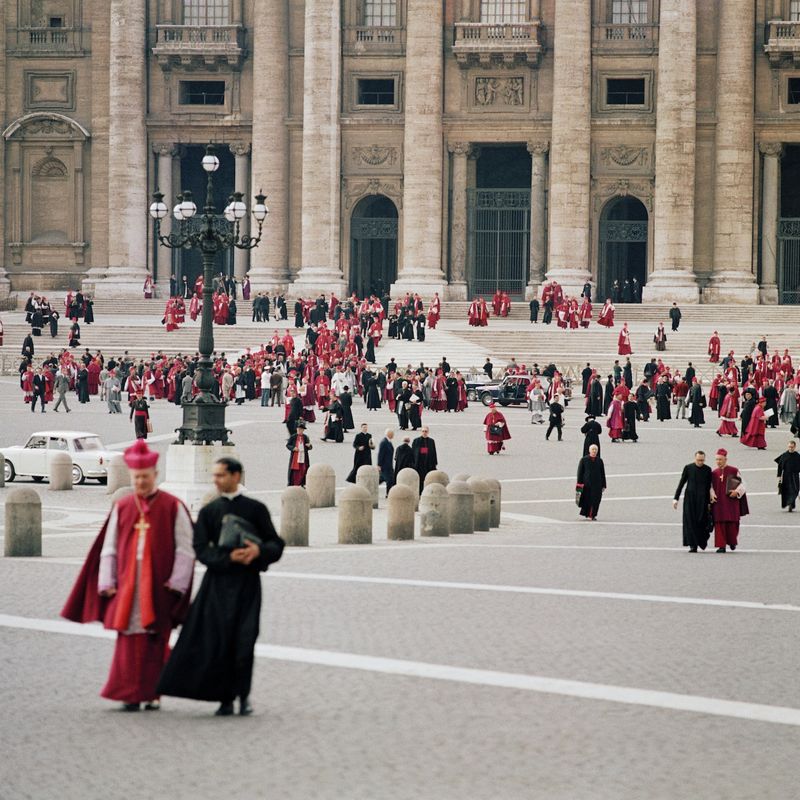
The Catholic Church’s reading of Romans 9–11 is not merely an academic exercise. It has been formalized in some of the most significant magisterial documents of the twentieth and twenty-first centuries, producing a body of teaching that traces a clear arc from the Second Vatican Council to Pope Francis.
Nostra Aetate and the Conciliar Revolution
Nostra Aetate §4 (1965) declared that “God holds the Jews most dear for the sake of the Fathers; he does not repent of the gifts he makes or of the calls he issues,” directly quoting Romans 11:28–29. The Council Fathers explicitly rejected the charge that the Jewish people bear collective guilt for Christ’s death and called for mutual understanding and respect between Catholics and Jews. The declaration grounded the Church’s relationship to Judaism not in replacement but in continuity—the continuity of God’s irrevocable promises.
The significance of Nostra Aetate cannot be overstated. For centuries, a dominant strain of Christian theology held that the Jewish covenant had been superseded by the Church, and the harshest versions of this position—known as “hard” supersessionism or replacement theology—bore bitter fruit in the anti-Jewish polemics of the patristic and medieval periods and contributed to the theological climate that enabled modern antisemitism. Yet this view was not entirely universal even before the Council. Thomas Aquinas, in his Commentary on Romans 11:26–29, affirmed that God’s gifts and calling to Israel remained irrevocable and that the Jewish people retained an ongoing role in the divine economy—a notable departure from the harder Augustinian adversus Judaeos tradition. What scholars now distinguish as “soft” supersessionism—which saw Christianity as the fulfillment of Judaism while maintaining that Israel retained some theological significance—was always present alongside the harsher versions. Nostra Aetate represented a decisive retrieval of these more generous strands of the tradition, grounded in Paul’s own teaching that God’s gifts and calling are irrevocable (Rom 11:29).
Lumen Gentium §16 further specified the relationship: “In the first place we must recall the people to whom the testament and the promises were given and from whom Christ was born according to the flesh. On account of their fathers this people remains most dear to God, for God does not repent of the gifts He makes nor of the calls He issues.” The Council Fathers, reading Romans 9:4–5 and 11:28–29, located the Jewish people in a unique theological position—not outside the economy of salvation, but in a relationship with God that, while mysterious, has never been abrogated.
The Papal Teaching from John Paul II to Francis
Pope John Paul II, in his historic visit to the Great Synagogue of Rome on April 13, 1986—the first such visit by a pope in recorded history—called the Jews “our elder brothers.”31 In Mainz in 1980, he spoke of “the people of God of the Old Covenant, which has never been revoked by God.” (For more on Ratzinger’s theological method, see my essay on Joseph Ratzinger and the purpose of theology.)32 These were not merely diplomatic gestures; they were theological statements rooted in Paul’s teaching in Romans 11.
John Paul II’s 1998 document We Remember: A Reflection on the Shoah, issued through the Commission for Religious Relations with the Jews, confronted the historical failure of Christians to uphold the theology of Romans 11. The document acknowledged that “the history of relations between Jews and Christians is a tormented one” and called Catholics to genuine teshuvah (repentance) for the ways in which Christian anti-Judaism contributed to Jewish suffering—while distinguishing between the theological anti-Judaism of earlier centuries and the racial antisemitism of the modern era.
Pope Benedict XVI, building on his predecessor’s work, devoted sustained theological attention to the question of Israel in Verbum Domini (“The Word of the Lord,” 2010), §43: “The Church recognizes as indispensable the encounter with the Jewish people and dialogue with their faith, which finds its foundation in the sacred Scriptures that we share.” In his Jesus of Nazareth volumes, Ratzinger/Benedict carefully argued that the New Testament, properly read, provides no warrant for anti-Jewish theology—a point grounded directly in his exegesis of Romans 9–11.
Pope Francis, in Evangelii Gaudium (“The Joy of the Gospel,” 2013), §247, synthesized the conciliar and post-conciliar teaching: “We hold the Jewish people in special regard because their covenant with God has never been revoked…As Christians, we cannot consider Judaism as a foreign religion; nor do we include the Jews among those called to turn from idols and to serve the true God.” This passage, with its direct echo of Romans 11:29, represents the mature fruit of the Church’s engagement with Paul’s teaching on Israel.
The 2015 Document: Irrevocable Gifts
Most significantly, the 2015 document from the Commission for Religious Relations with the Jews, titled “The Gifts and the Calling of God Are Irrevocable” (Rom 11:29), provided the most comprehensive Catholic reflection on Romans 9–11 to date.33 The document affirms that “the Church does not replace the people of God of Israel” and that God “has never revoked his covenant with his people Israel.” At the same time, it maintains that Jesus Christ is “the universal and complete Saviour of all humanity”—holding in tension the universality of Christ’s salvific work and the irrevocability of God’s covenant with Israel.
The 2015 document also addressed a question that had been debated since the Council: whether the Catholic Church should actively seek the conversion of Jews. It concluded that “the Catholic Church neither conducts nor supports any specific institutional mission work directed towards Jews,” while maintaining that Christians must always be prepared to give witness to their faith.34 This position flows directly from Romans 11: if God’s gifts and calling to Israel are irrevocable, and if the precise manner of Israel’s participation in God’s salvation remains an “unfathomable divine mystery,” then the Church’s posture toward Israel must be one of respect, dialogue, and eschatological hope rather than proselytism.
The document acknowledges that precisely how God’s covenant with Israel and his covenant in Christ relate to one another is a mystery that exceeds theological comprehension. “That the Jews are participants in God’s salvation is theologically unquestionable, but how that can be possible without confessing Christ explicitly, is and remains an unfathomable divine mystery.” This is the Catholic Church at its best: affirming what must be affirmed on the basis of Scripture and Tradition, while refusing to reduce mystery to system. (For a broader discussion of how the Church understands salvation outside her visible boundaries, see my separate essay.)
Catholic Rejection of Replacement Theology and Dispensationalism
Paul’s argument in Romans 9–11 rules out two extremes that have recurred throughout Christian history.
Replacement theology (supersessionism) holds that the Church has entirely replaced Israel as the people of God—that the covenant with the Jews has been abrogated and that the Church is the “New Israel” in an exclusionary sense. This view was common in the patristic and medieval periods and found its most extreme expressions in the anti-Jewish polemics that scarred Christian history. The Catholic Church has formally repudiated this position. Nostra Aetate and the 2015 Gifts and Calling document make clear that the Church “does not replace Israel” and that the covenant has “never been revoked” (cf. CCC §839). Paul’s olive tree permits only one reading: there is one tree, one people of God, and the Gentile branches are grafted into Israel, not planted in her place.
Dispensational theology, on the other hand—developed by John Nelson Darby in the nineteenth century and popularized by the Scofield Reference Bible—maintains a sharp separation between Israel and the Church as two distinct peoples of God with two distinct destinies. In this framework, God’s promises to Israel will be fulfilled literally and nationally, often through a restored temple, a future millennial kingdom, and a rapture that separates the Church from the tribulation. God’s plan for the Church and his plan for Israel operate on parallel but distinct tracks.
Paul’s argument will not bear this weight either. Paul maintains one olive tree, not two. The Gentiles are grafted into Israel’s tree—not into a parallel tree. Paul’s vision is of a single, unified people of God at the eschaton, not two peoples with separate destinies. When Paul speaks of “all Israel” being saved, he points toward the dissolution of the Jew-Gentile distinction, not its perpetuation. The people of God will stand united as one, as ethnic titles and historical heritages melt into irrelevance: “There is neither Jew nor Greek, there is neither slave nor free person, there is not male and female; for you are all one in Christ Jesus” (Gal 3:28, NAB).
The Catholic position occupies the terrain between these extremes. God has not abandoned Israel. God has not created a separate destiny for Israel. God is bringing all things together in Christ—Jews and Gentiles, the natural branches and the grafted ones—into a single people whose unity will be the consummation of salvation history.
Doxology: The Depth of the Riches
Paul concludes his argument not with a systematic resolution but with a hymn:
“Oh, the depth of the riches and wisdom and knowledge of God! How inscrutable are his judgments and how unsearchable his ways! ‘For who has known the mind of the Lord or who has been his counselor? Or who has given him anything that he may be repaid?’ For from him and through him and for him are all things. To him be glory forever. Amen.” (Rom 11:33–36, NAB)
This doxology is not an afterthought. It is the theological conclusion of the entire argument. After three chapters of wrestling with the mystery of Israel’s election, the Gentiles’ ingathering, the hardening and the hope, Paul arrives not at a system but at worship. He has laid out the problem with precision, engaged the objections with rigor, and pointed toward God’s eschatological resolution with confidence—but in the end, the mystery exceeds his capacity to systematize it.
Aquinas captured the proper theological posture toward this mystery: “Why He draws one and does not draw another, do not desire to judge, if you do not wish to err” (Commentary on the Gospel of John, ch. 6, lect. 5).
The Catholic reader should note that this is precisely the posture the Church has adopted. The De Auxiliis controversy between Thomists and Molinists ended not in a definitive resolution but in a recognition that both approaches illuminate aspects of the mystery without exhausting it. The relationship between divine sovereignty and human freedom, between God’s irrevocable promises to Israel and the universal claims of the gospel—these are not puzzles to be solved but mysteries to be contemplated.
Paul’s doxology teaches us something essential about the theological enterprise itself: the purpose of theology is not to explain God but to know him, and to know him is to fall silent in wonder before the depth of his wisdom. “How inscrutable are his judgments and how unsearchable his ways!”—not because God is arbitrary, but because his wisdom surpasses our capacity to trace it.
Conclusion
The distinction between Jew and Gentile does not reflect God’s ideal. God originally created the distinction when he called Abraham, springing forth hope for divine reconciliation in a fallen world. Before Abraham, there was no “people of God” in the covenantal sense, but by calling Abraham and his descendants to holiness, God intended eventually to bring the entire world into relationship with himself, thereby eliminating the need to distinguish between the nations and Israel. Abraham’s descendants, however, failed to appreciate this purpose of their divine election. Those who were supposed to be a light to the nations retreated into national isolation, frustrating God’s intention.
So God worked through the refusal itself, bringing the gospel of Jesus Christ directly to the nations through Jewish apostles. In the process, however, Israel has been temporarily left behind. This will not always be the case. Since Christ, the situation has been reversed: the Gentiles now enjoy the covenant blessings while the Jews remain, for the most part, outside the visible communion of the Church. But this reversal is not permanent. God’s faithfulness demands otherwise.
Contrary to replacement theology, God is not finished with historic Israel. His gifts and calling are irrevocable (11:29), and the Church that forgets this forgets her own roots. Contrary to dispensational theology, God takes no pleasure in the Jew-Gentile distinction; it exists as a consequence of sin and will be overcome in the fullness of time. Contrary to those who would reduce Romans 9–11 to a proof text for individual predestination—whether Calvinist or Arminian in flavor—Paul’s argument is about something far larger: the faithfulness of God to his covenantal promises and the mystery of how that faithfulness encompasses all peoples.
Paul points to the day when the outworking of God’s saving grace will eliminate the ethnic and historical divisions between Jews and Gentiles, erasing those distinctions forever. The people of God will stand united as one, as the ethnic titles and historical heritages that once divided them melt into irrelevance. Only when the fullness of the Gentiles and the fullness of Israel are fused together will the new humanity be realized.35
Until that day, we hold the mystery—as Paul held it, as the Church holds it—in faith, in hope, and in the worship that is the only adequate response to the inscrutable judgments and unsearchable ways of God.
Frequently Asked Questions
Does Romans 9 teach Calvinism?
Romans 9 does not straightforwardly teach Calvinism. While Calvinist interpreters read the passage as a proof text for unconditional individual election, the Old Testament citations Paul uses—Jacob and Esau (Genesis and Malachi), Pharaoh (Exodus), the potter and clay (Jeremiah 18)—all concern peoples and their corporate roles in salvation history, not the eternal destinies of isolated individuals. The Catholic tradition, supported by the Pontifical Biblical Commission, reads Romans 9–11 as Paul’s meditation on Israel’s corporate destiny and the inclusion of the Gentiles within God’s covenantal plan. For a fuller comparison, see my post on Catholic vs. Calvinist predestination.
What is the Catholic view of predestination in Romans 9?
The Catholic Church teaches that Romans 9 addresses corporate election—God’s sovereign freedom to define the boundaries of his covenant people—not a blueprint for individual predestination to heaven or hell. Within Catholic theology, two legitimate schools debate how divine sovereignty and human freedom interact: Thomism (which holds that God’s efficacious grace infallibly moves the will without coercion) and Molinism (which holds that God uses middle knowledge to accomplish his purposes through genuinely free creaturely choices). The Church has declined to settle this debate, affirming both as legitimate theological opinions since the De Auxiliis resolution of 1607.
What is the difference between Thomism and Molinism?
Thomism and Molinism are the two great Catholic schools on grace and predestination. Thomists, following Thomas Aquinas and Domingo Báñez, hold that God predestines unconditionally (ante praevisa merita) through physical premotion—efficacious grace that infallibly moves the will to consent without coercion. Molinists, following Luis de Molina, hold that God uses middle knowledge (scientia media)—his knowledge of what every free creature would do in every possible circumstance—to providentially arrange the world so that his purposes are accomplished through genuinely free creaturely choices. Both were declared legitimate by Pope Paul V in 1607 after the decade-long Congregatio de Auxiliis.
Does the Catholic Church teach replacement theology?
No. The Catholic Church has formally rejected replacement theology (supersessionism). The Second Vatican Council’s Nostra Aetate §4 (1965) declared that God’s gifts and calling to Israel are irrevocable, directly citing Romans 11:28–29. The 2015 Vatican document “The Gifts and the Calling of God Are Irrevocable” further affirmed that “the Church does not replace the people of God of Israel.” Paul’s olive tree metaphor in Romans 11 maintains one tree—one people of God—with Gentile branches grafted into Israel, not replacing her. For more on the Church’s understanding of its relationship to Israel, see my essay on Lumen Gentium and salvation outside the Church.
What does "all Israel will be saved" mean in Romans 11:26?
“All Israel” (πᾶς Ἰσραήλ) in Romans 11:26 refers to Israel as a national corporate identity, not every individual Jew without exception. This corporate sense matches the term’s usage in Jewish literature, such as the Mishnah’s “All Israel has a share in the world to come” (Sanhedrin 10:1). Paul argues that Israel’s current hardening is temporary—lasting until “the full number of the Gentiles comes in” (11:25)—after which ethnic Israel as a whole will turn to Christ in an eschatological ingathering that demonstrates God’s covenantal faithfulness. Both the universal salvific will of God and the irrevocability of God’s covenant with Israel (Rom 11:29) undergird this hope.
Does Romans 9 teach predestination?
Romans 9 addresses God’s sovereign freedom in choosing the instruments of his covenantal plan, but it does not teach predestination in the way many modern readers assume. The passage concerns corporate election—the historical roles of peoples (Israel and Edom, represented by Jacob and Esau) within salvation history—rather than the eternal destiny of individual souls. The potter-and-clay metaphor (9:19–23), drawn from Jeremiah 18, is conditional: God reshapes the clay in response to the vessel’s condition. The Catholic Church teaches that God genuinely desires all men to be saved (1 Tim 2:4) and “predestines no one to go to hell” (CCC §1037).
Does the Catholic Church teach predestination?
Yes, but not in the Calvinist sense. The Catholic Church affirms that God predestines the elect to glory, but she has never defined the precise mechanism by which predestination and human freedom cohere. Two legitimate schools exist within Catholic theology: Thomism, which holds that God predestines unconditionally through efficacious grace that infallibly moves the will without coercion, and Molinism, which holds that God uses middle knowledge (scientia media) to accomplish his purposes through genuinely free creaturely choices. Both were declared legitimate by Pope Paul V in 1607. Crucially, the Catholic Church teaches that God “predestines no one to go to hell” (CCC §1037) and that his salvific will extends to all people.
What does the potter and clay mean in Romans 9?
The potter-and-clay metaphor in Romans 9:19–23 is drawn from Jeremiah 18:1–10, where the potter reshapes the clay because the vessel was marred—the clay’s condition prompts the potter’s action. In the Jeremiah passage, God explicitly states that if a nation he has pronounced judgment upon repents, he will relent (Jer 18:7–8). The metaphor therefore expresses God’s sovereign right to respond to human choices, not an irresistible molding of passive material. Catholic interpreters read the potter metaphor as affirming God’s freedom to assign corporate roles in salvation history while preserving genuine human agency.
What is corporate election in the Bible?
Corporate election is the biblical concept that God’s election is primarily of a people for a vocation rather than of individuals for eternal salvation or damnation. In the Old Testament, God elected Israel as a corporate body to be “a light to the nations” (Isa 49:6)—a vocation of service, not merely a mark of privilege. In the New Testament, Paul’s language of election in Romans 9–11 follows this pattern: Jacob and Esau represent nations (Israel and Edom), not individuals destined for heaven or hell. The Second Vatican Council’s Lumen Gentium §9 teaches that “God, however, does not make men holy and save them merely as individuals, without bond or link between one another. Rather has it pleased Him to bring men together as one people, a people which acknowledges Him in truth and serves Him in holiness.”
Is Molinism or Thomism the official Catholic position on predestination?
Neither. Both Molinism and Thomism are legitimate theological opinions within Catholicism. The Congregatio de Auxiliis (1597–1607), a formal papal commission established to adjudicate the dispute, concluded with Pope Paul V declaring both positions acceptable. Each party was forbidden to censure the other as heretical. The Church affirms that God’s grace is sovereign and prior to all human merit, and that human freedom is genuine and can resist grace—but she declines to specify the precise metaphysical mechanism by which these truths cohere, recognizing that the mystery exceeds the capacity of human reason to fully penetrate.
1. The attribution to Valentin de Boulogne, while widely accepted, remains qualified. The painting has also been attributed to Nicolas Tournier and Orazio Gentileschi. See the Museum of Fine Arts, Houston catalogue entry for provenance and attribution history.
2. I wrote the first draft of this essay as an evangelical Protestant undergraduate, deeply influenced by N. T. Wright's New Perspective on Paul and Greg Boyd's open theism, trying to make sense of a passage that nearly every tradition claims for itself. I was an evangelical through and through—formed by Southern Baptist churches, shaped by the theological debates that defined American evangelicalism, and convinced that the right exegetical method could unlock Paul's meaning once and for all. Years later, having entered the Catholic Church, I find that the core of what I argued then—that Romans 9–11 addresses the corporate destiny of Israel and the Gentiles within God's plan of salvation, not a blueprint for individual predestination—has only deepened in conviction. What has changed is the theological framework I bring to the text: no longer the categories of evangelical Protestantism, but the richer and more ancient tradition of the Catholic Church, with its patristic roots, its conciliar precision, and its willingness to hold mystery in tension rather than resolve it prematurely. Boyd's influence, in particular, has given way—I can no longer accept the open theist denial of exhaustive divine foreknowledge, though I remain grateful for the seriousness with which Boyd read the Old Testament backgrounds of Paul's metaphors.
3. See N. T. Wright, The New Testament and the People of God (Minneapolis: Fortress Press, 1992), 260–68. Wright's comprehensive treatment of Israel's self-understanding as the Adamic community remains one of the most illuminating discussions in contemporary scholarship.
4. C. Marvin Pate et al., The Story of Israel: A Biblical Theology (Downers Grove, IL: InterVarsity Press, 2004), 68.
5. Psalms of Solomon 17:21–25. See R. B. Wright, “Psalms of Solomon,” in The Old Testament Pseudepigrapha, vol. 2, ed. James H. Charlesworth (New York: Doubleday, 1985), 667.
6. All Scripture quotations from the New American Bible Revised Edition (NABRE) unless otherwise noted. The NABRE is the USCCB's current study Bible translation; the Lectionary for Mass in the United States uses the older NAB (1970 OT / 1986 NT), with Psalms from the Grail translation.
7. John Piper, The Justification of God: An Exegetical and Theological Study of Romans 9:1–23, 2nd ed. (Grand Rapids: Baker Academic, 1993). Piper’s work maybe the most rigorous Calvinist exegetical treatment of this passage.
8. Thomas R. Schreiner, Romans, Baker Exegetical Commentary on the New Testament (Grand Rapids: Baker Academic, 1998), 497–520.
9. For a fuller comparison of the Reformed and Catholic positions, see my post on Catholic vs. Calvinist predestination.
10. Brian J. Abasciano, Paul's Use of the Old Testament in Romans 9:1–9: An Intertextual and Theological Exegesis (London: T&T Clark, 2005). See also Abasciano, Paul's Use of the Old Testament in Romans 9:10–18 (London: T&T Clark, 2011). See also the Society of Evangelical Arminians for accessible summaries of corporate election arguments.
11. This practice—quoting a fragment to invoke the whole—is what Richard Hays calls “metalepsis.” See Richard B. Hays, Echoes of Scripture in the Letters of Paul (New Haven: Yale University Press, 1989). Hays demonstrates that Paul routinely cites a few words from an Old Testament passage with the expectation that his audience will hear the full original context resonating behind the excerpt. This was standard practice in Second Temple Jewish exegesis.
12. For a clear presentation of the Arminian hermeneutical framework, see Ben Witherington, Paul's Letter to the Romans: A Socio-Rhetorical Commentary (Grand Rapids: Eerdmans, 2004), 249–73.
13. John Sanders, The God Who Risks: A Theology of Providence (Downers Grove, IL: InterVarsity Press, 1998), 121–30.
14. Gregory A. Boyd, God of the Possible: A Biblical Introduction to the Open View of God (Grand Rapids: Baker, 2000), 47–50. See also my post on Greg Boyd and the problem of suffering.
15. Pontifical Biblical Commission, The Jewish People and Their Sacred Scriptures in the Christian Bible (Vatican City: Libreria Editrice Vaticana, 2001), Part III, Section C. This document represents the most authoritative Catholic exegetical treatment of Romans 9–11 in recent decades.
16. Canons of the Second Council of Orange (529), Canon 5. For a fuller discussion of Orange's significance for Catholic soteriology, see my posts on Pelagianism and Semi-Pelagianism and God Desires All Men To Be Saved.
17. Thomas Aquinas, Commentary on the Epistle to the Romans, ch. 9, lect. 3. See also Aquinas, Summa Theologiae I, q. 23, aa. 1–5, for the systematic treatment of predestination.
18. On the relationship between Augustine and Aquinas on predestination, see Reginald Garrigou-Lagrange, O.P., Predestination, trans. Bede Rose (Rockford, IL: TAN Books, 1998), 47–85. For a more accessible summary of the development from Augustine through Aquinas, see Fr. William Most, Grace, Predestination, and the Salvific Will of God (Front Royal, VA: Christendom Press, 1997).
19. See the Catholic Encyclopedia entry on the Congregatio de Auxiliis. For a fuller discussion of the Thomism-Molinism debate, see my post on Molinism.
20. D. R. de Lacey, “Gentiles,” in The Dictionary of Paul and His Letters, ed. Gerald F. Hawthorne and Ralph Martin (Downers Grove, IL: InterVarsity Press, 1993), 335–39.
21. James D. G. Dunn, Romans 9–16, Word Biblical Commentary (Dallas: Word, 1988), 679.
22. W. S. Campbell, “Israel,” in The Dictionary of Paul and His Letters, 441–46. Campbell's article remains one of the most balanced treatments of Paul’s use of “Israel.”
23. Joseph Ratzinger, Many Religions—One Covenant: Israel, the Church, and the World, trans. Graham Harrison (San Francisco: Ignatius Press, 1999), 70. See also my post on Joseph Ratzinger and the purpose of theology.
24. Douglas Moo, The Epistle to the Romans, New International Commentary on the New Testament (Grand Rapids: Eerdmans, 1996), 730.
25. Augustine, Quaestiones ad Simplicianum I, q. 2. See also Augustine, On the Predestination of the Saints, ch. 8. For a thorough treatment of Augustine's evolving views on predestination, see the helpful discussion at Catholic Culture.
26. C. E. B. Cranfield, Romans 9–16, International Critical Commentary (Edinburgh: T&T Clark, 1979), 587.
27. See Moo, Romans, 720–22, for a careful adjudication of the three main interpretive options.
28. John Murray, The Epistle to the Romans, vol. 2, New International Commentary on the New Testament (Grand Rapids: Eerdmans, 1968), 96.
29. Cranfield, Romans 9–16, 576.
30. Dunn, Romans 9–16, 693.
31. John Paul II, Address at the Great Synagogue of Rome (April 13, 1986). The full text is available through the Vatican website. This was the first recorded visit by a reigning pope to a Jewish synagogue.
32. John Paul II, Address to the Jewish Community of Mainz, Germany (November 17, 1980). For the full address, see the English translation at the Council of Centers on Jewish-Christian Relations.
33. Commission for Religious Relations with the Jews, “The Gifts and the Calling of God Are Irrevocable” (Rom 11:29): A Reflection on Theological Questions Pertaining to Catholic-Jewish Relations on the Occasion of the 50th Anniversary of Nostra Aetate (No. 4) (Vatican City, December 10, 2015). For additional Catholic exegetical perspectives on Romans 9–11, see Joseph A. Fitzmyer, Romans, Anchor Yale Bible Commentary (New York: Doubleday, 1993), 541–632—the standard Catholic critical commentary on the epistle; Brendan Byrne, Romans, Sacra Pagina (Collegeville, MN: Liturgical Press, 1996), 289–355, which foregrounds the universal-salvific-will framework; and Matthew Levering, Predestination: Biblical and Theological Paths (Oxford: Oxford University Press, 2011), which engages the Thomism-Molinism debate directly in relation to the biblical texts.
34. This statement sparked controversy. Jews for Jesus executive director David Brickner called the position “egregious,” while some traditionalist Catholics argued it contradicted the Great Commission. The document's authors distinguished between formal institutional conversion campaigns and individual Christian witness, affirming that Catholics should “bear witness” to their faith to Jews in a “humble and sensitive manner” while avoiding programmatic proselytism. The Vatican emphasized that the document was “not a magisterial document” but a theological “reflection”—yet it represented the first time the Church explicitly rejected institutional missionary activity directed toward Jews in an official publication.
35. Dunn, The Theology of Paul the Apostle (Grand Rapids: Eerdmans, 1998), 529.

Garrett Ham
Garrett Ham is an attorney, military veteran, and holds a Master of Divinity from Yale Divinity School. He writes from Northwest Arkansas on theology, law, and service.
More about Garrett →Related Posts
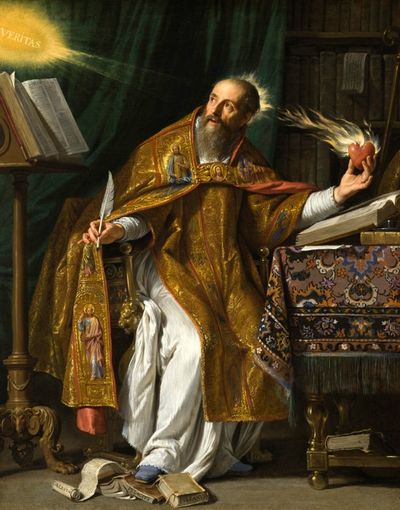
Catholic vs. Calvinist Predestination: What Divides Us and What We Share
How do Catholic and Calvinist views of predestination differ? A comparison of Thomism, Molinism, and Reformed theology on election, grace, and free will.

Molinism: Divine Sovereignty and Human Freedom
What is Molinism? Luis de Molina's middle knowledge (scientia media), the De Auxiliis controversy, and how Molinism compares to Thomism and Calvinism.
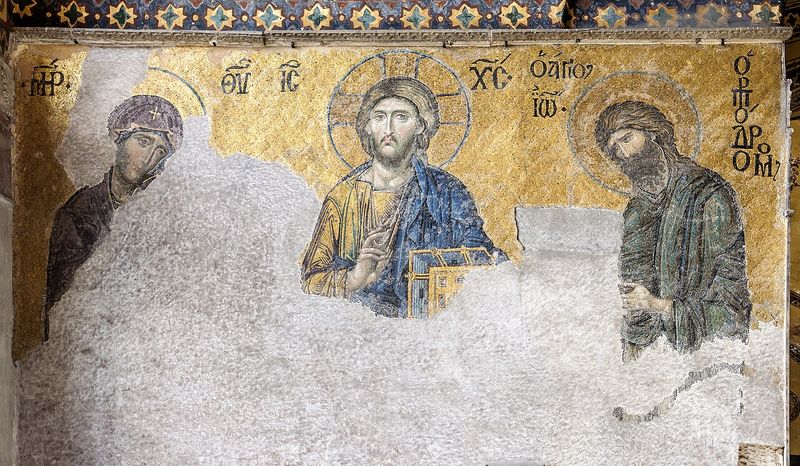
God Desires All Men To Be Saved
What does 1 Timothy 2:4 mean for Catholic theology? A reflection on Catechism §74, predestination, free will, and God's universal desire for salvation.
Stay Informed
Get new writing on faith, law, and service delivered to your inbox.
No spam. Unsubscribe anytime.