Ph.D. Programs in New Testament: An Insider’s Guide to the Top Doctoral Programs

On This Page
The academic job market in biblical studies is brutal. Of the roughly two dozen programs worldwide that can credibly launch an academic career in New Testament scholarship, only a handful consistently place graduates in tenure-track positions at research universities. The field is contracting—SBL data shows faculty positions at research institutions at “all-time lows” since data collection began in 2003—and where you earn your doctorate matters more than almost any other decision you will make.
I wrote about my own doctoral ambitions during my time at Yale Divinity School, and the question I wrestled with then is the same one prospective students ask me now: which programs are actually worth it? This guide is the candid assessment you will not find on admissions pages. It profiles the thirteen strongest programs and three honorable mentions, covering faculty, funding, placement, and honest drawbacks—the information I wish I had when I started thinking seriously about doctoral work.
A few orienting principles before we begin. First, the distinction between university-housed programs (Yale, Harvard, Duke, Chicago, Emory) and seminary programs (Princeton Theological Seminary) matters enormously for career outcomes. University PhDs open doors across the full spectrum of academic employment; seminary PhDs can face subtle bias in secular hiring. Second, UK and German programs operate on fundamentally different models from North American ones—shorter timelines but less structured training, and far less reliable funding for international students. Third, confessional orientation exists on a spectrum, and understanding where a program sits affects everything from dissertation topic selection to job market positioning.
1. Yale University
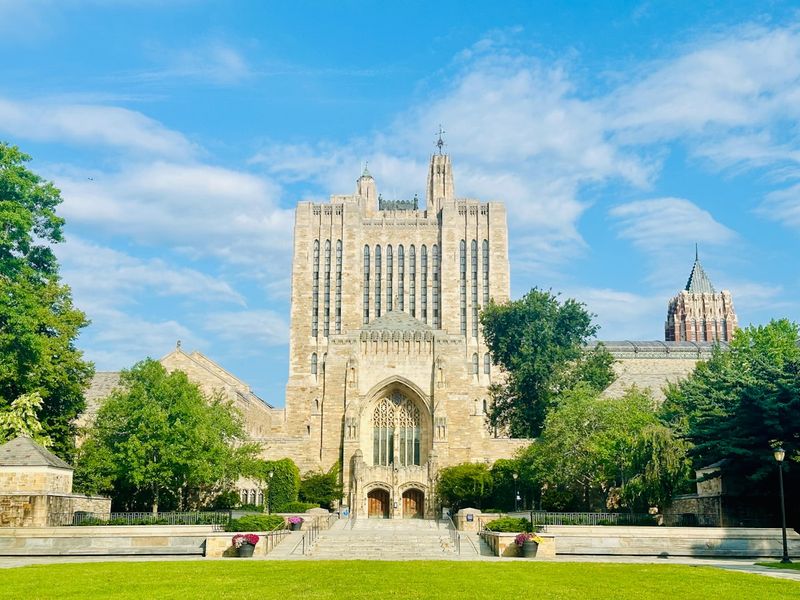
The PhD in Religious Studies is awarded through Yale’s Graduate School of Arts and Sciences, with the New Testament track situated within the “Early Mediterranean and West Asian Religions” (EMWAR) field. Faculty hold joint appointments in the Department of Religious Studies and Yale Divinity School, an ecumenical Christian institution. This dual structure gives Yale a distinctive identity—more theologically engaged than a purely secular department, but conferring a university PhD rather than a seminary degree.
Yale fields what is arguably the largest and most diverse NT faculty cluster in North America. The program’s methodological range spans archaeological and material culture approaches, Hellenistic Judaism, literary theory, critical race and gender studies, and traditional historical criticism. The EMWAR framework encourages students to work across disciplinary boundaries, studying early Christianity alongside Second Temple Judaism, rabbinic literature, and Mediterranean religions broadly.
Faculty. Laura Nasrallah (Buckingham Professor of NT Criticism and Interpretation) is a leading voice on archaeology and material culture in early Christianity, colonialism and power, and the social world of Paul. Gregory Sterling (Dean of YDS, Lillian Claus Professor) is the foremost American scholar of Hellenistic Judaism, with landmark work on Philo, Josephus, and Luke-Acts. Teresa Morgan joined from Oxford in 2022, bringing deep expertise in Greco-Roman social history and early Christian faith. Michal Beth Dinkler works on narrative theory, and Yii-Jan Lin brings critical race and gender approaches. Harry Attridge (Sterling Professor Emeritus), a towering figure in Johannine studies and Hebrews scholarship, shaped the program’s current identity.
Funding. All admitted students receive full tuition, health insurance (including family coverage), and a $50,777 annual stipend for 2025–26, guaranteed for six years. A $7,500 annual family support subsidy is available for students with children. Total support exceeds $500,000 over the doctoral program—among the most generous packages in the field.
Admissions and structure. The entire Religious Studies department admits roughly ten to fifteen students per year across ten fields; the NT/EMWAR concentration typically admits one to three. Language requirements include two modern research languages (normally French and German) plus at least two ancient languages at the advanced level, selected according to the student’s concentration from options including Hebrew, Aramaic, Syriac, Greek, Latin, Ethiopic, Middle Persian, Coptic, and Arabic. Students complete a minimum of twelve courses over two years, qualifying examinations in the third year, then a dissertation prospectus colloquium. Expected completion is five to six years.
Placement. Yale’s combination of brand recognition and extensive faculty networks provides strong placement advantages. Graduates hold positions across research universities, divinity schools, and liberal arts colleges. The program’s breadth—straddling secular religious studies and theological education—makes graduates competitive in both markets.
Honest assessment. The EMWAR field’s breadth can diffuse NT-specific identity. The extensive language requirements (four or more languages) extend time to degree. New Haven’s cultural offerings outside Yale are limited. But for students who want maximum faculty breadth and methodological diversity—particularly those drawn to material culture, Hellenistic Judaism, or literary-critical approaches—Yale is the strongest choice available. Students interested in the broader Yale Divinity School experience can read about the M.Div. program and what it’s like to navigate YDS as a conservative.
2. Duke University
The PhD in Religion is awarded through the Duke Graduate School via the Graduate Program in Religion, a collaborative structure drawing faculty from the Department of Religious Studies and Duke Divinity School (United Methodist-affiliated). Duke explicitly notes that “unlike many of its peer programs, which are housed in either a university religion department or a divinity school,” its program draws on both—a genuinely distinctive arrangement.
Duke’s NT program is defined by Richard B. Hays’s towering legacy in intertextuality, the use of the Old Testament in the New, and the theological ethics of the New Testament. The program produces scholars fluent in both critical-historical and theological registers—graduates who can speak to religious studies departments and divinity school faculties alike.
Faculty. Mark Goodacre (Professor of Religious Studies) is the world’s leading Synoptic Problem scholar and Q skeptic. C. Kavin Rowe works on Luke-Acts, early Christian identity, and Christianity’s relationship to culture. J. Ross Wagner specializes in Paul’s use of the Old Testament, continuing the Hays tradition. Brittany Wilson works on Luke-Acts, gender, and masculinity. Douglas Campbell (Research Professor) is known for his provocative reinterpretation of Pauline soteriology.
Funding. Full tuition, fees, and health insurance for five years, with a projected stipend of $42,500 for 2025–26. Durham, North Carolina’s cost of living is dramatically lower than Cambridge or New Haven—a genuine offset that makes Duke’s package more competitive than the raw number suggests.
Admissions and structure. The program reports an approximately 5% acceptance rate—among the most selective in the field. Two years of coursework, four preliminary examinations, and required internal and external minors ensure methodological breadth. Cross-registration with UNC Chapel Hill effectively doubles available faculty, though Bart Ehrman’s 2025 retirement diminishes this somewhat. Expected time to completion is five to seven years.
Honest assessment. Hays’s and Joel Marcus’s transitions to emeritus status removed the program’s most prominent names from active advising—a real loss. But the dual-market positioning is perhaps Duke’s single greatest asset: graduates compete credibly for both university and seminary positions. For students seeking rigorous historical-exegetical training with genuine theological engagement, especially in Paul, the Synoptics, or OT-in-NT intertextuality, Duke remains a top-tier choice.
3. Harvard University
The PhD in the Study of Religion is awarded through the Griffin Graduate School of Arts and Sciences, with NT faculty primarily housed at Harvard Divinity School. Despite the HDS connection, this is a university degree, not a divinity school credential.
Harvard’s NT program is known for methodological innovation and critical-theoretical sophistication—feminist hermeneutics, postcolonial criticism, gender and sexuality studies, and material culture analysis alongside traditional historical-philological work. The program studies the broader ancient Mediterranean world, including the Nag Hammadi texts and apocryphal literature. This is the most theoretically progressive of the major North American programs.
Faculty. The program underwent major renewal in 2022 with two stellar hires. Annette Yoshiko Reed (Krister Stendahl Professor) is a leading scholar of Second Temple Judaism, Jewish-Christian relations, and ancient Ethiopic texts. Benjamin Dunning works on Paul and contemporary philosophy, gender and sexuality in early Christianity. Elisabeth Schüssler Fiorenza, the pioneering feminist NT scholar and first woman SBL president, retired from active teaching in 2022 but remains Research Professor. Karen King is known for Gnosticism and Gospel of Mary scholarship.
Funding. Fully funded with a minimum $50,000 annual stipend guaranteed for five years, plus tuition, health insurance, and transportation subsidies. This places Harvard at the top of the funding hierarchy, though Cambridge, Massachusetts is among the most expensive places to live in the country.
Honest assessment. Only three core NT professors—Giovanni Bazzana (Frothingham Professor of the History of Religion), Reed, and Dunning—which provides limited flexibility if advisor fit does not work. Long time to degree (six to eight years). The program’s theoretical bent is less ideal for traditional historical-exegetical training. But the Harvard brand carries unmatched prestige, the cross-university resources are extraordinary, and the 2022 faculty renewal signals aggressive reinvestment. Best for students drawn to feminist, postcolonial, or theoretically sophisticated approaches who are targeting R1 religious studies departments.
4. University of Chicago Divinity School
The PhD in NT and Early Christian Literature is awarded through the Divinity School. The 1995 NRC Assessment ranked its faculty #1 in quality among all doctoral-granting religious studies programs—a distinction now three decades old but still frequently cited. A 1931 departmental statement declared the school “operates without reference to any denominational or theological system. It has no body of doctrine to extend or to defend.”
Chicago defined the “history of religions” approach to early Christianity—studying the New Testament not as theology but as a literary and religious phenomenon embedded in Greco-Roman antiquity. Hans Dieter Betz’s groundbreaking application of Greco-Roman rhetorical analysis to Paul established Chicago as the premier institution for studying early Christianity through the lens of classical antiquity.
Faculty. Margaret Mitchell (Shailer Mathews Distinguished Service Professor) is one of the most distinguished living NT scholars—a literary historian specializing in Paul, early Christian rhetoric, and John Chrysostom’s biblical interpretation. She served as SNTS president, is a Guggenheim Fellow, and was elected to the American Academy of Arts and Sciences. Erin Galgay Walsh brings Syriac Christianity expertise.
Funding. Fully funded with an annual stipend of approximately $46,350 for 2025–26, with a seven-year fellowship package—the program’s acknowledgment that completion takes longer here than elsewhere.
Honest assessment. The small active NT faculty (two professors) is a real vulnerability. Time to degree is the longest of any program profiled—seven to nine years is common, and the master’s prerequisite extends the total pipeline to potentially a decade. Chicago demands extraordinary independence and can be intellectually isolating. But the NRC #1 faculty ranking (however dated), access to the Oriental Institute and Regenstein Library, and cross-divisional work with Classics and Philosophy produce scholars with exceptionally broad training. Best for students comfortable with long timelines who want rigorously nonconfessional, history-of-religions training.
5. Emory University
The PhD in Religion is awarded through the Laney Graduate School via the Graduate Division of Religion, drawing faculty from both the Department of Religion and Candler School of Theology (United Methodist-affiliated). The NRC ranked Emory among the premier PhD programs in religious studies.
Emory’s NT path explicitly “foregrounds methods like postcolonial criticism and queer or gender studies alongside historical and literary approaches”—a distinctive methodological signature that positions it as among the most theoretically progressive programs.
Faculty. Susan Hylen (Almar H. Shatford Professor) serves as General Editor of the Journal of Biblical Literature—the most prestigious journal in the field—while specializing in gender in the NT world and the Gospel of John. Musa Dube is an internationally renowned postcolonial feminist scholar, a Friedrich Wilhelm Bessel Research Award winner from the Alexander von Humboldt Foundation. Walter Wilson specializes in Hellenistic Jewish ethical instruction. Luke Timothy Johnson (Woodruff Professor Emeritus), one of the most famous living NT scholars, retired from active teaching but his influence persists.
Funding. The $42,000 annual stipend (per the 2025 PhD Student Union collective bargaining agreement) is the highest among programs outside the Ivy League tier. Full tuition, health insurance, and professional development funds are included for five years. In 2025, 151 applicants produced 11 matriculants across all paths—roughly 7% acceptance.
Honest assessment. The theoretical emphasis on postcolonial and gender approaches may not suit students seeking traditional historical-critical or theological training. Johnson’s retirement is a significant loss. But Hylen’s JBL editorship gives students direct access to the field’s gatekeeping institution, Dube brings an unmatched global perspective, and the university-based PhD ensures broad marketability.
6. University of Oxford
The DPhil in Theology and Religion is offered through the Faculty of Theology and Religion. Like all UK PhDs, it is a research-from-day-one degree with no coursework, typically completed in three to four years.
Oxford’s NT program emphasizes “the interdependence of history with theology” and studies the New Testament’s footprint “as Christian scripture” while maintaining rigorous historical-critical standards. It is described as “the most diversely international of its kind in the UK.”
Faculty. Markus Bockmuehl is one of the world’s leading NT scholars, with major work on apostolic memory, the Jewish context of early Christianity, and Gospel studies. Jennifer Strawbridge, recently promoted to full Professor in 2025, specializes in Pauline reception in the early church. David Downs works on Pauline theology and economics in early Christianity. Peter Head brings textual criticism expertise.
Funding. This is the critical weakness for international students. Clarendon Scholarships (over 200 awarded university-wide) cover full overseas fees plus a living stipend, but only two to three theology students succeed per year. Many international students are self-funded—a stark contrast to the American model.
Honest assessment. The Oxford name carries enormous global weight, and Bockmuehl is a titan. The Bodleian Library and Ashmolean Museum are unmatched. The compressed timeline is attractive. But the funding gap for international students is serious. Prospective students should not expect N.T. Wright supervision—he holds an honorary connection through Wycliffe Hall but is not an active supervisory faculty member. Best for students with strong Classics preparation who can realistically compete for Clarendon funding or bring external support.
7. University of Cambridge
The PhD is awarded through the Faculty of Divinity (recently renamed Faculty of Theology and Religious Studies). Like Oxford, this is a research-only degree, typically three to four years.
Cambridge’s NT program has a distinctive evangelical-critical strand through Simon Gathercole and the unique connection to Tyndale House, an independent evangelical research library. Simultaneously, George van Kooten’s work on Paul and Greco-Roman philosophy represents a continental philosophical approach.
Faculty. Simon Gathercole (Professor of NT and Early Christianity) is a leading scholar of Pauline theology, the Gospel of Thomas, and the historical Jesus—one of the most prominent evangelical-sympathetic NT scholars in the UK. George van Kooten holds the Lady Margaret’s Professorship of Divinity, specializing in Paul and Stoic/Greco-Roman philosophy. James Carleton Paget works on early Jewish-Christian relations.
Honest assessment. The Tyndale House connection is unique globally—an extraordinary specialist library and scholarly community, particularly attractive for textual criticism. But the NT faculty is small; if your interests do not align with Gathercole or van Kooten, options narrow quickly. Cambridge faces the same international funding challenges as Oxford. The strongest UK option for evangelical-leaning students seeking world-class critical training.
8. Princeton Theological Seminary
A critical distinction: the PhD in Biblical Studies is offered by Princeton Theological Seminary, not Princeton University. These are entirely separate institutions. PTS is the second-oldest seminary in the US, affiliated with the Presbyterian Church (USA).
PTS has supplied more faculty to ATS-accredited theological schools than any other institution—89 faculty with PTS PhDs currently teach at ATS schools. The program emphasizes philological rigor, primary source work, and textual criticism shaped by Bruce Metzger’s legendary legacy. PTS claims the largest theological library in the US.
Faculty. Dale Allison (Richard J. Dearborn Professor) is one of the world’s most prominent NT scholars, with field-defining work on the historical Jesus, Matthew, eschatology, and the resurrection. C. Clifton Black specializes in Mark, ancient rhetoric, and biblical theology. Eric Barreto works on Luke-Acts, race and ethnicity, and Latinx biblical hermeneutics.
Funding. Full tuition with a $25,000 annual stipend for up to five years. Heavily subsidized campus housing partially offsets the low stipend. However, $25,000 is $17,000–25,000 less annually than Yale, Harvard, or Emory—a serious financial weakness.
Honest assessment. The seminary context means graduates may face the “seminary PhD” stigma in secular hiring. Small NT faculty limits course breadth. But the theological library is unmatched, Allison is a generational scholar, and Princeton University cross-registration provides access to additional faculty. Best for students drawn to Allison’s specializations who primarily target seminary and divinity school careers.
9. Durham University
The PhD in Theology and Religion is offered through the largest theology department in the UK, with approximately fifty academics and over 150 postgraduates.
Durham’s NT program has been defined by what many consider a golden age under John Barclay and Francis Watson. Barclay’s Paul and the Gift (2015) is widely regarded as the most important book on Paul since E.P. Sanders. Watson’s The Fourfold Gospel and Gospel Writing represent some of the most creative thinking on gospel origins in a generation.
Faculty. Francis Watson is arguably the most innovative gospel and hermeneutics scholar alive. Grant Macaskill (incoming Lightfoot Professor from Aberdeen) brings expertise on union with Christ and pseudepigrapha. A critical transition is underway: Barclay is being succeeded by Macaskill, and Watson may himself approach retirement. Students applying now must assess the new landscape carefully.
Honest assessment. The faculty transition creates genuine uncertainty. But Watson’s presence is extraordinary, the weekly NT Research Seminar is legendary, and a Durham–Tübingen research partnership provides international exchange. Durham’s cost of living is significantly lower than Oxford, Cambridge, or Edinburgh. Best for students interested in Pauline theology, the fourfold Gospel, or theological hermeneutics.
10. University of Notre Dame
The PhD in Theology includes a “Christianity and Judaism in Antiquity” (CJA) concentration within the Department of Theology. Notre Dame is a Catholic university, and the department has ranked #1 globally in QS World University Rankings for Theology and Religious Studies four of the past six years.
CJA encompasses Hebrew Bible, Second Temple Judaism, New Testament, and patristic studies—studied together for “mutually illuminating interrelationships.” The approach is “faith seeking understanding” within an explicitly Catholic intellectual tradition, where Scripture is studied as “the soul of theology.”
Faculty. David Lincicum, hired from Oxford’s Mansfield College, works at the intersection of early Jewish and Christian biblical interpretation, Pauline literature, and the history of NT scholarship—a major coup for Notre Dame. John Fitzgerald is a historian of early Christianity within Jewish, Greek, and Roman contexts. Gary Anderson, while technically HB/OT, is central to CJA with his work on reception of the Bible in early Judaism and Christianity.
Funding. Full tuition for up to eight years—the longest guarantee among all programs profiled—with a $38,000–39,000 annual stipend for five years. Health insurance is fully covered.
Honest assessment. Catholic identity may create perception issues in some secular hiring contexts, though in practice Notre Dame theology PhDs are widely respected. South Bend is culturally limited. But the QS #1 ranking provides exceptional brand recognition, Lincicum’s hire strengthens European connections, and the CJA model produces unusually well-rounded scholars. Catholic universities represent the largest single employer pool in American theological education—over 200 institutions—and Notre Dame places exceptionally well within that market.
11. University of Tübingen
The doctorate in Neues Testament is offered through the Evangelisch-Theologische Fakultät. Tübingen’s place in NT history is unmatched: F.C. Baur founded the Tübingen School in the nineteenth century, revolutionizing NT criticism, and Martin Hengel made Tübingen the world center for studying ancient Judaism and early Christianity.
Faculty. Michael Tilly occupies NT I (NT and Ancient Judaism), continuing the Hengel tradition. Christof Landmesser holds NT III (Paul and the Pauline School, hermeneutics). NT II (Gospels research) is currently vacant—a significant gap.
Funding. There are no tuition fees (only approximately €150 per semester). Funding comes through Wissenschaftliche Mitarbeiter positions (part-time research assistantships) or external stipends. German fluency is essentially required for seminars, examinations, and typically the dissertation itself.
Honest assessment. The vacant Gospels chair reduces faculty breadth. German language requirements exclude many international applicants. The Habilitation tradition means the path to a German professorship extends ten to fifteen years beyond the doctorate. But the zero-tuition model is extraordinarily affordable, and the Hengel legacy in ancient Judaism and early Christianity is still formative. Best for German-fluent students wanting immersion in the tradition that shaped modern NT criticism.
12. KU Leuven
The PhD in Theology (NT) is offered through the Faculty of Theology and Religious Studies at KU Leuven (Catholic University of Leuven), Belgium. Critically, programs are available in English—a major advantage over German universities.
Leuven has a deep tradition in biblical studies, particularly Johannine literature and Gospel studies. The Colloquium Biblicum Lovaniense is a prestigious annual international conference. More recently, Leuven has become a European leader in NT textual criticism through the LEMMA research centre and the ERC-funded BICROSS project (€2 million) on bilingual manuscripts.
Faculty. Reimund Bieringer (emeritus, still actively supervising) is a leading scholar of 2 Corinthians and the Gospel of John. Joseph Verheyden (emeritus, still active) works on Synoptic studies, Acts, and textual criticism. Christina Kreinecker leads the BICROSS project, focusing on NT textual criticism and documentary papyri.
Funding. Tuition is approximately €3,000 per year—far lower than UK overseas fees. FWO PhD Fellowships provide four-year funded positions, and ERC-funded positions through BICROSS offer additional opportunities.
Honest assessment. Both Bieringer and Verheyden are now emeriti, and the next generation is strong but newer. Funding, while better than UK programs for international students, is less automatic than a German Mitarbeiter position. But English-medium doctoral research is standard, the Maurits Sabbe Library is among the world’s most extensive theological collections, and the BICROSS ERC grant has established Leuven as the European leader in manuscript studies. The strongest current European program for NT textual criticism.
13. University of Edinburgh
The PhD is offered through the School of Divinity (New College), the largest single-site theology faculty in the UK with approximately forty full-time academics. Edinburgh ranks 8th worldwide for Theology in QS rankings.
Edinburgh’s NT identity was long defined by Larry Hurtado, whose work on early Christian devotion to Jesus was field-defining. Since Hurtado’s death in 2019, the program rests primarily on Helen Bond and Paul Foster.
Faculty. Helen Bond (Chair of Christian Origins, FRSE) is one of the UK’s most dynamic NT scholars, with major work on the historical Jesus, Mark, John, Josephus, and Pontius Pilate. Paul Foster specializes in Matthew, Koine Greek, textual criticism, and the Gospel of Peter. He has supervised approximately fifty PhD students—one of the most experienced doctoral supervisors in the field.
Honest assessment. The NT group is thin—really only two primary supervisors. Hurtado’s death was never replaced with a like-for-like appointment, and there is no dedicated Pauline specialist. But Bond is exceptional, Foster’s supervisory experience is unmatched, and Edinburgh itself is a major cultural capital. Best for students interested in the historical Jesus, Gospel studies, Josephus, or textual criticism.
Honorable Mentions
University of Göttingen. Home to the Religionsgeschichtliche Schule, Göttingen retains formidable strengths in Septuagint studies and the extra-biblical context of the NT. Florian Wilk’s work on 1 and 2 Corinthians and co-editorship of Volume 6 of the Handbuch zur Septuaginta represent world-class Pauline scholarship. Like all German programs, there are no tuition fees. Göttingen lacks Tübingen’s name recognition but may actually offer stronger current faculty coverage in Pauline studies and Septuagint. Best for German-fluent students interested in Paul, the Septuagint, or the history-of-religions tradition.
Vanderbilt University. Historically among the strongest NT programs in North America, shaped by Fernando Segovia’s pioneering postcolonial criticism and Amy-Jill Levine’s field-defining Jewish readings of the New Testament. However, Levine retired in 2021, leaving Segovia—a senior scholar who may himself approach retirement—as essentially the sole active NT faculty member. This creates existential risk. Only apply if you specifically want to work with Segovia and have confirmed that additional NT hires are planned.
University of St Andrews. St Andrews enjoyed a golden era with N.T. Wright and Richard Bauckham, but both are gone. The permanent NT faculty currently consists of Matthew Sharp (Lecturer, appointed 2024), an early-career scholar with promising work on Paul. Sharp is talented but very junior. This is a program to watch as it rebuilds, but it is not currently a top-tier NT destination.
How Three Doctoral Cultures Shape the NT Scholar
The decision between North American, British, and German doctoral training reflects fundamentally different philosophies of what a scholar should be.
North American programs are coursework-heavy, typically requiring two to three years of seminars before qualifying examinations and dissertation work. This produces broadly trained scholars with formal preparation in methods, adjacent fields, and teaching. The trade-off is time: five to seven years is standard, with Chicago routinely exceeding eight. Funding is generous at elite programs ($40,000–50,000 annually) and guaranteed for admitted students. The dissertation committee model distributes intellectual authority. Teaching experience is built in through TAships and independent courses.
British programs are research-from-day-one, with no coursework. Students arrive with languages and field knowledge already in place and spend three to four years writing a thesis under a single supervisor. The viva voce examination—conducted by an internal and external examiner, with the supervisor absent—is a genuinely different experience from the American committee defense. Funding is the great challenge: unlike American programs, UK universities do not guarantee full support to all admitted students. AHRC funding is primarily available to UK residents, and overseas fees can exceed £37,000 annually (Oxford’s 2026–27 rate is £37,080).
German programs follow the Doktorvater/Doktormutter model—a single professor with no formal coursework. There are no tuition fees. Funding comes through research assistantships or external stipends, neither guaranteed. German fluency is essentially required. The Habilitation—a second book-length work traditionally required for a full German professorship—extends the career path ten to fifteen years beyond the doctorate.
Where the Subdiscipline Strengths Cluster
Understanding which programs dominate which subdisciplines is critical for matching your research interests to the right institution.
Pauline studies are strongest at Durham (Barclay’s Paul and the Gift defined the conversation; Watson on Paul and hermeneutics), Duke (Wagner on Paul and the OT, continuing the Hays tradition), Cambridge (Gathercole on justification, van Kooten on Paul and philosophy), and Tübingen (Landmesser on Paul and the Pauline school). Notre Dame’s Lincicum brings further strength for Paul and early Jewish biblical interpretation.
Synoptic Gospels and Q research cluster overwhelmingly at Duke, where Goodacre is the field’s leading Q skeptic and Synoptic Problem scholar. Leuven represents the strongest European concentration. Oxford’s Bockmuehl and Edinburgh’s Foster add further depth.
Johannine literature finds its strongest homes at Leuven (Bieringer and Burz-Tropper have deep specialization in John), Yale (Attridge’s emeritus legacy), and Edinburgh (Bond on John).
Textual criticism and manuscript studies cluster at Leuven (Kreinecker’s BICROSS project), Cambridge (Tyndale House), and historically at Princeton Seminary (Metzger’s legacy). The University of Münster’s INTF remains the global center for producing the critical Greek New Testament text, though it is not profiled here as a doctoral program.
NT use of the Old Testament and Jewish backgrounds is Duke’s signature strength, defined by Hays’s Echoes of Scripture methodology and continued by Wagner. Notre Dame’s CJA model integrates this naturally. Yale’s Sterling provides Hellenistic Jewish depth. Oxford’s Bockmuehl excels in the Jewish context of early Christianity. Tübingen’s Tilly continues the Hengel tradition.
The Prestige Hierarchy and What It Means for Your Career
Yale, Harvard, Duke, Chicago, and Emory constitute the clear top tier for placement at secular research universities. These programs produce graduates whose CVs are taken seriously at R1 departments. Oxford and Cambridge carry equivalent or greater prestige internationally. Princeton Theological Seminary dominates seminary and divinity school placement. Notre Dame places exceptionally well at Catholic universities, which represent the largest single employer pool in American theological education.
One candid observation deserves emphasis: an evangelical seminary PhD largely limits your employer pool to evangelical institutions. Programs like Wheaton and Fuller produce excellent scholars, but their graduates rarely appear on shortlists at secular research universities. This is not a quality judgment—it is a market reality. Students who want maximum career flexibility should pursue university-based PhDs.
Funding correlates with prestige and placement. The fully funded programs (Yale at $50,777, Harvard at $50,000, Chicago at $46,350, Emory at $42,000, Duke at $42,500) are precisely the programs with the strongest placement records. Programs with weaker funding tend to have narrower placement bands. The funding gap is not coincidental—it reflects institutional resources, selectivity, and the ability to attract top candidates.
Programs on the Rise
Several developments deserve attention. Harvard’s 2022 faculty renewal—hiring Reed and Dunning simultaneously—signals aggressive reinvestment. Yale’s hiring of Teresa Morgan from Oxford further consolidated its already massive faculty. Notre Dame’s recruitment of Lincicum from Oxford was widely noted as a major coup. Leuven’s BICROSS ERC grant has established it as the European leader in manuscript studies.
Baylor University is perhaps the most interesting emerging story. A Baptist-affiliated research university (not a seminary), Baylor fields an unusually deep NT faculty—Bruce Longenecker, Mikeal Parsons, Lidija Novakovic, and Alicia Myers. The university context gives its PhD broader marketability than a seminary degree. For students wanting confessional compatibility with the widest possible placement range, Baylor may be the optimal bridge program. I cover Baylor in depth—alongside Wheaton, Fuller, Dallas, Boston College, CUA, Fordham, and Marquette—in my companion guide to confessional PhD programs in New Testament.
In Scandinavia, Swedish and Norwegian programs offer an underappreciated advantage: PhD students are employed with salary (not stipend) for four years. Uppsala and Lund have strong biblical studies traditions, research is conducted in English, and the funded-employment model provides financial security that American stipends increasingly cannot match.
Choosing Wisely in a Contracting Field
The decision about where to pursue a PhD in New Testament studies has never been more consequential. The field continues to contract even as the quality of doctoral training improves. Students should weigh five factors honestly.
First, faculty fit: can the specific scholars you want to work with actually supervise you for the duration? Several programs profiled here are in the midst of generational transitions. Verify before you commit.
Second, funding: never pay for a PhD in this field. Full stop. The programs that cannot fully fund you are telling you something about either your competitiveness or their resources.
Third, placement record: ask programs directly for recent graduate outcomes, and verify independently. A 49% immediate tenure-track placement rate at PhD completion is the best the field offers (Princeton University’s Department of Religion reports this figure, with an ultimate tenure-track rate of 81%). Most programs will not match that.
Fourth, methodological alignment: a program’s dominant approach should match your scholarly instincts. Training at a theoretically progressive program and applying for jobs at conservative seminaries—or vice versa—creates friction that damages candidacies.
Fifth, market positioning: will this degree open the doors you need? A university PhD provides the widest range of options. A seminary PhD works well for seminary careers. A German doctorate is ideal for the German-speaking world but requires additional translation for Anglophone markets.
The programs profiled here represent the best the field offers. They vary dramatically in size, methodology, funding, and culture. The right choice depends not on which program is “best” in the abstract, but on which program is best for the specific scholar you intend to become.
If you are considering applying, I have written about the application process for Yale Divinity School, including my own writing sample. While those posts address the M.Div., the advice on crafting a strong application translates directly to doctoral admissions—and in many cases, the same faculty who teach M.Div. students are the ones evaluating PhD applicants.

Garrett Ham
Garrett Ham is an attorney, military veteran, and holds a Master of Divinity from Yale Divinity School. He writes from Northwest Arkansas on theology, law, and service.
More about Garrett →Related Posts
Week 10 at Yale: Ph.D. Aspirations
A Yale Divinity School student reflects on PhD aspirations, academic grading, and the top doctoral programs in New Testament and religious studies worth pursuing.
Is Yale Divinity School Worth It?
Is Yale Divinity School worth the cost, time, and challenge? An M.Div. graduate evaluates the academics, community, career outcomes, and spiritual formation at YDS.

Week 1 of the M.Div. at Yale Divinity School
What the first week of Yale Divinity School is really like — classes, community, and culture shock. A veteran's firsthand account of the M.Div. program.
Stay Informed
Get new writing on faith, law, and service delivered to your inbox.
No spam. Unsubscribe anytime.