Matthew 13:44–52: The Hidden Treasure, the Pearl, and the Scribe’s New and Old

On This Page
The Seventeenth Sunday in Ordinary Time, Year A, in a series on the Sunday Gospels.
ὅστις ἐκβάλλει ἐκ τοῦ θησαυροῦ αὐτοῦ καινὰ καὶ παλαιά.
“…who brings from his storeroom both the new and the old.”—Matthew 13:52 (NABRE)
The last nine verses of Matthew’s parable discourse are usually read as a miscellany—two beloved miniatures about treasure and a pearl, a grim little repetition of the weeds, and a puzzling coda about a scribe. Preachers take the first two and leave the rest; the Lectionary’s own short form does exactly that. The result is a domesticated passage: sell everything, gain the kingdom, go in peace.
This essay argues that the domestication misses the design. Matthew 13:44–52 is not four loose sayings but a single argument, and the argument lands on its final verse. The treasure and the pearl establish what the kingdom is worth; the dragnet establishes what the kingdom will cost those who enter its net and rot there; and the closing saying turns the whole discourse back on the hearer—πᾶς γραμματεὺς μαθητευθεὶς τῇ βασιλείᾳ τῶν οὐρανῶν, “every scribe who has been instructed in the kingdom of heaven,” is like a householder with a treasure of his own, and out of it he brings καινὰ καὶ παλαιά, things new and old. The one who has understood the parables does not merely possess the treasure. He becomes the man with the storeroom. That is the claim this paper will defend.
The previous entry in this series worked through the weeds, the mustard seed, and the leaven (Matt 13:24–43); this one completes the discourse. The method is the same: establish the Greek text, weigh the philological questions the passage forces, read it against its Old Testament and Second Temple background, and then trace the reception—which for these verses runs from Origen’s third-century commentary to an Angelus address delivered the day before this essay was published.
The Text of the Pericope
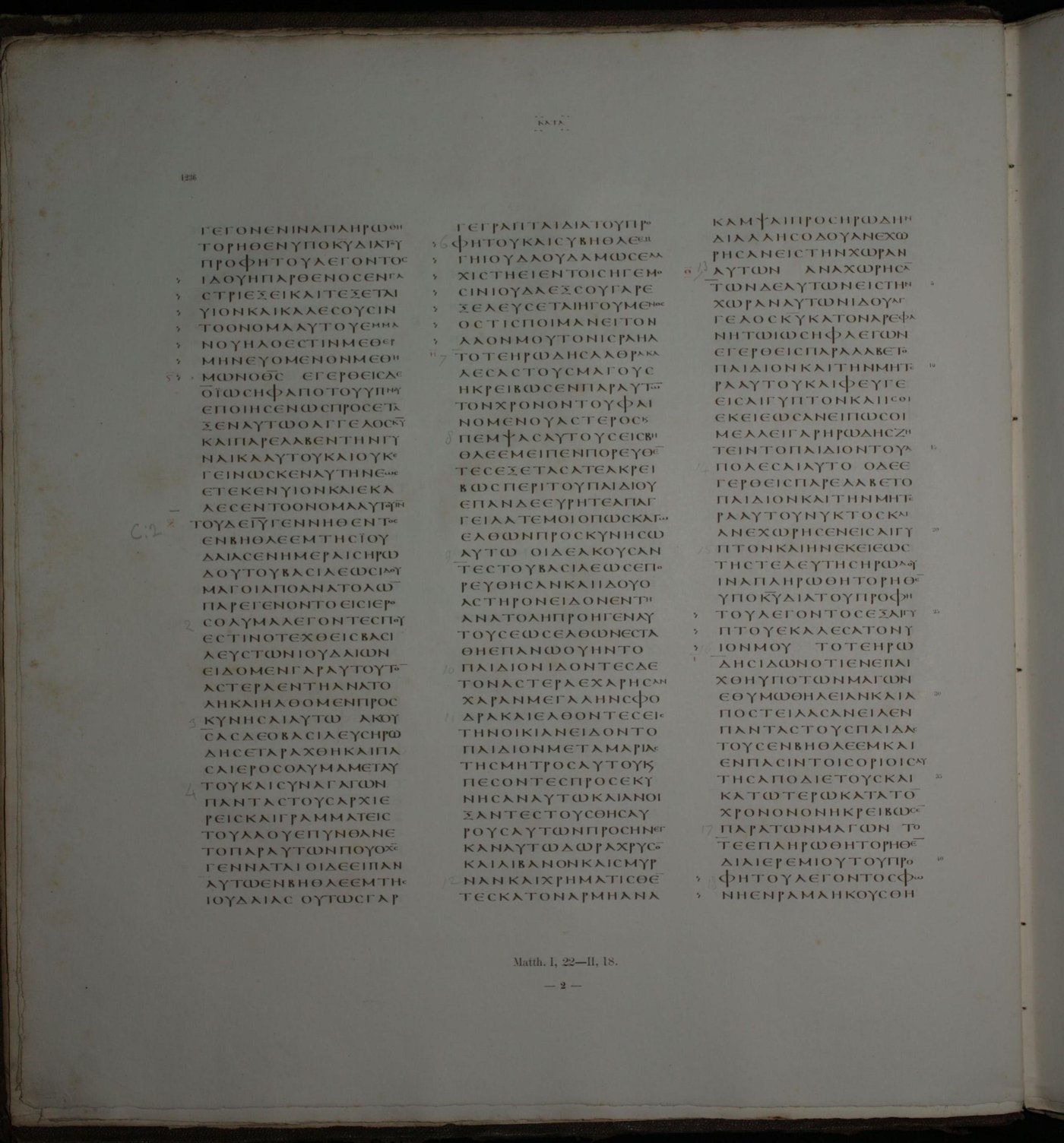
The Greek text below is that of the SBL Greek New Testament. Its wording agrees with the Nestle-Aland twenty-eighth edition at every point of variation registered in the apparatus for these verses; the places of real editorial doubt—and the one place where the editions divide—are discussed beneath the text.1
The Greek
44 Ὁμοία ἐστὶν ἡ βασιλεία τῶν οὐρανῶν θησαυρῷ κεκρυμμένῳ ἐν τῷ ἀγρῷ, ὃν εὑρὼν ἄνθρωπος ἔκρυψεν, καὶ ἀπὸ τῆς χαρᾶς αὐτοῦ ὑπάγει καὶ πωλεῖ πάντα ὅσα ἔχει καὶ ἀγοράζει τὸν ἀγρὸν ἐκεῖνον.
45 Πάλιν ὁμοία ἐστὶν ἡ βασιλεία τῶν οὐρανῶν ἀνθρώπῳ ἐμπόρῳ ζητοῦντι καλοὺς μαργαρίτας·
46 εὑρὼν δὲ ἕνα πολύτιμον μαργαρίτην ἀπελθὼν πέπρακεν πάντα ὅσα εἶχεν καὶ ἠγόρασεν αὐτόν.
47 Πάλιν ὁμοία ἐστὶν ἡ βασιλεία τῶν οὐρανῶν σαγήνῃ βληθείσῃ εἰς τὴν θάλασσαν καὶ ἐκ παντὸς γένους συναγαγούσῃ·
48 ἣν ὅτε ἐπληρώθη ἀναβιβάσαντες ἐπὶ τὸν αἰγιαλὸν καὶ καθίσαντες συνέλεξαν τὰ καλὰ εἰς ἄγγη, τὰ δὲ σαπρὰ ἔξω ἔβαλον.
49 οὕτως ἔσται ἐν τῇ συντελείᾳ τοῦ αἰῶνος· ἐξελεύσονται οἱ ἄγγελοι καὶ ἀφοριοῦσιν τοὺς πονηροὺς ἐκ μέσου τῶν δικαίων
50 καὶ βαλοῦσιν αὐτοὺς εἰς τὴν κάμινον τοῦ πυρός· ἐκεῖ ἔσται ὁ κλαυθμὸς καὶ ὁ βρυγμὸς τῶν ὀδόντων.
51 Συνήκατε ταῦτα πάντα; λέγουσιν αὐτῷ· Ναί.
52 ὁ δὲ εἶπεν αὐτοῖς· Διὰ τοῦτο πᾶς γραμματεὺς μαθητευθεὶς τῇ βασιλείᾳ τῶν οὐρανῶν ὅμοιός ἐστιν ἀνθρώπῳ οἰκοδεσπότῃ ὅστις ἐκβάλλει ἐκ τοῦ θησαυροῦ αὐτοῦ καινὰ καὶ παλαιά.
The apparatus for these nine verses is quieter than the passage’s importance would suggest, but four notes matter. At verse 44 the Byzantine tradition opens with “Again” (Πάλιν ὁμοία) and reorders the selling—πάντα ὅσα ἔχει πωλεῖ against the critical text’s πωλεῖ πάντα ὅσα ἔχει—while Vaticanus and a few allies drop πάντα altogether, which is why NA27 and UBS4 printed the word in brackets. Metzger’s committee, rating its decision {C}, judged that the Byzantine order had been influenced by the parallel command in Luke 18:22 and that “the absence of πάντα may be the result of the Alexandrian penchant for pruning unnecessary words.”2 At verse 45 the first hand of Sinaiticus and Vaticanus omit ἀνθρώπῳ, leaving simply “a merchant”; nearly everything else includes it. At verse 48 the older witnesses read the rarer ἄγγη (“vessels”) where the Byzantine text substitutes the commoner ἀγγεῖα—the NABRE’s homely “buckets.”3 At verse 51 the Byzantine tradition supplies what the earliest text withholds: it opens the verse with “Jesus said to them” and expands the disciples’ answer to “Yes, Lord.” Sinaiticus, Vaticanus, and Bezae have neither; the question comes abruptly, and the answer is a bare Ναί.4
The variant that touches the argument of this essay stands in verse 52, on the case of the kingdom. The oldest witnesses—Sinaiticus, Vaticanus, Ephraemi Rescriptus, with families 1 and 13 and Origen’s consistent citation—read the bare dative μαθητευθεὶς τῇ βασιλείᾳ, “discipled to the kingdom.” Bezae and a few others smooth it to ἐν τῇ βασιλείᾳ, “in the kingdom”—the reading behind the Vulgate’s doctus in regno caelorum and, at least formally, behind the NABRE’s “instructed in the kingdom.” The Byzantine mass reads εἰς τὴν βασιλείαν, “unto the kingdom.” The bare dative is plainly the reading that explains the other two, which look like glosses of it; Matthew’s own usage at 27:57, where Joseph of Arimathea “was discipled to Jesus” with the same construction, supports it; and Metzger’s commentary passes over the verse in silence, a sign the committee did not consider the decision close. The difference is not pedantry. “In the kingdom” names a location; the dative names an allegiance—the kingdom itself, personified, is the teacher to whom the scribe has been apprenticed.5
The English
The New American Bible, Revised Edition, renders the pericope as follows; all English citations of Scripture in this essay are from that translation unless otherwise noted.6
44 “The kingdom of heaven is like a treasure buried in a field, which a person finds and hides again, and out of joy goes and sells all that he has and buys that field. 45 Again, the kingdom of heaven is like a merchant searching for fine pearls. 46 When he finds a pearl of great price, he goes and sells all that he has and buys it. 47 Again, the kingdom of heaven is like a net thrown into the sea, which collects fish of every kind. 48 When it is full they haul it ashore and sit down to put what is good into buckets. What is bad they throw away. 49 Thus it will be at the end of the age. The angels will go out and separate the wicked from the righteous 50 and throw them into the fiery furnace, where there will be wailing and grinding of teeth.
51 “Do you understand all these things?” They answered, “Yes.” 52 And he replied, “Then every scribe who has been instructed in the kingdom of heaven is like the head of a household who brings from his storeroom both the new and the old.”
One rendering choice deserves notice at the outset. The NABRE’s “instructed in the kingdom” is defensible English for the dative, and its own study note glosses the sense correctly—the scribe “knows both the teaching of Jesus (the new) and the law and prophets (the old).” Yet the English preposition quietly relocates what the Greek personifies. The scribe is not merely schooled about a subject or inside a realm; he has been made a disciple, and the kingdom is the master who made him one.
Commentary, Verse by Verse
Verse 44: The Treasure
44. Ὁμοία ἐστὶν ἡ βασιλεία τῶν οὐρανῶν θησαυρῷ κεκρυμμένῳ ἐν τῷ ἀγρῷ, ὃν εὑρὼν ἄνθρωπος ἔκρυψεν, καὶ ἀπὸ τῆς χαρᾶς αὐτοῦ ὑπάγει καὶ πωλεῖ πάντα ὅσα ἔχει καὶ ἀγοράζει τὸν ἀγρὸν ἐκεῖνον.
The comparison, as throughout the discourse, is to the whole scene and not to the head noun alone: the kingdom is not “like a treasure” the way gold is like silver, but like the situation of a treasure found, hidden, and bought at the cost of everything. Still, the choice of θησαυρός is not idle. Matthew has been training his readers on the word since the magi opened their θησαυρούς (2:11): treasure in heaven against treasure on earth (6:19–21), the good man’s treasure from which he “brings forth” good (12:35), the treasure the rich young man declines (19:21). It is the word on which this pericope will close in verse 52, and the frame is not an accident.7
The participle κεκρυμμένῳ is perfect passive—a settled state of hiddenness, agent unnamed—while the finder’s ἔκρυψεν is a punctiliar aorist: the treasure lay hidden; the man hid it. The NABRE’s study note supplies the realia: in the unsettled conditions of Palestine, burying valuables was an ordinary way to guard them.8 The same perfect participle appeared nine verses earlier, in the psalm citation of 13:35—“I will announce what has lain hidden (κεκρυμμένα) from the foundation”—and the echo is doing theology: what the parables pour forth and what the man stumbles over in the field are the same buried thing.9
Then the tempo changes. After two aorists the sentence breaks into four presents strung on bare conjunctions—ὑπάγει καὶ πωλεῖ πάντα ὅσα ἔχει καὶ ἀγοράζει, “he goes and sells all that he has and buys.” The narrative present puts the reader inside the man’s hurry; there is no deliberation clause, no counting of costs. And the motive is stated with a causal ἀπό: ἀπὸ τῆς χαρᾶς αὐτοῦ, out of his joy—or, on the other construal of the pronoun, out of joy over it. The commentators divide over the antecedent; the theology survives either reading. What the verse rules out is renunciation as grim arithmetic. The selling is a symptom of the finding.
The kingdom, then, is a treasure a man can blunder into. Verse 45 will supply the correction.
Verses 45–46: The Pearl
45–46. Πάλιν ὁμοία ἐστὶν ἡ βασιλεία τῶν οὐρανῶν ἀνθρώπῳ ἐμπόρῳ ζητοῦντι καλοὺς μαργαρίτας· εὑρὼν δὲ ἕνα πολύτιμον μαργαρίτην ἀπελθὼν πέπρακεν πάντα ὅσα εἶχεν καὶ ἠγόρασεν αὐτόν.
The second parable is the first one inverted. The day-laborer stumbles; the ἔμπορος—a wholesale merchant, not a market-stall κάπηλος—is a professional already searching, ζητοῦντι, a present participle of sustained occupation. The kingdom comes to the one as luck and to the other as the end of a long hunt, and the parables together refuse to let either experience claim to be the normal one. What unites the two men is not how they found but what they did next.
The word ἔμπορος appears in the Gospels only here; its other New Testament occurrences are all in Revelation 18, among the merchants of Babylon who weep over their cargoes—including their pearls—when the city falls. Matthew’s merchant is Babylon’s merchant converted: the same profession, the same eye for value, aimed at the one commodity worth the whole inventory.10 The commodity itself was well chosen. In the first-century Mediterranean the pearl stood where no other object did: Pliny the Elder opens his account of pearls by declaring that “the first rank, and the very highest position among all valuables” belongs to them (principium ergo columenque omnium rerum pretii margaritae tenent), and his ninth book lingers over specimens worth provincial fortunes, Cleopatra’s pair of pearls above all.11 A single πολύτιμον pearl really could absorb a merchant’s entire capital. The parable’s economics are hyperbolic, but they are not fantastic.
The Greek preserves a nuance the English levels. The selling verb here is not verse 44’s πωλέω in the vivid present but a different verb in a different tense: πέπρακεν, the perfect of πιπράσκω, flanked by an imperfect (εἶχεν) and an aorist (ἠγόρασεν). The grammarians have quarreled politely over that perfect—Burton called it aoristic, Moulton and Robertson a “dramatic historical perfect” of the storyteller’s art, and A. B. Bruce refused the aoristic label outright: the perfect “points to a momentous step, taken once for all and having lasting effects.”12 One need not adjudicate the schools to hear the point. The man has sold; the sale stands; there is no buying back. Every other pearl in the collection went to purchase the one.
Verses 47–50: The Dragnet
47–48. Πάλιν ὁμοία ἐστὶν ἡ βασιλεία τῶν οὐρανῶν σαγήνῃ βληθείσῃ εἰς τὴν θάλασσαν καὶ ἐκ παντὸς γένους συναγαγούσῃ· ἣν ὅτε ἐπληρώθη ἀναβιβάσαντες ἐπὶ τὸν αἰγιαλὸν καὶ καθίσαντες συνέλεξαν τὰ καλὰ εἰς ἄγγη, τὰ δὲ σαπρὰ ἔξω ἔβαλον.
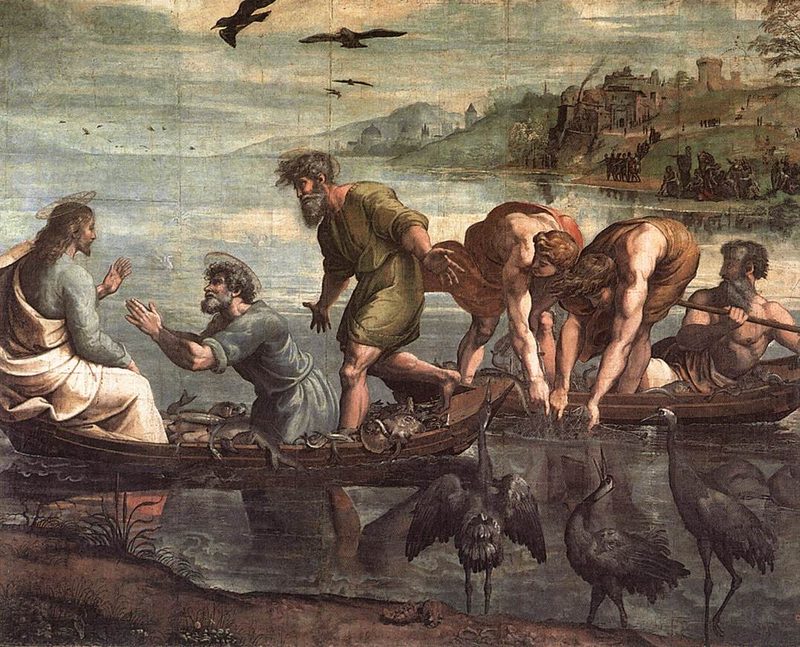
The net is a σαγήνη—a word that occurs nowhere else in the New Testament, and the choice is technical, not decorative. Matthew knows the one-man casting net; he used the right word for it, ἀμφίβληστρον, when Peter and Andrew were called (4:18). The σαγήνη is the other instrument entirely: the great seine, hundreds of meters of netting worked by a full crew, spread parallel to the shore and hauled in until everything between net and beach has been gathered. It does not select. That is the design. The fishermen then sit down on the αἰγιαλόν, the beach, and do with their hands what the net could not do in the water: συνέλεξαν, they sort.13
Two lexical details reward attention. The catch is gathered ἐκ παντὸς γένους—“of every kind,” but γένος is the ordinary Greek word for race or nation, a strange term for fish and a natural one for peoples; the seine sweeping the sea reads, at the allegorical register Matthew has just taught us to use, as the kingdom sweeping the world of the nations. And the discards are τὰ σαπρά—not “unclean,” the word the Torah’s food laws would supply, but “rotten, worthless,” the same adjective Matthew’s Jesus has twice applied to trees that bear bad fruit (7:17–18; 12:33). A Galilean crew really did throw fish away; whatever lacked fins and scales, the catfish above all, could not be eaten or sold under the law of Leviticus 11. Yet Matthew does not say “unclean.” He says “rotten,” and by doing so he moves the sorting criterion from ritual category to moral quality—from what a fish is to what a life has produced.14
Behind the image stands a prophetic text worth naming, because it shares the rare word. Habakkuk complained that the Babylonian “makes men like the fish of the sea,” hauling them up with hook, casting net, and seine—the Septuagint uses both ἀμφίβληστρον and σαγήνη, and it is the only place in the Greek Old Testament where the seine gathers (συνάγω) human beings, nations in the mesh of an empire.15 Matthew’s parable takes Habakkuk’s nightmare and inverts its owner. There is still a seine in the sea of the nations, and every person in the water will come up in it; the question the prophet asked—whose net?—has received a new answer. Ezekiel had already glimpsed the other half of the picture: along the banks of the river that flows from the eschatological temple, “fishers shall stand” and spread their seines, and the fish will be “a very great multitude.”16
49–50. οὕτως ἔσται ἐν τῇ συντελείᾳ τοῦ αἰῶνος· ἐξελεύσονται οἱ ἄγγελοι καὶ ἀφοριοῦσιν τοὺς πονηροὺς ἐκ μέσου τῶν δικαίων καὶ βαλοῦσιν αὐτοὺς εἰς τὴν κάμινον τοῦ πυρός· ἐκεῖ ἔσται ὁ κλαυθμὸς καὶ ὁ βρυγμὸς τῶν ὀδόντων.
The application repeats, almost verbatim, the close of the weeds’ explanation (13:40–42): the end of the age, the angels, the furnace, the wailing and grinding of teeth. Whether that repetition is redundancy or design is a question large enough to receive its own section below. Here it is enough to notice the one difference: in the weeds the angels collect the scandals out of his kingdom; here they separate the wicked ἐκ μέσου τῶν δικαίων, “from the midst of the righteous.” The judgment has moved from territory to persons standing shoulder to shoulder in the same net.
Verses 51–52: The Scribe
51. Συνήκατε ταῦτα πάντα; λέγουσιν αὐτῷ· Ναί.
In the earliest text the question arrives without introduction—no “Jesus said to them,” simply Συνήκατε ταῦτα πάντα;, “Have you understood all these things?” The verb is the discourse’s own keyword coming home. Six of Matthew’s nine uses of συνίημι fall in this one chapter: the crowds hear without understanding, in fulfillment of Isaiah 6 (13:13–15); the seed on the path is the one who hears and does not understand (13:19); the good soil is the one who hears and does understand (13:23). Now the disciples are asked the chapter’s diagnostic question directly, and they answer—without a “Lord,” in the oldest witnesses—Ναί.17 Matthew, who elsewhere insists that the disciples do understand once instructed (16:12; 17:13), lets the plain yes stand. The evangelist is not being naive about them; he is setting up the verse that follows. Understanding, it turns out, is not the finish line. It is the qualification for a job.
52. ὁ δὲ εἶπεν αὐτοῖς· Διὰ τοῦτο πᾶς γραμματεὺς μαθητευθεὶς τῇ βασιλείᾳ τῶν οὐρανῶν ὅμοιός ἐστιν ἀνθρώπῳ οἰκοδεσπότῃ ὅστις ἐκβάλλει ἐκ τοῦ θησαυροῦ αὐτοῦ καινὰ καὶ παλαιά.
Every word of the sentence is carrying weight. Διὰ τοῦτο, “therefore,” hangs the saying on the disciples’ yes: because you have understood, this is what you now are. Πᾶς γραμματεύς is a deliberate shock in this Gospel, where the scribes are almost uniformly the opposition—the righteousness that must be surpassed (5:20), the accusers of blasphemy (9:3), the seekers of signs (12:38), the seven-times-woed of chapter 23. Only twice does Matthew use the word of Christ’s own people: here, and at 23:34, where Jesus, in the same breath as the woes, promises “I send to you prophets and wise men and scribes.” Both sayings begin with διὰ τοῦτο. The kingdom does not abolish the scribal office; it staffs it.18
The participle μαθητευθείς is an aorist passive of a verb Matthew has nearly to himself—of its four New Testament occurrences, three are his, and the passive twice describes a completed transformation: Joseph of Arimathea “was discipled to Jesus” (27:57), and the scribe here “was discipled to the kingdom.” The third Matthean occurrence is the imperative on which the Gospel ends—μαθητεύσατε πάντα τὰ ἔθνη, “make disciples of all nations” (28:19). The verse before us is the hinge between the two: the one who has been discipled becomes the one who disciples.19
Then the comparison, and it is the discourse’s quietest astonishment. The scribe is like an οἰκοδεσπότης, a householder. In Matthew’s parables that title belongs to the master’s side of the ledger—the owner who sowed the good seed (13:27), the vineyard lord (20:1; 21:33), the figure for Jesus himself, who has already accepted the name: “if they have called the master of the house Beelzebul…” (10:25). Verse 52 hands the title to the disciple. And what the householder does is ἐκβάλλει—not politely “brings out” but throws out, flings forth, the verb Matthew elsewhere uses for driving out demons and casting the worthless into the dark. The one previous time the verb met the noun “treasure” was 12:35: the good man ἐκβάλλει good things out of his good treasure. The scribe’s storeroom is not a museum. Its door bangs open outward.20
What he throws out is καινὰ καὶ παλαιά—new things and old, anarthrous, plural, unglossed. The referent, and the scandal of the order, are taken up below.
Did the Finder Cheat?
The oldest objection to the first parable is a lawyer’s objection: the man found treasure in someone else’s field, concealed his find, and bought the land from an owner who did not know what he was selling. Is the kingdom of heaven like sharp practice?
The question is not modern squeamishness; the ancient sources worried the same facts. And the honest answer runs in two stages. Legally, the man is on defensible ground in both of the legal cultures a first-century audience could have known. In rabbinic law, found caches whose owners could not be identified belonged to the finder: the Mishnah rules that scattered coins and finds “in a heap of stone rubble or in an old wall” are the finder’s, the Talmud explaining that such deposits are presumed abandoned from time immemorial—“they belong to the Amorites.” A sale of a field conveyed the land and its fixtures, not movable property hidden in it.21 In Roman law the rule that Justinian’s Institutes attribute to Hadrian gave treasure found by chance in one’s own land wholly to the finder, but only half if it were found in another’s—which makes the parable’s purchase not a swindle but a strategy—and it is the Roman rule, not the rabbinic one, that supplies the motive for the buying: on the rabbinic analysis an ancient, ownerless cache is already the finder’s, while on Hadrian’s rule the man who owns the field owns the whole of what it hides.22 Aquinas read the parable in exactly this register, citing it in his treatment of theft: the finder bought the field “as though he purposed thus to acquire the right of possessing the whole treasure.”23 The modern legal-historical literature—Derrett’s chapter on the treasure, Crossan’s study of trove folktales, Hezser’s survey of the motif across rabbinic halakhah and Roman law—reaches no single verdict on the man’s ethics, and Hezser’s caution is the sound one: the plot is not a case study but a metaphor, told for its extravagance rather than its edification.24
That is the second stage of the answer, and the more important one. Parables are not exempla; their protagonists are not all saints. The unjust steward is commended for prudence, not honesty, and the judge who vindicates the widow is expressly unjust. The treasure-finder’s morals are the story’s scaffolding, not its point. The point is a man who recognized what he had found and let nothing—not property, not caution, not appearances—stand between him and it. The parable, however, does leave one ethical mark that is fully intended: the hiding. Gregory the Great read the re-burial as the spiritual life’s own discipline—the found treasure is hidden “in order that he may preserve it,” because a zeal for heaven paraded before others is a zeal already being stolen; it is not enough to guard the desire for heaven from evil spirits “if we do not protect from human praises.”25
One Pericope or Four?
Is 13:44–52 a unit, or a drawer of leftovers? The structural evidence says unit, and says it loudly.
Begin with the audience. At 13:36 Jesus dismissed the crowds and entered the house; everything from that point—the explanation of the weeds, and then these four sayings—is spoken to the disciples alone. Origen noticed the shift and drew the consequence: the crowds get parables, but the treasure, the pearl, and the net are “similitudes” delivered to those to whom it has been given to know the mysteries.26 The private setting is not incidental staging. The discourse’s whole architecture is a division between outside and inside, hearing and understanding, and its final movement happens entirely on the inside.
Then the frame. The unit opens on θησαυρῷ (v. 44) and closes on ἐκ τοῦ θησαυροῦ αὐτοῦ (v. 52)—the only two occurrences of the word in the discourse, an inclusio binding the first parable to the last saying. Inside the frame the three parables run on a common rail (Πάλιν ὁμοία ἐστίν…) with a deliberate alternation of registers—value, value, judgment—before verse 52 changes the grammatical subject itself: for the first time in the chapter the comparison’s subject is not the kingdom but a person, πᾶς γραμματεύς, measured now by the kingdom’s standard. David Wenham pressed the observation to its conclusion: Matthew 13 contains not seven parables but eight, the eighth being the scribe-householder of verse 52, the discourse’s structural capstone rather than an appendix to it.27 One need not adopt any of the full chiastic schemes on offer to accept the modest version of the claim: verses 44–52 were composed as a sequence, and verse 52 is where the sequence was always going. The disciples’ Ναί in verse 51 is the pivot on which the discourse turns from describing the kingdom to commissioning its scribes.
The Fathers on the Treasure and the Pearl
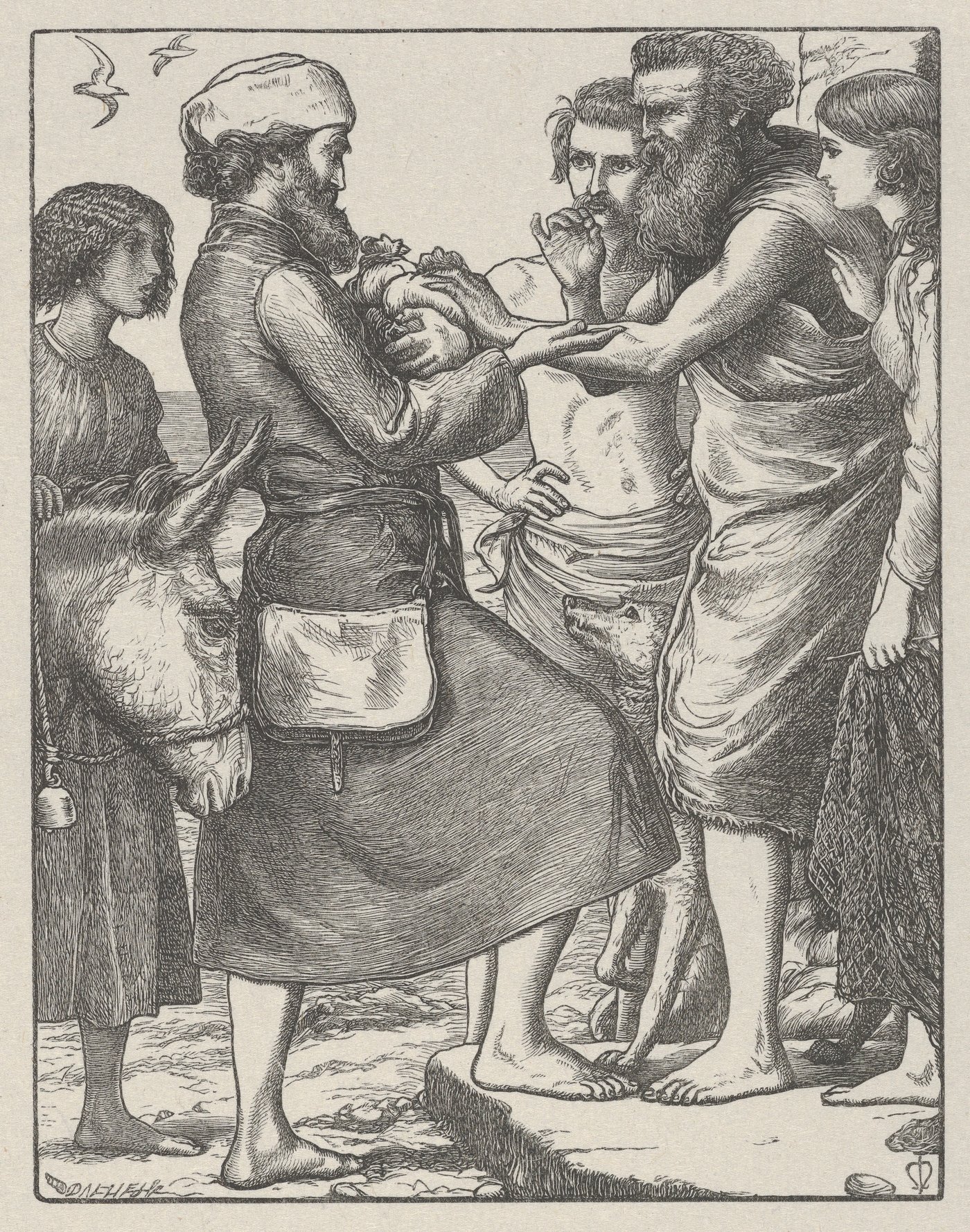
The single most substantial patristic treatment of these verses is Origen’s, in the tenth book of his Commentary on Matthew—a dozen chapters on this pericope alone. (Whatever later centuries made of Origen’s more speculative positions, nothing in these chapters strays from ground the subsequent tradition made its own; Jerome’s commentary on the passage follows him nearly page by page.) His reading of the treasure moves on two levels at once. The field “seems to me… to be the Scripture, which was planted with what is manifest in the words of the history, and the law, and the prophets”; the treasure hidden in it is “the thoughts concealed and lying under that which is manifest, of wisdom hidden in a mystery, even Christ, in whom are all the treasures of wisdom and knowledge hidden.” Or perhaps, he allows, the field is Christ himself, and the treasure the things hidden in Christ.28 On the pearl he is even more expansive, prefacing the exegesis with a small natural history of pearls—the best from the Red Sea, conceived (so the ancients believed) when the oyster opens to receive “the dew of heaven”—so that the prophets become the mussels pregnant with heavenly dew, their oracles the “goodly pearls” the merchant has been collecting all along, and Christ “the very costly pearl,” the leader of the pearls, “on the finding of which the rest are found with it.”29 Indeed, Origen insists that finding the one pearl does not discredit the many: the perfect apprehension of the law and the prophets is “an elementary discipline for the perfect apprehension of the Gospel”—a sentence that already contains the whole argument of verse 52.
Jerome, whose commentary on this passage leans openly on Origen, sharpened the pearl into a weapon. The good pearls the merchant seeks, he writes, are the Law and the prophets—audi, Marcion; audi, Manichaee, “listen, Marcion; listen, Manichaeus”—and the one pearl of great price is the knowledge of the Savior, the mystery of his passion and resurrection; yet the new pearl’s discovery is not the condemnation of the old ones, only their relativizing by comparison.30 Chrysostom, preaching on the pair, fastened on two things: the hiddenness—“do you see how both the gospel is hid in the world, and the good things in the gospel?”—and the affect. The parables teach “that we ought to strip ourselves of everything else, and cling to the gospel,” but also “that we are to do so with joy; and when a man is dispossessing himself of his goods, he is to know that the transaction is gain, and not loss.” The truth, he adds against the sects, “is one, and not in many divisions.”31 Augustine’s contribution is the strangest and the most searching. Among his three proposed readings of the pearl—Christ, the love of neighbor, the Word in which all good understandings are contained—he pauses over the price. Having sold all we have, the buyer’s payment is finally nos ipsi, ourselves: “we give ourselves for that pearl, not because we are of equal worth to it, but because we cannot give more.”32
One point of reception history deserves a correction in passing. It is often said that “the Fathers” read the merchant as Christ, who sold all he had—his glory, in the self-emptying of the incarnation—to purchase the pearl of the Church or of the soul. The reading exists in the tradition and is theologically fertile; but in the major patristic commentaries on this passage—Origen, Chrysostom, Jerome, Gregory, Augustine, and Hilary as the Catena Aurea excerpts him—the finder is consistently the disciple, and Christ is consistently the thing found: the treasure, the field, the one pearl. Where Christ enters the story’s cast at all, it is on the other side of the counter—as the net’s master in Origen, or as the householder of verse 52 whom the scribe is made to resemble. A Christological buyer may be good theology. It is not, so far as the surviving commentaries show, the Fathers’ exegesis of this text, and the paper trail should be kept honest.33
The Dragnet and the Weeds
Why does Matthew end his parable collection by repeating himself? The dragnet’s application (vv. 49–50) reproduces the weeds’ application (vv. 40–42) nearly word for word, and the economical explanation—a redactor stitching with a favorite formula—has never lacked defenders. Yet the two parables are not doing the same work, and the differences are where the meaning lives.
The first difference is location. The weeds grow in a field, and “the field is the world” (13:38)—but it is a sown field, the owner’s field, worked land. The seine is thrown into the sea, and in Israel’s Scriptures the sea is the unquiet element—the arena of the nations, out of which Daniel’s beasts climb (Dan 7:3). A net gathering ἐκ παντὸς γένους, “from every kind,” extends the judgment’s horizon from the field of the kingdom’s planting to the whole human ocean; the missionary reading of the net—the Church’s preaching sweeping through the world of the Gentiles—has held from the Fathers to the modern commentaries precisely because the imagery insists on it.34 The second difference is timing, and it repays a close look: in the weeds, the servants propose an early purge and are refused; in the net, no one even proposes sorting in the water. The sorting belongs to the shore. Here, however, the realia stop cooperating, and the seam is instructive. Nun, the modern authority on the Galilean seine, notes that once the hauling begins the motion must be continuous, and he singles out precisely Matthew’s “when it is full” (ὅτε ἐπληρώθη) as the one element of the description that does not fit the practice. The detail that breaks the realism is the theologically loaded one: this net fills to a fullness the fishermen do not set, on a schedule that is not theirs. The parable that closes the discourse thus quietly ratifies the ecclesiology of the parable that opened its second movement: no premature separation, the argument of last week’s essay, which this paper will not repeat.
The third difference is the one Chrysostom preached. The weeds, on his reading, are the heretics—those sown with wrong doctrine; the rotten fish are something else, and something worse: those already caught, already inside the net, whose ruin is wickedness of life. They are “the most wretched of all, having attained to His knowledge, and being caught, but not even so capable of being saved.” He then counts the discourse’s casualties with a preacher’s bleak arithmetic: “Do you see how many are the ways of destruction? By the rock, by the thorns, by the wayside, by the tares, by the net. Not without reason therefore did He say, Broad is the way that leads to destruction.”35 Gregory the Great supplied the image’s pastoral turn. The Church is the seine, hauled through the world’s bitter waters toward a shore that is the end of the age—“as the sea signifies the world, so the sea shore signifies the end of the world”—and the one mercy the metaphor allows is that we are not fish: “the fish that are caught cannot be changed; but we are caught while bad and can be changed.” The moment to become τὰ καλά is in the net, before the beach.36 And Origen, characteristically, read the net’s very fabric as the two-Testament canon: the kingdom is like “the variegated texture of a net,” woven “with reference to the Old and the New Scripture”—some are caught in the prophetic mesh, some in the mesh of the law, some in the gospel net—and “before our Saviour Jesus Christ this net was not wholly filled; for the net of the law and the prophets had to be completed by Him who says, Think not that I came to destroy the law and the prophets.”37 With that sentence the dragnet stops being an appendix to the weeds and becomes a preparation for verse 52: the net whose completed weave is old-and-new anticipates the scribe whose treasure is new-and-old.
The Scribe Discipled to the Kingdom
Who is the scribe of verse 52? The reading with the longest modern pedigree says: Matthew. Ernst von Dobschütz opened the case in 1928—Matthew as a converted rabbi and catechist—and the line has run through Stendahl’s school of Matthean scribes, Cope’s monograph that took the verse for its very title, Orton’s study of the “understanding scribe,” and, most recently, Schreiner’s full-length portrait of Matthew as the discipled scribe of his own Gospel. Davies and Allison state the tradition plainly: many scholars have found in the verse the evangelist’s description of himself.38 The suspicion is easy to feel. A Gospel that opens the mouth of its Jesus with “not to abolish but to fulfill” (5:17), that quotes the prophets more densely than any other, that alone preserves this saying—such a book is itself a storeroom of new and old, and the verse reads uncannily like a colophon: the writer’s device pressed into the corner of his own tapestry.
Yet the verse itself refuses to stay autobiographical, and the refusal is in its first word. Πᾶς—every scribe discipled to the kingdom. The NABRE’s study note draws the ecclesial conclusion: Matthew’s church knew a class of leaders it called scribes (23:34), teachers formed on the model of the Twelve, and the saying describes the office, not one office-holder.39 The commentators who resist the self-portrait—Hagner reading the verse as a word about all believers with the new-and-old as its key, Nolland’s “discipling disciple” whose treasure is passed on to others, France’s teacher for whom the kingdom “does not wipe the slate clean”—are not disagreeing about the picture, only about how many sit for it.40 Perhaps the honest verdict is both: the evangelist described the office because he held it. What the verse will not permit is a kingdom without scribes—a Christianity so “new” that it needs no one trained, no one who has done the long apprenticeship in the old books. Origen distinguished the scribe “in the simpler sense,” who comes from the synagogue’s schooling into the Church, from the scribe “in a deeper sense,” who ascends from the letter of the Scriptures to their spirit; both are scribes, and the kingdom claims them.41
Understanding, it turns out, is not the finish line. It is the qualification for a job.
The office has furniture, and the furniture is the argument. The scribe is like a householder—the title the discourse gave to the sower of the good seed, the title Jesus took for himself. He has a treasure—the word that began the unit as the thing found in someone else’s field and now names something the finder owns. The progression is the pericope’s deep structure: the kingdom was a treasure a man found; the man who found it now has a treasure of his own to fling open for others. Grace does not merely enrich its receiver. It sets him up in the householder’s trade.
Things New and Old
What are the καινὰ καὶ παλαιά? The tradition’s answers converge more than they compete. The two Testaments; the gospel and the Law; the teaching of Jesus and the law and prophets it fulfills; the fresh exposition and the inherited deposit. Jerome heard in the phrase the Song of Songs’ lover, who has laid up for the beloved “new and old” fruits—nova et vetera, fratruelis meus, servavi tibi—and made the apostles the Savior’s notaries, proving everything they preached from the Law and the prophets.42 Gregory, ever the pastor, took the pair as the preacher’s two registers—the new sweetness of the kingdom and the old terror of judgment, “that at least punishment may deter those whom rewards do not excite”—while cautioning against a flat two-Testaments equation, since on that reading Abraham and Moses, who knew both mercy and judgment, would sit oddly outside the householder’s company.43
Two patristic observations, however, cut deeper than the catalogue of referents. The first is polemical. Origen turned the verse’s logical contrapositive against Marcion: whoever does not bring out things new and old “is not a scribe who has been made a disciple unto the kingdom of heaven”—and by these words “we must refute those who… cleave in two the Godhead and cut off the New from the Old.” Chrysostom preached the same edge a century and a half later: far from excluding the Old Testament, Jesus here “even commends it… calling it a treasure,” and the heretics are disinherited on both sides at once—“they have not the old things, wherefore neither have they the new… For these are bound up and interwoven one with another.”44 The verse, in patristic hands, is a canon in miniature: a one-sentence rejection of every Christianity that would travel light, with the Old Testament left at the curb.
The second observation is Augustine’s, and it concerns the order. Jesus said new and old, not old and new. Augustine refused to treat the sequence as accident: he “did not say old and new, which He certainly would have said had He not wished to follow the order of merit rather than that of time.”45 The old is not discarded; it is outranked by the very fulfillment that vindicates it. That is precisely the dialectic the Second Vatican Council canonized in a sentence built from Augustine’s own words elsewhere—God so arranged the two Testaments “that the New Testament be hidden in the Old and the Old be made manifest in the New”—and that the Catechism repeats in its treatment of the unity of the two Testaments.46 It is worth noticing where else the Catechism reaches for this verse. Its only citation of Matthew 13:52 comes in the doctrine of the sacraments: the Church, “the faithful steward of God’s mysteries,” has “gradually recognized this treasure received from Christ” and determined its dispensation over the centuries—the Church herself cast as the householder, discerning out of her treasure what is new and what is old.47 Strikingly, the Catechism never cites the pearl’s climax or the net itself. Its engagement with this pericope runs to the treasure-and-searching frame (13:44–45, in its teaching on the parables’ “radical choice”), the scribe’s storeroom, and—in its teaching on hell—the dragnet’s judgment formula alone (13:50, cited beside 13:42 for the shared furnace refrain); the buying of the pearl (13:46) and the net imagery itself (13:47–49) appear nowhere. The opening and the close, not the middle—one more small confirmation that the frame is where the weight sits.
There is one more Old Testament voice in the room, and it is contrarian. Sirach had asked: σοφία κεκρυμμένη καὶ θησαυρὸς ἀφανής, τίς ὠφέλεια ἐν ἀμφοτέροις;—“hidden wisdom and unseen treasure: what profit is in either?”48 The sage’s complaint is the pericope’s hinge read backward. The treasure of verse 44 is hidden twice—found and re-buried—and if the discourse ended there, Sirach’s objection would stand. Verse 52 is the answer: the buried treasure’s end state is a storeroom thrown open. Hiddenness, in the kingdom’s economy, is a phase and not a destiny.
The Gospel of Thomas and the Shape of the Tradition
All three parables have doubles in the Gospel of Thomas, and the comparison is instructive in both directions. Thomas’s pearl-merchant (logion 76) is “shrewd”—he sells “the merchandise” and buys “the pearl alone for himself,” and the saying then glosses itself with the moth-and-worm language Matthew keeps in the Sermon on the Mount (6:19–20), a fusion that many have read as a mark of dependence—Thomas reworking remembered Matthean material rather than drawing on an independent stream. His treasure (logion 109) is a different folktale altogether—an ignorant heir sells the field, the buyer plows, finds the hoard, and takes up money-lending—a story with a close tannaitic cousin in the Mekhilta, where a buyer digs and finds “treasures of silver and of gold and precious stones and pearls” while the seller chokes; the joy, the selling-all, and the kingdom are gone. And his fisherman (logion 8) is “wise”: he keeps one fine large fish and throws the rest back—a connoisseur’s tale, nearer the pearl than the seine, with no shore, no vessels, no angels, and no end of the age.49 Scholars still dispute, logion by logion, whether Thomas preserves early independent tradition or reworks the Synoptics; the honest report is that the guild is split. What the comparison shows without needing that dispute settled is what Matthew’s versions are for. Everything Thomas lacks—the joy, the totality of the sale, the indiscriminate net, the sorting on the shore, the discipled scribe—is exactly the equipment of Matthew’s argument. Take those away and the parables relax into prudence stories: be shrewd, keep the big fish. Matthew’s discourse is built so they cannot relax.
The Theology of the Passage
Read as one argument, the pericope makes three theological claims in sequence, and each guards the others.
The first is about worth, and its keyword is joy. The kingdom’s value is not argued; it is discovered, and the discovery produces χαρά before it produces sacrifice. Both parables place the finding before the selling, and verse 44 hangs the selling explicitly on the joy—ἀπὸ τῆς χαρᾶς. The Catechism’s one sentence on these parables keeps the order and the sting together: the parables of the kingdom ask for “a radical choice: to gain the kingdom, one must give everything. Words are not enough, deeds are required.”50 The rich young man of chapter 19 is this pericope’s narrative shadow—invited in nearly the parable’s own words, “go, sell what you have… and you will have treasure in heaven,” he “went away sad”: the treasure identified, the joy refused.51 Renunciation without the joy is not yet what these parables describe; joy without the renunciation is not yet the kingdom.
The second claim is about scope and seriousness. The same kingdom that is a treasure to be seized is a net already moving through the sea, and no one is outside its sweep. The net’s catholicity—ἐκ παντὸς γένους—is the gospel’s universality stated as fishing technique; the sorting on the shore is the judgment stated as fishing technique; and the parable locates every hearer in the interval between the two, inside the net, where—Gregory’s point—fish cannot change and men still can. The discourse refuses to let the treasure’s sweetness cancel the furnace, or the furnace’s heat sour the joy. Matthew’s Jesus says both in one breath, and the exegete’s duty is to decline every invitation to choose between them.
The third claim is the one this essay has been arguing throughout: the kingdom makes scribes. The sequence understand → be discipled → bring forth is the discourse’s final grammar, and it binds the treasure to the storeroom. What a man receives as a windfall he holds thereafter as a steward; the Church has read her own sacramental stewardship in exactly this verse. And the storeroom’s inventory—new and old, in that order, neither without the other—is Matthew’s theology of Scripture compressed to four words. The scribe discipled to the kingdom is the standing refutation of both perennial temptations: the archaism that has only old things, and the enthusiasm that has only new.
Preaching the Treasure
The Lectionary appoints Matthew 13:44–52 as the Gospel of the Seventeenth Sunday in Ordinary Time in Year A, paired with Solomon at Gibeon (1 Kgs 3:5, 7–12) and a psalm whose refrain answers the parables from inside—“Lord, I love your commands,” from the psalm that prizes the law “more than gold, however fine.” The pairing is exegesis by juxtaposition: Solomon, offered anything, asks for a listening heart, and the First Reading’s God is “pleased” by the request—the treasure identified correctly on the first try.52 The Lectionary also permits a short form, verses 44–46 alone, and honesty requires noticing what the option omits: the dragnet, the furnace, the question “have you understood,” and the scribe. An assembly that hears only the short form hears a kingdom worth everything and never hears what the discourse does with that worth—neither its judgment nor its commission. The option is legitimate; the loss is real; a preacher who chooses the long form has this entire essay’s argument on his side.
The recent papal magisterium has preached these verses with remarkable consistency of theme. Benedict XVI took the Solomon pairing—an “understanding heart” is “a conscience that knows how to listen”—and urged that the Gospel’s treasure be sought where it lasts. Francis returned to the pericope across three Year A cycles: the finders “immediately perceive the incomparable value” and are ready to lose everything for it; the two stories name “searching and sacrifice” as the kingdom’s coordinates; and—his most striking gloss, in 2020—those who have found the treasure have “a creative and inquisitive heart, which does not repeat but rather invents,” an Angelus paraphrase of verse 52’s new-and-old if ever there was one.53 And the day before this essay was published, on the very Sunday of this Gospel, Leo XIV preached it at Castel Gandolfo: Christ “is the hidden treasure, the pearl of great price, the net that gathers those who are scattered,” and the gift to ask for is Solomon’s—“the gift of recognizing the pearl of great price, of discerning the treasure for which it is worth selling everything.”54 The pulpit, at its best, has kept the pericope whole.
The Householder’s Answer
The parable discourse of Matthew 13 begins with a sower whose seed mostly fails and ends with a scribe whose storeroom does not run out. Between the two stands everything this chapter has taught: that the kingdom’s word is heard and not understood, that its field holds weeds until harvest, that its worth is a buried hoard and a single pearl, that its net misses no one and its shore sorts everyone. Verse 52 gathers all of it into a commission. The disciples said Ναί; Jesus answered, in effect: then you are no longer only finders. You are householders now, and the household will be fed from what you bring out.
The treasure was found in someone else’s field. It is dispensed from the finder’s own house.
Space does not allow for a full exploration of what this verse asks of the Church’s teachers in any given age—but its two refusals are permanent. The scribe discipled to the kingdom may not bring out only old things, as though the fulfillment had never come; he may not bring out only new things, as though the promise had never been made. New and old, in that order, from one treasure—because the one who owns the storeroom is the one who said he came not to abolish but to fulfill. The kingdom of heaven is like a treasure hidden in a field. It ends up as a treasure in a house with the door open.
Frequently Asked Questions
What does the parable of the hidden treasure (Matt 13:44) mean?
The kingdom of heaven is like the situation of a man who finds a treasure buried in a field, hides it again, and “out of joy” sells everything he has to buy that field. The parable teaches the kingdom’s incomparable worth and the gladness of the exchange: the man gives up everything, but the story insists the motive is joy, not grim duty. Burying valuables was ordinary practice in first-century Palestine, so the scene would have sounded realistic rather than exotic to Jesus’ hearers.
Is the pearl of great price Christ, the Church, or the kingdom?
In the parable’s own terms the pearl stands with the treasure as an image of the kingdom’s surpassing value. In the patristic commentaries the merchant is consistently the disciple, and the one precious pearl is Christ himself—Origen calls him the leader of the pearls, on the finding of which all the goodly pearls of the law and the prophets are found with him. The popular reading that makes Christ the merchant who sells all to buy the Church is theologically attractive, but it is not the reading found in the major patristic commentaries on this passage.
Was the man in the parable dishonest to hide the treasure and buy the field?
Probably not by the legal standards of the time. Rabbinic law generally assigned ancient, ownerless caches to the finder, and the Roman rule attributed to Hadrian gave treasure found in one’s own land to the landowner—which is exactly why the man buys the field before claiming the hoard. Aquinas cites the parable in just this legal register. More fundamentally, parables are not morality tales about their protagonists: the story turns on the man’s recognition of the treasure’s worth, not on his business ethics.
What is the parable of the dragnet, and how is it different from the parable of the weeds?
The dragnet (Matt 13:47–50) pictures a seine net that gathers “fish of every kind” from the sea, after which the fishermen sort the good into vessels and throw the rotten away—an image of the final judgment at the end of the age. It differs from the weeds in scope and target: the weeds concern the coexistence of good and evil in the field of the world until harvest, while the net sweeps the sea—Scripture’s arena of the nations—and Chrysostom read its “rotten” fish as those inside the net whose lives, not doctrines, condemn them. The sorting happens only on the shore: there is no premature separation.
What does “every scribe instructed in the kingdom of heaven” mean in Matthew 13:52?
The Greek says the scribe has been “discipled to the kingdom”—made the kingdom’s own apprentice. Since Matthew elsewhere uses “scribe” almost entirely for opponents, the positive use is deliberate: the kingdom has scribes of its own (cf. Matt 23:34), teachers trained in Israel’s Scriptures who now hold them together with the teaching of Jesus. Many scholars have suspected the verse is Matthew’s self-portrait; the verse itself says “every scribe,” describing an office in the Church rather than one man.
What are the “new and old” things the householder brings out?
The tradition’s convergent answer: the teaching of Jesus (the new) and the law and the prophets (the old), held in one treasure because the new fulfills rather than abolishes the old (Matt 5:17). Augustine noticed that Jesus said “new and old,” not “old and new”—the order of merit rather than of time—and Origen and Chrysostom both used the verse against Marcion and every attempt to cut the Old Testament away from the New. The Catechism applies the verse to the Church herself, the steward who dispenses the treasure received from Christ.
Footnotes
1. Michael W. Holmes, ed., The Greek New Testament: SBL Edition (Atlanta: Society of Biblical Literature; Bellingham, WA: Logos Bible Software, 2010), Matt 13:44–52. At every variation unit registered in the SBLGNT apparatus for these verses, the SBL text agrees with the reading of Eberhard Nestle, Erwin Nestle, Barbara Aland, et al., eds., Novum Testamentum Graece, 28th rev. ed. (Stuttgart: Deutsche Bibelgesellschaft, 2012) (NA28). NA27 and UBS4 print πάντα (v. 44) and ἀνθρώπῳ (v. 45) within editorial brackets, signaling genuine doubt; both words are printed unbracketed above, with the evidence discussed in the notes below.
2. Bruce M. Metzger, A Textual Commentary on the Greek New Testament, 2nd ed. (Stuttgart: Deutsche Bibelgesellschaft, 1994), ad Matt 13:44. The committee’s note reads in part: “The sequence πάντα ὅσα ἔχει πωλεῖ appears to have been influenced by the account in Lk 18.22… Although the short reading of B and a few other witnesses is attractive, the absence of πάντα may be the result of the Alexandrian penchant for pruning unnecessary words.” The Byzantine opening Πάλιν ὁμοία assimilates v. 44 to vv. 45 and 47.
3. At 13:45, ἀνθρώπῳ is omitted by א* and B but read by א¹ C D L N W Θ, families 1 and 13, 33, 700, 892, the Byzantine tradition, the Vulgate (homini), and the Peshitta. At 13:48, ἄγγη is read by א B C* N Θ, family 1, and 892*, against ἀγγεῖα in C³ (D) L W and the Byzantine mass—the rarer noun replaced by the commoner. In the New Testament ἄγγος occurs only here; its cousin ἀγγεῖον only at Matt 25:4, of the wise virgins’ oil flasks.
4. At 13:51 the introduction Λέγει αὐτοῖς ὁ Ἰησοῦς is supplied by C E F G K L M N S W X Δ Σ Ω, families 1 and 13, 33, 700, 892, the Byzantine mass, and the Peshitta; κύριε after Ναί is added by largely the same uncials and the Byzantine tradition but is absent from families 1 and 13. Both expansions are absent from א B D and the Vulgate, and the critical editions print neither.
5. At 13:52 the bare dative τῇ βασιλείᾳ is read by א B C K N Σ, families 1 and 13, 33, and Origen’s citations; ἐν τῇ βασιλείᾳ by D and 700 with Old Latin support—the Vulgate renders doctus in regno caelorum—and εἰς τὴν βασιλείαν by L Δ, the corrector of 892, the Byzantine mass, and the Textus Receptus. Metzger’s Textual Commentary has no entry on the verse. For μαθητεύω with the dative of the person cf. Matt 27:57 (Joseph of Arimathea, discipled τῷ Ἰησοῦ); H. A. W. Meyer, Critical and Exegetical Hand-Book to the Gospel of Matthew, on 13:52, draws the consequence: “The kingdom of heaven is personified”—the disciples of Christ are the disciples of the kingdom he represents.
6. New American Bible (Revised Edition) (Washington, DC: Confraternity of Christian Doctrine, 2010) (NABRE), Matt 13:44–52. The text, official study notes, and cross-references are reproduced at Bible Gateway. The translation’s editorial section heading before v. 51 (“Treasures New and Old”) is the editors’ insertion and is omitted from the block quotation.
7. θησαυρός in Matthew: 2:11; 6:19, 20, 21; 12:35 (twice, the good and evil treasure); 13:44, 52; 19:21—nine occurrences in eight verses, per the Englishman’s Concordance, s.v. Strong’s 2344. Within the parable discourse the word occurs only at the unit’s first and last verses.
8. NABRE note on Matt 13:44: “In the unsettled conditions of Palestine in Jesus’ time, it was not unusual to guard valuables by burying them in the ground.” The NABRE cross-reference at 13:44–45 points to Prov 2:4 and 4:7—the Septuagint of Prov 2:4–5 urges the seeker to hunt wisdom “as silver” and search for her “as for treasures” (ὡς θησαυρούς), whereupon “you will find (εὑρήσεις) the knowledge of God.”
9. κρύπτω in Matthew: 5:14; 11:25; 13:35 (κεκρυμμένα, the Ps 78:2 citation); 13:44 (κεκρυμμένῳ and ἔκρυψεν); 25:18, 25, per the Englishman’s Concordance, s.v. Strong’s 2928. On the citation formula of 13:35 see the previous essay in this series.
10. ἔμπορος: Matt 13:45; Rev 18:3, 11, 15, 23—its complete New Testament distribution. μαργαρίτης: Matt 7:6; 13:45, 46; 1 Tim 2:9; Rev 17:4; 18:12, 16; 21:21 (twice); only Matthew among the evangelists uses the word. πολύτιμος: Matt 13:46; John 12:3 (the nard); 1 Pet 1:7 (faith more precious than gold). On the wholesale ἔμπορος against the retail κάπηλος, see the Pulpit Commentary on 13:45.
11. Pliny the Elder, Natural History 9.54.106: principium ergo columenque omnium rerum pretii margaritae tenent; trans. John Bostock and H. T. Riley (1855): “The first rank, then, and the very highest position among all valuables, belongs to the pearl.” The Cleopatra narrative—the two greatest pearls of all time, one dissolved in vinegar to win a wager—stands at 9.58.119–121. Latin at LacusCurtius; the older chapter numbers (54, 58) correspond to the continuous sections 106 and 119–121.
12. Ernest De Witt Burton, Syntax of the Moods and Tenses in New Testament Greek, §88: the perfect in Matt 13:46 “must be either aoristic or historical, probably the former.” A. T. Robertson, A Grammar of the Greek New Testament in the Light of Historical Research, 897–901, follows Moulton in refusing the aoristic reading—the papyri keep πέπρακα and ἠγόρασα distinct for centuries—and classes the form a vivid “dramatic historical perfect.” A. B. Bruce, The Expositor’s Greek Testament, on 13:46: “πέπρακε points to a momentous step, taken once for all and having lasting effects.” πιπράσκω occurs nine times in the New Testament; 13:46 is its only perfect, and its only finite active form apart from the imperfect ἐπίπρασκον at Acts 2:45.
13. σαγήνη is a New Testament hapax legomenon (Strong’s 4522); ἀμφίβληστρον, the one-man casting net, occurs only at Matt 4:18, and the generic δίκτυον twelve times. On the technique: Mendel Nun, “The Kingdom of Heaven Is Like a Seine,” Jerusalem Perspective 23 (1989): 3–4—a net 250 to 300 meters long, weighted below and floated above, spread parallel to the shore and hauled in by a crew of as many as sixteen men, the catch then sorted on the beach. Nun adds that “once the hauling begins, the motion must be continuous,” and that Matthew’s “when it was full” is “only one part of this description… that is not applicable to the seine”—a divergence taken up below.
14. σαπρός elsewhere in Matthew: 7:17–18; 12:33—always of the bad tree and its fruit (cf. Luke 6:43; Eph 4:29). The food law: Lev 11:9–12; Deut 14:9–10 (whatever in the waters “lacks either fins or scales” is not to be eaten). Nun identifies the standing discard of a Galilean seine crew as the scaleless catfish, “forbidden in Scripture and therefore not even offered for sale” (“Kingdom of Heaven Is Like a Seine,” 3–4).
15. Hab 1:14–17 LXX: “you will make men like the fish of the sea” (v. 14); the enemy hauls with hook, drags with ἀμφίβληστρον, and gathers (συνήγαγεν) “in his seines” (ἐν ταῖς σαγήναις αὐτοῦ, v. 15), then sacrifices to the seine and burns incense to the casting net (v. 16), forever slaying nations (ἔθνη, v. 17). Greek per the Septuagint (ed. Swete). It is the one passage in the Greek Old Testament where a σαγήνη gathers human beings.
16. Ezek 47:9–10 LXX: on the banks of the temple river “fishers shall stand… it shall be a place to spread out nets” (ψυγμὸς σαγηνῶν, literally a drying-place of seines), “and the fishes thereof shall be as the fishes of the great sea, a very great multitude” (trans. Brenton). Cf. Jer 16:16, the many fishers sent to fish Israel back.
17. συνίημι in Matthew: 13:13, 14, 15, 19, 23, 51; 15:10; 16:12; 17:13—nine occurrences, six in this chapter, per the Englishman’s Concordance, s.v. Strong’s 4920. The Isa 6:9–10 citation stands at 13:14–15. On the textual shape of the question and answer see note 4. The NABRE note on 13:51 observes that “Matthew typically speaks of the understanding of the disciples.”
18. γραμματεύς occurs twenty-two times in Matthew in the critical text (the twenty-third, 23:14, is a Byzantine addition omitted by the critical editions). The two positive uses are 13:52 and 23:34, and both sayings open with διὰ τοῦτο. The NABRE’s note on 23:34–36 makes the connection explicit—the sent “prophets and wise men and scribes” are “probably Christian disciples alone”—and directs the reader back to its note on 13:52.
19. μαθητεύω: Matt 13:52; 27:57; 28:19; Acts 14:21—its complete New Testament distribution, per the Englishman’s Concordance, s.v. Strong’s 3100. A. T. Robertson, Word Pictures in the New Testament, on 13:52: “First aorist passive participle. The verb is transitive in Matthew 28:19. Here a scribe is made a learner to the kingdom.”
20. οἰκοδεσπότης in Matthew: 10:25; 13:27, 52; 20:1, 11; 21:33; 24:43. ἐκβάλλω occurs roughly eighty times in the New Testament, in Matthew above all of exorcism and of expulsion into the outer darkness; its one earlier meeting with θησαυρός is 12:35, where the good man “brings forth” good things out of his good treasure. Marvin R. Vincent, Word Studies in the New Testament, on 13:52: “Lit., flingeth forth… indicating his zeal in communicating instruction and the fulness out of which he speaks.”
21. m. Bava Batra 4:8–9 (an unspecified sale of a field conveys the land and its fixtures, not detached movables); b. Bava Metzia 25b: “If one found lost items in a heap of stone rubble or in an old wall, these belong to him,” the Gemara explaining that the finder may say of such ancient deposits, “They belong to the Amorites”; trans. The William Davidson Talmud, at Sefaria. The application of these rules to the parable is standard in the legal-historical literature cited in note 24.
22. Justinian, Institutes 2.1.39: “The Emperor Hadrian, in accordance with natural equity, allowed any treasure found by a man in his own land to belong to the finder… But treasure found without any express search, but by mere chance, in a place belonging to another, he granted half to the finder, and half to the proprietor of the soil.” Trans. in Oliver J. Thatcher, ed., The Library of Original Sources (1907), 3:100–166, at the Internet History Sourcebooks Project.
23. Thomas Aquinas, Summa Theologiae II-II, q. 66, a. 5, ad 2, trans. Fathers of the English Dominican Province, at New Advent.
24. J. Duncan M. Derrett, Law in the New Testament (London: Darton, Longman & Todd, 1970), 1–16 (“The Treasure in the Field”); John Dominic Crossan, Finding Is the First Act: Trove Folktales and Jesus’ Treasure Parable (Philadelphia: Fortress; Missoula, MT: Scholars Press, 1979); Catherine Hezser, “Finding a Treasure: The Treasure Motif in Jewish, Christian, and Graeco-Roman Narratives in the Context of Rabbinic Halakhah and Roman Law,” in Overcoming Dichotomies: Parables, Fables, and Similes in the Graeco-Roman World, ed. Albertina Oegema, Jonathan Pater, and Martijn Stoutjesdijk, WUNT 483 (Tübingen: Mohr Siebeck, 2022), 295–325: the finder’s conduct can be made to look fraudulent, but the plot, on her reading, is metaphorical rather than realistic—built for extravagance, not for legal instruction.
25. Gregory the Great, Forty Gospel Homilies, Hom. 11 in the Benedictine and Migne ordering (PL 76; the homily is no. 9 in David Hurst’s English translation, Cistercian Studies 123), preached on Matt 13:44–52 at the basilica of St. Agnes. English per the Oxford translation of the Catena Aurea (see note 33): the found treasure is hidden “in order that he may preserve it; for zeal and affections heavenward it is not enough that we protect from evil spirits, if we do not protect from human praises.”
26. Origen, Commentary on the Gospel of Matthew X.4, trans. John Patrick, in Ante-Nicene Fathers, vol. 9, ed. Allan Menzies (Buffalo: Christian Literature Publishing, 1896), at New Advent: “The former parables He spoke to the multitudes; but this and the two which follow it, which are not parables but similitudes in relation to the kingdom of heaven, He seems to have spoken to the disciples when in the house.”
27. David Wenham, “The Structure of Matthew XIII,” NTS 25 (1979): 516–522, arguing that previous commentators have miscounted and that the saying about the scribe in v. 52 is Matthew’s eighth parable; so also David L. Turner, Matthew, BECNT (Grand Rapids: Baker Academic, 2008), on 13:52 (“the eighth and final parable”). Klyne Snodgrass, Stories with Intent: A Comprehensive Guide to the Parables of Jesus (Grand Rapids: Eerdmans, 2008), by contrast, doubts the saying is technically a parable—which only sharpens the structural point that Matthew has framed it as one.
28. Origen, Comm. Matt. X.5–6 (ANF 9). The hiding is prudence, not envy: the finder conceals the treasure again, “thinking that it is not without danger to reveal to everybody the secret meanings of the Scriptures, or the treasures of wisdom and knowledge in Christ.”
29. Origen, Comm. Matt. X.7–9 (ANF 9). The natural history—Red Sea pearls the best, the oyster opened to receive “the dew of heaven”—is in X.7; the prophets as the mussels and Christ as “the one very costly pearl” in X.8–9.
30. Jerome, Commentary on Matthew, on 13:45–46: Audi, Marcion; audi, Manichaee: bonae margaritae sunt Lex et prophetae, et notitia veteris Instrumenti. Unum autem est pretiosissimum margaritum, scientia Salvatoris (Latin per PL 26; translation mine). English in Thomas P. Scheck, trans., St. Jerome: Commentary on Matthew, FOTC 117 (Washington, DC: Catholic University of America Press, 2008). The Benedictine editors long ago noted that Jerome’s whole exposition of this pericope is drawn from Origen’s.
31. John Chrysostom, Homilies on Matthew 47.2, trans. George Prevost, rev. M. B. Riddle, in Nicene and Post-Nicene Fathers, 1st ser., vol. 10 (Buffalo: Christian Literature Publishing, 1888), at New Advent. In the NPNF numbering, Homily 47 covers Matt 13:34–52; the treasure and pearl are treated in §2.
32. Augustine, Quaestiones XVII in Matthaeum, q. 12 (q. 13 in the alternate numbering): pretium eius est nos ipsi… ut rursus nos ipsos pro illa margarita demus, non quia vel tanto valet, sed quia plus dare non possumus (Latin at augustinus.it; translation mine). His reading of the treasure as the two Testaments stands in Quaestiones Evangeliorum I.13.
33. The finder as disciple: Origen, Comm. Matt. X.6 (“the man taught by Christ has bought the field”) and X.8 (the disciples as the merchants); Jerome on 13:45 (the merchant similis Pauli apostoli); Gregory, Hom. 11; Augustine, Quaest. Ev. I.13 and Quaest. Mt. q. 12; Hilary of Poitiers as excerpted in Aquinas, Catena Aurea on Matt 13 (English: the Oxford translation, Catena Aurea: Commentary on the Four Gospels, vol. 1 [Oxford: John Henry Parker; London: J. G. F. and J. Rivington, 1842], at CCEL)—Hilary’s commentary (SC 254/258; FOTC 125) not being independently accessible online, his comments are cited here only as the Catena transmits them. Christ as the net’s master: Origen X.12; as the householder of v. 52: Origen X.15 and Hilary in the Catena. I have found no major patristic commentary on this passage that makes Christ the buyer.
34. Meyer on 13:47: the net encloses fish “of every species (that is, according to the literal meaning, out of every nation)”; the Cambridge Bible for Schools calls the dragnet “a missionary parable… the ingathering of the Church”; R. T. France, The Gospel of Matthew, NICNT (Grand Rapids: Eerdmans, 2007), 543, notes that the net not being drawn up until full signals “that there will be no premature separation.”
35. Chrysostom, Hom. Matt. 47.3 (NPNF1 10). The distinction from the weeds is his: there the fault is “choosing of wicked doctrines,” here “wickedness of life.”
36. Gregory, Hom. 11, §4: “as the sea signifies the world, so the sea shore signifies the end of the world” (Oxford Catena translation); Et quidem pisces qui capti fuerint mutari non possunt; nos autem mali capimur, sed in bonitate permutamur (PL 76; translation mine).
37. Origen, Comm. Matt. X.11–12 (ANF 9). X.11 also records his polemic against those who read the good and bad fish as fixed “natures”—“to such an interpretation all the Scriptures are opposed, which emphasise the freedom of the will.”
38. Ernst von Dobschütz, “Matthäus als Rabbi und Katechet,” ZNW 27 (1928); ET “Matthew as Rabbi and Catechist,” in The Interpretation of Matthew, ed. Graham Stanton (Philadelphia: Fortress, 1983). Krister Stendahl, The School of St. Matthew and Its Use of the Old Testament, ASNU 20 (Lund: Gleerup, 1954; 2nd ed., Philadelphia: Fortress, 1968); O. Lamar Cope, Matthew: A Scribe Trained for the Kingdom of Heaven, CBQMS 5 (Washington, DC: Catholic Biblical Association, 1976); David E. Orton, The Understanding Scribe: Matthew and the Apocalyptic Ideal, JSNTSup 25 (Sheffield: JSOT Press, 1989); Patrick Schreiner, Matthew, Disciple and Scribe: The First Gospel and Its Portrait of Jesus (Grand Rapids: Baker Academic, 2019). W. D. Davies and Dale C. Allison, A Critical and Exegetical Commentary on the Gospel According to Saint Matthew, ICC (Edinburgh: T&T Clark, 1991), 2:446: “Many scholars have held that the evangelist finds in this saying about a ‘scribe who has become a disciple of the kingdom’ a description of himself.”
39. NABRE note on Matt 13:52: “The church of Matthew has leaders among whom are a group designated as ‘scribes’ (Mt 23:34). Like the scribes of Israel, they are teachers… The scribe… instructed in the kingdom of heaven knows both the teaching of Jesus (the new) and the law and prophets (the old) and provides in his own teaching both the new and the old as interpreted and fulfilled by the new.”
40. Donald A. Hagner, Matthew 1–13, WBC 33A (Dallas: Word, 1993), on 13:52: “The key here—indeed the key to the parables themselves—is the combination of new and old.” John Nolland, The Gospel of Matthew, NIGTC (Grand Rapids: Eerdmans, 2005), 571: the imagery “is of disposal, not of display”—the scribe is a discipling disciple whose treasure is passed on to others. France, Matthew, on 13:52: “The message of the kingdom does not wipe the slate clean, but rather brings fulfillment to what has gone before.”
41. Origen, Comm. Matt. X.14 (ANF 9).
42. Jerome, Comm. Matt., on 13:52: the apostles are Scribae et notarii Salvatoris, “scribes and notaries of the Savior,” proving what they preached in the gospel “by the words of the law and the prophets”; and he closes with the bride of the Canticle: Nova et vetera, fratruelis meus, servavi tibi (Cant 7:13 Vulgate; Latin per PL 26; translations mine).
43. Gregory, Hom. 11, on v. 52 (Oxford Catena translation): “He is a learned preacher in the Church who knows to bring forth things new concerning the sweetness of the kingdom, and to speak things old concerning the tenor of punishment; that at least punishment may deter those whom rewards do not excite.” His caution against the flat two-Testaments equation—on which Abraham, who knew both, would fall outside the householder’s company—stands in the same homily (PL 76).
44. Origen, Comm. Matt. X.15 (ANF 9): “every one who does not bring forth out of his treasury things new and old, is not a scribe who has been made a disciple unto the kingdom of heaven… By means of them also we must refute those who, as far as in them lies, cleave in two the Godhead and cut off the New from the Old.” Chrysostom, Hom. Matt. 47.4 (NPNF1 10): “Do you see how so far from excluding the Old Testament, He even commends it… calling it a treasure?”—while the heretics “have not the old things, wherefore neither have they the new… For these are bound up and interwoven one with another.”
45. Augustine, De civitate Dei XX.4, trans. Marcus Dods, NPNF1 2, at New Advent: “He did not say old and new, which He certainly would have said had He not wished to follow the order of merit rather than that of time.”
46. Dei Verbum 16, quoting Augustine, Quaestiones in Heptateuchum 2.73 (PL 34:623): God wisely arranged “that the New Testament be hidden in the Old and the Old be made manifest in the New.” Augustine’s own sentence runs quamquam et in Vetere Novum lateat, et in Novo Vetus pateat. Cf. Catechism of the Catholic Church §§128–130, esp. §129, which repeats the dictum with the same citation, and §§121–123 on the Old Covenant never revoked.
47. CCC §1117, whose footnote apparatus joins John 16:13 with Matt 13:52 and 1 Cor 4:1—the Catechism’s only citation of Matt 13:52. A full-text search of the English Catechism shows the whole of its engagement with this pericope: §546 (note 262) cites Matt 13:44–45; §1034 (note 612) cites Matt 13:42 and 50, the furnace formula, in its teaching on hell; and §1117 (note 34) cites 13:52. Matt 13:46 and 13:47–49 are cited nowhere.
48. Sir 20:30, LXX; translation mine (Brenton: “Wisdom that is hid, and treasure that is hoarded up, what profit is in them both?”). The maxim recurs in substance at Sir 41:14. On Sirach’s place in the canon, see the deuterocanonical books.
49. Gospel of Thomas 8, 76, and 109, trans. Thomas O. Lambdin, in The Nag Hammadi Library in English, ed. James M. Robinson; the Lambdin text is quoted as presented at Early Christian Writings. The tannaitic parallel: Mekhilta de-Rabbi Ishmael, Beshallaḥ 2 (on Exod 14:5), trans. Shraga Silverstein, at Sefaria—R. Shimon b. Yochai’s parable of the man who sells an inherited estate for a pittance, whereupon the buyer digs and finds “treasures of silver and of gold and precious stones and pearls.” For dependence on the Synoptics: R. M. Grant and D. N. Freedman, and G. Lüdemann; for independence: H. Koester and C. W. Hedrick. Amy-Jill Levine, Short Stories by Jesus (New York: HarperOne, 2014), devotes a chapter to the pearl.
50. CCC §546; the paragraph’s note 262 cites Matt 13:44–45 together with the wedding feast of Matt 22:1–14.
51. Matt 19:21–22 (NABRE): “If you wish to be perfect, go, sell what you have and give to [the] poor, and you will have treasure in heaven. Then come, follow me.” The young man “went away sad, for he had many possessions.” Cf. Matt 6:19–21.
52. Lectionary for Mass (USA ed.), no. 109 (Seventeenth Sunday in Ordinary Time, Year A): 1 Kgs 3:5, 7–12; Ps 119:57, 72, 76–77, 127–128, 129–130, with the refrain (cf. v. 97a) “Lord, I love your commands”; Rom 8:28–30; Matt 13:44–52 or 13:44–46. Readings at the USCCB site. The Lectionary’s Solomon reading follows the older NAB (“an understanding heart”), where the NABRE revises to “a listening heart” (1 Kgs 3:9).
53. Benedict XVI, Angelus, Castel Gandolfo, 24 July 2011, at vatican.va; Francis, Angelus, 27 July 2014; 30 July 2017 (“searching and sacrifice”); 26 July 2020 (“a creative and inquisitive heart, which does not repeat but rather invents”), all at vatican.va.
54. Leo XIV, Angelus, Castel Gandolfo, 26 July 2026, at vatican.va.

Garrett Ham
Garrett Ham is an attorney, military veteran, and holds a Master of Divinity from Yale Divinity School. He writes from Northwest Arkansas on theology, law, and service.
Related Posts
Matthew 13:24–43: The Weeds, the Mustard Seed, and a Field Left to Grow
A Catholic exegesis of Matthew 13:24–43: the parables of the weeds, mustard seed, and leaven, the Psalm 78 citation, and Augustine’s corpus permixtum.
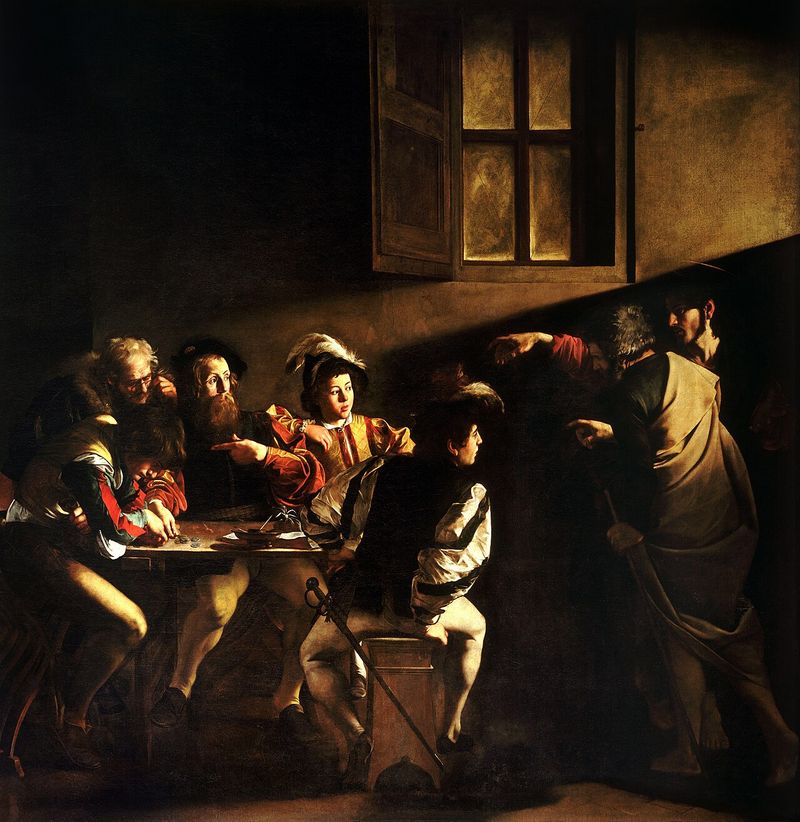
The Gospel of Matthew — The Church’s Gospel and Its Journey to Canon
Few books shaped early Christianity as deeply as Matthew. Explore its authorship debates, composition, theology, and canonical status.
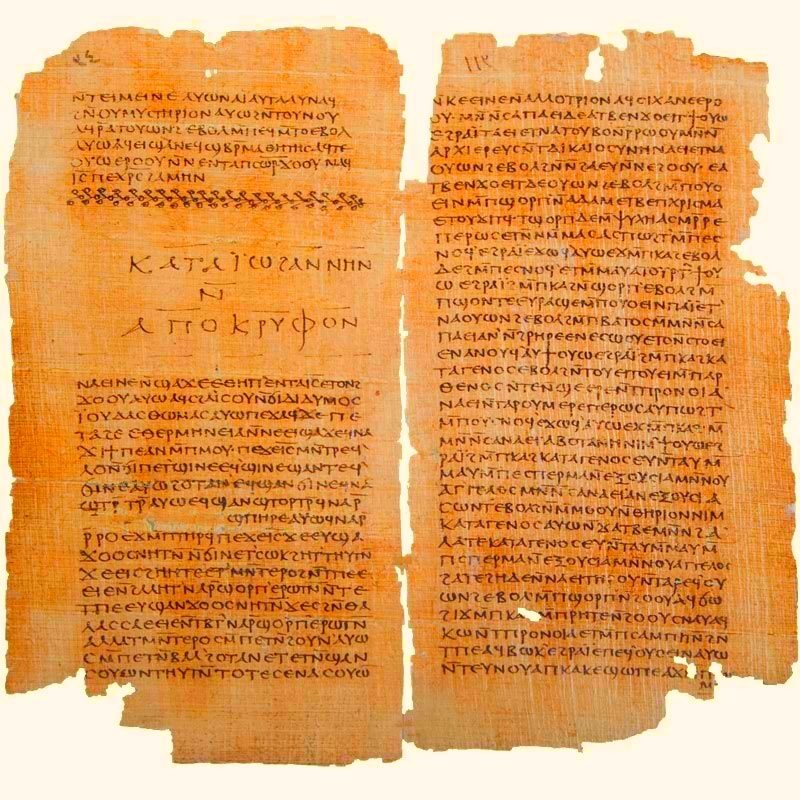
The Gnostic Gospels: A Catholic Guide to the Nag Hammadi Texts
What are the Gnostic Gospels? A Catholic guide to the Gospel of Thomas, Gospel of Philip, Apocryphon of John, and other Nag Hammadi texts—what they say and why they matter.
Stay Informed
Get new writing on faith, law, and service delivered to your inbox.
No spam. Unsubscribe anytime.