Matthew 13:24–43: The Weeds, the Mustard Seed, and a Field Left to Grow
On This Page
The Sixteenth Sunday in Ordinary Time, Year A, in a series on the Sunday Gospels.
ἄφετε συναυξάνεσθαι ἀμφότερα ἕως τοῦ θερισμοῦ.
“Let them grow together until harvest.”—Matthew 13:30 (NABRE)
Few passages in the Gospels have carried more ecclesiological weight on so slender a narrative frame. A man sows good seed; while everyone sleeps, an enemy oversows weeds; the servants want to pull them; the owner says no, wait for the harvest. That is the whole story, and it occupies seven verses. Yet from those seven verses Augustine built a doctrine of the Church that outlasted the Donatist schism, Aquinas drew a rule for the treatment of heretics, and the Second Vatican Council took language that the Catechism still uses to describe why the Church, though holy, is full of sinners.
This essay works through Matthew 13:24–43 as a whole—the three parables the evangelist places together, the redactional seam that quotes a psalm, and the allegory that closes the sequence. The aim is open exegesis rather than the defense of a thesis: to establish the Greek text, weigh the two philological cruxes the passage forces on a reader, read the parables against their Old Testament background, and then trace the long reception that made this pericope the property of ecclesiologists. Two questions recur and are worth naming at the outset. Why does the owner forbid the weeding? And what does it mean that the explanation identifies the field not as the Church but as the world?
The Text of the Pericope
The Greek text of Matthew 13:24–43 follows the twenty-eighth revised edition of Nestle-Aland, reproduced with its accentuation and its editorial brackets.1 Two bracketed readings signal places where the editors judged the original wording genuinely uncertain, and both bear on interpretation.
The Greek
24 Ἄλλην παραβολὴν παρέθηκεν αὐτοῖς λέγων· ὡμοιώθη ἡ βασιλεία τῶν οὐρανῶν ἀνθρώπῳ σπείραντι καλὸν σπέρμα ἐν τῷ ἀγρῷ αὐτοῦ.
25 ἐν δὲ τῷ καθεύδειν τοὺς ἀνθρώπους ἦλθεν αὐτοῦ ὁ ἐχθρὸς καὶ ἐπέσπειρεν ζιζάνια ἀνὰ μέσον τοῦ σίτου καὶ ἀπῆλθεν.
26 ὅτε δὲ ἐβλάστησεν ὁ χόρτος καὶ καρπὸν ἐποίησεν, τότε ἐφάνη καὶ τὰ ζιζάνια.
27 προσελθόντες δὲ οἱ δοῦλοι τοῦ οἰκοδεσπότου εἶπον αὐτῷ· κύριε, οὐχὶ καλὸν σπέρμα ἔσπειρας ἐν τῷ σῷ ἀγρῷ; πόθεν οὖν ἔχει ζιζάνια;
28 ὁ δὲ ἔφη αὐτοῖς· ἐχθρὸς ἄνθρωπος τοῦτο ἐποίησεν. οἱ δὲ δοῦλοι λέγουσιν αὐτῷ· θέλεις οὖν ἀπελθόντες συλλέξωμεν αὐτά;
29 ὁ δέ φησιν· οὔ, μήποτε συλλέγοντες τὰ ζιζάνια ἐκριζώσητε ἅμα αὐτοῖς τὸν σῖτον.
30 ἄφετε συναυξάνεσθαι ἀμφότερα ἕως τοῦ θερισμοῦ, καὶ ἐν καιρῷ τοῦ θερισμοῦ ἐρῶ τοῖς θερισταῖς· συλλέξατε πρῶτον τὰ ζιζάνια καὶ δήσατε αὐτὰ εἰς δέσμας πρὸς τὸ κατακαῦσαι αὐτά, τὸν δὲ σῖτον συναγάγετε εἰς τὴν ἀποθήκην μου.
31 Ἄλλην παραβολὴν παρέθηκεν αὐτοῖς λέγων· ὁμοία ἐστὶν ἡ βασιλεία τῶν οὐρανῶν κόκκῳ σινάπεως, ὃν λαβὼν ἄνθρωπος ἔσπειρεν ἐν τῷ ἀγρῷ αὐτοῦ·
32 ὃ μικρότερον μέν ἐστιν πάντων τῶν σπερμάτων, ὅταν δὲ αὐξηθῇ μεῖζον τῶν λαχάνων ἐστὶν καὶ γίνεται δένδρον, ὥστε ἐλθεῖν τὰ πετεινὰ τοῦ οὐρανοῦ καὶ κατασκηνοῦν ἐν τοῖς κλάδοις αὐτοῦ.
33 Ἄλλην παραβολὴν ἐλάλησεν αὐτοῖς· ὁμοία ἐστὶν ἡ βασιλεία τῶν οὐρανῶν ζύμῃ, ἣν λαβοῦσα γυνὴ ἐνέκρυψεν εἰς ἀλεύρου σάτα τρία ἕως οὗ ἐζυμώθη ὅλον.
34 Ταῦτα πάντα ἐλάλησεν ὁ Ἰησοῦς ἐν παραβολαῖς τοῖς ὄχλοις, καὶ χωρὶς παραβολῆς οὐδὲν ἐλάλει αὐτοῖς·
35 ὅπως πληρωθῇ τὸ ῥηθὲν διὰ τοῦ προφήτου λέγοντος· ἀνοίξω ἐν παραβολαῖς τὸ στόμα μου, ἐρεύξομαι κεκρυμμένα ἀπὸ καταβολῆς [κόσμου].
36 Τότε ἀφεὶς τοὺς ὄχλους ἦλθεν εἰς τὴν οἰκίαν. καὶ προσῆλθον αὐτῷ οἱ μαθηταὶ αὐτοῦ λέγοντες· διασάφησον ἡμῖν τὴν παραβολὴν τῶν ζιζανίων τοῦ ἀγροῦ.
37 ὁ δὲ ἀποκριθεὶς εἶπεν· ὁ σπείρων τὸ καλὸν σπέρμα ἐστὶν ὁ υἱὸς τοῦ ἀνθρώπου,
38 ὁ δὲ ἀγρός ἐστιν ὁ κόσμος, τὸ δὲ καλὸν σπέρμα οὗτοί εἰσιν οἱ υἱοὶ τῆς βασιλείας· τὰ δὲ ζιζάνιά εἰσιν οἱ υἱοὶ τοῦ πονηροῦ,
39 ὁ δὲ ἐχθρὸς ὁ σπείρας αὐτά ἐστιν ὁ διάβολος, ὁ δὲ θερισμὸς συντέλεια αἰῶνός ἐστιν, οἱ δὲ θερισταὶ ἄγγελοί εἰσιν.
40 ὥσπερ οὖν συλλέγεται τὰ ζιζάνια καὶ πυρὶ [κατα]καίεται, οὕτως ἔσται ἐν τῇ συντελείᾳ τοῦ αἰῶνος·
41 ἀποστελεῖ ὁ υἱὸς τοῦ ἀνθρώπου τοὺς ἀγγέλους αὐτοῦ, καὶ συλλέξουσιν ἐκ τῆς βασιλείας αὐτοῦ πάντα τὰ σκάνδαλα καὶ τοὺς ποιοῦντας τὴν ἀνομίαν
42 καὶ βαλοῦσιν αὐτοὺς εἰς τὴν κάμινον τοῦ πυρός· ἐκεῖ ἔσται ὁ κλαυθμὸς καὶ ὁ βρυγμὸς τῶν ὀδόντων.
43 τότε οἱ δίκαιοι ἐκλάμψουσιν ὡς ὁ ἥλιος ἐν τῇ βασιλείᾳ τοῦ πατρὸς αὐτῶν. ὁ ἔχων ὦτα ἀκουέτω.
The apparatus is quiet across most of the pericope, but three notes deserve attention. At verse 35 the manuscripts divide over whether the citation is introduced as spoken “through the prophet” (διὰ τοῦ προφήτου) or “through Isaiah the prophet” (διὰ Ἠσαΐου τοῦ προφήτου). The name “Isaiah” is read by the first hand of Sinaiticus, by Θ, and by the families 1 and 13, among others; the great mass of witnesses omits it. Nestle-Aland prints the shorter, unnamed reading, and the United Bible Societies committee rated the decision only “C,” an admission of real doubt.2 The difficulty is that the citation is not from Isaiah at all but from Psalm 78, so “Isaiah” is the harder reading precisely because it is wrong—which is why some editors have suspected it of being original, a scribal error later corrected by the removal of the name. Still at verse 35, the final word κόσμου (“of the world”) is bracketed because it is omitted by Vaticanus, family 1, and other witnesses (with Origen and Eusebius), leaving simply “from the foundation.” And at verse 40 the compound κατακαίεται (“is burned up”) carries its prefix in brackets, the witnesses being divided between the compound and the simple καίεται.3
The English
The New American Bible, Revised Edition, renders the pericope as follows; all English citations of Scripture in this essay are from that translation unless otherwise noted.4
24 The kingdom of heaven may be likened to a man who sowed good seed in his field. 25 While everyone was asleep his enemy came and sowed weeds all through the wheat, and then went off. 26 When the crop grew and bore fruit, the weeds appeared as well. 27 The slaves of the householder came to him and said, ‘Master, did you not sow good seed in your field? Where have the weeds come from?’ 28 He answered, ‘An enemy has done this.’ His slaves said to him, ‘Do you want us to go and pull them up?’ 29 He replied, ‘No, if you pull up the weeds you might uproot the wheat along with them. 30 Let them grow together until harvest; then at harvest time I will say to the harvesters, “First collect the weeds and tie them in bundles for burning; but gather the wheat into my barn.”’
31 The kingdom of heaven is like a mustard seed that a person took and sowed in a field. 32 It is the smallest of all the seeds, yet when full-grown it is the largest of plants. It becomes a large bush, and the ‘birds of the sky come and dwell in its branches.’
33 The kingdom of heaven is like yeast that a woman took and mixed with three measures of wheat flour until the whole batch was leavened.
34 All these things Jesus spoke to the crowds in parables. He spoke to them only in parables, 35 to fulfill what had been said through the prophet: “I will open my mouth in parables, I will announce what has lain hidden from the foundation [of the world].”
36 Then, dismissing the crowds, he went into the house. His disciples approached him and said, “Explain to us the parable of the weeds in the field.” 37 He said in reply, “He who sows good seed is the Son of Man, 38 the field is the world, the good seed the children of the kingdom. The weeds are the children of the evil one, 39 and the enemy who sows them is the devil. The harvest is the end of the age, and the harvesters are angels. 40 Just as weeds are collected and burned [up] with fire, so will it be at the end of the age. 41 The Son of Man will send his angels, and they will collect out of his kingdom all who cause others to sin and all evildoers. 42 They will throw them into the fiery furnace, where there will be wailing and grinding of teeth. 43 Then the righteous will shine like the sun in the kingdom of their Father. Whoever has ears ought to hear.”
Commentary, Verse by Verse
The sections that follow take up the passage’s larger questions—the textual cruxes, the Old Testament background, the long reception—in the round. Before that synthesis, here is a running commentary through the pericope in sequence, of the kind an exegetical reading ordinarily supplies. The sources are those already given in the apparatus above and below; where a point is developed at length later, the note points ahead.
Verses 24–30
24. Ἄλλην παραβολὴν παρέθηκεν αὐτοῖς λέγων· ὡμοιώθη ἡ βασιλεία τῶν οὐρανῶν ἀνθρώπῳ σπείραντι καλὸν σπέρμα ἐν τῷ ἀγρῷ αὐτοῦ.
The passive ὡμοιώθη—“has been made like,” the NABRE’s “may be likened”—introduces a comparison not to the man alone but to the whole scene that follows: the kingdom is like the situation of an owner who sowed καλὸν σπέρμα, “good seed,” ἐν τῷ ἀγρῷ αὐτοῦ, in his own field. The weight falls on the quality of the seed and the ownership of the field; both are unqualifiedly good before the story turns.
25. ἐν δὲ τῷ καθεύδειν τοὺς ἀνθρώπους ἦλθεν αὐτοῦ ὁ ἐχθρὸς καὶ ἐπέσπειρεν ζιζάνια ἀνὰ μέσον τοῦ σίτου καὶ ἀπῆλθεν.
The sabotage happens ἐν δὲ τῷ καθεύδειν τοὺς ἀνθρώπους, “while the men were sleeping”—an articular infinitive marking the time, not the negligence, of the household. The verb ἐπέσπειρεν is the pointed word: the compound ἐπι-σπείρω means to sow over or in addition, darnel laid down ἀνὰ μέσον τοῦ σίτου, “in among the wheat.” The enemy then ἀπῆλθεν, “went away”; the deed is done in the dark and hidden until the plants declare themselves.
26. ὅτε δὲ ἐβλάστησεν ὁ χόρτος καὶ καρπὸν ἐποίησεν, τότε ἐφάνη καὶ τὰ ζιζάνια.
ὅτε δὲ ἐβλάστησεν ὁ χόρτος καὶ καρπὸν ἐποίησεν—“when the blade sprouted and bore fruit”—τότε ἐφάνη καὶ τὰ ζιζάνια, “then the weeds also appeared.” The passive ἐφάνη, “became visible,” fixes the moment of disclosure: the darnel was present from the sowing, but only the forming of the ear tells it apart from wheat. The whole logic of the owner’s later refusal is planted here.
27–28. προσελθόντες δὲ οἱ δοῦλοι τοῦ οἰκοδεσπότου εἶπον αὐτῷ· κύριε, οὐχὶ καλὸν σπέρμα ἔσπειρας ἐν τῷ σῷ ἀγρῷ; πόθεν οὖν ἔχει ζιζάνια; ὁ δὲ ἔφη αὐτοῖς· ἐχθρὸς ἄνθρωπος τοῦτο ἐποίησεν. οἱ δὲ δοῦλοι λέγουσιν αὐτῷ· θέλεις οὖν ἀπελθόντες συλλέξωμεν αὐτά;
The servants come with a question that presses the theodicy—οὐχὶ καλὸν σπέρμα ἔσπειρας… πόθεν οὖν ἔχει ζιζάνια;, “did you not sow good seed… where then does it get weeds?”—the οὐχί that grammatically expects the answer “yes, you did.” The owner’s diagnosis is exact: ἐχθρὸς ἄνθρωπος τοῦτο ἐποίησεν, “an enemy has done this.” The evil is traced to a hostile agency outside the owner, who sowed only good. Their follow-up, θέλεις οὖν ἀπελθόντες συλλέξωμεν αὐτά;, is the deliberative subjunctive of servants awaiting a judgment they will not presume.
29–30. ὁ δέ φησιν· οὔ, μήποτε συλλέγοντες τὰ ζιζάνια ἐκριζώσητε ἅμα αὐτοῖς τὸν σῖτον. ἄφετε συναυξάνεσθαι ἀμφότερα ἕως τοῦ θερισμοῦ, καὶ ἐν καιρῷ τοῦ θερισμοῦ ἐρῶ τοῖς θερισταῖς· συλλέξατε πρῶτον τὰ ζιζάνια καὶ δήσατε αὐτὰ εἰς δέσμας πρὸς τὸ κατακαῦσαι αὐτά, τὸν δὲ σῖτον συναγάγετε εἰς τὴν ἀποθήκην μου.
The refusal turns on a danger, not on any indifference to the weeds: μήποτε… ἐκριζώσητε ἅμα αὐτοῖς τὸν σῖτον, “lest you uproot the wheat along with them,” the intertwined roots making early weeding a threat to the crop. Then the charter sentence, ἄφετε συναυξάνεσθαι ἀμφότερα ἕως τοῦ θερισμοῦ, its durative infinitive “to grow up together” commanding coexistence for the whole interval. The harvest sorts in two motions: the weeds first, bound εἰς δέσμας πρὸς τὸ κατακαῦσαι, “into bundles to be burned”; then the wheat εἰς τὴν ἀποθήκην μου, “into my barn”—John the Baptist’s word (Matt 3:12), already charged with judgment.
Verses 31–35
31–32. Ἄλλην παραβολὴν παρέθηκεν αὐτοῖς λέγων· ὁμοία ἐστὶν ἡ βασιλεία τῶν οὐρανῶν κόκκῳ σινάπεως, ὃν λαβὼν ἄνθρωπος ἔσπειρεν ἐν τῷ ἀγρῷ αὐτοῦ· ὃ μικρότερον μέν ἐστιν πάντων τῶν σπερμάτων, ὅταν δὲ αὐξηθῇ μεῖζον τῶν λαχάνων ἐστὶν καὶ γίνεται δένδρον, ὥστε ἐλθεῖν τὰ πετεινὰ τοῦ οὐρανοῦ καὶ κατασκηνοῦν ἐν τοῖς κλάδοις αὐτοῦ.
The mustard seed, κόκκῳ σινάπεως, is sown by a man ἐν τῷ ἀγρῷ αὐτοῦ, in his field. It is μικρότερον… πάντων τῶν σπερμάτων, a comparative doing the work of a superlative—proverbial smallness, not seed-science. Its end is disproportion: μεῖζον τῶν λαχάνων, “greater than the garden plants,” and γίνεται δένδρον, “becomes a tree,” a hyperbole for a shrub, so that the birds κατασκηνοῦν ἐν τοῖς κλάδοις, “nest in its branches”—the Old Testament’s image of a great tree in whose branches the nations find shelter.
33. Ἄλλην παραβολὴν ἐλάλησεν αὐτοῖς· ὁμοία ἐστὶν ἡ βασιλεία τῶν οὐρανῶν ζύμῃ, ἣν λαβοῦσα γυνὴ ἐνέκρυψεν εἰς ἀλεύρου σάτα τρία ἕως οὗ ἐζυμώθη ὅλον.
The leaven is ἐνέκρυψεν εἰς ἀλεύρου σάτα τρία, “hidden in three measures of flour,” an enormous batch. The verb ἐνέκρυψεν, “hid within,” carries the root of hiddenness that runs on to the κεκρυμμένα of verse 35 and the hidden treasure of verse 44; the kingdom works ἕως οὗ ἐζυμώθη ὅλον, “until the whole was leavened.” That leaven is elsewhere a figure of corruption makes its choice here the more deliberate: the image is of total, hidden permeation.
34–35. Ταῦτα πάντα ἐλάλησεν ὁ Ἰησοῦς ἐν παραβολαῖς τοῖς ὄχλοις, καὶ χωρὶς παραβολῆς οὐδὲν ἐλάλει αὐτοῖς· ὅπως πληρωθῇ τὸ ῥηθὲν διὰ τοῦ προφήτου λέγοντος· ἀνοίξω ἐν παραβολαῖς τὸ στόμα μου, ἐρεύξομαι κεκρυμμένα ἀπὸ καταβολῆς [κόσμου].
The seam is one of Matthew’s fulfillment formulas: Jesus spoke ἐν παραβολαῖς and χωρὶς παραβολῆς οὐδὲν ἐλάλει, “said nothing to them without a parable,” ὅπως πληρωθῇ, “so that there might be fulfilled,” the word of the prophet—Psalm 78:2. Matthew reads the parabolic method itself as prophecy accomplished: ἐρεύξομαι κεκρυμμένα ἀπὸ καταβολῆς, “I will pour forth things hidden from the foundation.” The famous problem of the ascription, and the bracketed κόσμου, is taken up in the next section.
Verses 36–43
36. Τότε ἀφεὶς τοὺς ὄχλους ἦλθεν εἰς τὴν οἰκίαν. καὶ προσῆλθον αὐτῷ οἱ μαθηταὶ αὐτοῦ λέγοντες· διασάφησον ἡμῖν τὴν παραβολὴν τῶν ζιζανίων τοῦ ἀγροῦ.
Τότε ἀφεὶς τοὺς ὄχλους ἦλθεν εἰς τὴν οἰκίαν—“then, leaving the crowds, he went into the house.” The move from open field to closed house is the move from public parable to private instruction; the disciples ask him to διασάφησον, to “make plain,” the parable of the weeds, and what follows is spoken to them alone.
37–39. ὁ δὲ ἀποκριθεὶς εἶπεν· ὁ σπείρων τὸ καλὸν σπέρμα ἐστὶν ὁ υἱὸς τοῦ ἀνθρώπου, ὁ δὲ ἀγρός ἐστιν ὁ κόσμος, τὸ δὲ καλὸν σπέρμα οὗτοί εἰσιν οἱ υἱοὶ τῆς βασιλείας· τὰ δὲ ζιζάνιά εἰσιν οἱ υἱοὶ τοῦ πονηροῦ, ὁ δὲ ἐχθρὸς ὁ σπείρας αὐτά ἐστιν ὁ διάβολος, ὁ δὲ θερισμὸς συντέλεια αἰῶνός ἐστιν, οἱ δὲ θερισταὶ ἄγγελοί εἰσιν.
Here the New Testament allegorizes its own parable, in a chain of seven equations: the sower is ὁ υἱὸς τοῦ ἀνθρώπου, the Son of Man; the field is ὁ κόσμος, the world; the good seed the υἱοὶ τῆς βασιλείας, “the children of the kingdom”; the weeds the υἱοὶ τοῦ πονηροῦ, “the children of the evil one”; the enemy the διάβολος, “the devil”; the harvest the συντέλεια αἰῶνος, the end of the age; the reapers the angels. That the field is the world, not the Church, is the datum to which this essay keeps returning. Notice, too, what is left unglossed—the servants who wished to weed—a restraint the reception history below makes much of.
40–41. ὥσπερ οὖν συλλέγεται τὰ ζιζάνια καὶ πυρὶ [κατα]καίεται, οὕτως ἔσται ἐν τῇ συντελείᾳ τοῦ αἰῶνος· ἀποστελεῖ ὁ υἱὸς τοῦ ἀνθρώπου τοὺς ἀγγέλους αὐτοῦ, καὶ συλλέξουσιν ἐκ τῆς βασιλείας αὐτοῦ πάντα τὰ σκάνδαλα καὶ τοὺς ποιοῦντας τὴν ἀνομίαν
The application unfolds in a Danielic key. ὥσπερ… συλλέγεται τὰ ζιζάνια καὶ πυρὶ [κατα]καίεται, “just as the weeds are gathered and burned with fire,” so it will be ἐν τῇ συντελείᾳ τοῦ αἰῶνος. The Son of Man ἀποστελεῖ τοὺς ἀγγέλους αὐτοῦ, who will gather πάντα τὰ σκάνδαλα καὶ τοὺς ποιοῦντας τὴν ἀνομίαν, “all causes of sin and those who work lawlessness,” ἐκ τῆς βασιλείας αὐτοῦ—out of his kingdom, the realm from which evil is finally purged.
42–43. καὶ βαλοῦσιν αὐτοὺς εἰς τὴν κάμινον τοῦ πυρός· ἐκεῖ ἔσται ὁ κλαυθμὸς καὶ ὁ βρυγμὸς τῶν ὀδόντων. τότε οἱ δίκαιοι ἐκλάμψουσιν ὡς ὁ ἥλιος ἐν τῇ βασιλείᾳ τοῦ πατρὸς αὐτῶν. ὁ ἔχων ὦτα ἀκουέτω.
The two outcomes are stated without softening. The furnace, τὴν κάμινον τοῦ πυρός, and ὁ κλαυθμὸς καὶ ὁ βρυγμὸς τῶν ὀδόντων, the “weeping and gnashing of teeth” that tolls through this Gospel; then the reversal, οἱ δίκαιοι ἐκλάμψουσιν ὡς ὁ ἥλιος, “the righteous will shine like the sun”—Daniel 12:3, in the Theodotionic verb discussed below. The movement from “his kingdom” (v. 41) to “the kingdom of their Father” (v. 43) marks the passage from the present realm being purged to the consummated state. The discourse then seals itself: ὁ ἔχων ὦτα ἀκουέτω, “whoever has ears, let him hear.”
The Prophet Who Was Not Isaiah
The seam at verses 34–35 is one of Matthew’s characteristic fulfillment formulas, and it interprets the parabolic method itself as the accomplishment of prophecy. The quoted words are from Psalm 78:2. In the Masoretic Text the verse reads:5
אֶפְתְּחָ֣ה בְמָשָׁ֣ל פִּ֑י אַבִּ֥יעָה חִ֝יד֗וֹת מִנִּי־קֶֽדֶם׃
“I will open my mouth in a parable, unfold the puzzling events of the past.”—Psalm 78:2 (NABRE)
The first half—“I will open my mouth in a parable”—Matthew reproduces verbatim from the Septuagint (ἀνοίξω ἐν παραβολαῖς τὸ στόμα μου). The second half is where his citation goes its own way. The Septuagint of Psalm 77:2 continues φθέγξομαι προβλήματα ἀπ᾿ ἀρχῆς (“I will utter problems from the beginning”), but Matthew writes ἐρεύξομαι κεκρυμμένα ἀπὸ καταβολῆς (“I will pour forth things hidden from the foundation”).6 His verb ἐρεύξομαι renders the Hebrew אַבִּיעָה more literally than the Septuagint does, and his phrase “from the foundation [of the world]” pushes the temporal reference back to creation, in keeping with Matthew’s theology of a kingdom whose mysteries were hidden and are now revealed. The citation is, in other words, a mixed one: Septuagint in the first line, an independent rendering closer to the Hebrew in the second.
The famous problem is the ascription. Some witnesses attribute the words to “Isaiah the prophet,” and the psalm is not Isaiah’s but is titled “a maskil of Asaph.” The NABRE study note handles the difficulty with care: Asaph, called “the seer” in 2 Chronicles 29:30, could loosely be styled “the prophet,” but it is doubtful that Matthew had that in mind; for the evangelist, any Old Testament text that could be seen as fulfilled in Jesus was prophetic.7 Whether “Isaiah” stood in the autograph or crept in later, the harder reading is a useful reminder that Matthew’s interest is not in precise attribution but in the claim that the parabolic mode of teaching was itself foretold.
Reading the Three Parables
The Weeds among the Wheat
The realism of the first parable depends on a fact of Palestinian agriculture. The weed the enemy sows, ζιζάνια, is darnel (Lolium temulentum), a plant so like wheat in its early growth that the two cannot be safely distinguished until the ears form.8 The NABRE note calls it “a poisonous weed that in its first stage of growth resembles wheat,” and that resemblance is the whole logic of the owner’s refusal.9 To weed early is to guess, and to guess is to tear up wheat by the root along with darnel, since the roots intertwine below the surface. The servants’ question—θέλεις οὖν ἀπελθόντες συλλέξωμεν αὐτά;, “do you want us to go and gather them?”—is deferential, a deliberative subjunctive that waits on the master’s judgment rather than presuming it. His answer forbids the premature separation and defers it to the harvest: ἄφετε συναυξάνεσθαι ἀμφότερα ἕως τοῦ θερισμοῦ. The durative infinitive “to grow together” underlines the point. Coexistence is not tolerated as a temporary embarrassment; it is commanded for the whole span of the present age.
Coexistence is not tolerated as a temporary embarrassment; it is commanded for the whole span of the present age.
Two further details carry theological freight. The diagnosis “an enemy has done this” (ἐχθρὸς ἄνθρωπος τοῦτο ἐποίησεν) locates the origin of the weeds outside the owner, who sowed only good seed; the parable thus refuses to make God the author of the evil in the field. And the harvest itself—θερισμός—is a standing biblical image for judgment, as the NABRE note observes, pointing to Jeremiah 51:33, Joel 4:13, and Hosea 6:11.10 The barn into which the wheat is gathered (ἀποθήκη) is the same word John the Baptist uses when he threatens that the chaff will burn while the wheat is stored (Matt 3:12), so that the parable’s ending already carries the Baptist’s eschatological charge—an image the Book of Revelation will later expand into its vision of the harvest sickle and the winepress of wrath (Rev 14:14–20).
The Mustard Seed
The second parable turns on a deliberate exaggeration. The mustard seed is μικρότερον … πάντων τῶν σπερμάτων, “smaller than all the seeds,” a comparative doing the work of a superlative. It is easy, and beside the point, to object that mustard is not botanically the smallest of all seeds. The phrase is proverbial: in the world of Jesus’ hearers the mustard seed was the standard image of the smallest visible quantity, and the rabbinic literature uses it exactly so.11 The parable’s force lies in the disproportion between the tiny beginning and the great end—the shrub that “becomes a tree” (γίνεται δένδρον), itself a hyperbole, for mustard is a garden plant and not timber. The image of the birds nesting in its branches is drawn from the Old Testament’s great-tree imagery, where an empire shelters the nations like birds under its boughs; the NABRE cross-references Daniel 4, Ezekiel 17:23, and Ezekiel 31:6.12 The kingdom that begins as a seed will become the tree in which the nations find a home.
The Leaven
The third parable is the shortest and, in one respect, the most surprising. Everywhere else in the New Testament leaven is an image of corruption—the leaven of the Pharisees, the little leaven that ferments the whole lump. The NABRE note flags the reversal: except here and at Matthew 16:12, yeast in New Testament usage symbolizes corruption.13 Here it is the kingdom, chosen for its property of hidden, unstoppable permeation. The woman “hides” the leaven (ἐνέκρυψεν—the same root of hiddenness that runs through the citation in v. 35 and the hidden treasure of v. 44) in “three measures” of flour, an enormous quantity, enough to feed a hundred people. The exaggeration, as with the mustard seed, points to the greatness of the kingdom’s effect. Chrysostom draws out the encouragement in it: as leaven works not by staying apart from the dough but by being mixed into it and lost to sight, so the disciples will prevail not by withdrawing from the world but by being kneaded into it.14
The Explanation and the Limits of Allegory
At verse 36 the scene shifts. Jesus dismisses the crowds and enters the house, and the discourse turns from public parable to private instruction—a movement the NABRE note reads as marking the crowds off as unbelieving Israel, with Jesus’ attention now fixed on the disciples.15 What follows is a chain of equations: the sower is the Son of Man, the field is the world, the good seed the children of the kingdom, the weeds the children of the evil one, the enemy the devil, the harvest the end of the age, the reapers the angels. This is the New Testament interpreting one of its own parables allegorically, and that fact has made the passage a battleground in the study of the parables.
The dominant modern theory, associated with Adolf Jülicher and developed by C. H. Dodd and Joachim Jeremias, held that Jesus’ parables make a single point of comparison and are not allegories; the allegorical interpretations preserved in the Gospels were therefore taken to be the secondary work of the early Church.16 The interpretation in verses 36–43 is, on any accounting, saturated with Matthew’s own vocabulary—“the end of the age” (συντέλεια τοῦ αἰῶνος), “the Son of Man,” “causes of sin” (σκάνδαλα), “lawlessness” (ἀνομία), “the weeping and the gnashing of teeth,” the shining of the righteous. Whether one concludes from this that the interpretation is a later composition, or only that Matthew has phrased in his own idiom something authentically dominical, is a judgment the vocabulary alone cannot settle. What can be said is that the passage tells against any theory that would banish allegory from Jesus’ teaching by fiat, for here the Gospel presents him allegorizing.
Chrysostom, long before the modern debate, saw the real methodological danger and named it. “The parables must not be explained throughout word for word,” he wrote, “since many absurdities will follow”; the interpreter is to take up “those that are most urgent and essential, and for the sake of which the parable was spoken,” and leave the rest as scenery.17 Jesus himself, on Chrysostom’s reading, models this restraint by declining to say who the servants are. The allegory decodes what the emphasis is—the sower, the seed, the enemy, the harvest—and lets the narrative machinery stand.
The allegory decodes what the emphasis is—the sower, the seed, the enemy, the harvest—and lets the narrative machinery stand.
The Synoptic Question and the Gospel of Thomas
The parable of the weeds has no parallel in Mark or Luke, and it occupies the structural slot where Mark places a different parable, the Seed Growing Secretly (Mark 4:26–29), which Matthew lacks. The most economical reading is that Matthew has this parable from his own tradition and has placed it where Mark had a parable of quiet growth, shifting the question from how the seed grows to why there are weeds among the wheat. The mustard seed, by contrast, is triple tradition (Mark 4:30–32; Luke 13:18–19), and the leaven is shared with Luke alone (Luke 13:20–21).18 A version of the weeds parable also appears in the Gospel of Thomas, in a shorter form without the servants’ dialogue and without any allegorical explanation; most specialists judge that form to presuppose Matthew rather than to preserve an independent tradition.19
The Harvest and the Danielic Backdrop
The eschatology of verses 40–43 is Danielic to its core. The phrase “the end of the age” is distinctively Matthew’s—it appears in the Gospels only in this evangelist—and it designates not the annihilation of the cosmos but the close of the present age and the inauguration of judgment.20 The Son of Man who sends his angels to purge his kingdom is the figure of Daniel 7, and the promise that closes the passage is a quotation of Daniel 12:3. There the wise are said to shine at the resurrection, and the two Greek forms of Daniel render the verb differently: the Old Greek reads φανοῦσιν ὡς φωστῆρες τοῦ οὐρανοῦ, “they will appear as the luminaries of heaven,” while the Theodotion form reads ἐκλάμψουσιν, “they will shine forth.”21 Matthew’s ἐκλάμψουσιν ὡς ὁ ἥλιος uses the Theodotionic verb, not the Old Greek’s, and substitutes “the sun” for Daniel’s “brightness of the firmament”—an agreement with Theodotion that is a small but telling datum about the form of Daniel his tradition knew. The NABRE note simply directs the reader to Daniel 12:3.22
The furnace and the wailing belong to the same apocalyptic register. “The weeping and the gnashing of teeth” is a stereotyped Matthean formula that sounds in this very passage (v. 42) and recurs at 8:12, 13:50, 22:13, 24:51, and 25:30, and it fixes the note of judgment that the interpretation, unlike the parable, brings to the foreground.
The Fathers and the Field
For the patristic tradition the weeds were rarely simply sinners in general; they were, above all, heretics, and the parable was read as a warning against the violent purge of the Church. Chrysostom is explicit. The tares, he says, are “the societies of the heretics,” and the owner’s prohibition is a prohibition of bloodshed: the command “lest you root up the wheat with them” was given, he writes, “to hinder wars from arising, and blood and slaughter. For it is not right to put a heretic to death, since an implacable war would be brought into the world.” He is careful to distinguish suppression from execution: Christ “does not therefore forbid our checking heretics, and stopping their mouths, and taking away their freedom of speech, and breaking up their assemblies and confederacies, but our killing and slaying them.”23 And because the darnel can yet become wheat—because “of the very tares it is likely that many may change”—premature judgment would destroy what is still capable of conversion.
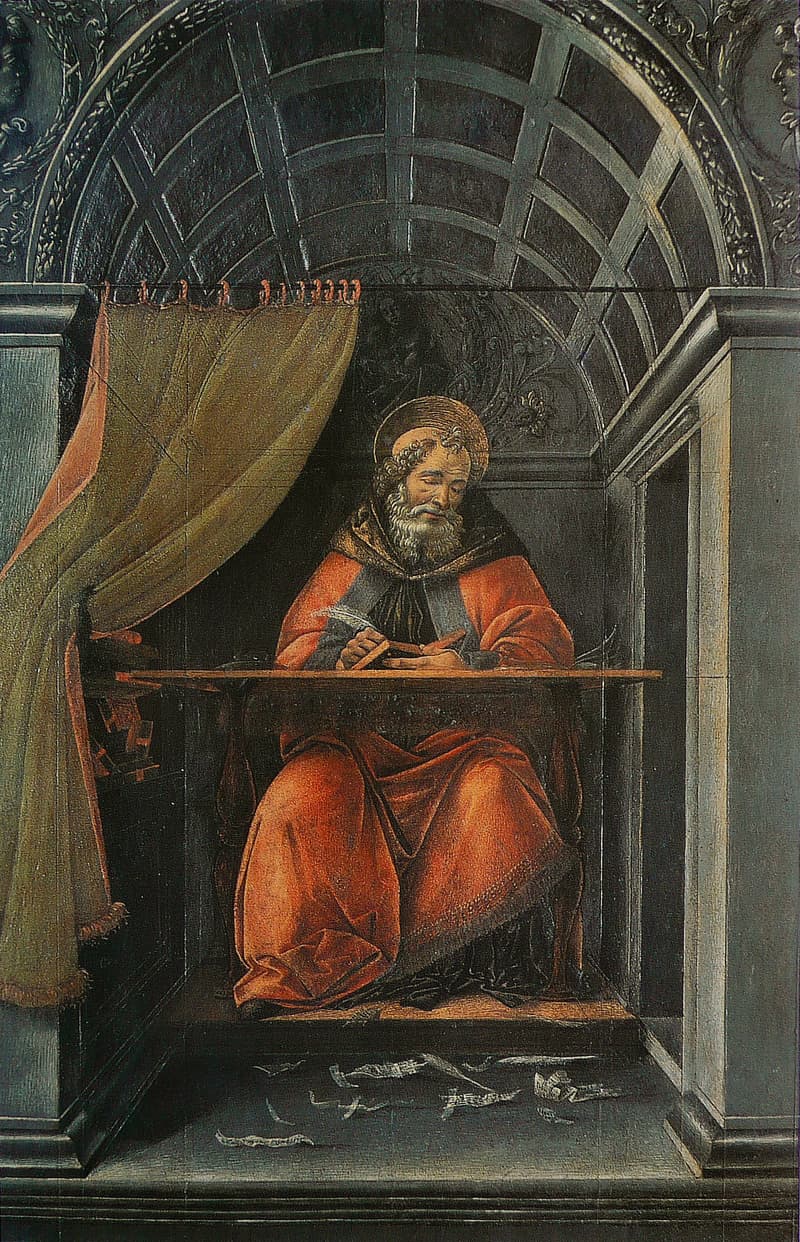
It was Augustine who made this parable the charter of an ecclesiology. Against the Donatists—the North African rigorists who held that the Church must be a communion of the pure and that sacraments administered by unworthy ministers were void—Augustine argued that Christ’s “let both grow together until the harvest” forbids the very separation the Donatists demanded. The Church in this age is a corpus permixtum, a mixed body of wheat and weeds, and only God, at the harvest, may finally divide them. The argument runs through his anti-Donatist works, from the Answer to the Letter of Parmenian to On Baptism, Against the Donatists, where he insists that the validity of the sacrament rests on Christ and not on the holiness of the minister.24
The Church in this age is a corpus permixtum, a mixed body of wheat and weeds, and only God, at the harvest, may finally divide them.
The reading was not a license for indiscipline: Augustine did not take “let both grow” to abolish excommunication, which he continued to defend for manifest and judicially established offenses. The parable spoke to the impossibility of a total human purge of secret sinners, not to the abandonment of order. It must also be said that Augustine’s later endorsement of imperial coercion of the Donatists stands in real tension with the patience the parable counsels, and the tension is one the tradition has never entirely dissolved.
Aquinas and the Medieval Trajectory
Thomas Aquinas gathered the patristic reading into his Catena Aurea and then put the parable to work in the Summa. The question whether heretics ought to be tolerated opens with an objection built precisely on this text: the Master commanded his servants to suffer the weeds to grow until the harvest, and holy men explain the weeds as heretics; therefore heretics should be tolerated.25 Aquinas’ reply is where the medieval trajectory parts from Chrysostom’s. Citing the canonical gloss that “to be excommunicated is not to be uprooted,” he holds that the Lord’s prohibition applies only “when the cockle cannot be plucked up without plucking up the wheat”; where heretics can be identified without harm to the faithful, their being “altogether uprooted by death” is not, on his account, contrary to the command. The same parable that grounded Chrysostom’s restraint thus grounds, in Aquinas’ development, a qualified justification for the coercion of the baptized—a sobering illustration of how much interpretive weight a seven-verse story was made to bear, and in how many directions.
Lumen Gentium, the Catechism, and the Mixed Church
The Augustinian reading passed into the teaching of the Second Vatican Council. Lumen Gentium 8 calls the Church sancta simul et semper purificanda—in the Catechism’s rendering, “at once holy and always in need of purification,” following constantly “the path of penance and renewal.” The Catechism quotes that sentence and then, in the same paragraph, makes the parable explicit: “In everyone, the weeds of sin will still be mixed with the good wheat of the Gospel until the end of time,” with a footnote to Matthew 13:24–30.26 The Catechism elsewhere calls the Church “the sinless one made up of sinners,” a formula that captures the paradox the parable protects: a Church really holy in her source and her saints, yet holding sinners in her midst until the winnowing.27 Here it is worth repeating the exegetical caution. The text says the field is the world; the application to the Church is an extension, defensible and ancient, but an extension nonetheless, and honest reading keeps the distinction in view.
The Theology of the Passage
Read as a whole, the pericope holds together four theological claims that the tradition has rarely managed to hold together for long. The first is ecclesiological: in the present age the community of the kingdom is mixed, and the attempt to constitute a visibly pure body now, by human sorting, is forbidden. The second is eschatological: the sorting is real, certain, and future, executed by the Son of Man’s angels at the end of the age, and its outcomes are irreducibly two—the furnace and the shining. The third is Christological: the Son of Man is both the sower who plants good seed and the judge who commands angels, and the movement from “his kingdom” in verse 41 to “the kingdom of their Father” in verse 43 distinguishes the present realm from which evil is finally purged from the consummated state, much as Paul distinguishes the mediatorial reign of the Son that is finally handed over to the Father.28 The fourth is a theodicy: evil in the field is an intrusion, “an enemy has done this,” and the delay of judgment is not divine indifference but divine patience, protecting the wheat.
Chrysostom found in the arrangement of the parable a glimpse of the divine character. When the owner sows, he sows in his own person; when he punishes, it is by others, by the angels—a leaning, Chrysostom says, toward bounty and away from punishment.29 The parable does not soften the reality of judgment, which its own explanation states in the harshest imagery Matthew commands. But it locates judgment at the end, in God’s hands, and makes the interval a time of patience.
But it locates judgment at the end, in God’s hands, and makes the interval a time of patience.
Preaching the Patience of God
The Roman Lectionary appoints Matthew 13:24–43 as the Gospel for the Sixteenth Sunday in Ordinary Time in Year A, offered in a longer form that includes the interpretation and a shorter form that stops at verse 30 with the parable of the weeds alone.30 Preached, the passage most naturally becomes a sermon on patience—on the refusal to demand a purified community now and the trust that God’s harvest will be both just and merciful. Pope Francis put it directly in an Angelus address on this Gospel: the parable “deals with the problem of evil in the world and calls attention to God’s patience,” and “in facing weeds in the world the Lord’s disciple is called to imitate the patience of God, to nourish hope with the support of indestructible trust in the final victory of good.” He added the necessary guardrail: “evangelical patience is not indifference to evil; one must not confuse good and evil.”31
Three misreadings are worth naming, because the parable invites each. It does not counsel indifference to sin; “let both grow” is not “sin does not matter,” and Augustine held patience and discipline together. It does not abolish the correction commanded a few chapters later in Matthew 18; the parable addresses the impossibility of rooting out all secret sinners, not the legitimacy of ordinary discipline. And it does not turn on a botanical error about the mustard seed; the “smallest of all seeds” is a proverb of smallness, not a scientific claim. The fourth caution is the one already pressed: the field is the world, and the mixed Church is a legitimate application to be argued, not a datum to be assumed.
Until the Harvest
The parable of the weeds is easy to sentimentalize and easy to weaponize, and its history shows both. Read plainly, it is neither soft nor cruel. It refuses to let the good seed be torn up in a zeal to be rid of the weeds, and it refuses to pretend the weeds are wheat. It asks for a particular temper—patience that is not indifference, hope that is not presumption, a willingness to leave to God a judgment that human hands cannot make without ruining the field. The harvest is coming, and at the harvest the righteous will shine like the sun. Until then the command stands, and it is not an easy one: ἄφετε συναυξάνεσθαι ἀμφότερα ἕως τοῦ θερισμοῦ—let them grow together until the harvest.
Frequently Asked Questions
What does the parable of the weeds (Matt 13:24–43) mean?
A landowner sows good seed; while everyone sleeps an enemy oversows weeds among the wheat, and when the two come up together the owner forbids his servants to pull the weeds, telling them to let both grow until the harvest. Jesus then decodes the scene for his disciples: the sower is the Son of Man, the field is the world, the good seed the children of the kingdom, the weeds the children of the evil one, the enemy the devil, the harvest the end of the age, and the reapers the angels (Matt 13:37–39). The parable’s lesson is patience—judgment is real and certain, but it belongs to God at the end of the age, not to human hands trying to purify the field now.
Is the field the Church or the world?
The parable’s own explanation says plainly that “the field is the world” (Matt 13:38), not the Church. Reading it as a picture of a mixed Church—Augustine’s corpus permixtum of wheat and weeds, later echoed in Lumen Gentium 8 and Catechism §827—is a legitimate and ancient extension of the text, but it is an application, not the plain sense. Honest reading keeps the distinction in view.
What does “let both grow together until the harvest” mean?
Darnel, the weed in the parable, looks almost exactly like wheat until the ears form, and their roots intertwine below the surface, so pulling the weeds early would tear up the wheat with them. The owner therefore forbids premature weeding and defers the separation to the harvest—an image of the end of the age, when angels, not human judges, will sort the two. It is a counsel of patience, not indifference: as Pope Francis put it, “evangelical patience is not indifference to evil; one must not confuse good and evil.”
What do the weeds and the wheat represent?
In Jesus’ own explanation the good seed is “the children of the kingdom” and the weeds are “the children of the evil one,” sown by the devil (Matt 13:38–39). In the patristic tradition the weeds were often read more specifically as heretics: John Chrysostom called them “the societies of the heretics” and took the owner’s refusal as a prohibition against killing them, while Augustine made the parable the charter of his picture of the Church as a mixed body. The parable itself, however, leaves the weeds identified simply as the evildoers gathered out of the kingdom at the end of the age.
Why does Jesus call the mustard seed the “smallest of all seeds”?
The phrase is a proverb of smallness, not a claim in botany. In the world of Jesus’ hearers the mustard seed was the standard image for the tiniest visible quantity, and the Greek uses a comparative (“smaller”) where we would expect a superlative. The point of the parable is the disproportion between the tiny beginning and the great end—the seed that grows into a shrub large enough for the birds to nest in its branches—not a lesson in seed science.
Footnotes
1. Eberhard Nestle, Erwin Nestle, Barbara Aland, et al., eds., Novum Testamentum Graece, 28th rev. ed. (Stuttgart: Deutsche Bibelgesellschaft, 2012) (NA28). The Greek is reproduced with the edition’s editorial brackets at 13:35 ([κόσμου]) and 13:40 ([κατα]καίεται), each signaling a reading the editors judged uncertain.
2. The reading διὰ Ἠσαΐου τοῦ προφήτου is attested by א* (first hand of Sinaiticus), Θ, and families 1 and 13, among others; NA28 and UBS5 print the shorter διὰ τοῦ προφήτου with the majority. See Barbara Aland et al., eds., The Greek New Testament, 5th rev. ed. (Stuttgart: Deutsche Bibelgesellschaft, 2014), which rates the decision {C}. The citation is in fact from Ps 78:2, which makes “Isaiah” the harder reading.
3. NA28 brackets κόσμου at 13:35 (omitted by Vaticanus, family 1, and other witnesses, with Origen and Eusebius, leaving ἀπὸ καταβολῆς; the longer reading is a probable harmonization to the fuller phrase at Matt 25:34) and the prefix of [κατα]καίεται at 13:40, where the witnesses divide between the compound and the simplex καίεται.
4. New American Bible (Revised Edition) (Washington, DC: Confraternity of Christian Doctrine, 2010) (NABRE), Matt 13:24–43. The text and official study notes are at bible.usccb.org/bible/matthew/13 and are reproduced (with cross-reference apparatus) at Bible Gateway.
5. Ps 78:2, Masoretic Text; Karl Elliger and Wilhelm Rudolph, eds., Biblia Hebraica Stuttgartensia, 5th rev. ed. (Stuttgart: Deutsche Bibelgesellschaft, 1997) (BHS), based on the Leningrad Codex. The pointing is reproduced (per the Miqra according to the Masorah edition available at Sefaria) and has not been reconstructed.
6. LXX Ps 77:2 in Alfred Rahlfs and Robert Hanhart, eds., Septuaginta, 2nd rev. ed. (Stuttgart: Deutsche Bibelgesellschaft, 2006). Matthew’s first colon matches the LXX verbatim; his second colon (ἐρεύξομαι κεκρυμμένα ἀπὸ καταβολῆς) diverges from the LXX (φθέγξομαι προβλήματα ἀπ᾿ ἀρχῆς) and renders the Hebrew more literally.
7. NABRE note on Matt 13:35: some witnesses read “Isaiah the prophet”; the quotation is from Ps 78:2, whose title ascribes it to Asaph, called “the seer” in 2 Chr 29:30, “but it is doubtful that Matthew averted to that; for him, any Old Testament text that could be seen as fulfilled in Jesus was prophetic.”
8. Henry George Liddell and Robert Scott, A Greek-English Lexicon, rev. Henry Stuart Jones, 9th ed. with rev. suppl. (Oxford: Clarendon, 1996) (LSJ), s.v. ζιζάνιον (“darnel, Lolium temulentum”). The plant mimics wheat until the ear forms, and its seed is commonly infested with a toxic fungus—hence the specific epithet temulentum, “drunken.”
9. NABRE note on Matt 13:25: “Weeds: darnel, a poisonous weed that in its first stage of growth resembles wheat.”
10. NABRE note on Matt 13:30: “Harvest: a common biblical metaphor for the time of God’s judgment; cf. Jer 51:33; Jl 4:13; Hos 6:11.” The eschatological reaping recurs at Rev 14:14–20, where “one like a son of man” swings the sickle.
11. On the mustard seed as the proverbial smallest quantity in rabbinic usage, see, e.g., m. Nid. 5:2. The comparative μικρότερον functions as a superlative; the point is disproportion, not botany.
12. NABRE note and cross-references on Matt 13:32: Dan 4:7–9, 17–19 (the birds in Nebuchadnezzar’s world-tree); Ez 17:23; 31:6.
13. NABRE note on Matt 13:33: except in this Q parable and at Matt 16:12, yeast is a New Testament symbol of corruption (cf. Matt 16:6, 11–12; Mk 8:15; Lk 12:1; 1 Cor 5:6–8; Gal 5:9). “Three measures” is “an enormous amount, enough to feed a hundred people.”
14. John Chrysostom, Hom. Matt. 46.2, trans. George Prevost, rev. M. B. Riddle, NPNF1 10 (Buffalo, NY: Christian Literature Publishing, 1888); online at New Advent, newadvent.org/fathers/200146.htm.
15. NABRE note on Matt 13:36: the return to the house “marks a break with the crowds, who represent unbelieving Israel,” with the rest of the discourse addressed to the disciples alone.
16. Adolf Jülicher, Die Gleichnisreden Jesu, 2 vols. (Tübingen: Mohr, 1888–1899); C. H. Dodd, The Parables of the Kingdom (London: Nisbet, 1935); Joachim Jeremias, The Parables of Jesus, rev. ed., trans. S. H. Hooke (London: SCM, 1972). All three treat the allegorical interpretation of vv. 36–43 as secondary to the parable itself.
17. Chrysostom, Hom. Matt. 47.1 (NPNF1 10), online at newadvent.org/fathers/200147.htm.
18. The mustard seed is triple tradition (Mk 4:30–32; Lk 13:18–19) and the leaven is shared with Luke (Lk 13:20–21); the weeds parable stands in Matthew’s special material, in the slot Mark fills with the Seed Growing Secretly (Mk 4:26–29). See the NABRE cross-references at Matt 13:31–33.
19. Gospel of Thomas 57 gives a shorter, uninterpreted form. On its dependence on Matthew, see John P. Meier, “The Parable of the Wheat and the Weeds (Matt 13:24–30): Is Thomas’s Version (Logion 57) Independent?” JBL 131 (2012): 715–732.
20. NABRE note on Matt 13:39: “The end of the age: this phrase is found only in Matthew (13:40, 49; 24:3; 28:20).” The underlying συντέλεια τοῦ αἰῶνος carries Danielic resonance (cf. Dan 12:4).
21. Dan 12:3, Old Greek: καὶ οἱ συνιέντες φανοῦσιν ὡς φωστῆρες τοῦ οὐρανοῦ (verified in the Swete edition text). The Theodotion form reads ἐκλάμψουσιν ὡς ἡ λαμπρότης τοῦ στερεώματος; both are printed in Rahlfs-Hanhart, Septuaginta. Matthew’s ἐκλάμψουσιν agrees with Theodotion.
22. NABRE note and cross-reference on Matt 13:43: see Dan 12:3.
23. Chrysostom, Hom. Matt. 46.1 (NPNF1 10): the tares are “the societies of the heretics,” and the prohibition is given “to hinder wars from arising, and blood and slaughter. For it is not right to put a heretic to death, since an implacable war would be brought into the world.” Online at newadvent.org/fathers/200146.htm.
24. Augustine, Contra epistulam Parmeniani (CSEL 51) and De baptismo contra Donatistas (CSEL 51), develop the corpus permixtum reading and the doctrine that the sacrament’s validity rests on Christ, not the minister. His later defense of imperial coercion of the Donatists (e.g., Ep. 93; 185) stands in tension with the parable’s counsel of patience.
25. Thomas Aquinas, Summa Theologiae II-II, q. 11, a. 3, obj. 3 and ad 3, trans. Fathers of the English Dominican Province (online at newadvent.org/summa/3011.htm); the phrases quoted in the body are from ad 3, whose reply cross-references II-II, q. 10, a. 8, ad 1. See also his Catena Aurea on Matt 13.
26. Lumen Gentium 8; Catechism of the Catholic Church, 2nd ed. (Vatican City: Libreria Editrice Vaticana, 1997) §827: “The Church, however, clasping sinners to her bosom, at once holy and always in need of purification, follows constantly the path of penance and renewal. … In everyone, the weeds of sin will still be mixed with the good wheat of the Gospel until the end of time” (the last sentence footnoted to Matt 13:24–30). Online at vatican.va.
27. CCC §867: the Church “includes sinners” and is “the sinless one made up of sinners.” On the fiery-furnace and Gehenna imagery of vv. 42–43, cf. CCC §1034.
28. NABRE note on Matt 13:41: “His kingdom: the kingdom of the Son of Man is distinguished from that of the Father (Matt 13:43); see 1 Cor 15:24–25. The church is the place where Jesus’ kingdom is manifested, but his royal authority embraces the entire world.”
29. Chrysostom, Hom. Matt. 47.1 (NPNF1 10): “when He sows, He sows in His own person, but when He punishes, it is by others, that is, by the angels.”
30. Matt 13:24–43 is the Gospel for the Sixteenth Sunday in Ordinary Time, Year A, in the Roman Lectionary, with a longer form (13:24–43) and a shorter form (13:24–30).
31. Pope Francis, Angelus, St. Peter’s Square, 20 July 2014, at vatican.va.

Garrett Ham
Garrett Ham is an attorney, military veteran, and holds a Master of Divinity from Yale Divinity School. He writes from Northwest Arkansas on theology, law, and service.
Related Posts

Matthew 13:44–52: The Hidden Treasure, the Pearl, and the Scribe’s New and Old
A Catholic exegesis of Matthew 13:44–52: the hidden treasure, the pearl of great price, the dragnet, and the scribe who brings out the new and the old.
The Gospel of Matthew — The Church’s Gospel and Its Journey to Canon
Few books shaped early Christianity as deeply as Matthew. Explore its authorship debates, composition, theology, and canonical status.
Donatism: The Ancient Heresy That Still Haunts the Church
Donatism, the fourth-century heresy that rejected sacraments from sinful clergy—and Augustine's ex opere operato answer, which still refutes it today.
Stay Informed
Get new writing on faith, law, and service delivered to your inbox.
No spam. Unsubscribe anytime.