Did Christianity Go Wrong for 1,500 Years? A Catholic Reply
On This Page
“Protestantism’s deepest assumption is that Christianity went wrong almost immediately and stayed wrong for 1,500 years. That’s not a small claim. It’s the entire premise of the movement.”—A tweet I posted on April 29, 2026
That tweet drew 234 replies before noon the next day. The Protestant pushback was substantial—a recurring charge was strawman—and Catholic and Orthodox readers replied in agreement just as substantially. This essay is the long answer to the strawman charge. I defend the claim. I steelman the strongest Protestant version of the counter-claim—by name, with respect, and at length. And then I argue that even the steelman, taken at its strongest, still entails the underlying claim it tries to escape.
The Tweet, the Reaction, and the Charge
On April 29, 2026, I tweeted three sentences about Protestantism’s foundational premise. By the following day it had racked up 57,200 views, 234 replies, 82 retweets, 589 likes, and 67 bookmarks.1 The Catholic and Orthodox engagement was largely supportive. The Protestant pushback was substantial: a recurring charge, in dozens of variations, was strawman.
Some replies were dismissive. The Lutheran satirist and LCMS pastor Hans Fiene wrote that my name should be “Garrett Baloney because that’s what you’re full of.”2 (Admittedly, that one was pretty funny.) Others were substantive. The Reformed theologian Derek Rishmawy—a fellow with the Keller Center for Cultural Apologetics at The Gospel Coalition, Reformed University Fellowship campus minister at UC Irvine, co-host of the Mere Fidelity podcast, and PhD in systematic theology from Trinity Evangelical Divinity School under Kevin Vanhoozer—wrote what is the single best two-hundred-character steelman of the Magisterial Protestant position you will ever read on X:
Actually, the premise is that slowly and over time several subtle errors crept in and then snowballed into severe errors by the middle ages and needed to be reformed. Now you might think they are wrong, but that is their actual claim.3
Rishmawy’s quote-tweet drew 489 likes. He is not a fringe voice. His framing is, near enough, the canonical contemporary Reformed account of how the Reformation understood itself.
Andrew Messmer, a New Testament scholar and rector of Seminario Teológico de Sevilla, replied: “It’s not our deepest assumption. Please read our documents from the 16th and 17th centuries. I think you have Protestantism confused with Restorationism or Liberalism.”4 Matey Yanakiev’s reply (“Sir, I think you have us confused with Mormons”) was the single most-liked top-level reply.5
I owe these critics a response. This essay is that response.
I will defend the claim. I will also steelman the strongest Protestant version of the counter-claim, by name, with respect, and at length. And then I will show why the steelman, taken at its strongest, still entails the underlying claim—not because I am playing word games but because the structural commitments of Protestant ecclesiology genuinely require it.
I am not arguing as an outsider. I grew up Southern Baptist, attended a Southern Baptist university to train to be a pastor, and several years later earned an M.Div. at Yale. It was while earning my M.Div. that I joined the Catholic Church. My wife is still an evangelical Protestant. The Protestant tradition I am critiquing is one I lived inside and loved. The reasons I left it are the topic of this essay.
A reader on X named James Dueck, in his quote-tweet, summarized those reasons better than I could:
I was a Protestant for half a century. I have never heard a preacher provide a rational explanation for this. It was simply assumed (sometimes, perhaps, with a shrug). Little did I know that researching it for myself would lead me to become a Catholic.6
That is the assumption I am pointing at. Let us look at it directly.
Part I: What I Actually Claimed
The tweet has three sentences. Each does work.
Sentence 1: “Almost Immediately” and “1,500 Years”
“Protestantism’s deepest assumption is that Christianity went wrong almost immediately and stayed wrong for 1,500 years.”
The word “deepest” matters. I am not claiming this is what most Protestants would say first if you asked them about their tradition. I am claiming it is the assumption that makes everything else they say cohere—the load-bearing belief without which the rest of the project does not stand up.
It is the load-bearing belief without which the rest of the Protestant project does not stand up.
The phrase “almost immediately” is doing more work than my critics noticed. They are right that no Magisterial Reformer would phrase it that way. Calvin and his heirs typically located the decisive corruptions in the post-Constantinian fourth century, the medieval rise of papal supremacy, and the late-medieval scholastic synthesis. So when they protest my framing, they are defending a real distinction in their own self-understanding. I owe them that distinction, and I will not pretend Calvin said something he did not say.
But here is what the steelman has to answer. The earliest dating point the Reformers themselves use is the post-Constantinian fourth century—the moment when, on Calvin’s account, the institutional church began absorbing imperial structures and pagan accretions that would eventually justify separation. Three centuries after Pentecost, on the Reformed reading, the visible church was already drifting away from apostolic Christianity in ways that determined its eternal future. Three centuries is “almost immediately” against a 1,500-year span. It is, structurally, a claim that institutional Christianity was wrong on questions touching salvation for the great bulk of its existence before 1517.
And the Constantinian dating point itself is hard to maintain. Many of the doctrines the Reformers reject have demonstrable roots earlier than Constantine. Real-presence Eucharistic theology appears in Ignatius of Antioch around AD 107, who calls the Eucharist “the flesh of our Saviour Jesus Christ” and warns those who deny it. The episcopal succession of bishops, identifying apostolic teaching by the bishops who hold the apostolic chairs, appears in Clement of Rome (1 Clement 42–44, around AD 96), in Ignatius (around AD 107), and in Irenaeus’s Against Heresies III.3 (around AD 180). Baptismal regeneration appears in Justin Martyr’s First Apology around AD 150. Prayer for the dead appears in second-century inscriptions and liturgies. The sacrificial language of the Eucharist appears in the Didache (around AD 90–110) and in Justin Martyr around AD 150. The Reformers can locate the consolidation of these doctrines in the medieval period; they cannot locate the origin there. The origin is in the second-century church—and in some cases the apostolic-era church—well before any plausible Constantinian corruption clock starts ticking.
The Restorationist tradition pushes the clock further back, into the apostolic era itself; the Magisterial tradition stops at Constantine. But once you place the decisive corruption anywhere in the patristic period—and the steelman cannot do without placing it somewhere in the patristic period, because the medieval errors the Reformers protested were already being articulated in nascent form before Constantine—you have committed yourself to a structurally similar claim. And once you notice that the doctrines the Reformers actually reject have demonstrable roots well before Constantine—Eucharistic real presence in Ignatius around AD 107, episcopal succession in Clement around AD 96, baptismal regeneration in Justin around AD 150—“almost immediately” stops being rhetorical compression and starts looking like a fair description of what the Reformers’ rejections, taken together, actually require. The Magisterial Reformers would not use the phrase. The architecture of their position requires something very close to it, whatever they say they mean.
The phrase “stayed wrong for 1,500 years” is the sharper end. This is the cut that some Protestants want to soften but that the structural commitments of their position will not actually allow it. If the visible institutional Roman church was teaching damning errors on Mariology, the sacraments, justification, papal authority, and the relationship between grace and works for centuries before 1517, then the institutional Christianity that ordinary believers received in their parishes—week after week, generation after generation, for upwards of a thousand years—was teaching them lies on questions that determined their eternal destiny. That is what “stayed wrong” means, and there is no soft version of it that doesn’t say it.
Sentence 2: “Not a Small Claim”
“That’s not a small claim.”
I meant this. The claim is enormous. It implies a particular doctrine of providence, a particular doctrine of the Church, and a particular doctrine of how the Holy Spirit guides Christians across history. It also implies a particular doctrine of how a Reformation movement could legitimately distinguish itself from a schism, and on what basis. None of those implications are incidental. They are the architecture of the Protestant project.
Sentence 3: “The Entire Premise of the Movement”
“It’s the entire premise of the movement.”
The word “premise” is precise. A premise is what the rest of an argument depends on. If Christianity did not go wrong for 1,500 years—if the institutional church Christ founded preserved its teaching authority and sacramental life through every century without irretrievable corruption—then there was no Reformation to make. There was, at most, a reform within Catholicism, which is what the Catholic Reformation actually was, and which happened to a significant degree at the Council of Trent. The Reformation as a separate movement requires the premise that institutional Catholicism had become un-Christian (or at least so corrupted in its visible expression that separation was preferable to communion).
That is what I meant. That is what I will defend.
Part II: The Three Streams (Steelmanned)
Protestants are not monolithic. The 234 replies to my tweet displayed at least three distinct ecclesiological streams, and a careful argument needs to handle each separately.
Stream 1: Trail-of-Blood Successionism (Niche but Real)
The most ambitious version of the Protestant historiography is Baptist successionism—the claim that a continuous line of true New Testament churches has existed, persecuted but unbroken, from the apostles down to the modern Baptist movement, alongside or underneath the Roman institutional church. The canonical articulation is J.M. Carroll’s pamphlet The Trail of Blood (1931), which traces the “true church” through the Paulicians, Albigensians, Waldensians, and Anabaptists.7
This stream surfaced explicitly in my replies. Christina Douglas wrote: “2/3 that stayed pure, as solid in truth as possible… The Paulicians, Waldenses, Albigenses…”8 Uncle Rico (@DoubleR81401) wrote: “True, mainstream Christianity took a wrong turn with Rome in the 4th century, but there was always a remnant that held to the Truth. That remnant had to be underground or they would be persecuted and killed.”9 George Schulte: “There has always been a small group of true believers throughout the ages. Many were murdered at the stakes by Catholics.”10
To his credit, the X user @ArtGuy313578051 immediately recognized this and named it: “You’re referring to Trail of Blood Theory which is not a mainstream but a Niche Protestant belief.”11 He is right that Trail-of-Blood is not the magisterial mainstream—though as the rest of this essay argues, the niche-vs-mainstream distinction matters less than the structural commitment all three Protestant streams share. Magisterial Protestants reject Carroll’s pamphlet, often forcefully. So do most contemporary Baptist scholars. The Paulicians were dualists who denied the goodness of material creation and rejected the Old Testament; the Albigensians (Cathars) were full-blown Manichaean dualists who denied the Incarnation; the Waldensians were a genuine medieval lay-reform movement but their theology overlapped only partially with later Protestantism; the Anabaptists are closer to the Reformation but post-date it.12 Stitching these into a single “true church” lineage is, as Baptist historians from H. Leon McBeth to James Edward McGoldrick have judged, historically untenable—the surviving primary documents will not support the lineage Carroll’s pamphlet asserts.13
But the point is this: the Trail-of-Blood account, however historically embarrassing, is the most consistent Protestant articulation of the underlying claim. It says explicitly what the magisterial streams say implicitly: the visible Roman church taught damning errors, and the true church was elsewhere. The only difference is whether you can locate the “elsewhere.”
Stream 2: Magisterial Reformed Gradualism (The Steelman)
Most contemporary educated Reformed Protestants do not hold the Trail-of-Blood view. They hold what I will call, after Derek Rishmawy’s framing, gradualist accretion. On this view, the institutional church remained recognizably Christian for some time after the apostles, but errors accumulated—slowly at first, then accelerating—through the patristic, medieval, and especially late-medieval periods. By 1517 the accumulated weight of these errors had become intolerable, and reform from within having proved impossible, separation became necessary.
The Magdeburg Centuries
This is the framing that animates the Magdeburg Centuries (1559-1574), the foundational Protestant church history project organized by Matthias Flacius Illyricus.14 The Centuriae traced doctrinal development century by century, marking each stage of perceived corruption: the rise of Roman primacy, the development of intercessory prayer to saints, the introduction of monastic vows, the consolidation of papal authority. The whole methodology presupposed that genuine apostolic Christianity had given way, decade by decade, to something else.
Calvin’s Institutes Book IV
It animates John Calvin’s Institutes of the Christian Religion Book IV, particularly Chapter 2, where Calvin contrasts the true Church with what he characterizes as a body in which “instead of the ministry of the word, prevails a perverted government, compounded of lies, a government which partly extinguishes, partly suppresses, the pure light. In place of the Lord’s Supper, the foulest sacrilege has entered, the worship of God is deformed by a varied mass of intolerable superstitions; doctrine (without which Christianity exists not) is wholly buried and exploded, the public assemblies are schools of idolatry and impiety.”15
Calvin grants that the Roman church retained some “vestiges” of the true church—there was real baptism in Rome, real Scripture: “we deny not to the Papists those vestiges of a Church which the Lord has allowed to remain among them amid the dissipation.”16 But the institutional whole, on Calvin’s account, was occupied by Antichrist. The Roman Pontiff is “the leader and standard-bearer of that wicked and abominable kingdom”—the eschatological man of lawlessness of 2 Thessalonians 2 enthroned in the temple of God.
The Belgic Confession (1561)
It animates the Belgic Confession (1561), Article 29, which lists the marks of the true Church (pure preaching of the Gospel, pure administration of the sacraments, exercise of church discipline) and contrasts them explicitly with the marks of the false Church—and which leaves no doubt about which body the false-church description fits.17
Bullinger’s De Origine Erroris
It animates Heinrich Bullinger’s De Origine Erroris (“On the Origin of Errors,” consolidating 1528–29 originals in 1539, revised 1568), the explicit Reformed account of when and how various doctrinal errors entered the visible Church. Bullinger’s structural argument is that error has a history, with the same form in pagan antiquity, in Israel, and in Christianity: the early Christians’ pious commemoration of martyrs grew “by little and little” into invocation, then worship, then “the building of temples; once temples were built there followed vows, pilgrimages, candles, and the rest of that apparatus—so that what had not been instituted by the apostles, nor approved by apostolic men, grew by degrees into something monstrous, until at last the very glory of Christ was transferred to the saints.”18
The same pattern, Bullinger argued, took hold of the Eucharist: under Gregory I and after, “there gradually accumulated chants, ceremonies, vestments, gestures, oblations, and finally that very transubstantiation, as they call it, and the adoration of the bread, and the sacrifice for the living and the dead—all of which are entirely foreign to the ancient and apostolic church.”
In Bullinger’s Decades 5, this historical genealogy yields a sharp ecclesiological distinction: there was once “a holy and faithful church” at Rome that “the apostles of Christ themselves did establish and preserve by the word of God,” but the institution that now claims the name has become a “late upstart church” that the ancient apostolic church “would have accursed.” Bullinger concludes: “we cannot be schismatics, who, leaving the church of Rome, have not departed from the true church of God.”19
The Westminster Confession (1647)
It animates the Westminster Confession of Faith (1647), Chapter 25, which states that “particular churches, which are members [of the visible Church], are more or less pure, according as the doctrine of the gospel is taught and embraced… The purest churches under heaven are subject both to mixture and error; and some have so degenerated, as to become no churches of Christ, but synagogues of Satan.”20
That last clause is decisive. The Westminster divines did not invent the phrase “synagogues of Satan” idly. They were quoting Revelation 2:9 and 3:9 and applying it—explicitly—to bodies that had been visible churches but had so degenerated that they had ceased to be churches at all. In context, the body they had in mind was Rome.
This is Rishmawy’s view, articulated four hundred years before Rishmawy. It is the Magisterial Reformed mainstream. And it is, in my judgment, the strongest version of the Protestant position. It is the version this essay treats as the steelman.
To do that fairly, I want to engage Rishmawy’s published work, not just his X reply. In a 2016 review-essay on Kevin Vanhoozer’s Biblical Authority After Babel, Rishmawy laid out the historiographical critique that the Magisterial Reformed steelman has to take seriously: “On a certain telling, when the Reformers set forth the doctrine of sola scriptura differing theological tribes, tongues, and nations emerged, perpetually at theological (at time actual) war with one another, and a legion of ills followed in the wake of their battles. The charges are various. For some the Reformation’s ‘dangerous idea’ (McGrath) landed us in a place of ‘pervasive interpretive pluralism’ (Christian Smith) which begat such bastard sons as secularism (Brad Gregory), skepticism (Richard Popkin), and schism (Hans Boersma and Peter Leithart).”21
Rishmawy’s pastoral concern in the same essay is “young Protestants in the academy, or just theologically-inclined pastors and students, [who] tend to feel sheepish about the Reformation. After getting over the triumphalistic Protestantism of their youth, they read all the criticisms… and so they start seeking elsewhere for theological heft and health. I’ve seen it over and over again.”22 The Vanhoozer book, Rishmawy argues, gives “many a struggling, young Protestant… a needed line to save them from being swept away across the Tiber (or the Bosphorous).”
The position Rishmawy is articulating is generous and mature. It acknowledges the Holy Spirit’s work in the Fathers, the medieval doctors, and even Thomas and Scotus; it draws on the Reformed-catholicity tradition associated with Herman Bavinck, Michael Allen, and Scott Swain; it explicitly disowns the “anti-confessional, a-historical, an-ecclesial, me-and-my-study-Bible Protestantism” that flourishes in some American evangelical environments. It is, by some distance, the most charitable version of the Protestant position available to a contemporary educated reader.
Stream 3: Lutheran Visible-Church-with-Pure-Marks (Augsburg 7-8)
The Lutheran tradition has its own ecclesiology, codified at the Diet of Augsburg in 1530. The Augsburg Confession is the foundational Lutheran symbol, and Article 7 reads in full:
Also they teach that one holy Church is to continue forever. The Church is the congregation of saints, in which the Gospel is rightly taught and the Sacraments are rightly administered.
And to the true unity of the Church it is enough to agree concerning the doctrine of the Gospel and the administration of the Sacraments. Nor is it necessary that human traditions, that is, rites or ceremonies, instituted by men, should be everywhere alike. As Paul says: One faith, one Baptism, one God and Father of all, etc. Eph. 4:5-6.23
The Lutheran view is gentler than Calvin’s. It does not call Rome a “synagogue of Antichrist” in the body of its confession. (Luther himself, in his more polemical late writings, certainly did—“On the Papacy at Rome, an Institution of the Devil” was published in 1545—but the Augsburg Confession is conciliatory in tone where Luther’s tracts were not.)24 The Augsburg framing leaves room, in principle, for the Roman church to be a true church wherever the Gospel is rightly taught and the sacraments rightly administered.
But notice what the Augsburg framing requires. The Lutheran tradition does not say the Roman church was teaching the Gospel rightly and administering the sacraments rightly in 1530. It says the church is wherever those marks are present. And the Lutheran reform was explicitly justified on the ground that those marks were absent from the Roman institutional life of late-medieval Catholicism—the abuses of the indulgence trade, the doctrine of merit attached to works, the elevation of papal authority over Scripture. The Augsburg Confession’s Article 7 is thus not a softer claim than Calvin’s; it is the same claim in a different rhetorical register. Rome may once have had the marks. But the institutional Roman church of 1530, on the Lutheran account, did not.
That is enough for separation. That is enough for the underlying claim.
Part III: Why the Steelman Still Entails the Claim
Here is where I disagree with Rishmawy, Messmer, and the dozens of Magisterial Protestant respondents who charged me with a strawman.
The steelman they offer—slow accretion of subtle errors, cumulative weight by the late medieval period, eventual necessity of reform—is real, serious, and intellectually defensible on its own terms. I am not pretending otherwise. But the question is what this view commits its holder to. And once you trace the commitments out, the gentle gradualist version turns out to entail the claim my critics insist is a strawman.
The argument from damnable error
The Reformation was not a tidy reform of liturgical practice. It was a separation accompanied by mutual anathemas. The Council of Trent’s anathemas against Protestant doctrine on justification (Session VI, January 13, 1547) and the Reformers’ parallel condemnations of Roman teaching on Marian dogmas, indulgences, the sacrifice of the Mass, transubstantiation as Trent defined it, and the papacy were not minor. They were treated by both sides as questions on which souls could be lost.25
This means: if the Reformers’ separation was justified, the institutional Roman church of the early sixteenth century was teaching at least some doctrines that were soul-damaging—that is, damnable in the strict theological sense. Calvin’s “synagogue of antichrist” framing in Institutes IV.2 is rhetoric, but it sits on top of a substantive claim: the church people were attending in Geneva before Calvin came was teaching them error on questions that determined their eternal destiny.
How long had it been doing so? On the gradualist account, errors accumulated. Indulgences as a quantified spiritual currency emerged in the eleventh and twelfth centuries; the elevation of papal authority took its modern shape between Gregory VII (d. 1085) and Innocent III (d. 1216); the mature scholastic doctrines of merit, the treasury, and the sacramental system were largely fixed by the thirteenth century. By the time of Aquinas (d. 1274), the institutional teaching was substantially what the Reformers protested.
That is roughly a millennium of damnable institutional teaching. Damnable. Not merely suboptimal. Not merely needing tweaks. Damnable enough to justify separation, anathemas, and the wholesale reorganization of European religious life.
If you are a Magisterial Protestant in 2026, this is what you are committed to. The visible institutional church that ordinary medieval Christians attended—where they were baptized, where they confessed sins, where they received the Eucharist, where they were taught what to believe about Christ and his Mother and the saints—was teaching them damnable errors for somewhere between 500 and 1,000 years before the Reformation made it possible for some of them to receive correct teaching.
You can call this “subtle errors crept in over time and snowballed by the middle ages.” That description is not false. But it is also not soft. It commits you to the proposition that for half a millennium or more, the visible institutional Christianity of the West was, on questions touching salvation, systematically wrong.
The “two-church” move and what it actually buys you
Magisterial Protestants try to soften this with the visible/invisible-church distinction. The Augsburg Confession Article 7 is admirably clean: the Church is the congregatio sanctorum, the assembly of saints, wherever the Gospel is rightly taught and the sacraments rightly administered. On this view, the invisible Church—known only to God, scattered among true believers wherever they happen to be—was always intact. It is only the visible institutional church that became corrupted.26
This move appeared explicitly in my replies. TheFoundation wrote: “Of course the physical church went wrong. Christ warned the physical church would be beset by weeds… The one Church of Christ consists of all those who truly have faith. That church has never gone wrong.”27 Christopher Levich (@HeroShack): “Christianity (the true body of believers outside the organizations) survived DESPITE the ‘church’ being wrong.”28
The visible/invisible distinction is venerable. Augustine arguably uses it. Calvin’s Institutes IV.1 explicitly distinguishes the church “as it really is before God” from the church “as it is recognized by us.”29 The distinction is not Protestant innovation in itself.
But the question is whether deploying it actually escapes the underlying claim, and the answer is no. Even if the invisible church remained intact through the medieval period, the visible institutional church—the only one most Christians could see, attend, and learn from—was, on the Magisterial Protestant account, teaching damnable error. If the only place a fourteenth-century peasant in Bavaria could go to be taught Christianity was teaching them damnable error, then the institutional Christianity of the medieval West was wrong in a way that mattered for that peasant’s eternal destiny. The invisible-church move does not change this. It only relocates the question.
The Catholic answer, by contrast, is that the visible Church and the invisible Church are not two distinct entities, however much it is theologically useful to distinguish what is visible from what is not. The Second Vatican Council’s Lumen Gentium paragraph 8 puts this carefully: the one Church of Christ “subsists in the Catholic Church”—subsistit in Ecclesia catholica—meaning that the Catholic Church is the historical, institutional locus where the one Church Christ founded continues to exist with all the means of grace He gave it.30 Other Christian communities have real elements of sanctification and truth, but the fullness of what Christ entrusted to His Church subsists in the Catholic Church.
The remnant move requires identifiable remnants
A second Magisterial Protestant response to my argument is that the true church, while not the visible Roman institution, was nevertheless somewhere across the medieval centuries—in the lives of holy individuals, in suppressed reform movements, in the persistence of vernacular Bible-reading, in pre-Reformation movements like the Waldensians and the Hussites.
This is closer to the Trail-of-Blood view than its proponents like to admit. And it has the same structural problem: the claimed remnants do not actually line up doctrinally with magisterial Protestantism. The Waldensians, originally a twelfth-century lay-preaching movement, did anticipate certain Protestant emphases on Scripture in the vernacular and on lay piety, but the bulk of their distinctive theology was not specifically Lutheran or Reformed. The Hussites are the strongest case for proto-Protestantism—Wycliffe and Hus genuinely anticipated several Reformation themes—but the Hussites split into Calixtine moderates (who reconciled with Rome at the Council of Basel-Compactata in 1436) and Taborite radicals (whose theology had little in common with magisterial Protestantism). The Brethren of the Common Life, the Devotio Moderna, and the Christian humanists like Erasmus were genuinely reform-minded, but most remained within Catholic communion and stood at considerable doctrinal distance from the trajectory the magisterial Reformation eventually took.31
If you want a continuous remnant that taught Reformed doctrine on justification, sacraments, ecclesiology, and ecclesial authority across the medieval centuries, you cannot actually point to one. The best you can do is point to scattered features that anticipate later Reformation themes—and that is not the same thing as a continuous true Church.
The Eastern Orthodox witness against the restorationist claim
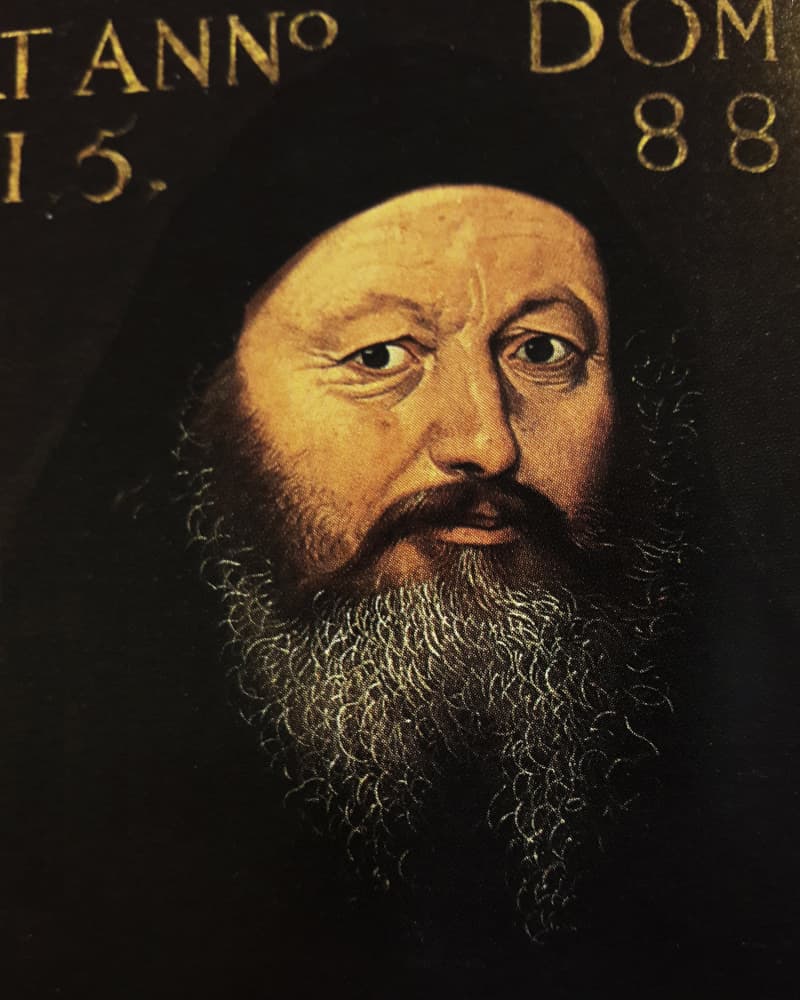
The Magisterial Protestant case sometimes presents itself as a recovery of pre-medieval apostolic Christianity—a return to the deposit before Rome’s accretions buried it. The empirical test of that claim is straightforward. Eastern Orthodoxy, which never absorbed the Western medieval developments the Reformers protested—papal supremacy as it crystallized between Gregory VII and Innocent III, Western scholastic transubstantiation, the indulgence trade, the late-medieval Mariological elaborations—should have recognized the Reformers’ theology as apostolic. The Reformers thought so too. They tried.
Between 1573 and 1581, Lutheran theologians at the University of Tübingen—Jakob Andreä, Martin Crusius, and others—corresponded with Patriarch Jeremias II of Constantinople, sending him a Greek translation of the Augsburg Confession and asking for fraternal recognition. The Patriarch’s three answers (1576, 1579, 1581) read the Augsburg Confession carefully and rejected its central Lutheran claims one by one: the reduction of the seven sacraments, sola fide, sola scriptura, the rejection of the intercession of the saints, the iconoclastic instinct, the rejection of monastic life. Where the Lutherans had hoped to find a Christianity that had preserved the apostolic deposit unchanged, they found a Church whose theology was, in its substance, much closer to Rome’s than to Wittenberg’s. (The standard scholarly edition with full English translations is George Mastrantonis, ed., Augsburg and Constantinople: The Correspondence between the Tübingen Theologians and Patriarch Jeremiah II of Constantinople on the Augsburg Confession [Brookline, MA: Holy Cross Orthodox Press, 1982]. Jeremias II’s three answers hold the status of “symbolic books” in the Orthodox Church.)
The dialogue ended without communion. The conclusion is significant for the present argument. If the Magisterial Protestant case were merely a recovery of pre-medieval apostolic Christianity, the East—which had taken its own path through the medieval period without absorbing the Western developments the Reformers were protesting—should have recognized the Lutheran reform as apostolic. It did not. It identified the Lutheran innovations as innovations.
That outcome closes off a significant escape route from the underlying claim. It is not the case that the Reformers were merely peeling away Western corruptions to recover pre-medieval Christianity, because the pre-medieval Christianity that survived in the East rejected the Reformers’ theology when given the chance to recognize it. Whatever the Reformers were doing in 1530 was not restoration. It was something new. And on the structural argument I am pressing, that “something new” required treating the visible institutional Church Christ founded as having gone wrong on the questions touching salvation—for centuries, in both East and West—until the Reformers came along to fix it.
The “slow change” reply does not actually soften the claim
A third Magisterial Protestant reply was simply chronological softening. Sam Osborne wrote: “Doctrinal development continued throughout the Middle Ages, some good and some bad. Prots sided more with Augustine’s soteriology and Rome side more with Augustine’s ecclesiology.”32 Another Stevenson: “we believe portions of the church slowly and gradually went astray, adding accretions here and there over the centuries.”33
These are honest, intellectually serious framings. But they do not soften the claim; they just spread it across more time. If accretions accumulated for a thousand years until they justified separation, then the institutional Christianity that ordinary Christians received for that millennium was teaching them an increasing weight of error. The mid-tenth-century Bavarian peasant was getting less error than the early-sixteenth-century one, perhaps, but the trajectory was monotonically away from the Gospel as the Reformers understood it.
Slow corruption is still corruption.
Slow corruption is still corruption. The relevant theological question is not how fast it happened but whether by the time of the Reformation it had become serious enough to justify separation. Rishmawy’s framing—“snowballed into severe errors by the middle ages and needed to be reformed”—concedes the point.
Part IV: What the Reformers Actually Said
I can document this from the Reformers themselves. The literature is voluminous; I will use a representative sample.
Calvin’s Institutes Book IV
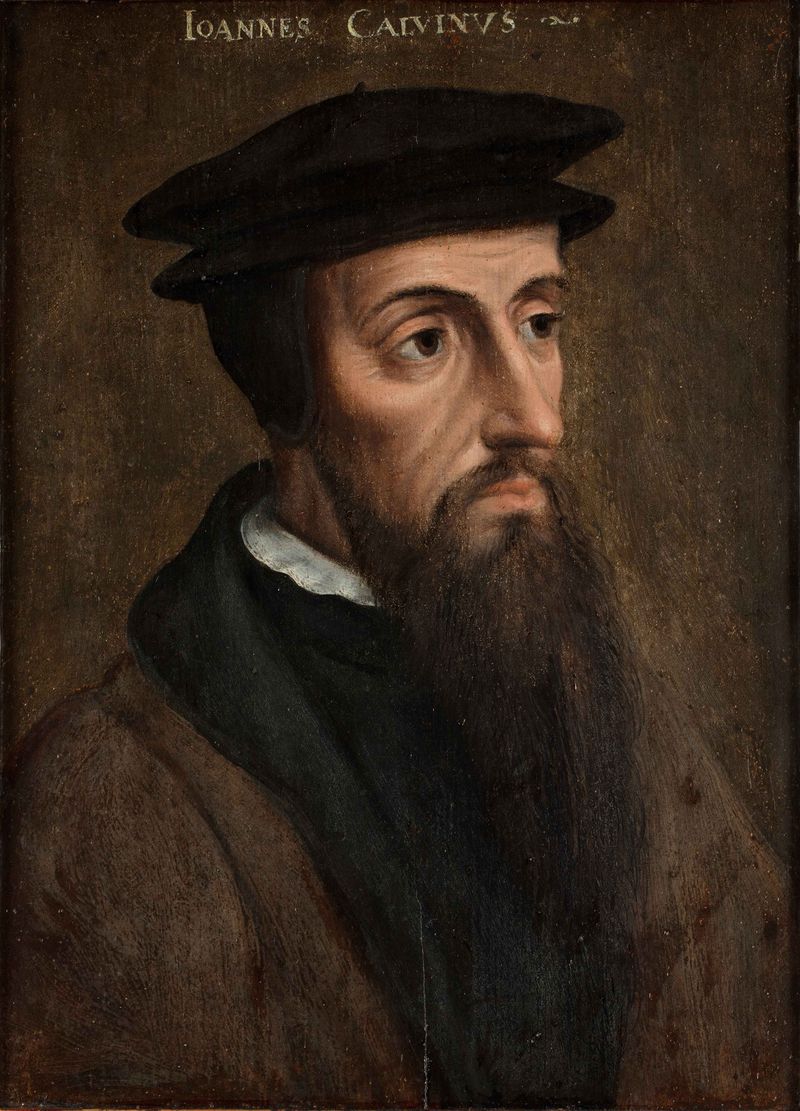
John Calvin’s mature ecclesiology is in Institutes IV.1-IV.2. The framing is unmistakable. After distinguishing the “true Church” by its marks (Word rightly preached and sacraments rightly administered) in IV.1, Calvin devotes IV.2 to a polemical comparison between this true Church and the institutional Roman church of his time. He writes that wherever the doctrine of the Gospel is corrupted and the sacraments adulterated, “the Church ceases to be”—and he applies this analysis explicitly to Rome.34 The Roman church, Calvin argues, retains some “vestiges” of the true Church—there is real baptism, the Scriptures are still nominally received—but as an institutional body she has so corrupted herself that she cannot be called a true Church without confusion.
He uses unusually strong polemical language. Calvin applies Revelation 2:9’s “synagogue of Satan” to Roman ecclesial bodies (IV.2.10), and the Bishop of Rome, on Calvin’s reading, is the eschatological “man of lawlessness” of 2 Thessalonians 2 (IV.7.24-25): “Shall he be the vicar of Christ who, by his furious efforts in persecuting the Gospel, plainly declares himself to be Antichrist? Shall he be the successor of Peter who goes about with fire and sword demolishing everything that Peter built?”35
This is not the work of a Reformer who thought the visible institutional Roman church had merely accumulated some unfortunate accretions that needed buffing. This is the work of a Reformer who held that institutional Catholicism, as a visible body, had become so corrupted that calling it the Church Christ founded was a category error.
The Magdeburg Centuries
The Ecclesiastica Historia edited by Matthias Flacius Illyricus and his colleagues at Magdeburg, published between 1559 and 1574, is the foundational Protestant church history project. Thirteen folio volumes survey thirteen centuries of Christianity, century by century, with each volume cataloguing the state of doctrine and church government and tracing what the editors regarded as the cumulative deformation of apostolic Christianity into medieval Catholicism.36
The methodological assumption is everywhere. Each century’s volume is structured around comparing the state of doctrine in that century with the apostolic standard. The cumulative narrative is one of decline. Errors enter early, accelerate after Constantine, and consolidate through the medieval consolidation of papal supremacy. The very form of the project encodes the historiographical claim that the visible institutional church drifted away from the apostolic deposit over time—slowly, then quickly, then institutionally.
Flacius’ Catalogus Testium Veritatis (1556), a parallel project, attempted to identify a roster of “witnesses to the truth”—figures across the medieval period who, despite being inside the Roman church, preserved Reformation-compatible doctrine. The list was strained. The Reformers themselves understood that they could not produce a clean historical lineage and instead had to argue that the truth had been preserved here and there by individuals against the institutional drift.37
The Belgic Confession’s Marks of the False Church
The Belgic Confession of 1561, drafted by Guido de Brès, addresses the question explicitly. Article 29 lists the marks of the true Church: pure preaching of the Gospel, pure administration of the sacraments as instituted by Christ, exercise of church discipline. It then lists the marks of the false Church and applies them with unmistakable clarity to the Roman church of that time:
As for the false Church, she ascribes more power and authority to herself and her ordinances than to the Word of God, and will not submit herself to the yoke of Christ. Neither does she administer the Sacraments as appointed by Christ in His Word, but adds to and takes from them, as she thinks proper; she relieth more upon men than upon Christ; and persecutes those who live holily according to the Word of God, and rebuke her for her errors, covetousness, and idolatry.38
The confession concludes that “these two Churches are easily known and distinguished from each other.” The Reformed congregations who confessed the Belgic in 1561 understood themselves to be on one side of that distinction and the Roman institutional church on the other.
The Westminster Confession’s “Synagogues of Satan”
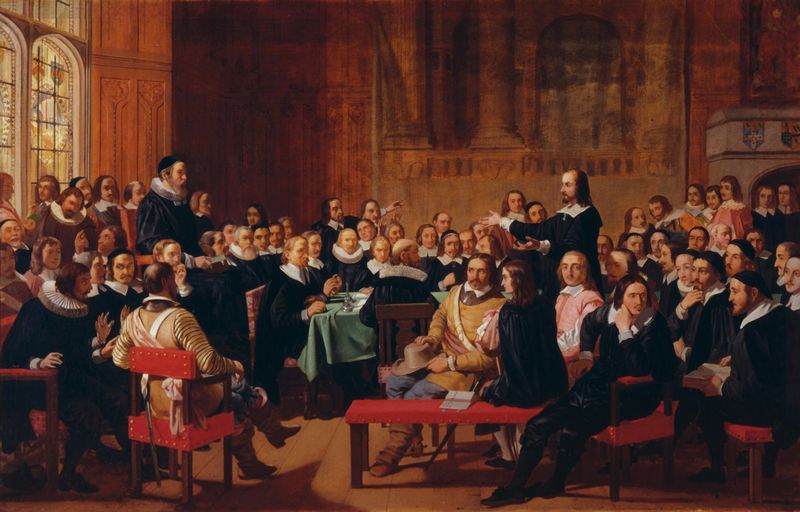
The Westminster Confession of Faith was drafted between 1643 and 1647 by an English Puritan-Presbyterian assembly. Chapter 25 (“Of the Church”), Section 5, is the locus classicus for the moderate-Reformed view of how visible churches relate to the true Church across history:
The purest churches under heaven are subject both to mixture and error; and some have so degenerated, as to become no churches of Christ, but synagogues of Satan. Nevertheless, there shall be always a Church on earth, to worship God according to His will.39
This is the moderate-Reformed mainstream. The Westminster divines acknowledged that even faithful churches are subject to error, but they affirmed that some particular churches had so degenerated as to cease to be churches at all. The phrase “synagogues of Satan” is a direct quotation of Revelation 2:9 and 3:9, applied—in Westminster’s polemical context—to the Roman institutional church.
The companion clause matters. “Nevertheless, there shall be always a Church on earth” preserves the indefectibility of the universal Church. But notice what it does not say: it does not say this particular visible institution shall always be a Church. The Westminster framework allows that any given visible institution can fall away. The Catholic framework, by contrast, holds that the visible Church Christ founded—sociologically continuous, sacramentally ordered, institutionally identifiable—cannot fall away as such.
Luther’s Babylonian Captivity
Martin Luther’s De Captivitate Babylonica Ecclesiae Praeludium (“A Prelude on the Babylonian Captivity of the Church”), published in 1520, was Luther’s full-throated assault on the medieval Catholic sacramental system.40 Luther argued that the seven sacraments had been reduced to three (baptism, the Eucharist, and penance—and even penance only with reservations), that the cup had been wrongly withheld from the laity, that the doctrine of transubstantiation as the medieval church had defined it was a philosophical accretion, that the Mass was not a sacrifice in the way the Roman canon implied, and that papal authority over the sacramental life of the Church was a usurpation.
The metaphor of the title is the operative claim: the Church, like Israel in Babylon, had been carried into captivity by a foreign power. The “foreign power” was the institutional Roman church under the medieval papacy. The Church needed liberation, not merely tweaks. That is not the language of a man who thought Roman Catholicism had accumulated some unfortunate accretions. That is the language of a man who thought the institution claiming to be the Church of Christ had become its captor.
It is also useful to note what Luther himself did not claim. The “1,500 years” framing of my original tweet is rhetorical compression; Luther’s Babylonian Captivity explicitly dates the corruption of transubstantiation as a defined doctrine to “the past three hundred years”—the editors of LW 36 (and the scholarly consensus) identify Lateran IV (1215) as the referent of Luther’s “last three hundred years”—and appeals to “more than twelve hundred years” of right Eucharistic faith before that.41 Luther’s chronology is more disciplined than the polemical compression suggests.
The same is true of Calvin, whose mature treatment in Institutes IV.7.17 dates the formal birth of papal supremacy to the moment Phocas conceded universal headship to Boniface III: “Phocas, who had slain Maurice, and usurped his place… conceded to Boniface III. what Gregory by no means demanded—viz. that Rome should be the head of all the churches.” (Calvin names the persons and the substance; historians fix that grant in A.D. 607.)42 The Reformers were chronologically careful in a way later Protestant rhetoric often is not.
The point of the present essay is not that they thought the visible church became corrupt on the day Pentecost ended; the point is that they thought the visible Roman institutional church had, by the time of the Reformation, become so corrupted on questions touching salvation that separation from it was preferable to communion with it. The exact dating varies among them. The structural commitment does not.
Bullinger’s De Origine Erroris
Heinrich Bullinger, Zwingli’s successor at Zürich and the principal architect of Reformed orthodoxy in the second generation, published De Origine Erroris (“On the Origin of Errors”) in 1539, with an expanded edition in 1568.43 The book traces, doctrine by doctrine, when each major Roman teaching that the Reformed reject entered the visible Church. The form of the project encodes its claim: each error has an identifiable historical origin, somewhere between the apostolic period and Bullinger’s own day, when the visible Church departed from apostolic teaching on this or that point.
This is not the work of a Reformer who thought the deposit of faith had been preserved unchanged in the visible Roman institutional church. It is the work of a Reformer who thought the visible Roman institutional church had departed from that deposit, point by point, over the course of a millennium and a half, and whose project was to reverse those departures by recovering apostolic teaching.
Part V: The Catholic Counter-Position
If the Reformation premise is that the visible institutional church taught damnable errors for many centuries, the Catholic counter-claim is that it cannot have done so—because the Church Christ founded is, by Christ’s promise, indefectible.
Christ’s promise and the indefectibility of the Church
The Catholic position rests on Christ’s words to Peter: “Upon this rock I will build my Church, and the gates of hell shall not prevail against it” (Matthew 16:18). The Catholic exegesis takes the promise to mean what it says: the visible Church Christ founded—the institution He gave the keys, the institution He commissioned to teach all nations—cannot be defeated by the gates of hell. Infallibly teach error in matters of faith and morals it cannot do, by Christ’s promise.
This is not a parlor trick. It is a doctrine of providence. If Christ promised to build His Church and to abide with it always (Matthew 28:20), and if the Holy Spirit was sent to guide it into all truth (John 16:13), then the institutional structure Christ established cannot be permitted by God to fall into damning error. Otherwise the promise is vacuous.
If Christ’s promise to His Church can be permitted by God to fail, the promise itself is vacuous.
The marks of catholicity
The early Church developed clear criteria for identifying the apostolic Church. The four marks confessed in the Niceno-Constantinopolitan Creed (381)—one, holy, catholic, apostolic—are not abstract attributes. They are visible identifiers of the historical Church Christ founded.
Apostolic meant, concretely, traceable to the apostles by succession of bishops. Irenaeus of Lyons writes in the late second century, in Adversus Haereses III.3, that “It is within the power of all, therefore, in every Church, who may wish to see the truth, to contemplate clearly the tradition of the apostles manifested throughout the whole world,” and points to the “successions of the bishops” in every apostolic church as the way that tradition is preserved.44 Irenaeus then provides the list of bishops of Rome from Peter and Paul to Eleutherius (c. 174-189), arguing that this unbroken succession is the surest test of apostolic teaching. The succession is visible. It is institutional. It is the way the apostolic faith is preserved.
Clement of Rome’s First Letter to the Corinthians, written around AD 96, makes the same argument earlier still: the apostles “appointed bishops and deacons” in the churches they founded, and “afterwards added the further provision that, if they should die, other approved men should succeed to their ministry.”45 The succession is not an extra or a backup. It is how the Gospel is transmitted across generations.
Augustine’s famous statement in Contra Epistulam Manichaei quam vocant Fundamenti 5.6 puts the institutional point even more sharply: “For my part, I should not believe the gospel except as moved by the authority of the catholic Church.”46 Augustine is not subordinating the Gospel to the Church. He is observing that he, a North African Christian in the late fourth century, has access to the Gospel only because the visible Catholic Church has handed it down to him with attestation and authority. Without the visible Church, the Gospel is unreachable.
Vincent of Lérins in 434 articulated the canonical test for catholic doctrine in his Commonitorium: quod ubique, quod semper, quod ab omnibus—“that which has been believed everywhere, always, and by all.”47 The Vincentian canon is not abstract. It tests doctrine against the visible, geographically distributed, historically continuous teaching of the Catholic Church.
Subsistit in
The Second Vatican Council’s Lumen Gentium paragraph 8 is the most carefully articulated modern Catholic statement of how Catholic ecclesiology relates to other Christian bodies:
This is the one Church of Christ which in the Creed is professed as one, holy, catholic and apostolic… This Church constituted and organized in the world as a society, subsists in the Catholic Church, which is governed by the successor of Peter and by the Bishops in communion with him, although many elements of sanctification and of truth are found outside of its visible structure. These elements, as gifts belonging to the Church of Christ, are forces impelling toward catholic unity.48
The phrase subsistit in—“subsists in”—was deliberately chosen over the older language that the Church of Christ “is” the Catholic Church. The choice acknowledges that real elements of sanctification and truth exist in non-Catholic Christian communities. Baptism in a Reformed congregation is a real baptism. Scripture read by a Lutheran congregation is real Scripture. The grace at work in the lives of believers in those communities is real grace. Lumen Gentium does not deny this.
But what Lumen Gentium does insist on is that the Church Christ founded—one, holy, catholic, apostolic, the body He promised the gates of hell would not prevail against—is not scattered indeterminately across the world’s Christian denominations. It subsists in a specific historical, institutional, sacramentally identifiable body: the Catholic Church in communion with the Bishop of Rome. Other Christian bodies share in elements of the one Church’s life by virtue of those elements that have been brought along with them out of communion. But the Church itself, as Christ founded it, has continuous existence in the Catholic Church.
This is what the Reformation premise denies, by its very structure.
Part VI: The Mormon Parallel
One of the more uncomfortable observations from the X discussion came from the Catholic ally Nathan Shumate, who quote-tweeted: “And then they act scandalized when Latter-day Saints take a few more centuries on.”49
He was pointing at a structural parallel. The Church of Jesus Christ of Latter-day Saints holds an explicit doctrine of Great Apostasy: shortly after the death of the apostles, the priesthood authority and the true Gospel were lost from the earth, and Christianity remained in apostasy until the Restoration through Joseph Smith in the 1820s and 1830s. This is roughly seventeen-and-a-half centuries of total apostasy, followed by restoration through a new prophetic figure.50
The Magisterial Protestant view is different from the LDS view in important particulars. The Magisterial Protestant does not claim a total apostasy—only a sufficient corruption of the institutional church to justify separation. The Magisterial Protestant does not claim restoration through a new prophet—only recovery through return to Scripture. The Magisterial Protestant does not claim new revelation. These are real differences.
But the structural shape is similar enough to give Catholic apologists their argument. Both the LDS and the Magisterial Protestant frameworks hold that the institutional church Christ founded fell into damning error at some point after the apostles, that ordinary Christians received that damning error for many centuries, and that some restorative or reformative event was required to recover access to true Christianity. The LDS view is more extreme. The Magisterial Protestant view is more moderate. But the underlying premise—that the visible institutional Church Christ founded was permitted by God to teach damning error for most of Christian history—is shared.
This is uncomfortable because Magisterial Protestants generally regard the LDS view as obviously wrong, while regarding their own view as obviously right. But what they regard as obviously wrong about the LDS view—the structural commitment to a “great apostasy” of the visible Church—is structurally what they themselves are committed to, in attenuated form. The differences are differences of degree, not of kind.
This is why the Catholic apologetic argument from indefectibility is not a parlor trick. It is asking a serious structural question: can the institutional Church Christ founded fall into damning error? The Catholic says no, by Christ’s promise. The LDS says yes, totally. The Magisterial Protestant says yes, partially. There is no neutral ground in the middle.
The Catholic says no. The LDS says yes, totally. The Magisterial Protestant says yes, partially. There is no neutral ground in the middle.
Part VII: Why This Matters
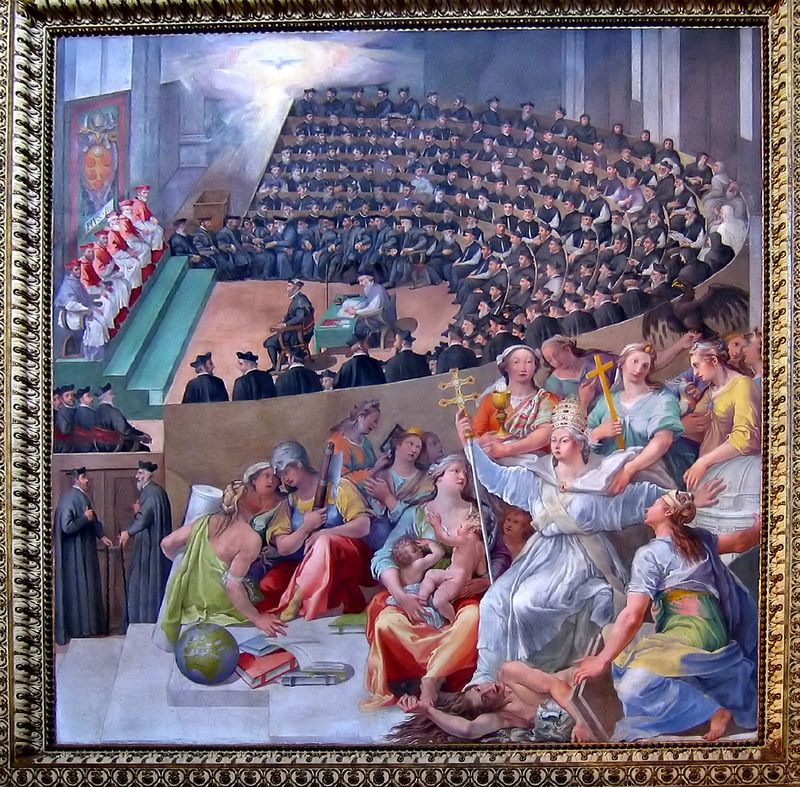
I am not engaging in this argument to score points. I am engaging in it because it cost me thirteen years to work through, because it has cost others longer, and because I think honesty about it is owed in both directions.
To my Magisterial Protestant readers: the strongest version of your tradition is real, intellectually serious, and not a strawman. Calvin, Bullinger, Luther, the Westminster divines, and the Belgic confessors were not stupid men, and their concerns about the institutional Catholicism of their day were not invented. The medieval indulgence trade was a scandal. Some of the late-medieval Marian devotional practices were excessive. The papal court’s worldliness in the early sixteenth century was undeniable. Some of these abuses were corrected at Trent. Some of the theological clarifications offered at Trent itself owe a debt to the questions Protestants were pressing.
But the Reformation made a structural commitment that the Catholic Church cannot make and cannot grant: that the visible Church Christ founded had become so corrupted that separation from it was preferable to communion with it. That commitment was the premise of the movement. Articulated more or less softly in different streams, it is the load-bearing assumption that makes the movement intelligible. If it were false—if the institutional Catholic Church had not become teaching damning errors—there would have been no Reformation to make. There would have been an internal Catholic reform, which is what Trent eventually was.
This is what I meant by “the entire premise of the movement.” Not a strawman. The actual commitment underwriting the actual project.
To my Catholic readers: the case for the Catholic Church’s claim does not rest on the proposition that the late-medieval church was free of abuse, or that papal courts were holy, or that ordinary Catholic teaching was immune to local corruption and sacrilege. The Catholic case rests on the indefectibility of the Church’s institutional teaching authority across history—Christ’s promise that the gates of hell shall not prevail against the Church He founded. That promise is what distinguishes the Catholic claim from the structural claim of any reformative movement. Without it, the Church becomes one denomination among many. With it, the Church is the historical, institutional, sacramental locus where the one Church Christ founded continues to exist.
That is the question. That is the claim. And that—with all due respect to Derek Rishmawy, whose framing is the best version of the Magisterial Protestant view I have seen articulated in 280 characters—is the claim the Reformation cannot consistently make.
Frequently Asked Questions
Did the Reformers actually say Christianity went wrong “almost immediately”?
The Magisterial Reformers (Luther, Calvin, Bullinger, the Augsburg Confession) typically did not use that phrase. They located the decisive corruptions of the visible church in the post-Constantinian fourth century at the earliest, with most major doctrinal accretions consolidating across the medieval period. So in their own self-understanding, “almost immediately” overstates the timing.
But the architecture of their position commits them to something structurally close to it. The earliest dating point Calvin uses is roughly three centuries after Pentecost. Once you concede that the decisive corruptions began as early as Constantine and accumulated steadily across the medieval period, you have conceded that institutional Christianity was wrong on questions touching salvation for the great bulk of its existence before 1517. And once you notice that the doctrines the Reformers actually reject have demonstrable roots well before Constantine, “almost immediately” stops being rhetorical compression and starts looking like a fair description of what the Reformers’ rejections, taken together, actually require. The Restorationist tradition extends the corruption clock all the way back into the apostolic era; the Magisterial tradition stops at Constantine. The framing differs. The structural commitment to a millennium-plus of damning institutional error does not.
Isn’t the visible/invisible church distinction enough to escape the claim?
It is venerable theology, and it does soften the rhetoric. But it does not actually escape the underlying claim. If the visible institutional church taught damnable errors for centuries, the institutional Christianity that ordinary Christians received was teaching them damnable errors for centuries, regardless of what was happening in the invisible Church visible only to God. The visible/invisible move relocates the question; it does not resolve it.
Wasn’t there a remnant of true believers in the medieval period?
The candidate “remnants”—Paulicians, Albigensians, Waldensians, Hussites—do not actually line up doctrinally with magisterial Protestantism. The Paulicians and Albigensians were dualist sects who denied the Incarnation. The Waldensians were a genuine medieval lay-reform movement but their distinctive theology was not specifically Lutheran or Reformed. The Hussites split into reconciled-with-Rome moderates and a radical wing whose theology had little in common with the magisterial Reformation. The Trail-of-Blood lineage that some Baptists trace through these groups is, as Baptist historians from H. Leon McBeth to James Edward McGoldrick have judged, historically untenable.
What’s the difference between the Catholic claim and what the LDS hold?
The LDS doctrine of Great Apostasy claims a total loss of priesthood authority and true Gospel from shortly after the apostles until 1830. The Magisterial Protestant view claims a partial corruption sufficient to justify separation in 1517. These are different in degree but similar in structural shape: both hold that the institutional Church Christ founded fell into significant error for most of Christian history, requiring some kind of reformative or restorative event. The Catholic position rejects both: by Christ’s promise (Matthew 16:18), the visible Church He founded cannot fall into damning error.
Does Lumen Gentium 8’s “subsists in” formula soften the Catholic claim?
The “subsists in” formula clarifies that elements of sanctification and truth genuinely exist outside the Catholic Church’s visible structure—Reformed baptism is real baptism, Lutheran Scripture is real Scripture. But the formula maintains that the one Church Christ founded subsists specifically in the Catholic Church, not equally across all Christian communities. The phrasing is more ecumenically generous than the older language but does not change the substantive Catholic claim about institutional continuity.
What would convince me to be a Protestant?
If the visible institutional Catholic Church had taught damning errors at some point in its history—defined as official, magisterial, binding teaching that was contrary to apostolic faith on questions touching salvation—then the Catholic claim of indefectibility would be falsified, and the structural justification for the Reformation would be vindicated. Identifying any such teaching is the test. I have not found one. But I am not pretending that’s a closed question for everyone, and I respect those still working through it.
Where do I go from here if I’m wrestling with this?
If you are a Protestant working through these questions seriously, the place to start is not Catholic apologetics but the primary sources of your own tradition. Read Calvin’s Institutes Book IV in full. Read the Augsburg Confession alongside the Apology of the Augsburg Confession. Read the Westminster Confession in its historical context. Then read what the Catholic Church actually teaches in the Catechism of the Catholic Church paragraphs 748-870 and Lumen Gentium in full. Compare them on their own terms. Then read the Church Fathers, whose writings stretch from the first century through the eighth. Pay particular attention to the Ante-Nicene Fathers to see how much closer the early Church was to Catholicism in belief and practice. For all the talk I heard about trying to get as close to the early Church as possible growing up as an evangelical, this was very eye-opening and is what led to my eventual reception into the Catholic Church.
Sources and Further Reading
Primary sources cited above are linked inline. For readers wanting to go further:
- The Catechism of the Catholic Church on the Church: paragraphs 748-870, available at vatican.va
- Lumen Gentium (Vatican II Dogmatic Constitution on the Church, 1964), available at vatican.va
- Unitatis Redintegratio (Vatican II Decree on Ecumenism, 1964), available at vatican.va
- The Augsburg Confession (1530), available at thebookofconcord.org
- The Belgic Confession (1561), available in Schaff’s Creeds of Christendom Vol. III at ccel.org
- The Westminster Confession of Faith (1647), available at opc.org
- John Calvin, Institutes of the Christian Religion, Henry Beveridge translation, available at ccel.org
Footnotes
1. Garrett Ham, post on X, April 29, 2026, 11:30 AM, archived at https://x.com/garrettham_esq/status/2049526688564883824. View counts as of May 2, 2026.
2. Hans Fiene, quote-tweet of Garrett Ham, April 29, 2026. Fiene is the LCMS pastor and creator of the YouTube channel “Lutheran Satire.”
3. Derek Rishmawy (@DZRishmawy), quote-tweet of Garrett Ham, April 29, 2026, 489 likes as of May 2, 2026. Rishmawy is a Reformed theologian, frequent contributor to Mere Orthodoxy and Christianity Today, and holds a PhD in systematic theology from Trinity Evangelical Divinity School. He is also an ordained PCA teaching elder.
4. Andrew Messmer (@casa_valera), reply to Garrett Ham, April 29, 2026. Messmer is a New Testament scholar; rector of Seminario Teológico de Sevilla (Santiponce, Spain) and associate professor at Facultad Internacional de Teología IBSTE (Barcelona).
5. Matey Yanakiev (@MateyYanakiev), reply to Garrett Ham, April 29, 2026, 42 likes—the highest-engaged top-level reply.
6. James Dueck (@JamesDueck), quote-tweet of Garrett Ham, April 29, 2026, 121 likes.
7. J. M. Carroll, The Trail of Blood: Following the Christians Down Through the Centuries; or, The History of Baptist Churches from the Time of Christ, Their Founder, to the Present Day (Lexington, KY: Ashland Avenue Baptist Church, 1931). The pamphlet remains in print in Independent Baptist circles.
8. Christina Douglas (@ChristinaD7166), reply to Garrett Ham, April 29, 2026.
9. Uncle Rico (@DoubleR81401), reply to Garrett Ham, April 29, 2026.
10. George Schulte (@GeorgeSchulte), reply to Garrett Ham, April 29, 2026.
11. @ArtGuy313578051, quote-tweet of Garrett Ham, April 29, 2026.
12. On the doctrinal profile of medieval “remnant” candidates, see Diarmaid MacCulloch, The Reformation: A History (New York: Viking, 2004), 35-50; Euan Cameron, Waldenses: Rejections of Holy Church in Medieval Europe (Oxford: Blackwell, 2000); Malcolm Lambert, Medieval Heresy: Popular Movements from the Gregorian Reform to the Reformation, 3rd ed. (Oxford: Blackwell, 2002).
13. H. Leon McBeth, The Baptist Heritage: Four Centuries of Baptist Witness (Nashville: Broadman, 1987), 58–62 (at p. 60: “No major historian today holds to the organic succession of Baptist churches. This view was based on inadequate sources, was more polemical than historical, and made large assumptions where evidence was lacking”); James Edward McGoldrick, Baptist Successionism: A Crucial Question in Baptist History (Metuchen, NJ: Scarecrow Press, 1994), 1–2 (concluding that “surviving primary documents render the successionist view untenable”).
14. Matthias Flacius Illyricus et al., Ecclesiastica Historia, Integram Ecclesiae Christi Ideam... Secundum Singulas Centurias (Basel: Oporinus, 1559-1574), commonly known as the Magdeburg Centuries. On the methodology, see Ronald E. Diener, “The Magdeburg Centuries: A Bibliothecal and Historiographical Analysis” (PhD diss., Harvard University, 1978); Gregory B. Lyon, “Baudouin, Flacius, and the Plan for the Magdeburg Centuries,” Journal of the History of Ideas 64, no. 2 (April 2003): 253-272.
15. John Calvin, Institutes of the Christian Religion, IV.2.1-12, Henry Beveridge trans. (Edinburgh: Calvin Translation Society, 1845). Section numbering follows the standard Beveridge edition; the McNeill/Battles edition (LCC 20-21, Westminster Press, 1960) numbers identically at this chapter.
16. Calvin, Institutes IV.2.10, applying Rev 2:9 (“the synagogue of Satan”) to the Roman ecclesial body. The “synagogues of Antichrist” formulation appears in Calvin’s polemical treatises as well; cf. Institutes IV.7 on the papacy as antichristian.
17. Belgic Confession (1561), Article 29 (“Of the Marks of the True Church, and Wherein She Differs from the False Church”), in Philip Schaff, The Creeds of Christendom, vol. III (New York: Harper, 1877), 419-420.
18. Heinrich Bullinger, De Origine Erroris, 1539; expanded edition 1568. On Bullinger’s historiographical project, see Bruce Gordon, “The Changing Face of Protestant History and Identity in the Sixteenth Century,” in Protestant History and Identity in Sixteenth-Century Europe, ed. Bruce Gordon, vol. 1 (Aldershot: Scolar Press, 1996), 1-22.
19. Heinrich Bullinger, De Origine Erroris Book I, ch. XIII (fol. 57 of the 1568 Froschauer edition); Book II, on the origin and progress of the papistic Mass (the 1528 nucleus, retained in the 1568 expansion at fol. 182ff.); and Decades, Decade 5, Sermon 2, in The Decades of Henry Bullinger, ed. Thomas Harding (Cambridge: Parker Society, 1852), vol. 4, pp. 70–72. A digitized copy of De Origine Erroris is available at the Internet Archive. There is no published English translation of De Origine Erroris; the Latin passages above were rendered for this essay from the 1568 Zurich Zentralbibliothek copy.
20. Westminster Confession of Faith (1647), 25.5, in Schaff, Creeds of Christendom, vol. III, 657-658.
21. Derek Rishmawy, “Biblical Authority After Babel by Kevin Vanhoozer (Or, An Antidote to Shame-Faced Protestantism),” Reformedish (October 16, 2016), derekzrishmawy.com.
22. Rishmawy, “Biblical Authority After Babel” (note 21 above). On Rishmawy’s positive constructive position drawing on Bavinck, see Derek Rishmawy, “The Reformed Catholicity of Herman Bavinck,” Reformedish (October 22, 2015), derekzrishmawy.com; and Derek Rishmawy, “Retrieval—It’s What All the Hip Reformed Catholic Kids Do,” Reformedish (February 4, 2015), derekzrishmawy.com.
23. Augsburg Confession (1530), Article VII, English translation as published at thebookofconcord.org/augsburg-confession/article-vii/. The standard scholarly editions are Theodore G. Tappert, ed., The Book of Concord: The Confessions of the Evangelical Lutheran Church (Philadelphia: Fortress, 1959), and Robert Kolb and Timothy J. Wengert, eds., The Book of Concord: The Confessions of the Evangelical Lutheran Church (Minneapolis: Fortress, 2000).
24. Martin Luther, Wider das Papsttum zu Rom, vom Teufel gestiftet (“Against the Roman Papacy, an Institution of the Devil”), 1545, in Luther’s Works, American Edition, vol. 41, ed. Eric W. Gritsch (Philadelphia: Fortress, 1966), 257-376.
25. Council of Trent, Session VI (January 13, 1547), Decretum de Justificatione, with attached canons; in Heinrich Denzinger and Peter Hünermann, Compendium of Creeds, Definitions, and Declarations on Matters of Faith and Morals, 43rd ed., ed. Robert Fastiggi and Anne Englund Nash (San Francisco: Ignatius, 2012), nos. 1520-1583.
26. Augsburg Confession (1530), Article VII, “Of the Church,” and Article VIII, “What the Church Is.”
27. TheFoundation (@TheFoundationPA), reply to Garrett Ham, April 29, 2026.
28. Christopher Levich (@HeroShack), reply to Garrett Ham, April 29, 2026.
29. Calvin, Institutes IV.1.7-9 on the visible and invisible Church. The distinction is developed throughout IV.1 before Calvin applies it polemically against Rome in IV.2.
30. Vatican II, Lumen Gentium (Dogmatic Constitution on the Church), November 21, 1964, §8, official English text at vatican.va. On the deliberate choice of “subsistit in” over “est,” see Joseph Ratzinger, “The Ecclesiology of Lumen Gentium,” in Pilgrim Fellowship of Faith (San Francisco: Ignatius, 2005), 123-152.
31. On the Hussite split between Calixtines and Taborites, see Thomas A. Fudge, The Magnificent Ride: The First Reformation in Hussite Bohemia (Aldershot: Ashgate, 1998); on the Devotio Moderna, see John Van Engen, Sisters and Brothers of the Common Life: The Devotio Moderna and the World of the Later Middle Ages (Philadelphia: University of Pennsylvania Press, 2008).
32. Sam Osborne (@AlligatorTownie), reply to Garrett Ham, April 29, 2026.
33. Another Stevenson (@AStev1689), reply to Garrett Ham, April 29, 2026.
34. Calvin, Institutes IV.2.1, in the Beveridge edition.
35. Calvin, Institutes IV.7.24-25, applying 2 Thess 2:3-4 to the bishop of Rome.
36. See note 14 above. The thirteen-volume original was bound in roughly 6,000 folio pages; surviving copies are held at the Bayerische Staatsbibliothek, the Bodleian, and several major theological research libraries.
37. Matthias Flacius Illyricus, Catalogus Testium Veritatis, Qui Ante Nostram Aetatem Reclamarunt Papae (Basel: Oporinus, 1556). On the strain of Flacius’ project, see Heiko Oberman, Forerunners of the Reformation: The Shape of Late Medieval Thought Illustrated by Key Documents (New York: Holt, Rinehart and Winston, 1966).
38. Belgic Confession, Article 29, in Schaff, Creeds of Christendom, vol. III, 419-420.
39. Westminster Confession of Faith 25.5, in Schaff, Creeds of Christendom, vol. III, 657-658.
40. Martin Luther, De Captivitate Babylonica Ecclesiae Praeludium (1520), in Luther’s Works, American Edition, vol. 36, ed. Abdel Ross Wentz (Philadelphia: Muhlenberg, 1959), 11-126.
41. Luther, Babylonian Captivity, in LW 36:28–29: “Moreover, the church kept the true faith for more than twelve hundred years, during which time the holy fathers never, at any time or place, mentioned this transubstantiation (a monstrous word and a monstrous idea), until the pseudo philosophy of Aristotle began to make its inroads into the church in these last three hundred years.”
42. Calvin, Institutes IV.7.17, Beveridge trans. The 607 date for Boniface III’s reception of the universal-headship grant from Phocas is not given by Calvin himself in the text but is supplied by historians; Calvin gives the names and the substance.
43. See note 18 above.
44. Irenaeus of Lyons, Adversus Haereses III.3.1–3, trans. Alexander Roberts and William H. Rambaut, in The Ante-Nicene Fathers, vol. 1, ed. Alexander Roberts and James Donaldson (Buffalo: Christian Literature, 1885), 415–416. The apostolic-tradition claim is at III.3.1–2 (with the “successions of the bishops” phrase at III.3.2); the Roman bishop list ending at Eleutherius is at III.3.3.
45. Clement of Rome, 1 Clement 42.4–5; 44.1–2, trans. in The Apostolic Fathers, ed. and trans. Michael W. Holmes, 3rd ed. (Grand Rapids: Baker Academic, 2007), 99, 105.
46. Augustine, Contra Epistulam Manichaei quam vocant Fundamenti 5.6, trans. Richard Stothert, in Nicene and Post-Nicene Fathers, First Series, vol. 4 (Buffalo: Christian Literature, 1887), 131. The Latin original reads: “Ego vero Evangelio non crederem, nisi me catholicae Ecclesiae commoveret auctoritas.”
47. Vincent of Lérins, Commonitorium 2.6, trans. C. A. Heurtley, in Nicene and Post-Nicene Fathers, Second Series, vol. 11 (Buffalo: Christian Literature, 1894), 132. The Latin: “In ipsa item catholica ecclesia magnopere curandum est ut id teneamus quod ubique, quod semper, quod ab omnibus creditum est.”
48. Vatican II, Lumen Gentium §8, official English text. On the textual history of “subsistit in,” see Alexandra von Teuffenbach, Die Bedeutung des subsistit in (LG 8): Zum Selbstverständnis der katholischen Kirche (Munich: Herbert Utz, 2002).
49. Nathan Shumate (@NathanShumate), quote-tweet of Garrett Ham, April 29, 2026.
50. The Church of Jesus Christ of Latter-day Saints, “Apostasy,” in Gospel Topics, churchofjesuschrist.org. The doctrine is stated there: “When individuals or groups of people turn away from the principles of the gospel, they are in a state of apostasy. One example is the Great Apostasy, which occurred after the Savior established His Church. After the deaths of the Savior and His Apostles, men corrupted the principles of the gospel and made unauthorized changes in Church organization and priesthood ordinances. Because of this widespread apostasy, the Lord withdrew the authority of the priesthood from the earth. This apostasy lasted until Heavenly Father and His Beloved Son appeared to Joseph Smith in 1820 and initiated the Restoration of the fulness of the gospel.”
Garrett Ham
Garrett Ham is an attorney, military veteran, and holds a Master of Divinity from Yale Divinity School. He writes from Northwest Arkansas on theology, law, and service.
Related Posts
The Apologist Who Believed Too Much
A sophomore apologetics assignment on Justin Martyr's First Apology cost me the church I was raised in. What chapter 66 says about the Eucharist.
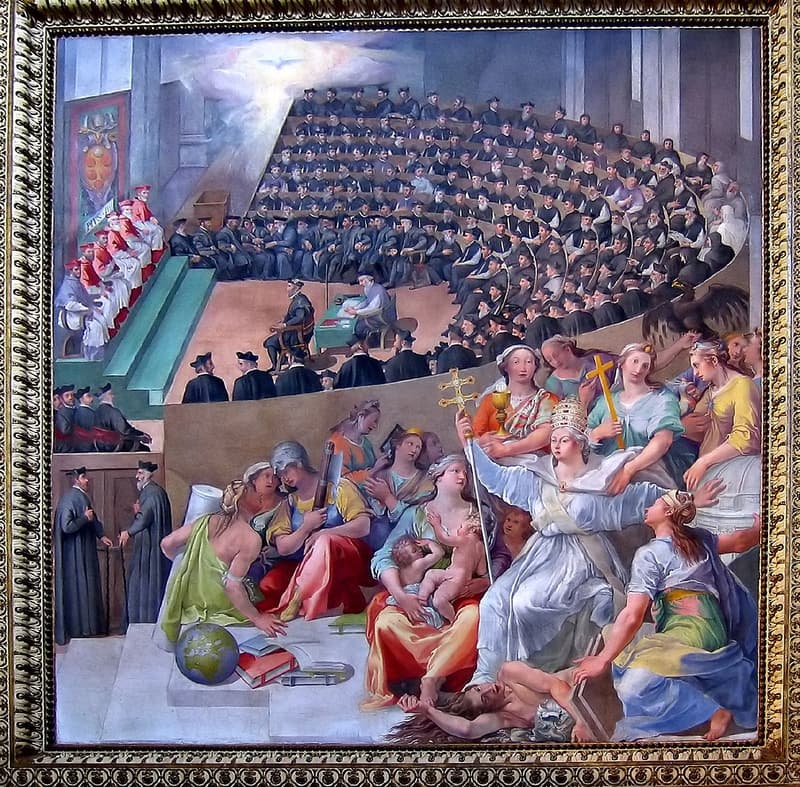
What the Council of Trent Actually Said About Justification
A Catholic convert reads the Council of Trent's 1547 Decree on Justification verbatim—and finds that what Protestants are taught it says is not what it says.
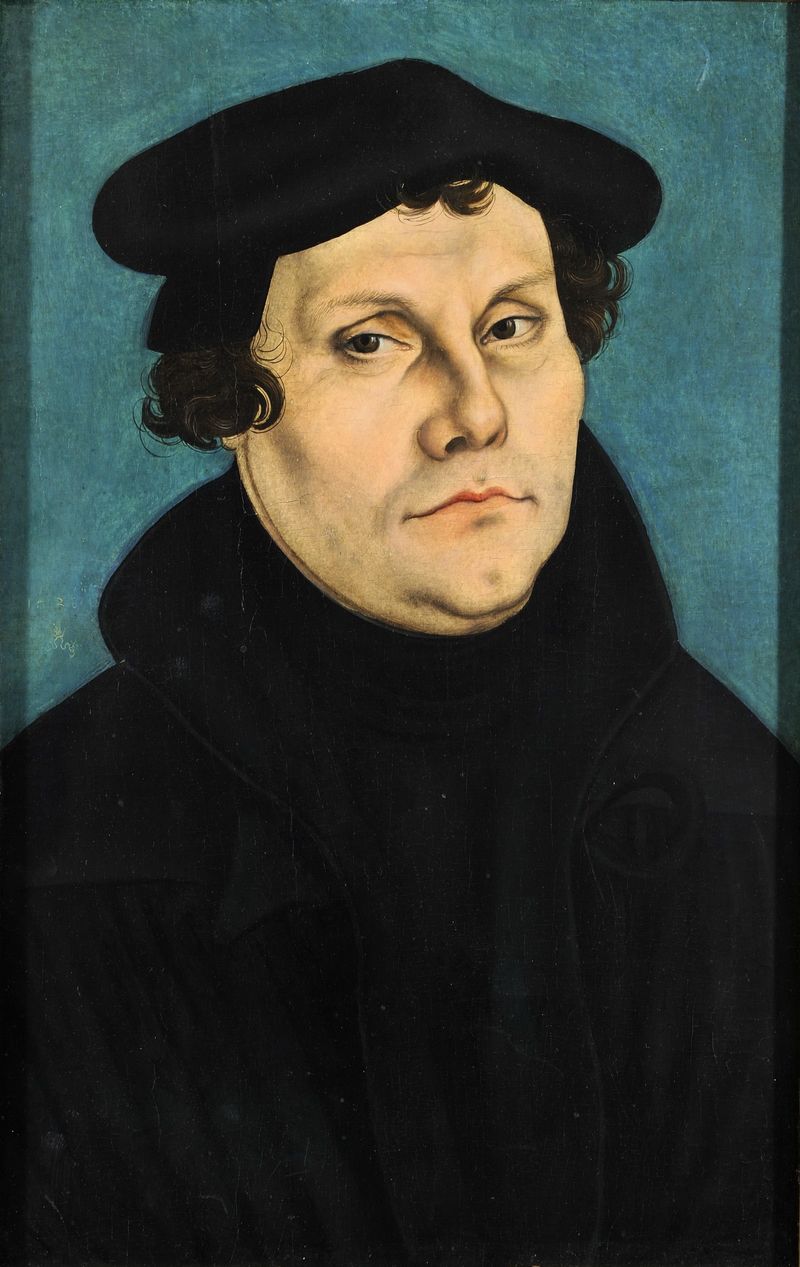
Martin Luther: A Fair Catholic Assessment
A balanced Catholic assessment of Martin Luther: honest acknowledgment of medieval abuses he rightly condemned, examination of his theological claims, and rigorous critique of his solutions and later works.
Stay Informed
Get new writing on faith, law, and service delivered to your inbox.
No spam. Unsubscribe anytime.