Should Eastern Orthodoxy Exist in the West?
On This Page
In this post, I consider whether Eastern Orthodoxy, according to its own teachings, should exist in the West at all.
My faith journey has been a long one. I grew up Southern Baptist and intended to become a Southern Baptist minister.
During my undergraduate years, however, I began searching for something with more grounding, as I felt a restlessness and a compulsion to find a way to practice my faith that connected me with a larger body of believers—both past and present—and the rich history of the Christian faith.
During this journey, I have been a member of Baptist, nondenominational, Methodist, and Anglican churches. I also spent a long time exploring and seeking to understand the Eastern Orthodox Church.
Anyone who has searched through the traditions and heritage of Christianity has likely come across Eastern Orthodoxy. In the West, Eastern Orthodoxy is frequently a source of mystery and confusion.
It’s not Protestant. It’s not Catholic. It’s something all of its own, and it’s hard to pin down within a traditional Western mindset.
My Encounters with Eastern Orthodoxy
In my faith journey, as I have sought truth and grounding in the heritage of the Church, I have come across Eastern Orthodoxy and have spent many years fascinated with it and its teachings. I still have great admiration for this faith tradition.
Its theology is deeply grounded in the traditions and doctrines of the ancient Church, leaning heavily on Scripture and the early Church Fathers. It continues in the same practices reflected in early Christian writings and has had little room for innovation. (Orthodoxy does recognize later doctrinal development—the fourteenth-century councils on St. Gregory Palamas and the divine energies, for instance—but treats it as the organic unfolding of received tradition rather than novelty.)
Indeed, the Divine Liturgy it uses most often is attributed to the great St. John Chrysostom (c. 347–407)—a form that took shape from the late fourth into the fifth century. Orthodoxy also recognizes only the first seven ecumenical councils that preceded the Great Schism with Rome. It is a church steeped in tradition and marked by profound beauty and mystery.
Eastern Orthodoxy: Not Catholic
To many Protestants, Eastern Orthodoxy is an enigma. Indeed, it looks very Catholic, so Protestants sometimes view it as a variation of Roman Catholicism. (It is ironic, therefore, that the Orthodox often lump Catholics and Protestants together as two sides of the same coin.)
After all, it has icons, incense, priests, and weekly communion. It practices infant baptism and confession. It prays to saints. It has bishops and is led—though in a way very different than Catholicism—by a European bishop with roots in the Roman Empire. It has monasteries and values celibacy.
Yet, there are some clear differences. The most apparent is its married—and generally bearded—priests: Orthodoxy ordains married men to the priesthood, though its bishops are drawn from the celibate or monastic clergy. But there are variations in doctrines as well.
For example, the Orthodox reject the Latin doctrine of purgatory—though they continue to pray for the dead and affirm a post-mortem purification. They also do not accept the Pope, or any other leader, as having universal jurisdiction over the Church, believing all bishops to be fundamentally equal. And the list could go on.
Tradition in Eastern Orthodoxy
In my exploration of Eastern Orthodoxy, I have found its foundational theology to be compelling and consistent. It values tradition highly, not for its own sake, but for how it represents the unbroken line of teaching tracing back millennia.
The Orthodox understanding of the authority of Scripture, as a part of the greater apostolic tradition, also makes more coherent sense and is much easier to defend than the sola scriptura of Protestantism. It likewise sidesteps a confusion that the partim–partim reading of Trent once bred in Catholic theology—the notion of Scripture and Tradition as two separate sources—a notion the Second Vatican Council set aside when Dei Verbum taught that the two flow “from the same divine wellspring” (cf. CCC 80).
Presence in the West
In many eastern countries—such as Greece and Russia—it is the predominant religion, and it is often the dominant form of Christianity in Muslim lands.
In the West, however, Eastern Orthodoxy has generally been a church for immigrants, set up to provide spiritual guidance for those coming from countries in which it is the predominant Christian faith.
Eastern Orthodoxy in the U.S.
In the United States, the situation of the Eastern Orthodox Church is structurally incoherent and disorganized. Eastern Orthodoxy values structures and holds to the firm belief in “one city, one bishop.”
Yet different Orthodox jurisdictions exist side by side, with different hierarchies exercising authority over the same territory within the United States—and since the 2018 rupture between Moscow and Constantinople over Ukrainian autocephaly, they are no longer even all in communion with one another.
The Patriarchs of Antioch, Moscow, and Constantinople all have established churches in the United States, and one of them—the Orthodox Church in America, which received a tomos of autocephaly from Moscow in 1970—has had that autocephaly recognized by some jurisdictions but rejected by others, including Constantinople.
It is, quite simply, a mess and inconsistent with Orthodox teachings.
To their credit, the Orthodox do not pretend otherwise. In 2010, the jurisdictions in the United States formed an Episcopal Assembly—since 2014 the Assembly of Canonical Orthodox Bishops of the United States of America, successor to the older Standing Conference of Canonical Orthodox Bishops—at the direction of a 2009 pan-Orthodox conference at Chambésy, Switzerland, that openly acknowledged the canonical “anomalies” of the diaspora and called for such assemblies to heal them. The Assembly’s stated aim is to coordinate the overlapping hierarchies and prepare recommendations for “the regularization of canonical order.” Its very existence is a tacit admission that the present arrangement is irregular. Yet a standing conference that merely coordinates competing bishops is not the same thing as the “one city, one bishop” that Orthodox ecclesiology actually requires—and more than a decade on, the overlapping jurisdictions remain, now compounded by the Moscow-aligned ROCOR’s withdrawal from the Assembly itself.
Legitimacy of Eastern Orthodoxy in the West
All Christian churches have their faults, consisting as they are of imperfect people. As I consider Eastern Orthodoxy, however, I wonder whether its existence in the West at all is legitimate by its own criteria.
I pose this as a genuine question—though, as the rest of this essay makes plain, my own answer is that the consistent Western path is communion with Rome. I have great admiration for the Orthodox Church and strongly considered joining it myself before becoming Roman Catholic.
Should Eastern Orthodoxy Exist in the West?
First, it is well known by those who are familiar with Eastern Orthodoxy that the Orthodox Church does not recognize the universal jurisdiction of the Pope or any other bishop for that matter.
While the head of the Orthodox Church is the Patriarch of Constantinople, he does not have the authority to interfere in the internal practices of any other jurisdiction. He is the first among equals, somewhat analogous to the Archbishop of Canterbury, who leads the worldwide Anglican Communion—though the analogy understates the prerogatives Constantinople actually claims, such as hearing appeals and granting autocephaly, and even this primacy is now contested between Constantinople and Moscow.
Eastern Orthodoxy and the Pope
Yet Orthodoxy itself grants Rome a unique standing. In the canonical taxis (order) of the ancient pentarchy, the Bishop of Rome held first place—the protos, the one who “presides in love” in St. Ignatius of Antioch’s phrase—and the Orthodox–Catholic dialogue at Ravenna (2007) affirmed that Rome “occupied the first place in the taxis” of the undivided Church. Many Orthodox acknowledge that in a reunited Church Rome would again hold that first place ahead of Constantinople.
How that primacy is to be understood is precisely where East and West divide. Catholics confess, with the First Vatican Council, that the Pope’s primacy is of divine institution—the full and universal pastoral authority Christ conferred on Peter and his successors. The East received Rome’s first-millennium role more modestly: as a primacy of honor and presidency exercised within conciliarity—Rome as patriarch of the West, with patriarchal authority over the Latin churches and, in limited and contested cases, a court of appeal—but not as a monarchical dominion over the whole Church. For much of the first millennium, with varying degrees of strain, East and West nonetheless remained in communion despite never resolving that difference.
The rupture, when it came, was gradual and many-sided: the Filioque added to the Creed, the mutual excommunications of 1054, the sack of Constantinople by the Fourth Crusade in 1204, and the collapse of the reunion councils of Lyons (1274) and Florence (1439). No single act made it permanent.
But the deepest fault line was the one the East felt whenever Rome pressed its authority eastward—the very claim to universal jurisdiction the East had never granted.
Eastern Bishops in the West
If we assume that the Orthodox Church was correct in its view on papal authority, what authority does it now have, according to its own teaching, to set up church structures in western lands that fell, even by their own reckoning, under the authority of the Western patriarch—the Bishop of Rome?
According to Orthodox polity, should not immigrants from eastern lands be encouraged to submit to the authority of the western pontiff while in the West just as it would have western immigrants to the East submit to the authority of the eastern patriarchs?
Has the East not violated its own “one city, one bishop” rule, not only by setting up multiple Orthodox hierarchies in the United States, but also by seeking to displace the authority of the western bishop already in place, that is, the Pope’s?
An Orthodox reader has a ready reply: on their premises, it was Rome that broke communion, so the Western see is no longer held by a bishop they recognize, and their parishes displace no one. Fair enough—but notice what the reply concedes. It grants that the West was Rome’s canonical territory, vacated (on the Orthodox view) only by Rome’s supposed fall. The Orthodox then claim those lands by default—because they judge the rightful bishop to have lapsed—rather than by any positive application of “one city, one bishop.” And that only relocates the question: by what authority does one communion declare another’s bishop fallen and assume his territory, all while multiplying its own overlapping hierarchies upon it?
My Pontiff the Pope
What, then, justifies the Orthodox presence in the West? Not the sweeping claim I once imagined—that Rome has fallen into such grave heresy as to be no church at all. The Orthodox rarely talk that way. Their real rationale is gentler and more canonical: the principle of oikonomia, or pastoral accommodation, under which they care for immigrant Orthodox populations while conceding—as their own 2016 Council in Crete put it—that an immediate return to the strict canonical order of one bishop per city is, “for historical and pastoral reasons,” not presently possible. A stronger line holds that Rome fell into schism and error and so forfeited its place; but that is a charge of schism, not the claim that the chair of Peter stands empty.
This is a more serious answer, and it deserves to be met on its own terms. Yet oikonomia is by definition a temporary accommodation of an irregular situation—not a positive warrant for it; it concedes that the canonical ideal is one bishop per city and that the present arrangement falls short. And the warm dialogue between the Pope and the Ecumenical Patriarch, together with the near-absence of any Catholic effort to “reclaim” Western Orthodox, tells against the harder claim that Rome stands simply outside the Church—though I grant that the Eastern Catholic churches, Byzantine in liturgy yet in full communion with Rome, have long been a source of consternation to the Orthodox.
For a Westerner committed to the ancient episcopal structure, the consistent home is communion with Rome.
This is one of the things that pushed me toward Roman Catholicism. I live in the Pope’s territory, in his jurisdiction, and I cannot disregard his authority for the sake of another hierarchical church with a similar position on the authority of bishops exercising that authority well beyond the bounds that church has set for itself.
In the course of my own spiritual journey, I have come to accept universal papal jurisdiction. And for a Westerner who shares that conviction—drawn to apostolic succession, the ancient episcopal structure, and the sacramental life—communion with Rome is the consistent home. Those drawn to the Christian East need not give that up: the Eastern Catholic churches preserve the Byzantine liturgy, married clergy, and ancient hierarchy in full communion with the See of Peter. What I could not finally do was claim the ancient structure while standing apart from the communion that, on the East’s own first-millennium reckoning, presided over it.
Frequently Asked Questions
Does Eastern Orthodoxy accept the authority of the Pope?
Eastern Orthodoxy rejects the universal jurisdiction the Catholic Church ascribes to the Pope, holding that all bishops are fundamentally equal and that the Patriarch of Constantinople is only a “first among equals.” At the same time, for much of the first millennium the East recognized the bishop of Rome’s primacy of honor among the ancient patriarchates. This post examines the tension that history creates for Orthodox communities living in the West.
What does “one city, one bishop” mean in Orthodox polity?
It is the ancient principle—rooted in the early canons of the Church—that a single geographic territory should be governed by one bishop, preserving local unity and preventing rival hierarchies. The post argues that the overlapping Greek, Antiochian, and Russian jurisdictions in the United States sit awkwardly against Orthodoxy’s own insistence on this rule.
Why are there multiple Orthodox jurisdictions in the United States?
Eastern Orthodoxy arrived in America largely through immigration, and several mother churches—Constantinople, Antioch, and Moscow chief among them—each established parishes and bishops to serve their own diaspora. The result is several overlapping hierarchies in the same cities, a situation many Orthodox writers themselves describe as canonically irregular.
Were the Catholic and Orthodox Churches ever one Church?
Yes. For roughly the first thousand years, East and West belonged to a single communion, sharing the early ecumenical councils and the sacraments. The rupture is traditionally dated to the mutual excommunications of 1054, though the division hardened gradually over the centuries that followed.
What is the Ecumenical Patriarch of Constantinople?
The Ecumenical Patriarch is the senior bishop of the Eastern Orthodox communion and its “first among equals,” holding a primacy of honor rather than jurisdiction. He cannot intervene in the internal affairs of other autocephalous churches—a role the post compares to that of the Archbishop of Canterbury within the worldwide Anglican Communion.
Garrett Ham
Garrett Ham is an attorney, military veteran, and holds a Master of Divinity from Yale Divinity School. He writes from Northwest Arkansas on theology, law, and service.
Related Posts
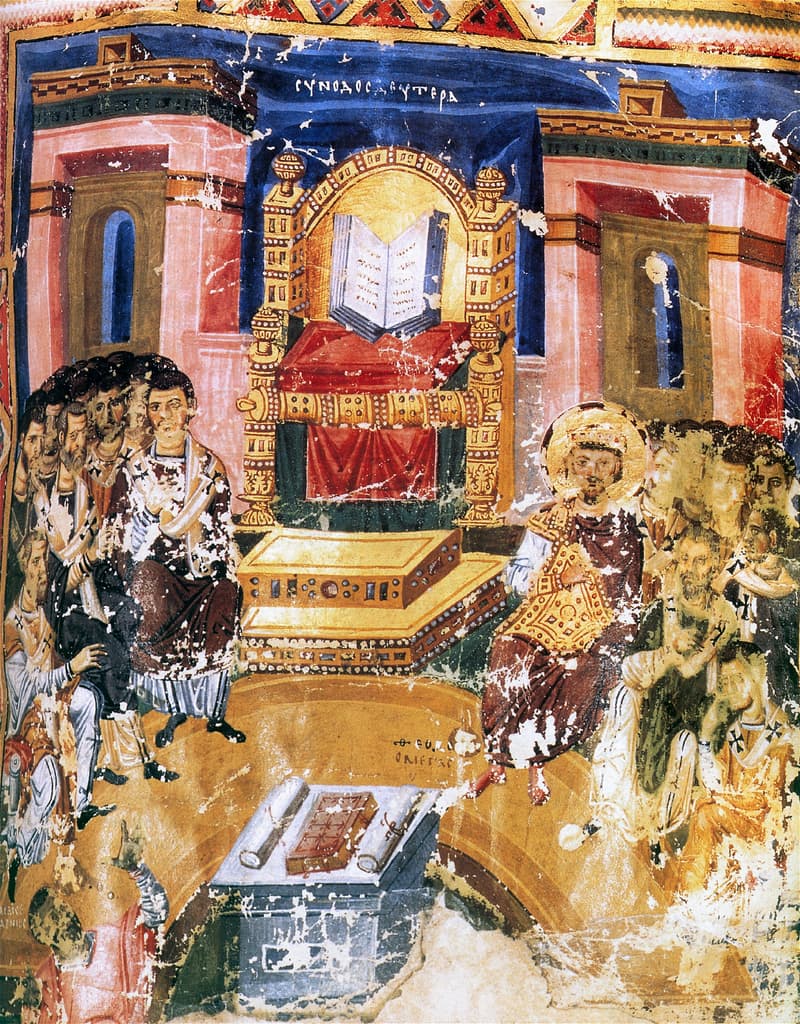
The First Council of Constantinople (381): How the Church Finished the Creed
The First Council of Constantinople (381) confessed the Holy Spirit’s divinity, completed the Creed we recite at Mass, and became the Second Ecumenical Council.
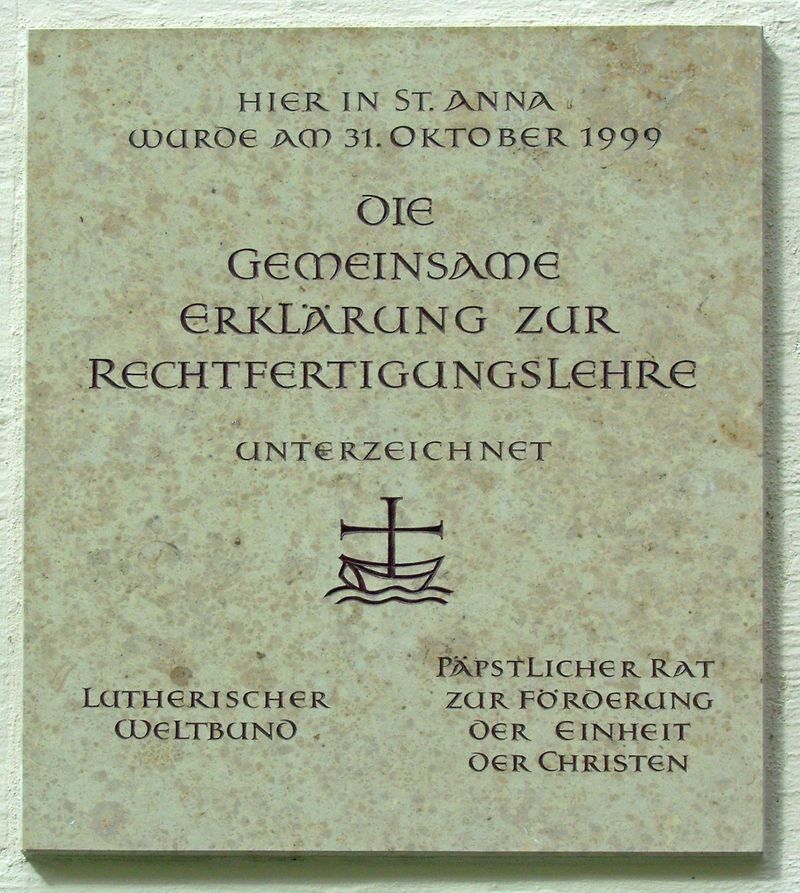
Catholic-Protestant Relations and the Catechism
In this post, I take a look at Catholic-Protestant relations in light of the Catholic Church’s organization of her own Catechism.
How to Talk to Protestants
Protestant-Catholic dialogue often falters on semantics rather than substance. Learn how to bridge the communication gap and find theological common ground.
Stay Informed
Get new writing on faith, law, and service delivered to your inbox.
No spam. Unsubscribe anytime.