Open Theism: A Catholic Evaluation
On This Page
“The debate over the nature of God’s foreknowledge is not primarily a debate about the scope or perfection of God’s knowledge. It is rather a debate over the content of reality that God perfectly knows. It has more to do with the doctrine of creation than it does with the doctrine of God.”
— Gregory Boyd, “The Open-Theism View,” in Divine Foreknowledge: Four Views (2001)
Few theological controversies in recent evangelical history have generated as much heat, and regrettably as little light, as the debate over open theism. Since the publication of The Openness of God in 1994, the open model of God has been denounced as heresy, defended as the most biblically faithful account of divine providence available, and subjected to a formal expulsion vote at the Evangelical Theological Society. The passions it has aroused are a measure of the stakes involved, for the questions open theism raises go to the very heart of Christian theology: What does God know about the future? How does divine sovereignty relate to human freedom? And what does it mean to say that God is omniscient?
These are not abstract puzzles for academic theologians alone. They shape how believers pray, how they understand suffering, and how they read Scripture. Open theism deserves to be understood on its own terms, presented in its best light by its own proponents’ arguments, before it is evaluated. This post attempts to do both: to explain what open theism teaches and why it has appealed to serious evangelical thinkers, and then to evaluate it from the perspective of the Catholic intellectual tradition. My thesis is that open theism presents a stronger scriptural and philosophical case than its critics typically acknowledge, but that it is ultimately incompatible with Catholic dogma on divine omniscience, simplicity, and immutability, and that the Catholic tradition offers superior frameworks for reconciling foreknowledge with freedom.
I write with some personal familiarity with the subject. As an undergraduate at Ouachita Baptist University, I wrote my honors thesis on the compatibility of open theism with evangelical theology, later adapting it into a short book, The Evangelical and the Open Theist.1 I was sympathetic to the movement and found its scriptural arguments compelling within the evangelical framework. My path has since led me through an M.Div. at Yale Divinity School, where I entered the Catholic Church, and it is from that vantage point that I now return to a subject that once occupied my full scholarly attention. Unless otherwise noted, all Scripture quotations follow the New American Bible, Revised Edition (NABRE).
What Open Theism Teaches
The Core Claim
Open theism is not, as its critics sometimes charge, a denial of divine omniscience. Its proponents affirm God’s omniscience as emphatically as any classical theist. The disagreement is not over whether God’s knowledge is perfect (it is) but over the nature of the reality that God perfectly knows.2
The traditional understanding of God’s foreknowledge holds that every event that has ever taken place or will ever take place in creation has existed as a settled metaphysical reality from all eternity. God possesses knowledge of future events as certain as his knowledge of past events. Any divine knowledge of possibility exists, on this account, as “might have been, never as what might be.”3 All of reality is one eternally settled sequence of events, and God knows it as such.
Open theism challenges this picture. While maintaining God’s omniscience, it holds that the future consists of both certainties and possibilities and that, consequently, some aspects of the future remain unsettled—that is, open—even to God.4 God’s omniscience supplies him with knowledge of settled events as settled and of events that remain open as mere possibilities. What aspects of the future are settled and what aspects remain open are, on this view, determined by God himself. He is free to settle whatever aspects of the future he wishes, and upon doing so, brings certainty to those aspects. Those aspects God wills to leave open, however, remain uncertain even to him, not because his knowledge is deficient but because there is, as yet, no settled fact of the matter to be known.
The analogy open theists often employ is this: to say that God does not know future free choices is like saying God does not know in what year George Washington landed on the moon. The statement is not an indictment of divine ignorance but a testament to a reality that does not exist to be known. Open and traditional theists, as Boyd puts it, “are disagreeing about the content of reality, not about the omniscience of God.”5
The Key Proponents
Open theism as a developed theological system emerged from the work of five evangelical scholars who collaborated on The Openness of God: A Biblical Challenge to the Traditional Understanding of God (1994): Richard Rice, who provided the biblical case; John Sanders, who contributed the historical survey; Clark Pinnock, who laid out the systematic theology; William Hasker, who developed the philosophical defense; and David Basinger, who addressed practical implications.6
Gregory Boyd, a pastor and theologian at Woodland Hills Church in St. Paul, Minnesota, became perhaps the most publicly visible advocate of the open view through a prolific output of both academic and popular works, including God of the Possible (2000), Satan and the Problem of Evil (2001), and his contributions to Divine Foreknowledge: Four Views (2001).7 John Sanders’ The God Who Risks: A Theology of Providence (1998) remains the most thorough biblical and theological case for the position.8
It is worth noting that open theism represents a spectrum. Some open theists hold that propositions about future free contingents have no truth value at all; there is simply nothing there to be known. Others hold that some such propositions may be presently true but unknowable. What unites them is the conviction that the future is not exhaustively settled and that God’s knowledge corresponds to reality as it actually is: a mix of certainties and genuine possibilities.
The Scriptural Case for Open Theism
The scriptural case for open theism is, in my judgment, stronger than most of its critics have acknowledged. Evangelicals who dismiss the biblical evidence for the open view too quickly are doing their own tradition a disservice, for the passages in question are numerous, varied, and resistant to easy harmonization with exhaustive divine foreknowledge.
Divine Repentance
No single biblical motif plays a more central role in the case for open theism than that of divine repentance: passages in which God is said to change his mind, relent from a threatened judgment, or regret a prior course of action. The Hebrew word nacham, which appears in these contexts, expresses a genuine change of heart. Robert B. Chisholm Jr. classifies every Old Testament use of the Niphal/Hithpael of nacham into four semantic categories, the fourth of which—“retracting a stated course of action”—contains numerous passages in which the text affirms or implies that God changes his course of action in response to human behavior.9
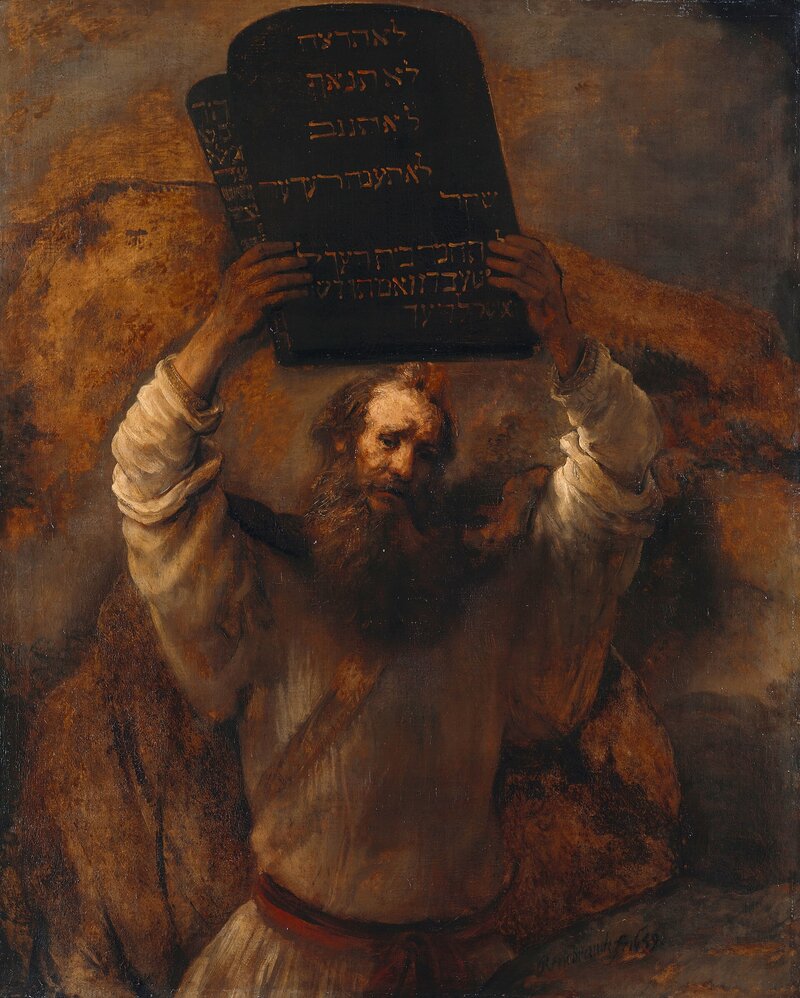
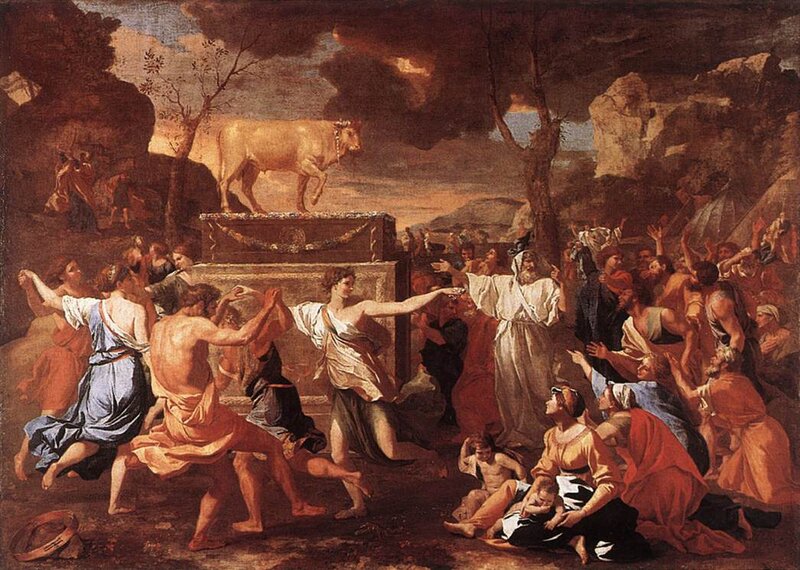
The most dramatic instance is Exodus 32:7–14, where Moses successfully persuades the LORD to refrain from destroying the Israelites after their apostasy with the golden calf. The passage is remarkable in several respects. The LORD’s fury is genuine; he disowns the people, transferring his promise from Abraham to Moses, and proposes to annihilate the nation entirely. Yet he conditions his threat upon Moses’ willingness to “let me alone” (v. 10, NABRE), a phrase whose Hebrew root (nuach) suggests that the omnipotent God is asking a human being to refrain from interceding, thereby surrendering a measure of his prerogative to Moses.10 The LORD, it seems, is “simply unwilling to act without drawing Moses into the decision-making process.”11
Moses refuses to concede. He reasons with the LORD, invoking the Abrahamic covenant, and in the text’s understated climax, “the LORD changed his mind about the punishment he had threatened to inflict on his people” (v. 14, NABRE). The open theist’s reading of this passage is straightforward: God’s intention was genuine, Moses’ intercession was genuinely efficacious, and the outcome was not foreordained. As Terence Fretheim observes, “Moses could conceivably contribute something to the divine deliberation that might occasion a future for Israel other than wrath.”12
The charge that open theists fail to hold a high view of Scripture is, ironically, difficult to sustain when they are the ones insisting that these passages be taken seriously rather than explained away.
Jeremiah 18:7–10 moves from narrative to divine promise. Through his prophet, the LORD declares that if he threatens judgment against a nation and that nation repents, he will “have a change of heart regarding the evil which I have decreed” (v. 8, NABRE). Here, divine repentance is not merely narrated as historical fact; it is promised as a feature of God’s character. If God cannot in fact change his mind, then this promise becomes, on the open theist’s reading, a divine deception.13
The book of Jonah provides the narrative fulfillment of this promise. The LORD declares unconditionally that Nineveh will be destroyed within forty days, yet when the people repent, “When God saw by their actions how they turned from their evil way, he repented of the evil he had threatened to do to them; he did not carry it out” (Jonah 3:10, NABRE). Jonah himself confirms that he knew this would happen (it is precisely why he fled) because the LORD is “a gracious and merciful God, slow to anger, abounding in kindness, repenting of punishment” (4:2, NABRE). Attempts to explain away this entire book in order to maintain the impossibility of genuine divine repentance rob Jonah of its message: God’s character is such that mercy overrules judgment.14
Other instances of divine repentance include 1 Chronicles 21:15 (the LORD sees the destruction his angel is causing and relents concerning the disaster), 2 Kings 20:1–6 (the LORD reverses his declaration that Hezekiah will die in response to the king’s prayer), and 1 Samuel 2:27–36 (the sins of Eli’s sons cause the LORD to retract his promise that Eli’s house would maintain the priestly line forever).
The Divine “Perhaps”
Building on the work of Terence Fretheim’s The Suffering of God, open theists point to passages in which God uses the language of uncertainty in his own speech. In Ezekiel 12:3, the LORD instructs the prophet to enact a parable of exile, saying “perhaps they will see that they are a rebellious house” (NABRE). In Jeremiah 26:2–3, the LORD commands Jeremiah to preach to the people: “Perhaps they will listen and turn, all of them from their evil way, so that I may repent of the evil I plan to inflict upon them for their evil deeds” (NABRE). In Jeremiah 3:7, the LORD confesses, “I thought: After she has done all this, she will return to me. But she did not return” (NABRE).15
These passages seem to indicate that, while the LORD is aware of the range of Israel’s possible responses, he is “quite uncertain as to how the people will respond to the prophetic word.”16 If the LORD knew with absolute certainty that Israel would not repent, then his “perhaps” is either deceptive or meaningless.
Other Motifs
The scriptural case extends further. Genesis 22:12, following Abraham’s near-sacrifice of Isaac, records God saying, “For now I know that you fear God” (NABRE), language that, taken at face value, suggests God gained knowledge through the event. Genesis 6:6 states that “the LORD regretted making human beings on the earth, and his heart was grieved” (NABRE), language of genuine regret. 1 Samuel 15:11 records the LORD saying, “I regret having made Saul king” (NABRE), language open theists read as a genuine divine response to genuinely unforeseen human failure.
The cumulative weight of this evidence is substantial. Chisholm’s four-category analysis of the root nacham identifies numerous Old Testament passages where God changes or is said to change his course of action in response to human behavior.17
Calcidius and the Ancient Roots of an Open Future
Open theists sometimes note that the denial of exhaustive divine foreknowledge is not a modern novelty. Gregory Boyd and others point to Calcidius, the fourth-century philosopher who translated and commented on Plato’s Timaeus, as an early Christian thinker who advanced positions sympathetic to the open view. Calcidius argued that God knows each thing “according to its nature rather than to his own,” and that propositions about future contingents are neither true nor false but hold an indeterminate, “neutral” status.18 Regarding divine foreknowledge of contingent futures, Calcidius suggested that divine predictions operate as ambiguous or hedged pronouncements, through which God advises or encourages creaturely action without rendering uncertain matters certain.
The scholarly significance of Calcidius is debated. His position on future contingents anticipated aspects of the later debates involving Peter Auriol and Peter de Rivo, yet his commentary circulated widely during the medieval period without attracting formal censure.19 Whether Calcidius qualifies as a “proto-open theist” in any strict sense is doubtful; he was responding to Stoic determinism, not constructing a theology of divine providence. But his witness does confirm that the question of whether future contingents possess determinate truth values has a long and unsettled history within Christian thought, and that the open theist’s philosophical instinct, whatever its theological merits, is not without ancient precedent.
The Philosophical Case for Open Theism
The Problem of Foreknowledge and Free Will
At the philosophical heart of open theism lies the question of whether exhaustive divine foreknowledge is compatible with libertarian free will: the genuine ability of a creature to do otherwise in the same circumstances.
The argument proceeds as follows: if God knew from all eternity that Peter would deny Christ on a specific night, then Peter’s denial was a settled fact from all eternity. If it was a settled fact, then at the moment of the denial, Peter could not have done otherwise. If Peter could not have done otherwise, then his denial was not a free act in the libertarian sense. The only way to preserve genuine libertarian freedom, open theists argue, is to deny that God foreknew Peter’s free choice before Peter made it.20
Traditional theists have responded in several ways. Thomists appeal to divine atemporality: God does not fore-know anything, because God does not exist before anything. God knows all things in an eternal present, and his knowledge no more constrains future free acts than our knowledge of present free acts constrains them. Molinists appeal to middle knowledge: God knows what every possible creature would freely do in every possible set of circumstances and selects a world accordingly. But open theists find both responses inadequate: the Thomistic appeal because they regard the concept of divine atemporality as philosophically incoherent and scripturally unsupported, the Molinist appeal because it faces the so-called “grounding objection” (what makes counterfactuals of creaturely freedom true?).21
The Molinist Rejoinder: William Lane Craig
The most formidable philosophical critic of open theism from within the broadly libertarian camp is William Lane Craig, whose Molinist defense of exhaustive divine foreknowledge merits separate attention. Craig argues that open theists are right to affirm libertarian free will but wrong to conclude that this requires limiting God’s knowledge. The key, Craig maintains, is Molinism’s doctrine of middle knowledge (scientia media): God’s logically prevolitional knowledge of what every possible free creature would freely do in every possible circumstance. Through middle knowledge, God achieves comprehensive providence and foreknowledge without determining creaturely choices and without limiting his omniscience.22
Craig presses several objections against open theism. First, a God who lacks knowledge of future free acts is, on Craig’s account, less providentially competent than the God of classical theism. If God does not know what creatures will freely do, his capacity to govern creation toward his intended purposes is significantly diminished. Second, Craig raises an internal consistency problem: if libertarian freedom renders the future indeterminate and unknowable even to God, why are God’s own future free decisions not similarly unknowable? Open theists must posit an asymmetry they struggle to justify.23
Craig’s challenge is philosophically serious, and it is noteworthy that he has conceded the staying power of the open view. He once predicted open theism would “fade away” but later acknowledged that “the number of Christian philosophers who have endorsed open theism is soberingly large.”24 The open theist’s response to Craig typically targets the grounding objection: if counterfactuals of creaturely freedom have no truthmaker (no metaphysical ground that makes them true), then middle knowledge is a castle built on sand. This debate remains unresolved in the philosophical literature.
Open theism exposes a real philosophical tension in the classical synthesis, even if its proposed resolution sacrifices more than it gains.
The Futility of Foreknowledge
Open theists press a further point: even if God possessed exhaustive foreknowledge, it would be of no providential use. David Basinger’s thought experiment illustrates the problem. Suppose God, possessing exhaustive foreknowledge, foresees that Susan will marry Tom and be unhappy. Could God, on the basis of this knowledge, warn Susan to marry Kenneth instead? A moment’s reflection shows the incoherence: what God foresees is the actual future. If God intervenes to change it, then what he foresaw was not the actual future after all. Foreknowledge of a settled future, if taken seriously, entails the inability to alter that future, which is to say that foreknowledge is providentially impotent.25
A God who knows the future as a realm of possibilities, however, could anticipate possible tragedies and intervene to prevent them. Open theists argue that such a God is not less sovereign but more practically engaged: not a helpless spectator of an eternally settled script but a dynamic agent working within a genuinely open future.
Divine Sovereignty Reconceived
Open theists distinguish between what they call specific sovereignty (the view that God meticulously controls every detail of every event) and general sovereignty (the view that God has established a world in which he sets the overall framework and allows creatures significant input into how things will turn out).26
They argue that specific sovereignty renders much of Scripture incoherent. If God always gets precisely what he desires in each situation, then it makes no sense for Scripture to describe God as grieved (Gen 6:6), surprised (Jer 3:7; 32:35), or responsive to prayer (Jas 4:2). Christ’s teaching his disciples to pray “your will be done, on earth as in heaven” (Matt 6:10, NABRE) presupposes that God’s will is not always done on earth.27
In the open model, God’s sovereignty is expressed not through meticulous control but through what open theists call metasovereignty: God’s sovereignty over his sovereignty. God could have created a world of exhaustive divine control. He chose instead to create a world of genuine give-and-take relationships with free creatures. This choice, far from diminishing divine sovereignty, is its supreme expression: “the sovereignty that reigns unchallenged is not as absolute as the sovereignty that accepts risk.”28 For a Catholic examination of these themes in a specific biblical context, see the Catholic interpretation of Romans 9–11, where Paul addresses divine sovereignty over human freedom and Israel’s place in God’s purposes.
Open Theism vs. Classical Theism
The term “classical theism” refers to the understanding of God that developed through the convergence of biblical revelation and philosophical reflection in the patristic and medieval periods and that received definitive conciliar expression at the Fourth Lateran Council (1215) and the First Vatican Council (1869–1870). Classical theism affirms that God is absolutely simple (without composition of parts), immutable, impassible, eternal (in the sense of atemporal, not merely everlasting), omniscient (with exhaustive knowledge of all past, present, and future realities, including free creaturely acts), and omnipotent.
Open theism departs from classical theism on several of these points. It rejects exhaustive foreknowledge, either explicitly denying or significantly qualifying divine atemporality, and it holds that God’s knowledge expands as new realities come into being. Many open theists also reject or redefine divine simplicity and impassibility, arguing that these attributes owe more to Greek philosophy than to biblical witness.
The disagreement is not trivial. Classical theism understands God as wholly other, the transcendent ground of all being, whose perfection consists in the fullness of actuality with no unrealized potential. Open theism, while retaining most classical attributes, reconceives God as a being who exists in time (or in a manner analogous to temporal existence), who experiences the world sequentially, and whose knowledge and emotional life change in response to creaturely action. The God of open theism is supremely powerful and wise, but he is not actus purus in the Thomistic sense.
Both positions claim robust scriptural support. Classical theists point to passages affirming God’s unchanging nature (Mal 3:6; Jas 1:17; Num 23:19), his exhaustive foreknowledge (Isa 46:9–10; Ps 139:4, 16), and his transcendence over time (Ps 90:2, 4; 2 Pet 3:8). Open theists point to the “divine repentance” passages surveyed above, along with God’s use of testing language (Gen 22:12), conditional prophecy (Jer 18:7–10), and expressions of genuine surprise (Jer 3:7; 32:35). The tension is real, and honest readers on both sides have had to grapple with passages that sit uncomfortably within their frameworks.
The Catholic tradition holds that the mystery of divine foreknowledge and human freedom is genuinely mysterious: a mystery that cannot be fully resolved by human reason alone.
What distinguishes the Catholic response from the evangelical one is not which set of passages it takes seriously (it takes both seriously) but the hermeneutical framework within which it reads them. The Catholic tradition has the Magisterium, the ecumenical councils, and two millennia of patristic and scholastic reflection to draw upon. The evangelical framework, committed to sola scriptura, must adjudicate between these competing readings with no principled authority beyond the individual interpreter’s conscience. This structural difference is what makes the open theism debate not merely a theological curiosity but a case study in the consequences of different epistemological commitments.
Why Open Theism Fits Evangelical Theology
This is a point worth lingering over, because it illuminates something important about the nature of evangelical theology, and by contrast about the nature of Catholic theology.
Open theism was born within evangelicalism, and it was designed to function within an evangelical framework. Its proponents were and are serious evangelicals who affirm the divine inspiration, truthfulness, and authority of Scripture, the necessity of personal faith in Christ, and the urgency of evangelism. They did not arrive at their position by reading Whitehead or Hegel. They arrived at it by reading the Bible, and by taking what they found there more seriously, in some cases, than their critics were willing to do.
The evangelical understanding of Scripture, as the various confessional statements of the movement make clear, revolves around three commitments: Scripture is divinely inspired, Scripture is the supreme authority for faith and practice, and Scripture’s primary purpose is to direct humanity to salvation through Jesus Christ.29 Open theists can affirm all three commitments without contradiction. Their position does not require a low view of Scripture; it requires a willingness to let Scripture challenge inherited systematic theological assumptions.
The key insight of my earlier research was this: the real conflict between open theism and its evangelical critics is not a conflict over the authority of Scripture. It is a conflict between open theism and certain systematic theological assumptions that many evangelicals have inherited from the Reformed tradition and erroneously identified with Scripture itself.30 N. T. Wright captured this tendency well when he observed that evangelicals often use the phrase “authority of Scripture” when they really mean “the authority of evangelical, or Protestant, theology, since the assumption is made that we (evangelicals, or Protestants) are the ones who know and believe what the Bible is saying.”31
Open theism exposes this conflation. When the Evangelical Theological Society voted on whether to expel Clark Pinnock and John Sanders (despite having just two doctrinal qualifications for membership, neither of which mentioned divine sovereignty or foreknowledge32), it revealed the degree to which particular systematic theological commitments had been elevated to the level of Scripture itself. Both men survived the vote, but the fact that it occurred at all was telling.33
This is precisely where the evangelical framework, for all its strengths, shows its structural limitation. Sola scriptura, the principle that Scripture alone is the final authority for faith and practice, provides no external mechanism for adjudicating disputes over the interpretation of Scripture. When open theists and their critics both claim to be reading Scripture faithfully, and both can point to substantial textual evidence, the evangelical framework has no principled way to resolve the disagreement. It can only resort to democratic votes (as at the ETS), denominational power politics, or the kind of shouting match that characterized much of the open theism debate.
A Catholic Evaluation
It is from this vantage point that a Catholic evaluation of open theism becomes not merely interesting but illuminating. The Catholic Church possesses precisely what the evangelical framework lacks: a living Magisterium, an authoritative teaching office guided by the Holy Spirit, capable of discerning the authentic meaning of divine revelation across the centuries. This does not make the Catholic evaluation of open theism simple, but it does make it principled.
Is Open Theism Heretical? Defining the Terms
Before addressing the substance of the Catholic critique, it is worth pausing over a question that has generated more heat than clarity: Is open theism heretical?
The answer depends on what we mean by “heresy,” and that definition differs significantly between Catholic and Protestant usage.
In Catholic theology, heresy has a precise canonical definition. The Code of Canon Law (Can. 751) defines heresy as “the obstinate denial or obstinate doubt after the reception of baptism of some truth which is to be believed by divine and Catholic faith.” For a position to be heretical in the strict canonical sense, three conditions must be met: the person must be baptized, the truth denied must be a defined dogma of the faith, and the denial must be obstinate (that is, persistent after the person has been made aware that the position contradicts defined teaching). Heresy is thus not merely a wrong opinion but a deliberate and persistent rejection of defined dogma by a Catholic.34
In Protestant theology, the term “heresy” is used more loosely. Without a magisterial authority to define dogma with binding precision, Protestant communities have historically identified heresy with departures from creedal orthodoxy (the Nicene Creed, the Chalcedonian Definition) or from confessional standards (the Westminster Confession, the Augsburg Confession). But the boundaries are fuzzier, and the mechanisms for enforcement are weaker. The Evangelical Theological Society’s attempt to expel Pinnock and Sanders was, in effect, an effort to draw a heresy boundary without a magisterial apparatus.
So is open theism heretical? Within Catholicism, the most precise answer is that open theism is materially heterodox rather than formally heretical. Its core claim, the denial of exhaustive divine foreknowledge, contradicts the dogmatic teaching of the First Vatican Council in Dei Filius. A Catholic who adopted open theism after being informed of this contradiction would be in material opposition to defined dogma. But since open theism arose within Protestantism and has never been formally condemned by name, the canonical machinery of heresy (which requires obstinate denial by a baptized Catholic of a truth known to be defined) has not been directly engaged. The more accurate theological term is heterodox: a position that departs from right teaching without meeting the full canonical criteria for heresy.
Within Protestantism, the question is genuinely contested. The 1474 condemnation of Peter de Rivo’s views on future contingents by Pope Sixtus IV has no binding force in Protestant ecclesiology. The Evangelical Theological Society’s failure to expel Pinnock and Sanders suggests that the evangelical mainstream, while uncomfortable with open theism, was unwilling to classify it as heresy. Some Reformed theologians have called it heretical; others, like Roger Olson, have argued that it falls within the bounds of evangelical orthodoxy. The answer depends on which confessional standard one applies and who has the authority to apply it, which is precisely the structural problem that open theism exposes.
The historical case of Peter de Rivo is instructive. De Rivo, a fifteenth-century Flemish scholastic at the University of Louvain, defended the position of the fourteenth-century Franciscan Peter Auriol that propositions about future contingents lack determinate truth value. This view, which anticipated aspects of open theism’s metaphysics, was condemned by Pope Sixtus IV in 1474. De Rivo retracted his position under ecclesiastical pressure.35 The de Rivo case demonstrates that the Catholic Church has not merely tolerated the classical position on future contingents as one opinion among many; it has actively defended the determinate truth value of propositions about the future, closing off a philosophical avenue that open theism would later attempt to reopen.
Why Open Theism Is Incompatible with Catholic Teaching
The Catholic Church has not issued a formal condemnation of open theism by name. But the incompatibilities between open theism and defined Catholic doctrine are substantial and, in the judgment of this author, insurmountable.
Open theism contradicts the dogmatic teaching on divine omniscience. The First Vatican Council (1870), in its dogmatic constitution Dei Filius, declared that God possesses “infinite knowledge” and that all things are “naked and open to His eyes, even those which by the free action of creatures are in the future” (Dei Filius, Chapter 1; cf. Heb 4:13).36 This formulation is deliberately comprehensive: it encompasses not merely past and present realities but future realities, including those that arise from free creaturely action. Open theism’s denial that God foreknows future free acts is incompatible with this defined dogma. The Catechism of the Catholic Church reaffirms this teaching: “To God, all moments of time are present in their immediacy. When therefore he establishes his eternal plan of ‘predestination,’ he includes in it each person’s free response to his grace” (CCC §600).37 The Catechism further teaches that God is “the almighty” who is “all-powerful, loving and merciful” (CCC §§269–274) and that “God cares for all, from the least things to the great events of the world and its history,” governing creation through his providence (CCC §§302–314).38
The Fourth Lateran Council (1215) similarly declared God to be the “one principle of all things, Creator of all things visible and invisible,” who by his “almighty power” created “from nothing” (de nihilo).39 While open theists typically affirm creation ex nihilo (distinguishing themselves from process theology on this point), their reconception of divine sovereignty sits uneasily with the councils’ affirmation of God’s exhaustive providential governance.
Open theism is incompatible with divine simplicity. The Catholic tradition, following St. Thomas Aquinas, holds that God is actus purus, pure act with no unrealized potential. God is ipsum esse subsistens, subsistent being itself.40 A God whose knowledge expands as events unfold, whose emotional states change in response to creaturely action, and who moves from uncertainty to certainty is a God who moves from potency to act. Such a God is not pure act and is therefore not the God of Catholic dogma.
Open theists typically dismiss divine simplicity as a philosophical accretion from Greek thought, foreign to the biblical witness. This dismissal, however, cuts against the grain of nearly two millennia of conciliar teaching. The Fourth Lateran Council declared God to be “a certain supreme reality (una quaedam summa res), incomprehensible and ineffable.” The First Council of Nicaea and the subsequent ecumenical councils presuppose divine simplicity in their Trinitarian formulations. Aquinas devoted an entire question of the Summa Theologiae (I, q. 3) to demonstrating that God is absolutely simple.41 To dismiss this tradition as mere “Greek philosophy” is to misunderstand how the Church reads Scripture, a point to which I will return.
Open theism undermines divine immutability and impassibility. The Dei Filius of Vatican I declared God to be “omnipotent, eternal, immense, incomprehensible, infinite in intellect and will and in every perfection; who, being one, singular, altogether simple and unchangeable spiritual substance, must be declared really and essentially distinct from the world.”42 The key word is “unchangeable” (incommutabilem). A God who changes his mind, who experiences genuine surprise, and whose knowledge expands as events unfold is not unchangeable in the sense the council intends.
Open theists argue forcefully that divine impassibility is incompatible with the incarnation. In my earlier work, I found this argument compelling: if Jesus is the full revelation of God, and Jesus suffered, then it seems incoherent to maintain that the divine nature is wholly unaffected by suffering.43 The Catholic tradition, however, has a more nuanced response than the open theist typically acknowledges. Through the Christological framework established at the Council of Chalcedon (451)—the dogma of the hypostatic union, which holds that Christ’s two natures are united in one divine Person “without confusion, without change, without division, without separation”—the Church affirms that it is truly God who suffered and died on the Cross (because the Person who suffered is a divine Person) while maintaining that the suffering is experienced in and through Christ’s human nature, not the divine nature as such. The corollary principle of the communicatio idiomatum (the “exchange of properties”) allows us to predicate of the one Person attributes that properly belong to either nature, so that we can say “God suffered” while specifying that the suffering pertains to the human nature. The Church thus affirms both that God is impassible in his divine nature and that God has entered into human suffering through the Incarnation, a position that is not a compromise but a mystery.44
The Thomistic Framework
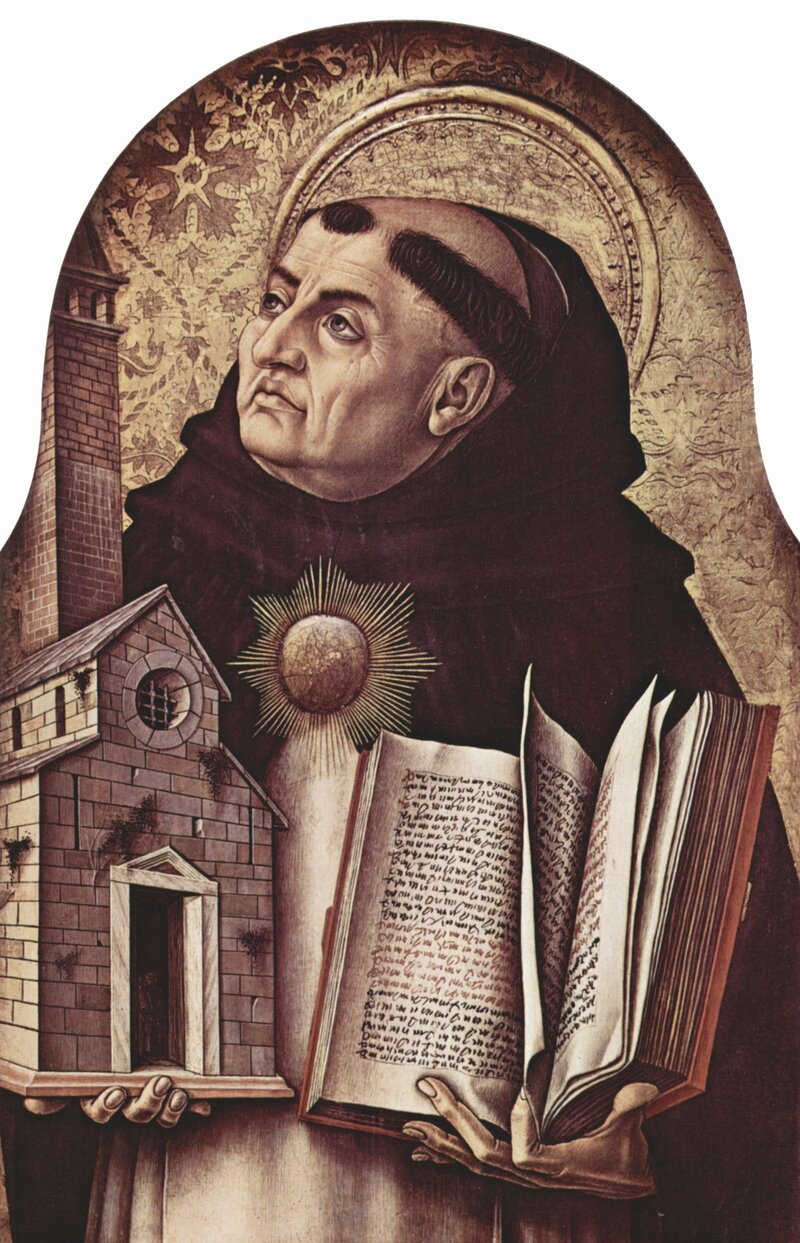
St. Thomas Aquinas provides the most rigorous framework for the Catholic critique. For Aquinas, God does not exist in time at all. God is eternal, not in the sense of existing for an infinite duration of time but in the sense of existing outside the temporal order altogether. God knows all things (past, present, and future from our perspective) in a single, eternal act of self-knowledge. He does not foresee the future, because there is no “before” for God. He simply sees all of reality in the eternal present of his own existence.45
This means that God’s knowledge of future free acts does not constrain those acts any more than my knowledge of your present free act constrains it. If I watch you freely choose coffee over tea, my seeing your choice does not make it unfree. Analogously (though the analogy limps, as all analogies of God must), God’s eternal vision of your future free choice does not make it unfree, because from God’s perspective it is not “future” at all. It is simply present to him in the eternal now.46
Open theists, in my earlier work, found this account unpersuasive. I argued that the concept of divine atemporality was philosophically incoherent and that proponents of divine timelessness were unable to explain their position without reverting to temporal vocabulary (words like “simultaneous,” “eternal now,” and “all moments”) which demonstrated the human inability to grasp what a non-temporal existence entails.47
I no longer find this argument decisive. The fact that we must use temporal language to describe atemporal realities does not mean those realities are incoherent; it means our language is limited. We face the same problem with every doctrine that concerns God’s inner life, the Trinity for instance. The inability of human language to capture divine reality perfectly is not an argument against the reality; it is a reminder of the mysterium tremendum that lies at the heart of all theology. As Augustine observed in his own contemplation of God’s relationship to time: “If anyone finds your simultaneity beyond his understanding, it is not for me to explain it. Let him be content to say ‘What is this?’ So too let him rejoice and delight in finding you who are beyond discovery rather than fail to find you by supposing you to be discoverable.”48
The Catholic Alternatives: Thomism and Molinism
The Catholic tradition offers not one but at least two robust frameworks for reconciling divine foreknowledge with human freedom, and neither requires the open theist’s denial of exhaustive divine foreknowledge.
Thomism holds that God, as the first cause, moves the human will to act in every free choice through what the Dominican tradition calls physical premotion (praemotio physica). The will remains free, on this account, not because it could have done otherwise under the same divine motion but because it acts voluntarily and without coercion. God’s knowledge of future free acts is grounded in his own causal activity as their eternal creator: scientia dei est causa rerum, God’s knowledge is the cause of things.49
Molinism, developed by the Jesuit Luis de Molina in the sixteenth century, offers a different solution. Molina argued that God possesses middle knowledge (scientia media): knowledge, logically prior to his creative decree, of what every possible free creature would freely do in every possible set of circumstances. God then selects from among all possible worlds the one in which free creatures freely carry out his providential plan. On this account, God achieves exhaustive sovereignty without determining free choices, because his governance operates through his knowledge of counterfactuals rather than through causal determination.50
The Church has declined to choose between these two systems. In the De Auxiliis controversy (1597–1607), Pope Paul V declared that neither Molinism nor Thomism had been condemned and that both were permitted as legitimate theological opinions. The truce has held for over four centuries.51 This official neutrality is itself theologically significant: it tells us that the Church regards the precise metaphysical mechanism by which grace, knowledge, and freedom interact as a question on which faithful Catholics may legitimately disagree, provided they affirm the defined dogmas of divine omniscience, genuine human freedom, God’s universal salvific will, and the rejection of double predestination.
What neither Thomism nor Molinism permits, however, is the denial of exhaustive divine foreknowledge. The Catholic tradition insists that the question of how God knows the future is genuinely open; the question of whether God knows the future is not.
The Catholic Understanding of Scripture
The open theism debate illuminates a fundamental difference between the evangelical and Catholic understandings of Scripture that extends well beyond the specific question of divine foreknowledge.
Open theism arose within a tradition that affirms sola scriptura, the principle that Scripture alone is the final authority for faith and practice. Within that framework, the open theist’s argument is powerful: if Scripture repeatedly describes God as changing his mind, experiencing surprise, and using the language of uncertainty, and if no principled hermeneutical reason compels us to read these passages as mere anthropomorphism, then the straightforward reading of Scripture supports the open model of God. The open theist takes Scripture at face value, and the burden of proof falls on the traditionalist to explain why we should not.
The Catholic tradition reads Scripture differently, not because it takes Scripture less seriously but because it reads Scripture within the living tradition of the Church, guided by the Magisterium. Scripture and Tradition are not two separate sources of revelation but two modes of transmitting the one deposit of faith received from the apostles. The Second Vatican Council, in Dei Verbum, affirmed that “Sacred Tradition and Sacred Scripture form one sacred deposit of the Word of God, committed to the Church,” and that “the task of authentically interpreting the Word of God, whether written or handed on, has been entrusted exclusively to the living teaching office of the Church.”52
This has direct implications for how Catholics read the “divine repentance” passages. The Catholic reader does not dismiss these passages or treat them as irrelevant. But she reads them in light of the Church’s dogmatic teaching on divine immutability, omniscience, and simplicity, teaching that developed under the guidance of the Holy Spirit through the ecumenical councils and the Fathers and Doctors of the Church. Where the evangelical framework leaves the individual reader to adjudicate between competing scriptural interpretations with no authoritative guide beyond Scripture itself, the Catholic framework provides a principled basis for reading these passages in a way that honors both their literary force and the broader deposit of faith.
The Church Fathers, for their part, were well aware of the “divine repentance” passages. They did not ignore them. But they consistently interpreted them in light of what they understood to be the fuller revelation of God’s nature, a revelation transmitted not only through the letter of Scripture but through the apostolic tradition and the lived faith of the Church. Origen, Augustine, John Damascene, and Thomas Aquinas all grappled with these texts and concluded that the language of divine repentance is accommodated to human understanding: a genuine mode of revelation, but one that reveals God’s relational responsiveness to human action rather than a literal change in the divine mind or will.53
This is not, as the open theist might charge, a refusal to take Scripture seriously. It is a different understanding of how Scripture is authoritative. For the Catholic, Scripture is authoritative within the Church, read in communion with the saints, interpreted under the guidance of the Magisterium. The evangelical framework, by contrast, leaves the interpretation of Scripture to the individual conscience enlightened by the Holy Spirit, a noble aspiration but one that produces precisely the kind of irresolvable hermeneutical standoff that the open theism debate so vividly illustrates.
The Eastern Orthodox Perspective: Essence and Energies
The Catholic and Protestant traditions do not exhaust the Christian options for engaging the questions open theism raises. The Eastern Orthodox tradition, with its distinctive theological vocabulary, offers a third framework that is neither Thomistic nor Molinist, neither open theist nor straightforwardly “classical” in the Western sense. At the heart of this framework is the essence–energies distinction articulated most fully by St. Gregory Palamas (1296–1359) and canonized as Orthodox dogma by the councils of 1341 and 1351.
Palamas distinguished between God’s essence (ousia), which is absolutely unknowable and inaccessible to creatures, and God’s energies (energeiai), which are the real, uncreated operations through which God acts in creation and makes himself genuinely known. The energies are not created intermediaries; they are God himself in his outward activity. The distinction is real, not merely conceptual, yet it does not divide God into parts, because the energies are the natural and eternal radiation of the one divine nature.54
What makes this framework relevant to the open theism debate is how it handles the biblical “divine repentance” passages. In the Palamite scheme, God’s essence remains eternally immutable, simple, and transcendent: God “in himself” does not change. But God’s energies, which include his providential will, his foreknowledge, his mercy, and his justice, manifest as genuinely responsive to creaturely action. When Exodus 32 describes the LORD “changing his mind” in response to Moses’ intercession, the Palamite reader can affirm that this is a real divine engagement with creation through God’s energies, without concluding that God’s essence has undergone change or that God’s knowledge has expanded.55
Vladimir Lossky, perhaps the most influential twentieth-century interpreter of Palamas, emphasized that the distinction preserves both God’s absolute transcendence and his genuine accessibility. God is, in Lossky’s formulation, “wholly unknowable in His essence” while “wholly reveal[ing] Himself in His energies.”56 All divine operations—creation, providence, deification—belong to the energies; yet the energies are not something other than God. They are God acting, God present, God engaged with his creation. Dumitru Staniloae, the Romanian Orthodox theologian, developed a more personalist reading: the energies are God’s personal, relational self-communication, through which creatures encounter not an abstract force but the living God.57
This framework differs from both open theism and Western classical theism in important respects. It agrees with classical theism that God’s knowledge is exhaustive and his essence immutable. It agrees with open theism that God’s engagement with creation is genuine, that human prayer and intercession have real efficacy, and that the biblical language of divine responsiveness should not be dismissed as mere anthropomorphism. It differs from classical theism in rejecting the strong form of divine simplicity that makes God’s will identical to his intellect and his essence identical to his attributes. It differs from open theism in maintaining complete divine omniscience and denying that God’s knowledge is conditioned by time or limited by creaturely indeterminacy.
The Catholic tradition has historically been wary of the essence–energies distinction. Western scholastics, following Thomistic metaphysics, have argued that a real distinction between God’s essence and energies violates divine simplicity by introducing composition into the Godhead. Yet recent scholarship has complicated this picture. Some Catholic scholars have noted that the Catholic Church never formally condemned Palamism as heretical, and that the perceived incompatibility may owe more to terminological differences than to genuine metaphysical disagreement.58 Whether the Palamite framework can be received within Catholic theology without compromising defined dogma remains an open question in contemporary ecumenical dialogue.
For the purposes of this evaluation, the significance of the Palamite perspective is primarily comparative. It demonstrates that the choice between open theism and Western classical theism is not exhaustive; other resources within the Christian tradition can address the legitimate concerns that open theism raises (genuine divine responsiveness, real human agency, the force of the biblical text) without sacrificing the divine transcendence and exhaustive omniscience that open theism abandons.
What Open Theism Gets Right—and What It Gets Wrong
Intellectual charity requires acknowledging what open theism gets right, and it gets several things importantly right.
Open theism takes the biblical text seriously. Its proponents do not approach the “divine repentance” passages with embarrassment or haste. They sit with the text, attend to its literary and theological context, and refuse to explain it away with a wave of the hand. Catholic exegetes could learn something from this discipline. The temptation to resolve every tension in the biblical text by appeal to anthropomorphism is a real one, and it can lead to a flattened reading of Scripture that fails to appreciate the richness of the Old Testament’s portrayal of God.
Open theism highlights the relational character of God. The God of Scripture is not the unmoved mover of Aristotle. He is a God who enters into covenant, who responds to prayer, who grieves over human sin, and who becomes incarnate in Jesus Christ. Open theism’s insistence on this point is a genuine contribution to the conversation, even if the metaphysical conclusions it draws are, in the Catholic view, unwarranted.
Open theism serves as a salutary reminder that theological systems are human constructs: useful, necessary, but always subordinate to the revelation they seek to organize.
Open theism exposes the dangers of systematic theological overreach. The tendency to mistake one’s systematic theology for Scripture itself is not unique to evangelicalism, but it is particularly acute in a tradition built on sola scriptura. As Stanley Grenz observed, “We run the risk of confusing one specific model of reality with reality itself or one theological system with truth itself.”59
Open theism addresses real pastoral concerns. The pastoral motivation behind open theism is genuine and admirable. A God who meticulously controls every event, including every rape and every genocide, raises profound questions about divine goodness that cannot be dismissed as mere sentimentality. Open theism’s pastoral appeal lies in its ability to absolve God of direct responsibility for evil by locating the source of suffering in the misuse of genuine creaturely freedom. The Catholic tradition shares this concern: the Catechism of the Catholic Church teaches that God predestines no one to hell (CCC §1037) and genuinely desires the salvation of all persons (CCC §1058); it further teaches that God “in no way, directly or indirectly, is the cause of moral evil” and that he permits it only because “he respects the freedom of his creatures” (CCC §§311–312).60 For a more detailed exploration of how divine providence, free will, and theodicy work together in Catholic thought, see does everything happen for a reason.
What open theism gets wrong, however, is fundamental. In its effort to preserve human freedom and divine responsiveness, it sacrifices the divine transcendence that makes God’s love redemptive rather than merely sympathetic. A God who does not know the future is a God who cannot guarantee the fulfillment of his promises. A God who changes his mind is a God whose purposes are contingent upon creaturely cooperation. A God whose knowledge expands as events unfold is a being in process, not the actus purus who is the ground of all being.
The Catholic tradition holds that the mystery of divine foreknowledge and human freedom is genuinely mysterious, that no theological system, whether Thomist, Molinist, or Scotist, can capture it exhaustively. But it also holds that certain boundaries of this mystery have been revealed and defined: God is omniscient (CCC §§269–274), God is immutable, God is simple, and God’s providential governance extends to all things, including the free acts of creatures (CCC §§302–314). Within these boundaries, there is room for vigorous theological debate. Outside them, there is not.
Open theism, with its denial of exhaustive divine foreknowledge, falls outside these boundaries. It is, in the Catholic judgment, an inadequate solution to a genuine problem, a problem that the Catholic tradition addresses not by diminishing God’s knowledge but by deepening our understanding of the mystery of divine eternity.
The Catholic Church does not reject open theism because it takes human freedom seriously. She rejects it because it does not take divine transcendence seriously enough.
Frequently Asked Questions
Is open theism heretical?
The answer depends on one’s theological tradition. In Catholic theology, heresy has a precise canonical definition (CIC Can. 751): the obstinate denial by a baptized Catholic of a truth to be believed by divine and Catholic faith. Since open theism arose within Protestantism and has not been formally condemned by name, the term “heresy” in its strict Catholic sense does not directly apply. However, open theism’s core claim contradicts the dogmatic teaching of the First Vatican Council in Dei Filius, which affirms that all things, including those “which by the free action of creatures are in the future,” are “naked and open” to God’s eyes. A Catholic who holds the open theist position is materially at odds with defined Catholic dogma. The more precise term is heterodox: a departure from right teaching that contradicts defined doctrine without meeting all the canonical conditions for formal heresy. In Protestant circles, the classification is contested. Some Reformed theologians have labeled it heretical; the Evangelical Theological Society declined to expel its proponents. The 1474 condemnation of Peter de Rivo’s related views by Pope Sixtus IV demonstrates that the Church has historically taken a firm stand on the determinate truth value of future contingents.
How does open theism differ from process theology?
Open theism and process theology share a rejection of exhaustive divine foreknowledge and an emphasis on divine responsiveness, but they differ significantly in their metaphysical commitments. Open theism retains creation ex nihilo, affirms divine omnipotence (understood as God’s voluntary self-limitation), and operates within a broadly Christian metaphysical framework. Process theology denies creation ex nihilo, redefines omnipotence as purely persuasive power, and situates God within a broader metaphysical category (creativity) rather than treating God as the ultimate metaphysical reality. Open theism is, in important respects, much closer to classical theism than process theology is.
Can a Catholic be an open theist?
Not while maintaining fidelity to defined Catholic dogma. The First Vatican Council’s affirmation of exhaustive divine foreknowledge is a solemn dogmatic definition, binding on all Catholics. A Catholic may, however, be a Thomist, a Molinist, a Scotist, or an Augustinian on the question of how God foreknows future free acts, a question the Church has deliberately left open.
What about the “divine repentance” passages?
The Catholic tradition takes these passages seriously but reads them within the broader context of the Church’s understanding of God’s nature. The language of divine repentance is understood as a genuine mode of revelation that communicates God’s relational responsiveness to human action (his love, his justice, his willingness to show mercy when creatures repent) without implying a literal change in the divine will or knowledge. The Eastern Orthodox essence–energies distinction offers an additional perspective: God’s energies manifest as genuinely responsive to creaturely action while God’s essence remains immutable. This is not an evasion of the text but a reading of the text within the fuller context of the deposit of faith.
Is open theism compatible with evangelical theology?
This is a question I explored at length in my earlier work, and my conclusion was that open theism is compatible with the distinguishing marks of evangelical theology: a high view of Scripture’s authority, the necessity of personal faith in Christ, and the urgency of evangelism. The controversy it provoked within evangelicalism was the result not of a genuine conflict with evangelical principles but of a conflict with systematic theological assumptions that many evangelicals had mistakenly identified with those principles. Whether open theism is true is a separate question from whether it is evangelical, and on the latter question, I believe the answer is yes.
What is the difference between open theism and classical theism?
Classical theism, affirmed by the Catholic, Orthodox, and historic Reformed traditions, holds that God is absolutely simple, immutable, impassible, atemporal, and exhaustively omniscient. Open theism retains most classical attributes but rejects exhaustive foreknowledge and typically rejects or redefines divine simplicity, impassibility, and atemporality. Open theism conceives God as existing in time (or analogously to temporal existence), experiencing the world sequentially, and gaining knowledge as new realities unfold. The God of open theism is supremely powerful and wise, but he is not actus purus in the Thomistic sense. Both positions claim scriptural support, and the tension between the biblical evidence cited by each side is genuine. For a more detailed treatment, see the comparison table of divine providence models.
Does open theism deny God’s omniscience?
No, and this is one of the most persistent misunderstandings of the position. Open theists emphatically affirm that God is omniscient—that God knows all truths. The disagreement is about the content of reality that God perfectly knows. Classical theists hold that every future event is a settled fact and that God knows it as such. Open theists hold that some future events (those dependent on the free choices of creatures not yet made) are genuinely open possibilities rather than settled facts, and that God knows them as possibilities. On the open view, God knows all that there is to know; there are simply some things (future free contingents) that are not yet there to be known. This is why open theists regard their position as a defense of omniscience, not a denial of it.
What does open theism say about prayer?
Prayer is one of the areas where open theism has its strongest pastoral appeal. On the open view, petitionary prayer is genuinely efficacious—not merely a psychological exercise or a means of conforming the believer’s will to a predetermined divine plan. Because the future is genuinely open, the prayers of believers can genuinely influence what God does. When Jesus teaches his disciples to pray “your will be done, on earth as in heaven” (Matt 6:10), the open theist reads this as a genuine petition that presupposes God’s will is not always done on earth. The Catholic tradition also affirms the real efficacy of prayer (CCC §§2734–2737) but grounds this efficacy in God’s eternal providential plan, which incorporates human prayers as genuine secondary causes within God’s foreknown decree. Both traditions agree that prayer matters; they disagree about the metaphysical framework that explains how it matters.
How does open theism relate to the problem of evil?
Open theism offers one of the more compelling responses to the problem of evil within Christian theology. If God does not meticulously control every event, and if the future is genuinely open, then evil and suffering can be understood as the tragic consequences of the misuse of genuine creaturely freedom—freedom that God granted because love requires it. Gregory Boyd developed this into a full “trinitarian warfare theodicy” in his Satan and the Problem of Evil (2001), arguing that cosmic evil agents as well as human agents exercise genuine freedom whose outcomes God does not predetermine. The Catholic tradition shares the conviction that God is not the author of evil (CCC §§311–312) but differs in maintaining that God’s providential governance extends even to the permission of evil, which God allows only because he can draw greater good from it. See also my review of Boyd’s Is God to Blame?
Further Reading
- Open Theism vs. Molinism: A Catholic Comparison — A side-by-side analysis of two frameworks for reconciling divine sovereignty and human freedom
- Does God Know the Future? What Catholics Believe — The Catholic doctrine of divine foreknowledge explained for a general audience
- Divine Foreknowledge and Free Will: The Catholic Answer — How the Catholic intellectual tradition reconciles exhaustive divine foreknowledge with genuine human freedom
- Open Theism vs. Process Theology: What’s the Difference? — Two critiques of classical theism compared and distinguished
- Divine Providence Models Compared — A comparison table of Thomism, Molinism, open theism, and process theology on key theological questions
- Theology Glossary: Key Terms in the Divine Providence Debate — Definitions of libertarian free will, middle knowledge, divine simplicity, and other key terms
- Molinism: Divine Sovereignty and Human Freedom — A Catholic framework for reconciling divine sovereignty and human freedom through middle knowledge
- Is Molinism Compatible with Thomism? — The De Auxiliis debate and whether these two Catholic frameworks can be reconciled
- Process Theology: A Catholic Evaluation — The more radical alternative to classical theism, and why the Catholic Church cannot accept it
- Divine Simplicity: A Catholic Explanation — What the doctrine of divine simplicity teaches, why it matters, and how the ecumenical councils have defined it
- The First Vatican Council — What Dei Filius and Pastor Aeternus actually teach, and why Vatican I remains essential for Catholic theology
- The Openness of God (1994): Summary and Catholic Response — A chapter-by-chapter summary and Catholic evaluation of the book that brought open theism to mainstream evangelical attention
- Greg Boyd’s Open Theism: A Catholic Critique — An evaluation of Boyd’s contributions to the open theism debate from a Catholic perspective
- Greg Boyd’s Answer to the Problem of Suffering — A review of Boyd’s Is God to Blame? and its implications for the theodicy debate
- The Crucifixion of the Warrior God: A Bridge Too Far — A review of Boyd’s cruciform hermeneutic and its limits
- Catholic vs. Calvinist Predestination — How Catholic and Reformed views of election differ on grace and free will
1. Richard Garrett Ham Jr., The Evangelical and the Open Theist: Can Open Theism Find Its Place Within the Evangelical Community? (CreateSpace, 2014). The book is an adaptation of my honors thesis: "A Scriptural and Philosophical Evaluation of the Open Model of God as an Ontological Necessity and Its Compatibility with Evangelical Theology" (undergraduate honors thesis, Ouachita Baptist University, 2007), available at Ouachita Scholarly Commons.
2. Gregory A. Boyd, "The Open-Theism View," in Divine Foreknowledge: Four Views, ed. James K. Beilby and Paul R. Eddy (Downers Grove, IL: InterVarsity Press, 2001), 13–14.
3. Boyd, "The Open-Theism View," 13.
4. Boyd, "The Open-Theism View," 14. See also Gregory A. Boyd, God of the Possible: A Biblical Introduction to the Open View of God (Grand Rapids: Baker Books, 2000).
5. Ham, The Evangelical and the Open Theist, ch. 3. The analogy is common among open theists; see also Boyd, God of the Possible, 16.
6. Clark Pinnock, Richard Rice, John Sanders, William Hasker, and David Basinger, The Openness of God: A Biblical Challenge to the Traditional Understanding of God (Downers Grove, IL: InterVarsity Press, 1994).
7. Gregory A. Boyd, Satan and the Problem of Evil: Constructing a Trinitarian Warfare Theodicy (Downers Grove, IL: InterVarsity Press, 2001). See also Boyd, God of the Possible; Gregory A. Boyd, Is God to Blame? Moving Beyond Pat Answers to the Problem of Evil (Downers Grove, IL: InterVarsity Press, 2003).
8. John Sanders, The God Who Risks: A Theology of Providence (Downers Grove, IL: InterVarsity Press, 1998).
9. Robert B. Chisholm Jr., "Does God Change His Mind?," Bibliotheca Sacra 152, no. 608 (1995): 387–399. Chisholm classifies all Niphal/Hithpael uses of nacham into four semantic categories; the fourth category, "retracting a stated course of action," is the one most relevant to the open theism debate. See also Ham, The Evangelical and the Open Theist, ch. 2; Terence E. Fretheim, The Suffering of God: An Old Testament Perspective, OBT (Philadelphia: Fortress, 1984).
10. The Hebrew root nuach means "to let something lie in a place, to leave behind, to allow something to happen." See Ham, The Evangelical and the Open Theist, ch. 2, drawing on Terence E. Fretheim, Exodus, IBC (Louisville: John Knox, 1991).
11. Ham, The Evangelical and the Open Theist, ch. 2.
12. Fretheim, Exodus, 286.
13. Ham, The Evangelical and the Open Theist, ch. 2.
14. Ham, The Evangelical and the Open Theist, ch. 2. See also 1 Clement 7:7, which cites the Jonah narrative as exemplary of divine mercy.
15. Fretheim, The Suffering of God, 45–59. See also Ham, The Evangelical and the Open Theist, ch. 2.
16. Fretheim, The Suffering of God, 48.
17. Chisholm, "Does God Change His Mind?," 387–399. Chisholm's four-category taxonomy covers all instances of nacham predicated of God in the Old Testament; many of the passages he surveys (e.g., Num 23:19; 1 Sam 15:29; Ps 110:4) are ones in which God explicitly does not change his mind, making a simple numerical count misleading. See also Ham, The Evangelical and the Open Theist, ch. 2.
18. Calcidius, Commentarius in Platonis Timaeum (ca. 320s CE). For discussion of Calcidius on future contingents and divine foreknowledge, see John Magee, Boethius on Signification and Mind (Leiden: Brill, 1989), 76–82; see also Alan Rhoda, "Was Calcidius an Open Theist?," Open Future (blog), August 2022.
19. Rhoda, "Was Calcidius an Open Theist?" Calcidius's Commentarius was widely read in the medieval schools; the absence of any formal condemnation is notable given that later scholastics did censure similar views when advanced by Peter de Rivo in the fifteenth century.
20. William Hasker, "A Philosophical Perspective," in Pinnock et al., The Openness of God, 126–154. See also William Hasker, God, Time, and Knowledge (Ithaca, NY: Cornell University Press, 1989).
21. For the Molinist grounding objection, see Robert Adams, "An Anti-Molinist Argument," Philosophical Perspectives 5 (1991): 343–353. For the open theist critique of atemporality, see Ham, The Evangelical and the Open Theist, ch. 3.
22. William Lane Craig, The Only Wise God: The Compatibility of Divine Foreknowledge and Human Freedom (1987; repr., Eugene, OR: Wipf & Stock, 1999); Craig, "The Middle-Knowledge View," in Divine Foreknowledge: Four Views, ed. Beilby and Eddy, 119–143.
23. William Lane Craig, "Perils of the Open Road," Reasonable Faith, accessed March 2026. Craig argues that if the future is ontologically indeterminate with respect to creaturely freedom, there is no principled reason to exempt God's own future free decisions from the same indeterminacy.
24. Craig, "Perils of the Open Road."
25. David Basinger, "Practical Implications," in Pinnock et al., The Openness of God, 155–176. See also Ham, The Evangelical and the Open Theist, ch. 3.
26. Sanders, The God Who Risks, 210–215. See also Jack W. Cottrell, "The Nature of Divine Sovereignty," in The Grace of God and the Will of Man, ed. Clark H. Pinnock (Minneapolis: Bethany House, 1995), 97–119.
27. Boyd, Is God to Blame?, 69–70. See my earlier review of this book: "Greg Boyd's Answer to the Problem of Suffering."
28. Sanders, The God Who Risks, 233.
29. See the [1978 Chicago Statement on Biblical Inerrancy](https://library.dts.edu/Pages/TL/Special/ICBI_1.pdf); the [Lausanne Covenant](https://lausanne.org/content/covenant/lausanne-covenant) (1974); the Evangelical Theological Society's doctrinal basis. Ham, The Evangelical and the Open Theist, ch. 1, provides a comprehensive survey.
30. Ham, The Evangelical and the Open Theist, ch. 4.
31. N. T. Wright, The Last Word: Beyond the Bible Wars to a New Understanding of the Authority of Scripture (San Francisco: HarperSanFrancisco, 2005), 7.
32. "About the ETS," The Evangelical Theological Society, etsjets.org. The ETS's two doctrinal requirements are the inerrancy of Scripture and the doctrine of the Trinity.
33. David Neff, "Dispatch from Atlanta: What Fireworks?," Christianity Today, November 2003 (reporting on the ETS annual meeting of November 19–21, 2003). The vote on Sanders was 388 for expulsion, 231 against (total 619), short of the two-thirds supermajority (~413) required; Baptist Press reported the margin as 27 votes. Pinnock received fewer than one-third of votes for expulsion.
34. Codex Iuris Canonici (1983), Can. 751. See also CCC §2089 on heresy, apostasy, and schism.
35. On Peter de Rivo and the 1474 condemnation, see Craig Bourne, "Future Contingents," in A Companion to the Philosophy of Time, ed. Heather Dyke and Adrian Bardon (Malden, MA: Wiley-Blackwell, 2013), 269–285; see also Leon Baudry, La querelle des futurs contingents: Louvain 1465–1475 (Paris: Vrin, 1950).
36. First Vatican Council, Dei Filius, ch. 1 (DS 3001–3003).
37. Catechism of the Catholic Church, 2nd ed. (Vatican City: Libreria Editrice Vaticana, 1997), §600.
38. CCC §§269–274 (divine omnipotence), §§302–314 (divine providence).
39. Fourth Lateran Council (1215), De Fide Catholica, cap. 1 (DS 800).
40. Thomas Aquinas, Summa Theologiae I, q. 3, aa. 1–8 (divine simplicity); I, q. 9, a. 1 (divine immutability); I, q. 14 (divine knowledge).
41. Aquinas, ST I, q. 3. See also Fourth Lateran Council, De Fide Catholica, cap. 1.
42. First Vatican Council, Dei Filius, ch. 1 (DS 3001).
43. Ham, The Evangelical and the Open Theist, ch. 3. I argued there that the Councils of Nicaea and Ephesus, by teaching that Christ's divine and human natures were united, made it philosophically incoherent to claim that Christ's divine nature was unaffected by that which affected his human nature.
44. See the [Council of Chalcedon](/council-of-chalcedon/) (451), Definition of Faith. Chalcedon's primary dogmatic contribution was the definition of the hypostatic union—two natures united in one Person. The communicatio idiomatum is a corollary of this definition, supported by Leo's Tome, which was authoritative at Chalcedon.
45. Thomas Aquinas, ST I, q. 14, a. 13; I, q. 10, aa. 1–4. See also Boethius, The Consolation of Philosophy, V.
46. The analogy of the watchtower is traditional: God is like an observer on a height who sees the whole procession of time at once, while those in the procession see only the portion immediately before and behind them.
47. Ham, The Evangelical and the Open Theist, ch. 3.
48. Augustine, Confessions XII.xv.18, trans. Henry Chadwick (New York: Oxford University Press, 1991).
49. Aquinas, ST I, q. 14, a. 8. For the Dominican doctrine of physical premotion, see Domingo Báñez, Scholastica Commentaria in Primam Partem Summae Theologiae S. Thomae Aquinatis (1584).
50. Luis de Molina, Concordia liberi arbitrii cum gratiae donis, divina praescientia, providentia, praedestinatione et reprobatione (1588). For an accessible introduction, see my post on Molinism.
51. See my post on Molinism for a fuller account of the De Auxiliis controversy and its resolution.
52. Second Vatican Council, Dei Verbum, §10.
53. See, e.g., John of Damascus, An Exact Exposition of the Orthodox Faith I.11; Augustine, City of God XV.25; Thomas Aquinas, ST I, q. 19, a. 7 (whether the will of God is changeable).
54. Gregory Palamas, Triads in Defence of the Holy Hesychasts, III.2.12; III.1.9. For a comprehensive introduction, see Vladimir Lossky, The Mystical Theology of the Eastern Church, trans. Members of the Fellowship of St. Alban and St. Sergius (Crestwood, NY: St. Vladimir's Seminary Press, 1976), ch. 4.
55. The Palamite framework does not map neatly onto Western categories. God's energies are not "parts" of God; they are God himself in his outward activity. The distinction between essence and energies is thus not a distinction between God and something other than God but between two modes of God's reality: God as he is in himself (unknowable) and God as he acts toward creation (knowable and accessible).
56. Lossky, The Mystical Theology of the Eastern Church, 73–90.
57. Dumitru Staniloae, The Experience of God: Orthodox Dogmatic Theology, vol. 1, Revelation and Knowledge of the Triune God, trans. Ioan Ioniţă and Robert Barringer (Brookline, MA: Holy Cross Orthodox Press, 1998), 120–145.
58. See, e.g., A. N. Williams, The Ground of Union: Deification in Aquinas and Palamas (New York: Oxford University Press, 1999), which argues that the Thomistic and Palamite frameworks share more common ground than is often assumed.
59. Stanley J. Grenz, Theology for the Community of God (Nashville: Broadman & Holman, 1994), 19.
60. CCC §§311–312, 1037, 1058.
Garrett Ham
Garrett Ham is an attorney, military veteran, and holds a Master of Divinity from Yale Divinity School. He writes from Northwest Arkansas on theology, law, and service.
More about Garrett →Related Posts
Open Theism vs. Molinism: A Catholic Comparison
How do open theism and Molinism differ on divine foreknowledge, human freedom, and providence? A Catholic comparison of two frameworks for understanding God’s knowledge of the future.
Does God Know the Future? What Catholics Believe
Does God know the future? The Catholic Church teaches that God's knowledge is exhaustive, encompassing even the free acts of creatures. Here's what that means and why it matters.
Divine Foreknowledge and Free Will: The Catholic Answer
Can God know the future and humans still be free? The Catholic intellectual tradition offers robust answers through Thomism and Molinism. Here’s how they work and why they matter.
Stay Informed
Get new writing on faith, law, and service delivered to your inbox.
No spam. Unsubscribe anytime.