The Abuse Scandal and the Authority of the Church
On This Page
Let’s begin where honesty demands we begin: not with a defense, but with the wound. Weeks before his election as pope, Joseph Ratzinger composed the meditations for the 2005 Good Friday Way of the Cross; over the ninth station, he prayed words that no apologist should ever be allowed to soften: “How much filth there is in the Church, and even among those who, in the priesthood, ought to belong entirely to him!”1 Bishop Robert Barron, surveying the same catastrophe, called the clerical sexual abuse crisis what it is: “a diabolical masterpiece, one that has compromised the work of the Church in every way and has left countless lives in ruins.”2
That is the truth, and it must be said first and without flinching. Children were abused by men who stood in the place of Christ. Bishops who knew moved those men from parish to parish, protected reputations, and bought silence. The crime was monstrous; the cover-up compounded it; and the demand that the guilty—priests, bishops, and cardinals alike—be brought to justice is not a concession forced from the Church by her critics. It is the Church’s own moral teaching, turned rightly against her own ministers. I will argue, before the end, that the demand for justice is itself a Catholic principle, and that a Church which disciplines her own sinners proves the very point her critics think the scandal disproves.
I do not write about this evil from a distance. In an earlier career, as a prosecutor in the military, I worked several cases involving the sexual exploitation of children. I have seen the images of small children being raped and humiliated by adults, and I have read the victim impact statements in which those children tried to put words to what the abuse had done to the rest of their lives. It is an evil I have never been able to set down. The images and the words still haunt me; they still disturb my sleep; they have left me vigilant and slow to trust. The children in those files were not statistics. They were particular children, each one precious, made to endure something monstrous at the hands of an adult who should have been among the first to bless and protect them.
So when I weigh the evil done inside the Church, I do not weigh it abstractly. I think of those children, and of the horror the Church’s own victims must have lived through. And I will confess that I understand—more than I would like to—the impulse of the men who looked away. Having seen this evil up close, I know how badly a person can want never to look at it again. But that is exactly the impulse a leader is forbidden to indulge. To take authority over others is to take on the duty of standing between them and whoever would harm them; a shepherd who turns from the wolf has already failed at the one thing his office requires.
But there is a deeper objection underneath the justified anger, and it deserves to be met on its own terms. It usually arrives as a question, and the question is not really about whether bad priests can confer valid sacraments. That question—the ancient Donatist question—the Church answered sixteen centuries ago.3 The question now is sharper and more modern: How can I trust the teaching of men who covered up the rape of children? If the Holy Spirit really guides the Magisterium, how could He have permitted such coordinated evil at the very top of the institution He is supposed to protect? This essay is an attempt to answer that question in complete honesty—to show that the scandal, real and damnable as it is, does not touch the thing the objector believes it touches.
The Question Beneath the Question
It is worth being precise about what is being asked, because two very different objections are usually tangled together.
The first objection is sacramental: if a priest is in grave sin, is the Mass he offers real, is the baptism he performs valid? This is the Donatist question, named for the fourth-century North African schismatics who refused the sacraments of clergy who had compromised under persecution. Augustine answered it definitively: the sacrament’s power comes from Christ, who is its true minister, not from the holiness of the human instrument—the doctrine the medieval schoolmen would name ex opere operato and the Council of Trent would define as dogma. I have written about that controversy at length elsewhere, and I will not repeat it here. The validity of a wicked priest’s sacraments is settled.
The second objection is the one that actually keeps thoughtful Protestants and Orthodox Christians awake, and it is not sacramental but epistemic. It is a question about trust and knowledge: granted that a sinful priest can still baptize, how can the teaching of such men be trusted? If the bishops and cardinals who govern the Church could conceal grave crimes for decades, why should I believe them when they tell me what God has revealed? The cover-up does not look like an isolated moral failure; it looks like systemic corruption at the institution’s highest level. And if the institution is corrupt at the root, the objector reasons, its claim to teach with divine authority is incredible.
This is a serious argument, and it deserves a serious answer rather than a defensive one. The answer requires distinguishing two things the objection runs together: the moral credibility of individual churchmen, which the scandal genuinely and gravely damages, and the divine guarantee attached to the Church’s definitive teaching, which the scandal does not touch at all. To see why those are different, we need two words that the objection almost always confuses.
Two Words the Objection Confuses: Indefectibility and Impeccability
Catholic theology draws a distinction here that is decisive, and once you see it the whole argument turns on it.
Impeccability is the incapacity to sin. Indefectibility is the guarantee that the Church will not fail—that she will remain, until the end of the world, what Christ founded her to be. Infallibility is the narrower guarantee that the Church will not definitively teach error in matters of faith and morals. The Catholic Church has always claimed the second and third for her teaching office, and has never claimed the first for her ministers.
The standard dogmatic manuals state these as separate theses precisely because they are separate things. Ludwig Ott’s Fundamentals of Catholic Dogma lists the indefectibility of the Church—that she “remains and will remain the Institution of Salvation, founded by Christ, until the end of the world”—as a theologically certain teaching, and the infallibility of the Church’s final decisions on faith and morals as a truth of divine and Catholic faith.4 The holiness of the Church is likewise a defined truth—but, crucially, it is a holiness that derives from her author (Christ), from her means of sanctification, and from her fruits (the saints), and not from the sinlessness of all her members, not even her priests.5
The Catechism makes the same point without once flinching from the scandal of sin. It teaches that “the Church on earth is endowed already with a sanctity that is real though imperfect.”6 Quoting the Second Vatican Council, it says that “the Church, however, clasping sinners to her bosom, at once holy and always in need of purification, follows constantly the path of penance and renewal,” and then adds a sentence the abuse crisis makes unbearable to read and impossible to evade: “All members of the Church, including her ministers, must acknowledge that they are sinners.”7 A few paragraphs later it calls the Church, in a phrase borrowed from the tradition, “the sinless one made up of sinners.”8
The tradition’s shorthand for this is Ecclesia semper purificanda—the Church “always to be purified.” The phrase itself comes from Lumen Gentium, the dogmatic constitution on the Church, which describes her as sancta simul et semper purificanda: “at the same time holy and always in need of being purified.”9 Read that again with the scandal in view. The Council did not say the Church would be a society of the morally spotless. It said the opposite: that she is holy and always in need of purification, walking a constant path of penance, embracing sinners in her own bosom. The men who abused and the men who covered up are not a refutation of this teaching. They are a horrifying confirmation of it.
Here, then, is the decisive move, and it is worth stating as plainly as possible. The abuse and the cover-up are overwhelming evidence against the impeccability of churchmen. But no Catholic ever claimed that churchmen were impeccable. They are not evidence against indefectibility or infallibility, because those are different gifts entirely—gifts that protect what the Church teaches, not how holy her teachers are.
What Infallibility Actually Claims—and What It Does Not
The word “infallibility” carries, in popular usage, a vast cloud of meaning that the doctrine itself flatly disclaims. So it is worth saying, with precision, exactly how little the Church actually claims.
The First Vatican Council defined papal infallibility in 1870, and it defined it very narrowly. The pope teaches infallibly only “when, in the exercise of his office as shepherd and teacher of all Christians, in virtue of his supreme apostolic authority, he defines a doctrine concerning faith or morals to be held by the whole church.”10 Every clause is a limit. It applies to the pope acting as universal teacher, not as a private theologian or an administrator; it applies to a definitive act of defining; and it applies only to faith or morals. It says nothing about the pope’s personal conduct, his appointments, his handling of personnel, or his prudence in governing.
And the same document discloses the nature of the gift, which is the part that dissolves the objection. The charism is protective and conservative, not productive of holiness or new revelation. In the council’s own words: “For the Holy Spirit was promised to the successors of Peter not so that they might, by his revelation, make known some new doctrine, but that, by his assistance, they might religiously guard and faithfully expound the revelation or deposit of faith transmitted by the apostles.”11 The Spirit is a guardrail, not an engine. He keeps the Church from driving the deposit of faith off a cliff; He does not make the drivers virtuous men.
The Second Vatican Council extended the same logic to the bishops. Individual bishops, Lumen Gentium says, “do not enjoy the prerogative of infallibility”; they teach infallibly only when, even dispersed across the world but maintaining communion with one another and with the successor of Peter, they “are in agreement on one position as definitively to be held,” and most clearly when they gather in an ecumenical council.12 A bishop, taken singly, has no guarantee of anything—not of holiness, not of prudence, not even of doctrinal correctness in his own diocesan pronouncements. His authentic teaching, in communion with the pope, still asks the religious submission of the faithful; but that submission is owed to his office, not produced by any guarantee that he cannot err.
The old Catholic Encyclopedia put the principle exactly: a distinction must be drawn “between sanctity or impeccability, and infallible doctrinal authority,” because “personal sanctity is essentially incommunicable” between men in a way that an infallibly taught doctrine is not.13 So infallibility does not make popes or bishops sinless, or prudent, or competent administrators, or good managers of personnel, or even personally holy. The gift of teaching truth is simply not the same thing as the holiness of the teacher. A man can be a reliable transmitter of a message he does not himself live—a fact every honest person already knows from ordinary experience.
“The Thing Cannot Be Totally Ruined”: How the Spirit’s Guidance Works
Now we can take the objection in its strongest form. Not “an isolated bad priest,” but this:
It is the systematic, institutional cover-up—bishops and cardinals concealing crimes over decades—that is damning. This reveals that the Roman system is corrupt at its root, and the claim of a Spirit-guided Magisterium is therefore incredible. If the Holy Spirit truly guided these men, He would never have permitted such coordinated evil at the highest levels of the institution He supposedly protects.
Steelmanned that way, the objection still rests on a single hidden premise, and the premise is false. It assumes that the Spirit’s guidance is a positive guarantee—that the Holy Spirit makes the hierarchy act justly, govern wisely, and choose holy men—and then it observes, correctly, that no such thing happened. But the Church never claimed a positive guarantee of that kind. The guarantee is negative and protective: it prevents the Church from definitively binding the faithful to error in faith and morals. It does not prevent churchmen from sinning, lying, or concealing crimes. The entire scandal falls inside the zone the Church always said was vulnerable.
The most authoritative statement of this I know comes from Joseph Ratzinger—and the fact that it comes from a man who would become pope gives it a certain weight. Asked on Bavarian television in 1997 whether the Holy Spirit is responsible for choosing the pope, Ratzinger refused the pious overstatement. “I would not say so, in the sense that the Holy Spirit picks out the Pope,” he answered. “I would say that the Spirit does not exactly take control of the affair, but rather like a good educator, as it were, leaves us much space, much freedom, without entirely abandoning us.” And then the decisive line: “Probably the only assurance he offers is that the thing cannot be totally ruined.” He added, with the bluntness of a historian: “There are too many contrary instances of popes the Holy Spirit obviously would not have picked!”14
That is the whole answer in miniature, from the lips of a future pope. The Spirit is a good educator who leaves human freedom intact. The cardinals can choose badly; popes can be wicked; bishops can fail catastrophically. What is guaranteed is not the holiness of the men or the wisdom of their governance but only this: that the Church will not be totally ruined. Strictly, Ratzinger’s phrase names her indefectibility—the promise that she will not fail or cease to be what Christ founded—and at its core lies the narrower infallibility, that she will not define error binding on the faithful. The abuse crisis is a real and diabolical ruin of countless particular lives and of the Church’s credibility. It is not the one thing the Spirit’s promise actually excludes.
The Biblical Pattern: Corrupt Office, Intact Authority
None of this is a modern Catholic invention designed to weather a modern Catholic scandal. It is the consistent pattern of Scripture, which again and again preserves the authority of an office and the truth it conveys through unworthy men, while reserving judgment of those men to God.
Christ and the Chair of Moses
The centerpiece is on the lips of Jesus Himself. “The scribes and the Pharisees have taken their seat on the chair of Moses,” He tells the crowds. “Therefore, do and observe all things whatsoever they tell you, but do not follow their example. For they preach but they do not practice” (Matt 23:2–3).15 This is the office/holder distinction stated by Christ and binding on His hearers. He affirms the authority of the seat—the cathedra of Moses, a chair of teaching authority—in the same breath in which He denounces the hypocrisy of the men who occupy it. Obey what they teach; do not imitate how they live. It is difficult to imagine a sentence harder for the objection to absorb, because it is Jesus binding people to a teaching authority while condemning the teachers’ conduct.
Caiaphas, Judas, and Peter
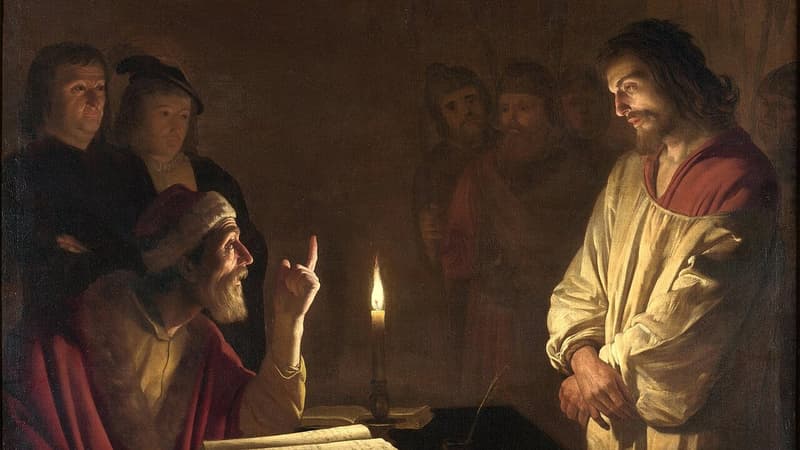
The pattern runs throughout Scripture. When the high priest Caiaphas—the man who was at that moment plotting Jesus’ death—declared that it was better for one man to die for the people, the evangelist comments: “He did not say this on his own, but since he was high priest for that year, he prophesied that Jesus was going to die for the nation” (John 11:51).16 God spoke authoritative, saving truth through a wicked office-holder precisely by virtue of his office. The hero image of this essay is Honthorst’s painting of that scene: Caiaphas, finger raised in accusation over the open book of the Law, and the bound Christ standing silent before him. The man condemns the truth; the office, despite the man, utters it.
Consider Judas: a genuine apostle, given real authority by Christ, and also a thief (John 12:6) and the betrayer.17 Christ chose him knowingly; his treachery nullified neither the apostolic office nor Christ’s choice of him to hold it. Consider Peter, who received the keys and was called “rock” (Matt 16:18–19) and, in the very same chapter, was rebuked as “Satan” (Matt 16:23)—and who was later rebuked to his face by Paul at Antioch for hypocrisy (Gal 2:11–14). The rebuke was about conduct—conduct that imperiled the truth of the gospel—not about Peter defining false doctrine; and Paul’s worry that Peter’s bad example would lead others astray presupposes Peter’s special authority rather than denying it.18 The Catholic tradition has rebuked corrupt prelates in every century—John Chrysostom, Bernard, Catherine of Siena—without ever concluding that their corruption voided the office.
The Old Testament Priesthood
The Old Testament priesthood makes the point with almost shocking clarity. The sons of Eli, Hophni and Phinehas, were “wicked” men who had no regard for the Lord and who slept with the women serving at the tent of meeting—and they remained priests of the Lord until divine judgment fell on them in battle. God did not strip the office; He executed His own sentence in His own time.19 Aaron personally fashioned the golden calf and proclaimed a feast to it—the gravest religious sin in the entire narrative—and yet he was not deposed; he was consecrated the first high priest, and his line became the hereditary priesthood.20
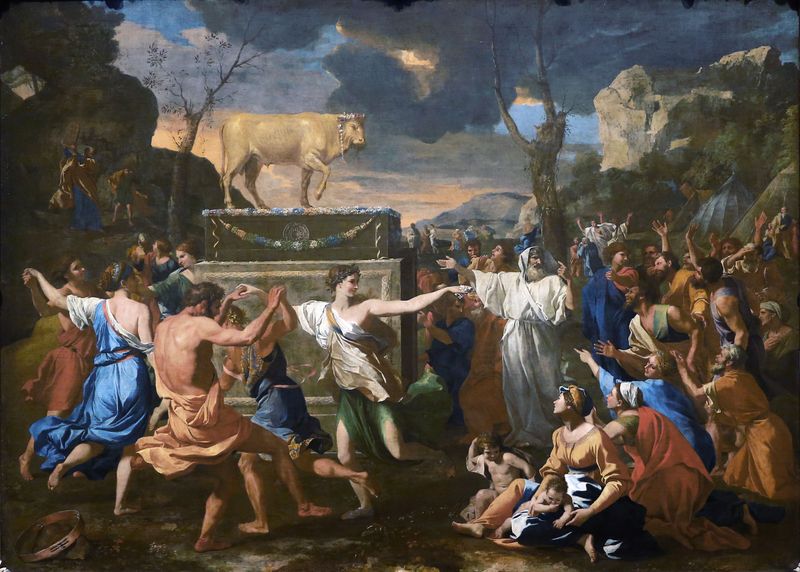
These are priestly—cultic—offices, and the lesson they teach most directly is the sacramental one the Donatists missed: the office and its valid acts outlast the unworthiness of the man. But the priest was a teacher too, and the last of the prophets makes that dimension explicit.
The prophet Malachi gives us what is almost a textbook statement of the office/holder distinction. He thunders against the priests of his day: “You have turned aside from the way, and have caused many to stumble by your instruction; you have corrupted the covenant of Levi,” and God says, “I…have made you contemptible and base before all the people.” And yet in the same passage the office is affirmed in the same breath: “For a priest’s lips preserve knowledge, and instruction is to be sought from his mouth, because he is the messenger of the Lord of hosts” (Mal 2:7–9).21 The men are condemned—condemned, strikingly, in their very teaching—yet the office remains the divinely appointed place where God’s people seek instruction. That the office can survive even the corruption of its teachers is exactly the Catholic claim, written five centuries before Christ.
Saint Paul gives the governing image. “We hold this treasure in earthen vessels,” he writes, “that the surpassing power may be of God and not from us” (2 Cor 4:7).22 The treasure is the gospel and the grace of Christ. The vessels are fragile, ordinary, breakable clay—and sometimes, God help us, wicked. The point of the image is that the power belongs to God precisely so that it cannot be confused with the holiness of the men who carry it.
The Mixed Body by Design
Augustine drew all of this together in the doctrine that anchors the Catholic answer to the Donatists and the modern critic alike: the Church in this age is a corpus permixtum, a “mixed body” of wheat and tares growing together until the harvest, when God alone will separate them (Matt 13:24–30). Preaching on the Gospel of John, he stated the consequence for the ministry in the line that settled the Donatist question for the Latin West: “Peter may baptize, but this is He that baptizes; Paul may baptize, yet this is He that baptizes; Judas may baptize, still this is He that baptizes.”23
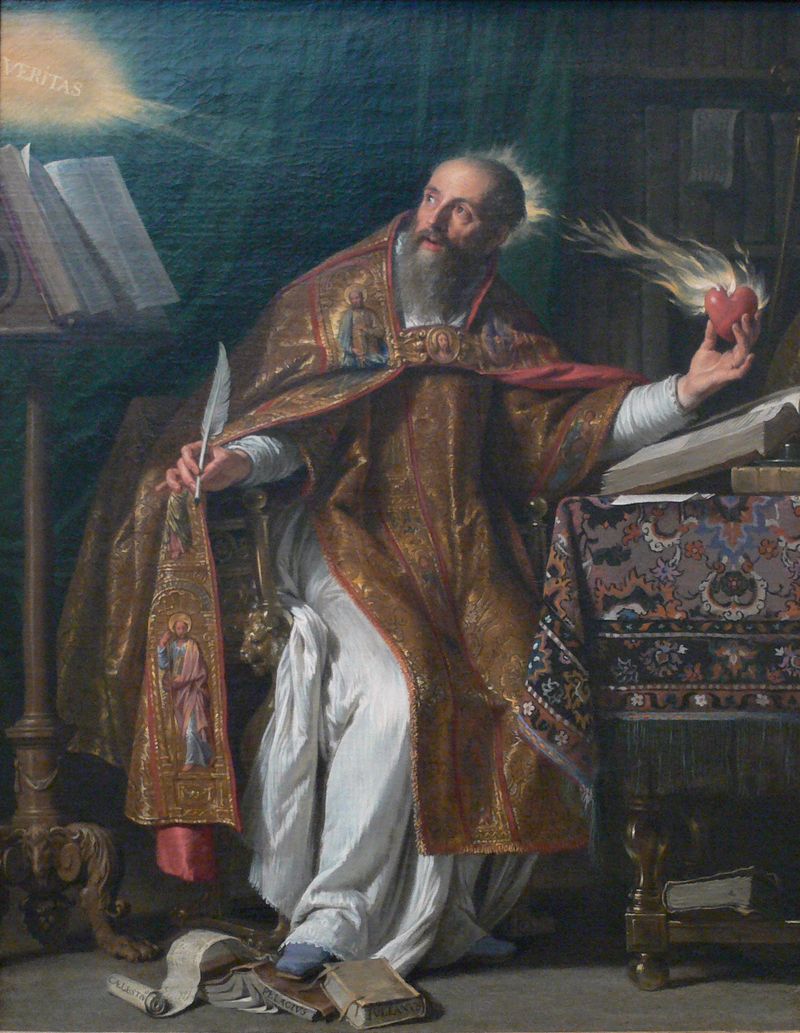
The force of the argument is that the mixed character of the Church is not an accident she is failing to overcome; it is the nature of the Church militant by Christ’s own design. Christ chose a Judas. He told a parable in which the Master forbids the servants to tear out the weeds before the harvest. A reader who concludes from the presence of grave corruption that the Church must be false has, in effect, demanded a kind of Church that Christ explicitly said would not exist before the end of the age. The corruption is not evidence that the Church is a fraud. It is evidence that the Church is exactly the field Christ said she would be. (I have explored the related Augustinian theme of the massa damnata and the wider logic of apostolic authority surviving sinful ministers in separate essays.)
A Lawyer’s Point: Justice Is a Catholic Imperative
Here I want to put on the other hat I wear. Before I studied theology at Yale, I was trained in the law, and the law is professionally obsessed with a distinction that maps almost perfectly onto the one this essay turns on: the difference between an institution’s constitution—its charter, its governing law, what it authoritatively holds itself out to be—and the misconduct of its officers. A corrupt official does not amend the constitution by breaking it. A judge who takes a bribe has violated the law he sits under; he has not thereby repealed it. We prosecute the judge precisely because the law he betrayed still binds. The betrayal presupposes the standard.
This is why the abuse crisis, examined carefully, does not weaken the Catholic claim so much as expose what the Church’s own law has always condemned. The abuse and the cover-up are sins against Catholic moral teaching, not expressions of it. There is no doctrine—none—that countenances the abuse of a child or the concealment of a crime. The scandal is a failure to live the teaching, not a failure of the teaching. And the Church’s long record of condemning exactly these crimes is part of the evidence.
The condemnation is ancient. Around 1049, the reformer Peter Damian wrote the Liber Gomorrhianus, the “Book of Gomorrah,” and sent it to Pope Leo IX, denouncing clerical sexual immorality as a festering corruption and urging that offending clergy be deprived of their orders—and faulting superiors who were lax in retaining them. (Leo IX praised the work, though he adopted a somewhat more lenient disciplinary line than Damian had urged—a reminder that the tension between the Church’s own reformers and her own governance is itself a thousand years old.)24 A Church whose tradition produces the Book of Gomorrah cannot coherently be accused of having a doctrine that excuses abuse; her own saints wrote the indictment.
The modern reforms make the same point in the language of canon law and policy. In 2002, the U.S. bishops adopted the Charter for the Protection of Children and Young People—the “Dallas Charter”—establishing “zero tolerance” (permanent removal from ministry for even a single substantiated act of abuse), mandatory reporting to civil authorities, safe-environment training, a lay-majority National Review Board, and annual independent audits of every diocese.25
In February 2019, Pope Francis convened the presidents of every episcopal conference in the world for a summit on the protection of minors.26 Later that year he issued Vos estis lux mundi, made definitive in 2023, which establishes universal procedures for investigating not only abuse but its cover-up—explicitly reaching “actions or omissions intended to interfere with or avoid” civil or canonical investigations—obliges clergy and religious to report, holds bishops and superiors accountable, and provides that no obligation of silence may be imposed on a victim or a witness.27 In 2021 the revised penal law of the Church (Book VI of the Code of Canon Law) took effect, sharpening the canonical crimes and penalties.28
One can argue—rightly—that these reforms came late, that they remain imperfect, and that accountability for bishops in particular is still incomplete. All of that is fair. But notice the logic. There are two distinct orders operating here, and they can and should operate at once: the order of grace and teaching, in which the Spirit guarantees that the Church will not define error, and the order of canonical and civil justice, in which offenders are investigated, removed, and—when the civil law applies—prosecuted and imprisoned. The Church’s claim to teach truth gives no churchman the slightest immunity from a courtroom. A faithful Catholic should insist on both: that the doctrine is true, and that the men who betrayed it be brought to justice. And a Church that judges and punishes her own ministers is not contradicting the office/holder distinction. She is living it out.
The Universality of the Failing
There is one more move the honest version of this argument has to make, and it has to be made carefully, because it is so easily abused into a cheap deflection. It is not the schoolyard “everybody does it.” It is a point of strict logic about what the evidence can and cannot show.
If the systematic sexual abuse of the young, and its institutional concealment, were genuine evidence against an institution’s foundational truth-claims, then the same evidence would equally indict every institution in which abuse and concealment have occurred—including the very institutions the Catholic Church’s critics often prefer.
Consider the Southern Baptist Convention. In May 2022, the independent firm Guidepost Solutions released a roughly 288-page report, the product of a seven-month investigation, documenting that for some two decades senior figures in the SBC’s Executive Committee mishandled abuse allegations, stonewalled survivors, and resisted reform. Days later, a previously secret internal database of accused ministers was made public—703 entries—and the Convention was subsequently the subject of a U.S. Department of Justice investigation (later closed without charges against the national SBC entities).29
Or consider the public schools. In a 2004 report for the U.S. Department of Education, the researcher Charol Shakeshaft estimated that hundreds of thousands of American students experience some form of sexual misconduct by a school employee, and she told Education Week that the abuse of students in schools is “likely more than 100 times” the abuse by priests. That specific multiple is a contested estimate—it compares differently defined data over different time spans and was criticized methodologically, including by the National Education Association, and I do not lean on the precise figure. But its defensible core—that educator sexual misconduct is widespread and badly under-reported—is not seriously disputed.30
The logic is this, and only this: a phenomenon that appears across every kind of human institution—religious and secular, hierarchical and congregational, sacred and state-run—cannot be evidence specifically against the truth-claims of any one of them. It is evidence about fallen human nature operating in institutions that protect their own reputations. And fallen human nature is precisely what Catholic doctrine predicts. Sin among churchmen is data confirming the doctrine of original sin; it is not data against the doctrine of the Church.
I want to be scrupulous about not minimizing the Catholic numbers in the course of making this point. The John Jay College study, commissioned by the U.S. bishops and published in 2004, found credible allegations against 4,392 priests in the United States between 1950 and 2002—roughly 4 percent of the 109,694 clergy who served in that period—with 10,667 individuals coming forward with allegations and 252 of the accused ultimately convicted.31 Those are real numbers describing real, grave, soul-destroying evil. The comparative argument is about the logic of the objection, never about the seriousness of the wound. The wound is exactly as serious as the critic says. It simply does not prove what the critic thinks it proves.
What Would Actually Disprove the Claim
A claim that cannot be falsified by anything is not worth much. So it is worth stating, as plainly as possible, the conditions under which the Catholic claim would in fact fail—because naming them is more persuasive than any amount of assertion, and because doing so shows the claim is not a piece of unfalsifiable special pleading.
The Catholic claim about the Church’s teaching authority would be genuinely refuted if one of two things could be shown. The first is easy to state but, by the doctrine’s own logic, impossible to find: that the Church had ever definitively taught—as binding doctrine—that the abuse of children, or the concealment of crime, is permissible. She teaches with emphatic unanimity the exact opposite—though, in candor, a claim that the Church cannot bind the faithful to error can hardly be falsified by her failing to bind them to this particular error. The harder and more honest test is the second: that a pope, speaking ex cathedra, had ever defined a doctrine of faith or morals that was false, or that one such definition had ever reversed another.
This condition has teeth, because the obvious counterexamples have to be examined rather than waved away. The two raised most often are Honorius I and Galileo. Pope Honorius was anathematized by the Third Council of Constantinople in 681—but for failing to suppress the Monothelite heresy, not for defining it; his incriminating letters to Patriarch Sergius were private correspondence, not a definition binding the whole Church, and Pope Leo II, ratifying the council, condemned him precisely for that negligence. The condemnation of Galileo was the act of the Roman Congregations of the Holy Office and the Index—not a papal definition ex cathedra at all. Each hard case, examined closely, falls outside the narrow conditions Vatican I laid down.
A critic may fairly answer that those conditions are drawn tightly—and they are; but the fact remains that in two thousand years, under popes who were murderers, libertines, simoniacs, and cowards, no pope speaking under those conditions has ever defined error binding on the faithful. That is the striking historical fact the objection has to reckon with: the worst men the Church has ever produced, men no one would defend, never once managed to corrupt her definitive teaching. The scandal, examined honestly, converts from a defeater into a strange kind of confirmation.
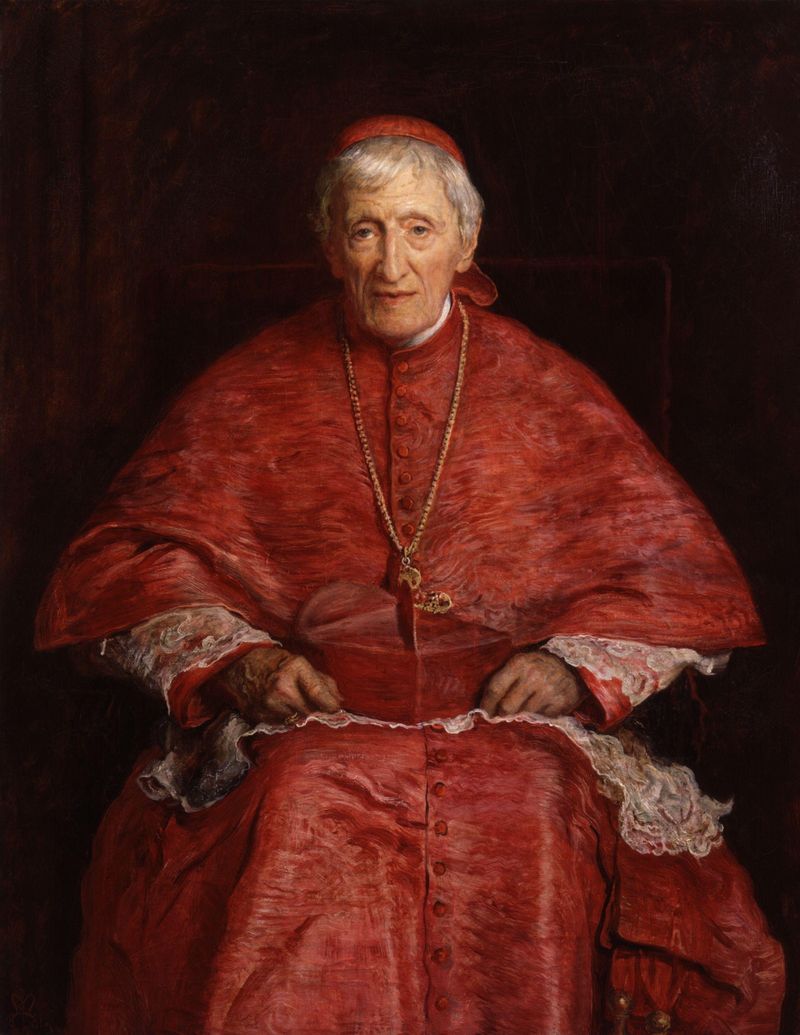
John Henry Newman saw this with characteristic clarity. Preaching in 1850 at the installation of the first Bishop of Birmingham, he refused to be scandalized into unbelief by the failures of churchmen, because Scripture had told him to expect them: “If there was a Judas among the Apostles, and a Nicholas among the deacons, why should we be surprised that in the course of eighteen hundred years, there should be flagrant instances of cruelty, of unfaithfulness, of hypocrisy, or of profligacy, and that not only in the Catholic people, but in high places, in royal palaces, in bishops’ households, nay, in the seat of St. Peter itself?”32
The wonder, Newman thought, would be if such offenses were absent from a Church made of fallen human beings. Their presence is exactly what a clear-eyed reader of the Gospels should anticipate. The reasoning that says “the Church has corrupt leaders, therefore the Church is false” would, applied consistently, have refuted the apostolic college on Holy Thursday night.
Why Stay
This essay has been an argument, but it would be dishonest to end it as though the abuse crisis were merely a puzzle to be solved. It is a wound, and for many people—survivors above all—it is the wound of a lifetime. The distinction between office and holder, true as it is, does not heal anyone. It only answers a particular intellectual objection, and it is offered in that spirit, after the grief and the demand for justice, not instead of them.
But the objection it answers is a real one, and getting it wrong has consequences. The temptation the scandal creates is to flee—to conclude that the corruption proves the institution false and to seek a purer church elsewhere, whether in a stricter sect, a rival communion, or no communion at all. This is the ancient Donatist instinct, and the Orthodox Christian who feels its pull toward Constantinople and the Protestant who feels it toward the invisible church of true believers are, in this respect, feeling the same thing.
Yet the answer to corruption in the household of faith has never been to leave the house; it has been to clean it. Christ prayed at the Last Supper “that they may all be one” (John 17:20–21), and a Church endlessly fracturing in pursuit of a purity that no body of sinners can supply moves away from that prayer, not toward it.33 The honest objections that drive people away from Rome deserve honest answers—which is the whole point of learning to discuss authority charitably rather than defensively.
Bishop Barron, who named the crisis a diabolical masterpiece, drew exactly this conclusion. His counsel to Catholics tempted to leave was not to pretend the evil was small but to “stay and fight”—to fight by raising one’s voice, by reporting offenders, by pursuing the guilty until they are punished, on behalf of those who have suffered at the hands of wicked men.34 That is the posture this essay means to commend.
The Church is a hospital for sinners, not a museum of saints; her ministers carry the treasure of the gospel in fragile and sometimes corrupt clay; and the promise made to her is not that her men will be holy but that the gates of hell will not prevail, that the thing cannot be totally ruined, and that the truth she guards will survive even the worst of the men who guard it. God has written straight with crooked lines before. He spoke saving truth through Caiaphas. He can be trusted to preserve His Church through—and despite—the sins of her ministers, while we do the hard, unglamorous work of dragging those sins into the light and seeing justice done.
A note for survivors: if you have suffered abuse in the Church, the wrong done to you was real, and it was never your fault. In the United States, every Catholic diocese is required to maintain a victim assistance coordinator, and survivors can also find advocacy and support through the Survivors Network of those Abused by Priests (SNAP). Abuse can and should be reported to local civil authorities as well.
Further Reading
On the doctrine of the Church’s holiness, indefectibility, and infallibility, the relevant theses are laid out in Ludwig Ott, Fundamentals of Catholic Dogma, and in the Catechism of the Catholic Church (nos. 823–829 on holiness, 888–892 on the Magisterium). The First Vatican Council’s Pastor Aeternus and the Second Vatican Council’s Lumen Gentium are the primary magisterial texts and are freely available at the Vatican website. On the crisis itself and the case for remaining, Bishop Robert Barron’s short Letter to a Suffering Church: A Bishop Speaks on the Sexual Abuse Crisis (Word on Fire, 2019) is the most useful pastoral treatment. The John Jay College report and the U.S. bishops’ Charter and audits are published by the USCCB, and Pope Francis’ Vos estis lux mundi is at the Vatican site. For the prior, sacramental form of the same objection, see my essay on Donatism.
Frequently Asked Questions
Does the sexual abuse scandal disprove the Catholic Church’s claims?
No—though it disproves something. The abuse and cover-up are decisive evidence against the impeccability (sinlessness) of priests, bishops, and popes. But the Catholic Church has never claimed that her ministers are sinless; she teaches the opposite, that “all members of the Church, including her ministers, must acknowledge that they are sinners.” What the Church claims for her teaching office is indefectibility and infallibility—that she will not fail and will not definitively teach error in faith and morals. Those are guarantees about doctrine, not about the virtue of the men who hold office, and the scandal does not touch them.
What is the difference between infallibility and impeccability?
Impeccability is the incapacity to sin. Infallibility is immunity from error in the Church’s definitive teaching on faith and morals. The Church has always claimed infallibility for her teaching office and has never claimed impeccability for popes, bishops, and priests. A man can faithfully transmit a true teaching he does not himself live—so the holiness of the teacher and the truth of the teaching are simply different questions. Confusing the two is the central mistake behind the objection that the scandal discredits Catholic doctrine.
How can the Holy Spirit guide the Magisterium if bishops covered up abuse?
Because the Spirit’s guarantee is protective and negative, not a positive guarantee of good behavior. It prevents the Church from binding the faithful to error in faith and morals; it does not prevent churchmen from sinning, lying, or concealing crimes. Joseph Ratzinger, before he became pope, put it bluntly: the Holy Spirit does not dictate the Church’s governance “like” a controller but “like a good educator” who leaves human freedom intact, and “probably the only assurance he offers is that the thing cannot be totally ruined.” The cover-up falls entirely within the realm the Church always said was vulnerable to human sin.
Does the Bible show God working through unworthy leaders?
Yes—though the point concerns the authority of the office, not whether an abuser should keep his post. Jesus tells the crowds to obey those who sit “on the chair of Moses” even as he condemns the hypocrisy of the men who sit in it (Matt 23:2–3). God prophesies truly through Caiaphas, the high priest who was plotting Jesus’ death (John 11:51). The wicked sons of Eli, Aaron after the golden calf, and the corrupt priests rebuked by Malachi all show God preserving the office and the truth it conveys through unworthy men, even as he judges those men. None of this means a guilty cleric should be left in ministry; the same Scriptures that uphold the office demand that its abusers be removed and brought to justice.
Shouldn’t the abusers and the bishops who covered for them face justice?
Absolutely, and that demand is itself a Catholic principle, not an objection to Catholicism. The abuse and cover-up are condemned by Catholic moral teaching; the Church’s own reformers, from Peter Damian onward, wrote the indictment. Two orders operate at once: the order of grace and teaching, where the Spirit guards doctrine, and the order of canonical and civil justice, where offenders should be removed, prosecuted, and imprisoned. The Church’s claim to teach truth gives no churchman immunity from a courtroom, and a Church that disciplines her own ministers lives out the very office/holder distinction her critics think the scandal refutes.
Isn’t abuse uniquely a Catholic problem?
No. Comparable patterns of abuse and institutional concealment have been documented in the Southern Baptist Convention, the public schools, and many other religious and secular institutions that serve the young. This is not a “they do it too” excuse—the Catholic numbers are grave and real. It is a point of logic: a phenomenon found across every kind of human institution cannot be evidence specifically against the truth-claims of one of them. Abuse is evidence about fallen human nature, which Catholic doctrine predicts; it is not evidence against Catholic doctrine.
Footnotes
1. Joseph Cardinal Ratzinger, meditation for the Ninth Station, Way of the Cross at the Colosseum, Good Friday 2005, vatican.va. Ratzinger composed the meditations weeks before his election as Pope Benedict XVI. © Libreria Editrice Vaticana.
2. Robert Barron, Letter to a Suffering Church: A Bishop Speaks on the Sexual Abuse Crisis (Park Ridge, IL: Word on Fire, 2019), opening of chapter 1, “The Devil’s Masterpiece.”
3. On the sacramental form of the objection—whether a sinful minister can confer valid sacraments—and Augustine’s doctrine of ex opere operato, formally defined at the Council of Trent (Session 7, 1547), see my essay “Donatism: The Ancient Heresy That Still Haunts the Church.”
4. Ludwig Ott, Fundamentals of Catholic Dogma, ed. James Canon Bastible, trans. Patrick Lynch (St. Louis: B. Herder, 1955), bk. 4, pt. 2: the Church’s indefectibility is classed sententia certa, and the infallibility of her definitive decisions on faith and morals de fide.
5. Ott, Fundamentals of Catholic Dogma, on the holiness of the Church (de fide).
6. Catechism of the Catholic Church, 2nd ed. (Vatican City: Libreria Editrice Vaticana, 1997), no. 825, vatican.va (quoting Lumen Gentium 48).
7. Catechism of the Catholic Church, no. 827, vatican.va (quoting Lumen Gentium 8).
8. Catechism of the Catholic Church, no. 867, vatican.va: “Since she still includes sinners, she is ‘the sinless one made up of sinners.’”
9. Second Vatican Council, Lumen Gentium (Dogmatic Constitution on the Church, 1964), no. 8, vatican.va. The phrase sancta simul et semper purificanda is rendered at Catechism no. 827 as “at once holy and always in need of purification.”
10. First Vatican Council, Pastor Aeternus (Dogmatic Constitution on the Church of Christ, 1870), ch. 4, trans. Norman P. Tanner, Decrees of the Ecumenical Councils (Georgetown University Press, 1990); the conciliar text is also available online at papalencyclicals.net.
11. Pastor Aeternus, ch. 4 (Tanner trans.).
12. Lumen Gentium, no. 25, vatican.va.
13. P. J. Toner, “Infallibility,” in The Catholic Encyclopedia, vol. 7 (New York: Robert Appleton Company, 1910), newadvent.org.
14. Joseph Cardinal Ratzinger, interview on Bavarian television, 1997, in the English translation widely reproduced from John L. Allen Jr.’s reporting; text at communio.stblogs.org. The interview is frequently cited in discussions of the conclave and the limits of the Spirit’s “guidance” of papal elections.
15. Matt 23:2–3 (NABRE), bible.usccb.org. The “chair (cathedra) of Moses” denotes a seat of teaching authority; the NABRE note observes it may refer to an actual synagogue seat or be a metaphor for Mosaic teaching authority.
16. John 11:49–52 (NABRE), bible.usccb.org. The NABRE note remarks that “the Jews attributed a gift of prophecy, sometimes unconscious, to the high priest”; Caiaphas held the office c. A.D. 18–36.
17. John 12:6 (NABRE) describes Judas as a thief who held the common purse; on Judas as a genuine apostle who nonetheless betrayed Christ, see further my essay on Donatism and the broader treatment of the apostolic office.
18. Matt 16:18–19 (the keys), 16:23 (“Get behind me, Satan”); Gal 2:11–14 (Paul’s rebuke of Peter at Antioch) (NABRE). Paul’s concern that Peter’s example would mislead the Gentiles presupposes, rather than denies, Peter’s special standing.
19. 1 Sam 2:12–25 (the sins of Hophni and Phinehas, “wicked” sons of Eli who had no regard for the Lord) and 1 Sam 4:11 (their death in battle) (NABRE).
20. Exod 32:1–6 (Aaron makes the golden calf and proclaims a feast); Lev 8 (Aaron’s consecration as high priest) (NABRE).
21. Mal 2:7–9 (NABRE), bible.usccb.org.
22. 2 Cor 4:7 (NABRE), bible.usccb.org. The NABRE note: “the instruments God uses are human and fragile.”
23. Augustine, Tractates on the Gospel of John 6.7 (on John 1:32–33), NPNF translation; the corpus permixtum of wheat and tares is drawn from Matt 13:24–30. See further my essay on Donatism.
24. Peter Damian, Liber Gomorrhianus (Book of Gomorrah), c. 1049–1051, addressed to Pope Leo IX; see Peter Damian, Book of Gomorrah: An Eleventh-Century Treatise against Clerical Homosexual Practices, trans. Pierre J. Payer (Waterloo, ON: Wilfrid Laurier University Press, 1982). Leo IX praised the work but adopted a somewhat more lenient disciplinary line than Damian had urged for some categories of offender. (This older reading is contested: Matthew Cullinan Hoffman and others argue that Leo, far from softening Damian, in fact tightened the discipline, so the characterization is offered with that caveat.)
25. United States Conference of Catholic Bishops, Charter for the Protection of Children and Young People (adopted Dallas, June 2002; revised 2005, 2011, 2018), usccb.org. Article 5 establishes permanent removal from ministry for any substantiated act of abuse of a minor; the Charter also mandates reporting to civil authorities, a lay-majority National Review Board, and annual audits.
26. Meeting on “The Protection of Minors in the Church,” Vatican, 21–24 February 2019, convening the presidents of the world’s episcopal conferences.
27. Pope Francis, Vos estis lux mundi (motu proprio), issued 7 May 2019 ad experimentum; revised and made definitive 25 March 2023, in force 30 April 2023, vatican.va. Art. 1 §1(b) reaches conduct intended to interfere with or avoid civil or canonical investigations; Art. 4 §3 forbids imposing an obligation of silence on those who report or witness.
28. The revised Book VI of the Code of Canon Law (“Penal Sanctions in the Church”), promulgated 2021 and in force 8 December 2021, sharpened the canonical delicts and penalties relating to abuse and its concealment.
29. Guidepost Solutions, Report of the Independent Investigation (commissioned by the SBC Executive Committee), released 22 May 2022 (~288 pp.); the previously confidential database of accused ministers (703 entries) was made public 26 May 2022. See, e.g., Bob Smietana, Religion News Service (22 May 2022), and Sarah Pulliam Bailey, Washington Post (26 May 2022). The U.S. Department of Justice investigation announced in August 2022 was later reported to have closed without charges against the national SBC entities.
30. Charol Shakeshaft, Educator Sexual Misconduct: A Synthesis of Existing Literature (U.S. Department of Education, 2004); the “more than 100 times” comparison was reported in Education Week (2004) and is a contested estimate, criticized methodologically (including by the National Education Association) for comparing differently defined data over different timeframes. It is offered here only for its defensible core—that educator sexual misconduct is widespread and under-reported—not for the precise multiple.
31. John Jay College of Criminal Justice, The Nature and Scope of the Problem of Sexual Abuse of Minors by Catholic Priests and Deacons in the United States 1950–2002 (Washington, DC: USCCB, 2004): allegations against 4,392 priests (approximately 4% of the 109,694 clergy active in the period), 10,667 individuals making allegations, and 252 of the accused convicted.
32. John Henry Newman, “Christ upon the Waters” (Sermon 9, part 2), in Sermons Preached on Various Occasions; preached 27 October 1850 at St. Chad’s, Birmingham, on the installation of William Bernard Ullathorne, the first Bishop of Birmingham, newmanreader.org.
33. John 17:20–21 (NABRE). On the broader authority question and how to engage it with non-Catholic Christians, see my essay “How to Talk to Protestants About Authority.”
34. Barron, Letter to a Suffering Church, chs. 4–5 (“Why Should We Stay?” and “The Way Forward”), where the counsel to “stay and fight”—by raising one’s voice, reporting offenders, and pursuing the guilty—is developed.
Garrett Ham
Garrett Ham is an attorney, military veteran, and holds a Master of Divinity from Yale Divinity School. He writes from Northwest Arkansas on theology, law, and service.
Related Posts
Donatism: The Ancient Heresy That Still Haunts the Church
Donatism, the fourth-century heresy that rejected sacraments from sinful clergy—and Augustine's ex opere operato answer, which still refutes it today.
Apostolic Succession: The Unbroken Chain from Christ’s Twelve
Apostolic succession traced from AD 96 to the 1992 Catechism: the patristic evidence, Tertullian’s legal logic, the Protestant critique, and why three in four Christians still require it.
How to Talk to Protestants about Authority
Catholic-Protestant dialogue about religious authority: start from shared Scripture, then move to the Church Fathers and Catholic Tradition.
Stay Informed
Get new writing on faith, law, and service delivered to your inbox.
No spam. Unsubscribe anytime.