The JAG Corps Is Broken—Pete Hegseth Isn’t Wrong
On This Page
When Pete Hegseth fired the Judge Advocate Generals of the Army and Air Force on the evening of February 21, 2025—part of a broader personnel action that also swept out Chairman of the Joint Chiefs General Charles “CQ” Brown Jr., Chief of Naval Operations Admiral Lisa Franchetti, and Air Force Vice Chief of Staff General James Slife—the reaction in the press was swift and largely predictable. Commentators warned of threats to legal oversight and called the firings “chilling.” Legal scholars warned of a coup against the rule of law. Retired senior JAG officers formed working groups and filed amicus briefs. The National Institute of Military Justice issued a formal Statement of Concern.
I spent six years as a JAG officer, four on active duty and two in the National Guard. I know the culture from the inside, and the reaction—the hand-wringing, the pearl-clutching, the invocations of the Geneva Conventions—tells me far more about the people reacting than it does about the institution they are rushing to defend.
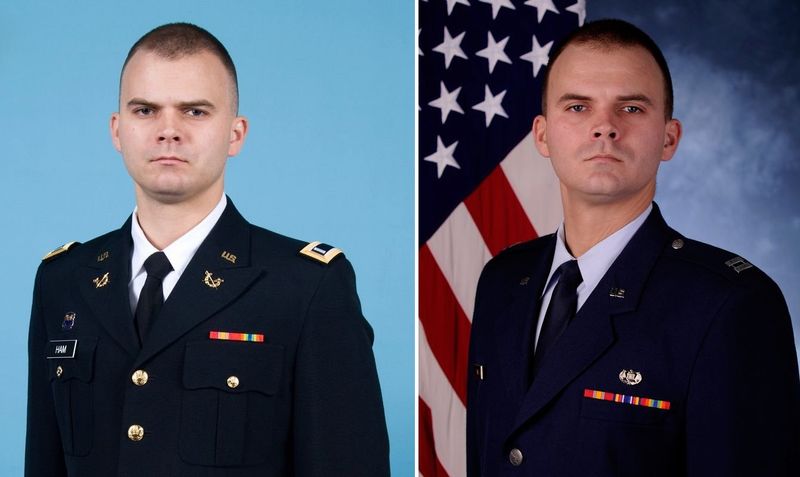
I served as a Judge Advocate in the Arkansas Army National Guard before going on active duty with the Air Force JAG Corps, where I served as Chief of Military Justice at two bases, Chief of Civil Law, and Special Assistant United States Attorney. I primarily prosecuted sexual assault and child pornography cases. I now teach Military Law as an adjunct at the University of Arkansas School of Law. I am not writing from the outside.
And I am here to tell you: the JAG Corps is rotten. Pete Hegseth is not wrong about that. The question is not whether JAG Corps reform is needed—it is—but what kind of reform the institution actually requires.
What Hegseth Actually Did
Before rendering judgment, the facts deserve a fair recitation.
On February 21, 2025, Hegseth simultaneously removed Army TJAG Lieutenant General Joseph B. Berger III—the 42nd Judge Advocate General of the Army—and Air Force TJAG Lieutenant General Charles L. Plummer, the 19th Judge Advocate General of the Air Force. (The TJAG, or “The Judge Advocate General,” is the senior uniformed lawyer for each military branch—the head of that service’s entire legal corps.) The Navy’s Judge Advocate General position was already vacant: Vice Admiral Christopher French had requested retirement after only three months in the role, agreeing to step down at the lower rank of Rear Admiral, and a Rear Admiral was serving in an acting capacity. No misconduct was cited in any of the removals. No advance notification was given.
CNN subsequently reported that Berger had been raising legal concerns about using Texas National Guard soldiers for immigration enforcement. He had also raised concerns about mass firings of probationary employees pushed by DOGE—concerns his superiors allegedly did not welcome. According to CNN’s reporting, Berger was told by the department’s acting general counsel to “stop meddling in state affairs.” One week later, he was fired.
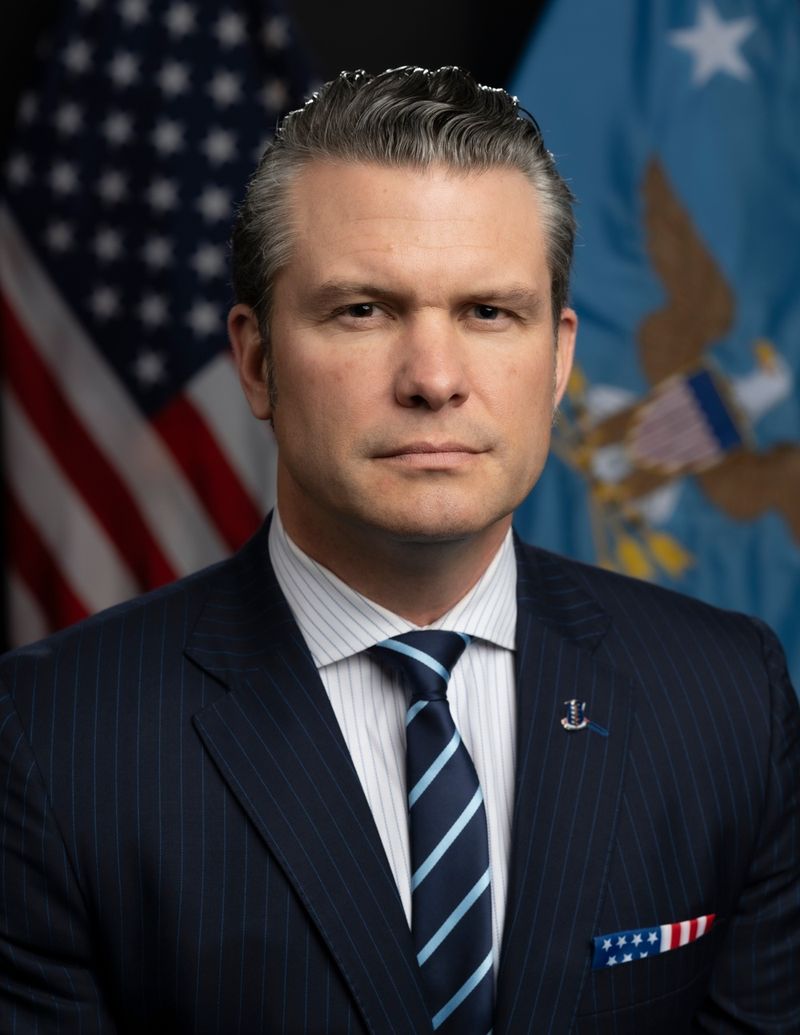
On February 23, appearing on Fox News Sunday, Hegseth announced that TJAG positions would revert from three-star to two-star rank, framing it as curbing “the inflation of military generals.” He then commissioned his personal attorney of eight years, Timothy Parlatore—a Naval Academy graduate and former surface warfare officer who had represented President Trump in the classified documents investigation and Navy SEAL Eddie Gallagher on war crimes charges—as a Navy Commander in the JAG Corps Reserve, assigned to focus on improving how military lawyers are trained. By late summer 2025, the Pentagon approved detailing up to 600 military lawyers and civilian Defense Department attorneys to the Department of Justice to serve as temporary immigration judges, with additional JAG officers directed to serve as special assistant U.S. attorneys in Memphis, West Texas, and along the southern border.
In March 2026, Hegseth released a memorandum ordering what he called a “ruthless, no-excuses review” of all military legal offices, with a 45-day deadline for service secretaries to assess the allocation of legal resources and implement changes within six months. He described military legal shops as having grown “bloated” and “duplicative,” having “muddied lines of authority and pulled critical judge advocates away from what matters most: advising commanders in the fight.”
The Voices Defending the Status Quo
Before providing my assessment of the situation, I want to address the chorus of former senior JAG officers who have been most vocal in condemning Hegseth’s actions.
Retired Lieutenant General Richard Harding, who served as the 16th Judge Advocate General of the Air Force, said of the firings that “one is led to believe that those JAGs were in the way of what Secretary Hegseth and others want to accomplish.” Retired Major General Charles Dunlap of Duke Law—former Deputy Judge Advocate General of the Air Force—warned that replacements would “be viewed by many, both inside and outside the ranks, as simply a compliant politico.” The National Institute of Military Justice issued a formal Statement of Concern. A Former JAGs Working Group filed an amicus brief in federal court opposing the use of military lawyers as civilian prosecutors in cases lacking a military nexus, arguing that “Congress never authorized JAG officers to be general criminal prosecutors in civilian courtrooms.”
These are the voices the press has amplified. Notice, however, that they are largely former senior JAG officers—men and women who spent their careers building and benefiting from the very institutional culture under scrutiny. Their concerns about legal independence are not unfounded, and I will address them later in this essay. But it is worth noting that they raise those concerns without acknowledging the failures that occurred on their watch. When a guild’s most senior members insist the guild needs no reform, the appropriate response is skepticism.
The comment from Lieutenant General Harding is, I think, unintentionally revealing. “One is led to believe that those JAGs were in the way.” Yes. That is precisely the point. When a commander receives legal advice and chooses not to follow it, the lawyer has not been wronged. The commander in chief is bound by the law, but he is not bound by lawyers. The arrogance embedded in that sentence—the implicit assumption that civilian leadership ought simply to defer to the uniformed legal advisor of the moment, as though the advisor’s interpretation of the law were itself infallible—is a symptom of the very disease Hegseth is trying to treat.
This is not to say that the military should be free to carry out illegal actions. It should not. (Obviously.) The statutory non-interference protections in 10 U.S.C. §§ 7037, 8088, and 9037—which provide that “[n]o officer or employee of the Department of Defense may interfere with the ability of the Judge Advocate General to give independent legal advice to the [service secretary] or the [service chief of staff]“—exist for a reason, and they should be enforced. Military lawyers must be free to give honest legal opinions, and those opinions must be heard. But there is a difference between giving honest legal advice and substituting your own judgment—including your political judgment and ideologies—for that of the officers you advise. The commander in chief is entitled to receive legal opinions that are rooted in the law, not colored by the political biases of the lawyers delivering them.
And those biases run deep in the JAG Corps. I have sat in meetings where a Lieutenant Colonel criticized our offices for having too many pictures of white people on the walls—people like George Washington. When that is the institutional culture shaping “independent legal advice,” a commander has every right to question whether the advice he is receiving is truly independent, or merely fashionable.
How the Military Justice System Lost Its Way
To understand what has gone wrong, you have to understand what the military justice system was designed to do, and how far it has drifted from that purpose.
Military justice is not civilian justice. It was never intended to be. The Framers of the Constitution knew this. When they drafted the Fifth Amendment, they specifically exempted “cases arising in the land or naval forces” from the grand jury requirement. Military courts existed for a fundamentally different purpose than civilian courts: not to vindicate individual rights in the manner of our republican civilian system, but to maintain good order and discipline—to ensure the fighting effectiveness of the force.
This is why, for most of American history, courts-martial—the military’s version of criminal trials—had no judges at all, only panels of officers. (Military judges were not introduced until the Military Justice Act of 1968; for roughly the first 193 years of the republic, courts-martial were presided over by the senior officer on the panel.) This is why commanders had the authority to decide whether to bring charges. This is why Article 35 of the UCMJ establishes a minimum waiting period before a general court-martial of only five days (three for a special court-martial)—a timeline designed for operational tempo, not the multi-year litigation timelines that now characterize the modern system. And this is why, until recently, service members were permitted to present evidence of their exemplary military character as a defense against the charges brought against them—because the system was understood not as a court of general jurisdiction but as a tool for maintaining the discipline and effectiveness of the force. Military courts were commander-driven, not lawyer-driven, because the purpose of military justice was readiness and discipline—not the vindication of rights in the constitutional sense that our civilian courts provide.
The Supreme Court has acknowledged as much. In Parker v. Levy, 417 U.S. 733 (1974), the Court recognized that the military “is, by necessity, a specialized society separate from civilian society” with “laws and traditions of its own,” and that servicemembers’ constitutional rights may be subject to greater limitation than would be tolerable in civilian life. For a brief period, the Court tried to draw a line. In O’Callahan v. Parker, 395 U.S. 258 (1969), the Court held in a 5-3 decision that precisely because courts-martial lack the constitutional protections of civilian courts, their jurisdiction must be limited to offenses that are “service-connected”—crimes with a direct military nexus. But the Court reversed course eighteen years later in Solorio v. United States, 483 U.S. 435 (1987), holding 6-3 that court-martial jurisdiction depends solely on the accused’s military status, not on whether the offense is service-connected—a ruling that dramatically expanded the reach of military courts over what would otherwise be civilian matters and abandoned the very principle that had justified limiting their jurisdiction. Military personnel do not enjoy the full suite of constitutional protections available in civilian courts. The Fifth Amendment’s grand jury exemption is explicit. There is also no Sixth Amendment right to a unanimous verdict in courts-martial—the military remains the only criminal jurisdiction in the United States that permits non-unanimous convictions, requiring only a three-fourths vote for conviction under Article 52 of the UCMJ. This anomaly persists despite the Supreme Court’s 2020 ruling in Ramos v. Louisiana, which required unanimous verdicts in serious criminal cases in all state and federal civilian courts. In United States v. Anderson, 83 M.J. 291 (C.A.A.F. 2023), the Court of Appeals for the Armed Forces—the military’s highest appellate court—held that Ramos simply does not apply to courts-martial.
Court-martial panel members are selected by the convening authority—the senior commander who also exercises prosecutorial discretion in the case—rather than from a random community pool. This is roughly the equivalent of allowing a District Attorney’s office to handpick the jurors, though this power was partially curtailed for certain offenses during recent reforms. Military judges serve rotational tours and then return to the assignment system, creating careerism pressures that no federal district judge with lifetime tenure faces. A politically inconvenient ruling could cost a military judge a promotion—a structural incentive that is difficult to reconcile with the exercise of judicial independence.
The military justice system thus occupies an uncomfortable middle ground: it lacks the constitutional protections of civilian courts, but it has also abandoned the commander-driven, discipline-focused purpose that historically justified that departure. The result is the worst of both worlds—a system with neither the constitutional rigor of civilian justice nor the swift, mission-focused command tool the Framers envisioned.
The Special Trial Counsel Was the Wrong Solution to the Right Problem
This drift reached a kind of logical conclusion in the FY2022 National Defense Authorization Act, which created the Special Trial Counsel (STC) system—transferring independent prosecutorial authority over serious crimes, including sexual assault, away from commanders entirely and vesting it in uniformed lawyers. For readers unfamiliar with the history of military justice reform, this was the culmination of a push by Congress that began with Representative Jackie Speier’s STOP Act in 2011 and Senator Kirsten Gillibrand’s Military Justice Improvement Act in 2013—more than a decade of sustained legislative pressure to address the military’s handling of sexual assault cases.
My view is that the Special Trial Counsel was a mistake—one designed to correct an earlier mistake rather than undo it. It made things modestly better than they were before, but it further embedded the underlying problem that has corrupted military justice for decades. With every change, every incremental reform that makes the military justice system look more like the civilian world, the façade of constitutional parity masks the system’s underlying constitutional deficiencies. And the more civilian-like it becomes, the more urgently we must ask what is the point of having a separate system at all.
The earlier mistake was the gradual incorporation into the UCMJ of crimes that are fundamentally civilian in nature when committed on American soil. Sexual assault is a grave crime—but when committed on American soil, outside the theater of operations, it is a civilian crime. It has been a civilian crime for the entirety of American history. The Constitution was drafted against a backdrop in which military crimes were tried in military courts and civilian crimes were tried in civilian courts. That distinction held for most of American history, though it began to erode during the Civil War, when Congress in 1863 first authorized courts-martial to try soldiers for ordinary civil offenses like murder, theft, and rape—crimes that had previously been turned over to state courts. (The Library of Congress has digitized records from these Civil War military trials.) The expansion accelerated during World War I and II, when the exigencies of global conflict and the sheer scale of military mobilization led to courts-martial exercising jurisdiction over an ever-wider range of conduct that would otherwise have been handled by civilian authorities. The Supreme Court’s brief attempt to draw a line in O’Callahan—requiring a military nexus for court-martial jurisdiction—was the right instinct, and its abandonment in Solorio removed the last constitutional guardrail against this expansion. But during and after both World Wars, these expansions were understood as wartime exigencies, not permanent features of the system.
The progressive absorption of civilian-type crimes into the UCMJ during peacetime transformed the military justice system into something it was never designed to be: a parallel civilian criminal court, but one without the constitutional protections that make civilian criminal courts legitimate.
Congress Doubled Down Instead of Correcting Course
The proper response was to return those crimes to civilian jurisdiction, where prosecutors have the resources, the expertise, and—most importantly—the constitutional framework to handle them properly. Instead, Congress doubled down. When it became politically convenient to argue that commanders were improperly disposing of sexual assault allegations, Congress stripped commanders of their charging authority and handed it to lawyers. It is an understandable impulse, given how far down the wrong road Congress had gone since World War II—but it was the wrong remedy for the right problem.
I saw the reality on the ground, and it was nothing like the picture Congress painted. The commanders I observed were not sweeping sexual assault under the rug. Quite the opposite. Commanders were terrified to decline charges on any allegation, because they knew that a single decision not to prosecute—regardless of the evidence—could cost them a Senate confirmation vote if they were ever nominated for a general officer billet. The pressure was not toward under-prosecution. It was toward prosecution for its own sake—courts-martial as institutional self-protection.
During my time as Chief of Military Justice at Tyndall Air Force Base, I wrote a memorandum on the meaning of probable cause as a charging standard—an effort to push back against what I saw as a willful erosion of constitutional norms within my own Corps. The memo argued what should have been uncontroversial: that probable cause means the accused’s guilt must be more likely than not in light of the available evidence, and that a military prosecutor who brings a case he does not believe meets that standard has committed legal malpractice, regardless of what political winds are blowing. I cited the Supreme Court’s admonition in Brinegar v. United States that probable cause exists to “safeguard citizens from rash and unreasonable interferences with privacy and from unfounded charges of crime,” and I quoted Attorney General Robert H. Jackson’s famous 1940 address—delivered before his appointment to the Supreme Court—on the federal prosecutor’s duty to seek “truth and not victims” and to serve “the law and not factional purposes.” That I had to write such a memo at all—that these principles were not self-evident to the senior lawyers over me—tells you everything you need to know about the culture I am describing.
The institutional response to that memo was instructive. It was not engaged on its merits. It was simply ignored. Leadership relented when I recused myself from prosecuting cases I believed lacked probable cause, though the prosecutions went forward nonetheless. The prevailing view—stated bluntly and outright—was that probable cause was a “low standard,” which in practice meant it was no standard at all: any allegation from a willing alleged victim, regardless of the evidence, was sufficient to prefer charges. As I wrote at the time: “To prefer charges where no probable cause exists would leave law-abiding airmen at the mercy of the ‘whim or caprice’ of the current political environment. One injustice cannot absolve another.”
This is not to say that there were not real issues of injustice, where victims’ claims were ignored and perpetrators went free. There were. But the fixes implemented as I was entering the military pushed the injustices decisively in the other direction. The treatment itself became a disease of its own—not because the original illness was imaginary, but because the remedy was designed to satisfy political pressure rather than constitutional principles of real justice.
The Gutting of Article 32
Congress also gutted the Article 32 process—transforming it in the FY2014 NDAA from an “investigation” into a mere “preliminary hearing,” and granting alleged victims of sexual assault the right to refuse to testify at the hearing entirely. The proportion of cases in which any witness testified at Article 32 proceedings dropped from 98 percent in fiscal year 2014 to 36 percent by 2018—and alleged victim testimony specifically declined even more sharply. By the time I entered the system, Article 32s had already become hearings—and in my experience, they were almost universally rubber stamps. The conversion nominally adopted the probable cause standard used by civilian grand juries, but it only deepened the illusion of constitutional equivalence. Military Article 32 hearings are nothing like grand juries, and the reform made them even less useful as a check on weak cases reaching trial.
The Special Trial Counsel does not fix this problem. It simply changes who faces the pressure. And the modest uptick in sexual assault conviction rates under the STC may reflect in part a greater selectivity in which cases are brought at all. The Army’s Office of Special Trial Counsel reported reviewing more than 8,600 criminal investigations and exercising authority over 2,172 cases in its first full year, but preferring charges in only 489. As such, the STC’s statistical legacy may reflect not more justice, but fewer injustices, by declining the weakest cases that should never have been brought in the first place. That would be an improvement—and it is, in fact, precisely what I was arguing for in 2017. But it is not the structural reform the system requires.
We are still left with a system that bears no resemblance to military justice as it was understood throughout most of American history. Instead, it has become a bloated, years-long litigation process without the constitutional protections of the civilian system. The question demands an answer: why? If we are going to try civilian crimes in a system without grand juries, without unanimous verdicts, without independently appointed judges—without the constitutional architecture that makes criminal prosecution legitimate in a free society—what exactly is the justification?
We already have a civilian justice system. It is, on the whole, a good one. Why not simply use it?
What I Witnessed in the Courtroom
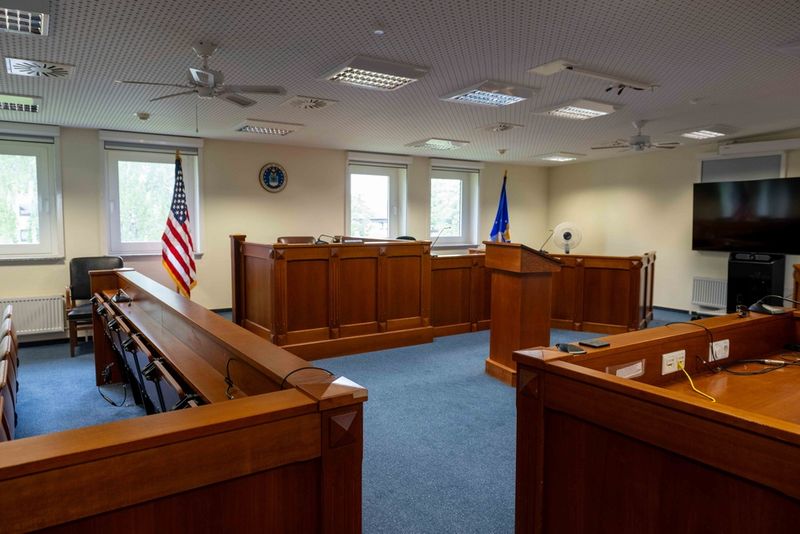
The things I witnessed during my time in the JAG Corps were more than disheartening. I saw lawyers engaging in practices that should have gotten them disbarred—practices that, under the Air Force’s own professional responsibility standards, constitute professional misconduct. I saw a military justice system that at its worst functioned less like a court of law than a Star Chamber—a body whose outcomes were biased in one direction before the proceeding began, driven by institutional pressures and career calculations that had nothing to do with the evidence.
I saw officers in judicial robes who lacked the independence, the tenure protections, and in some cases the basic competence that the exercise of judicial power demands. I saw innocent people prosecuted because prosecuting them served the political agenda of the moment, and I saw the institutional machinery of the JAG Corps protect the prosecutors who did it. I saw alleged victims who, when indisputable evidence emerged that they had fabricated their claims and forced a peer to endure a court-martial, went completely unpunished.
I say these things as someone who prosecuted some of the most serious cases the military justice system handles. I am not a reflexive critic of prosecution. I believed in what I was doing when I was doing it. I still believe that the crimes I prosecuted were real and serious. (I recused myself from cases I believed lacked probable cause.) But the gravity of a crime does not sanctify the methods used to pursue conviction. The opposite is true: the more serious the accusation, the more certain we must be that those we accuse are guilty. To prosecute without that certainty is not to honor the crime’s gravity but to exploit it—to weaponize the suffering of victims in service of a conviction rate. As the ancient proverb warns: “Acquitting the guilty and condemning the innocent—the LORD detests them both.” The prosecutor’s duty runs in both directions. The guilty shall not escape, and the innocent shall not suffer. The JAG Corps, in my experience, had functionally abandoned the second half of that obligation.
The Caselaw Record
There is no comprehensive database of military wrongful convictions—no military equivalent of the Innocence Project, no National Registry of Exonerations counterpart for courts-martial. Whether that absence is accidental or reflects an institutional unwillingness to reckon with what the system produces, the result is the same. What I can tell you is that the caselaw provides a partial window into the problem.
In United States v. Boyce, 76 M.J. 242 (C.A.A.F. 2017), the Court of Appeals for the Armed Forces set aside a rape conviction after finding the appearance of unlawful command influence. Lieutenant General Craig Franklin—the convening authority in Boyce—had earlier exercised his statutory authority to overturn the sexual assault conviction of Lieutenant Colonel James Wilkerson, concluding that the evidence did not support the verdict. That decision, whatever its merits, provoked a congressional firestorm and directly fueled the legislative push to strip commanders of charging authority. The Chief of Staff of the Air Force told Franklin that the new Secretary of the Air Force had “lost confidence” in him and that he could either voluntarily retire at a reduced grade or be removed from command. Franklin retired three hours later. He had already referred Boyce’s case to a general court-martial—raising inescapable questions about whether that decision was shaped by political self-preservation rather than the evidence. The Wilkerson episode illustrates the problem from both directions: it was a case that arguably should have been tried in a civilian court with civilian protections, and the political fallout from a commander’s lawful exercise of discretion was used to justify removing that discretion entirely. In United States v. Gleason, 43 M.J. 69 (C.A.A.F. 1995), a battalion commander publicly declared belief in the defendant’s guilt, called the defense attorney “the enemy,” and created a chilling effect that discouraged soldiers from testifying for the accused—CAAF found unlawful command influence pervaded the entire trial. In United States v. Lewis, 63 M.J. 405 (C.A.A.F. 2006), the government’s conduct was so egregious that CAAF held no remedy short of dismissal of all charges with prejudice would suffice—the strongest sanction available in military law.
And there are cases the appellate courts never saw that are equally damning. In the case of Senior Chief Special Warfare Operator Keith Barry, Rear Admiral Patrick Lorge—the convening authority—later alleged in a sworn affidavit that the Judge Advocate General of the Navy and other senior JAG officers pressured him to approve the conviction during post-trial review despite his reservations about the sufficiency of the evidence. The Court of Appeals for the Armed Forces ultimately ruled in a 3-2 decision that Vice Admiral James W. Crawford III had illegally meddled in the proceedings, throwing out Barry’s 2014 conviction and barring retrial. A sitting Admiral—pressured by the TJAG’s office—to approve the conviction of a SEAL of a crime the evidence did not support. That is not an aberration. That is the system working as it has been designed to work.
These are not isolated failures that the system caught and corrected on its own. They are the visible tip of a very large iceberg. And here is perhaps the most damning fact of all: despite decades of appellate decisions finding UCI in case after case, I am not aware of a single reported instance in which a commander faced UCMJ charges for committing unlawful command influence. The courts have called UCI “the mortal enemy of military justice”—prohibited by Article 37 of the UCMJ—and the phrase originates in United States v. Thomas, 22 M.J. 388 (C.M.A. 1986)—and yet it has never once been prosecuted. The enforcement gap is not an oversight. It is a structural feature.
The Structural Problem: The Loss of the Warfighter-Lawyer
There is a deeper cultural problem that these individual failures reflect.
The Army JAG Corps was founded on July 29, 1775, when General George Washington appointed William Tudor as the Continental Army’s first Judge Advocate. It is, by its own account, the oldest law firm in the United States. For most of its history, judge advocates were line officers—combat leaders—who also performed legal duties. The Army continued to value the officer who became a lawyer: the Funded Legal Education Program, which sends active-duty officers and NCOs to law school, is the modern remnant of that tradition. But today the dominant accession pathway is direct commission—lawyers who attend law school, pass the bar, and enter the Army with no prior military experience, attending the Direct Commission Course at Fort Benning before attending the Judge Advocate Officer Basic Course in Charlottesville, Virginia.
I say this as a direct commission officer myself. I am not above the critique I am making. But the loss of the warfighter-lawyer model has consequences that are difficult to overstate. A JAG officer who has never led soldiers in the field, never commanded anything, never experienced the operational pressures that shape a commander’s judgment, is missing something essential to the advisory role. Understanding the law is not sufficient. Understanding the institution you are advising—its culture, its imperatives, its practical constraints—is equally necessary. This is not to say that direct commission officers should not have a place. They should, and it would likely be difficult to fill the ranks of the JAG Corps without this pathway. However, barring extraordinary circumstances, senior JAG leadership should be selected from among officers who have first served as warfighters.
This shift accelerated in the Army around the same time Congress began pushing hard for increased sexual assault prosecutions—direct commissions became the dominant accession pathway as the Corps expanded to meet congressional demands for more aggressive prosecution. In 2013, Lieutenant General Flora Darpino became the first direct commission officer to serve as The Judge Advocate General of the Army—the first TJAG in Army history who had entered the service with no prior military experience. I do not think the timing is a coincidence. Direct commission officers, recruited from civilian legal culture and trained to think about justice in civilian terms, were more naturally inclined to see the military justice system through a civilian lens—and more susceptible to the civilianization of military justice that congressional pressure was demanding.
This did not make them more zealous prosecutors in the way that civilian Assistant U.S. Attorneys are zealous. Civilian prosecutors, constrained by professional norms, bar oversight, and the practical reality of limited resources, are significantly less likely to bring cases where reasonable doubt as to the defendant’s guilt is apparent from the outset. What the civilianization of the JAG Corps produced was something different: a class of military lawyers who lacked the operational frame of reference to understand why military justice exists as a separate system, and who were therefore more willing to wield it as a civilian-style tool of prosecution without the civilian-style protections that make such prosecution legitimate. The warfighter-lawyer, shaped by operational experience, understood intuitively the difference between military justice and civilian justice. The direct commission officer often did not.
The Marine Corps stands as the significant counterexample. Marine judge advocates are line officers—not staff corps. After commissioning through ROTC, OCS, or the Naval Academy—the same sources as every other Marine officer—they must complete The Basic School at Quantico, the same grueling six-month infantry-focused training program every Marine officer undergoes, before attending Naval Justice School. There is no separate direct commissioning pathway that bypasses this requirement. The result is a legal community that is genuinely integrated with the warrior culture, not merely adjacent to it. Marine judge advocates can fill any officer billet in the Fleet Marine Force; their line officer status is not ceremonial.
Major General David J. Bligh, Hegseth’s selection as the new Navy TJAG—the 47th Judge Advocate General of the Navy, and the first Marine to hold that position since Colonel William Butler Remey was appointed as the inaugural Judge Advocate General of the Navy in 1880—began his own career commanding an amphibious assault vehicle platoon before becoming a lawyer. At his assumption of office ceremony, Bligh declared:
“We are officers and enlisted men and women in the naval service, who serve with and for our fellow warriors.”
That is the right instinct. It is the instinct the Army and Air Force JAG Corps has increasingly trained out of its officers.
The Rank Question: Where Hegseth Got It Right, and Where He Got It Wrong
I have been largely sympathetic to Hegseth’s diagnosis, and I am willing to give him more benefit of the doubt than most of his critics. But I want to be honest about where I think he has erred.
The downgrade of TJAG positions from three-star to two-star rank was, in my judgment, a mistake—even though the underlying concern that motivated it is legitimate.
Hegseth is right that officer inflation is a real and well-documented problem. The numbers are striking: during World War II, with roughly 12 million troops in uniform, the United States military had over 2,000 general and flag officers—a ratio of roughly one general or admiral for every 6,000 troops. Today, with a force of approximately 1.3 million active duty, we have roughly 900 general and flag officers—about one for every 1,400 troops. The brass-to-boots ratio has roughly quadrupled. As the Project on Government Oversight has documented, the number of senior officer billets has grown substantially even as the overall force contracted significantly. POGO estimated that converting roughly 9,500 excess officer positions to civilian equivalents could save taxpayers $95 million annually—and, more importantly, the top-heavy bureaucratic structure degrades rather than enhances military effectiveness.
Hegseth’s instinct to address this—his directive to cut 20 percent of four-star billets—reflects a real problem that the military establishment has been unwilling to fix on its own. As Hegseth put it at his confirmation hearing: “We won World War II with seven four-star generals. Today we have 44.”1
But the TJAG billets were the wrong place to start.
Section 543 of the FY2008 NDAA elevated TJAG positions to three-star rank. The legislative push was driven substantially by the Senate Armed Services Committee—including by Air Force JAG veterans who understood that two-star TJAGs were being excluded from the senior deliberations where interrogation policy and War on Terror legal questions were being decided. After Abu Ghraib, it became painfully clear that military lawyers needed sufficient seniority to be in the room when the most consequential decisions were being made. A two-star general, in the culture of the Joint Staff and the Office of the Secretary of Defense, often finds himself against the wall in senior meetings, not at the table—and there are meetings held at the three- and four-star level that a two-star cannot even enter. The three-star elevation was a deliberate structural remedy for that problem.
Now, the statutory grade specifications for TJAG positions were repealed in Section 502 of the FY2017 NDAA—a change that preceded Hegseth and that technically gave the executive branch discretion to appoint TJAGs at lower grades without further legislation. So Hegseth’s action was not illegal in the way some of his critics have suggested. But legal permissibility and policy wisdom are different questions. The fact that Congress removed the statutory mandate does not mean the policy judgment behind the original elevation was wrong. I think it was right. And a Secretary of Defense who wants good legal advice—not just compliant legal advice—should want his senior lawyers in the room, not against the wall.
The post-Abu Ghraib history demonstrates precisely what happens when military lawyers are excluded from senior national security deliberations. The result was not cleaner, faster decision-making. The result was the systematic authorization of enhanced interrogation techniques and the catastrophic damage to American moral authority that followed. The three-star rank was, at least in significant part, Congress’s response to that failure. Reversing it, regardless of the technical legal authority to do so, sends a troubling signal about the role this administration envisions for military lawyers.
I will say this: appointing a Marine as Navy TJAG was a good call. It signals something real about the kind of warrior-lawyer culture Hegseth claims to want. But the rank reduction undercuts the message. You cannot say you want lawyers who are present for the hard decisions and then structurally ensure they are not in the room when those decisions get made. The general inflation problem is real and deserves a serious solution. TJAG billets are not that solution.
What Real JAG Corps Reform Should Look Like
The JAG Corps has failed in ways that are documented, serious, and self-inflicted. And the failure of the institution to reform itself created the vacuum that Hegseth has moved to fill. If you want to know what genuine reform would look like—reform that addresses the real problems without creating new ones—here is where I would start.
Return Military Justice to Its Proper Purpose
Military courts should try military crimes—offenses that bear on good order, discipline, and the readiness of the force. Civilian crimes should be tried in civilian courts, with the full constitutional protections our republican system provides. The progressive absorption of civilian criminal law into the UCMJ has been a mistake, and it should be unwound. If an offense would be handled in the civilian justice system for a civilian, it should be handled there for a servicemember too—with obvious exceptions for crimes committed in theater, where civilian courts may not be available and where there is good reason to waive normal constitutional safeguards.
Restore the Advisory Model with Genuine Independence
The statutory non-interference protections in 10 U.S.C. §§ 7037, 8088, and 9037 exist for a reason. Military lawyers should give honest advice and then respect the commander’s authority to make the final call. What they should not do—what they have too often done—is substitute their own judgment, including their political judgment, for that of the officers they advise. The commander in chief is bound by the law. He is not bound by the lawyer.
Enforce Professional Responsibility with Actual Teeth
The professional responsibility framework for military lawyers is inadequate. Each service has adapted the ABA Model Rules into service-specific regulations, but military lawyers exercise independent prosecutorial authority without the bar association oversight and ethics enforcement that govern civilian prosecutors. That gap must be closed. When I wrote in 2017 that a judge advocate who brings a case to an Article 32 hearing that he has determined to lack probable cause “has committed legal malpractice and has violated both Air Force standards and, most likely, his or her state bar rules”—I was citing the Air Force’s own professional conduct standard, AFI 51-110, Standard 3-3.9. The problem was not the absence of rules. The problem was the absence of enforcement.
Bring the System into Alignment with Its Own Logic
The non-unanimous verdict and the convening authority’s panel-selection power are not, in themselves, indefensible—they are remnants of the original commander-driven system, and they served a coherent purpose when military justice was what it was designed to be: a tool for maintaining discipline and readiness. But the system can no longer claim that justification with a straight face. If the military justice system is going to function as a parallel civilian criminal court—trying rape, murder, and child exploitation under rules that increasingly mimic civilian procedure—then it must provide parallel constitutional protections. And if it cannot provide those protections, then those cases should be returned to the system that can.
Reform the Accession Model
The Funded Legal Education Program model—producing lawyers who understand the warrior culture from the inside—should be expanded. The Marine Corps model, which requires every judge advocate to complete the same officer training as every other Marine, deserves serious study and emulation across the other services. The legal advisor who has never been advised—who has never felt the weight of command—is missing something no law school can teach.
The Honest Assessment
I do not know with certainty what Pete Hegseth is trying to accomplish. The most charitable interpretation is that he is a former platoon leader who watched JAG officers make his soldiers’ jobs harder and more dangerous, and who came to power determined to fix a broken institution. The less charitable interpretation is that he is dismantling legal guardrails to create room for conduct that those guardrails exist to prevent. I am not in a position to resolve that question, and I will not pretend otherwise.
What I can tell you is this: the diagnosis is correct. The JAG Corps has accumulated institutional pathologies that warrant correction. The military justice system has progressively absorbed civilian crimes without adopting civilian protections. It permits non-unanimous convictions. It allows the prosecution’s chain of command to select the jury. It has never once prosecuted a commander for unlawful command influence. It produces years-long litigation timelines in a system originally designed for operational tempo. A system that claims the authority of a criminal court but refuses the constitutional obligations of one does not deserve uncritical defense.
The men and women offering that uncritical defense are, in many cases, the men and women who built the system as it now exists. Their institutional interests and their judgment should be weighed accordingly.
The JAG Corps needed reform long before Pete Hegseth arrived. Whether what is happening now will produce genuine reform, or will simply replace one set of pathologies with another, remains to be seen. What is certain is that the institution’s defenders spent more energy protecting the status quo than fixing it—and that failure of self-correction is, in the end, what made blunt-force intervention possible.
I was a JAG officer. I believe in the rule of law. I believe the military must operate within legal constraints, and I believe those constraints exist to protect not just the rights of accused servicemembers but the honor of the institution and the moral authority of the nation. But belief in the rule of law and defense of a broken institution are not the same thing. The sooner the JAG Corps’ defenders understand that distinction, the sooner genuine reform becomes possible.
Further Reading
- DAFI 51-201, Administration of Military Justice — The governing Air Force instruction for courts-martial procedures, trial counsel certification, and military justice administration.
- DoD Annual Report on Sexual Assault in the Military (SAPRO) — Official data on sexual assault prevalence, reporting, and disposition in the armed forces.
- Airman acquitted of sexual assault charge, Air Force Times (Oct. 29, 2015) — The outcome of the Wright case, in which six prosecutors and an Article 32 investigating officer recommended against prosecution but the case was referred to court-martial anyway.
- A ‘Sweeping Overhaul’ of the JAG Corps Poses Likely Dangers, Lawfare — Analysis of the legal and institutional risks of the Hegseth reforms.
- Don’t panic: Military legal reforms long overdue, Washington Times (Mar. 17, 2025) — Arguing that structural reforms to the military legal bureaucracy are needed and overdue.
- The Military Commander and the Law, Air Force Judge Advocate General’s School — The official Air Force reference for commanders on legal issues.
- Congress Must Protect the Role of JAGs in the Military, Lawfare — Arguing for the institutional importance of independent military legal counsel.
Footnotes
-
The line is memorable but historically imprecise. The United States had at least 22 four-star officers by the end of World War II, plus eight five-stars—seven by VJ Day (Generals of the Army Marshall, MacArthur, Eisenhower, and Arnold, plus Fleet Admirals Leahy, King, and Nimitz), with Fleet Admiral Halsey’s promotion following in December 1945. Hegseth himself later revised the figure to 17. But the directional point stands: the ratio of general officers to troops has roughly quadrupled. ↩
Garrett Ham
Garrett Ham is an attorney, military veteran, and holds a Master of Divinity from Yale Divinity School. He writes from Northwest Arkansas on theology, law, and service.
Related Posts
Probable Cause and the Military Prosecutor's Duty
Why probable cause is a binding standard in military justice — not a suggestion — and why prosecutors who ignore it commit legal malpractice. A JAG officer's memorandum.
The Strange Call for Military Justice Reform
Botched investigations, missing constitutional safeguards, and a sexual assault crisis — a JAG veteran explains why military justice reform must go further than removing commanders from prosecution decisions.
The Military Court System
In this post, I provide an overview of the unique characteristics of the military court system, including its trial and appellate courts.
Stay Informed
Get new writing on faith, law, and service delivered to your inbox.
No spam. Unsubscribe anytime.