How the Catholic Church Makes Saints: The Four Stages, and What Each One Actually Means
On This Page
A Catholic convert’s field guide to the four stages of canonization—and the one question almost every explanation gets wrong.
When I came into the Catholic Church, the saints were one of the parts of Catholic life I most wanted to understand properly. I had grown up assuming that a “saint” was just an unusually good dead Christian, and that the Church “made” people saints the way a committee gives out a posthumous award. Then I started actually reading the law that governs the process, and discovered that almost everything I thought I knew was either imprecise or wrong. One question in particular stuck with me—the same one my Protestant relatives occasionally raise: when, exactly, are you allowed to pray to one of these people?
I had a concrete reason to wonder about it. The miracles a cause needs in order to advance to beatification and canonization are obtained through the candidate’s intercession, which seems to presuppose that people are already praying to someone the Church has not yet declared Blessed.
The honest answer is more interesting than either side of that argument usually assumes, and you cannot get to it without walking through the actual stages. So that is what this post does. It is a field guide to the four titles—Servant of God, Venerable, Blessed, and Saint—and to the precise question of what each one permits in practice. I will quote the governing documents directly, because the governing documents are clearer and more careful than most summaries of them, and because the place where the popular explanations go wrong is exactly the place where the law is most exact.
A note on the word “make.” The Church does not believe it makes anyone holy by canonizing them; God does that, and the person is already in heaven before any cause opens. What the Church does is recognize—publicly, and in the case of canonization infallibly, on the common theological view—that a particular person lived a life of heroic holiness and is now with God. The Catechism puts it precisely: “By canonizing some of the faithful, i.e., by solemnly proclaiming that they practiced heroic virtue and lived in fidelity to God’s grace, the Church recognizes the power of the Spirit of holiness within her and sustains the hope of believers by proposing the saints to them as models and intercessors.”1 Notice the two words at the end. Models and intercessors. Hold onto both; the whole process is built around them.
The Four Titles at a Glance
Before the history and the mechanics, here is the map. These are the four states a cause passes through, with the one thing most people want to know—can I venerate this person, and how—put first.
Servant of God (Servus Dei). The title a candidate receives once the cause has been formally opened and Rome has raised no objection. It means an investigation is underway. Public, liturgical cult is forbidden. Private prayer asking the person to intercede is permitted—and is, in practice, necessary, because a miracle obtained through that intercession is what the cause needs to move forward.
Venerable (Venerabilis). The title a Servant of God receives once the pope has approved a decree that the person either practiced the Christian virtues to a heroic degree, died a martyr, or (since 2017) made a heroic offering of life. It is a judgment about the person’s holiness, not yet a permission to venerate. Public cult is still forbidden; private prayer is still permitted.
Blessed (Beatus). The title conferred at beatification. Here the line moves: the Church now permits public veneration—but restricts it, ordinarily to a diocese, a region, a nation, or the religious order to which the person belonged, with a designated feast day and the Mass and Office said in those places only. A Blessed is not yet venerated by the universal Church.
Saint (Sanctus). The title conferred at canonization, the Church’s solemn and definitive act. The person is “inscribed in the catalogue of saints”; public veneration is now universal and obligatory; the saint may be honored everywhere, churches may be dedicated, the name may enter the litanies, the Roman Martyrology, and the liturgical calendar.
That is the destination. Now the road to it—first where it came from, then how it works today.
Where the Whole Thing Came From
The elaborate modern process is the endpoint of a very long development, and knowing the arc helps the modern rules make sense. For the first several centuries there was no process at all in the modern sense. The Church venerated its martyrs, and the decision that a given person had truly died for Christ—and could therefore be honored—rested with the local bishop. The 1907 Catholic Encyclopedia describes the early practice plainly: the bishop “inquired into the motive of his death and, finding he had died a martyr, sent his name with an account of his martyrdom to other churches, especially neighboring ones, so that, in event of approval by their respective bishops, the cultus of the martyr might extend to their churches also.”2
Veneration spread, in other words, the way news spread: church to church, with each bishop vouching for the cult in his own territory. The cult of the early Roman martyrs began exactly this way, by popular acclaim and episcopal approval, long before anyone in Rome was issuing decrees about them.
But “the people loved him” was never, by itself, enough. The same source draws the line that still governs everything: “while private moral certainty of their sanctity and possession of heavenly glory may suffice for private veneration of the saints, it cannot suffice for public and common acts of that kind. No member of a social body may, independently of its authority, perform an act proper to that body.”3 Private devotion is one thing; public veneration is an act of the Church as a body, and therefore requires the Church’s authority. That single distinction—private devotion versus public cult—is the seed from which the entire modern apparatus grows.
From Local Bishops to Papal Reservation
Over the centuries Rome drew that authority steadily upward. The first person known to have been solemnly canonized by a pope was Ulrich of Augsburg, declared a saint by Pope John XV at a Lateran synod on 31 January 993.4 Toward the end of the eleventh century the popes began requiring that the virtues and miracles of proposed saints be examined in council. And in the twelfth century Pope Alexander III made the reservation explicit, rebuking those who had begun venerating a man killed while drunk: “For the future you will not presume to pay him reverence, as, even though miracles were worked through him, it would not allow you to revere him as a saint unless with the authority of the Roman Church.”5 That decretal was later incorporated into the Decretals of Gregory IX in 1234, fixing in canon law what had been growing in practice: canonization belongs to the Holy See.
Splitting Beatification from Canonization
Two further developments shaped the modern system. The first was the splitting apart of beatification and canonization into two distinct acts—a lesser, local permission to venerate, and the greater, universal one. The decisive legislation came from Pope Urban VIII, whose 1634 constitution Caelestis Hierusalem cives reserved to the Holy See not only canonization but beatification as well, and required a formal inquiry to confirm that no unauthorized public cult had sprung up around a candidate before the Church had ruled.6
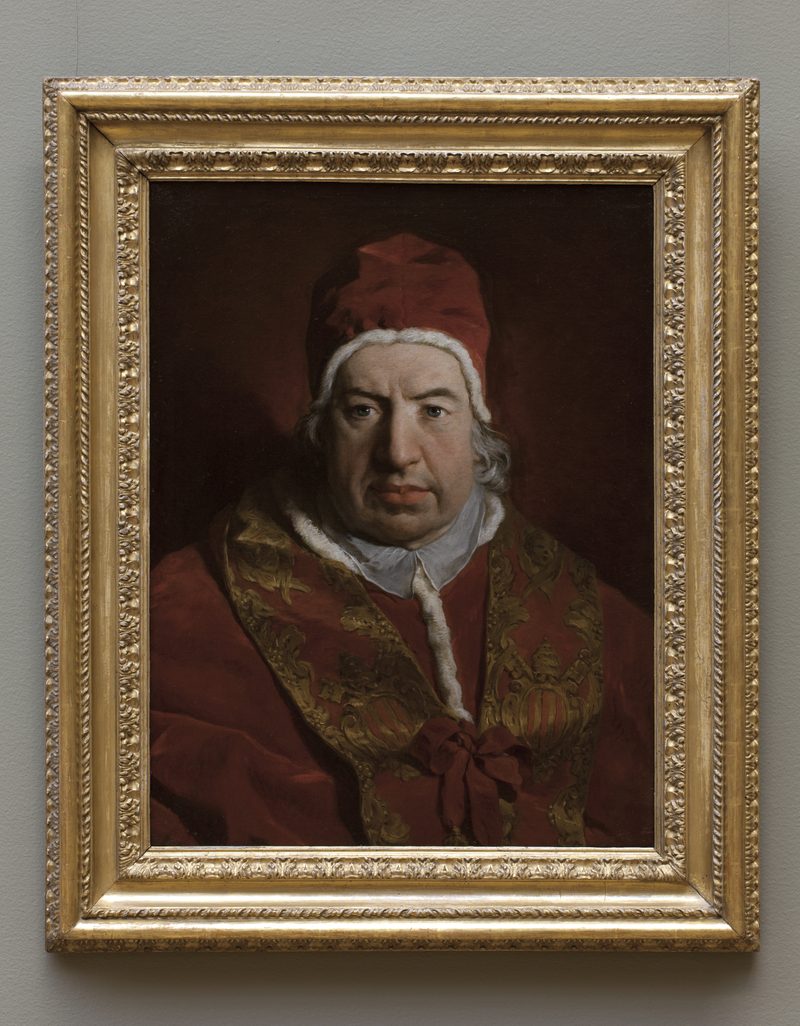
The second was the great codification by Prospero Lambertini—the future Pope Benedict XIV—whose treatise De Servorum Dei Beatificatione et Beatorum Canonizatione (“On the Beatification of the Servants of God and the Canonization of the Blessed”), written 1734–1738, organized the whole procedure, including the rigorous examination of alleged miracles, and governed the Roman practice for the better part of two centuries.7 Lambertini had himself served as Promoter of the Faith—the official charged with arguing against a cause, popularly remembered as the “Devil’s Advocate.”
The institutional home for all of this was the Sacred Congregation of Rites, created by Pope Sixtus V in the constitution Immensa Aeterni Dei of 22 January 1588.8 It handled both the regulation of worship and the causes of saints together for almost four centuries, until Pope Paul VI divided it in 1969, in the apostolic constitution Sacra Rituum Congregatio of 8 May, creating two bodies: one for divine worship, and one—the Sacred Congregation for the Causes of Saints—dedicated entirely to making saints.9 That body still exists, though Pope Francis renamed it in 2022, when his reform of the Roman Curia turned every “congregation” into a “dicastery”; it is now the Dicastery for the Causes of Saints.10
The Law in Force Today
The law that governs the process today is the apostolic constitution Divinus Perfectionis Magister, issued by Pope John Paul II on 25 January 1983, together with the procedural Normae servandae of the following month. John Paul II’s reform simplified the older, adversarial model—the “Devil’s Advocate” role was substantially reduced—and gave the diocesan bishops a larger share in the early work. With that constitution in hand, we can walk the actual road.
Step One: Servant of God
A cause does not open the moment a holy person dies. Under the current law, a petition normally cannot even be presented “sooner than five years after the death of the Servant of God.”11 The waiting period exists to let the initial emotion of grief subside and to let a genuine, durable reputation for holiness either form or fail to. It can be waived, and the most famous modern waivers came from the top: John Paul II dispensed from the five-year wait for Mother Teresa in 1999, and his successor Benedict XVI returned the favor by waiving it for John Paul II himself in 2005.12
The cause begins with a petitioner—“any member of the People of God or any group of the faithful recognized by ecclesiastical authority”—who acts through a postulator, an expert whose first duty is “to conduct thorough investigations into the life of the Servant of God in question, in order to establish his reputation of sanctity and the importance of the cause for the Church.”13 The petition goes to a specific bishop: not just any bishop, but, as the Normae servandae specify, “the one in whose territory the Servant of God died.”14 Place of death, not place of birth or fame, fixes jurisdiction.
Before the bishop may proceed to the formal examination of witnesses, he sends Rome “a brief report on the life of the Servant of God and the relevance of the cause, in order to ascertain whether there is any obstacle on the part of the Holy See to the cause.”15 When Rome responds that there is no obstacle—the nihil obstat, “nothing hinders”—the cause is officially admitted, and the candidate may now be called a Servant of God.
Here is where the central practical question first becomes live, and where the popular explanations most often mislead. A Servant of God may not be the object of public cult. There is no feast day, no Mass in his honor, no place in the liturgy. But—and this is the point—the faithful are entirely free to pray to him privately, asking him to intercede with God on their behalf.
Far from being discouraged, this private intercession is structurally necessary. The cause cannot advance to beatification without a verified miracle, and the miracle the Church looks for is one worked by God through the intercession of that specific person. If no one is privately asking the Servant of God to pray for them, no such miracle can occur. The law thus quietly assumes a great deal of private devotion to people the Church has not yet—and may never—declare Blessed. The prohibition is narrow and specific: no public, liturgical veneration that would presume the Church’s verdict before the Church has rendered it.
Far from being discouraged, this private intercession is structurally necessary.
Step Two: Venerable
With the nihil obstat in hand, the bishop opens the diocesan inquiry, the evidence-gathering heart of the whole process. The constitution gives him a clear list of tasks: gather accurate information about the person’s life; if the candidate wrote anything, “see to it that they are examined by theological censors” to confirm the writings contain “nothing contrary to faith and good morals”; collect unpublished letters, diaries, and documents; examine eyewitnesses, including witnesses called by the Church itself and even those hostile to the cause; and conduct a separate inquiry into any alleged miracles.16
The bishop also confirms, formally, that the decrees of Urban VIII have been obeyed—that no premature public cult has grown up around the candidate. This is the modern descendant of that ancient private-versus-public line: the Church will not advance a cause that has already jumped the gun by treating the candidate as a saint before the verdict.
The diocesan acts are then sealed and sent, in duplicate, to Rome, and the cause enters its Roman phase before the Dicastery for the Causes of Saints. A relator is assigned, who, “together with a collaborator from outside the Congregation, will prepare the Position on virtues or on martyrdom according to the rules of critical hagiography.”17 This Positio—often a thick, heavily documented volume—is the case for the candidate’s holiness, assembled to scholarly standards. It goes first to a panel of theological consultors, who vote on its merits, and then to the cardinals and bishops of the Dicastery. Their judgment is reported to the pope, “who alone has the right to declare that public cult may be given by the Church to Servants of God.”18
What the pope approves, at the end of this stage, is a decree—and there are now three kinds, corresponding to three different paths to holiness. The first and oldest is the decree of heroic virtue: a judgment that the person practiced the theological and cardinal virtues to a heroic degree. The second is the decree of martyrdom: a judgment that the person was killed in odium fidei, in hatred of the faith.
The third is the newest. In 2017, Pope Francis established by the motu proprio Maiorem Hac Dilectionem a genuinely new category: the offering of life (oblatio vitae). It is, in the document’s own words, “a new cause for the beatification and canonization procedure, distinct from the causes based on martyrdom and on the heroism of virtues.”19 It is meant for the Christian who freely offered his or her life out of charity—accepting “a certain and untimely death” for love of others—in a way that does not quite fit the technical definition of martyrdom (which requires a persecutor acting from hatred of the faith) but is nonetheless a heroic imitatio Christi. The motu proprio sets out five criteria for it, the last of which matters for what comes next: the offering of life still requires “a miracle for beatification, occurring after the death of the Servant of God and through his or her intercession.”20
When any one of these three decrees is approved, the Servant of God becomes Venerable. And here the popular intuition fails again. “Venerable” sounds like the Church is now inviting you to venerate the person—the word is right there. It is not. A Venerable is in exactly the same position as a Servant of God with respect to cult: no public veneration, no feast, no liturgy; private prayer for the person’s intercession, fully permitted. The declaration of heroic virtue is a verdict about the person’s life, not a permission about the Church’s worship. The permission comes only at the next step.
Step Three: Blessed (Beatification)
Beatification is the hinge of the whole process, the moment the line between private and public veneration finally moves. For most candidates, getting here requires a miracle.
The miracle requirement is precise, and it is one of the few places where the bare facts really do reward attention. For a candidate on the path of heroic virtue or the offering of life, one verified miracle is required for beatification—ordinarily a physical healing that medicine cannot explain, attributed to the candidate’s intercession. For a martyr, no miracle is required for beatification at all; the martyrdom itself is taken as the sign. This is the constant practice of the Church, refined over centuries, and it is why martyrs are so often beatified comparatively quickly: the Church does not make a person who died for the faith wait on a healing to be honored.
The scrutiny of an alleged miracle is famously rigorous. Divinus Perfectionis Magister establishes “a board of medical experts in the Sacred Congregation whose responsibility is to examine healings which are proposed as miracles”—the body usually called the Consulta Medica.21 A proposed healing is first discussed “in a meeting of experts (in the case of healings, in a meeting of physicians),” and only afterward “in the special meeting of the theologians and, finally, in that of the Cardinals and Bishops.”22 The doctors are not asked whether a miracle occurred—that is a theological judgment—but whether the healing was complete, lasting, and scientifically inexplicable given the diagnosis and treatment. Only if the physicians cannot account for it does the case go to the theologians, who judge whether it is properly attributed to the candidate’s intercession.
When the pope approves the miracle (or, for a martyr, the decree of martyrdom) and decrees the beatification, the Venerable becomes Blessed—and for the first time, public veneration is permitted. This is the canonical bright line, fixed in the Code of Canon Law: “It is permitted to reverence through public veneration only those servants of God whom the authority of the Church has recorded in the list of the saints or the blessed.”23 Before beatification, no public cult; from beatification, public cult is allowed.
Before beatification, no public cult; from beatification, public cult is allowed.
But—and this is the distinction the one-paragraph summaries almost always flatten—the public cult of a Blessed is restricted. Beatification is, in the precise language of the older law, “a permission to venerate, granted by the Roman Pontiffs with restriction to certain places and to certain liturgical exercises.”24 A Blessed ordinarily receives a feast day and a proper Mass and Office, but only in a defined sphere: the diocese or region connected to the person, the nation, or the religious order or institute to which he or she belonged. A Blessed founder of a religious congregation will be celebrated by that congregation around the world, but not by the parish down the street that has no connection to them. The Church has said: this person is in heaven, and you in these places may honor them liturgically. It has not yet said: the whole Church must.
This is, I think, the single most useful thing a non-Catholic can understand about the system, and the thing artificial-intelligence summaries and quick web answers most reliably get wrong. They tend to collapse the four stages into “the steps to becoming a saint” and treat beatification as merely the second-to-last box to check. But beatification is not a lesser canonization. It is a different kind of act—a permission, restricted in scope—where canonization is a precept, universal in scope. If you have ever read that “Catholics can pray to a Blessed” and wondered whether that means the same thing as praying to a canonized saint, the answer is: yes as to private intercession (which was always allowed, even for a Servant of God), and yes as to public veneration, but only within the place or community for which the permission was granted.
Step Four: Saint (Canonization)
The final step requires a second miracle—one that occurs after the beatification, again attributed to the new Blessed’s intercession, and examined by the same rigorous medical and theological process. (A beatified martyr, who needed no miracle to be beatified, does need one verified miracle to be canonized.) When that miracle is approved, the pope may proceed to canonization, the Church’s most solemn act in this domain.
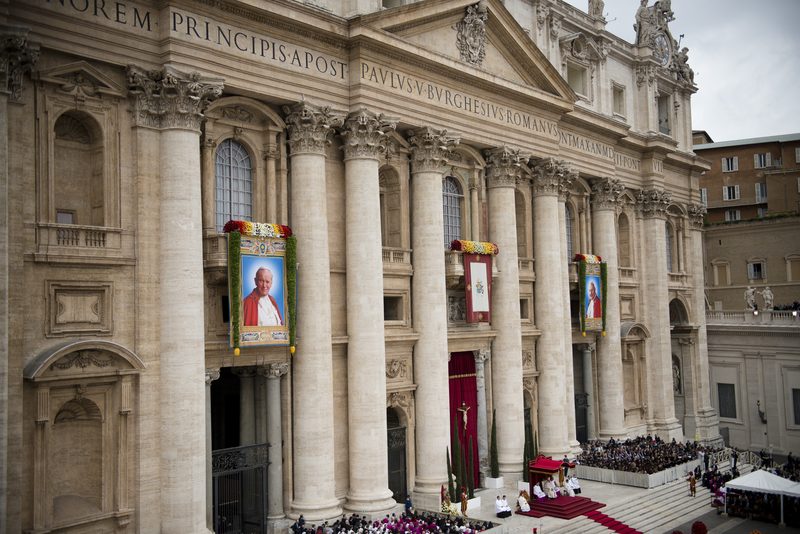
Canonization differs from beatification not in degree but in kind. Where beatification permits a restricted cult, canonization commands a universal one. The older law put the contrast exactly: a decree of canonization “contains a precept, and is universal in the sense that it binds the whole Church,” while beatification “only permits such worship, or … binds under precept, but not with regard to the whole Church.”25 At canonization the person is, in the words of the rite, enrolled in “the catalogue of saints,” and his memory is to be “devoutly and piously celebrated” by the universal Church. The saint may now be venerated everywhere, named in the liturgy, and have churches dedicated in his honor.
The formula the pope pronounces makes the universality unmistakable. At the canonization of John XXIII and John Paul II in 2014, the words were: “by the authority of our Lord Jesus Christ, and of the Holy Apostles Peter and Paul, and our own, after due deliberation and frequent prayer for divine assistance, and having sought the counsel of many of our brother Bishops, we declare and define Blessed [N.] … to be Saints and we enroll them among the Saints, decreeing that they are to be venerated as such by the whole Church.”26 “By the whole Church”—the formula’s own in universa Ecclesia. That phrase is the entire difference between a Blessed and a Saint, compressed into three Latin words.
It is also why most theologians hold that canonizations are infallible while beatifications are not. In canonizing, the pope binds the universal Church to venerate the person as one who is certainly in glory; an act of that scope, touching the whole Church’s worship, is generally regarded as protected from error in a way that a local, permissive beatification is not. (The relationship between this and the broader question of papal infallibility is a genuine and interesting one, debated among reputable theologians, and not as settled as either its loudest defenders or its loudest critics suggest.)
The Shortcuts: Equipollent Canonization and Miracle Waivers
Two wrinkles complicate the tidy four-step picture, and both are worth knowing because they generate a steady stream of confusion.
The first is equipollent (or “equivalent”) canonization. Here the pope, by his own authority, extends the cult of a long-venerated person to the universal Church without the full juridical process and without requiring a fresh miracle, on the ground that the person has been continuously venerated for centuries with an unbroken reputation for holiness and miracles. The classic conditions, going back to Benedict XIV, are an ancient and constant cult, a steady witness to the person’s virtues or martyrdom by reliable historians, and an uninterrupted reputation for miracles. Benedict XVI used this route for the great twelfth-century abbess Hildegard of Bingen in 2012, extending her veneration to the whole Church before naming her a Doctor of the Church later that year.27 Equipollent canonization is not a loophole; it is the Church recognizing that for some figures the centuries of devotion have already done the work a modern Positio is designed to do.
The second wrinkle is the waiver of a miracle, which is different from equipollent canonization and is frequently confused with it. When Pope Francis canonized John XXIII in 2014, he did so after dispensing with the requirement of the second miracle. John XXIII had been beatified by the ordinary process, with a verified miracle, in 2000; for the canonization, Francis exercised his authority to waive the post-beatification miracle and proceeded on the strength of the man’s life and his convening of the Second Vatican Council.28 This was a formal canonization with a papal dispensation, not an equivalent canonization—the difference being that John XXIII went through the regular process, and only the final miracle was set aside, whereas Hildegard’s cult was extended without that process at all. Both are exercises of the same papal authority over the canon of saints; they are simply two different tools.
None of This Is Worship
Everything above is procedure. Underneath it lies the theology, and the theology answers the objection that every Catholic eventually hears: isn’t praying to saints a form of worship that belongs to God alone? The Catholic answer is a flat no, and it rests on a distinction the Church has guarded for a very long time.
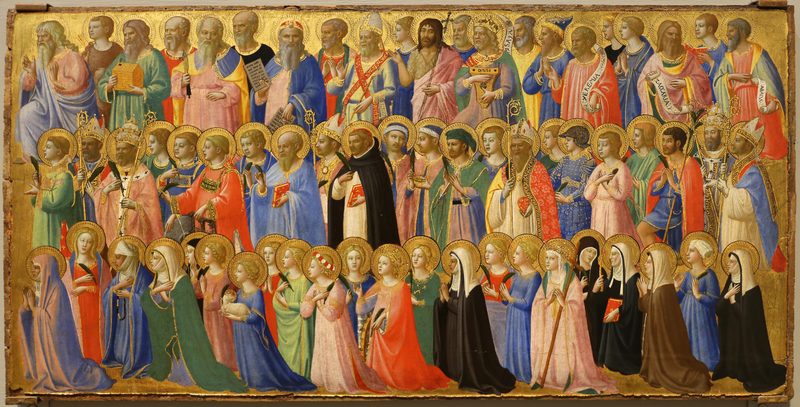
The tradition, following Augustine and given its sharpest formulation by Thomas Aquinas, distinguishes three things. Latria is adoration—the worship owed to God alone, and to no creature whatever. Dulia is the honor owed to created excellence, including the honor we give the saints. And hyperdulia is the special, higher honor owed to the Blessed Virgin Mary, who is still a creature but is the Mother of God. Aquinas states it directly: “dulia, which pays due service to a human lord, is a distinct virtue from latria, which pays due service to the lordship of God.”29
Asking a saint to pray for you is an act of dulia. It is categorically not latria, and a Catholic who confused the two would be committing the sin the objection imagines. (I have written at more length about why Marian devotion is not idolatry and about the parallel logic of the veneration of icons, which the Second Council of Nicaea defended in 787 on exactly this distinction.)
What praying to a saint actually is, on the Catholic account, is asking a member of the family to pray for you—no different in kind from asking a living friend to pray for you, except that this friend is closer to God, not farther. The Catechism grounds this in the communion of saints, quoting the Second Vatican Council: “Being more closely united to Christ, those who dwell in heaven fix the whole Church more firmly in holiness…. They do not cease to intercede with the Father for us, as they proffer the merits which they acquired on earth through the one mediator between God and men, Christ Jesus…. So by their fraternal concern is our weakness greatly helped.”30 Note the careful phrase “through the one mediator.” The saints do not rival Christ’s mediation; they participate in it, the way a body’s members serve one another.
The Catechism is even more pointed elsewhere: “Their intercession is their most exalted service to God’s plan. We can and should ask them to intercede for us and for the whole world.”31
This is not a late medieval invention, either. The Council of Trent, responding to the Reformers in 1563, restated what it took to be ancient teaching: it is “good and useful suppliantly to invoke” the saints, “and to have recourse to their prayers, aid, (and) help for obtaining benefits from God, through His Son, Jesus Christ our Lord, who is our alone Redeemer and Saviour.”32 “Our alone Redeemer and Saviour”—the qualifier is doing deliberate work. Even while defending the invocation of saints, Trent insists that Christ alone redeems. (The Reformers’ rejection of this, and the reasoning on both sides, is part of the larger story I tell about the Council of Trent.)
The intercession of the saints, like the doctrine of purgatory and the practice of indulgences, only makes sense inside the single, connected reality the Creed calls the communion of saints—the conviction that the Church on earth and the Church in heaven are one body, and that the members can and do help one another by prayer.
What Most Explanations Get Wrong
If you take away one thing, let it be the private-versus-public distinction, because it dissolves most of the confusion. You do not have to wait for canonization, or even beatification, to ask a holy person to pray for you. Private intercessory prayer is available from the moment a cause opens—indeed it is part of how causes advance. What changes at beatification is not whether you may pray to the person but whether the Church may honor them publicly and liturgically, and even then only within a defined sphere. What changes at canonization is that the public honor becomes universal and obligatory, binding the whole Church.
A second thing worth correcting: “Venerable” does not mean “now venerated.” It means “found to be heroically holy, cult not yet permitted.” The word is a description of the person, not an instruction to the faithful.
And a third: beatification and canonization are not the same act at two volumes. One is a permission, restricted; the other is a precept, universal. A great many summaries—including, in my experience, the automated ones that increasingly answer these questions before a human ever does—treat them as interchangeable rungs on one ladder. They are not. The Church has kept them carefully distinct for four hundred years, and the distinction is the most theologically interesting feature of the whole system. The Church is slow, deliberate, and almost lawyerly about declaring that someone is in heaven—and that caution is itself a kind of reverence, both for the holiness it is examining and for the faithful it does not want to mislead.
The Church is slow, deliberate, and almost lawyerly about declaring that someone is in heaven.
Frequently Asked Questions
What are the four stages of canonization in the Catholic Church?
The four titles, in order, are Servant of God, Venerable, Blessed, and Saint. A person becomes a Servant of God when the cause is formally opened and Rome raises no objection. They become Venerable when the pope approves a decree that they practiced heroic virtue, died a martyr, or made a heroic offering of life. They become Blessed at beatification, which for non-martyrs requires one verified miracle. And they become a Saint at canonization, which requires a second miracle (one for a martyr, who needed none to be beatified). Each stage is a distinct juridical state with different consequences for public veneration.
Can Catholics pray to a Servant of God or a Venerable?
Yes—privately. A Catholic may ask a Servant of God or a Venerable to intercede with God on their behalf, and this private prayer is not only permitted but is actually how the process advances: the miracle a cause needs for beatification is one worked through that person’s intercession, which presupposes people privately praying to them. What is forbidden before beatification is public, liturgical cult—a feast day, a Mass in the person’s honor, public veneration that would presume the Church’s verdict before it is rendered. The distinction is between private devotion and public cult, not between praying and not praying.
When can Catholics publicly venerate a person in the canonization process?
Public veneration becomes permitted at beatification. Canon 1187 of the Code of Canon Law permits public veneration only of those recorded “in the list of the saints or the blessed.” But a Blessed’s public cult is restricted—ordinarily to a diocese, region, nation, or the religious order to which the person belonged, with a local feast day. Only at canonization does the public cult become universal, binding the whole Church.
What is the difference between beatification and canonization?
They are different kinds of act, not just different degrees. Beatification is a permission to venerate, restricted to certain places or communities; canonization is a precept commanding veneration by the universal Church. A Blessed is honored locally; a Saint is honored everywhere. Beatification ordinarily requires one miracle (none for a martyr); canonization requires a further miracle after beatification. Most theologians also hold that canonizations are infallible while beatifications are not, precisely because canonization binds the whole Church—though this is a debated theological opinion, not a defined dogma.
How many miracles are needed to become a saint?
Two, for a non-martyr: one verified miracle for beatification, and a second (occurring after beatification) for canonization. A martyr needs no miracle to be beatified—the martyrdom itself is the sign—but does need one verified miracle to be canonized. The miracles are almost always medically inexplicable healings, scrutinized first by a board of physicians (the Consulta Medica) and then by theologians. A pope can, by his own authority, dispense with a required miracle, as Pope Francis did for the canonization of John XXIII in 2014.
What is the “offering of life” path to canonization?
It is a third route to the title Venerable, established by Pope Francis in the 2017 motu proprio Maiorem Hac Dilectionem, distinct from the older paths of heroic virtue and martyrdom. It recognizes a Christian who freely and heroically offered his or her life out of charity, accepting a certain and untimely death for others, in a way that does not meet the technical definition of martyrdom (which requires a persecutor acting in hatred of the faith). The offering of life still requires one verified miracle for beatification.
Is praying to saints a form of worship?
No. Catholic theology distinguishes latria—adoration, owed to God alone—from dulia, the honor given to the saints, and hyperdulia, the higher honor given to the Virgin Mary. Asking a saint to pray for you is dulia, an act of honor, not latria, an act of worship. It is, on the Catholic account, no different in kind from asking a living friend to pray for you, except that the saint is nearer to God. The Council of Trent, even while defending the invocation of saints, insisted that Christ alone is “our alone Redeemer and Saviour.”
How long does it take to become a saint?
There is no fixed timeline, and it varies enormously. A petition normally cannot be presented until five years after death, though the pope can waive that wait (as for Mother Teresa and John Paul II). After that, the diocesan inquiry, the Roman Positio, the decrees, and the verification of miracles can take years or decades—or centuries, for older causes. Some figures venerated since antiquity are recognized by equipollent canonization, which extends the cult to the universal Church without the full modern process, as Benedict XVI did for Hildegard of Bingen in 2012.
Footnotes
1. Catechism of the Catholic Church (CCC), 2nd ed., n. 828. English text at the Holy See, vatican.va.
2. Camillo Beccari, “Beatification and Canonization,” in The Catholic Encyclopedia, vol. 2 (New York: Robert Appleton Company, 1907). Available at NewAdvent.org.
3. Beccari, “Beatification and Canonization” (1907). The same article states the principle that “for the public veneration of the saints the ecclesiastical authority of the pastors and rulers of the Church was constantly required.”
4. Ulrich (Udalric) of Augsburg, bishop, d. 4 July 973, canonized by Pope John XV at a Lateran synod on 31 January 993—“the first person known to have been canonized by a pope.” See “Saint Ulrich,” Encyclopædia Britannica, britannica.com. The Lateran-synod date of 31 January 993, with the confirming bull of 3 February, is given in the 1913 Catholic Encyclopedia, “Pope John XV (XVI),” NewAdvent.org. (His feast is 4 July, which some sources confuse with the canonization date.)
5. Pope Alexander III, decretal commonly cited as Audivimus (c. 1171–1172), quoted in Beccari, “Beatification and Canonization” (1907); later incorporated into the Decretals of Gregory IX (the Liber Extra, 1234) at X 3.45.1. The encyclopedia notes the theological debate over whether the decretal created a new reservation or confirmed an existing one. The identity of the king addressed and of the venerated man is given variously in later sources and is not stated in the decretal as the encyclopedia preserves it.
6. Urban VIII, apostolic letter Caelestis Hierusalem cives (5 July 1634), with the related Decreta servanda in beatificatione et canonizatione Sanctorum (12 March 1642); cited in Divinus Perfectionis Magister, n. 4. On the substance (reservation of beatification and canonization to the Holy See, and the non cultu inquiry), see Beccari, “Beatification and Canonization” (1907): “Urban VIII published, in 1634, a Bull which put an end to all discussion by reserving to the Holy See exclusively not only its immemorial right of canonization, but also that of beatification.”
7. Prospero Lambertini (later Pope Benedict XIV), De Servorum Dei Beatificatione et Beatorum Canonizatione (1734–1738). Divinus Perfectionis Magister (preamble) notes that this work, “drawing upon the experiences of time past,” “served as the rule of the Sacred Congregation of Rites for almost two centuries.” Lambertini had served as Promotor Fidei (Promoter of the Faith), the official charged with critically opposing causes.
8. Sixtus V, apostolic constitution Immensa Aeterni Dei (22 January 1588), establishing the Sacred Congregation of Rites; cited in Divinus Perfectionis Magister, n. 3. See also the Congregation for the Causes of Saints, institutional history, vatican.va: “With the Constitution ‘Immensa Aeterni Dei’ of January 22, 1588, Sixtus V created the Sacred Congregation of Rites and entrusted to it the task of regulating the exercise of divine worship and of dealing with the Causes of Saints.”
9. Paul VI, apostolic constitution Sacra Rituum Congregatio (8 May 1969). Congregation for the Causes of Saints, institutional history, vatican.va: “Paul VI, with the Apostolic Constitution ‘Sacra Rituum Congregatio’ of May 8, 1969, divided the Congregation of Rites, creating two congregations: one for Divine Worship and another for the Causes of Saints.” The 1969 body was officially the “Sacred Congregation for the Causes of Saints”; the adjective “Sacred” was dropped from the Roman Curia’s congregations following the 1983 Code of Canon Law, and John Paul II’s apostolic constitution Pastor Bonus (28 June 1988) uses the shorter title now in use.
10. Francis, apostolic constitution Praedicate Evangelium (19 March 2022, effective 5 June 2022), which reorganized the Roman Curia and renamed the curial “congregations” as “dicasteries,” producing the present Dicastery for the Causes of Saints. See “Dicastery for the Causes of Saints,” Vatican News.
11. Normae servandae in inquisitionibus ab Episcopis faciendis in causis Sanctorum (Sacred Congregation for the Causes of Saints, 7 February 1983), n. 9a: “In recent causes, the petition must be presented no sooner than five years after the death of the Servant of God.” Available at vatican.va.
12. John Paul II waived the five-year waiting period for Mother Teresa of Calcutta in early 1999; the diocesan inquiry opened in Calcutta on 26 July 1999. Benedict XVI waived the same period for John Paul II, announcing the decision on 13 May 2005. Paul VI opened the causes of his predecessors Pius XII and John XXIII in 1965 (announced at the close of the Second Vatican Council), but that predates the codified five-year rule, introduced only in 1983 by the Normae servandae, so it is imprecise to describe his action as a waiver of that rule. On the practice of papal dispensation from the five-year wait, see “Dicastery for the Causes of Saints,” Vatican News.
13. Normae servandae (1983), n. 1a (“Any member of the People of God or any group of the faithful recognized by ecclesiastical authority can exercise this function”) and n. 3b (the postulator’s duty “to conduct thorough investigations into the life of the Servant of God”). Available at vatican.va.
14. Normae servandae (1983), n. 5a: “The Bishop competent to instruct causes of canonization is the one in whose territory the Servant of God died, unless particular circumstances, recognized as such by the Sacred Congregation, suggest otherwise.”
15. Normae servandae (1983), n. 15c (the bishop sends a report to Rome “in order to ascertain whether there is any obstacle on the part of the Holy See to the cause”). The favorable answer is the nihil obstat.
16. Divinus Perfectionis Magister (John Paul II, 25 January 1983), Part I, n. 2, sub-points 1–6, including the examination of the candidate’s writings by theological censors (that they contain “nothing contrary to faith and good morals”), the examination of witnesses, the separate inquiry into alleged miracles, and the bishop’s “declaration on the observance of the decrees of Urban VIII regarding the absence of cult.” Available at vatican.va.
17. Divinus Perfectionis Magister, n. 13.2.
18. Divinus Perfectionis Magister, nn. 13.4–13.5 and n. 15: the Positio goes to the theological consultors and then to the cardinals and bishops, whose results are reported to the pope, “who alone has the right to declare that public cult may be given by the Church to Servants of God.”
19. Francis, motu proprio Maiorem Hac Dilectionem (11 July 2017), Art. 1: “The offer of life is a new cause for the beatification and canonization procedure, distinct from the causes based on martyrdom and on the heroism of virtues.” Available at vatican.va.
20. Maiorem Hac Dilectionem (2017), Art. 2, the five criteria, of which (a) requires “a free and voluntary offer of life and heroic acceptance propter caritatem of a certain and untimely death” and (e) “the necessity of a miracle for beatification, occurring after the death of the Servant of God and through his or her intercession.” The document opens with John 15:13, “Greater love has no man than this, that a man lay down his life for his friends.”
21. Divinus Perfectionis Magister, n. 12: “There is to be a board of medical experts in the Sacred Congregation whose responsibility is to examine healings which are proposed as miracles.” This board is commonly called the Consulta Medica.
22. Divinus Perfectionis Magister, n. 14.1–14.2: alleged miracles “are discussed in a meeting of experts (in the case of healings, in a meeting of physicians),” and then “in the special meeting of the theologians and, finally, in that of the Cardinals and Bishops.” The “one miracle for beatification of a non-martyr, none for a martyr, a second for canonization” counts are not enumerated as numbered articles in the 1983 constitution; they are the constant practice of the Dicastery, reflected in every modern cause.
23. Code of Canon Law (1983), can. 1187: “It is permitted to reverence through public veneration only those servants of God whom the authority of the Church has recorded in the list of the saints or the blessed.” Available at vatican.va.
24. Beccari, “Beatification and Canonization” (1907): “beatification … is a permission to venerate, granted by the Roman Pontiffs with restriction to certain places and to certain liturgical exercises.” The same article notes that it is therefore unlawful to render a Blessed public reverence “outside of the place for which the permission is granted … unless special indult be had.”
25. Beccari, “Beatification and Canonization” (1907): “If the decree contains a precept, and is universal in the sense that it binds the whole Church, it is a decree of canonization; if it only permits such worship, or if it binds under precept, but not with regard to the whole Church, it is a decree of beatification.” The article also preserves the canonization formula’s enrollment “in the catalogue of saints” with the command that the saint’s memory be “devoutly and piously celebrated” yearly.
26. Canonization formula as pronounced at the canonization of John XXIII and John Paul II (27 April 2014). Latin: “Beatos [N. et N.] Sanctos esse decernimus et definimus, ac Sanctorum Catalogo adscribimus, statuentes eos in universa Ecclesia inter Sanctos pia devotione recoli debere.“ English via EWTN, ewtn.com.
27. Benedict XVI extended the veneration of Hildegard of Bingen (1098–1179) to the universal Church by equivalent (equipollent) canonization on 10 May 2012 (Holy See Press Office bulletin, 10 May 2012; Acta Apostolicae Sedis 104 [2012]), and proclaimed her a Doctor of the Church on 7 October 2012; see, for the Doctorate, the apostolic letter at vatican.va. The classic three conditions for equipollent canonization (ancient cult, constant attestation of virtues or martyrdom, uninterrupted reputation for miracles) derive from Benedict XIV’s treatise cited above.
28. Pope Francis canonized John XXIII (with John Paul II) on 27 April 2014, dispensing with the requirement of a second miracle. John XXIII had been beatified through the ordinary process, with a verified miracle, in 2000. This is a formal canonization with a papal dispensation of the post-beatification miracle—distinct from the equipollent canonization used for Hildegard.
29. Thomas Aquinas, Summa Theologiae II-II, q. 103, a. 3, corpus: “dulia, which pays due service to a human lord, is a distinct virtue from latria, which pays due service to the lordship of God.” On hyperdulia, see a. 4, ad 2: “Hyperdulia is the highest species of dulia taken in a wide sense, since the greatest reverence is that which is due to a man by reason of his having an affinity to God”—the special veneration owed, as a. 4 obj. 2 puts it, “to the Blessed Virgin as being the mother of God.” Translation of the Fathers of the English Dominican Province; available at NewAdvent.org.
30. CCC 956, quoting Lumen Gentium 49. Holy See, vatican.va.
31. CCC 2683. Holy See, vatican.va.
32. Council of Trent, Session 25 (3–4 December 1563), “On the Invocation, Veneration, and Relics of Saints, and on Sacred Images,” trans. J. Waterworth (London: Dolman, 1848). Available at the Hanover Historical Texts Project.
Garrett Ham
Garrett Ham is an attorney, military veteran, and holds a Master of Divinity from Yale Divinity School. He writes from Northwest Arkansas on theology, law, and service.
Related Posts
Is Marian Devotion Idolatry? A Catholic Response to Protestant Objections
A charitable Catholic case for Marian devotion, answering Protestant objections from Scripture, the Fathers, and the Reformers themselves.
Catholic Indulgences: What They Actually Are (and Aren't)
An indulgence isn't a Get-Out-of-Hell card, and the Church never taught it was. What indulgences actually are—plus the history Luther was right to protest.
Protestants and Purgatory
How the Catholic doctrine of purgatory completes salvation as a process of theosis after death—and why C.S. Lewis and other thoughtful Protestants have found it compelling.
Stay Informed
Get new writing on faith, law, and service delivered to your inbox.
No spam. Unsubscribe anytime.