Every Ex Cathedra Papal Statement: A Complete Guide
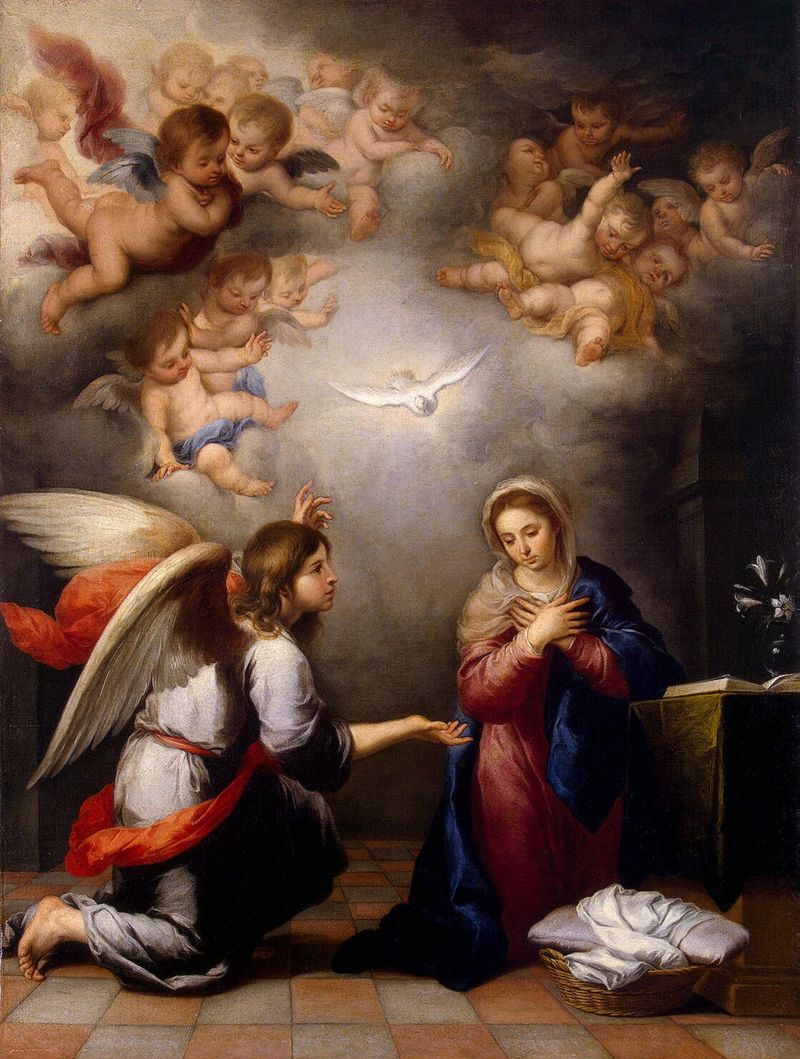
On This Page
An ex cathedra papal statement is a solemn definition of doctrine on faith or morals issued by the Pope as universal pastor of the Church, with explicit intent to bind all the faithful, by the supreme exercise of his apostolic authority. Vatican I (1870) defined those four conditions in Pastor Aeternus. Catholic theologians universally recognize only two: the Immaculate Conception (1854) and the Bodily Assumption of Mary (1950).
The Complete List of Ex Cathedra Papal Statements
There is no single agreed-upon “complete list” of ex cathedra statements, because Catholic theologians disagree on the count. Two definitions are universally recognized; another half-dozen are recognized by major scholars or by the Congregation for the Doctrine of the Faith but are not universally agreed. Here is the full inventory in chronological order, with the universally agreed cases marked.
| Document | Year | Pope | Subject | Status |
|---|---|---|---|---|
| Dogmatic clause of Unam Sanctam | 1302 | Boniface VIII | Necessity of submission to the Roman Pontiff for salvation | Disputed |
| Benedictus Deus | 1336 | Benedict XII | The beatific vision; souls of the just see the divine essence before the general resurrection | Recognized by CDF (1998) and most scholars |
| Cum Occasione | 1653 | Innocent X | Condemnation of five Jansenist propositions | Recognized by some scholars |
| Auctorem Fidei | 1794 | Pius VI | Condemnation of the Synod of Pistoia | Recognized by some scholars |
| Ineffabilis Deus | 1854 | Pius IX | Immaculate Conception of Mary | Universally agreed |
| Apostolicae Curae | 1896 | Leo XIII | Nullity of Anglican orders | Recognized by some scholars |
| Munificentissimus Deus | 1950 | Pius XII | Bodily Assumption of Mary | Universally agreed |
| Ordinatio Sacerdotalis | 1994 | John Paul II | Reservation of priestly ordination to men | Disputed (CDF locates infallibility in ordinary and universal magisterium, not in this act) |
Bottom line: Catholic theologians universally recognize only two ex cathedra statements — both Marian dogmas, both from the modern era. The other entries on the list are recognized by some authorities and disputed by others, with Benedictus Deus (1336) being the strongest of the disputed cases (it appears on the CDF’s own 1998 list, which itself notes “this list is not meant to be complete”).
The shortness of the universally agreed list — only two definitions in over 170 years — is the strongest single refutation of the popular caricature that popes pronounce infallibly at every turn.
Vatican I’s Definition of Ex Cathedra
The doctrine of papal infallibility is often misunderstood by both critics and defenders. To grasp what ex cathedra teaching actually entails, we must return to the precise language of Vatican I’s Pastor Aeternus, promulgated July 18, 1870.1
When the Roman Pontiff speaks ex cathedra, that is, when, in the exercise of his office as shepherd and teacher of all Christians, in virtue of his supreme apostolic authority, he defines a doctrine concerning faith or morals to be held by the whole Church, he possesses, by the divine assistance promised to him in blessed Peter, that infallibility which the divine Redeemer willed his Church to enjoy in defining doctrine concerning faith or morals.
The council taught that the Roman Pontiff is infallible when four conditions are simultaneously met:
1. He must be speaking as the universal pastor and teacher. Not in his private capacity, not as a theologian offering personal opinion, but in his official role as the shepherd of all Christians. This is why papal encyclicals, even weighty ones, are not automatically ex cathedra; they may be authoritative without being infallible.
2. He must be addressing a matter of faith or morals. Scientific questions, prudential judgments about policy, historical claims—these fall outside the scope of infallibility. The pope is not preserved from error about astronomy or economics. The infallibility extends only to truths necessary for salvation and proper Christian living.
3. He must manifest a clear intention to define a doctrine. Not every formal statement, even on faith and morals, constitutes an ex cathedra act. The pope must make plain that he is exercising the supreme authority of his office to define doctrine binding upon the whole Church. Ambiguous language, tentative formulations, or presentations open to further development do not qualify.
4. He must be exercising the supreme authority of his office. The infallibility is not a personal gift but an office-based charism. The pope, as the successor of Peter and head of the Church, possesses this authority. It is not wielded by bishops, theologians, or ecumenical councils acting without papal confirmation (though an ecumenical council teaching in union with the pope can also exercise infallibility under the same conditions—a solemn definition of faith or morals proposed as binding on the whole Church. Not every conciliar utterance is infallible; disciplinary canons and pastoral guidance fall outside the scope of the charism).
When Is the Pope Infallible? The Four-Conditions Matrix
The four conditions of Pastor Aeternus must all be met simultaneously. This table shows what each condition requires, what it excludes, and how the two universally agreed ex cathedra statements satisfy it.
| Vatican I condition | What it requires | What it excludes | Met by Ineffabilis Deus (1854)? | Met by Munificentissimus Deus (1950)? |
|---|---|---|---|---|
| 1. Speaks as universal pastor | Pope acts in his official Petrine role for the whole Church | Private correspondence, theological opinions, role as bishop of Rome only | Yes — issued to “the whole Church” | Yes — issued to “the whole Church” |
| 2. Matter of faith or morals | Doctrine essential to salvation or Christian living | Science, prudential policy, history, biographical detail | Yes — Mariology, doctrine of original sin | Yes — Mariology, eschatology of the body |
| 3. Clear intent to define and bind | Solemn defining language (“we declare, pronounce, and define”) | Ambiguous formulations, tentative wording, room for development | Yes — “we declare, pronounce, and define” | Yes — “we pronounce, declare, and define it to be a divinely revealed dogma” |
| 4. Supreme apostolic authority | Pope invokes the full weight of his office | Routine teaching, encyclical exhortation, conciliar canons not confirmed by the pope | Yes — explicit invocation of Petrine authority | Yes — explicit invocation of authority of Christ and Peter and Paul |
The Three Levels of Magisterial Authority
Catholic teaching distinguishes three categories of magisterial authority, only the first two of which carry infallibility. Conflating them is one of the most common errors in popular discussion of papal teaching.
| Authority level | Source | Infallible? | Required response | Examples |
|---|---|---|---|---|
| Extraordinary Magisterium | Solemn definition by pope (ex cathedra) or by ecumenical council with papal confirmation | Yes | Divine and Catholic faith (de fide divina et catholica) | Ineffabilis Deus (1854); Munificentissimus Deus (1950); Nicene Creed; Trent on the canon |
| Ordinary Universal Magisterium | Constant, unanimous teaching of the bishops dispersed throughout the world in union with the pope | Yes (per Lumen Gentium §25) | Definitive assent (tenenda) | The wrongness of murder; male-only priestly ordination (per CDF, 1995) |
| Authentic but non-infallible Magisterium | Encyclicals, motu proprio, papal addresses, Responsa ad Dubia, CDF instructions | No | Religious submission of intellect and will (obsequium religiosum) | Most encyclicals (Humanae Vitae, Laudato Si’); Ordinatio Sacerdotalis itself; routine papal teaching |
When all four conditions are met, the Holy Spirit preserves the pope from error. His teaching is infallible—that is, it cannot be false. But infallibility is not omniscience or impeccability. The pope remains a fallible human being in all other respects. This distinction is crucial—it is exactly why even grave clerical sin leaves the teaching office intact, as the abuse crisis makes vivid.
The Two Universally Agreed Ex Cathedra Statements
Across the period framed by Vatican I, Catholic theologians universally recognize only two papal definitions as indisputably meeting all four conditions.2 Ineffabilis Deus (1854) predates Vatican I’s formal codification by sixteen years, but Catholic theology holds that Vatican I articulated conditions that were always operative—it recognized rather than created the charism of infallibility. Thus the 1854 definition qualifies retroactively.
1. Ineffabilis Deus: The Immaculate Conception (1854)
Date: December 8, 1854
Pope: Pius IX
Document: Apostolic Constitution Ineffabilis Deus
Context: For centuries, the Church had revered Mary as free from sin. But the doctrine of her Immaculate Conception—that Mary was conceived without original sin—remained theologically contested. Thomistic theologians, following Aquinas, were skeptical; Franciscan theologians championed it. Even popes before Pius IX had wavered.
By the nineteenth century, popular piety had embraced the Immaculate Conception widely. The Council of Trent (Session 5, 1546) had explicitly declined to include Mary within the scope of its decree on original sin, leaving the question deliberately open—but it stopped short of defining her preservation as dogma. Pius IX, noting the consensus of bishops and the manifest piety of the faithful, decided to settle the question definitively.
The Defining Formula: Pius IX proclaimed:
We declare, pronounce, and define that the doctrine which holds that the most Blessed Virgin Mary, in the first instant of her conception, by a singular grace and privilege of Almighty God, in view of the merits of Jesus Christ, the Savior of the human race, was preserved free from all stain of original sin, is a doctrine revealed by God and therefore to be believed firmly and constantly by all the faithful.
Why This is Ex Cathedra: Pius IX explicitly states that he is defining a doctrine as revealed by God, binding on all the faithful. He is not speculating or offering a theological opinion. He exercises the full authority of his office to settle a disputed question. The four conditions are clearly met.
Theological Significance: The doctrine affirms that Mary’s holiness is not merely granted her later (as in Protestant theology) but belongs to her from her conception. She is the “New Eve,” the anticipatory expression of the Church’s spotlessness. The doctrine also underscores the universal scope of Christ’s redemption: even Mary, the first among disciples, required redemption—but a redemptive grace that preserved her from sin rather than liberating her from it after its commission.
The definition was controversial at the time, especially among German Catholics, but it has become universally accepted in Catholic teaching.
2. Munificentissimus Deus: The Bodily Assumption (1950)
Date: November 1, 1950
Pope: Pius XII
Document: Apostolic Constitution Munificentissimus Deus
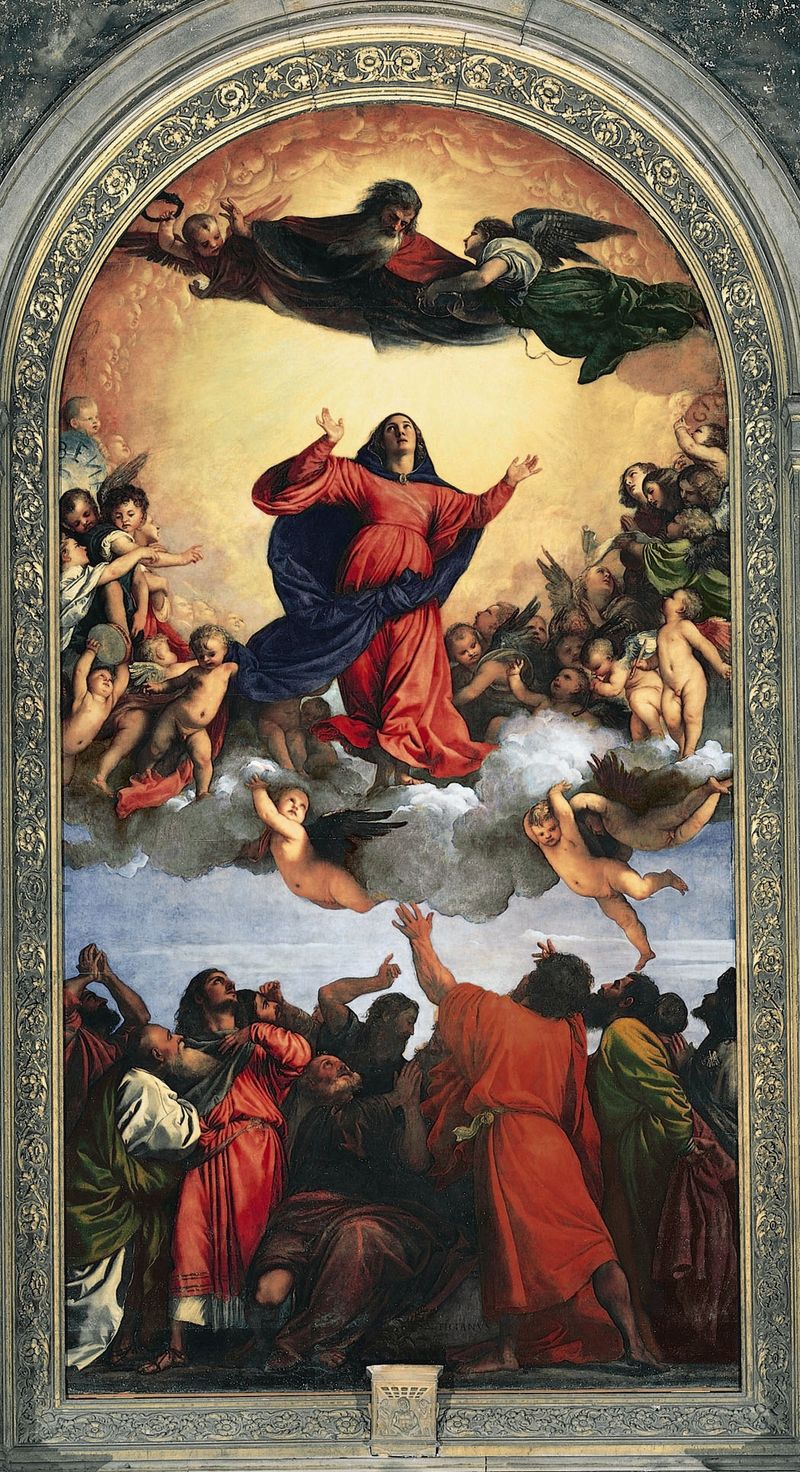
Context: Like the Immaculate Conception, the Bodily Assumption of Mary had been believed by the faithful and defended by theologians for centuries. Patristic sources hint at it. Medieval liturgies celebrate it. By the twentieth century, it was practically universal doctrine in the Catholic Church.
Yet it had never been formally defined. Pius XII, sensing the theological consensus and moved by widespread piety, sought to honor the Blessed Mother and unite the Church around this ancient faith. He also wished to assert Catholic truth against the backdrop of World War II and the rising secular age, as if to declare that the Church’s supernatural faith remains unshaken.
The Defining Formula: Pius XII proclaimed:
By the authority of our Lord Jesus Christ, of the Blessed Apostles Peter and Paul, and by our own authority, we pronounce, declare, and define it to be a divinely revealed dogma: that the Immaculate Mother of God, the ever Virgin Mary, having completed the course of her earthly life, was assumed body and soul into heavenly glory.
He immediately reinforced the definition with a solemn warning: “Hence if anyone, which God forbid, should dare willfully to deny or to call into doubt that which we have defined, let him know that he has fallen away completely from the divine and Catholic faith.” Pius XII notes that this Assumption should be understood as the “crowning privilege” of Mary’s Immaculate Conception and perpetual virginity.
Why This is Ex Cathedra: Like the 1854 definition, Pius XII employs language of definition and binding authority. He explicitly states that this is a doctrine to be held by the entire Church. The defining language is unambiguous; the four conditions are met. This is the most recent universally accepted ex cathedra statement.
Theological Significance: The Assumption affirms that Mary is not merely a historical figure but a living presence in the communion of saints—the theological premise underlying all Catholic Marian devotion.5 It also prefigures Christian hope: as the first human person after Christ to share fully in resurrection glory body and soul, Mary exemplifies the hope that all believers share. (Scripture records that Enoch was “translated” and Elijah taken up in a whirlwind [Gen 5:24; 2 Kings 2:11], but Catholic tradition treats these bodily translations as distinct from Mary’s unique assumption into heavenly glory—into the beatific vision itself—which is the proper subject of the 1950 definition.) The doctrine emphasizes that matter is not evil; the body is redeemed, not discarded. Mary’s assumption body and soul is a sign of the Church’s future glory.
Disputed Cases: Where Theologians Disagree
Several other papal statements are candidates for ex cathedra status, but mainstream Catholic theology does not regard them as settled.
Ordinatio Sacerdotalis (1994): Women’s Ordination
Document: Apostolic Letter Ordinatio Sacerdotalis, issued by Pope John Paul II, May 22, 1994
The Statement: John Paul II declared that the Church lacks authority to ordain women to the priesthood. He stated that this judgment “is to be definitively held by all the Church’s faithful.”6
The Debate: In 1995, the Congregation for the Doctrine of the Faith issued a Responsum ad Dubium affirming that this teaching “has been set forth infallibly by the ordinary and universal Magisterium”—that is, the teaching is infallible not because Ordinatio Sacerdotalis itself was an ex cathedra act, but because it has been consistently taught by the bishops worldwide in communion with the pope (per Lumen Gentium 25). The accompanying CDF Commentary explicitly clarifies that Ordinatio Sacerdotalis is “an act of the ordinary Papal Magisterium, in itself not infallible,” which merely confirms an already infallibly held teaching.
The mainstream scholarly consensus does not classify Ordinatio Sacerdotalis itself as an ex cathedra definition. Here’s why:
First, the document itself does not use the formulae associated with ex cathedra definitions. It declares the teaching “to be definitively held,” which signals binding doctrine but does not, on its own, constitute the solemn defining act envisioned by Vatican I.
Second, the CDF’s own Commentary deliberately distinguishes the apostolic letter from an ex cathedra act, locating the teaching’s infallibility in the ordinary and universal Magisterium rather than in a new solemn definition.
Third, the document is more of a juridical pronouncement than a doctrinal definition. It says “the Church has no authority to ordain women,” not “it is revealed by God that women cannot be ordained.” The logical form differs.
That said, most bishops and theologians regard Ordinatio Sacerdotalis as binding and authoritative. Even those who disagree with the prohibition on women’s ordination acknowledge that it is an official Church teaching. But they debate whether it rises to the level of infallible definition.7
Earlier Papal Pronouncements
Catholic theology has occasionally invoked earlier papal statements as infallible. For example:
Pope Leo the Great’s Tome (449 AD): The Council of Chalcedon (451) accepted Leo’s doctrinal letter on the two natures of Christ as infallibly expressing the faith. However, this is a case where conciliar reception (not papal definition per se) conferred infallible status. The pope was not exercising infallibility independently.
Papal Condemnations in Ecumenical Councils: Various popes have condemned heresies and defined doctrine in ecumenical councils. When a pope acts within a council, his teaching can be infallible—but so is the council’s. These are not isolated papal ex cathedra acts but collegial exercises of infallibility.
Benedictus Deus (1336, Benedict XII): Benedict XII’s constitution on the beatific vision—that the souls of the just who need no purification enjoy the immediate vision of the divine essence after death, before the general resurrection—appears on virtually every serious scholarly list of ex cathedra pronouncements. Klaus Schatz’s widely cited catalogue of seven includes it, as does the Congregation for the Doctrine of the Faith’s own 1998 Doctrinal Commentary on the Professio Fidei.
Because the CDF itself identifies Benedictus Deus as ex cathedra, any list limited to “only two” ought to note that the universally agreed count of two solemn Marian definitions is a narrower scholarly category than the full roster of exercises of the charism.
Definitions on the beatific vision, on the condemnation of specified errors (e.g., Auctorem Fidei, 1794, against the Synod of Pistoia), and on the nullity of Anglican orders (Apostolicae Curae, 1896) are variously assigned ex cathedra status by different theologians. The CDF’s 1998 Commentary explicitly noted that its own list of examples was “not meant to be complete.”
Humanae Vitae (1968, Paul VI): The most frequently raised modern question is whether Paul VI’s encyclical on contraception is infallible. Msgr. Lambruschini, presenting the text at its 1968 press conference, explicitly stated that Humanae Vitae contained no ex cathedra pronouncement. Most theologians accept that classification. But John Ford, Germain Grisez, and Brian Harrison have argued that the teaching on contraception is infallible via the ordinary and universal Magisterium in the same sense the CDF later asserted about Ordinatio Sacerdotalis. The debate mirrors the OS discussion above and turns on whether the conditions of Lumen Gentium §25 for ordinary-Magisterium infallibility are in fact met.
Unam Sanctam (1302, Boniface VIII): Some medieval theorists claimed this bull, which asserted papal supremacy, was infallible. The body of the document is polemical, arising from Boniface’s conflict with King Philip IV of France over taxation of clergy.
But the final clause employs the classic definitional formulary: “declaramus, dicimus, definimus, et pronuntiamus”—“we declare, we proclaim, we define, and we pronounce that it is absolutely necessary for salvation that every human creature be subject to the Roman Pontiff.” Theologians Louis Billot and Edmond Dublanchy classify this final clause as an ex cathedra definition, and Clement V’s 1306 brief Meruit distinguished the bull’s political effects from its “dogmatic decision,” implying the latter had permanent force.
The contemporary consensus tends toward treating the clause as authoritative Catholic teaching on the relation of salvation to the visible Church, but its precise ex cathedra status remains disputed rather than settled.
Why the List Is So Short: A Virtue, Not a Problem
One of the most important points: the shortness of the list refutes the popular caricature of Catholic infallibility.
Critics imagine that the Church pronounces infallibly at every turn, that popes swagger about issuing binding doctrinal decrees. In fact, solemn ex cathedra statements are extraordinarily rare. Only two are universally agreed; even the widest scholarly lists propose no more than a dozen. Serious Protestant objections—from the historical question of Pope Honorius to the epistemological problem of identifying infallible statements—deserve their own treatment and are not reducible to the caricature.
This rarity reflects the actual conditions’ strictness. A pope must:
- Be speaking officially as universal pastor (not in private conversation or even in ordinary encyclicals)
- Address a matter of faith or morals (not science, politics, or prudential judgment)
- Intend explicitly to bind the whole Church (not to explore, discuss, or leave room for development)
- Exercise the full weight of his office (not merely teach, but define)
These conditions are demanding. Most papal teaching falls short of them, not because the pope is uncertain, but because ex cathedra is reserved for the most solemn acts of doctrinal settlement.
This is actually a sign of Catholic wisdom. The Church does not claim infallibility lightly. The charism is invoked only when necessary to preserve essential doctrine against error. The very rarity of ex cathedra statements demonstrates the Church’s restraint and reverence.
Infallibility and Doctrinal Development
A common question: if the Church defines a doctrine as infallible, can it ever be revised or developed?
The answer is nuanced. An infallible definition cannot be contradicted or given a new meaning. The Immaculate Conception cannot be revoked; to deny it is to reject defined Catholic teaching. But the doctrine can be understood more deeply—always in the same sense and with the same judgment (in eodem sensu eademque sententia, the Vincentian formula taken up by Vatican I’s Dei Filius)—its implications explored, its relationship to other doctrines clarified.
For example, Vatican II developed the understanding of Mary’s role in the Church without denying the Immaculate Conception. The Council situated Marian doctrine within ecclesiology, showing how Mary exemplifies the Church’s holiness. This is doctrinal development, not contradiction.
Similarly, the Bodily Assumption, once defined, opens theological questions: What does it mean for matter to be glorified? How do we understand Mary’s intercessory presence? The infallible definition provides a fixed point around which theological reflection orbits, but the reflection continues.
The Theological Case for Infallibility
Why do Catholics accept papal infallibility at all? What is the theological warrant?
The basis is Christ’s promise to Peter: “And I say to thee: That thou art Peter; and upon this rock I will build my church, and the gates of hell shall not prevail against it.”8 And again: “I have prayed for thee, that thy faith fail not: and thou, being once converted, confirm thy brethren.”9
The logic is: if Christ promised that His Church would never definitively err in faith, and if He placed Peter at the head of that Church, then the head must be protected from leading the Church into false teaching. This protection—infallibility—is not a badge of honor for the pope but a gift to the Church.
An analogy may help. Just as we can accept the letters of Paul as being infallible—preserved by the Holy Spirit in their teaching on faith and morals—without thereby attributing to Paul himself personal perfection, impeccability, or omniscient judgment, so it is with the Bishop of Rome when he speaks ex cathedra. The charism attaches to the office and the act of solemn definition, not to the moral stature or intellectual gifts of the man. Paul remained a sinner capable of sharp quarrels (cf. Gal 2:11; Acts 15:39); the pope remains fallible in every respect outside the narrow conditions Vatican I set out. The infallibility in both cases is a ministerial gift to the Church, not a personal endowment of the minister.
This reasoning, while it requires accepting certain Scriptural interpretations (which Protestants dispute), is theologically coherent. It affirms that God does not abandon His Church to confusion; He provides stable teaching authority.
The definition at Vatican I did not invent infallibility from whole cloth; it formalized what the Church had implicitly believed. Popes before 1870 claimed to teach infallibly on doctrine. Vatican I simply set forth the precise conditions under which that claim is valid.10
Catholic Catechism nos. 888–892 summarize the doctrine:
The Roman Pontiff, head of the college of bishops, enjoys this infallibility in virtue of his office, when, as supreme pastor and teacher of all the faithful—who confirms his brethren in the faith—he proclaims by a definitive act a doctrine pertaining to faith or morals.
Practical Implications for the Faithful
What does it mean for ordinary Catholics to acknowledge papal infallibility?
First, it means trusting the Church’s doctrine on matters of faith and morals. When the Church teaches definitively on, say, the Trinity or the Incarnation or the moral law, it is not speculating. It is conveying the faith apostolically transmitted.
Second, it does not mean blind obedience to every papal utterance. The pope speaks authoritatively on many matters that are not ex cathedra. Catholics are called to study, reflect, and assent to authentic teaching. But they are not free to cherry-pick doctrine according to personal preference.
Third, it affirms that the Church, despite its human weakness, is protected by the Holy Spirit in essential matters. The Church can reform, develop, and correct prudential errors. But it cannot fall into definitive error on saving truths. This is consoling, not oppressive.
Conclusion: A Rare and Precious Gift
Papal infallibility, properly understood, is neither the caricature that critics imagine nor a magical guarantee of papal wisdom in all things. It is a carefully defined charism, invoked rarely, restricted to the most solemn acts of doctrinal settlement.
The two ex cathedra definitions—the Immaculate Conception and the Bodily Assumption—illustrate the doctrine’s operation. Both addressed doctrines deeply rooted in apostolic tradition and the faith of the Church. Both were defined only after centuries of development and universal consent. Both affirm truths about Mary that clarify the Church’s own self-understanding and the hope of all believers.
In an age of doctrinal confusion and divided Christianity, the Church’s claim to teach infallibly on matters of faith and morals is not an arrogant presumption. It is a gift—the assurance that Christ has not left His Church as an orphan, but continues to guide it through the Spirit’s protection.
Those who accept this teaching receive a foundation upon which to build faith. Those who reject it must find some other ground of certainty. But the rarity of ex cathedra statements suggests that the Church does not invoke infallibility carelessly. It asks only that the faithful believe what the Church has always believed, what the apostles transmitted, what the Church presents as essential to salvation.
That is a reasonable request—and a precious gift.
For a concise popular introduction to the doctrine and its conditions, Mark Brumley of Catholic Answers offers a helpful short video:
Frequently Asked Questions
How many ex cathedra papal statements are there?
Catholic theologians universally recognize two: the Immaculate Conception, defined by Pius IX in Ineffabilis Deus (1854), and the Bodily Assumption of Mary, defined by Pius XII in Munificentissimus Deus (1950). The CDF’s 1998 Doctrinal Commentary cites additional examples including Benedictus Deus (1336) on the beatific vision and explicitly notes its list is “not meant to be complete.” Other candidates—Auctorem Fidei (1794), Apostolicae Curae (1896), Unam Sanctam (1302), Ordinatio Sacerdotalis (1994)—are variously identified by different theologians, with scholars like Klaus Schatz proposing up to seven. The two Marian definitions are the only cases with universal agreement.
What are the four conditions for an ex cathedra statement?
Vatican I’s Pastor Aeternus (1870) defined four simultaneous conditions: (1) the pope must speak as universal pastor and teacher, (2) on a matter of faith or morals, (3) with clear intention to define a doctrine binding on the whole Church, and (4) by exercise of his supreme apostolic authority. All four must be met for a statement to be infallible ex cathedra.
Is Ordinatio Sacerdotalis an ex cathedra statement?
The mainstream scholarly consensus says no. The CDF’s 1995 Responsum ad Dubium affirmed that the teaching on male-only priestly ordination is infallible, but grounded that infallibility in the ordinary and universal Magisterium, not in a new ex cathedra act. The CDF Commentary explicitly calls Ordinatio Sacerdotalis itself “an act of the ordinary Papal Magisterium, in itself not infallible,” which confirms an already infallibly held teaching.
Was Unam Sanctam (1302) an ex cathedra definition?
No. Although some medieval theorists treated it as such, modern scholars—including Catholic scholars—recognize Unam Sanctam as a polemical document arising from Boniface VIII’s conflict with King Philip IV of France. It is authoritative as papal teaching but does not meet Vatican I’s strict four-fold conditions for ex cathedra definition.
Does papal infallibility mean the pope is always right?
No. Infallibility is not omniscience or impeccability. The pope remains fallible in all respects outside the narrow scope of ex cathedra teaching. He can err in scientific judgments, prudential decisions, personal opinions, and even in ordinary teaching. Infallibility only attaches to solemn definitions of doctrine on faith or morals, meeting all four Vatican I conditions.
Can an ex cathedra statement ever be revoked or revised?
No. An infallible definition cannot be contradicted or revoked; to deny it is to reject defined Catholic teaching. However, it can be understood more deeply, its implications drawn out, and its relationship to other doctrines clarified. Vatican II, for example, developed Marian theology within ecclesiology without contradicting the Immaculate Conception or the Assumption.
Why have there been so few ex cathedra statements?
The rarity reflects the strictness of the conditions and the Church’s restraint in invoking the charism. Ex cathedra is reserved for the most solemn acts of doctrinal settlement—situations where a defined answer is necessary to preserve the faith. Most papal teaching is authoritative without being ex cathedra, and the shortness of the list refutes the caricature that popes pronounce infallibly at every turn.
Footnotes
1. First Vatican Council, Pastor Aeternus (Dogmatic Constitution, July 18, 1870), sets forth the doctrine and conditions. See Norman P. Tanner, SJ, ed., Decrees of the Ecumenical Councils, 2 vols. (Sheed & Ward / Georgetown University Press, 1990), 2:811–816. The Second Vatican Council restated the conditions in Lumen Gentium §25, and CCC §891 summarizes the modern formulation.
2. Ludwig Ott, Fundamentals of Catholic Dogma, trans. Patrick Lynch (Baronius Press, 2018; orig. 1952), 283–305, provides a thorough theological treatment of infallibility and catalogues ex cathedra statements and disputed cases.
3. Pope Pius IX, Ineffabilis Deus (Apostolic Constitution, December 8, 1854). The full text is found in Enchiridion Symbolorum, ed. Heinrich Denzinger and Adolf Schönmetzer, 43rd ed. (Herder, 2012), no. 2803.
4. Pope Pius XII, Munificentissimus Deus (Apostolic Constitution, November 1, 1950), §§44–45. See Denzinger-Schönmetzer, Enchiridion Symbolorum, no. 3903. §44 contains the defining formula; §45 contains the accompanying anathema cited here.
5. The history of Marian doctrine and devotion in ecumenical dialogue is traced in the Anglican systematic theologian John Macquarrie's Mary for All Christians (Eerdmans US ed., 1991; UK Collins, 1990). For a joint Anglican–Catholic treatment, see the Anglican–Roman Catholic International Commission (ARCIC), Mary: Grace and Hope in Christ (Morehouse, 2005).
6. Pope John Paul II, Ordinatio Sacerdotalis (Apostolic Letter, May 22, 1994), §4: “I declare that the Church has no authority whatsoever to confer priestly ordination on women and that this judgment is to be definitively held by all the Church's faithful.” The Congregation for the Doctrine of the Faith, Responsum ad Dubium (October 28, 1995), affirmed that this teaching “has been set forth infallibly by the ordinary and universal Magisterium,” while the accompanying CDF Commentary clarifies that Ordinatio Sacerdotalis itself is “an act of the ordinary Papal Magisterium, in itself not infallible,” which confirms an already infallibly held teaching.
7. Francis Sullivan, Creative Fidelity: Weighing and Interpreting Documents of the Magisterium (Paulist Press, 1996), addresses the interpretation and development of magisterial teaching, including infallible doctrines.
8. Matthew 16:18 (DRV): “And I say to thee: That thou art Peter; and upon this rock I will build my church, and the gates of hell shall not prevail against it.” Vatican I grounded papal infallibility in this promise and other Petrine texts.
9. Luke 22:32 (DRV): “But I have prayed for thee, that thy faith fail not: and thou, being once converted, confirm thy brethren.” This was interpreted by Vatican I as supporting the doctrine of papal teaching authority and protection from error.
10. The theological development from Vatican I to Vatican II on papal teaching authority is treated in Avery Dulles, Magisterium: Teacher and Guardian of the Faith (Sapientia Press, 2007), which is Dulles's dedicated study of magisterial authority and the modern sources of infallibility. See also the CDF's 1998 Doctrinal Commentary on the Concluding Formula of the Professio Fidei, which articulates the three grades of magisterial assent established by John Paul II's Ad Tuendam Fidem (1998).
11. Catechism of the Catholic Church, 2nd ed. (United States Catholic Conference, 2000), nos. 888–892, summarize the doctrine of papal infallibility in accessible language.
Garrett Ham
Garrett Ham is an attorney, military veteran, and holds a Master of Divinity from Yale Divinity School. He writes from Northwest Arkansas on theology, law, and service.
Related Posts
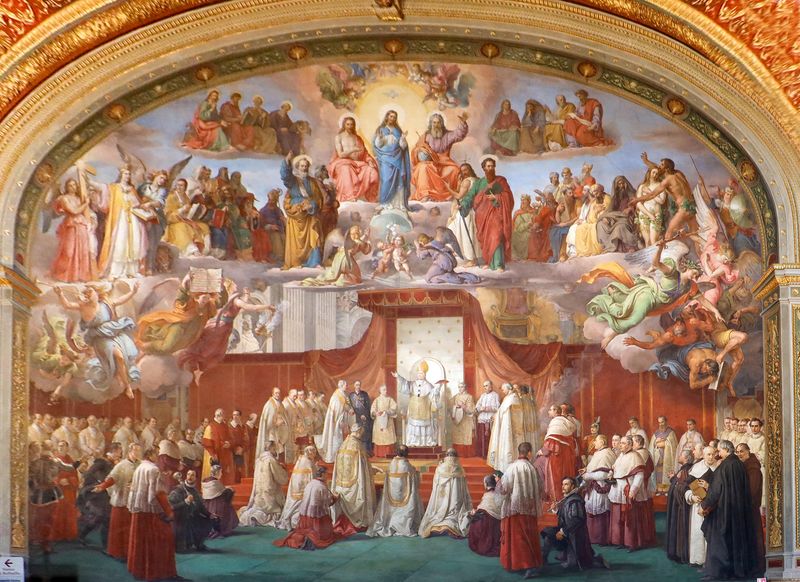
The First Vatican Council (1869-1870)—What It Taught and Why It Matters
Vatican I defined papal infallibility and primacy while defending faith against rationalism. Explore its two major constitutions, the context that prompted it, and its enduring significance for Catholic theology.
Martin Luther: A Fair Catholic Assessment
A balanced Catholic assessment of Martin Luther: honest acknowledgment of medieval abuses he rightly condemned, examination of his theological claims, and rigorous critique of his solutions and later works.
Orthodox vs. Catholic vs. Protestant
Orthodox vs. Catholic vs. Protestant — the key differences explained. A side-by-side comparison of authority, salvation, sacraments, worship, and what all three traditions still share. Updated 2026.
Stay Informed
Get new writing on faith, law, and service delivered to your inbox.
No spam. Unsubscribe anytime.