Protestants and Purgatory
On This Page
I originally wrote this post in 2016 as a Protestant working through the Catholic doctrine of purgatory. I have since been received into the Catholic Church and have revised the piece to reflect both my current convictions and what the Church actually teaches. The original argument—that purgatory completes salvation rather than competing with grace—survives the move; the framing has matured.
Does purgatory have a place within a serious Christian understanding of salvation? Most evangelicals would say no. The Catholic Church has always said yes—and the reasons are biblical, ancient, and surprisingly compelling even to Protestant ears.
For better or worse, personal salvation occupies a central role in the modern understanding of the Christian faith, particularly within evangelicalism. Especially in the twentieth century, evangelical preaching has narrowed toward the individual’s eternal destiny, even as evangelicalism has from its eighteenth-century beginnings emphasized personal conversion. The result is a tradition whose pastoral emphasis often reduces the gospel from God’s effort, as N.T. Wright puts it, to put the world to rights to a focus on the eternal destiny of the individual.
This represents a serious narrowing of the Christian faith. It gives rise to complications and misunderstandings, not least the reduction of personal salvation to an overly simplistic legal formula. It is this way of thinking that has excluded purgatory from the evangelical mindset, and it is precisely this way of thinking that the Catholic tradition resists.
The popular idea in evangelical circles that saying a certain prayer—even with the qualifier that you must “really mean it”—is all it takes to secure salvation seems as superstitious as any excessive ritualism of which Protestants have historically accused Catholics. The sinner’s prayer too often serves as a type of incantation designed to force God to secure our eternal souls.
Surely faith is much more than a simple declaration of belief. (Jas 2:14–24) Contemporary evangelical teachings on salvation can remind one of the episode of The Office in which Michael Scott “declares” bankruptcy merely by shouting the phrase.
So, what then is salvation, and how then shall we be saved? And what role does purgatory play in the Catholic answer to this question?
Purgatory and Theosis
The Catholic tradition invites all Christians to recover an understanding of salvation as a process—the outworking of a lifelong relationship between God and the believer. Salvation’s beginning cannot be rightly distinguished from the process as a whole. This is why hard evangelical distinctions between justification, sanctification, and glorification can be unhelpful when treated as separate events rather than aspects of one reality.
The process by which God transforms believers into the image of Christ—sanctification in evangelical parlance—is distinguishable from its beginning—justification—in the same way a race is distinguishable from its starting line. Hypothetical distinctions can perhaps be made for purposes of emphasis, but one cannot exist without the other and each has no meaning apart from the whole. Their distinctions are more theoretical than real, for they are different aspects of the same, indivisible reality.
Salvation is not a point-in-time event but the all-encompassing reality of the believer’s participation in God’s greater plan of redemption for the world. Through this process, God transforms the believer into the divine image. As Athanasius wrote in On the Incarnation, “he became human that we might become god; and he revealed himself through a body that we might receive an idea of the invisible Father.”1 The Eastern Christian tradition calls this process theosis; the Catechism of the Catholic Church teaches that “the Word became flesh to make us partakers of the divine nature” (CCC 460), naming this divinization as a chief purpose of the Incarnation.
Protestant Purgatory
Evangelicals generally teach that at death the believer’s soul is “made perfect in holiness” (Westminster Shorter Catechism, Q. 37) and immediately enters Christ’s presence, with full bodily glorification reserved for Christ’s return. The intermediate state, on this account, is one of completed sanctification.
The problem is that this makes the lifelong sanctification that forms the heart of Christian life an almost superfluous afterthought to salvation. According to this system, the believer faithful to Christ since childhood and the deathbed convert who has lived a life of grave sin arrive at completed holiness on identical terms.2
This sits awkwardly with Paul’s teaching about those who will be saved “as through fire” (1 Cor 3:15), and it raises an obvious question about shortcuts. If holiness can be conferred instantaneously at death, why would God not simply confer it instantaneously at conversion?
These were the questions that led me, then a Protestant, to rethink the concept of purgatory before I eventually entered the Catholic Church. The medieval abuses that scandalized the Reformers—trafficking in indulgences, the popular reduction of purgatory to penal accounting—are not the doctrine itself but distortions or now-superseded disciplines (the day-and-year quantification was reformed within the Catholic tradition itself by Paul VI’s Indulgentiarum Doctrina in 1967). The doctrine itself is straightforward: if salvation is a process, why should God abandon the process at death? If salvation is about more than our own individual destinies, why should death provide a shortcut to the end?
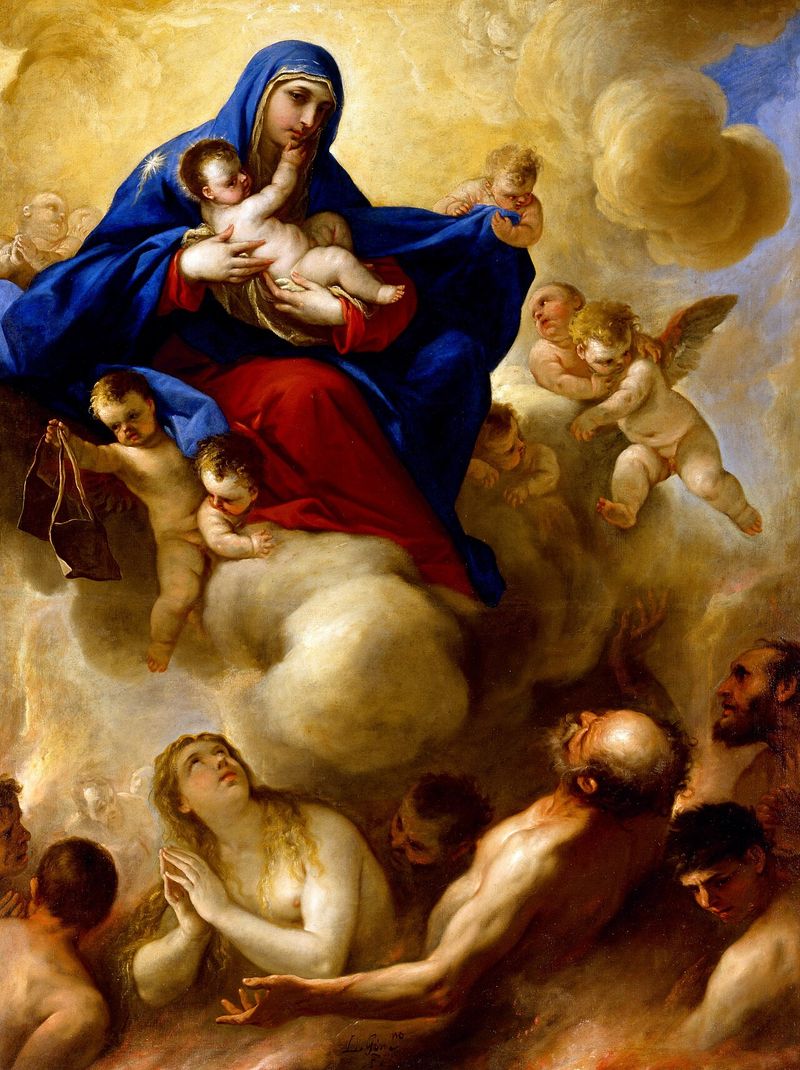
Purgatory is not a place where the believer is punished for sin—for Christ has redeemed us—but a state in which the believer allows Christ to finish his work (Phil 1:6). The Catechism teaches the same thing: those who die in God’s grace and friendship but are still imperfectly purified “undergo purification, so as to achieve the holiness necessary to enter the joy of heaven” (CCC 1030). Purgatory is the hope that God will not abandon his work when we die but will complete his commitment to transform us into the image of his Son. Painful it may be, but it is not a state to be feared. Pope Benedict XVI, in his encyclical Spe Salvi §§46–48, develops this point at length: in much recent Catholic theology, the “fire” of purgatory has been understood as the encounter with Christ himself, whose holiness purifies the soul of its remaining attachment to sin.
Purgatory is not Christ’s justice failing to be sufficient; it is Christ’s mercy completing what his justice has already accomplished.
Purgatory is the application of merits Christ has already won. Trent’s language of satisfactio and poena temporalis and the Ratzingerian language of transformative encounter describe the same reality from different angles; the doctrine is not reducible to either pole alone.
Within Protestantism, this view has had surprising defenders. C.S. Lewis, in Letters to Malcolm: Chiefly on Prayer, defended a version of purgatory in which God warns the soul, “It may hurt, you know,” and the soul replies, “Even so, sir.” John Wesley, while explicitly rejecting purgatory in his polemic against Conyers Middleton, taught that the righteous in paradise continue to grow in the knowledge and love of God; later Wesleyan theologians, notably Jerry Walls in Purgatory: The Logic of Total Transformation (2011), have argued that the cooperative and temporal character of Wesleyan sanctification yields a doctrine that resembles purgatory as its logical completion. Even Pope John Paul II, in a 4 August 1999 general audience, described purgatory primarily as the encounter with Christ that purifies us of attachment to sin rather than as a place of penal suffering.
Once Saved Always Saved?
The relational structure of salvation
Looking at salvation in this light reframes other related issues. If salvation is a process, it is necessarily relational. God transforms us through our cooperation; he does not work on us as if we were inert material to be reshaped. And if salvation is a process, the question, “Can I lose my salvation?” becomes nonsensical. Salvation is not something to be possessed, like a wallet, that can be accidentally lost or misplaced. It is a life-giving dependency on the Father that cannot be reduced to a legal formula about justification.
Salvation is not a possession to be lost but a living dependency on the Father.
God offers his grace that brings freedom from the bondage of sin. Man must only receive it and accept Christ as his new master, but that acceptance does not bring man into a passive experience of salvation. Because salvation is relational, man must cooperate with the grace offered to him; should he reject God’s grace, God will not force it upon him.
The doctrine of mortal sin
Like purgatory, the Catholic doctrine of mortal sin—despite its frequent practical perversions on both sides of the Reformation—is essential to a relational understanding of salvation. Mortal sin, the Catechism teaches, requires “three conditions met together: grave matter, full knowledge, and deliberate consent” (CCC 1857). It demonstrates that human beings can, through deliberate choice, reject God in the most personal terms. Understood properly, the doctrine removes sin from a legalistic ledger and places it back into the context of relationship.
The phrase itself can be unhelpful because of the baggage it carries in traditional Protestant-Catholic disputes and its tendency to be reduced to a legalistic formula. The underlying concept, however, should be recognizable to any evangelical who takes seriously the warnings of Scripture against falling away.
I often think of it as a marriage. If I speak in anger toward my wife or do something inconsiderate, I may have failed as a husband, but such things are unlikely to cause a severe break in our relationship. They simply demonstrate my imperfections and reconciliation is generally easy—assuming such minor slips are not habitual.
If I am unfaithful to her, however, something very significant happens to the foundations of our relationship, and we cannot go on as before without some kind of significant restoration. I can through my actions destroy our relationship without undertaking the legal process of divorce. Indeed, there is much more to our relationship than the law.
Such is mortal sin: in committing it we make an intentional choice to cut off our relationship with the Father. The obsession with legalistic formulas has deprived many Christians of this understanding. We want to be able to say with precision what sin is mortal and what is not (1 John 5:16–17). When we do, however, we are left either to reject the idea altogether—creating an illogical hybrid of Calvinist and Arminian theology—or to take it so far that every mistake becomes a revocation of God’s grace.
Hell as freely chosen separation
This betrays a lack of understanding of the underlying concept. The point is that salvation is relationship, and real relationship requires cooperation. Anyone who knowingly and deliberately commits grave sin and dies unrepentant has, by that act, severed himself from God’s grace; in the Catholic understanding, even a single unrepented mortal sin places one outside the friendship of God (CCC 1857, 1861).
There is no such thing as “fire insurance” to be purchased by the recitation of a certain prayer or creed. Salvation lies only close to God, and those who forsake God forsake salvation. God will pursue the individual to bring him back to the fold, but should he refuse God’s overtures, God will relent.
Death, therefore, merely eternalizes one’s state before God.
Hell is the freely chosen separation from God by those who refuse to be otherwise.
As C.S. Lewis wrote in The Problem of Pain, “The doors of hell are locked on the inside”—a theme he later dramatized in The Great Divorce, and a thought to which the Catholic tradition is deeply sympathetic.3
Security of the Believer
Those in Christ never have to fear damnation, for it is not something into which a believer can accidentally slip. Yet, should they freely choose apostasy, God will not override the free will he gave them (Heb 6:1–8).
That is the real security: knowing that God remains with us and assures us of our salvation if we will only remain with him (Matt 24:13). Yet in their emphasis on this, many evangelicals end up portraying God as a kind of cosmic kidnapper, luring us into his windowless van. We may enter voluntarily, but once inside, there is no getting out.
That, however, is not freedom; it is coercion. To love God, we must be free to reject him. If we are free to choose God’s path of salvation, we must be free to abandon it. Recognizing this will restore our understanding of salvation as a relationship between God and man, not as a legalistic formula to be worked out.
It is for this reason that Paul tells us to “work out your salvation with fear and trembling” (Phil 2:12)—and it is this same logic that makes purgatory not a frightening intrusion on the gospel but its natural completion.
Frequently Asked Questions
Is purgatory in the Bible?
Yes, though the word itself does not appear. The most-cited passage is 1 Corinthians 3:10–15, a passage the Catholic tradition has long read as referring to a postmortem purification: Paul describes a judgment by fire in which a person’s works are tested, and the one whose work is burned up “will be saved, but only as through fire.” (The NABRE editorial note on this passage takes a more restrained reading; the Catholic interpretive tradition reads it more expansively.) The doctrinal warrant for prayer for the dead, on which the practice of suffrages for souls in purgatory rests, comes from 2 Maccabees 12:38–46, where Judas Maccabeus offers prayer and sacrifice for fallen soldiers “that they might be absolved from their sin” (NABRE). Other texts cited by the tradition include Matthew 5:25–26, Matthew 12:32 (a sin that “will not be forgiven, either in this age or in the age to come”), and 1 Peter 3:18–20 (the descensus passage, traditionally pressed into broader afterlife arguments).
What does the Catholic Church teach about purgatory?
The Catholic Church teaches that all who die in God’s grace and friendship but are still imperfectly purified are indeed assured of their eternal salvation, but after death they undergo purification so as to achieve the holiness necessary to enter the joy of heaven (CCC 1030). Purgatory is not a second chance, not a destination separate from heaven, and not a punishment Christ has not already paid for. It is the final purification of those who are saved—the completion of the sanctification God began in this life. The Church has not dogmatically defined whether purgatory is a place, a state, or a process; the Catechism uses dynamic language (purification rather than location), and Pope Benedict XVI in Spe Salvi §47 leans toward describing it as the soul’s transformative encounter with Christ.
Did the early Church believe in purgatory?
The noun purgatorium and the spatial-locative imagination crystallized in the high medieval West, as historians like Jacques Le Goff have shown. But the underlying conviction—that some of the elect undergo a postmortem purification before the beatific vision—is witnessed already in the second-century practice of prayer for the dead. Tertullian (De Corona 3.3, c. 211) describes the annual offerings made for the dead as an established custom; Augustine prays for his deceased mother Monica in the Confessions (Book IX, c. 397–400); Cyprian, Origen, and Gregory of Nyssa all attest to a process of purification after death (though within apokatastasis frameworks that the Western purgatorial tradition does not endorse). The fully developed Western doctrine took centuries to crystallize, but the underlying conviction has roots reaching back to the second century and to Second Temple Jewish practice (2 Macc 12).
Is purgatory a “second chance” for salvation?
No. Purgatory is only for those who die in God’s grace—that is, for those whose salvation is already assured. It is not a way to be saved if one dies outside of friendship with God. As the Catechism puts it, “The Church gives the name Purgatory to this final purification of the elect” (CCC 1031). The point is purification of the saved, not deliberation about who is saved.
Doesn’t purgatory undermine the sufficiency of Christ’s atonement?
This is the central Protestant objection, and the Catholic answer is that purgatory presupposes Christ’s sufficiency rather than denying it. Christ has fully paid the penalty for sin; that work is complete and unrepeatable. The Catechism states the principle directly: “This final purification of the elect… is entirely different from the punishment of the damned” (CCC 1031). At the same time, the Catholic tradition has always taught—Trent Session 6 Canon 30 anathematizing the contrary, and Florence’s Laetentur Caeli (1439) defining purgatorial cleansing in terms of poenis purgatoriis—that a debt of temporal punishment can remain to be discharged for sins whose guilt has been forgiven, and that this temporal effect is what purgatorial cleansing addresses. Purgatory is therefore the final stage of sanctification, in which the merits Christ has won are applied to remove both the lingering attachment to sin and the temporal effects of sin not yet repaired in this life. Trent’s language of satisfactio and poena temporalis and the Ratzingerian language of transformative encounter with Christ describe the same reality from different angles; the doctrine is not reducible to either pole alone. Or, more briefly: purgatory is sanctification—not a re-payment of a debt Christ has not already paid.
Did C.S. Lewis believe in purgatory?
Yes, in a qualified sense. In Letters to Malcolm: Chiefly on Prayer (1964), Lewis wrote that he believed in purgatory and described it as the place where God warns the soul, “It may hurt, you know,” and the soul replies, “Even so, sir.” He explicitly rejected the late-medieval picture of purgatory as a place of punitive torment, but he affirmed the deeper Catholic principle that the soul must be purified before it can bear the unmediated presence of God. His view is much closer to the Catholic doctrine—and to an older strain of patristic thought, especially Eastern Christian—than the polemical Protestant caricatures suggest.
What did Martin Luther originally believe about purgatory?
Luther was not initially opposed to the doctrine of purgatory itself. The Ninety-Five Theses of 1517 attacked the abuse of indulgences but presupposed purgatory as a settled doctrine (theses 14–29 are intelligible only on that assumption). In his 1521 Defense and Explanation of All the Articles (responding to the bull Exsurge Domine), Luther wrote, “The existence of a purgatory I have never denied” (LW 32:95), and continued to affirm it for several years before his position hardened in the 1530s, finally reaching formal rejection in his 1530 Widerruf vom Fegefeuer. The doctrinal break with the Catholic Church on purgatory was a consequence of the Reformation, not its cause.
Do Anglicans believe in purgatory?
Anglican opinion has never been monolithic. The Thirty-Nine Articles (1571) Article XXII rejected the “Romish Doctrine concerning Purgatory” as “a fond thing vainly invented”—a 1563 revision of the 1553 Articles, where the rejected target had been the broader “doctrine of school-authors.” The narrower 1563 wording is what makes the Anglo-Catholic reading textually plausible: on that reading, the Article rejects the late-medieval distortions Luther had attacked but does not condemn postmortem purification as such. The opposing reading, supported by Cranmer’s removal of prayers for the dead from the 1552 Book of Common Prayer and by Jewel’s polemical Apology, takes the Article as ruling out postmortem purification more broadly. The Anglo-Catholic and high-church tradition—going back to John Henry Newman before his reception into Rome and to leading Tractarians like Pusey and Keble—has affirmed an “intermediate state” in which souls are prepared for the beatific vision. C.S. Lewis (an Anglican) is the most accessible modern example. The line within Anglicanism therefore runs not between “purgatory” and “no purgatory” but between those who keep the late-medieval polemic and those who recover the older Christian conviction in milder language.
What is the difference between purgatory and hell?
Hell is the eternal, freely chosen separation from God by those who refuse his love. Purgatory, by contrast, is temporary, exists only for those already saved, and is oriented entirely toward union with God. The souls in purgatory are not in any state of doubt about their eternal destiny; they are being made ready for it. Hell is the absence of God; purgatory is the painful but joyful preparation to enter his presence (CCC 1033–1037).
Do Catholics believe purgatory involves fire?
The Catholic Church does not dogmatically define the nature of purgatory’s suffering. The fire imagery comes from 1 Corinthians 3:15 and from a long Christian tradition of describing purification metaphorically as fire; Aquinas and Bonaventure held real-fire views, and Trent (Session 25) cautioned against speculative excess in either direction. In much recent Catholic theology—including Pope Benedict XVI in Spe Salvi §§46–48—the “fire” of purgatory has been understood as the encounter with Christ himself, whose holiness purifies the soul of its remaining attachment to sin. The Church requires belief in the reality of postmortem purification but leaves the specific phenomenology open.
Footnotes
1. Athanasius, On the Incarnation, trans. John Behr, Popular Patristics Series 44b (Crestwood, NY: St. Vladimir’s Seminary Press, 2011), §54: “He became human that we might become god; and he revealed himself through a body that we might receive an idea of the invisible Father.” This does not mean that human beings become God in essence but rather that God transforms our nature to reflect the divine nature through grace; Eastern theologians, especially Vladimir Lossky, press this distinction through the categories of essence and energies. The Catholic Catechism teaches the same reality at CCC 460: “The Word became flesh to make us God” and “the Son of God became man so that we might become God.” For an accessible introduction, see Norman Russell, Fellow Workers with God: Orthodox Thinking on Theosis (Crestwood, NY: St. Vladimir’s Seminary Press, 2009); Vladimir Lossky, The Mystical Theology of the Eastern Church (Crestwood, NY: St. Vladimir’s Seminary Press, 1976).
2. I borrow the Reformed triad (justification / sanctification / glorification) here for Protestant familiarity. Catholic systematic theology more often speaks of initial justification, growth in charity, final perseverance (CCC 2016), and the beatific vision. The standard Reformed answer to the deathbed-convert problem—that God’s electing decree explains the discrepancy and that sanctification is itself God’s sovereign work—is internally coherent but does not address the question of why the lifelong process of sanctification matters at all if its end result can be conferred instantaneously. See further Calvinism vs. Catholicism.
3. C.S. Lewis, The Problem of Pain (London: Geoffrey Bles / The Centenary Press, 1940), ch. 8 (“Hell”); a theme Lewis later dramatized in The Great Divorce (London: Geoffrey Bles, 1945). The conviction that hell is freely chosen has substantial patristic support: Gregory of Nyssa, Maximus the Confessor, and (with controversial nuances) Origen all wrestled with the question of whether divine love can ever be wholly resisted, though within an apokatastasis framework distinct from the Western purgatorial tradition. See Hilarion Alfeyev, Christ the Conqueror of Hell: The Descent into Hades from an Orthodox Perspective (Crestwood, NY: St. Vladimir’s Seminary Press, 2009), ch. 2. The Catholic Church definitively affirms the reality of hell as eternal separation from God for those who freely refuse his love (CCC 1033–1037), while emphasizing that the choice is genuinely the soul’s own.

Garrett Ham
Garrett Ham is an attorney, military veteran, and holds a Master of Divinity from Yale Divinity School. He writes from Northwest Arkansas on theology, law, and service.
Related Posts
How the Catholic Church Makes Saints: The Four Stages, and What Each One Actually Means
A precise walk through Catholic canonization—Servant of God, Venerable, Blessed, Saint—and exactly when you may pray to and publicly venerate the person.
Why Catholics Confess to a Priest: A History of the Sacrament of Reconciliation
A scholarly Catholic history of the sacrament of reconciliation: its biblical, patristic, medieval, and Reformation roots, for curious Protestant readers.
Can You Lose Your Salvation? Catholic Teaching
Can a Christian lose their salvation? The Catholic Church teaches that mortal sin can sever one's relationship with God — but that grace can always be restored through repentance.
Stay Informed
Get new writing on faith, law, and service delivered to your inbox.
No spam. Unsubscribe anytime.