The Faith of My Fathers
On This Page
Part of the series: Evangelical to Catholic
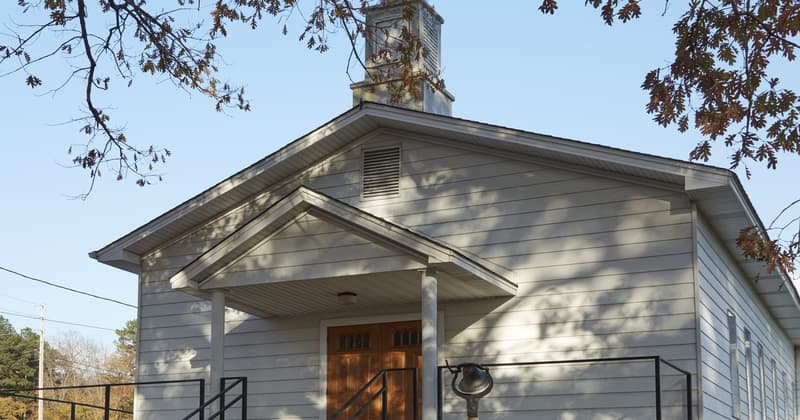
I was baptized in a small Missionary Baptist church in Plummerville, Arkansas, a somewhat stereotypical Southern town, Mayberry with less prosperity. Everyone knew each other, and everyone was poor. I spent every holiday and summer vacation of my childhood there. Our family life centered on my great-grandparents. On account of early marriages and childbirths through several generations, they were only in their late fifties and early sixties when I was born, so I grew up with them. That is why I was baptized at their church, and not my own.
My great-grandfather was a good man, and I think about him often. He fought in Europe during the Second World War, where he saw serious combat, including at the Battle of the Bulge. He was frostbitten so badly there that his feet bothered him until the day he died. He also witnessed the Holocaust firsthand, as his unit liberated concentration camps, and he carried that with him for the rest of his life. There was a quiet dignity about him that I loved then and appreciate more now that I am grown.
I called him Papa, a name my father inherited when his own grandchildren were born. Papa loved taking his grandchildren and great-grandchildren with him wherever he went, but I can’t remember ever having a prolonged conversation with him. I only know of the burden he carried because he opened up to my father after my father joined the military. I suppose he saw in my father someone who might understand. I look back now upon Papa’s church, that small quintessential Missionary Baptist church, with something close to the affection I still have for him.
I have wondered since what his faith actually consisted of, because he never volunteered it. He was at that church, and he did not explain why he was there. It never occurred to me to ask. He would sing hymns to himself as he went about the day, and he would discuss Scripture with anyone who would begin the conversation. He would help people without complaint. A master plumber, he once crawled under a poor black widow’s house on Christmas Day to fix her frozen pipes for free. Plummerville was an unreconstructed town, where relatives still told stories about the Civil War that they had heard from their grandparents who lived it—from the Confederate perspective, of course. So this level of generosity was particularly unusual in that setting. Whatever he believed, he had evidently decided it was not a thing to be said out loud but a thing to be lived. I have known a great many people since who could give a full account of what they believed. I am not certain any of them held it more firmly than the man I never thought to ask.
Growing Up Baptist in Arkansas
I grew up Baptist, as is so common in the South. The church let me embrace my culture and the faith of my fathers at the same time, along with all the beauty and richness that faith brought into my life. In 1995, my father, a career military officer, was assigned to Little Rock Air Force Base. We settled in Cabot, Arkansas, less than an hour drive to Plummerville. We drove there every Sunday after church for the big dinner my great-grandmother always prepared. We also joined First Baptist Church in Cabot, and we were there whenever the doors were open, as the cliché goes. We went Sunday morning and Sunday evening, with Sunday school before the one and Bible study before the other. Tuesday we did door-to-door evangelism, and Wednesday night I was at children’s and later youth events.
If the family revolved around my great-grandparents, my social world revolved around that church. My friends through high school were the other kids who attended. I remember that time, and that youth group in particular, with great fondness. It gave me a strong desire to go into ministry, which took me to Ouachita Baptist University in Arkadelphia, Arkansas. That’s just where everyone interested in ministry went. What they did with me once I got there—four years of Greek and Hebrew—is its own story.
I am writing this twenty-three years after graduating from high school, and I am now Roman Catholic. I was received into the Catholic Church in June of 2020, in a private Mass with only my wife and children and the priest in attendance due to the pandemic. But this is not the story of how I got from there to here, nor is it an argument for it. It is a reflection on my gratitude for the faith of my youth. My wife attended the same church as I did growing up. We graduated from high school together and married after college, and she is still an evangelical Protestant, as are my parents and siblings. My affection for evangelicalism is not only gratitude for what it gave me, but for what it continues to give me within my own family.
The Bible Under My Arm
I was taught from an early age always to carry my Bible with me to church. It was essential because we were encouraged to look everything up for ourselves, to check what the preacher was saying against the book we had in our hands. The leather-bound Bible I had been given, gripped by the spine and tucked under my arm, gave me a sense of authority, a sense of purpose, like I had come to a test with the answer key in hand. Like many of those around me, I took pride in my Bible and took more pride when the edges began to wear. If someone left their Bible in a chair or on a table, you knew whose it was, even if their name wasn’t embroidered into it (though it usually was).
I remember shopping for Bibles, hunting for the one with the right amount of commentary, the right translation, the right size. When I received a new one for my birthday or for Christmas, I carried it around glowing like someone today with the latest iPhone. Every morning, it was with me during my quiet time. It was under my arm whenever I was at church. It was in my backpack when I went to school. It’s impossible for me to think about my childhood without remembering my Bibles. I remember when I got them. I remember the time I spent reading them. I remember the unique feel each one had.
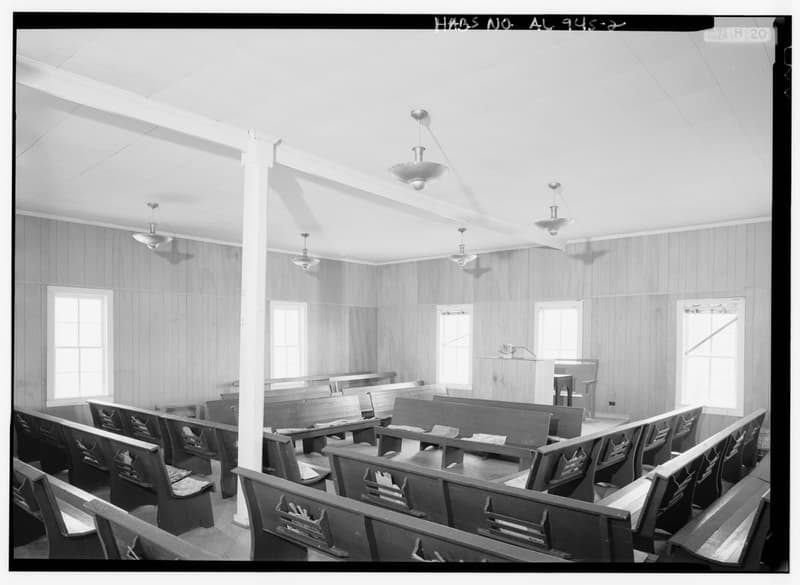
I did not always follow the sermon. I would turn to the passage the preacher had given out, and then I would keep reading past it—into the next chapter, back into whatever came before, or off after a cross-reference in the margin. I read large segments of the Bible that way, several passages at a time on Sunday mornings, while a grown man preached about something else. Nobody ever stopped me. A boy with his Bible open was a boy behaving himself, and which page he was on mattered little.
A boy with his Bible open was a boy behaving himself, and which page he was on mattered little.
I have thought since about what that assumed. They had put the whole book in a child’s hands and left him alone in it. No part of it was held back as too advanced, and no page required an adult’s permission first. What it taught me, before I could have put it into words, was that the text was the thing itself, and that anyone who wanted to know what it said could go and find out.
What They Taught Me to Do with Scripture
I still love Scripture, the study of it, the history and cultural background behind it. I love everything about it. What evangelicalism gave me, though, was more than the love of Scripture. It also taught me what to do with that love, and what a real love of Scripture meant. I was taught to let Scripture speak for itself, to put correct and careful interpretation above any presupposition I brought to it, and to be willing to abandon a belief or accept one on the strength of what the study produced. I am grateful for that. I am grateful to the evangelicalism, and the evangelicals, who instilled it in me so deeply.
Evangelicalism has a real depth to it. Beyond the academic contributions evangelical scholars are making, there is the focus on Bible study within the church itself, along with the accountability groups, discipleship programs, and evangelism that are marks of a meaningful faith. These are serious people with a serious faith to which they have a serious commitment.
A Personal Relationship with Jesus Christ
But my evangelicalism did not only teach me a love of Scripture. Foundational to the faith, wound up with that love of Scripture and yet distinct from it, was a personal relationship with Jesus Christ. Even when I pushed back gently against the “Christianity is a relationship, not a religion” mantra so ubiquitous among my peers studying for ministry, I still accepted that the relationship was essential. This focus made it difficult for faith to become the pure cultural marker it can be within Catholicism, Orthodoxy, and some mainline Protestantism. The cinematic image of the mobsters attending Mass, for example, would not work in an evangelical setting.
Of course, that is not to say it cannot still function that way. In the South in particular, it can. However, the requirement of believer’s baptism means that at some point, to keep the marker, you have to make a public profession of faith and be baptized.
I remember my own baptism at age ten. I went into the water in dress clothes rather than a robe, and I was told to hold my own nose, which I did. The water was cold. It was June, and I did not much mind. My cousin Fritz, a Baptist minister himself, put me under in the name of the Father, and of the Son, and of the Holy Spirit. Afterward I changed into a second set of dress clothes, because everything I had worn in was soaked through, and that little church marked the occasion with the quintessential expression of Baptist celebration: a potluck. This rite of passage makes it more difficult, though not impossible, for cultural Christianity to become the defining characteristic of an evangelical Baptist church. In such an environment, it was hard not to take faith seriously once you had given it the thought that commitment required.
I admired that about my faith growing up, and I took pride in the culture that it produced. I love that for those who are serious about the faith, even for a season, the pursuit of that personal relationship with Jesus Christ is the point. I have never let that part go. It is still essential to me, and I think it is essential to being a practicing Catholic as well. Some on both sides may bristle to hear that, but I think it’s the truth. Pursuing it is as important to me now as it has ever been, and while I may now pray the Rosary and ask saints to intercede on my behalf, I still pray most fervently directly to God, more than I did as an evangelical.
That intensity may not be present in every evangelical setting, but I would not describe my own experience that way, or that of most of the people with whom I grew up. The faith I saw in other people, and the faith I had growing up and kept into my mid-thirties—and still hold, in some form—was real. It was moving, and it drew me closer to Jesus Christ.
The Prayer I Could Never Manage
Not every aspect of the faith came easily to me. I always had a difficult time praying. I could sit and read my Bible for hours, but in prayer I could rarely come up with more than a handful of things to say. When I sought advice, I was told to speak with God like a friend, which, given my more reserved demeanor, didn’t make it any easier. I also figured that God wasn’t much interested in video games or major league baseball. But I persevered, and I think there is something meaningful in that as well. That you try. That you love the Lord. That you keep going. That had an impact on my life. The culture surrounding that passion, that love for Jesus Christ, was intense, and I miss it.
The Casseroles and the Names I Still Remember
There is also something genuine about evangelicalism in practice. I remember so many things we did growing up that were simply routine. If someone was sick, or suffered a tragedy, or had surgery, or even had a baby, we would come together and schedule days, each of us picking one, to bring them dinner so they would not have to think about it while they recovered. There was always a small group of women willing to do the hard work of making sure the hurting, the suffering, and the exhausted were looked after. I still remember many of their names: Jerry Lou, Saralu, and my own mother. It gave me a picture of how the members of the Body of Christ are supposed to love each other. (Though I did pick up an extreme hatred of casseroles that remains with me to this day.)
The seriousness with which people took their faith also led them to make significant sacrifices, from serving overseas in the mission field to giving generously to help those in need. My family was no exception. When I was twelve years old, my parents opened our home to foster children, and from then on, we always had abused and neglected children living with us who needed a safe place to stay, even if only for a little while. I could not count how many there were over the years. A couple of them never left and became permanent parts of the family.
What It Cost at Home
While rewarding, this was a tremendous sacrifice. In many ways, I feel like my childhood ended when I was twelve years old, as I was unable to enjoy many of the things my friends did—free time to play ball or hang out or sleep in on weekends and holidays—because of what was required at home. The babies that came required constant attention and supervision, as all babies do, and the older children brought with them so much baggage from the horrible hands they had been dealt that being outside the home was less stressful than being inside it.
The time I got to spend with my parents alone all but disappeared. I still remember my mother taking me to see Doctor Dolittle—the one with Eddie Murphy—in the theater when I was in eighth grade, just her and me, because such outings were so rare. It is the only one I can recall from those years.
My childhood, as a result, was lonely, and the church was where I could spend time with friends and feel like I belonged before returning home, where I felt like a stranger. Of course, what I suffered was nothing compared to what the children we fostered had suffered, and the pain of their histories is hard to think about even decades later. And the sacrifice was made out of love, in a house where the admonition that whatever we do unto the least of these, we do unto Christ, was taken seriously.1 We did everything we could to follow it.
None of that is a grievance. It was a cost, and it was real, and a cost is not the same thing as a failure. The faith that opened our house to those children is the same faith that gave me somewhere to go when the house was too full, and I have never been able to resent the one without being ungrateful for the other. The experience taught me that the Christian faith cannot be reduced to lip service. When Jesus told us to take up our cross and follow him, he meant it.2
It was a cost, and it was real, and a cost is not the same thing as a failure.
The evangelicals I knew were generous with their money and their time. Jesus said you will know them by their fruits, and the fruits of the evangelicalism in which I grew up were real.3 They left a lasting impression upon me. This is not a faith to be ridiculed or dismissed, and I still get defensive of it when someone does, even if it’s a fellow Catholic.
What Was Not Perfect
I write here of my evangelical background in glowing terms, but not everything was perfect. Nothing ever is. Six years in the Catholic Church have confirmed what I already knew in that regard. When I look back on my childhood, and on my time as an evangelical in adulthood, there are still things about that faith that I find off-putting. The way pastors would rally around other pastors accused of misconduct, protecting a friend over protecting the flock. That was real. One pastor from my childhood, who was let go under a cloud of scandal, was then hired by a Baptist seminary to train future ministers. Of course, I did not leave that behind. The abuse crisis is the same failure at far greater scale—bishops moving accused priests rather than removing them—and I joined a church that has been answering for it my entire adult life.
Gossip and judgmental attitudes were also common, and even expected, inside the churches of my youth, and sometimes especially there. And they were filled with people who considered themselves theologians and scholars—including me at eighteen—with little or no training, ignorant of the subjects on which they spoke most confidently.
I had pastors who failed morally, who were incompetent, or who were simply unkind. There were disappointments, but they had little effect on me. People are people. People will fail, and their failure is not by itself an argument against whether a thing is true. The focus on the relationship with Christ taught me this more than anything else, and it was that inheritance from my evangelical upbringing that made the transition to the Catholic Church easier than it would have been had I thought the behavior of priests and bishops undermined the legitimacy of doctrine. People fail me, but Christ never has.
Simply put, nothing went wrong.
Leaving a Faith That Never Failed Me
I left a faith that never failed me. I am grateful for the faith I have rejected, though not in its entirety. I still carry a great deal of it with me. Nobody I grew up with could have stopped my leaving. None of the pastors, none of the professors under whom I studied, and none of my relatives. They were the ones, quite unintentionally I am sure, who enlarged my vision of the faith I held dear and taught me to follow it wherever it led. So, I left, and in leaving I left behind much of what I valued and had come to depend upon. What I had leaned on through the hard times was gone. I missed it then. I miss it still.
When I joined the Catholic Church, there was a real sense of loss, a loss of what I had known and loved, and of a connection with family and friends. I had, after all, joined a church that is not held in the highest esteem in Baptist circles. Sometimes, however, doing the right thing is the hardest thing, not because it is right, but because it cuts you off from people who hold a foundational belief you now reject.
I entered the Catholic Church without a single Catholic friend, without family inside it, without a support group. I left a culture in which I was comfortable for one I did not know. My academic work—my study of Scripture, my reading of the Church Fathers, my training in Church history—was what drove my conversion. So I was quite ignorant of Catholic culture when I entered it. After six years, I am relatively ignorant of it still. I felt like an immigrant arriving in a new country, and even though I knew I had made the right decision, I missed the country I had left.
I felt like an immigrant arriving in a new country, and even though I knew I had made the right decision, I missed the country I had left.
This is not to say the intensity found in evangelicalism is absent from the Catholic Church. It is to say that it is difficult to find if you are not looking for it, and easy to find if you are. Each tradition has its characteristic way of growing lukewarm. Where the evangelicalism I knew struggled with the cheap grace of a decision made once and treated as settled forever, Catholicism struggles with routine—a sacramental life kept up out of habit rather than for its connection to God, and the mediocrity and drift that follow from it.
The Cost I Could Not Avoid
The journey also put me in an awkward position in my marriage, which was one of the reasons I resisted joining the Church for so long. My wife has been extraordinarily supportive throughout, and I am forever grateful for her. Still, I know it has been hard on her. When we married nineteen years ago, we were both evangelicals. Thirteen years in and two children later, I joined the Catholic Church. I lost a strand of the connection we had, and I miss it.
I won’t go into it further here, both for reasons of space and to protect her privacy, but when I look at how she observes her faith, I do not see an inferior practice or an inferior believer. We disagree about important questions of theology and doctrine, but I look at her with the intense love that nineteen years of marriage brings to two people who have persevered through good times and hard ones and are more in love than ever before.
There is a sadness that haunts me over putting her through this, over cutting that strand of commonality. I still do not know what I could have done differently once I became convinced of the truth of the claims of the Catholic Church. I accepted that she was not prepared to go down that road with me and may never be. She has supported and loved me, and she even comes to Mass with me on top of her own church, giving up the rest she needs before Monday. It is hard to feel that you did the right thing while regretting the hurt that the choice caused people you love, people who did nothing wrong.
I have been fortunate not only in my wife’s reaction, but in my larger family’s as well. There are stories of evangelicals becoming estranged from a child when that child becomes Catholic. That, however, never happened to me. My parents speak about Catholicism with more respect than they did when I was growing up, and I know that is out of love for me. Of course, I don’t know what they say about it when I’m not around, but I have something many people do not have: the love and support of my family. I am grateful for it beyond what I can say, even while I cannot shake the feeling that I have in some way let them down.
When I think about the faith of my youth, it’s like remembering a loved one from whom you have become estranged. You can think of the things about them that bothered you, but it does not mean you do not miss them. You do, and it is worse because they are still out there and yet out of reach. In the same way, I miss evangelicalism.
Faith of Our Fathers
There was a hymn we sang in the churches I attended growing up, particularly in that little Missionary Baptist church in Plummerville. If you’ve come from an evangelical background, you have likely sung “Faith of Our Fathers” at some point. The refrain goes, “Faith of our Fathers! Holy Faith! We will be true to thee till death!” I loved that song. I still love it. It was not until much later, after I had joined the Catholic Church, that I learned the story behind it.
The hymn was written in England in the nineteenth century by an Anglican priest who had converted to Catholicism.4
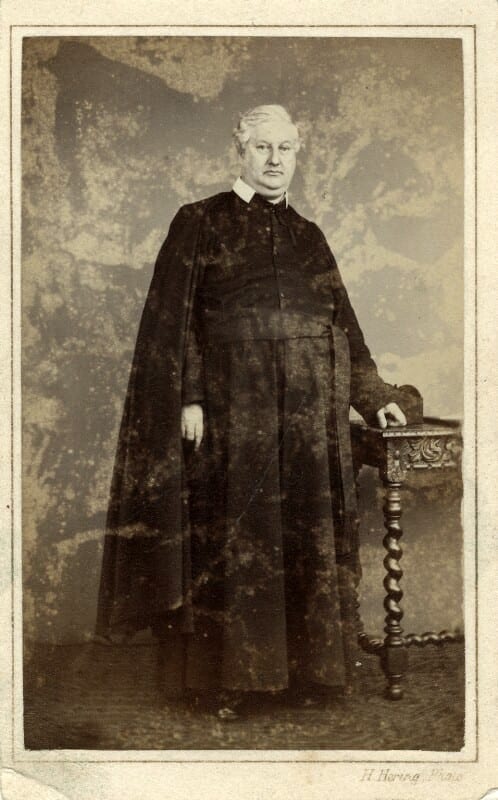
He wrote the song to honor the Catholics who were martyred in England following the English Reformation.
One of its most poignant verses is missing from Protestant hymnals.
Faith of our Fathers! Mary’s prayers
Shall win our country back to thee;
And through the truth that comes from God
England shall then indeed be free.
Faith of our Fathers! Holy Faith!
We will be true to thee till death!5
The line did not survive its passage into mainstream Protestant hymnody. In 1853, two Unitarian editors replaced Mary’s prayers with “Good men’s prayers,” and softened “win our country back” to “win our country all to thee”—which is a considerable difference, since the original presumes there is somewhere to come back to.6
So the hymn I sang as a boy in a Missionary Baptist church in Plummerville, Arkansas, was written by a Catholic convert, in memory of Catholic martyrs, asking the intercession of the Blessed Virgin Mary for the conversion of England. I did not know any of that. Neither, I suspect, did anyone else in the building. We sang it because it was ours, and we meant every word of what we sang.
I find I cannot improve on the irony, and I am not sure I want to. There is something fitting about a convert’s hymn, stripped of the parts that made it Catholic, being sung with full conviction by people who would have rejected those parts, and then found again decades later by one of their own children who had gone looking. The faith of my fathers turned out to be older than my fathers knew.
When I think about evangelicalism, I do not think about the points on which we disagree, at least not most of the time. I think about the happy memories of my childhood inside the walls of First Baptist Church in Cabot, Arkansas. The friends I had, the chance to share my faith and study Scripture every day. I loved the faith of my childhood, and even though I am no longer a part of it, I love it still.
Frequently Asked Questions
Who wrote “Faith of Our Fathers,” and when?
Frederick William Faber (1814–1863), an English convert from Anglicanism to Catholicism, published it in 1849 in Jesus and Mary; or, Catholic Hymns. He wrote two versions—one for England in four stanzas of six lines, and a longer one for Ireland in seven—but only the English one appeared in 1849; the pair first stand together in the enlarged 1852 edition. The tune most Americans know, ST. CATHERINE, came later and is not Faber’s.
Why do Protestant hymnals leave out a verse of “Faith of Our Fathers”?
Because Faber’s third stanza asks the Blessed Virgin Mary’s prayers to win England back to the Catholic faith, which was not something Protestant congregations were going to sing. The first substitution came in 1853, when Frederic Henry Hedge and Frederic Dan Huntington replaced “Mary’s prayers” with “Good men’s prayers” for their Unitarian collection Hymns for the Church of Christ. Most modern hymnals use a later rewrite that drops the petition altogether.
Were the martyrs in the hymn Protestant martyrs?
No. Faber was honoring the Catholics executed in England after Henry VIII’s break with Rome, and especially under Elizabeth I, in whose reign most of them died. The “dungeon, fire, and sword” of the opening stanza refers to their deaths, not to the Protestant martyrs of Mary I’s reign—a detail that surprises many of us who grew up singing it.
Can a Catholic convert be grateful for an evangelical upbringing?
Mine is one account, not a rule, but yes—and in my case the gratitude is specific rather than sentimental. The habit of reading Scripture closely and following the argument wherever it goes is among the things evangelicalism gave me, and it is the one that eventually carried me out. I do not think that is a betrayal of what I was taught. I think it is what I was taught.
Does becoming Catholic mean rejecting everything evangelicalism teaches?
Not in my experience. The emphasis on a personal relationship with Jesus Christ, which was foundational to the faith I grew up in, has remained essential to me, and I would argue it is essential to practicing Catholicism as well. There are real and serious disagreements—about authority, the sacraments, and the Church herself—and this essay does not try to settle any of them.
Footnotes
1. Matthew 25:40: “Amen, I say to you, whatever you did for one of these least brothers of mine, you did for me” (NABRE).
2. Matthew 16:24; cf. Mark 8:34, Luke 9:23.
3. Matthew 7:16, 20.
4. Faber was born at Calverley, Yorkshire, on 28 June 1814 and died at Kensington on 26 September 1863. He was ordained deacon in the Church of England in 1837 and priest in 1839, was received into the Catholic Church in 1845 in the wake of Newman’s conversion, and was ordained to the Catholic priesthood in 1847. He served as Provost of the London Oratory from 1850 until his death. See “Faber, Frederick William,” Dictionary of National Biography, vol. 18 (London: Smith, Elder, 1889), which records the diaconate on 6 August 1837 at Ripon, priest’s orders from Bishop Bagot in 1839, the reception on 16 November 1845, ordination on 3 April 1847, and Faber at the head of the London Oratory until his death; and Catholic Encyclopedia (1909), s.v. “Frederick William Faber.” See also Hymnary.org’s Faber page for the hymnological biography. Two cautions for anyone tracing this further: Julian’s older entry on that same Hymnary page compresses the two ordinations into “Taking Holy Orders in 1837” and dates the conversion to 1846, and a widely circulated hymn-history essay from Discipleship Ministries dates it to 1843. The 1845 reception is the standard modern date. Faber published “Faith of Our Fathers” in 1849, in a collection called Jesus and Mary; or, Catholic Hymns. He wrote it twice, in two versions—one for England and one for Ireland—though only the English one appeared in 1849; by the enlarged 1852 edition the two stand side by side as nos. 46 and 47. John Julian, A Dictionary of Hymnology, s.v. “Faith of our fathers! living still,” reproduced at Hymnary.org: the hymn “appeared as the first of two hymns, one ‘Faith of our Fathers,’ for England; and the second the same for Ireland, in his Jesus and Mary; or, Catholic Hymns for Singing and Reading, 1849, in 4 stanzas of 6 lines.” Julian assigns both hymns, and that longer title, to 1849; the surviving 1849 printings do not bear him out. The 1849 first edition runs to forty-three hymns and contains only the English version, at no. XXIX, under a title page reading simply Jesus and Mary; or, Catholic Hymns. Both the pairing and the fuller subtitle belong to the enlarged 1852 edition, whose table of contents lists them as nos. 46 and 47. The Irish version runs to seven stanzas, and its Marian lines ask that Mary’s prayers “keep our country fast to thee” rather than win it back—Ireland, on Faber’s reckoning, having never left—closing not with “England shall then indeed be free” but with “O we shall prosper and be free!” Because the stanzas run to six lines, the closing couplet is Faber’s own text; James G. Walton’s contribution in the 1860s–70s was the musical setting of the refrain to ST. CATHERINE, not the words—a distinction several popular hymn-history pages blur.
5. Wording follows the 1849 first edition of Jesus and Mary, hymn XXIX, pp. 133–34, which needs no editorial regularization: the stanza and its refrain stand there exactly as printed above. Julian independently records the opening two lines of stanza iii in the same wording. (The 1852 edition, no. 46, prints the identical stanza but drops an s from the refrain’s first “Fathers.”)
6. Julian, Dictionary of Hymnology, as above: “In 1853 Drs. Hedge & Huntington altered these lines to:—‘Faith of our Fathers! Good men’s prayers / Shall win our country all to thee.’ for their Unitarian Hymns for the Church of Christ, No. 455. With this alteration it has passed into several Nonconformist collections in Great Britain and America.” The collection is Frederic Henry Hedge and Frederic Dan Huntington, eds., Hymns for the Church of Christ (Boston: Crosby, Nichols, 1853); see the Internet Archive scan.
Garrett Ham
Garrett Ham is an attorney, military veteran, and holds a Master of Divinity from Yale Divinity School. He writes from Northwest Arkansas on theology, law, and service.
Related Posts
Learning to Read
Four years of Greek and Hebrew at a Baptist college taught me the opposite of what I expected. Not precision—the places where the English hides a decision.
The Apologist Who Believed Too Much
A sophomore apologetics assignment on Justin Martyr's First Apology cost me the church I was raised in. What chapter 66 says about the Eucharist.
Evangelical to Catholic: The Intellectual Journey
The story of my conversion from Southern Baptist evangelicalism to the Catholic Church, told as a series of essays — the road in order, one installment at a time.
Stay Informed
Get new writing on faith, law, and service delivered to your inbox.
No spam. Unsubscribe anytime.