Joseph Ratzinger, Doubt, and Humility
On This Page
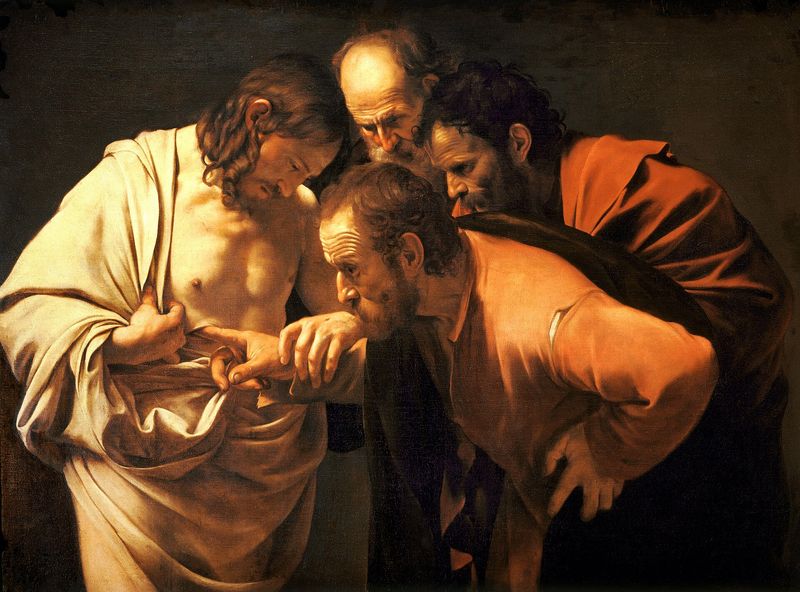
In this post in my series “God and Man at Yale Divinity,” I share my paper on doubt and humility in the writings of Joseph Ratzinger. It is the second of three papers I wrote for the Systematic Theology course I took during my second semester at Yale Divinity School.
There is something fantastical about the Christian faith. To believe that which we cannot see runs counter to the very fiber of our being, a theme I also explore in my post on faith and the foundation of belief. Yet, at the same time, the internal drive to question and seek answers that lie just beyond our comprehension has prompted the proliferation of religious faiths that continue to endure despite post-Enlightenment predictions of their eventual demise.
Thus, there is a counterbalancing of doubt: doubt in the existence of the divine and doubt in its non-existence. With insightful and sometimes cutting honesty, Joseph Ratzinger acknowledges the reality of this doubt that points us toward humility. This humility pushes us toward the flourishing life by prompting us to submit our doubts to faith in a manner that simultaneously drives us toward belief and promotes a deep and meaningful love of neighbor.
Why Is Doubt Universal?
Doubt is a universal experience, affecting the most pious believer and ardent skeptic alike. Even for the saintly devotee engulfed in the life of the Church, belief is ever-fragile, constantly subject to the most vicious attacks of uncertainty.
Such doubts are not limited to questions of dogma or esoteric theological debates that divide various religious traditions. Instead, these hesitations present regular existential threats to faith in its entirety, what Ratzinger calls “a question of all or nothing.”1 During these attacks of uncertainty, there is nothing to prevent that fall into a belief in abject nothing and a complete abandonment of faith.
Yet such vicissitudes are not limited to believers. Skeptics, too, must struggle with doubts in their unbelief. There is doubt even outside of faith, and the pain and torment of uncertainty are unavoidable. No amount of suspicion or rational thought can suffocate the ever-present possibility that, as Ratzinger puts it, “belief may after all be the truth.” We may reject faith, but we cannot reject uncertainty. It is an inalienable part of the human experience.2
We may reject faith, but we cannot reject uncertainty.
In this essential aspect of our humanity, a certain humility arises as a virtue that doubt itself cultivates. There is, after all, no escape from this very human state. On the most fundamental of existential questions regarding the human condition, there is, therefore, no place for self-affirmed certainty.
Doubt demonstrates the human limitations that handicap us all as it proves our powerlessness to find that which is necessary for our own internal satisfaction. God must always remain beyond our grasp—a question I consider further in Can We Know God?.3 Acknowledgment of this reality cannot but lead us to humility.
Doubt and Christian Humility
Yet, what does it mean to speak of humility as a response to a universal, suffocating doubt? As the virtue from which doubt as an essential element of the flourishing life springs, humility is a submission.4 It is a recognition of our weakened, limited state that prompts us to come before a God in whom we struggle to believe with the willingness to lay down our need for self-mastery. It is a recognition of how blind we are if we only trust what we can know with certainty, if we follow only our natural inclinations.5
We recognize that our search for meaning is in vain because we acknowledge, as Ratzinger writes, that meaning “cannot be made but only received.”6 Humility is, therefore, a recognition of our own insufficiencies—a theme Ratzinger develops further in his understanding of the purpose of theology.
Faith in the face of this doubt requires a continuously humble posture because faith is an ongoing struggle against a doubt that never departs. Faith is a choice to believe despite contrary internal compulsions; it is an act of complete submission that we must make over and over again.7 The humility that results from constant self-denial, the repeated acknowledgment of insufficiency, cannot help but change how we see the world and one another.
Does Religious Humility Require Pluralism?
An acknowledgment of universal doubt, however, could easily lead to the belief that any faith should be held only tentatively. Evangelism, in particular, would be out of the question, given how uncertainly those choosing faith must stand upon their own ground. How could an attitude of humility allow for any kind of effort to pull others from their own positions of doubtful skepticism?
There is something compelling about this argument. Indeed, if we are all plagued by doubt, should not a mutual appreciation for this shared state charitably give rise to a “live-and-let-live” philosophy that does not presume to encourage others to travel down the path we have so tenuously trod?
The scholar John Hick encourages such an understanding of humility and rejects any kind of claim that Christianity may make as the “unique finality as the locus of the only full divine revelation…”8 If we are all plagued by doubt, why should Christians not merely recognize all religions as diverse attempts to resolve that doubt, to reach what Hick calls the one “ultimate Reality”?9 (I trace the broader landscape of this question in my post on pluralism vs. inclusivism.)
For all his discussion on doubt, however, Ratzinger rejects such an argument. While perhaps counterintuitive, the humility that grows from doubt does not call for a recognition of relativism in the face of uncertainty. Instead, it pushes us toward belief in the Christian faith as the ultimate truth.
By submitting to a call to believe despite our doubt, we humble ourselves before a divine calling, through which we acknowledge a truth we come only slowly to understand. Indeed, understanding follows belief, not the other way around.10
Humble Submission to Truth
The humility that springs from doubt does not, therefore, prompt us to acknowledge the unknowability of truth. Rather, it pushes us to reject any internal compulsion to recognize truth as unknowable, and this leaves no room for relativism or “maybes.”11 As Ratzinger writes, “A faith which we ourselves can decide about is not a faith in absolute.”12
This type of humility prompts us to make a choice despite our internal vicissitudes. Indeed, it is the submission of ourselves, of our doubts, in humble response to the divine calling that prompts us to leave behind the internal maybe that inhabits us all.
For Ratzinger, this submission is a manifestation of love. To acknowledge our doubt and to believe anyway is to encounter God.13 That is real humility, the real self-denial required to encounter the divine. Then, in finding God, we find love.14
While the believer and the unbeliever are bound together by their mutual doubt, the believer is additionally bound to the unbeliever by a love of neighbor, which springs forth from a love of God found through a humble submission to faith.15 Love demands a sharing of truth as the lover sees it, and this does not change if we recognize that the lover may be wrong. Those holding what they believe to be true must share that truth, without violence or coercion, with those they love.16
The Arrogance of Relativism
To Ratzinger, there is no room in this scheme for conforming that belief into something unobjectionable or unoffensive. Such efforts do not demonstrate humility, but rather arrogance, for there is no personal submission to a received claim. Relativism denies the capability within the person, both within the believer and the non-believer alike, of what Ratzinger calls the “capacity for truth.”17
“The believer will repeatedly experience the darkness in which the contradiction of unbelief surrounds him like a gloomy prison from which there is no escape, and the indifference of the world, which goes its way unchanged as if nothing had happened, seems only to mock his hope.”
— Joseph Ratzinger, Introduction to Christianity, Part One, ch. 7
In addition, it leaves no room for love of neighbor. As Ratzinger writes, such an effort “implies a lack of sincerity in dealing with the questions of the non-Christian, whose ‘perhaps not’ should worry us as seriously as we want the Christian ‘perhaps’ to worry him.”18
Ratzinger describes well this experience of doubt that produces humility.19 This doubt is essential to the flourishing life because it gives rise to humility.
One cannot believe without submitting one’s doubts before an external force and choosing, as an act of obedience, to trust. This is humility—to believe despite oneself.
Furthermore, humility is a transferable skill. The same humility that prompts us to believe provokes us also to approach our neighbor with love and submission, even without compromising the message of faith to which we have humbly yielded ourselves. That is a flourishing Christian life: to believe in the face of doubt and to share that belief with others as we understand it in love.
Ratzinger Among Catholic Voices on Doubt
Ratzinger’s account of doubt is original in its phenomenology but not in its conclusions. He stands within a long Catholic tradition that has consistently refused to treat doubt as the opposite of faith. Several voices in that tradition deserve particular mention—each refining a piece of what Ratzinger says, and each available to readers who want to think further.
A clarifying note before we begin. What I have been calling “doubt” throughout this post, Newman would more precisely term “difficulty,” and the Catechism would call “involuntary doubt”—the kind that arises unbidden, not the willful refusal that constitutes the sin against faith. The voices that follow draw that distinction sharply.
St. John Henry Newman drew the sharpest line. In the Apologia pro Vita Sua, written in 1864 to defend his religious history and personal integrity against Charles Kingsley’s accusations, Newman insists that “ten thousand difficulties do not make one doubt, as I understand the subject; difficulty and doubt are incommensurate.”20 Newman’s point is not that difficulties should be denied but that intellectual difficulty and the act of doubting are different in kind. Ratzinger’s “perhaps” that haunts every believer is, in Newman’s vocabulary, a difficulty rather than a doubt.
Thomas Aquinas had already located that distinction in the structure of the act of faith. In the Summa Theologiae, he distinguishes between unbelief as “pure negation”—the simple absence of faith—and unbelief as opposition, in which one refuses to hear the faith or despises it. Only the latter is sin: in Aquinas’s analysis, dissent is an act of the intellect moved by the will, and it is the willing of the dissent that converts the intellectual act into infidelity.21 Hesitation, perplexity, intellectual difficulty—none of these belong to the willful act that Aquinas calls infidelitas. The Catechism takes the same path, listing voluntary doubt among the “various ways of sinning against faith” while describing involuntary doubt simply as hesitation in believing and difficulty in overcoming objections.
The mystical tradition reaches the same conclusion through a different door. St. John of the Cross describes a “dark night” in which God strips the soul of every felt consolation, leaving what later Carmelite interpreters have summarized as a kind of naked faith—belief without supporting emotion or intellectual clarity.22 Mother Teresa’s posthumously published letters revealed that she lived in something resembling that night for nearly fifty years, continuing her work and her prayer through an interior absence of God so prolonged her spiritual directors compared it to the night St. John described.23 On the orthodox reading of those letters, she did not stop believing. She kept choosing to believe.
That choice—the persistent act of the will to remain in faith when the intellect cannot resolve every difficulty and the heart cannot feel God’s presence—is the dispositional core of what Ratzinger calls humility. Across these voices, the conclusion is the same: the cure for doubt is not certainty but submission, and submission is humility’s name when it is offered to truth received from beyond ourselves.
The cure for doubt is not certainty but submission.
Frequently Asked Questions
Is doubt a sin in Catholic teaching?
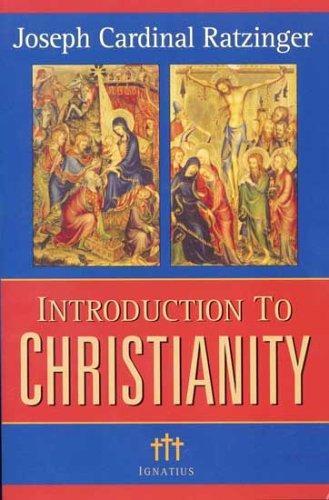
Catholic teaching distinguishes between voluntary doubt—a deliberate refusal to believe what God has revealed—and involuntary doubt, the kind of interior struggle that arises unbidden. The Catechism of the Catholic Church draws that distinction and lists voluntary doubt among the “various ways of sinning against faith” (CCC 2088). It is the voluntary refusal, not the involuntary struggle, that constitutes the sin. As Ratzinger argues in Introduction to Christianity, doubt is a universal human experience that can actually deepen faith when met with humility rather than despair.
What does Ratzinger say about doubt in Introduction to Christianity?
In the opening chapter of Introduction to Christianity, Ratzinger argues that doubt afflicts believers and unbelievers alike. The believer struggles with the possibility that faith may be an illusion, while the skeptic is haunted by the possibility that belief may be true after all. Neither side can fully escape uncertainty. For Ratzinger, the proper response to this shared condition is humility—a willingness to submit oneself to faith despite the persistence of doubt.
How does Ratzinger respond to religious relativism?
Ratzinger argues that relativism—the idea that all religions are equally valid paths to the same ultimate reality—is not a sign of humility but of arrogance. It denies the human “capacity for truth” and removes the obligation to share what one believes to be true with those one loves. For Ratzinger, genuine humility means submitting to a received truth despite doubt, not reducing all truth claims to personal preference. He sees this submission as an act of love, not coercion.
How does Ratzinger’s view of doubt compare to St. John Henry Newman’s?
The two are continuous rather than competing. Newman drew the famous distinction that “ten thousand difficulties do not make one doubt”—meaning intellectual difficulties belong to the order of the mind’s ongoing work and never of themselves overturn the will’s commitment to faith. Ratzinger’s “perhaps” that haunts every believer is, in Newman’s vocabulary, a difficulty rather than a doubt in the technical sense. Both refuse to identify faith with the absence of intellectual struggle, and both treat humility as the proper response when struggle persists.
What does Mother Teresa’s “dark night” reveal about doubt and faith?
Mother Teresa’s posthumously published letters in Come Be My Light (2007) revealed nearly fifty years of interior darkness—a felt absence of God so prolonged her spiritual directors compared it to St. John of the Cross’s “dark night.” She did not stop believing, did not stop praying, and did not stop her work. She kept choosing to believe through an interior trial most Catholics would assume incompatible with sanctity. Her witness shows that the persistence of faith through doubt is not a failure of faith but its purification.
Did Thomas Aquinas address doubt and faith?
Yes. In the Summa Theologiae (II-II, q. 10), Aquinas distinguishes between unbelief as “pure negation”—the simple absence of faith—and unbelief as opposition, in which someone willfully refuses to hear or despises the faith. Only the latter is sin: in Aquinas’s analysis, dissent is an act of the intellect moved by the will, and it is the willing of the dissent that converts the intellectual act into infidelity. Hesitation, intellectual perplexity, and wrestling with difficulty are not infidelity. The Catechism’s distinction between voluntary doubt (CCC 2088) and involuntary doubt draws on that Thomistic voluntariness analysis.
How is Christian humility different from relativism?
Both can sound modest on the surface, but Ratzinger insists they are opposites. Relativism says “I don’t know what is true, and neither does anyone else, so all positions are equally valid.” Christian humility says “I do not know fully, but truth exists and has been received from beyond me, and I owe my neighbor what I have received.” Relativism dissolves the obligation of love-as-truth-telling; humility intensifies it. Relativism denies the human capacity for truth; humility submits to it.
Footnotes
- 1. Joseph Ratzinger, Introduction to Christianity, trans. J. R. Foster, Communio Books (San Francisco: Ignatius Press, 2004), 42–43.
- 2. Ibid., 45.
- 3. Ibid., 49–51.
- 4. The humble submission required in choosing faith in spite of doubt inevitably manifests itself in obedient behavior. The Psalmist does not speak of atheism in terms of an intellectual affirmation but in terms of “loathsome and corrupt” deeds (Ps 14:1, NABRE). James similarly speaks of the interconnection of faith and action (Jas 2:14). The connection to neighbor is the post’s synthesis: humility before God (Mic 6:8) extends, by the same logic, to humble dealing with neighbor.
- 5. Ratzinger, 51.
- 6. Ibid., 73.
- 7. Benedict XVI, “On the Meaning of Faith,” in The Essential Pope Benedict XVI: His Central Writings and Speeches, ed. John F. Thornton and Susan B. Varenne (New York: HarperSanFrancisco, 2007), 211–12.
- 8. John Hick and Paul F. Knitter, eds., The Myth of Christian Uniqueness: Toward a Pluralistic Theology of Religions (Maryknoll, NY: Orbis Books, 1987), 22.
- 9. John Hick, An Interpretation of Religion: Human Responses to the Transcendent, 2nd ed. (New Haven, CT: Yale University Press, 2004), 237–38.
- 10. Ratzinger, 76–77.
- 11. Ibid.
- 12. Joseph Cardinal Ratzinger, “Relativism: The Central Problem for Faith Today,” Address to the Presidents of the Doctrinal Commissions of the Bishops’ Conferences of Latin America, Guadalajara, Mexico, May 1996, in The Essential Pope Benedict XVI: His Central Writings and Speeches, ed. John F. Thornton and Susan B. Varenne (New York: HarperSanFrancisco, 2007), 235; available online at ewtn.com.
- 13. Ratzinger, 49–50.
- 14. Benedict XVI, Deus Caritas Est (God Is Love), Encyclical Letter (2005), §1 (love as encounter); reproduced in The Essential Pope Benedict XVI, ed. Thornton and Varenne, 395–426.
- 15. Ratzinger, Introduction to Christianity, 46–47; Benedict XVI, Deus Caritas Est, §§16–18 (love of God flowing into love of neighbor).
- 16. Benedict XVI, Deus Caritas Est, §31 (charitable witness without coercion).
- 17. Joseph Ratzinger, “Culture and Truth: Some Reflections on the Encyclical Letter Fides et Ratio,” in The Essential Pope Benedict XVI, ed. Thornton and Varenne, 367–376, at 368.
- 18. Ratzinger, 56–57.
- 19. Ratzinger, 79–80 (Part One, ch. 7, “I believe in you”).
- 20. John Henry Newman, Apologia pro Vita Sua, ch. V (“Position of My Mind since 1845”); see e.g. the standard Penguin Classics ed. (London: Penguin, 1994), 214.
- 21. Thomas Aquinas, Summa Theologiae, II-II, q. 10, a. 1 (the pura negatio / contrarietas distinction); q. 10, a. 2 corpus (dissent as “an act of the intellect, moved…by the will, just as assent is”); see also q. 2, a. 1 ad 3 (faith as assent of the intellect determined by the will) and q. 10, a. 3 (gravity of unbelief).
- 22. John of the Cross, The Dark Night of the Soul, Bk. II, esp. chs. 5–9, on the passive purgation of the spirit; see The Collected Works of St. John of the Cross, trans. Kieran Kavanaugh and Otilio Rodriguez, rev. ed. (Washington, DC: ICS Publications, 1991), 433–47.
- 23. Mother Teresa, Come Be My Light: The Private Writings of the Saint of Calcutta, ed. Brian Kolodiejchuk (New York: Doubleday, 2007), 1–3, 187–213. Kolodiejchuk, her postulator and editor of the volume, explicitly frames the prolonged interior darkness in the categories of John of the Cross’s “dark night.”

Garrett Ham
Garrett Ham is an attorney, military veteran, and holds a Master of Divinity from Yale Divinity School. He writes from Northwest Arkansas on theology, law, and service.
Related Posts

Joseph Ratzinger and the Purpose of Theology
How Joseph Ratzinger grounds theology in the Church as a living conversation with God, drawing humanity together in Christ's liberating work.
Abortion and the Christian Left
A Catholic response to the 'personally pro-life, politically pro-choice' position. Why this compromise on human life fails philosophically and theologically.

Anti-Catholic Evangelicals
During this time of quarantine, I have had the opportunity to dialogue with some old-school anti-Catholic evangelicals, and it has left me wondering how...
Stay Informed
Get new writing on faith, law, and service delivered to your inbox.
No spam. Unsubscribe anytime.