I Choose to Believe
On This Page
In this article, I discuss doubt, how we choose to believe, and what the Catholic Church teaches about faith as a choice.
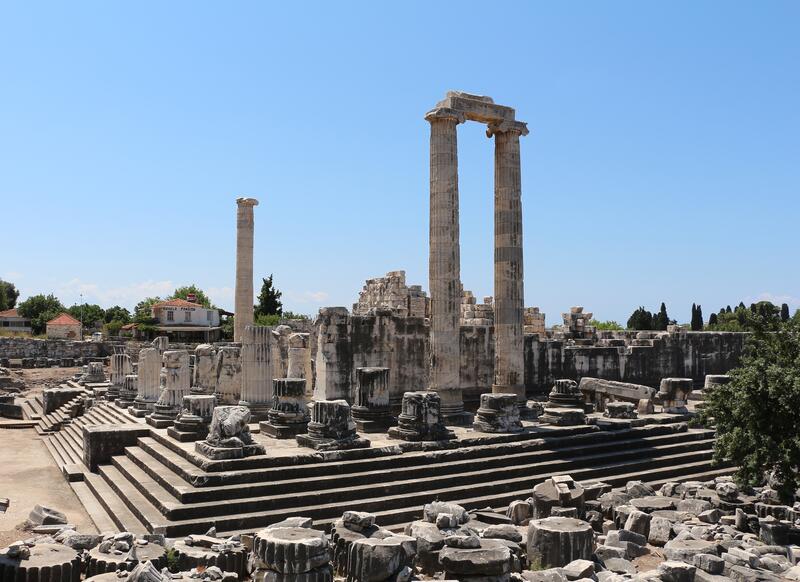
In the summer of 2006, I found myself standing amid the ruins of the Temple of Apollo at Didyma, in Aydin Province, Turkey. Looking up at the massive columns still standing in this once magnificent temple, I began to appreciate the greatness of that now dead religion.
A Dead Religion
Years of labor and immeasurable wealth were dedicated to raising this superb temple, once a splendor of the ancient world. Now it stands in ruins, untended and unappreciated by all but the occasional tourist and academic.
How could a once-influential religion, a faith cradled by one of the greatest civilizations of all time, fall to nothing? How could no worshipers survive?
For centuries, men worshiped this god, who is now relegated to the role of a fictional literary figure. No one anymore argues for the existence of an actual Greek god.
Indeed, at that moment, I found the literal remnants of that ancient faith crumbling beneath my feet. The priests that once walked these steps have long since died and disappeared, leaving no successors to fill their roles and no worshipers to continue their faith. I was walking over the corpse of a god, and I could not help but wonder about my own religion.
I was walking over the corpse of a god, and I could not help but wonder about my own religion.
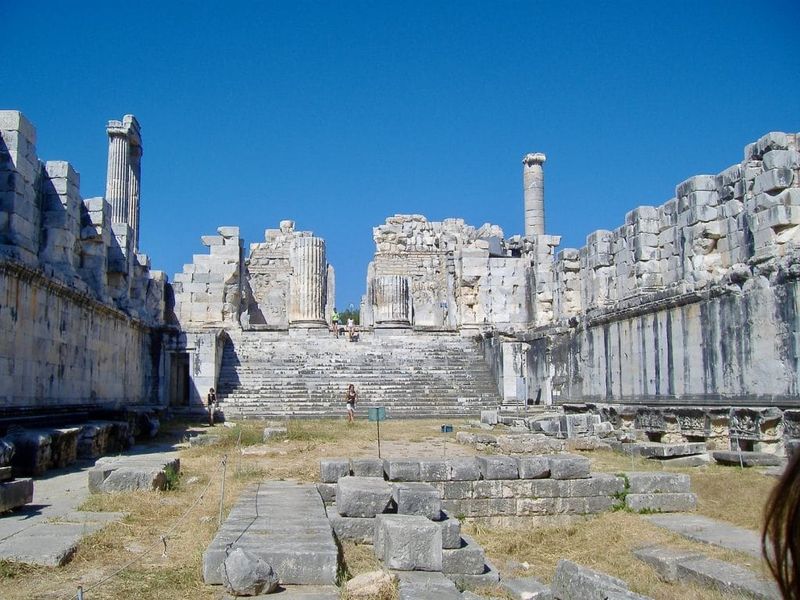
Undoubtedly, the people of ancient Greece who once walked through the temple corridors genuinely believed that Apollo was a real god with real power. They worshiped and feared their god, as I worship and fear mine. They clung deeply to beliefs that I now found absurd and primitive, but am I right to find it so?
In that moment, I could not help but wonder if one day, another young man would walk through the ruins of the Vatican and wonder what primitive peoples could believe in a god-man who died to save his people from their sins.
Choose to Believe in Christ
Is my faith merely another chapter in the long history of religions that have come and gone? Indeed, perhaps it seems real to me only because I am living in its current epoch, a period that will quickly pass.
And there, in those moments, in that pristine place half a world away, I admitted to myself a feeling I had long thought but long suppressed: there probably is no God.
Something about that moment opened my eyes to the world around me. It told me how small and insignificant I am, not only in the world itself but in the spans of history.
Why should my God be any different? Why should Jesus be any different than Apollo or Thor or Rah? Because I worship him? What sense does that make? What conflated sense of ego would I have to have to believe this?
How We Choose to Believe
As these thoughts began to swirl within my head and take root, I started asking myself some tough questions about life and my faith. I do not believe that we can lose faith without our consent. We may find ourselves inclined toward one belief or another, and we may be seemingly unable to control what we find convincing and what we do not.
At the end of the day, however, faith is a choice. We can choose to believe, and we can choose to accept that which makes no sense, even to us. And there, in those moments, I decided to believe.
I continue to confess the creed of the apostles, even though I must continuously try to convince myself of its veracity. I find myself repeatedly praying, in the spirit of the father in Mark’s gospel, “Lord, I believe; help my unbelief,” but I receive no answer.
I am a skeptic. Agnosticism is the only form of faith that makes any real sense to me, a belief system meant for my way of thinking. It is not so arrogant as to assume humanity is capable of knowing or discovering all of reality, but not so gullible as to believe that which cannot be demonstrated.
Yet, I choose to believe anyway. I maintain my faith in spite of myself.
And I continue to pray, “Lord, I believe; help my unbelief.”
What the Catholic Church Teaches About Faith as a Choice
The personal account I’ve just given—that faith is a choice and that I keep choosing it—is not merely autobiographical. I originally wrote those words as a Protestant, but I would later discover that it reflects the Catholic Church’s teaching on what belief is. The Catechism of the Catholic Church and the Magisterium it summarizes treat faith neither as a feeling, nor as bare intellectual certainty, nor as a passive gift one receives once and possesses thereafter. Faith is something more demanding and more personal: a free human response to a self-revealing God, made possible by grace and renewed daily by the will.
Faith Is a Personal Adherence to God
The Catechism opens its treatment of faith with a striking definition: “Faith is first of all a personal adherence of man to God. At the same time, and inseparably, it is a free assent to the whole truth that God has revealed” (CCC 150). The wording matters. “Personal adherence” is not propositional consent to a list. It is the response of a whole person—mind and will, intellect and heart—to a Person who has spoken. The Catechism is careful to keep these two dimensions together: the fides qua creditur (“the faith by which one believes,” personal trust) and the fides quae creditur (“the faith which is believed,” the content of revelation) are not separable. A faith that is only intellectual assent is not yet Catholic faith. A faith that is only felt trust without doctrinal content is not yet Catholic faith either.
Faith Is a Free Human Act
The Catechism is equally clear that believing is a free act: “Believing is possible only by grace and the interior helps of the Holy Spirit. But it is no less true that believing is an authentically human act. Trusting in God and cleaving to the truths he has revealed is contrary neither to human freedom nor to human reason” (CCC 154). And again: “In faith, the human intellect and will cooperate with divine grace: ‘Believing is an act of the intellect assenting to the divine truth by command of the will moved by God through grace’” (CCC 155, quoting St. Thomas Aquinas, Summa Theologiae II-II, q. 2, a. 9).
This is the doctrine that makes “choose to believe” a Catholic claim, not just a popular slogan. The Council of Trent insisted, against any reading of grace as a force that bypasses the will, that we cooperate with grace through the assent of free will (Decree on Justification, ch. 5 and canon 4). The First Vatican Council put it more sharply: no one can assent to the gospel preaching as is necessary for salvation “without the illumination and inspiration of the Holy Spirit, who gives to all sweetness in consenting to and believing the truth” (Dei Filius, ch. 3). Grace makes the act of faith possible. The act itself is ours.
Faith Coexists with Doubt
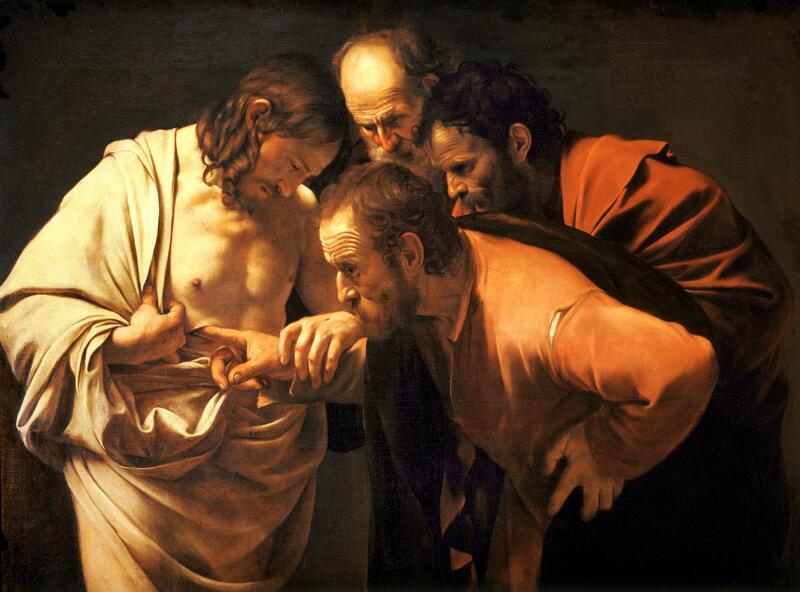
Once the cooperative structure of believing is in view, the persistence of doubt becomes less alarming. The Catechism distinguishes voluntary doubt—which “disregards or refuses to hold as true what God has revealed and the Church proposes for belief”—from involuntary doubt, which is the ordinary “hesitation in believing, difficulty in overcoming objections connected with the faith, or also anxiety aroused by its obscurity” (CCC 2088). The first is sinful. The second is not. The second is, in fact, part of the ordinary life of a believer who is paying attention.
The witness of the saints confirms this. Aquinas described faith as the assent of the mind to truths it cannot see, lacking the felt certainty of demonstrative knowledge yet superior in its object (ST II-II, q. 4, a. 8). St. John of the Cross wrote of the “dark night” in which sensory and even spiritual consolation is withdrawn so the soul learns to cleave to God by faith alone. St. Thérèse of Lisieux experienced a sustained trial of faith near the end of her life, when the “veil of faith” thickened into something closer to darkness. Mother Teresa’s letters, published after her death, revealed a similar interior darkness running for nearly half a century. None of these figures lost their faith. They kept choosing it.
Faith Requires Perseverance
Because faith is a free act, it can be lost. The Catechism warns that “to live, grow, and persevere in the faith until the end, we must nourish it with the word of God; we must beg the Lord to increase our faith; it must be ‘working through charity,’ abounding in hope, and rooted in the faith of the Church” (CCC 162). Perseverance is itself a continual gift. We ask for it, and we cooperate with what we receive.
This is what choosing to believe looks like in practice. It is not a one-time decision sealed at confirmation or conversion. It is the daily renewal of an act that is given before it is performed and performed before it is felt. The Apostles’ Creed begins “I believe” because the Church confesses faith as something a person says, not something a person merely has. Saying it—again, today, in this moment—is the choice this post has been describing all along.
It is the daily renewal of an act that is given before it is performed and performed before it is felt.
Frequently Asked Questions
What does “I choose to believe” mean?
To “choose to believe” is to make a deliberate act of the will to trust in God, the truth of revelation, and the teachings of the Church even when intellectual certainty is incomplete. The phrase is not a denial of evidence or an admission of irrationality. It is the recognition that faith, in the Catholic tradition, requires the free response of the believer to God’s self-revelation—an assent that the will gives even where the mind still has questions. The Catechism describes faith as “a personal adherence of man to God” and “at the same time, and inseparably, a free assent to the whole truth that God has revealed” (CCC 150). Choosing to believe is the daily reaffirmation of that assent, especially in moments when feeling, certainty, or consolation is absent.
Is faith a choice or a gift?
Both, in Catholic teaching. Faith is a theological virtue infused by God—a supernatural gift that human reason cannot reach on its own (CCC 153, 1814). The Catechism also says, in the same breath, that “believing is a human act” in which the intellect and the will freely cooperate with grace (CCC 154–155). The gift is not received passively. It has to be welcomed, and the welcoming is itself a choice.
Is faith the same as belief?
Not exactly. In everyday speech the two words overlap, but Catholic teaching distinguishes them. “Belief” can mean bare intellectual assent to a proposition—even the demons “believe that God is one” and shudder (James 2:19), without saving faith. Faith (fides) is more than that: it is a theological virtue infused by God (CCC 1814), a “personal adherence of man to God” that is “at the same time, and inseparably, a free assent to the whole truth that God has revealed” (CCC 150). Faith therefore includes belief—assent to the content of revelation—but is not reducible to it. It is the response of the whole person, intellect and will together, to a God who has spoken, and in its living form it is “working through charity” (CCC 162). Belief is one element of faith; faith is the larger act.
Is believing in God a choice?
Yes, in Catholic teaching, though the choice is made possible by grace. The First Vatican Council taught that no one can assent to the truths of revelation as required for salvation “without the illumination and inspiration of the Holy Spirit” (Dei Filius, ch. 3); the Catechism is equally clear that “believing is an authentically human act” in which the intellect and the will freely cooperate with that grace (CCC 154). The will’s consent does not earn faith—the gift is offered before it is received. But the consent is still the will’s, and it is freely given.
Can you have faith and doubt at the same time?
Yes. The Catholic tradition has consistently recognized that faith and doubt commonly coexist in the same person and the same prayer. The father of the possessed boy in Mark 9:24 says, “I do believe, help my unbelief!”—both at once. CCC 2088 distinguishes voluntary doubt (a sin) from involuntary doubt (not a sin), and treats the second as part of ordinary spiritual life. Aquinas treated faith as the mind’s assent to truths it cannot see, which means the absence of the kind of felt certainty we get from demonstrative knowledge is built into the structure of believing (ST II-II, q. 4, a. 8). Coexisting faith and doubt is not a defect. It is the shape of believing in via.
Is doubt a sin in Catholic teaching?
Not always. CCC 2088 draws a sharp line between voluntary doubt—deliberately refusing what God has revealed—and involuntary doubt, which the Catechism describes as “hesitation in believing, difficulty in overcoming objections connected with the faith, or also anxiety aroused by its obscurity.” Voluntary doubt is a sin against the first commandment. Involuntary doubt is part of ordinary spiritual life.
What does “Lord, I believe; help my unbelief” mean?
The cry comes from Mark 9:24, where the father of a possessed boy is asked whether he believes Jesus can heal his son. He answers, “I do believe, help my unbelief!”—simultaneously affirming faith and confessing its incompleteness. Catholic devotional tradition has long prayed it as “Lord, I believe; help my unbelief.” It is not the prayer of an unbeliever. It is the prayer of someone who has chosen to believe and is asking God to make the choice possible.
Can you still be Catholic if you struggle to believe?
Yes. The Church has never required that faith feel certain. Catholic spiritual writers have testified for centuries that periods of intellectual difficulty and felt absence of God are part of discipleship, sometimes lasting decades—St. Thérèse of Lisieux experienced an extended dark night near the end of her life, and Mother Teresa’s letters revealed a similar interior trial running for nearly fifty years. What the Church asks is not the absence of doubt but perseverance, which the Catechism calls a continual gift to be requested in prayer (CCC 162).
How do you keep faith alive when God feels distant?
The Catholic tradition gives a consistent answer: through the will, through habit, and through the sacraments. The will keeps choosing belief when feelings fail. Habit—daily prayer, Sunday Mass, regular confession—keeps the practice of faith alive when its emotional content is dry. The sacraments operate ex opere operato (“by the work performed”): their grace is truly conferred regardless of the recipient’s feelings of devotion, even though its fruit in him still depends on his disposition (CCC 1128). The classical “dark night” tradition—rooted in St. John of the Cross and recovered for modern readers by writers like Thérèse and Mother Teresa—treats faith’s persistence without consolation as a deepening, not a defect.
Is religion a choice?
In Catholic teaching, the virtue of religion is the human response of justice to God—rendering to God the worship and reverence we owe him as creator and redeemer (CCC 2095). Whether to enter into that response is a free act, made possible by grace. Whether the response itself is true (i.e., whether the religion one chooses corresponds to what God has actually revealed) is a separate question, and Catholic teaching maintains that the one Church of Christ subsists in the Catholic Church (Lumen Gentium 8), which possesses the fullness of the means of salvation (Unitatis Redintegratio 3). But the act of religion—at whatever level of clarity—is an act of the will, and an act the will can refuse.
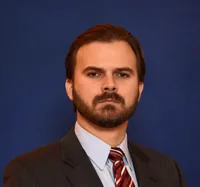
Garrett Ham
Garrett Ham is an attorney, military veteran, and holds a Master of Divinity from Yale Divinity School. He writes from Northwest Arkansas on theology, law, and service.
Related Posts
Does God Know the Future? What Catholics Believe
Does God know the future? The Catholic Church teaches that God's knowledge is exhaustive, encompassing even the free acts of creatures. Here's what that means and why it matters.

Does Everything Happen for a Reason?
Does everything happen for a reason? A Catholic examination of divine sovereignty, free will, and the problem of evil—and why God is not the author of suffering.
Abortion and the Christian Left
A Catholic response to the 'personally pro-life, politically pro-choice' position. Why this compromise on human life fails philosophically and theologically.
Stay Informed
Get new writing on faith, law, and service delivered to your inbox.
No spam. Unsubscribe anytime.