Does Everything Happen for a Reason?

On This Page
In this post, I contemplate a common refrain in Christian circles and ask, Does everything happen for a reason?
We have all heard the well-meaning cliché, “Everything happens for a reason.” But does everything happen for a reason? Do we take the time to appreciate the implications of that statement, and do we really put forward the effort to interpret the teachings of divine sovereignty we have received from those who have gone before us?
Consider the quotes below.
“Receive the accidents that befall thee as good, knowing that nothing happens without God.” — Didache 3:10
“If God thinks this state of war in the universe a price worth paying for free will—that is, for making a real world in which creatures can do real good or harm and something of real importance can happen, instead of a toy world which only moves when He pulls the strings—then we may take it it is worth paying.” — C.S. Lewis, The Case for Christianity
“God works in mysterious ways.” “God’s ways are not our ways.” “Everything happens for a reason.” Such platitudes stem from Christian attempts to explain tragedy, providing comfort in their ability to point beyond our suffering to a greater good.
Such assurances, however, undermine God’s holiness and love, crediting him as the author of all the world’s sin and pain. Are we to believe that wars and terrorism are part of a divine plan, a greater good? Are we to see in the abuse of children or the enslavement of young women in the sex trade the mysterious work of a loving God?
Surely suffering has redemptive qualities—the long tradition of the Church bears witness to this truth—but can we not distinguish divine discipline from genocide? Must all suffering come from the hand of God for him to utilize it for our betterment? Does everything happen for a reason?
Accepting simple answers to complex questions serves only to distort reality.
God’s Purpose?
Christians frequently speak of past trials as leading up to a present good. Whether that be the infertile couple who found their beautiful children through adoption or the humanitarian inspired to help the poor by a childhood marked by hunger, these stories provide comfort, pointing to a loving, sovereign God.
Paul writes in his letter to the Romans, “We know that in everything God works for good with those who love him, who are called according to his purpose” (Rom 8:28, RSV-CE).
I never understood, however, why so many insist that God’s use of tragedy for good requires that he be the source of that tragedy. God’s turning our lemons into lemonade does not mean he is cultivating the lemons.
Beyond Divine Determinism
We would do well simply to accept that we do not know why things happen. Some may contract cancer as part of a divine plan to bring about a greater good, while others acquire it through the natural operations of a fallen world.
It is natural to search for meaning in significant events, but as believers, we must not allow our discomfort with uncertainty to color our view of God. In attributing all things to a predetermined plan, we create the God we think we need, instead of accepting the God revealed in Jesus Christ.
Attempting to find simple explanations for every tragedy collapses the complexity of the world into a two-dimensional parody of itself. Worse still, it makes God the source of evil, a cold, distant entity willing to inflict horrible torture and death upon us “for his glory.”
The Catechism of the Catholic Church addresses this tension directly: “God is in no way, directly or indirectly, the cause of moral evil. He permits it, however, because he respects the freedom of his creatures and, mysteriously, knows how to derive good from it” (CCC 311). This distinction—between what God wills and what God permits—is essential to any mature understanding of the problem of evil.
Free Will and the Permissive Will of God
In creating autonomous creatures endowed with genuine freedom, God has established a world in which his will is not the only will at work. Catholic teaching affirms that “God created man a rational being, conferring on him the dignity of a person who can initiate and control his own actions” (CCC 1730). This freedom is not a defect in creation but its crown.
Saint Augustine, in his Enchiridion, rightly insisted that evil is not a substance but a privation—an absence of the good that ought to be present. Evil enters the world not because God creates it, but because free creatures turn away from the good. Where I differ from certain strands of the Augustinian tradition is not in this insight—which I affirm—but in the further claim that God directly ordains every particular event, including every evil act, as part of an exhaustive divine decree. The Catholic tradition permits a range of views on the mechanics of providence—from Thomism to Molinism and beyond—so long as they affirm both God’s sovereignty and the reality of human freedom. What Catholic tradition does not permit is the claim that God is the author of sin.
We should accept that God, while omnipotent, exercises what theologians call his permissive will—allowing consequences of creaturely freedom that he does not directly intend but that he permits for the sake of a greater good: namely, the existence of genuinely free beings capable of love. As the Catechism teaches, “God would not allow an evil to exist unless his omnipotence and goodness were such as to bring good even out of evil” (cf. CCC 311–312, drawing on Augustine’s Enchiridion 3.11 and Thomas Aquinas’s Summa Theologica I, q. 2, a. 3, ad 1).
Consider an analogy. Suppose a married man who spent his single years carousing with friends responds to a party invitation with a simple, “I can’t. I’m married.” Does he mean that he is physically incapable of participating? Of course not.
Rather, he means that in entering into marriage he has voluntarily restricted what he will do because there are some things he cannot do without destroying the relationship with his wife. By making one choice, he has foreclosed his ability to make another. Only the truly powerful can restrain the exercise of their authority.
So it is with God. In granting us genuine freedom, God has chosen not to override our decisions at every turn—not because he lacks the power, but because doing so would destroy the very freedom he created us to have. He can and does intervene, but he does not unilaterally impose his will where it would negate the gift of human agency. This is not a limitation on God’s power; it is the fullest expression of it. As the philosopher Alvin Plantinga argued in God, Freedom, and Evil, it is logically possible that a world containing creatures who freely choose the good is more valuable than a world in which the good is merely programmed.
If we have free will, God must allow the ramifications of our decisions to play out. If we are free to act only when our actions bring about the divine will, then we are not really free. If we are free to choose between A and B, so long as we choose A, then our freedom is an illusion. (Thomists would nuance this differently, arguing that God’s providential action moves the will through its own nature rather than against it—but even on the Thomist account, the freedom to choose remains genuine, not illusory.)
I am reminded of C.S. Lewis’s argument in The Problem of Pain,
If you choose to say, “God can give a creature free will and at the same time withhold free will from it,” you have not succeeded in saying anything about God: meaningless combinations of words do not suddenly acquire meaning simply because we prefix to them the two other words, “God can.”
Saying that God can both give us free will and ensure his will is always done is logically incoherent. We pray, “Your will be done on earth as it is in heaven” precisely because, as the Catechism notes, “in heaven the will of God is always done”—the implication being that on earth, it often is not (cf. CCC 2822–2827).
Our Comforter
So, what is the appropriate response to tragedy? Does everything happen for a reason? How do we answer that question?
Simply put, we must accept that we have no answers to the “Why?” questions. We cannot always discern when events are part of a divine plan, the misuse of free will, or the mysterious interplay of natural processes within God’s providential governance of creation.
We do know, however, that God became a man in the person of Jesus Christ—as explored in the Christian teaching on divine revelation—that he walked among us, lived with us, and experienced our pain.
Our God knows what it means to suffer, not simply because he is omniscient, but because he has experienced it himself firsthand. Our God has mourned the loss of loved ones, experienced injustice, and endured the horrible pains of death.
God is not some far-off entity orchestrating tragedies for his own glorification. He is a God fighting against the evils of this world to bring about our eventual redemption and salvation. The world is not as it should be, but the story of Christianity—grounded in the inspiration of Scripture—is God’s work in correcting this state of affairs.
Whatever tragedies may befall us, we can take comfort in knowing that God is on our side. God is not the source of our pain; he is its solution. As the Orthodox theologian David Bentley Hart wrote in The Doors of the Sea, God’s answer to evil is not an explanation but a victory—the promise that all things will be made new. In the meantime, as I discuss in another post, we must ultimately choose to believe in the goodness of God despite the suffering we witness.
Frequently Asked Questions
Does the Bible say “everything happens for a reason”?
Not in those words. The closest text is Romans 8:28—“We know that in everything God works for good with those who love him” (RSV-CE). But this verse says God works for good in all circumstances, not that he causes every circumstance. The distinction matters: it affirms God’s redemptive power without making him the author of evil.
What does the Catholic Church teach about suffering?
The Catechism of the Catholic Church teaches that God “is in no way, directly or indirectly, the cause of moral evil” (CCC 311). He permits evil because he respects the freedom of his creatures and, mysteriously, knows how to draw good from it. Suffering can have redemptive value when united with the suffering of Christ, but the Church does not teach that God inflicts suffering as part of a predetermined plan.
What is the difference between God’s active will and his permissive will?
God’s active (or antecedent) will refers to what God positively intends—creation, redemption, the flourishing of his creatures. His permissive (or consequent) will refers to what he allows without directly intending, such as the consequences of free human choices. The Catechism draws on Augustine and Thomas Aquinas to affirm that “God would not allow an evil to exist unless he could draw a greater good from it” (cf. CCC 312).
Does free will contradict God’s sovereignty?
No. Catholic teaching holds that genuine human freedom is itself a gift of divine sovereignty. God “created man a rational being, conferring on him the dignity of a person who can initiate and control his own actions” (CCC 1730). God’s power is not diminished by our freedom; rather, the gift of freedom is its fullest expression. As Alvin Plantinga argued, a world of free creatures who can choose good is more valuable than one where good is merely programmed.
How should Christians respond to tragedy?
Rather than insisting that every tragedy is “part of God’s plan,” Christians can take comfort in the Incarnation: God became human in Jesus Christ, experienced suffering firsthand, and promises to make all things new. The appropriate response to suffering is not a theological explanation but the trust that God is on our side—not the source of our pain, but its solution.
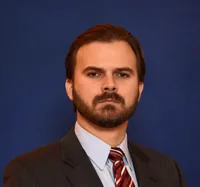
Garrett Ham
Garrett Ham is an attorney, military veteran, and holds a Master of Divinity from Yale Divinity School. He writes from Northwest Arkansas on theology, law, and service.
More about Garrett →Related Posts
Open Theism: A Catholic Evaluation
What is open theism? A Catholic evaluation of the open model of God, its scriptural case, philosophical arguments, and why it falls outside defined Catholic dogma.
Romans 9–11: Election, Israel, and the Mystery of Salvation
What does Romans 9–11 really teach about election and predestination? This Catholic interpretation engages Thomism, Molinism, Calvinism, and Arminianism — the most comprehensive treatment online.
Divine Foreknowledge and Free Will: The Catholic Answer
Can God know the future and humans still be free? The Catholic intellectual tradition offers robust answers through Thomism and Molinism. Here’s how they work and why they matter.
Stay Informed
Get new writing on faith, law, and service delivered to your inbox.
No spam. Unsubscribe anytime.