Did Rome Break Away from the Orthodox Church?
On This Page
On the night before he died, Jesus did not pray that his Church would win arguments. He prayed that it would be one—“that they may all be one, as you, Father, are in me and I in you, that they also may be in us, that the world may believe that you sent me” (John 17:21, NABRE). Anyone who has grieved the divisions among Christians feels the weight of that prayer. The Bride of Christ looks divided, and the division is a scandal that blunts the very message it was meant to carry.
So I want to begin by granting what is true. The Catholic and the Orthodox were one Church for the first thousand years. We share the seven ecumenical councils, the same seven sacraments, valid orders, the real presence of Christ in the Eucharist, devotion to the Theotokos and the saints, and an unbroken apostolic succession. We are not strangers. We are, in the language the popes have used since the late 1960s, sister Churches who have been estranged—not a true Church and a false one.
That makes the objection I want to address here genuinely painful rather than merely interesting. I have personal reason to feel its weight: as a Protestant searching for the apostolic, historical Church, I spent several years studying and seriously considering Orthodoxy before I finally came home to Rome. It runs like this: Rome broke away from the Orthodox Church. It rebelled against the true Church of the apostles, and so its claim to authority collapses. I have heard it from Orthodox interlocutors and from Protestants who have read just enough Orthodox history to deploy it. It sounds devastating. It is also, as a matter of history and theology, almost exactly backwards.
The Charge, Stated as Forcefully as I Can
A fair answer has to begin with a fair statement of the objection, so let me put it at full strength. The Orthodox claim to have preserved, unchanged, the faith of the seven ecumenical councils. On their reading, Rome is the party that moved. Rome inserted a word into the Creed without conciliar authority. Rome elevated a primacy of honor into a monarchy of jurisdiction. Rome defined new dogmas at the First and Second Vatican Councils that no first-millennium Christian would recognize. The cumulative charge is that Rome innovated, and that innovation is departure—so the see that calls itself the rock of unity is in fact the see that fractured it.
This is not a frivolous argument, and the people who make it are often not polemicists but wounded believers. Pretending it has no force helps no one. The honest task is to test it against the record. When one does, the framing inverts.
There Was No “Orthodox Church” for Rome to Leave
The first problem with “Rome broke away from the Orthodox Church” is grammatical before it is theological. In the first millennium there was no body called “the Orthodox Church” standing over against Rome, such that Rome could secede from it. There was one Church, East and West together, organized around five great patriarchal sees—Rome, Constantinople, Alexandria, Antioch, and Jerusalem—an arrangement later writers call the Pentarchy.1 And within that order, Rome was first—and first not because Rome claimed the rank, but because the East itself granted it.
The proof is that the East said so in council. When the First Council of Constantinople in 381 gave the bishop of Constantinople a high rank, it ranked him second—“the prerogative of honour after the Bishop of Rome, because Constantinople is New Rome.”2 The canon that exalts the eastern capital takes for granted, in the very act of doing so, that Rome holds first place. You cannot smuggle a later “Orthodox Church” back into the fourth century and cast Rome as the rebel against it. The senior see does not rebel against its juniors. The burden falls the other way: the objector has to explain when, exactly, the see that everyone had always ranked first became the deserter. (For the longer story of how the two halves of Christendom drifted apart, see the Great Schism of 1054.)
The senior see does not rebel against its juniors.
What Actually Happened in 1054
Press most people on when “the schism” happened and they will say 1054, and they will picture a single dramatic rupture. The drama is real. The interpretation is not.
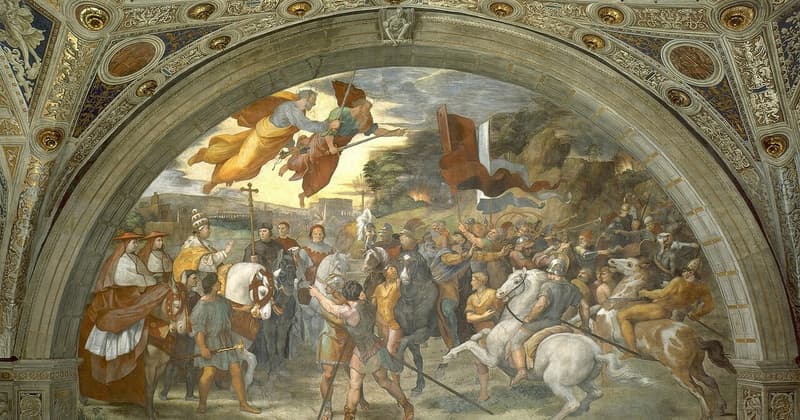
Here is the scene. Cardinal Humbert, a papal legate, strode into Hagia Sophia on 16 July 1054 and laid a bull of excommunication on the altar against Patriarch Michael Cerularius. Four days later, Cerularius and his synod excommunicated the legates in return. It looks like the moment the Church split in two. It was nothing of the kind, and four facts dismantle the popular reading.
First, the pope was already dead. Leo IX, who had dispatched the legation, died in April 1054—roughly three months before Humbert acted, and many months before a successor took office. A legate’s authority is generally held to lapse with the death of the pope who sent him, which means Humbert had, on the prevailing view, no standing to excommunicate anyone in the pope’s name.3 Whatever happened on that altar, it was not Rome formally cutting off the East.
Second, the excommunications were personal, not ecclesial. Humbert’s bull named Cerularius and his supporters; Cerularius’ synod condemned the legates. Neither side excommunicated the other’s entire Church. This is not a modern apologetic gloss—it is exactly how Rome and Constantinople themselves described the events when they revisited them. The 1965 joint declaration of Paul VI and Patriarch Athenagoras states plainly that the censures “were directed against the persons concerned and not the Churches” and “were not intended to break ecclesiastical communion between the Sees of Rome and Constantinople.”4
Third, 1054 was symbolic, not causal. No serious historian today holds that the schism “began” in 1054. The estrangement was a slow accumulation—the political division of the empire, the drift of Greek from Latin, the ninth-century Photian disputes—and the wound that truly festered came later: the sack of Constantinople by Latin crusaders in 1204, which turned a theological estrangement into a lasting bitterness.5 If you want a date for when East and West stopped being able to forgive each other, 1204 is far better than 1054.
Fourth, and decisively, the excommunications of 1054 no longer exist. On 7 December 1965, Paul VI in Rome and Athenagoras in Istanbul, reading the same declaration simultaneously, expressed regret for “the offensive words, the reproaches without foundation, and the reprehensible gestures” on both sides, and resolved to “remove both from memory and from the midst of the Church the sentences of excommunication,” committing them “to oblivion.”6 The supposed founding act of the schism has been formally consigned to oblivion by both parties. It is a strange foundation for an argument that Rome rebelled.
Rome Was the First See Long Before Any “Innovation”
The objection assumes that Roman primacy is a medieval invention grafted onto an earlier, more democratic Church. The records do not cooperate. The pattern of Rome’s special authority—and of the East appealing to it—runs straight through the centuries before the schism, in sources Eastern and Western alike.
The scriptural foundation
It begins with Peter. “You are Peter, and upon this rock I will build my church… I will give you the keys to the kingdom of heaven.”7 The standard Protestant counter—that the Greek distinguishes Petros, the man, from petra, the rock, so the rock is Peter’s confession and not Peter—runs aground on the language Jesus actually spoke. Aramaic has one word for rock, Kepha, and it stands in both clauses: You are Kepha, and on this kepha I will build. We know this is the underlying word because John preserves it as Peter’s name (Cephas), as does Paul. The Greek had to shift to the masculine Petros for a man’s name; the distinction is largely an artifact of Greek grammar, not of the Aramaic Jesus actually spoke.
This is not special pleading. It is the judgment of Protestant exegetes who have no Catholic axe to grind. Donald Hagner, in the standard evangelical Word Biblical Commentary on Matthew, writes that “the natural reading of the passage, despite the necessary shift from Petros to petra… (but not the Aramaic, where the same word kepha occurs in both places), is that it is Peter who is the rock upon which the church is to be built,” and that the attempts to deny this “seem to be largely motivated by Protestant prejudice.”8 The “keys,” meanwhile, deliberately echo Isaiah 22, where a royal steward receives “the key of the house of David”—a transferable office of stewardship under the king, and an office that passed by succession from one steward to the next.9
The earliest witnesses, East and West
What Scripture plants, the earliest Fathers water—and they do it long before anyone could accuse Rome of medieval ambition.
Around the year 96, while the apostle John was very likely still alive in Asia Minor, the church of Rome wrote to the church of Corinth to settle a dispute that was none of Rome’s local business—and wrote not as a suppliant but as one expecting to be obeyed.10 Around 107, Ignatius of Antioch, who issues commands to every other church he writes to, addresses Rome alone with deference, as the church “presiding in love.”11
Around 180, Irenaeus of Lyons states the principle directly: “For it is a matter of necessity that every Church should agree with this Church, on account of its preeminent authority”—and then lists the Roman bishops in unbroken succession from Peter and Paul. The exact translation of his Latin phrase is disputed by scholars, and an honest writer should say so; but on any rendering Irenaeus says that every church must agree with Rome.12
The pattern only sharpens as Rome is appealed to as a court of last resort. The Council of Sardica in 343 recognized the right of a deposed bishop to appeal to the bishop of Rome for a retrial—though candor requires noting that the Eastern bishops walked out of Sardica and did not at first receive its canons.13 At the Council of Chalcedon in 451—the council the Orthodox themselves count as the fourth ecumenical council—the doctrinal letter of Pope Leo I was read aloud, and the assembled bishops, overwhelmingly Eastern, acclaimed: “Peter has spoken thus through Leo.”14 And in 519, the Formula of Hormisdas, which ended a thirty-five-year schism between East and West, was signed by the patriarch of Constantinople and a large number of Eastern bishops; it confessed that “the Catholic religion has been preserved ever immaculate in the Apostolic See.”15
None of this is medieval. None of it is Western propaganda. It is the East, repeatedly, treating Rome as the see whose communion certifies orthodoxy. That is the very thing the objection says Rome usurped later. The custodial primacy was there from the start; the burden is on the objector to name the moment it was invented. This is simply the doctrine of apostolic succession read at its Roman center.
It is the East, repeatedly, treating Rome as the see whose communion certifies orthodoxy.
The Strongest Orthodox Reply
Having pressed the Catholic case, I owe the Orthodox position its strongest form, because the dispute is real and the best Orthodox theologians are not fools.
The serious Orthodox reply does not deny Rome a primacy. It denies that the primacy was ever jurisdictional. Bishop Kallistos Ware, whose The Orthodox Church is the standard English-language introduction to the tradition, grants that the pope is “the first bishop in the Church”—but insists “he is the first among equals.” Rome’s error, on this view, “has been to turn this primacy or ‘presidency of love’ into a supremacy of external power and jurisdiction.”16 John Meyendorff argued similarly that Rome’s early primacy rested on its apostolic foundation and the steadfast orthodoxy of its bishops—a primacy of honor and witness, not of command.17
On this reading, the patristic evidence I just marshaled proves only that Rome was honored and usually right, not that it held supreme jurisdiction by divine institution. The development of papal supremacy, culminating in the Gregorian reform and the definitions of the First Vatican Council, is precisely the innovation that, in Orthodox eyes, marks Rome’s departure from the patristic consensus. The crusader sack of 1204 and the failed reunion councils of Lyons and Florence are read as evidence of Roman coercion rather than Roman charity.
This deserves to be met, not dodged. But notice first how much it concedes. Even at its most critical, this is a dispute about how much authority Rome’s acknowledged primacy carried—not about whether Rome had a unique place, and certainly not about whether Rome is a false Church. That is a narrower quarrel than “Rome broke away” implies. And it became narrower still in 2007, when the official Catholic-Orthodox theological commission agreed, in the Ravenna Document, that in the first millennium the bishop of Rome was the protos, the first, at the universal level—while frankly registering that the two communions still disagree about what that primacy entailed.18 The argument has moved from “was there a Roman primacy?” to “what did it mean?” That is real progress, and it is not progress in the objector’s direction.
“But Rome Innovated”
The hardest version of the charge is the one about innovation: that Rome added to the faith, and that adding to the faith is leaving it. Two cases carry the weight—the Filioque and papal infallibility—and both repay a closer look.
Take the Filioque first, the clause “and the Son” inserted into the Creed’s description of the Holy Spirit’s procession. Here I think the Orthodox have a genuine point, and Catholics should say so. The procedural complaint is strong: an ecumenical creed ought not to be altered by one half of the Church acting alone. What is less often noticed is that Rome agreed for centuries. The addition spread through Spain and the Frankish realm, but Rome resisted putting it into the Creed at Mass until 1014—the holdout, not the innovator.19
And the doctrine the clause expresses is defensible from the Greek Fathers themselves: Maximus the Confessor, a Greek saint, explained in the seventh century that the Latins do not make the Son a second source of the Spirit but confess the Spirit’s procession through the Son, with the Father as sole cause.20 Conceding that the insertion was irregular actually disarms the larger charge, because it separates a defensible doctrine from an imprudent procedure—and denies the leap from “Rome acted unilaterally” to “Rome fell into heresy.” (I treat this knot at length in the post on the Filioque.)
Then there is the deeper worry that Vatican I simply manufactured papal authority in 1870. But read what the council actually defined. It defined two things, and the difference matters. Chapter 3 defines the pope’s ordinary, immediate, and universal jurisdiction—the claim the Orthodox press hardest—yet frames it as a primacy held by divine ordinance and exercised since the early Church, not an office minted in 1870. Chapter 4 then defines infallibility, framing it as a fence against innovation rather than a license for it. The Holy Spirit, it teaches, “was promised to the successors of Peter not so that they might, by his revelation, make known some new doctrine, but that, by his assistance, they might religiously guard and faithfully expound the revelation or deposit of faith transmitted by the apostles.”21 That charism of infallibility is custodial, not creative.
This is exactly John Henry Newman’s distinction between the authentic development of a doctrine—an acorn becoming an oak—and its corruption. A primacy exercised from Clement to Hormisdas, then defined more precisely under pressure in 1870, is development. It is not a different tree.
Notice, too, that the “Rome innovated” charge cuts in an awkward direction for the one who wields it. If unilateral doctrinal development disqualifies a Church, the Orthodox will need to account for their own theological elaborations—of the essence-energies distinction, of the precise theology of icons—developed in the East after the schism without Rome. Development is how a living Church confesses an unchanging faith in changing times. The question is never whether a tradition develops, but whether the development is faithful. This is the same point I make about sola scriptura: there is no escaping the need for a living authority to tell development from corruption.
The Asymmetry That Settles the Matter
Here is the fact that, more than any other, exposes the objection’s flaw. The charge—“Rome is not the true Church of apostolic succession”—assumes a mutual unchurching, a symmetry in which each side declares the other no Church at all. But Catholicism does not return that verdict. Rome does not deny that the Orthodox are a true Church.
Vatican II says the opposite, and says it warmly. The Eastern Churches, the Decree on Ecumenism teaches, “although separated from us, possess true sacraments, above all by apostolic succession, the priesthood and the Eucharist, whereby they are linked with us in closest intimacy.”22 The same decree recalls that for centuries East and West lived “in a brotherly union of faith and sacramental life,” and that when disagreements arose, “the Roman See by common consent acted as guide.”23 Rome’s claim was never that it alone holds valid orders. It was that it holds the fullness of a primacy the East genuinely shares, in real if imperfect communion. The objection imagines a mutual unchurching—each side declaring the other no true Church—and that is a war Rome simply will not wage.
And there is a final, uncomfortable asymmetry. The Catholic claim about the papacy is, at bottom, a claim that the universal Church needs a final court of appeal—a visible ministry of unity that can keep the whole communion together when patriarchs fall out. Critics call that an overreach. Then they have to reckon with what its absence looks like. The Orthodox communion has not convened a council it universally recognizes as ecumenical since 787. When fourteen autocephalous Churches gathered in Crete in 2016, four of them—Antioch, Bulgaria, Georgia, and Russia—stayed home, and Moscow denied the council was truly pan-Orthodox.24
Then, in 2018, the Russian Orthodox Church broke full communion with the Ecumenical Patriarchate of Constantinople over the status of the Church in Ukraine. Moscow’s own chief ecumenical officer, Metropolitan Hilarion, declared that “we no longer have a single coordinating center in the Orthodox Church,” and that Constantinople “has lost the right to be called the coordinating center for the Orthodox Church.”25
I cite this with no triumph. It is a wound in a Church I love and honor. But it is exactly the structural gap that a universally recognized primacy is meant to fill. The objection says the papacy is the disease. The plain evidence is that the papacy answers a real need—the need Christ named when he prayed that they may be one.
The objection says the papacy is the disease. The plain evidence is that the papacy answers a real need.
“That They May Be One”
So the framing fails. There was no monolithic Orthodox Church for Rome to abandon; Rome was the acknowledged first see centuries before the alleged innovations; the rupture of 1054 was personal, symbolic, and long since lifted; and Rome, far from unchurching the East, calls it a sister Church with valid sacraments and true succession. “Rome broke away” is not a description of the history. It is a slogan that the history reverses.
But I do not want to end in the register of who-won. The right register is the one in which the objection was first felt—the heaviness of John 17 in a divided world. The mutual lifting of the anathemas in 1965 did not paper over the differences; the same declaration said so frankly. What it inaugurated was an honest path.
And John Paul II walked further down it than any pope before him, making an extraordinary request of the whole Christian world in his 1995 encyclical Ut Unum Sint: he asked other Christians to help him find “a way of exercising the primacy which, while in no way renouncing what is essential to its mission, is nonetheless open to a new situation.”26 That is not the voice of a Church defending a usurpation. It is the voice of a Church that believes the primacy is a gift held in trust for the unity of all, and that is willing to ask how to exercise it for the sake of that unity.
The misuse of authority in the Church—Eastern and Western both—is a festering wound, and pretending otherwise serves no one. Yet the same God who let his Church be torn has not let it be destroyed, and the work of reconciliation goes on in our own day. The objector who says “Rome broke away” has, I think, the cause exactly inverted. The deeper truth is the one Christ prayed on the night he was betrayed, and the one both communions still ache to see fulfilled: that they may all be one.
Frequently Asked Questions
Did the Catholic Church break away from the Orthodox Church?
No—the framing reverses the history. Before the schism there was no separate “Orthodox Church” for Rome to leave; East and West were one Church, organized around five great sees, and Rome was universally ranked first. The objection projects a later, post-schism “Orthodox Church” backward in time and casts the senior see as the rebel. On the actual record, the Eastern patriarchates gradually fell out of communion with the see that had always been recognized as first, not the other way around.
Who actually started the Great Schism of 1054?
Neither side “started” a schism in 1054 in the way the popular story suggests. The mutual excommunications of that year were personal, not ecclesial—they named individuals, not whole Churches. The pope who sent the legates, Leo IX, had already died, which made his legate’s act of doubtful authority. No serious historian dates the schism to 1054; the estrangement grew slowly and was sealed less by 1054 than by the crusader sack of Constantinople in 1204. Both Churches lifted the 1054 excommunications in 1965.
Does the Catholic Church deny that the Orthodox have apostolic succession?
No. The Second Vatican Council’s Decree on Ecumenism teaches that the Eastern Churches, “although separated from us, possess true sacraments, above all by apostolic succession, the priesthood and the Eucharist.” Rome recognizes Orthodox orders, Eucharist, and succession as valid. The Catholic claim is not that Rome alone has apostolic succession, but that it holds the fullness of a primacy the East also genuinely possesses. The objection assumes a mutual “unchurching” that Catholicism does not assert.
Was Rome really considered the first see before the schism?
Yes, and the East said so. The First Council of Constantinople (381) ranked the bishop of Constantinople second, “after the Bishop of Rome.” Rome’s special authority is witnessed by Clement of Rome (c. 96), Ignatius of Antioch (c. 107), and Irenaeus (c. 180); the East appealed to Rome at the Council of Sardica (343); the Council of Chalcedon (451) acclaimed “Peter has spoken thus through Leo”; and the Formula of Hormisdas (519) was signed by the patriarch of Constantinople and many Eastern bishops. In 2007 the official Catholic-Orthodox commission agreed that in the first millennium the bishop of Rome was the protos, the first, at the universal level.
Did the First Vatican Council invent papal authority?
No—it defined a narrow, conservative doctrine. Vatican I’s Pastor Aeternus (1870) explicitly states that the Holy Spirit was promised to Peter’s successors “not so that they might… make known some new doctrine, but that… they might religiously guard and faithfully expound the revelation or deposit of faith transmitted by the apostles.” That charism of infallibility is custodial, not creative. (Vatican I also defined the pope’s ordinary and universal jurisdiction in chapter 3, the point the Orthodox most contest; it, too, is framed as a primacy received by divine ordinance, not an office created in 1870.) This matches John Henry Newman’s distinction between authentic development (an acorn becoming an oak) and corruption: a primacy exercised from the first century and defined more precisely under pressure in 1870 is development, not a new doctrine.
Will the Catholic and Orthodox Churches ever reunite?
No one can promise a date, but the trajectory since 1965 is real. The mutual excommunications of 1054 have been lifted, the Churches describe one another as sister Churches, and an official theological commission continues its work. In Ut Unum Sint (1995), John Paul II went so far as to invite other Christians to help him find “a way of exercising the primacy” that, without surrendering what is essential, is “open to a new situation.” Both communions hold valid sacraments, apostolic succession, the same early councils, and devotion to Mary and the saints—which is to say the foundation for reunion already exists.
Footnotes
1. The Pentarchy is an idealization. By the time it was formally articulated under Justinian in the sixth century, the sees of Alexandria and Antioch were already divided by the Chalcedonian schism of 451: large non-Chalcedonian (Oriental Orthodox) communions—the Copts of Egypt above all—stood outside the imperial Church, each under its own patriarch. The five-see scheme describes the Chalcedonian world, not the whole of Eastern Christianity.
2. First Council of Constantinople (381), Canon 3, in The Seven Ecumenical Councils, ed. Henry R. Percival, Nicene and Post-Nicene Fathers, 2nd ser., vol. 14 (1900), text at the Fordham Medieval Sourcebook. The same logic is extended, more controversially, by Canon 28 of Chalcedon (451), which Rome rejected precisely because it grounded ecclesiastical rank in imperial status rather than apostolic foundation.
3. Pope Leo IX died on 19 April 1054; the legates led by Cardinal Humbert deposited the bull of excommunication in Hagia Sophia on 16 July 1054. On the prevailing scholarly view a legate’s commission lapses with the death of the pope who issued it, so Humbert acted without authority in the pope’s name—though the canonical point is debated, some historians holding the act valid notwithstanding. See Steven Runciman, The Eastern Schism (Oxford: Clarendon Press, 1955); and, on the events of 1054 generally, “East-West Schism,” Encyclopaedia Britannica, britannica.com.
4. Joint Catholic-Orthodox Declaration of His Holiness Pope Paul VI and the Ecumenical Patriarch Athenagoras I (7 December 1965), §3, vatican.va.
5. On the gradual character of the estrangement and the significance of 1204, see Steven Runciman, The Eastern Schism (Oxford: Clarendon Press, 1955), and “East-West Schism,” Encyclopaedia Britannica, britannica.com.
6. Joint Catholic-Orthodox Declaration (1965), §4, vatican.va.
7. Matt 16:18–19, New American Bible (Revised Edition), USCCB. The Aramaic name Kepha stands behind the Greek Cephas at John 1:42, 1 Cor 1:12, and Gal 2:9.
8. Donald A. Hagner, Matthew 14–28, Word Biblical Commentary 33B (Dallas: Word Books, 1995), 470. Hagner is an evangelical Protestant scholar, not a Catholic apologist; the broader survey of Protestant exegetes who grant that Peter is the rock is collected in “Peter the Rock,” Catholic Answers, catholic.com.
9. Isa 22:20–22, where the office of royal steward passes from Shebna to Eliakim, who receives “the key of the House of David.” On the connection to the keys given Peter, see USCCB.
10. Clement of Rome, Letter to the Corinthians (1 Clement), c. 96; see esp. chs. 1, 57–59, in The Apostolic Fathers, trans. and ed. Michael W. Holmes, 3rd ed. (Grand Rapids: Baker Academic, 2007). Text at New Advent.
11. Ignatius of Antioch, Letter to the Romans, salutation, c. 107: the church “which presides in the place of the region of the Romans” and “presides in love” (prokathēmenē tēs agapēs). Text at New Advent.
12. Irenaeus of Lyons, Against Heresies 3.3.2, trans. Alexander Roberts and William Rambaut, Ante-Nicene Fathers, vol. 1 (1885), at New Advent. The Latin potiorem principalitatem is variously rendered (“preeminent authority,” “more potent principality”); the translation is genuinely disputed, but on every reading Irenaeus holds that every church must agree with Rome.
13. Council of Sardica (343), canons 3–5, esp. canon 4: “let those who tried the case write to Julius, the bishop of Rome.” Text in Percival, The Seven Ecumenical Councils, NPNF 2nd ser., vol. 14, at New Advent. The Eastern bishops withdrew from Sardica and did not initially receive its canons, a point Orthodox writers fairly press.
14. Council of Chalcedon (451), Session II, the bishops’ acclamation after the reading of the Tome of Pope Leo I. The traditional rendering, “Peter has spoken thus through Leo,” follows Percival, The Seven Ecumenical Councils, NPNF 2nd ser., vol. 14; Price and Gaddis translate the same line “Peter has uttered this through Leo” (The Acts of the Council of Chalcedon, Translated Texts for Historians 45 [Liverpool: Liverpool University Press, 2005], vol. 2). The same acclamation praised Cyril of Alexandria in the same breath—“Leo and Cyril taught the same”—and the bishops measured the Tome against Cyril’s orthodoxy rather than the reverse, a qualification Orthodox readers rightly press.
15. Formula of Hormisdas (519), subscribed by Patriarch John II of Constantinople and a large number of Eastern bishops, ending the Acacian schism. See “Pope St. Hormisdas,” Catholic Encyclopedia (New York: Robert Appleton, 1910), at New Advent. Orthodox writers note that the East signed because Rome was teaching orthodoxy; the Catholic reply is that the bishops voiced no objection to the formula’s explicit Petrine claims.
16. Timothy (Kallistos) Ware, The Orthodox Church, new ed. (London: Penguin, 1993), 27. Excerpt available at fatheralexander.org.
17. John Meyendorff, Byzantine Theology: Historical Trends and Doctrinal Themes, 2nd ed. (New York: Fordham University Press, 1979), esp. the discussion of Roman primacy as honorary rather than jurisdictional.
18. Joint International Commission for Theological Dialogue between the Catholic Church and the Orthodox Church, Ecclesiological and Canonical Consequences of the Sacramental Nature of the Church (the “Ravenna Document,” 13 October 2007), §§40–44, at the Dicastery for Promoting Christian Unity. The Moscow Patriarchate’s delegation had withdrawn from the Ravenna plenary before the document was adopted, in an intra-Orthodox dispute over Estonian representation, and Moscow later criticized this section.
19. Pontifical Council for Promoting Christian Unity, The Greek and Latin Traditions Regarding the Procession of the Holy Spirit (1995): “Rome only admitted it in 1014 into the liturgical Latin version of the Creed.” See further the discussion in my post on the Filioque.
20. Maximus the Confessor, Letter to Marinus (PG 91, 133–137), argues that the Latins do not make the Son a cause of the Spirit—the Father alone is the one cause—but rather express the Spirit’s procession through the Son. On the patristic and ecumenical reception of this reading, see PCPCU, The Greek and Latin Traditions Regarding the Procession of the Holy Spirit (1995).
21. First Vatican Council, Pastor Aeternus (1870); the custodial clause is from ch. 4, at Papal Encyclicals Online. The same constitution’s ch. 3 defines the pope’s “ordinary” and “immediate” power of jurisdiction over the whole Church—the definition the Orthodox most contest—so “custodial, not creative” answers the charge that Vatican I invented new doctrine (the infallibility of ch. 4), not the separate objection to universal jurisdiction. The infallibility definition is itself hedged with four explicit limiting conditions.
22. Second Vatican Council, Unitatis Redintegratio (Decree on Ecumenism, 1964), §15, at vatican.va.
23. Unitatis Redintegratio (1964), §14, vatican.va.
24. On the four absent Churches and Moscow’s denial of pan-Orthodox status, see coverage at Orthodox Times and the council’s own site, holycouncil.org.
25. The Holy Synod of the Russian Orthodox Church resolved to break full communion with the Ecumenical Patriarchate on 15 October 2018. Metropolitan Hilarion (Alfeyev) made the quoted statement on 16 October 2018; see “Metropolitan Hilarion: the Patriarchate of Constantinople has lost the right to be called the coordinating center for the Orthodox Church,” Department for External Church Relations, Moscow Patriarchate.
26. John Paul II, Ut Unum Sint (Encyclical on Commitment to Ecumenism, 25 May 1995), §95, at vatican.va.
Garrett Ham
Garrett Ham is an attorney, military veteran, and holds a Master of Divinity from Yale Divinity School. He writes from Northwest Arkansas on theology, law, and service.
Related Posts
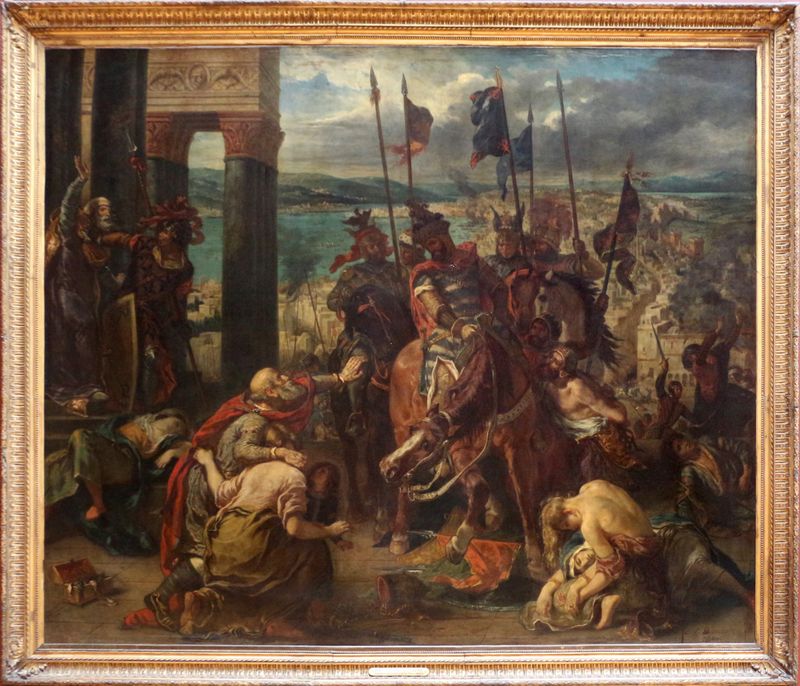
Why Did the Orthodox and Catholic Churches Split?
The Great Schism of 1054 divided Christianity into East and West. Explore the theological, political, and cultural causes — from the Filioque to papal authority — and why the split endures.
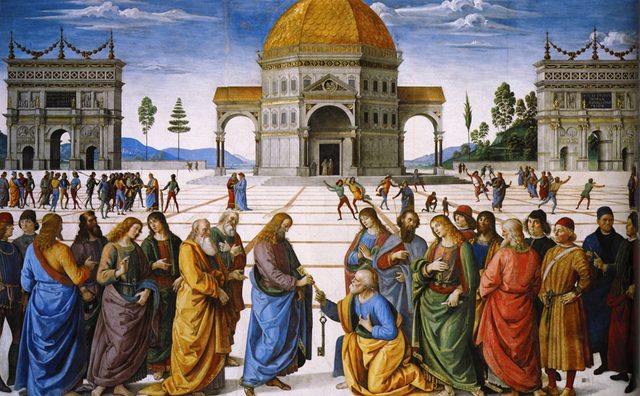
Apostolic Succession: The Unbroken Chain from Christ’s Twelve
Apostolic succession traced from AD 96 to the 1992 Catechism: the patristic evidence, Tertullian’s legal logic, the Protestant critique, and why three in four Christians still require it.

The Filioque: How One Word Split the Church—and Whether It Still Has To
The filioque—'and the Son'—is the word that helped divide Christendom. Its biblical roots, the long schism, and why Rome and Orthodoxy are closer than most think.
Stay Informed
Get new writing on faith, law, and service delivered to your inbox.
No spam. Unsubscribe anytime.