The First Council of Nicaea: What It Decided and Why It Matters
On This Page
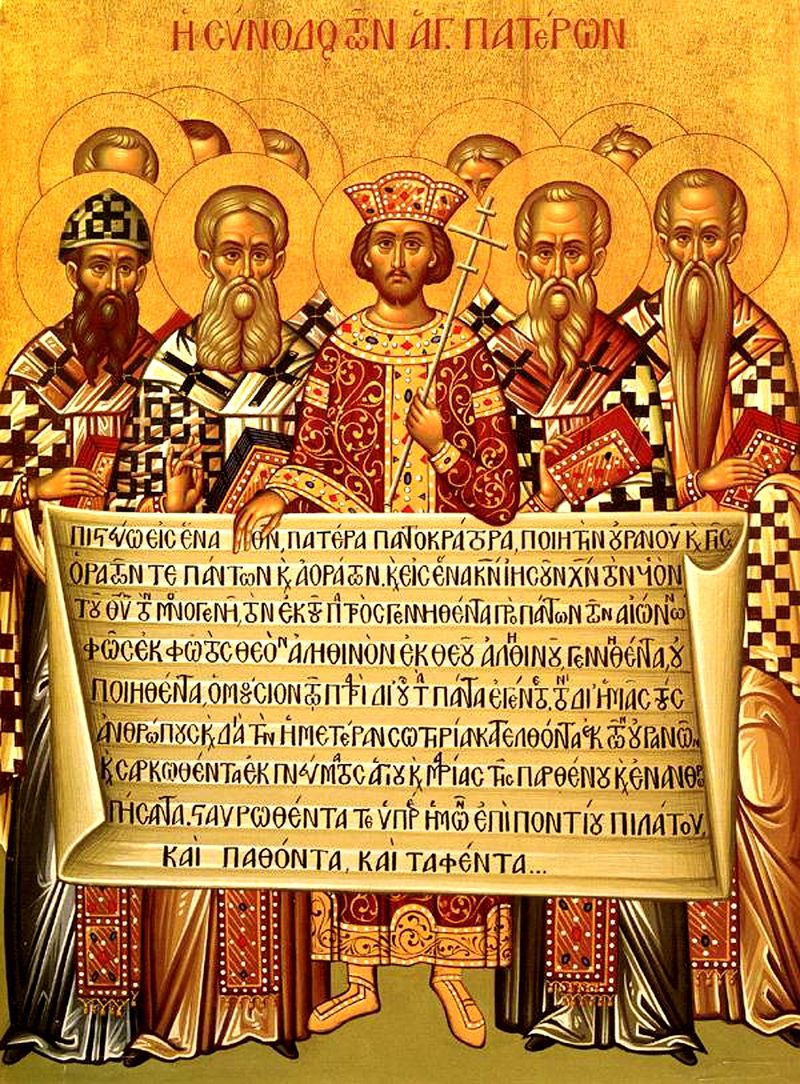
Πιστεύομεν εἰς ἕνα Θεόν, Πατέρα παντοκράτορα, πάντων ὁρατῶν τε καὶ ἀοράτων ποιητήν.
“We believe in one God, the Father Almighty, Maker of all things visible and invisible.” — Opening of the Nicene Creed (325 AD)
In the summer of 325 AD, somewhere between two hundred and three hundred bishops gathered in the lakeside city of Nicaea, in the Roman province of Bithynia, at the invitation of the Emperor Constantine. They came from across the empire—from Egypt and Syria, from Palestine and Asia Minor, from Greece and Rome, and from as far as Persia and the Caucasus. The reason was urgent: the Church was tearing itself apart over a question that cut to the very heart of the faith. Is the Son of God truly God?
The answer the council gave—yes, the Son is ὁμοούσιος τῷ Πατρί, “consubstantial with the Father,” of the very same divine substance—would become the bedrock of Christian orthodoxy. It remains so today. The Nicene Creed, recited every Sunday in Catholic parishes around the world, is the direct descendant of the formula these bishops hammered out in the summer heat of a Roman provincial town seventeen centuries ago.1
For a broader examination of the biblical and theological case for Christ’s deity that Nicaea formalized, see Is Jesus God? The Biblical and Catholic Case for the Deity of Christ.
The Arian Crisis
Who Was Arius?
For a full treatment of the Arian heresy and its theological system, see my dedicated article. What follows here is a summary focused on the crisis that led to Nicaea.
Arius was a priest of Alexandria, a popular preacher and an ascetic of considerable reputation, who began teaching around 318 AD that the Son of God—the Logos, the Word—was not eternal but had been created by the Father before all other things. The Son was the first and greatest of God’s creatures, the instrument through whom everything else was made, but he was not God in the full sense. “There was when he was not” (ἦν ποτε ὅτε οὐκ ἦν / ēn pote hote ouk ēn), Arius taught—a formula carefully phrased to assert the Son’s metaphysical secondariness without conceding a temporal beginning—notably, the Greek formula itself contains no word for “time” (χρόνος).2
The logic of Arius’s position had a certain austere consistency. If God is absolutely one, absolutely simple, absolutely unbegotten, then whatever proceeds from God must be something other than God. To beget is to produce something that did not exist before. Therefore the Son, as begotten, must have a beginning. He is exalted above all creation, yes—but he remains on the creature side of the line that divides the uncreated from the created.
Arius was not an isolated eccentric. He had the support of influential bishops, including Eusebius of Nicomedia (not to be confused with Eusebius of Caesarea, the church historian), who would become one of the most persistent political advocates for the Arian cause in the decades after Nicaea.3
The Response of Alexander and Athanasius
The bishop of Alexandria, Alexander, recognized immediately that Arius’s teaching struck at the heart of Christian salvation. If the Son is a creature, then a creature redeemed us. And a creature, however exalted, cannot bridge the infinite gap between God and creation—cannot, as Athanasius would later put it with devastating clarity, make us “partakers of the divine nature” (cf. 2 Peter 1:4) if he himself does not share that nature. Alexander convened a local synod in Alexandria around 320 AD that condemned Arius’s teaching and deposed him from his priestly office.4
But Arius did not accept the verdict. He appealed to sympathetic bishops elsewhere, particularly Eusebius of Nicomedia, and the controversy spread across the eastern Mediterranean like a brushfire. It was no longer a local Alexandrian dispute. It was a crisis that threatened the unity of the Church—and, in the eyes of the newly Christian emperor Constantine, the unity of the empire.
Constantine and the Council
Constantine’s role in convening Nicaea is sometimes misunderstood. He did not dictate the theological outcome. He was not a theologian, and by several accounts he found the subtleties of the debate bewildering. But he understood that a divided Church meant a divided empire, and he had staked his political project on Christianity as a unifying force.
His initial attempt to mediate the dispute by letter failed. He sent his theological advisor Hosius of Córdoba to Alexandria in autumn 324, but Hosius could not reconcile the parties. Hosius did, however, convene synods at Alexandria and then at Antioch (early 325), where roughly sixty bishops issued an explicitly anti-Arian statement of faith that laid critical groundwork for what was to come. When even this proved insufficient, Constantine took the extraordinary step of summoning bishops from across the empire to a general council at his own expense, providing transportation and lodging from the imperial treasury.5
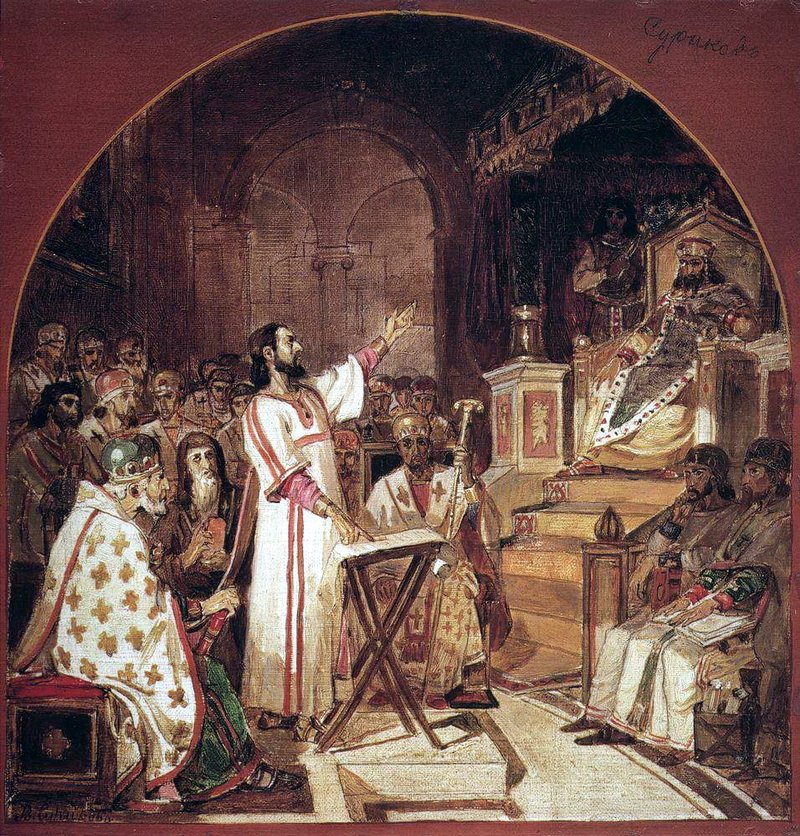
The council opened in May or June of 325. Constantine himself presided at the opening session, addressing the bishops and urging them to find unity. The theological work, however, was done by the bishops themselves. The exact proceedings are poorly documented—although the creed, twenty canons, and a synodal letter survive, no minutes of the debates themselves are extant—but the broad outlines can be reconstructed from the letters of the participants and from later accounts, particularly those of Eusebius of Caesarea and Athanasius.6 (Among the later church historians cited in this article, “Socrates” refers to Socrates of Constantinople, also known as Socrates Scholasticus—a fifth-century church historian, not the ancient Greek philosopher.)
The Theological Debate
The central question was how to express the Son’s relationship to the Father in a way that excluded Arius’s teaching while remaining faithful to Scripture and the Church’s worship. Several options were on the table.
The Arian Position
Arius and his supporters held that the Son was “from nothing” (ἐξ οὐκ ὄντων / ex ouk ontōn)—that is, not from the Father’s own substance but brought into existence by the Father’s will, as a creature is. The Son was “like” the Father in many respects, perhaps even preeminent among all beings, but he was not of the same substance. The Arians were willing to call the Son “God” in a derivative, honorary sense, much as Scripture calls Moses “god” to Pharaoh (Exodus 7:1)—but not God in the absolute sense that the Father is God.7
The Search for a Formula
The bishops who opposed Arius quickly discovered that purely scriptural language, without further clarification, was insufficient to exclude the Arian interpretation. The Arians were adept at accepting scriptural phrases and reinterpreting them. If the council said the Son was “from God,” the Arians could agree—after all, everything is “from God” in some sense (cf. 1 Corinthians 8:6). If the council said the Son was “like the Father,” the Arians could agree to that as well: even creatures bear a likeness to their Creator.
What was needed was a term that could not be reinterpreted, a word that drew a bright line between the orthodox confession and the Arian alternative. The word the council chose was ὁμοούσιος (homoousios): “of the same substance” or “consubstantial.”8
Homoousios: The Decisive Word
The term was not without controversy. It does not appear in Scripture. According to fourth-century sources, it had been used by Paul of Samosata in the third century and rejected at the Council of Antioch in 268—though the details are contested, since Paul’s own writings are almost entirely lost and we know his theology primarily through hostile reports. Some Eastern theologians associated the term with materialist connotations—as though God’s substance were a physical stuff that could be divided and distributed.
Athanasius himself acknowledged the term’s complicated history while defending its necessity: the council fathers adopted homoousios not because it was their preferred philosophical vocabulary but because it was the only word the Arians could not co-opt.9
To say that the Son is homoousios with the Father is to say that whatever the Father is, the Son is—except that the Father is unbegotten and the Son is begotten. Not by participation, not by grace, not by analogy, but by nature. The Son is not a creature who has been elevated to divine status. He is God from God, Light from Light, true God from true God—language the creed itself uses to reinforce the point.
The Nicene Creed
The creed produced at Nicaea in 325 is not identical to the text recited in churches today. The version familiar to most Christians is the Niceno-Constantinopolitan Creed, expanded and refined at the First Council of Constantinople in 381 AD. But the original Nicene Creed of 325 contains the essential confession. Here is the full text:
We believe in one God, the Father Almighty, Maker of all things visible and invisible.
And in one Lord Jesus Christ, the Son of God, begotten of the Father, only-begotten, that is, from the substance of the Father, God from God, Light from Light, true God from true God, begotten, not made, consubstantial with the Father; through whom all things were made, things in heaven and things on earth; who for us men and for our salvation came down and was incarnate and became man, suffered, and rose again on the third day, ascended into the heavens, and is coming to judge the living and the dead.
And in the Holy Spirit.
And those who say “there was when he was not,” and “before being begotten he was not,” and that he came into existence from what is not, or who allege that the Son of God is of another substance or essence, or is subject to alteration or change—these the Catholic and Apostolic Church anathematizes.
Several of the creed’s key phrases are worth examining more closely. The creed confesses the Son as:
- “begotten from the Father, only-begotten” (γεννηθέντα ἐκ τοῦ Πατρός, μονογενῆ)—affirming that the Son’s origin is from the Father’s own being, not from nothing
- “that is, from the substance of the Father” (τουτέστιν ἐκ τῆς οὐσίας τοῦ Πατρός)—an explanatory gloss that leaves no room for Arian reinterpretation
- “God from God, Light from Light, true God from true God”—a cascade of affirmations that the Son is divine in exactly the way the Father is divine
- “begotten, not made” (γεννηθέντα, οὐ ποιηθέντα)—the crucial distinction that separates the Son from all creatures
- “consubstantial with the Father” (ὁμοούσιον τῷ Πατρί)—the word that settled the matter
The creed also appended a series of anathemas explicitly condemning the Arian slogans: “there was when he was not,” “before being begotten he was not,” and “he was made from things that are not.” These anathemas do not appear in the 381 Niceno-Constantinopolitan Creed, though whether they were deliberately “dropped” depends on a contested scholarly question: Kelly and others have argued that the 381 creed may not be a direct revision of the 325 text at all, but rather an independent creed—possibly an older baptismal formula modified to approximate the Nicene faith. (Epiphanius of Salamis used a nearly identical creed in his Ancoratus of 374, predating Constantinople.)
Beyond the anathemas, the 381 creed also omits the phrase “from the essence of the Father” (ek tēs ousias tou patros) while adding a vastly expanded pneumatology, “whose kingdom shall have no end,” and ecclesiological and eschatological affirmations absent from the 325 text.10
Key Figures
Athanasius of Alexandria
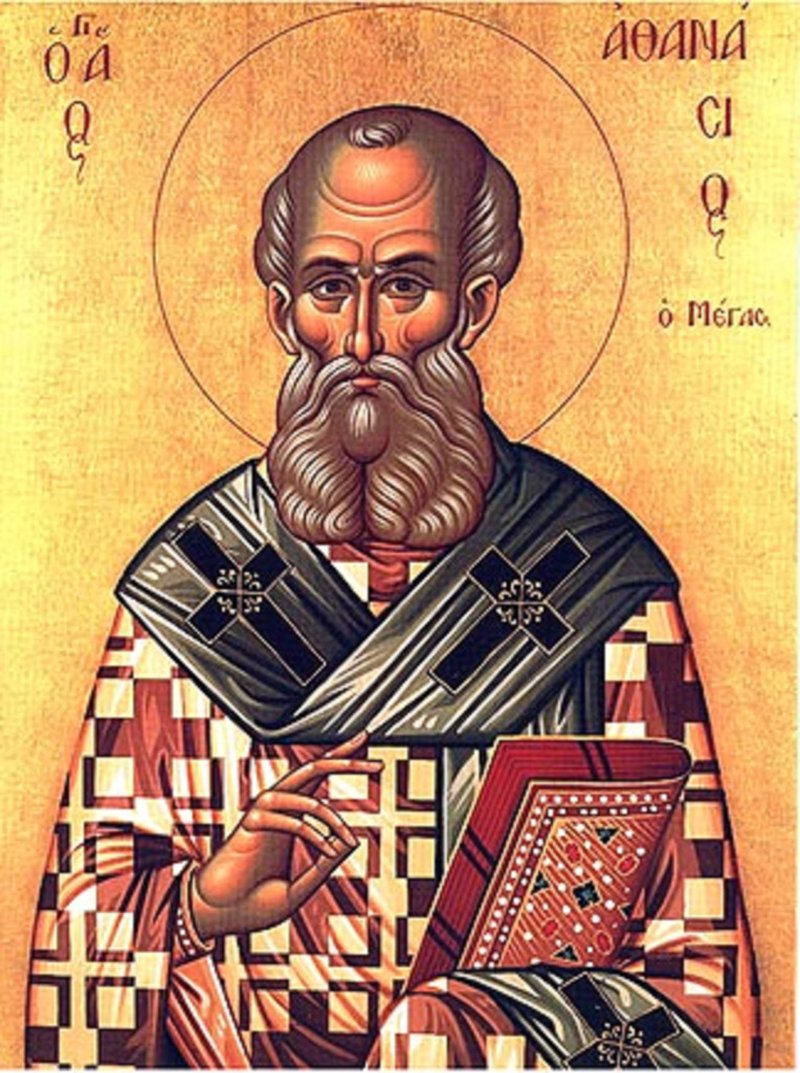
Athanasius attended the council as a young deacon, serving as secretary to Bishop Alexander. He would go on to become bishop of Alexandria himself (328 AD) and the most relentless defender of Nicene orthodoxy for the next four decades, enduring five exiles for his refusal to compromise with Arian or semi-Arian emperors and bishops. His theological writings—particularly Contra Arianos and De Decretis—remain the most important primary sources for understanding both the Arian position and its orthodox refutation. Athanasius’s central argument was soteriological: only God can save. If the Son is not fully God, then we are not fully redeemed.11
Eusebius of Caesarea
The church historian Eusebius occupied a middle position. He was uncomfortable with homoousios and initially favored a more conservative creedal formula based on his own baptismal creed, which used scriptural language without the controversial philosophical term. Ultimately, however, he signed the Nicene Creed, explaining in a letter to his home church that he understood homoousios to mean that the Son bears no resemblance to created things but is in every way like the Father who begot him, and that he is from the Father alone. Eusebius’s letter is a valuable window into how the moderates at the council understood the term they were accepting.12
Hosius of Córdoba
The Spanish bishop Hosius, Constantine’s theological advisor, is widely believed to have played a significant role in the council’s proceedings. Some scholars credit him with proposing or at least championing the term homoousios, though the evidence is circumstantial. What is clear is that he presided over the council’s sessions (alongside Constantine at the opening) and lent the authority of the Western church to the Nicene formula.13
The Scriptural Roots
Nicaea did not impose a foreign philosophical framework onto the biblical text. The council fathers understood themselves to be articulating what Scripture and the Church’s living Tradition already taught, and the scriptural evidence they marshaled was substantial.
The prologue of John’s Gospel was central to the debate. As I explored in my John Prologue series—particularly my reflections on John 1:1 and John 1:2—the evangelist affirms both that the Word “was God” (θεὸς ἦν ὁ λόγος) and that the Word “was with God” (πρὸς τὸν θεόν)—a simultaneous confession of full deity and personal distinction that the Nicene formula of homoousios would later articulate in doctrinal terms. The Arians could not deny that John called the Word θεός, but they insisted this was a derivative, lesser divinity—one of several ancient heresies that misread John’s prologue. The council fathers, reading John alongside the broader witness of Scripture, rejected that reading as incompatible with the text’s plain sense.14
But the single most contested text in the entire controversy was arguably Proverbs 8:22, where Wisdom speaks: “The Lord created me the beginning of his ways” (LXX: Κύριος ἔκτισέν με ἀρχὴν ὁδῶν αὐτοῦ). The Arians had a strong prima facie case here: if the pre-incarnate Son is the Wisdom of God, and Wisdom says she was “created,” then the Son is a creature. Athanasius devoted extensive attention to this text in Contra Arianos II, arguing that the passage must be read figuratively—“in proverbs”—and referred to the Incarnation rather than the Son’s eternal origin.
The orthodox also appealed to the Hebrew qānāh, which can mean “possess” rather than “create,” and distinguished Proverbs 8:25 (“before all the hills he begot me”) from 8:22. The hermeneutical sophistication required to handle this text shows how far the debate went beyond simple proof-texting on either side.

Other key texts included Colossians 1:15–20 (“the image of the invisible God, the firstborn of all creation”—which the Arians read as evidence of the Son’s creaturely status and the orthodox read as affirming his preeminence over creation, distinguishing πρωτότοκος, “firstborn,” from πρωτόκτιστος, “first-created”), Philippians 2:5–11 (the Son existing “in the form of God” before his incarnation), Hebrews 1:1–4 (the Son as “the radiance of God’s glory and the exact imprint of his nature”), and John 10:30 (“I and the Father are one”).
The Aftermath
The Fight Was Not Over
The popular impression that Nicaea settled the Arian controversy is, unfortunately, mistaken. The decades following the council saw a fierce and often violent backlash. Arian and semi-Arian factions regained political influence under sympathetic emperors, particularly Constantius II (337–361 AD), who actively promoted an anti-Nicene theological agenda. Athanasius was exiled five times between 335 and 366 AD. At one point, Jerome would famously remark that “the whole world groaned and was amazed to find itself Arian.”15
The resolution came not in a single dramatic moment but through decades of theological labor (for the broader arc of these developments, see my guide to church history). The Cappadocian Fathers—Basil of Caesarea, Gregory of Nazianzus, and Gregory of Nyssa—refined the Nicene vocabulary, distinguishing clearly between ousia (essence or substance, what God is) and hypostasis (person, who the Father, Son, and Spirit each are). This terminological clarification, largely absent at Nicaea itself, was essential for the final settlement at the First Council of Constantinople in 381 AD, which reaffirmed and expanded the Nicene Creed into the form used in the Church’s liturgy today.
The Christological questions that Nicaea opened would continue to develop through the Council of Chalcedon in 451 AD, which defined the relationship between Christ’s divine and human natures.16
The Legacy
Lewis Ayres, in his landmark study Nicaea and Its Legacy, argues that “pro-Nicene” theology—the mature Trinitarian theology that emerged by the 380s—should be understood not simply as the theology of the 325 creed but as a broader theological culture that developed over the course of the fourth century, shaped by the contributions of both Eastern and Western theologians.
Ayres identifies three core markers of this pro-Nicene consensus: first, a clear version of the person-and-nature distinction, entailing the principle that whatever is predicated of the divine nature is predicated of the three persons equally; second, clear expression that the eternal generation of the Son occurs within the unitary and incomprehensible divine being; and third, clear expression that the divine persons work inseparably—that whatever one person does, all three do. This doctrine of inseparable operations, in particular, was central to the pro-Nicene achievement, ruling out any suggestion that the Son acts as a lesser agent carrying out the Father’s will.17
This is the theological inheritance that the Catechism of the Catholic Church summarizes when it teaches that “the Trinity is One. We do not confess three Gods, but one God in three persons” (CCC §253), that “the divine persons are really distinct from one another” (CCC §254), and that the persons are distinguished from one another solely by their relations of origin: “it is the Father who generates, the Son who is begotten, and the Holy Spirit who proceeds” (CCC §254).18
Why It Matters Today
It is tempting to treat Nicaea as a relic of the fourth century—an artifact of a world in which emperors convened church councils and bishops debated the meaning of a single Greek word. But the question Nicaea answered is not a historical curiosity. It is the question on which everything else in Christianity depends.
If the Son is not fully God, then the Incarnation is not an act of God entering his own creation but of a creature assuming a lower form. If the Son is not fully God, then the cross is not God bearing the weight of human sin but a creature suffering on our behalf—and a creature’s suffering, however noble, cannot accomplish what only God can do. If the Son is not fully God, then the words of Jesus—“I and the Father are one” (John 10:30), “whoever has seen me has seen the Father” (John 14:9)—are either metaphors or lies.
The Nicene fathers understood this. Their confession of homoousios was not an exercise in abstract metaphysics. It was a defense of the gospel: the good news that God himself has come to save, that the one who hung on the cross at Calvary was not an intermediary but the eternal Son of the eternal Father, and that our redemption is therefore real, final, and complete.
Frequently Asked Questions
What was the First Council of Nicaea?
The First Council of Nicaea was the first ecumenical (empire-wide) council of the Christian Church, held in 325 AD in the city of Nicaea (modern-day İznik, Turkey). Convened by Emperor Constantine, it brought together bishops from across the Roman Empire to address the Arian controversy and other matters of Church discipline.
What did the Council of Nicaea decide?
The council’s primary theological decision was to condemn Arianism—the teaching that the Son of God was a created being—and to affirm that the Son is ὁμοούσιος (homoousios, “consubstantial”) with the Father: of the same divine substance, fully and eternally God. It also produced the original Nicene Creed of 325 (shorter than the version most Christians know today, which was expanded at Constantinople in 381), set the date of Easter, and issued twenty canons on Church governance.
What does homoousios mean?
Homoousios (ὁμοούσιος) is a Greek word meaning “of the same substance” or “consubstantial.” At Nicaea, it was used to affirm that the Son shares the identical divine nature as the Father—not a similar nature (homoiousios), not a nature derived by participation, but the very same nature. In the Latin tradition, this is rendered consubstantialis, the word used in the current English translation of the Mass: “consubstantial with the Father.”
Did the Council of Nicaea invent the Trinity?
No. The doctrine of the Trinity was not invented at Nicaea. The council addressed a specific question—whether the Son is truly God or a creature—and answered it by articulating what the Church had always believed and worshipped. The scriptural foundations (John 1:1–2, Matthew 28:19, Colossians 1:15–20, and many others) and the liturgical practice of baptizing in the threefold name long predated the council. Nicaea gave the Church the precise vocabulary to defend what it already confessed.
Did the Council of Nicaea decide what books belong in the Bible?
No. This is a common misconception, popularized in part by Dan Brown’s The Da Vinci Code, but it has no historical basis. The Council of Nicaea addressed the Arian controversy and produced the Nicene Creed; its twenty canons dealt with Church discipline, not the biblical canon. The process of recognizing which books belong in Scripture developed gradually over several centuries, with key milestones including the Councils of Hippo (393 AD) and Carthage (397 AD), a definitive canon list at the Council of Florence (1442), and the solemn dogmatic definition at the Council of Trent (1546). Nicaea neither added nor removed any books from the Bible.
Did Constantine control the Council of Nicaea?
Constantine convened the council and provided logistical support, but the theological decisions were made by the bishops. Constantine was not a theologian—by several accounts, he found the subtleties of the debate difficult to follow—and he did not vote or impose doctrinal conclusions. His interest was primarily political: he wanted a unified Church to help unify the empire. The theological content of the Nicene Creed and its condemnation of Arianism were the work of bishops like Alexander of Alexandria, Hosius of Córdoba, and the young deacon Athanasius.
How does the Nicene Creed differ from the Apostles’ Creed?
The Apostles’ Creed is a shorter, earlier baptismal creed that developed in the Western Church. It confesses the basic narrative of salvation but does not use the technical theological language of Nicaea. The Nicene Creed (in its 381 form) is longer, more theologically precise, and explicitly addresses the errors of Arianism. In Catholic practice, the Nicene Creed is the creed of the Mass; the Apostles’ Creed is used in the Rosary and in some other devotional contexts.
Academic Sources
- Lewis Ayres, Nicaea and Its Legacy: An Approach to Fourth-Century Trinitarian Theology (Oxford: Oxford University Press, 2004)
- R.P.C. Hanson, The Search for the Christian Doctrine of God: The Arian Controversy 318–381 (Edinburgh: T&T Clark, 1988; repr. Grand Rapids: Baker Academic, 2005)
- Khaled Anatolios, Retrieving Nicaea: The Development and Meaning of Trinitarian Doctrine (Grand Rapids: Baker Academic, 2011)
- J.N.D. Kelly, Early Christian Doctrines, 5th ed. (London: A&C Black, 1977)
- J.N.D. Kelly, Early Christian Creeds, 3rd ed. (London: Longman, 1972)
- Rowan Williams, Arius: Heresy and Tradition, rev. ed. (Grand Rapids: Eerdmans, 2002)
- Jaroslav Pelikan, The Emergence of the Catholic Tradition (100–600), vol. 1 of The Christian Tradition (Chicago: University of Chicago Press, 1971)
- Athanasius, De Decretis Nicaenae Synodi (English translation, New Advent)
- Catechism of the Catholic Church §§242–248, 252–256 (Vatican.va)
Further Reading
- The Trinity: A Catholic Explanation — A comprehensive exploration of Trinitarian doctrine, its scriptural foundations, and its development from Nicaea onward.
- The Council of Chalcedon — How the Church defined the two natures of Christ at the fourth ecumenical council, building on the Nicene settlement.
- Modalism Explained — The other great Trinitarian heresy that Nicaea’s theology also excludes, and why it matters.
- Evangelical Catholic Thought — Reflections on the Catechism of the Catholic Church and the evangelical dimension of Catholic faith.
- Lumen Gentium and Salvation Outside the Church — The Church’s understanding of truth and salvation in relation to other faith traditions.
1. On the circumstances of the council’s convocation and the number of attendees, see J.N.D. Kelly, Early Christian Doctrines, 5th ed. (London: A&C Black, 1977), 231–232. The traditional number of 318 fathers comes from Athanasius and likely carries symbolic significance (cf. Genesis 14:14), though the actual number may have been somewhat lower. R.P.C. Hanson, The Search for the Christian Doctrine of God (Edinburgh: T&T Clark, 1988), 152–153, discusses the uncertainties in the attendance figures.
2. The principal primary source for Arius’s teaching is his letter to Eusebius of Nicomedia (preserved in Epiphanius, Panarion 69.6) and his letter to Alexander of Alexandria (preserved in Athanasius, De Synodis 16). The phrase ἦν ποτε ὅτε οὐκ ἦν is reported by multiple sources and was specifically anathematized by the council. Note that this Greek formula contains no word for “time” (χρόνος); Arius carefully avoided temporal language, insisting the Son was “begotten timelessly before everything” (Letter to Alexander). His formula asserts a metaphysical or logical priority, not a temporal one—a distinction Athanasius himself recognized as a deliberate evasion (Orationes contra Arianos). See Hanson, Search, 5–18; Kelly, Early Christian Doctrines, 226–231; Rowan Williams, Arius: Heresy and Tradition, rev. ed. (Grand Rapids: Eerdmans, 2002), for a reassessment of the chronology.
3. On Eusebius of Nicomedia’s role in the Arian controversy and his political influence after Nicaea, see Hanson, Search, 33–41. Eusebius would later baptize Constantine on his deathbed in 337 AD, suggesting the extent of his political access.
4. The Alexandrian synod of c. 320 AD is discussed in Kelly, Early Christian Doctrines, 227–228. Alexander’s encyclical letter (Epistula ad Alexandrum Thessalonicensem) circulated the condemnation broadly, seeking support from bishops across the East. On the soteriological core of the anti-Arian argument, see Athanasius, De Incarnatione 54: “He became man that we might become god” (see theosis)—perhaps the most famous single sentence in patristic Christology, and the theological principle that drove the Nicene settlement.
5. Eusebius of Caesarea, Vita Constantini III.6–7, describes Constantine’s provision of transportation and hospitality. On Constantine’s theological motivations and limitations, see Timothy D. Barnes, Constantine and Eusebius (Cambridge, MA: Harvard University Press, 1981), 208–223.
6. The absence of official conciliar acts is a perennial frustration for historians. Our knowledge of the proceedings is reconstructed from Eusebius’s letter to his church at Caesarea (preserved as an appendix to Athanasius’s De Decretis and independently in Socrates, HE I.8 and Theodoret, HE I.12), Athanasius’s later accounts in De Decretis and Epistula ad Afros, Eusebius’s own Vita Constantini III.4–24, and the church historians Socrates, Sozomen, Theodoret, and Rufinus. See Hanson, Search, 152–172.
7. On the Arian use of Exodus 7:1 and similar texts to argue for a derivative, honorific sense of the title “God” applied to the Son, see Hanson, Search, 95–98; Kelly, Early Christian Doctrines, 229–230.
8. Athanasius, De Decretis 19–20, describes the process by which the council arrived at homoousios: each scriptural phrase proposed was found to be susceptible to Arian reinterpretation, until the bishops determined that only a non-scriptural term could unambiguously exclude the heresy. See also Lewis Ayres, Nicaea and Its Legacy: An Approach to Fourth-Century Trinitarian Theology (Oxford: Oxford University Press, 2004), 85–100, for a careful analysis of the term’s adoption and theological content.
9. On the earlier use of homoousios by Paul of Samosata and its rejection at the Council of Antioch (268 AD), see Kelly, Early Christian Doctrines, 234–237; Hanson, Search, 190–202. The tradition is attested in Athanasius (De Synodis 43–45), Hilary of Poitiers, and Basil of Caesarea, but the reliability of later accounts about Paul’s actual doctrines has been questioned by Henri de Riedmatten, Les actes du procès de Paul de Samosate (1952), among others; Paul’s own writings are almost entirely lost. Athanasius and Hilary disagree on why the term was rejected—Athanasius suggests Paul used it in a materialist sense, while Hilary says Paul used it modalistically. See also Athanasius, De Decretis 18–24.
10. The text of the 325 creed, including the anathemas, is preserved in Athanasius, De Decretis 37, and in the acts of later councils. For the Greek text and English translation, see Kelly, Early Christian Creeds, 3rd ed. (London: Longman, 1972), 215–216. On the relationship between the 325 creed and its 381 revision, see Kelly, Early Christian Creeds, 296–331.
11. On Athanasius’s role at Nicaea and his subsequent career, see Khaled Anatolios, Athanasius, The Early Church Fathers series (London: Routledge, 2004); and Hanson, Search, 239–273. The soteriological argument—that only God can save, therefore the Savior must be God—pervades Athanasius’s writings, especially Contra Arianos I–III and De Incarnatione. Khaled Anatolios (Retrieving Nicaea) has argued that this logic should not be reduced to a single syllogism; for Athanasius, it is embedded in a broader christological narrative: creation through the Logos, fall into corruption, re-creation through the incarnate Logos, and divinization. The Logos does not merely “save” as an external agent—the entire pattern of Christ’s life, death, and resurrection constitutes God’s saving presence within creation.
12. Eusebius’s letter to his church at Caesarea is preserved as an appendix to Athanasius’s De Decretis and independently in Socrates, HE I.8 and Theodoret, HE I.12. See the discussion in Kelly, Early Christian Doctrines, 232–234; Hanson, Search, 163–172.
13. On Hosius’s role, see V.C. De Clercq, Ossius of Cordova: A Contribution to the History of the Constantinian Period (Washington, DC: Catholic University of America Press, 1954); and Kelly, Early Christian Doctrines, 232. The extent of Hosius’s theological influence at the council remains debated.
14. On the role of Johannine Christology in the Nicene debates, see Ayres, Nicaea and Its Legacy, 31–40; and my posts on John 1:1, John 1:2, and the Greek terms in John 1, which explore the scriptural foundations that the Nicene formula articulated in doctrinal language.
15. Jerome, Dialogus adversus Luciferianos 19: “Ingemuit totus orbis, et Arianum se esse miratus est.” On the post-Nicene political and theological struggles, see Hanson, Search, 239–597 (the bulk of the volume); and Ayres, Nicaea and Its Legacy, 100–166.
16. On the Cappadocian contribution to the ousia/hypostasis distinction and the road to Constantinople, see Ayres, Nicaea and Its Legacy, 187–260; Kelly, Early Christian Doctrines, 258–269. Basil of Caesarea’s De Spiritu Sancto and the Epistulae of Gregory of Nazianzus (esp. Ep. 101 and the five Theological Orations) are the key primary texts for this development.
17. Ayres, Nicaea and Its Legacy, 236–240, 273–278. Ayres identifies three core markers of pro-Nicene theology (pp. 236–240): (1) a clear version of the person-and-nature distinction, entailing the principle that whatever is predicated of the divine nature is predicated of the three persons equally; (2) clear expression that the eternal generation of the Son occurs within the unitary and incomprehensible divine being; and (3) clear expression that the persons work inseparably—that is, whatever one divine person does, all three do. The doctrine of inseparable operations (marker 3) is among Ayres’s most distinctive scholarly contributions to the study of pro-Nicene theology.
18. Catechism of the Catholic Church, 2nd ed. (Vatican City: Libreria Editrice Vaticana, 1997), §§253–255. Vatican.va. The Catechism’s summary of Trinitarian doctrine draws on the Fourth Lateran Council (1215), the Second Council of Lyons (1274), and the Council of Florence (1442), as well as the Nicene and Constantinopolitan creeds.
Garrett Ham
Garrett Ham is an attorney, military veteran, and holds a Master of Divinity from Yale Divinity School. He writes from Northwest Arkansas on theology, law, and service.
More about Garrett →Related Posts
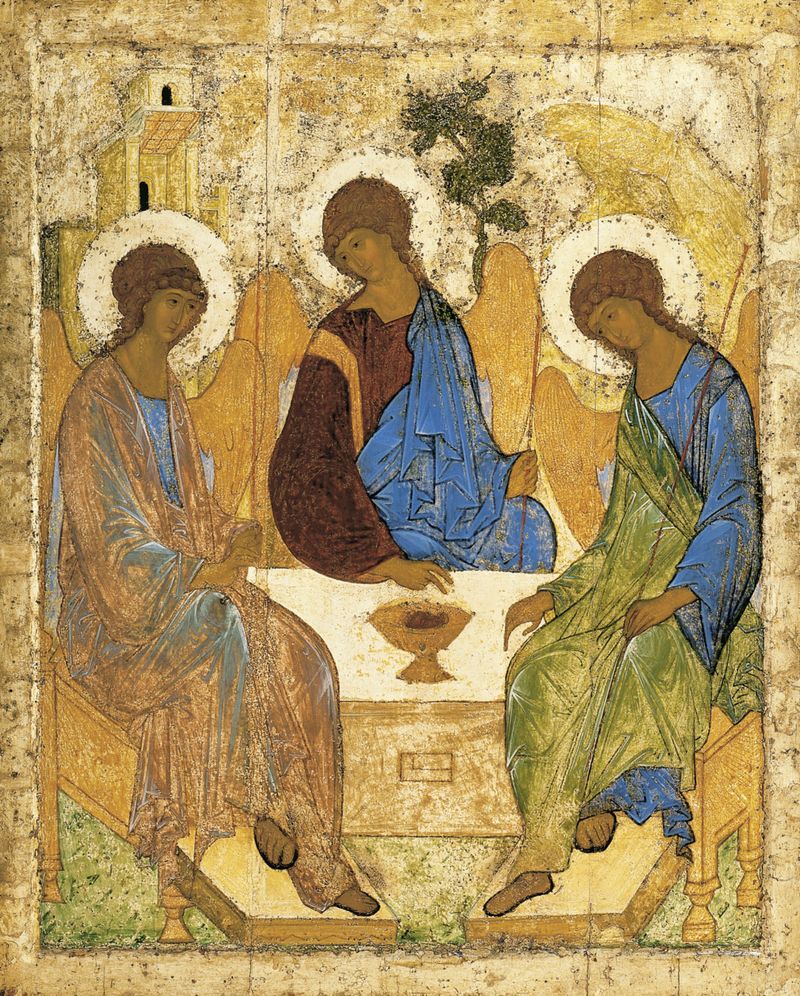
The Holy Trinity Explained: A Catholic Guide to the Central Mystery of Faith
What is the Holy Trinity? A Catholic explanation of one God in three persons — the scriptural foundations, Nicene doctrine, and why it matters for the Christian life.
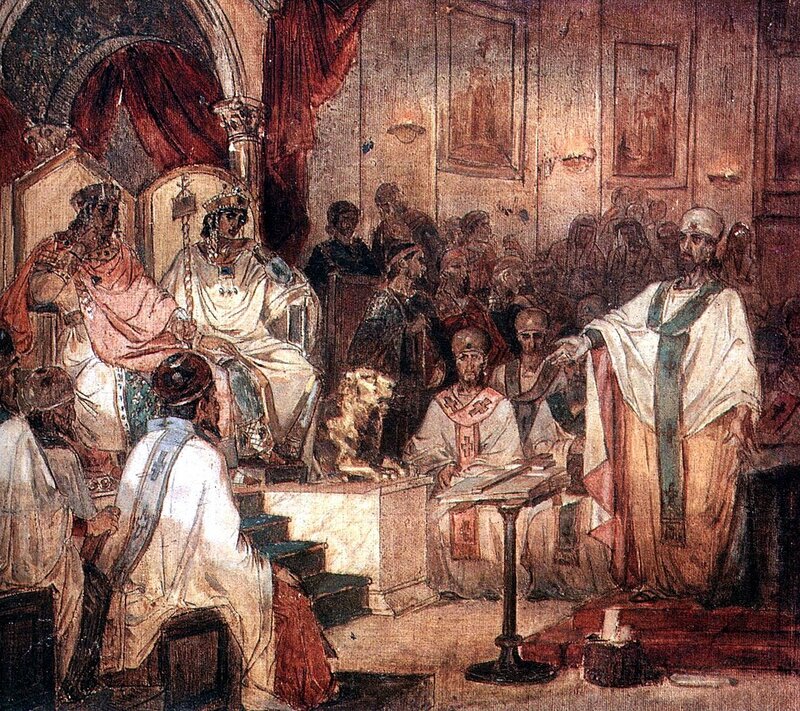
The Council of Chalcedon (451): How Political Rivalry Reshaped Christendom
The Council of Chalcedon (451 AD) resolved a Christological crisis but reshaped the political map of Christendom. How it destroyed Alexandria, elevated the papacy, and set the stage for the Great Schism.
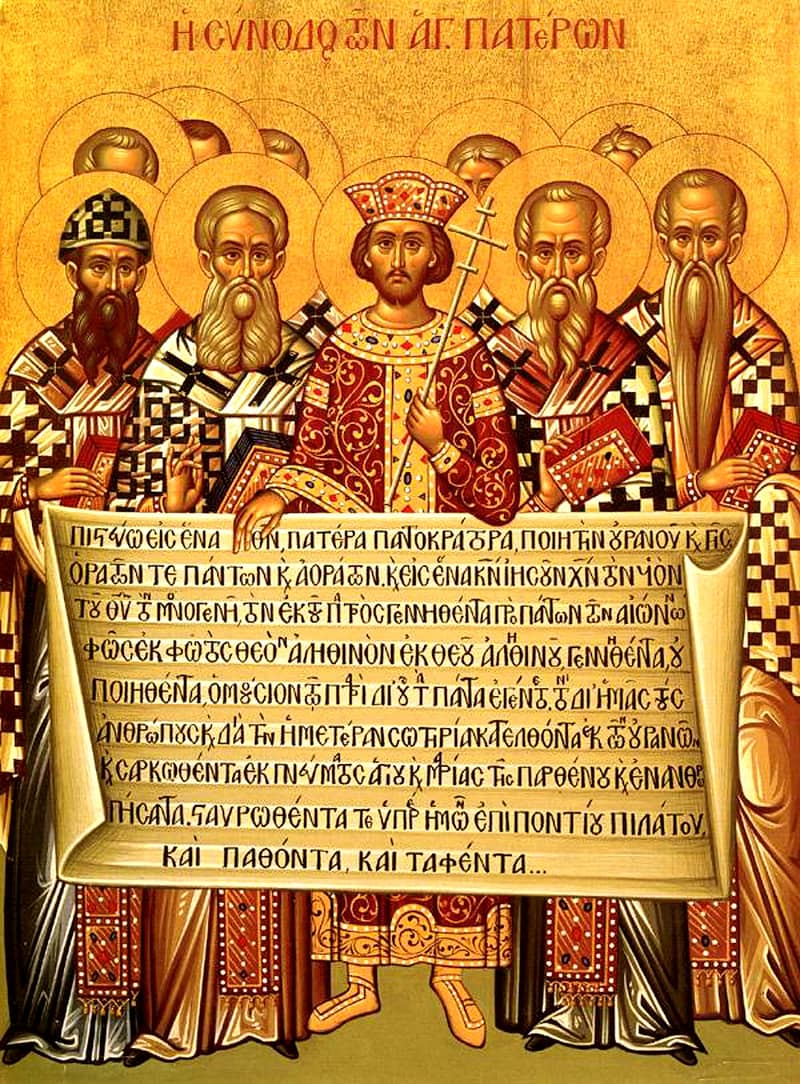
Modalism: The Trinitarian Heresy That Collapsed the Persons of God
What is Modalism? A Catholic examination of the heresy that denied the real distinction of Father, Son, and Spirit — its origins, key proponents, and why the Church condemned it.
Stay Informed
Get new writing on faith, law, and service delivered to your inbox.
No spam. Unsubscribe anytime.