Air Force JAG Corps: Career Guide & Honest Review
On This Page
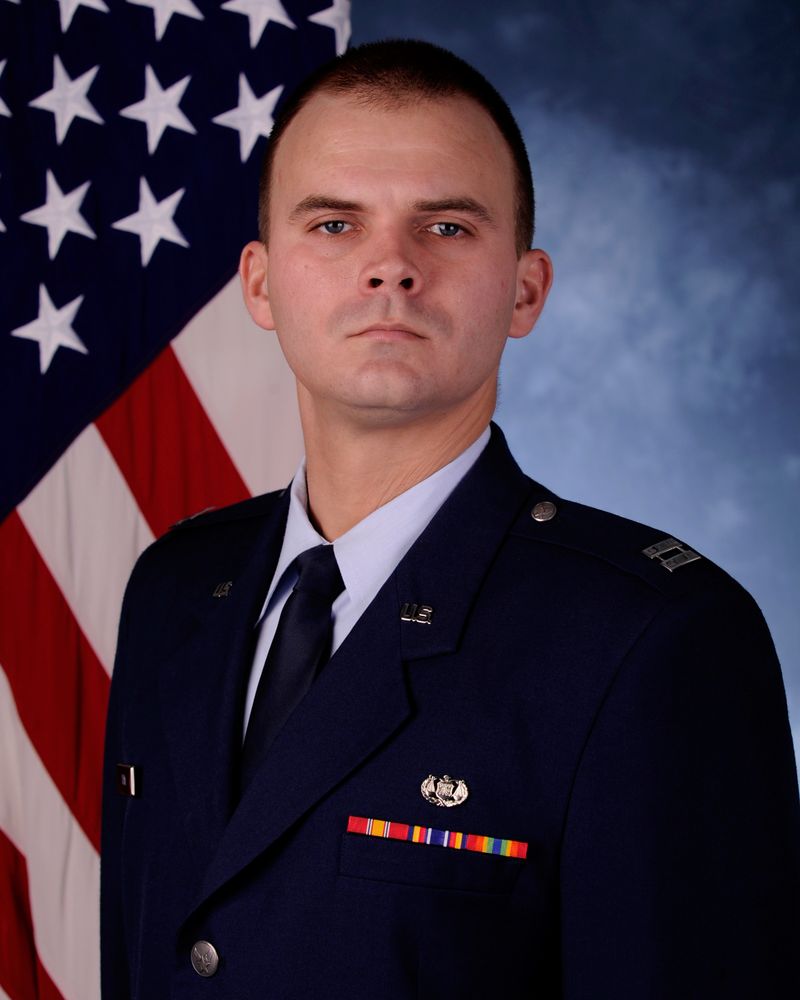
I spent four years on active duty in the Air Force JAG Corps. This is the honest account I wish someone had given me before I raised my right hand.
The JAG Corps—the Judge Advocate General’s Corps—is the legal branch of the United States military. After two years as a JAG officer in the Army National Guard, I transferred to the active-duty Air Force with a four-year service commitment.
Over the years, I have received many emails asking about the JAG Corps. Joining the military is an experience fraught with fear and anxiety. It is an unknown even for those—like me—who were military brats. I hope that my writings can alleviate some stress for those interested in the Air Force JAG Corps.
Army to Air Force JAG Corps
I served in the Arkansas Army National Guard as a JAG officer from 2013 until 2015. In 2015, I transitioned from the Army National Guard to the active-duty Air Force JAG Corps, where I served from 2015 to 2019. (If you’re weighing your options, I’ve also written a comparison of all the Army commissioning paths—DCC, OCS, ROTC, and West Point.)
As I did in the Army, I took extensive notes during my Air Force training. Now that I have left active duty, I aim to provide an honest assessment of the Air Force JAG Corps to give those interested in joining a realistic set of expectations.
I previously published a series of blog posts detailing my week-by-week experience at JASOC. This post provides my broader thoughts about my military experiences, both in the Army and Air Force JAG Corps.
My Time in the Army National Guard
As I said above, I spent a little over two years in the Army National Guard, serving the traditional one weekend per month, two weeks per year. I never deployed, and, other than for training, I was never called to active duty.
I served in three different positions with the Army National Guard.
Legal Assistance Attorney
For my first eight months, I served as a legal assistance attorney assigned to Joint Force Headquarters in Little Rock, Arkansas. In that role, I provided legal assistance to National Guard soldiers. The bulk of my work revolved around drafting wills and other legal documents.
I also helped out elsewhere when needed. For example, I did a few SRPs—Soldier Readiness Processings—at various units. (The Air Force calls these PDF lines.) This consisted of manning a table while soldiers waited in line to see us. Our job was to make sure they had all their legal affairs in order before deploying. We drafted a lot of wills on the fly during this process.
Trial Counsel
After this, the State Staff Judge Advocate assigned me to be Trial Counsel at the 77th Theater Aviation Brigade. This is a Black Hawk unit at Camp Robinson in Little Rock. I reported to the Brigade Judge Advocate—a Major position filled by a Captain at the time. (A brigade generally has three levels of command. The brigade, commanded by a Colonel, battalions, commanded by Lieutenant Colonels, and companies, commanded by Captains.)
Our job was to provide legal advice to the commanders on various issues. This was usually—but not always—related to disciplinary matters. We did several nonjudicial punishment actions (Article 15s). I was later assigned to be Trial Counsel at the 142d Fires Brigade—an artillery unit. This was the same job I had with the 77th.
These jobs allowed me to interface with senior commanders regularly. Very few Captains give regular advice to the Colonel brigade commander. As the only attorneys in the unit—each brigade had a Brigade Judge Advocate and a Trial Counsel—this was our job.
Thoughts on the National Guard
I loved my time in the National Guard before transitioning to the Air Force JAG Corps. I served under several great leaders, and I loved what I did every drill weekend.
One great thing about the Guard was how little bureaucratic and unnecessary time-sucking crap I had to face. I didn’t appreciate this until after my time on active duty.
Since the duty is only one weekend per month, the focus is on the actual mission: combat training. There is little time to waste on creating PowerPoints, drafting memos that no one will read, and sitting through endless meetings that accomplish nothing.
I loved the Guard. I would recommend it to anyone who wants to serve, particularly those who do not want to serve full-time. Deployment tempos ebb and flow, however. You could find yourself called to active duty without much notice and deployed for a year. So, if you go this route, that is something for which you will need to prepare yourself.
Joining the Air Force JAG Corps
In late 2014, I decided that I loved my time in the military and wanted to go full-time. I knew, however, that I wanted to join the Air Force JAG Corps, rather than the Army. My father was a career Air Force officer, and I had always wanted to join the Air Force.
The application process for me was the same as for anyone else. The Air Force JAG Corps treated me like a civilian for application purposes. The selection process is competitive—the Air Force evaluates candidates using a “whole person” concept that weighs academic performance, leadership experience, community involvement, and overall character. The Air Force JAG Corps acceptance rate is not publicly disclosed, but in my experience, the number of qualified applicants significantly exceeds available slots.
Once accepted, I had to ask the Arkansas Army National Guard to release me. I had an eight-year commitment with them, and they could have refused to let me go. But they didn’t. My leadership was supportive of the move, and the Adjutant General signed off on my release.
Induction into the Air Force JAG Corps
My onboarding process, however, was atypical. Most new officers in the Air Force JAG Corps attend Commissioned Officer Training (COT) at Maxwell Air Force Base in Montgomery, Alabama. This is the Air Force’s version of the Army’s Direct Commissioned Course. (For a comprehensive overview, see my complete guide to the Army’s Direct Commission Course.)
Update (2026): The Air Force restructured its officer training pipeline. What was formerly COT has been redesignated as Officer Training School–Abbreviated (OTS-A), a five-week program for non-line officers including JAGs, chaplains, and medical professionals. OTS-A students now live and train alongside line officer OTS candidates in integrated flights for the first five weeks before graduating and moving on to follow-on technical training or their initial assignments. This is a significant change from the separate COT track that existed during my time.
I did not have to attend COT, as the Air Force accepted my previous officer training. Consequently, I cannot provide advice on OTS-A the same way that I was able to for DCC.
I do wish the Air Force JAG Corps would have sent me to COT. Not attending initial training created a strange transition for me. The week before I reported to my duty station, I went to the local Air Force base and bought uniforms on my own. Then, the next week, I got in my car and drove from Arkansas to Tyndall Air Force Base in Panama City, Florida.
On the day I was to report, I put on the uniform for the first time. It was like someone waved a magic wand over me. One day I was an Army officer, the next an Air Force officer.
You should have more guidance than I had if you go the usual route through Officer Training School.
The Air Force JAG Corps and JASOC
The Air Force JAG Corps’ Judge Advocate Staff Officer Course—or JASOC—is the training program for new Air Force JAG officers. It’s the Air Force’s version of the Army’s Officer Basic Course in Charlottesville, Virginia, about which I previously wrote. While I did not have to attend COT, I did have to attend JASOC.
I have written a series of posts describing my experience at JASOC in detail. (You can start with Week 1 of JASOC or jump to Week 2.) It provides the foundational knowledge for your career in the Air Force JAG Corps.1
My Time in the Air Force JAG Corps
I spent four years in the Air Force JAG Corps. From 2015 to 2017, I was stationed at Tyndall Air Force Base in Panama City, Florida. I loved it there. The area was beautiful, and there was a beach right on the base. F-22s flew there during my time but dispersed to other bases after Hurricane Michael.
Update (2026): The Air Force has since rebuilt Tyndall as its “Installation of the Future”—designed to withstand Category 5 hurricanes. The first F-35A Lightning IIs arrived in 2023, and by early 2026, the 325th Fighter Wing’s 95th Fighter Squadron received a full F-35 squadron. The base is slated to host three F-35 squadrons total once construction of all facilities is complete.
After Tyndall, the Air Force JAG Corps sent me to Sheppard Air Force Base in Wichita Falls, Texas. While known as one of the worst assignments in the Air Force, I didn’t think it was that bad. I was two hours from both Oklahoma City and Dallas, and the traffic was almost nonexistent.
What You’ll Do in an Air Force Base Legal Office
I worked in the base legal office during both my assignments in the Air Force JAG Corps. The base legal office handles most legal issues that arise on the base. This includes military justice, contracts, claims, and various other miscellaneous matters.
Everyone spends their first assignment at a base legal office. Later assignments may be elsewhere and can include such jobs as an Area Defense Counsel and Special Victims Counsel.
The Uniform Code of Military Justice (UCMJ) gives the Judge Advocate General (TJAG) of each branch the authority to certify counsel as competent to try courts-martial without supervision. (The Air Force implements this through DAFI 51-201, Administration of Military Justice, which governs trial counsel certification under Article 27(b), UCMJ.) Every other branch provides this certification upon graduation from initial training. So, the Army TJAG certified me after I graduated from the Army JAG School.
The Air Force, however, requires experience serving as second-chair before certification. While there is no hard and fast rule, the general guideline is that you must try three courts-martial.
This creates a lot of extra stress and hoops through which to jump because you cannot get an assignment outside of the legal office until you are certified. If you’re assigned to a slow base without a lot of courts-martial, this can create a significant problem.
(This also creates the perverse incentive of bringing cases to courts-martial that might more appropriately be disposed of through lesser action. I have heard the need to get counsel certified as a motivation in recommending court-martial, so this does happen. It’s part of a corrupt culture I write about elsewhere.)
The Military in the News
No honest discussion of the Air Force JAG Corps would be complete without addressing the attention the military has received for incidents of sexual assault and the existence of hostile work environments.
On these issues, I can only speak to what I have personally observed, though I believe my experience is broadly reflective of the JAG Corps as a whole.
I would not discourage anyone from joining the military based on such news reports. I would feel comfortable with my daughter’s joining the military. But I wouldn’t discount these concerns, either.
Ignored Complaints
Congress and the media have scrutinized the military for alleged instances of commanders ignoring reports of sexual assault or even retaliating against victims for reporting. I never saw any of that for actual sexual assault reports. The vast majority of the commanders I encountered took these allegations seriously.
I am, however, not at all skeptical of reports of such injustices. I came in after sexual assault in the military began receiving extraordinary scrutiny by Congress and very senior civilian leadership, and I have, in fact, seen such unscrupulous command behavior involving lesser allegations.
For example, I have witnessed cries of harassment and hostile work environment ignored or even yield reprisal against the claimant. This creates a terrible situation for the military member. A civilian facing these circumstances is free to quit. Though he or she may face financial hardships for doing so, it is nonetheless an available option.
A military member, however, does not have that option. This leaves the member with the choice of suffering in silence or risking making things worse by filing a report. (Given the extremely low number of reprisal claims that are substantiated and the apparent attitude of the military toward such complaints, there is little recourse for someone claiming reprisal absent a smoking gun proving it.)
It can be a no-win situation. I would be dishonest if I claimed such miscarriages of justice do not occur.
Unjust Prosecutions
On the other hand, I have seen prosecutorial decision-making that would make Mike Nifong blush. (I discuss this problem more broadly in my post on military justice reform.) I have seen many cases proceed to court-martial, where the weight of the evidence strongly suggested the Accused’s innocence.
The data bears this out. According to the DoD’s Sexual Assault Prevention and Response Office (SAPRO), in FY 2019, of the 5,699 unrestricted reports of sexual assault, only 363 cases (6.4%) were tried by court-martial, and only 138 (2.4%) resulted in a conviction for a nonconsensual sex offense. Studies examining courts-martial outcomes have found that a majority of sexual assault cases that go to trial end in acquittal—a rate that suggests the system is referring cases that should never have been brought to trial. (While the 6.4% number may suggest low prosecution rates, the vast majority of sexual assault allegations that I handled that didn’t go to court-martial were because the victim did not want it to go.)
This can be frustrating, as you may find yourself having to choose between fighting your superiors, with all the terrible consequences that can bring, and violating your bar’s rules of ethics.2
General Thoughts
A frustrating part of the job is that you will see injustice. You will see the guilty go free, and you will see the innocent suffer. Both can take a terrible psychological toll.
The majority of commanders are trying to do the right thing. But in the military, so much power is concentrated in one person that when that person is not one of the majority, terrible injustices can result.
I write this not to discourage anyone who wants to join. Rather, I want to give a realistic description of the things for which you should be prepared in the Air Force JAG Corps. Every job comes with good and bad. You should prepare yourself for both.
The Future of the JAG Corps
Update (March 2026): Since I wrote this post, the JAG Corps has come under extraordinary political scrutiny. In early 2025, Defense Secretary Pete Hegseth fired the Air Force’s and Army’s top judge advocates general. (The Navy’s Judge Advocate General had already retired early after only three months in the role.) In March 2026, he ordered a “ruthless, no-excuses” review of all military legal offices, directing service secretaries to “scrub it clean, cut duplication and bureaucracy, clarify roles and reporting.” The memo sets a 45-day deadline for reports on overlap between civilian and military legal departments, with full changes expected within six months.
The stated goal is to refocus JAGs on core military-legal functions: military justice, national security law, operations law, and procurement and fiscal law in operational settings. Critics, however, warn that the overhaul could gut the independent legal oversight that has historically served as a check on unlawful command action—the very issue I discussed in the Wright case above. Others argue that reforms to the military legal bureaucracy are long overdue. I have shared my own views on the matter at length.
Whatever one’s position, these developments make it even more important for prospective JAGs to understand what they are getting into. The JAG Corps you would enter today may look meaningfully different from the one I left in 2019.
Is the Air Force JAG Corps Worth It?
In closing, I’d say that the Air Force JAG Corps—indeed, all the JAG Corps—will provide a different experience for different people. If the television show JAG is inspiring you to join, you will be sorely disappointed. I never flew in a jet the entire time I was in the Air Force, if you can believe it.
The Work
I’d recommend gathering as much information as you can before joining because once you’re in, you’re in. They have you.3 On the one hand, you’ll get to do a lot of things early in your career. You’ll almost certainly get into the courtroom at an earlier phase in your career than you otherwise would.
On the other hand, a significant percentage of the work you do doesn’t actually require a law degree. The original creators of the military justice system designed it to be done by non-attorneys, and that reality is still ever-present. A surprising amount of what you’ll spend your time on would be handled by a legal assistant—not even a paralegal—at a large law firm. So, these are all things to keep in mind.
Importance of Service Before Self
Unless you really want to serve your country in uniform, I’d recommend against joining. Most people who have served, even if they don’t agree, will know what I mean.
Frankly, these four years were the worst of my life, but, if given a choice, I would do it all again.
I am glad that I joined the Air Force, even if I did not enjoy the work and overall hated the entire experience. And I would encourage anyone with any desire to serve their country to do so. It is an experience worth having. To give something back to this country, to be part of something greater than yourself, is always worth doing. If these things do not motivate you, however, you will probably be miserable.
I have a love-hate relationship with the Air Force. If put in a room with other veterans, I’ll bellyache and complain about the toxic leaders, senseless bureaucracy, and meaningless work. (I love the Duffel Blog and find its satire a little too close to reality for comfort.) But if someone who never served expresses hatred toward the military, I feel little sympathy for their position.
The views and opinions expressed in this post are the author’s own and do not reflect the official policy or position of the Air Force JAG Corps, the United States Air Force, the Department of Defense, or the United States Government.
Footnotes
-
During my time in the Air Force, I had some leaders who treated JASOC like the be-all-end-all of legal education. Some would not allow new JAGs—even those with extensive prior legal experience—to give legal assistance without having first attended JASOC. So, an individual who had graduated law school, passed the bar, and received a license to practice law was disallowed from providing basic legal advice on civilian matters—leases, estate planning, etc.—because he or she had not yet attended the death-by-PowerPoint that is JASOC. You will find this type of bureaucratic nonsense to be widespread, and it’s best just to accept it. There’s no challenging or changing it. You will find that many of your leaders in the Air Force JAG Corps, who are ostensibly attorneys, stopped thinking like attorneys a long time ago. And, in their defense, the system does not really encourage in-depth legal thinking and analysis as you progress in rank, except in a few fields (appellate counsel, military judge, etc.) Don’t let this discourage you. Just accept it, and you’ll be fine. ↩
-
Lieutenant General Richard C. Harding, then the Judge Advocate General of the Air Force, is alleged to have told Colonel Joseph Bialke that, absent a “smoking gun” proving the Accused’s innocence, “victims are to be believed and their cases referred to trial.” According to testimony credited by the military judge in the case, Harding also stated that the failure to refer the case would place the Air Force in a difficult position with Congress. See United States v. Wright, 75 M.J. 501 (A.F. Ct. Crim. App. 2015); see also Sexual assault case not dismissed despite ruling of unlawful command influence, Stars and Stripes (Oct. 17, 2015). In that case, Lt. Col. Joshua Kastenberg ruled that Harding had engaged in unlawful command influence—finding, among other things, that Harding’s directive was motivated in part by a desire to prevent Senator Kirsten Gillibrand from gaining votes on legislation to remove commanders from the court-martial process. Six Air Force prosecutors and an Article 32 investigating officer had recommended against prosecution. Lt. Gen. Craig Franklin initially dismissed the charges, but the case was transferred to the Air Force District of Washington and re-referred to court-martial. Senior Airman Wright was ultimately acquitted in October 2015. Harding did not say all such allegations should receive a full and thorough investigation—which absolutely should happen—but that they should proceed to court-martial, no matter the evidence. This prejudgement and strong presumption of guilt is a far cry from the Supreme Court’s admonition that prosecutors must ensure that the guilty not escape and the innocent not suffer. See generally Berger v. United States, 295 U.S. 78, 88 (1935). In my opinion, pressuring prosecution of a case, regardless of the evidence, unless the Accused can definitively prove his or her innocence on the front-end is unethical behavior meriting disbarment. Indeed, I encountered several attorneys during my time in the Air Force JAG Corps that I believe should have been disbarred for “engag[ing] in conduct that [wa]s prejudicial to the administration of justice.” American Bar Association Model Rule of Professional Conduct 8.4(d). Lt. Gen. Harding should be ashamed of himself, and he should have faced disciplinary action by his state bar for his conduct in the Wright case. ↩
-
If they have to threaten you with jail time for quitting, perhaps healthy skepticism about the job is in order. ↩

Garrett Ham
Garrett Ham is an attorney, military veteran, and holds a Master of Divinity from Yale Divinity School. He writes from Northwest Arkansas on theology, law, and service.
More about Garrett →Related Posts

JASOC: The Complete Guide to Air Force JAG Training
Everything you need to know about JASOC—the Air Force Judge Advocate Staff Officer Course at Maxwell AFB. Schedule, curriculum, and firsthand tips from a former JAG officer.

The JAG Corps Is Broken—Pete Hegseth Isn’t Wrong
A former JAG officer with six years of service breaks down what's actually wrong with the military justice system, why Hegseth's diagnosis is correct, and what real JAG Corps reform should look like.
The Complete Guide to Becoming an Army JAG Officer
A comprehensive guide to becoming an Army JAG officer—from application and selection boards to the Direct Commission Course, JAG school, and your first duty station.
Stay Informed
Get new writing on faith, law, and service delivered to your inbox.
No spam. Unsubscribe anytime.