The Army’s Direct Commission Course: A Complete Guide
On This Page
The Army’s Direct Commission Course (DCC) is a six-week training program at Fort Benning, Georgia, that teaches basic soldiering skills to officers who received their commission without attending West Point, ROTC, or OCS. I attended DCC in January 2014 as a newly commissioned JAG officer and wrote about the experience as I went through it. This page serves as a central hub for all of my DCC content—week-by-week accounts, practical guidance, and reference material for anyone preparing to attend.
For those considering a direct commission, see How to Become an Army JAG Officer and Army Commissioning Paths Compared.
Week-by-Week Accounts
Each post covers what happened during that week of DCC, with practical advice for future attendees:
Week 1: What to Expect — In-processing, packing lists, uniforms, physical training, the 1-1-1 fitness evaluation, barracks life, and weekend privileges. This is the most comprehensive post in the series and includes sections on DCC eligibility, fitness test standards (updated for the AFT in 2026), and how the program has changed since 2014.
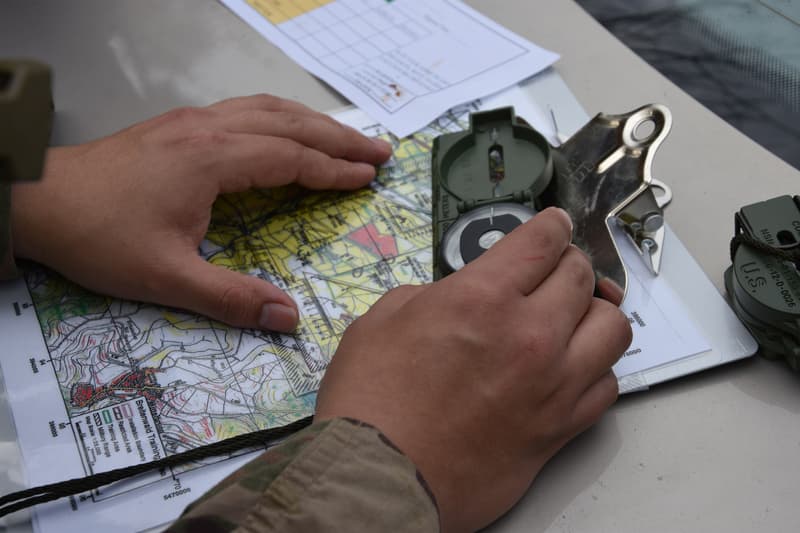
Week 2: The Course Continues — CIF equipment issue, classroom instruction (battlefield first aid, military legal history), the first ruck march, and introduction to land navigation.
Week 3: Land Navigation — Land navigation practice, the graded land navigation test (find 3 of 5 points in 4 hours), weather delays, and the beginning of basic rifle marksmanship.
Week 4: Rifle Marksmanship — The rifle weapons training sequence: simulator, zero range, qualification range, and the four-mile ruck march. (The post describes firing the M16 in 2014; DCC has since transitioned to the M4 as the standard weapon.)
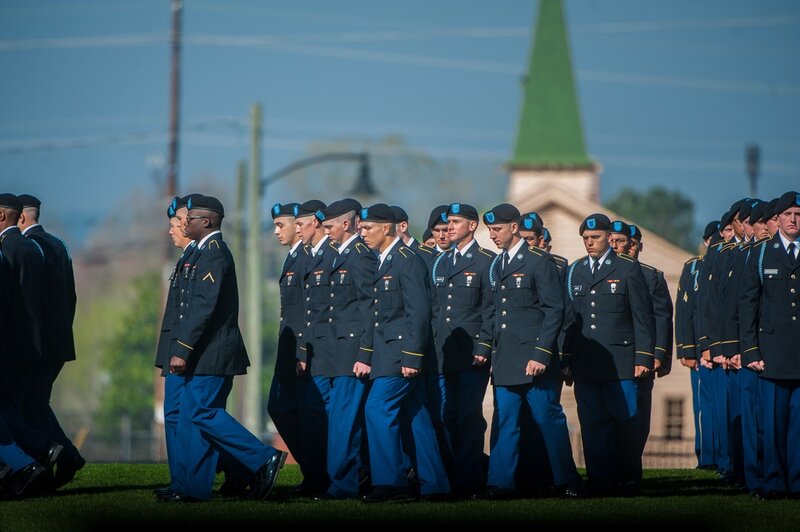
Final Thoughts on DCC — A wrap-up post reflecting on the final weeks of the course, graduation, and what DCC taught me about leadership, the JAG Corps, and the transition from civilian lawyer to Army officer.
Practical Resources
DCC Packing Checklist — An interactive, checkable packing list covering documents, uniforms, personal items, training supplies, and prohibited items. Based on the official January 2025 packing list with supplementary guidance from my experience.
DCC vs. OCS: How Army Commissioning Paths Compare — A detailed comparison of the two programs that share a home at Fort Benning: eligibility, duration, intensity, available branches, and which path fits your goals.
Army Commissioning Paths Compared — A broader comparison of all four commissioning routes: West Point, ROTC, OCS, and the Direct Commissioning Program.
Key Information at a Glance
| DCC at a glance | |
|---|---|
| Length | Six weeks |
| Location | Fort Benning, Georgia — E Company, 3rd Battalion, 11th Infantry Regiment, 199th Infantry Brigade |
| Who attends | Direct-commission officers — primarily JAG; since NDAA 2019 also cyber, signal, military intelligence, military police, finance, engineering, and other functional areas. Medical officers and chaplains attend separate courses elsewhere (see below) |
| Fitness test | Army Fitness Test (AFT); JAG and most branches fall under the General standard — 300 points minimum to graduate |
| Graduation requirements | Pass the AFT; land navigation (3 of 5 points in 4 hours); M4 qualification (Marksman, 23 of 40); six-mile ruck march under 1:48 with 35 pounds; satisfactory attendance and conduct |
| 2026 class dates | Published on the official 199th Infantry Brigade DCC page; ~6-month application-to-commission timeline via USAREC |
Course Length
DCC is six weeks long. Each iteration runs straight through, with weekend privileges typically available after the first week.
DCC Location: Fort Benning
DCC is held at Fort Benning, Georgia — specifically E Company, 3rd Battalion, 11th Infantry Regiment, 199th Infantry Brigade. The installation was briefly renamed Fort Moore in 2023 before being restored to Fort Benning in 2025 (this time honoring Corporal Fred Benning, a World War I Distinguished Service Cross recipient, rather than the original Confederate namesake). It shares its home with Officer Candidate School under the 199th Infantry Brigade’s umbrella, though the two programs are administered separately. Readers looking for Fort Sill want a different course — see the comparison below.
Three Different Courses Called DCC
The Army runs three separate direct-commission courses, at three installations, and which one you attend is determined by your branch. Only the first is the subject of this page.
| DCC (Fort Benning) | AMEDD DCC (Fort Sill) | Chaplain DCC (Fort Jackson) | |
|---|---|---|---|
| Who attends | JAG officers and the technical and functional branches opened by the NDAA 2019 — cyber, signal, military intelligence, military police, finance, engineering, acquisition, logistics, civil affairs | Army Medical Department direct-commission officers — physicians, dentists, nurses, and allied medical specialties | Newly accessioned Army chaplains and chaplain candidates |
| Length | Six weeks | Four weeks | The first of four phases of the eight-week Chaplain Basic Officer Leader Course |
| Location | Fort Benning, Georgia | Fort Sill, Oklahoma | Chaplain School, Fort Jackson, South Carolina |
| Run by | E Company, 3rd Battalion, 11th Infantry Regiment, 199th Infantry Brigade | C Battery, 2nd Battalion, 6th Air Defense Artillery | US Army Institute for Religious Leadership |
| What comes next | Branch-specific school — for JAG, the Judge Advocate Officer Basic Course at Charlottesville | Basic Officer Leader Course, then medical specialty training at JBSA-Fort Sam Houston | The remaining three phases of CHBOLC |
The naming is genuinely confusing, and it trips up more than just prospective officers. Fort Benning runs the Direct Commission Course; the chaplain phase at Fort Jackson is the Direct Commissioning Course. Both abbreviate to DCC, and a search for one routinely returns the other.
Medical officers split off first. On June 11, 2014, the Deputy Commanding General of TRADOC and the Army Surgeon General agreed to establish a separate course tailored to medical professionals; the Army stood up the Fort Sill course in June 2016, and every AMEDD direct-commission officer accessed under the new policy has attended it since 2017. Fort Sill is now the only installation in the Army that runs AMEDD DCC.
Chaplains never shared the Benning course at all. Their basic-soldiering training is built into the Chaplain Basic Officer Leader Course at the Chaplain School, whose program of instruction opens with a phase the Army itself labels the Direct Commissioning Course — Basic Officer Leader Course common core, Army Warrior tasks, and orientation to the Chaplain Corps, all delivered at Fort Jackson.
So if you are a physician, dentist, nurse, chaplain, or chaplain candidate, the rest of this page describes a course you will not attend. I went through the Fort Benning course in 2014 as a JAG officer and have no first-hand knowledge of either of the others; my Week 1 account covers the history of the medical split in more detail.
Fitness Test Standards
The Army Fitness Test (AFT) replaced the ACFT on June 1, 2025. JAG officers fall under the General standard for combat-enabling specialties and must score at least 300 points to graduate.
Graduation Requirements
Pass the AFT, complete the land navigation test (3 of 5 points in 4 hours), qualify with the M4 rifle (Marksman minimum, 23 of 40), complete a six-mile ruck march in under 1:48 with 35 pounds of dry weight, and maintain satisfactory attendance and conduct.
Eligible Branches
The NDAA 2019 (Public Law 115-232, § 502) raised the constructive service credit cap so that direct commissions can now be awarded up to the rank of Colonel. The specific fields eligible for direct commission are determined by Army implementation directives (principally Army Directive 2019-27 and subsequent guidance) and currently include JAG, cyber, signal, military intelligence, military police, finance, engineering, acquisition (FA51), logistics, civil affairs, chaplain, and additional functional areas. Army Acquisition commissioned its first direct-commission officer in August 2024.
DCC Dates 2026 and Application Timeline
The Army runs several DCC iterations per year. Specific 2026 class dates are published on the official DCC page maintained by the 199th Infantry Brigade and through individual branch managers. The Army’s November 2025 recruiting reforms centralized the Direct Commissioning Program under U.S. Army Recruiting Command (USAREC) and shortened the application-to-commissioning timeline to approximately six months. Expect your assignment to a particular class to be confirmed only after your commissioning paperwork is finalized through USAREC.
For the most current information, consult the official DCC page and the Army Direct Commissioning Program page.
What Comes After DCC
After DCC, newly commissioned Army JAG officers proceed to the Judge Advocate Officer Basic Course (JAOBC) at the JAG School in Charlottesville, Virginia. See my complete Army JAG School guide for a full walkthrough of the course, or jump straight to the week-by-week series if you want the firsthand recap.
Air Force JAG officers do not attend DCC; their training pipeline instead includes the Judge Advocate Staff Officer Course (JASOC) at Maxwell Air Force Base in Alabama. I later transferred from the Army National Guard to the Air Force JAG Corps and attended JASOC myself — see my complete JASOC guide for a full overview of that course.
Books
For a more detailed account than what these blog posts cover, see my books:
- The DCC Survival Guide: Succeeding at the Army’s Direct Commission Course — A comprehensive guide to all six weeks, including what to pack, how to prepare physically, and what to expect at each stage.
- The JAG School Survival Guide: Succeeding at the Army’s Judge Advocate Officer Basic Course — Covers the ten-and-a-half-week Judge Advocate Officer Basic Course at the JAG School in Charlottesville, Virginia, which follows DCC in the JAG training pipeline.
Frequently Asked Questions
What is the Army DCC?
The Army Direct Commission Course (DCC) is a six-week program at Fort Benning, Georgia, that teaches basic soldiering skills to officers who earned their commission without attending West Point, ROTC, or Officer Candidate School. The course is run by E Company, 3rd Battalion, 11th Infantry Regiment, 199th Infantry Brigade, and is the entry point into the Army for JAG officers and a growing list of technical branches. Medical officers attend a separate four-week AMEDD DCC at Fort Sill, Oklahoma, and chaplains complete their own Direct Commissioning Course phase at Fort Jackson, South Carolina.
How long is the Army Direct Commission Course?
DCC is six weeks long. The first week is dedicated to in-processing, equipment issue, and the initial fitness evaluation; weeks two through five cover classroom instruction, land navigation, rifle marksmanship, and field training; and the final week is reserved for graduation requirements and out-processing.
Where is DCC held?
DCC is held at Fort Benning, Georgia. The installation was briefly renamed Fort Moore in 2023 before being restored to Fort Benning in 2025 (this time honoring Corporal Fred Benning, a World War I Distinguished Service Cross recipient, rather than the original Confederate namesake). It shares its home with Officer Candidate School under the 199th Infantry Brigade’s umbrella, though the two programs are administered separately.
Do medical officers attend DCC at Fort Benning?
No. Since 2017, Army Medical Department direct-commission officers have attended a separate four-week AMEDD DCC at Fort Sill, Oklahoma, run by C Battery, 2nd Battalion, 6th Air Defense Artillery. The six-week Fort Benning course described here covers JAG officers and the technical and functional branches opened by the NDAA 2019.
Do chaplains attend DCC at Fort Benning?
No. Newly accessioned chaplains and chaplain candidates complete their direct-commissioning training at the Chaplain School, Fort Jackson, South Carolina, as the opening phase of the eight-week Chaplain Basic Officer Leader Course. The Army labels that phase the Direct Commissioning Course, which is why it is so often confused with the Direct Commission Course at Fort Benning.
Who attends the Direct Commission Course?
DCC is for officers who received a direct commission from a civilian career. In practice, the largest cohort at Fort Benning is JAG officers (attorneys). Since the NDAA 2019, direct commissions are also available for cyber, signal, military intelligence, military police, finance, engineering, and other functional areas, and those officers train at Fort Benning too. Medical officers have attended their own four-week course at Fort Sill since 2017, and chaplains train at Fort Jackson.
What fitness standards apply at DCC?
As of June 1, 2025, DCC students take the Army Fitness Test (AFT), which replaced the ACFT. JAG officers and most other direct-commission students fall under the General standard for combat-enabling specialties and must score at least 300 points to graduate. Students also complete timed ruck marches, including a six-mile ruck in under 1:48 with a 35-pound dry load as a graduation requirement.
What should I pack for DCC?
I maintain an interactive DCC Packing Checklist based on the official January 2025 packing list with supplementary notes from my own experience. The list covers required documents, uniforms, personal items, training supplies, and prohibited items.
The views and opinions expressed in this post are the author’s own and do not reflect the official policy or position of the United States Army, the National Guard Bureau, the Arkansas National Guard, the Department of Defense, or the United States Government.

Garrett Ham
Garrett Ham is an attorney, military veteran, and holds a Master of Divinity from Yale Divinity School. He writes from Northwest Arkansas on theology, law, and service.
Related Posts
Week 1 of the Army’s Direct Commission Course (DCC)
A JAG officer's firsthand Week 1 guide to the Army's Direct Commission Course (DCC) at Fort Benning: packing, AFT fitness standards, and 2026 eligibility.
Week 2 of the Army’s Direct Commission Course (DCC)
A JAG officer’s firsthand Week 2 guide to the Army’s Direct Commission Course (DCC) at Fort Benning: land navigation, first aid, CIF gear issue, and PT.
Final Thoughts Regarding the JAG Corps Direct Commission Course (DCC)
Honest reflections after finishing the Army JAG Corps Direct Commission Course at Fort Benning — what DCC is really like and how to prepare.
Stay Informed
Get new writing on faith, law, and service delivered to your inbox.
No spam. Unsubscribe anytime.