Theology Glossary: Key Terms in the Divine Providence Debate
On This Page
Introduction
One of the most rewarding aspects of Catholic theology is its deep engagement with fundamental questions: How can God know the future while respecting human freedom? How does divine providence actually work? What does it mean for God to be eternal, immutable, and all-powerful all at once?
These questions have captivated the Church’s greatest minds for nearly two thousand years, from Augustine to Aquinas, from the medieval scholastics to modern theologians. Yet the specialized vocabulary used in these discussions can seem impenetrable to newcomers—and even to experienced theologians venturing into unfamiliar territory.
That’s where this glossary comes in. Over the years of studying and writing about divine providence, I’ve encountered dozens of terms that are crucial to understanding the major theological positions. Some are Latin coinages from the scholastic tradition; others are technical philosophical concepts that have become indispensable to modern theology. This glossary aims to demystify them.
Whether you’re reading through the Summa Theologiae for the first time, exploring debates between Thomists and Molinists, or trying to understand why Open Theism troubles so many Catholic theologians, you’ll find these definitions useful as a reference. I’ve written them to be precise without being pedantic, and I’ve linked each entry to deeper explorations of the concepts on this site.
Actus Purus (Pure Act)
A foundational concept in Thomistic metaphysics, actus purus describes God as pure actuality—utterly free from potentiality, composition, or unrealized potential. Where creatures exist in a state of composed being (essence distinct from existence), God’s very essence is to be. This doctrine grounds God’s aseity (self-sufficiency) and immutability, since any unrealized potential would imply dependence on something outside God. Understanding God as pure act is essential to grasping why medieval theologians concluded that God’s knowledge, will, and being are ultimately identical. See more in my exploration of divine simplicity.
Atemporality (Divine Timelessness)
The view that God exists outside of time altogether, not as a being who endures through moments but as one who grasps the whole temporal order sub specie aeternitatis—from the perspective of eternity. Rather than experiencing time as a sequence of past, present, and future, God possesses a single, eternal moment of awareness. Atemporality is closely linked to divine simplicity and represents the classical Christian position, though some modern theologians (notably in Open Theism) have questioned whether it adequately preserves God’s responsiveness to creation.
Communicatio Idiomatum
A Christological principle meaning “communication of idioms” or “exchange of properties.” It affirms that what is true of Christ’s human nature can be predicated of his divine nature, and vice versa—as when we say “God died” or “the Son of God was hungry.” This doctrine doesn’t erase the distinction between natures but recognizes their hypostatic union in the one person of the Word. It’s essential for understanding how the infinite God entered finite human existence and why traditional theology speaks so boldly of God’s intimate involvement in redemptive suffering.
Compatibilism
In standard philosophy, compatibilism is the position that determinism and free will are compatible—that an agent can be free even if their actions are causally determined, so long as the agent acts according to their own desires and deliberation without external compulsion. In theological contexts, the term is sometimes applied to Bañezian Thomism, which holds that God’s causal predetermination of free acts is compatible with genuine freedom. Whether Aquinas himself was a compatibilist, however, is a genuinely contested scholarly debate: compatibilist readings (Zoller, Hartung) and libertarian readings (MacDonald, Hoffman and Michon, Jenson) both have serious defenders, and some scholars (Gallagher, Osborne, Muller) argue that the contemporary categories of compatibilism and libertarianism do not properly apply to Aquinas or to God’s causality at all. It is also important to distinguish “theological compatibilism” (concerning God’s first causality and freedom) from standard philosophical compatibilism (concerning natural causal determinism and freedom)—these are substantially different positions despite superficial similarities. Virtually all orthodox Catholic theologians—Thomists, Molinists, and Scotists alike—hold that divine knowledge coexists with human freedom; that consensus alone does not make one a compatibilist. The relationship between these views and theories like Molinism and divine foreknowledge remains a lively area of Catholic theological debate.
Concordia (Molina’s Work)
Short for Concordia Liberi Arbitrii cum Gratiae Donis, Divina Praescientia, Providentia, Praedestinatione et Reprobatione (“The Compatibility of Free Choice with Divine Gifts, Divine Foreknowledge, Providence, Predestination, and Reprobation”), this 1588 work by Jesuit theologian Luis de Molina attempts to reconcile divine omniscience with libertarian free will through the doctrine of middle knowledge. The Concordia sparked the De Auxiliis controversy (the broader dispute over grace began as early as 1581, though the formal Congregatio de Auxiliis was established around 1597) and remains one of the most influential systematic treatments of providence in Catholic theology. For a fuller discussion, see my essay on Molinism.
Counterfactuals of Creaturely Freedom
Propositions about what free creatures would do in various hypothetical circumstances—propositions like “If Jane were offered a promotion, she would accept it.” Molinists argue that God knows these counterfactuals through his middle knowledge, thereby knowing how free creatures will actually choose in any possible world. The doctrine of counterfactuals of creaturely freedom is central to Molinist attempts to preserve both divine foreknowledge and libertarian free will, though it faces the grounding objection: how are such counterfactuals grounded in reality if they’re not grounded in God’s nature, in necessity, or in the free choices of creatures?
De Auxiliis Controversy
A heated theological dispute (roughly 1588–1607) between Dominican Thomists and Jesuit Molinists in the Catholic Church over how divine grace and human freedom interact. The Dominicans defended the Thomistic doctrine of physical premotion; the Jesuits advanced Molina’s theory of middle knowledge. Neither position was officially condemned, but the controversy illustrated the limits of human understanding when facing the deepest mysteries of grace and freedom. Understanding this debate is crucial for appreciating the diversity of legitimate Catholic thought on providence.
Dei Filius
A dogmatic constitution of the First Vatican Council (1869–1870), Dei Filius is an incipit—the opening words of the document’s text (“Dei Filius et Redemptor humani generis…”), meaning “Son of God,” not a topical title. The document is properly described as the Dogmatic Constitution on the Catholic Faith. Its four chapters define doctrine on God as creator, on revelation, on faith, and on the relationship between faith and reason. Dei Filius affirms that God is eternal, immutable, and omniscient, and it provides the doctrinal framework within which all discussions of divine omniscience and human freedom must operate. (It should not be confused with Dei Verbum, Vatican II’s 1965 Dogmatic Constitution on Divine Revelation, which explicitly builds on Dei Filius but is a distinct document from a different council.)
Divine Immutability
The doctrine that God is absolutely unchanging in being, perfection, and will. God’s immutability flows from his status as actus purus and ensures the reliability of his promises and the stability of creation. Yet immutability raises a genuine tension with biblical language suggesting divine responsiveness and “change of mind.” Classical theology reconciles these through careful distinction: God’s eternal will encompasses all divine action, so apparent changes in God’s dealings with creation reflect the creature’s changing relationship to God’s unchanging purposes, not any change in God himself.
Divine Impassibility
The classical doctrine that God cannot suffer passion, emotion, or grief in the way creatures do. God is not subject to external causation that would move him involuntarily; divine action flows entirely from his nature and will. Yet impassibility doesn’t mean God is indifferent or uncaring. Rather, God’s love and response to creation emanate from his infinite perfection, not from being emotionally affected by external events. The Incarnation presents the deepest challenge to impassibility, which is why communicatio idiomatum becomes so important: God in Christ truly suffered, yet as God, he suffered in a way transcending creaturely passivity.
Divine Simplicity
One of the most foundational yet contested doctrines in Christian theology: the principle that God is absolutely simple, without composition of any kind—no distinction between essence and existence, act and potentiality, substance and accidents. God’s attributes (justice, mercy, power, knowledge) are not “parts” of God but are identical with his essence, and all are ultimately identical with one another in the divine being. Divine simplicity explains God’s aseity, immutability, and necessity, but it also generates profound philosophical puzzles about how we speak of God’s diverse attributes. I’ve devoted a full essay to this crucial doctrine.
Essence-Energies Distinction (Palamite)
The Eastern Orthodox theological framework, systematized and theologically defended by St. Gregory Palamas in the 14th century, distinguishing between God’s transcendent essence (unknowable and inaccessible) and his uncreated energies (God himself reaching out to creation, knowable through mystical experience). The basic contours of this distinction predate Palamas by centuries—striking precedents appear in the 4th-century Cappadocian Fathers (Basil the Great, Gregory of Nyssa, Gregory of Nazianzus), with further development by Maximus the Confessor and John of Damascus. Palamas gave the distinction its most rigorous systematic formulation during the Hesychast controversy beginning around 1337, and the Councils of Constantinople in 1341 and 1351 formally endorsed Palamite theology as Orthodox dogma. A core tenet of Palamism is that the energies are uncreated—they are God himself in his outward activity, not mere created effects. While Eastern Orthodoxy developed this framework more fully than Western Catholicism, contemporary Catholic theologians increasingly find it a useful complement to scholastic metaphysics, especially in addressing concerns about how God can be intimately present while remaining infinitely transcendent.
Eternal Now
A term used to describe God’s mode of existence outside time, where all moments of temporal history are present simultaneously to God’s eternal awareness. The “eternal now” is not a single moment within time but rather a transcendent vantage point from which the entire temporal order—past, present, and future—is perceived as a unified whole. This concept helps clarify classical atemporalist theology but raises questions about how God’s knowledge from the eternal now can coexist with genuine creaturely freedom and contingency. See discussions in my essays on divine foreknowledge and atemporality.
Foreknowledge (Divine)
God’s knowledge of future contingent events—things that are free and undetermined. Divine foreknowledge is affirmed throughout Scripture and Catholic teaching, but explaining how God infallibly knows what creatures will freely choose has proven extraordinarily difficult. The major Catholic models—Thomism, Molinism, and others—differ fundamentally in their answers. Rather than attempting a simple definition here, I’d urge you to explore my essay on divine foreknowledge and free will and related pieces on Molinism and Open Theism.
Free Knowledge (Scientia Libera)
In scholastic terminology, God’s knowledge of things that are not necessitated by God’s nature or by logical necessity—typically, his knowledge of creatures and their contingent actions. Free knowledge contrasts with natural knowledge, which is God’s knowledge of his own essence and of all abstract, timeless truths. The distinction between these two modes of knowing helps medieval theologians explain how God knows both necessary truths and contingent facts. Molinists further subdivide knowledge through the concept of middle knowledge.
General Sovereignty
A term sometimes used to describe God’s universal governance of creation as a whole, in contrast to specific sovereignty, which concerns God’s particular providential direction of individual events and choices. The distinction is more semantic than substantive, since authentic Catholic theology maintains that God’s providence extends to the most minute particulars while respecting genuine creaturely freedom.
Grounding Objection
A major philosophical challenge to Molinist middle knowledge: How are counterfactuals of creaturely freedom “grounded”—i.e., on what metaphysical basis do they rest? If they’re not grounded in God’s nature (since they’re about creatures, not God), nor in logical necessity, nor in the free choices of creatures (since the counterfactuals are supposed to be prior to God’s creative decision), then what makes them true? This objection has spawned decades of sophisticated Molinist responses but remains a point of significant philosophical vulnerability for the theory.
Hypostatic Union
The fundamental Christological doctrine affirming that in Jesus Christ, the eternal Son of God is personally united to a complete human nature—body and rational soul—without confusion of natures and without separation of persons. The two natures remain distinct in their properties and operations, yet they exist in and through a single divine person. The hypostatic union is the linchpin of Christian redemption and the deepest expression of God’s love for humanity. Understanding it properly requires careful use of communicatio idiomatum.
Ipsum Esse Subsistens
Latin for “subsistent being itself,” this phrase encapsulates the apex of Thomistic metaphysics: God alone is being itself, utterly identical with his own act of existence. Where all creatures have existence as something participated and received (their essence is distinct from their existence), God is existence. This concept grounds God’s necessity, aseity, and uniqueness. It flows naturally from medieval reflection on God as actus purus and helps explain why God can neither be caused nor dependent on anything outside himself.
Libertarian Free Will
The incompatibilist philosophical position that free will and determinism are mutually exclusive, that determinism is false, and that at least some agents possess genuine freedom. Libertarian free will is typically characterized by two components: alternative possibilities (the metaphysical ability to have done otherwise in an identical situation with identical prior causes) and sourcehood (the agent is the ultimate source or originator of their free actions, not merely an undetermined event). Different libertarian theories weight these components differently—noncausal theories (Ginet), event-causal theories (Kane), and agent-causal theories (Chisholm, O’Connor) each emphasize different elements. The indeterminism requirement is what fundamentally distinguishes libertarianism from compatibilism, and the sourcehood condition addresses the “luck objection” (how undetermined outcomes amount to freedom rather than randomness). Many contemporary Catholic philosophers embrace libertarianism, though they differ on how to reconcile it with divine omniscience. Open Theism and Molinism both attempt such reconciliations, though they take radically different approaches.
Middle Knowledge (Scientia Media)
Molina’s doctrine that God possesses a mode of knowledge—distinct from natural and free knowledge—by which he knows all counterfactuals of creaturely freedom: what any possible creature would freely do in any possible circumstance. Through middle knowledge, God chooses which world to create, thereby infallibly knowing how creatures will freely act in that world while respecting libertarian free will. This ingenious theory has attracted many sophisticated defenders but faces serious philosophical objections. Explore Molinism in detail.
Natural Knowledge (Scientia Naturalis)
God’s knowledge of all abstract, necessary, and eternal truths: mathematical truths, logical laws, and the infinite possibilities that could exist. This knowledge flows necessarily from God’s eternal intellect and requires no act of will. It contrasts with free knowledge, which concerns the contingent, actual world. Scholastic theologians used this distinction to explain how God can know all truths without being determined by anything outside his nature.
Omniscience
The divine attribute of knowing all things: past, present, and future; actual and possible; necessary and contingent. Omniscience is firmly taught in Scripture and defined in Catholic doctrine, yet understanding it—particularly how it relates to free will—remains deeply challenging. The major Catholic theological schools (Thomism, Molinism) affirm omniscience but interpret it differently. See fuller discussion in my essay on does God know the future.
Open Theism
A contemporary theological movement that revises classical doctrines of omniscience and atemporality to preserve libertarian free will. Open theists argue that genuine future contingents are not yet determined and therefore cannot be known—not even by God. God knows the past and present exhaustively and knows all possibilities, but the actual free choices of creatures remain genuinely open. While Open Theism attracts serious philosophers, Catholic teaching has not accepted it, viewing it as incompatible with God’s omniscience. Explore Open Theism’s case and why Catholic theology finds it problematic.
Physical Premotion (Praemotio Physica)
The Thomistic doctrine that God actively moves all creatures toward their actions through “physical premotion”—a divine motion that is prior to (in the order of causation, not time) the creature’s own free choice. Within the Bañezian Dominican tradition that coined this concept, the standard formulation is praedeterminatio physica: God’s premotion is explicitly a predetermination, directed to one determinate act and infallible in producing its effect. What Bañezians deny is not that God determines the choice, but that this determination destroys freedom. Their reconciliation proceeds through the distinction between necessity and infallibility: God’s premotion infallibly produces its effect but does so by moving the will “according to its own mode”—that is, freely. The creature retains a real but unexercised ability to have done otherwise. This is also a contested point within Thomism itself: scholars like Brian Shanley, O.P., Jacques Maritain, and Bernard Lonergan have offered alternative Thomistic accounts that distance themselves from Bañezian predetermination. Physical premotion remains a deeply debated concept, though its defenders argue it is the only coherent way to preserve both God’s universal causality and genuine creaturely agency.
Process Theology
A modern theological framework originating in the thought of philosopher Alfred North Whitehead (1861–1947) and theologian Charles Hartshorne (1897–2000), who became the primary conduit for Whitehead’s theistic ideas after 1940. Process theology affirms a dipolar God: God’s primordial nature is eternal and unchanging (his envisagement of all possibilities), while God’s consequent nature is temporal and responsive to the actual world. God is genuinely affected by creation—Whitehead describes God as “the great companion—the fellow-sufferer who understands.” Rather than describing God as “limited” in power, process theologians distinguish persuasive from coercive power: God is the supreme creative power but not the only creative power, and persuasion rather than coercion represents the highest form of genuine influence. Process theology does reject classical divine attributes like omnipotence, immutability, and full atemporality, though it does not deny that God is in some respects eternal and immutable. While it has attracted some Christian thinkers, Process Theology represents a significant departure from classical Christian and Catholic teaching and exemplifies how deeply embedded these traditional doctrines are in Christian faith and practice.
Scientia Media
See Middle Knowledge.
Specific Sovereignty
A term sometimes used to emphasize God’s particular providential governance of specific events and free choices, in contrast to general sovereignty. Catholic theology maintains that God’s providence extends to every detail of creation, including the free acts of rational creatures, though the exact mechanism remains debated.
Further Reading
The terms in this glossary represent some of the most important concepts in Christian theology and philosophy. To deepen your understanding, I’d recommend exploring the following resources:
On This Site
- Divine Foreknowledge and Free Will
- Molinism Explained
- Open Theism and Why Catholics Reject It
- Divine Simplicity: A Primer
- Does God Know the Future?
- Is Molinism Compatible with Thomism?
- Divine Providence Models Compared
- Process Theology and Classical Christianity
Foundational Texts
- Thomas Aquinas, Summa Theologiae I, Questions 2, 8, 14–19
- Luis de Molina, Concordia Liberi Arbitrii cum Gratiae Donis, Divina Praescientia, Providentia, Praedestinatione et Reprobatione (the Concordia)
- Reginald Garrigou-Lagrange, The One God: A Commentary on the First Part of the Summa Theologiae
Modern Scholarship
- Marilyn McCord Adams and Robert Merrihew Adams, eds., The Problem of Evil (Oxford University Press)
- William Lane Craig, The Only Wise God (Baker Books)
- Edmond L. Fortman, The Theology of God (Bruce Publishing)
- Josef Pieper, The Silence of St. Thomas (St. Augustine’s Press)
This glossary is a living reference. As you encounter new terms in your theological reading or have questions about the concepts listed here, return to it. Theology is not a body of static facts but a living conversation—a conversation the Church has been having for two thousand years and one to which you, the reader, are invited to contribute.
Garrett Ham
Garrett Ham
Garrett Ham is an attorney, military veteran, and holds a Master of Divinity from Yale Divinity School. He writes from Northwest Arkansas on theology, law, and service.
More about Garrett →Related Posts
Divine Foreknowledge and Free Will: The Catholic Answer
Can God know the future and humans still be free? The Catholic intellectual tradition offers robust answers through Thomism and Molinism. Here’s how they work and why they matter.
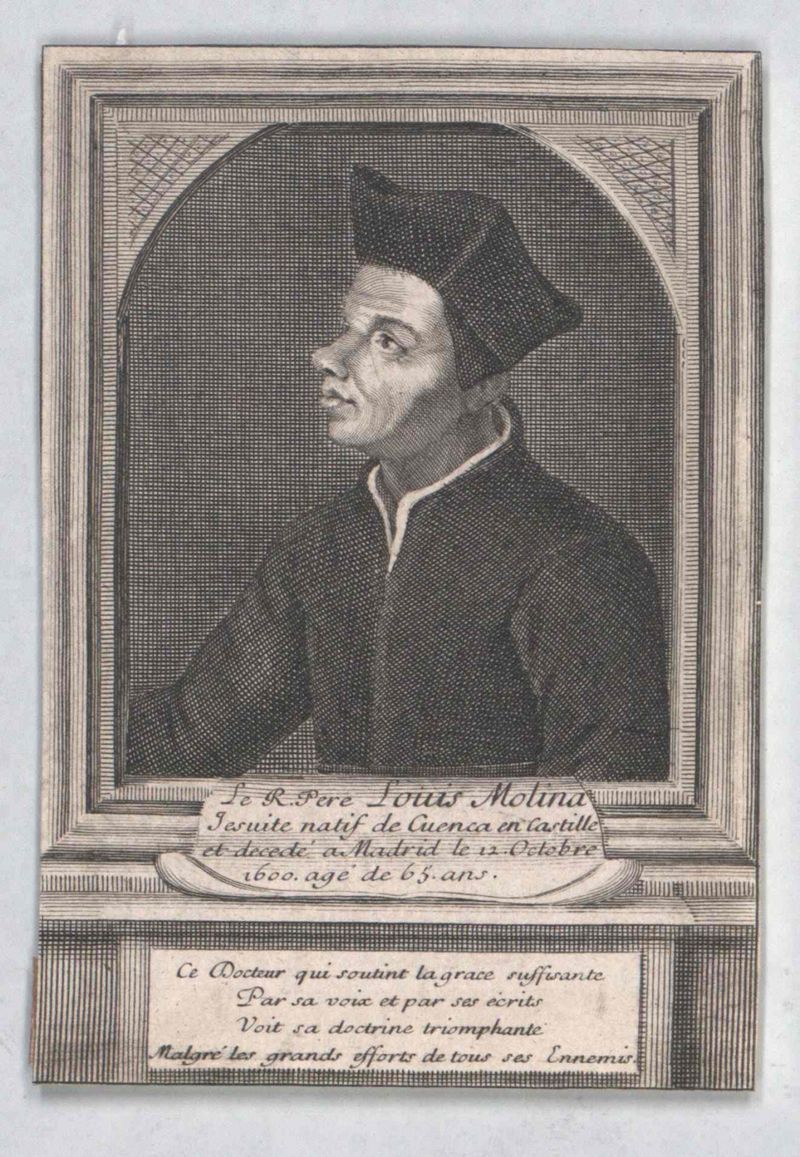
Molinism: Divine Sovereignty and Human Freedom
What is Molinism? Luis de Molina's middle knowledge (scientia media), the De Auxiliis controversy, and how Molinism compares to Thomism and Calvinism.
Open Theism: A Catholic Evaluation
What is open theism? A Catholic evaluation of the open model of God, its scriptural case, philosophical arguments, and why it falls outside defined Catholic dogma.
Stay Informed
Get new writing on faith, law, and service delivered to your inbox.
No spam. Unsubscribe anytime.