Week 2: Opportunities for Spiritual Growth at Yale

On This Page
In this post in my series “God and Man at Yale Divinity,” I discuss my second week in the M.Div. program and the opportunities that exist for spiritual growth at Yale.
I just completed my second week in the Master of Divinity program at Yale Divinity School. This was a short week because of Labor Day, but things are starting to pick up. The semester now feels to be in full swing as introductory material and lectures quickly gave way to extensive assignments and various new obligations.
I also became acquainted with the opportunities for spiritual growth that exist at Yale. The Master of Divinity seeks to provide an environment for both academic and spiritual growth and development. I discuss both below.
Workload v. Spiritual Growth at Yale
Even before this week started, I knew I was in for a busy semester. (I discuss this briefly in my previous post.) Despite not having class, I devoted the entire Saturday preceding this week to Yale. The readings required to get ready for class were quite extensive.
So, for example, my Karl Barth class met for the first time on Tuesday, and the reading to prepare for that first class alone was one-hundred seventeen pages. My New Testament Interpretation class required me to read 1 and 2 Maccabees, Daniel, and about fifty pages in the textbook.
For Greek, I had to diagram about seventeen pages of Greek text in addition to preparing for a vocabulary quiz on Tuesday. These are just three of the classes, one of which hadn’t even met yet.
I’m guessing that I read about three hundred pages over the weekend to get ready for this week. So, the workload is indeed quite heavy, and I expect it to get heavier. Still, I love the subject matter, so it doesn’t feel like a burden.
It is, however, very time consuming, so I have to be careful that I don’t neglect my other responsibilities, my spiritual growth, or my life in general outside school because of my academic obligations at Yale. That, however, may be easier said than done.
There is a lot of pressure to do well because I need excellent grades and to perform at a very high level to get into a top-tier Ph.D. program. Still, I love what I’m studying, and I enjoy all the reading. So, unlike law school, the work itself is not painful. I enjoy it. I’m just starting to realize, however, how little time I will have for anything else.
Spiritual Growth at Yale
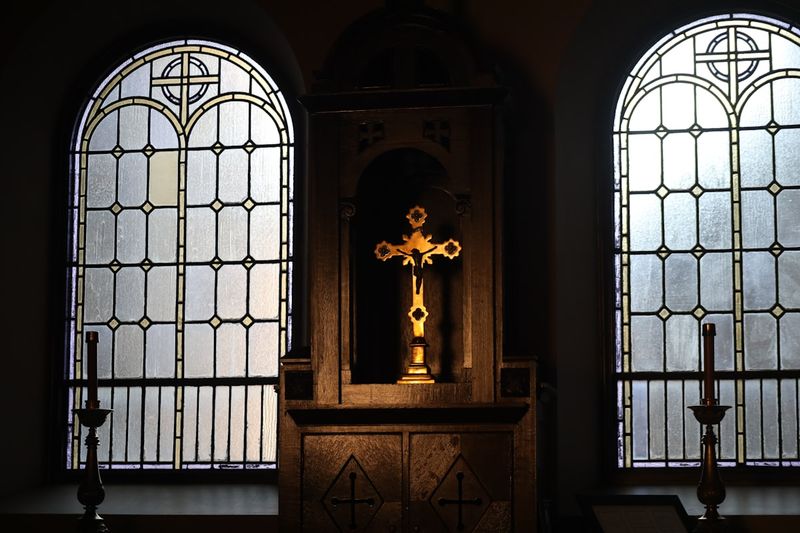
Yale provides several opportunities for spiritual growth.
Annand Program For Spiritual Growth
This week, I had my intake interview for the Annand Program. The Annand Program is an optional program for spiritual growth and development that Yale offers its students. Any YDS student may participate. For those in the Berkeley program, however, it is required. (If you’re just starting at Berkeley, check out the BTFO orientation guide for new students.)
The interview was an opportunity for the program coordinator, an Episcopal priest, to get to know me as she prepares to assign me to a first-year formation group. The goal of the program is to promote our spiritual growth, so I appreciated this personal touch.
I recall that Duke had a similar program for spiritual growth, but I’m not sure how similar it is to Yale’s. My general—and not extremely informed—initial impression is that Yale does not provide quite as diverse an offering as Duke. (I also understand it is a requirement for all M.Div. students at Duke.)
A friend of mine received his Master of Divinity at Duke, and he told me that he was able to choose his instructor in the spiritual growth program. He chose an Eastern Orthodox priest who was on faculty.
It appears that at Yale, the directors are not faculty members. (Though, I’m not sure how common it is for faculty members to serve in this role at Duke, my friend’s experience notwithstanding.)
They also seem to hail exclusively from more progressive denominations, such as the Episcopal Church and perhaps the United Church of Christ.
Hope for Spiritual Growth
Still, I am excited about this group, and I look forward to exploring the opportunities for spiritual growth that exist at Yale. I grew up evangelical and still use the term to describe myself—though I suspect many of the evangelical leaders with whom I grew up would not. (I discuss this more in my post on conservative students at Yale Divinity.) I, therefore, have always had a great love of Scripture as the Word of God, and I still do.
As a result, I used to think that greater knowledge of Scripture would inevitably lead to spiritual growth and godlier living. I assumed as I studied more, learned more, I would naturally become a better person, a better Christian.
My experiences over recent years, however, disabused me of that notion. This outlook represents a severely unbalanced view of spirituality and spiritual growth and opened me up to significant blind spots and failures. Following Christ is much more than merely understanding and having a thorough knowledge of Scripture.
The study of Scripture is essential to spiritual growth, but saying it is the entirety of spiritual growth is like saying that all you need to live is air. Of course, without air, you will die, but food, water, and shelter are critical too. I must maintain the former without neglecting the latter.
I think Annand will help me as I seek to refocus myself away from Scripture in exclusivity—that is, making it the entirety of my focus—to the person of Jesus Christ and the teachings and practices of his Church.
Spiritual Growth Through Communal Prayer
Daily communal morning prayer has already done much to show me the wisdom and power in regular spiritual practices beyond the reading and study of Scripture.
Having grown up Southern Baptist, I believe the non-liturgical faiths do themselves a disservice by bringing prayer almost exclusively into the realm of the individual. The gathering together for daily prayer has been significantly meaningful to me, even in—or perhaps especially in—an environment where I find myself surrounded by people who often see things differently than I do.
I must admit that I have not attended Marquand Chapel services since orientation ended. My schedule is too packed, and it has been challenging to make time for it. (And it’s typically just progressive politics dressed up in churchy clothes.)
Annand and Spiritual Growth Going Forward
The Annand groups generally only last one semester. The program coordinator told me that sometimes groups try to keep it going, but everyone’s schedule changes with a new semester. It’s consequently usually hard to persist with the same group.
After the first semester, however, I can receive an individual mentor for one-on-one spiritual formation. There are also groups formed around specific topics of discussion and meditation.
The program seems to offer a path toward consistent spiritual growth in the guidance of community and under the instruction of a spiritual advisor, a practice deeply rooted in Church tradition. For someone like me, who wants so desperately to follow God and do the right thing but has found the path a difficult and confusing one, this is particularly valuable.
To repent so deeply, so frequently, only to be confused over where to turn, has been a source of great discouragement to me over the years. I hope through these practices, in conjunction with my studies, I am finally able to plant myself along the right path toward consistent spiritual growth.
The Old Testament Placement Exam

I briefly discussed the Old Testament placement exam in my previous post. Most advanced courses in Old Testament require Old Testament Interpretation I and II as prerequisites. I would have liked to have taken those classes this year, but Old Testament I meets at the same time as New Testament I.
The Exam
The placement exam, however, would essentially allow me to CLEP out of these introductory Old Testament courses and go straight into the more advanced classes. While I took only a handful of Old Testament classes in undergrad, I thought I would take a stab at it to see how I did.
I didn’t feel great about it after I finished. The test I took was exclusively essay. There were several questions I knew a lot about, several I knew a little about, and a few I knew nothing about.
As I mentioned in my previous post, I passed, but just barely. The Old Testament professor grading the exam recommended that I read John Collins’s Introduction to the Hebrew Bible before signing up for any advanced Old Testament classes. So, I went to the bookstore and picked up a copy.
Hebrew Scriptures and the New Testament
My interest still lies with the New Testament, but I am nonetheless spellbound by the Hebrew Bible. I am particularly interested in how the Hebrew Scriptures and the culture of Second Temple Judaism impacted the teachings of Jesus and Paul.
I am fascinated by the scholarship I have read thus far on the subject—N.T. Wright has written extensively on it—and I think it’s been a long-neglected issue, though that has been changing.
Yale, Scholarship, and Theological Presuppositions
It has become clear, as I already knew going in, that Yale does not presume the same things about the Bible that Ouachita Baptist University did. There are no evangelical presuppositions about Scripture.
It appears that the professors come at it from all kinds of different angles. In addition, while YDS is a self-professing believing Christian community, that understanding is cast in the broadest possible terms. (Possessing a Christian faith is not required to be either a student or faculty member here. And I would come to doubt whether calling it a Christian divinity school is even appropriate as time went on.)
I will be more extensively exposed to a lot of different positions to which I would not have been had I gone to a place like Truett, Beeson, or Fuller. This is, I think, a good thing. I am glad to see Scripture from all different angles, to put my presuppositions and beliefs to the test to see if they can withstand scrutiny. If not, then not.
But if so, rather than harming my faith, such an undertaking will significantly strengthen it. I think such scrutiny will enhance, rather than hinder, my spiritual growth, even as I simultaneously seek to develop as a scholar at a purely academic level. (I discuss the relationship between viewpoint diversity and the Yale Divinity experience in a later post.)
Finalizing My Schedule
By the end of the week, I had finally finalized my schedule. Tuesday, I had Karl Barth’s Church Dogmatics and World Christianity as a Cross-Cultural Movement for the first time.
I had to cut one of these classes to round out my schedule. I was confident that I would cut the World Christianity class, just because I am very interested in studying Karl Barth. After attending both classes, however, I decided to keep the World Christianity class instead. (The shopping period has its advantage for sure.) I found the subject matter fascinating and the instructor enjoyable and insightful.
While I’m still very interested in studying Karl Barth—and I found that class enjoyable as well—I had to choose one. Besides, Karl Barth is a theology class, and I saw plenty of theology classes in the catalog that I found particularly interesting. So, I don’t think I’ll have trouble fulfilling the theology requirement of my degree.
I did not, however, find very many classes meeting the Area V and Diversity requirement very attractive, so this seems like the best choice. Most of them struck me as progressive ideological nonsense, with names that included terms like “queer,” “womanist,” “ecological,” and the like. Rather than hire more world-class biblical scholars, the Divinity School allocates resources to people with nonsense Ph.D.s to teach the latest fad ideologies completely foreign to any historical relationship either to the Christian faith or to traditional religious studies in general. (See my previous post for a discussion of the different requirements of the M.Div. at Yale.)
My Fall 2019 Schedule
So, at the end of the week, I submitted my schedule to my advisor for approval. (My advisor was Miroslav Volf.) He approved it, so my schedule is set. Below is its final form.
- History of Early Christianity
- Intermediate New Testament Greek
- New Testament Interpretation I
- World Christianity: Christianity as a Cross-Cultural Movement
- Ministry Formation Colloquium/Anglican I
- Introduction to Biblical Hebrew (Audit)
All the classes are three hours, except for the Anglican Colloquium, which is a half-hour course.
So, I spend about fifteen hours in class per week. (Despite being a half-hour course, the Anglican Colloquium meets for an hour per week. Conversely, World Christian meets for only two hours despite being a three-hour class.) I also attend morning prayer five times per week and evening prayer once per week.
A Busy Semester at Yale
I’m also officiating football in the local community this year, which requires me to attend meetings every Wednesday night. The Berkeley program, therefore, excused me from Wednesday evening Eucharist.
This schedule, in addition to all the readings and other outside work, is pretty heavy, and I expect a hectic semester. Almost all of my time is spent on school and work plus a bit of time that I can carve out for my family. I have very little free time right now. In the midst of this, though, I am trying to ensure that I can still make time to focus on spiritual growth.
I will be making additional time to attend the Annand small group meetings when they start, and I hope to carve out extra private time for spiritual growth as well. If I don’t, all focus on spiritual growth will quickly go out the window as I succumb to the hectic schedule of the semester.
Sections
I received my section assignment for New Testament Interpretation I this week, the last missing piece in finalizing my schedule. It should start meeting next week.
This means that going forward, I won’t have any classes for credit on Fridays. Only the Hebrew class that I am auditing will meet. I will also only have one class on Thursdays: Intermediate Greek. The rest of my week, however, will be pretty stacked.
First Section Meeting
I had my first Early Christianity section meeting this week.
As I previously mentioned, History of Early Christianity has around sixty people enrolled. So, the class is broken up into four different sections that meet at various times throughout the week. The professor provided four time options from which to choose.
While the professors thus far have indicated a willingness to work with us, if there ends up being conflicts you can’t get around, you just have to drop the class. I haven’t had this issue thus far, but it is a possibility. Professors also seem much more willing to work with you to resolve class conflicts than personal ones.
My Early Christianity section is taught by a teaching fellow (TF). Our TF is excellent. She is a Ph.D. student in history at Yale.
I would venture that most of the TFs will be outstanding. You have to be exceptional to get into a Ph.D. program here. Ph.D. programs are fully funded—that is, tuition-free—and generally come with sizable stipends.
The number of slots for each Ph.D. program is minimal, and their acceptance rates are ridiculously low. Getting into a Ph.D. program here itself is, therefore, a testimony to extraordinary ability.
Sections and Grades
The section meetings are essential, not only pedagogically, but also because attendance and participation at sections are a significant part of the grade. You have to show up to pass the class, and you can’t just show up. You have to participate in the discussion and demonstrate adequate preparation.
There is not a blasé attitude toward class attendance and participation here, at least not by any of the instructors that I have this semester. The model of the grade being entirely determined by a paper and a test, such that you could never come to class and be fine, doesn’t seem to exist here.
On the one hand, this is understandable and appreciated. Part of what makes this place exceptional is that you have the opportunity to learn from the outstanding students that surround you.
On the other hand, this opens up the possibility of accusations of bias. When I was in law school, exams—which made up one-hundred percent of the grade in most courses—were graded entirely anonymously for this purpose. Things just don’t work that way here.
Preparing for Ph.D. Work
Even as I am just now getting started, I am doing so with the end goal of pursuing a Ph.D. in mind.
This week, I met with the faculty advisor who is in charge of the electronic portfolio program. He gave me tailored advice about how I should go about doing things with this goal in mind.
This included not only how to keep the portfolio but also what types of supervised ministry work I should pursue and how to seek out faculty members in my areas of interest. He was extremely helpful, and I am grateful to have encountered such exceptional faculty members thus far who seem really to care about students.
The New Haven School System
I understand that this next section will apply to very few applicants. Very few of my fellow classmates have children. I, however, have children in the first and third grades, and this comes with its own host of additional issues associated with moving.
The most pressing and challenging of which has been dealing with the New Haven school district.
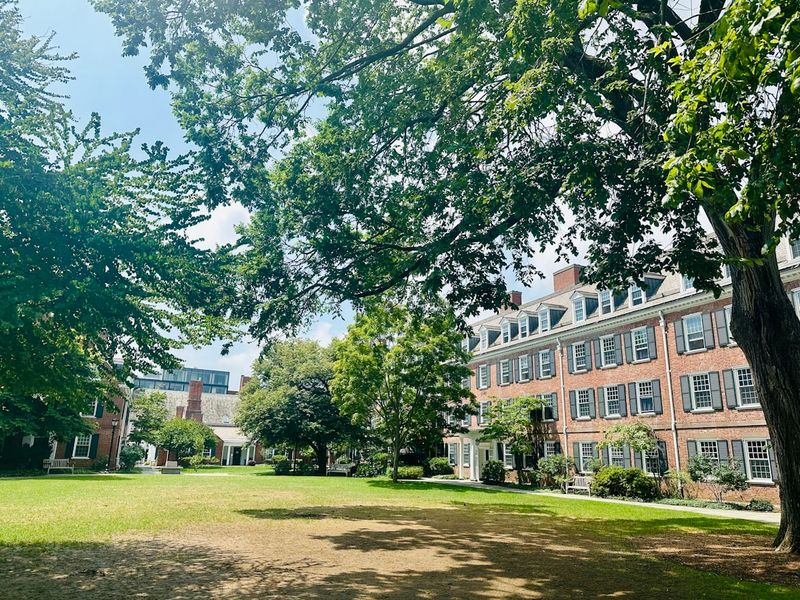
“School Choice”
The New Haven public school system has presented quite the challenge, to say the least. There is an odd system here. It’s presented as school choice, but it’s really not, at least not as I have generally understood that concept. There are no vouchers, and, it seems in most cases, you don’t really get to choose where your kids go. Below is my understanding of the Byzantine structure the district has implemented.
In February, those whose children were enrolled in the district the previous year can submit the schools they would like their children to attend. If there is space available for everyone to go where they want to go, that’s it. They can go there.
If not—and there never is—there’s a lottery system. Preference is given to those applying to go to their neighborhood school. Preference is also given to those who have siblings already at or attempting to attend the same school.
The quality of schools vary widely in New Haven. If you look up the school rankings for the various schools, you will discover that schools range from the good to the just plain awful with most landing in the just bad range. As a result, everyone is fighting to get their kids into the same few schools.
One of the best schools in the district is at the end of our street. Our children, however, were unable to attend, even with neighborhood preference, because the school was already full when we arrived.
The Lottery
The selection process for those coming into the district for the first time opens on July 1st. We did not arrive, however, until the end of July, after the lottery completed.
We attempted to get our kids into the lottery on July 1st, but you have to do it in person. We hadn’t yet moved, so we weren’t physically there.
We already had a signed lease, but they wouldn’t accept that without our physically being present in their offices. In retrospect, if we had had a better idea as to how the system worked earlier on, we would have flown up on June 30th just to be here for the lottery.
We were very unhappy with the school to which our children were assigned. By that point, the only schools that had space were those schools where no one wanted to send their children.
We gave it a chance, but the reason for its poor ratings and low demand quickly became apparent. The quality of the education was terrible. All classes were taught in English and then the same material was taught in Spanish, so that the school could only cover half the material. And we would get accosted by panhandlers whenever we came to pick up our kids. (There was no car line. You had to park and walk up to get your kid.) I felt more comfortable walking the streets of Turkey than I did walking from my car to the front of this school every day. So, we then had to fight to get our children transferred to another school. This, too, was difficult.
We were not allowed to make an appointment with the school choice coordinator. So, we just had to show up at his office and refuse to leave to get him to address our concerns. (Only after we waited for hours did he finally acknowledge us.) By the time we went in to see him, we were prepared to pull the kids out and home school them.
The Current Status Quo
After listening to the four hundred pound school choice coordinator accuse us of wanting to change schools because we hated Mexicans—as if that would move us—we were able to get our children into a different school that we think will fit them better, but it’s about a half-hour drive from our house, one-way. Our children have to get on the bus at 6:45 in the morning to be at school by 8:00.
School gets out at 3:15, but they don’t get home until about 4:30. And each time they go to or from school, they pass the school at the end of our road. They must take an hour and fifteen-minute bus ride instead of a five-minute walk. We hope that next year they are able to attend our neighborhood school, but we’ll see.
As you would expect to be the case in an environment like this, there are several exceptional private schools in the area. (The limousine liberals are famous for implementing awful policies that destroy local schools in the name of equity or some such nonsense, while sending their own children to private school.) They are, however, extraordinarily expensive. Most cost between $25,000 to $30,000 per student per year. We obviously cannot afford that, but we are applying for financial aid this year with the schools. We’re hoping for some good news soon.
Thoughts and Advice
At this point, my general advice to people with school-aged children coming to Yale is to research the surrounding school districts and live somewhere other than New Haven.
I must say it is difficult on a moral level. I hope for spiritual growth in coming here, and part of that is learning how to relate to and be a positive force in my local community. In dealing with the school district, I have been distressed to see the conditions many local children must endure. It is unfair and heartbreaking.
At the same time, there is an overwhelming urge to do what’s best for my children. My wife and I have been able to do something to improve their condition. In doing so, however, we recognize that other children are not as fortunate, and I’m not sure what I can do to help.
I hope to gain additional clarity and wisdom in answering questions like this during my time at Yale. This status quo, however, does not appear to be working for the local community, and the large number of private schools in the area have popped up to insulate progressive lawmakers (and their white liberal base) from the consequences of their actions.
Frequently Asked Questions
What is the Annand Program at Yale Divinity School?
The Annand Program is an optional spiritual formation program available to all Yale Divinity School students. It is required for students in the Berkeley Divinity School program. The program includes an intake interview, first-year formation groups, individual spiritual mentorship after the first semester, and topic-specific discussion groups. It is coordinated through Berkeley Divinity School and is designed to promote spiritual growth alongside academic study.
Does Yale Divinity School support spiritual growth?
Eh. It depends on what you mean by spiritual growth. Yale provides several avenues, including the Annand Program for spiritual formation, daily communal morning and evening prayer services, worship at Marquand Chapel, and the broader community of the Berkeley Divinity School. The M.Div. program is intentionally structured to foster both academic rigor and spiritual development. However, if you’re looking for something resembling traditional Christianity encouraging traditional Christian discipline and values, I’d recommend you look elsewhere. Anyone preparing for ministry in a traditional or evangelical church should eschew the offerings here.
How heavy is the M.Div. workload at Yale?
The workload is substantial. As a first-year student, I took five courses plus an audited Hebrew class (about fifteen classroom hours per week), attended daily morning prayer and weekly evening prayer, and read approximately three hundred pages per weekend for class preparation. The volume of reading and writing is comparable to law school, but the subject matter makes it feel more purposeful than burdensome.
Is Yale Divinity School good for conservative or evangelical students?
Yale does not assume evangelical presuppositions about Scripture, which can be challenging for conservative students. However, the exposure to diverse theological perspectives can strengthen faith rather than undermine it. If you’re from a conservative or traditional background and your sole purpose in pursuing an M.Div. is to prepare for ministry in such a church, I would not recommend Yale Divinity School. If, however, you’re looking for academic rigor and scholarship at the highest level, then this is a great place to be. I discuss this more in my post on conservative students at Yale Divinity.
Garrett Ham
Garrett Ham is an attorney, military veteran, and holds a Master of Divinity from Yale Divinity School. He writes from Northwest Arkansas on theology, law, and service.
More about Garrett →Related Posts
God and Man at Yale Divinity
Complete Yale Divinity School guide: how to apply, personal statement, GI Bill benefits, financial aid, acceptance, and thriving in the M.Div. program.

Week 1 of the M.Div. at Yale Divinity School
What the first week of Yale Divinity School is really like — classes, community, and culture shock. A veteran's firsthand account of the M.Div. program.
Week 5: Conservatives at Yale Divinity
Is Yale Divinity liberal? Yes. But conservative students thrive. A candid account of being a conservative at Yale Divinity School and finding your place there.
Stay Informed
Get new writing on faith, law, and service delivered to your inbox.
No spam. Unsubscribe anytime.