Open Theism vs. Molinism: A Catholic Comparison
On This Page
“Not because they are, does God know all creatures spiritual and temporal, but because He knows them, therefore they are.” — Thomas Aquinas, Summa Theologiae I.14.8 (quoting Augustine, De Trinitate XV)
Introduction: The Perennial Puzzle
When I first encountered open theism during my undergraduate years as a Baptist, it felt like intellectual fresh air. Here was a framework that took human freedom with radical seriousness—that insisted God didn’t simply predetermine our choices but genuinely allowed us to shape the future. The cost, I later realized, was steep: divine omniscience itself had to be revised.
Today, having studied theology at Yale Divinity and ultimately entered the Catholic Church, I’ve come to appreciate why this question has consumed Christian philosophy for centuries. The tension is real and not easily dismissed: How can God know with certainty what I will freely choose tomorrow? The answers we give determine not only our metaphysics but our entire relationship with divine providence, prayer, and moral responsibility.
This essay compares two major attempts to solve this puzzle: open theism and Molinism. Both affirm libertarian free will—the conviction that human choices are genuinely free and not merely predetermined—but they diverge fundamentally on whether God can have comprehensive foreknowledge of future free acts. As a Catholic, I write from the conviction that Molinism provides a framework more compatible with the Church’s doctrinal commitments, though I aim to treat open theism with the intellectual charity it deserves.
What is Open Theism?
Open theism emerged in evangelical Protestant theology during the 1980s and 1990s, originating with Richard Rice’s 1980 book The Openness of God and gaining momentum through the landmark 1994 collaborative volume of the same title, co-authored by Clark Pinnock, Rice, John Sanders, William Hasker, and David Basinger. Greg Boyd later became one of the movement’s most prominent popularizers.1 The framework is built on a simple but radical premise: the future does not yet exist. Because the future is not yet real, there is nothing to know about it—not even for God.
Open theists are careful to distinguish their view from simple ignorance. They argue that divine omniscience should be understood as God’s knowing everything that is knowable. Since genuinely free future choices have not yet come into being, they are not currently knowable—even by God. To claim that God knows the unknowable, they argue, is not to affirm divine power but to confuse the concept of knowledge itself.
As Sanders puts it in The God Who Risks, the omniscient God knows all that can be known—but the future actions of free creatures are not yet reality, and so there is nothing yet to be known.
This preserves libertarian freedom at what open theists see as the proper theological cost: not the loss of God’s omniscience (properly understood), but a more humble, biblical conception of it. God knows all actual facts perfectly; God also knows all possibilities and probabilities regarding free creatures. But God does not know which freely chosen futures will actually occur—because they have not yet been determined by anyone, including God.
The Open Theist’s Case
Open theists offer several arguments for their position:
Biblical Evidence: Passages that depict God as responding with surprise, changing plans, or expressing genuine frustration with human choice (Jeremiah 3:6-7, Genesis 6:6) are taken at face value. God grieves; God reacts; God adjusts his strategy. This language, open theists argue, is not merely accommodation but reflects genuine theological truth: God does not know with certainty how creatures will act.
Libertarian Freedom: If God knows with certainty that I will choose A tomorrow, then it seems that I must choose A tomorrow. The future appears locked into place, and my choice becomes illusory. Open theism breaks this logical chain by denying the premise: God does not know with certainty what I will choose, so my choice remains genuinely open.
The Problem of Evil: Many open theists argue that if God knew with certainty the horrific evils that would plague history, and chose to create anyway, God bears greater moral responsibility for that evil than traditional theism allows. A God who risks creating free beings without foreknowing their sins seems more morally justified in permitting suffering.
Relational Theology: Open theism promises a more dynamic, genuinely reciprocal relationship between God and creation. Prayer is not mere ritual but can genuinely change God’s mind. Petitionary prayer has real efficacy, not predetermined outcomes. Human action matters in a fresh way.
What is Molinism?
Molinism takes its name from Luis de Molina (1535–1600), a Spanish Jesuit who attempted to preserve both divine omniscience and libertarian freedom through a sophisticated doctrine of God’s knowledge. Molina’s key innovation was to posit three distinct modes of divine knowledge:2
- Scientia visionis (“knowledge of vision”): God’s knowledge of everything that actually occurs.
- Scientia simplicis intelligentiae (“knowledge of simple understanding”): God’s knowledge of all abstract possibilities and logical truths that could occur.
- Scientia media (“middle knowledge”): God’s knowledge of all counterfactual truths—what any creature would freely choose in any possible circumstance.
This three-part division is Molinism’s defining feature. It claims that before God’s decree to create this particular world, God possessed an exhaustive knowledge of how every free creature would act in every possible configuration of circumstances. With this “middle knowledge” in place, God could then decree to create a specific world, knowing exactly how every free being would respond.
The Molinist’s Case
Comprehensive Divine Omniscience: Unlike open theism, Molinism affirms that God knows all truths, including truths about future free acts. This aligns with classical Christian doctrine and explicit Church teaching on God’s perfect knowledge.
Genuine Libertarian Freedom: The crucial move is that counterfactual knowledge of what a free creature would choose does not determine what that creature must choose. God’s knowledge is middle because it stands between his knowledge of abstract possibilities and his knowledge of actual events. God knows that if you were placed in circumstance C, you would freely choose X—this is a truth about your character and your freedom, not a constraint on your freedom.
Divine Providence: Molinism offers a robust account of how God providentially governs creation without predetermining it. God selects which possible world to actualize, knowing in advance exactly how every free choice would unfold. God’s providence is not coercive but intelligent, working through free choices rather than despite them.
Compatibility with Catholic Dogma: The Council of Trent, Vatican I, and subsequent Church documents affirm both God’s perfect foreknowledge and human freedom. Molinism provides a philosophical framework consistent with these dogmatic commitments in a way open theism does not.
A Detailed Comparison
| Feature | Open Theism | Molinism |
|---|---|---|
| Divine Foreknowledge | God does not know future free acts | God knows all future acts via scientia media |
| Metaphysics of the Future | The future is genuinely indeterminate; future free acts do not yet exist | The future is determinate in God’s knowledge, even if free acts are not causally predetermined |
| Libertarian Freedom | Affirmed absolutely; choices are open even to God | Affirmed; counterfactual knowledge doesn’t constrain choice |
| Divine Omniscience | Revised; God knows everything knowable | Classical; God knows all truths including counterfactuals |
| The Grounding Problem | N/A | Difficult: what grounds counterfactual truths about free acts? |
| Providence | God responds dynamically and adapts plans | God exercises intelligent control by selecting among possible worlds |
| God’s Nature | Changed somewhat by creation; genuinely affected by history | Immutable and eternal; creation does not affect God’s knowledge or will |
| Church Compatibility | Conflicts with Trent, Vatican I | Compatible with Catholic dogma |
| Problem of Evil | God cannot be held responsible for evils he didn’t foreknow | God knowingly permits evil; problem of evil remains acute |
| Prayer and Petition | Can genuinely move God to change plans | Efficacy is real but less intuitive; God already knows he will grant/deny |
The Philosophical Challenges
The Grounding Problem
Molinism’s greatest weakness is what philosophers call the grounding problem. If God knows that creature C would freely choose X in circumstance D, what makes this counterfactual proposition true? What “grounds” this truth about a free future act that hasn’t yet occurred?
Molina himself was somewhat vague on this. He seemed to suggest that the truth of counterfactuals is grounded in the intrinsic nature or character of the free creature—that God, in knowing your character perfectly, knows how you would respond in any situation. But this raises a further question: if your character determines your response, is your choice truly free, or merely determined by another cause?3
More recent Molinists like William Lane Craig have worked extensively on this problem, but no universally agreed-upon solution has emerged. The debate continues in contemporary philosophy of religion.
The Compatibility Intuition
Open theists raise a compelling intuitive challenge: if God knows that I will freely choose X, can I really do otherwise? Doesn’t God’s knowledge impose necessity on my action?
Molinists respond that foreknowledge of a free act is not the same as causation of that act. God’s knowledge is not causally active; it is a form of awareness of a truth already held by the free agent’s character and libertarian capacities. The fact that God knows what I will do does not make it impossible for me to do otherwise—it is simply true that I will choose as I choose, and God knows this truth.
This response strikes many as philosophically elegant but somehow intuitive unsatisfying. How can God know with certainty what I will do, while I genuinely have the power to do otherwise? The tension is real, even if not ultimately insurmountable.
The Theological Stakes
Divine Omniscience and Dogma
For Catholics, this is not merely an academic debate. The First Vatican Council (1870) solemnly defined:
“God, as one supreme spirit … is completely simple and unchangeable spiritual substance … inexpressibly loftier than anything else that exists or can be conceived… . This one true God, by his providence, guards and governs all things which he created, reaching from one end of the earth to the other and ordering all things well (cf. Wisdom 8:1).”
The council also affirmed that God’s knowledge is eternal, unchanging, and comprehensive. Open theism’s revision of omniscience sits uneasily with this teaching.
Similarly, the Council of Trent addressed predestination and human freedom in response to Reformation debates—primarily targeting Lutheran positions on justification and the will—affirming both God’s perfect knowledge and human free will, the very synthesis that Molinism attempts to philosophically ground.
Providence and Divine Action
Open theism risks a troubling consequence: if God cannot know the future, how can God govern it providentially? Some open theists embrace what they call “dynamic omniscience”—God’s ability to adjust and respond. But this seems to relocate the problem rather than solve it. If God does not know what will happen, how can God be sure that his creative and redemptive purposes will be accomplished?4
Molinism, by contrast, preserves robust divine providence. God selects a world to create knowing with perfect certainty how all events will unfold. God’s redemptive plan is guaranteed to succeed, not because God predetermined every detail, but because God possesses exhaustive knowledge of how free creatures would respond to every possible divine action.
The Problem of Evil
Interestingly, open theism is often defended as more theodicially satisfying than Molinism. If God does not know in advance about horrors yet to come, God cannot be held responsible for choosing to create despite foreknowing evil.
But this advantage may be overstated. Even if God does not foreknow all evils, God still possesses enormous predictive knowledge about likely harms. A God who creates free creatures knowing that some will freely choose profound evil bears significant moral responsibility. And many open theists still want to affirm that God is wholly good and sovereign—which requires a theodicy regardless.
Molinism offers a different approach: God permits evil knowingly, but this permission is consonant with God’s infinite love and wisdom. The metaphysical framework of Molinism (God knowing all counterfactuals) does not itself solve the problem of evil, but it preserves the traditional resources for theodicy that Catholic theology has developed. For a comprehensive exploration of how divine will and freedom interact in God’s permissive governance, see does everything happen for a reason.
Pastoral Implications
Prayer and Divine Action
For the person in the pew, these abstract metaphysical distinctions matter. How we understand God’s knowledge shapes how we pray and what we expect prayer to accomplish.
Open theism suggests that petitionary prayer can genuinely change God’s mind—that our intercessions can sway the divine will in directions it was not previously inclined. This has immediate pastoral appeal. Prayer is not mere ritual recitation but genuine dialogue in which we persuade God.
Molinism offers a different comfort: God already knows that if we pray, we will pray in a certain way, and God has already factored this prayer into his providential plan. Our prayer is not causally absent from God’s decision-making; rather, God knows from eternity that we would pray thus, and has arranged circumstances accordingly. The efficacy of prayer is real, even if it operates within a framework of God’s eternal knowledge.5
Trust in Providence
For Catholics accustomed to the Serenity Prayer and the spirituality of abandonment to divine providence, Molinism provides philosophical grounding for what devotion already knows: that I can trust God’s providence because God’s plan encompasses all genuine human freedom. I am not a puppet; God knows and respects my choices as free. Yet God’s purposes cannot fail.
Open theism offers a different kind of comfort: a God who takes genuine risks on behalf of free creatures, who is genuinely vulnerable to the vagaries of human choice. Some find this image of God more relatable, more truly loving in its vulnerability.
My Own Journey
I should confess my bias here. As a former open theist, I appreciated the framework’s theological intuitions. It took me years of study—particularly engagement with medieval scholastic theology through my MDiv work—to see the costs of open theism’s revision of omniscience.
The turning point came when I realized that libertarian freedom and comprehensive divine foreknowledge are not actually in tension for a being outside of time. Aquinas and the medieval Scholastics understood God’s knowledge not as God’s knowing things in advance (as if God lived in time before us) but as God’s eternally knowing all things in the eternal present. God does not know the future first and then create second; rather, God’s knowledge of all things (past, present, and future) is eternally simultaneous.
This illuminated Molina’s genius: the framework of scientia media does not require God to be bound by temporal succession at all. God’s middle knowledge is not “in between” in time but in the logical order of God’s knowing. The metaphysics work, even if the intuitive psychology remains challenging.
When I became Catholic, Molinism seemed not merely philosophically superior but theologically necessary. The Church’s dogmatic commitments on providence, predestination, and divine foreknowledge require a philosophical framework that open theism cannot provide.
The Limits of Each Framework
Fair-minded evaluation requires acknowledging each view’s limitations.
Open Theism’s Problems:
- Fundamentally revises classical Christian doctrine on divine omniscience
- Renders divine providence less intelligible
- Struggles to ground confidence that God’s redemptive purposes will ultimately succeed
- Conflicts with explicit Church teaching and the witness of the medieval Doctors of the Church
- The analogy of God as risk-taker, while emotionally appealing, projects human limitations onto the infinite
Molinism’s Problems:
- The grounding problem remains philosophically unsolved
- The claim that counterfactual truths about free acts “just are” true seems to leave God’s knowledge passive rather than active
- The relationship between God’s knowledge and human freedom, while coherent, remains intuitively difficult
- Requires acceptance of abstract possible worlds and counterfactual conditionals (metaphysically demanding)
- Some worry it makes divine providence too intellectual and less mysteriously gracious6
Toward a Catholic Perspective
For Catholics, the choice between these frameworks is not philosophically neutral. The First Vatican Council and the Council of Trent committed the Church to both:
- God knows all things with perfect, eternal knowledge
- Human free will is real and not predetermined by God
Molinism is the most developed philosophical framework reconciling these commitments. While Molinism has competitors within Catholic theology (Thomism and Banezian Calvinism being the main alternatives), open theism as typically articulated contradicts the first commitment by revising omniscience itself.
This is not to say that individual open theists cannot be held in esteem or that their theological concerns are baseless. Richard Rice’s pioneering work, Clark Pinnock’s passion for human responsibility, John Sanders’ biblical fidelity, William Hasker’s philosophical rigor, and Greg Boyd’s emphasis on genuine divine-human relationship are all to be admired.7 But at the dogmatic level, open theism requires departing from Catholic commitments the Church is not prepared to surrender.
Conclusion: The Both/And
The deepest truth may be that both frameworks attempt to solve a problem that ultimately exceeds human conceptual capacity. The reconciliation of omniscience and freedom is a revealed mystery, not a philosophical problem that can be solved through sufficient ingenuity.
Aquinas captures this beautifully in Summa Theologiae I.14.8, where he argues that “the knowledge of God is the cause of things,” and draws on Augustine’s insight that creatures exist because God knows them, not the other way around. God’s knowledge is eternal, and what we call “future” exists already in God’s eternal act of knowing.
This seems paradoxical until we relinquish our temporal imaginations and recognize that for God, all times are present. There is no “before” and “after” in God’s knowledge; there is only the eternal now in which all things are known.
For the practicing Catholic, the practical upshot is clear: I can trust that God knows me and my choices completely, that nothing I choose escapes God’s omniscience, and that my freedom is genuine and respected. I need not choose between these truths. The medieval philosophy of Molinism provides a framework—perhaps the best available framework—for holding them together.
Molinism is not perfect. Its grounding problem persists. But it preserves what Catholics must hold: God’s perfect knowledge, God’s unchanging nature, human freedom, and divine providence. Open theism, for all its pastoral appeal, ultimately abandons one of these commitments.
The question of how God knows the future will remain a frontier of human theology until we see God face to face. But until then, Molinism stands as the most philosophically rigorous and theologically faithful attempt to honor both the mystery and the clarity that revelation has given us.
Further Reading
Interested in exploring these themes more deeply? Here are some related articles on this site:
- Open Theism: Biblical Fidelity or Theological Innovation?
- Molinism: The Middle Knowledge Solution
- Divine Foreknowledge and Human Freedom: The Perennial Puzzle
- Does God Know the Future? A Catholic Answer
- Divine Simplicity and Why God Is Not Temporal
- How Catholics Differ from Calvinists on Predestination
- Process Theology: An Alternative Vision
- The foundational text is Clark Pinnock, Richard Rice, John Sanders, William Hasker, and David Basinger, *The Openness of God: A Biblical Challenge to the Traditional Understanding of God* (InterVarsity Press, 1994), building on Rice's earlier *The Openness of God: The Relationship of Divine Foreknowledge and Human Free Will* (Review and Herald, 1980). Other important open theist works include Pinnock, *Most Moved Mover: A Theology of God's Openness* (Baker Academic, 2001); Sanders, *The God Who Risks: A Theology of Divine Providence* (InterVarsity Press, 1998); and Boyd, *God of the Possible: A Biblical Introduction to the Open View of God* (Baker Books, 2000). For academic engagement, see the essays in David Basinger and Randall Basinger, eds., *Predestination and Free Will: Four Views of Divine Sovereignty and Human Freedom* (InterVarsity Press, 1986). A balanced philosophical overview is found on the Stanford Encyclopedia of Philosophy's entry on Libertarianism and the Internet Encyclopedia of Philosophy's entry on God and Time.
- The classic source is Luis de Molina, *Liberi arbitrii cum gratiae donis, divina praescientia, providentia, praedestinatione et reprobatione concordia* (1588), translated as *On Divine Foreknowledge: Part IV of the Concordia* by Alfred J. Freddoso (Cornell University Press, 1988). For modern Molinist development, see Alvin Plantinga, *The Nature of Necessity* (Oxford University Press, 1974) and William Lane Craig, *The Only Wise God: The Compatibility of Divine Foreknowledge and Human Freedom* (Baker Book House, 1987). Craig's *The Problem of Divine Foreknowledge and Future Contingents from Aristotle to Suarez* (Brill, 1988) provides extensive historical context.
- This is the critique mounted by Thomists, who argue that Molinism ultimately collapses into a form of determinism. See Reginald Garrigou-Lagrange, *Predestination* (B. Herder Book Co., 1939). However, most contemporary Molinists have resources to resist this charge, arguing that a free creature's character determines its response without determining the creature to act (i.e., character is explanatory, not causally necessitating).
- William Hasker defends a modified version of open theism in *The Triumph of God over Evil* (InterVarsity Press, 2008), attempting to show that God's dynamic omniscience is sufficient for providential governance. His response to this objection is worth engaging, though Hasker's own framework remains controversial even among open theists.
- Thomas Aquinas develops this understanding of prayer's efficacy in *Summa Theologiae* II-II.83. See also the discussion in William Lane Craig, *The Only Wise God*, ch. 6. The Catholic understanding preserves both the genuine causal efficacy of prayer and God's eternal knowledge that we would pray—a both/and that requires some philosophical sophistication but is ultimately coherent.
- Some contemporary theologians, influenced by Henri Bouillard and Karl Rahner, have raised concerns about whether Molina's approach makes divine action too intellectual and insufficiently emphasizes the gracious, mysterious character of God's work. This represents an important internal Catholic conversation that goes beyond the open theism debate, involving also Thomism and Bañezian thought. For background on these intra-Catholic debates, see the relevant articles in Garrigou-Lagrange, *Predestination* (B. Herder Book Co., 1939) and the *Blackwell Companion to Science and Christianity*, ed. J. B. Stump and Alan G. Padgett (Wiley-Blackwell, 2012).
- I remain convinced that the open theists I have read are animated by genuine theological passion and biblical concern. My disagreement is at the dogmatic level, not the level of personal integrity or theological motivation. The Church needs the kind of emphatic concern for human responsibility that open theism advocates, even if open theism itself cannot be affirmed as fully compatible with Catholic doctrine. See the charitable engagement in J. B. Stump and Alan G. Padgett, eds., *The Blackwell Companion to Science and Christianity* (Wiley-Blackwell, 2012), which includes perspectives from both evangelical and Catholic thinkers.
Garrett Ham
Garrett Ham is an attorney, military veteran, and holds a Master of Divinity from Yale Divinity School. He writes from Northwest Arkansas on theology, law, and service.
More about Garrett →Related Posts
Open Theism: A Catholic Evaluation
What is open theism? A Catholic evaluation of the open model of God, its scriptural case, philosophical arguments, and why it falls outside defined Catholic dogma.
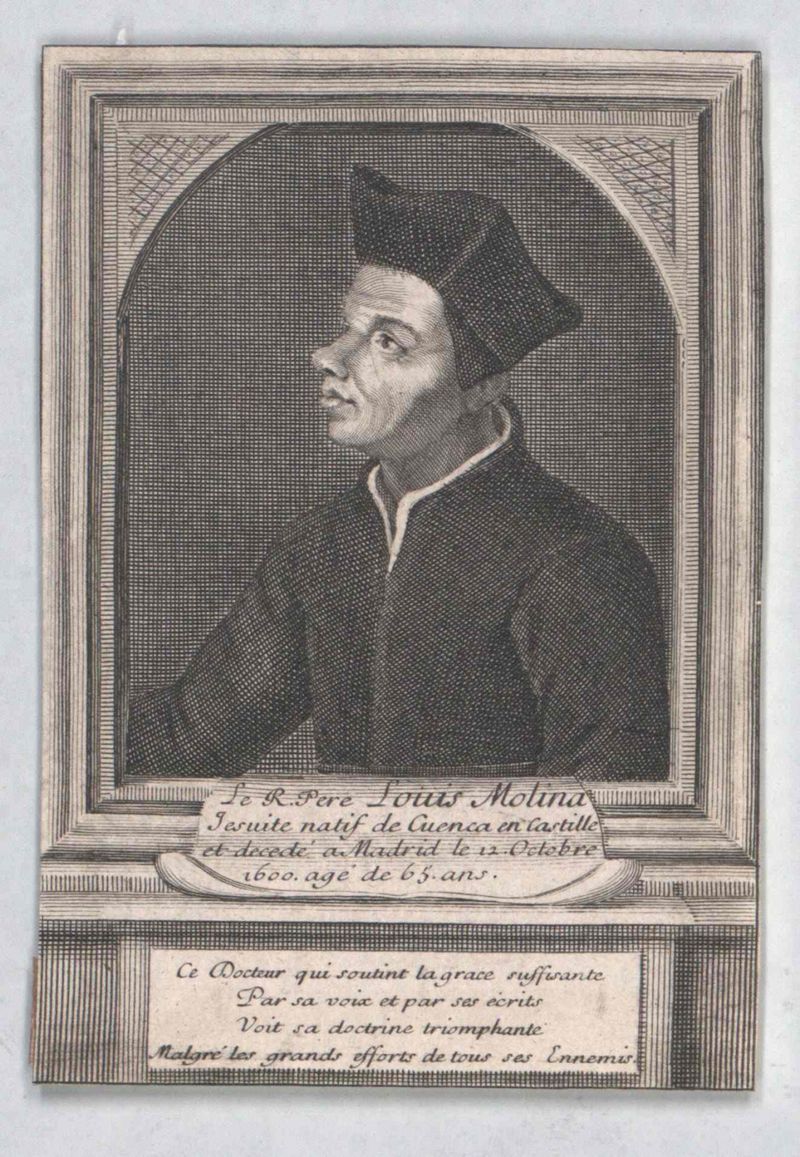
Molinism: Divine Sovereignty and Human Freedom
What is Molinism? Luis de Molina's middle knowledge (scientia media), the De Auxiliis controversy, and how Molinism compares to Thomism and Calvinism.
Divine Foreknowledge and Free Will: The Catholic Answer
Can God know the future and humans still be free? The Catholic intellectual tradition offers robust answers through Thomism and Molinism. Here’s how they work and why they matter.
Stay Informed
Get new writing on faith, law, and service delivered to your inbox.
No spam. Unsubscribe anytime.