Week 1 of the M.Div. at Yale Divinity School

On This Page
In this post in my series “God and Man at Yale Divinity,” I discuss my first week in the Master of Divinity degree program at Yale.
Starting the Master of Divinity program at Yale has been one of the most exciting experiences of my life. I just completed my first week of classes at Yale Divinity School, and I cannot wait to resume classes next week.
This week was a short one—classes started on Wednesday—so I only have three days to discuss. Still, it was a great week, and I continue to be grateful to be here.
Starting the Master of Divinity at Yale
The first day of class was a busy one. Getting started at Yale has been both easy and confusing. The rigid scheduling to which I am accustomed does not exist here.
The first week or two is pretty lax as everyone shops around for the courses they want to take, and you’re several class meetings in before you have to finalize your schedule.
There are pluses and minuses to this. On the positive side, it allows you to try out courses before you commit. There are a lot of course options for those in the Master of Divinity program. So, there isn’t enough time to take everything you might find interesting.
The Master of Divinity is just three years (and the Master of Arts in Religion is only two). The shopping period gives you a chance to make the best choice.
The negative aspect, however, is the lack of certainty. On top of that, coursework starts early, so you’ll probably have reading assignments due while you’re still shopping around. As a result, you may be very busy at the beginning of the semester.
Getting started in the Master of Divinity program can, therefore, feel like it comes in fits and starts.
The Yale Shopping Period
As I discussed in my previous post, because of the shopping period at Yale, I am in more classes than I can possibly take. I am currently signed up for the following courses:
- History of Early Christianity
- New Testament Interpretation I
- The Cult of Mary: Early Christian and Byzantine Art
- Intermediate New Testament Greek
- Introduction to Theology
- World Christianity: Christianity as a Cross-Cultural Movement
- Karl Barth’s Church Dogmatics
- Anglican Colloquium
- Elementary Biblical Hebrew (Auditing)
There are still three classes on my schedule that have yet to meet: Anglican Colloquium, Karl Barth, and World Christianity. I will attend the latter two on Tuesday.
The Anglican Colloquium meets on Mondays, however, and, since Monday is Labor Day, that class will not meet for the first time until the week after next.
The Anglican Colloquium is required for the Berkeley program, so it’s not part of the shopping-period discernment process for me—I have to take it regardless. I should, therefore, know what I’ll be taking by Tuesday or Wednesday of next week.
Master of Divinity Class Sizes
This week, I learned how the popular courses at Yale Divinity tend to work. Like most students, I’m beginning with some of the popular classes that fit nicely into the Master of Divinity degree requirements. (See below.)
Two such introductory courses that I am taking—History of Early Christianity and New Testament Interpretation I—are massive. (Almost all Master of Divinity students take these courses at some point.) I believe each has between sixty and ninety students.
Scheduling
When I signed up for these classes, they were scheduled to meet at the same time on Mondays, Wednesdays, and Fridays. To facilitate more intimate discussion settings, however, the professors have divided the classes into smaller sections. These sections do not meet at the same time as the class is scheduled to meet.
So, it appears that we are dropping our lecture period on Fridays, and we will attend one of the section meetings instead. There are several time slots from which to choose.
There is, however, some added complication here, as it makes it difficult to plan your schedule when you are signing up for classes. I planned my classes based on the published schedule, but now I have to find section times that work.
Finding times that work can be tricky, as I have other classes that meet during some of the scheduled section times. In addition, unlike many other students, I have familial commitments with my children that make crafting a workable schedule particularly important. If none of the section times had worked for me, I would have had to drop the classes.
It looks like everything is going to work out, though. One of the courses, however, offered four different section meeting time options, and I had class conflicts with all but one. So, this is something of which to be aware when you’re signing up for classes. Having backup courses is, therefore, imperative.
Sections
It appears that teaching fellows will teach the sections. Teaching fellows are Ph.D. candidates from the Graduate School of Arts and Sciences. (The Divinity School does not have a doctoral program). I think serving as a teaching fellow is a requirement as part of their funding.
I like this. As I want to go on to do Ph.D. work after I complete the Master of Divinity, I think it would be an excellent opportunity to learn about the experiences of the teaching fellows.
One of the teaching fellows, however, when introducing himself, indicated that he was a sixth-year Ph.D. student, which is a bit daunting. I knew the degree could take that long at elite schools, but it still felt like a bit of a shock to hear someone say it out loud.
The Master of Divinity is a three-year program. So, eight to nine years is the timeframe from start to finish for me. That’s a long time, but I’m excited to get going.
Whittling Down My Schedule
As I previously stated, getting started at Yale is a bit of a process because of the shopping period. (The shopping period is not unique to Yale Divinity School. As the video above indicates, it appears to be a campus-wide custom.)
Wednesday/Friday Classes
I now have a good idea as to the classes that I will take. On Wednesday, Hebrew, Early Christianity, New Testament, and Cult of Mary all met. I intend to keep all these classes, except for the Cult of Mary.
I had signed up for the Cult of Mary because I was interested in the history of Marian devotion as well as Eastern Orthodoxy in general. The course seems significantly more art history than religious studies, however, so I don’t think it will be a good fit for my interests.
Besides, during the first class, we all introduced ourselves and explained why we wanted to take the course. After hearing everyone else talk, I knew others would be better suited for the course than me.
Art historians teach it, and many of the other attendees had an art and/or history background. Since it is a limited enrollment class, I decided to go ahead and drop it, rather than compete for a spot.
So, that’s one class down.
Thursday Classes
On Thursday, I attended Intermediate New Testament Greek and Introduction to Theology. The theology instructor stated during his opening lecture that those who have done previous theological studies might want to take Systematic Theology—which is offered in the spring—instead.
As I outline in the Master of Divinity degree requirement section below, an introductory theology class is required to graduate. Only Introduction to Theology or Systematic Theology can fulfill this requirement. Some people take both courses, but I’ll probably take the instructor’s advice and drop the Introduction to Theology class.
Remaining Decisions
As I stated above, I haven’t had the chance to meet with the Karl Barth or World Christianity courses yet. At this point, I suspect I’ll want to keep the Karl Barth course.
That course, however, is a seminar, which means it is a smaller class. From looking at the enrollment on Canvas (see below), there appear to be about thirty people shopping the course right now. So, I’m not sure if the instructor will whittle it down, and I won’t know until Tuesday.
(The reading for the first session is quite extensive, so I certainly hope that she wouldn’t assign such extensive readings only then to cut people from the course.)
I am very interested in Karl Barth, so I’m excited about the class. If the instructor cuts people, however, I intend to keep World Christianity, barring my receiving any information during the first class that persuades me to drop that course.
Since I’m dropping Cult of Mary and Introduction to Theology, if I do not end up taking either Karl Barth or World Christianity, I will have to come up with another course that I’m not currently shopping, as I will be left with only nine-and-a-half hours at that point. So, we’ll see.
The whole process feels a bit drawn out, but I’m slowly settling into the routine. Once I finalize my schedule, I think I’ll feel better about the whole thing.
Biblical Languages

I am taking both Greek and Hebrew this semester, although I’m only auditing the latter.
Greek
On Thursday, I had my first meeting with the Intermediate Greek course. It’s a second-year Greek class. I had three years of Greek in college, but my last Greek class was in 2006.
So, as I mentioned in my previous post, I was nervous that I would be too far removed from my formal training in the language to be able to keep up. The professor said that I should come to the first class and see what I thought.
After the first meeting, I feel better about it. So, I plan to stick with it.
I must say that I was surprised by the small class size. Of the ten or so students in there, I believe there was only one Master of Divinity student other than myself. The rest were M.A.R. students.
That M.A.R. students would be in the class makes sense, especially those in the concentrated Bible program. The M.A.R., particularly in its concentrated programs, seems mainly designed to prepare students for further academic study, and Ph.D. work requires a lot of language knowledge.
Still, I would think a more significant number of Master of Divinity students would take advanced language classes. So, that’s a curious thing to me.
It seems like most of the people who take the elementary course would also take the advanced course. Only advanced language classes count toward the Bible hour requirements for the Master of Divinity degree (see below). So, I’m not sure why anyone would just take the elementary course unless they were only looking for some elective credit.
Hebrew
I’m auditing Elementary Biblical Hebrew this semester. While I had three years of both Greek and Hebrew in college, I don’t feel like Hebrew stuck as well as Greek did. So, I’m auditing the elementary course to help refresh my memory and hopefully prepare to take advanced Hebrew courses next year.
Hebrew met for the first time on Wednesday. That class, too, was small, and a significant number of the students were not from the Divinity School.
There was a Ph.D. student, a faculty member from the Forestry School auditing the course, and a few undergraduate students. There was only one other Master of Divinity student in the class. This means only one Master of Divinity student is taking Hebrew for credit this semester.
I’m not sure how this compares to the elementary Greek course at Yale since I did not take that. I suspect that more people would be interested in Greek than Hebrew. When I was an undergraduate, my Elementary Greek class was significantly larger than my Elementary Hebrew class, and this trend continued throughout my undergraduate career.
My third-year Greek class had maybe ten to fifteen students, while my third-year Hebrew class—which was a mixture of second and third-year students—had only two. I was the only Hebrew minor in my graduating class.
Given the small numbers in the Intermediate Greek class, however, maybe the numbers are roughly the same. I’m a little surprised by the lack of interest in biblical languages at a major divinity school. And these numbers aren’t even final. We’re still in the shopping period, so the classes may get smaller still.
Master of Divinity Degree Requirements
Before you can navigate the shopping period, you need to understand where you’re going and the requirements of your degree program. The degree requirements for the Master of Divinity are a bit complicated. It’s a seventy-two-hour degree program, so you need to take twelve hours per semester over three years to graduate on time.
Basic Requirements of the Master of Divinity
The requirements are broken down into five areas plus electives.
-
Area I (Biblical Studies) – 12 hours
-
Area II (Theological Studies) – 12 hours
-
Area III (Historical Studies) – 9 hours
-
Area IV (Ministerial Studies) – 12 hours
-
Area V (Comparative Studies) – 9 hours
-
Electives – 18 hours
Additional Requirements for the Master of Divinity
There are also some additional sub-requirements, as I currently understand them.
-
Under Area I (Biblical Studies), you must take at least three hours in New Testament and three hours in Old Testament. Various courses can meet these requirements, but it’s popular to fulfill the entire Area I requirement by taking New Testament Interpretation I and II and Old Testament Interpretation I and II.
-
Under Area II (Theological Studies), you must take at least one introductory theology course and a basic ethics course. Either Introduction to Theology or Systematic Theology will meet the introductory theology course requirement. Introduction to Christian Ethics (REL 615) or Christian Ethics Seminar (REL 631) will meet the ethics requirement. (Christian Ethics Seminar carries a dual Area II and Area V designation, so it can count toward either area.) I also understand that some Area III courses can count for Area II credit. This could be desirable if you wanted to take several history courses.
-
Area III (Historical Studies) must include two of the following courses:
- History of Early Christianity
- History of Medieval Christianity
- History of Early Modern Christianity
- History of Modern Christianity
-
Under Area IV (Ministerial Studies), you must take one preaching course — either Principles and Practices of Preaching (REL 812), Is It a Sermon? (REL 831), or Preaching for Creation (REL 849).
In addition, the M.Div. has two standalone distribution requirements that are not tied to any specific area. First, you have to take a course in a non-Christian religion or in the relationship between Christianity and other religions. Second, in the quintessential eye-roll moment when dealing with a curriculum designed by progressives, you also have to take a class “that either focuses on or integrates in a sustained way material on class, gender/sexuality, race/ethnicity, indigeneity, disability, and/or global/cultural diversity.”
Various courses meet this “diversity requirement.” The World Christianity class that is currently on my schedule meets this requirement. (See Yale’s website for more information.)
Finally, you have to do a supervised ministry internship.
Master of Divinity Degree Audits and Electives
The requirements for the Master of Divinity degree are bit convoluted, but Yale’s student website allows you to do an electronic degree audit at any time. So, it’s easy to figure out what you need to take.
As far as the electives, almost anything can satisfy those requirements. This is where many people take classes outside the Divinity School. (You can, however, petition to have classes outside the Divinity School count toward one of the Area requirements if it fits.)
It also gives you room to go beyond the minimum requirements and focus on a particular subject-matter (New Testament, for example).
Note, however, that the denominational program classes do not count toward your area distribution requirements. So, while I am getting half-an-hour of credit for the Anglican Colloquium, it does not count toward any of the five content areas for the Master of Divinity degree. It matters only for earning a Diploma in Anglican Studies.
Full denominationally-based courses, however—for example, Anglican History or Catholic Theology—do count. (I understand, however, that there is a limit to the number of denominational courses that can count toward fulfilling one of the Areas with additional classes counting as electives.)
You can also read the Yale Divinity School bulletin for more detailed information about the Master of Divinity degree requirements.
Below is a talk on the different degree programs offered at divinity schools and includes a description of the Master of Divinity. The video is from Harvard Divinity School, so there will be some differences from what you’ll find at Yale.
Old Testament Placement Exam
The foundational biblical studies courses are Old Testament Interpretation and New Testament Interpretation. Each is a year-long course, but you may take each semester independently.
So, for example, taking New Testament I does not obligate you to take New Testament II. You can also take New Testament II without taking New Testament I. (I’m not sure, however, if you can take Old Testament II without taking Old Testament I.)
Most advanced courses require you to have taken these courses as a foundation for more advanced studies.
The Old Testament department, however, allows you to take a placement exam. If you pass, you may register for advanced Old Testament courses without having had Old Testament Interpretation. You don’t get any credit for passing the exam. You simply can go right into the advanced classes. Since I majored in biblical studies in college, I took the exam and passed, though barely.
(If you have a background in biblical studies from an evangelical institution, I’d recommend reading Introduction to the Hebrew Bible by John Collins before arriving at Yale. It can fill in the gaps in some areas of scholarship that might not be as heavily emphasized at more conservative schools.)
So, I hope to take some advanced Old Testament classes in future semesters. There is, however, no similar placement exam offered for New Testament.
Canvas
Yale uses a website called Canvas to organize classes. It’s similar in concept to—but much better than—Blackboard, with which I was previously familiar. Professors upload reading materials, the syllabus, and various other resources there for students to access.
Students submit their work through Canvas, and professors post grades through the program. It also provides a medium through which to correspond with your classmates and instructors.
The classes I am currently taking have extensive reading assignments outside of what is found in the required textbooks. So, these readings—journal articles, selections from various other books, and the like—are uploaded to the site for readings.
The Workload
I am discovering the reading at Yale to be rather extensive. I expected the workload to be heavy at an Ivy League institution. Having already graduated law school, however, I thought I had a pretty good idea as to what I could expect.
I was wrong.
If it keeps up at this pace, the reading will be more extensive than it was in law school. While I don’t mind it nearly as much as I did in law school, it will be a lot more time-intensive than I anticipated. I did not expect a Master of Divinity to require more work than a Juris Doctor.
Still, I am excited by all that I will learn. Starting a Master of Divinity at Yale has been one of the most thrilling experiences of my life, and I can’t wait to see what I will experience over the course of this semester.
Frequently Asked Questions
How long is the Master of Divinity at Yale?
The Master of Divinity (M.Div.) at Yale Divinity School is a three-year, seventy-two-hour degree program. Students typically take twelve credit hours per semester to graduate on time. The degree covers five content areas—Biblical Studies, Theological Studies, Historical Studies, Ministerial Studies, and Comparative Studies—plus electives.
What is the Yale shopping period?
Yale’s shopping period is a campus-wide tradition that allows students to attend multiple courses during the first week or two of the semester before finalizing their schedules. This lets M.Div. students try out courses before committing, but coursework and reading assignments begin immediately, so the first weeks can be hectic.
Are biblical languages required for the M.Div. at Yale?
Elementary biblical language courses (Greek and Hebrew) are not strictly required for the M.Div. at Yale, but advanced language courses count toward the Biblical Studies area requirement. I found that biblical language enrollment was surprisingly low, with very few M.Div. students pursuing Greek or Hebrew beyond the elementary level.
How does the M.Div. workload compare to law school?
Having already completed a Juris Doctor before enrolling at Yale Divinity, I found that the reading assignments were more extensive than law school. The theological coursework required substantial engagement with journal articles and supplemental materials beyond the required textbooks.
Is there a placement exam for biblical studies at Yale Divinity?
The Old Testament department offers a placement exam that, if passed, allows students to register for advanced Old Testament courses without taking Old Testament Interpretation first. No credit is awarded for passing. There is no equivalent placement exam for New Testament courses.
What are the class sizes at Yale Divinity School?
Introductory courses like History of Early Christianity and New Testament Interpretation can enroll sixty to ninety students. These large lectures are supplemented by smaller discussion sections led by Ph.D. teaching fellows from the Graduate School of Arts and Sciences. Seminar courses and advanced language classes are much smaller, sometimes with fewer than ten students.
Garrett Ham
Garrett Ham is an attorney, military veteran, and holds a Master of Divinity from Yale Divinity School. He writes from Northwest Arkansas on theology, law, and service.
More about Garrett →Related Posts
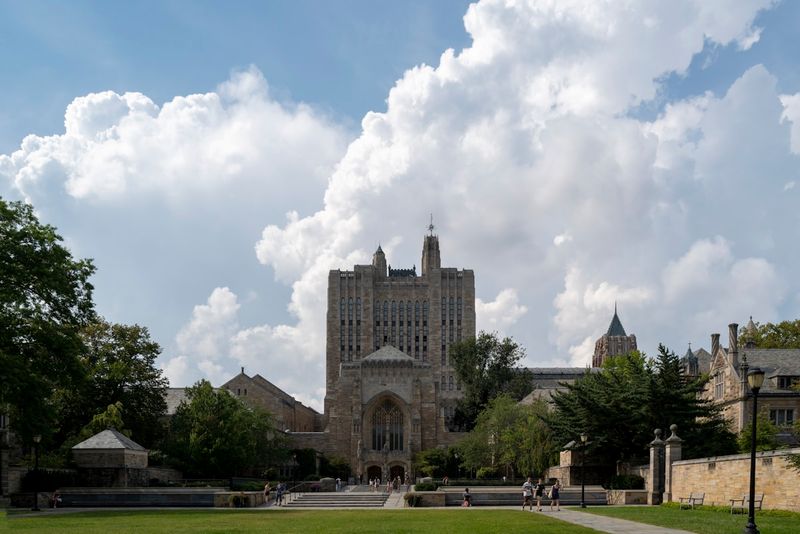
God and Man at Yale Divinity
Complete Yale Divinity School guide: how to apply, personal statement, GI Bill benefits, financial aid, acceptance, and thriving in the M.Div. program.
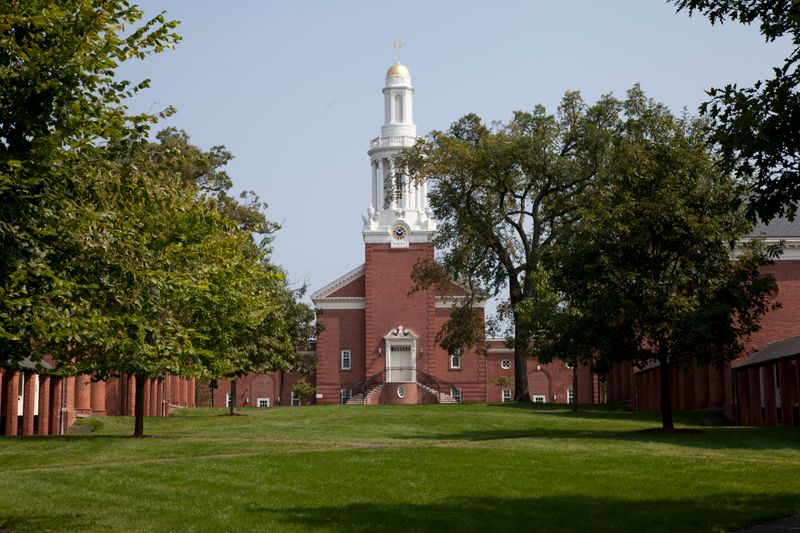
BTFO (Before the Fall Orientation) at Yale
A first-person guide to BTFO at Yale Divinity School covering Berkeley Divinity, class registration, grades, campus life, and what incoming students should expect.

Week 2: Opportunities for Spiritual Growth at Yale
Spiritual growth at Yale Divinity School — the Annand Program, communal prayer, academic workload, and what seminary life really looks like from inside the M.Div. program.
Stay Informed
Get new writing on faith, law, and service delivered to your inbox.
No spam. Unsubscribe anytime.