JASOC: The Complete Guide to Air Force JAG Training
On This Page
The Judge Advocate Staff Officer Course—JASOC—is where every new Air Force JAG officer learns the craft. Here’s what to expect, week by week, from someone who lived it.
What Is JASOC?
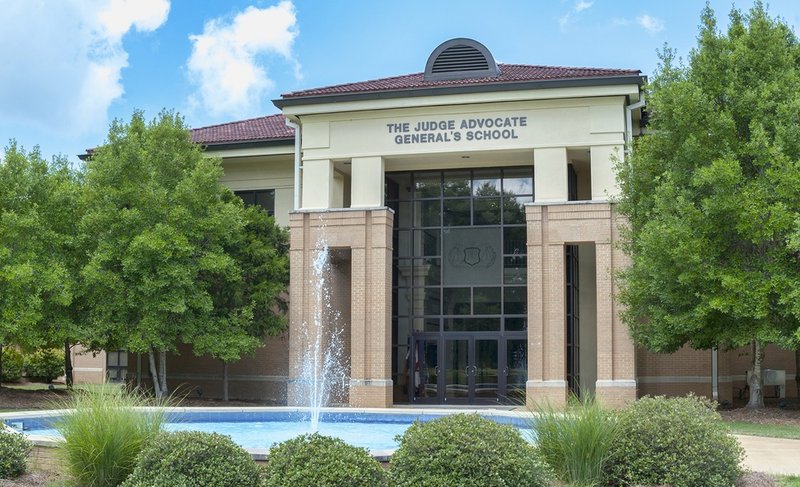
JASOC—the Judge Advocate Staff Officer Course—is the foundational training program for all new Air Force JAG Corps officers. Held at the Air Force Judge Advocate General’s School at Maxwell Air Force Base in Montgomery, Alabama, it is the Air Force equivalent of the Army’s Judge Advocate Officer Basic Course in Charlottesville, Virginia.
Every new Air Force JAG officer must complete JASOC before beginning their first assignment at a base legal office. The course typically runs nine weeks, though the length has varied. My class was shortened to seven weeks due to a smaller class size and budget-driven schedule adjustments—but the curriculum covered the same material regardless.
Who Attends JASOC?
JASOC classes include newly commissioned JAG officers from a range of backgrounds: recent law school graduates entering through the Direct Appointment Program, officers who completed the Graduate Law Program through AFROTC, inter-service transfers, and active-duty members who attended law school through the Funded Legal Education Program. Before JASOC, most new officers attend Officer Training School (now OTS-A) at Maxwell AFB.
What Does JASOC Cover?
The JASOC curriculum is built around the core legal functions of the Air Force JAG Corps:
Military Justice
The first several weeks of JASOC focus heavily on military justice under the Uniform Code of Military Justice (UCMJ). You will learn the mechanics of courts-martial, nonjudicial punishment (Article 15s), administrative separations, and the roles of trial counsel and defense counsel. The training includes moot court exercises, “brief the commander” simulations, and practice drafting charges.
Administrative Law
JASOC covers the administrative discharge process in depth—the types of discharges, board procedures, and the legal standards governing each. This is a significant part of what base legal offices handle, and JASOC devotes substantial time to it.
Operations and International Law
Later weeks introduce operations law, the law of armed conflict, and rules of engagement. These areas become increasingly important as JAG officers progress in their careers and deploy with operational units.
Government Contracts and Claims
JASOC provides foundational training in government contract law, fiscal law, and claims processing—areas that occupy a large share of the base legal office workload.
Ethics and Professional Responsibility
The course addresses the unique professional responsibility obligations of military attorneys, including the dual obligations to the client and to the interests of justice within the military system.
My Week-by-Week Account
I took detailed notes during my time at JASOC and have published them as a series of posts. Here is the full series:
- Week 1: Orientation and Military Justice Fundamentals — Arrival at Maxwell AFB, orientation briefings, flight assignments, and the start of the military justice curriculum.
- Week 2: Moot Courts and Commander Briefings — “Brief the commander” exercises, deeper military justice instruction, and the rhythm of daily JASOC life.
- Week 3: The Administrative Discharge Process — Board procedures, discharge characterizations, and the legal mechanics of separating service members.
- Week 6: Pilot Culture and the Air Force JAG — Observations on Air Force culture, the pilot-dominated hierarchy, and what it means for JAG officers working alongside operators.
What to Expect Day-to-Day
JASOC follows a structured classroom schedule—think law school, but in uniform. You will sit through lectures, participate in practical exercises, and prepare for graded simulations. The pace is steady but not brutal. Unlike the Army’s Direct Commission Course, which is primarily a military training environment, JASOC is almost entirely academic.
A few practical notes from my experience:
Housing: Students typically live off-base and commute to Maxwell. Montgomery is affordable, and most of my classmates found short-term housing without difficulty.
Uniform: Service dress for some events, but the daily uniform during my time was ABUs (now OCPs). Check with your class administrator for current guidance.
Grading: JASOC is pass/fail for most exercises, but your performance is observed and noted. It contributes to your initial reputation in the JAG Corps—first impressions matter.
Culture: JASOC is more relaxed than OTS or any commissioning source. You are already a licensed attorney and a commissioned officer. The faculty treats you accordingly. That said, there is a hierarchy among students, and the expected military courtesies apply.
After JASOC: What Comes Next
Upon graduating JASOC, you report to your first duty station—invariably a base legal office. There, you will work across the full range of legal issues: military justice, contracts, claims, legal assistance, and whatever else the Staff Judge Advocate assigns.
One critical difference from the Army: the Air Force does not certify you as trial counsel upon graduation from JASOC. You must serve as second-chair counsel in approximately three courts-martial before the Air Force TJAG certifies you under Article 27(b), UCMJ. I discuss this requirement—and its consequences—in more detail in my Air Force JAG Corps career guide.
Is JASOC Hard?
Intellectually, JASOC is not difficult for anyone who graduated law school and passed a bar exam. The material is new—military justice is its own system—but it is not conceptually harder than what you studied in law school. The challenge is more about adjustment: learning a new professional culture, absorbing military-specific terminology, and accepting that some things in the military do not operate the way a lawyer would expect.
I had some leaders who treated JASOC as though it were the pinnacle of legal education. It is not. But it is a necessary and useful foundation for your career in the Air Force JAG Corps. Take it seriously, learn what you can, and move on.
The views and opinions expressed in this post are the author’s own and do not reflect the official policy or position of the Air Force JAG Corps, the United States Air Force, the Department of Defense, or the United States Government.
See Also
Air Force JAG Corps: Career Guide & Honest Review
The Complete Guide to Becoming an Army JAG Officer
Further Reading
- JASOC Curriculum Overview, Air Force Judge Advocate General’s School — Official information about JASOC and other JAG training programs.
- DAFI 51-201, Administration of Military Justice — The governing Air Force instruction for courts-martial procedures and trial counsel certification.
- JAG Entry Programs — Official Air Force JAG recruiting page with information on all entry programs.

Garrett Ham
Garrett Ham is an attorney, military veteran, and holds a Master of Divinity from Yale Divinity School. He writes from Northwest Arkansas on theology, law, and service.
More about Garrett →Related Posts
Air Force JAG Corps: Career Guide & Honest Review
A former Air Force Captain shares an honest review of the JAG Corps—JASOC training, base legal office duties, military justice, and whether it's worth joining.
Week 1 of the Judge Advocate Staff Officer Course
Your guide to JAOBC/JASOC Week 1: the Air Force Judge Advocate Staff Officer Course. See the schedule, military justice curriculum, and what to expect.

Week 2 of JASOC
An Air Force JAG officer's firsthand account of JASOC — the Judge Advocate Staff Officer Course at Maxwell AFB. Covers exercises, moot courts, military justice training, and what to expect.
Stay Informed
Get new writing on faith, law, and service delivered to your inbox.
No spam. Unsubscribe anytime.