Gnosticism vs. Christianity: How the Ancient Heresy Distorted the Faith
On This Page
Introduction
To understand Christianity, you must understand Gnosticism—not as a branch of the faith, but as its dark mirror. Gnosticism was perhaps the most sophisticated and seductive heresy early Christianity faced, precisely because it claimed to be a perfection of Christian truth. It promised hidden wisdom, spiritual enlightenment, and liberation from the tyranny of a corrupted material world. It offered sophistication to those who felt Christianity was too simple, too Jewish, too material, too democratic.
The Church’s victory over Gnosticism was not inevitable. It required centuries of argument, martyrdom, and institutional clarity. And that victory matters today because Gnostic assumptions—that the body is evil, that salvation is elite knowledge, that the material world is a prison, that institutional religion corrupts truth—continue to seduce Christians who think they are being spiritually advanced.
This post maps the theological fault lines between Christianity and Gnosticism across eight major themes. It is a map of what the Church chose to be, and what it refused to become.
God: Creator vs. Alien
The most fundamental difference between Christianity and Gnosticism lies in their doctrine of God and creation.
Christian orthodoxy inherited from Judaism a conviction so powerful it shaped everything: there is one God, and that God created the universe. Not reluctantly. Not as punishment. Not while wrestling with evil matter. The Creator is absolutely transcendent—beyond time, beyond matter, beyond our comprehension. Yet this God is also a Creator, and therefore the physical world is not God’s opposite or prison, but his handiwork.
Gnosticism inverts this completely. In Gnostic thought, the highest God is utterly transcendent, utterly alien to the material cosmos. This God is pure spirit, pure light, utterly good and remote. But the physical universe was not created by this God. Rather, it was created by a lesser being called the demiurge—often depicted as arrogant, ignorant, or malevolent. The demiurge may be a fallen angel, a demon, or simply a blind craftsman. When the demiurge proclaimed in Genesis, “I am God and there is no other,” he was speaking an unintentional lie. He did not know of the true God beyond his cosmos.
This distinction appears abstract until you feel its weight. If the Creator God is alien to the cosmos, then matter itself is fundamentally evil or corrupt. The body is not a temple; it is a prison. Sexual reproduction is a cosmic trap. The law given by the demiurge in the Old Testament is not wise guidance but enslavement. The goal of salvation is not resurrection in a redeemed body within a renewed creation, but the escape of the divine spark within you into the transcendent realm beyond matter entirely.
By contrast, Christian theology affirms that the one God who is absolutely transcendent is also the Creator, and that creation is good. This resolves at a stroke a problem that would haunt Christian thought for centuries: if God is good and all-powerful, why did God create a world that suffers? The Gnostic answer is that God did not; a lesser power did. The Christian answer is far more difficult: God created all things good, and the suffering in the world is the result of sin and the misuse of freedom, not the structure of creation itself.
Creation: Good vs. Evil
The implications tumble forward swiftly.
In Genesis, God looks at creation and declares it “very good” (Genesis 1:31). Not merely functional. Not useful as a test. Good. The physical world—matter, bodies, sex, food, sensation—are God’s creation and therefore fundamentally good. They can be misused; they can become occasions for sin. But the body itself is not sinful. Matter itself is not evil.
Gnosticism rejects this. The physical world is a prison fashioned by an evil or ignorant power. Matter is the fundamental problem. Salvation means liberation from it. This has immediate ethical consequences. In some Gnostic systems, the way to perfection is severe asceticism—mortify the body, despise matter, seek to escape the flesh. In others, it is antinomianism—since matter is evil anyway and only the inner spirit matters, do what you want with the body; its actions are spiritually irrelevant. The body is either your enemy or it does not matter. Either way, the good of the body—health, dignity, nourishment, rest, sexuality within marriage—is not properly part of Christian ethics.
Christianity insists on a different path. The body is good. Sex within marriage is good. Food is good. Matter is good. Therefore, Christian ethics concerns the body and matter. We are called to “present your bodies as a living sacrifice, holy and acceptable to God” (Romans 12:1). The Incarnation itself—God becoming flesh—is Christianity’s ultimate statement about matter: God did not despise it. God entered it. God redeemed it.
This also shapes how we understand asceticism. Christian fasting and celibacy are not rejections of the goodness of food and sexuality, but their discipline and redirection toward higher goods. Fasting makes you hungry so that you remember those who starve, and so you can pray. Celibacy is a discipline chosen for the sake of undivided service to God, not because sex is evil. The difference is subtle but absolute. Gnosticism says, “The body and matter are evil; escape them.” Christianity says, “The body and matter are good; use them rightly toward God.”
Jesus: Incarnate Savior vs. Phantom Revealer
Here the stakes become personal. Here the question is not abstract theology but the flesh of Christ.
Orthodox Christianity proclaims that Jesus of Nazareth was truly God and truly human. He was born, he ate, he suffered, he died, he rose again in his body. His resurrection was not spiritual or metaphorical. The Risen Christ could be touched (John 20:27). He ate fish (Luke 24:42–43). He was a body—transformed, glorified, but still a body.
Why does this matter so much that it became a test of orthodoxy?
Because if the Incarnation is real—if God truly became flesh in Jesus—then matter is honored. The body is redeemed. Flesh is not a prison but the place where God revealed himself. And if Christ’s body was real, then our bodies can be real too. Resurrection is not escape from flesh but resurrection of flesh.
Gnosticism could not accept this. If matter is evil, how could God become matter? The answer of many Gnostic systems was Docetism—from the Greek word dokein, “to seem.” Jesus only seemed to have a body. He was a divine being in the appearance of flesh, but he did not really suffer, did not really die, did not really know hunger or pain. His body was an illusion. The Gnostic Apocalypse of Peter depicts Jesus laughing above the cross at those who think they are torturing his body, while his spiritual self stands apart from the suffering entirely.
The Church saw this as a radical threat and responded swiftly. First John 4:2–3 became a touchstone: “By this you know the Spirit of God: every spirit that confesses that Jesus Christ has come in the flesh is from God, and every spirit that does not confess Jesus is not from God.” The word became flesh. The flesh was real. The body matters. These are not marginal affirmations; they are central to the Gospel.
For Gnosticism, Jesus was a revealer of secret knowledge. For Christianity, Jesus is a Savior who suffered, died, and rose. For Gnosticism, salvation is gnosis, the awakening to your divine nature and the escape from the demiurge’s cosmos. For Christianity, salvation is reconciliation with God through Christ’s sacrifice, offered freely to all who believe.
Salvation: Grace for All vs. Secret Knowledge for the Elite
This is the pastoral heart of the divide.
Christian salvation is fundamentally democratic. God offers grace to all. Paul preaches that “God our Savior wants all men to be saved and to come to a knowledge of the truth” (1 Timothy 2:3–4). The thief on the cross receives paradise not through knowledge or merit but through faith and Christ’s mercy. The widow’s mite is treasured. The last shall be first. Salvation is available to slave and free, male and female, Jew and Gentile. It is offered. It is freely given. It is for all.
Gnosticism is radically elitist. It divides humanity into three classes: the pneumatic or spiritual (the Gnostics themselves), the psychic or soulish (ordinary Christians and believers), and the hylic or material (the rest of humanity). The pneumatic possess divine sparks and are capable of gnosis. The psychic can develop toward gnosis but are not naturally equipped for it. The hylic are essentially material and unredeemable; they will perish with the body.
Salvation in Gnosticism is reserved for those with the capacity and knowledge to transcend matter. It comes through secret teachings—hidden gospels, mystical formulas, forbidden names—known only to the initiated. The church’s public preaching and its sacraments are for the masses, suitable for the psychic. But true salvation is a secret gnosis, a knowledge so powerful that it awakens your divine nature and enables your escape.
This was seductive to the intellectual Christian. It promised spiritual depth. It suggested that the simple Gospel was exoteric—surface teaching for ordinary people—while real Christianity had esoteric secrets for the mature. It is also ancient gnosticism’s most dangerous gift to modernity: the idea that true Christianity is not the faith of the Church but the enlightenment of the elite, that institutional religion is a compromise with the masses, and that the deepest truth must be hidden or it will be corrupted.
Christianity rejects this utterly. The apostles taught publicly. The mysteries of the faith are offered to all through catechesis and the sacraments. Peter receives the keys not because he is the most spiritually advanced but as Christ’s choice. Paul preaches on the Areopagus to pagans who have never heard of Jesus. The Gospel is not reserved for the clever or the initiated; it is for the poor, the sick, the demon-possessed, the outcast. And yet the fullness of Christian teaching—the theology, the contemplation of God, the union with Christ—these are offered as gifts to all who believe, not secrets hoarded by an elite.
Scripture: Whole Canon vs. Edited Selection
The crisis over scripture forced the Church to clarify what it believed.
In the second century, several Gnostic teachers proposed their own canons of scripture. The most famous was Marcion, who rejected the entire Old Testament. He could not reconcile the violent, jealous God of Genesis and Deuteronomy with the loving God of Jesus. So he created his own New Testament: only a truncated Luke and Paul’s letters, edited to remove anything that sounded too Jewish or affirmed creation as good. Marcion’s work was so influential that it accelerated and sharpened an already-ongoing process within the Church of defining what texts were authentically apostolic.
But the deeper issue was theological. If you believe the Creator God is evil or ignorant, then the Old Testament’s witness to creation and covenant is a false revelation from the demiurge. The law given at Sinai is not the law of the true God. The covenant with Israel is not redemptive but enslaving. The promises of land, descendants, and justice in the Old Testament are the deceit of a lesser power.
Christianity, by contrast, saw the Old and New Testaments as a unified witness to the one God. The law was a pedagogue, a tutor leading to Christ (Galatians 3:24). The covenants were progressive revelations of the one Savior. The Psalms, the Prophets, the Torah—all point to Jesus. The Church read the Old Testament christologically. When Isaiah prophesied a virgin would bear a son, the Church saw Mary. When the Psalms speak of the Messiah, the Church saw Christ. This is not reading the Old Testament against its authors; it is reading it as Christians, seeing how God was preparing the way for the Incarnation.
This unity of scripture shaped Christian orthodoxy. The God of Abraham, Isaac, and Jacob is the God of Jesus. The God who made the world is the God who redeems it. The law, though fulfilled in Christ, was not tyranny but a gift of love. To reject the Old Testament is to lose half of God’s revelation and to misunderstand the God of the New Testament, who cannot be separated from the God of the Fathers.
The Body and Resurrection
Paul writes to the Corinthians: “If Christ has not been raised, our preaching is useless and so is your faith… But Christ has indeed been raised from the dead, the firstfruits of those who have died” (1 Corinthians 15:14, 20). And he continues, insisting that “the dead will be raised imperishable, and we will be changed” (1 Corinthians 15:52).
The Corinthians were influenced by Gnostic and Platonic ideas. They believed the soul was immortal but the body was not. When they died, their souls would escape the prison of the body and enter the spiritual realm. So when Paul says, “Do you not know that your bodies are temples of the Holy Spirit?” (1 Corinthians 6:19), he is not merely counseling sexual morality. He is making a cosmological claim: your body is holy. Your body will be raised. Your body matters to God.
This is scandalous to Gnosticism. The goal is not the resurrection of the body but the escape of the soul. Why would you want your body back in the age to come? Why should matter persist at all in the realm of perfection?
But Paul’s anthropology is Jewish, not Gnostic. In Jewish thought, the human person is a unified body-soul, not a soul trapped in a body. Resurrection is not the immortality of the soul but the restoration of the whole person in a glorified, transformed body. The Pharisees believed in bodily resurrection (which the Sadducees rejected), and Jesus affirmed this belief against the Sadducees. The hope of Israel is not Platonic immortality but resurrection.
When Paul speaks of being “caught up to the third heaven” and hearing “inexpressible things” (2 Corinthians 12:2–4), he frames the entire passage within what scholars call “the Fool’s Speech”—“I am talking like a fool” (2 Corinthians 11:21, 23). Mystical experience is real but not the foundation of salvation. The foundation is the resurrection of the body. The consummation of all things is not the escape of souls to heaven but the marriage of heaven and earth, the descent of the new Jerusalem, the restoration of all creation. “See, I am making everything new” (Revelation 21:5). Not annihilating everything and starting over. Making new.
This is why Christian sexual ethics is not Gnostic. The body is not inherently sinful. Sex within marriage is sanctified. Procreation is good. Your children will exist in the resurrection. Your body will exist in the resurrection. How you treat your body now matters eternally because your body is eternal.
Modern Echoes
You encounter Gnostic thinking in contemporary Christianity more often than you might expect. It appears whenever Christians:
- Dismiss the material world as irrelevant to spiritual life. “We’re just passing through heaven anyway; why care about creation care, justice, beauty?”
- Treat the body with suspicion, as if sexuality and embodied pleasure are inherently corrupting.
- Seek secret teachings or hidden knowledge as the true path, while viewing public doctrine and institutional teaching as inferior or compromised.
- Divide Christians into the spiritually advanced and the ordinary masses, as if depth is for a few.
- Reject the Old Testament or reinterpret it as merely tribal history without binding authority or witness to God.
- Treat the Incarnation as unimportant compared to a “spiritual” relationship with God beyond matter.
- Emphasize personal spiritual experience and inner knowledge over creed, sacrament, and community.
The neo-gnosticism of progressive Christianity, evangelical mysticism, and therapeutic spiritualism share this DNA: the conviction that true spirituality transcends institutional religion, that the body and material world are less real or less holy than the spiritual, that the deepest truth is beyond doctrine and available only to the spiritually mature. Whether it emerges as radical suspicion of the institutional Church, as the elevation of private spiritual experience over communal worship, or as the belief that modern knowledge has superseded the old creeds, it is still Gnosticism wearing a contemporary mask.
(For a deeper exploration of how Gnostic themes resurface in modern form, see Neo–Gnosticism in Evangelical and Progressive Christianity.)
The Church’s Decisive Response
The Church did not defeat Gnosticism through abstract argument alone. It defeated it through three concrete instruments: Scripture, Creed, and Succession.
Scripture: The Church identified which writings were apostolic and authentic. The Gnostics produced a vast library of gospels and revelations. The Church asked: Which texts were written by the apostles or their direct companions? Which are we confident the apostles would have approved? This process took time, but by the late fourth century, the canon was largely settled in the West—Athanasius’s 39th Festal Letter (367 AD) is the earliest list matching the modern 27-book New Testament, and the councils of Hippo (393) and Carthage (397) formally ratified it, though some Eastern and African churches retained different canons. The decision was not arbitrary; it was rooted in apostolic authority and the Church’s living memory of the apostles’ teaching. And notably, it included the entire Old Testament, which Marcion and others had rejected.
Creed: The Church composed creeds that distilled the apostolic faith in language that excluded Gnostic reinterpretations. The original Nicene Creed (325 AD) affirmed God the Father as “maker of all things visible and invisible,” and the expanded Niceno-Constantinopolitan Creed (381 AD) sharpened this to “maker of heaven and earth, of all things visible and invisible”—a direct rebuke to Gnosticism, which denied that the true God made the material cosmos. It affirmed that Jesus Christ came “in the flesh,” that he truly suffered, truly died, and truly rose. Later creeds affirmed bodily resurrection explicitly.
Succession: The Church appealed to the unbroken succession of bishops from the apostles. This was not authoritarianism; it was a claim about reliable transmission. The apostles appointed successors. Those successors appointed others. The living teaching of the Church, embodied in bishops who could trace their office back to the apostles, was the guardrail of orthodoxy. Secret teachings could not claim this succession. The Gnostics had esoteric doctrines known only to initiates; the Church had public teaching affirmed by bishops in every city.
These three—canon, creed, and succession—are sometimes derided by modern Protestants and Gnostics alike as “dead orthodoxy” or “institutional religion.” But they were necessary precisely because without them, the Gospel itself could be endlessly reinterpreted. Without a canon, which texts are authoritative? Without a creed, what do we actually believe about God and Christ? Without succession, how do we know we are in continuity with the apostles and not inventing a new religion?
FAQ
Q1: Is Gnosticism a form of Christianity?
This depends on your definition. Gnosticism emerged in Christian communities and often claimed Jesus as a revealer or redeemer. But it inverted so many Christian convictions—about God, creation, the incarnation, salvation, and the body—that it is more accurate to call it a heresy or a rival religion wearing Christian clothes. The early Church fathers recognized that Gnosticism, despite its Christian language, was incompatible with apostolic faith. Modern Gnosticism is perhaps best understood as a variant of Christian heresy, no longer fully Christian but still claiming descent from Christian sources.
Q2: Was early Christianity more diverse than the Church admits?
Yes and no. Early Christianity was diverse in its cultural expressions, liturgical practices, and theological emphases. Different churches in different regions had different styles. But the diversity was real only within a shared framework: one God, the God of Israel; one Lord, Jesus Christ, who became flesh; one faith, expressed through baptism and the creed; one Church with apostolic authority. Gnosticism represented not diversity but radical departure from this center. It was rejected not because the early Church demanded uniformity on every question, but because Gnosticism denied the fundamental apostolic proclamation. To claim that the Church’s suppression of Gnosticism was the suppression of “legitimate diversity” is to misunderstand how heresy differs from acceptable disagreement.
Q3: Are there modern Gnostic churches?
Yes. Organizations such as the Ecclesia Gnostica (founded 1953), the Gnostic Society, the Apostolic Johannite Church, and other contemporary Gnostic churches claim descent from ancient Gnosticism or reconstruct it from the Nag Hammadi texts. They are small and marginal. Much larger is the influence of quasi–Gnostic thinking within mainstream Christianity and spirituality, where the same assumptions (matter is inferior, salvation is secret knowledge, the body is a problem) persist without the explicit Gnostic label. This diffuse neo–gnosticism may be more influential in the modern world than organized Gnostic groups.
Q4: How do I recognize Gnostic thinking in my own tradition?
Watch for these signs:
- Suspicion of the body and material creation. “This world is fallen; the real reality is spiritual.”
- Elevation of secret or advanced teachings as the real truth, above public doctrine.
- Division between the elite (the spiritual, the enlightened) and the masses (the carnal, the uninitiated).
- Rejection of the Old Testament or reading it only as a foil to the New Testament.
- Contempt for institutional authority, sacraments, and creed as “external” or “merely human.”
- The idea that true Christianity is a solitary spiritual journey, not participation in the Church.
- Emphasis on personal experience and gnosis (knowledge) as the measure of truth, beyond what the Church teaches.
If your spiritual tradition tells you that matter is evil, that salvation is secret knowledge, that the body is a prison, that institutions are corrupt, and that true enlightenment is beyond doctrine—you are hearing Gnosticism, however modern its dress. The Christian antidote is always the same: Scripture read as a unified whole; the creed, which anchors us to apostolic faith; and the Church, the body of Christ, which is not a limitation but a gift.
See Also
- What is Gnosticism? A Brief History and Core Beliefs
- The Gnostic Gospels Explained: Thomas, Mary Magdalene, and Philip
- Neo–Gnosticism in Evangelical and Progressive Christianity
- Heresies and Orthodoxy: What 1 John Teaches About False Teachers
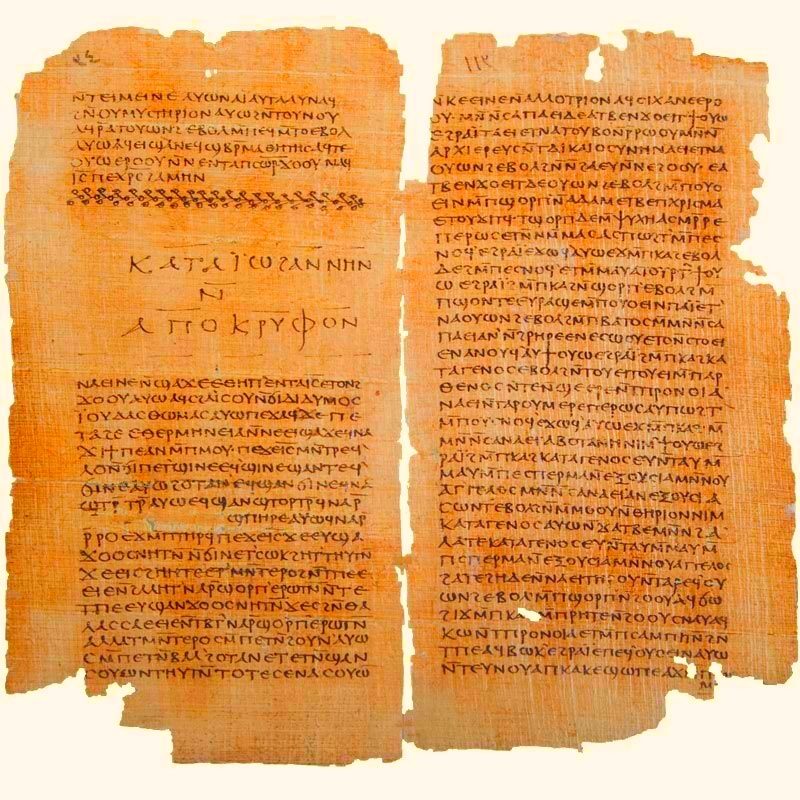
- The Nag Hammadi Library, discovered in Egypt in 1945, contains 52 Gnostic texts, including the Gospel of Thomas, the Gospel of Philip, and the Apocryphon of John. These texts offer an unprecedented window into Gnostic theology and practice.

Garrett Ham
Garrett Ham is an attorney, military veteran, and holds a Master of Divinity from Yale Divinity School. He writes from Northwest Arkansas on theology, law, and service.
More about Garrett →Related Posts
What Is Gnosticism? A Catholic Guide to the Ancient Heresy
What is Gnosticism? A Catholic guide to proto-Gnostic currents, the 2nd-century systems, the Nag Hammadi texts, and the Church Fathers' response through canon, creed, and doctrine.
The Gnostic Gospels: A Catholic Guide to the Nag Hammadi Texts
What are the Gnostic Gospels? A Catholic guide to the Gospel of Thomas, Gospel of Philip, Apocryphon of John, and other Nag Hammadi texts—what they say and why they matter.

Neo-Gnosticism in Evangelical and Progressive Christianity
How both evangelical and progressive Christianity have absorbed Gnostic tendencies—rejecting the body in different ways while departing from historic Christian teaching.
Stay Informed
Get new writing on faith, law, and service delivered to your inbox.
No spam. Unsubscribe anytime.