Does God Know the Future? What Catholics Believe
On This Page
When I was in the throes of my open theist phase, I spent months wrestling with a single question: Can God really know the future if human beings are truly free? It seemed obvious to me that the two were incompatible. If God knows with certainty that I will choose coffee over tea tomorrow morning, then how can that choice be mine? Doesn’t foreknowledge entail fatalism?
Years later, after studying medieval theology and finally entering the Catholic Church, I came to see that this question, while profound, rests on a subtle confusion about God’s nature. The Catholic answer is unflinching: Yes, God knows the future—completely, exhaustively, and with absolute certainty. And yes, we are genuinely free. These are not contradictory. In fact, they flow necessarily from what God is.
This post is aimed at anyone Googling “does God know the future?” who wants a real answer—not hand-waving, not mystery-mongering, but a theological explanation that takes both human freedom and divine omniscience seriously.
The Catholic Answer: God Knows All Things, Always
Let me state it plainly. The Catholic Church teaches that God possesses perfect knowledge of all things—past, present, and future—with absolute certainty and clarity. This is not a matter of opinion or theological school; it is settled doctrine, defined at the highest level of the Church’s teaching authority.
The most authoritative statement comes from the First Vatican Council (1869–1870). In Dei Filius, Chapter I (De Deo Rerum Omnium Creatore), the Council taught:
All things are naked and open to His eyes (Heb 4:13), even those which by the free action of creatures are in the future.1
This is worth parsing carefully. The Council is affirming that God’s knowledge extends even to the free acts of creatures that have not yet occurred. Nothing escapes God’s sight—not even events that depend on the genuinely free choices of human beings. God does not experience time as we do, sitting on a timeline and watching events scroll past. God stands outside time altogether and sees all moments—past, present, and future—in a single eternal act of knowing.
The broader Catholic tradition has long expressed this through the concept of God’s eternity. Boethius defined eternity as “the whole, simultaneous and perfect possession of boundless life” (Consolation of Philosophy, V.VI), and Aquinas developed this insight extensively in Summa Theologiae I, Q.10. The Catechism of the Catholic Church affirms that God “is the fullness of Being and of every perfection, without origin and without end” and that He acts “from beyond space and time.”2
What I eventually grasped—and what I wish someone had explained to me during my open theist days—is that this doctrine protects something crucial about God. It tells us that God is not merely powerful but transcendent. God is not bound by the laws of physics or time. God does not reason sequentially the way we do, nor does God acquire knowledge gradually. God’s knowledge is simple, eternal, and all-encompassing.
Why the Bible Seems to Teach This
Before diving into philosophy, let me address the biblical case, since many people are surprised to learn that the classical doctrine of divine foreknowledge is thoroughly biblical.
The Old Testament is full of instances where God declares the end from the beginning. Isaiah speaks of God saying, “I am God, and there is none like me, declaring the end from the beginning and from ancient times things not yet done” (Isaiah 46:9–10).3 God’s foreknowledge is presented not as tentative or probabilistic, but as the basis for His absolute reliability as a guide and protector.
In the New Testament, Jesus speaks with perfect knowledge of events yet to come. He predicts Peter’s denial, His own resurrection, and the events of the last days—not as guesses or conditional prophecies, but as truths He already knows. The apostle Peter explicitly connects God’s foreknowledge to salvation itself: “He was destined before the foundation of the world, but revealed at the end of the times for your sake.”4
The most striking passage, perhaps, is in Acts, where Luke recounts Peter’s defense before the Sanhedrin. Peter speaks of Jesus as “delivered up according to the definite plan and foreknowledge of God”—yet the very people who killed Jesus did so freely, according to their own malice and rebellion. No tension is felt; the two truths simply coexist.5
What’s crucial here is that the biblical writers do not present God’s foreknowledge as contradicting human responsibility or freedom. They simply affirm both. A modern reader might think this is confusion or contradiction. But the classical theological tradition understood that the contradiction only appears when we fail to account for God’s transcendence—when we imagine God as existing within time rather than beyond it.
The Philosophical Solution: God’s Eternal Now
This is where the philosophical work comes in, and I won’t pretend it’s easy. But it’s also not arbitrary; it follows logically from what we mean by “God.”
Here’s the core insight: God does not know the future as we know it. We know the future through prediction—we observe patterns, make inferences, and hope our forecasts are right. We are essentially guessing about what hasn’t happened yet. But God doesn’t predict the future; God sees it.
How is this possible? Only if God exists outside time altogether.
Imagine that time is like a novel. From our perspective, we are living through the story page by page, chapter by chapter. We don’t know what the next page holds. But the author of the novel, standing outside the narrative, can see every page at once—beginning, middle, and end—in a single glance. The author’s knowledge of page 300 doesn’t create page 300 or force it to happen; the author simply sees what is there.
This is a rough analogy, and theologians have debated its adequacy for centuries, but it captures something essential. God’s knowledge of the future is not predictive but intuitive. God sees all times in the eternal present, just as we see different parts of a landscape in a single glance.
But What About Free Will? The Hardest Question
This is the objection I felt most acutely as an open theist, and it deserves a full and serious answer.
The objection goes like this: Suppose God knows with certainty that tomorrow I will freely choose to attend Mass. For this to be God’s foreknowledge, it must be infallible—that is, it cannot be wrong. But if it cannot be wrong, then it is impossible for me to do otherwise. And if it’s impossible for me to do otherwise, then my choice is not free; it’s necessitated. Therefore, divine foreknowledge is incompatible with human freedom.
This argument has real force. I spent months thinking it was airtight. But it rests on a crucial error.
The error is in confusing the certainty of knowledge with the necessity of the thing known. Let me illustrate:
I see my friend sitting in a chair. My knowledge that she is sitting is certain—I’m not guessing or uncertain. But does this certain knowledge make her sitting necessary in the sense that she cannot stand up? Obviously not. The certainty of my knowledge does not change the modal status of the thing known. She is still free to stand; I am simply observing the fact that (at this moment) she is sitting.
Now apply this to God. God knows with certainty that I will attend Mass tomorrow. Does this certain knowledge necessitate my choice? No—for the same reason. God’s knowledge, no matter how certain, observes the choice as it is: a free choice. Observing a free act does not make it unfree.
But here’s the additional, deeper point that medieval theologians (particularly Thomas Aquinas) emphasized. God does not know the future in the way we imagine. God is not standing at time-point zero, looking down the timeline and seeing what must happen. Rather, God’s knowledge is eternal. God knows your choice as it actually is—a free choice—because God sees it in its concrete reality, not as a mere possibility. In God’s eternal knowledge, your choice is present; it is actual. And what is actual is what it is. If it is a free choice, then it is observed as a free choice.
Thomas Aquinas put it this way: “His knowledge is measured by eternity, as is also His being; and eternity being simultaneously whole comprises all time… Hence all things that are in time are present to God from eternity, not only because He has the types of things present within Him, as some say; but because His glance is carried from eternity over all things as they are in their presentiality.”6 That last word—presentiality (Latin: praesentialitas)—is a critical philosophical term meaning “the state of being present as such,” and it is central to the Thomistic resolution of foreknowledge and free will.
In other words, God doesn’t merely have an idea of your choice; God sees your choice as you will make it, freely and authentically. The future event is eternally present to God, just as your freely sitting in the chair is present to me now. My seeing your free act doesn’t make it unfree.
This solution requires grasping that God transcends time entirely—that God is not before the event in time, looking ahead, but eternal, seeing all events in a single, timeless act. Once you understand this, the supposed contradiction dissolves.
Catholic Frameworks: Aquinas and Molina
Within the Catholic tradition, there are two major frameworks for understanding how God knows free future acts, and I should mention them, though both affirm the same doctrine.
The first is the Thomistic view, which I sketched above. Thomas Aquinas argues that God’s knowledge is grounded in God’s eternal being. God does not acquire knowledge by observing creatures; rather, God’s knowledge is the cause of all things. God knows free acts in God’s own essence, as God comprehends how creatures will freely act within the providential order. This view emphasizes God’s simplicity and the mysterious unity of God’s knowledge.
The second major view is Molinism, developed by the Jesuit Luis de Molina. Molinism posits a middle type of knowledge—scientia media (middle knowledge)—whereby God knows, prior to any act of creation, not merely what could happen (possible worlds) but what would happen if He created this or that set of circumstances. This allows Molinists to emphasize God’s knowledge of how creatures would freely choose in various scenarios. God then chooses to create the actual world, knowing in advance how free creatures will act within it.
Both views are legitimate within Catholic theology. Both fully affirm that God knows the future with absolute certainty and that human beings are truly free. The difference is in how they explain the metaphysical mechanism. I’ve written more about Molinism here and about the debate here, but for the purposes of this essay, what matters is that both approaches converge on the same doctrine: God’s knowledge is exhaustive and infallible, and this is compatible with human freedom.
Why This Matters: Providence and Prayer
All of this might seem like abstract theology, but it has profound pastoral implications.
Consider prayer. When you pray, are you trying to change God’s mind? Many people feel uncomfortable with the idea of intercessory prayer because they assume that if God already knows the future, then praying is futile—God has already “decided” what will happen. But this is again the error of imagining God as existing in time.
Here’s the truth: God knows eternally that you will pray, and God knows eternally that He will answer your prayer. Your prayer is not outside God’s knowledge, as though it might surprise Him. Rather, your prayer is woven into God’s eternal knowledge and providential plan. When you pray, you are participating in God’s providence, not trying to circumvent it. God does not decide first and then you pray; rather, in God’s eternal now, your prayer and God’s response are one unified reality.
C.S. Lewis explored this idea in his essay “Work and Prayer” (collected in God in the Dock), where he argues that prayer is not an attempt to change God’s mind but a genuine cause that God has woven into the fabric of His providential plan—just as real and effective as any physical work we do.7 God knows the future, and in that future, your prayers and their answers are eternally present.
Similarly, consider suffering and the problem of evil. If God knows the future, then God knows about my suffering before it happens. Does this mean God doesn’t care? No—quite the opposite. It means God has eternally willed to be present to me in my suffering, to redeem it, and to bring good from it. There is no suffering that takes God by surprise or that is outside God’s providential knowledge and care.
Consider also the spiritual life. If God knows that you will struggle with a particular temptation, or that you will experience a crisis of faith, does this mean you are destined to fall? Not at all. God’s knowledge of your struggle is also God’s knowledge of the graces you will receive, the community that will support you, and the eventual fruits of perseverance. Your future—including your free choices to resist temptation and to trust God—is eternally known and eternally provided for.
This is why the doctrine of divine foreknowledge, far from being a cold abstract truth, is the foundation of Christian hope. We can trust in God’s providence not because we understand all of God’s plans, but because we know that God sees and cares about our entire future, including our freedom and our growth.
Brief Note on Alternatives: Open Theism and Process Theology
For completeness, I should mention that not all Christian traditions affirm the classical doctrine of divine foreknowledge.
Open theism affirms God’s omniscience but holds that future free choices are not yet settled realities and therefore not objects of definite knowledge. Open theists argue that God knows all that is logically knowable—the past and present exhaustively, and every possible future path—but that genuinely free future choices have not yet been determined and so are known only as possibilities. God is supremely intelligent in responding to whatever creatures freely choose, but he does not know the outcome of free choices as settled certainties. I spent several years as an open theist, and I understand the appeal of this view. It seems to protect human freedom and divine responsiveness. But from the Catholic perspective, it effectively revises the scope of omniscience in a way that contradicts the doctrine defined at Vatican I, which teaches that even those things “which by the free action of creatures are in the future” are “naked and open” to God’s eyes.
Process theology offers a different alternative, denying that God is omnipotent or immutable. Process theologians argue that God is genuinely affected by creation and grows and changes along with the world. This view, while thought-provoking in some respects, is fundamentally incompatible with Catholic doctrine on God’s transcendence and immutability.
The Catholic position is not the only coherent Christian theology, but it is the one the Church has received, defined, and teaches. It remains, I believe, the most theologically satisfying answer to the deep questions about God’s nature and our freedom.
Conclusion: The Eternal God and Human Freedom
When I was an open theist, I thought the classical doctrine of divine foreknowledge was impossible—that it required choosing between God’s knowledge and human freedom. What I didn’t grasp was that this dilemma only appears if you imagine God as we are—moving through time, acquiring knowledge, making decisions sequentially.
The Catholic answer is more radical and more beautiful: God is not like us. God is eternal. God does not inhabit time; rather, all times are eternally present to God in a single, infinite act of knowing and willing. This transcendence of time is what makes God truly God. And from within that eternity, God sees your freedom—your choices, your struggles, your loves—with perfect clarity. Not despite your freedom, but in your freedom. Not constraining your will, but knowing your will as it authentically is.
This doctrine is simultaneously humbling and liberating. Humbling, because it reminds us that God is far greater than we are, operating according to principles of knowledge and causation utterly beyond our comprehension. Liberating, because it means that nothing in your future—not your failures, not your doubts, not your most desperate struggles—escapes God’s loving knowledge and providential care.
The future is real, and it is eternally present to God. You are free, and your freedom is eternally known by God. These are not contradictory; they flow from what it means for God to be God.
Further Reading
Magisterial Documents
- First Vatican Council, Dei Filius (1870)
- Catechism of the Catholic Church, Paragraphs 202–213 (God’s name, transcendence, and eternity)
Primary Theological Texts
- Thomas Aquinas, Summa Theologiae, I, Questions 14-15 (on God’s knowledge)
- Luis de Molina, Concordia (for the Molinist perspective)
Secondary Sources
- Stanford Encyclopedia of Philosophy: “Divine Foreknowledge and Free Will”
- Romanus Cessario, The Moral Virtues and Theological Ethics (Chapters 1-2 on God’s transcendence)
Related Posts
- What is Open Theism? (And Why I Left It)
- Molinism Explained: How God Knows Future Free Acts
- Divine Foreknowledge and Human Freedom: The Classic Problem
- Divine Simplicity: Why God is Not Composite
- Vatican I on God’s Nature and Knowledge
- Open Theism vs. Molinism: A Comparative Guide
- Process Theology and Why Catholics Reject It
- First Vatican Council, *Dei Filius* (April 24, 1870), Chapter I (*De Deo Rerum Omnium Creatore*). The original Latin of the broader passage reads: "Universa vero, quae condidit, Deus providentia sua tuetur atque gubernat, attingens a fine usque ad finem fortiter et disponens omnia suaviter (cf. Sap 8:1). Omnia enim nuda et aperta sunt oculis eius (Heb 4:13), ea etiam, quae libera creaturarum actione futura sunt." The Council affirms that God's foreknowledge extends even to the free acts of creatures.
- See Catechism of the Catholic Church, Nos. 212–213 on God's transcendence and eternity, and No. 205 on God acting "from beyond space and time." The concepts of "duration without succession" and "eternal present" derive from scholastic theology, particularly Boethius (*Consolation of Philosophy*, V.VI) and Aquinas (*Summa Theologiae* I, Q.10).
- Isaiah 46:9–10. The main text combines 46:9b and 46:10a. The full text of verse 10 (NIV): "I make known the end from the beginning, from ancient times, what is still to come. I say, 'My purpose will stand, and I will do all that I please.'"
- 1 Peter 1:20. The Greek *proegnosmenou* (foreknown) is used here in connection with Christ's predestined sacrifice.
- Acts 2:23 (NIV): "This man was handed over to you by God's deliberate plan and foreknowledge; and you, with the help of wicked men, put him to death by nailing him to the cross." Note the simultaneity: God's foreknowledge and human free choice coexist. The "wicked men" (or "lawless men," ESV/NRSV) refers to the Roman executioners, while Peter addresses the Jewish leaders who handed Jesus over—multiple parties bear responsibility within God's foreknown plan.
- Thomas Aquinas, *Summa Theologiae*, I, Question 14, Article 13. The full passage develops the insight that God's knowledge is not sequential like ours but eternal and intuitive.
- C.S. Lewis, "Work and Prayer," in *God in the Dock: Essays on Theology and Ethics*, ed. Walter Hooper (Grand Rapids: Eerdmans, 1970). While Lewis was not Catholic, his treatment of prayer and providence aligns closely with the Catholic understanding that prayer is a genuine cause within God's eternal plan.
Garrett Ham
Garrett Ham is an attorney, military veteran, and holds a Master of Divinity from Yale Divinity School. He writes from Northwest Arkansas on theology, law, and service.
More about Garrett →Related Posts
Open Theism: A Catholic Evaluation
What is open theism? A Catholic evaluation of the open model of God, its scriptural case, philosophical arguments, and why it falls outside defined Catholic dogma.
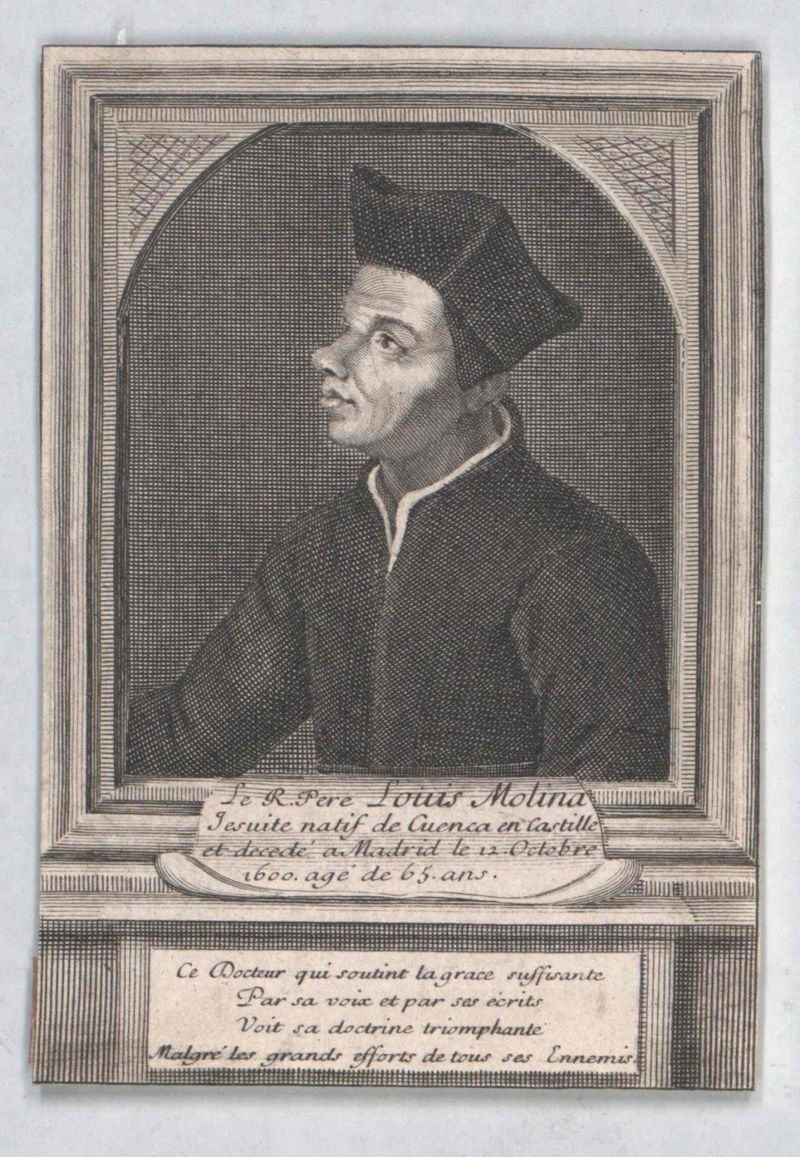
Molinism: Divine Sovereignty and Human Freedom
What is Molinism? Luis de Molina's middle knowledge (scientia media), the De Auxiliis controversy, and how Molinism compares to Thomism and Calvinism.
Divine Foreknowledge and Free Will: The Catholic Answer
Can God know the future and humans still be free? The Catholic intellectual tradition offers robust answers through Thomism and Molinism. Here’s how they work and why they matter.
Stay Informed
Get new writing on faith, law, and service delivered to your inbox.
No spam. Unsubscribe anytime.