Divine Simplicity: God's Absolute Oneness
On This Page
“I AM WHO I AM.”—Exodus 3:14
Introduction: The Simplicity of God
Imagine standing before a mirror and seeing not just your reflection, but every atom, every cell, every thought you contain reflected back perfectly. Now imagine that this reflected image is not a separate thing from you, but is, somehow, you—identical with you in every way. This is, in a sense, what Catholic theology means when it speaks of divine simplicity.
Yet divine simplicity is not about seeing oneself in a mirror. It concerns something far more radical: the doctrine that God, unlike all creation, is utterly simple—without parts, without composition, without any division whatsoever between what he is and how he is.
This teaching strikes many modern readers as abstract, even obscure. We live in an age enamored with complexity. We celebrate complicated algorithms, intricate systems, elaborate theories. Simplicity, by contrast, sounds almost naive—a remnant of medieval philosophy with little bearing on contemporary faith. Yet divine simplicity has never been mere metaphysical speculation. It is a doctrine with deep biblical roots, profound implications for Christian living, and surprising relevance to how we understand God in prayer and practice.
This essay explores what divine simplicity is, why the Catholic Church has consistently affirmed it, and why it matters for Christian faith today.
What Is Divine Simplicity?
Divine simplicity is the doctrine that God is absolutely simple—utterly without composition of any kind. To understand this, we must begin by recognizing what every creature exhibits: composition.
Consider a human being. You are composed of body and soul. Your soul is composed of intellect and will. Your intellect is composed of potential (what you could know) and actuality (what you do know). Even a single moment of your thinking is composed of the thinker, the act of thinking, and the object of thought. At every level, you are made up of parts.
God, according to the doctrine of divine simplicity, is not like this at all. God is not made up of parts. More radically still: God’s essence is his existence. When we say “God is good,” we do not mean that God possesses goodness as an attribute among other attributes. We mean that God is goodness. His essence—what he is—is identical with his being—the fact that he is.
Medieval scholastic theology expressed this principle in three related formulas:
-
God is ipsum esse subsistens—“subsistent being itself.” God does not merely have existence as an additional quality he possesses. Rather, existence itself subsists in God; God is existence.
-
God is actus purus—“pure actuality.” In metaphysics, we distinguish between potential (what something could become) and actuality (what something is). All created things exist in a state of mixed potentiality and actuality. A student is potentially a master; an acorn is potentially an oak. God, however, contains no unrealized potential. He is what he is perfectly, eternally, immutably. He is pure act.
-
God’s essence equals his existence. In creatures, we can distinguish between essence (what something is) and existence (that it is). I am a human being, and I exist. But I could cease to exist; my essence does not demand my existence. In God, there is no such distinction. God’s very nature is to exist. To be God is to exist necessarily, eternally, unchangingly.
This doctrine does not mean God is featureless or empty. God possesses all perfections—wisdom, justice, mercy, power. But divine simplicity insists that these perfections are not separate attributes attached to a divine substance, as if God were a kind of cosmic peg upon which various divine qualities are hung. Rather, in God, all perfections are one. God’s wisdom is his justice; his power is his mercy. In God, all attributes are identical with his essence and with one another.
This claim sounds paradoxical to our ears. How can wisdom be justice? How can power be mercy? These seem like different things. Yet the paradox dissolves once we grasp that we are speaking of God, not creatures. In God, at the level of his very being, these distinctions exist only in our understanding (ratione as the medieval theologians said), not in God himself (re, in reality).
Biblical Roots: From “I AM” to Being Itself
The doctrine of divine simplicity does not spring from abstract philosophical speculation. It emerges from deep engagement with Scripture, particularly with God’s self-revelation.
The classic biblical foundation is Exodus 3:14, where Moses asks God for his name. God replies: “I AM WHO I AM.” In Hebrew, this is Ehyeh asher Ehyeh—a name that connects God fundamentally with pure being, with existence itself. God does not say, “I am merciful” or “I am powerful” or even “I am holy.” He identifies himself with existence itself. To know God’s name is to know that God is existence itself.
This revelation echoes throughout Scripture. In the Psalms, the worshiper cries out to the eternal God, the one who “dwells in unapproachable light.”1 In the Gospels, Jesus claims divine prerogatives using precisely the same formula: “I AM.” When he tells the disciples, “Before Abraham was, I AM,” Jesus aligns himself with the God of Exodus, claiming to exist before time itself, to be existence itself.2
The New Testament, especially in Hebrews and John, develops this theme. God is described as the one who “sustains all things by the word of his power,“3 the one in whom “all things hold together.”4 The God of Scripture is not one agent among others in the universe, possessing various qualities and powers. Rather, he is the source of all existence, the ground of all being.
The biblical emphasis on God’s transcendence and otherness also points toward divine simplicity. God is not merely vastly more powerful or knowledgeable than creatures. God is utterly other, belonging to a different order of being altogether. This otherness is most profoundly expressed in the doctrine that God alone is simple, that God alone is being itself, that God alone does not depend on anything whatsoever for his existence.
Patristic Development: The Church Fathers and Divine Simplicity
The early Church Fathers did not use the term “divine simplicity,” but they consistently affirmed the reality it describes. Their theological reflection on the Incarnation drove them toward this conclusion.
If Christ is truly God, then Christ must be eternal, unchangeable, and absolutely transcendent. Yet how could such a being become human? The Fathers insisted that God’s nature is utterly simple and unchanging. God does not acquire new properties or undergo internal changes. The Incarnation represents something radically different: not a change in God’s nature, but God’s assumption of a human nature while remaining perfectly what he eternally is.
The Greek Fathers, particularly the Cappadocians (Basil, Gregory of Nyssa, Gregory of Nazianzus), emphasized God’s absolute simplicity as essential to affirming the Trinity. The three persons are distinct (distinct not in substance but in the way they exist), yet there is only one God. The unity of the Godhead depends on the fact that God is utterly simple: there is no divine substance existing separately from the Trinity; the three persons constitute one utterly simple reality.
Augustine brought the philosophical resources of Platonism to bear on Christian theology, deepening the Church’s understanding of divine simplicity. In his Confessions and De Trinitate, Augustine argues that God alone is immutable and eternal because God alone is simple. Everything else is mutable because it is composed. Change means the replacement of one state with another, which presupposes composition. Since God is absolutely simple, God cannot change. And since God is absolutely simple, God cannot pass away; God is eternal.
Augustine particularly emphasized the identity of God’s attributes with his essence. God’s justice is his mercy; his power is his wisdom. This is not poetic language but metaphysical truth. In God, all perfections are one with his being. The distinction between justice and mercy exists only in human minds as we contemplate the infinite reality of God; it does not exist in God himself.
By the time of Augustine, divine simplicity had become a settled conviction of Christian theology, even if the precise philosophical formulation would develop further in the medieval period.
Medieval Precision: Thomas Aquinas and the Summa Theologiae
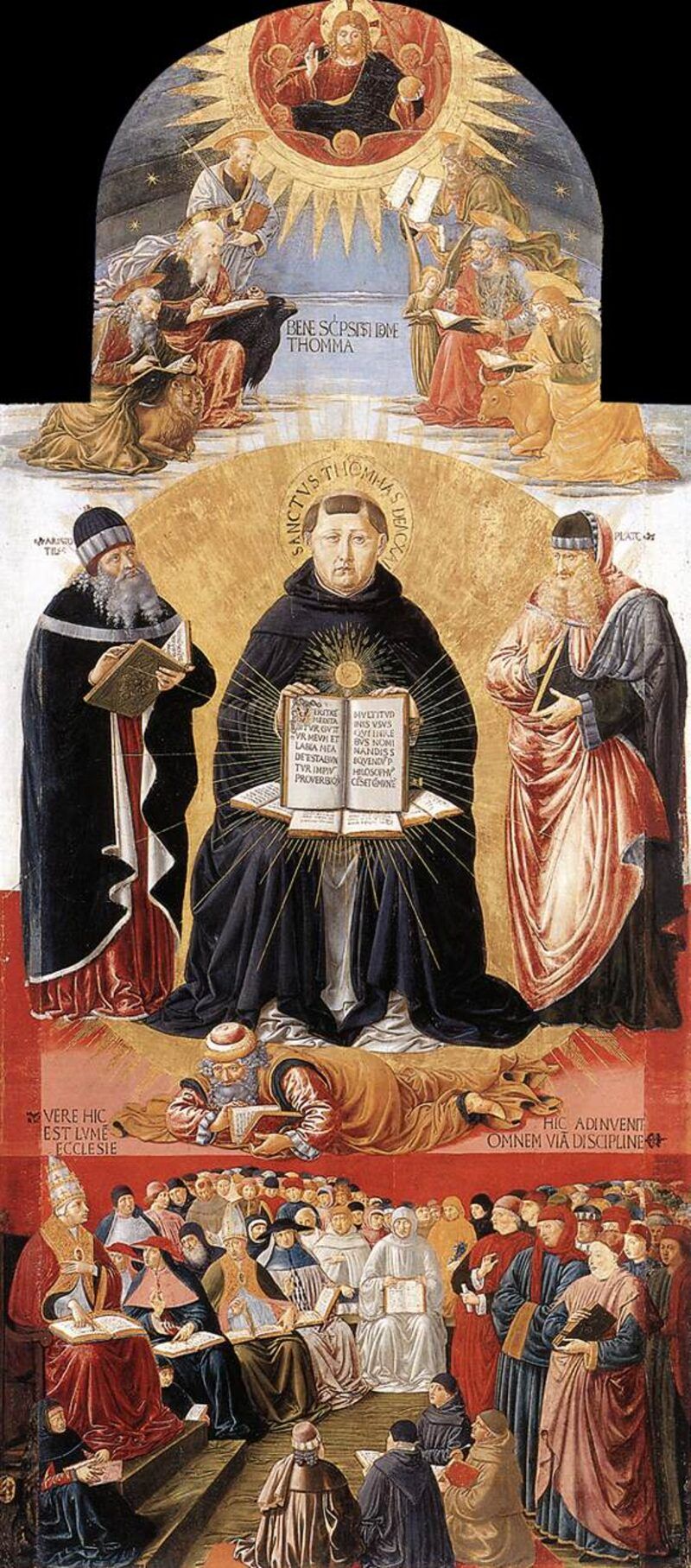
The medieval theologians, especially Thomas Aquinas, gave divine simplicity its most systematic and influential treatment in Christian history. Aquinas’s presentation in Summa Theologiae I, question 3, remains the definitive Catholic exposition of the doctrine.
Aquinas offers a systematic argument: Every creature is composed of essence and existence. A human being is a composite of human nature (essence) and the fact that a given human being exists (existence). These are distinct. I am a human being, and I exist; my humanity does not necessarily entail my existence.
But if God exists, then in God essence and existence must be identical. For if they were distinct, then God would be composed of essence and existence. But whatever is composed depends on its components; it is not necessary in itself. Therefore, God would not be God—not the necessary being on which all other beings depend.
The only coherent account of God’s being is one in which existence itself is God’s nature. God does not possess existence as an added property. God is existence. This is what Aquinas means by calling God ipsum esse subsistens.
From this fundamental identity of essence and existence, Aquinas draws out the implications for God’s other attributes. God’s simplicity entails:
-
Immutability: Since God is pure actuality with no unrealized potential, God cannot change. Change requires the actualization of potential, which would introduce composition.
-
Eternality: Time itself is a measure of change. Since God does not change, God is not in time. God exists in an eternal present, which Aquinas calls the nunc stans—the “standing now.”
-
The identity of attributes: In God, justice is mercy, power is wisdom, because all are identical with God’s simple essence. We distinguish them in our understanding, but they are not distinct in God.
-
Necessity: God exists by his very nature. God could not fail to exist, for existence itself is what God is. All other beings exist contingently; God alone exists necessarily.
Aquinas was careful to explain that this doctrine does not contradict the Trinity. The three persons are distinct in their relations to one another (Father, Son, and Holy Spirit), but they are not distinct in substance. There is one simple divine essence existing in three ways. This may strain our conceptual abilities, but it avoids introducing composition into the divine nature.
Aquinas’s influence ensured that divine simplicity became integral to Catholic theology. The Council of Trent, while not explicitly defining divine simplicity, presupposed it. Subsequent popes and theologians have consistently affirmed it as a fundamental doctrine.
Conciliar Definitions: Church Teaching on Divine Simplicity
While divine simplicity is not the subject of a single, comprehensive definition, the Church has authoritatively affirmed it on multiple occasions.
The Fourth Lateran Council (1215) explicitly affirmed divine simplicity in its opening Trinitarian confession. Canon 1 (Firmiter credimus) declares that God is “one essence, substance, or nature absolutely simple” (natura simplex omnino), confessing the Father, Son, and Holy Spirit as one God, “eternal, immense, unchangeable, incomprehensible, omnipotent, and ineffable.”5 The council’s language directly asserts God’s absolute simplicity as foundational to the Catholic understanding of the Trinity and the divine nature.
The First Vatican Council (1870), in its Constitution Dei Filius, offers the most explicit ecclesiastical statement on divine simplicity. The council teaches:
“The holy, catholic, apostolic Roman Church believes and confesses that there is one true and living God, Creator and Lord of heaven and earth, almighty, eternal, immense, incomprehensible, infinite in intellect and will and in all perfection. He is one, singular, altogether simple and unchangeable spiritual substance.”6
The council’s affirmation that God is “wholly spiritual,” “immense,” and “infinite in perfection,” while simultaneously asserting God’s absolute unity, presupposes divine simplicity. A being that is “infinite in intellect and will and in all perfection” while remaining absolutely one must be simple; any composition would limit and finite the divine being.
These conciliar definitions do not offer detailed philosophical arguments for divine simplicity. Rather, they assume it as the necessary framework for understanding God’s transcendence, unity, and perfection. The councils protect the doctrine by condemning alternatives—any view that would fragment God’s nature, subject God to change, or suggest that God’s attributes are separate from his being.
Divine Simplicity and Central Christian Doctrines
Divine simplicity does not exist in isolation. The doctrine is foundational to how Catholics understand several central Christian teachings.
Immutability
If God is absolutely simple, then God cannot change. Change always involves the replacement of one state with another, which presupposes composition (a potential that becomes actual, a being that acquires a new attribute, a substance that undergoes modification).
This matters for prayer and faith. When we pray, we do not change God’s mind, causing him to shift from unwillingness to willingness to help us. Rather, God’s will is eternally fixed. Our prayer, which occurs in time, participates in God’s eternal will. God has always willed, from eternity, to help us in response to our prayers. We do not change an unchanging God; we align ourselves with his eternal designs.
Omniscience
God’s knowledge is not acquired or discursive; God does not think through problems as we do. Rather, God eternally and unchangingly knows all things in a single, simple act of knowledge. God knows the future not as we predict it (as a guess about what might happen) but as he eternally knows it. Divine omniscience is fully compatible with human freedom because God’s knowledge is not causal; God’s knowing does not make things happen. Rather, God’s eternal, simple knowledge encompasses all that is, was, and will be.
This classical doctrine of omniscience differs from open theism, which holds that God does not know future free choices (since, according to open theism, the future is partly indeterminate). It also bears on debates about divine foreknowledge and Molinism, which attempts to explain how God can have foreknowledge of free choices while respecting human freedom. Classical divine simplicity, combined with God’s eternal knowledge, provides an elegant solution: God knows all things timelessly, and this knowledge is compatible with both God’s immutability and human freedom.
The Trinity
The Trinity represents the deepest puzzle for divine simplicity: How can God be simultaneously utterly simple (one being, no composition) and three persons (Father, Son, and Holy Spirit)?
The traditional answer is that the Trinity does not represent a composition in God’s essence or substance. Rather, the three persons are distinguished by their relations to one another. The Father is the source of divinity; the Son is eternally generated from the Father; the Holy Spirit eternally proceeds from both. Yet these relations do not introduce composition into the divine being. The three persons are one God because they share one simple divine nature.
This explanation does not eliminate the mystery of the Trinity. But it shows that divine simplicity and Trinitarian faith are not contradictory; they are complementary. The simplicity of the divine essence and the threefold distinction of persons represent, together, the fullness of Catholic revelation about God.
Common Objections and Responses
Divine simplicity has faced philosophical objections since medieval times. A responsible treatment must acknowledge these difficulties.
Objection 1: The Problem of Divine Attributes
If God’s justice is identical with his mercy, and mercy is identical with his love, then are these not the same thing? How can God be both just and merciful if justice and mercy are genuinely different?
Response: The distinction between justice and mercy is real—not merely verbal or subjective. But the distinction exists in our understanding, not in God himself. We grasp God’s single, simple nature through different concepts: justice focuses on God’s order and harmony; mercy focuses on God’s compassionate response to human need. These are genuine ways of apprehending one simple divine reality. God is not confused or contradictory when he is both just and merciful. Rather, in his simple being, justice and mercy are one. Our limited minds can only approach this unity through a plurality of concepts.
Objection 2: The Paradox of Composition
Even if we accept that God’s essence equals his existence, does this not introduce a kind of composition—the distinction between essence and existence itself?
Response: Aquinas anticipated this objection. He argues that the distinction between essence and existence is not a real composition in God. The distinction exists only in our understanding (distinctio rationis). In God’s being, there is no real composition because his essence just is existence. We must distinguish between what is in God (a real distinction) and what we distinguish in our thinking (a rational distinction). The latter does not introduce composition.
Objection 3: God’s Freedom and Simplicity
If God is absolutely simple and eternally unchanging, how can God’s acts be free? If God eternally wills to create, does not this will constrain God? Does not the act of creation introduce change in God?
Response: God’s freedom does not consist in the ability to have acted otherwise (a capacity that would imply unrealized potential and contingency). Rather, God’s freedom consists in God’s being the source of all things, dependent on nothing outside himself. God’s eternal decision to create is free precisely because nothing outside God compels it. The act of creation does not change God; creation is something that happens in time and in creatures, not in God. God remains eternally what he is, while creating beings exist and develop in time.
Objection 4: Divine Simplicity and the Incarnation
How can the absolutely simple, unchanging God become incarnate in a human being without composition or change?
Response: This is a profound question. The traditional answer, developed especially by Augustine and Aquinas, is that the Incarnation does not introduce change or composition in the divine nature. Rather, the Word of God, who is eternally and immutably the divine nature, assumes a human nature. The union of divine and human natures occurs, but God’s nature remains utterly unchanged. It is the human nature that is elevated by union with the divine nature, not vice versa. God does not become different; rather, God becomes human without ceasing to be God.
Divine Simplicity Beyond Catholicism: Orthodox and Protestant Perspectives
While divine simplicity is a specifically Catholic (and broadly Thomistic) doctrine, other Christian traditions relate to it in complex ways.
Eastern Orthodox Theology
The Eastern Orthodox tradition, like Catholicism, affirms God’s absolute unity and transcendence. However, Orthodox theologians often express this through the language of God’s distinction between his essence and his energies, a conceptual framework developed especially by Gregory of Palamas.
According to this framework, God’s essence is utterly simple, unknowable, and transcendent. But God’s energies (his activities, his manifestations in creation) are not identical with his essence; they are real but distinct from the essence. This allows the Orthodox to maintain God’s transcendence and simplicity while explaining how creatures can encounter God and how God acts in creation.
Some scholars see this essence–energies distinction as compatible with divine simplicity; others suggest it represents a subtle departure from the classical doctrine. In any case, the Orthodox share with Catholics the conviction that God is utterly transcendent, simple, and the ground of all being.
Protestant Perspectives
Protestant theology is diverse, but classical Protestant theologians (Calvin, the Reformed tradition) largely affirmed divine simplicity. John Calvin, for instance, insisted that God is absolutely immutable and simple, without composition of any kind.
However, some modern Protestant thinkers, influenced by process theology or by evangelical concerns about God’s responsiveness to creation, have questioned divine simplicity. Process theology, influenced by Alfred North Whitehead, rejects both divine simplicity and immutability, arguing that God is genuinely responsive to creation and that God’s experience is enriched by the world’s development.
Other Protestant theologians, including some evangelicals, embrace concepts like open theism, which denies divine omniscience (specifically, God’s knowledge of future free choices) in order to emphasize human freedom and God’s responsiveness to human choice. These theologians see divine simplicity as incompatible with their understanding of freedom.
Yet classical Reformed and orthodox Protestant theology remains committed to divine simplicity as a mark of God’s transcendence and perfection. The diversity of Protestant perspectives reflects broader philosophical and theological disagreements about God’s nature and relation to creation.
Why Divine Simplicity Matters Today
In our current intellectual climate, divine simplicity might seem a relic of medieval philosophy, disconnected from modern concerns. Yet the doctrine addresses perennial human questions about God’s nature and our relation to God.
For Prayer and Faith: The doctrine that God is absolutely simple and unchanging is not cold abstraction. It grounds the confidence that God is utterly reliable, that his will toward us is eternal and unchanging, that our prayer aligns us with something absolute, not with a being subject to moods and changes. When we pray to God, we are not trying to convince someone who might say “no” to say “yes.” We are aligning ourselves with God’s eternal will.
For Theodicy: The problem of evil asks how an all-good, all-powerful God allows suffering. Divine simplicity contributes to this discussion by clarifying that God’s goodness is infinite and simple, not a partial quality. God’s permission of suffering, while remaining utterly mysterious, is not a limitation on God’s goodness or power, because God is not composed of competing virtues or constrained by external forces.
For Systematic Theology: Without divine simplicity, the doctrines of the Trinity, Incarnation, omniscience, and immutability become difficult to articulate coherently. Divine simplicity provides the metaphysical framework within which these central Christian teachings make sense as a unity, not as competing claims.
Against Idolatry: The insistence that God is utterly simple, utterly transcendent, utterly beyond all composition and division protects faith from a kind of idolatry—the reduction of God to an object within the world, subject to the same categories that apply to creation. Divine simplicity insists that God is radically different from everything else, the source and ground of all being.
FAQs on Divine Simplicity
Q: If God is simple, how can God have different attributes like justice and mercy?
A: In God, all attributes are identical with his simple essence and with one another. We distinguish them in our thinking because our finite minds can only approach infinite reality through multiple concepts. But in God’s being, there is no distinction. God is one simple reality known by us under many names.
Q: Does divine simplicity mean God is impersonal?
A: No. Divine simplicity describes the manner of God’s being, not the content of God’s nature. God is utterly personal—knowing, willing, loving—while possessing these perfections in a simple, not composite, manner. God’s personhood is more perfect than human personhood precisely because it is undivided and eternal.
Q: How can God be simple and still be three persons (Father, Son, Holy Spirit)?
A: The three persons are distinguished not by any composition in God’s essence but by their relations to one another. They are one God (one simple divine nature) existing in three relationships. The mystery remains, but divine simplicity and the Trinity are not contradictory. The divine nature is absolutely simple; the Trinity concerns how this simple nature eternally exists.
Q: If God is eternally unchanging, can God respond to our prayers?
A: Yes. God’s eternal will encompasses all that is and will be. God eternally wills to respond to prayers that will be offered. Our prayers, occurring in time, participate in and align with God’s eternal will. We do not change God; we conform ourselves to what God has eternally willed.
Conclusion: The Simple God and the Christian Mystery
Divine simplicity stands at the heart of Catholic theology, affirmed by the Fathers, defined by the councils, systematized by the medieval theologians, and presupposed by contemporary Church teaching. It is not a doctrine invented in a philosophy seminar, but a conviction wrung from faith’s encounter with the God of Scripture—the God who reveals himself as absolute being, as “I AM.”
To say that God is simple is to say that God is not like anything else in creation. We exist in a state of perpetual composition and change. We are made of parts, our being is acquired and contingent, our knowledge is limited and grows. God is radically otherwise: utterly one, entirely unchanging, being itself, knowing all things in a single eternal act. This otherness of God is not a limitation but the source of everything we know as perfection.
Yet divine simplicity is not meant to distance God from human life. Rather, it anchors faith in something absolute. When we pray, we address not a finite agent subject to change and persuasion, but the infinite ground of all being. When we confess God’s justice, we do not pit it against his mercy; we apprehend one simple divine reality from different angles. When we affirm the Trinity, we do not claim to solve the mystery, but we protect it within the framework of divine simplicity, insisting that the Father, Son, and Spirit are one God, not three.
The doctrine invites us to a kind of intellectual humility. We cannot reduce God to our categories. We cannot make God a cosmic object of analysis. But we can, through faith and reason working together, affirm that God is utterly transcendent while being intimately present, utterly one while eternally three, utterly unchanging while personally responsive to his people. In these paradoxes, we encounter not confusion but the infinite perfection of God—the simple God who alone has being in himself, on whom all else depends, and to whom all creation returns.
- 1 Timothy 6:16.
- John 8:58.
- Hebrews 1:3.
- Colossians 1:17.
- The Fourth Lateran Council, 1215, in Decrees of the Ecumenical Councils, ed. Norman P. Tanner (Washington: Georgetown University Press, 1990), 1:230.
- The First Vatican Council, Dei Filius (1870), Chapter 1, in Decrees of the Ecumenical Councils, 2:804.
- Thomas Aquinas, Summa Theologiae I, q. 3, a. 1.
- Aquinas, Summa Theologiae I, q. 3, a. 4.
- Augustine, Confessions, Book VII, 10 (NPNF1 1:109).
- The Cappadocian Fathers developed the formula "one essence, three hypostases" to articulate the Trinity while preserving divine simplicity. See Gregory of Nazianzus, Oration 42.15.
- Augustine, De Trinitate, Books V–VII, treats the identity of God’s attributes with his essence. See also City of God XI.10.
- Aquinas, Summa Theologiae I, q. 3, a. 2.
- On divine simplicity and omniscience, see Aquinas, Summa Theologiae I, q. 14. Article 7 addresses whether God’s knowledge is discursive; article 13 treats God’s knowledge of future contingents.
- The medieval distinction between the Trinity of persons and the unity of essence is expounded in Bonaventure, Breviloquium, Part 1, Chapters 2–3, as well as in Aquinas's treatment.
- Aquinas, Summa Theologiae I, q. 19, a. 3, addresses the relation between divine freedom and God's eternal will.
- On God's immutability in the context of the Incarnation, see Aquinas, Summa Theologiae III, q. 2, a. 1.
- Gregory of Palamas, Triads in Defense of the Holy Hesychasts, especially Triad III, articulates the essence–energies distinction that distinguishes Orthodox theology from Western approaches.
- John Calvin, Institutes of the Christian Religion, Book I, Chapter 13, affirms divine simplicity as essential to God's perfection and immutability.
- John B. Cobb Jr. and David Ray Griffin, Process Theology: An Introductory Exposition (1976), explicitly reject divine simplicity and immutability in favor of a view of God as genuinely responsive to creation.
- Clark H. Pinnock, Richard Rice, John Sanders, William Hasker, and David Basinger, The Openness of God (1994), argue that divine omniscience does not include knowledge of future free choices, challenging traditional divine simplicity.
- The Fourth Lateran Council, Canon 1, explicitly affirms divine simplicity with the phrase natura simplex omnino (“nature absolutely simple”). See Decrees of the Ecumenical Councils, 1:230.
- For a modern Catholic defense of divine simplicity against contemporary objections, see Eleonore Stump, Aquinas (New York: Routledge, 2003), Chapter 3.
- On the relation between divine omniscience and human freedom in classical theology, see Luis de Molina, Concordia (1588), and the subsequent debates between Thomists and Molinists.
- The identity of God's attributes in medieval theology is explained in Bernard McGinn, The Growth of Mysticism (New York: Crossroad, 1994), especially his discussion of the relation between mysticism and theological speculation.
- For a contemporary philosophical defense of divine simplicity, see Brian Davies, The Thought of Thomas Aquinas (New York: Oxford University Press, 1992), Chapter 3.

Garrett Ham
Garrett Ham is an attorney, military veteran, and holds a Master of Divinity from Yale Divinity School. He writes from Northwest Arkansas on theology, law, and service.
More about Garrett →Related Posts
Divine Foreknowledge and Free Will: The Catholic Answer
Can God know the future and humans still be free? The Catholic intellectual tradition offers robust answers through Thomism and Molinism. Here’s how they work and why they matter.
Open Theism: A Catholic Evaluation
What is open theism? A Catholic evaluation of the open model of God, its scriptural case, philosophical arguments, and why it falls outside defined Catholic dogma.
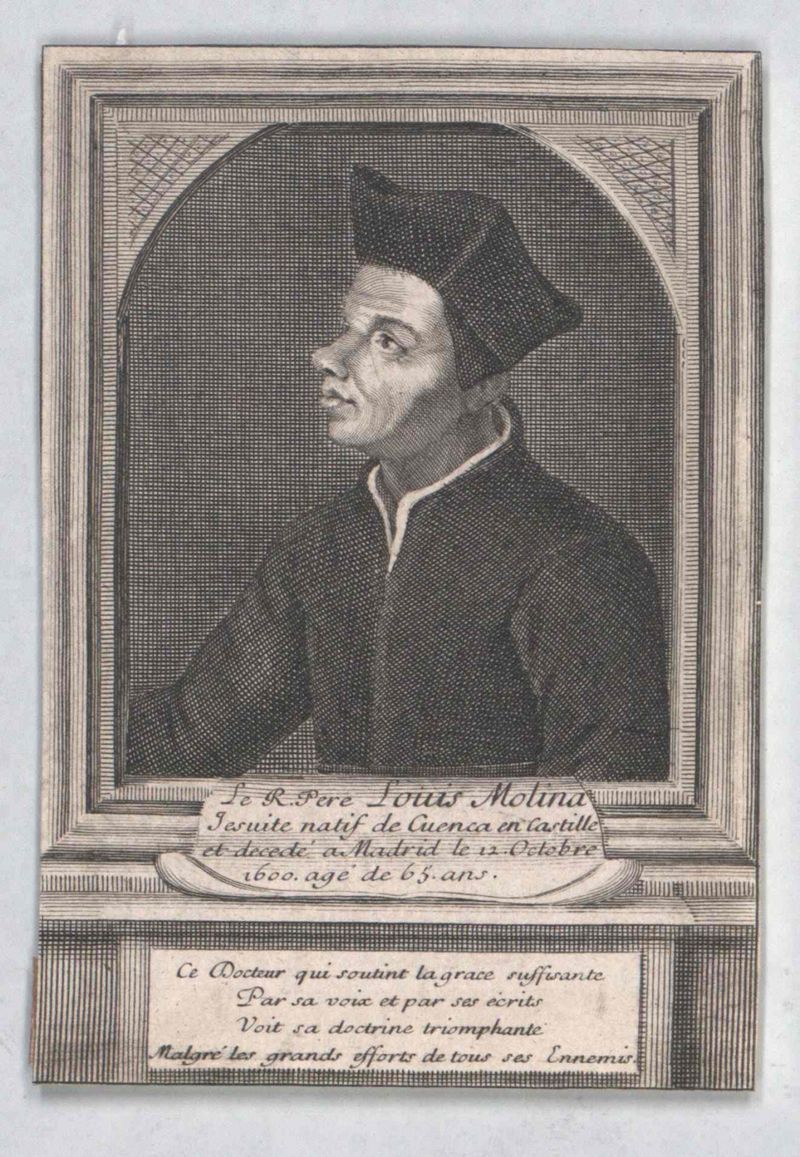
Molinism: Divine Sovereignty and Human Freedom
What is Molinism? Luis de Molina's middle knowledge (scientia media), the De Auxiliis controversy, and how Molinism compares to Thomism and Calvinism.
Stay Informed
Get new writing on faith, law, and service delivered to your inbox.
No spam. Unsubscribe anytime.