Divine Providence Models Compared: Thomism, Molinism, Open Theism, and Process Theology
On This Page
Introduction
One of theology’s thorniest problems has occupied Christian thinkers for nearly two millennia: How can God be omniscient and omnipotent while respecting genuine human freedom? How can an all-knowing God know the future without determining it? And if God is perfectly good, why does evil exist?
These aren’t merely academic questions. They shape how we pray, how we understand our responsibility, and how we trust God in suffering. They determine whether we believe our future is already fixed or genuinely open, whether our choices truly matter, and whether God’s sovereignty leaves room for real human agency.
Over the centuries, Christian theology has developed four major models of divine providence to answer these questions. Each represents a different way of harmonizing God’s traditional attributes—omniscience, omnipotence, immutability, simplicity—with human freedom and the reality of evil. In this post, I want to walk through each model carefully, showing you exactly where they agree and where they diverge.
My goal isn’t to convince you that one is correct, but to help you understand the genuine trade-offs each model makes. You’ll see that the Catholic Church explicitly permits two of these models (Thomism and Molinism) as legitimate theological opinions, while the other two stand in varying degrees of tension with Catholic dogma. Understanding why helps clarify what’s really at stake in this debate.
Comparison Table
| Attribute | Thomism | Molinism | Open Theism | Process Theology |
|---|---|---|---|---|
| Divine Foreknowledge | Exhaustive and certain, known atemporally | Exhaustive via middle knowledge (counterfactuals of freedom) | Partial; God knows actualities and possibilities, not which free acts will occur | Limited to possibilities; genuinely open future |
| God’s Relationship to Time | Atemporal; outside time, seeing all moments simultaneously | Atemporal; possesses middle knowledge of how free creatures would choose in any circumstance | Everlasting; exists in time, knowing past and present but not settled future | Temporal; actual duration, novelty emerges in time |
| Human Free Will | Compatibilist; freedom is uncoerced willing, not alternative possibility | Libertarian; free will as ability to choose otherwise, preserved by God’s middle knowledge | Libertarian; genuine openness; God does not determine future choices | Libertarian; genuine; God persuades rather than determines |
| Creation ex Nihilo | Yes, affirmed | Yes, affirmed | Yes, affirmed | No; creation “out of chaos,” from a prior realm of finite actualities |
| Divine Simplicity | Affirmed; God’s essence is his existence | Affirmed; God is identical with his attributes | Affirmed (but less central to system) | Denied; God has distinct properties and parts |
| Divine Immutability | Affirmed strictly; God changes not | Affirmed strictly; God changes not | Affirmed but qualified; God’s character constant even if knowledge increases | Denied; God genuinely changes in responding to creation |
| Divine Omnipotence | Traditional; God can do anything logically possible, without limitation | Traditional; God can do anything logically possible; middle knowledge doesn’t limit this | Traditional; God chooses voluntary self-limitation regarding libertarian choices | Severely limited; God can persuade but never coerce |
| How God Governs | Primary causation; God moves all causes to their acts | Middle knowledge; God knows and arranges circumstances to bring about desired outcomes while preserving free choice | General sovereignty; God acts only when explicitly choosing to, with open future ahead | Divine lure; God offers possibilities, creation chooses |
| Problem of Evil Approach | Greater good defense: all evil serves providential purposes in God’s atemporal vision | Molinistic response: God chooses circumstances knowing free agents will consent to best outcomes achievable | Free will defense: God permits evil to preserve libertarian freedom; genuine risks ahead | God is limited; evil arises from creation’s resistance; not all-powerful in traditional sense |
| Prayer Efficacy Model | Petitionary prayer doesn’t change God’s mind (he foreknew your prayer); it’s part of the causal chain he ordained | Prayer is efficacious through middle knowledge; God ordains that your prayers (free acts) bring about their effects | Prayer genuinely moves God; God adjusts plans based on real intercession | Prayer changes God; persuades God; growth of mutual love |
| Scriptural Hermeneutic Priority | Divine omniscience and sovereignty texts (Romans 8:29, Ephesians 1) | Omniscience texts balanced with libertarian freedom texts (Joshua 3:15, Revelation 3:20) | Libertarian freedom and openness texts (Jeremiah 18:7–10, Genesis 22:12, Deuteronomy 8:2) | Kenotic texts (Philippians 2, Hebrews 10:7) and creation’s genuine novelty |
| Compatibility with Catholic Dogma | Fully compatible; represents Dominican tradition | Fully compatible; represents Jesuit tradition | Core thesis contradicts Vatican I’s Dei Filius on divine foreknowledge of future contingents | Incompatible; denies immutability, simplicity, creation ex nihilo (defined at Lateran IV and Vatican I) |
| Key Proponents | Thomas Aquinas, Reginald Garrigou-Lagrange, Romanus Cessario | Luis de Molina, Francisco Suárez, Jesuits generally | Clark Pinnock, John Sanders, David Basinger | Charles Hartshorne, David Ray Griffin, John B. Cobb Jr. |
| Key Text | Summa Theologiae I, qq. 14, 22–23 | Concordia (Molina, 1588); Thomas Flint, Divine Providence: The Molinist Account | God of the Possible (Boyd); The God Who Risks (Sanders) | Man’s Vision of God (Hartshorne); Process and Reality (Whitehead) |
Thomism: Divine Omniscience and Atemporality
Thomism, the theological system developed by Thomas Aquinas and carried forward by the Dominican tradition, begins with a startling but compelling claim: God doesn’t know things the way you and I do. We learn things sequentially; we know some events by their causes, others by their effects. We exist in time, moving from past to present to future. But God exists outside time altogether.
This is the doctrine of divine atemporality. God sees all moments—past, present, and future—the way you see all points on a landscape from a mountaintop. From God’s eternal, atemporal vantage point, your free choice on Tuesday, March 25th isn’t a future event he must somehow predict. It’s a present reality he directly apprehends. He knows it, certainly, because he sees it. But that knowledge doesn’t determine it, because the seeing is timeless, not causally prior.
This resolves the apparent conflict between omniscience and freedom: God’s exhaustive foreknowledge is preserved, but human freedom remains genuine because God doesn’t know your choice before you make it. He knows it in an eternal now that transcends temporal sequence. Your choice is free because no temporal cause determines it. God’s knowledge of it doesn’t determine it because his knowledge isn’t temporally prior to your choice.
Crucially, Aquinas roots God’s knowledge in His essence and His eternal mode of being—not in His will per se. God knows Himself through Himself (Summa Theologiae I, Q.14, a.2), knows all things through His own essence (a.5), and His being is His act of understanding. In the crucial article on future contingents (I, Q.14, a.13), Aquinas explains that God knows contingent futures because “His glance is carried from eternity over all things as they are in their presentiality”—the eternity solution, where all moments of time are simultaneously present to God’s eternal gaze. God’s knowledge is also the cause of things insofar as His will is joined to it—what Aquinas calls the scientia approbationis (I, Q.14, a.8). But the causal direction runs from God’s knowledge-plus-will toward creatures, not from God’s will toward God’s knowledge.
The later Bañezian development within Thomism gives God’s will a more prominent role. Domingo Báñez and Reginald Garrigou-Lagrange argued that God knows future contingents through His predetermining divine decrees (praemotio physica), since God as Pure Act cannot passively receive knowledge from external causes. But even in the Bañezian scheme, divine simplicity means intellect and will are really identical in God—there is only a virtual distinction between them. The Thomistic model thus holds together God’s eternal mode of being with His causal activity, grounding foreknowledge in both.
The Thomistic model also emphasizes divine simplicity: God is identical with his attributes. God doesn’t possess justice the way you possess virtue; rather, God is justice. This has profound consequences. It means God’s knowledge, power, and will are not distinct in God but are really one act. God knows and wills and acts in a single eternal reality that we understand through different conceptual lenses.
For the problem of evil, Thomism appeals to the greater good defense. All evil in creation, even grave evils, serve purposes in God’s providential plan that, when viewed from eternity, contribute to the overall perfection of creation. This is why Aquinas, citing Augustine’s Enchiridion, invokes the principle that “God would not allow any evil to exist in his works unless his omnipotence and goodness were such as to bring good even from evil” (Summa Theologiae I, q. 2, a. 3, ad 1). For a deeper exploration of how God’s permissive will relates to evil and theodicy, see why does everything happen for a reason.
Thomism is the tradition of the Dominican Order and remains deeply influential in the Catholic intellectual tradition. It affirms all classical divine attributes: atemporality, immutability, simplicity, omniscience, omnipotence, and eternality. It is fully compatible with Catholic dogma.
Molinism: The Via Media of Middle Knowledge
In the late sixteenth century, a Jesuit priest named Luis de Molina proposed a solution intended to honor both sides of the apparent tension between omniscience and freedom. He introduced a concept that would prove either brilliant or baroque, depending on your philosophical tastes: middle knowledge (scientia media).
The Molinist distinguishes three moments in God’s knowledge, even though God’s knowledge is actually atemporal:
- Natural knowledge: God knows all necessary truths and all possibilities—every logically possible state of affairs.
- Middle knowledge: God knows what every possible free creature would choose in every possible circumstance. These are called counterfactuals of freedom: “If creature X were placed in circumstance C, X would freely choose Y.”
- Free knowledge: Based on middle knowledge, God freely decreed which creatures to create and in which circumstances, thereby actualizing a particular world.
The genius of Molinism is that it preserves both exhaustive foreknowledge (God knows what you will do) and libertarian freedom (you really could have chosen otherwise, and God’s knowledge doesn’t determine your choice). God knows your choice through middle knowledge—he knows the counterfactual truth that, placed in your exact circumstances, you would freely choose as you do. He then creates you in those circumstances, actualizing what he knew you would freely choose.
This makes God’s governance astonishingly precise while respecting creaturely freedom. God doesn’t force anything. Rather, he arranges the world’s circumstances in light of his knowledge of how free creatures would respond. Nothing is determined, yet God achieves his purposes with perfect certainty.
The Molinist vision of prayer is thus efficacious without determinism: God includes your freely prayed intercessions as part of the causal chain through which he brings about the outcomes he wills. Your prayer is genuinely free (you could pray differently) and genuinely effective (it’s part of how God acts).
Molinism is the tradition of the Jesuit Order. Despite initial controversy during the Congregatio de Auxiliis (1597–1607), Pope Paul V issued a disciplinary decree in 1607 declaring that neither the Molinist nor the Thomist position was heretical and permitting both sides to continue defending their views—while forbidding each from condemning the other. This was mutual toleration, not a theological endorsement of either position. A Molinist Catholic affirms divine atemporality and simplicity while using middle knowledge to secure libertarian freedom. It is fully compatible with Catholic dogma and represents a genuine alternative to Thomism within the magisterium.
The philosophical status of counterfactuals of freedom, however, remains contested. Are such counterfactuals true or false? Do they exist in reality, even in God’s knowledge? Or are they metaphysical fictions? These questions explain why Molinism, though permitted, remains philosophically controversial even among Catholic theologians.
Open Theism: Freedom at the Cost of Omniscience
Open theism represents a more radical departure from classical theology. Its proponents—theologians like Clark Pinnock and John Sanders—argue that the traditional doctrine of exhaustive foreknowledge is incompatible with genuine libertarian freedom and leads to intolerable conclusions about God’s responsibility for evil.
Open theism denies that God possesses exhaustive foreknowledge of future free acts. God knows the past and present perfectly. God knows all possibilities and probabilities. God possesses infinite intelligence and wisdom. But the future—insofar as it depends on the free choices of creatures—remains genuinely open, not yet settled, not yet true or false. God does not know what free creatures will choose because those choices haven’t yet occurred and, in principle, are not settled facts to know.
This is not a limitation of God’s power but rather a consequence of God’s perfection: God knows all that is knowable. Free acts that haven’t yet occurred aren’t yet true or false; they aren’t “knowable” in the way settled facts are. To demand that God know future free acts is to demand a contradiction—to demand that God know what is, by definition, unknowable.
Open theists argue this actually enhances God’s agency. Rather than God orchestrating a determined world, God genuinely responds to creation. God takes real risks with genuine creatures. When you pray, you genuinely move God, not merely activating his predetermined response. When you repent, God genuinely changes course in response to your actual choice. This makes God’s omniscience and wisdom more impressive, not less: God navigates a genuinely open future with infinite intelligence and power, adjusting his strategies moment by moment.
For the problem of evil, open theism offers the free will defense. Evil exists because God grants libertarian freedom, and that freedom is genuinely risky. God neither wills nor determines evil, but permits it as a necessary condition of a world with truly free creatures. Moreover, God himself faces a genuinely open future and cannot guarantee that evil won’t emerge; he can only work to overcome it.
It is important to note that open theists emphatically affirm God’s omniscience. Their position is that God knows all that is logically knowable, but future free choices are not yet settled realities and therefore not objects of definite knowledge. As John Sanders explains, “God knows the past and present with exhaustive definite knowledge and knows the future as partly definite (closed) and partly indefinite (open).” God knows every possible path exhaustively. The movement encompasses a spectrum of views: some hold that the future itself is ontologically open, others that future free choices cannot in principle be known, and still others that God could know but voluntarily refrains.
Open theism nonetheless remains controversial among Catholic theologians. The doctrine of divine omniscience (that God knows all future contingents) was dogmatically defined at Vatican I in the constitution Dei Filius (1870), which teaches that “all things are open and laid bare to his eyes, even those which will be brought about by the free activity of creatures.” The Catechism of the Catholic Church directly quotes this passage (CCC 302), and CCC 600 teaches: “To God, all moments of time are present in their immediacy. When therefore he establishes his eternal plan of ‘predestination,’ he includes in it each person’s free response to his grace.” These are solemn dogmatic definitions that directly contradict the core open theist claim. A Catholic who denied that God knows future free actions would contradict solemnly defined dogma. Open theism has never been officially condemned by name, but the theological note is at minimum proxima haeresi (proximate to heresy).
The Scriptural warrant for open theism is considerable: biblical texts describing God as grieved, as changing plans (Jeremiah 18:7-10), as testing creatures to see what they’ll do (Genesis 22:12, Deuteronomy 8:2). These passages seem to presuppose an open future rather than exhaustive foreknowledge.
Process Theology: Reimagining the Divine
Process theology represents the most radical reconception among these four models. Developed by philosophers Alfred North Whitehead and Charles Hartshorne, it doesn’t merely adjust classical attributes; it transforms the theological framework entirely.
Process theology begins not with omniscience and omnipotence but with the nature of reality itself. Reality, it claims, is fundamentally process—dynamic change and becoming. God is not an immobile unmoved mover but a dynamic agent within this process. God is temporal, genuinely experiencing and responding to creation. God doesn’t exist outside time but moves with time, growing and changing in response to worldly events.
This leads to a radical reconception of divine power. God is not omnipotent in the classical sense. God cannot do anything logically possible; indeed, God cannot unilaterally determine the future or force creaturely choices. Instead, God acts through persuasion, offering possibilities and lures, which creatures embrace or reject. Creation is not ex nihilo but emerges from a prior realm of finite actualities—what David Ray Griffin calls creation “out of chaos.” God’s power is persuasive rather than coercive: God offers each actual occasion an “initial aim” toward its best possibilities, but every entity possesses its own inherent self-creative power and may diverge from God’s lure. Evil isn’t some mysterious puzzle for omnipotence to solve; it’s the inevitable result of genuine creaturely self-determination in a world where God persuades but cannot compel.
Process theology does not simply deny omnipotence and immutability; it reconceptualizes them. God’s power is characterized as persuasive rather than coercive—what Charles Hartshorne called a correction of “omnipotence and other theological mistakes” (the title of his 1984 SUNY Press book). David Ray Griffin distinguishes between “I-omnipotence” (unilateral determination) and “C-omnipotence” (ideal power given metaphysical constraints), affirming the latter. On immutability, Hartshorne’s dipolar theism holds that God has an unchanging “primordial nature” (eternal envisagement of all possibilities) and a changing “consequent nature” (responsive to the actual world). God’s character is immutable; God’s experience is not. Process theology thus redefines rather than simply denies these classical attributes. It also rejects divine simplicity. God has distinct properties and genuinely changes in response to creation. God experiences the world, genuinely prehends (perceives) events as they happen, and responds with new aims and possibilities. Prayer is genuinely transformative not because it activates predetermined responses but because it truly influences God, as God is moved by human petition and suffering.
This is deeply appealing in some respects. It seems to honor both divine care and creaturely independence. It avoids the theodicy problem by limiting divine power rather than invoking mysterious greater goods. It makes God responsive and relational rather than austere and distant.
But it comes at an enormous cost. Process theology denies creation ex nihilo, divine immutability, divine simplicity, and omniscience. It fundamentally alters classical theism. The God of process theology is not the God affirmed by Catholic doctrine, nor by the Christian tradition generally. The Church’s magisterium has never endorsed process theology. While some liberation theologians and feminist theologians have found it appealing, it remains a heterodox position from the standpoint of Catholic orthodoxy.
Which Model Is Right?
I’ve presented these four models as fairly as I can. The natural question is: which one is true?
I can’t answer that for you. But I can tell you what the Catholic Church permits and what it rules out. The Church affirms divine omniscience (Vatican I, Dei Filius), divine immutability, divine simplicity, and creation ex nihilo.
Between Thomism and Molinism, the Church explicitly permits both. Since Paul V’s 1607 decree, these have been the two orthodox options available to Catholic theologians. Both affirm all classical divine attributes. They differ in how God’s omniscience is exercised (through atemporality or through middle knowledge), but both secure the doctrine itself.
Open theism is more problematic from a Catholic standpoint than it might initially appear. While no formal condemnation of “open theism” by name has been issued (it is primarily a Protestant movement), its core thesis—that God does not know future free acts—directly contradicts Vatican I’s dogmatic teaching that God knows “even those things which will be brought about by the free activity of creatures.” Pope Sixtus IV’s condemnation of Peter de Rivo’s proto-open-theistic views in 1473–1474 further confirms that the substance of the position has been rejected.
Process theology is incompatible with Catholic dogma on multiple fronts. Its denial of creation ex nihilo contradicts a dogma defined at the Fourth Lateran Council (1215) and reinforced with an attached anathema at Vatican I. Its denial of divine simplicity and immutability places it outside the bounds of orthodox Catholic theology entirely.
My own view—for what it’s worth—is that both Thomism and Molinism attempt to solve a genuinely difficult philosophical problem with intellectual integrity, and that open theism raises questions worth taking seriously even if its conclusions are difficult to reconcile with Catholic teaching. Each makes trade-offs. Thomism requires you to understand divine atemporality clearly, which is philosophically demanding. Molinism requires you to affirm the reality and truth of counterfactuals of freedom, which many philosophers reject. Open theism requires you to revise the doctrine of omniscience, which sits uncomfortably with Catholic tradition.
What I’m certain of is this: God is perfect, God knows and cares about your choices and your prayers, God is not indifferent to evil, and God’s providence somehow encompasses both your freedom and his sovereignty. The precise mechanics of how this works remain, perhaps fittingly, a mystery worthy of a lifetime of contemplation.
Further Reading
For deeper exploration of these models and their relationships, I recommend:
- Divine Foreknowledge and Free Will — A foundational discussion of the core tension these models address
- Open Theism — A dedicated exploration of open theism’s claims and implications
- Molinism — Understanding middle knowledge and the Molinist approach
- Process Theology — The metaphysical foundations and theological costs of process thought
- Divine Simplicity — Why this doctrine matters for classical theism
- Open Theism vs. Molinism — A focused comparison of these two libertarian models
- Open Theism vs. Process Theology — Understanding how these differ on the scope of divine knowledge and power
- Is Molinism Compatible with Thomism? — Examining whether these Dominican and Jesuit traditions can be harmonized
- Does God Know the Future? — Returning to the fundamental question underlying all four models
Garrett Ham
Garrett Ham is an attorney, military veteran, and holds a Master of Divinity from Yale Divinity School. He writes from Northwest Arkansas on theology, law, and service.
More about Garrett →Related Posts
Open Theism: A Catholic Evaluation
What is open theism? A Catholic evaluation of the open model of God, its scriptural case, philosophical arguments, and why it falls outside defined Catholic dogma.
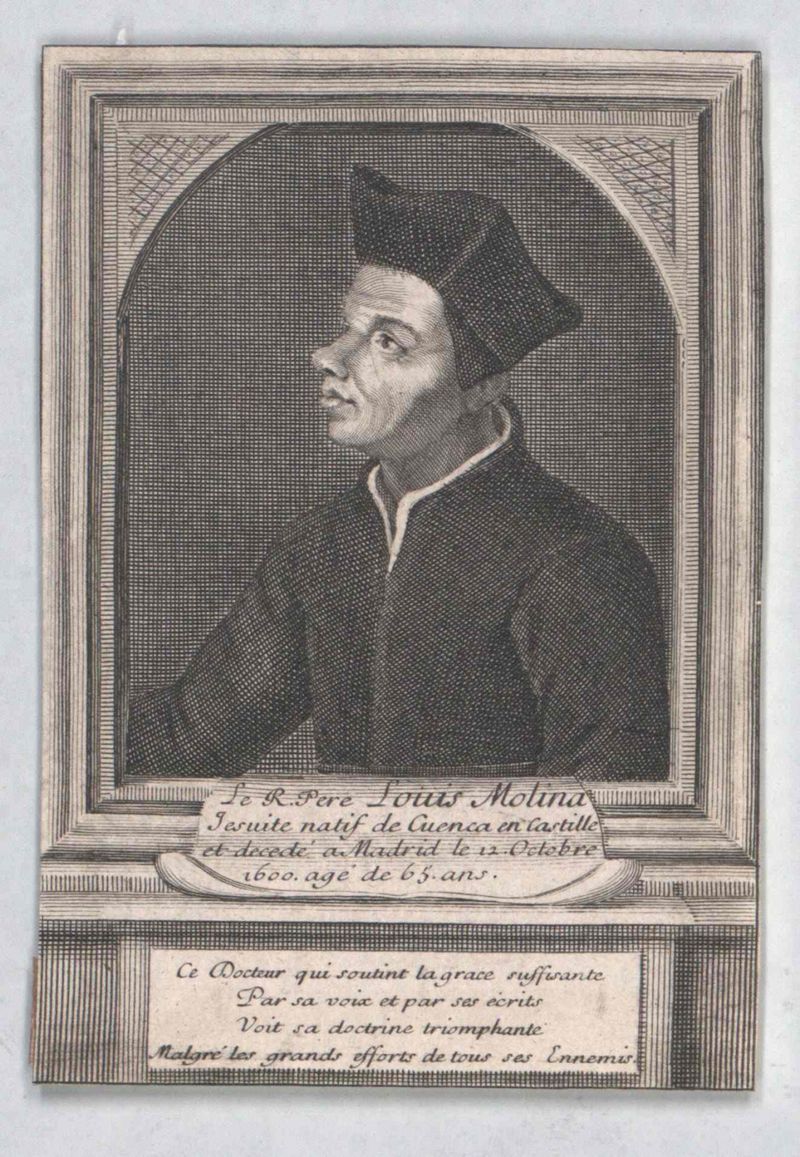
Molinism: Divine Sovereignty and Human Freedom
What is Molinism? Luis de Molina's middle knowledge (scientia media), the De Auxiliis controversy, and how Molinism compares to Thomism and Calvinism.
Process Theology: A Catholic Evaluation
What is process theology? An examination of Whitehead's dipolar theism, panentheism, and the rejection of classical divine attributes—and why the Catholic Church cannot accept it.
Stay Informed
Get new writing on faith, law, and service delivered to your inbox.
No spam. Unsubscribe anytime.