What Is Comparative Theology? A Catholic Perspective on Interfaith Dialogue

On This Page
Comparative theology is the study of one religious tradition through sustained encounter with another. It is not the study of religion in general. It is not interfaith dialogue conducted with diplomatic care. It is, rather, a specific theological method in which a scholar rooted in one faith tradition—in my case, Catholicism—engages deeply with the resources of another faith tradition and allows that encounter to deepen and enrich his or her own theological understanding.
To practice comparative theology is to ask questions like these: What does studying Orthodox pneumatology teach us about the shortcomings of Western understandings of the Holy Spirit? How might Muslim reflection on divine transcendence correct Christian tendencies toward anthropomorphism? What can Augustinianism learn from the Jewish understanding of covenant? These are not questions of apologetics. They are not efforts to convert the other tradition. They are invitations to deepen one’s own understanding through serious study of how another tradition has wrestled with similar questions.
It is this commitment to genuine learning—to the possibility that another tradition’s emphasis might illuminate something your own tradition already holds but has not fully developed—that distinguishes comparative theology from other approaches to religious diversity. This is not pluralism. The comparative theologian does not treat all traditions as equally adequate paths to God. But neither does he treat his own tradition as having nothing left to learn from serious engagement with others.
Comparative Theology vs. Theology of Religions
Before defining comparative theology further, it is worth distinguishing it from a related but distinct field: the theology of religions.
The theology of religions is a systematic reflection on the truth claims and salvific efficacy of non-Christian religions. It asks questions like: Can non-Christians achieve salvation? What is the relationship between divine revelation and the great religious traditions? Are some religions closer to the truth than others? These are important questions, and they have generated rich theological work over decades. But they are fundamentally different from the questions comparative theology asks.
A theologian of religions might argue—as the Catholic Church did in Lumen Gentium—that God may save those who, through no fault of their own, have not heard the Gospel but who follow the light of conscience. That is a statement about the salvific possibility of non-Christian religions. It is theology of religions.
But a comparative theologian would ask a different question: If we study how Hindus understand the relationship between the absolute and the particular, how might that deepen Christian reflection on the Incarnation? That is a question of method, of allowing another tradition’s resources to become tools for deepening one’s own theological understanding.
The two approaches can be complementary. But they are not the same. Theology of religions is systematic and comprehensive. Comparative theology is focused and particular. Theology of religions tries to place religions within a grand scheme. Comparative theology sits in the intersection between two traditions and allows the conversation to develop organically.
How Comparative Theology Works
So how does one actually practice comparative theology? The method, as articulated by scholars like Francis X. Clooney at Harvard, involves several distinct steps.
First, the comparative theologian must become genuinely immersed in both traditions—his own and the one he is studying. This is not surface-level familiarity. It requires reading deeply, studying languages if necessary, engaging with primary texts and scholarly interpretations, understanding the history and internal debates within each tradition. You cannot compare traditions you do not truly understand.
Second, the theologian must identify specific points of intersection—moments where the two traditions are wrestling with related questions, even if they arrive at different answers. You are not looking for surface similarities. You are looking for deep structural parallels: both traditions wrestling with the problem of human freedom and divine providence, or the relationship between transcendence and immanence, or the nature of how revelation works.
Third, the theologian engages in careful comparative reading—a close textual engagement where the resources of one tradition are brought into conversation with the other. This is where the real work happens. A Catholic might read Augustine alongside Aquinas, but also read Augustine’s thought in the light of how the Cappadocian Father Gregory of Nyssa addressed similar questions about the interior life and the nature of the soul. What does Augustine look like when read through a different patristic lens? What becomes visible that was not visible before?
Fourth, the theologian must be willing to be changed by the encounter. This is the crucial step where comparative theology ceases to be merely intellectual and becomes genuinely theological. You are not engaging in comparative study simply to become more knowledgeable. You are engaging because you believe that the other tradition has something to teach you, that your understanding of your own faith will be deepened and refined by serious study of how another tradition addresses similar questions.
This requires what Clooney calls a kind of theological humility—not the concession that one’s own tradition is wrong, but the recognition that the infinite God exceeds every human effort to systematize understanding of the divine nature. For a Catholic, this humility is grounded in the Church’s own teaching: the deposit of faith is complete, but our comprehension of it develops over time (Dei Verbum 8). This does not mean that all traditions are equally true—comparative theology is not relativism, and it presupposes firm commitment to one’s own tradition. But it does mean that serious engagement with another tradition can reveal dimensions of one’s own faith that had gone underappreciated.
Examples of Comparative Theology
Let me offer some concrete examples of how comparative theology actually works in practice.

Catholic-Orthodox dialogue on pneumatology. The East-West division in Christianity produced not only organizational and political rupture but also distinct theological emphases. Western Christianity, particularly since Augustine, has emphasized the role of the Holy Spirit proceeding from both the Father and the Son—the Filioque controversy that divided East from West. Eastern Orthodoxy, by contrast, has maintained a theology in which the Spirit proceeds from the Father alone, though many Orthodox theologians affirm that the Spirit proceeds from the Father through the Son (dia tou Huiou)—a distinction that preserves the Father’s unique role as sole origin within the Trinity.
A comparative theologian might ask: What does the Orthodox refusal of the Filioque protect? How does the Orthodox emphasis on the Spirit proceeding from the Father alone preserve something essential about divine monarchy and the distinctness of persons within the Trinity? And how might Western theology benefit from recovering the Eastern emphasis on the Spirit’s role in bringing creation to fulfillment, rather than treating the Spirit primarily as the mechanism through which the Son’s redemptive work is applied?
This is not a question of which tradition is “right.” It is a recognition that each tradition has grasped something true about the Holy Spirit, and that dialogue between them can illuminate aspects of pneumatology that neither tradition fully captures in isolation. A Catholic scholar might find that Orthodox theology corrects a certain over-emphasis on the Son at the expense of the Spirit, without rejecting the Filioque as heretical. The traditions remain distinct. But each is deepened by the other.
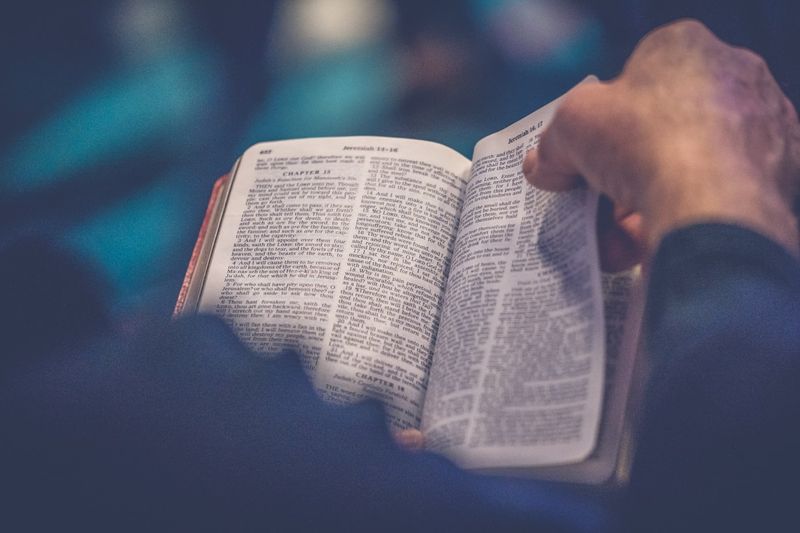
Catholic-Protestant dialogue on Scripture and Tradition. The Reformation controversy over sola scriptura—the principle that Scripture alone is sufficient authority—has shaped Catholic-Protestant relations for five centuries. Catholics affirm both Scripture and Tradition as sources of revelation. Protestants insist that Scripture is the measure by which all Tradition must be judged.
A comparative theologian might ask: What does the Protestant insistence on sola scriptura protect? It protects the principle that the Church does not add to revelation, that Scripture is not merely one voice among many but occupies a unique place. And what does the Catholic insistence on Tradition protect? It protects the principle that the Church’s living engagement with Scripture, guided by the Holy Spirit over centuries, is itself a form of divinely guided interpretation.
Rather than asking which side won the argument, the comparative theologian asks what happens when each tradition’s concern is taken seriously. Catholic teaching already holds that Scripture and Tradition form one sacred deposit of the Word of God, interpreted authentically by the Magisterium (Dei Verbum 10). But engaging seriously with the Protestant insistence on scriptural primacy can sharpen a Catholic’s appreciation for why the Church has always regarded Scripture with unique reverence—not as one source among many, but as the inspired Word of God that Tradition serves and the Magisterium safeguards. This is not “splitting the difference.” It is allowing serious engagement with another tradition’s deepest concern to illuminate what one’s own tradition already affirms.

Hindu-Catholic dialogue on divine intimacy. Perhaps the most developed example of comparative theology in practice is Francis X. Clooney’s work reading Hindu theological texts alongside Catholic writings. In Theology After Vedanta (1993), Clooney reads the Advaita Vedānta tradition of Śaṅkara—its commentaries on the Upaniṣads and the Uttara Mīmāṃsā Sūtras—alongside the scholastic theology of Thomas Aquinas, examining how both traditions navigate the relationship between an infinite divine reality and the limited human effort to systematize knowledge of it.
In his later Beyond Compare (2008), Clooney turns to the Śrīvaiṣṇava tradition, reading Vedānta Deśika’s theology of the soul’s loving surrender (prapatti) to Viṣṇu alongside St. Francis de Sales on the soul’s abandonment to divine love. The Śrīvaiṣṇava tradition, unlike Advaita’s non-dualism, maintains a real distinction between God and the soul—making the structural parallel with Catholic theology particularly striking. Both traditions grapple with how an infinite God becomes genuinely intimate with finite creatures while preserving the distinction between the divine and the human.
A Catholic reading the Śrīvaiṣṇava commentators encounters a theology of divine accessibility and grace that resonates with, but is not identical to, the Catholic understanding of how God draws the soul toward union. The encounter does not produce syncretism. It produces a deeper attentiveness to what Catholic theology already affirms about divine condescension—that God accommodates self-revelation to human capacity—while sharpening the Catholic theologian’s appreciation for dimensions of that truth that might otherwise go unexamined.
Why Comparative Theology Matters for Christians
You might ask: Why does any of this matter? If you are confident in your own tradition, why spend time studying others?
The answer begins with humility—but a specifically Catholic humility. The Catholic Church teaches that the fullness of the means of salvation subsists in her (Lumen Gentium 8, CCC 824). This is not a claim the comparative theologian needs to abandon. But it is also true that the infinite God transcends every human formulation, and that the greatest theologians have recognized this. Augustine, Aquinas, Gregory of Nyssa, John of Damascus—all understood that when speaking of God, human language breaks down. All understood that we speak of the divine always through analogy and negation, never directly.
The fullness of salvific truth is in the Catholic Church. But the Church herself acknowledges that “many elements of sanctification and of truth are found outside its visible confines” (Lumen Gentium 8). The Orthodox understanding of theosis as the goal of salvation has preserved a richness in soteriology that Western Catholic theology has not always emphasized with equal force. The Reformed emphasis on divine sovereignty has a rigor and biblical grounding worth engaging seriously. Orthodox liturgical theology has preserved dimensions of Christian experience that deserve deeper study. None of this means the Catholic tradition is incomplete in what it possesses—but it does mean that other traditions can help Catholics see more clearly what their own tradition already contains.
Comparative theology matters because it sharpens Catholic self-understanding. Our own blind spots are often most visible when viewed from the outside, from the perspective of those who have developed different emphases. We think more clearly when we are challenged to articulate our positions against serious objections from those who genuinely understand our claims and respectfully disagree.
I came to comparative theology during my study at Yale, particularly in a course on theologies of religious pluralism. I was reading Catherine Cornille’s Meaning and Method in Comparative Theology (Wiley Blackwell, 2020), and I was struck by her insistence that comparative theology is not a kind of window shopping among traditions, selecting what appeals to you while remaining uncommitted. Rather, it is rooted in genuine faith commitment—a willingness to let your own tradition be interrogated and deepened by the other.
This is what attracted me to the project. I was a convert to Catholicism, and I had been raised evangelical. My faith was rooted in both traditions, or rather, it was rooted in an encounter with Christ that the language of evangelicalism had first made available to me and that Catholicism had enabled me to deepen. Comparative theology gave me a method for allowing those two traditions to continue to speak to one another in my own theological reflection.
Practicing Comparative Theology Across Traditions
Comparative theology need not be limited to dialogue between Christian traditions. It can also involve study of how Christian theology engages with non-Christian traditions—though here the questions become more complex.
When a Christian comparative theologian engages with Buddhism, for instance, he or she must be careful not to domesticate Buddhist thought—to read it only as confirmation of Christian insight, or to select only those Buddhist teachings that fit neatly within Christian categories. This was one of Catherine Cornille’s concerns in Meaning and Method: the danger of hegemony, where the other tradition is absorbed and refashioned to fit one’s own presuppositions.
But when this danger is consciously acknowledged and resisted, comparative study of non-Christian traditions can illuminate Christian faith. How does Buddhist reflection on attachment and the ego speak to Christian understanding of sin and self-denial? How does Islamic theology’s fierce monotheism and emphasis on divine transcendence correct Christian tendencies toward sentimentality or anthropomorphism? How does Jewish theology’s emphasis on God’s covenant fidelity, despite human sin and failure, deepen Christian understanding of grace?
These questions are not asked in order to convert to Buddhism, Islam, or Judaism. They are asked because the Catholic Church recognizes that other religions often “reflect a ray of that Truth which enlightens all men” (Nostra Aetate 2), and that elements of truth and goodness found in them can, when studied carefully, become occasions for deepening one’s own understanding of the faith that the Church holds in its fullness.
This is the heart of comparative theology: it is neither syncretism nor triumphalism. It is faithful engagement with other traditions, rooted in the conviction that whatever is true and holy in them reflects a ray of divine truth (Nostra Aetate 2), while maintaining that Christ is the unique and universal mediator of salvation (Dominus Iesus 1) and that the Catholic Church possesses the fullness of the means of salvation. Our own understanding of what the Church already holds is deepened when we listen carefully to how others have wrestled with the same ultimate questions.
The Theological Virtue of Comparative Study
In my own journey from evangelicalism to Catholicism, I never stopped reading evangelical theology. And I have in recent years become increasingly engaged with Orthodox theology. Not because I am considering conversion, but because serious study of how the Orthodox tradition addresses the same questions deepens my own commitment to Catholicism by helping me see more clearly what Catholicism preserves and what it must defend.
When I study how the Orthodox understand theosis—the deification of humanity as the goal of salvation—I see more clearly what Western soteriology can learn about the positive transformation of the human person, as opposed to focusing narrowly on justification and the forensic dimensions of atonement. When I study Aquinas’s engagement with Aristotle and Islamic philosophy, I see how medieval Catholic theology was not afraid to let pagan sources shape its understanding—not out of indifference to Scripture, but out of the conviction that truth wherever it is found is truth from God.
Comparative theology, in this sense, is not a distraction from faith. It is an expression of faith—a commitment to the idea that the God we worship exceeds our capacity to comprehend him fully, that the Church’s dogmatic formulations express genuine truth while our understanding of that truth can always grow deeper, and that we can be faithful to our own commitments while remaining open to the ways other traditions illuminate what we already hold.
Further Reading:
- Meaning and Method in Comparative Theology — Catherine Cornille’s framework for responsible comparative theological practice
- Eastern Orthodoxy Explained — A systematic overview of Orthodox theology and its resources for comparative dialogue
- Orthodox, Catholic, and Protestant Traditions: A Comparison — A full doctrinal and practical comparison of the three major Christian traditions
- Sola Scriptura and the Journey Toward Catholicism — How I came to understand the strengths of the Catholic approach to Scripture and Tradition
- Divine Condescension and Divine Love — How God accommodates self-revelation to human capacity
- Pluralism v. Inclusivism: Salvation and Diversity — A theological reflection on how Christians understand salvation across religious traditions
Garrett Ham
Garrett Ham is an attorney, military veteran, and holds a Master of Divinity from Yale Divinity School. He writes from Northwest Arkansas on theology, law, and service.
Related Posts

Meaning and Method in Comparative Theology
A review of Catherine Cornille's Meaning and Method in Comparative Theology — her framework for studying other religions without syncretism.
Sola Scriptura and the Journey Toward Catholicism
Sola scriptura is logically self-defeating: affirming Scripture alone requires authority outside Scripture. The insight that started my Catholic journey.

Pluralism v. Inclusivism: Salvation and Diversity
Inclusivism vs. pluralism: how each theology handles salvation, religious diversity, and Christ's role—with Catholic, Hick, and Pannenberg perspectives.
Stay Informed
Get new writing on faith, law, and service delivered to your inbox.
No spam. Unsubscribe anytime.