Catholic vs. Calvinist Predestination: What Divides Us and What We Share
On This Page
Few topics in Christian theology divide us quite like predestination. Ask a room of educated Christians whether God has predestined all things, whether some are elected while others are reprobated, and whether our choices are truly free or merely the unfolding of divine decree—and you’ll witness centuries of theological dispute compressed into an afternoon conversation.
I’ve spent considerable time in both worlds: I grew up evangelical, deeply influenced by Reformed thought, and came to the Catholic Church as an adult. That journey has given me a peculiar sympathy for both positions. Neither side consists of fools; both rest on genuine scriptural foundations and profound theological reasoning. Yet the differences are real, consequential, and worth understanding clearly.
This post is an attempt at fairness—to explain what Calvinists and Catholics actually believe about predestination, where we agree (and agree far more than many realize), and where the breaks are clean and irreparable. I’ll try to honor the intelligence of both traditions while holding to the claims of Catholic theology. Let me start at the beginning.
The Shared Root: Augustine of Hippo
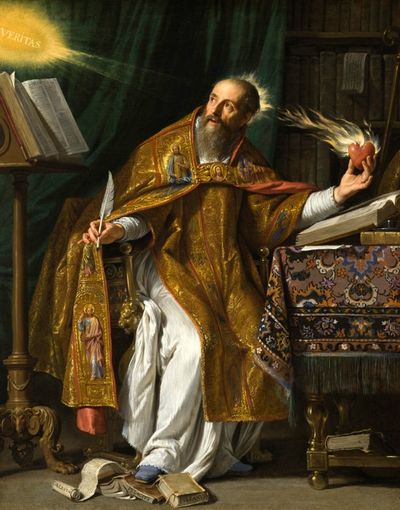
Both Catholic and Reformed theology trace their understanding of predestination to one man: Augustine of Hippo (354–430). This is not coincidental. It is the source of much confusion.
In the early 5th century, Augustine wrote two works that would shape Christian soteriology for the next fifteen hundred years: De Praedestinatione Sanctorum (On the Predestination of the Saints) and De Dono Perseverantiae (On the Gift of Perseverance). Both were written late in his life (428–429 AD) in response to the Semi-Pelagians—specifically the monks of Hadrumetum and Provence—who accepted the necessity of grace but denied that even the beginning of faith (initium fidei) was itself a gift of grace. The original Pelagian controversy (the heresy that human beings could achieve salvation through moral effort alone) had already been condemned at the Council of Carthage (418) and the Council of Ephesus (431). Augustine’s late works addressed the subtler question of whether the first movement toward faith originates in human initiative or in divine grace.
Augustine was unrelenting in his opposition. Against Pelagius and his followers, he insisted that:
- Original sin has corrupted human nature so thoroughly that we cannot move toward God without grace
- This grace is given by God’s utterly free choice, not merited or foreseen
- God’s predestination includes those whom He elects to salvation
- Those whom God elects will infallibly persevere
These points were hammered into the Church’s consciousness at the Second Council of Orange in 529, which was directed specifically against Semi-Pelagianism—affirming that even the initium fidei (the beginning of faith) is a gift of grace, not a product of unaided human initiative. Both Catholics and Protestants cite Orange approvingly.
But here is where the paths diverge, though they begin at the same starting line.
The Catholic Encyclopedia, in its article on Predestinarianism, makes an observation that has haunted me: “The origin of heretical Predestinarianism must be traced back to the misunderstanding and misinterpretation of St. Augustine’s views relating to eternal election and reprobation.” The Catholic tradition has generally interpreted Augustine as compatible with its rejection of double predestination—the doctrine that God actively decrees both the salvation of the elect and the damnation of the reprobate. However, this reading is not uncontested: many Protestant and secular scholars—and some Catholic ones—argue that Augustine’s later writings, particularly the Enchiridion (ch. 98–100) and De Correptione et Gratia, with their massa damnata doctrine, imply at least negative reprobation. The Second Council of Orange (529) rejected predestination to evil (positive reprobation) but did not clearly address negative reprobation. Yet Augustine’s language about the irresistibility of grace, about the binding character of God’s eternal decrees, and about the absolute sovereignty of divine election, would become the seedbed from which John Calvin and his followers would grow their system.
The question became: how do we hold together Augustine’s emphases—grace is irresistible, election is unconditional, God’s decrees are absolute—with the Church’s rejection of a God who actively reprobates souls? That tension is the heartbeat of this entire debate.
TULIP and the Reformed Position
To understand what divides Catholic and Calvinist theology, we must understand the five points that crystallized Reformed teaching: TULIP.
The acronym, though not created by Calvin himself, represents the formal doctrine as it developed, especially after the Synod of Dort (1618–1619). Dort was convened to address the Remonstrants (followers of Jacob Arminius), who had challenged the stringency of classical Reformed teaching on predestination and grace. The synod’s response—what became known as the Canons of Dort—locked in place the five points:
Total Depravity: Human nature, corrupted by Adam’s sin, is so thoroughly disordered that we cannot even desire God without the Holy Spirit’s work. Every faculty is incapacitated. We are not merely weakened; we are enslaved to sin.
Unconditional Election: God’s choice of whom to save is not based on any foresight of faith or works. It is purely gratuitous, flowing from God’s sovereign will alone. The foundation of election is God’s pleasure, not human merit or even God’s foreknowledge of human response. (These themes are particularly relevant to the Catholic interpretation of Romans 9–11, where Paul takes up the question of election and Israel’s place in God’s purposes.)
Limited Atonement (or, as Reformed theologians prefer, “Particular Redemption”): Christ’s sacrifice was intended for and efficacious for the elect alone. While some Calvinists soften this by saying the atonement is sufficient for all but efficient only for the elect, the classical position is that Christ died specifically for the elect.
Irresistible Grace: When God draws a sinner to Himself, that grace cannot be resisted. The work of the Holy Spirit in regeneration is monergistic—God acts alone—and brings about a certain response in the human will. The will cannot say no to God’s effectual call.
Perseverance of the Saints: Those whom God has elected and regenerated cannot fall away. Salvation, once given, is permanent. This is not a promise to those who make a decision, but a guarantee to those God has chosen.
I present this fairly because it is fair. These are not strawmen. They flow coherently from their own premises. If God is absolutely sovereign, if human sin is absolutely total, if grace must be irresistible to overcome such bondage—then these conclusions follow. Many of the finest Christian minds have accepted them. John Calvin, the Westminster divines, Jonathan Edwards—these were not careless thinkers.
But the Catholic Church has judged these conclusions to be false, and its reasons are worth taking seriously.
The Catholic Position: Thomism and Molinism
The Catholic Church has never formally defined a single doctrine of predestination in the way that Reformed theology has. This is deliberate. Rather, the Church has permitted its theologians to hold two main schools of thought, both of which attempt to reconcile God’s absolute sovereignty with human freedom and the universality of God’s saving will. This flexibility is not weakness; it is wisdom.
Thomism, developed especially by the Dominican Bañez and his followers, teaches that God’s knowledge of all things—actual and possible—is included in His eternal decrees. God ordains not only what will happen, but also the manner in which it will happen: through human free choices. This ordering occurs through what Dominicans call praemotio physica—physical premotion. God moves every agent (physical or rational) toward its act, and this divine motion is intrinsically efficacious. It brings about the result intended.
In this framework, grace is efficacious not because it compels (as if in violation of freedom), but because God knows infallibly how a free creature will respond to that grace in those circumstances. God chooses to give that grace, knowing it will be accepted freely. God predestines the elect to salvation by decrees that are truly unconditional in the sense that they do not depend on foreseen merits—but they do depend on God’s knowledge of how free creatures will actually respond.
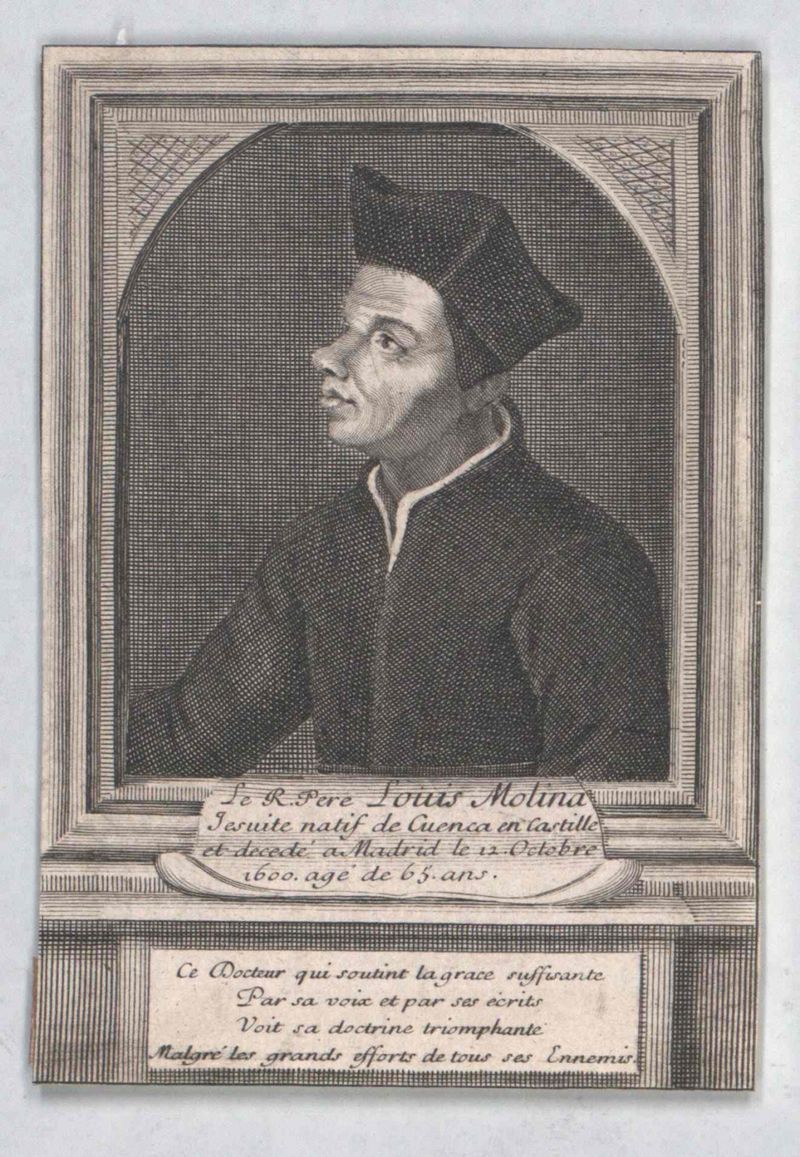
Molinism, developed by the Spanish Jesuit Luis de Molina and championed especially by the Society of Jesus, offers a different solution. Molina taught that God possesses a third kind of knowledge, which he called scientia media—middle knowledge. This is God’s knowledge, prior to His decretive will, of what every possible creature would freely do in every possible set of circumstances. Armed with this middle knowledge, God then decrees which world to actualize.
In this scheme, grace is never irresistible, but it is not rendered impotent either. Grace is “sufficient”—it provides the power to do good—and God’s providence ensures that it becomes “efficacious” when a creature freely consents. The Molinist preserves both divine sovereignty and genuine human freedom by placing the locus of sovereignty in God’s knowledge and providential choice, not in irresistible causation.
Here’s the crucial point: both views are permitted within Catholicism. The reason goes back to the Congregatio de Auxiliis (1597–1607), a commission established by Pope Clement VIII to settle the dispute between Dominicans and Jesuits. Clement VIII presided over years of debate but died on March 5, 1605 without resolving the dispute. After the brief reign of Leo XI, Pope Paul V took up the matter, presiding over 17 further debates before issuing the concluding decree on September 5, 1607. Paul V’s decision—unusually for Rome—was to let the question remain open, allowing both Dominican and Jesuit positions to stand while forbidding each party from censuring the other. Both schools could teach their positions; both were judged consonant with Catholic doctrine.
This openness flows from a foundational Catholic commitment. As the Catechism of the Catholic Church states:
“God predestines no one to go to hell.” (CCC §1037)
This is not a Molinist or Thomist position specifically; it is the foundation upon which both build. Whatever view you hold about how God’s election works, you may not say that God has eternally decreed anyone’s damnation. The possibility of losing salvation through grave sin is Catholic teaching; the predestination to damnation is not.
Where Catholic and Calvinist Agree
Before we discuss what divides us, let me emphasize: we agree on much.
Both traditions utterly reject Pelagianism. There is no salvation without grace. Human effort cannot merit grace or establish any claim upon God. Original sin has so disordered our nature that we cannot move toward God, cannot even desire Him truly, without the preventive work of the Holy Spirit. On this, Augustine’s legacy is entirely binding on both Catholic and Reformed.
Both affirm the reality of election. God has chosen a people. This is not the result of God’s foreseeing faith (as classical Arminianism teaches), but flows from God’s sovereign, gracious will. The elect are called, justified, and destined for glory by God’s action, not their own initiative.
Both confess the absolute sovereignty of God. His decrees cannot be thwarted. His knowledge is perfect and includes all things, actual and possible. His providence upholds and directs all events toward His purpose.
Both affirm original sin and its radical effects. We are born into a condition of alienation from God. Concupiscence—the disordering of our desires—is real and universal. Without God’s grace, we would turn inevitably toward evil.
And here is something that often goes unnoticed: on certain narrow questions, Thomists and Calvinists share striking structural similarities. A classical Calvinist and a Bañezian Dominican both believe in unconditional election. Both believe God’s decree is efficacious. Both teach that grace infallibly brings about the result God intends. The disagreement between them concerns primarily the mode: whether that efficacy is intrinsic (Thomism) or includes the irresistibility of the will’s response (Calvinism). This is a real disagreement, but it is narrower than one might think. That said, most Thomist scholars would reject any characterization of their position as quasi-Calvinist: Thomism preserves genuine free will through the distinction between natural and supernatural orders and affirms universal salvific will and sufficient grace for all—positions fundamentally incompatible with Calvinism. During the Congregatio de Auxiliis itself, some Jesuit theologians argued that physical predetermination was “Calvinistic,” but Paul V explicitly declared the Dominican position was “far from Calvinistic.”
Where They Decisively Part
Yet the differences, though often subtle in their theological articulation, are consequential in their implications.
On double predestination: Calvinism—at least in its supralapsarian form—teaches that God’s decree of reprobation is prior to (logically, not temporally) His decree of creation. God actively predestines some to damnation. The Catholic Church anathematizes this. The Council of Trent, in Session 6, condemned those “who assert that God’s predestination to death is certain and immutable” (Canon 17). The CCC reiterates: “God predestines no one to go to hell.” This is not a secondary matter; it concerns the very character of God.
On the extent of atonement: Christ died for all men (1 Timothy 2:4–6). This is Catholic dogma, rooted in Scripture and reiterated in the Catechism. The doctrine of limited atonement—that Christ’s death was intended and efficacious only for the elect—contradicts this. Reformed theologians sometimes argue that Christ’s atonement is sufficient for all but efficient only for the elect. But this distinction does not resolve the tension: if Christ did not intend to obtain grace for all, then His death was not truly for all, and God’s declaration that He “desires all men to be saved” becomes equivocal. We have explored this at length elsewhere.
On the resistibility of grace: Acts 7:51 records Stephen’s accusation: “You stiff-necked people, uncircumcised in heart and ears, you always resist the Holy Spirit.” The existence of resistance presupposes the possibility of refusal. Paul writes to the Galatians of “falling from grace” (5:4). The Catholic Church teaches that grace can be resisted. This does not mean grace is weak or that resistance is easy. It means God respects human freedom. A grace that destroys the capacity to refuse it is not grace in the biblical sense; it is compulsion. The Catholic understanding of the synergy between human effort and grace is developed here.
On perseverance: The Reformed doctrine holds that those whom God has justified cannot lose their salvation. The Council of Trent teaches that it is possible to lose justification through grave sin (Session 6, Canon 23). A Catholic who commits mortal sin falls from grace and, without repentance, faces damnation. This is not because grace was insufficient, but because human freedom remains real. We can refuse God’s grace not once, but repeatedly, finally, irrevocably.
On the nature of human freedom: Calvinism, at least in its classical form, is monergistic—God acts alone in the decisive moment. Human will cooperates with God’s efficacious grace, but only after regeneration has occurred. Catholicism is synergistic—human will cooperates with grace toward the attainment of salvation. We do not accomplish salvation (that is God’s work), but neither is our cooperation a fiction. When Paul writes, “Work out your salvation with fear and trembling, for it is God who works in you both to will and to work for His good pleasure” (Philippians 2:12–13), he is affirming both the priority and necessity of God’s grace and the genuine reality of human striving. The Catechism teaches that “the preparation of man for the reception of grace is already a work of grace” (CCC §2001) and that “God’s free initiative demands man’s free response” (CCC §2002).
The Council of Trent’s Response
The Council of Trent (1545–1563), convoked to address the Protestant Reformation, devoted its Sixth Session to the doctrine of justification. This is the locus classicus of Catholic teaching on grace, predestination, and free will.
Trent affirmed that justification begins with God’s prevenient grace—we cannot merit or earn it. It is a free gift. Nor does God’s foreknowledge of our response determine that God gives us grace; rather, God’s gracious choice is utterly free.
But Trent also insisted, against the Reformed position, on the cooperation of the human will. Canon 4 condemns those “who say that the free will of man moved and aroused by God assents not to God exciting and inviting him to justification.” The will must assent. It is moved by grace, but it is not forced.
Canon 17 anathematizes the doctrine of double predestination: “If anyone shall say that the grace of justification is shared by those only who are predestinated by God to life, and that all others who are called are called indeed, but do not receive grace, as though they were by divine power predestinated to evil, let him be anathema.”
Canon 23 addresses apostasy: “If anyone says that a man once justified can sin no more, nor lose grace, and that therefore he that falls and sins was never truly justified; or on the contrary, that he is able throughout his whole life to avoid all sins, even those that are venial, except by a special privilege from God, as the Church holds in regard of the Blessed Virgin, let him be anathema.” (Note the careful language: it is possible to lose grace through mortal sin, but this is not a form of predestination.)
Trent navigated a narrow path: it condemned Pelagianism (the sufficiency of human effort) and it condemned strict Calvinism (the predestination of the reprobate and the absolute irresistibility of grace). It affirmed grace as utterly gratuitous and the free will as genuinely capable of response.
Importantly, Trent said nothing to settle the Thomist/Molinist dispute. Both schools remained free to develop their positions, provided they held fast to Trent’s foundations: grace is necessary, election is free, the human will cooperates with grace, and God predestines no one to hell. The two schools would continue to grapple with biblical examples of God’s role in hardening sinners—such as the hardening of Hophni and Phinehas in 1 Samuel 2:25—each offering distinct explanations of how God could bring about such hardening without becoming the author of sin.
A Personal Reflection
Why does this matter? Not merely as an academic exercise, but pastorally, spiritually.
I think of the many friends I have known who came to Calvinism seeking assurance. They were plagued by doubt about their salvation, and they found in the doctrine of the perseverance of the saints a rock upon which to stand. They needed to know that their salvation did not depend on the fragility of their own will. I understand that longing.
But I also think of the call to holiness, the call to become what we are. When the Scriptures exhort us to “work out your own salvation,” when they warn us that “no one can serve two masters” and that we cannot hold both to Christ and to sin, when they speak of bearing fruit and of being pruned—I hear an address to our freedom and responsibility.
The Catholic teaching says: your salvation has been initiated by God’s gratuitous grace, but you must freely assent to it and continue in it. You are not saved by your works, but neither are you saved in isolation from your choices. Grace is not irresistible; it is resistible. But it is also, in the ordinary course of sanctification, effective. God offers it abundantly. The question is: will you open yourself to it?
This is simultaneously more demanding and more hopeful than either a hard Calvinism or a thin Arminianism. It is more demanding because it calls us to real cooperation, real effort, real choice. It is more hopeful because it means God’s grace is genuinely universal, that He truly desires all to be saved, and that nothing except our own refusal stands between us and eternal life.
The foundation of all this is the Catholic conviction that God desires all men to be saved. From this flows everything else: the universality of grace, the real possibility of salvation for all, the compatibility of God’s sovereignty with human freedom (a question that also motivates discussions of open theism), and the paradox that we “work out our salvation” (Philippians 2:12) through the grace that God freely supplies. These same questions about divine sovereignty and human freedom shape how we answer the deeper theological question of whether everything happens for a reason. For a comprehensive exploration of the broader theological and doctrinal gulf between Calvinist and Catholic Christianity, see Calvinism vs. Catholicism.
This is not a perfect theology. Both Thomism and Molinism contain tensions that have not been fully resolved. But it is a theology that honors both the absolute initiative of grace and the absolute reality of human freedom. It is a theology that takes with full seriousness both the majesty of God and the dignity of human choice.
And perhaps, in the providence of God, the unresolved debate between Dominican and Jesuit theologians within the bosom of the Church serves a purpose: it keeps us from the presumption of thinking we have mastered the infinite mystery of divine sovereignty and human freedom. We confess that we see through a glass darkly.
Further Reading
- God Desires All Men To Be Saved — The Catholic Church’s foundational commitment to God’s universal salvific will
- Effort and Faith in the Catholic Church — How human cooperation with grace works in Catholic theology
- Pluralism v. Inclusivism: Salvation and Diversity — How the Church navigates the question of salvation for non-Christians
- Sola Scriptura and the Journey Toward Catholicism — My personal journey from Protestant to Catholic understanding

Garrett Ham
Garrett Ham is an attorney, military veteran, and holds a Master of Divinity from Yale Divinity School. He writes from Northwest Arkansas on theology, law, and service.
More about Garrett →Related Posts
Is Molinism Compatible with Thomism?
Molinism and Thomism are the two great Catholic frameworks for reconciling divine sovereignty and human freedom. Are they truly incompatible, or can insights from both traditions be harmonized?
Divine Foreknowledge and Free Will: The Catholic Answer
Can God know the future and humans still be free? The Catholic intellectual tradition offers robust answers through Thomism and Molinism. Here’s how they work and why they matter.
Molinism: Divine Sovereignty and Human Freedom
What is Molinism? Luis de Molina's middle knowledge (scientia media), the De Auxiliis controversy, and how Molinism compares to Thomism and Calvinism.
Stay Informed
Get new writing on faith, law, and service delivered to your inbox.
No spam. Unsubscribe anytime.