Th.M. and S.T.M. Programs: A Yale M.Div. Graduate’s Guide to the Top Post-M.Div. Theological Masters
On This Page
In my final year at Yale Divinity School, I seriously considered applying to stay for a fourth year and earn the Master of Sacred Theology. Yale’s S.T.M., as the school itself describes it, “may be regarded as a fourth year of preparation for the Christian ministry” and “may also be used as a year of specialized work in one of the theological disciplines or as preparation for doctoral studies.” Cost would not have been the deciding factor for me—I still had GI Bill benefits remaining, and Yale’s Yellow Ribbon participation would have closed the tuition gap entirely. I decided against it for other reasons, mostly fatigue and the pull of the next vocational step. I have, frankly, regretted that decision more than once since.
That decision is the lens through which I write this guide. The post-M.Div. theological master’s degree—called the Th.M. (Master of Theology) at Princeton, Duke, and Harvard, the S.T.M. (Master of Sacred Theology) at Yale and Boston University, and the M.St. or M.Phil. at British universities—occupies a strange and underexplored niche in theological education. It is not a Ph.D., and it is not the right step for everyone. But for an M.Div. graduate weighing whether to deepen study in one discipline before entering ministry, or to build a stronger doctoral application, it is often the single best one-year decision available.
This guide is the candid assessment I wish I had when I was making that choice. It profiles the strongest post-M.Div. theological master’s programs in the world—across all traditions, judged on faculty depth, funding, placement, and honest drawbacks—plus the institutions that show up in lists of “best theology master’s programs” but are actually a different degree entirely.
A few orienting principles. First, this guide is exclusively about post-M.Div. degrees. The M.T.S. (Master of Theological Studies) and M.A.R. (Master of Arts in Religion) are first graduate theology degrees that anyone with a bachelor’s can enter—they are at the same prerequisite level as the M.Div., not successors to it. Where an institution offers both a Th.M. and an M.T.S., this guide profiles only the Th.M.
Second, funding for post-M.Div. masters is asymmetric and underdiscussed: Ph.D. programs at the same institutions are typically fully funded with stipends, while Th.M. and S.T.M. cohorts pay materially more. The single sharpest data point comes from Harvard Divinity School, whose own Institutional Grants page states unambiguously that “HDS does not provide grant support for the ThM or MRPL programs”—a categorical exclusion that distinguishes Th.M. and MRPL students from the M.Div. and M.T.S. cohorts who receive HDS institutional grant aid at high rates.
Third, faculty turnover matters more than rankings. Several legendary scholars retired or moved between 2024 and 2026, and prospective students must verify who will actually be supervising them before committing.
For readers who have not yet completed an M.Div. and are weighing where to start, see my Yale Divinity School application guide and my Master of Divinity reflections. For readers thinking past the master’s level, this post’s older sibling—Ph.D. Programs in New Testament: An Insider’s Guide—covers the next step in the same depth this guide covers the post-M.Div. master’s.
1. Yale Divinity School (S.T.M.)
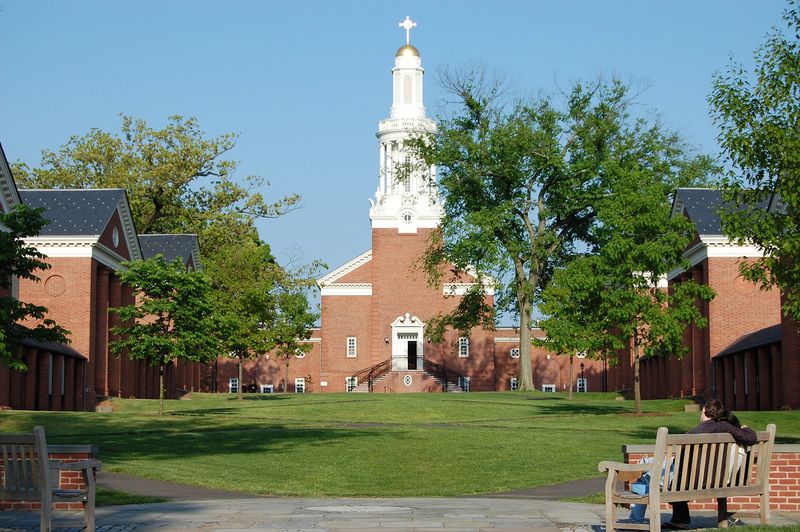
The Master of Sacred Theology at Yale is the model post-M.Div. research master’s for English-speaking ecumenical theology. The catalog itself is unusually clear about its purpose: “Graduates of theological schools of recognized standing who have obtained the B.D. or M.Div. degree may be admitted to a program of studies leading to the Master of Sacred Theology (S.T.M.) degree.” The work, the catalog continues, “may be regarded as a fourth year of preparation for the Christian ministry,” available for advanced training in chaplaincy, urban ministry, ecumenical leadership, international missions, or specialized service to youth, refugees, or the elderly. Then, in the line that captures the degree’s true breadth: “The S.T.M. program may also be used as a year of specialized work in one of the theological disciplines or as preparation for doctoral studies.”
That threefold function—ministry deepening, disciplinary specialization, and doctoral preparation—is the framing from which the entire field works. Yale just states it most clearly.
Faculty. Yale’s S.T.M. cohort has access to the same faculty who teach the M.Div. and the Religious Studies Ph.D., which is to say one of the deepest benches in North America. Willie James Jennings (Andrew W. Mellon Professor of Systematic Theology and Africana Studies) is among the most influential constructive theologians working today. Kathryn Tanner (Frederick Marquand Professor of Systematic Theology) and Miroslav Volf (Henry B. Wright Professor of Systematic Theology) anchor the systematic faculty. Volker Leppin (Horace Tracy Pitkin Professor of Historical Theology) and Bruce Gordon (Titus Street Professor of Ecclesiastical History) are world-class historians of the Reformation and early modern Christianity. Joel S. Baden (Professor of Hebrew Bible) and Teresa Morgan (McDonald Agape Professor of New Testament and Early Christianity, recruited from Oxford in 2022) are among the strongest biblical-studies scholars at any U.S. divinity school. Linn Tonstad works at the intersection of theology, religion, and sexuality. Andrew McGowan (Dean and President of Berkeley Divinity School and McFaddin Professor of Anglican Studies and Pastoral Theology) leads the Anglican track but announced in April 2025 that he will step down at the end of academic year 2025–2026. Carolyn J. Sharp anchors homiletics.
Two recent transitions to note: John J. Collins, the long-time Holmes Professor of Old Testament, is now emeritus, and Teresa Berger retired and became emerita on June 30, 2025. I studied under both of them during my M.Div. and consider them two of the finest professors I had at Yale—Collins for the breadth and methodological seriousness he brought to the Hebrew Bible and Second Temple Judaism, Berger for the rare combination of liturgical-historical depth and pastoral attentiveness in her teaching on worship and the sacraments. Prospective S.T.M. applicants drawn to either of those areas should know that both are emeriti now; their fields at Yale are in transition.
Funding. This is where Yale’s S.T.M. is honest in a way that should set expectations. The Divinity School’s catalog states bluntly: “Students enrolled in fewer than nine credits per term (less than 3/4 time) and students in the S.T.M. degree program may receive YDS scholarship funds equal to their tuition cost only; they are ineligible for YDS merit scholarships and YDS scholarship funds that exceed their cost of tuition.” Translated: need-based aid can cover up to the full tuition charge ($30,576 for 2025–2026; $31,192 for 2026–2027), but Yale will not give an S.T.M. student a living stipend the way it does for M.Div. and M.A.R. students. Plan to cover housing and food yourself unless you have outside funding.
The Yale Institute of Sacred Music supports a distinct S.T.M. track in liturgical studies and religion and the arts and provides “a maximum of one year or equivalent of financial support” to students in that program—the most concrete funding available within Yale’s S.T.M. structure.
Admissions and structure. Twenty-four credit hours, normally completed in one academic year, with two years allowed to complete. A thesis, an extended paper in a regular course, or another acceptable independent-research project is required. Full-time minimum is twelve credits per term. Note that the S.T.M. for Ministry Professionals track—the part-time, intensive-format option for working ministers—is currently suspended for 2025–2026; only the standard residential S.T.M. is admitting.
Placement. Yale does not publish an S.T.M.-specific placement list. Anecdotally, S.T.M. graduates are competitive applicants to top doctoral programs across the Ivy League and major divinity schools, and the degree is well-regarded for chaplaincy and denominational work. The brand carries.
Yellow Ribbon (GI Bill veterans). Yale Divinity School participates in the Yellow Ribbon Program with no cap on the number of students—meaning every YDS student who qualifies for the full Post-9/11 GI Bill can have the gap between the VA’s annual private-school cap and Yale’s full tuition matched dollar-for-dollar by Yale and the VA. For a veteran with full Post-9/11 eligibility, this effectively closes the funding gap that Yale’s no-stipend S.T.M. otherwise leaves. Among the four U.S. flagships, Yale’s combination of need-based S.T.M. tuition aid and uncapped Yellow Ribbon participation is the strongest financial package available to veterans.
Cohort and admissions. Yale’s S.T.M. matriculated 5 students in the Fall 2025 entering class of 113, which YDS Dean Greg Sterling described as “the most select entering cohort in the School’s history, coming from a record-high applications pool.” Prior years are in a similar 5–15 range—7 S.T.M. in Fall 2020; 15 admitted Fall 2017; 11 degrees conferred Spring 2020. Yale publishes no S.T.M.-specific acceptance rate, no GPA floor, and reviews applications holistically. The widely-circulated 23% YDS school-wide rate is an estimate, not an institutional figure.
Honest assessment. Yale’s S.T.M. is the most flexible and arguably the most prestigious post-M.Div. master’s in the United States. The faculty bench is unmatched for breadth, students can cross-register across Yale University, and the Sterling Divinity Quadrangle is a serious place to do a year of focused theological work. The cost ceiling is the catch for non-veterans: applicants without outside funding pay materially more out of pocket than they would for a comparable Princeton Th.M., and Yale’s no-stipend policy makes it less generous than the Duke Th.M. for international applicants who win Duke’s one annual full scholarship. For applicants who can self-fund, who already live in Connecticut, or who target the ISM track, Yale is the strongest single choice. For applicants who need institutional support beyond tuition, look at the Duke and Princeton sections below.
2. Princeton Theological Seminary (Th.M.)
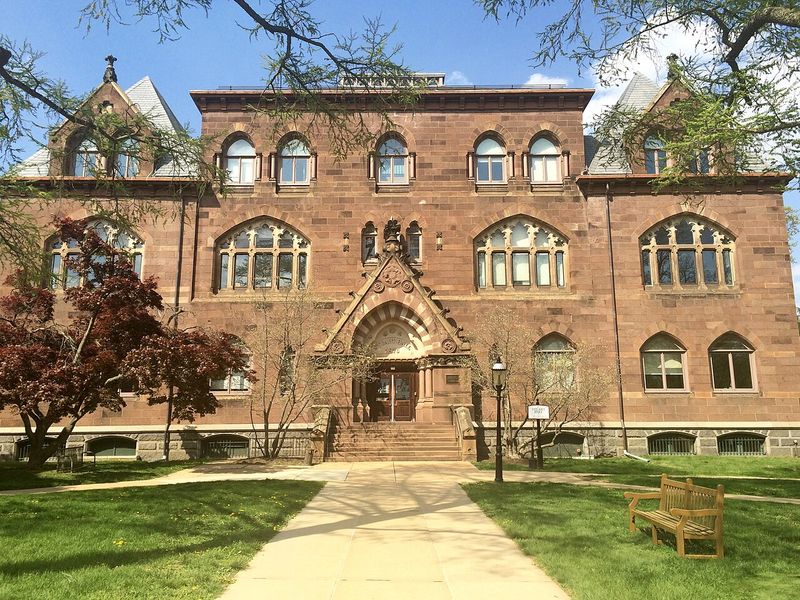
Princeton offers the deepest U.S. Reformed-tradition Th.M. Established in 1812 as the second-oldest seminary in the country and chartered separately from Princeton University, PTS has done more than any other institution to define what an American post-M.Div. research master’s looks like. The seminary describes the program directly: “The Master of Theology degree program provides opportunities to specialize a professional pathway, shape advanced research skills, deepen spiritual practices, and engage the theological disciplines with uncommon depth through a rigorous curriculum.” For prospective students, the framing is more practical: “Building on the foundation of your previous theological graduate work, the ThM degree program deepens your intellectual engagement with your chosen area of interest and sharpens your research and scholarship skills.”
Structure. Twenty-four credit hours in one of five specialization tracks: Biblical Studies, History of Christianity, Theology, Practical Theology, or Worship Studies. An optional thesis can fulfill three or six of the twenty-four credits. The program is normally completed in one full-time year. Princeton’s Practical Theology track is unusually strong and is the only one of the five for which the M.Div. is strictly required (the other tracks accept “a first graduate theological degree providing equivalent theological background, such as the MTS”).
Faculty. The Theology department alone is among the deepest in the country. John Bowlin (Robert L. Stuart Professor of Philosophy and Christian Ethics, and since July 1, 2023 Dean and Vice President of Academic Affairs) is a leading voice in Christian ethics. Ki Joo Choi (Kyung-Chik Han Professor of Asian American Theology) anchors a unique appointment. Keri L. Day (Elmer G. Homrighausen Professor of Constructive Theology and African American Religion) brings constructive-systematic depth at the intersection of African American religion and political theology. Hanna Reichel was promoted to full professor and named the Charles Hodge Professor of Systematic Theology in June 2024.
Three confirmed retirements in 2026 substantially reshape the Theology department: George Hunsinger (Hazel Thompson McCord Professor of Systematic Theology), Mark Lewis Taylor (Maxwell M. Upson Professor of Theology and Culture), and Dirk Smit (Rimmer and Ruth de Vries Professor of Reformed Theology and Public Life). Princeton will hold a farewell event titled “The Work That Endures: Celebrating the Teaching and Scholarship of Professors Dirk Smit, George Hunsinger, and Mark Taylor” on April 24, 2026. Biblical Studies, Church History, and Practical Theology are similarly deep; verify your specific supervisor against the live faculty page before applying.
Funding. This is the area where Princeton’s Th.M. is least transparent in public-facing materials. Tuition for full-time students is $22,500 for 2026–2027—lower than Yale’s $31,192 and substantially lower than Harvard’s. Applicants should expect to cover most of the cost themselves, supplemented by federal loans, denominational aid (PCUSA-affiliated applicants have access to PCUSA forgivable loans), and any need-based scholarship Princeton can offer. The single publicly enumerated Th.M.-specific award is a $5,000 Th.M. Scholarship for select domestic students who show “exceptional promise for advanced theological research”; everything else is awarded case-by-case. Contact the Office of Financial Aid directly for an actual aid estimate before accepting an offer.
Yellow Ribbon (GI Bill veterans). Princeton Theological Seminary does not participate in the Yellow Ribbon Program. Veterans using the Post-9/11 GI Bill receive only the basic VA private-school annual cap; any difference between that cap and Princeton’s $22,500 Th.M. tuition (which, depending on the cap year, may be partial or full) is paid out of pocket. This is a meaningful gap for veterans relative to Yale, Duke, and BC, all of which do participate. Combine this with PTS’s “limited” Th.M. funding and the practical answer for veterans is: Princeton is one of the worst-positioned major U.S. Th.M. programs for veteran applicants without outside scholarships.
Library. Princeton’s Wright Library is the central asset that older guides correctly emphasized. Per the seminary’s library page, Wright provides access to “over 9.7 million print and electronic books and journals available through individual subscriptions and aggregate databases in its general collections” and the Theological Commons offers more than 164,000 open-access resources in addition to substantial print holdings. The library is, by most accounts, the largest theological library in the United States; the often-circulated claim that it is the second-largest in the world after the Vatican is widely repeated but not currently asserted on Princeton’s own page.
Admissions. The 2026 application cycle is closed; the 2027 cycle opens August 2026. Final deadlines: April 15 for U.S. citizens, DACA recipients, and permanent residents; December 1 for international applicants. Interviews are strongly encouraged.
Placement. Princeton publishes general placement framing—“Many of our graduates go on to lead traditional congregations, while others lead new forms of ministry in the nonprofit sector, entrepreneurial space, and other vocations”—but no Th.M.-specific named-school list comparable to Duke’s.
Cohort and admissions. Princeton does not publish a discrete Th.M. cohort size or acceptance rate; total seminary enrollment was 302 for 2024–25. PTS President Jonathan Walton noted in Fall 2025 that Th.M. applications were up 33% year-over-year, suggesting selectivity is rising though absolute matriculant numbers remain unpublished. Applicants need an M.Div. or equivalent plus “evidence of aptitude for advanced theological study”; no published GPA floor.
Honest assessment. For applicants in the Reformed tradition, applicants with a strong interest in Practical Theology, or applicants who want to spend a year at the largest theological library in the United States, Princeton’s Th.M. is the strongest U.S. option. The 2026 retirement cluster will reshape the Theology department and prospective applicants should verify which faculty are still teaching the year they matriculate. Funding is the weakest among the four U.S. flagships; budget accordingly.
3. Duke Divinity School (Th.M.)
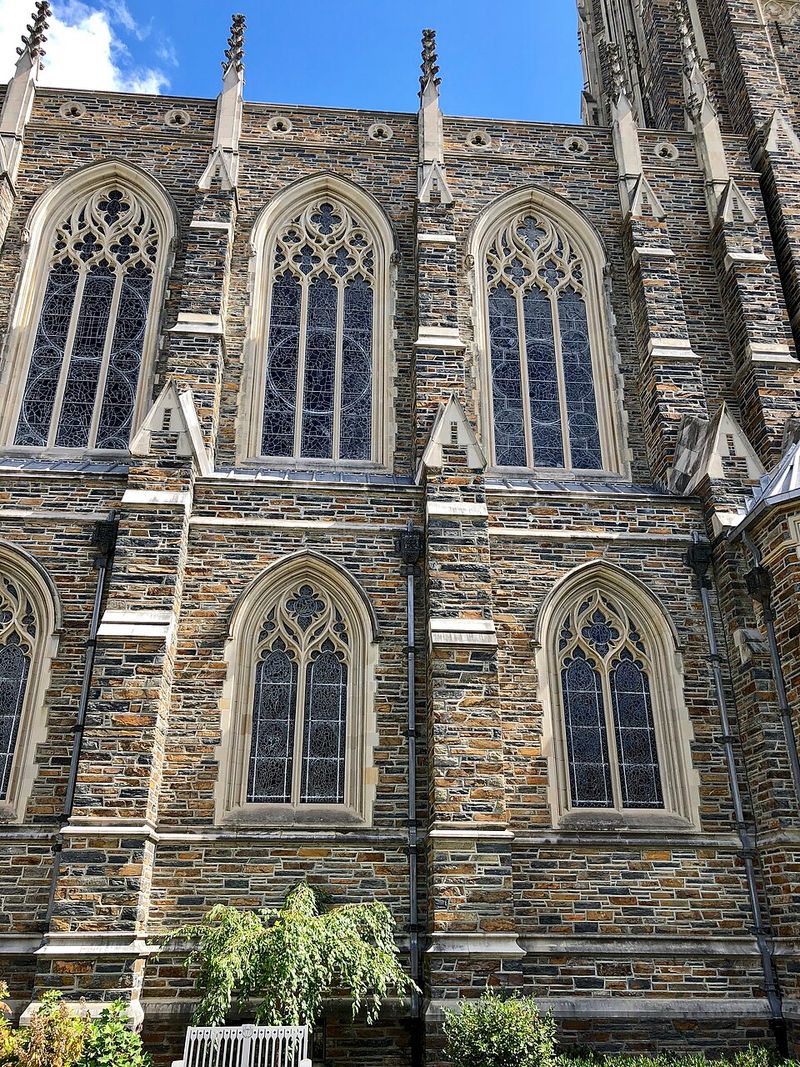
Duke’s Th.M. is the most explicitly doctoral-prep-focused of the four U.S. flagships and the only one with a published, named-school placement list of recent doctoral admissions. The Divinity School Bulletin states the purpose plainly: “The course of study leading to the degree of Master of Theology (ThM) is designed for graduates of accredited theological schools who desire to continue or resume their theological education for the enhancement of professional competence in selected areas of study. Enrollment in the ThM degree program is open to a limited number of students who have received the MDiv (or the equivalent) with superior academic records.”
Structure. Two semesters, normally one academic year. Eight elective courses, four of which must be at the 800- or 900-level. At least four courses must be in one of the four basic theological disciplines (Biblical, Historical, Theological, or Ministerial), designated as the major. Students choose between a comprehensive examination and a thesis of 12,000–20,000 words (50–75 pages) written as the continuation of a directed study; artistic projects are permitted with a written description of at least 10,000 words.
Faculty. Duke’s Divinity faculty is the engine of the program’s reputation. Per Duke’s own data, Divinity faculty “comprise five percent of total Duke University faculty” yet account for “15% of the publications coming out of Duke University.” The bench spans biblical studies, historical and systematic theology, ethics, world Christianity, and practical theology, with notable strength in Methodist and Anglican studies. As with Princeton and Yale, verify the specific supervisor on the live faculty page; recent generational turnover is material. Richard Hays’s death in January 2025 and Joel Marcus’s transition to emeritus both represent direct losses to Duke Divinity’s own faculty in New Testament and biblical theology. Bart Ehrman’s retirement at UNC affects the cross-registered intellectual environment Duke students draw on without changing Duke Divinity’s own faculty roster, but it is a meaningful loss to the broader Triangle-area biblical-studies ecology.
Funding. Duke is the most international-applicant-friendly of the four flagships at the funded end of the spectrum. The Divinity School’s scholarship page states: “International Student Scholarship (Th.M.)—The Divinity School offers one scholarship per year to an international student in the Master of Theology (Th.M.) degree program. Awards are based on the overall strength of the admission application. The scholarship offers up to one year’s full tuition.” Note the precise wording: “up to one year’s full tuition” is not necessarily a guaranteed full ride. Domestic Th.M. students are eligible for school-wide need-based scholarships but not the guaranteed packages residential M.Div. students receive.
Admissions. Application opens in September; final deadline April 15. Requires a 3.25 cumulative GPA in an ATS-accredited M.Div., M.T.S., or comparable master’s. Three letters, statement of purpose, academic writing sample.
Yellow Ribbon (GI Bill veterans). Duke participates in the Yellow Ribbon Program. Eligibility requires either 100% Post-9/11 GI Bill eligibility or Purple Heart status, plus enrollment in a degree-seeking Duke program (which the Th.M. is). For a qualifying veteran, the Yellow Ribbon match closes the gap between the Post-9/11 annual cap and Duke Divinity’s tuition, materially improving the funding picture for domestic Th.M. veterans who do not win the one international full-tuition scholarship.
Placement. This is where Duke is genuinely best-in-class for transparency. The Divinity School’s Th.M. page states: “Th.M. graduates have been placed at Ph.D. and D.Min. programs at schools including Duke University, Princeton Theological Seminary, Baylor University, Asbury Theological Seminary, Boston University, and University of North Carolina at Chapel Hill.” Six named institutions is more than any of the other three flagships publishes for the Th.M., and the list reads as a credible cross-section of mainstream theological doctoral education.
Cohort and admissions. Duke matriculated 12 Th.M. students in the Fall 2021 entering class (the most recent figure published). The bulletin describes the program as “open to a limited number of students who have received the MDiv (or the equivalent) with superior academic records.” The published GPA floor is 3.25 cumulative in an M.Div., M.T.S., or comparable master’s from an ATS-accredited institution—the only explicit numerical admissions floor among the four U.S. flagships.
Honest assessment. Duke’s Th.M. is the strongest combination of explicit doctoral-preparation focus, a named placement track record, and certificate-stacking opportunities (Anglican Studies, Theology Medicine and Culture, Theology and the Arts). The Methodist denominational center of gravity makes it a natural fit for United Methodist, Global Methodist, and Wesleyan applicants, but the program admits broadly. Best Th.M. fit overall for an international applicant who can land the one annual full scholarship; very strong fit for a domestic applicant with the academic record to be competitive.
4. Harvard Divinity School (Th.M.)
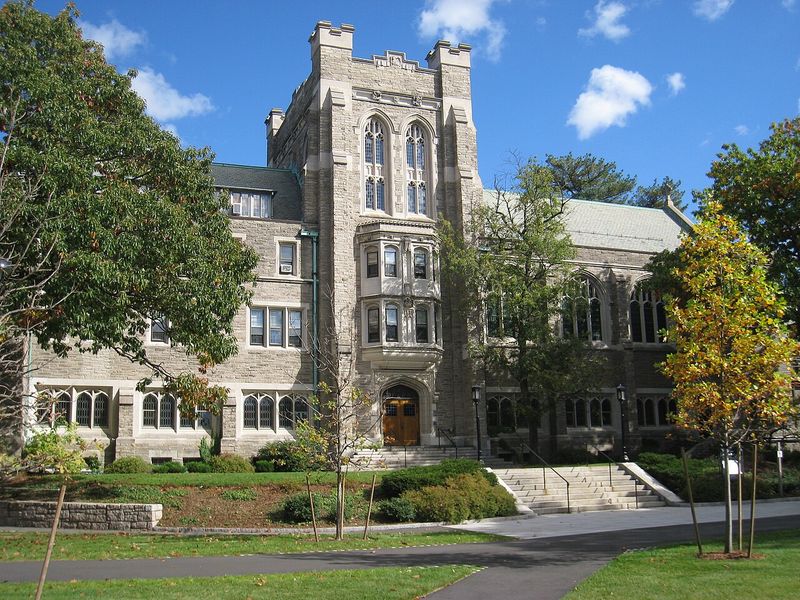
Harvard’s Th.M. is one of the most prestigious U.S. post-M.Div. master’s degrees and one of the worst-funded. Both facts are true; both matter.
Purpose. Per the HDS program page: “The ThM program affords an opportunity for students who have received the MDiv degree or three years of graduate theological study to pursue advanced theological studies for one year.” The degree “is recommended for students who seek to gain additional competency for ministry beyond that provided by the master of divinity degree or for those who, after some years in ministry, teaching, or another field, wish to return to a theological institution to prepare themselves for new ministry. The degree offers 20 areas of focus, and includes course work, a language requirement, and an oral examination requirement.”
Structure. One year. Eight courses total: four within the declared area of focus (at least one seminar or colloquium) and four electives. Intermediate-level reading competency in a research language relevant to the focus area. Oral examination based on one large paper or two smaller papers.
Faculty. HDS’s faculty is large, multi-religious, and one of the most theoretically progressive at any major U.S. divinity school. The faculty roster includes leading scholars across Hebrew Bible, New Testament, early Christianity, theology, ethics, comparative religion, and religion and society—but verify against the live HDS faculty page before applying. One material 2026 transition: Terrence L. Johnson, currently Director of Religion and Public Life and Charles G. Adams Professor of African American Religious Studies at HDS, was named the next Mary Lee Hardin Willard Dean of Candler School of Theology at Emory effective August 1, 2026, on a five-year term. Harvard is losing him; Candler is gaining him.
Funding. This is where Harvard’s Th.M. is hardest, and the honesty deserves attention because Harvard’s own admissions FAQ is exceptionally clear about it. From the FAQ: “Approximately ninety percent (90%) of MDiv and MTS students receive Institutional grant aid, the majority of which is need-based grant aid.” Then, in the very next paragraph: “Students in the master of theology (ThM) or master of religion and public life (MRPL) program who are U.S. citizens or eligible noncitizens may qualify for federal funds and/or private loans. HDS does not provide grant support for the ThM or MRPL programs.” And from the Apply for Financial Aid page: “International ThM students are not eligible for HDS institutional grant support or federal aid.”
Th.M. students at HDS are categorically the only master’s-degree cohort the school will not fund with institutional grants. International Th.M. students get nothing—no loans, no aid, no tuition support. This is the most restrictive funding policy of any major U.S. Th.M. program profiled in this guide.
Admissions. The 2026 application cycle closed in early January 2026; decisions arrived in mid-March. Interview required.
Yellow Ribbon (GI Bill veterans)—the funding-asymmetry pattern compounds here. Harvard Divinity School does participate in the Yellow Ribbon Program, but the structural mechanism matters: HDS’s own Institutional Grants page states that “if an applicant receives scholarship assistance from HDS, a portion of the scholarship amount will be designated as the Yellow Ribbon match.” Because the same page states that “HDS does not provide grant support for the ThM or MRPL programs,” there is no HDS scholarship contribution from which to draw the Yellow Ribbon match for Th.M. veterans—the participation is institutional but Th.M. students are functionally excluded in practice. The result for a Th.M. veteran with full Post-9/11 eligibility is the same as for a non-veteran international Th.M. student: zero institutional aid plus no Yellow Ribbon match equals a tuition gap paid out of pocket or via private loans. Veterans considering the HDS Th.M. should confirm directly with HDS Student Financial Services and the VA Certifying Official before assuming any aid is available.
Placement. Harvard publishes general HDS career outcomes but no Th.M.-specific placement data. Anecdotally strong into Ph.D. programs across the Ivy League, Chicago, Duke, and European universities.
Cohort and admissions. Harvard does not break out Th.M. enrollment on its Fall 2025 Fact Sheet (which lists MTS 156, MDiv 130, MRPL 9, PhD 76, but omits the Th.M.). HDS’s admissions FAQ states that the process is “highly selective” and reviewed holistically with “no minimum GPA.” Treat the Th.M. cohort as a small subset of the M.T.S. cohort and expect no numerical target from the school’s own materials.
Honest assessment. Harvard’s Th.M. is excellent for applicants who can self-fund or who have outside fellowships, who want to use the year as a Harvard credential and pipeline to the joint HDS/GSAS Ph.D. in Religion, and who can leverage Harvard’s cross-registration with Harvard’s other graduate schools. For applicants needing institutional aid, this program is the most expensive of the four flagships. International applicants in particular face an effective tuition wall. The brand is real, the access to the broader Harvard university is real, and the cost is real.
5. University of Oxford (M.St. and M.Phil. in Theology)
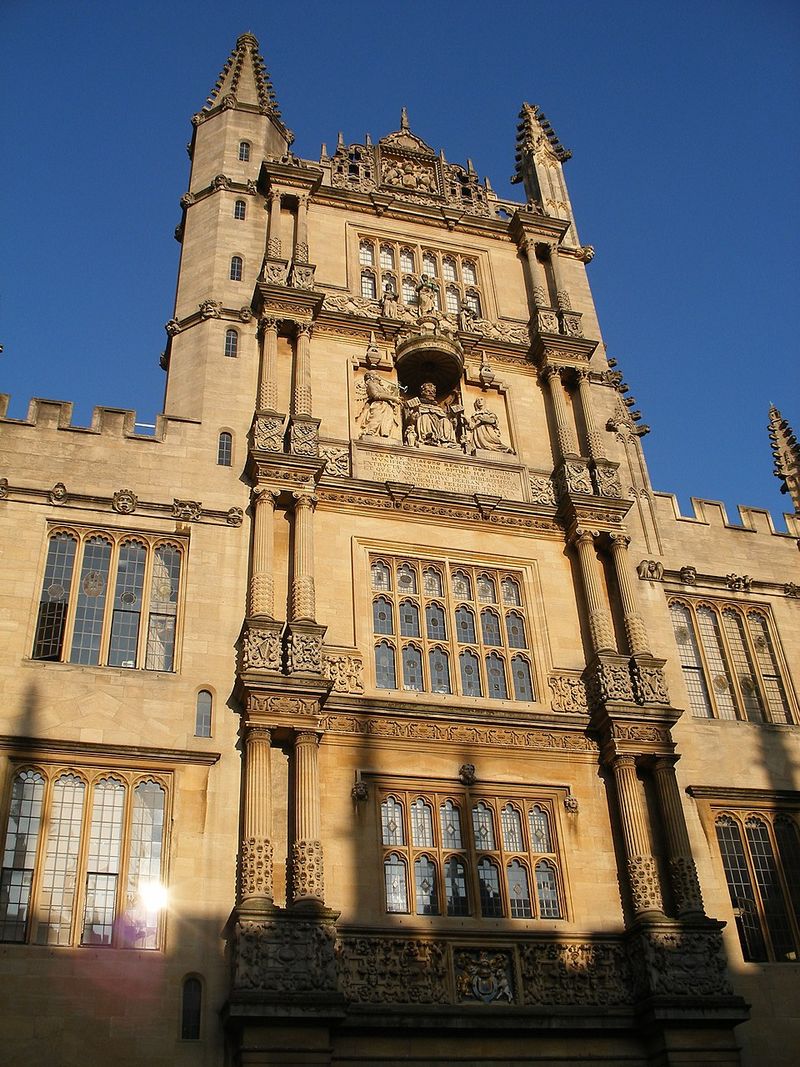
Oxford is the strongest non-North American option for English-speaking M.Div. graduates, with two distinct one-and-two-year taught masters that function as the Faculty of Theology and Religion’s standard pathway into the DPhil.
Two degrees. The M.St. in Theology is a nine-month, full-time taught course “offering an intensive period of advanced study in a chosen field.” The M.Phil. in Theology is a 21-month, full-time taught-and-research degree that “offers extensive study of a particular field of theology at an advanced level, with rigorous training in relevant research methods and a period of scholarly research and writing.” Pathways across both include Old Testament/Hebrew Bible, New Testament, Patristic Theology, Modern Theology, Ecclesiastical History, Christian Ethics, Biblical Interpretation, and Science and Religion.
Prerequisites. Oxford does not formally require a prior theological master’s. The official admissions page lists a U.S. minimum GPA of 3.6, but the Faculty’s competitive cut-off, per the NT@Oxford FAQ, is closer to 3.8 in North American terms. North American M.Div. holders apply directly. The Faculty notes on the M.Phil. progression page: “Progression to the DPhil in Theology relies on a strong performance in the taught course. The faculty would normally expect a final grade of 67% or above.” On the DPhil page itself: “Students who have previously completed an MSt or MPhil degree in a relevant subject area at the University of Oxford, typically find that this aids preparedness and accelerates completion of this DPhil.” In practice, the M.St. or M.Phil. is the de facto on-ramp to the Oxford DPhil pipeline.
Funding. Oxford taught masters depend almost entirely on external scholarships—Rhodes, Marshall, Clarendon, college-based awards, and various church-related funding bodies. Self-funded students bear substantial costs. The Oxford M.St., M.Phil., and DPhil in Theology are all currently closed to applications for 2026–2027 entry; the next cycle (2027–2028) opens later in 2026.
A practical constraint worth knowing. The NT@Oxford FAQ now states: “For taught Master’s degrees (MSt and MPhil only), recent changes in UK immigration law have meant that for the moment no dependants’ visas are issued for overseas students.” For applicants with families, this is a material constraint that does not apply to the DPhil.
Cohort and admissions. Oxford is the most data-transparent program in this entire guide. The Theology M.St. averages roughly 12 matriculants per year against about 46 applications, for a 45% offer rate (2023/24 entry, per FOI data). The Theology M.Phil. averages about 10 matriculants per year against 41 applications, for a 53% offer rate. UK applicants need a first-class or strong upper second-class degree (67%+); U.S. applicants typically need a 3.6 GPA, with most successful applicants at 3.8 or above. These are the only theology-master acceptance rates published anywhere in the world by primary source.
Honest assessment. Oxford’s M.St. and M.Phil. are the strongest U.K. options for English-speaking M.Div. graduates aiming at a U.K. doctoral pathway. The taught structure is intense and short, the supervisor relationships matter more than at most U.S. institutions, and the absence of guaranteed funding makes Oxford a risky financial commitment without an external award. For applicants who win one, it is one of the best one-year theological investments available anywhere.
6. University of Cambridge (M.Phil. in Theology, Religion, and Philosophy of Religion)
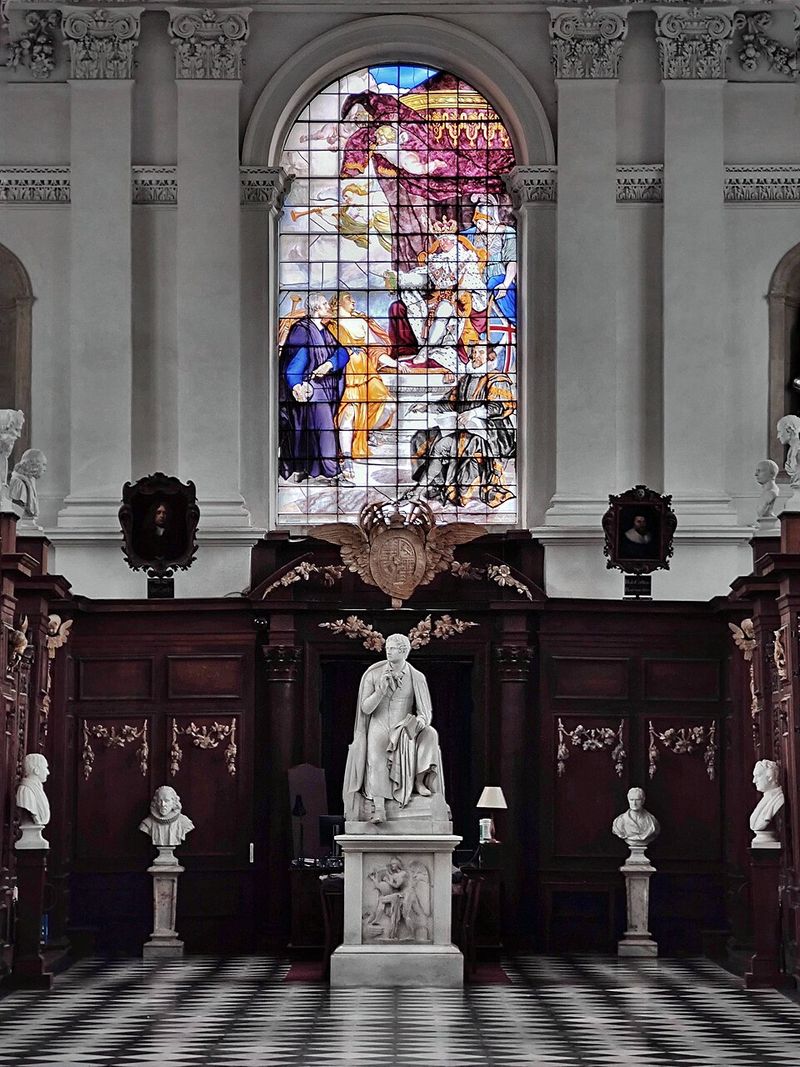
Cambridge’s Faculty of Divinity offers a single M.Phil. in Theology, Religion, and Philosophy of Religion, available full-time over nine months or part-time over twenty-one months. The taught streams—Anglican Studies, Christian Theology, New Testament and Early Christianity, Old Testament, Philosophy of Religion, Religion and Conflict, Religions in Late Antiquity, Study of Religions, and World Christianities—span both the historic Christian theological disciplines and broader religious studies.
Entry requirements. “First or 2.1 honours degree with marks of at least 67% or a GPA of at least 3.7 in the US System or the equivalent to a high 2.1 honours degree.” New Testament applicants need at least two years of Greek; Old Testament applicants need Hebrew (and preferably Aramaic and Greek). The cohort is intentionally heterogeneous: Cambridge’s own description notes that “the MPhil cohort can include students coming straight from an undergraduate degree or returning to university after a couple of years, as well as people further advanced in their careers or even some who have taken retirement.” For an M.Div. graduate, cohort peers may be substantially younger, but the academic standard is uniform.
PhD progression. The Faculty is explicit about the bar: “In order to be eligible to continue to the PhD, students must achieve at least a mark of 71 for the dissertation and an overall average of at least 71% in the MPhil as a whole.” This is a higher hurdle than Oxford’s 67%, and the Cambridge Ph.D. itself is a research-only degree with no taught year, which means the M.Phil. functions as the de facto preparation cycle for those targeting Cambridge doctoral work.
Part-time, in residence. A note that catches some applicants by surprise: “The part-time route is not an online programme, and seminars are not available via video-conferencing.” Cambridge requires actual presence in Cambridge for all M.Phil. work, even on the two-year track.
Deadlines. The 2026 application deadline (May 14, 2026) has now passed; the 2027 cycle opens later in 2026. Funding deadline is early December 2025 for the 2026 cycle; expect the same window for 2027.
Funding. Cambridge depends on the same external scholarship infrastructure as Oxford—Gates Cambridge, college-based awards, denominational and church-related funding. There is no guaranteed M.Phil. stipend.
Cohort and admissions. Cambridge’s M.Phil. TRPR issued 46 offers from 105 applications for 2023/24 entry—a 47% offer rate (FOI data via admissionreport.com). The Faculty of Divinity requires a first or 2:1 UK honours degree with marks of at least 67%, or a 3.7 U.S. GPA. Along with Oxford’s, this is the only primary-source theology-master acceptance rate in the UK research-university set.
Honest assessment. Cambridge’s M.Phil. is the strongest single non-Oxford U.K. option and the best preparation in the world for the Cambridge Ph.D. specifically. The Tyndale House research library nearby is unmatched for evangelical biblical-studies work. The 71% PhD-progression bar is real and selective. The same caveats as Oxford apply: external funding is the determining factor for most international applicants.
7. Boston College, Clough School of Theology and Ministry (Th.M.)
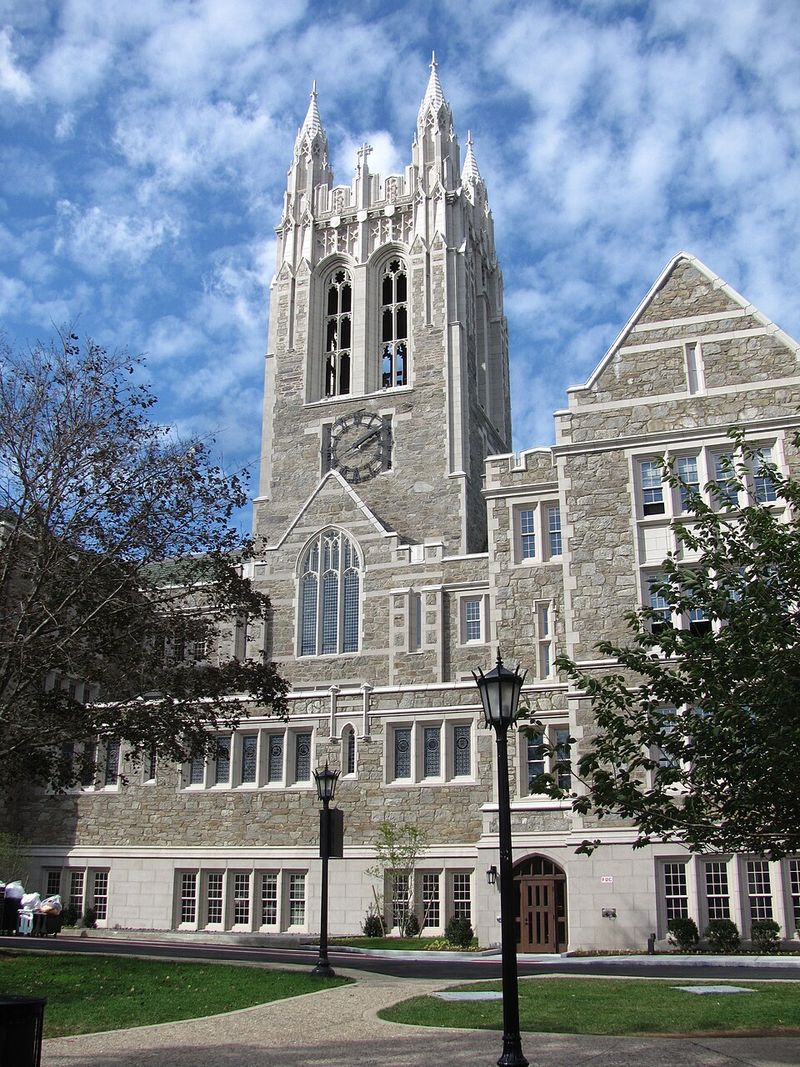
Boston College’s Clough School of Theology and Ministry is the strongest U.S. Catholic option for a Th.M. on the Eastern Seaboard. In February 2024, the school received what Boston College described as “one of the largest ever to a school of theology, divinity, or religious studies”—a $25 million gift from Charles “Chuck” Clough Jr. (‘64) and Gloria Clough (M.Div. ‘90, M.S. ‘96). The school was renamed the Gloria L. and Charles I. Clough School of Theology and Ministry. The current dean is Michael C. McCarthy, S.J., who has served since July 2022.
Th.M. Per Boston College: “The Master of Theology (Th.M.) is an advanced degree that offers students who already possess an M.Div., M.A., or M.T.S. the opportunity to create their own customized program of advanced study in either theology or ministerial practice.” Two tracks: Advanced Theological Study (thesis-based, 50–60 pages, “in preparation for doctoral work”) and Advanced Ministerial Practice (six credits of practica). Twenty-four credits, six academic courses, normally one year full-time. Recent placement: many students pursue the Th.M. in preparation for doctoral work, with the program’s published Sample Placements listing including doctoral admissions at Boston College, Durham University, and Saint Louis University, alongside non-doctoral placements in Jesuit secondary-school religious studies teaching, U.S. Army ethics instruction, and parish children, teens, and families ministry.
Faculty. Catherine M. Mooney (Associate Professor of Church History), Andrew R. Davis (Associate Professor of Old Testament), Colleen M. Griffith (Professor of the Practice of Theology and Faculty Director of Spirituality Studies), and Franklin T. Harkins (Professor of Historical Theology, Professor Ordinarius) are among the most active Th.M. supervisors. The full CSTM faculty is the largest U.S. Catholic theological faculty.
Yellow Ribbon (GI Bill veterans). Boston College participates in the Yellow Ribbon Program at $6,000 BC + $6,000 VA = $12,000 per year for most graduate divisions (BC enumerates GA&S, GSOE, GSON, GSSW, and CASG), with 100 slots allocated per year across the University on a first-come-first-served basis. The Clough School of Theology and Ministry is not separately enumerated in BC’s per-school list, but BC affirms “any student in a degree program is eligible to apply”—meaning Clough Th.M. veterans compete with the rest of the University for the 100 slots and should confirm the current-year contribution amount directly with BC’s Office of Student Services. Either way, BC’s status as a Yellow Ribbon participant places it well above Princeton and Westminster, neither of which participates.
Cohort and admissions. BC does not break out Th.M. enrollment; CSTM describes its school-wide cohort as “about 150 join our vibrant community each year” across all master’s programs (Th.M., M.T.S., M.Div., M.A.T.M., S.T.B., and several certificates). The Th.M. is a small slice of that total. Admissions are reviewed holistically with no published minimum GPA; CSTM characterizes admission as “very competitive” without publishing a rate.
Honest assessment. For lay Catholics or religious-order members preparing for doctoral work in Catholic theology, Boston College’s Clough Th.M. is the strongest U.S. ecumenical-cluster option with serious Catholic theological depth. The recent $25 million gift signals serious institutional investment in the school’s future.
8. University of Durham (M.A. and M.Litt. in Theology and Religion)
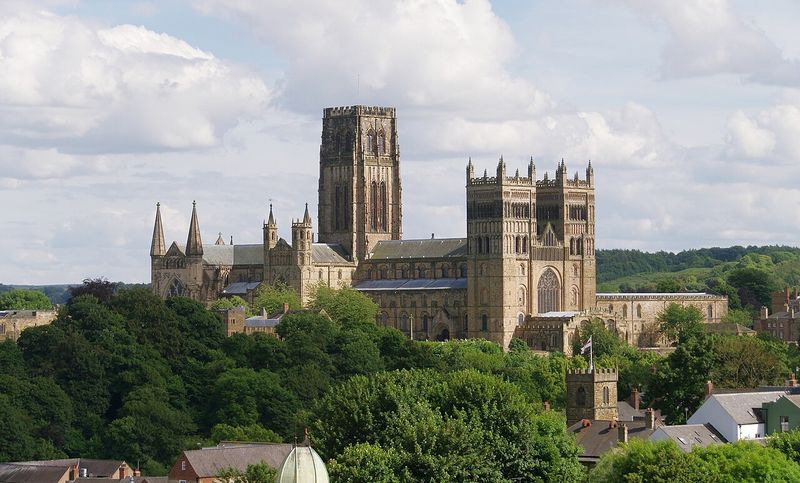
Durham’s surge into the top tier of global theology programs is one of the more striking developments in recent rankings. Per Boston College’s March 25, 2026 announcement of the QS World University Rankings 2026, Durham placed fourth globally in Theology, Divinity & Religious Studies—the top U.K. institution outside Oxford and ahead of Boston College, Chicago, Cambridge, KU Leuven, Duke, and Yale. The Department of Theology and Religion includes the Centre for Catholic Studies, the Centre for Death and Life Studies, the Michael Ramsey Centre for Anglican Studies, and the Centre for Early Christianity—a research-cluster footprint as broad as any U.K. department.
Degrees. A one-year taught M.A. in Theology and Religion, plus research degrees including the M.A. by Research (50,000-word dissertation, one year full-time), the M.Litt. (70,000-word dissertation, two years full-time), the Integrated PhD, the M.A. in Catholic Theology (distance learning), the Doctor of Theology and Ministry, and a Graduate Diploma. For post-M.Div. applicants targeting doctoral work, the M.A. by Research and M.Litt. are the closest analogs to a U.S. Th.M.
Entry requirements. Taught M.A. requires “a good honours degree (such as a First or a good 2:1/GPA 3.7 on a scale of 4.0).” For PhD progression, Durham requires “a solid MA degree (i.e. average above 65% or equivalent/GPA of at least 3.7) in Theology or Religious Studies, or another relevant discipline.”
Cohort and admissions. Durham does not publish per-course cohort sizes or acceptance rates. The Department of Theology and Religion’s published admissions floor is a UK 2:1 honours degree (U.S. equivalent approximately 3.7) in a relevant field. Like most UK research universities, course-level offer-rate data is available only via FOI request.
Honest assessment. Durham is now the most credible U.K. alternative to Oxford and Cambridge for post-M.Div. applicants, with particular strengths in Anglican studies, Catholic theology (the Centre for Catholic Studies is unique in the U.K. university system), and early Christianity. The QS #4 placement is a meaningful signal, and the department’s research-cluster breadth means an M.A. by Research student can find supervisors across the full theological spectrum. Funding is largely external; budget accordingly.
9. Emory University, Candler School of Theology (Th.M.)
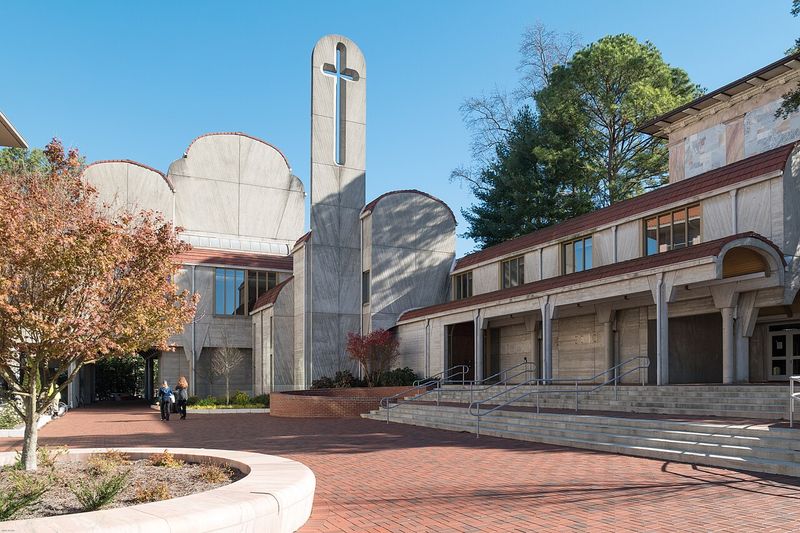
Candler describes its Th.M. directly: “Candler’s Master of Theology (ThM) is designed for those who already hold a theological master’s degree and wish to gain greater expertise in a particular area of study. They may want to deepen their knowledge to enhance their vocation or ministry or to prepare for further academic study.” Twenty-four credit hours, normally one academic year, completed within two years. Required courses include the Master of Theology Project Seminar (fall, one credit) and the Master of Theology Project (spring, two credits). Areas of study span Bible, preaching and worship, pastoral care, theology, history, ethics, world Christianity, and Black church studies.
Faculty and leadership transition. Candler’s faculty in Bible, preaching, ethics, and world Christianity is widely respected; the Pitts Theology Library is a major research asset. A material 2026 leadership transition: Jonathan Strom (Professor of Church History) became Mary Lee Hardin Willard Dean on August 1, 2024, on a two-year term. Terrence L. Johnson, currently at Harvard Divinity School, was named the next Mary Lee Hardin Willard Dean on May 7, 2026, beginning a five-year term August 1, 2026. Johnson is an ordained itinerant elder in the African Methodist Episcopal (AME) Church and brings a strong African American religion focus to Candler’s already strong Black church studies program.
Funding. Per Candler: “In the 2025-26 academic year, with the support of generous donors, we awarded $8.3 million in financial aid, with 96% of all students and 100% of Master of Divinity students receiving scholarship assistance.” Th.M.-specific funding rubrics are not separately published; confirm directly with Candler admissions whether the broader scholarship pool extends to Th.M. candidates at comparable rates.
Yellow Ribbon (GI Bill veterans). All Emory University schools, including Candler, participate in the Yellow Ribbon Program. Applications are first-come-first-served, and only veterans with 100% Post-9/11 GI Bill eligibility qualify. For veterans, Candler’s Yellow Ribbon participation combined with Emory’s broader veteran-support infrastructure (the Registrar’s Office handles VA certification across Emory’s graduate divisions) makes it competitive with Duke and BC on the financial-aid axis for Methodist-oriented veterans.
Cohort and admissions. Candler does not publish discrete Th.M. cohort size or acceptance rate; total Candler FTE is 431.4 (ATS). The “special students” admissions floor across Candler is 2.50 GPA; Th.M.-specific expectations are higher in practice (typically 3.0+) but not posted publicly. Email Candler admissions directly for current Th.M. matriculant numbers.
Honest assessment. Candler’s Th.M. is the strongest fit for applicants oriented to United Methodist ministry, Black church studies, or world Christianity. The Johnson appointment is a genuine boost—he is a major hire at the deanship level and signals where Candler is investing. Less prestigious in pure academic-pipeline terms than Yale, Princeton, Duke, or Harvard, but a real and serious option, especially for the Methodist and Black church traditions.
10. University of Edinburgh (M.Th. and M.Th. by Research)
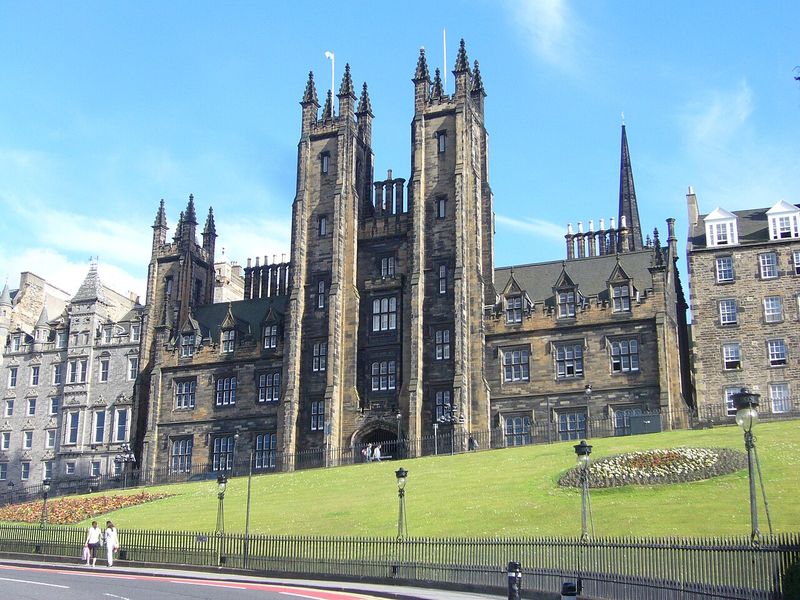
Edinburgh’s School of Divinity, ranked sixteenth in the world for Theology in QS 2026 and “1st in Scotland and 5th in the UK for its research power in theology and religious studies” (REF 2021), offers a one-year taught M.Th. with options in Biblical Studies, Theology in History, Religion and Literature, Science and Religion, and World Christianity. Research routes: the 12-month M.Th. by Research and M.Sc. by Research.
Practical reality. Edinburgh estimates “an average of £18,504 each year (£1,542 each month) to live in Edinburgh as a postgraduate” for 2026–2027, on top of tuition. Funding is competitive and largely external.
Cohort and admissions. Edinburgh does not publish per-program cohort size; the School of Divinity describes itself as a community of “around 150 research students, drawn from around the world.” Published admissions floor: UK 2:1 honours, or minimum U.S. 3.25 GPA—notably lower than the Oxbridge 3.7 floor and the most accessible numerical threshold among the top U.K. options.
Honest assessment. Edinburgh is one of the most credible U.K. options outside the Oxford/Cambridge/Durham triumvirate, with particular strengths in Reformation studies (the Reformation Studies Institute), science and religion, and world Christianity. Edinburgh slipped from QS #8 in 2025 to QS #16 in 2026—a real drop worth noting—but the school’s research depth and its place in the broader Scottish Reformed-tradition ecology remain strong.
11. University of St Andrews (M.Litt. and M.Phil.)
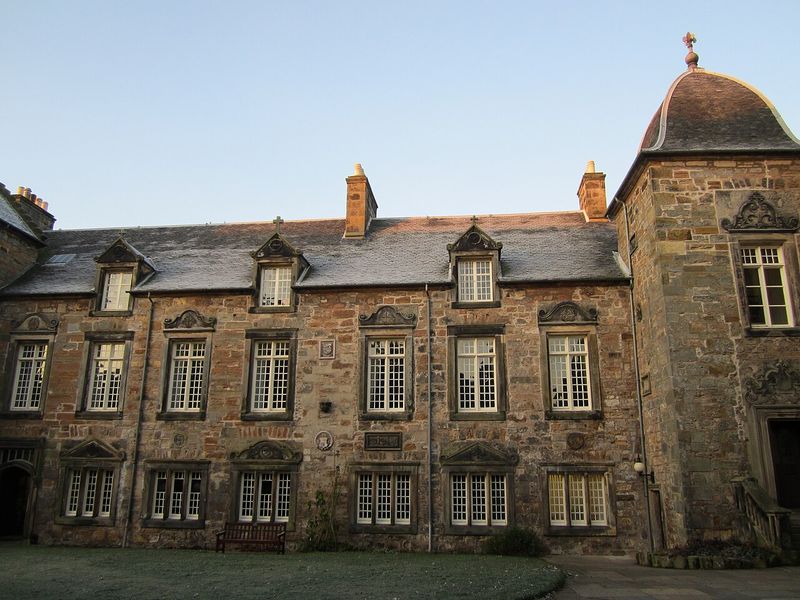
St Andrews’ School of Divinity at St Mary’s College offers one-year taught M.Litt. programs, plus a two-year residential M.Phil. that “typically comprises the taught components of an MLitt in its first year, and a dissertation of about 40,000 words in the second.” Particular institutional strengths include Theology and the Arts (run through the Institute for Theology, Imagination and the Arts) and biblical languages and literature.
PhD admission. “Admission to the PhD normally requires a minimum of an upper 2.1 Master’s degree in the applicant’s discipline (that is, typically a minimum average of 16 on a 20-point scale or 67 on a 100-point scale).”
Deadlines. “The deadline for first consideration of research degree applications for the Divinity School for the 2026-27 academic year is Monday 1 December 2025.”
Cohort and admissions. St Andrews does not publish per-program cohort sizes or acceptance rates. Floor: UK 2:1 honours degree in theology or a closely related discipline (biblical-streams M.Litt. programs add specific language prerequisites). The M.Phil. structure is two years—taught coursework year one, dissertation year two.
Honest assessment. St Andrews is the right fit for applicants drawn to theology and the arts, biblical-language work, or smaller-cohort Scottish university theology. The town itself is small, the program close-knit, and the doctoral pipeline credible.
12. University of Aberdeen (M.Th. and M.Litt. by Research)
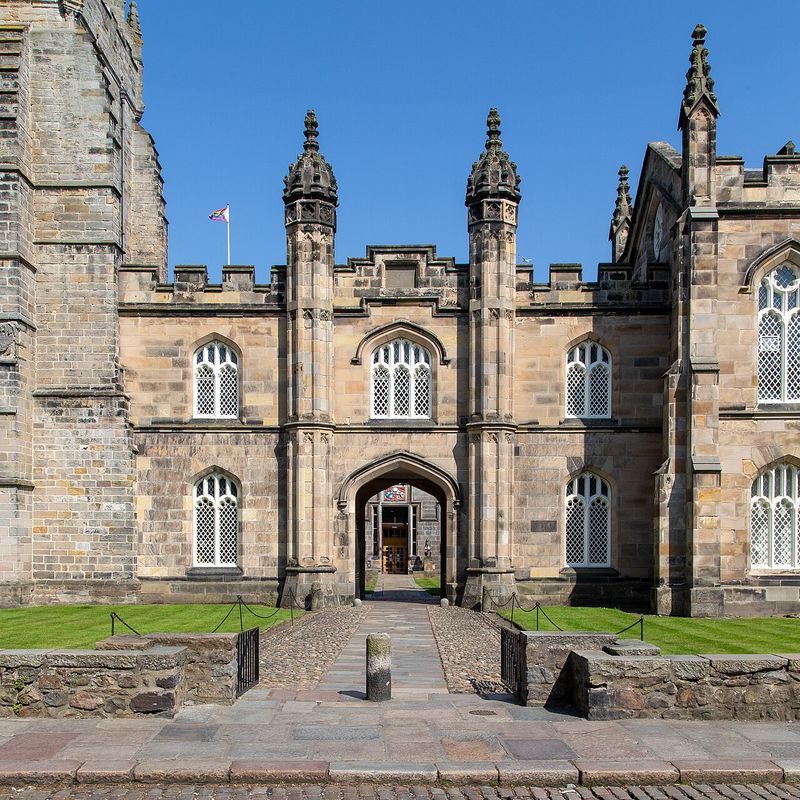
Aberdeen’s Department of Divinity, History, Philosophy and Art History ranks 33rd in the world for Theology, Divinity and Religious Studies in QS 2026 and “1st in the UK for the quality of our research in Theology in the latest Research Excellence Framework (REF 2021).” Aberdeen offers four M.Th. specialisation tracks: Biblical Studies, Church History, Systematic Theology, and Theological Ethics.
Integrated PhD pathway. Aberdeen’s most distinctive offering for M.Div. graduates is its Integrated PhD, which the department’s own page describes thus: “Candidates with either a relevant undergraduate degree or a first postgraduate degree (such as an MDiv) are welcome to apply.” The four-year structure (one taught year plus three doctoral) leading to a 100,000-word thesis lets an M.Div. graduate move directly into doctoral work without a separate research-master’s stop.
Cohort and admissions. Aberdeen does not publish per-program cohort or acceptance rate. The research M.Th. floor is UK Second Class Honours (Upper Division)—roughly a 3.3 U.S. GPA—“in an appropriate field, or its equivalent.” The Integrated PhD pathway adds its own admissions logic but is not a separate cohort for the M.Th.
Honest assessment. Aberdeen is a serious doctoral-pipeline option for evangelical Reformed M.Div. graduates in particular—the school has strong evangelical and Reformed scholars and a long history of producing theologians who go on to teaching positions. The Integrated PhD’s explicit welcome of M.Div. holders is a meaningful structural advantage.
13. Toronto School of Theology (Th.M.)
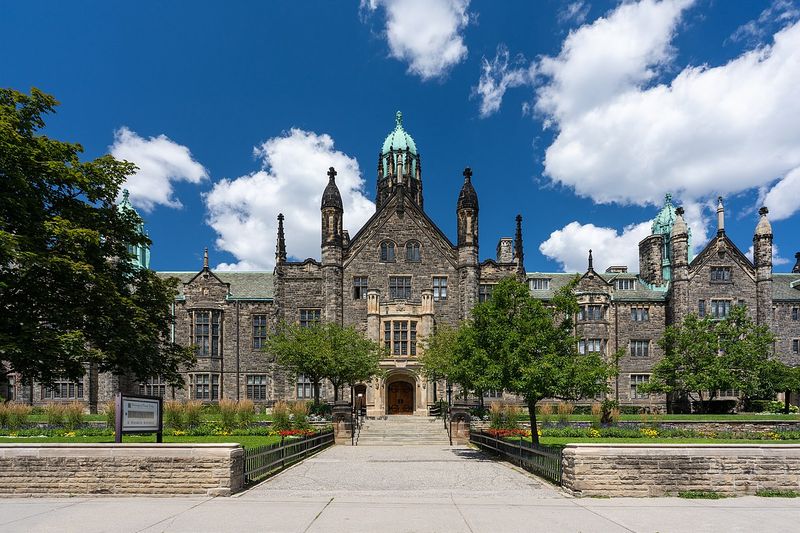
The Toronto School of Theology (TST) is an ecumenical consortium of seven theological colleges affiliated with the University of Toronto: Emmanuel College, Knox College, Regis College, St. Augustine’s Seminary, the University of St. Michael’s College, Trinity College Faculty of Divinity, and Wycliffe College. Since 2022, Regis College and St. Michael’s have operated as the federated Regis St. Michael’s Faculty of Theology (RSM). The Th.M. is “granted conjointly by the University of Toronto and the TST member school in which the student is registered.”
Structure. Per RSM: “The ThM program is designed to deepen a student’s knowledge of theology and further their preparation for pastoral ministry or for doctoral study.” Two options: Option I (six courses plus a thesis in major area; qualifies for TST doctoral study) and Option II (eight courses plus an extended essay; does not qualify for TST doctoral studies). “No full-time residence is required for the Th.M.”—an unusual structural flexibility that distinguishes TST from most U.S. counterparts. Completion within one to six years from original registration.
Tradition fit. Catholic candidates would typically register at Regis St. Michael’s; Anglicans at Wycliffe (evangelical) or Trinity (Anglo-Catholic); United Church candidates at Emmanuel; Presbyterians at Knox.
Funding. TST does not guarantee funding; member colleges vary. Regis College’s own admissions materials state plainly that “Regis College cannot guarantee funding for its students; it is our students’ responsibility to secure sufficient funding for their studies.”
Cohort and admissions. TST does not publish a consortium-wide Th.M. cohort size or acceptance rate. The published admissions floor is B+ (3.3/4.0 cumulative GPA) or equivalent in the prior M.Div. or first theology master’s—the cleanest published numerical floor of any consortium in this set. Thesis-track (Option I) applicants additionally need demonstrated language competency. Doctoral progression from TST requires an A− (3.7) average in the Th.M.
Honest assessment. TST is the strongest Th.M. consortium in Canada, with University of Toronto’s research-university resources, the conjoint U of T degree credentialing, and the unique flexibility to choose a member college aligned with one’s tradition. For Anglicans (Wycliffe or Trinity) and Catholics (Regis St. Michael’s), it is uniquely well-positioned. The non-residential structure is unusual and useful, but the funding burden falls on the student.
14. Westminster Theological Seminary (Th.M.)
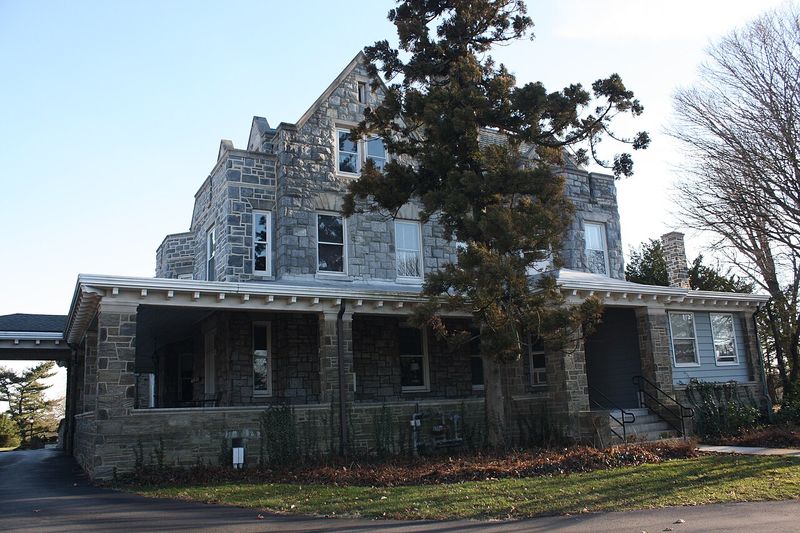
Westminster Theological Seminary, in Glenside, Pennsylvania, is the most aggressively confessional U.S. Reformed Th.M. The seminary is closely aligned with the Orthodox Presbyterian Church (OPC) and the Presbyterian Church in America (PCA) and was founded in 1929 by J. Gresham Machen as a conservative breakaway from Princeton Theological Seminary. Per WTS’s own materials: “Each of our full time professors must subscribe to the Westminster Standards ‘ex animo’ or ‘without exception.’ This means that we are unswervingly committed to the Reformed tradition as it is defined in these documents.”
Degree. Master of Theology (Th.M.) in two fields: biblical studies (Old Testament or New Testament) and historical and theological studies (church history, systematic theology, or apologetics). Per WTS’s program description: “The purpose of the ThM is to increase the student’s knowledge of a major field of theological learning, particularly through training and practice in the use of the methods and tools of theological research, and thus to further his preparation for a pastoral ministry, for teaching ministry, or for more advanced graduate study.” Available in traditional residential mode and a modular format with week-long intensives in January and July/August.
Confessional posture. Subscription to the Westminster Confession of Faith, the Larger Catechism, and the Shorter Catechism. Inerrancy affirmed. Complementarian on women in ministry; WTS does not ordain women, and the faculty is overwhelmingly male.
Faculty. Iain Duguid (Old Testament) and Brandon Crowe (New Testament) anchor the biblical-studies faculty; David Garner (Charles Krahe Professor of Systematic Theology) continues in Systematic Theology and has been named Westminster’s next President effective July 1, 2026. Two prominent recent departures are worth noting because older guides and search results still surface them as WTS faculty: Carl R. Trueman left in 2018 for Grove City College, and Lane G. Tipton departed in November 2019 to join Reformed Forum as Fellow of Biblical and Systematic Theology. Verify the current faculty roster on WTS’s own page before applying.
Funding. Per WTS’s own program page: “Limited funding is available.” Do not expect a fully funded Th.M.
Yellow Ribbon (GI Bill veterans). Westminster Theological Seminary does not participate in the Yellow Ribbon Program. WTS’s stated reason (most recently surfaced on the California campus’s veteran-affairs page) is that tuition is below the VA’s Post-9/11 GI Bill annual private-school cap, so Yellow Ribbon is not structurally needed for full coverage. Veterans should verify against the current-year VA cap and Westminster’s current Th.M. tuition before relying on this—caps and tuition shift annually, and the WTS California argument may not hold for the Philadelphia campus. Combined with the seminary’s “limited” Th.M. funding, veterans without Post-9/11-cap-covered tuition should expect out-of-pocket cost.
Cohort and admissions. Westminster does not publish a Th.M.-specific cohort size or acceptance rate (school-wide Peterson’s data shows ~78% acceptance and ~59% yield across all graduate programs, but that figure is decision-irrelevant for the Th.M.). The catalog requires a B+ (approximately 3.3) academic average in college and seminary work, plus demonstrated competency in Greek and Hebrew equivalent to Westminster’s M.Div./M.A.R. language requirements. Confessional fit—subscription to the Westminster Standards—matters more than any cohort number.
Honest assessment. The right choice for OPC, PCA, or other confessional Reformed applicants intending Reformed pastoral ministry or a Reformed doctoral program. The wrong choice for applicants seeking breadth across non-Reformed traditions or for any woman seeking ordained ministry preparation.
15. Trinity Evangelical Divinity School at Trinity Western University (Th.M.)
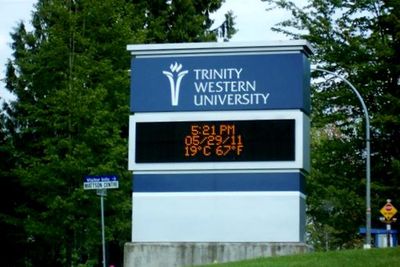
The most consequential structural change in U.S. evangelical theological education in the past decade is in flight as I write this. In April 2025, Trinity International University and Trinity Western University (Langley, British Columbia) jointly announced that TEDS would become TWU’s seminary. Ownership transfer was planned to complete by the end of 2025. TEDS operated at its Bannockburn, Illinois campus through the 2025–2026 academic year, with its final commencement at Bannockburn in May 2026. The first class at TEDS-at-TWU in Langley launches September 2026.
The Th.M. is among the programs continuing at TWU: TWU’s TEDS-at-TWU page explicitly lists “Theology (ThM)” alongside the M.Div., M.A. in Theological Studies, M.A. in Christian Studies, D.Min., and multiple Ph.D. tracks. Applicants for Fall 2026 entry should apply through TWU rather than the wound-down Bannockburn admissions process.
Pre-merger Th.M. structure. The TEDS Th.M. was “intended to provide advanced theological study beyond what is normally provided at the MDiv level.” Admission required an earned M.Div. or equivalent (74+ semester hours parallel to TEDS’s M.Div.), 3.0 GPA, and biblical/modern-language proficiency. Concentrations spanned eight departments. Whether the program retains this exact shape at TWU should be verified directly with TWU admissions before applying.
Confessional posture. TEDS is affiliated with the Evangelical Free Church of America. The EFCA Statement of Faith affirms biblical inerrancy. The EFCA does not have a single denominational position on women’s ordination; TEDS admits women and has female faculty.
Faculty. Don Carson (New Testament) is emeritus; Kevin Vanhoozer (Systematic Theology) is among TEDS’s most prominent figures; David W. Pao (New Testament) continues as Dean of TEDS through the institution’s transition to TWU. Pao served as Interim President of Trinity International University from July 1, 2025 until succeeded by Eric Halvorson, TIU’s 18th President. Faculty retention through the move is uncertain and material; verify before applying.
Enrollment context. Per Baptist News Global (April 8, 2025): “Trinity Evangelical once was a powerhouse among U.S. seminaries, with a full-time equivalent enrollment of 1,510 students three decades ago. According to the latest data from the Association of Theological Schools, FTE enrollment now stands at 402.”
Yellow Ribbon (GI Bill veterans). Trinity International University historically participated in Yellow Ribbon at the Bannockburn campus, but the September 2026 transition to Trinity Western University in Langley, BC fundamentally changes the picture: Yellow Ribbon is a U.S.-only program, and TWU is a Canadian institution. The good news for veterans is that TWU is on VA’s Approved Foreign Schools list (Trinity Western University Langley, Canada, listed as Eligible), which means Post-9/11 GI Bill benefits transfer to TEDS-at-TWU at the foreign-school flat rate ($29,920.95 for 2025–2026; $30,908.34 for 2026–2027, paid in U.S. dollars—the same statutory tuition cap as private U.S. schools). What veterans lose in the transition is the Yellow Ribbon top-up above that cap and the standard Post-9/11 housing allowance (foreign-school enrollees typically receive only half the national online housing rate). Confirm current-year terms directly with TWU’s veteran-affairs office and the VA’s GI Bill Comparison Tool before applying for Fall 2026 entry.
Cohort and admissions. TEDS does not break out Th.M. enrollment, and the institutional transition is more decision-relevant than any cohort number: pre-merger TEDS full-time-equivalent enrollment fell from 753 in 2015 to 402 in Fall 2024 (a 47% decline). The first TEDS-at-TWU class enrolls Fall 2026 in Langley, B.C. Standard TEDS admissions floor (typically 3.0 GPA) carries over to the relaunch, but applicants should expect program restructuring across the move and verify Th.M.-specific terms directly with TWU before applying.
Honest assessment. TEDS’s Th.M. was, for decades, one of the strongest evangelical Th.M. programs in North America. The relocation to TWU preserves the program’s continuity but introduces real institutional uncertainty. For a 2026–2027 applicant, treat the TEDS-at-TWU Th.M. as in active rebuild and consider Gordon-Conwell or a U.K. program as alternates worth evaluating.
16. Gordon-Conwell Theological Seminary (Th.M.)
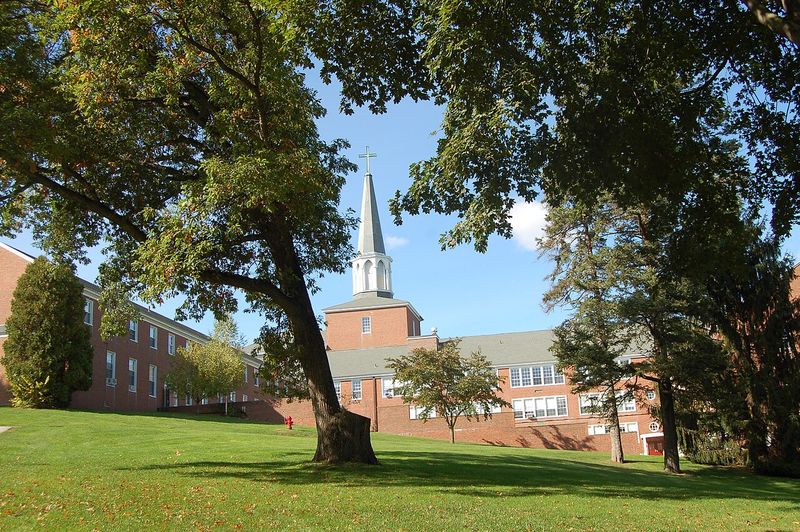
Gordon-Conwell’s Th.M. is “a one-year capstone degree providing specialized preparation for Christian ministry or doctoral work,” available fully online, in-person, or hybrid. Concentrations include Biblical Studies (Old Testament or New Testament) and others. Admission requires “an MDiv or an academic MA in Theology with at least 60 credits and a minimum 3.0 GPA from an accredited institution”; Hebrew or Greek competency is required for biblical-studies concentrations.
Confessional posture. Broadly evangelical and multi-denominational—“Baptist, Presbyterian, Wesleyan, Pentecostal, Anglican, and more”—unified around the authority of Scripture as articulated in the seminary’s Statement of Faith. GCTS affirms inerrancy. On women in ministry, GCTS does not enforce a single complementarian or egalitarian position.
Institutional health caveat. Per Christianity Today (May 17, 2022), Gordon-Conwell’s enrollment declined from 1,230 full-time equivalent students in 2012 to 633 in 2021, and the seminary sold its 102-acre Hamilton, Massachusetts campus to remain financially solvent. The school has restructured significantly since. For prospective Th.M. applicants, verify named supervisors are still in residence at application time.
Yellow Ribbon (GI Bill veterans). Gordon-Conwell appears in some Yellow Ribbon listings but the documented contribution is minimal—one recent year showed a single veteran receiving $472 in Yellow Ribbon benefits ($944 total after VA matching). Combined with the seminary’s broader institutional contraction (the campus sale, the enrollment decline, the faculty reductions), veterans should not count on Gordon-Conwell Yellow Ribbon to close any meaningful tuition gap. Verify current-year participation and award amounts directly with the Gordon-Conwell School Certifying Official before applying.
Cohort and admissions. Gordon-Conwell does not publish a Th.M.-specific cohort size or acceptance rate; total seminary enrollment is 1,373 graduate students (255 full-time, 1,118 part-time) for 2023–24 across all campuses. Floor: M.Div. or academic M.A. in theology with at least 60 credits, plus a minimum 3.0 GPA. Biblical Studies Th.M. requires a Greek or Hebrew competency exam. The most flexible delivery in the U.S. set—fully online, in-person, or hybrid—combined with a clear 3.0 floor.
Honest assessment. The most ecumenically evangelical of U.S. confessional Th.M. options. Best fit for Baptist, Wesleyan, or non-confessional Reformed applicants wanting a rigorous Th.M. without single-confession lock-in. The flexible delivery modes work well for working pastors. The institution’s recent contraction is real and worth weighing.
What Most Lists Get Wrong: The Th.M. vs. M.T.S. Confusion
The single most common error in the existing online inventory of “best theology master’s programs” is conflating the Th.M. with the M.T.S. They are not the same degree, they do not occupy the same place in the credential ladder, and they are not aimed at the same audience.
The Th.M. (Master of Theology) and the S.T.M. (Master of Sacred Theology) are post-M.Div. research master’s degrees. They require a completed M.Div., or a B.D., or a recognized international equivalent first-cycle theological qualification, for enrollment. They build on prior theological graduate work. The Association of Theological Schools’ Master of Theology standard puts it directly: the Th.M./S.T.M. is “an advanced, academically oriented, master’s degree for people who already have a Master of Divinity degree or other graduate theological degree providing equivalent academic background. … Since it builds upon a previous master’s degree, this degree may require as few as 24 semester credits or equivalent units.”
The M.T.S. (Master of Theological Studies) and the M.A.R. (Master of Arts in Religion) are first graduate theology degrees. They are typically two-year stand-alone academic master’s degrees that anyone with a bachelor’s in any field can enter—a bachelor’s in chemistry, English, business, anything. They sit at the same prerequisite level as the M.Div., not above it. They are typically the right credential for someone exploring theology academically without a ministry credential, or for someone preparing for a Ph.D. in religious studies who does not need (or want) the M.Div.’s pastoral-formation component.
The diagnostic test is enrollment prerequisite. If a program admits applicants whose only graduate-school qualification is a bachelor’s degree, it is a first-cycle theology master’s, not a post-M.Div. degree. By that test, the M.T.S. and the M.A.R. are out of scope for everything this guide covers.
Where an institution offers both a Th.M. and an M.T.S.—Harvard, Duke, Candler, Boston University, Princeton, and others all do—this guide profiles only the Th.M. The M.T.S. is a perfectly good degree for the audience it targets, but it is a different credential.
A Brief History of the Th.M. and S.T.M.
Medieval Latin Origins
The Th.M. and the S.T.M. are the same degree under two different names, and the easiest way to see why is to follow the Latin. The phrase Sacrae Theologiae Magister—“Master of Sacred Theology,” abbreviated S.T.M.—entered Western academic vocabulary through a series of papal concessions running from the early thirteenth century and culminating in a 1303 bull by Pope Benedict XI, himself a Dominican, which confirmed the Order of Preachers’ authority to confer the title independently of any university theology faculty. The Dominicans still bestow it today as an honorary title; in December 2023, the Master of the Order conferred the S.T.M. on Thomas Joseph White, O.P., at the Angelicum in Rome. That medieval pedigree is why “S.T.M.” carries an unmistakably ecclesiastical resonance: it began as a teaching license granted in nomine sacrae theologiae, not as a research credential.
The parallel abbreviation Theologiae Magister—rendered “Th.M.” or “M.Th.”—entered the American academic vocabulary later and through a different door, the professional post-baccalaureate seminary, but the two names have always been near-synonyms. The current Association of Theological Schools’ Standards of Accreditation treat them as functionally interchangeable: “The only nomenclature normally allowed for this degree is Master of Theology (abbreviated as ThM or sometimes MTh) or Master of Sacred Theology (abbreviated as STM).”
Pinning Down the First American Th.M.
Pinning down the “first” American Th.M. is harder than the founding-date pages usually suggest, because nineteenth-century seminary catalogs are inconsistently digitized and because the degree emerged gradually from a thicket of older Anglo-Latin nomenclature—B.D., S.T.B., S.T.M., D.D.—that did not standardize until the postwar period. Princeton Theological Seminary, chartered by the Presbyterian General Assembly in 1812 as the second graduate theological school in the United States, was offering graduate-level theological study to post-B.D. men by the later nineteenth century; the seminary’s institutional history does not give a year for when the Th.M. acquired its current name. The competing claim belongs to Dallas Theological Seminary, whose own institutional history credits founder Lewis Sperry Chafer (president 1924–1952) with pioneering “one of the first four-year degrees in theology, the Master of Theology (Th.M.),” with DTS catalogs from the late 1950s showing Th.M. degrees being awarded routinely from at least 1936.
Glenn T. Miller’s Piety and Profession: American Protestant Theological Education, 1870–1970 (Eerdmans, 2007)—the standard scholarly account—documents the early-twentieth-century “self-conscious theological layering” by which evangelical seminaries used advanced theological master’s degrees both to mark academic seriousness and to compete with the mainline divinity schools. The probable historical reality is that several seminaries introduced advanced post-B.D. master’s degrees, variously called Th.M., S.T.M., or “S.T.B. with honors,” between roughly the 1880s and the 1930s, with no single demonstrable “first.” By mid-century the Th.M. was a recognizable, if not yet standardized, fourth-year research master’s at Reformed and evangelical institutions.
S.T.M. Versus Th.M.: A Denominational Map
The S.T.M. nomenclature traveled into American Protestantism through institutions consciously aligned with the older European university tradition. Yale Divinity School, whose theological department dates to 1822 and which first conferred the B.D. in 1867, adopted the S.T.M. as its advanced research master’s; the exact founding year is not recoverable from Yale’s online history but the degree was certainly active by the mid-twentieth century. The pattern across the field is consistent: institutions with strong Anglican, Episcopal, Lutheran, or older Latin-academic ties tend to use “S.T.M.” (Yale, Boston University, Sewanee’s School of Theology, Nashotah House, Trinity Anglican Seminary), while Reformed, Methodist, and Baptist institutions tend to use “Th.M.” (Princeton, Duke, Harvard, Candler, Boston College, most Reformed and Evangelical seminaries). The naming follows the older Latin academic ladder rather than the American B.D./Th.M./Th.D. ladder, even though by ATS standards the two degrees are functionally identical.
The 1971 Redesignation and the Princeton Template
The single most consequential moment for the modern Th.M./S.T.M. landscape was the redesignation of the Bachelor of Divinity as the Master of Divinity, which the American Association of Theological Schools (now ATS) drove through across its membership between roughly 1969 and 1972. The motive was prosaic: the title “Bachelor of Divinity” implied parity with an undergraduate B.A., even though every B.D. student already held a bachelor’s degree. The Association formally added the M.Div. to its accreditation standards in the early 1970s. Yale, like most schools, replaced its B.D. with the M.Div. in 1971.
The shift paralleled, in milder form, the American legal academy’s nearly contemporaneous redesignation of the Bachelor of Laws as the Juris Doctor (J.D.)—a more dramatic move that pushed the first professional law degree from bachelor’s to doctoral nomenclature, while leaving the advanced research master’s, the LL.M., untouched as a master’s. Theology stopped short of that doctoral leap, redesignating only the first professional degree as a master’s.
This change had a paradoxical effect on the post-B.D. master’s: before 1971, the Th.M./S.T.M. was unambiguously a fourth-year post-baccalaureate research credential sitting above the B.D., and after 1971, both degrees were master’s degrees and one might have predicted the Th.M./S.T.M. would collapse into the M.Div. or into one of the new academic M.A. tracks. Instead, the post-B.D. master’s preserved a function that the M.Div. could not absorb: a focused, one-year, post-professional research degree, ordinarily twenty-four credit hours, designed for doctoral preparation or for specialized ministry deepening. ATS today makes this preserved function explicit, defining the degree as one “for people who already have a Master of Divinity degree or other graduate theological degree providing equivalent academic background” and requiring “at least half of the coursework in courses designed for students in advanced, academically oriented degree programs.”
By the late twentieth century the Princeton Th.M. had become the de facto model for the American post-M.Div. research master’s: twenty-four credit hours, one year of full-time study, five specializations (Biblical Studies, Church History, Theology, Practical Theology, and Worship Studies), and an optional three- or six-credit thesis. Duke Divinity School and several Methodist and Reformed institutions adopted essentially this template; the duration and credit-hour shape now feels native to American theological education even though it is a relatively recent settlement.
British Parallels and Persistent Nomenclature
The American Th.M./S.T.M. did not borrow directly from British practice, but it grew up alongside structurally similar British degrees. At Oxford, the M.Phil. in Theology is a two-year postgraduate research degree that leads into the D.Phil. and is functionally parallel to the American Th.M., with the same coursework-plus-thesis order of work translated into the British essay-and-dissertation format. Cambridge offers a comparable M.Phil. Edinburgh and the other Scottish universities maintain the older M.Th. The Scottish Reformed tradition exerted real influence on American Presbyterian seminaries, particularly Princeton, but the actual degree-nomenclature borrowing flowed more from continental medieval Latin (Sacrae Theologiae Magister) than from contemporary British practice.
Why has North American theological education not converged on a single name? The simplest answer is denominational and institutional inheritance, and the inertia of established credentials. ATS, having approved the dual nomenclature, has no incentive to force convergence, and individual schools rarely change a name once the credential is established and recognized in their graduates’ professional records. The result is the strangely persistent pattern this guide documents: Yale’s S.T.M. and Princeton’s Th.M. are the same degree by the regulator’s own standards, taken at roughly comparable cost and producing graduates who compete for the same Ph.D. cohorts, and yet the names will probably outlive any of us.
The Last Decade in Four Trends
The decade most relevant to a prospective student has been defined by four trends. First, online and hybrid delivery has spread rapidly: roughly 95 percent of ATS schools went completely online during 2020, and many have retained meaningful online or hybrid Th.M. options since. Second, M.A. degree enrollment equaled M.Div. enrollment across ATS for the first time in the Association’s century-long history in fall 2022 (both at roughly 28,000 students), putting upstream pressure on the entire post-M.Div. master’s pipeline because fewer students arrive at the Th.M./S.T.M. holding the M.Div.
Third, the Th.M. has become more deliberately a Ph.D.-pipeline credential as doctoral admissions have grown more competitive—a use that the founding generations of the degree did not particularly emphasize. Fourth, mainline Protestant seminary enrollment has continued to contract, and even the strongest divinity schools now run smaller M.Div. cohorts than they did a generation ago. The squeeze pushes institutions toward larger S.T.M./Th.M. and concentrated M.A.R./M.T.S. programs as research-master alternatives that can scale across the contracted M.Div. ecosystem.
The Th.M./S.T.M. sits in a peculiar place in this history: a credential born of medieval Latin, naturalized into American theological education in the early twentieth century, restructured by the 1969–1972 nomenclature reforms, and now functioning as a doctoral on-ramp and a ministry-deepening capstone for a profession whose enrollment base is shifting underneath it. The degree is not new. The strongest version of it is still recognizably the one the Dominicans authorized in 1303, only with more credit hours, more languages, and a clearer line into the modern Ph.D.
Cross-Cutting Issues
Funding asymmetry: the Ph.D. is funded; the master’s often isn’t
The single most important financial fact about post-M.Div. master’s degrees is the asymmetry between the Th.M./S.T.M. cohort and the Ph.D. cohort at the same institution. At nearly every program profiled in this guide, a fully-funded Ph.D. cohort sits alongside a tuition-charging Th.M. cohort. The institutions fund the cohort they most want to invest in, and that is rarely the second-master’s student.
The cleanest illustration of this asymmetry is at Harvard Divinity School, whose own Institutional Grants page states categorically that “HDS does not provide grant support for the ThM or MRPL programs”—while the M.Div. and M.T.S. cohorts receive HDS institutional grant aid at high rates. Th.M. students at HDS are the only master’s-degree cohort the school will not fund with institutional grants. International Th.M. students get nothing at all—no loans, no aid, no tuition support. That is the most restrictive funding policy among major U.S. Th.M. programs profiled here, and it is published openly on Harvard’s own website.
The pattern repeats with variation across the field. Yale’s S.T.M. is need-based-aid-eligible up to full tuition but offers no living stipend and no merit awards. Duke offers one international full-tuition Th.M. scholarship per year. Princeton’s funding is “limited.” Most Reformed/Evangelical Th.M. programs are also unfunded. The European programs depend on EU tuition rates and external scholarships where the applicant qualifies.
The takeaway: assume your Th.M. or S.T.M. will not be fully funded, and treat any institutional aid above tuition coverage as a bonus rather than the baseline. Build a financial plan accordingly.
Yellow Ribbon Program participation: who covers the gap for veterans
A separate but related fact pattern applies to veterans using the Post-9/11 GI Bill. The VA’s Yellow Ribbon Program is a voluntary supplement under which participating private schools agree to contribute additional funds—matched dollar-for-dollar by the VA—to close the gap between the GI Bill’s annual private-school tuition cap and the school’s actual tuition. Without Yellow Ribbon, a veteran at a school whose tuition exceeds the VA cap pays the difference out of pocket; with Yellow Ribbon, that difference can be fully or partially covered.
For a Th.M. or S.T.M. veteran, the Yellow Ribbon question maps almost directly onto the institutional-grant question profiled above. Schools that do not provide institutional grant aid for the Th.M. usually do not provide Yellow Ribbon matching for it either, because the Yellow Ribbon match is built around the school’s institutional scholarship policy. Harvard Divinity is the clearest illustration: HDS is an institutional Yellow Ribbon participant, but the Yellow Ribbon match is funded by re-designating a portion of HDS scholarship aid—and Th.M. and MRPL students do not receive HDS scholarship aid, so there is no contribution from which to draw the match. The practical result is that Th.M. veterans at HDS receive only the basic Post-9/11 GI Bill cap; the gap is paid out of pocket or with private loans.
Across the profiled programs:
- U.S. programs that participate in Yellow Ribbon (Th.M./S.T.M. eligible or likely eligible): Yale Divinity (no cap on students), Duke Divinity, Boston College Clough (graduate eligibility worth verifying), and Emory Candler.
- U.S. programs that do NOT participate in Yellow Ribbon: Princeton Theological Seminary and Westminster Theological Seminary (verify directly—public records ambiguous).
- U.S. program that participates in Yellow Ribbon overall but excludes the Th.M.: Harvard Divinity School.
- U.S. program in transcontinental transition: TEDS at Trinity Western University—Yellow Ribbon coverage ends when the program relocates to Canada in September 2026; TWU is a foreign school and not Yellow Ribbon eligible.
- Foreign schools (Oxford, Cambridge, Durham, Edinburgh, St Andrews, Aberdeen, Toronto School of Theology, TEDS-at-TWU after 2026): Yellow Ribbon is U.S.-only and does not apply. The Post-9/11 GI Bill is still usable at schools that appear on VA’s Approved Foreign Schools list, paid at the same statutory tuition cap as private U.S. schools ($29,920.95 for 2025–2026; $30,908.34 for 2026–2027, paid in U.S. dollars). What veterans lose abroad is not the tuition cap but the Yellow Ribbon top-up (unavailable) and the standard Post-9/11 housing allowance (foreign-school enrollees typically receive only half the national online housing rate). Six U.K. institutions (Oxford, Cambridge, Durham, Edinburgh, St Andrews, Aberdeen), the University of Toronto (which transmits eligibility to the Toronto School of Theology consortium), and Trinity Western University are all on VA’s Approved Foreign Schools list as of this writing.
The bottom line for veterans: the institutions most likely to fund the Th.M./S.T.M. without GI Bill help (Yale, Duke, BC, Candler) are also the institutions most likely to participate in Yellow Ribbon. The institutions that leave the funding gap to the student (Harvard’s Th.M., Princeton, Westminster) typically also leave the Yellow Ribbon gap. Verify every claim above directly with the school’s School Certifying Official and VA’s current participating-schools database before relying on it.
Faculty turnover as the silent killer of program reputation
Programs are reputations attached to individuals. When the individuals retire, die, or move, the reputation lags behind for years. Several material faculty transitions are reshaping the field as I write this in May 2026:
Yale Divinity School: John J. Collins, the long-time Holmes Professor of Old Testament Criticism and Interpretation, is now emeritus. Teresa Berger retired and became emerita on June 30, 2025. Andrew McGowan announced he will step down as Dean of Berkeley Divinity at the end of academic year 2025–2026.
Princeton Theological Seminary: Three confirmed retirements in 2026—George Hunsinger (Hazel Thompson McCord Professor of Systematic Theology), Mark Lewis Taylor (Maxwell M. Upson Professor of Theology and Culture), and Dirk Smit (Rimmer and Ruth de Vries Professor of Reformed Theology and Public Life)—will be celebrated at a farewell event titled “The Work That Endures” on April 24, 2026. Hanna Reichel was promoted to full professor and named the Charles Hodge Professor of Systematic Theology in June 2024; younger faculty are stepping into the gap.
Harvard Divinity School: Terrence L. Johnson, Director of Religion and Public Life and Charles G. Adams Professor of African American Religious Studies, was named the next Mary Lee Hardin Willard Dean of Candler School of Theology effective August 1, 2026, on a five-year term. Harvard is losing a senior Africana religion scholar; Candler is gaining a major dean.
Trinity Evangelical Divinity School: Operating its final year at Bannockburn through May 2026; relaunching at Trinity Western University in Langley, BC in September 2026.
Two practical implications. First, an applicant at the application-decision stage should verify against the live faculty page that the named professor in any program profile is still teaching—and ideally still taking new master’s-level students. Second, ask current students or recent alumni whether the supervisor is in active research mode and emotionally available for thesis supervision. A senior scholar listed on the faculty page can be in a soft pre-retirement holding pattern that does not show up in any catalog.
Does a Th.M. or S.T.M. actually help with Ph.D. applications?
This is the single most consequential question an M.Div. graduate weighing the Th.M. faces, and the honest answer is more conditional than either the programs or the applicant typically wants. A Th.M. or S.T.M. helps decisively when it fixes a discrete and visible weakness in a Ph.D. application: a thin biblical-language transcript, faculty letters from scholars the admissions committee has never heard of, no research-grade writing sample, no coherent dissertation question. A Th.M. helps barely at all—and may actively cost the applicant a year of stipend and another year of postponed life decisions—when the underlying M.Div. application would already have been competitive at the funded Ph.D. cohorts that are the only ones worth pursuing.
What the programs say, and what the silence tells you. Receiving Ph.D. programs are studiously non-committal about the Th.M. Yale’s Religious Studies department, Princeton Theological Seminary’s Ph.D., Duke’s graduate program—none formally requires the Th.M.; all list M.Div., M.T.S., M.A.R., or M.A. as the assumed entering degrees. But the programs that issue the Th.M. are more candid about its purpose. Princeton describes its Th.M. as designed so students “complete the ThM program poised to pursue PhD studies.” Westminster writes that “doctoral programs are notoriously competitive, and some students may have a GPA in their master’s program that isn’t as strong as other applicants. Students like this can undertake the ThM in order to bolster their future PhD applications by proving they are up to the task of post-graduate research programs.” Read with the institutional self-interest baked in, the consistent message from issuing programs is that the Th.M. exists to remedy what the M.Div. does not.
The most candid faculty perspective comes from the late Larry Hurtado, who supervised Edinburgh’s Ph.D. program in New Testament and biblical studies for years. On his blog he wrote that Edinburgh actively “encourage[s] MDiv students to take a true masters that builds on their MDiv work (variously called MTh, ThM, MA, etc.) in preparation for our PhD programmes,” because “those who have conducted a masters-level dissertation project are better prepared for the task of framing and executing a PhD thesis. The MDiv is, however, really a second undergraduate degree (and was called a BD until the late 60s).” His framing captures the structural reality most North American admissions committees apply quietly: the M.Div. is a professional-formation degree, and a doctoral supervisor evaluating an applicant from the M.Div. alone has no easy way to see whether the candidate can sustain a research project. The Th.M. produces exactly the artifact the committee wants to see—a master’s thesis under faculty advisement and a recommendation from that supervising scholar.
Three use cases where the Th.M. genuinely moves the needle. First, the applicant from a non-elite M.Div. program reaching for faculty letters that admissions committees will actually recognize. A letter from a recognized scholar at Duke, Yale, Princeton, or Harvard weighs materially more than a letter from a faculty member the committee has never heard of, and a Th.M. is often the cleanest path for an applicant from a regional or confessional seminary to acquire those letters. Duke Divinity’s own published placement page—the most concrete Th.M.-to-Ph.D. placement data any major U.S. school discloses—names Duke, Princeton Theological Seminary, Baylor, Asbury, Boston University, and the University of North Carolina at Chapel Hill as recent doctoral destinations.
Second, the applicant whose biblical or ancient languages are short. An M.Div. typically requires one to two years of Greek and one year of Hebrew; a biblical-studies Ph.D. application at an elite program effectively needs advanced Greek, intermediate Hebrew, German, French, and a working acquaintance with Latin. Yale’s Religious Studies department describes its Early Mediterranean and West Asian Religions field as “a multidisciplinary program that enables students to develop research expertise and teaching competence in the traditional fields of Second Temple and Hellenistic Judaism, New Testament, Ancient Christianity and Rabbinic Judaism”—and notes elsewhere that EMWAR students may request degree extensions “because of the intensive language and textual requirements of their programs.” A Th.M. year spent on third-year Greek, second-year Hebrew, and German for theological research closes the single most common rejection reason for biblical-studies applicants.
Third, the applicant whose writing sample is not yet a research artifact. Admissions committees treat the writing sample as a sample of work the applicant could realistically produce in the program. A polished M.Div. seminar paper rarely meets that bar; a Th.M. thesis—Duke requires a substantial written thesis, Princeton offers a three- or six-credit thesis option, Boston College Clough’s Advanced Theological Study track requires a 50–60-page thesis “in preparation for doctoral work”—does.
When the Th.M. is not worth it. If your M.Div. is from a Ph.D.-feeding institution, your faculty letters are coming from scholars known to the field, your languages are at or near research level, and you can articulate a viable dissertation direction in two paragraphs—apply directly. The Th.M. in this case adds no decision-relevant information; the admissions committee already infers competence from your M.Div. transcript and your letters. What the year actually buys you is the opportunity cost: one year of foregone professional income (call it $50,000–$80,000 for a typical seminary-educated worker, materially more for the mid-career pivot), one year of additional tuition, and one year of postponed family, geographic, and career decisions.
At the elite institutions where the Th.M.’s signaling effect is strongest, the tuition is real and largely unfunded. Yale’s S.T.M. is need-based-tuition-eligible only—no merit awards, no living stipend, with 2025–2026 tuition at $30,576. Princeton Theological Seminary publishes a single $5,000 Th.M. Scholarship for select domestic students who show “exceptional promise for advanced theological research”; the rest of the $22,500 (2026–2027) tuition is paid out of pocket or through denominational or external aid. Harvard, as discussed above, provides no institutional grant aid for the Th.M. at all.
Internal vs. external Th.M. Staying at the M.Div. institution most often serves to deepen specific relationships with faculty who will later be Ph.D. supervisors or letter writers—the signal to a committee at the same institution is “this faculty already knows the applicant’s research well enough to advise the dissertation,” and the signal at a different institution is murkier (an internal Th.M. can read as a holding pattern). Leaving for a different school’s Th.M. is the better instrument when the goal is breadth of letters, exposure to a new faculty cluster, or repositioning a portfolio—and the cost of relocation and a fresh adjustment year itself signals seriousness to admissions committees.
Field-specific patterns. New Testament and biblical-studies applicants pursue the Duke and Princeton Theological Seminary Th.M. pipelines disproportionately, because the binding constraint is languages and the Th.M. year is most often spent loading German, French, advanced Greek, and Hebrew alongside a thesis. For historical theology and church history, the Th.M. matters most for applicants whose Latin and German are short; a thesis in a circumscribed period (patristic, medieval, Reformation) begins to demonstrate the period mastery historical programs want to see. For Catholic-track applicants pursuing doctoral work in a U.S. or Canadian Catholic theological department, the Boston College Th.M. (with the deep Clough faculty) and the Toronto School of Theology Th.M. (with the Regis St. Michael’s Catholic strand) are the strongest one-year preparation options.
The funded-Ph.D.-only consideration. If you have committed to enrolling only in a fully funded doctoral cohort—which, given the academic job market, is the only responsible commitment—the Th.M. question shifts. A Th.M. does not improve “acceptance odds” abstractly. It improves the quality of the application file in ways that translate into funded acceptances rather than waitlists or unfunded admits. A Th.M. that lifts an application from “interesting but not quite there” to “first-cut admit with funding” is doing real work. A Th.M. that moves an applicant from one rejection cycle to a different rejection cycle has cost a year of tuition for nothing.
For veterans, the calculation inverts. With full Post-9/11 GI Bill eligibility plus Yellow Ribbon at a participating school (Yale, Duke, BC, Candler), the marginal cash cost of a Th.M. year is small—primarily the housing allowance value of a year that could otherwise be spent in a funded Ph.D. cohort where tuition is already paid. The relevant optimization for a veteran is benefit-month allocation: Post-9/11 chapters cover 36 months, and the highest-leverage use is to apply benefits where the institution is not otherwise paying—meaning an unfunded M.Div. or Th.M., not a funded Ph.D. For a veteran with substantial GI Bill months remaining after the M.Div., a Th.M. before a funded Ph.D. is one of the most economically rational uses of the benefit available.
The job-market reality check. The post-Ph.D. tenure-track market in theology and biblical studies has been contracting for two decades. Per the AAR/SBL Jobs Report covering 2021–2024 (released April 2025), total job postings fell from 420 in AY17 to 282 in AY24—a 32.8% decline. Entry-level faculty positions fell 25.3% from AY19 to AY24. Tenure-track and tenured positions dropped from 175 in AY23 to 145 in AY24. Special Focus institutions (stand-alone seminaries) posted a ten-year low of only 39 positions in AY24. The structural ATS picture confirms the pattern: per Meinzer and Gin’s 2025 Mission, Models, and Money analysis, theological enrollment peaked at over 80,000 students across about 250 schools between fall 2004 and fall 2006, and stands at about 76,000 students across 274 schools in fall 2023—a structural decline driven by mainline M.Div. contraction.
This reality does not eliminate the Th.M. case; it sharpens it. If the floor for tenure-track hiring is rising and elite Ph.D. cohort sizes are stable, then the elite Ph.D. is the only Ph.D. worth funding to undertake, and the Th.M. as an instrument for entering that cohort acquires real value. The honest corollary is Hurtado’s own counsel: he wrote that he advises people “to start a PhD in biblical studies only if they are prepared to have no ill feelings afterward if there is no post.” That counsel implies, in turn, that the Th.M. is justified primarily as an instrument for entering elite programs that themselves justify the doctoral risk.
A decision framework, not a checklist. Apply directly to the Ph.D. if your M.Div. is from a Ph.D.-feeding institution, your faculty letters are coming from scholars the field knows, your languages already meet or exceed the program’s stated requirement, you have a research-quality writing sample on hand, you can articulate a viable dissertation question, and you would only accept a fully funded cohort offer.
Do the Th.M. first if your M.Div. is from a regional or confessional school not on Ph.D. admissions committees’ shortlists, your faculty letters would be weak or generic, your biblical or ancient languages are short of the field’s research-level expectation, you have no writing sample that demonstrates research-grade analysis, you are pivoting to a new sub-field, or—for veterans—you have GI Bill / Yellow Ribbon coverage that makes the marginal financial cost small.
The single test that overrides all of these: if you can name exactly which application deficit the Th.M. would fix, and the fix is plausible within twelve months at a price you can absorb, the year is worth doing. If you cannot, it isn’t.
This is the question I navigated wrong. In my final year at Yale Divinity School, I had GI Bill coverage that would have made the Yale S.T.M. effectively cost-free, a faculty bench willing to write letters, and a working sense of where my doctoral interests pointed but no thesis on file to prove it. The marginal positioning gain was real; the marginal financial cost was near-zero; the opportunity cost was a single year of career delay. I chose not to apply, and I have regretted that decision more than once. If you are in a structurally similar position—an existing degree from a strong institution, full GI Bill coverage at a Yellow Ribbon school, and a doctoral application that would benefit from a research-quality writing sample and one more year of language work—do the year. The case for it is asymmetric, and the asymmetry runs in favor of taking it.
Doctoral placement: where the data exists
Duke Divinity School publishes the most concrete Th.M. placement statement in U.S. theological education: “Th.M. graduates have been placed at Ph.D. and D.Min. programs at schools including Duke University, Princeton Theological Seminary, Baylor University, Asbury Theological Seminary, Boston University, and University of North Carolina at Chapel Hill.” Six named institutions, drawn from the most recent cohorts—the gold standard of public placement transparency.
Boston College Clough is second-best on this metric. Per CSTM’s published Sample Placements listing, recent Th.M. graduates have entered doctoral programs at Boston College, Durham University, and Saint Louis University, with other graduates moving into Jesuit secondary-school religious studies teaching, ethics instruction in the U.S. Army, and parish children, teens, and families ministry.
No other program profiled in this guide publishes comparable named-school lists. Yale, Princeton, and Harvard publish general framing only (“our graduates go on to lead congregations… serve at institutions around the world” and similar). U.K. programs publish only general statements (“Many of those who gain an MSt or MPhil proceed to further, usually doctoral study,” in Oxford’s framing).
The implication for prospective applicants: if you cannot find published placement data, ask the program director directly during admissions and request names of recent graduates you can contact for a candid conversation. A program’s refusal to provide names usually signals data the program would rather not promote.
Online versus residential reality check
Genuinely online or hybrid post-M.Div. master’s options are limited. Westminster offers modular intensives in January and July/August. Gordon-Conwell is multimode (online, hybrid, in-person). Toronto School of Theology’s Th.M. does not require full-time residence.
Strictly residential options include Yale’s S.T.M., Duke’s Th.M., Harvard’s Th.M., Oxford’s M.St. and M.Phil., and Cambridge’s M.Phil. (the part-time route is “not an online programme, and seminars are not available via video-conferencing,” per the Cambridge Faculty page).
For doctoral-program credibility specifically, a residential year at Yale, Duke, Princeton, Harvard, Oxford, or Cambridge reads materially stronger than an online Th.M. Doctoral admissions committees use the residential year as a proxy for serious research immersion and faculty mentoring relationships. Online Th.M. degrees are credible for pastoral career advancement and chaplaincy-track work, but are typically not the doctoral feeder.
What rankings actually measure
QS World University Rankings by Subject for Theology, Divinity & Religious Studies weight academic reputation surveys, employer reputation, and citations per paper. They do not measure post-M.Div. cohort funding, supervisor capacity in any given year, doctoral placement, or tradition fit. U.S. News does not rank theology master’s programs meaningfully. ATS accreditation is a quality floor, not a comparative ranking.
The QS top ten for theology in 2026—Notre Dame, Oxford, Harvard, Durham, Boston College, Chicago, Cambridge, KU Leuven, Duke, Yale—is a reasonable starting filter for academic reputation, but it conflates department prestige with availability of a post-M.Div. master’s: Notre Dame and Chicago do not offer one at all, Harvard offers it at unusual cost (the Th.M. is institutionally unfunded), and KU Leuven’s post-M.Div. path runs through an ecclesiastical cycle rather than a one-year research master’s. Two-year European M.Phil. tracks (Oxford M.Phil., St Andrews M.Phil.) similarly demand more time than the typical one-year Th.M. cohort.
Rankings are at best a tertiary filter. Far more decisive: which specific faculty are taking students; the actual funding offer in your particular acceptance letter; the doctoral placement record (or absence thereof); whether the program admits M.Div. holders as advanced standing; and whether the credential reads in your target career.
Decision Framework by Applicant Type
For an M.Div. graduate targeting a research Ph.D. in biblical or theological studies. The four U.S. flagships—Yale, Princeton, Duke, Harvard—remain the strongest doctoral feeders for the U.S. Ph.D. market. Duke has the best published placement record. Oxford (M.St. or M.Phil.) and Cambridge (M.Phil.) are the strongest U.K. options for the U.K. doctoral pipeline; Durham is the most credible alternative outside Oxbridge. Apply to multiple programs to maximize funding leverage; assume you will not be fully funded.
For a Catholic priest, religious, or seminarian preparing for doctoral work, or a Catholic lay theologian seeking advanced credentialing. Boston College’s Clough School is the strongest U.S. ecumenical-cluster Catholic option with serious institutional depth and the new $25 million Clough endowment. Toronto School of Theology’s Regis St. Michael’s offers a research-master option in a Canadian Catholic-tradition setting with University of Toronto resources. Catholic candidates whose primary need is doctoral preparation should target the Boston College Th.M. as the standard first choice.
For an M.Div. graduate in the Reformed tradition. Westminster (Philadelphia) for the most aggressive confessional posture and OPC/PCA pipeline. Princeton Th.M. for the Presbyterian mainline tradition with substantially deeper academic breadth. Aberdeen and Edinburgh for U.K. Reformed-tradition doctoral preparation.
For a broadly evangelical applicant wanting ecumenical breadth without confessional subscription. Gordon-Conwell Th.M. for multi-modality delivery and multi-denominational student body. TEDS at TWU may also serve once the relaunch is established, but verify program continuity before committing.
For a Methodist applicant. Duke or Candler for a broader research-master’s environment in the United Methodist orbit.
For a working pastor who cannot relocate. Westminster’s modular Th.M. (week-long January and July/August intensives) and Gordon-Conwell’s hybrid delivery are the strongest middle paths.
For an M.Div. graduate considering the Yale S.T.M. specifically. I have one piece of advice based on having considered it myself and chosen against. If you have any plausible reason to want a fourth year of structured theological study—if you are unsure about doctoral work, or you want to deepen one discipline before ordination, or you are leaving an M.Div. cohort you have come to love—and if you can secure tuition coverage through Yale’s need-based aid and find a way to cover living expenses—do it. The opportunity cost of one year is low compared to the opportunity cost of a lifetime of wondering. I wish I had.
Frequently Asked Questions
What is the difference between a Th.M. and an S.T.M.?
The Th.M. (Master of Theology) and the S.T.M. (Master of Sacred Theology) are functionally equivalent post-M.Div. research master’s degrees. The Th.M. nomenclature is used at Princeton, Duke, Harvard, Emory Candler, Boston College, and most U.S. Reformed/Evangelical seminaries. The S.T.M. nomenclature is used at Yale, Boston University, and institutions with Lutheran or Anglican heritage. The Association of Theological Schools treats the two names as interchangeable.
How is a Th.M. different from an M.T.S.?
The Th.M. and S.T.M. are post-M.Div. research master’s degrees that require a completed M.Div. (or B.D./S.T.B./recognized equivalent) for enrollment. The M.T.S. (Master of Theological Studies) and M.A.R. (Master of Arts in Religion) are first graduate theology degrees that admit applicants with only a bachelor’s in any field. The diagnostic test is enrollment prerequisite: if a program accepts a bachelor’s in any field as the sole graduate-level prerequisite, it is a first-cycle theology master’s, not a post-M.Div. degree. The M.T.S. and M.A.R. are perfectly good degrees for the audience they target, but they are not Th.M./S.T.M. equivalents.
What is the difference between a Th.M. and a D.Min.?
The Th.M. and D.Min. are different credentials aimed at different audiences and they rarely substitute for each other. The Th.M. is an academic research master’s that builds advanced theological and methodological capability—typically as preparation for doctoral study, for specialized teaching ministry, or for the kind of credential a teaching institution wants. The D.Min. (Doctor of Ministry) is a practitioner doctorate aimed at experienced ministers seeking advanced professional formation, usually pursued part-time over three to six years while continuing in full-time ministry. The Th.M. is one of the standard on-ramps to a Ph.D.; the D.Min. is the terminal practitioner credential for parish work, chaplaincy leadership, and ministry administration.
Is a Th.M. or S.T.M. fully funded?
Almost never. At most institutions, the Ph.D. is fully funded with a stipend and the Th.M./S.T.M. is not. Yale’s S.T.M. covers up to full tuition through need-based aid but offers no living stipend. Harvard’s Th.M. provides zero institutional grant aid—international Th.M. students get nothing. Duke offers one international full-tuition Th.M. scholarship per year. Princeton’s funding is “limited.” Confessional Reformed and Baptist seminaries (Westminster, Gordon-Conwell) similarly offer little to no institutional Th.M. aid. Plan to self-fund or secure outside scholarships before counting on institutional aid.
How much does a Th.M. or S.T.M. cost?
Published 2026–2027 Th.M./S.T.M. tuition ranges from roughly $22,500 at Princeton Theological Seminary to $31,192 at Yale Divinity School, with Harvard, Boston College, and Emory Candler in the upper end of that range. Confessional Reformed seminaries (Westminster, Gordon-Conwell) charge less in published tuition but typically offer little to no institutional aid for Th.M. students. U.K. programs vary substantially by international vs. home/EU status—Oxford, Cambridge, and Durham all charge international fees that are materially higher than home rates. For most non-veteran applicants, plan on the published tuition as a baseline and treat any institutional aid as a bonus. For veterans with full Post-9/11 GI Bill eligibility, Yellow Ribbon participation can close the gap entirely at the institutions that participate (notably Yale, Duke, BC, and several others) but leaves the gap fully open at the ones that don’t (Princeton, Harvard, Westminster).
How long does a Th.M. or S.T.M. take?
Most U.S. Th.M. and S.T.M. programs are designed for one academic year of full-time residential study, with a maximum completion window of two years. Duke, Yale, Harvard, Princeton, Emory Candler, Boston College Clough, and most Reformed/Evangelical Th.M. programs follow this pattern. Oxford’s M.St. is nine months; Oxford’s M.Phil. is 21 months. Cambridge’s M.Phil. is nine months full-time or 21 months part-time. Westminster’s modular Th.M. allows longer completion windows for working pastors.
Can I earn a Th.M. online?
Yes, but the options are limited and the doctoral-credibility signal is weaker than a residential year. Westminster offers a modular Th.M. with week-long January and July/August intensives that minimizes residency requirements. Gordon-Conwell delivers the Th.M. in-person, hybrid, or fully online depending on the cohort. Toronto School of Theology’s Th.M. does not require full-time residence. For doctoral-program admissions to top U.S. and U.K. Ph.D. programs, however, a residential year at Yale, Duke, Harvard, Princeton, Oxford, or Cambridge reads materially stronger than any online Th.M.
Can I pursue a Th.M. without an M.Div.?
Generally no. The Th.M. and S.T.M. are post-M.Div. degrees by definition; the M.Div. (or B.D., or recognized international equivalent first-cycle theological qualification) is the enrollment prerequisite. Some U.S. Th.M. programs (Princeton’s non–Practical Theology tracks, Westminster, Gordon-Conwell) accept “a first graduate theological degree providing equivalent theological background, such as the MTS” with sufficient coursework parallel to the M.Div., but the M.Div. is the standard entry credential. For applicants without an M.Div., the better path is usually to enter an M.Div. or M.T.S. directly rather than to argue for advanced-standing equivalence.
What is the acceptance rate for the strongest Th.M. programs?
Acceptance rates are not comparable to Ph.D. programs because the Th.M. applicant pool is smaller, more self-selected, and less consistently published. Duke describes the Th.M. as “open to a limited number of students who have received the MDiv (or the equivalent) with superior academic records,” but does not publish a percentage. Yale’s S.T.M. cohort is small but does not publish acceptance rates. Harvard’s Th.M. cohort is roughly comparable to the M.T.S. cohort in size. The relevant filter is GPA and faculty-fit, not acceptance rate; admission to most programs requires a 3.0 or 3.25 cumulative GPA in the M.Div., a credible writing sample, and a fit with a faculty member at the program who is currently taking new students.
Which Th.M. programs are best for evangelical or confessional students?
Evangelical applicants have several strong tracks. For PCA, OPC, or other confessional Reformed pipelines: Westminster (Philadelphia). For broadly evangelical without single-confession lock-in: Gordon-Conwell. For evangelical applicants targeting U.K. doctoral work: Cambridge (Tyndale House proximity), Aberdeen, or St Andrews. The TEDS Th.M. has historically been a major evangelical option but is in transition to TWU in Langley, BC; verify program continuity directly with TWU before applying for 2026 entry.
Is it worth pursuing a Th.M. at all?
The honest answer is that it depends on the alternative.
For an M.Div. graduate headed for parish ministry without doctoral ambition, an additional year of structured theological study can be deeply formative—and the Th.M. provides a credential that distinguishes the holder from peers, gains credibility for chaplaincy and educational ministry positions, and creates a substantive thesis that can be reused or expanded later.
For an M.Div. graduate targeting Ph.D. work, the Th.M. is often the most efficient way to strengthen a writing sample, secure faculty letters from a research-active institution, and build the language and methodological foundations doctoral committees expect.
For an M.Div. graduate uncertain about both directions, the Th.M. can be a strategic year of clarification—the cost of one funded or partially-funded year is low compared to the cost of entering ministry without resolving an open theological question, or entering doctoral work without a viable dissertation direction.
The strongest case against the Th.M. is opportunity cost: a year not earning a ministry salary, a year of additional tuition, and a year of postponed life decisions. Make the financial calculation honestly before you commit.
Garrett Ham
Garrett Ham is an attorney, military veteran, and holds a Master of Divinity from Yale Divinity School. He writes from Northwest Arkansas on theology, law, and service.
Related Posts
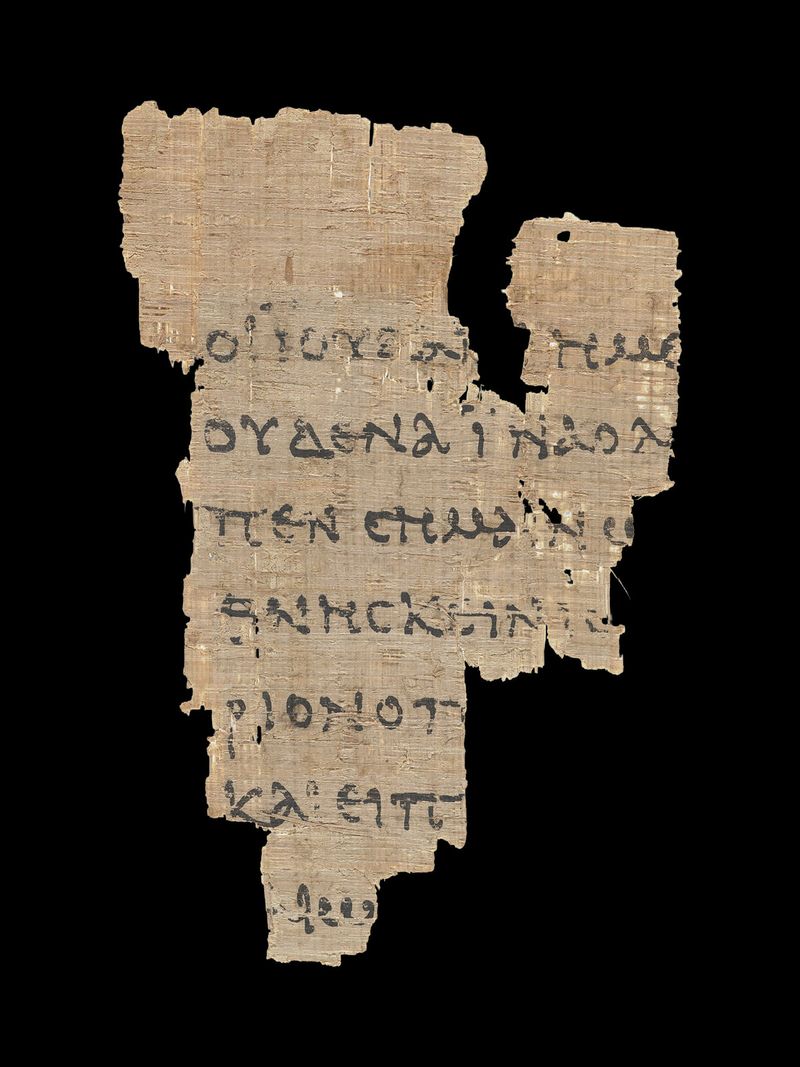
Ph.D. Programs in New Testament: A Candid Guide to the Top Doctoral Programs
Top PhD programs in New Testament studies: faculty, funding, placement, and honest drawbacks at Yale, Duke, Harvard, Oxford, Cambridge, and more.
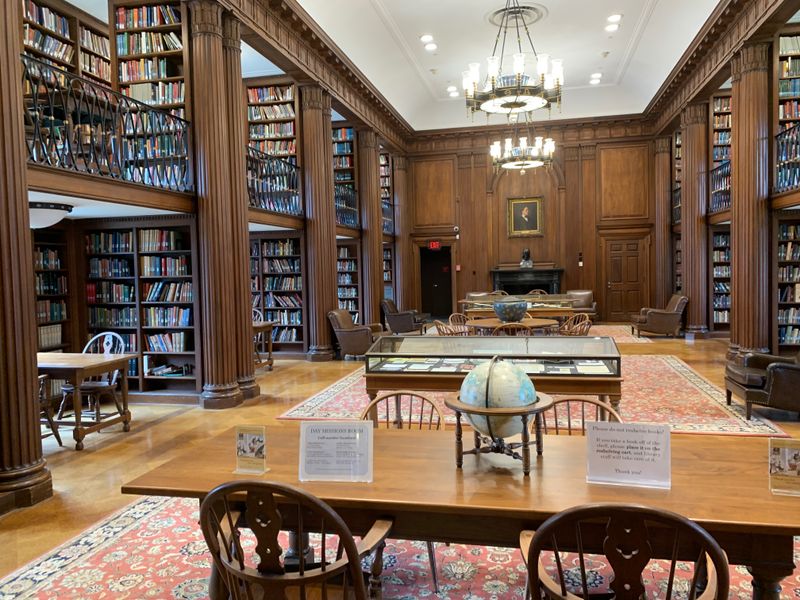
Week 1 of the M.Div. at Yale Divinity School
What the first week of Yale Divinity School is really like — classes, community, and culture shock. A veteran's firsthand account of the M.Div. program.

Personal Statement from Yale Divinity Application
See a real seminary application essay that worked. Full personal statement from a successful Yale Divinity School M.Div. acceptance with writing tips.
Stay Informed
Get new writing on faith, law, and service delivered to your inbox.
No spam. Unsubscribe anytime.