Week 1 of the Army’s Direct Commission Course (DCC)
On This Page
In this post, I discuss my first week at the Army’s Direct Commission Course, or DCC. For more detailed information, see my book The DCC Survival Guide: Succeeding at the Army’s Direct Commission Course and its companion, The JAG School Survival Guide: Succeeding at the Army’s Judge Advocate Officer Basic Course.
Editor’s note (March 2026): I wrote this post in January 2014. The DCC program has evolved considerably since then—see How DCC Has Changed Since 2014 below for a full summary.
Fitness test: The Army Physical Fitness Test (APFT) I reference has been replaced—first by the Army Combat Fitness Test (ACFT) in 2022, then by the Army Fitness Test (AFT) in June 2025.
Installation name: Fort Benning was renamed Fort Moore in 2023 as part of a congressionally mandated effort to rename bases honoring Confederate figures, before reverting to Fort Benning in March 2025—now honoring Sergeant Fred G. Benning, a World War I hero, rather than the original Confederate namesake.
I just completed my first week of the Army’s Direct Commission Course, or DCC. This course teaches basic soldiering skills to officers who have received a direct commission—that is, officers who earned their commission without attending one of the traditional commissioning routes: West Point, ROTC, or OCS.
The Army typically reserves direct commissions for professionals who serve specialized functions. The most common recipients include doctors, chaplains, and—as in my case—lawyers.
When I attended in early 2014, HPSP medical students were also present at Fort Benning, though they attended their own separate training program rather than training alongside us. Chaplain candidates trained separately at Fort Jackson, South Carolina. I had no personal contact with either group, so I cannot speak to their experience. Our DCC included weapons qualification, which noncombatant branches did not require, so their curriculum differed from ours.
(Beginning in 2016, the Army moved AMEDD—the Army Medical Department—officer training to Fort Sill, Oklahoma, establishing a separate four-week course tailored to medical professionals. See Medical Officers Move to Fort Sill below.)
Beyond these traditional branches, other officers occasionally received direct commissions, though this was relatively rare in 2014 and generally reserved for experienced enlisted personnel, often in the Reserves. Since then, the direct commissioning program has expanded dramatically.
As such, everyone in my class showed up as a commissioned officer. The purpose of DCC, therefore, was not to provide a means of earning a commission. Instead, the course served to train commissioned officers on how to conduct themselves appropriately in the United States Army.
Structure of DCC
Enlisted Instructors, Officer Students
NCOs primarily led our DCC, though a few captains and one prior-enlisted lieutenant provided instruction from time to time. This is not unusual. NCOs have traditionally served as instructors in officer candidate courses across every branch of the military, except the Air Force.1
DCC, however, is unique because the students are not officer candidates—they are already commissioned officers. This means that the students often outrank the teachers.
This dynamic creates an interesting atmosphere. The stereotypical military environment characterized by loud yelling is generally absent. The enlisted leadership still provides instruction and corrects mistakes, but it creates a unique situation in which a reprimand is followed by “sir” or “ma’am.”
It creates a unique situation in which a reprimand is followed by “sir” or “ma’am.”
The NCOs assigned to our class were a mixed group. From what I could tell, they fell roughly into two categories: those the Army had little else to do with as they waited out their remaining time before retirement, and those who had been given the assignment as a form of rest and recovery after particularly difficult duty. One of our instructors was still recovering from an IED blast in Iraq.
The arrangement seemed to work well enough—the NCOs knew basic soldiering, and they taught it—but it was not the elite cadre one might imagine from reading official descriptions of the program. I should note that this was my experience with my particular class’s cadre; other classes may have had a very different experience. Students from earlier classes told me their cadre had included Green Berets, which would have produced a very different learning environment.
Class Composition and Rank
Most of my classmates commissioned as First Lieutenants, which was standard for JAG officers. A couple of Captains with prior service were also in the class, along with a couple of Second Lieutenants who were non-lawyer direct commission officers. I never heard of anyone commissioning above the rank of Major during that period, and such cases were rare. As noted below, the NDAA 2019 now authorizes entry ranks as high as Colonel for candidates with exceptional qualifications.
An interesting aspect of our class was the presence of those with prior commissioned service. The Army requires all new entrants to the JAG Corps to attend DCC, including those who earned their commission through ROTC or OCS rather than through direct commissioning. (I later transferred from the Army to the Air Force JAG Corps, where I served four years on active duty. The Air Force did not have a similar requirement, as my prior service exempted me from attending OTS.) The practical effect is that the Army guarantees every JAG officer has at least touched the basics of soldiering—regardless of how they were commissioned—before they report to their first assignment.
We therefore had several ROTC and OCS graduates in our class, and previous classes had also included West Point graduates. DCC covered rudimentary skills that these officers had already mastered, so their presence seemed primarily to benefit the direct commission officers.
DCC at Fort Benning
Fort Benning is a massive Army post. Growing up on Air Force bases—my father was a career Air Force officer—I had minimal familiarity with Army installations. As a member of the Arkansas National Guard, my only frame of reference was Camp Robinson and Fort Chaffee—neither of which has served as an active duty post for some time.2
Fort Benning houses an extraordinarily large number of Army units and schools. The Armor School, Infantry School, Airborne School, OCS, the NCO Academy, and basic training all operate on post. In addition, elements of the 75th Ranger Regiment maintain a significant presence at Fort Benning as well.

Our rooms were surprisingly nice for an initial training program—much nicer than I expected. Two of us shared each room, and every room had its own bathroom. This was not exactly basic training. I understood at the time that these accommodations were relatively new; earlier DCC classes were reportedly housed in something more akin to open bay barracks, though I cannot confirm this with certainty.
DCC Packing List: What to Bring to Fort Benning
The official DCC page publishes a packing list with each class’s welcome letter, and that document is your authoritative source. The DCC SOP (January 2025) and DCC FAQ sheet provide additional detail on policies, prohibited items, and weekend privileges.
Requirements may change between classes. What follows is supplementary guidance based on my experience in 2014 and publicly available information. Always defer to the packing list provided with your orders. For a printable interactive version, see the DCC Packing Checklist.
Documents. Bring multiple copies of your orders—at least four. You will also need:
- DD Form 1610 (travel orders)
- DA Form 71 (oath of office)
- Military ID card
- Any applicable waivers
- Power of attorney (if applicable)
- Medical and dental records (if not forwarded electronically)
- Commissioning paperwork and personnel file documentation
Keep originals in a folder you can access quickly—in-processing moves fast, and you will hand over documents at multiple stations. Be prepared for the fact that Army systems and personnel do not communicate with each other particularly well. You will be asked to provide physical copies of documents the Army already has on file, sometimes more than once. The whole process resembles something from the 1950s, and it is extraordinarily inefficient—but it is what it is.
The whole process resembles something from the 1950s, and it is extraordinarily inefficient—but it is what it is.
Uniforms and gear. Unlike enlisted basic training, DCC students are not issued uniforms—you purchase them yourself. On the first weekday, all students are transported to Clothing and Sales. The cost can approach $2,000 if you have not previously purchased any items. The official packing list specifies:
- 3 sets of OCPs (or Improved Hot Weather Combat Uniforms)
- 4 APFU shirts and 4 APFU shorts
- 2 pairs of coyote brown combat boots
- 7 pairs of boot socks
- 7 coyote brown undershirts
- 2 rigger belts and 2 patrol caps
You are encouraged to buy items before arriving, as the military clothing store may have limited quantities and sizes. Name tapes are not sold at Clothing and Sales—pre-order online. I would strongly recommend getting name tapes made before you arrive. The PX on post is extremely slow—when I attended, turnaround was about four weeks. If you already own broken-in boots that meet AR 670-1 standards, bring them. New boots cause blisters, and blisters during ruck marches are miserable.
Personal items. The personal items list is more important now than when I attended. When I went through DCC in 2014, we were allowed to go to the PX or wherever we wanted after duty hours. We were also permitted to drive our cars and wear civilian clothes when off duty. Current policy appears to be more restrictive. Key personal items include:
- Toiletries (six-week supply)
- Phone charger and portable battery charger
- Foot powder, insect repellent, sunscreen, moleskin for blisters
- 3 combination locks with 2.5-inch shackles (key locks and luggage locks are not allowed)
- Black wristwatch without GPS capability
- 2 brown cotton towels and 2 brown face cloths (barracks provide pillow, sheets, and blanket—do not bring your own linen)
- Six-week supply of laundry detergent
Cell phones are authorized but only after the duty day—not during training, classroom instruction, or field exercises. Civilian clothes are not authorized during the Basic or Intermediate phases (Weeks 1–4); business casual is permitted during Senior Phase passes only.
Training supplies. The official packing list requires:
- 4 black ballpoint pens
- Pocket-size notebook and classroom notebook
- Headlamp with red and white lens capability (black or coyote brown only)
- M4/M16 weapons cleaning kit (this was provided to us when I attended)
- Map markers (black, blue, red, and green super-fine permanent)
- Eraser pen for maps
- Camouflage face paint
- Ziplock bags (quart and gallon sizes)
A military protractor and mechanical pencils are listed as recommended.
Recommended but not required. The official packing list recommends:
- Compression sleeves (black, no logos)
- Foam roller, muscle therapy gun, lacrosse ball, resistance bands
- Liner socks for rucking and blister care kit
- Sleep aids (noise-canceling earbuds, eye mask)3
- Pocket knife (under 3-inch blade) or multi-tool
- Portable phone charger
Quality running shoes are required—one pair is on the packing list. When I attended, PT was not particularly intense, and we only ran a couple of times outside of working out on our own. I have heard from more recent attendees that PT intensity still varies considerably depending on the cadre. The official information does not always reflect the reality on the ground.
Prohibited items. The DCC SOP (January 2025) prohibits all nicotine-containing products throughout the entire course—this covers tobacco, vapes, and nicotine pouches. When I attended, the policy was different: smoking was allowed after duty hours. I smoked a cigar outside the barracks on a Friday night without issue, and regular smokers could smoke as well—just not in uniform. Other key restrictions:
- Alcohol: Not authorized during Basic or Intermediate phases; limited to two drinks at the DCC Social event during Senior Phase only.
- Caffeine: Not authorized during Basic Phase.
- Dietary supplements: Prohibited (the SOP notes limited exceptions).
- GPS-enabled watches, hot plates, electric grills: Not authorized. Unauthorized items found during inspection may result in counseling, recycling, or dismissal.
- Privately owned vehicles: May be brought to Fort Benning but are off-limits except during designated windows. Motorcycles are not authorized at any time during DCC.
Week 1 of the Direct Commission Course
In-Processing
This week was devoted almost entirely to in-processing. In-processing is the military’s administrative intake procedure—essentially, the series of steps required to arrive officially at a new duty station and become accounted for in the Army’s systems.
For new officers, this meant verifying our personnel records, completing medical and dental screenings, receiving immunizations, signing a seemingly endless stack of forms, being issued equipment, and setting up pay and benefits. It is a necessary but unglamorous process, and every service member who has ever reported to a new assignment will recognize the experience: long lines, crowded waiting rooms, and a great deal of repetitive paperwork.
We also had some classroom time during which the cadre provided instruction on various topics of Army life and tradition—subjects like military customs and courtesies, the chain of command, and the Uniform Code of Military Justice. We also spent time learning drill and ceremony, which essentially meant learning to march in formation.

Physical Training and the 1-1-1 Evaluation
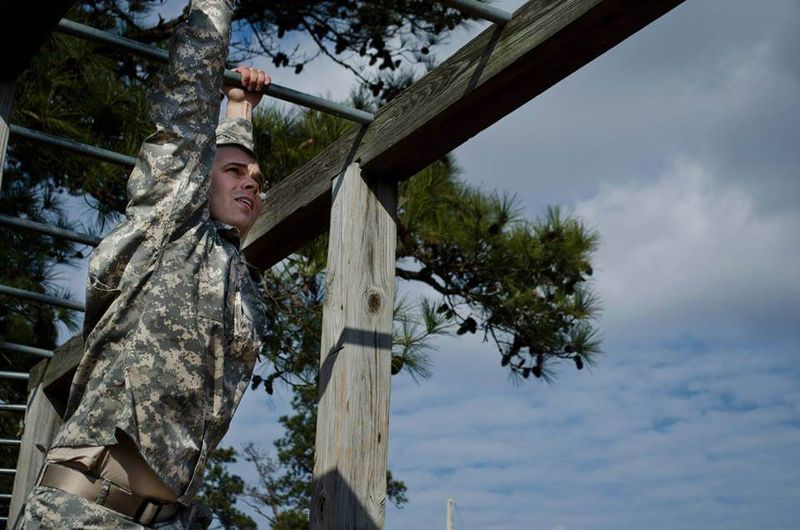
Perhaps the most memorable part of the first week was the physical training. The Army’s Physical Readiness Training (PRT) program, governed by FM 7-22, involved a variety of exercises that were unfamiliar to most of us—calisthenics from the Preparation Drill’s ten-count exercises:
- Bend and Reach
- Rear Lunge
- High Jumper
- Rower
- Squat Bender
- Windmill
- Forward Lunge
- Prone Row
- Bent-Leg Body Twist
- Push-Up
Few of these resembled anything from normal fitness routines.
We also conducted our 1-1-1 evaluation, which was essentially a half-PFT. (At the time, the Army physical fitness test consisted of two minutes of push-ups, two minutes of sit-ups, and a two-mile run. The 1-1-1 required one minute of push-ups, one minute of sit-ups, and a one-mile run.) This evaluation primarily served to show where each of us needed to improve before the full test later in the course. The APFT has since been replaced—first by the Army Combat Fitness Test (ACFT) in 2022, and then by the Army Fitness Test (AFT) in June 2025.
Weekend Privileges
Overall, the first week moved slowly. By Friday, we were released for the three-day weekend—and with it came a degree of freedom that surprised me. (It seems that is no longer the case.)
We were largely free to spend our time as we wished during non-duty hours, unless we had CQ—charge of quarters. Charge of quarters is one of the military’s oldest continuous duties: someone sits at the desk in the barracks hallway, monitoring the building, logging activity, and serving as the commander’s representative during off-hours. For DCC students, CQ shifts were two hours each. The desk was staffed continuously overnight and on weekends, and everyone rotated through approximately two or three times during the course. It was not a particularly burdensome assignment, but it wasn’t particularly fun in the middle of the night.
When I attended in 2014, students who were not on duty had considerable freedom on weekends. We could visit the PX, eat at on-post restaurants, go to the movie theater, and occasionally venture into Columbus, Georgia. Saturdays were not duty days, though we did have one Saturday where we all went to the Army Infantry Museum in our civilian clothes.
I should note that the DCC FAQ Sheet dated January 2025 suggests that current policy may be more restrictive, indicating that students cannot leave the post or even the battalion footprint without a pass. Whether this reflects an official policy change or simply a difference in how individual cadre exercise their discretion is difficult to say.
Our barracks sat right across from those of OCS, and I doubt the officer candidates enjoyed the same privileges we did. We had little interaction with OCS students during the course, so I cannot say whether the disparity was a source of frustration for them. From a practical standpoint, the difference made sense: the Army was about to place a much more significant leadership responsibility on those officer candidates. As lawyers, we would not be leading troops into combat. The officer candidates very well could. The intensity of training logically matched the weight of the responsibility that followed.
As lawyers, we had already been extensively trained in the specific job we were going to do for the Army—the legal work itself was what we had spent years learning. This distinguished us from OCS candidates, who might have professional backgrounds but were not yet trained in the military roles they were about to fill. An infantry officer might have to lead soldiers into extraordinarily challenging situations, and no civilian education could fully prepare someone for that.
Here it is important to remember what your role is. You are a lawyer. You are not a Ranger, and you are certainly not a Green Beret. Do not pretend to be something you are not—not during training and not afterward. Few things will destroy your credibility with other soldiers more quickly than pretending you are some kind of high-speed, low-drag super soldier, when for the most part you are just a lawyer.
You are a lawyer. You are not a Ranger, and you are certainly not a Green Beret. Do not pretend to be something you are not.
How DCC Has Changed Since 2014
The account above describes my experience in January 2014, but the DCC program has undergone significant changes in the years since. The course itself—still six weeks, still run by E Company, 3rd Battalion, 11th Infantry Regiment under the 199th Infantry Brigade at Fort Benning—remains structurally similar. The core curriculum of land navigation, weapons qualification, drill and ceremony, ruck marches, and leadership exercises has not fundamentally changed. But who attends, how they arrive, and what fitness test they take have all evolved.

Expanded Branches and the NDAA 2019
When I attended, direct commissions were largely limited to JAG officers, medical professionals, and chaplains. The 2019 National Defense Authorization Act changed that significantly, authorizing direct commissions up to the rank of Colonel and opening the program to fields like cyber, signal, military intelligence, military police, finance, and numerous functional areas. DCC classes today are far more diverse in branch representation than mine was.
Medical Officers Move to Fort Sill
On June 11, 2014, the Deputy Commanding General of TRADOC and the Army Surgeon General agreed to establish a separate four-week DCC course for all Army Medical Department direct commission officers. In June 2016, the Army stood up the AMEDD DCC at Fort Sill, Oklahoma, run by C Battery, 2nd Battalion, 6th Air Defense Artillery. Since 2017, all AMEDD direct commission officers accessed under the new policy have attended the four-week course at Fort Sill rather than at Fort Benning. When I attended in 2014, AMEDD officers were still present at Fort Benning, though they trained separately from us.
DCC Fitness Test: AFT Standards for 2026
When I attended DCC in January 2014, the fitness standard was the Army Physical Fitness Test (APFT)—two minutes of push-ups, two minutes of sit-ups, and a two-mile run. The minimum passing standard was 60 points per event, scaled by age and gender, for a minimum total of 180 out of 300. The DCC FAQ Sheet dated January 2025 still references the ACFT, but the Army has since overhauled its fitness test again.
To give you an idea of how slowly the Army moves, they were already talking about replacing the APFT when I was at DCC in 2014. It took eight more years. On October 1, 2022, the Army replaced the APFT with the Army Combat Fitness Test (ACFT), a six-event test that included a three-repetition maximum deadlift, standing power throw, hand-release push-ups, sprint-drag-carry, plank, and two-mile run. The ACFT was the Army’s test of record for fewer than three years.
On June 1, 2025, the Army replaced the ACFT with the Army Fitness Test (AFT). The AFT dropped the standing power throw, leaving five events:
- Three-Repetition Maximum Deadlift (MDL)—Maximum weight for three reps
- Hand-Release Push-Ups (HRP)—Timed push-ups with full chest-to-ground release
- Sprint-Drag-Carry (SDC)—A series of sprints, sled drags, lateral shuffles, and kettlebell carries
- Plank (PLK)—Timed hold in the plank position
- Two-Mile Run (2MR)—Timed two-mile run
The AFT introduced tiered scoring standards. The Combat standard requires a minimum of 60 points per event and a minimum of 350 points overall, and is sex-neutral but age-normed—this applies to combat arms and certain combat support roles. The General standard for combat-enabling specialties requires a minimum of 60 points per event (300 points total) and is both sex- and age-normed. JAG officers fall under the General standard for combat-enabling specialties.
If you are preparing for DCC today, train for the AFT.
Streamlined Recruiting
In November 2025, the Army revamped the Direct Commissioning Program under U.S. Army Recruiting Command, centralizing the application process with a target of six months from application to commissioning—down from roughly eighteen months previously. USAREC now handles applicant screening, waivers, and application tracking centrally, with a pre-screening approach that checks eligibility upfront before investing resources.
DCC Eligibility and Requirements
What follows is a summary of current eligibility and training requirements for anyone considering a direct commission. The following requirements apply to the Army’s Direct Commissioning Program as of early 2026. When I attended in 2014, eligibility was limited primarily to JAG officers, medical professionals, and chaplains. The program has expanded dramatically since then.
Basic Eligibility
To be eligible for a direct commission, applicants must:
- Be a U.S. citizen (dual citizens are ineligible)
- Hold at least a bachelor’s degree from an accredited institution (specific branches require advanced degrees—JAG requires a J.D., for example; see The Complete Guide to Becoming an Army JAG Officer for the full application process)
- Meet Army medical, physical, and fitness standards
- Be able to obtain and maintain a Secret security clearance
- Be no older than 42 upon entry for most specialties (age limits vary by entry rank and branch; up to 54 with an age waiver; commissioning must occur before age 55)
- Not be seeking an inter-Service or inter-component transfer
These requirements are published on the Army Direct Commissioning Program page.
Eligible Branches
As discussed in Expanded Branches and the NDAA 2019 above, the program has grown well beyond its traditional JAG, medical, and chaplain base. Since 2020, the Army has directly commissioned hundreds of officers across basic branches including engineering, signal, cyber, and civil affairs. For the full list of eligible branches, see the Army Direct Commissioning Program page.
Training Requirements by Rank
Training requirements vary by commissioning rank. Per the Army DCP page:
- Second & First Lieutenant (2LT & 1LT): Approximately 24 weeks total (DCC + Basic Officer Leader Course)
- Captain (CPT): Approximately 30 weeks (adds the Captain’s Career Course)
- Major (MAJ) and above: 30+ weeks (adds Intermediate Level Education)
DCC Class Schedule
The official DCC page at Fort Benning does not publish a public class schedule. The course typically runs four to five classes per fiscal year. DCC class dates are provided with your orders and welcome letter. For the most current information, check the 199th Infantry Brigade Facebook page.
DCC Graduation Requirements
To graduate from DCC, students must pass several graded events and meet minimum standards in each. The course is pass/fail—there is no class ranking (although when I attended, one student was named the distinguished graduate and received an Army Achievement or Commendation Medal at graduation). The following requirements are based on publicly available information and my experience, though specific standards may be adjusted between classes. Always consult the DCC SOP provided with your orders for the most current standards.
- Army Fitness Test (AFT). Students must pass the AFT at their applicable standard. JAG officers fall under the General standard for combat-enabling specialties, requiring a minimum of 300 points across five events. See DCC Fitness Test: AFT Standards for 2026 above for event details.
- Land navigation. Students must find three out of five assigned points within four hours during the individual land navigation test. This is widely considered the most failed event in DCC. (Insert lieutenant jokes here.) Students who fail receive additional attempts before the end of the course.
- Weapons qualification. Students must qualify with the M4 (or M16, depending on availability) on a standard Army qualification range. The minimum standard is Marksman (23 out of 40 targets). See rifle marksmanship for my account of weapons training.
- Ruck march. Students must complete a six-mile ruck march carrying approximately 35 pounds in no more than one hour and forty-eight minutes. Ruck marches are progressive throughout the course—two miles in Week 2, four miles in Week 4, and the six-mile graded march in Week 5.
- Attendance and conduct. Students must maintain satisfactory attendance, complete all assigned coursework, and meet the standards of conduct outlined in the DCC SOP. Violations of the prohibited items policy, alcohol policy, or other conduct standards can result in counseling, recycling (repeating the course from the beginning), or dismissal.
Students who fail a graded event typically receive one or two additional attempts. Those who cannot meet the standard after multiple attempts may be recycled to a subsequent class or, in rare cases, dismissed from the course. The failure rate at DCC is low compared to OCS—most students who arrive physically prepared and take the graded events seriously will graduate without difficulty.
Next Week
Next week brings land navigation—the part of DCC I had been most looking forward to. If week one taught me anything, it was that DCC is less about intensity and more about adjustment: learning to operate within Army systems as a professional who already holds a commission. For anyone preparing to attend, my biggest takeaway is to arrive physically ready and mentally patient—the pace picks up quickly from here.
DCC is less about intensity and more about adjustment—learning to operate within Army systems as a professional who already holds a commission.
For a comprehensive look at all six weeks, including what to pack, how to prepare physically, and what to expect at each stage, see The DCC Survival Guide.

Frequently Asked Questions
What is the Army Direct Commission Course (DCC)?
The Army Direct Commission Course (DCC) is a six-week training program at Fort Benning, Georgia, that teaches basic soldiering skills to officers who received their commission without attending West Point, ROTC, or OCS. Attendees include JAG officers, and since the NDAA 2019, officers in cyber, signal, military intelligence, military police, finance, and other branches.
How long is the Army Direct Commission Course?
DCC is six weeks long. It is run by E Company, 3rd Battalion, 11th Infantry Regiment under the 199th Infantry Brigade at Fort Benning. The course typically runs four to five classes per fiscal year.
What happens during Week 1 of DCC?
Week 1 focuses on administrative in-processing (medical and dental screenings, personnel records, equipment issue, pay setup), classroom instruction on military customs and courtesies, the chain of command, and the UCMJ, as well as physical training under the Army Physical Readiness Training program.
What fitness test does DCC use?
As of June 2025, the Army uses the Army Fitness Test (AFT), which replaced the Army Combat Fitness Test (ACFT). The AFT consists of five events: the deadlift, hand-release push-up, sprint-drag-carry, plank, and two-mile run. JAG officers fall under the General standard for combat-enabling specialties, which requires a minimum of 300 points.
Who is eligible for the Army Direct Commission Course?
Eligibility requires U.S. citizenship (no dual citizens), at least a bachelor’s degree from an accredited institution, meeting Army medical and fitness standards, ability to obtain a Secret security clearance, and entry age up to 54 (with waiver). Since the NDAA 2019, eligible branches include JAG, cyber, signal, military intelligence, military police, engineers, finance, and numerous functional areas. See DCC Eligibility and Requirements above for full details.
What should I pack for DCC?
The official DCC page publishes a packing list with each class’s welcome letter—that is your authoritative source. Generally, bring multiple copies of your orders, personal documents, broken-in boots, toiletries, and training supplies like black pens and a small notebook. Uniforms are purchased at Clothing and Sales during Week 1 and can cost up to $2,000. See DCC Packing List above for detailed guidance.
Where is the Army Direct Commission Course held?
DCC is held at Fort Benning (formerly Fort Moore), Georgia, and is run by E Company, 3rd Battalion, 11th Infantry Regiment under the 199th Infantry Brigade. AMEDD (medical) officers attend a separate four-week DCC at Fort Sill, Oklahoma.
Is the Army Direct Commission Course hard?
DCC is physically and administratively demanding but not as intense as OCS or enlisted basic training. The course focuses on teaching basic soldiering skills to professionals who already hold commissions. The biggest challenges are the physical fitness test (now the Army Fitness Test), land navigation, weapons qualification, and adjusting to the Army environment. Arriving physically prepared is important—the pace picks up quickly after Week 1.
What is the age limit for an Army direct commission?
For most specialties, applicants are eligible for entry up to age 42 without a waiver, though age limits vary by entry rank and branch. With an age waiver, entry is possible up to age 54, with commissioning before age 55. All applicants must be U.S. citizens, hold at least a bachelor’s degree, and meet Army medical, physical, and fitness standards.
How much does it cost to attend DCC?
DCC itself is part of your military service and does not have tuition—you are paid as a military officer according to your rank and time in service throughout the course (see the current military pay chart). However, DCC students must purchase their own uniforms and gear, unlike enlisted basic training where uniforms are issued. The cost of uniforms and equipment at Clothing and Sales can approach $2,000 if you have not previously purchased any items. You are encouraged to buy items before arriving to save time and ensure availability.
What are the DCC graduation requirements?
To graduate from DCC, students must pass the Army Fitness Test (AFT) at their applicable standard, find three out of five points on the individual land navigation test, qualify with the M4 rifle (minimum Marksman, 23 of 40 targets), complete a six-mile ruck march in under one hour and forty-eight minutes, and maintain satisfactory attendance and conduct. Students who fail a graded event typically receive additional attempts. The failure rate is low compared to OCS—most students who arrive physically prepared will graduate without difficulty. See DCC Graduation Requirements above for full details.
This post is part of a series on the Army’s Direct Commission Course.
- Previous: You are here—Week 1
- Next: Week 2: The Direct Commission Course Continues
- Continue: Week 3: Land Navigation
- See also: DCC Packing Checklist | DCC vs. OCS
For a more detailed account, see The DCC Survival Guide and The JAG School Survival Guide.
1. The Air Force was historically the exception. Officer Training School at Maxwell Air Force Base used an upperclassmen-led model for decades, in which trainees further along in the program mentored and led newer arrivals. That model was discontinued around 2009, but the Air Force restored a version of it in 2023 under the "OTS-Victory" redesign, which uses a modular, continuous-intake structure in which upper-module trainees once again serve as mentors to those in earlier stages.
2. Fort Chaffee is perhaps best known as the place where Elvis Presley received his famous G.I. haircut when he was processed into the Army in March 1958.
3. This strikes me as particularly odd. They apparently increased the intensity and restriction of DCC since I was there but want sleeping soldiers to look like middle-aged women on an airplane.
The views and opinions expressed in this post are the author’s own and do not reflect the official policy or position of the United States Army, the National Guard Bureau, the Arkansas National Guard, the Department of Defense, or the United States Government.
Further Reading
- Official DCC Page—Fort Benning—Welcome letter, packing list, FAQ, and class schedules.
- DCC Standard Operating Procedure (January 2025)—The published SOP covering policies, prohibited items, phase privileges, and conduct standards.
- DCC FAQ Sheet (January 2025)—Frequently asked questions about DCC, including weekend privileges, vehicle policy, and phase structure.
- Direct Commission Course Trains, Develops Officers—U.S. Army article on the DCC program.
- Army Direct Commissioning Program—The Army’s recruiting page for direct commissions, including expanded branch eligibility.
- Army Fitness Test (AFT)—Current fitness test standards replacing the APFT and ACFT.

Garrett Ham
Garrett Ham is an attorney, military veteran, and holds a Master of Divinity from Yale Divinity School. He writes from Northwest Arkansas on theology, law, and service.
More about Garrett →Related Posts
Week 2 of the Army’s Direct Commission Course (DCC)
In this post, I discuss my experience during the second week of the Army’s Direct Commission Course, or DCC.
The Army’s Direct Commission Course: A Complete Guide
Complete Army DCC guide: fitness standards, packing lists, week-by-week breakdown, and insider tips from a JAG officer who went through the course. Learn what to expect.
Final Thoughts Regarding the JAG Corps Direct Commission Course (DCC)
Honest reflections after finishing the Army JAG Corps Direct Commission Course at Fort Benning — what DCC is really like and how to prepare.
Stay Informed
Get new writing on faith, law, and service delivered to your inbox.
No spam. Unsubscribe anytime.