The Holy Trinity Explained: A Catholic Guide to the Central Mystery of Faith
On This Page
Písteuó eis héna Theón, Patéra pantokrátora — “I believe in one God, Father almighty” — The Nicene Creed (325 AD)
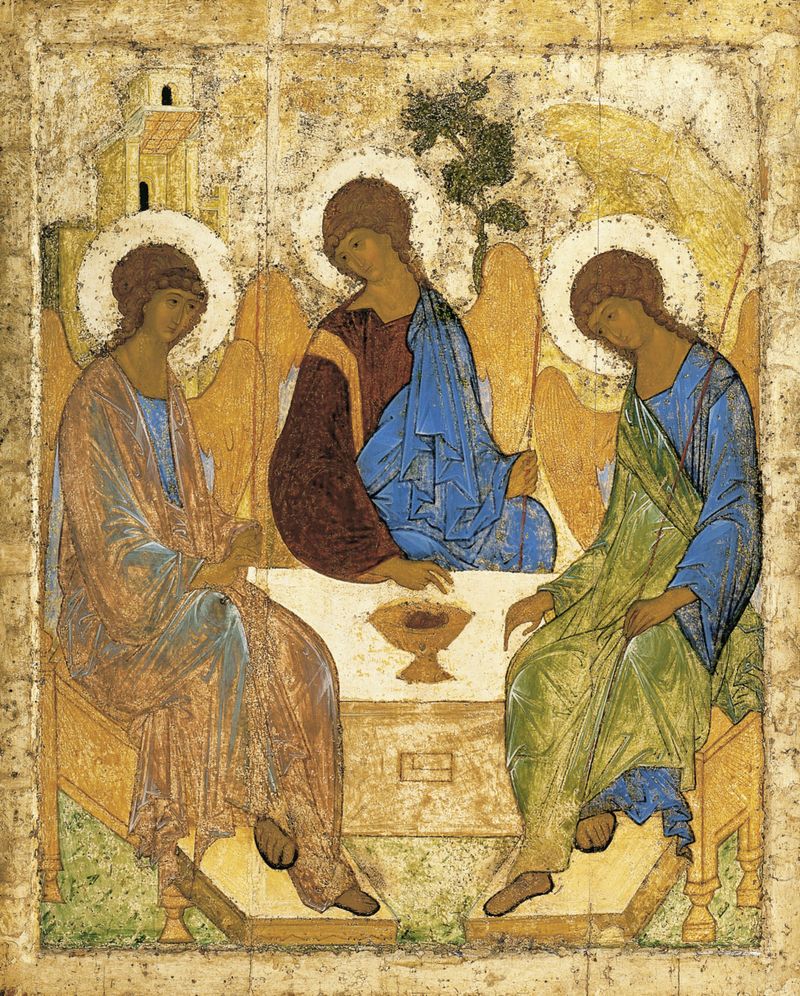
There is no doctrine more central to Catholic faith, and none more seemingly impossible for human reason to comprehend, than the Trinity. One God in three persons. Three divine persons in one divine nature. “Most highest, most good, most potent… most hidden, yet most present,” as Augustine wrote in the Confessions (I.iv.4), the Trinity is at once the summit of Christian revelation and the perpetual stumbling block of theology.
For nearly two thousand years, the Church has proclaimed what seems to the human mind a contradiction: that the Father, the Son, and the Holy Spirit are each fully God, that there are not three gods but one, and that this confession is not an error but the highest truth. This is not a mathematical puzzle to be solved or a paradox to be explained away. Rather, it is the fundamental reality upon which all Christian life is built—the nature of God as he has revealed himself in Christ and the Holy Spirit.
This post explores what the Trinity is, where this doctrine comes from, how the Church came to understand and articulate it, and why it matters not merely as an abstract principle but as the living heart of Christian worship, prayer, and service.
What Is the Holy Trinity?
At its most basic, the doctrine of the Holy Trinity teaches three essential things:
-
God is one. There is only one God, one divine nature, one divine substance (ousia, in Greek).
-
God is three persons. This one God subsists eternally in three distinct personal modes of being: the Father, the Son, and the Holy Spirit (Spiritus Sanctus). Each is truly God.
-
The three persons are co-equal and co-eternal. The Son is not less divine than the Father; the Spirit is not less divine than the Son. All three are equally eternal, equally powerful, equally worthy of worship.
The core assertion is this: Unity in Trinity, Trinity in Unity. The diversity does not contradict the oneness; the oneness does not swallow up the diversity. To borrow the language of Eastern theology, God is “one substance, three hypostases”—one what, three whos. This way of understanding God’s nature divides Orthodox from Protestant theology, with the Orthodox emphasis on the threeness as more fundamental.
This is not to say that the three persons are merely three different names or roles (a heresy called Modalism) or that they are three separate divine beings (a heresy called Tritheism). Rather, the three persons are truly distinct from one another, yet they are absolutely one in nature, power, will, and divinity.
The Catechism of the Catholic Church summarizes it well:
The mystery of the Most Holy Trinity is the central mystery of Christian faith and life. It is the mystery of God in himself. It is therefore the source of all the other mysteries of faith, the light that enlightens them.1
The Scriptural Foundation
The doctrine of the Trinity, while not explicitly named in Scripture, is woven throughout the New Testament from its earliest pages.
The Baptismal Formula
The classic locus is Matthew 28:19, the Great Commission:
Go therefore and make disciples of all nations, baptizing them in the name of the Father and of the Son and of the Holy Spirit.
Notice: “in the name” (singular) of Father, Son, and Spirit. One name, three persons. This is not three names but one divine name shared by three. The formula became the backbone of Christian baptism and ecclesiology.
The Johannine Witness
The Gospel of John presents the Son (Logos) as both distinct from and identical with the Father:
In the beginning was the Word, and the Word was with God, and the Word was God.2
The Son is “with God” (distinct) yet “was God” (identical in nature). Later, John records Jesus saying, “I and the Father are one” (John 10:30), yet also, “The Father is greater than I” (John 14:28)—expressions of real distinction and real unity.
The Pauline Benediction
Paul’s blessing in 2 Corinthians 13:14 invokes all three:
The grace of the Lord Jesus Christ and the love of God and the fellowship of the Holy Spirit be with you all.ESV
Here, in a prayer formula, the three are addressed as the source of Christian blessing. They are the living reality upon which the Church rests.
Other Passages
The Father sends the Holy Spirit in the Son’s name (cf. John 14:26); the Son is baptized by John while the Spirit descends and the Father’s voice is heard (Matthew 3:16-17); the Son proceeds from the Father, the Spirit proceeds from both (John 15:26, with the Filioque debate that would later divide East and West); believers are “sealed with the promised Holy Spirit” after believing in Christ (Ephesians 1:13).
None of these passages, taken in isolation, explicitly states the Trinity. Yet together, they create an irreducible pattern: God is one, yet Father, Son, and Spirit each possess divine attributes and are each worthy of worship. The doctrine of the Trinity is not an invention of Hellenistic theology; it is the Church’s attempt to be faithful to the full scriptural witness.
The Development of Trinitarian Doctrine
The first three centuries of the Church witnessed an intense struggle to articulate what the apostolic faith had received. How could the Church confess Jesus as Lord and God while remaining monotheistic? How could the Spirit be truly divine? What language could capture the reality that had been revealed?
The Pre-Nicene Struggle
The early Church Fathers used the language available to them. Logos theology, drawing on Middle Platonic philosophy, related the Word to the divine nous (intellect), though in the Platonic tradition these concepts were typically distinguished rather than equated. But the category “word of God” could seem subordinationist—as if the Son were merely an instrument of the Father rather than truly God.
By the early 3rd century, theologians like Tertullian (c. 160–220) had begun distinguishing between God’s undivided substantia (substance) and the distinction of personae (persons). But the conceptual vocabulary remained unstable. Different theologians emphasized different aspects: Origen emphasized the distinct subsistence and eternal generation of the Son—insights foundational to later Nicene orthodoxy—though his theology also exhibited subordinationist tendencies, and his legacy was claimed by both orthodox and Arian parties in the controversies that followed. Others emphasized the unity.
Arianism and the Council of Nicaea
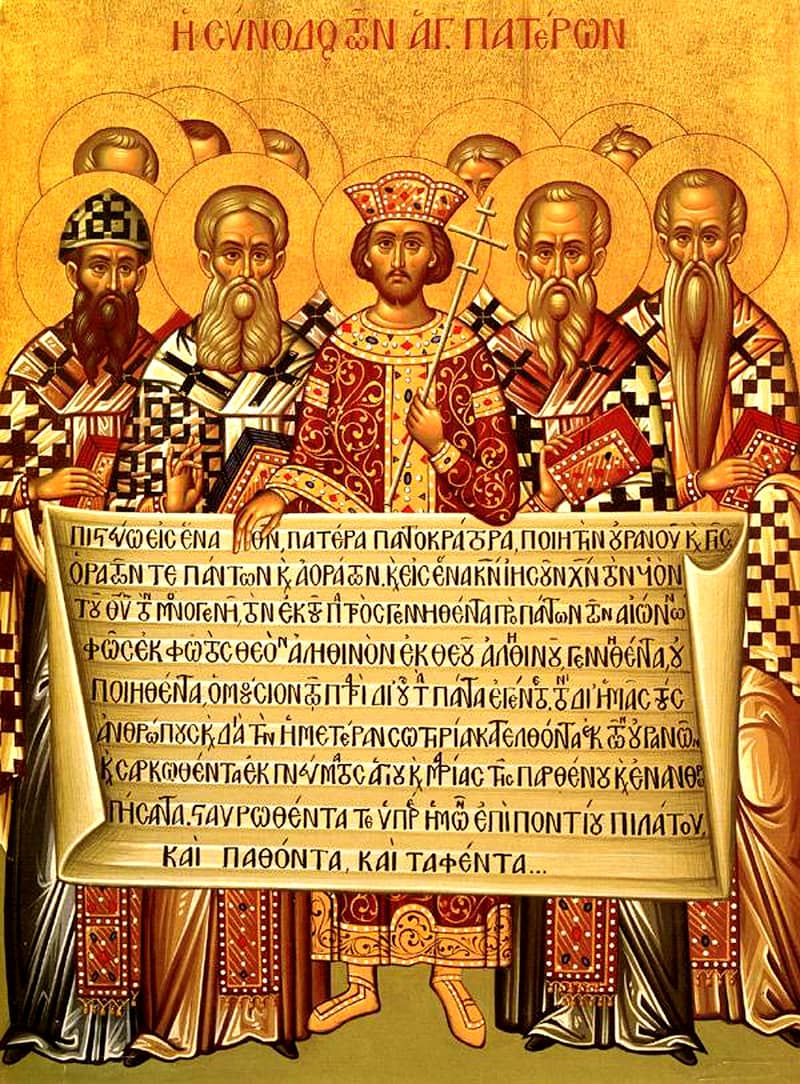
In the early 4th century, a Libyan-born priest named Arius (c. 250–336), serving in Alexandria, offered a solution that seemed, to many, to resolve the tension. The Son, Arius argued, was created by the Father and was subordinate to the Father. The Son had a beginning (árkhon); only the Father was truly without beginning. The Son was divine, yes, but in a derivative and inferior sense.
This doctrine spread rapidly and found considerable support, including among bishops. It promised clarity: God is one (the Father), and everything else, including the Son, is created. But it came at a terrible cost—it denied the divinity of Christ in the full sense the apostles had preached.
In response, the Council of Nicaea in 325 AD, convened by the Emperor Constantine, condemned Arianism and articulated the cardinal term that would define orthodox Trinitarian faith for all time: homoousios (consubstantial).
The Nicene Creed declared that the Son is homoousios tō Patri—“of one substance with the Father.” The Son does not merely resemble the Father’s substance or participate in it; he is of the same substance, identically divine. There is but one ousia (divine nature/essence) shared by Father and Son.
The Nicene definition was revolutionary. It refused both subordinationism (which made the Son less divine) and modalism (which collapsed the real distinction of persons). The Son is fully God and truly distinct from the Father. But how? The council did not explain the mechanics; it simply asserted the reality and left theology to work out the categories.
The First Council of Constantinople (381 AD)
The Arian controversy did not end with Nicaea. In fact, in the decades after the council, various compromise positions emerged. The Nicene creed, while clear about the Son, had said little about the Holy Spirit.
The First Council of Constantinople, held in 381 AD, completed the Nicene work. It reaffirmed the homoousios of the Son and affirmed the full divinity of the Holy Spirit—not by applying the term homoousios directly to the Spirit, but through doxological language declaring the Spirit an object of equal worship and glorification with the Father and Son. Following the diplomatic strategy of Basil of Caesarea, the council chose language that asserted the Spirit’s divinity while avoiding the philosophically provocative term that had provoked such controversy regarding the Son:
And [we believe] in the Holy Spirit, the Lord, the Giver of Life, who proceeds from the Father, who with the Father and the Son together is worshipped and glorified, who has spoken through the prophets.
The Spirit is not a created thing but fully divine—co-worshipped and co-glorified with the Father and Son. One God, fully possessed by three persons in their eternal relations.
Later Refinements
The councils and Fathers continued to clarify terminology:
- Ousia (substantia in Latin) = divine essence or nature; what God is. There is one ousia.
- Hypostasis (persona in Latin) = person; mode of subsistence. There are three hypostases.
- Homoousios = of one substance; expressing that the three share one divine nature.
- Perichoresis (circumincession in Latin) = the interpenetration or mutual indwelling of the three persons in one another.
Saint Augustine, drawing on earlier Nicene theology and Neoplatonic philosophy, offered in De Trinitate (c. 400–420) the most influential Western theology of the Trinity. He explored the Trinity through the lens of human psychology (love, knowledge, will) while carefully warning that such analogies are always inadequate. The Trinity, for Augustine, is not a logical problem to solve but a mystery to adore.
Thomas Aquinas, in the Summa Theologiae (I, qq. 27–43), systematized Augustinian theology in light of Aristotelian metaphysics. Aquinas insisted that the Trinity cannot be known by reason alone but only by revelation, yet reason can show that the Trinity is not contra reason. The three persons are real and eternal, proceeding from the Father through relations of generation (the Son) and spiration (the Spirit).
Key Theological Concepts
To grasp Trinitarian theology, several concepts require explanation.
Procession and Relations
The three persons are distinguished by their relations of origin. The Father generates (not creates) the Son eternally. The Spirit proceeds eternally from the Father (and, in Western theology, from the Son—the Filioque). These are not temporal events but eternal relations. There is no moment when the Son comes to be; the generation is eternal and perfect.
These relations are real relations, not mere concepts imposed by human minds. Yet they are relations within one nature. The Father is not more divine than the Son because the Son receives divinity through generation; generation within divinity perfects rather than diminishes.
Subsistence vs. Substance
A substance (ousia) is what a thing is; a subsistence or hypostasis is the particular way that substance exists. In creatures, there can be many subsistences of one substance (e.g., many human persons of one human nature). In God, there is one substance and three subsistences. This is unique to God and cannot be perfectly grasped by human analogy.
The Filioque Controversy
The Filioque (Latin: “and the Son”) was added to the Niceno-Constantinopolitan Creed in Western Christianity, stating that the Spirit proceeds from the Father “and the Son.” This addition was first inserted into the Creed at the Third Council of Toledo in 589 AD and gradually adopted across the Latin Church. Its original motivation was anti-Arian—emphasizing the Son’s full divinity—and it came to express what the Catechism calls “the consubstantial communion between Father and Son” (CCC §248).
The Eastern Church rejected the addition, arguing that Scripture says the Spirit proceeds from the Father and that including the Son blurs the real distinction of persons and makes the Father the unique source (monarchía) of divinity. This theological disagreement contributed significantly to the Great Schism of 1054.
The Catholic Church maintains the Filioque today, though it acknowledges the Eastern concern. The Spirit’s procession from the Son does not subordinate the Spirit; rather, it expresses the profound unity and communion of the Trinity. For a broader theological comparison involving Protestantism as well, see the three-way comparison of Orthodox, Catholic, and Protestant theology.
Common Heresies and False Paths
Throughout history, the Church has had to defend Trinitarian doctrine against misunderstandings that seemed, to their proponents, to offer clarity or logic.
Modalism (Sabellianism)
Modalism teaches that the Father, Son, and Spirit are not three distinct persons but three modes or manifestations of one divine person. Like an actor playing three roles, God appears as Father in creation, as Son in redemption, and as Spirit in sanctification. But there is only one divine person, not three.
The Church has rejected this as contradicting Scripture (which speaks of Father and Son addressing each other, being distinct) and as impossible in itself: if there is only one person, then God’s self-communication in the Son and Spirit is not genuinely reciprocal or relational.
Arianism
As discussed above, Arianism denied the full divinity of the Son by making him a creature, albeit the highest creature. Though Arianism as an organized heresy died out, subordinationist tendencies have periodically resurfaced, particularly in modern liberal theology.
Tritheism
At the opposite extreme from modalism, tritheism argues that the three persons are genuinely three divine beings. They are united by power or will or nature, but they are fundamentally three gods. This seems to preserve the distinctness of the persons at the cost of monotheism.
The Church condemns tritheism because it contradicts the Shema: “Hear, O Israel, the LORD our God, the LORD is one” (Deuteronomy 6:4, ESV). There are not three gods; there is one God.
Neoplatonism and Emanation
Some early theologians, influenced by Neoplatonic thought, spoke as if the Son and Spirit emanate from the Father in the way light emanates from the sun or thoughts emanate from a mind. While this analogy captures something real (the dependence of Son and Spirit on the Father), it can suggest that the Son and Spirit are less divine than the Father, or that they are not truly personal.
The Nicene insistence on homoousios (not mere similarity but sameness of substance) corrected this trajectory.
The Trinity in Scripture and Liturgy: How We Experience It
The doctrine of the Trinity is not merely an abstract principle formulated by councils. It is lived in the worship, sacraments, and prayer of the Church.
Baptism
Baptism is administered in the name of the Trinity: “I baptize you in the name of the Father, and of the Son, and of the Holy Spirit.” To be baptized into Christ is to be incorporated into the dying and rising of the Son, to receive the outpouring of the Spirit, and to cry out to the Father. Every baptism is a Trinitarian act.
The Sign of the Cross
When Catholics make the sign of the cross, they trace the central mystery: “In the name of the Father, and of the Son, and of the Holy Spirit.” This simple gesture, repeated thousands of times, embeds the Trinity into muscle memory and spiritual intuition.
The Eucharistic Prayer
Every Mass culminates in a Trinitarian doxology: Per ipsum, et cum ipso, et in ipso—“Through him, and with him, and in him, is to you, God the Father almighty, in the unity of the Holy Spirit, all honor and glory, for ever and ever.”
The entire Eucharistic action is Trinitarian: we offer the sacrifice in union with Christ’s sacrifice to the Father, invoked and present in the power of the Holy Spirit.
Prayer and Spirituality
Catholic spirituality encompasses all three movements:
- Prayer to the Father (as Jesus taught us with the Our Father)
- Prayer through Christ (the mediator between heaven and earth)
- Prayer in the Holy Spirit (who intercedes with groans too deep for words)
This is not three separate prayers but one prayer animated by three Trinitarian movements. In John 1:1 and John 1:2, the Word is both with God and is God; the Trinity at once transcends and pervades all created reality.
The Pastoral Significance of the Trinity
Why does the Trinity matter for the life of a believing Catholic? Several reasons emerge.
God Is Love
The greatest claim the apostle John makes about God is not God is truth or God is justice but God is love (1 John 4:8). Love, authentically understood, is relational. You cannot have love in isolation; love requires a lover, a beloved, and a bond between them.
If God were only one person, how could God be eternally love? To whom would the Father have eternally directed his love if the Son and Spirit did not exist? The Trinity resolves this: God is love eternally, within himself, because he is three persons in perfect communion and self-gift.
The Father loves the Son and gives all things to the Son. The Son returns this love to the Father perfectly. The Spirit is the living bond of this love, proceeding from both. God’s love is not a secondary attribute added to his being; it is the very structure of his being.
Communion as the Image of God
The image of God as communion takes on its deepest meaning in light of the Trinity. Humans are made in the image of God—not as solitary individuals but as beings made for relationship, for communion, for covenant. We are made to participate in the Trinitarian life through grace.
This has radical implications for ethics, sexuality, family, and community. We are not atomized selves but persons-in-communion. Our deepest fulfillment is not in isolated autonomy but in loving relationships that reflect the mutual self-gift of the Trinity.
The Redemptive Work Distributes Across Three
In the history of salvation:
- The Father initiates the plan of salvation, sends the Son, and destines all things to himself.
- The Son becomes incarnate, dies and rises, and intercedes for us at the Father’s right hand.
- The Holy Spirit is poured out at Pentecost, animates the Church, sanctifies souls, and brings all things to their fulfillment.
Redemption is not the work of the Son alone but of the entire Trinity, each person playing a distinct and irreplaceable role. We are saved not merely from something but into something: into the life of the Trinity itself.
Mystical Participation
The ultimate goal of Christian life, in the Catholic and Orthodox traditions, is theosis—deification or divinization. This does not mean becoming a second god but participating in divine life, becoming “partakers of the divine nature” (2 Peter 1:4).
This mystical union is Trinitarian. We are united to the Father through Christ in the Holy Spirit. The Trinity is not distant from us; it is the very air we breathe as baptized Christians, the destiny toward which grace moves us.
Frequently Asked Questions
Q: Why can’t God just be one person, like Judaism teaches?
A: Catholic faith affirms Israel’s monotheism but understands it in light of the full revelation in Christ. The God of Abraham is the God of Jesus. The New Testament witness—that Jesus is divine, that the Spirit is divine, that Father, Son, and Spirit are the objects of Christian worship—cannot be reduced without denying the incarnation and the gift of the Spirit. The Trinity is not a contradiction of monotheism but its fullest expression in light of what God has revealed about himself.
Q: If the three persons are distinct, why isn’t God three gods?
A: The distinction of persons does not imply a multiplication of divine natures. There are not three divine beings with separate powers and wills. The Father, Son, and Spirit share one divine nature, one power, one will, one glory. They are not three separate gods but three persons subsisting in one divine substance. The analogy to three humans, each with his own nature, is imperfect precisely because in God, the unity of nature is absolute.
Q: What does the Filioque mean, and why does it matter?
A: The Filioque (Latin: “and the Son”) states that the Holy Spirit proceeds from the Father and the Son. Added to the Nicene Creed in the West, it expresses that the Son is fully God and fully involved in the eternal life of the Godhead. It also safeguards the monarchy of the Father (the Father as the source and principle of the Godhead) while affirming that the Son, through generation, participates in this source. Eastern theology prefers to emphasize the Father alone as the source (monarchía), but both East and West affirm that the Son and Spirit are fully equal in divinity.
Q: Can reason alone prove the Trinity?
A: No. Thomas Aquinas teaches that the Trinity is known by revelation alone and cannot be demonstrated by human reason. However, reason can show that the Trinity is not impossible and can help clarify and defend it against logical objections. Faith must precede and surpass reason in this mystery.
Q: How does the Trinity relate to the incarnation?
A: The incarnation is the eternal Word of God (the Son) assuming human nature in time. The humanity of Jesus is real and complete, yet it belongs to the divine person of the Son. The Father does not become incarnate; the Spirit does not become incarnate. The Son alone takes on flesh. Yet the incarnation is an act of the entire Trinity: the Father sends the Son in the power of the Spirit. The Trinity provides the framework for understanding both how Jesus can be truly divine (the second person of the Trinity) and truly human (assuming complete human nature).
Q: Why should I believe in the Trinity if I can’t understand it?
A: The Trinity is a mystery revealed by God, not invented by human speculation. We believe it because Christ and the apostles witness to it and because the Church, in her councils and doctors, has recognized it in Scripture. We also believe it because it is true—God has revealed himself this way. Faith does not require complete intellectual comprehension but rather trust in God’s self-revelation. As believers, we spend our whole lives contemplating and being shaped by this mystery, drawing deeper into its inexhaustible riches without ever exhausting it.
For Further Study
For those who wish to deepen their understanding of Trinitarian theology, the following resources are invaluable:
Primary Texts
- The Catechism of the Catholic Church, §§232–267 (foundational Catholic teaching)
- The Nicene-Constantinopolitan Creed and The Athanasian Creed (liturgical statements of the doctrine)
- Saint Augustine, De Trinitate [On the Trinity] (c. 400–420; the foundational Western Trinitarian theology; the Edmund Hill, OP translation [New City Press, 1991; 2nd ed. 2012] is the standard English edition)
- Heinrich Denzinger and Peter Hünermann, Enchiridion Symbolorum [DH], 43rd ed. (Ignatius Press, 2012; the critical compendium of creeds, conciliar decrees, and papal definitions)
- Saint Thomas Aquinas, Summa Theologiae, I, qq. 27–43 (systematic Scholastic theology)
- Joseph Ratzinger (Pope Benedict XVI), Introduction to Christianity (2004; modern papal perspective)
Secondary Sources
- Gilles Emery, The Trinitarian Theology of Saint Thomas Aquinas (2007; excellent systematic study)
- Lewis Ayres, Nicaea and Its Legacy: An Approach to Fourth-Century Trinitarian Theology (2004; the definitive modern account of Nicene development)
- Khaled Anatolios, Retrieving Nicaea: The Development and Meaning of Trinitarian Doctrine (2011; scholarly and accessible)
- Karl Rahner, The Trinity (1970; modern phenomenological approach)
- Edmund Hill, The Three-Personed God: The Trinity as a Mystery of Salvation (1992)
Online and Academic Resources
- The Oxford Handbook of the Trinity (edited by Gilles Emery and Matthew Levering, 2011)
- The Stanford Encyclopedia of Philosophy entry on “The Trinity” (freely accessible; philosophical and historical overview)
- The Catholic Encyclopedia entry on “Trinity” (reliable reference)
Conclusion
The doctrine of the Holy Trinity is not a logical puzzle or a pious fiction. It is the Church’s faith that God has revealed himself in Christ and given his Spirit, and that this revelation opens onto the deepest truth about reality: that God is eternally Father, Son, and Spirit; that God is love; and that we are called to participate in this communion.
To profess the Trinity is to stand with Augustine in wonder and adoration before a mystery that exceeds understanding yet invites us into endless contemplation. It is to be baptized into the life of the Godhead. It is to pray, to worship, to love, and to serve in the power of the one God, Father, Son, and Holy Spirit.
The Trinity is not a doctrine to be solved but a reality to be lived—in sacrament, in prayer, in the communion of saints, and in the transformation of our hearts and minds until we know even as we are known.
Doxology: Glory be to the Father, and to the Son, and to the Holy Spirit, as it was in the beginning, is now, and ever shall be, world without end. Amen.
Further Reading
- The Council of Nicaea — How the Church fathers articulated Trinitarian orthodoxy at Nicaea, particularly the doctrine of homoousios.
- Imago Dei: Catholic Theological Anthropology — How humans are made in the image of the Trinitarian God and called to participate in divine communion.
- Evangelical Catholic Thought — How the apostolic faith in the Trinity shapes the Church’s evangelical mission and understanding of salvation.
- Catechism of the Catholic Church, §234.
- John 1:1 (ESV). See also John 1:2 for the grammatical and theological nuances of the Word’s relationship to God the Father.
Garrett Ham
Garrett Ham is an attorney, military veteran, and holds a Master of Divinity from Yale Divinity School. He writes from Northwest Arkansas on theology, law, and service.
More about Garrett →Related Posts
The First Council of Nicaea: What It Decided and Why It Matters
What happened at the First Council of Nicaea in 325 AD? A Catholic examination of the Arian crisis, the meaning of homoousios, and why the Nicene Creed still defines Christian orthodoxy.
Made in the Image of God: Catholic Theological Anthropology and the Meaning of Human Dignity
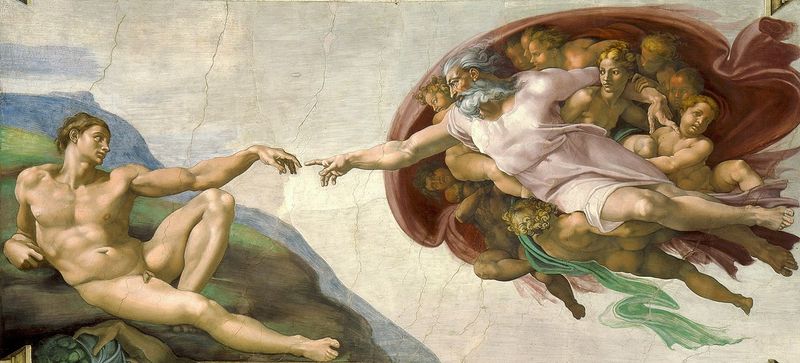
Explore the Catholic understanding of the imago Dei, human dignity, and our calling as beings created in God's image through Scripture, the Fathers, and Vatican II.
Evangelical Catholic Thought
In this post, I continue my reflections upon the Catechism of the Catholic Church with particular reflection upon the existence of evangelical Catholic...
Stay Informed
Get new writing on faith, law, and service delivered to your inbox.
No spam. Unsubscribe anytime.