Process Theology: A Catholic Evaluation
On This Page
“God is the great companion—the fellow-sufferer who understands.”
— Alfred North Whitehead, Process and Reality (1929)
Few theological movements in the twentieth century generated as much discussion—or as much unease among orthodox Christians—as process theology. Born from the speculative philosophy of a Cambridge-trained mathematician, process theology offered a vision of God dramatically different from the one that had shaped Christian worship and doctrine for nearly two millennia. Its God does not sit enthroned in unchanging perfection above the world. He suffers with it, grows with it, and is enriched by it. He persuades but does not coerce. He is not the unmoved mover of Aristotle and Aquinas but, in Whitehead’s striking phrase, “the fellow-sufferer who understands.”1
The appeal is obvious. In a century scarred by world wars, genocide, and ecological devastation, a God who shares our suffering and who rejects coercive power can seem far more attractive than the impassible, omnipotent deity of classical theism. Process theology has attracted serious thinkers across Christian traditions and has left its mark on liberation theology, feminist theology, and ecological theology (yes, such a thing exists). It deserves to be understood on its own terms before it is evaluated.
This post attempts to do both: to explain what process theology teaches and then to evaluate it from the perspective of the Catholic intellectual tradition.
Origins: Whitehead, Hartshorne, and Cobb
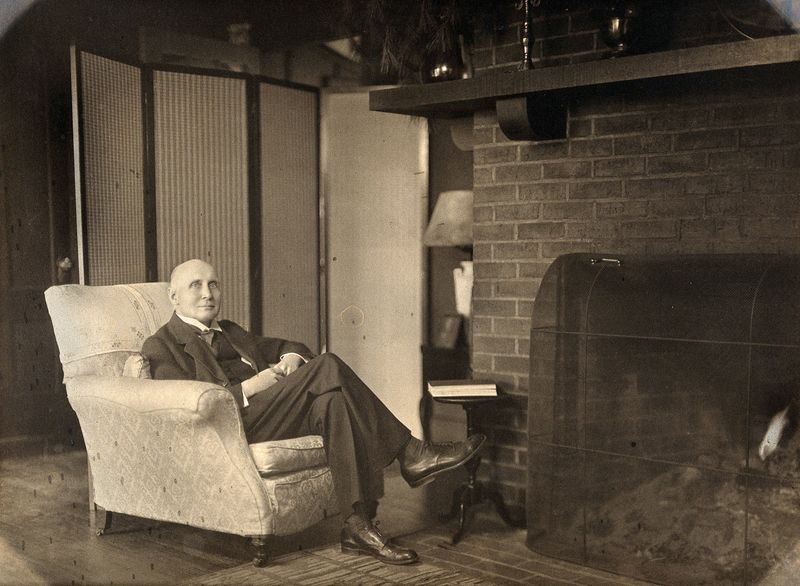
Alfred North Whitehead
Alfred North Whitehead (1861–1947) was not a theologian. He was a mathematician and philosopher who spent the first half of his career at Cambridge and the University of London, where he co-authored with Bertrand Russell the monumental Principia Mathematica (1910–1913). It was only after he moved to Harvard in 1924, at the age of sixty-three, that Whitehead turned his attention fully to metaphysics. His magnum opus, Process and Reality: An Essay in Cosmology (1929), laid out a comprehensive metaphysical system that would become the foundation of process thought.2
Whitehead’s system was a reaction against what he saw as the static, mechanistic worldview inherited from Newton and the substance metaphysics inherited from Aristotle. Reality, Whitehead argued, is not composed of enduring substances that possess accidental properties. It is composed of events—momentary flashes of experience that he called “actual occasions” or “actual entities.”
These actual occasions are the fundamental units of reality. They come into being, integrate their experience of the past, achieve a moment of subjective immediacy, and then perish, becoming data for subsequent occasions. The universe is not a collection of things; it is a process of becoming.3
Within this system, God plays a unique but not wholly exceptional role. He is not outside the metaphysical categories that apply to everything else. He is the chief exemplification of those categories, not an exception to them. This is Whitehead’s “ontological principle”—and it represents a fundamental break with the Christian theological tradition, which has consistently held that God transcends the categories that apply to creatures.
Charles Hartshorne
It was Charles Hartshorne (1897–2000) who transformed Whitehead’s cryptic metaphysics into a systematic theology. Hartshorne spent decades at the University of Chicago (1928–1955), Emory University (1955–1962), and the University of Texas at Austin (1962–1978; emeritus until his death in 2000), developing what he called “neoclassical theism”—a deliberate contrast with classical theism.
Where classical theism held that God is absolute, necessary, and unchanging in every respect, Hartshorne argued that God has both an abstract, necessary pole (corresponding roughly to God’s eternal character) and a concrete, contingent pole (corresponding to God’s actual experience of the world at any given moment). This is the doctrine of divine “dipolarity,” and it became the defining feature of process theology’s doctrine of God.4
Hartshorne also argued vigorously that the God of classical theism was, in effect, a philosophical idol—the product of Greek metaphysics rather than biblical revelation. The biblical God, he insisted, is responsive, emotional, and affected by the actions of his creatures. The classical attributes of impassibility (God cannot suffer), immutability (God cannot change), and absolute simplicity (God has no internal complexity) were, for Hartshorne, distortions imposed on the biblical witness by Hellenistic philosophy.
John B. Cobb Jr. and the Second Generation
John B. Cobb Jr. (b. 1925), a Methodist theologian at Claremont School of Theology, became the most influential process theologian of the second generation. Cobb brought process thought into direct conversation with Christian doctrine, producing works on Christology, ecclesiology, and economic justice. His student David Ray Griffin became another major voice, particularly on the problem of evil and the critique of “classical theological theism.” The Center for Process Studies at Claremont remains the institutional home of the movement.5
Key Concepts
Actual Occasions and Creativity
In Whitehead’s metaphysics, the fundamental units of reality are not substances but “actual occasions of experience.” Each actual occasion is a momentary event that “prehends” (grasps, takes into account) the data from prior occasions and synthesizes them into a new unity of experience. This process of creative synthesis is what Whitehead means by “creativity”—and creativity, not God, is the ultimate metaphysical category. Creativity is the “universal of universals,” the principle that there is always a process of becoming, always something new coming into existence.6
This point is crucial. In classical theism, God is the ultimate reality, the uncaused cause, the source of everything that exists. In Whitehead’s system, creativity is the ultimate category, and God is an instance of it—the supreme instance, to be sure, but an instance nonetheless. God does not create creativity; he exemplifies it.
In classical theism, God is the source of everything that exists. In Whitehead’s system, God is an instance of a more fundamental principle—creativity—not its author.
This represents a fundamental reordering of the metaphysical hierarchy that has enormous consequences for the doctrine of creation.
Dipolar Theism: God’s Two Natures
The most distinctive feature of the process doctrine of God is dipolarity. God has two “natures” or “poles”:
The Primordial Nature. This is God’s eternal, abstract aspect—his envisagement of all possibilities (what Whitehead calls “eternal objects”). In his primordial nature, God orders all possibilities and provides the initial aim for every actual occasion—a kind of divine lure toward the best possible outcome. The primordial nature is conceptual rather than physical; it is God’s vision of what could be, not his experience of what is.
The Consequent Nature. This is God’s concrete, temporal, responsive aspect. In his consequent nature, God receives into himself the completed experiences of every actual occasion. He feels what the world feels. He is enriched by the world’s joys and diminished by its sorrows. The consequent nature grows as the world grows; it is the ever-expanding record of God’s sympathetic participation in the life of every creature.7
This dipolar structure means that God is, in one aspect, eternal and unchanging (his primordial vision of possibilities does not shift), but in another aspect, temporal and changing (his concrete experience of the world is continually being enriched). Process theologians see this as a more adequate and more biblical understanding of God than the monolithic immutability of classical theism.
God as Persuasive, Not Coercive
Perhaps the most pastorally significant claim of process theology is that God does not exercise coercive power. God provides each actual occasion with an “initial aim”—a vision of the best possibility available to it—but the occasion is free to accept or reject that aim. God influences the world through persuasion, attraction, and lure, not through unilateral determination. He cannot override the freedom of creatures. He cannot intervene to prevent a natural disaster or stop a bullet. He can only call the world forward toward greater beauty, harmony, and complexity—and suffer with it when it refuses the call.8
This redefinition of divine power has obvious implications for the problem of evil, which we will consider below.
Panentheism: The God-World Relationship in Process Thought
Process theology is panentheistic, not pantheistic. The distinction matters. Pantheism identifies God and the world: God is the universe, and the universe is God. There is no distinction between Creator and creation. Classical theism holds that God is radically transcendent—wholly other than the world, existing in complete independence of it, and related to it only by a free act of creation. Panentheism holds that the world is in God (Greek: pan en theós, “all in God”), but God is more than the world. God includes the world within himself as his own body or experience, but he also transcends it in his primordial nature.9
In process panentheism, the God-world relationship is not contingent but necessary.
God needs the world as much as the world needs God.
This is the radical claim at the heart of process panentheism. God needs the world as much as the world needs God. Without a world to experience, God’s consequent nature would be empty—abstract possibilities without concrete realization. The world provides the content of God’s experience. This mutual dependence is, for process theologians, a feature, not a bug: it expresses the relational, loving character of God more adequately than the self-sufficient deity of classical theism.
From a Catholic standpoint, however, the claim that God needs the world is deeply problematic. It strikes at the heart of divine aseity—the doctrine that God exists from himself and depends on nothing outside himself for his existence or perfection.
The Rejection of Classical Divine Attributes
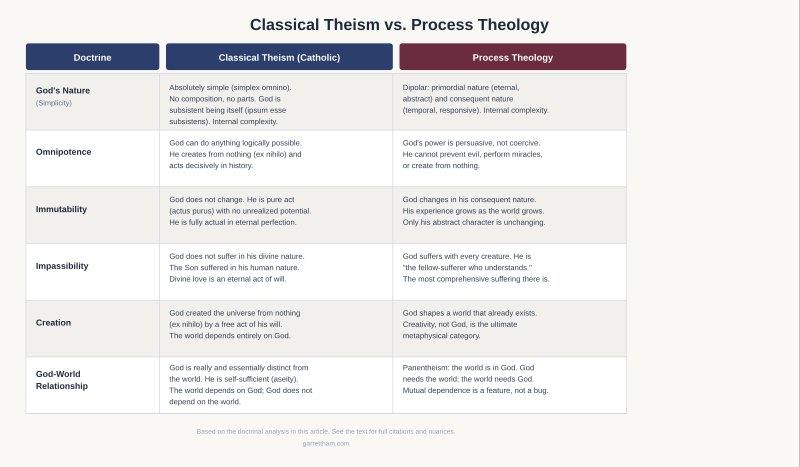
Process theology explicitly rejects several attributes that classical theism—and Catholic dogma—holds to be essential to a correct understanding of God:
Omnipotence. Classical theism holds that God is all-powerful: he can do anything that is logically possible. Process theology redefines omnipotence as God’s maximal influence—his power of persuasion exercised on every actual occasion—but denies that God has the power to unilaterally determine any outcome. God cannot prevent evil, perform miracles in the traditional sense, or create from nothing.
Immutability. The classical tradition, following Aristotle and the Church Fathers, holds that God does not change. Process theology holds that God changes in his consequent nature with every new experience. He is immutable only in his abstract character—his faithfulness, his aim toward beauty and harmony—but his concrete experience is in perpetual flux.
Impassibility. Classical theism teaches that God does not suffer or undergo emotional change caused by creatures. Process theology emphatically rejects this: God does suffer, and his suffering is the most intimate and comprehensive suffering there is, since he feels the pain of every creature. Whitehead’s “fellow-sufferer” language is a direct repudiation of impassibility.
Divine Simplicity. The doctrine that God has no parts, no composition, no distinction between essence and existence—that God simply is his goodness, his wisdom, his power—is a cornerstone of Catholic metaphysics. While the concept was present in ante-Nicene theology and developed by the Church Fathers, the first explicit conciliar definition came at the Fourth Lateran Council (1215), which declared God’s nature simplex omnino (“absolutely simple”). The First Vatican Council (1870) reaffirmed this in Dei Filius (DS 3001), and St. Thomas Aquinas developed the doctrine extensively. Process theology, with its dipolar God who has distinct natures, is flatly incompatible with divine simplicity.10
Creation Ex Nihilo. The classical Christian doctrine holds that God created the universe from nothing—that there was no pre-existing matter or principle alongside God. Process theology denies this. In Whitehead’s system, creativity is the ultimate category, and God works with a world that is, in some sense, always already there. God orders and shapes the world, but he does not bring it into existence from nothing.
The Appeal of Process Theology
It would be unfair to dismiss process theology without acknowledging the genuine theological concerns that drive it. Three areas deserve particular attention.
The Problem of Evil
The problem of evil is, by any honest reckoning, the most powerful objection to classical theism. If God is omnipotent and perfectly good, why does he permit innocent suffering? Classical responses—the free-will defense, the soul-making theodicy, appeals to mystery—have real force, but they do not satisfy everyone. Process theology offers a clean solution: God does not permit evil because he lacks the power to prevent it. He does everything in his power—luring, persuading, calling creatures toward the good—but he cannot override creaturely freedom or the laws of nature. God is perfectly good but not omnipotent in the classical sense.11 For a Catholic treatment of how divine omniscience, freedom, and the permission of evil relate to theodicy, see does everything happen for a reason.
The cost of this solution, as we will see, is high. But the problem it addresses is real, and Catholics should not pretend otherwise. The Catholic tradition has its own resources for addressing the problem of evil—the Cross of Christ, the redemptive value of suffering united to Christ’s passion, the eschatological hope of a new creation—but these are existential and kerygmatic responses rather than neat philosophical solutions. The problem of evil demands intellectual humility from all parties.
Divine Responsiveness
Process theology insists that God genuinely responds to the world—that prayer matters, that human choices make a real difference to God, that God is not an unmoved spectator watching a drama whose outcome he has already determined. This resonates with the lived experience of believers who address God as “Father” and who expect him to hear and respond. The God of the Bible does seem, at least on the surface of the narrative, to react to events, to change his mind, to be moved by human suffering. Process theology takes these biblical depictions at face value rather than explaining them away as mere figures of speech that tell us nothing real about God.
Catholic theology, it should be noted, does not teach that God is indifferent to the world. The doctrine of God’s universal salvific will affirms that God genuinely desires the salvation of every person. The Incarnation itself—God becoming man in Jesus Christ—is the definitive expression of divine solidarity with human suffering. But the Catholic tradition insists that God’s responsiveness operates within the framework of his eternal, unchanging nature, not as a temporal reaction to events he did not foresee.
Ecological and Liberation Theology
Process theology’s emphasis on interconnectedness, mutual dependence, and the intrinsic value of every actual occasion has made it attractive to ecological theologians who see the natural world as participating in God’s own life rather than as a mere resource for human use. Similarly, its critique of coercive power has resonated with liberation theologians who are suspicious of divine omnipotence as a model that can be used to justify earthly tyranny.12
A Catholic Critique
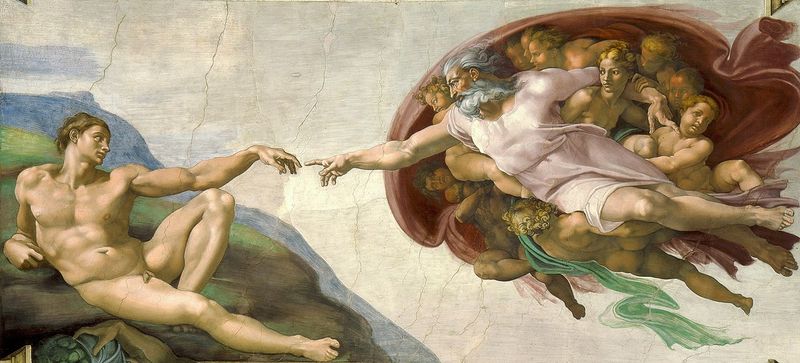
The Catholic Church has not issued a formal condemnation of process theology by name, but the incompatibilities between process thought and Catholic teaching are numerous and fundamental. They are not matters of emphasis or nuance; they are matters of substance.
Incompatible with Divine Omnipotence and Creation Ex Nihilo
The Fourth Lateran Council (1215) defined that God is the “one principle of all things, Creator of all things visible and invisible, spiritual and corporeal; who by his almighty power (omnipotenti virtute) from the beginning of time created both orders of creatures from nothing (de nihilo).”13 The First Vatican Council (1870) repeated and reinforced this teaching, declaring that God created “out of nothing” and that this act was entirely free, not necessary.
Process theology denies both claims. It denies that God has almighty power in the sense the councils intend, and it denies that God creates from nothing. In the process system, God shapes a world that already exists; he does not bring it into being. This is not a minor theological disagreement. Creation ex nihilo is a defined dogma of the Catholic faith, solemnly taught by ecumenical councils. Its denial places process theology outside the boundaries of Catholic orthodoxy.
Incompatible with Divine Simplicity
The ecumenical councils progressively defined the absolute unity and simplicity of the divine nature. The Fourth Lateran Council (1215) provided the first explicit conciliar definition, declaring God’s nature simplex omnino (“absolutely simple”) in its profession of faith (De Fide Catholica, cap. 1). Separately, in its condemnation of Joachim of Fiore (cap. 2), the council described God as “one supreme reality (una quaedam summa res), incomprehensible and ineffable.” St. Thomas Aquinas devoted an entire question of the Summa Theologiae (I, q. 3) to demonstrating that God is absolutely simple—that there is no composition in God of matter and form, essence and existence, genus and difference, or any other kind of parts.14
Process theology’s dipolar God—with his primordial and consequent natures, his abstract and concrete poles—is a being with internal complexity. He has parts, or at least aspects that are genuinely distinct from one another. This is incompatible with divine simplicity as the Catholic tradition understands it. For Aquinas, God is ipsum esse subsistens—subsistent being itself. He does not have existence; he is existence. A God who grows, who acquires new experiences, who is enriched by the world, is a God who moves from potency to act—and a God who moves from potency to act is not pure act (actus purus), which is precisely what the Catholic tradition says God is.
Incompatible with Immutability and Aseity
The Catechism of the Catholic Church affirms that God is “the fullness of Being and of every perfection, without origin and without end” (CCC §213). It teaches that “the eternal God gave a beginning to all that exists outside of himself” (CCC §290) and that “God is pure spirit” (CCC §370). The dogmatic constitution Dei Filius of Vatican I declared that God is “omnipotent, eternal, immense, incomprehensible, infinite in intellect and will and in every perfection; who, being one singular, utterly simple and unchangeable spiritual substance, must be declared really and essentially distinct from the world.”15
Process theology’s God is not “really and essentially distinct from the world.” In panentheism, the world is within God. God’s consequent nature is constituted by his experience of the world; without the world, that nature would be empty. This mutual dependence contradicts divine aseity—the doctrine that God is self-sufficient, depending on nothing outside himself. If God needs the world to complete his experience, then God is not the absolute, self-sufficient being that the Catholic tradition confesses.
The Thomistic Response
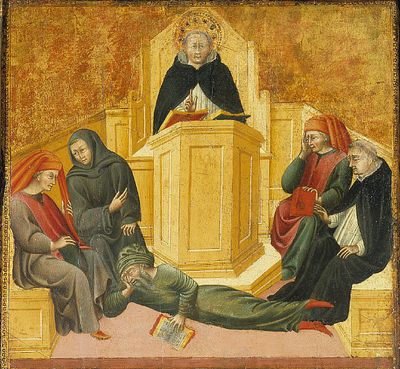
St. Thomas Aquinas provides the most rigorous framework for the Catholic critique. For Aquinas, God is pure act (actus purus)—he has no unrealized potential, no capacity for growth or change. This is not a deficiency but the highest perfection: God already is, in the fullness of eternal actuality, everything that he could be. Change implies the actualization of a potential, and a being with unactualized potential is less than fully actual. Therefore, a changing God would be a less-than-fully-perfect God.16
Aquinas also explains how God can be said to “know” and “love” creatures without undergoing change. God knows all things in a single eternal act of self-knowledge; he does not learn new things as they happen. God loves all things by willing their good; he does not react emotionally to events he did not foresee. The appearance of temporal responsiveness in Scripture is a mode of revelation accommodated to human understanding, not a literal description of God’s inner life. As Aquinas puts it, the relation of God to the world is a “real relation” on the side of the creature but a “relation of reason” on the side of God (Summa Theologiae I, q. 13, a. 7).
Process theologians find this account inadequate—a God who does not really relate to the world, they argue, is a God who does not really love. Catholics respond that the Thomistic framework preserves both God’s transcendence and the reality of his love: God’s love is not a reaction but an eternal act of will that is more real, not less, for being unchanging.
The Incarnation—God the Son taking on human nature, suffering, and dying on the Cross—demonstrates that divine love is not abstract or detached. But the suffering belongs to the human nature of Christ, not to the divine nature as such. The doctrine of the Trinity, grounded in the theology of John’s Prologue, allows the Church to affirm both that God is impassible in his divine nature and that God has entered into human suffering through the Incarnation.
What the Catholic Church Appreciates—and What She Cannot Accept
The Catholic Church is not hostile to the questions process theology raises. She takes the problem of evil seriously, as her long tradition of theodicy and her theology of the Cross attest. She affirms that God genuinely loves the world and desires the salvation of every person.
She insists that God’s grace is operative in ways that exceed our ability to trace—a theological conviction grounded in Vatican II’s teaching that God can lead to salvation even “those who, through no fault of their own, do not know the Gospel” (Lumen Gentium §16), that God “in ways known to Himself can lead those inculpably ignorant of the Gospel” to faith (Ad Gentes §7), and that the Holy Spirit offers to all “the possibility of being associated, in a way known to God, with the paschal mystery” (Gaudium et Spes §22).
And the Catholic tradition contains within itself resources for thinking about God’s relationship to time, suffering, and creation that go well beyond a simple assertion of divine impassibility. The theology of the Cross, the Thomistic account of analogy, and the Catholic understanding of Molinism as a framework for reconciling divine sovereignty and human freedom—all of these represent sophisticated engagements with the same questions that motivate process theology.
But the answers process theology gives are, at the level of metaphysics, incompatible with what the Catholic Church holds to be revealed truth. A God who cannot create from nothing is not the God of Genesis, of the creeds, or of the councils. A God who depends on the world for his own perfection is not the God of Exodus 3:14—“I Am Who I Am”—the self-sufficient ground of all being. A God who lacks the power to act decisively in history is not the God who parted the Red Sea, raised Jesus from the dead, and will come again in glory to judge the living and the dead.
The Catholic Church does not reject process theology because it takes God’s love seriously. She rejects it because it does not take God’s nature seriously enough.
The process God is, in the end, a God made in our image—a being who, like us, is subject to time, growth, suffering, and dependence on others. The Catholic tradition holds that God is radically unlike us precisely in those respects, and that this unlikeness is what makes his love redemptive rather than merely sympathetic.
A God who can only sympathize with our suffering but cannot deliver us from it is not the God of Christian hope.
Frequently Asked Questions
Is process theology heretical?
The Catholic Church has not formally condemned process theology by name. However, its core claims—the denial of creation ex nihilo, the denial of divine simplicity, the denial of omnipotence in the classical sense, and the assertion of God’s dependence on the world—contradict dogmatic definitions of the Fourth Lateran Council, the First Vatican Council, and the consistent teaching of the Church Fathers and Doctors. A Catholic who holds these positions is materially at odds with defined Catholic dogma.
Do any Catholic theologians use process thought?
Some Catholic theologians have engaged constructively with process philosophy, most notably Joseph Bracken, S.J. The Methodist theologian Marjorie Hewitt Suchocki, who served as co-director of the Center for Process Studies, has also been an important voice in the dialogue between process thought and Christian doctrine. These thinkers have attempted to integrate insights from process thought into their respective theological frameworks while modifying or abandoning the claims that are most clearly incompatible with orthodox Christian teaching. The results are debated: critics argue that the modifications required to make process theology compatible with Catholicism effectively gut the process system of its distinctive content.
Does the Catholic Church teach that God suffers?
The Catholic Church teaches that God the Son suffered in his human nature during the Passion. The divine nature, as such, does not suffer—this is the doctrine of impassibility, affirmed consistently from the patristic period through the present. However, the Church also affirms, through the doctrine of the communicatio idiomatum, that it is truly God who suffered and died on the Cross, because the Person who suffered is a divine Person, even though the suffering is experienced in and through his human nature. This is a more nuanced position than process theologians sometimes acknowledge.
How does process theology differ from open theism?
Open theism, associated with evangelical thinkers like Clark Pinnock and Gregory Boyd, shares process theology’s rejection of exhaustive divine foreknowledge and its emphasis on divine responsiveness. (For a detailed comparison, see Open Theism vs. Process Theology.) However, open theism retains creation ex nihilo, divine omnipotence (understood as God’s voluntary self-limitation), and a more traditionally Christian metaphysical framework. Process theology is more radical in its metaphysical commitments: it denies creation ex nihilo, redefines omnipotence as persuasive rather than coercive, and situates God within a broader metaphysical category (creativity) rather than treating God as the ultimate metaphysical reality.
Further Reading
- God Desires All Men To Be Saved — How the Catholic Church frames salvation within God’s universal love
- The Trinity: A Catholic Explanation — How the doctrine of the Trinity preserves both divine transcendence and divine involvement in the world
- The First Council of Nicaea — The council that defined the Son’s full divinity and laid the groundwork for classical Trinitarian theology
- Molinism — A Catholic framework for reconciling divine sovereignty and human freedom without abandoning omnipotence
- Divine Simplicity — Why the Catholic tradition insists that God has no parts, and what that means for theology
- Open Theism vs. Process Theology — A side-by-side comparison of two movements that challenge classical theism
- Divine Providence: Models Compared — How different theological traditions understand God’s governance of the world
1 Alfred North Whitehead, Process and Reality: An Essay in Cosmology, corrected edition, ed. David Ray Griffin and Donald W. Sherburne (New York: Free Press, 1978), 351.
2 For a readable introduction to Whitehead’s life and thought, see Victor Lowe, Alfred North Whitehead: The Man and His Work, 2 vols. (Baltimore: Johns Hopkins University Press, 1985–1990).
3 Whitehead, Process and Reality, 18–20. The concept of “actual occasions” is developed throughout Part III of the work.
4 Charles Hartshorne, The Divine Relativity: A Social Conception of God (New Haven: Yale University Press, 1948). See also Hartshorne, Man’s Vision of God and the Logic of Theism (Chicago: Willett, Clark & Company, 1941).
5 John B. Cobb Jr. and David Ray Griffin, Process Theology: An Introductory Exposition (Philadelphia: Westminster Press, 1976). This remains the standard introductory text.
6 Whitehead, Process and Reality, 21: “‘Creativity’ is the universal of universals characterizing ultimate matter of fact.”
7 Whitehead, Process and Reality, 337–351. The distinction between God’s primordial and consequent natures is the subject of Part V (“Final Interpretation”), the final part of the work.
8 Cobb and Griffin, Process Theology, 52–54. See also David Ray Griffin, God, Power, and Evil: A Process Theodicy (Philadelphia: Westminster Press, 1976), chaps. 17–18.
9 For a careful philosophical analysis of panentheism, see Philip Clayton and Arthur Peacocke, eds., In Whom We Live and Move and Have Our Being: Panentheistic Reflections on God’s Presence in a Scientific World (Grand Rapids: Eerdmans, 2004).
10 On divine simplicity in the Catholic tradition, see Thomas Aquinas, Summa Theologiae I, q. 3. The Fourth Lateran Council (1215) defined God as simplex omnino in De Fide Catholica, cap. 1; the phrase una quaedam summa res appears in cap. 2 (the condemnation of Joachim of Fiore).
11 Griffin, God, Power, and Evil. Griffin argues that the process theodicy is the only logically consistent solution to the problem of evil.
12 See Jay McDaniel, Of God and Pelicans: A Theology of Reverence for Life (Louisville: Westminster/John Knox Press, 1989), for the ecological dimensions of process theology.
13 Fourth Lateran Council (1215), De Fide Catholica, cap. 1 (DS 800).
14 Thomas Aquinas, Summa Theologiae I, q. 3, aa. 1–8.
15 First Vatican Council, Dei Filius, chap. 1 (DS 3001).
16 Thomas Aquinas, Summa Theologiae I, q. 9, a. 1: “God is altogether immutable.” See also I, q. 2, a. 3, which contains all Five Ways (the proofs for God’s existence); the first of these, the argument from motion, concludes to an unmoved mover who is pure act.
Garrett Ham
Garrett Ham is an attorney, military veteran, and holds a Master of Divinity from Yale Divinity School. He writes from Northwest Arkansas on theology, law, and service.
More about Garrett →Related Posts
What Is Process Theology?
What is process theology? A clear introduction to Whitehead's process philosophy, dipolar theism, panentheism, and how process theology differs from classical Christian theism.
Classical Theism vs. Process Theology: A Catholic Comparison
How does classical theism differ from process theology? A side-by-side comparison of divine simplicity, omnipotence, immutability, creation ex nihilo, and the God-world relationship.
Open Theism vs. Process Theology: What's the Difference?
Open theism and process theology both reject exhaustive divine foreknowledge, but they differ profoundly on creation, omnipotence, and God's nature. A Catholic comparison of these two critiques of classical theism.
Stay Informed
Get new writing on faith, law, and service delivered to your inbox.
No spam. Unsubscribe anytime.