Week 10 at Yale: Ph.D. Aspirations

On This Page
I have just completed my tenth week at Yale. The semester is flying by, and I’m excited to see the results of my work at the end of it, to see how things turn out.
When the semester ends, I hope to be able to assess how realistic my doctoral ambitions truly are. (If you’re still at the earlier stage of deciding whether and how to apply to YDS in the first place, my Yale Divinity School application guide walks through acceptance rate, degree choice, essays, and financial aid.)
(Still) Writing Papers
While I may, at this point, begin sounding like a broken record, I am still writing papers.
I finished my Early Christianity paper this week, which means I completed it about a month early. I only did this, however, because I like to work on one paper at a time.
While I may be ahead on my Early Christianity paper, I am behind on my other ones. I have not yet started on the one for New Testament, and I’m getting a little nervous about it.
Then, when I am finished with that, I have to complete a paper for my World Christianity class.
There is still a lot left to do.
Exegetical papers should not take as long as historical research papers, so I think I should be fine for New Testament. I would like to think I could get the research done in a week or so and start writing, but we’ll see.
Papers and research are the foundations of doctoral work, so writing papers will serve as a good gauge for me as I consider my goal of pursuing a PhD going forward.
PhD Aspirations
I got a 95 on my New Testament midterm, and I must say that I feel a bit disappointed. I don’t know where the other five points went.
While I recognize that sounds a bit ridiculous, and I usually wouldn’t feel this way about a 95, I’m not really sure what standard I have to meet to receive an H (Honors) in the class.
Good Grades for PhD Aspirations
I would like to get all Hs this semester to strengthen my chances of admission to a top doctoral program at the end of my time in the Master of Divinity program.
It appears, however, that each professor has his or her own standard. I have seen some things that suggest I need a 97 to get an H, but the syllabus in New Testament is unclear. I think the standard may be 95 or 93 in Greek.
So, I don’t know.
The whole thing is a bit confusing, as is the importance of the grades. I hope to gain admission into a top-tier PhD program, which suggests that I need to get the best grades possible.
Impressing professors here at Yale would be helpful, I think, so I’m trying to do the best work I can to keep these plans alive.
Top-Tier PhD Programs
All top-tier PhD programs are extraordinarily challenging to get into, and no matter how well I do and no matter to how many I apply, it’s uncertain if I would get into any.
With my focus on these schools, I know that I am going to have to remain mindful of my goals and work hard throughout my entire time here.
Right now, though, I intend to apply to the following programs. Perhaps I will become aware of more as time progresses here, but currently, my doctoral ambitions are limited to these schools.
-
Duke—Duke’s PhD in Religion has a strong New Testament program with faculty deeply engaged in the intersection of early Christianity and Second Temple Judaism. The department’s emphasis on historical and literary methods makes it particularly attractive for someone interested in Pauline theology and the Gospels.
-
Harvard—Harvard Divinity School’s PhD program in the Study of Religion, combined with resources across the broader university, offers access to world-class scholars in New Testament and early Christianity. The depth of the library system alone makes it an extraordinary place to do doctoral work.
-
Yale—Being here already gives me a sense of what Yale’s doctoral program offers. The Religious Studies department has outstanding New Testament faculty, and the advantage of having established relationships with potential advisors during the MDiv cannot be overstated.
-
Notre Dame—Notre Dame’s PhD in Theology has a distinguished New Testament faculty and a strong emphasis on integrating historical-critical scholarship with theological reflection. The university’s Catholic identity creates a unique intellectual environment for studying early Christianity.
-
University of Chicago—Chicago’s Divinity School has a long and prestigious history in biblical studies. The program’s emphasis on rigorous historical-critical method and its interdisciplinary approach—drawing on the broader university’s strengths in ancient languages, history, and philosophy—make it one of the most intellectually demanding and rewarding options.
-
Emory—Emory’s Graduate Division of Religion offers a PhD with particular strengths in New Testament and early Christianity. The program’s focus on social-historical approaches and its connection to the broader humanities at Emory make it an appealing choice.
-
Princeton Theological Seminary—Princeton Seminary’s PhD program is known for its combination of rigorous scholarship and attention to the theological significance of biblical texts. The faculty in New Testament have produced some of the most important scholarship in the field over the past several decades.
-
Baylor—Baylor’s PhD in Religion offers a strong New Testament program within a research university context. The department has been building its reputation with notable hires, and the program’s emphasis on both historical and theological dimensions of New Testament scholarship is attractive.
-
Vanderbilt—I’ve heard they haven’t accepted a New Testament PhD student in quite a while, though I haven’t been able to confirm this. If their program is actively accepting candidates, it would certainly be worth considering given Vanderbilt Divinity School’s reputation.
What a PhD in New Testament Involves
For those unfamiliar with doctoral programs in New Testament or religious studies, the process is both intellectually demanding and highly competitive. Admission typically requires a master’s degree (such as the MDiv I am pursuing), strong grades, a compelling writing sample (here is the writing sample I submitted for my own Yale Divinity application), letters of recommendation from faculty who can speak to your scholarly potential, and—critically—a good fit with a faculty advisor whose research interests align with your own.
For a deeper dive into the Yale Divinity M.Div. program and how it prepares students for doctoral work, see Week 1 of the M.Div. at Yale Divinity School and God and Man at Yale Divinity, which offer first-hand accounts of the program structure and culture.
Language preparation is also essential. Most programs expect proficiency in Greek and Hebrew at a minimum, and many require or strongly prefer reading knowledge of German and sometimes French, since much of the foundational scholarship in biblical studies was written in these languages. This is one reason I have been auditing Hebrew this semester and plan to continue shoring up my language skills throughout the MDiv.
The PhD itself typically takes five to seven years1 and involves coursework, comprehensive examinations, language requirements, and the writing and defense of a dissertation.2 The academic job market in religious studies is notoriously difficult, with far more PhDs produced than tenure-track positions available.4 This reality makes program selection all the more important—attending a well-regarded program with strong faculty mentorship can make a real difference.
This First Semester and the Road Ahead
This is my first real opportunity to establish a name for myself here, but I’m just not sure how to go about doing it. I feel like getting good grades this first semester would be invaluable in setting me out on the right path.
Even if I do very well here, however, I’m afraid that my age will be a hindrance to these plans.
I’m thirty-four, which means that I will be almost thirty-seven when I graduate from Yale. This, in turn, means that I will be in my forties before I could enter the academic job market.
I fear that that will be held against me. Non-traditional doctoral candidates face real but not insurmountable challenges in the academic world. There is an implicit bias toward younger scholars who are perceived to have more years of productive research ahead of them. On the other hand, I know that my military service and professional experience have given me a maturity and perspective that younger candidates often lack—qualities that can enrich both my scholarship and my teaching. Whether admissions committees see it that way remains to be seen.
I’m finally in a position where I realize that I need to set goals toward which I can work, while at the same time recognizing that there is so much that I cannot control.
I love what I am doing, so it is enough to enjoy where I am and do it the best that I can. Hopefully, my doctoral ambitions prove to be realistic.
One Class Ends Early
The semester feels like it’s really starting to wrap up. My World Christianity class met for the last time this week.
The instructor runs an institute named for the original instructor of the course, a Professor Emeritus at Yale and a world-renowned expert in the history of the global missions movement who died unexpectedly last year.
The instructor for the course, therefore, has to return to his native Ghana to get the institute off the ground.
So, over the next few weeks, we’ll submit some short projects in place of meeting. Then, of course, we have our final paper due at the end of the semester.
That will, therefore, free up some significant time for me on Tuesdays. There is such a large gap between my first and second class on Tuesday (I have only two) that I often go home and return to the school later. Not having to go back will be nice.
My attendance in the Hebrew class I am auditing is also becoming more sporadic. I think I’ve gotten to where I need to be with Hebrew, such that I can easily pick things up again on my own. I doubt that I will audit the course again next semester.
I plan to limit my class load to twelve hours next semester. If I can maintain a schedule without Friday meetings, that would be great.
Further Reflections
This week also prompted deeper reflections on two theological and cultural dynamics I observed at Yale Divinity School. I wrote about those observations separately: Neo-Gnosticism in Evangelical and Progressive Christianity explores how both traditions have absorbed Gnostic tendencies, and The Obsession with Oppression at Yale Divinity School examines the cultural dynamics of victimhood and power analysis in the divinity school environment.
Sources and Further Reading
For prospective doctoral students considering PhD programs in New Testament or religious studies, the following resources provide authoritative guidance on program selection, the application process, and expectations for doctoral work:
- 1. Brad East, "So you want to get a PhD in theology" (2021). A comprehensive guide to doctoral program selection in theology and religious studies, covering program types, faculty mentorship, and career outcomes.
- 2. Bart D. Ehrman, "Getting the PhD in New Testament Studies" (The Bart Ehrman Blog). Discusses the specific requirements, timeline, and competitive landscape for New Testament doctoral programs.
- 3. QS World University Rankings, "Theology, Divinity and Religious Studies 2026" (Top Universities). Annual rankings of the world's top theology and religious studies programs, including doctoral offerings.
- 4. Council of Graduate Schools (CGS). Statistics on doctoral degree completion timelines and labor market outcomes for PhD recipients in humanities disciplines.
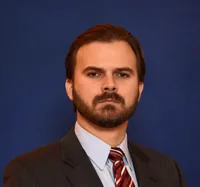
Garrett Ham
Garrett Ham is an attorney, military veteran, and holds a Master of Divinity from Yale Divinity School. He writes from Northwest Arkansas on theology, law, and service.
More about Garrett →Related Posts
God and Man at Yale Divinity
Complete Yale Divinity School guide: how to apply, personal statement, GI Bill benefits, financial aid, acceptance, and thriving in the M.Div. program.
Opportunities at Yale Divinity School: A Student's Perspective
A Yale Divinity School student shares first-hand experiences with study abroad programs, interdepartmental courses, world-famous instructors, and more.

Week 1 of the M.Div. at Yale Divinity School
What the first week of Yale Divinity School is really like — classes, community, and culture shock. A veteran's firsthand account of the M.Div. program.
Stay Informed
Get new writing on faith, law, and service delivered to your inbox.
No spam. Unsubscribe anytime.