Personal Statement from Yale Divinity Application

On This Page
This post is part of my series God and Man at Yale Divinity. Below, I provide the full text of my personal statement from my successful application to Yale Divinity School. For the full application roadmap—acceptance rate, degree choice, essays, and financial aid—see my Yale Divinity School application guide.
As I wrote in God and Man at Yale Divinity, the personal statement is arguably the most important component of the application. Below, I have provided mine in full for anyone preparing their own seminary application.
A word of caution: I have no way of knowing whether my personal statement boosted or hindered my application. I received no specific feedback on it. Take it as one data point, not a template.
You can find Yale Divinity’s current application instructions on the school’s website. When I applied in 2018, the requirements read as follows:
“A personal essay (2 pages maximum/double spaced) should help the Admissions Committee evaluate one’s application. It should address one’s academic and vocational goals; how a Divinity School education can assist the applicant in meeting these goals; and what gifts and experiences a candidate can contribute to his or her theological education.”
I only modified my statement to the extent necessary to format it for a webpage.
My Personal Statement
I grew up in a devout Southern Baptist household where the unusual coexistence of fundamentalist doctrine and a zeal for social justice defined my upbringing. My parents’ rigid devotion to scriptural inerrancy necessitated a serious commitment to the “least of these.”
We, therefore, took in as many foster children as our modest home could accommodate. The rooms of our suburban dwelling resembled a European hostel with bunk beds that lined the walls, lodging abused and neglected children in small, yet comfortable, spaces.
Although I changed diapers while my peers played sandlot baseball, I understood the importance of what we were doing even then.
The Faith of My Childhood
In my childhood church, practicing Christianity meant refraining from smoking, drinking, swearing, and engaging in premarital sex. My parents, however, taught me that faith transcends personal piety and that the Christian life is more than sterile, outward expressions of religious observance.
It is messy, inconvenient, and exhausting, as it requires making real sacrifices for the needs of others. Desiring to adopt the faith of my childhood as my own, I attended Ouachita Baptist University to become a pastor.
Studying Scripture, however, with all its difficult ambiguities, made me question many of my fundamentalist doctrinal presuppositions, encouraging me to abandon the Southern Baptist tradition. Thus, without a church in which to pursue ordained ministry, I postponed my pursuit of a Master of Divinity.
Instead, having witnessed a broken legal system as a child, I chose law school as an alternative path to commit myself to public service.
Prosecuting Evil
After graduating from law school in 2010, I began working at Walmart’s corporate headquarters. However, the desire to serve others—the same desire that initially drew me to ministry—encouraged me to join the military in 2013. I received my commission around the time the military sexual assault scandal broke, and, consequently, my career focused on prosecuting these crimes.
As a prosecutor, I have encountered terrible evils that pushed me to fight—as my parents did before me—for the vulnerable. I have seen parents who sodomized their young son to death, listened to women describe their brutal experiences of sexual assault, and been obligated to view horrendous images of child pornography because of my dedication to collect evidence and secure convictions on behalf of victims.
Yet, in this, I have also witnessed the triumph of justice and great acts of redemptive grace, which helped me vanquish the cynicism and Hobbesian-like pessimism such experiences can instill. Moreover, these regularly reminded me of the Bible’s message of hope in the face of evil—reminders that pulled me back to my first love: the study of Scripture.
My Future Plans
As my time in uniform draws to a close, I am now seeking admission into Yale’s Master of Divinity Program. I have passionately loved the Bible since I was a child, and I desire to dedicate my life to its study, as my experiences in a foster home and fighting for the abused and victimized in the military have further aroused my appreciation for the life-altering power of Scripture’s message.
Thus, to achieve this end, I would like to attend Yale to prepare for a Ph.D. program in New Testament as well as for lay ministry in the church, government, or non-profit sector.
Why Yale?
I fell in love with Yale and its diverse faculty and student body when I visited its campus this fall. Moreover, the legacy of Yale Divinity School is apparent in the works of its faculty and alumni, and I hope to be a part of this incredible heritage as I prepare for a top-tier Ph.D. program.
Yale’s M.Div. Program, with its required courses in five distinct areas of study, will provide me with a well-rounded education to serve in both academia and lay ministry, and the flexibility of its degree plans and partnership with other university departments will allow me to explore my interests in other fields such as business and law.
Furthermore, Berkeley and the Annand Program will deepen my affection for the Anglican tradition, which I first discovered in college and rediscovered while in the military.
I genuinely believe that appreciating the Bible entails understanding the diverse manners in which others study and interpret it. Consequently, Yale’s ecumenical community specifically appeals to me, as I don’t desire to use Scripture as a tool to forge a specific denominational view.
Instead, I long to become a better scholar, citizen, and believer by collaborating with Yale’s world-renowned faculty and top-caliber student body. I also believe that my experiences of growing up in a home dedicated to fighting for the most underprivileged and serving as a prosecutor, where evil was not merely an abstract idea but a palpable reality, will provide a unique perspective on the teachings of Scripture.
I am overly grateful to the admission committee for their consideration and would treasure the opportunity to join the Yale Divinity School community.
Frequently Asked Questions
How long should a Yale Divinity School personal statement be?
Yale Divinity School requires a personal essay of two pages maximum, double-spaced. This translates to roughly 500–600 words. My statement above comes in just under that limit. Brevity matters—the admissions committee reads hundreds of these, so every sentence should earn its place.
What should a seminary personal statement include?
Yale specifically asks applicants to address three things: your academic and vocational goals, how a Divinity School education can help you meet those goals, and what gifts and experiences you bring to the community. The strongest statements weave these elements into a coherent narrative rather than treating them as separate prompts to answer in sequence.
Does Yale Divinity School require a writing sample?
Yes. In addition to the personal statement, Yale Divinity requires a writing sample that demonstrates your academic ability. If you have been out of school for several years, as I was, Yale may ask you to write a fresh sample rather than submit previous coursework.
What is Yale Divinity School’s acceptance rate?
Yale Divinity School’s acceptance rate has declined significantly over the past two decades. Recent classes have seen rates near 23%, making it one of the more selective seminary programs in the country today. For more details on the admissions process, see God and Man at Yale Divinity.
Can I use this personal statement as a template?
I would caution against using any personal statement as a template. Admissions committees are skilled at recognizing derivative writing. What I hope this example provides is a sense of the tone, structure, and specificity that a successful statement can take—not a formula to replicate. Your story is your greatest asset.
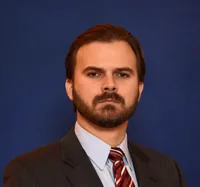
Garrett Ham
Garrett Ham is an attorney, military veteran, and holds a Master of Divinity from Yale Divinity School. He writes from Northwest Arkansas on theology, law, and service.
More about Garrett →Related Posts
God and Man at Yale Divinity
Complete Yale Divinity School guide: how to apply, personal statement, GI Bill benefits, financial aid, acceptance, and thriving in the M.Div. program.
Writing Sample from Yale Divinity Application
The complete writing sample from a successful Yale Divinity School M.Div. application, drafted from scratch after seven years out of school.
Using the GI Bill at Yale — A Veteran’s Guide
How I used the Post-9/11 GI Bill to attend Yale Divinity School — tuition, Yellow Ribbon, housing allowance, and what veterans should know about Ivy League graduate programs.
Stay Informed
Get new writing on faith, law, and service delivered to your inbox.
No spam. Unsubscribe anytime.